Istanbul 2018
Day 2: Sunday 24 June 2018
Istanbul – Golden Horn – Bosphorus
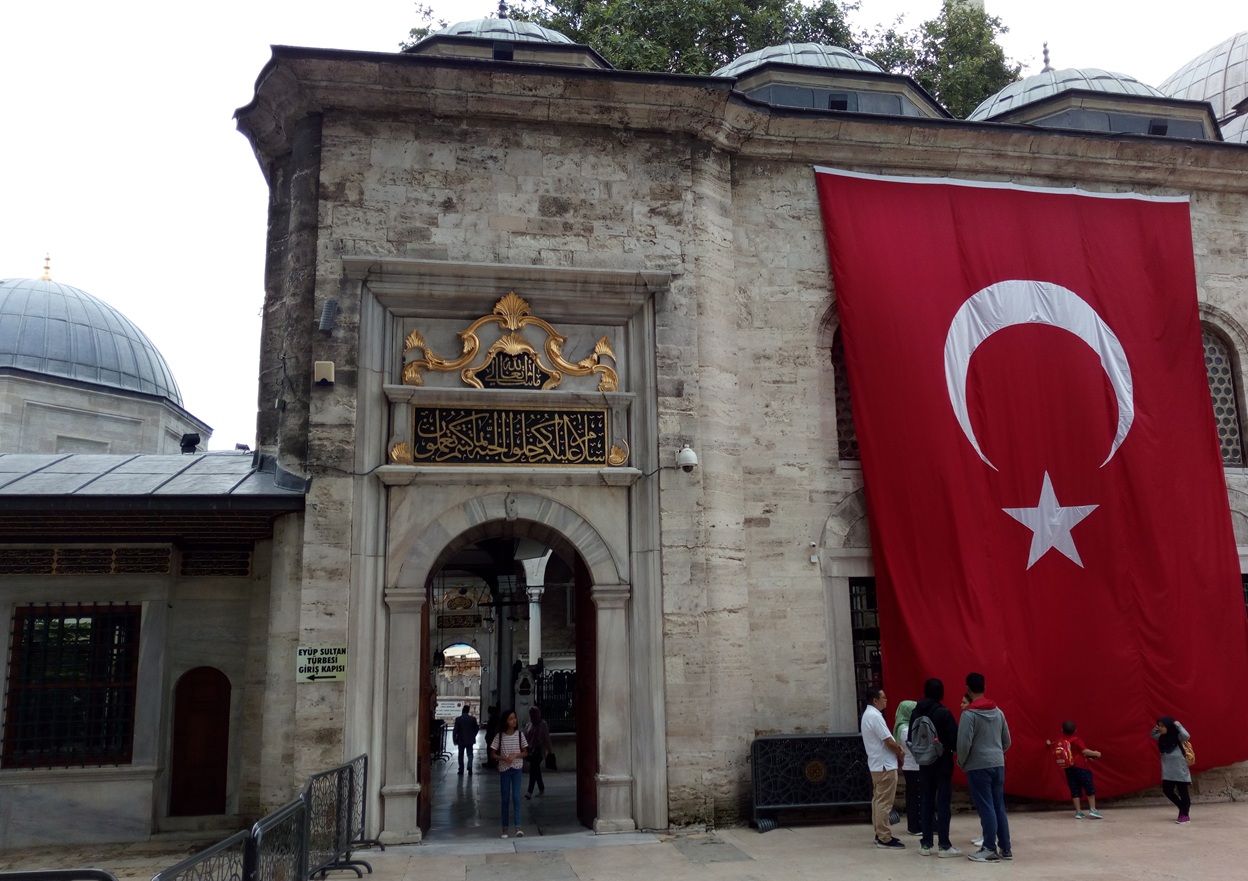
The main entranceway to the first mosque built in Istanbul, Eyüp Sultan Mosque (Turkish: Eyüp Sultan Camii).
This very sacred mosque is a 19th century building over the site of a 15th century mosque. It commemorates Abu Ayyub al-Ansari (Eyüp Sultan in Turkish), a companion of Muhammed, who died here during the first Arab siege of Constantinople in the 670s. After Constantinople fell to the Ottomans in 1453, sultan Mehmed II decided to build a mosque at the burial place of al-Ayyub al-Ansari, in 1458.
The minarets date to the 18th century. After earthquake damage, the mosque was rebuilt by 1800.
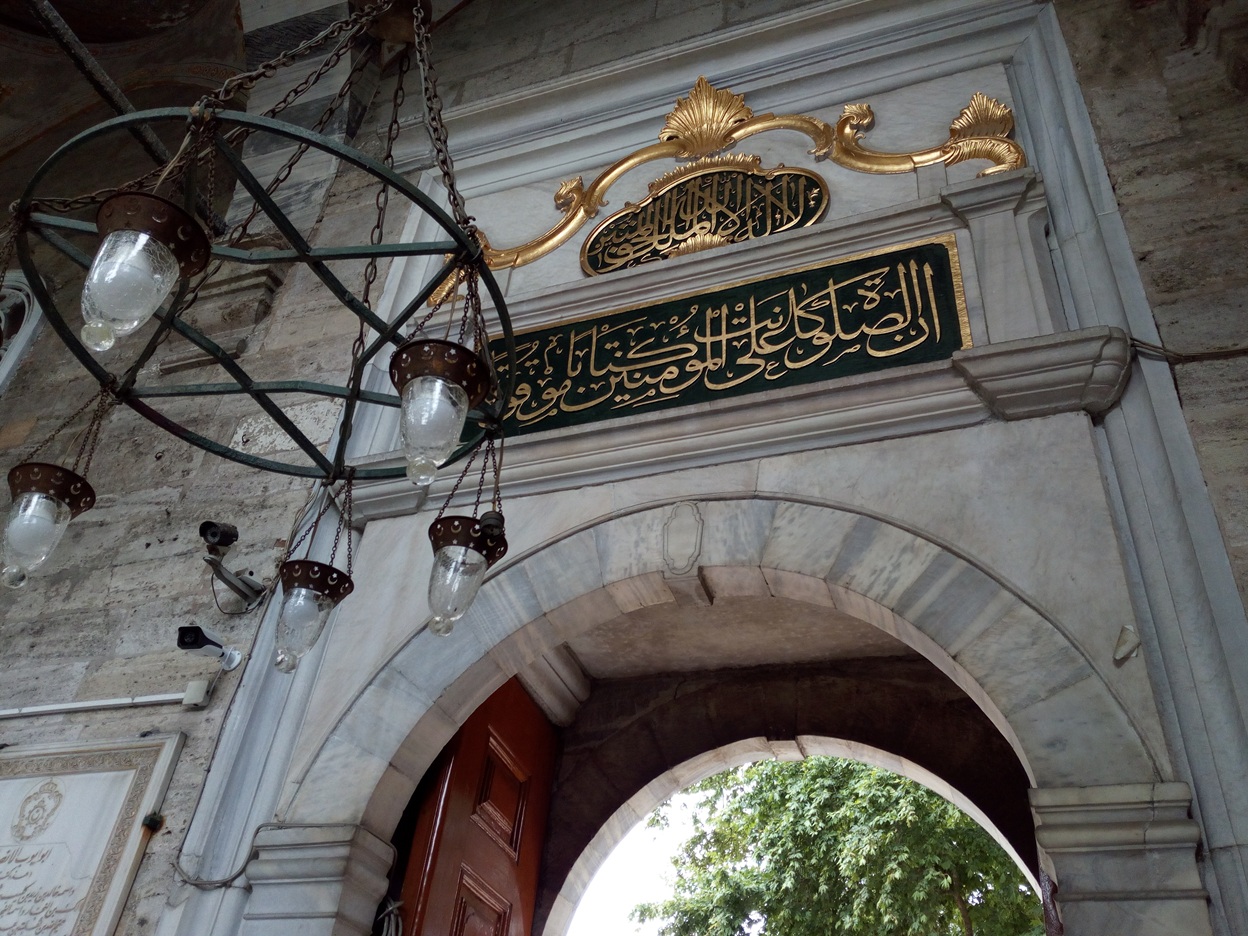
Closeup of the main entranceway to the Eyüp Sultan Mosque.
The mosque has great sacred significance. Many Ottoman officials and royalty opted to be buried near the site, which houses a mausoleum to the companion of Muhammad, Abu Ayyub al-Ansari. The Eyüp Cemetery behind the mosque leads up to a lookout point overlooking the Golden Horn, and is full of gravestones to those who desired to be buried as close as possible to the mosque, including the sumptuous tomb of Sultan Mehmed V (1844-1918, reigned 1909-1918), the next to last sultan.
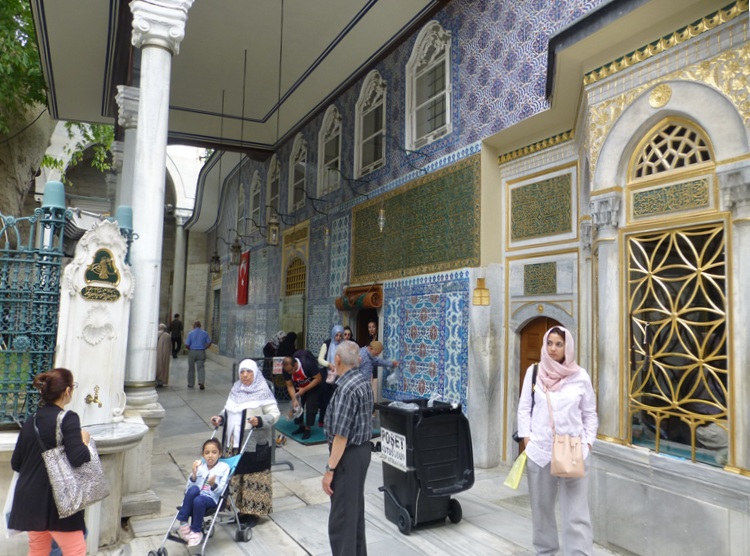
Inside the courtyard of the Eyüp Sultan Mosque. Iznik tile panels are a common decorative feature of mosques across Istanbul.
Iznik ceramics are named after the town of İznik in Anatolia, where the decorated pottery and tiles were made between the last quarter of the 15th century and the end of the 17th century. Its Turkish stylization is a reflection of Chinese porcelain.
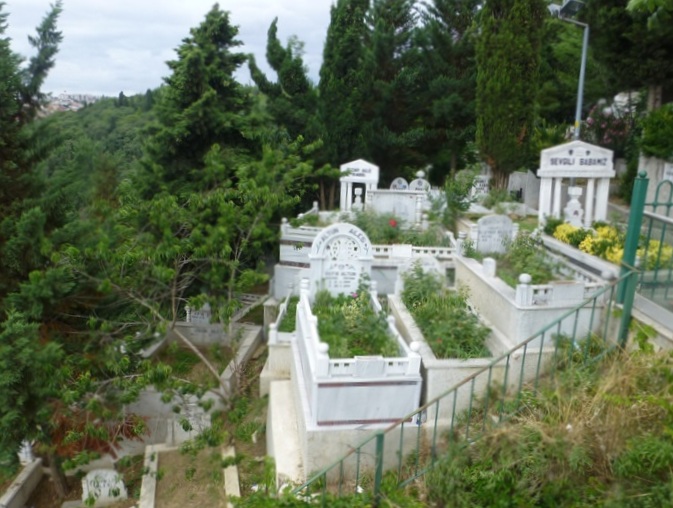
Tombstones, vying for closeness to the sacred mausoleum of Abu Ayyub al-Ansari, pack alongside the path winding up to the Golden Horn lookout point.
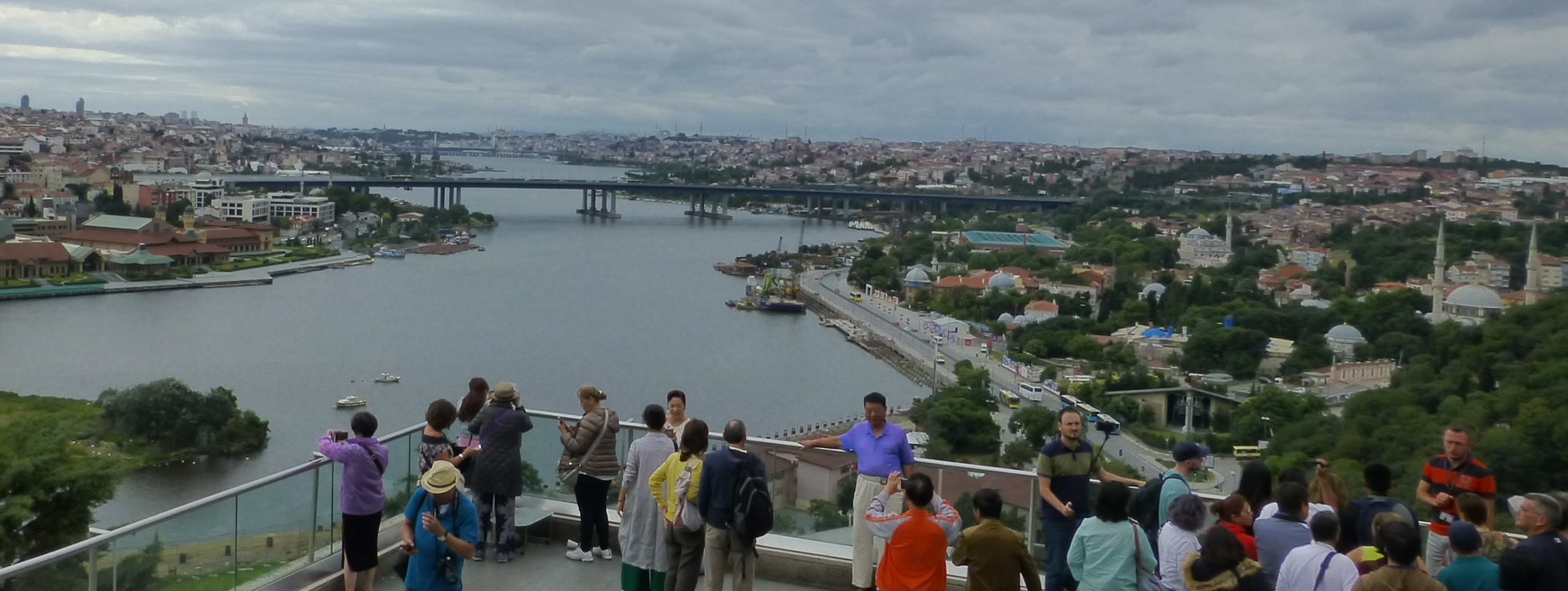
View of the golden Horn
Istanbul is actually three cities. On the east side of the Bosphorus, the wide artery connecting the Sea of Marmara (which accesses the Mediterranean) and the Black Sea, is the Asian city. The newer city, Pera (Beyoglu), lies on the north side of the Golden Horn. The historical ancient city, Eminonu, lies on the peninsula, sandwiched between the Golden Horn and the Sea of Marmara.
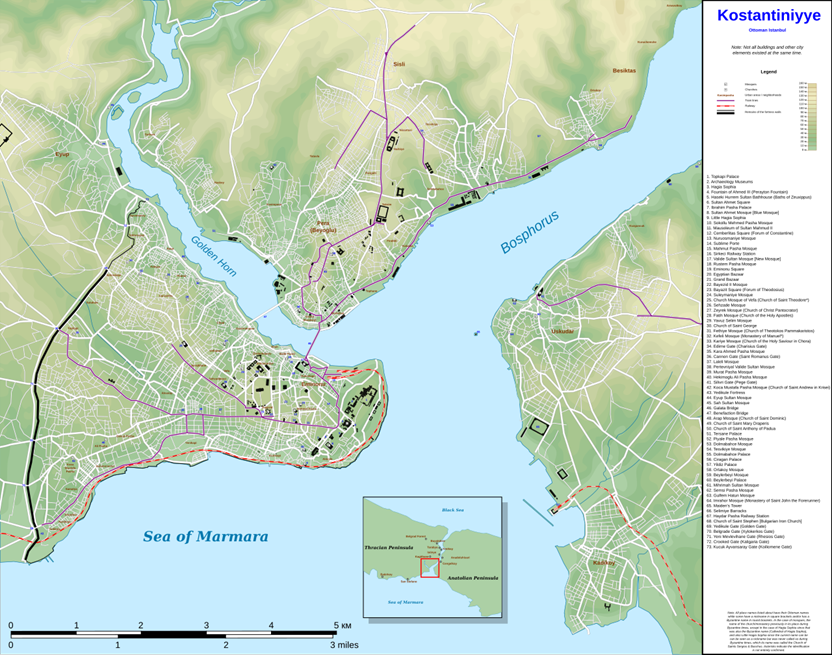
Map of Istanbul courtesy of Wikipedia
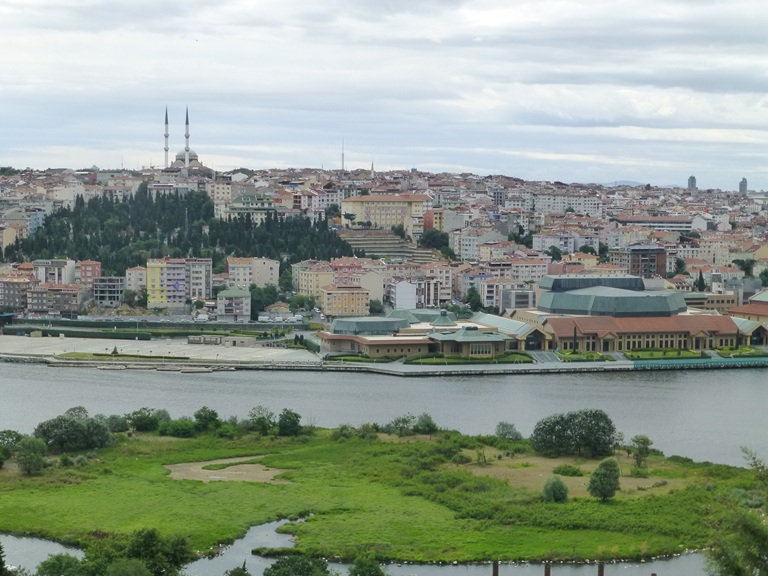
View of Istanbul across the golden Horn
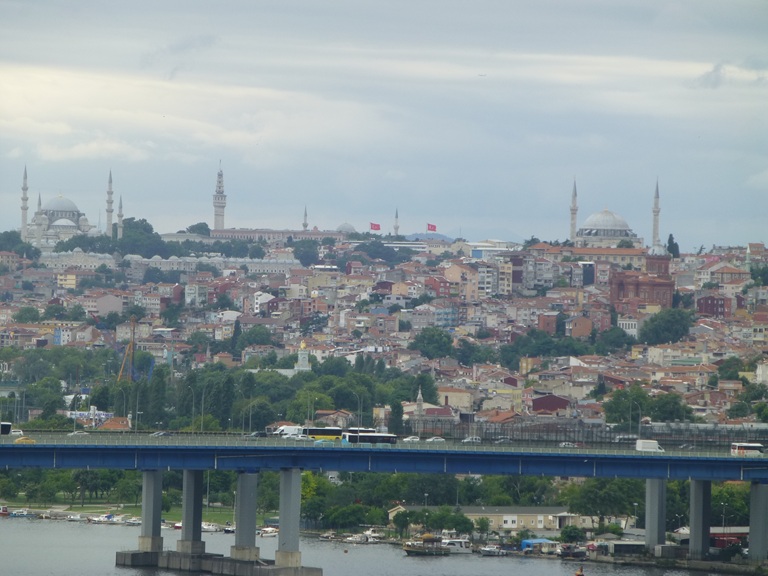
View to the north, over the Golden Horn
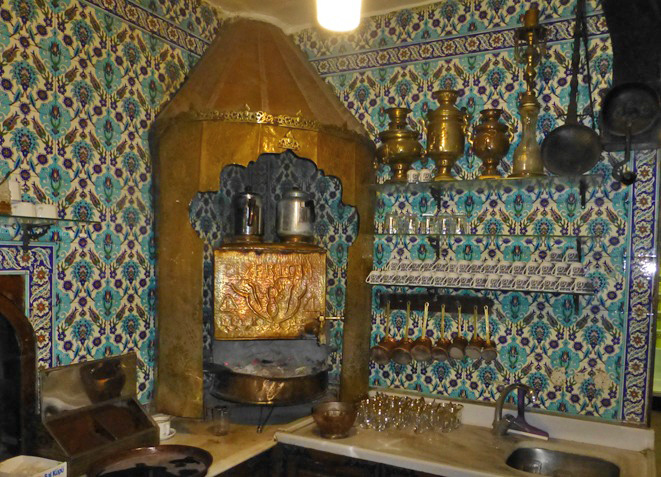
Turkish coffee apparatus in a corner of a Turkish restaurant.
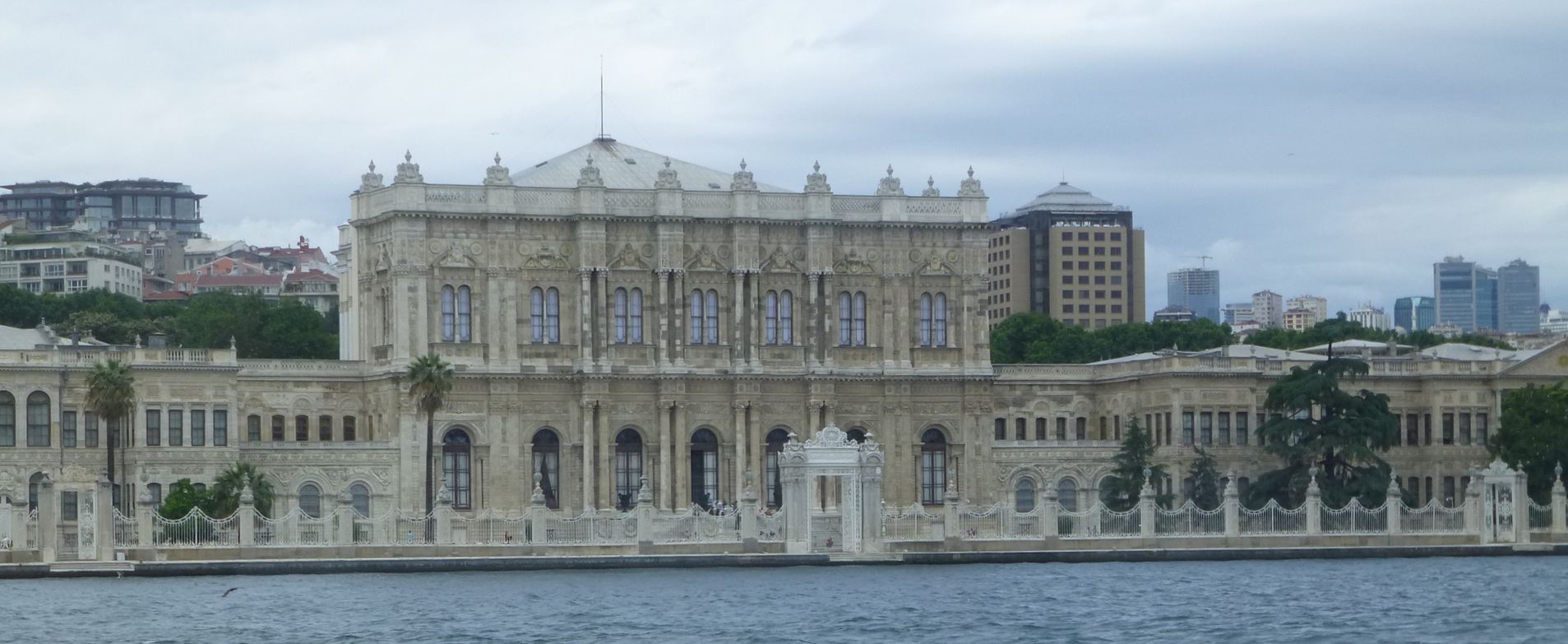
The Dolmabahçe Palace, viewed from the Bosphorus
This palace was built from 1843 till 1856 to house the main administrative center of the Ottoman Empire. It was also the residence of the sultan from 1856 to 1887, and from 1909 till 1922. The Empire’s 31st Sultan, Abdulmejid I, decided to move from Topkapı Palace, since he felt that palace no longer met the standards of style and comfort expected of a European monarch.
The cost was as high as 1.9 billion dollars worth of gold at today’s value, and forced the exchequer to debase the currency to finance it. The excessive issuance of paper money and indebting through foreign loans was part of the reason the empire eventually defaulted on its public debt by 1875. The European powers established financial control of the empire in 1881, leading to the moniker “sick man of Europe”.
After the collapse of the Ottoman Empire at the end of World War One, the founder and first President of the Republic of Turkey, Mustafa Kemal Atatürk, used the palace as his own residence during the summer. He died in the palace in 1938.
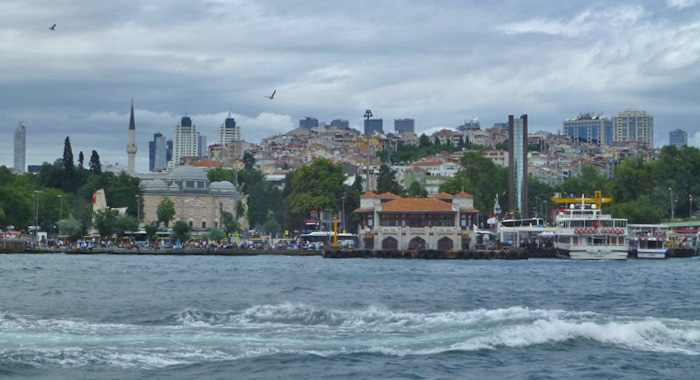
View of Karaköy Pier (Karaköy İskelesi) and Beyoğlu district, from the Bosphorus
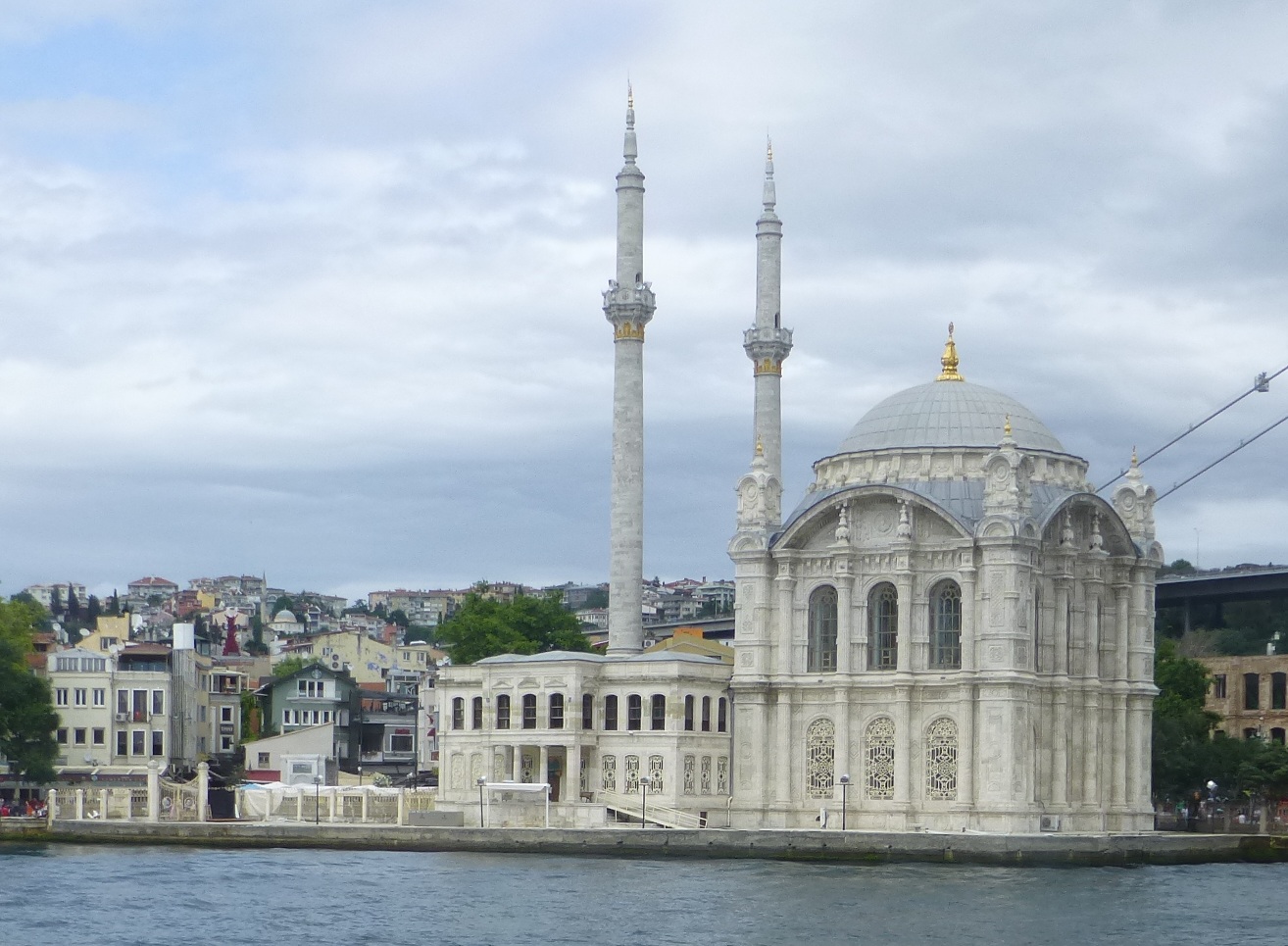
Ortaköy Mosque (Turkish: Ortaköy Camii), officially the ’Great Mosque of Sultan Abdulmejid’ is located in Beşiktaş, under the Bosphorus Bridge. It was completed in 1854 to 1856. Damaged by an earthquake in 1894, and a fire in 1984, it has undergone a number of restorations.
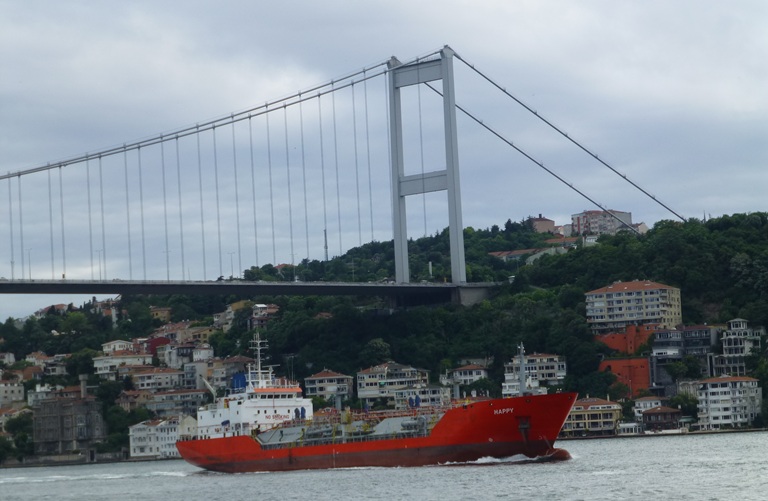
Ship plying the Bosphorus Strait
The first bridge across the Bosphorus is the 15 July Martyrs Bridge, also known simply as the Bosphorus Bridge, completed in 1973, and is 1074m long. Further north is a second bridge, the Fatih Sultan Mehmet (Bosporus II) Bridge, 1090 m, completed in 1988. A third bridge, a hybrid cable-stayed suspension bridge, the Yavuz Sultan Selim Bridge, was opened in 2016, and is 2164m long.
The Bosporus, or Bosphorus, Strait is a natural stretch of water which forms the border between Asia Minor (Anatolia) and Thrace (Turkish Europe, bordering Greece and Bulgaria), between the Black Sea and the Sea of Marmara, which leads through the Dardanelles Strait to the Mediterranean.
The Bosphorus Strait is 31km long, and has a width ranging from 700m to 3420m, and a midstream depth ranging from 13m to 110m.
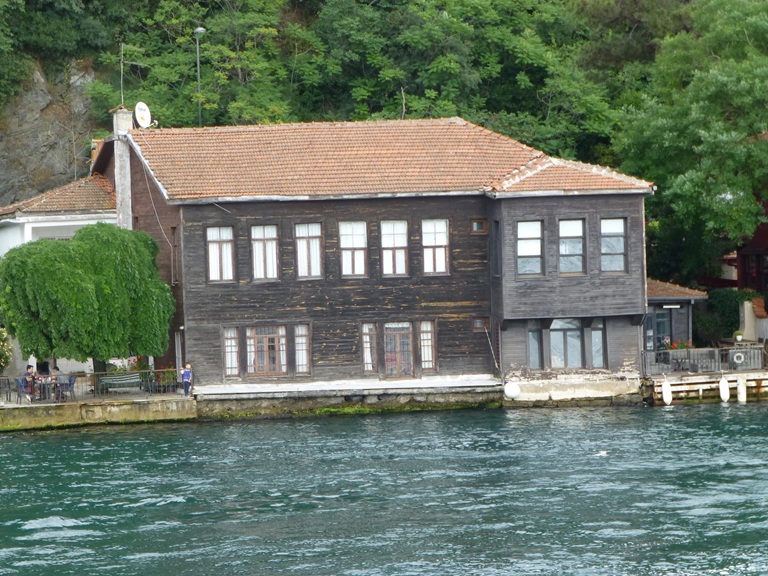
House along the Bosphorus
The Bosphorus is the only sealane granting access to the Black Sea, and has been the target of many military conflicts in the past. It was demilitarised, and placed under the control of the League of Nations, by the Treaty of Sèvres in 1920, following the collapse of the Ottoman Empire during the First World War. The Treaty of Lausanne (1923) restored Turkish sovereignty over the Straits, but guaranteed free passage to all foreign warships and commercial shipping.
The Montreux Convention Regarding the Regime of the Turkish Straits of 20 July 1936 is still in force, and allowed Turkey to remilitarise the straits, but retains the international shipping lane status, with the exception that Turkey retains the right to restrict the naval traffic of non-Black Sea states.
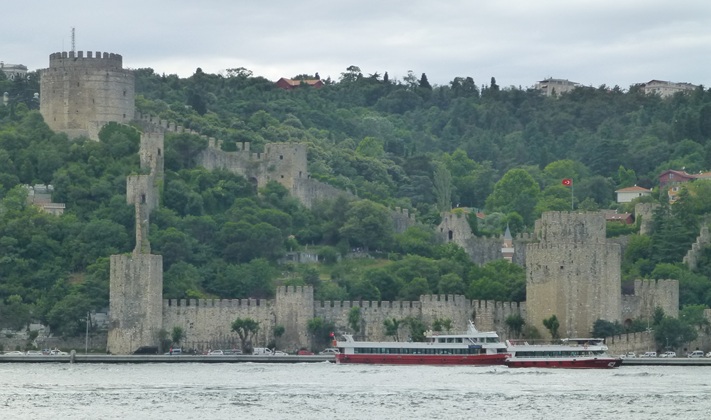
Roumeli Hissar Fortress, north of the bridge, from the Bosphorus.
Built between 1451 and 1452 CE on the orders of Sultan Mehmed II, this castle is also known as the “strait-cutter”, because in the final years of the siege of Constantinople (culminating in its fall in 1453), it was built to act in conjunction with a pre-existing fortress on the opposite bank, Anadoluhisari (“Anatolian Fortress”), to prevent Constantinople receiving aid from the north via the Bosphorus.
The Bosphorus has points where navigation is difficult and even dangerous, requiring sharp course adjustments amid strong currents and limited visibility around bends. For this reason, there is a proposal to build a 80km canal west of the Bosporus, to reduce the risk presented by oil tankers and other cargo ships.
In 2022, Turkey raised the levies on freight ships 5-fold to 4 US dollars per ton.
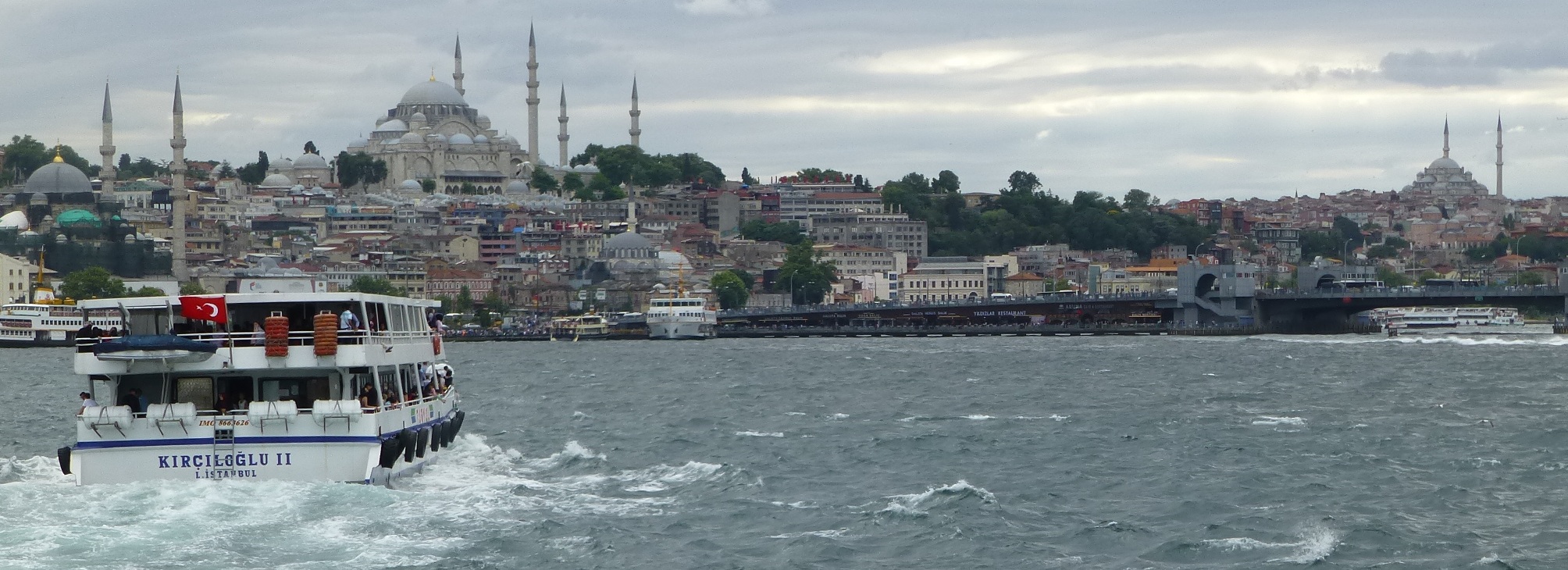
View of Golden Horn and Süleymaniye Mosque from the Bosphorus
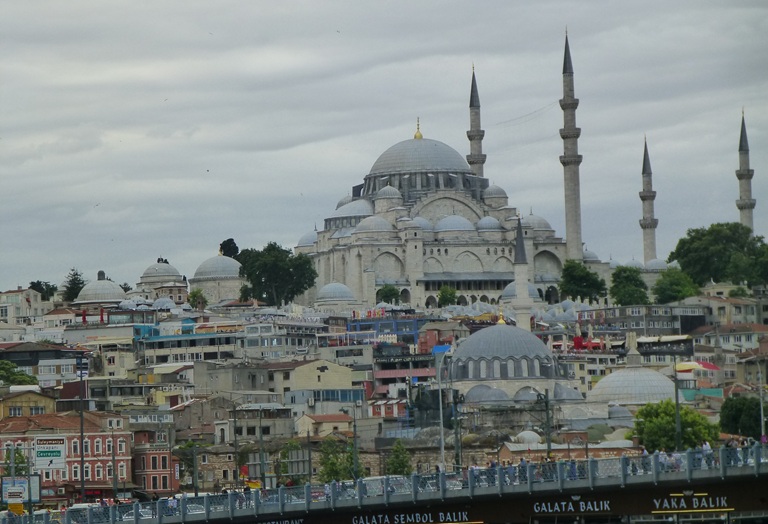
View of Süleymaniye Mosque from the Bosphorus
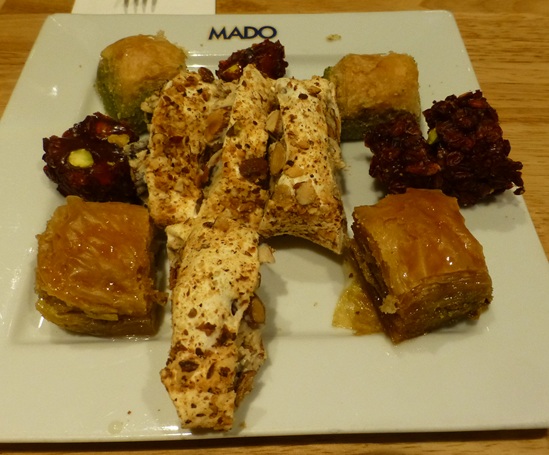
Turkish delights
Travel Diary
The tour was guided by Kenan, and we started with the Eyup Mosque by the Golden Horn, significant for being a mausoleum marking the place where Ebu Eyüp el-Ansari, a companion of Mohammed, was buried. Then we moved on to Pierre Loti Hill. He was a French writer. His home, as well as a Muslim cemetery, are on the mountain side. Then we take a cable car down to a mosque complex. I helped a couple from Marseille, who were struggling with the English tour spiel. They lamented that the world has forsaken Frnech as the universal language.
Then we lose some time being shepherded to a leather jacket outlet centre, and then an hour at a department store. Hmmm…. I knew there was a reason I didn’t like these mystery guided tours.
Next, we board a large ferry boat, on which we have a great lunch and a cruise up the Bosphorus as far as the last bridge at Andadolou Kavagi, last stop before the Black Sea. We could easedrop on the other guides along the way. One was speaking Spanish, and indicating one mosque on the shore, said: “Los minaretos mas sottilos del mundo”! At the mouth of the Bosphorus there is a 2.2km suspension bridge, with a single span. It was completed in 2016.
Back to the hotel at 18:30, then out to eat near the Sultanahmet tram stop, where we speak to a carpet and Turkish lamp seller, who had studied in the US. Windy rooftop dinner of fish, and dessert at Mado. Very scrumptuous. Our waiter was an overly thin “technical boxer” from Azerbaijan.