Istanbul 2018
Day 5: Wednesday 27 June 2018
Topkapi Palace – Süleymaniye Mosque
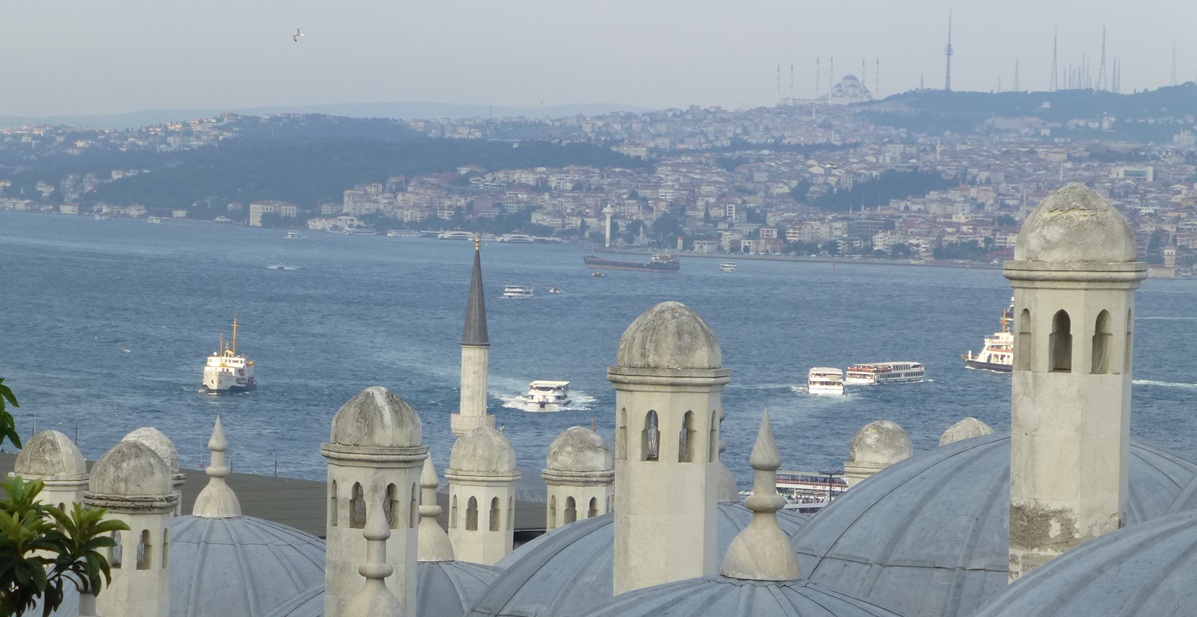
View of the Bosphorus Strait and the Asian side of Istanbul.
The congestion of watercraft across the strait has been alleviated by the construction of the Marmaray project, a 13.7km long undersea railway tunnel, which open in 2013. 1400m of the tunnel runs 55m beneath the strait, connecting Europe and Asia.
There is also a 5.5km undersea water supply tunnel, bringing water from the Asian side to the European city, and a 5.4km road tunnel, the Eurasia Tunnel, for road vehicles, completed in 2016.
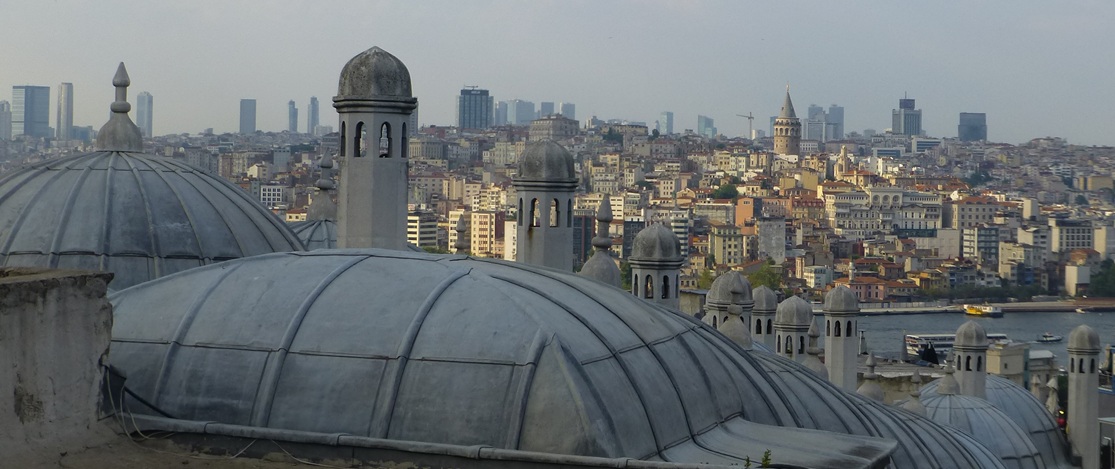
View of Istanbul from Topkapi Palace, towards the north, across the Golden Horn to the district of Karaköy, with its iconic Galata Tower (Galata Kulesi). This watchtower dominates the skyline on top of the hill, which rises into the Galata part of the Beyoğlu district of Istanbul. It was once part of the Walls of Galata, which have mostly been demolished.
Justinian I (again!) had a tower erected in the area which would become Galata, but this was destroyed during the Sack of Constantinople in 1204. In 1267m a Genoese colony established itself in Galata, surrounded by walls, with the Galata Tower at the highest point, built in 1348. At 66.9m, it was the tallest structure in the city at the time.
Although damaged by fire, and undergoing several restorations, including a new roof in the 1960s, it remains a fine example of Byzantine-Genoese architecture, providing a popular museum, including a 360-degree view of Istanbul.
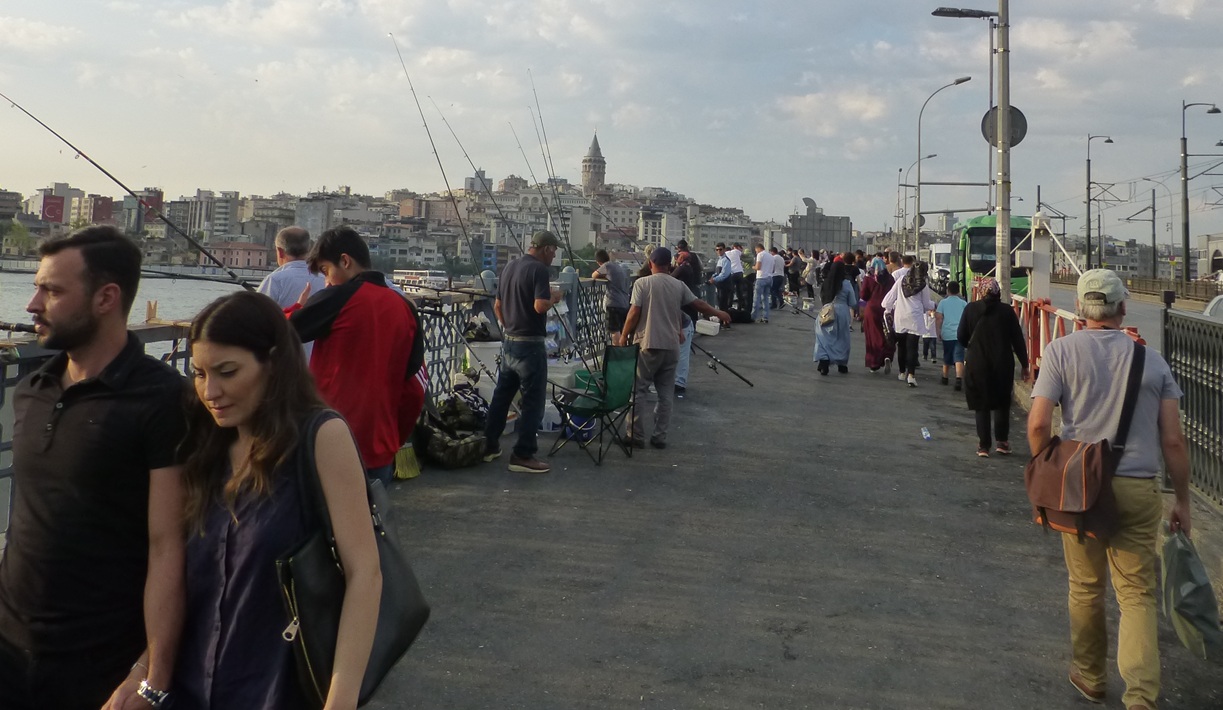
Galata Bridge, Istanbul. This bridge spans the Golden Horn. This bridge was built in 1994, and the fifth to occupy this site. Galata is the previous name for the suburb of Karaköy, which occupies the northern shore of the Golden Horn.
The first known bridge across the Golden Horn was built by Justinian the Great in the 6th century. The first bridge at this location may have been an improvised one, consisting of ships aligned side by side, by the Turks during the 1453 Fall of Constantinople.
Leonardo da Vinci was invited in 1502-3 to submit a design. His bridge would have had an unprecedented span of 280m across the Golden Horn, but was rejected. Michelangelo was also invited to submit a design, but he declined. It wasn’t until 1845 that a bridge was finally built at the Galata site. The bridge required the payment of a toll to cross. This practice continued till 1930.
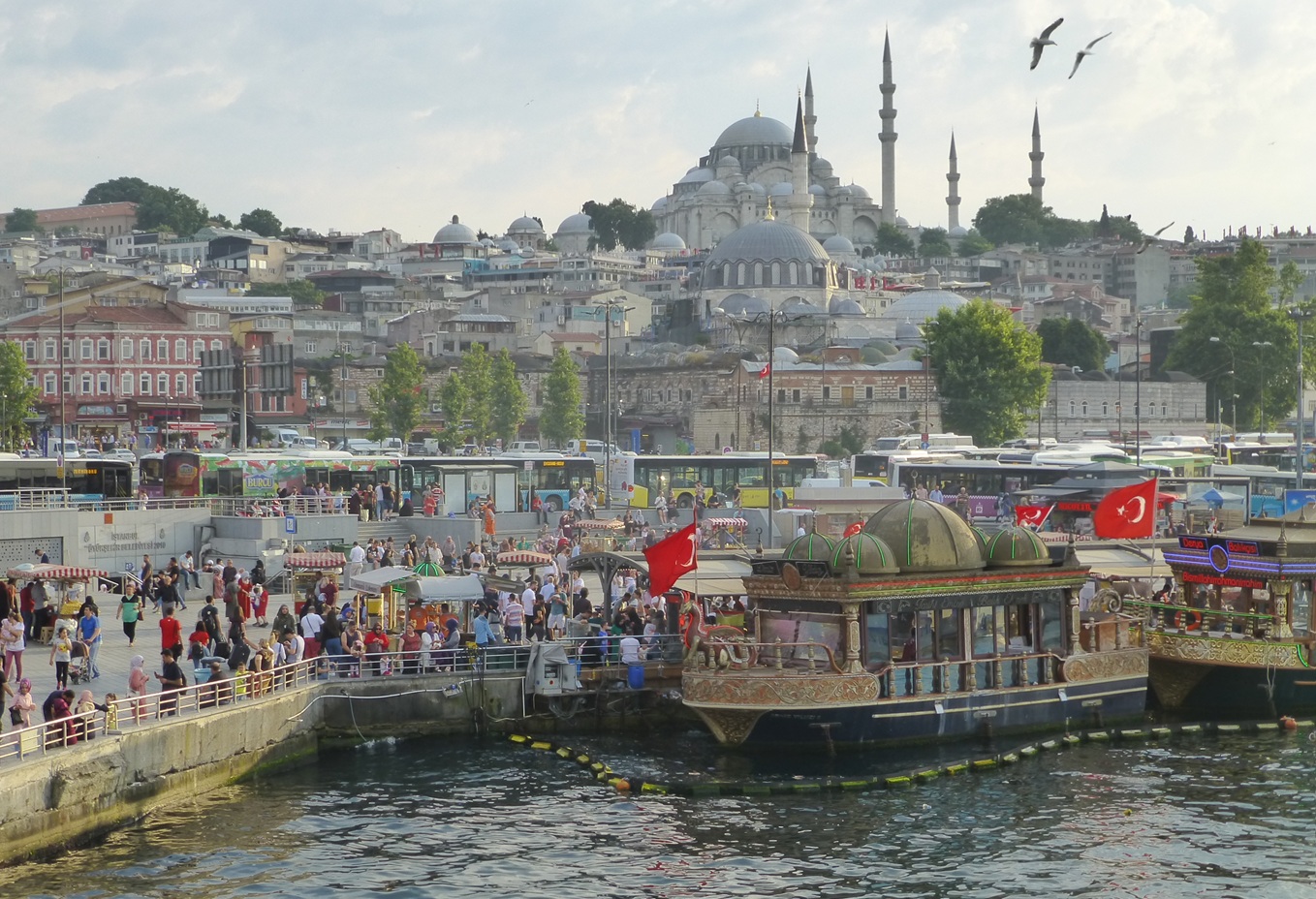
View of the New Mosque and quay from the Galata Bridge
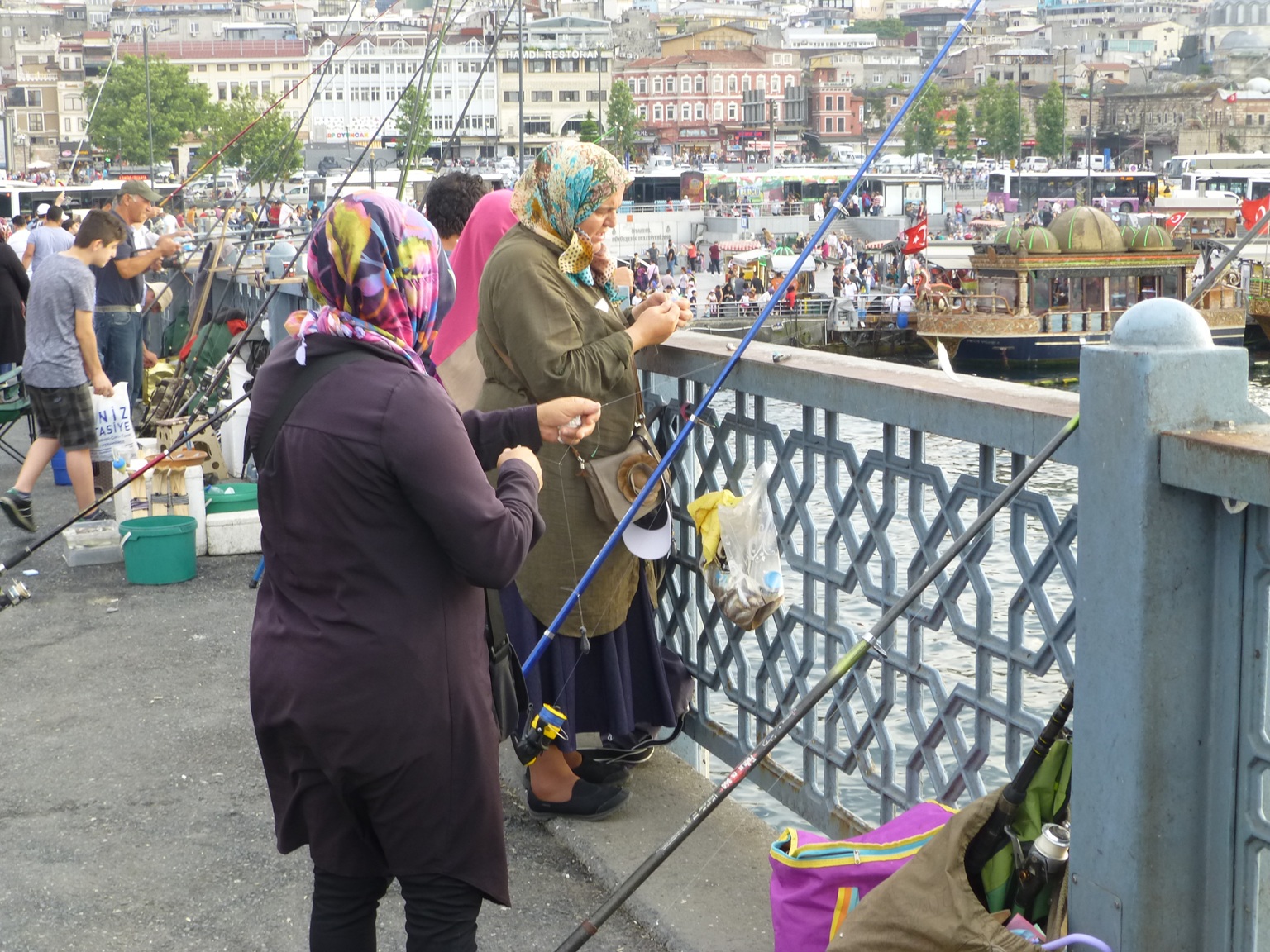
People fishing on the Galata Bridge, Istanbul
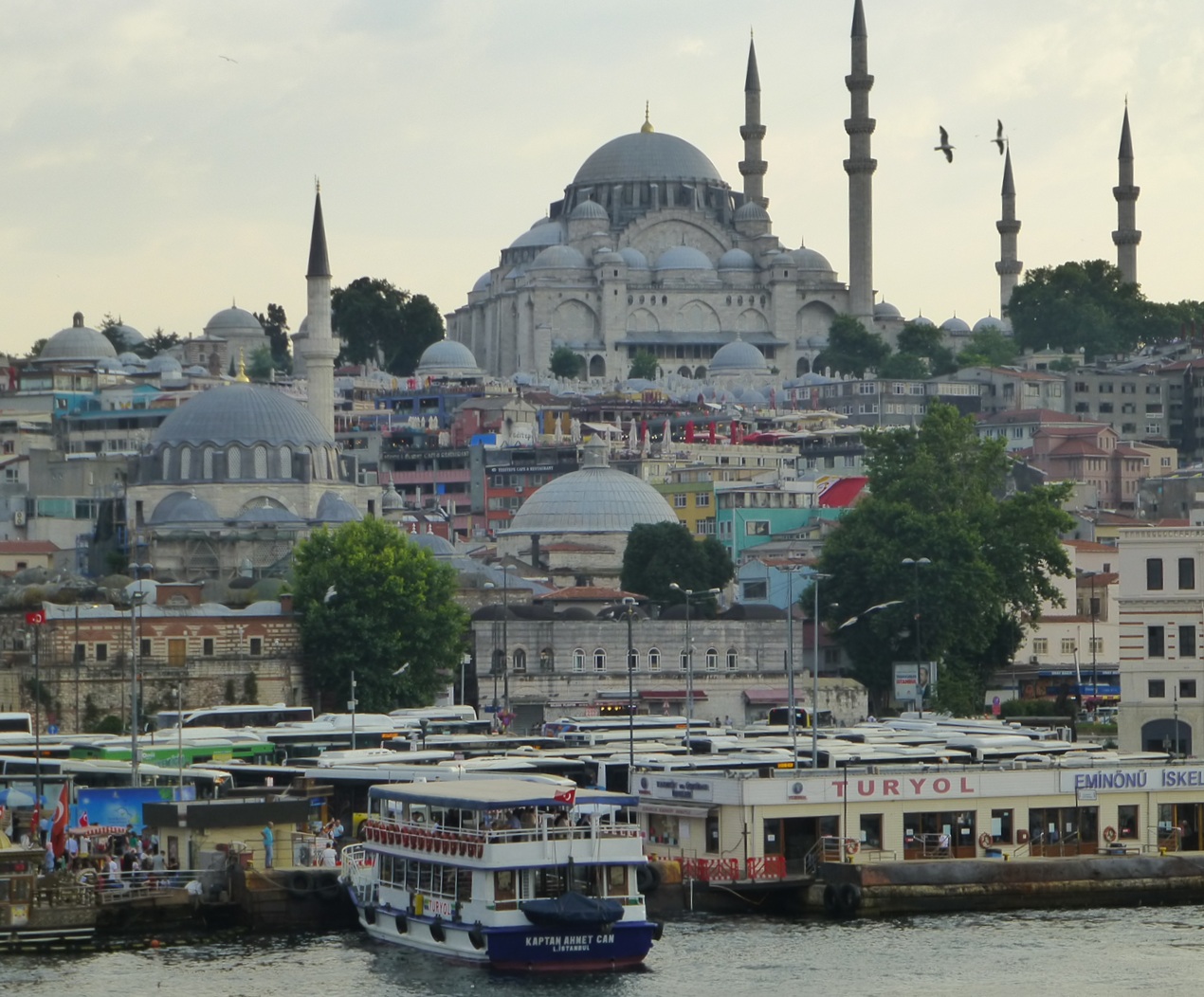
Rustem Pasha Mosque (foreground left) and Süleymaniye Mosque on the hill behind. Seen from the Galata Bridge
The Rustem Pasha Mosque was completed in 1563, and the Süleymaniye Mosque 1557. The Süleymaniye Mosque stands on Third Hill, and can be seen dominating the southern skyline from the Golden Horn and its northern shore. Behind the mosque are the mausoleums to Suleiman the Magnificent and his famous wife, Roxelana.
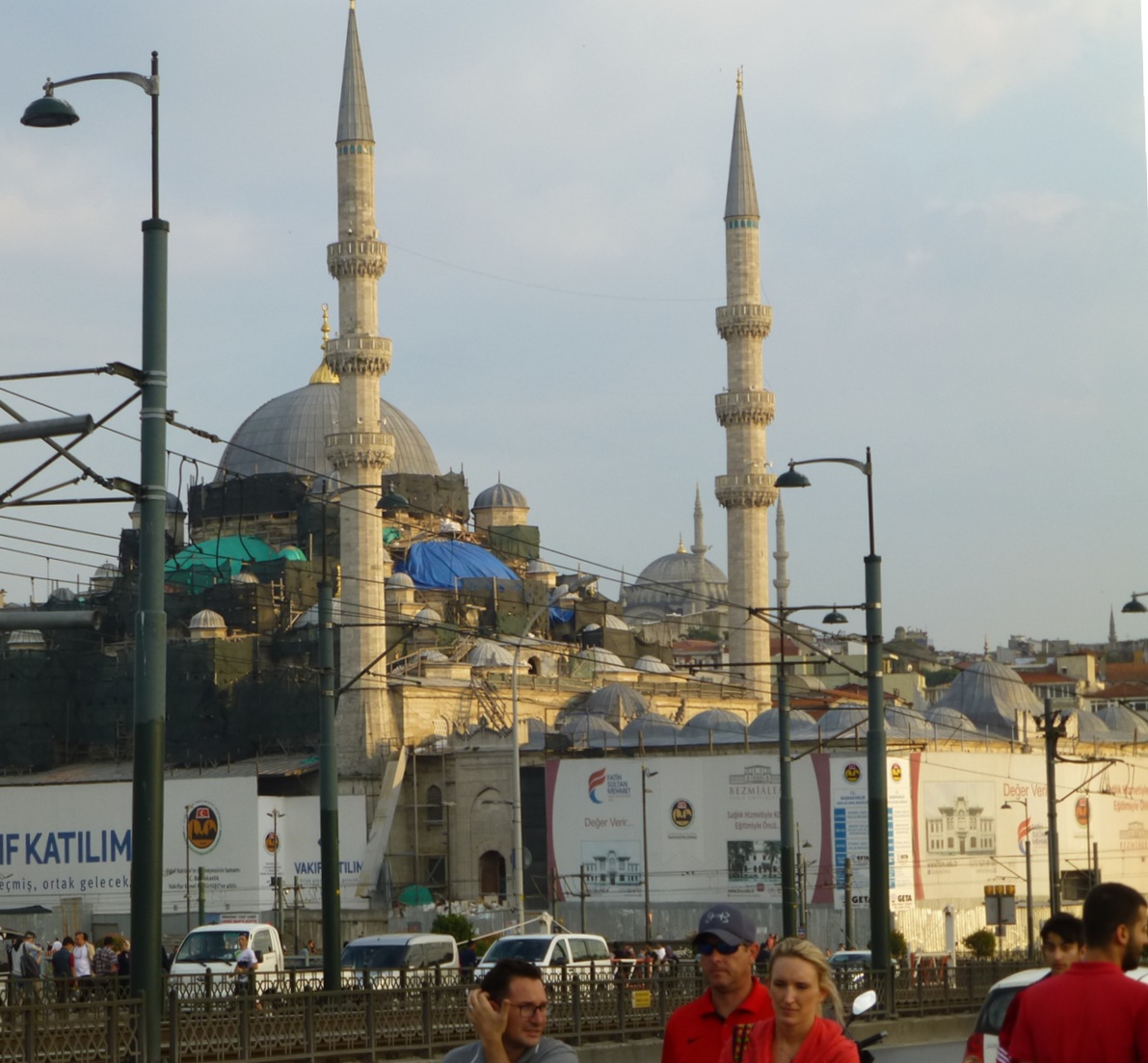
A view of the Yeni Mosque, or New Mosque, completed between 1660-1665. It lies on the southern side of the Golden Horn, in the historical district, near the Galata Bridge. It is an example of architecture of the Sultanate of Women period in the Ottoman Empire. This was a period between 1534-1683 when a number of consorts, mothers, sisters and grandmother of the sultans exerted considerable influence on affairs of state. It started during the reign of Suleiman the Magnificent (1494-1566, reigned from 1520).
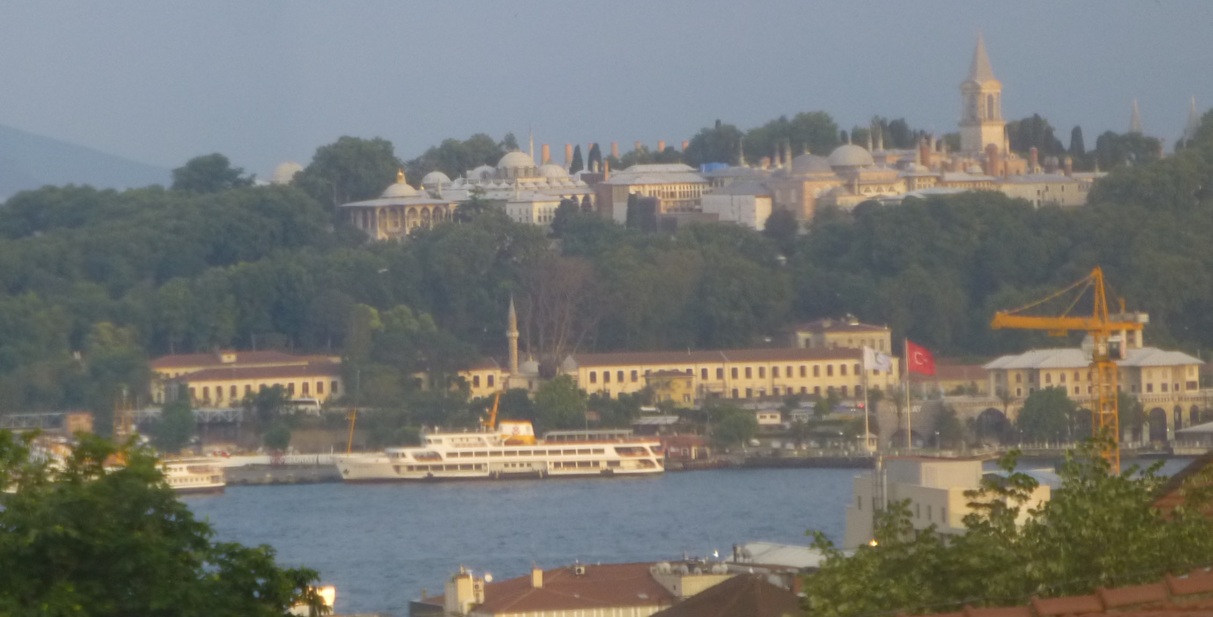
Topkapi Palace as seen from the north. Located in the Fatih district of Istanbul, from the 1460s to the completion of Dolmabahçe Palace in 1856, it served as the administrative center of the Ottoman Empire, and was the main residence of its sultans.
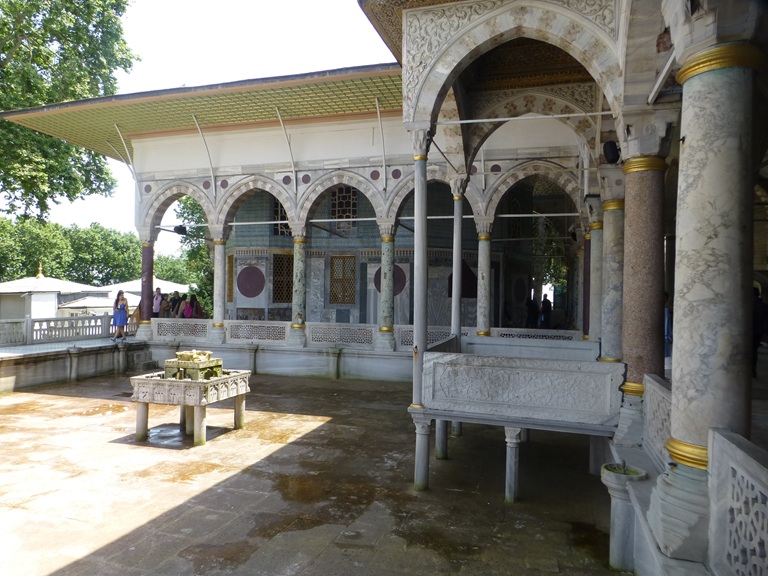
Topkapi Palace. The name means ‘Cannon Gate Palace’, and it is also known as Seraglio. Today, it is a museum and library in the Fatih District.
It was damaged by the 1509 earthquake, and a fire in 1665. The palace complex has four main courtyards, and many smaller buildings. The palace was significantly expanded between 1520 and 1560, during the reign of Suleyman the Magnificent (1494-1566, reigned 1520-1566).
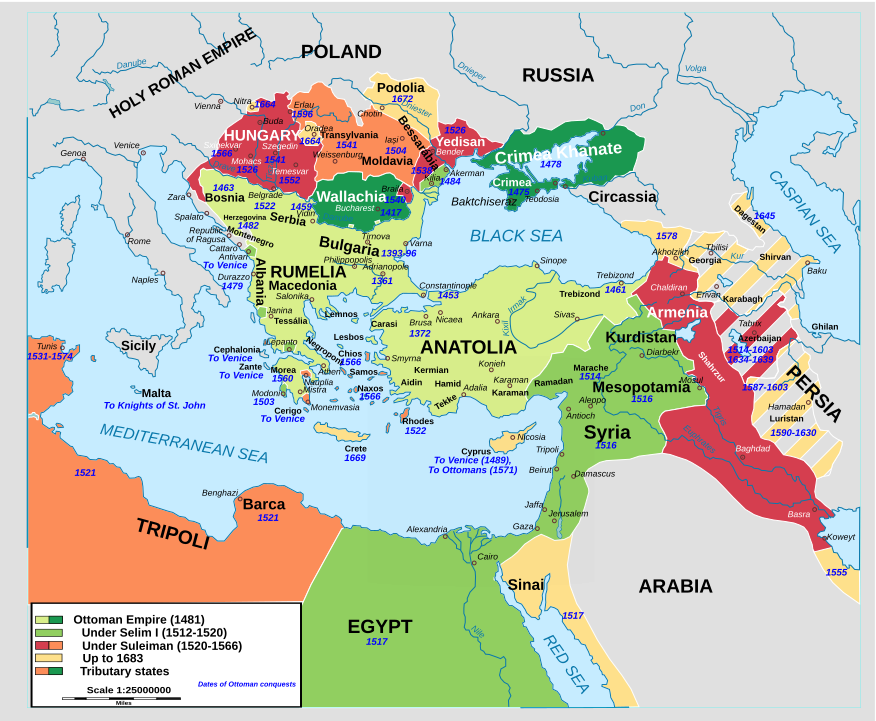
Territorial expansion of the Ottoman Empire under Suleiman, (in red and orange) including Ottoman vassals. Image courtesy of Wikipedia
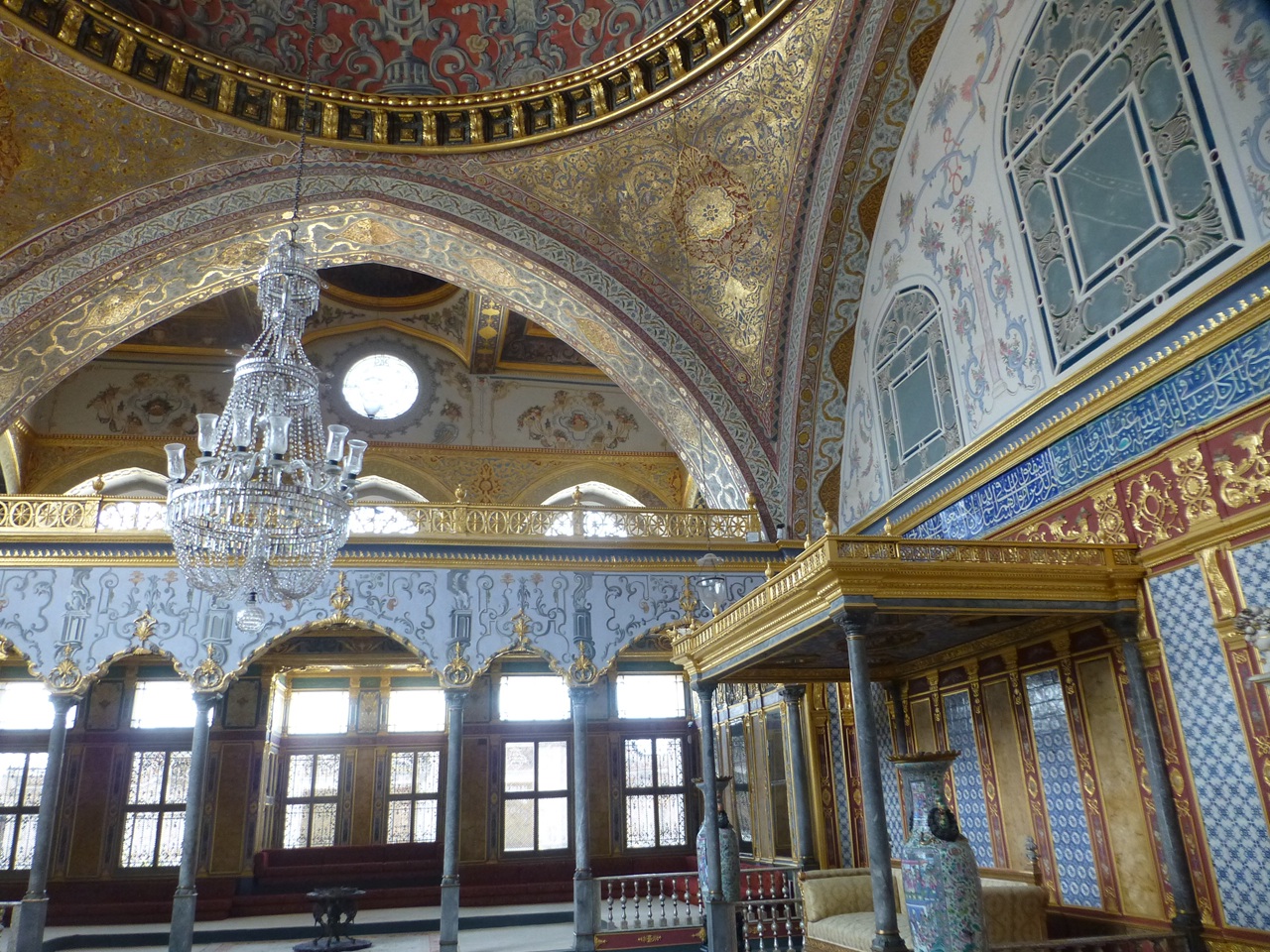
Harem room, Topkapi Palace
Female members of the Sultan’s family lived in a protected area, the harem. Although sultans had many consorts and wives, few of the children survived to adulthood.
The story goes that the eldest male heir was brought up to be the sultan, but his younger brothers and half-brothers were sent to grow up on an island (the Prince’s Island) in the Bosphorus, to await their fate. Should their elder brother survive and prove to be a worthy candidate for the next sultan, the brothers would be murdered by strangulation, to avoid bloody contests for power during the succession.
This may have the case centuries ago, but natural causes was probably a more common cause of death for the children, and the consorts did not fare much better, many dying young. For example, Sultan Abdülmecid (1823-1861, reigned 1839-1861), although he lived only to the age of 38, managed to accumulate at least 26 consorts and wives. From these, he had at least 19 sons and 27 daughters. Only half of the women lived to over 30 years of age. Only about 8 of the sons lived to adulthood, and only 7 of the girls.
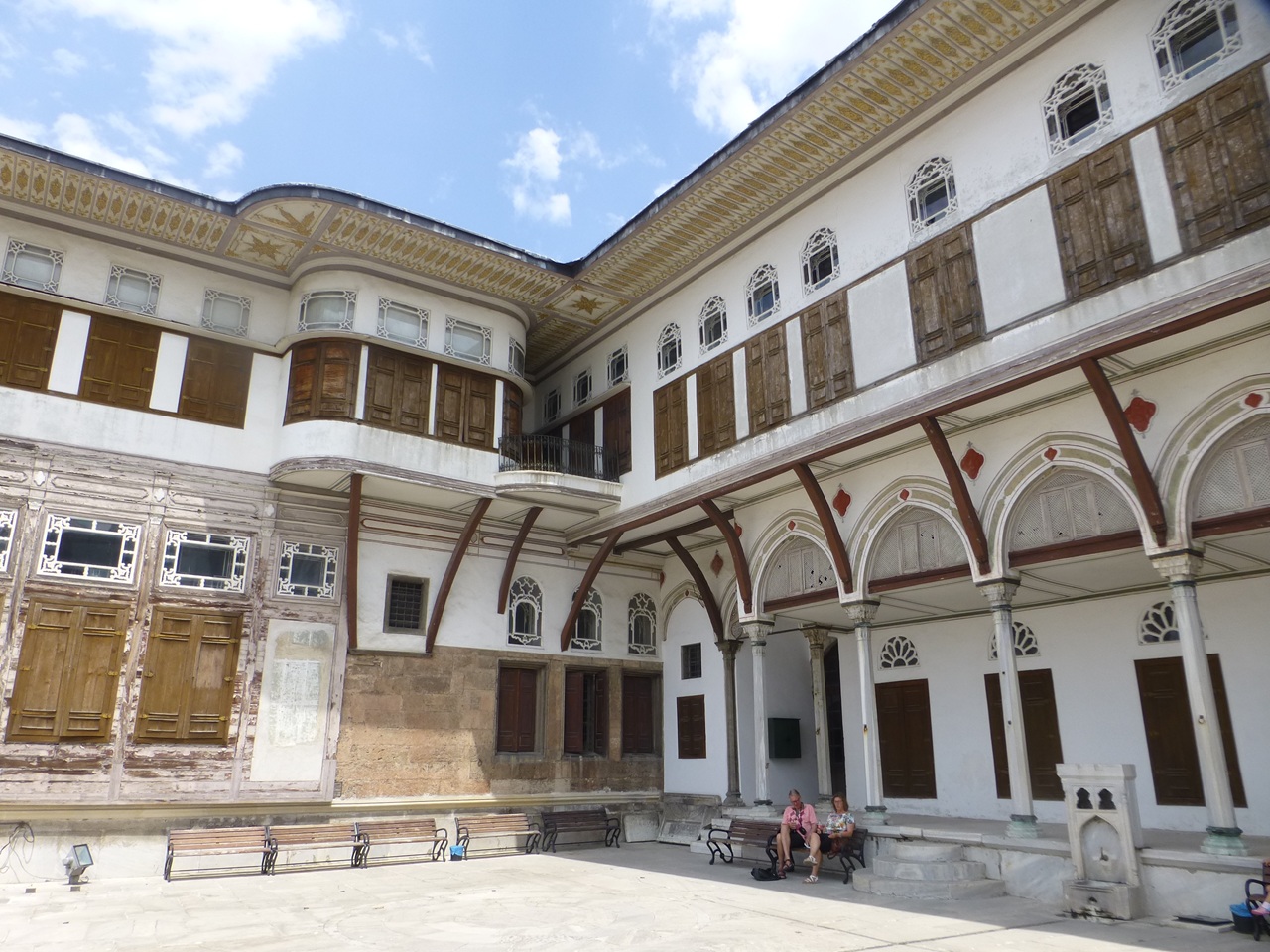
External buildings, Topkapi Palace
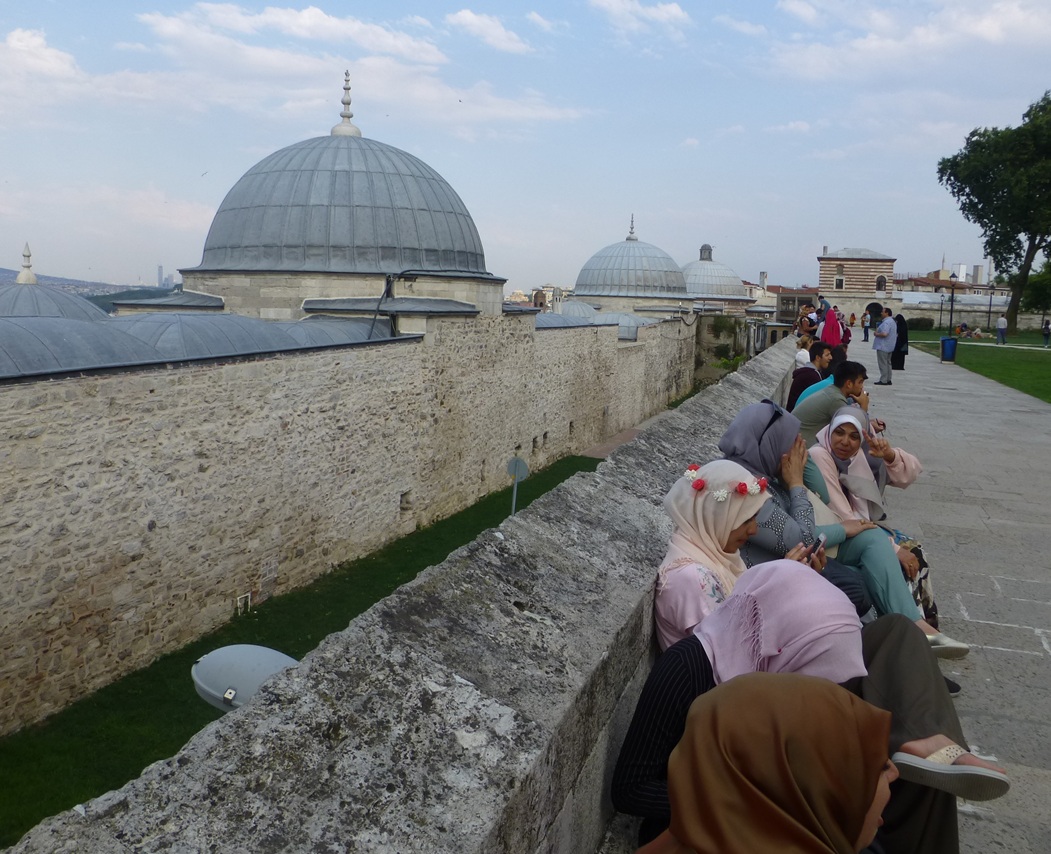
Promenade between the Topkapi gardens and the royal kitchens.
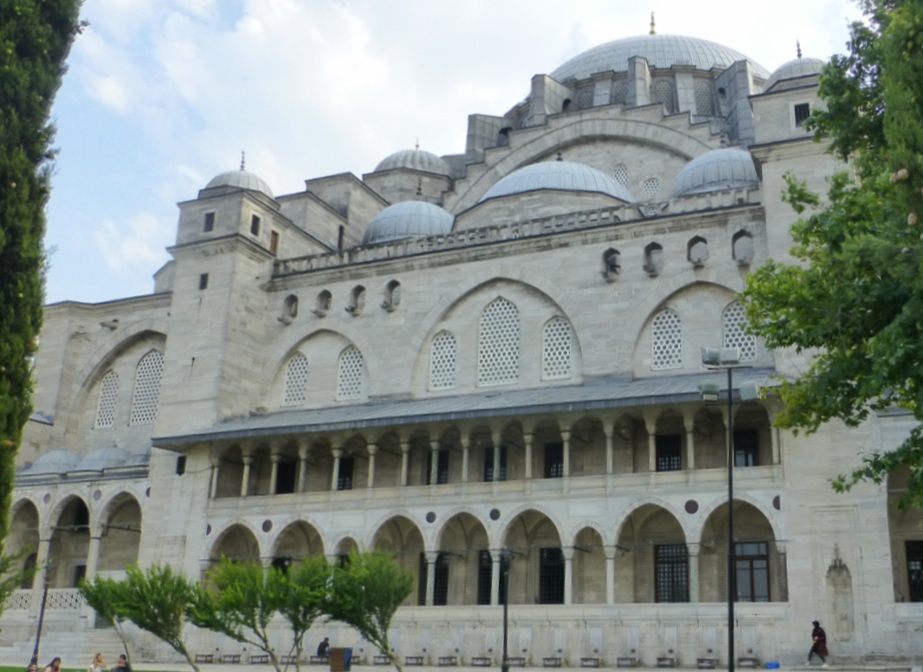
The Süleymaniye Mosque
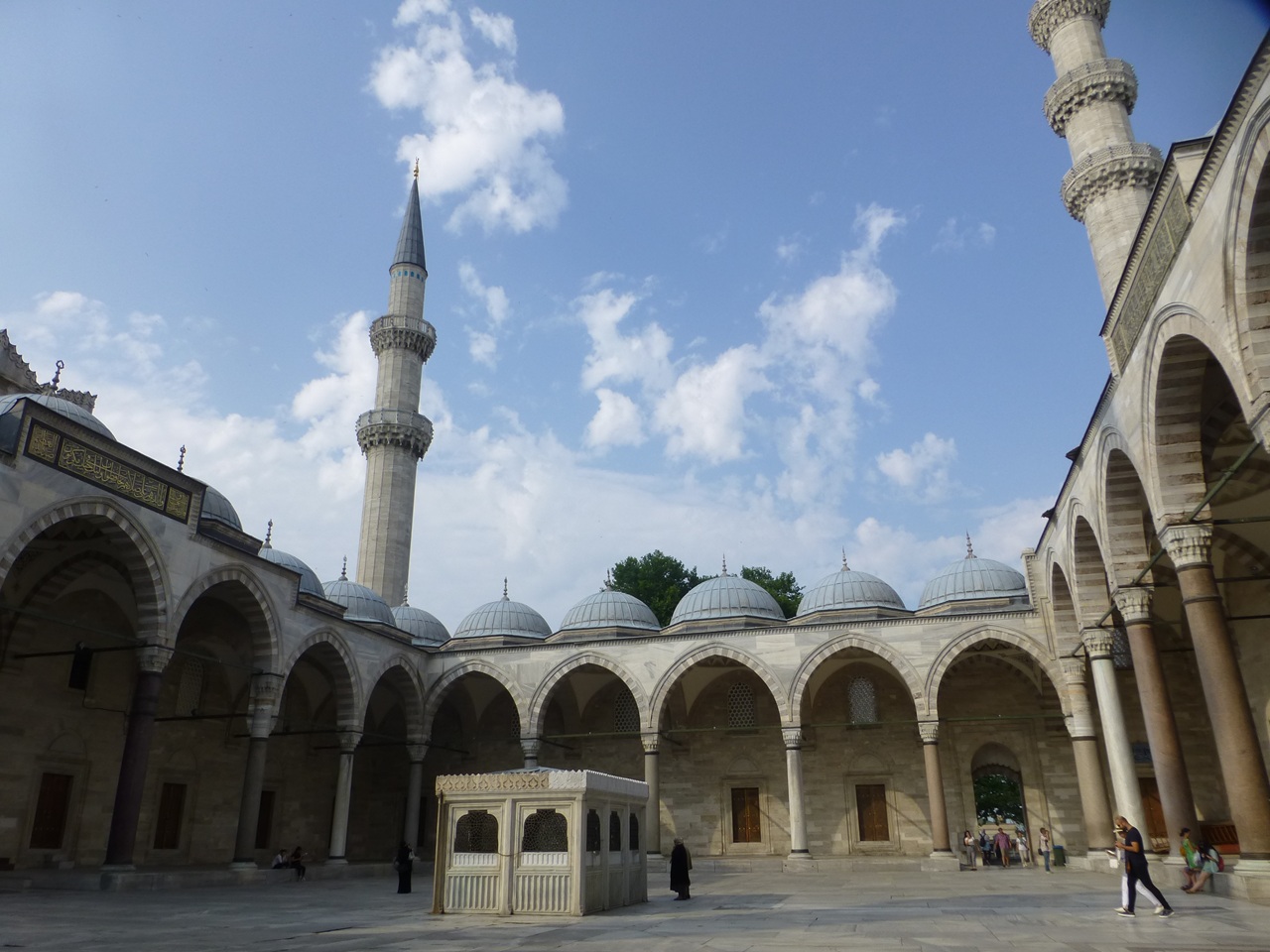
Blue Mosque large courtyard.
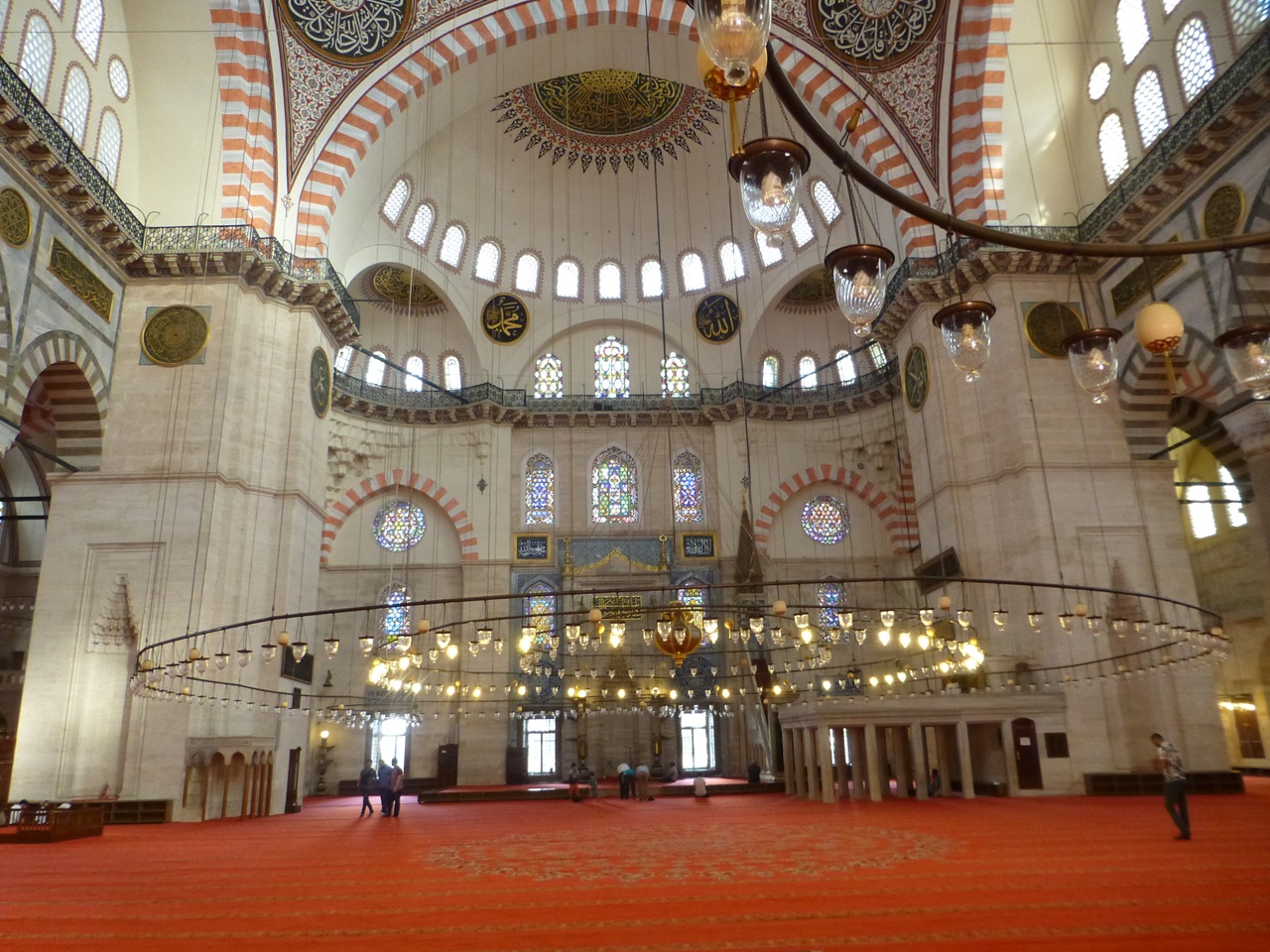
Süleymaniye Mosque interior. The interior is almost square, and is 58.5×57.5 metres, with a central dome 26.5m in diameter, 53m above the floor. The design emulates that of the Hagia Sofia.
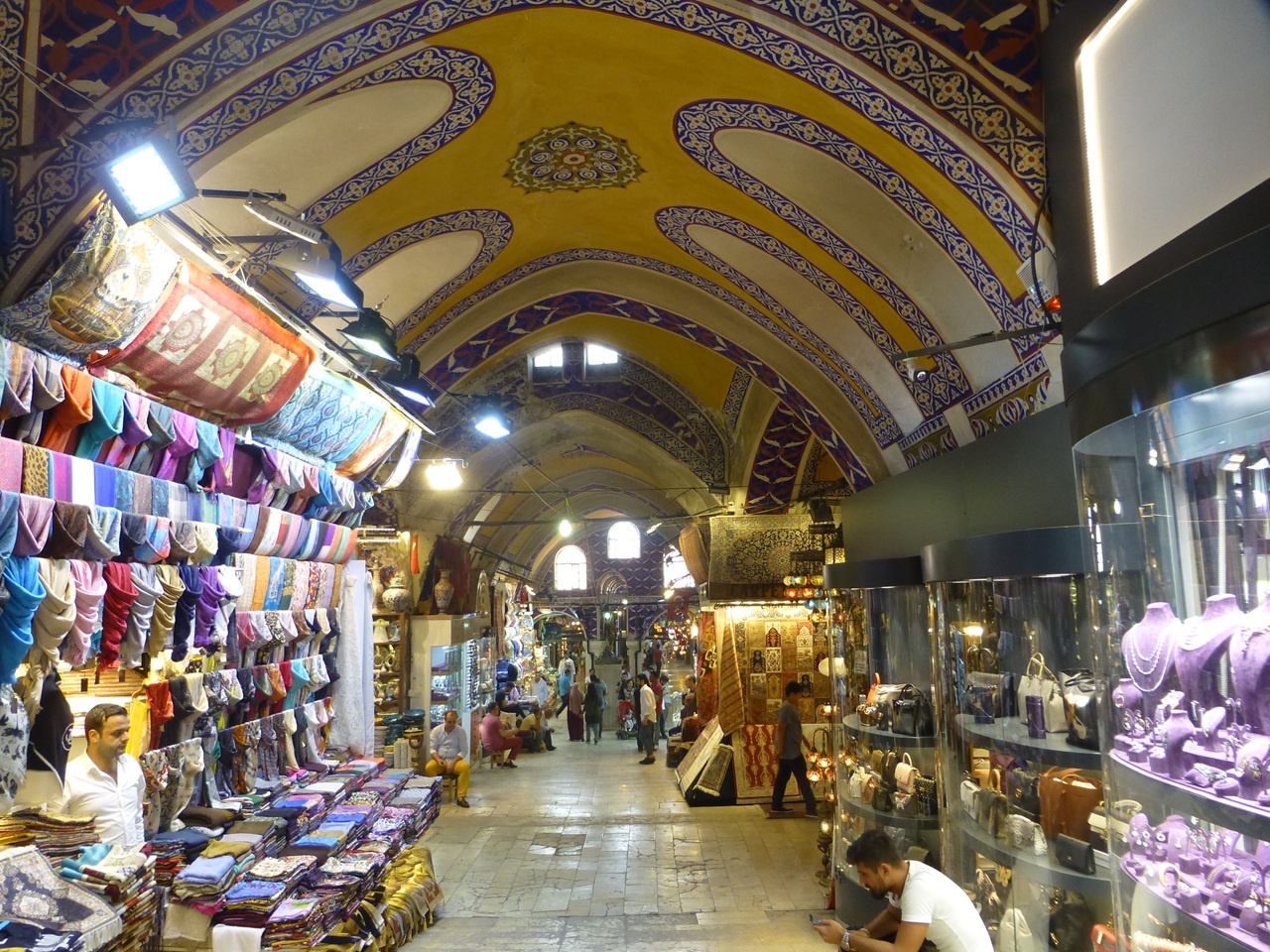
Construction of the Grand Bazaar began soon after the fall of Constantinople to the Ottomans, in 1455. The building may date even earlier, as a Byzantine Commenian eagle relief above the eastern gate suggests. Fires and earthquakes have not been kind to the Grand Bazaar. After one particularly devastating fire in 1701, several parts of the complex were rebuiit by 1730.