Baltic Sea 2022
Day 3: Saturday 28 May 2022
Copenhagen – Stockholm
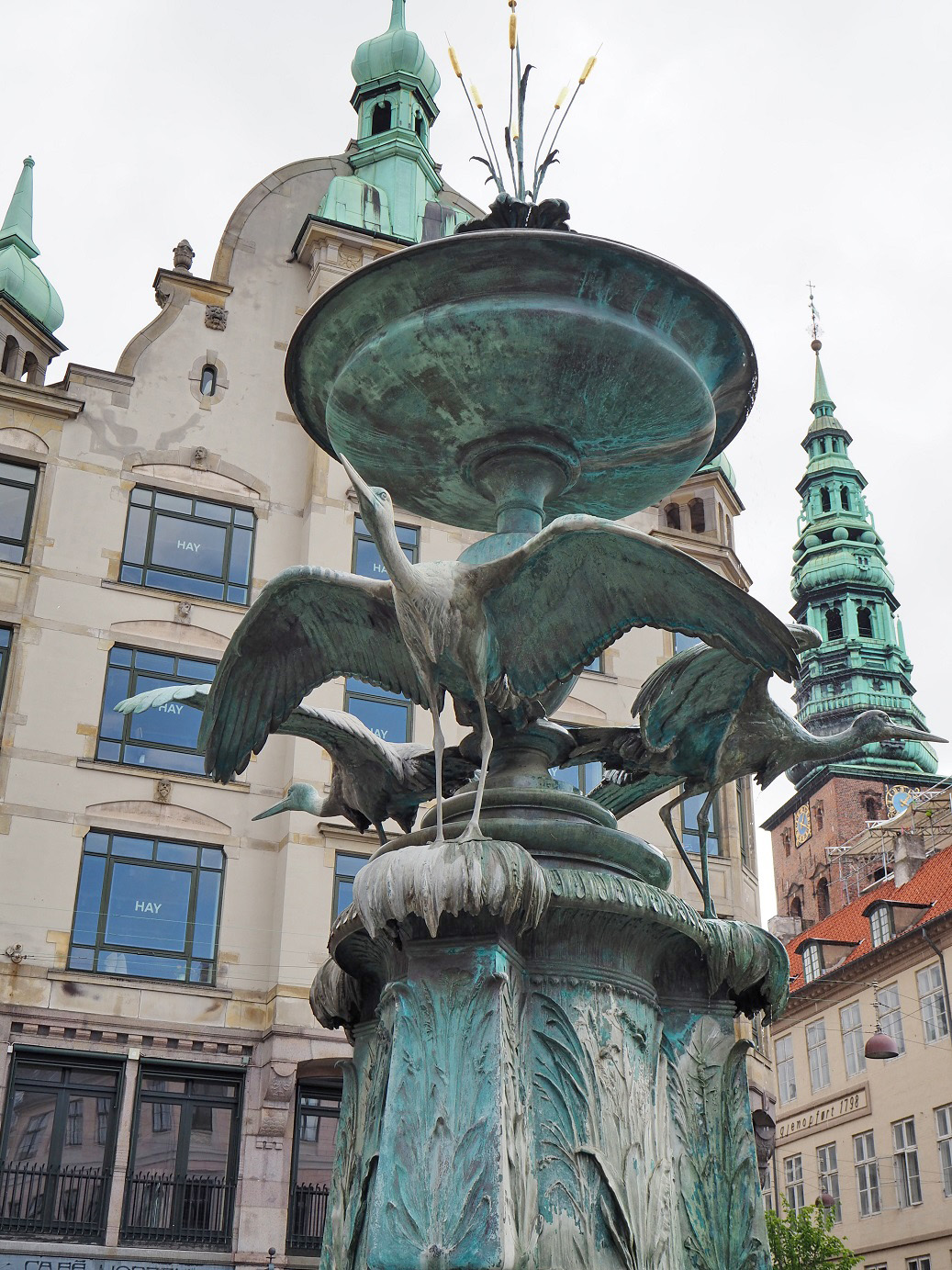
Fountain in Copenhagen. The use of copper for roof ornaments makes a pleasing composition with the street art, which is abundant in this charming town.
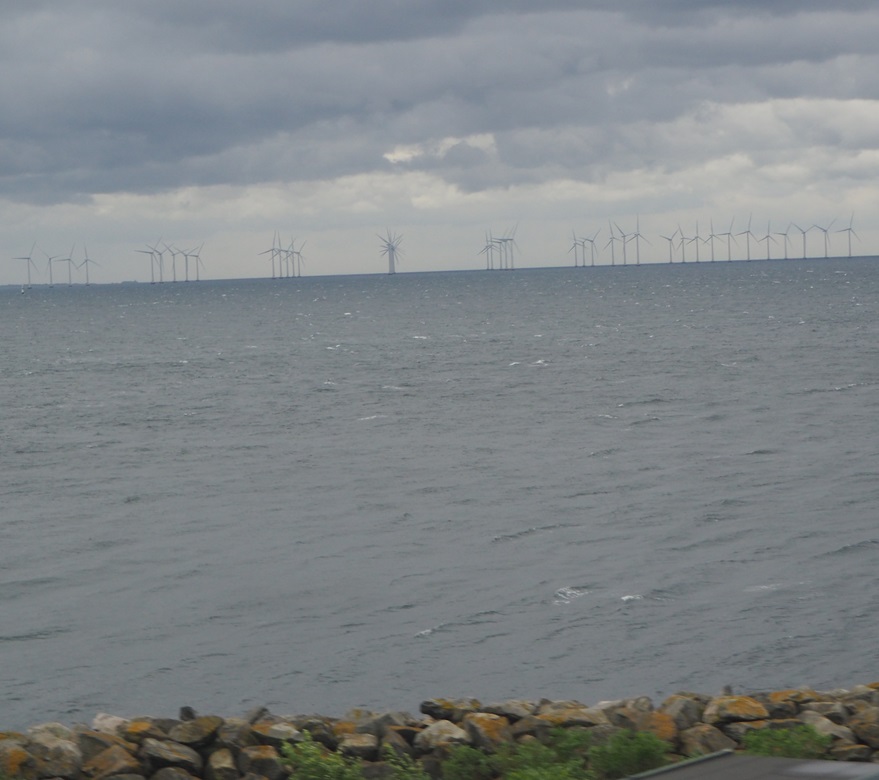
A snapshot from the train of an offshore windfarm. The world’s largest wind turbine manufacturer, Vestas, is Danish, and Denmark ranks number two in the world for wind power generation per capita, with Sweden being the leader. In 2020, wind power provided 56% of all electricity generation in Denmark. The stated objective is eliminate all fossil fuel electricity generation by 2050, in accordance with the EU plan to decarbonise. In addition Denmark has more than 2.3 GW of solar power installed (9.3%), and this is expected to reach 9 GW by 2030.
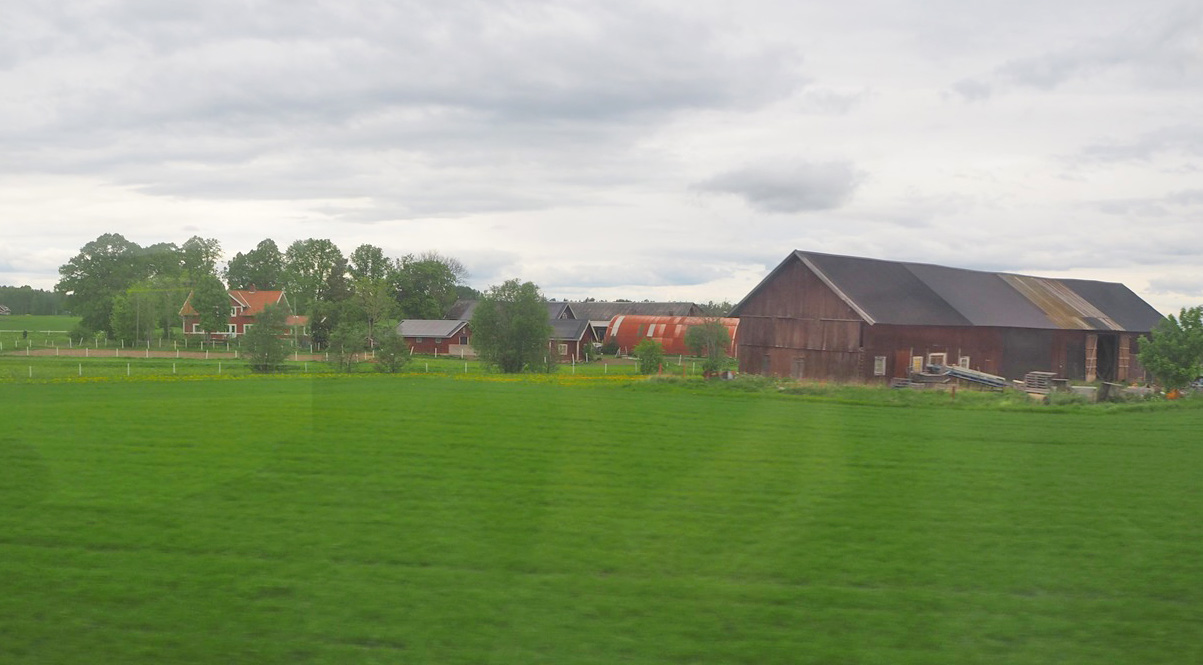
Not a great photo from the train, but serves to give an idea of the type of terrain in Southern Sweden: lush and flat. As we pass to the west of the Vättern Lake, we see much (apparently 62% of the drainage basin) spruce, pine and deciduous forest. About 26.7% of the area is dedicated to agriculture.
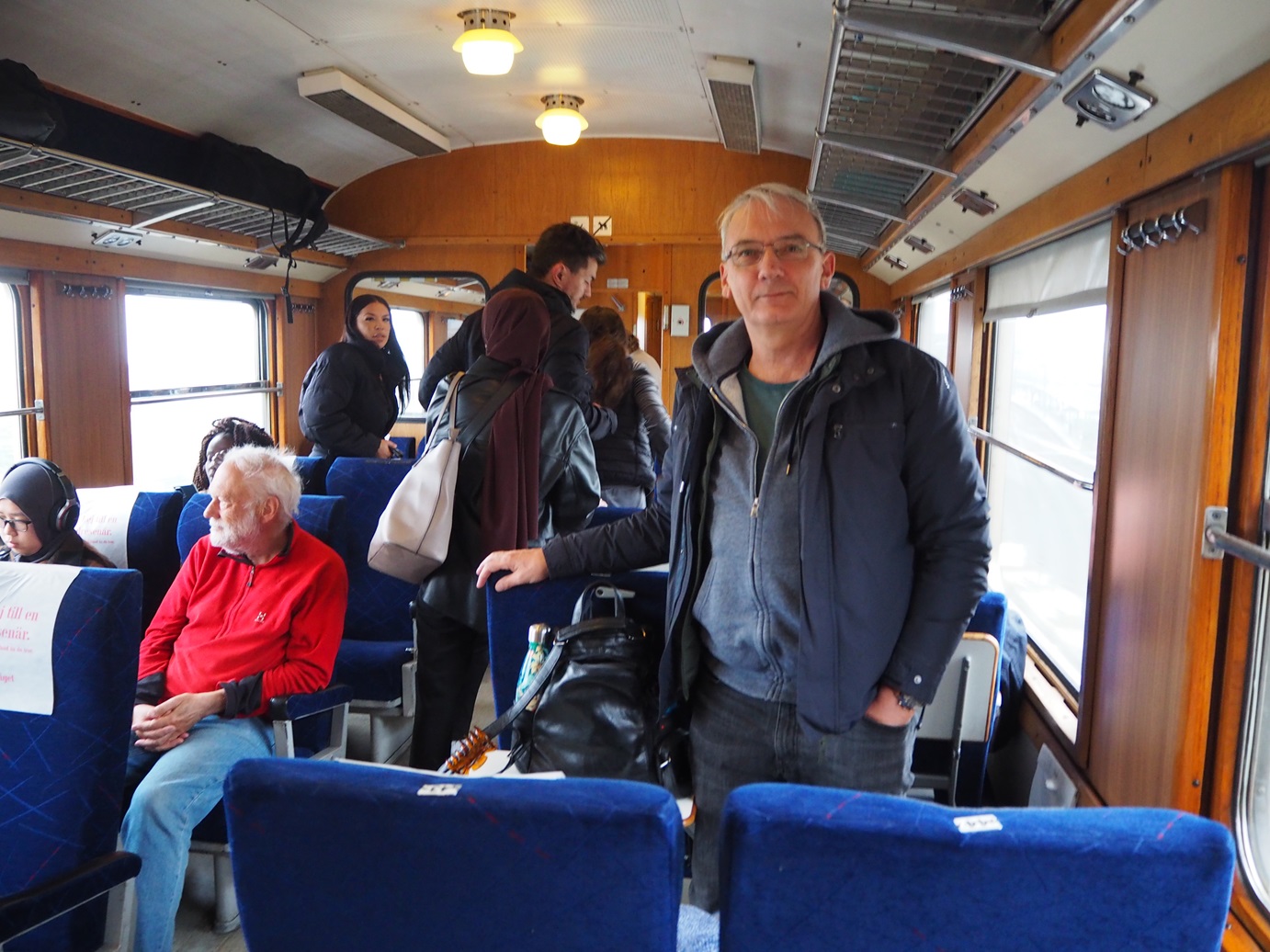
Andrew on the quite crowded train to Stockholm
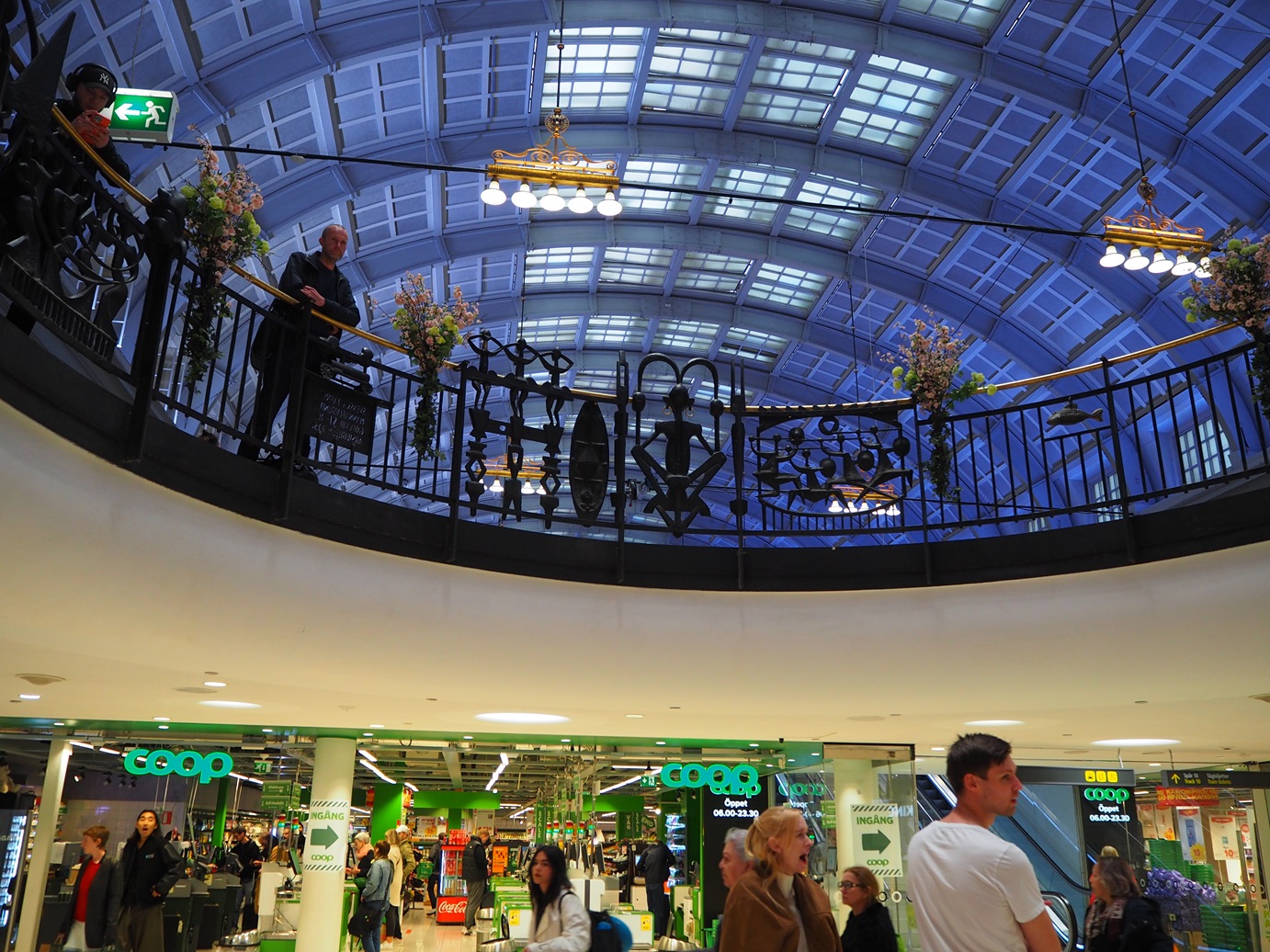
The Stockholm railway station, the largest in Sweden, is quite impressive, so much so it has been classed as a heritage site since 1986.
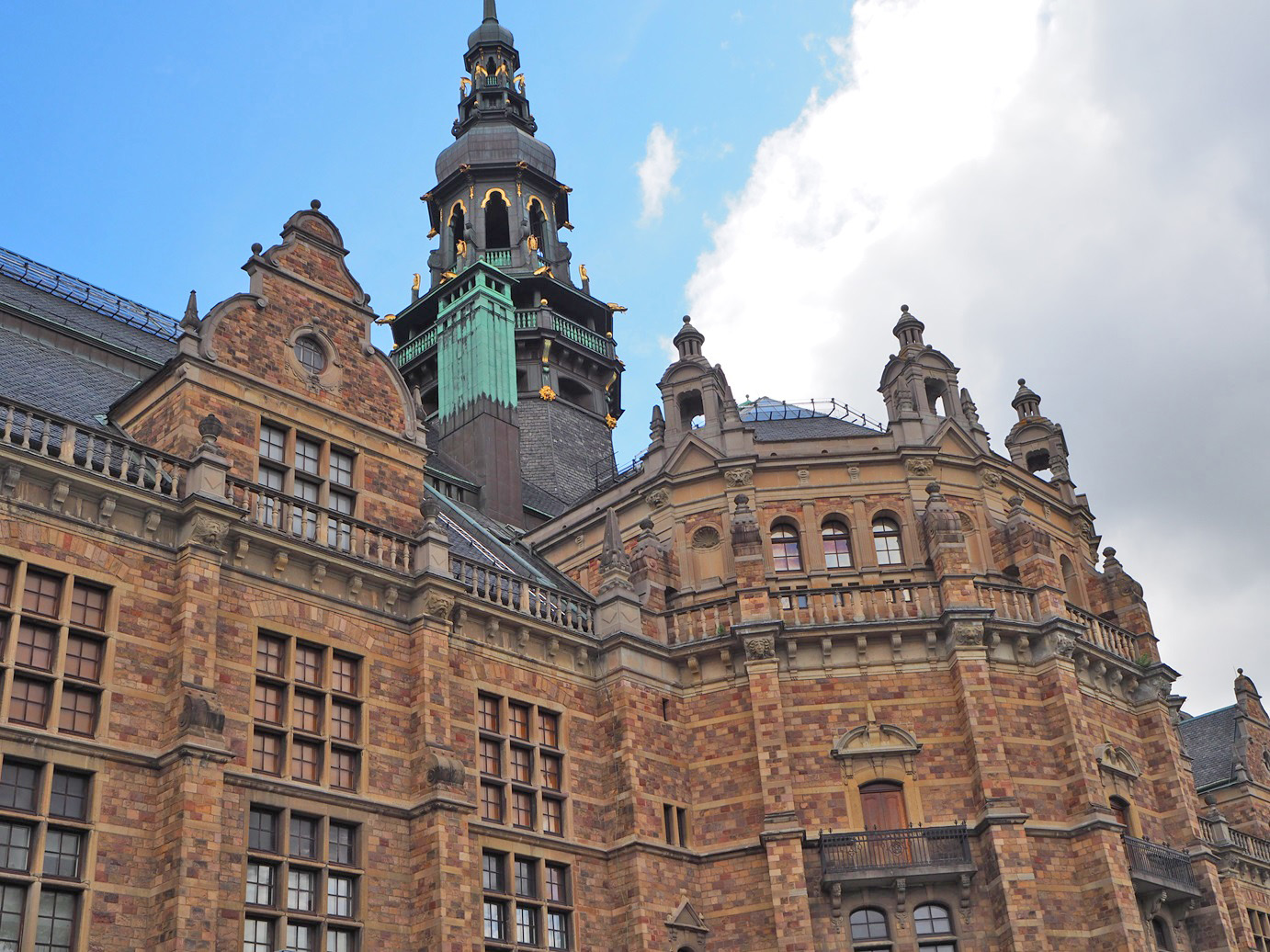
Just time for a quick look at some buildings in Stockholm, before heading to the hotel to the south of the city centre
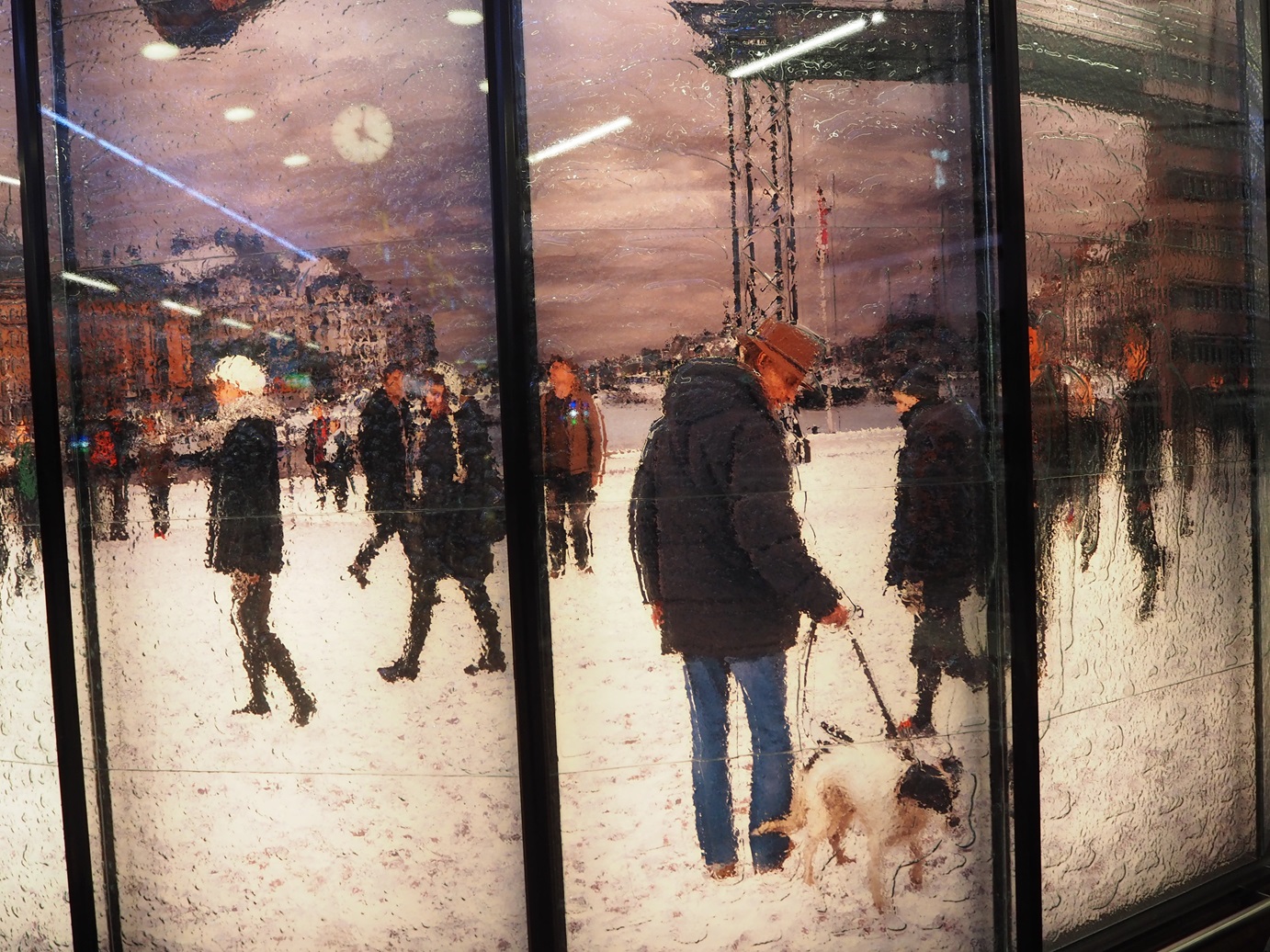
The underground train station heading south has a very creative central rotunda mural, which we never got tired of seeing and walking around.
Travel Diary
A few hours to walk the Copenhagen old town streets in rain and wind, but it is not too cold. Some impressive buildings, the palace and government mighty-ness parading along the waterfront. Tivoli is closed, but there is a pleasant set of steel statues aligned with its entrance, linking the planets to their mythical identities. Red brick is the defining characteristic, and we find modern shops and offices struggling to be accommodated within its past-purposed architecture, basements, and tight entranceways.
We take one commuter train over the Øresund bridge to Malmö, Sweden. Here we change to one of the most delightful wagons we have ever been in. Its simple wooden styling, compartments, including what is close to being a lounge, and roomy seating, enchant us. A joyful group kept us entertained, laughing and joking away in what may have been Turkish.
We pass between Sweden’s two largest lakes, Vänern and Vättern, the latter suddenly opening up and extending beyond the horizon as we edge humbly enough past its western shore. Stockholm ends the long pleasant journey around the myriad lakes.
In the big city, we need to navigate the modern metro system three stops to the south, to the hotel along the railway tracks, which serves the tradeshow Messe grounds. The hotel has a gym which I make use of. We head back to town for a quick tramride to the Djurgården island where there are the museums and carnival grounds awaiting us tomorrow.
The Lakes of Southern Sweden
Vänern is to our west, and we will see more of it as we pass to Oslo. It is the largest lake in Europe, except for two in Russia. It was formed 10,000 BP (before present), following the Quaternary glaciation. In fact, when the ice melted, the entire width of Sweden was covered in water. Uplifting in the post-glacial rebound subsequently created the land bridges which redefined them as lakes. The Baltic Sea in fact was originally a gigantic freshwater lake called the Ancylus Lake, which from 9500 to 8000 BCE was a predecessor of the modern Baltic, the Øresund Sound having been closed off. What is today the Stockholm archipelago, along with the entire eastern seaboard of Sweden, and the west of Finland, Estonia and Latvia, were submerged by this lake. Back then a dolphin could have swum from far beyond the modern Finnish coast, past a much reduced Gotland, through where Stockholm is today, to the Norwegian border mountains.
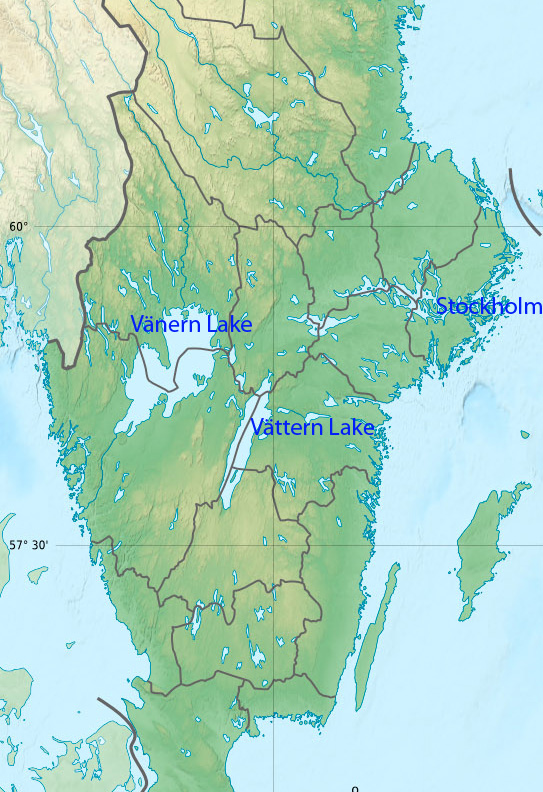
A Viking ship was found on the lake’s bottom in 2009, and in 550 CE there was the Battle on the Ice of Lake Vänern, referred to in Beowulf as a struggle for the Swedish crown between the dead king´s usurping brother and his sons, but in Norse legends as a war between the Swedish and Norwegian kings.
The Vättern lake offers us an early glimpse of a non-mountainous fjord at the northern end, the Alsen, as well as forests of spruce, pine and deciduous trees, and farmland. Its 300km circumnavigation route draws 20,000 cyclists each year for a grueling race around it.
This aquatic route brings us to a climax of the Stockholm Archipelago. This amazing area of natural beauty extends 60km east beyond Stockholm to the sea, and contains around 24,000 islands, formed in the post-glacial rebound, seeing the island rising 3mm annually. 50,000 holiday cottages for Stockholm residents add to the traditional fishing and farming population. In one of these cottages, ABBA took refuge to write their hits, as did August Strindberg, the hero playwright celebrated in Stockholm.