Baltic Sea 2022
Day 6: Tuesday 31 May 2022
Oslo – Flåm
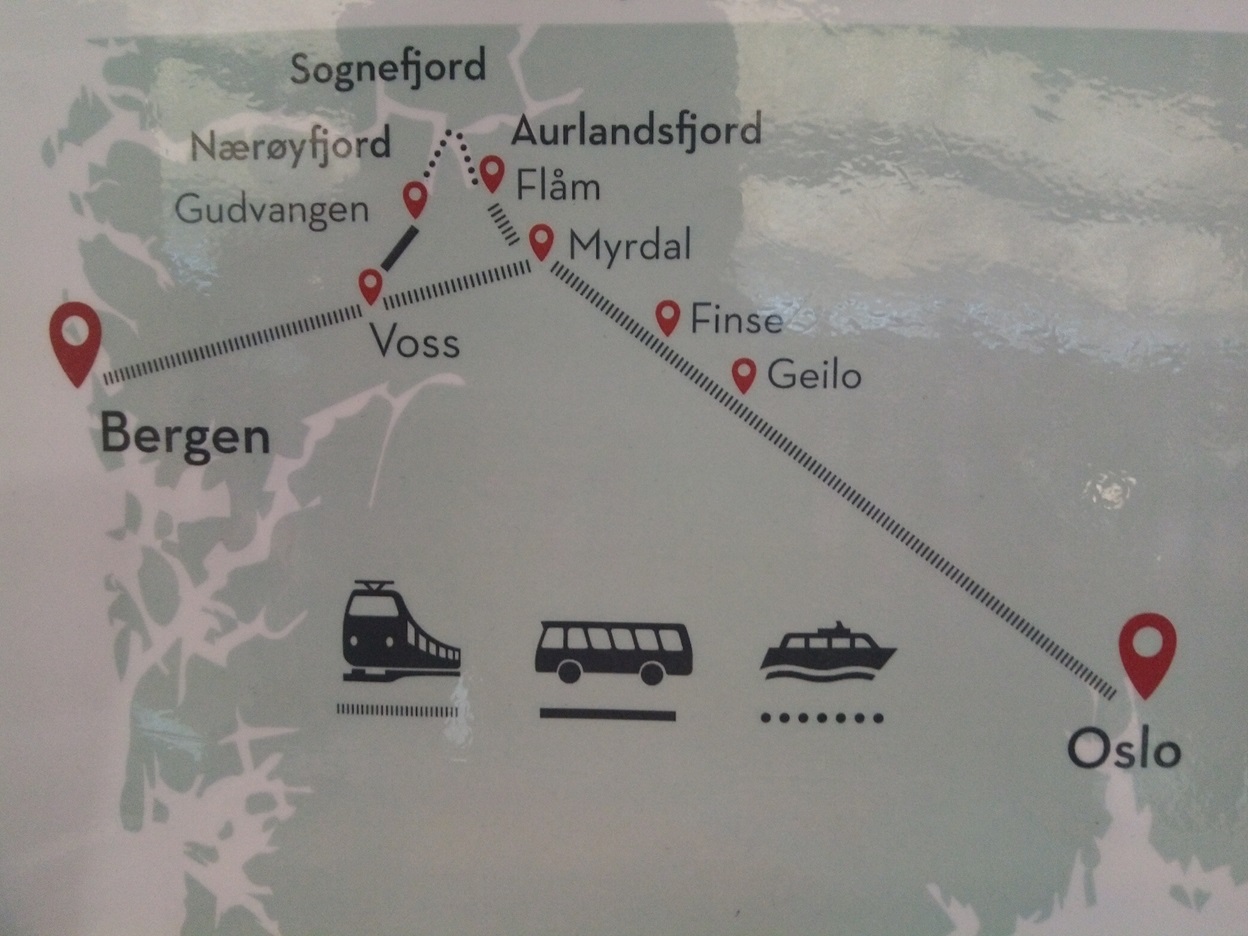
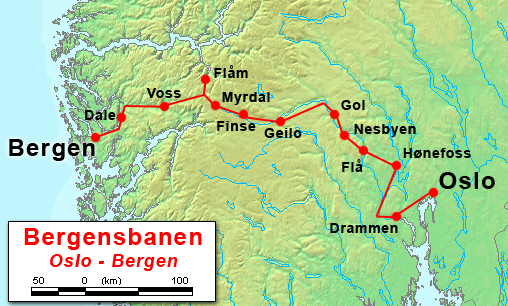
Bergensbanen map provided by the tourist information office. It makes it clear that this is the route to do.
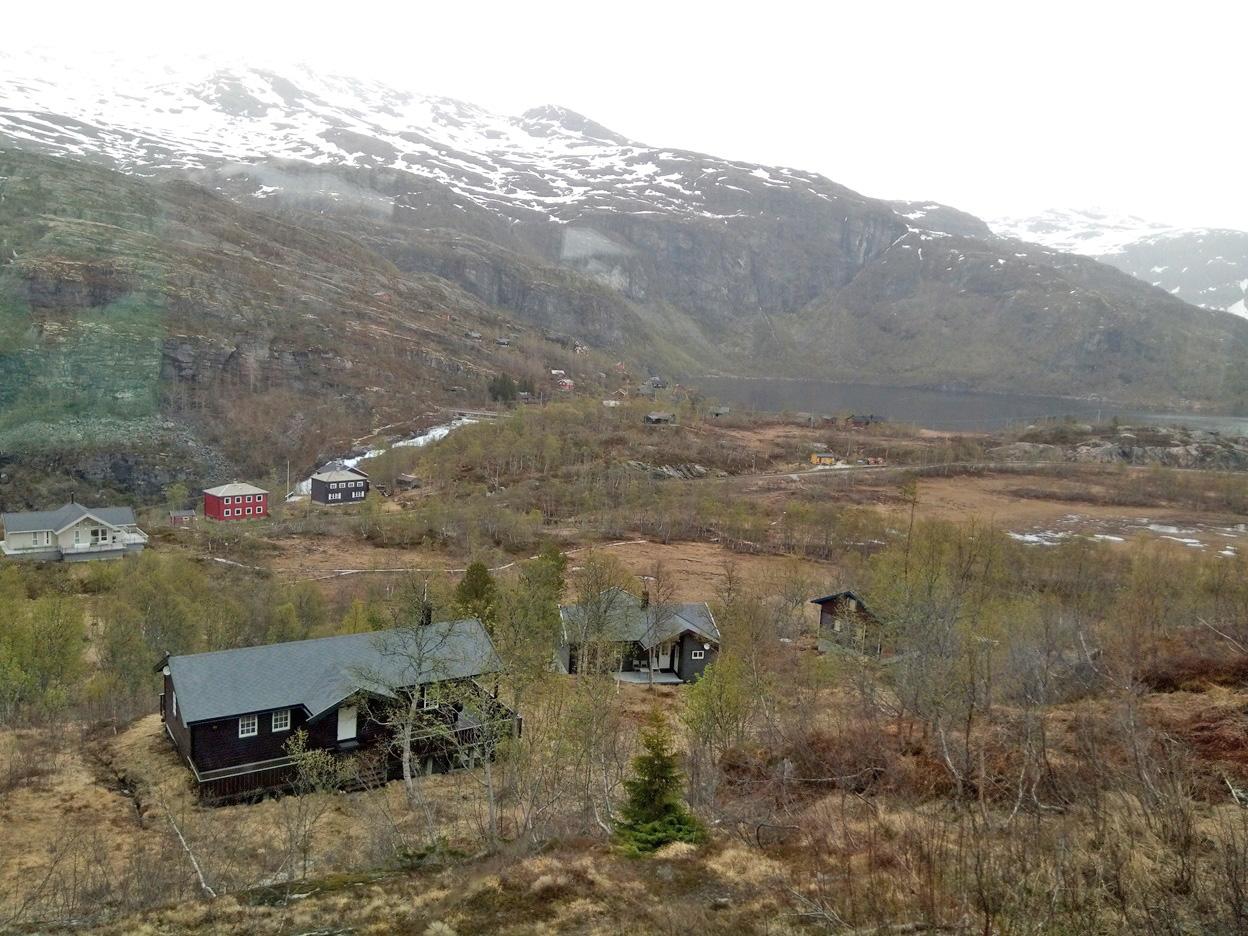
A memorable day on trains! First the Bergen Line (Bergensbanen), the highest mainline railway in Northern Europe, reaching its apex at the Hardangervidda plateau at 1,237 m.s.l. The line was opened from Bergen to Voss as a narrow gauge line in 1883, and in 1909 it was continued to Oslo (then still Kristiania), and the whole line converted to standard gauge. It is a single-track line and was electrified in 1954-64, and is 496 km long.
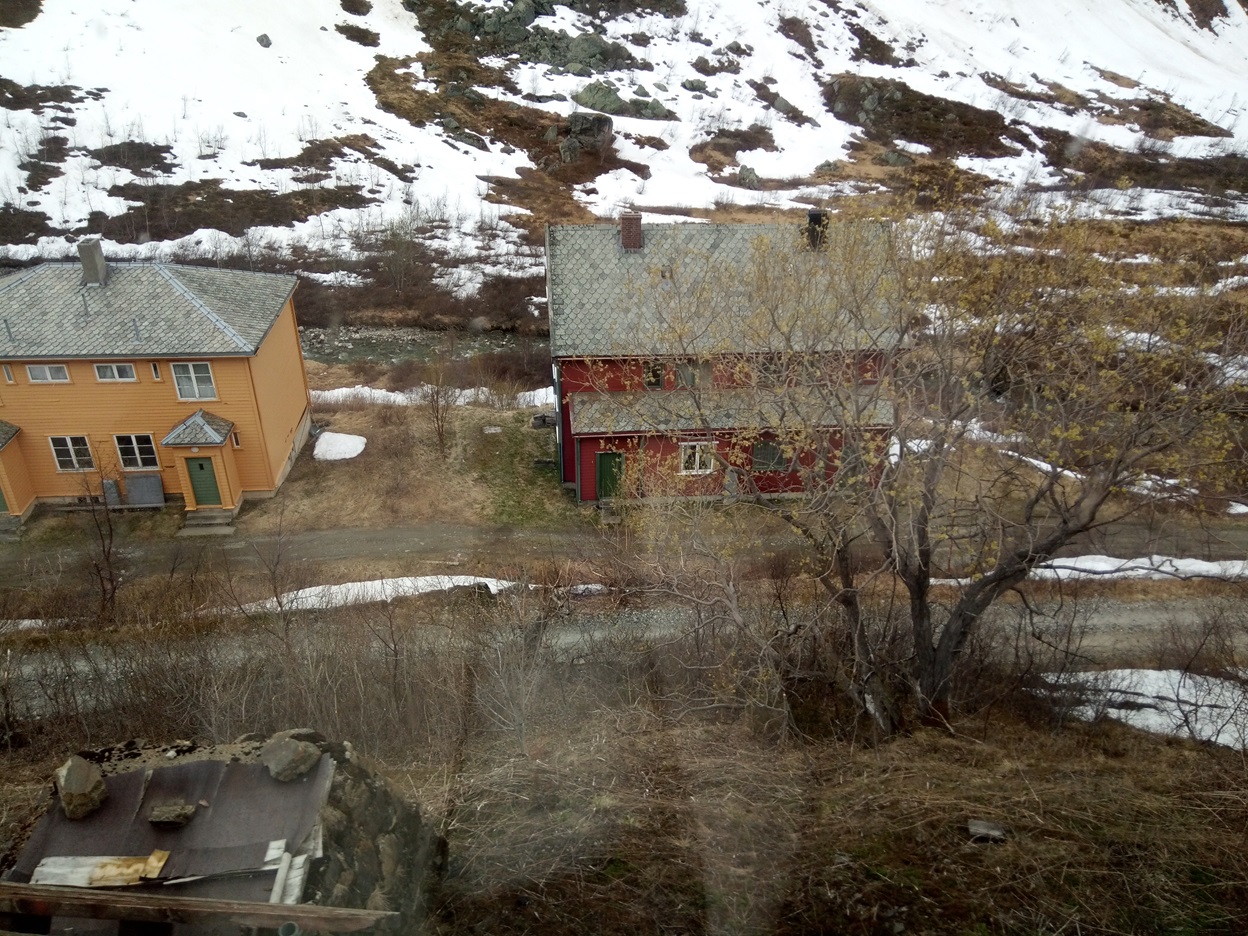
Bergensbanen stop at a lonely community. Train over the mountains, bedecked with snow still, single figure temperatures outside. Cabins in unlikely wilderness, lonely outposts atoning the yearn for nature of the city mensch.
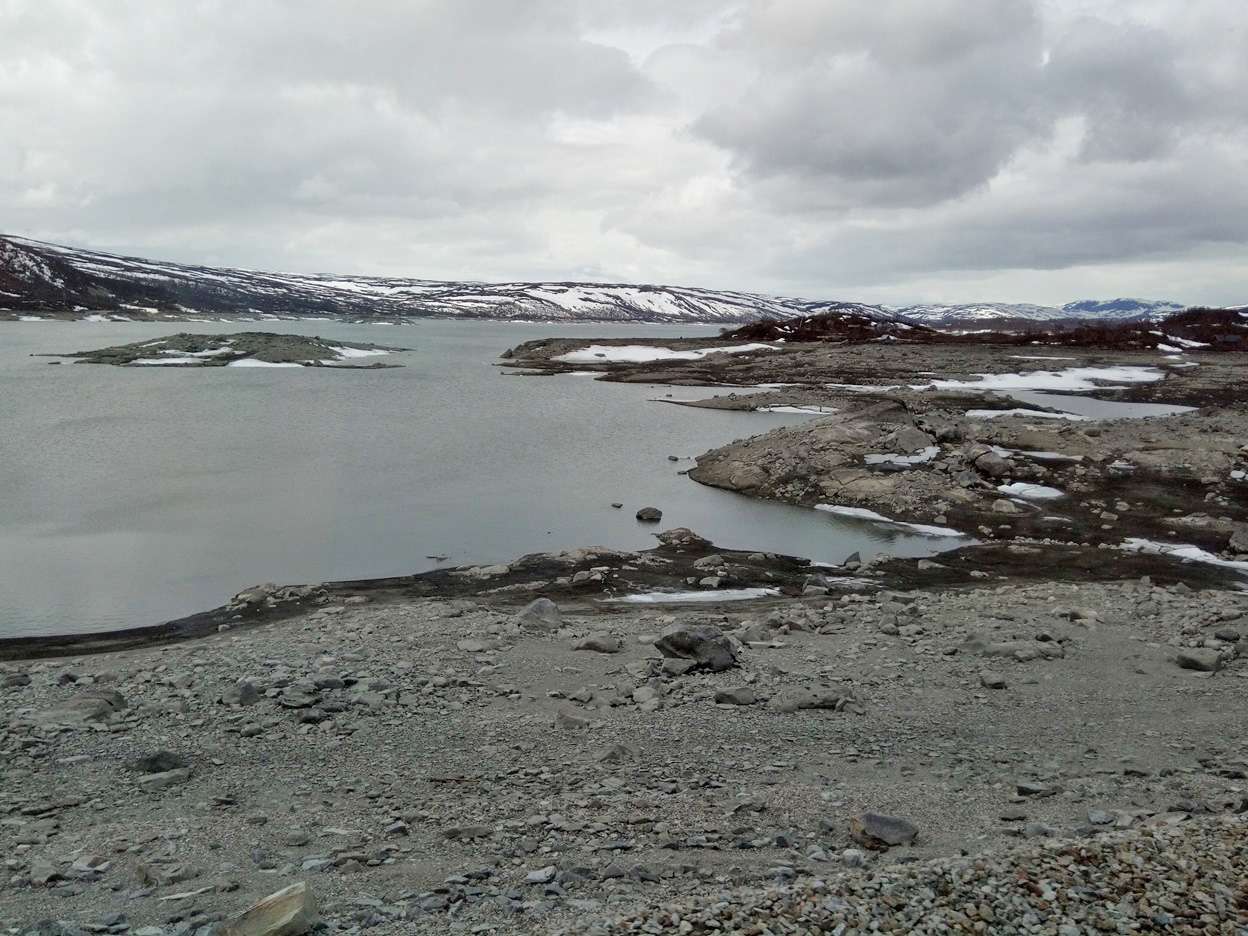
The Bergensbanen passes many lakes, some frozen, others thawing. The terrain is stunning yet inhospitable at first glance. Nevertheless we pass the occasional hamlet and chalets – for summer vacationers, one assumes.
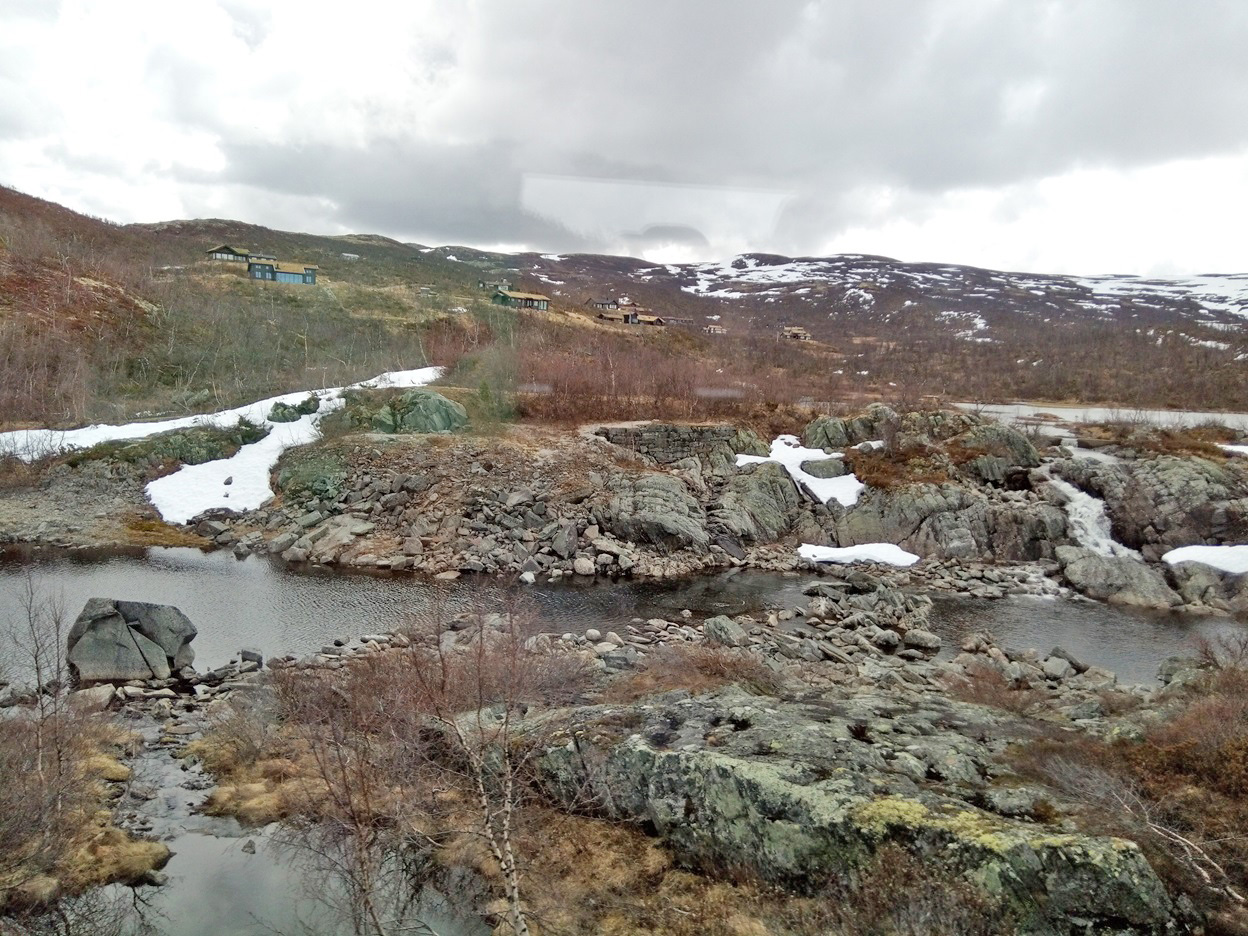
Bergensbanen (Bergen Railway) is a magnificent railway experience, passing 496 km from Oslo to Bergen.
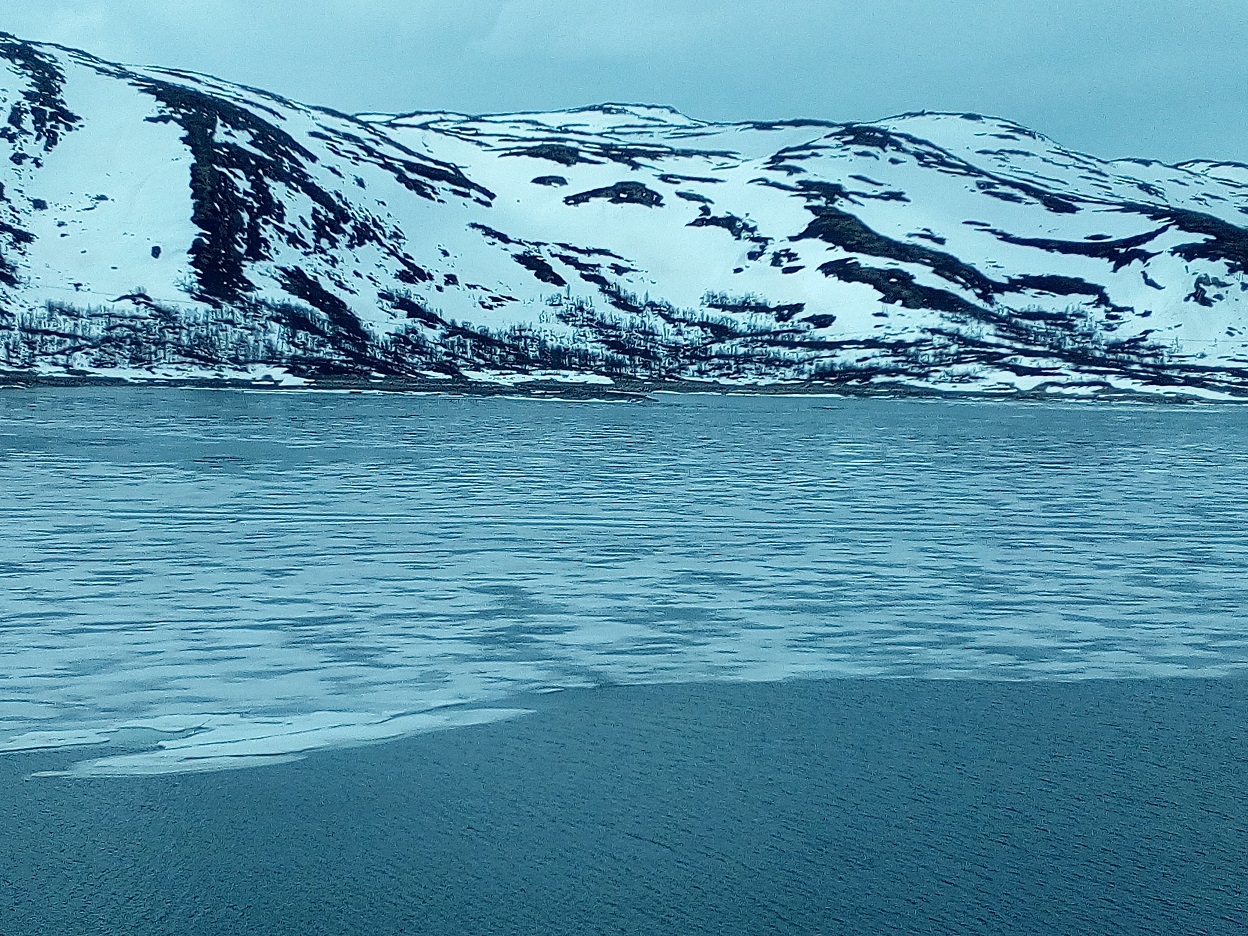
On route to Flåm on the Bergensbanen. This is the highest mainline railway in Northern Europe, crossing the Hardangervidda plateau at 1,237 metres above sea level. It takes us past some spectacular scenery, including some still frozen lakes and snow-capped mountains. It started as a narrow-gauge connection between Bergen and Voss in 1883, and was extended to Oslo in 1909, and the entire single-track route converted to standard gauge. It was electrified in 1954-6.
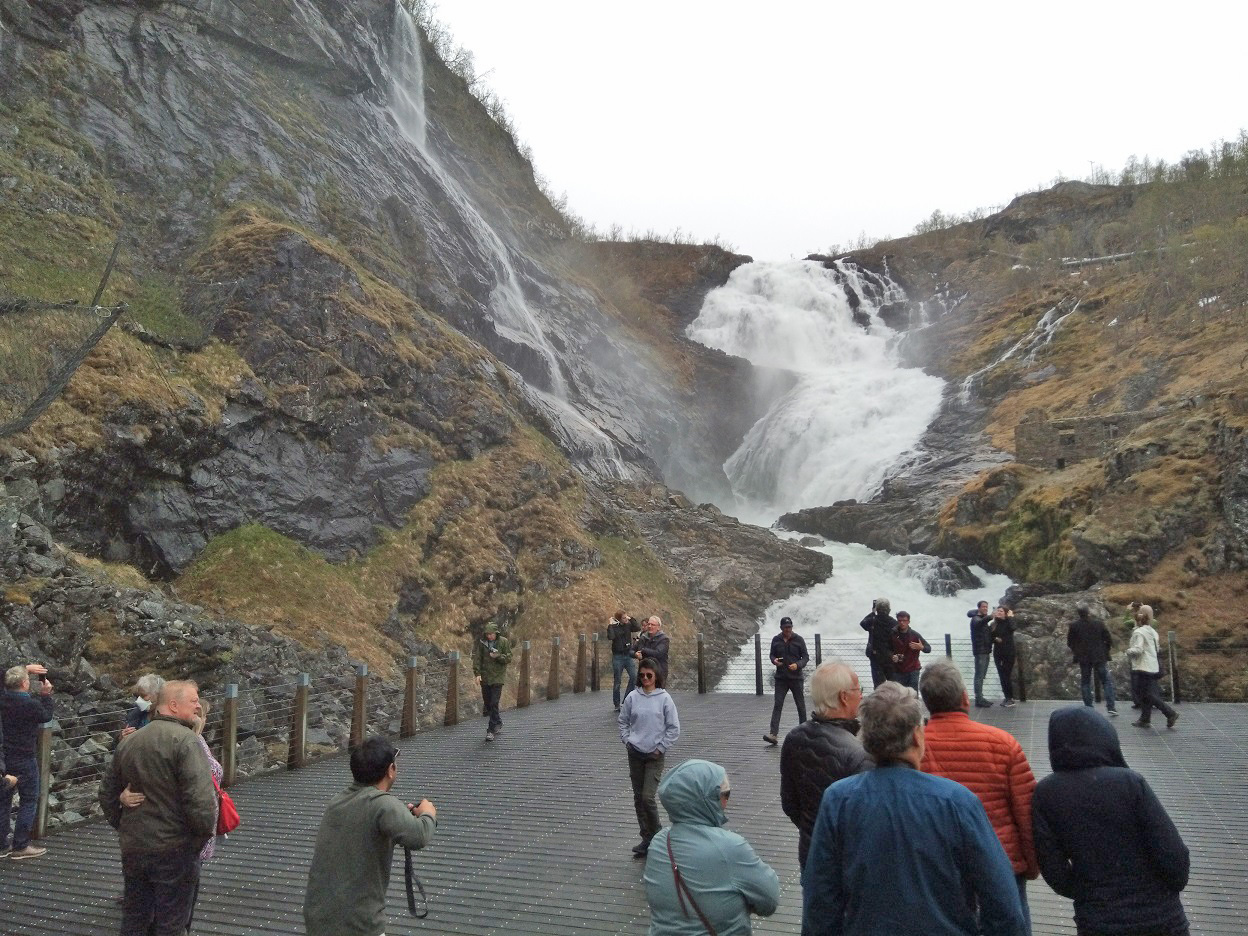
The 122m Kjosfoss waterfall along the Flåmsbana, the railway line from Myrdal down to Flåm, at sea level on the Sognefjord. At 867m, Myrdal is the junction on the Oslo-Bergen Line, and opened in 1908. Flåm is 13km north of Myrdal.
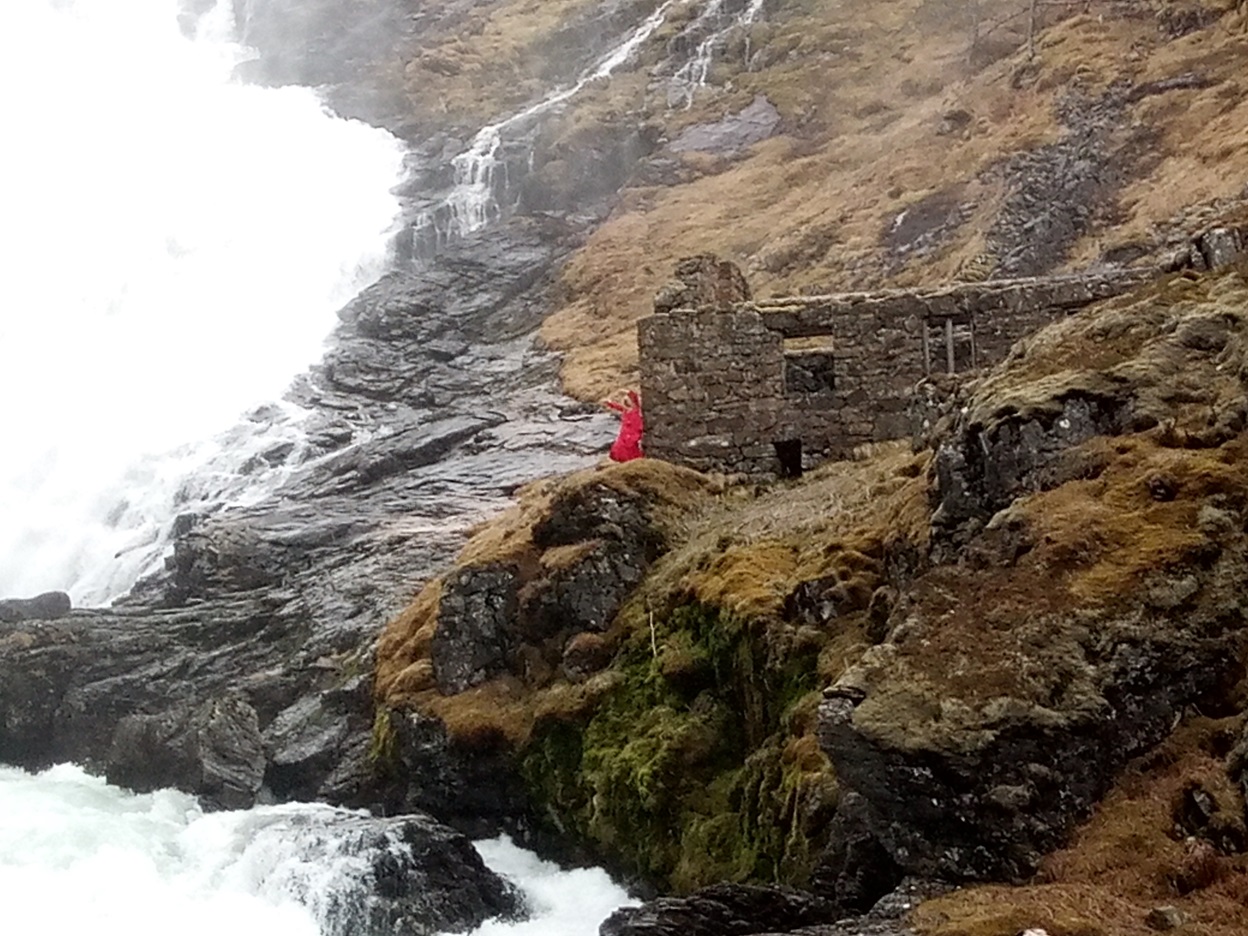
The Huldra Norwegian Mythology Display.
After passing through a tunnel during the descent, the train halted at the Kjosfoss waterfall. With music accompaniment, a dancer in red appeared and disappeared among the rocks and ruins in a fun, creative way, reminiscent of nordic legends.She is the Huldra, an elusive forest spirit from Norse mythology. According to local folklore, she lures men into the woods to seduce them. It is performed by students from the Norwegian Ballet School.
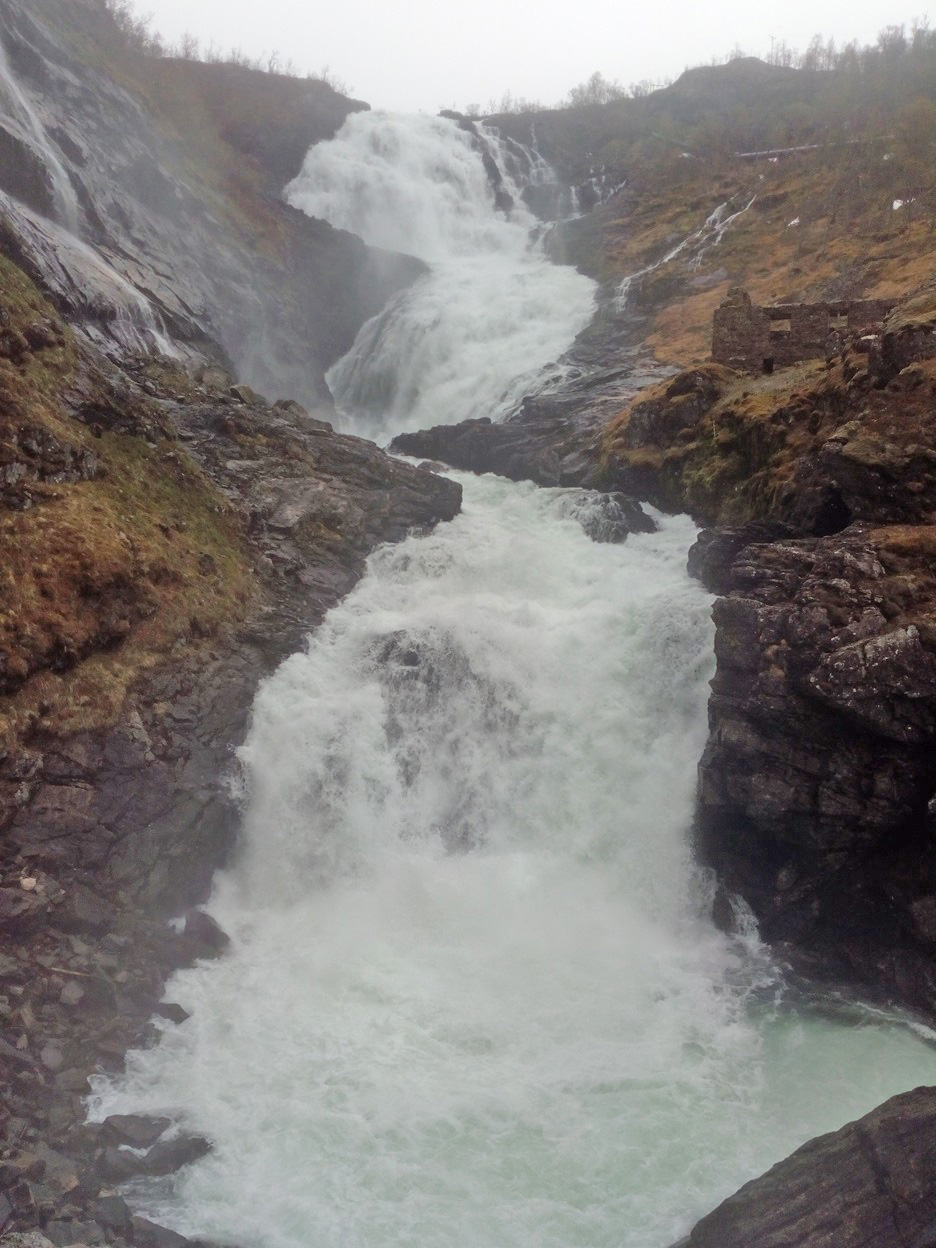
The Kjosfoss waterfall along the Flåmsbana, the railway line from Flåm to Myrdal
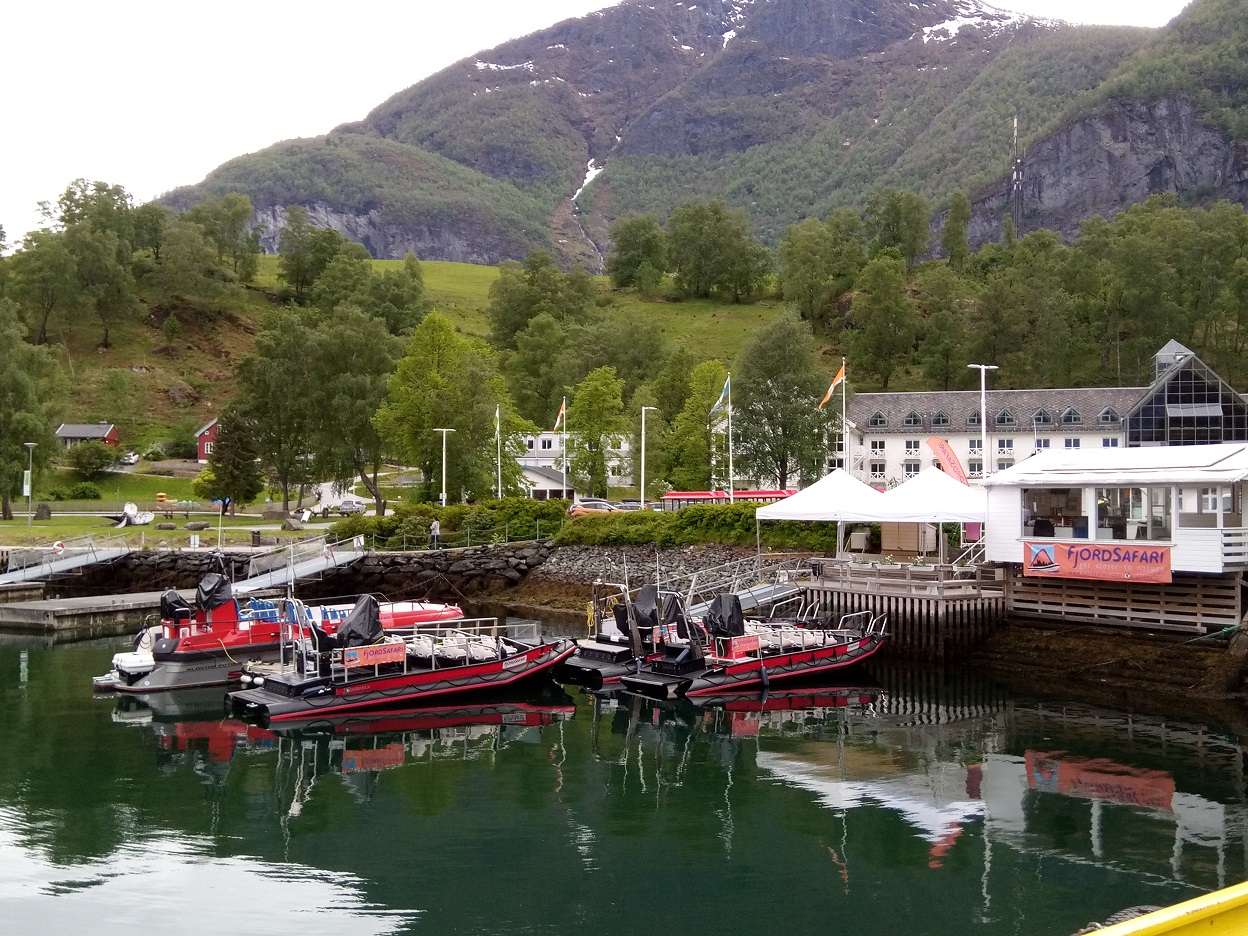
Flåm harbour on the Aurlandsfjord. MAP (GoogleMaps)
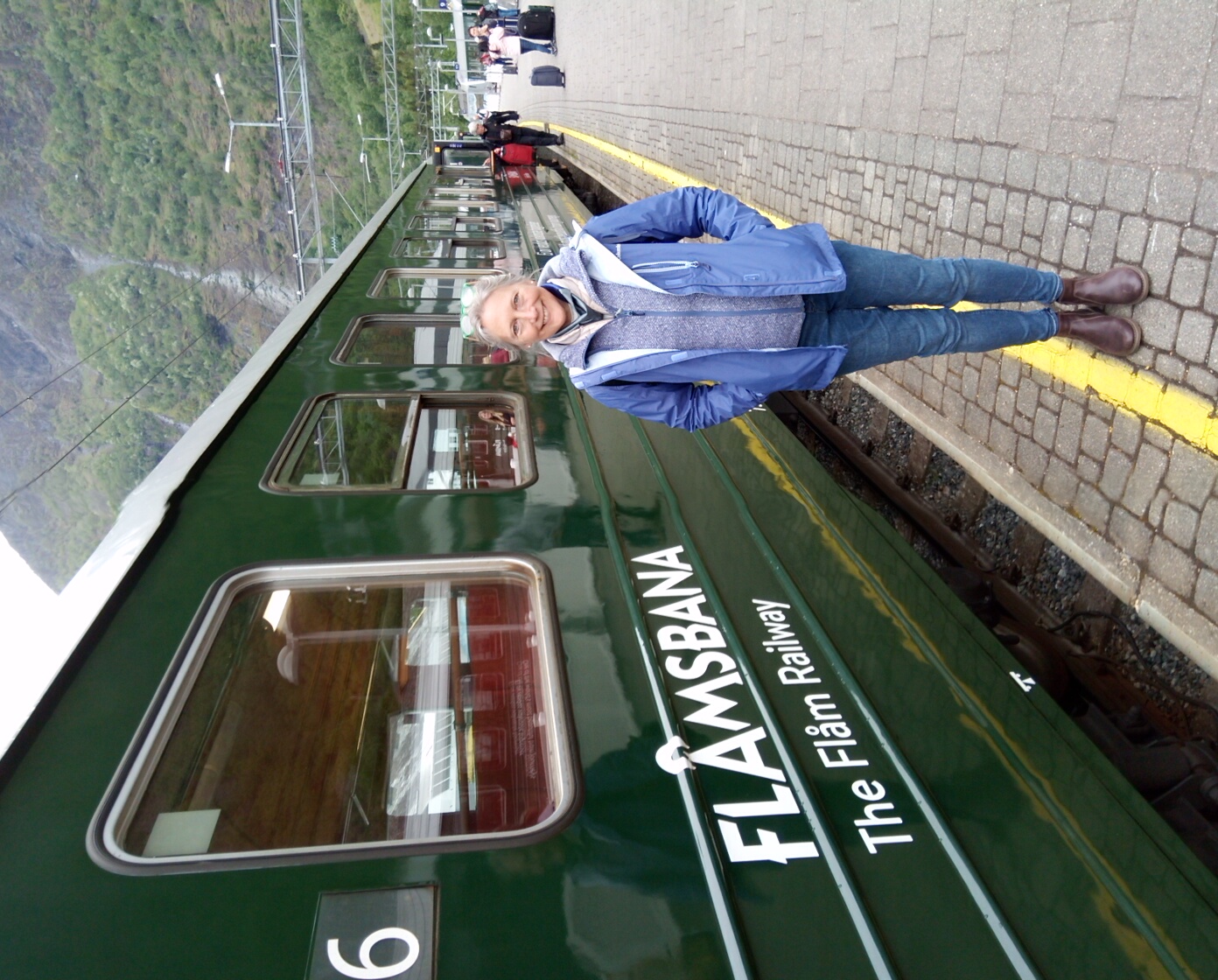
Flåmsbana in Flåm. Something like 450,000 tourists flock to this small village (pop. 350) every year, to enjoy the classic fjord scenery. Some arrive by cruise ship, but a popular option is the 20km train-ride down from Myrdal. This route opened as a steam engine route during WW2, in 1942. The Germans, during their occupation of Norway, extended some railway lines for strategic reasons. This is one of the steepest non-rack railway tracks in the world, at 1 in 18.
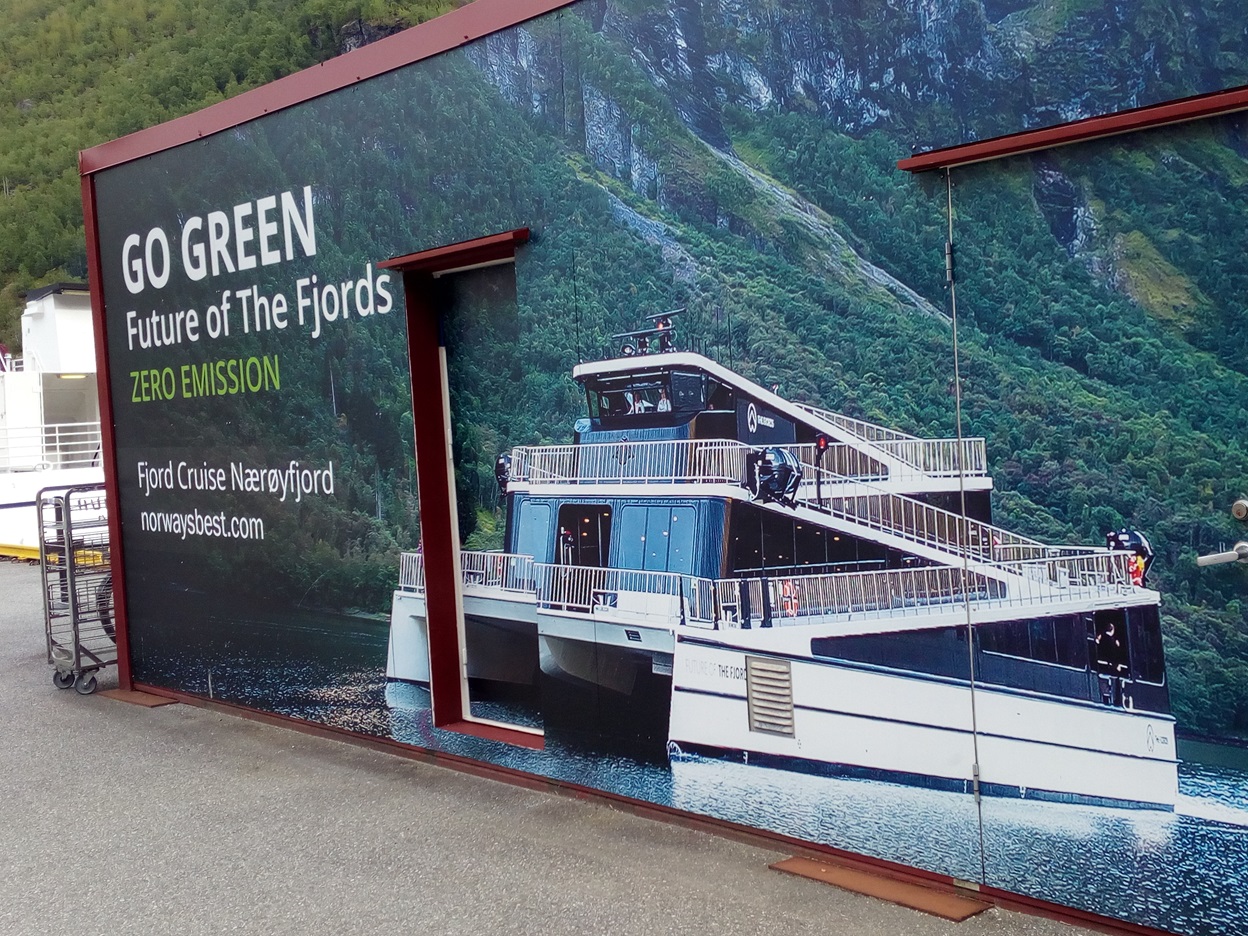
Flåm boasts an all-electric tourist ferry. Cruise ships which sail in and out of fjords and harbours produce more pollution than all the cars combined in Norway.
Travel Diary
We have opted to descend from the highest mountain sections to Vossevangen (54m), only to find the boat for the fjord trip won’t go at about 15.00 when we would reach Gudvangen. So we return the hour’s trainride, almost alone on the train, to Myrdal (860m). Here there is the justifiably famed Flåmsbana (Flåm Line), which takes us down to the Sognefjord. As it descends down the valley of Flåmsdalen, it passes a myriad serious waterfalls. At one giant waterfall there is music and two red-dressed dancers entertain us in the rain of spray. Sensational views as we descend to the fjord. Although such a private railway should not be covered by Interrail, our presentation of these tickets confuses the busy conductor long enough for us to have a free ride.
Sited at the start of Aurlandsfjord, the little town of Flåm provides us fish ‘n chips and a co-op supermarket for snacks for the next day, before we walk the 600m to the hostel, which is a scatter of buildings on either side of farm fields, filled with sheep – and later seagulls for some reason. Our room was falsely listed as in the Redhouse, which cost us an hour of traipsing and neighbour bothering to find out it was right in front of where we had started. Interesting discussion with two Iraqi brothers, who fled Iraq after the 2nd Gulf war, one to settle in Denmark, and the other in Adelaide.
Of course a hostel does not provide towels, and of course we hadn’t brought our travel towel…. We had left our suitcases in a locker in Oslo railway station, so that we would not be encumbered for the ferry. That proved, despite the towel crisis, to have been a good idea.