Baltic Sea 2022
Day 8: Thursday 02 June 2022
Lillehammer – Trondheim
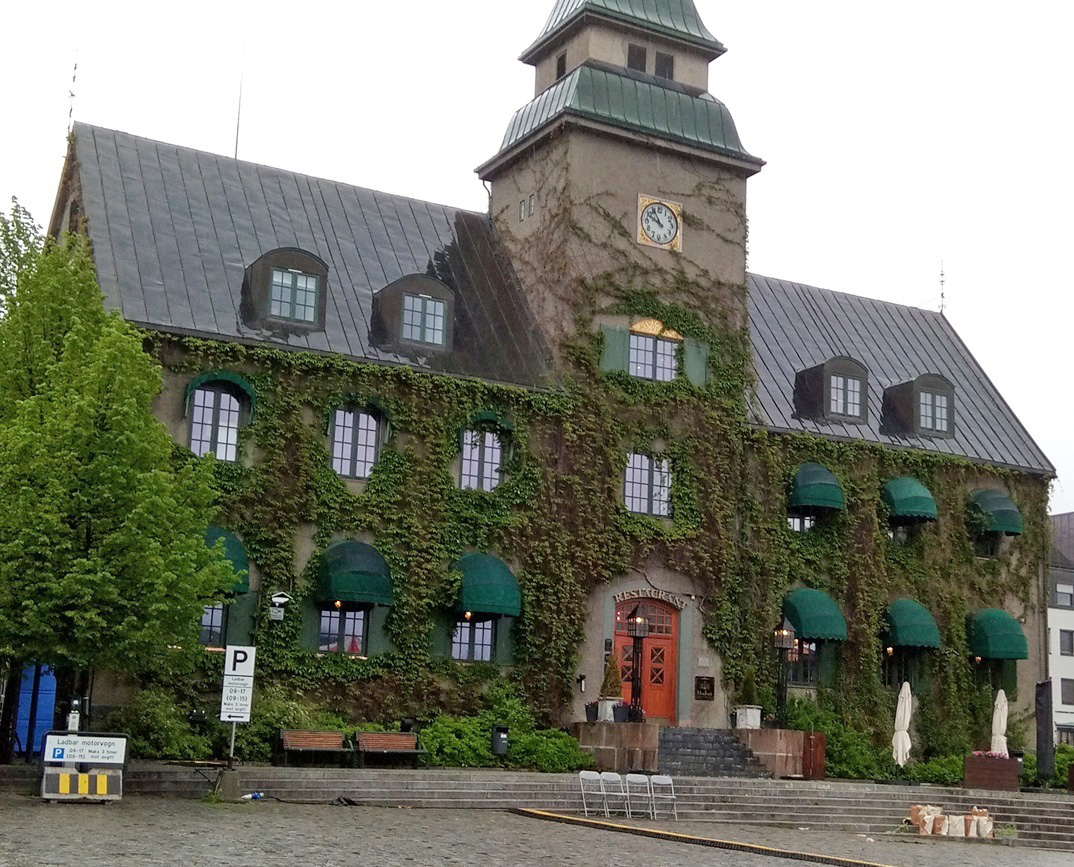
Lillehammer has a pleasant, relaxed feel to it. This ivy-covered restaurant, with a viewing tower, stands proudly among the orderly streets.
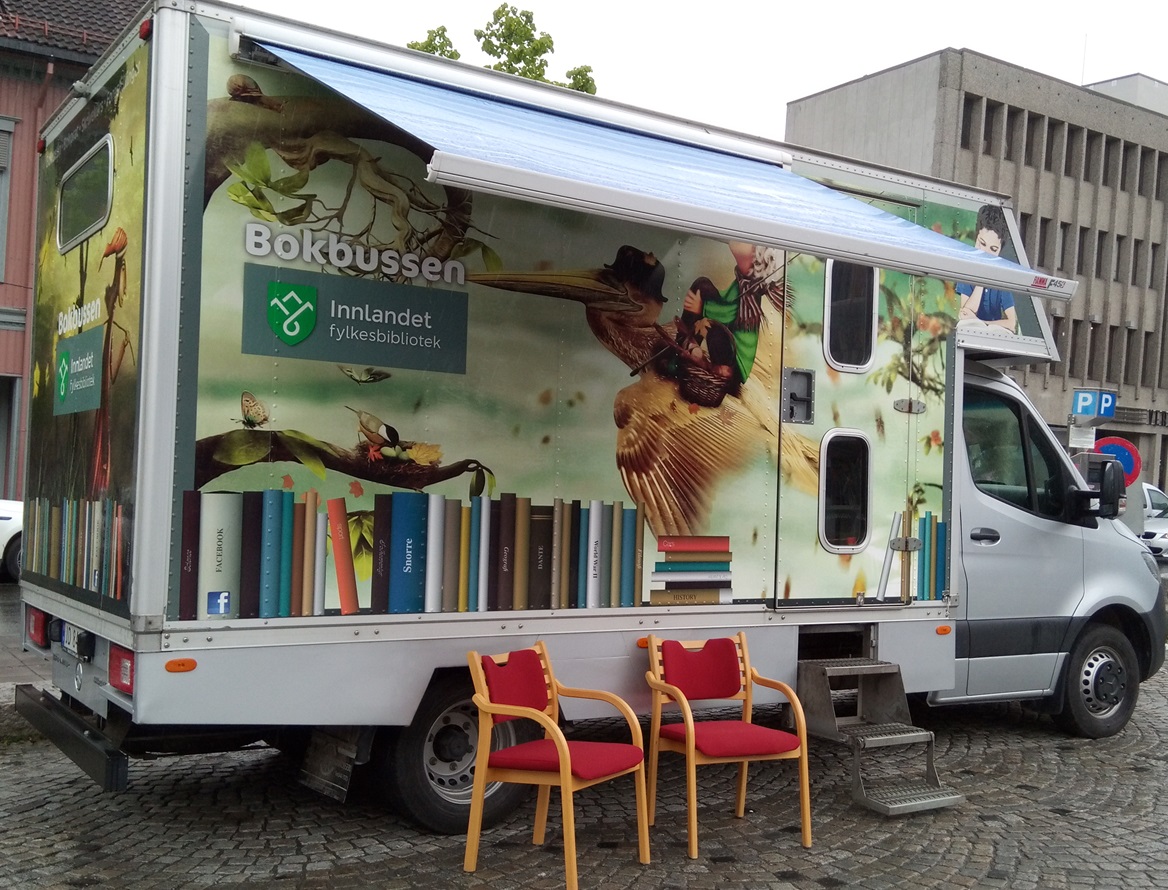
Lillehammer prides itself as a City of Literature, and this mobile library was a pleasant diversion.
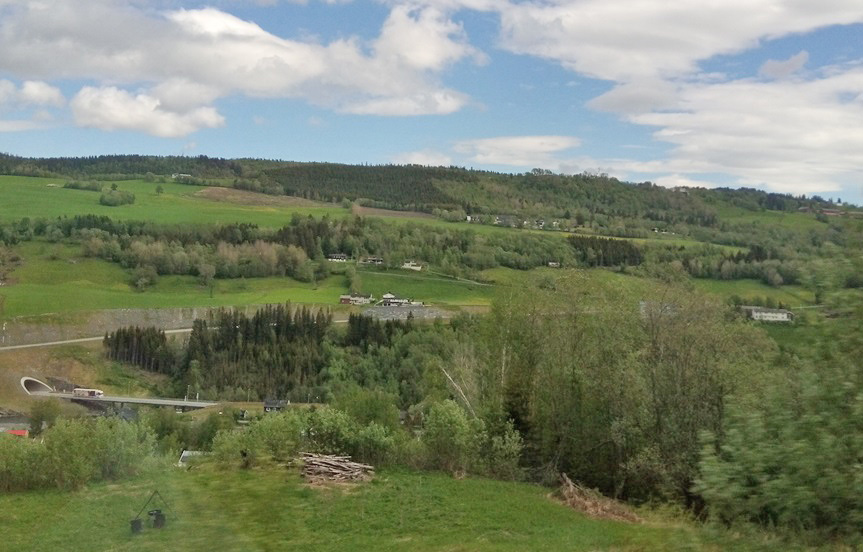
Not a great shot from the train, but serves to illustrate the change in landscape from the mountains we left to the west of Oslo and the route north to Trondheim. Lush and snow free in this early summer season.
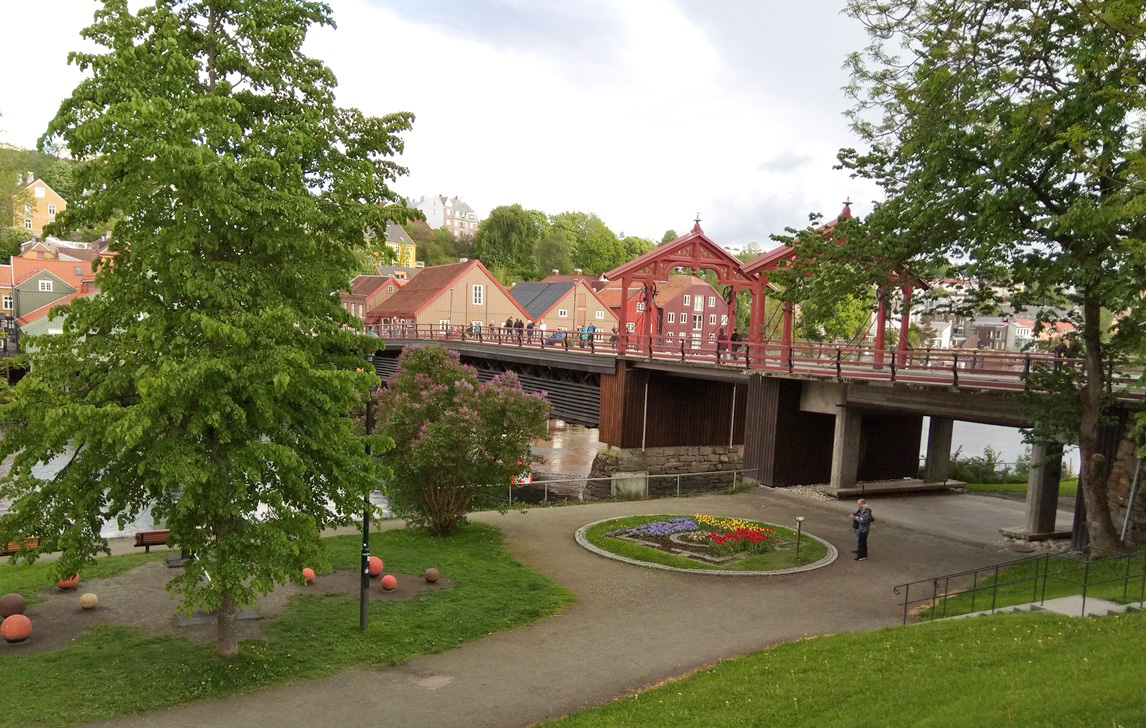
Trondheim has an old harbour and two lift bridges, no longer operating. The historical Gamle Bybro (MAP (Google)), Old Town Bridge, crosses the Nidelva River, and was built in 1685, as part of the reconstruction of Trondheim after a devastating fire in 1681. It was a guarded gateway to the city, with a toll and guardhouse.
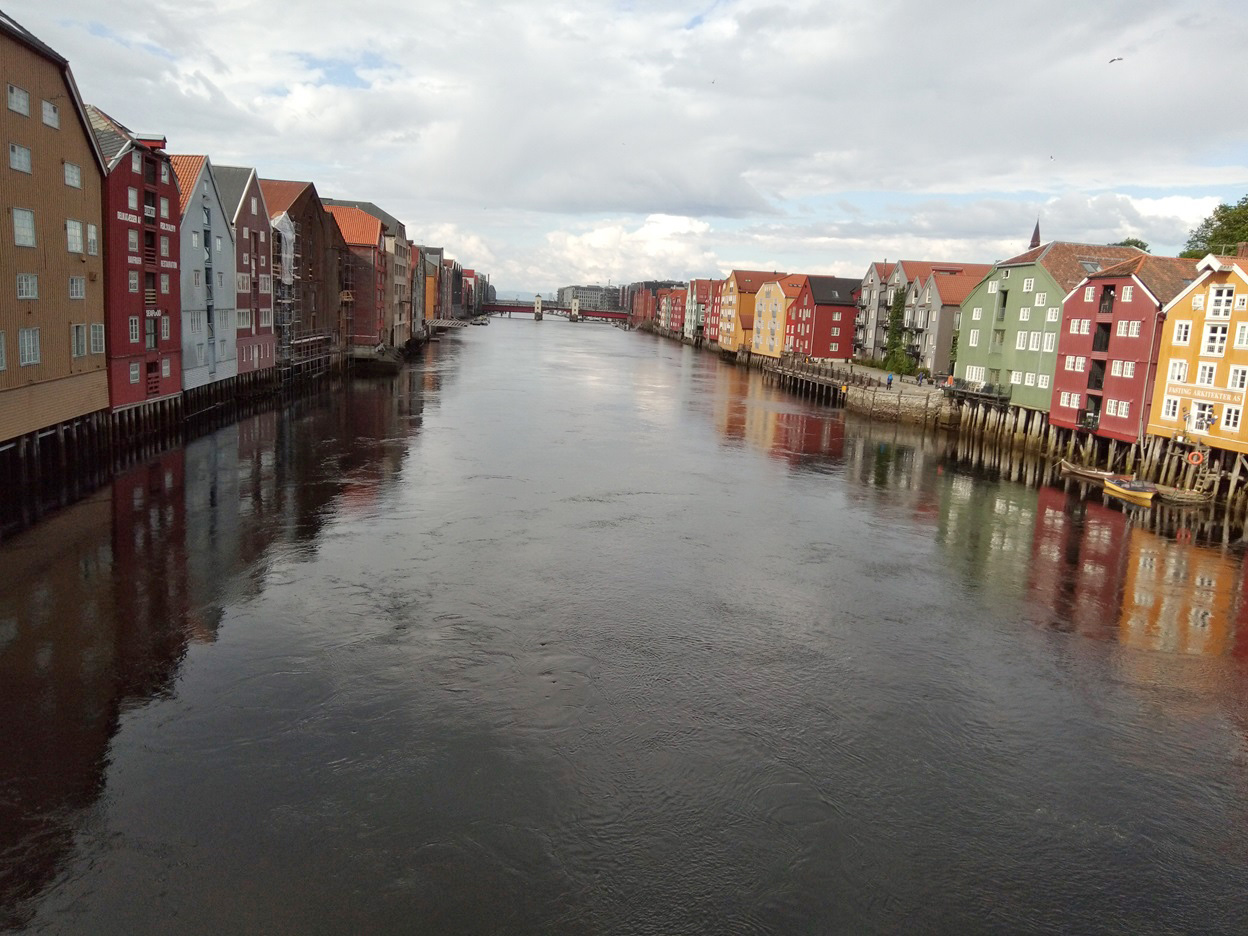
The River Nidelva is lined with characteristic, colourful buildings, attesting to the trading port past on the enormous fjord. Trondheim was originally called Nidaros, which means River Nid’s outlet. The wooden structures of the city meant the city endured many devastating fires from the 16th to mid-19th centuries.
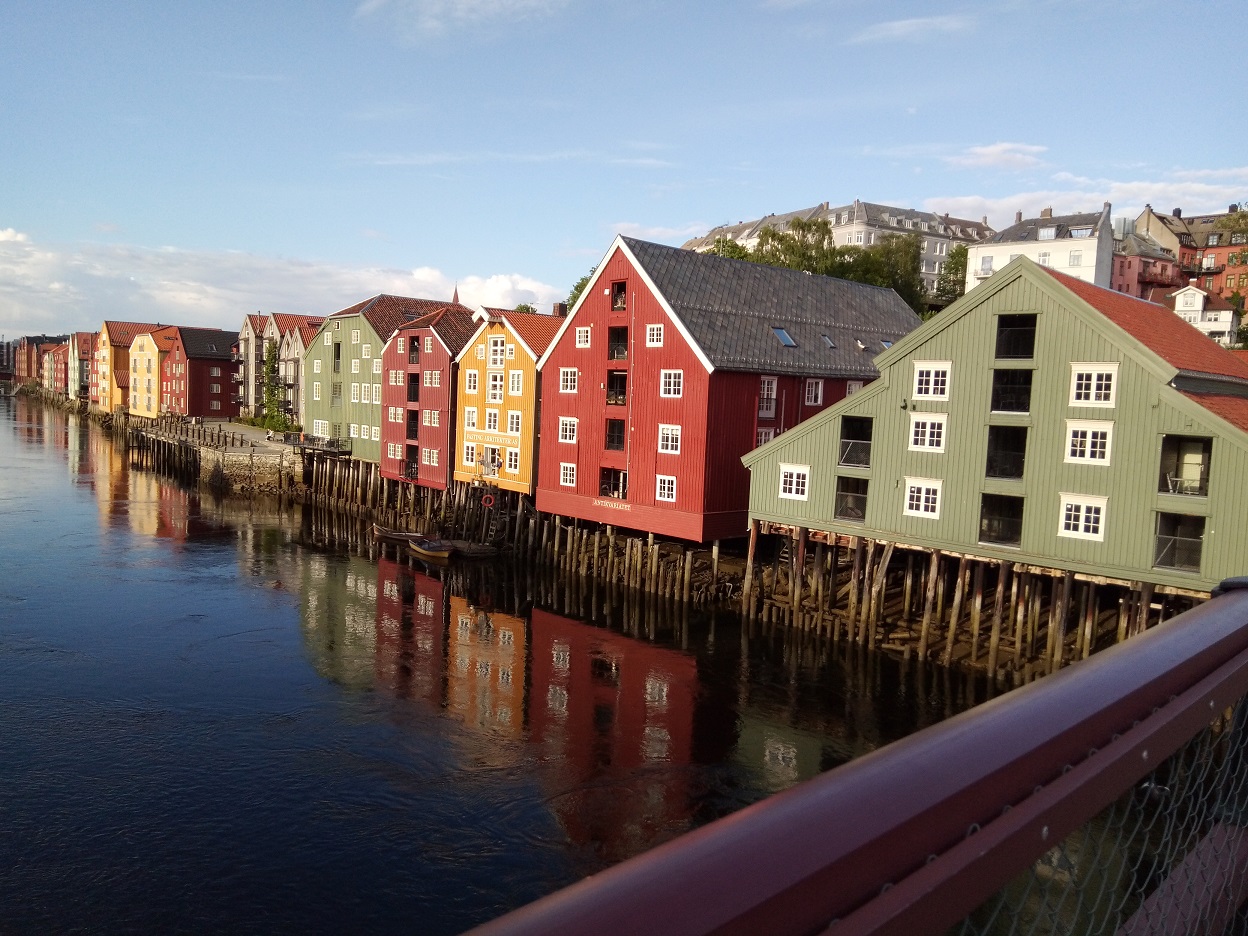
Trondheim harbour on the River Nidelva. Trondheim (63.4° N) has a population of over 200,000 people, and is situated on the south side of the Trondheim fjord. It was the capital of Viking Age Norway till 1217.
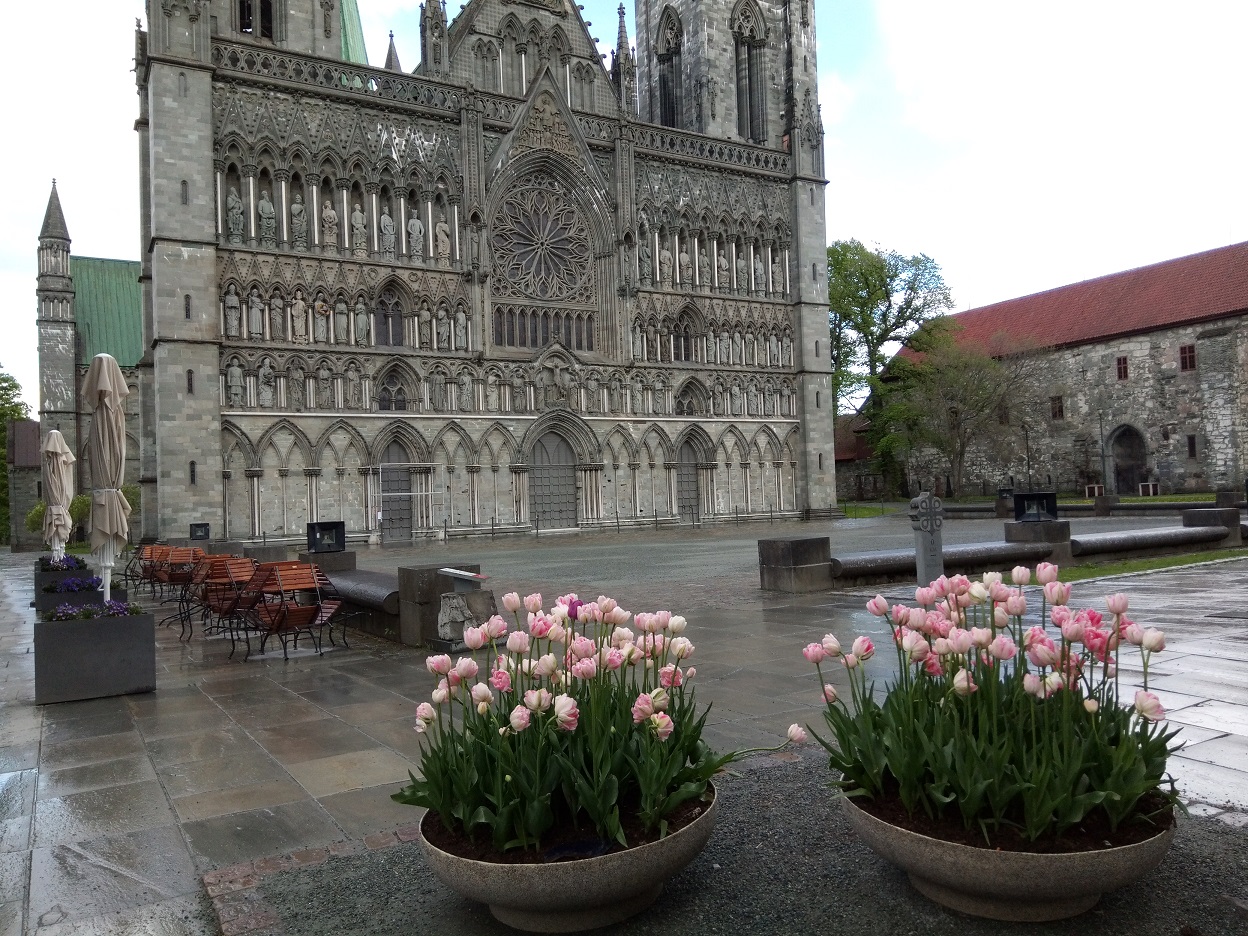
The impressive Nidaros Cathedral in Trondheim (MAP (Google)) was built 1070-1300 over the burial site of King Olav II (995-1030, reigned 1015-1028), and is the traditional location for the consecration of new kings of Norway.
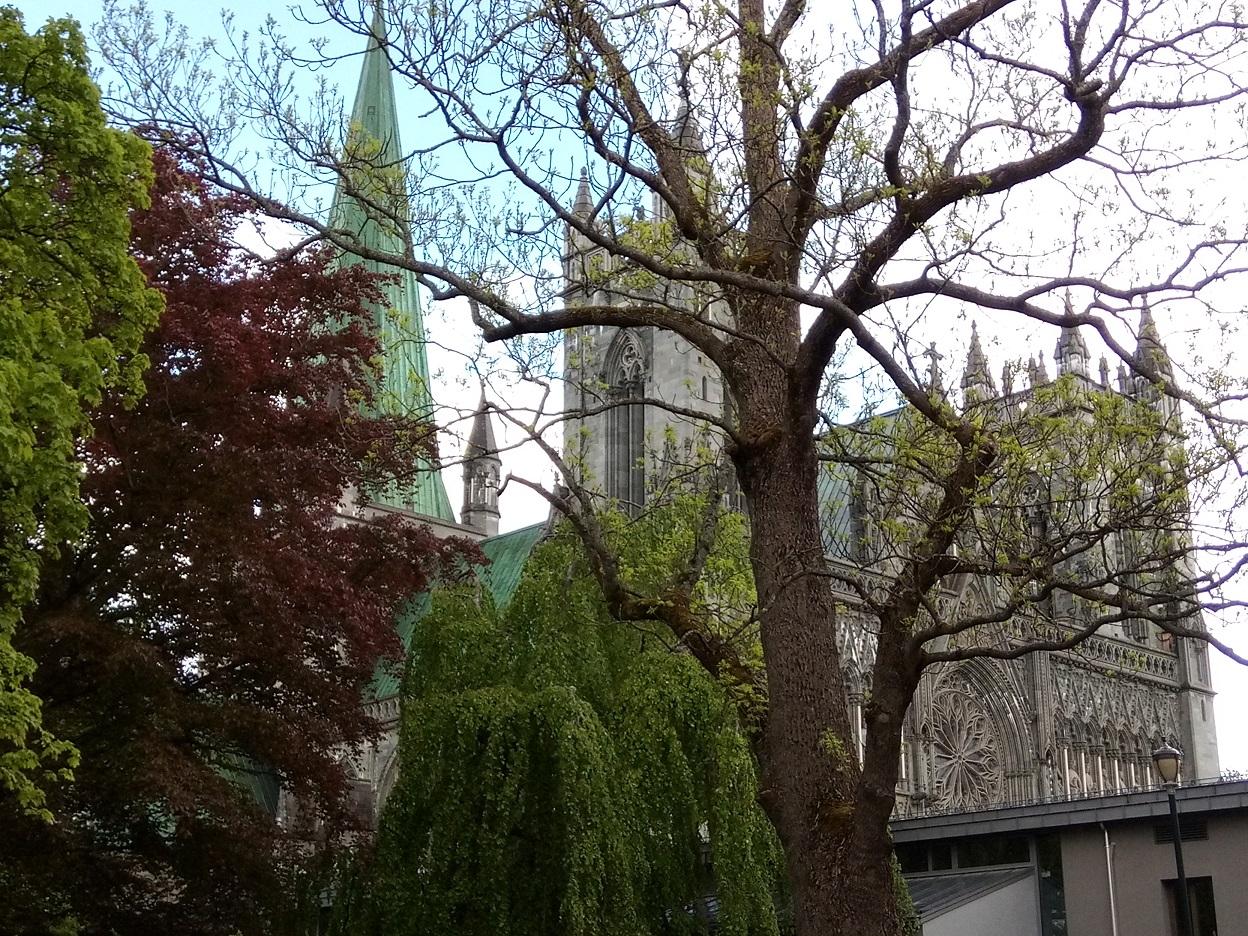
Nidaros Cathedral viewed through the late spring trees. The Church of Norway took the cathedral from the Catholic Church in 1537, making it an Evangelical Lutheran church. Nidaros is the northernmost medieval cathedral in the world.
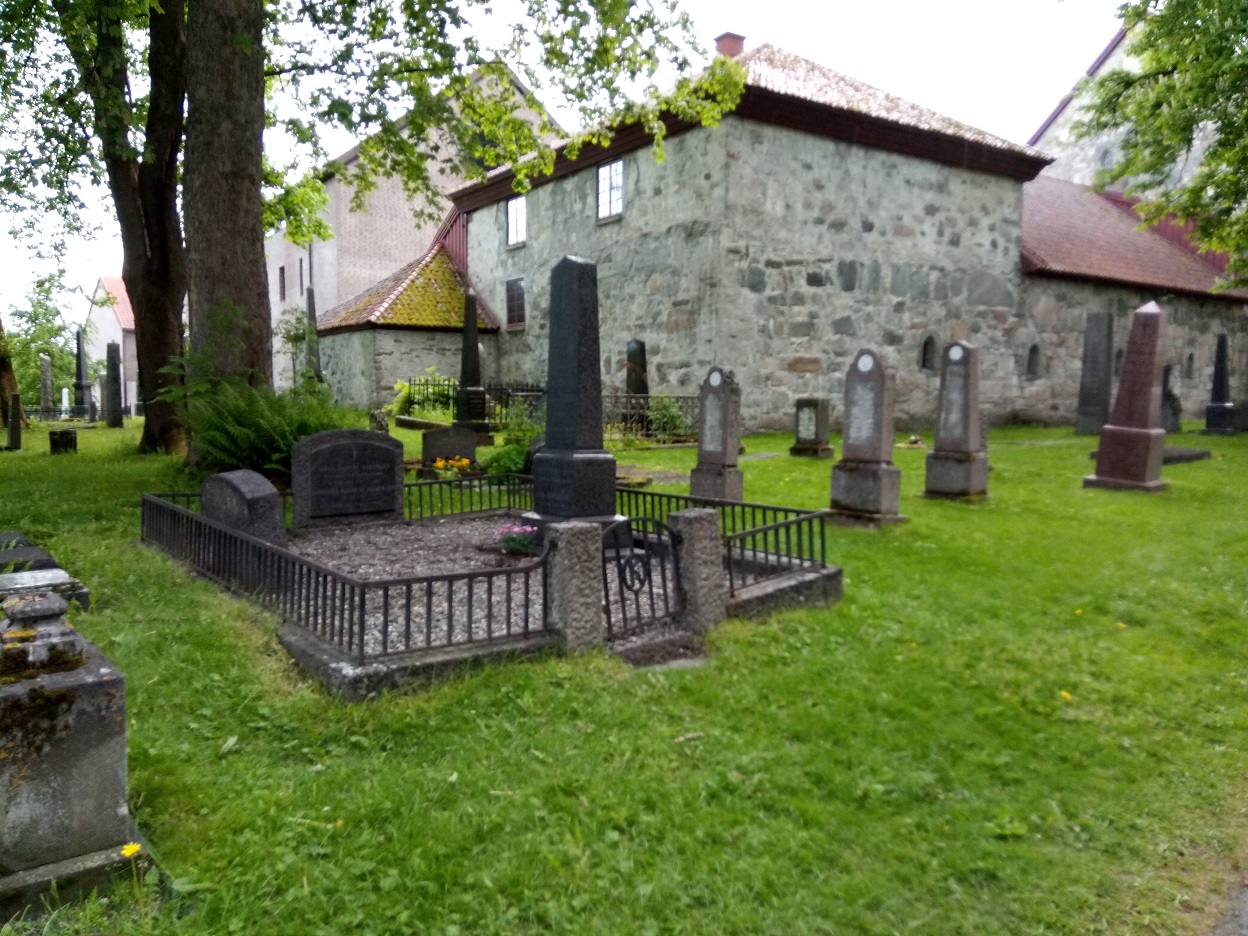
Trondheim cemetery, to the rear of Nidaros Cathedral, is a beautifully landscaped park.
Amongst the famous people associated with Trondheim, is King Olaf II, who reigned from 1015-1028. Nidaros Cathedral was built over his burial site. He was also known as Olaf the Holy (also Olaf the Stout!), and Olaf Haraldsson, and he was granted the title Rex Perpetuus Norvegiae (Perpetual King of Norway) and canonised at Nidaros in Trondheim by Bishop Grimketel, one year after his death, supposedly at the Battle of Stiklestad, fought about 80km north of Trondheim, on 29 July 1030. There seems to be a bit of false news related to the circumstances, in order to create a christian hero out of him (Battle of Stiklestad (Wikipedia)). Annually, people travel to Stiklestad to watch a re-enactment performance, The Saint Olaf Drama, at what is now the largest outdoor theatre in Scandinavia.
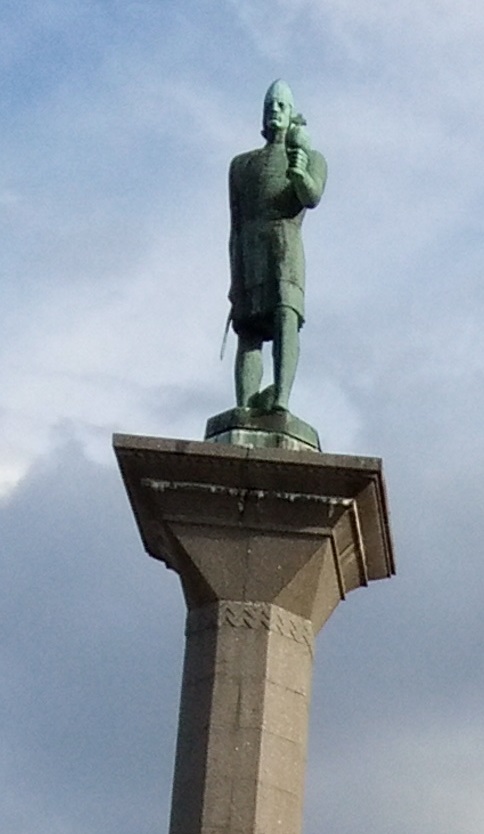
Main Square statue of Olav Tryggvason (960s – 9 September 1000), who, as King of Norway from 995 to 1000, founded Trondheim in 997.
Olav was instrumental in the conversion of the Norse to Christianity, and built the first Christian church in Norway in 995.
He was preceded by Harald Bluetooth (Old Norse: Haraldr Blátǫnn Gormsson), and succeeded by Sweyn Forkbeard (Old Norse: Sveinn Haraldsson Tjúguskegg). Love the names!
Travel Diary
We didn´t have much time to see Lillehammer, as we arrived at 1 a.m. last night, and we are taking a morning train to Trondheim. So we take a brief walk through the town in the rain. A pleasant little overgrown village, with neat, parallel streets of modern shops interspersed with older wooden buildings.
Lillehammer has a population of just 28,000, and its architecture late 19th-century wooden structures. It hosted the 1994 Winter Olympics, and tourists are inundated with unsubtle reminders of this brief moment in time. Lillehammer hosts the largest literature festival in the Nordic countries, and is a City of Literature under UNESCO. It lies at 61.7° north.
We spend the journey to Trondheim chatting to Daniel Cress, a charming, friendly drama teacher from Yale University, who had been an exchange student in Bodø in the 1990s, and was returning to relive his earlier life, which seemed to be very meaningful to him, despite the shock of midnight sun and its opposite driving him into depression. We meet him for dinner in a birreria-restaurant, which served only Italian food!
Trondheim was occupied on Day 1 of the German invasion, 9 April 1940, and not liberated till the end of the war, 8 May 1945. A week after its occupation, British and French troops tried in vain to free it. Trondheim was a major base for submarines of the German Kriegsmarine, and the Germans had extensive plans to develop it as their long-term naval centre.
During WW2 Trondheim was a stronghold of the Nazis, with a submarine base, and the Tirpitz and Scharnhorst battleships, before they moved further north to threaten the Atlantic convoys heading to Soviet Murmansk.
– The German battleship Tirpitz was sunk by Royal Air Force bombers on 12 November 1944.
– The German battle-cruiser Scharnhorst was sunk at the Battle of the North Cape on 26 December 1943 by the Royal Navy’s battleship HMS Duke of York with cruisers and destroyers, including an onslaught from the destroyer HNoMS Stord of the exiled Royal Norwegian Navy, off the North Cape, Norway. Stord bravely went in as close as 360 m to the Scharnhorst before firing torpedoes, sinking the ship, which was threatening the Artic convoys. The torpedo commander, Håkon Nilsen (1913-1976), became a national hero.
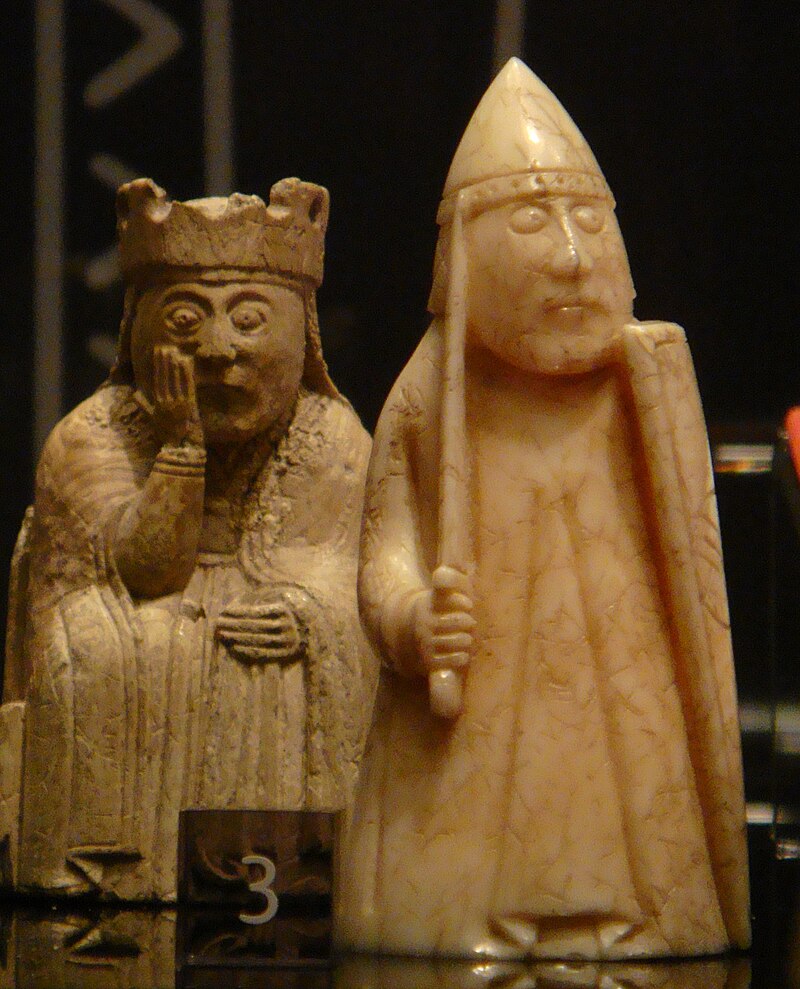
It is believed that the Lewis chessmen, carved from walrus ivory in the 12th century, and found in the Hebrides, may have been carved in Trondheim.