Baltic Sea 2022
Day 14: Wednesday 08 June 2022
Oulu, Finland – Tampere, Finland
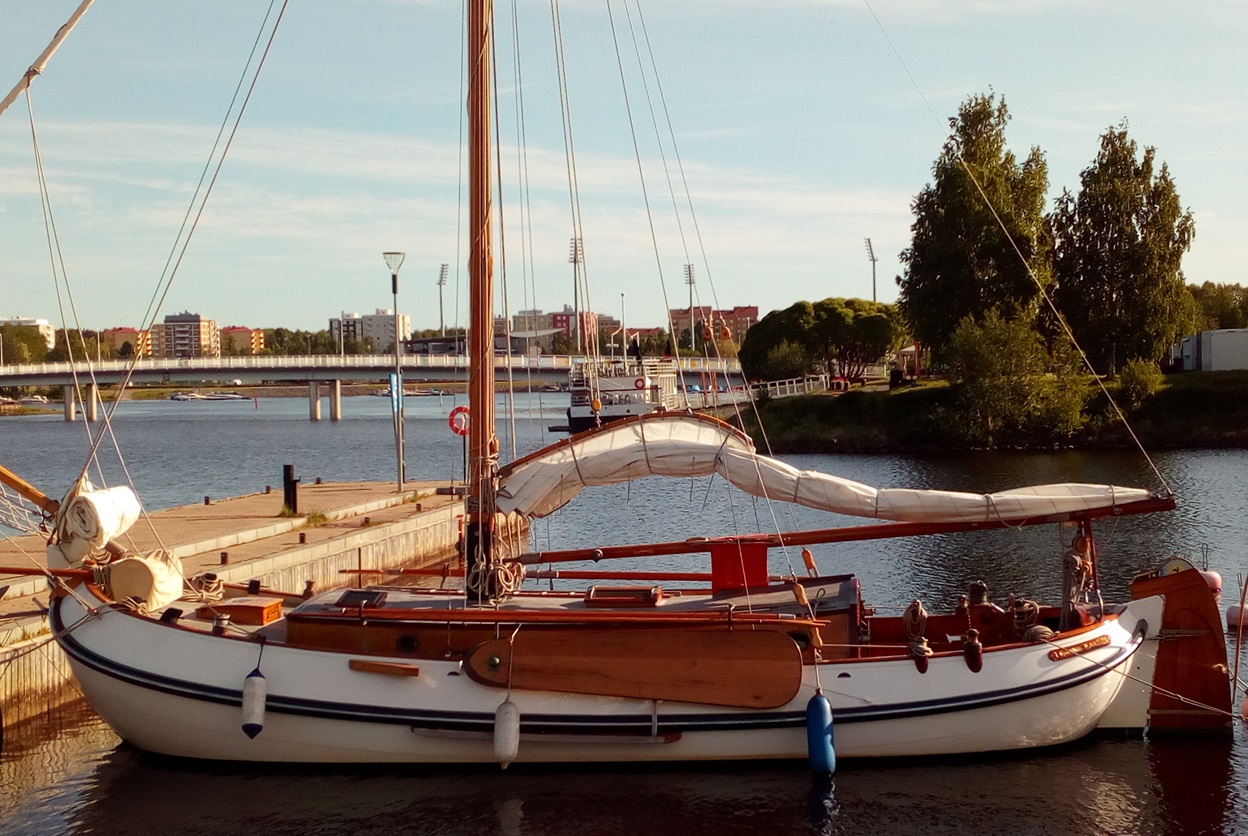
There is a market starting up as we arrive to breakfast at the seaport in Oulu, where expensive leisure craft wind in and out among the many islands before the sea proper. A large fat policeman statue stares across the market square, and a row of traditional wooden houses are used as shops, retaining the 17th century character of the dockside.
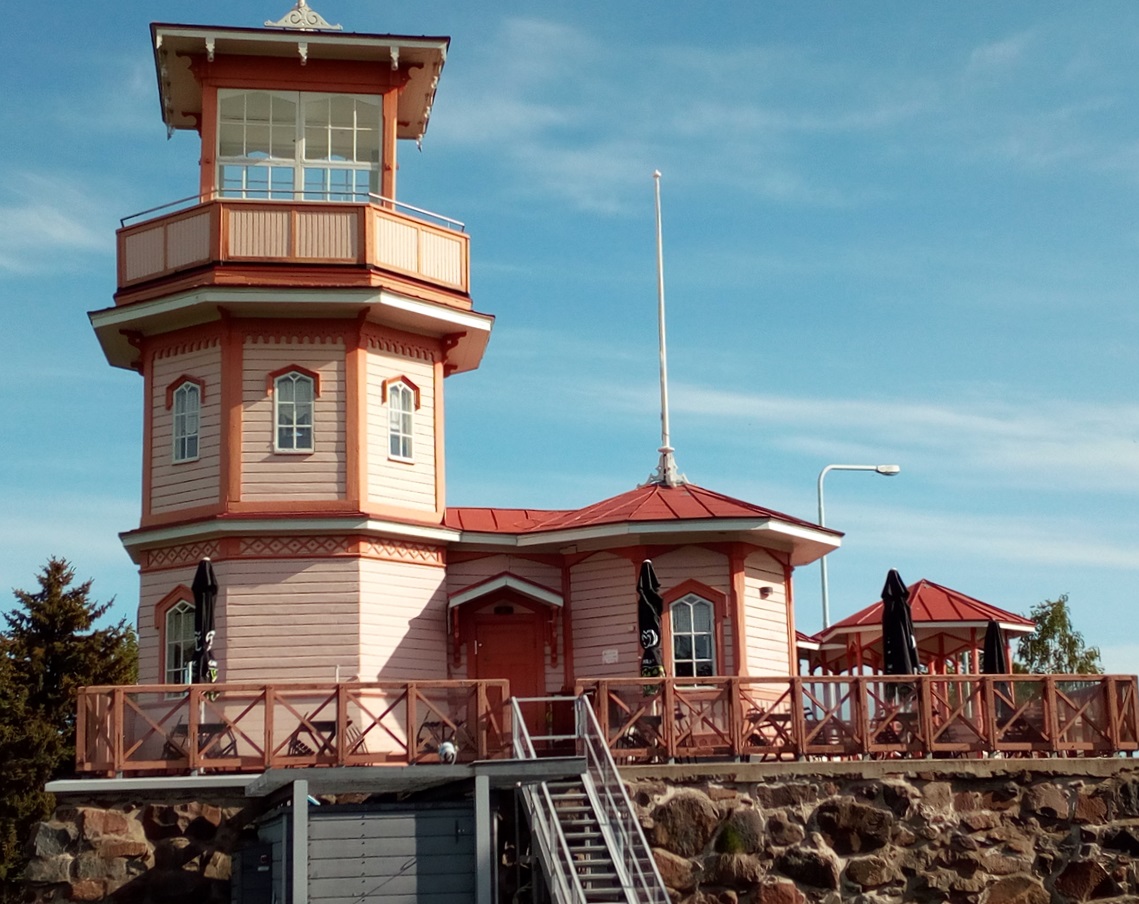
Oulu portside lookout tower. We stroll the streets of this bustling, modern town, before making our way back to the station for a crowded train to Tampere.
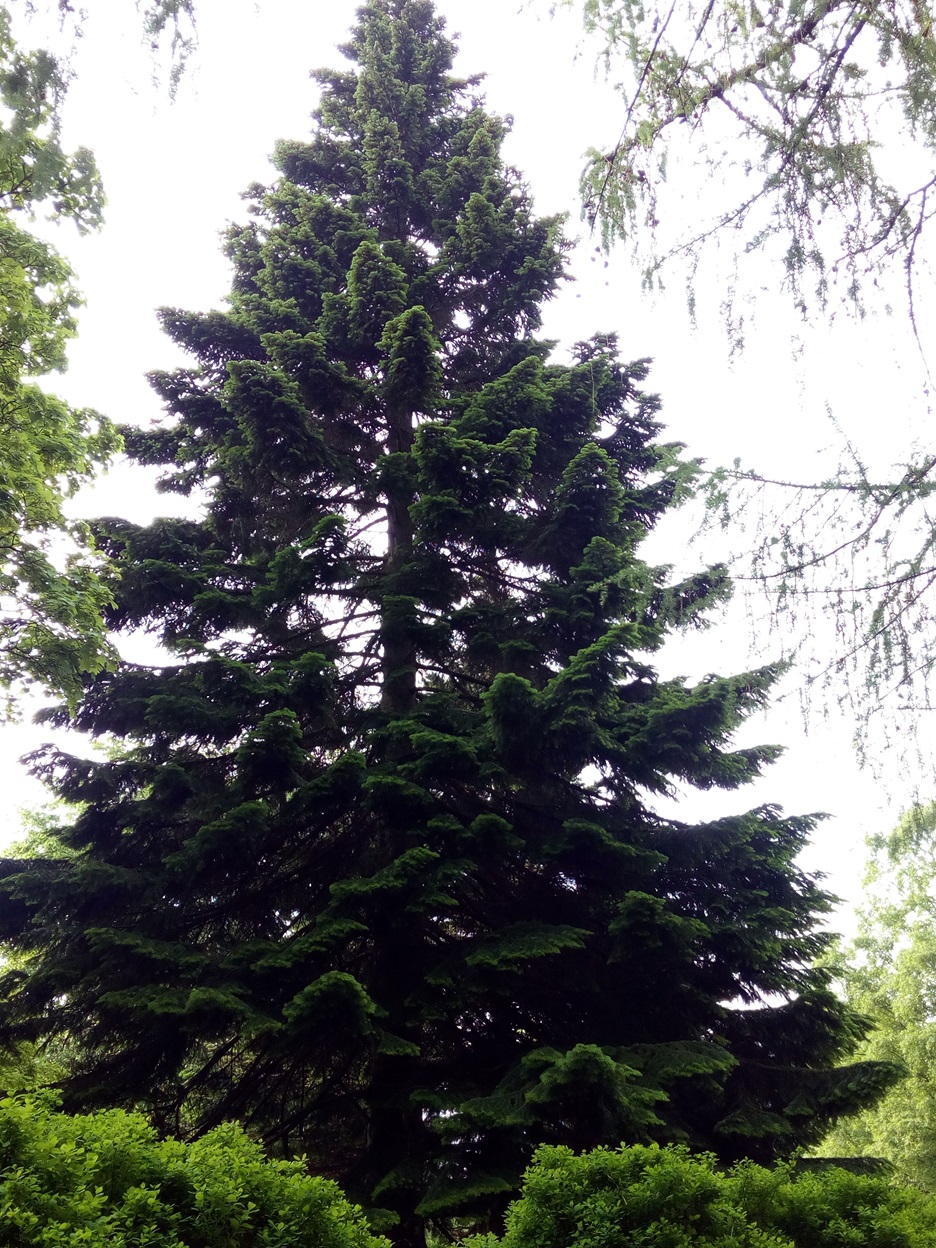
Where Christmas is year round! Spruce trees, Scotch pine, and other species are everywhere in Finland. The countryside shows signs of continuous logging and replanting of birch, with orderly patches of tightly-packed young trees, and train convoys of thin logs wait to continue their journeys to the timber log mills we see at regular intervals along the way. Along with timber, Finland has a large paper and pulp industry, making it one of the world’s largest producer of sawn timber, paper and cardboard, We saw quite a few of the 130 industrial sawmills along the railway.
There are spindly forests also of windmills peaking over the treelines, and even the occasional solar panel installation.
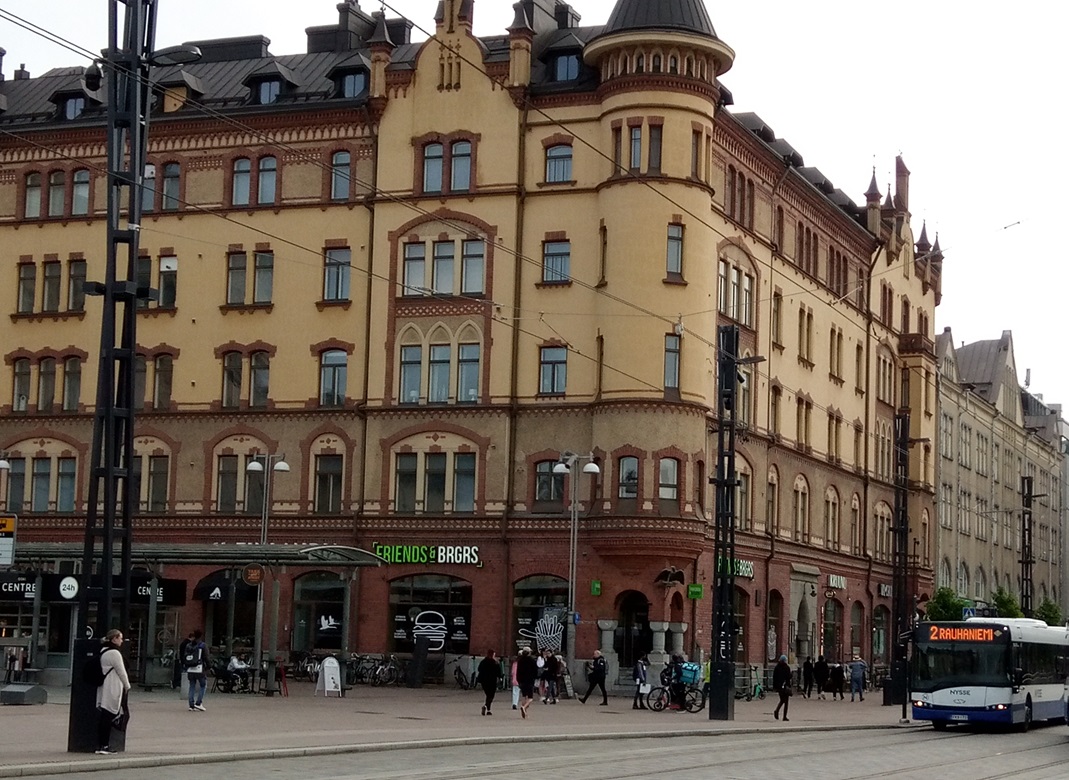
Tampere main street. Tampere surprises us with its grandness and beauty. We find parks, with a view of an expansive lake, and an old industrial complex, Findlayson, now converted into a stylish recreational center. Tampere has a population of a quarter of a million, making it the most populous inland city in the Nordic countries.
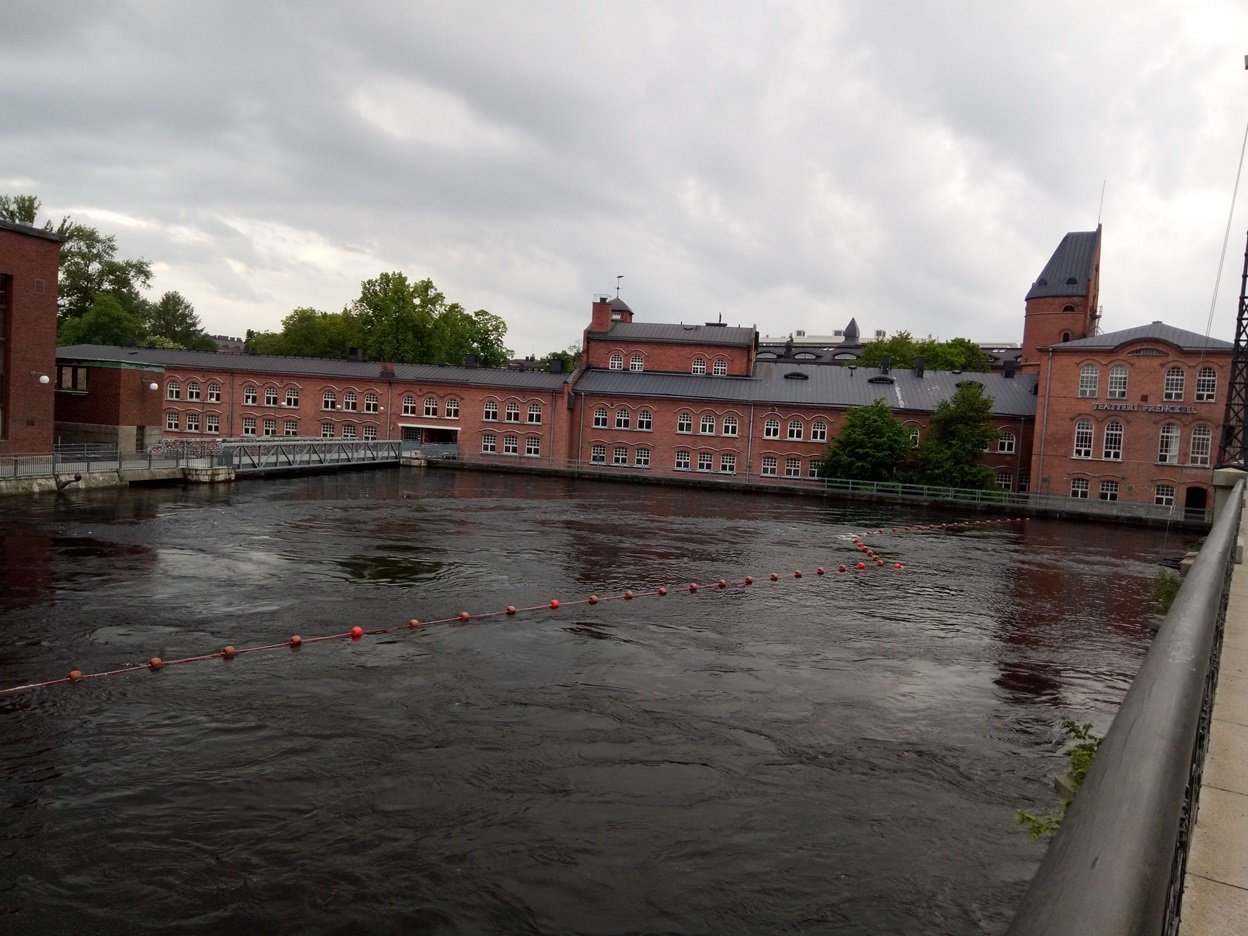
Tampere is sandwiched between 2 lakes, which have an altitude difference of 18m, providing ample hydroelectric power. As a result, it is known as the Manchester of the north, as it was the center of Finnish industry. The Tammerkoski Rapids pass through the centre of the city. It also has the most public saunas in the world. It is often rated as the most popular city in Finland.
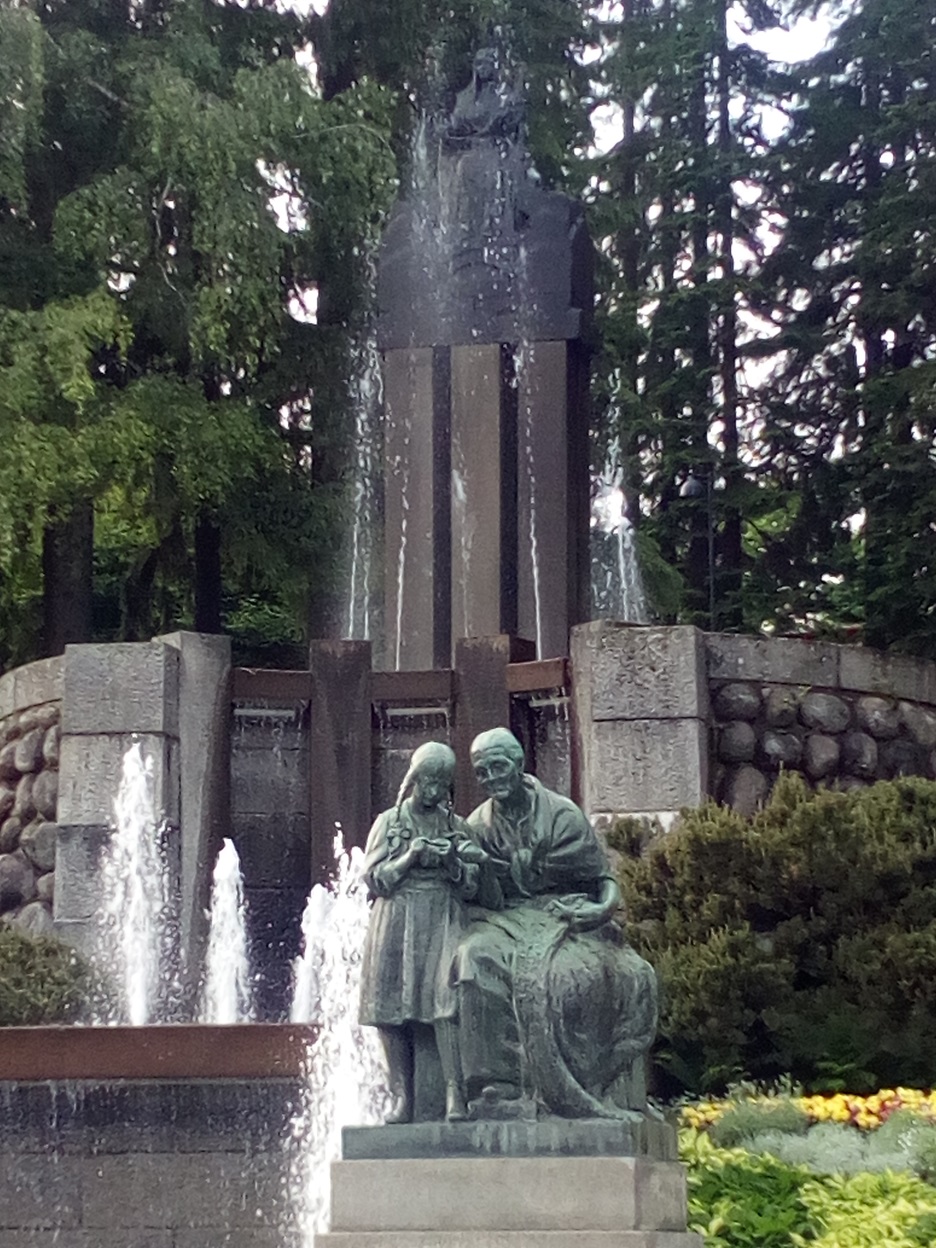
Tampere park entrance statues and fountain
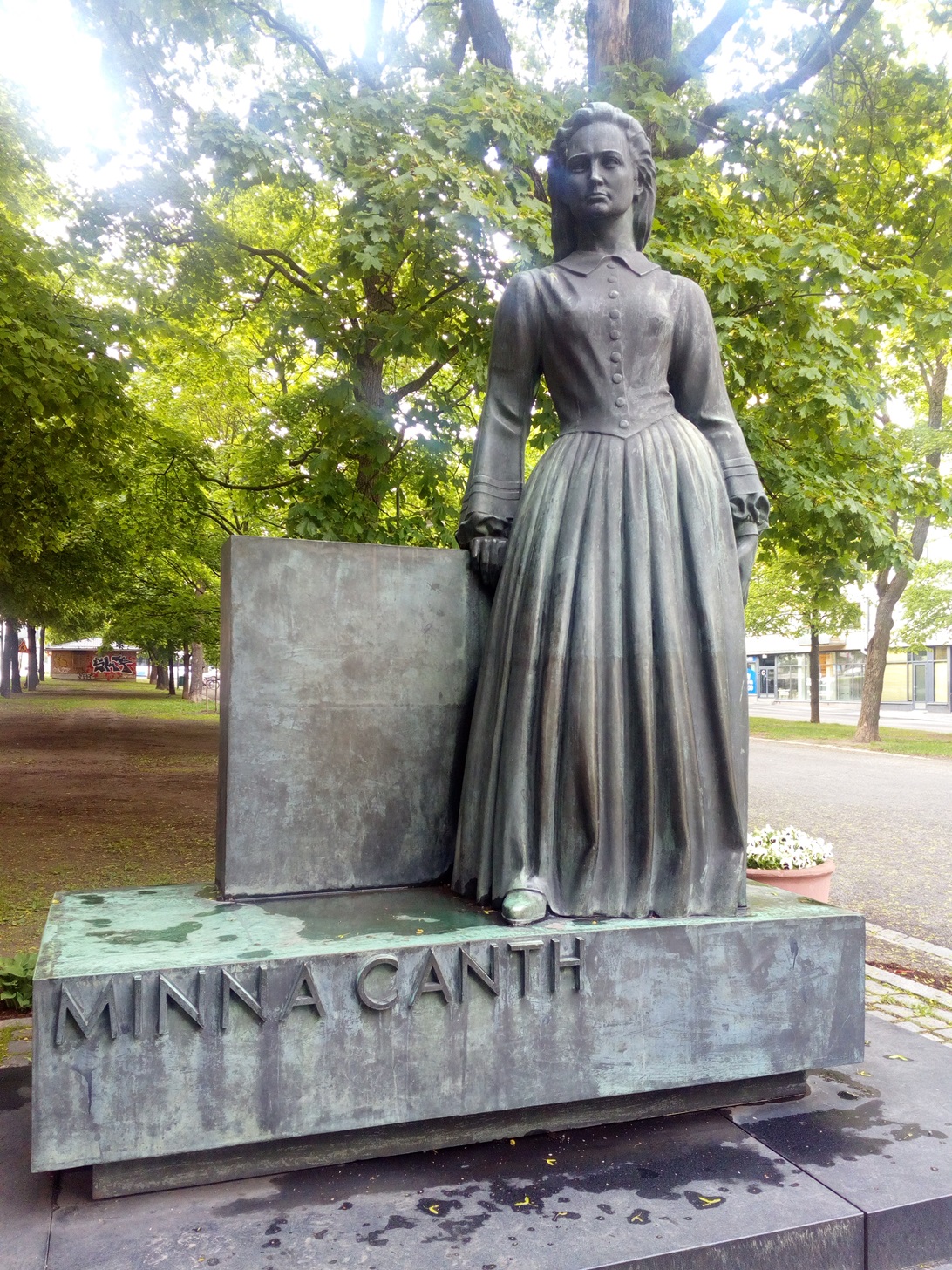
Tampere garden statue: Minna Canth (1844-97), Finnish writer and social activist. She was widowed and left to raise seven children while managing the family´s draper´s shop. Not surprisingly perhaps her writing addressed women´s rights. Her most famous work was Anna Lisa, which has been adapted to films and operas.
She is honoured by her own flag flying day on 19 March, which is also the day of social equality in Finland.
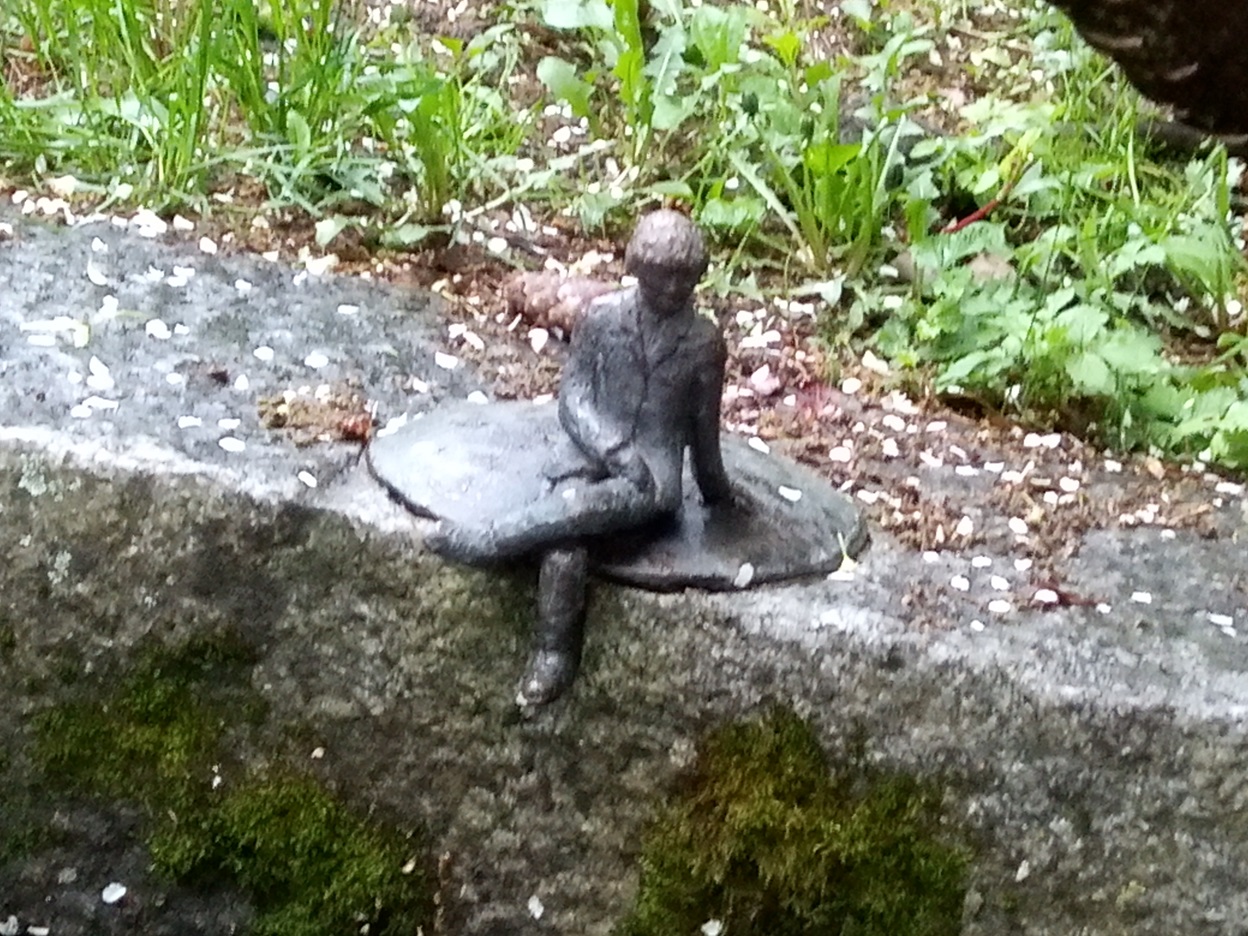
Park statuette. We were charmed to find many of these hand-sized figures scattered around a park.
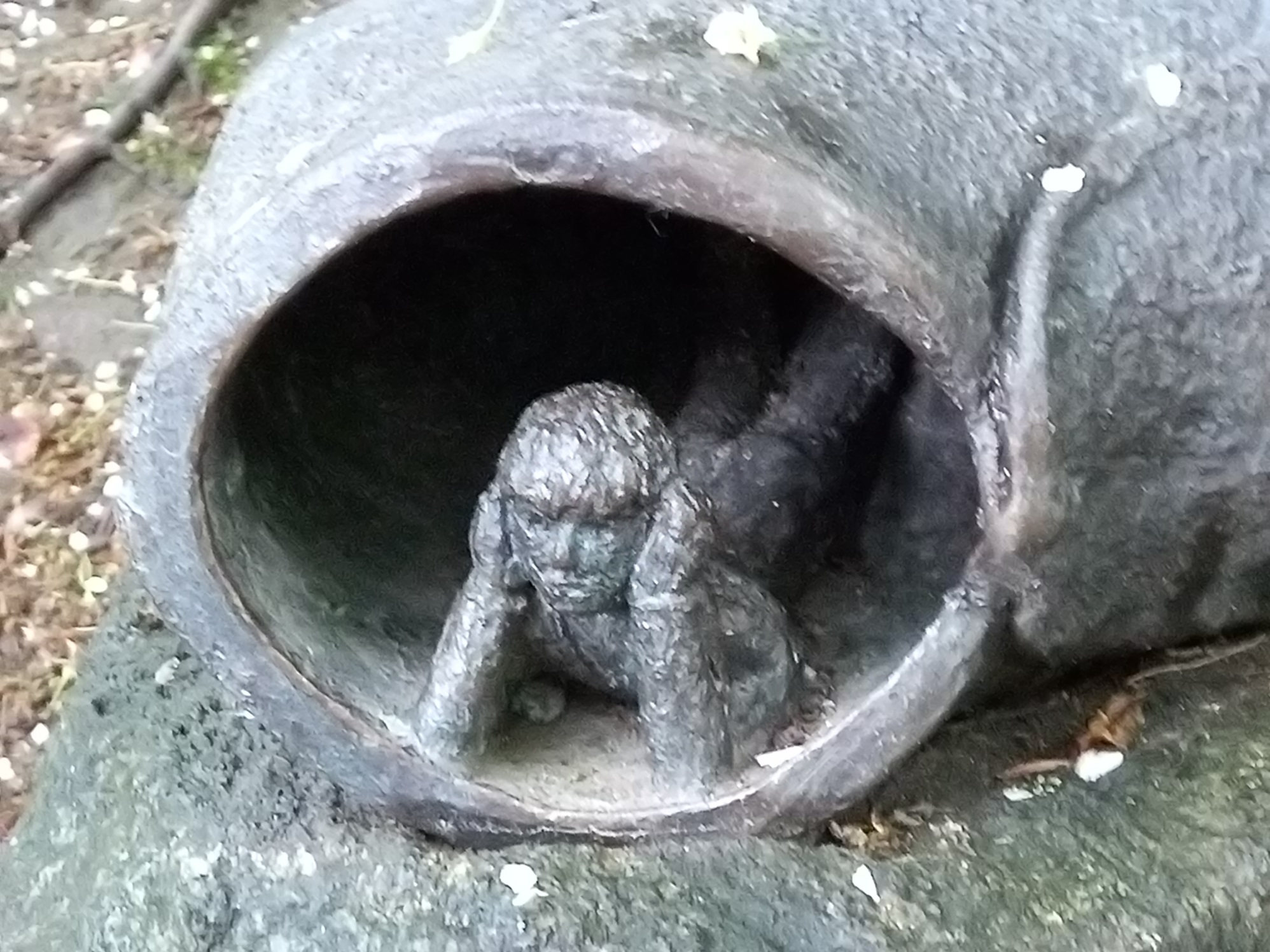
Park mini-statues
Travel Diary
Historical Note
By the 17th century, Finland was under Swedish control, and a two-tier society evolved: Swedish was the dominant language for the nobility, administration and education, and the Finnish upper class lost its status and land to Swedish nobility. Under the early phase of Swedish domination, Catholicism became more influential, but the Finns gradually converted to Lutheranism in the wake of the Protestant Reformation. Helsinki was founded by Gustav I (reign 1523 – 69). Finnish cavalrymen were a vital asset to the Swedes during their conquests in the thirty years war (1618-1648). There was a severe famine in Finland in 1696-97, killing one-third of the population, followed by an encore of a plague as a result of the Great Northern War (1700-1721).Russia challenged Sweden for control of Finland throughout the 18th century. Two Russian occupations of Finland are known as the Greater Wrath (1714-1721) and the Lesser Wrath (1742-1743). An entire generation of young men was lost due to the destruction of property and the burning of Helsinki in the Greater Wrath. Following the Russo-Swedish War of 1788-1790, some of the Finnish elite determined that ties with Sweden were too great a liability, and attempts were made by some of the elite to deal with Catharine the Great’s Russia, to gain autonomy for Finland, but this movement was ill-fated due to popular opposition. It was to no avail, as Finland became part of the Russian Empire, as the Grand Duchy of Finland, in 1809.
The 1905 conference of the Russian Social Democratic Labour Party, led by Lenin, was held in the Tampere Workers’ Hall. This meeting laid the groundwork of the movement which led to the October 1917 revolution. At this time Finland was still governed by Russia. In parallel to the revolution and subsequent civil war in Russia, Finland had its own civil war, 28 January – 15 May 1918, between the Reds and the Whites. Tampere was a Red stronghold, and suffered serious damage as a result. It was also bombed by the Soviet Union during the Winter War (1939-30).