Baltic Sea 2022
Day 15: Thursday 09 June 2022
Tampere, Finland – Helsinki
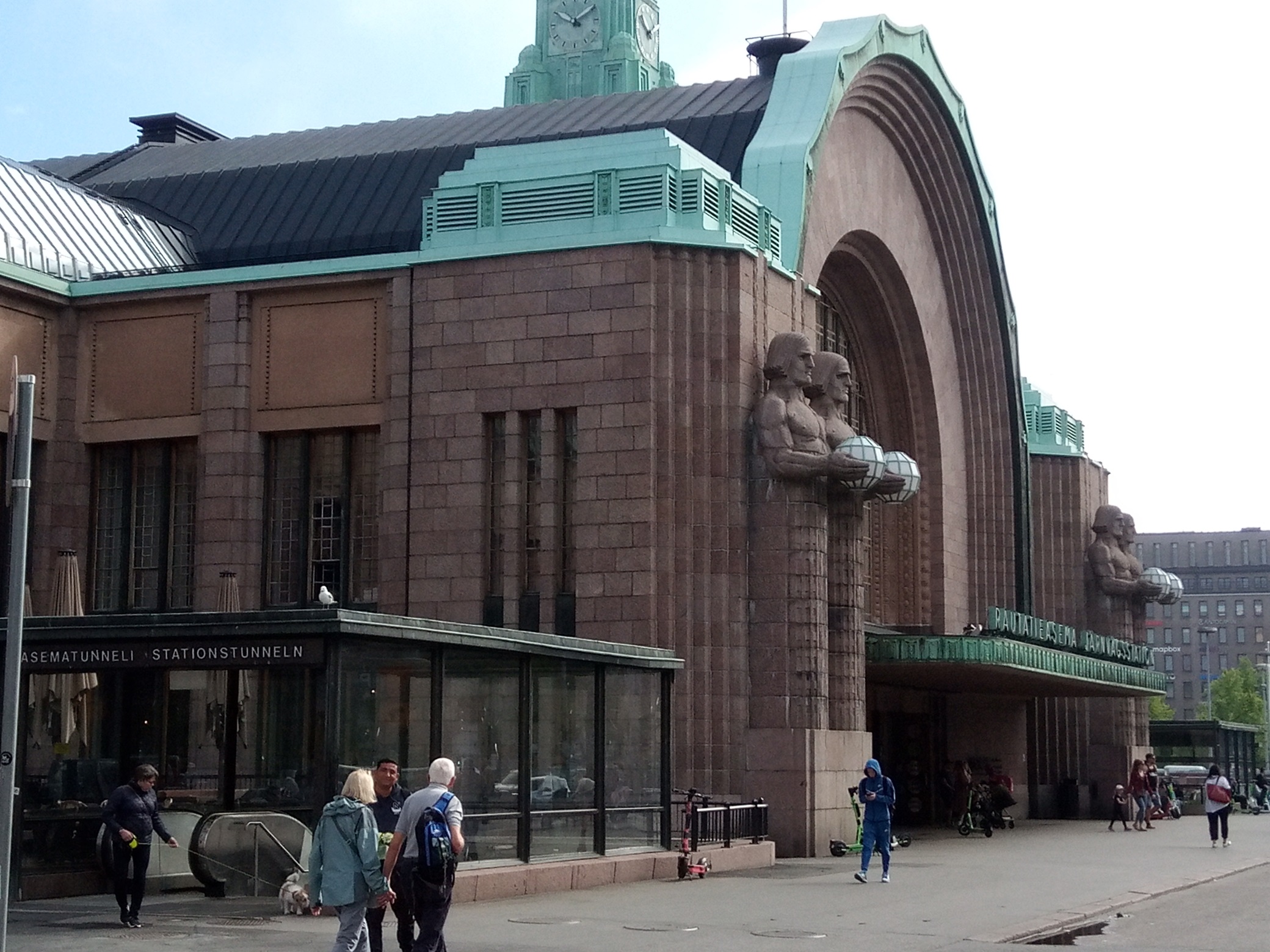
Helsinki Central Station (Helsingin päärautatieasema)
This magnificent granite station was inaugurated in 1919, a significant date: the First World War had just ended, including the Finnish Civil War, in which the Whites, allied with Germany, fought against the communist Reds, leading to the independence of Finland from the Russian Empire. As a result, the station, which had been destined to be part of the infrastructure integrating the Russian Empire, became instead a symbol of the new Finnish nationalist pride and independence.
The building is distinctive for its clock tower and the Lyhdynkantajat (“The Lantern Bearers”) statues by Emil Wikström. It was voted by the BBC as the world´s most beautiful station.
Since the hotels seem pricey, we are lucky to find a room (Euro 150) near the centre, and decide to stay only one night. Helsinki is in parts beautiful, chaotic, and ponderously contrasting with its mishmash of old and modern architectural styles. In and around the many sights is a network of trams and buses, as well as ferry services. We take a daypass, and tram it all over. There are also electric battery buses.
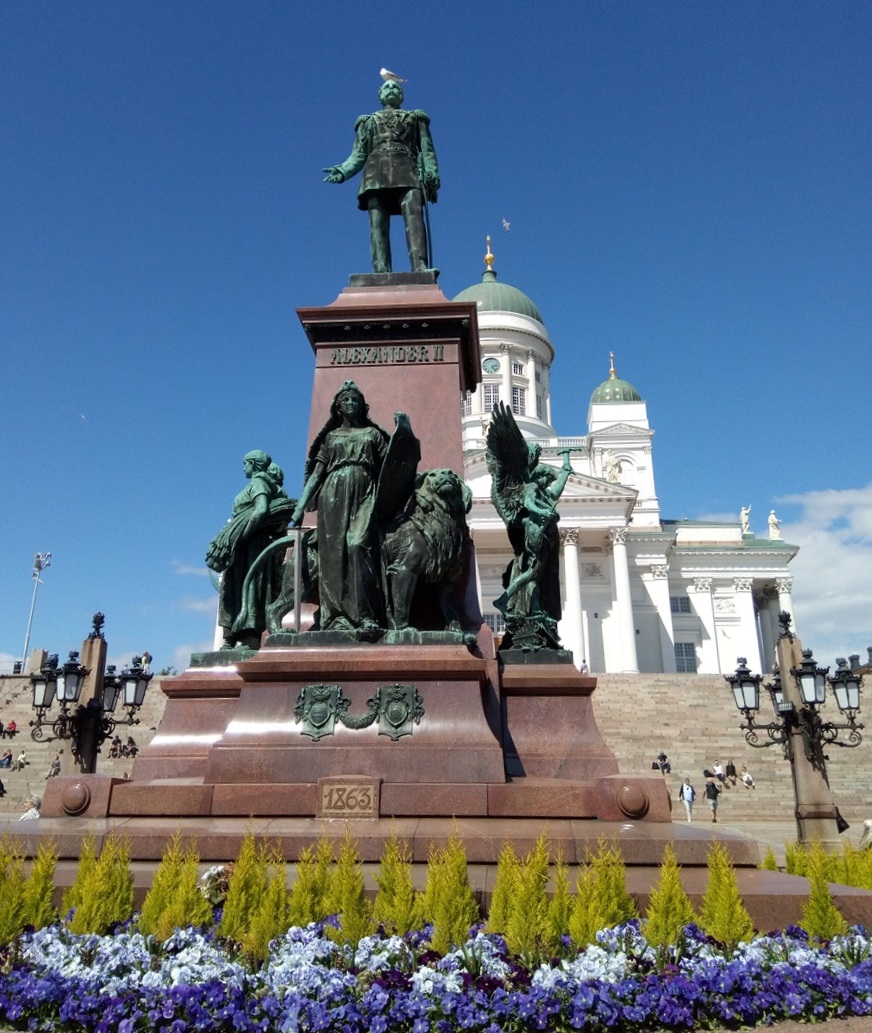
Alexander II monument
Despite the oppression under both Sweden and Russia in the past, there is a statue (erected 1894), prominently displayed in Senate Square, of Alexander II, Grand Duke of Finland from 1855. This Emperor of Russia and King of Congress Poland was born in 1818, and assassinated in 1881. He emancipated the Russian serfs in 1861, sold Alaska to the USA in 1867 (apparently to prevent encirclement by the British), and struggled to maintain a pacifist orientation in the face of rebellions and wars, such as against the Ottoman Empire in 1877-8. This war led to the independence of the Balkan states of Bulgaria, Montenegro, Romania and Serbia.
After the uprising in Poland in 1863 he integrated Poland directly into Russia. His assassination in 1881 occurred amid his attempts to counter revolutionary and anarchistic forces, and was counter-productive for those movements because his successor, his son Alexander III, proved to be highly reactionary, and undid the progressive policies of his father.
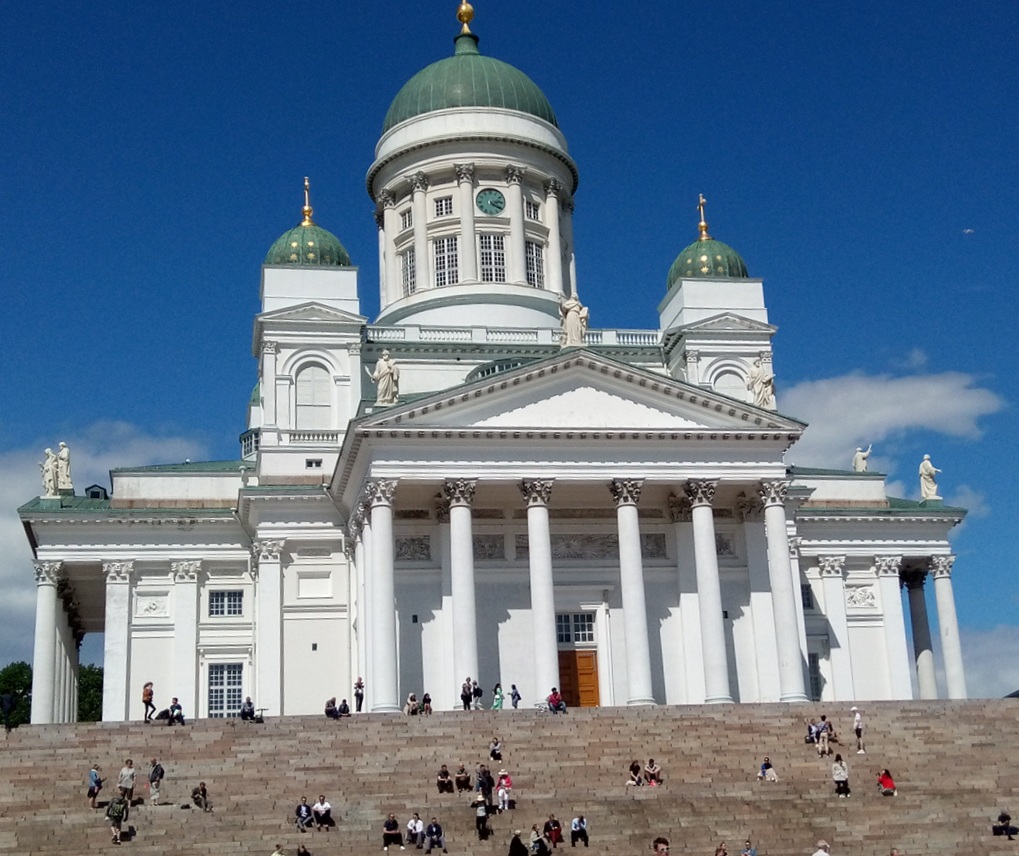
Helsinki Cathedral
Behind Alexander II’s statue in Senate Square is a grandiose set of steps leading up to Helsinki Cathedral, a beautifully proportioned, Palladian-style, somewhat Russian-looking white edifice. It was built in 1830-52, is Finnish Evangelical Lutheran, and attributed to the Grand Duke of Finland, Alexander II’s father and predecessor, the Russian Tsar Nicholas I.
It has a large central green dome, and four matching smaller domes, and is in the neoclassical style, designed by the architect with the appropriate name of Engel. The symmetrical proportionality comes from its design based on the Greek cross, which gives it a central square and four equilateral arms in the 4 cardinal directions, with each arm featuring its own colonnade and pediment. Its position atop a hill above the expansive Senate Square ensures this is a landmark easily visible from anywhere in the city.
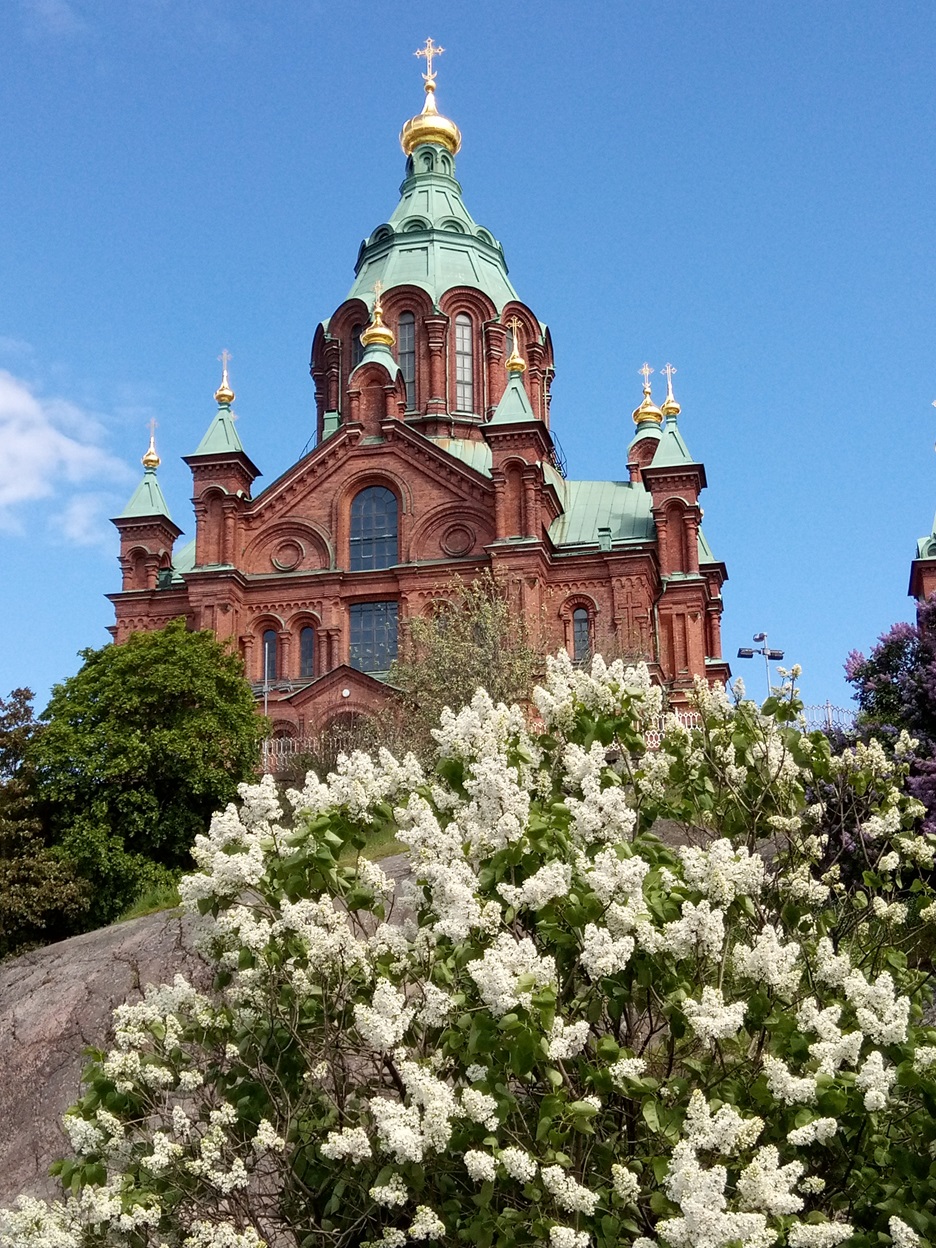
Uspenski Eastern Orthodox Cathedral
Near the Senate Square and Cathedral is the Uspenski Eastern Orthodox Cathedral, a red brick impressive building on a rise over the harbour front.
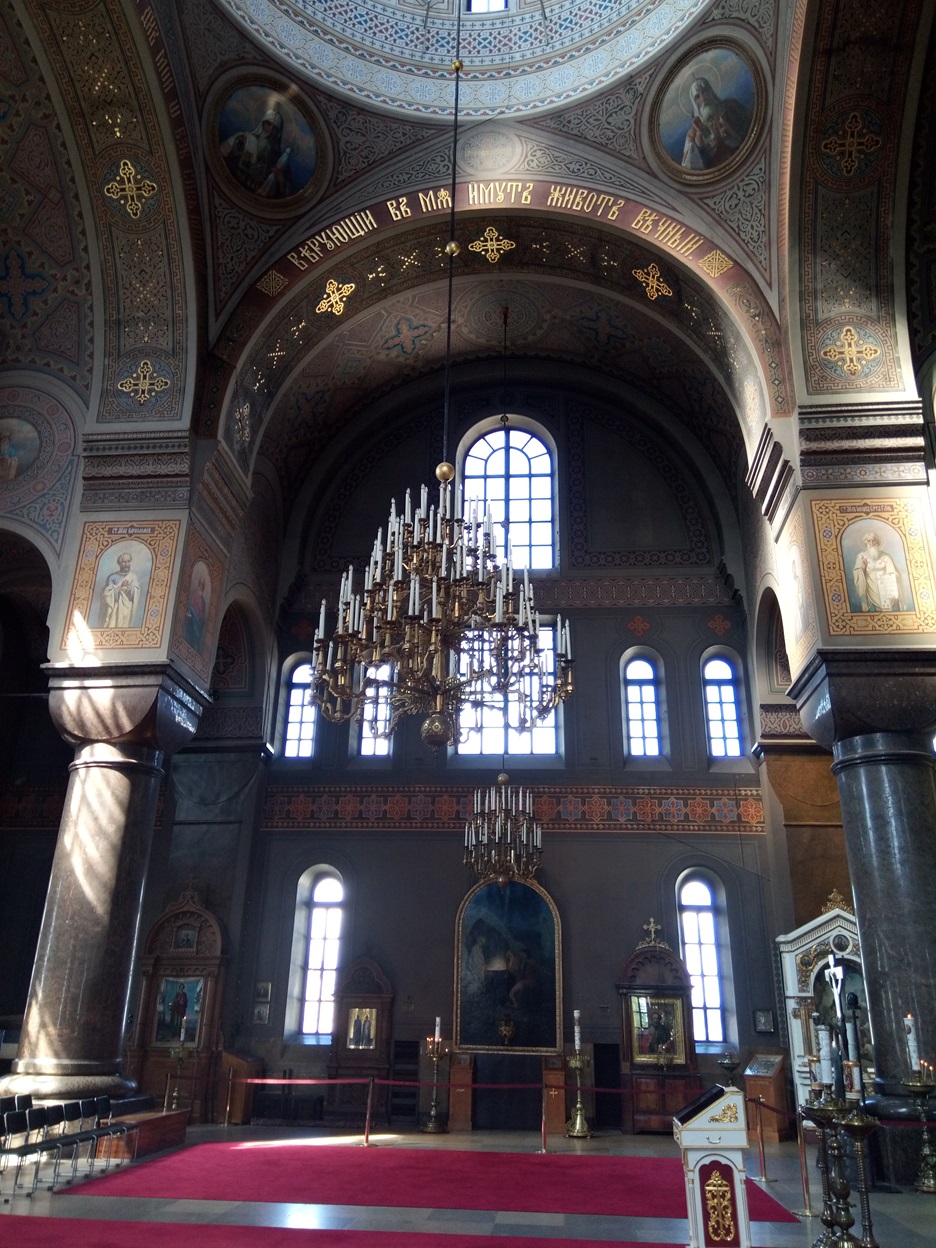
We enter Uspenski Eastern Orthodox Cathedral and are instantly overwhelmed by the overly-complicated interior. As an interesting insight into the religious balancing act of ruling Finland, when Helsinki became the Finnish capital in 1812, Tsar Alexander I decreed that 15% of the salt import tax be used to fund the construction of two churches: one Lutheran and one Orthodox. This cathedral however was built by private donors in 1862-68, using bricks from the Bomarsund Fortress (Åland) which was demolished during the Crimean War.
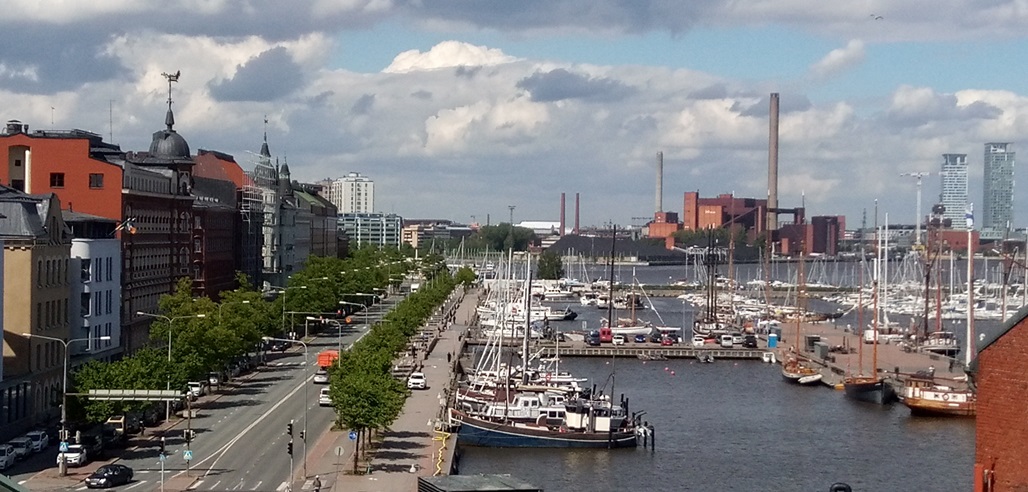
View of Helsinki and harbour
The first thing that strikes one about Helsinki is that it is surrounded by water. The city is scattered over islands and peninsula on the northern shore of the Gulf of Finland, which through history formed a power tug-of-war triangle with St. Petersburg and Tallinn. The next thing one notices is the stark contrast of architectural styles: neoclassical, art nouveau, romantic nationalism, renaissance revivalist, gothic revivalist, and modern functionalist.
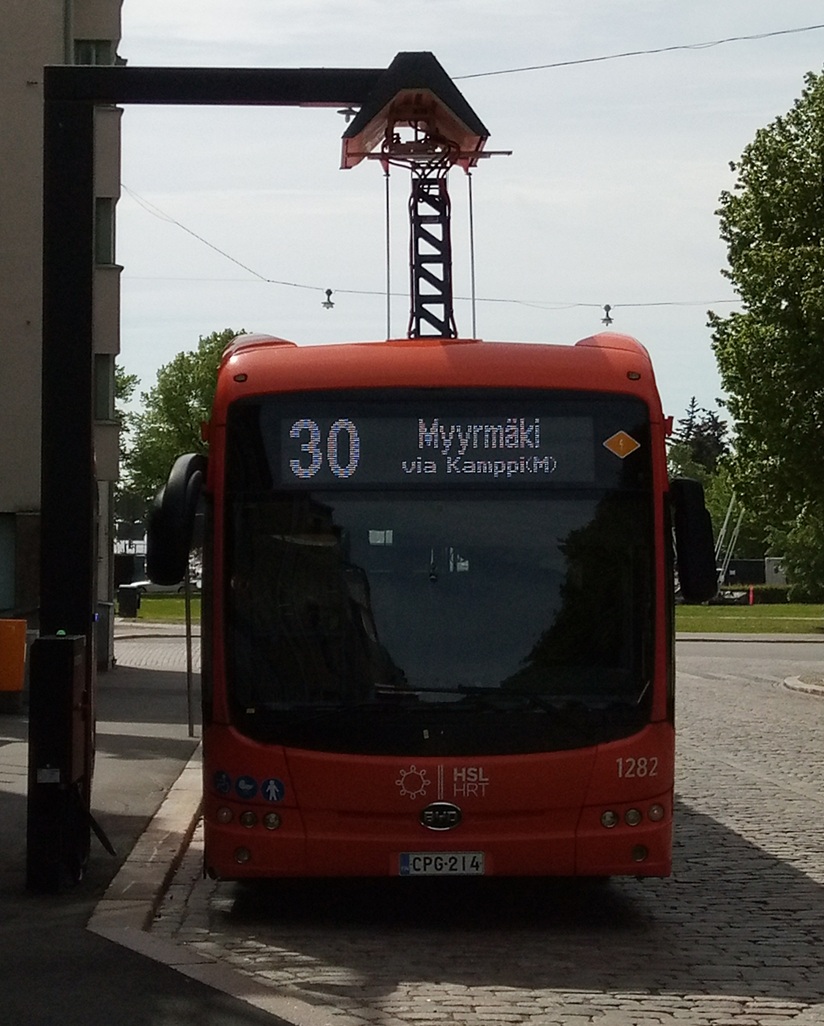
Some buses were all electric. This bus is recharging briefly between routes.
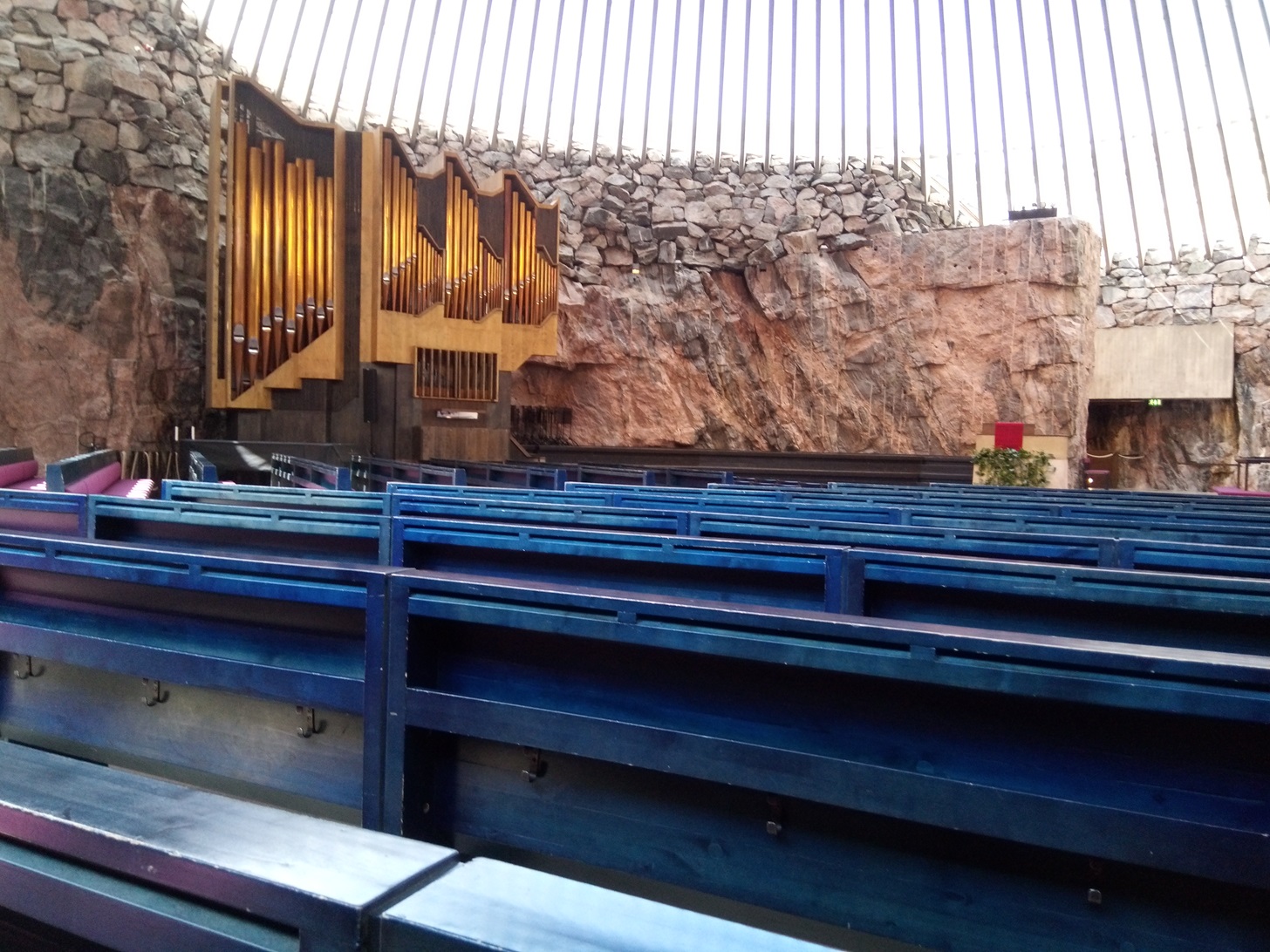
Temppeliaukion kirkko (Rock Church)
We also visit the Temppeliaukion kirkko, a 1969 Lutheran church excavated in rock. Built by the brothers Timo and Tuomo Suomalainen, it is lit by natural light, and is a frequent venue for concerts. The rock walls were left exposed to enhance the acoustics.
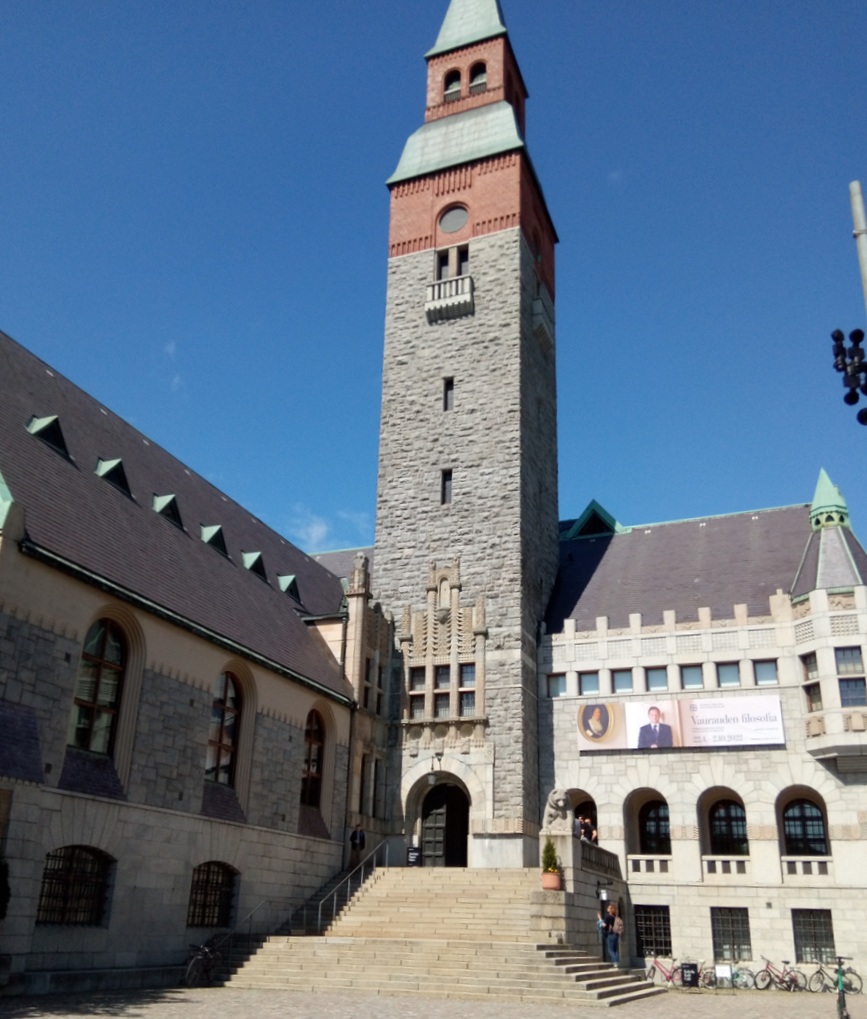
National Museum of Finland
The architecture belongs to national romanticism and the interior mainly to Art Nouveau. The museum was built from 1905 to 1910 and opened to the public in 1916.
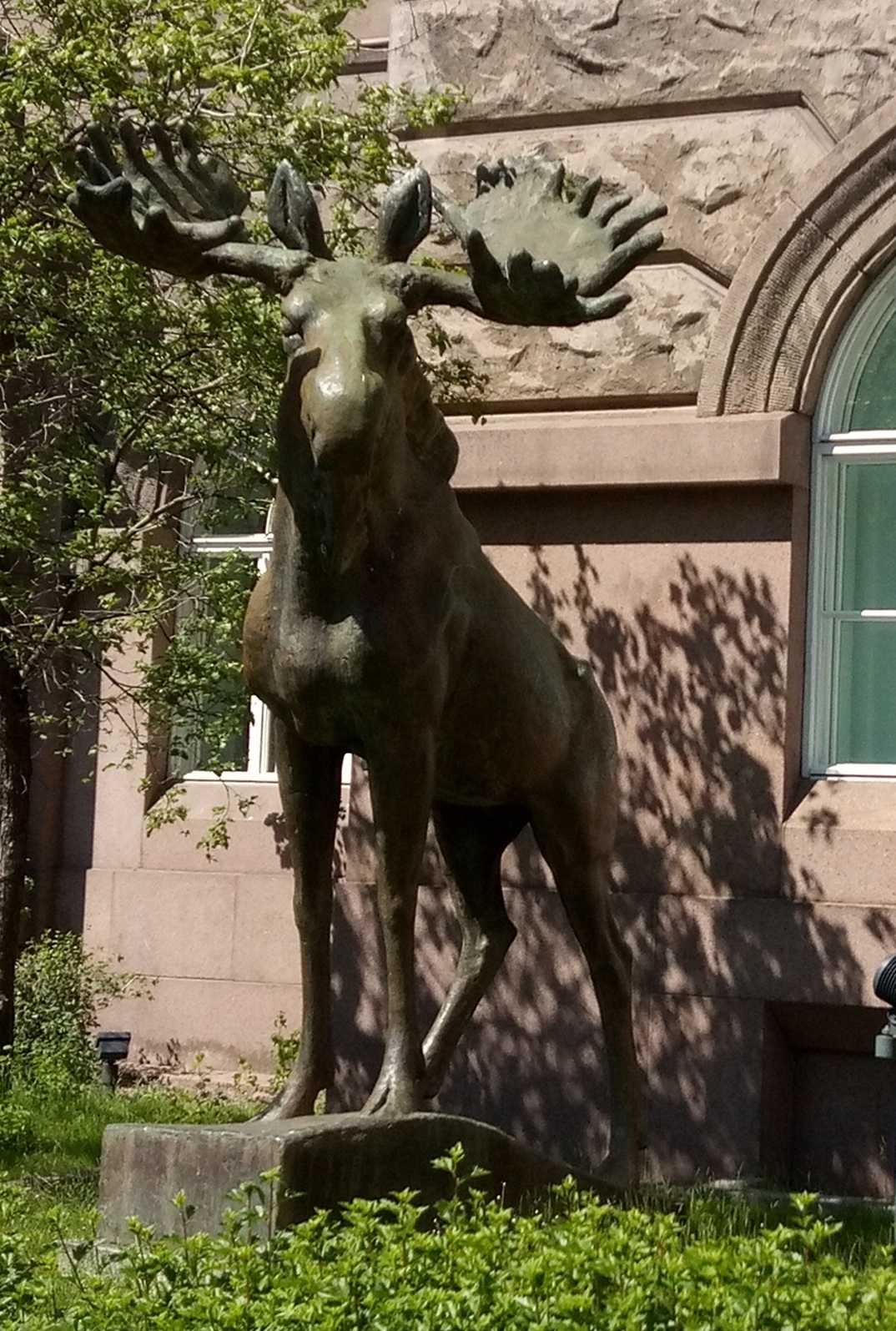
Moose statue. The only moose we encountered on the whole trip
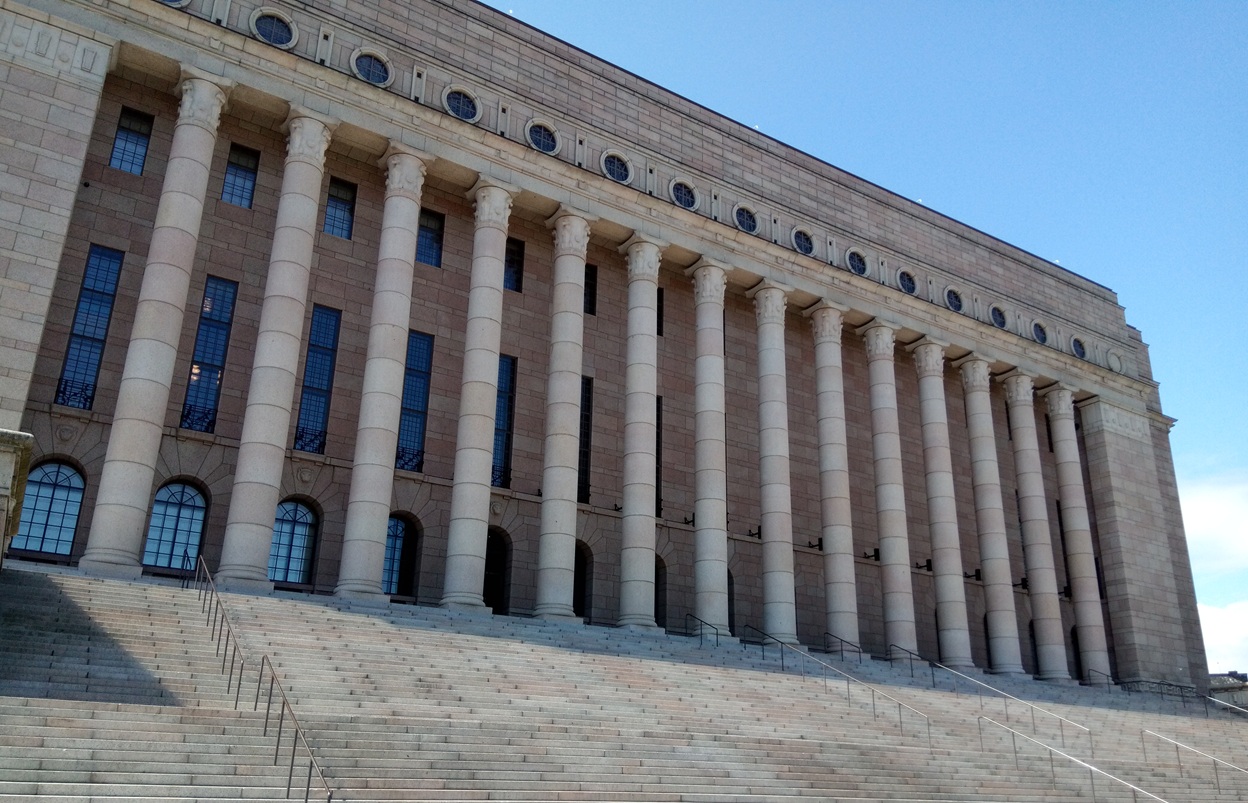
Parliament House (Finnish: Eduskuntatalo), in the district of Etu-Töölö.
Built 1926-31, it combines Neoclassicism with early twentieth century modernism. The façade is lined by fourteen columns with Corinthian capitals, all made from red granite from Kalvola.
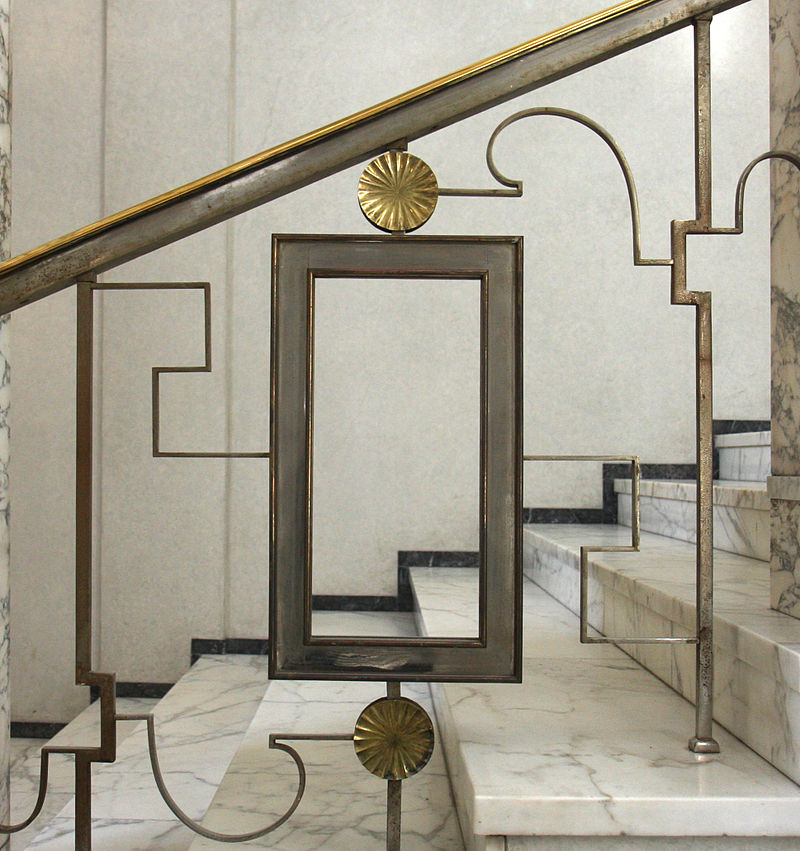
Art deco styling of a staircase inside the Parliament House. Courtesy Wikipedia.
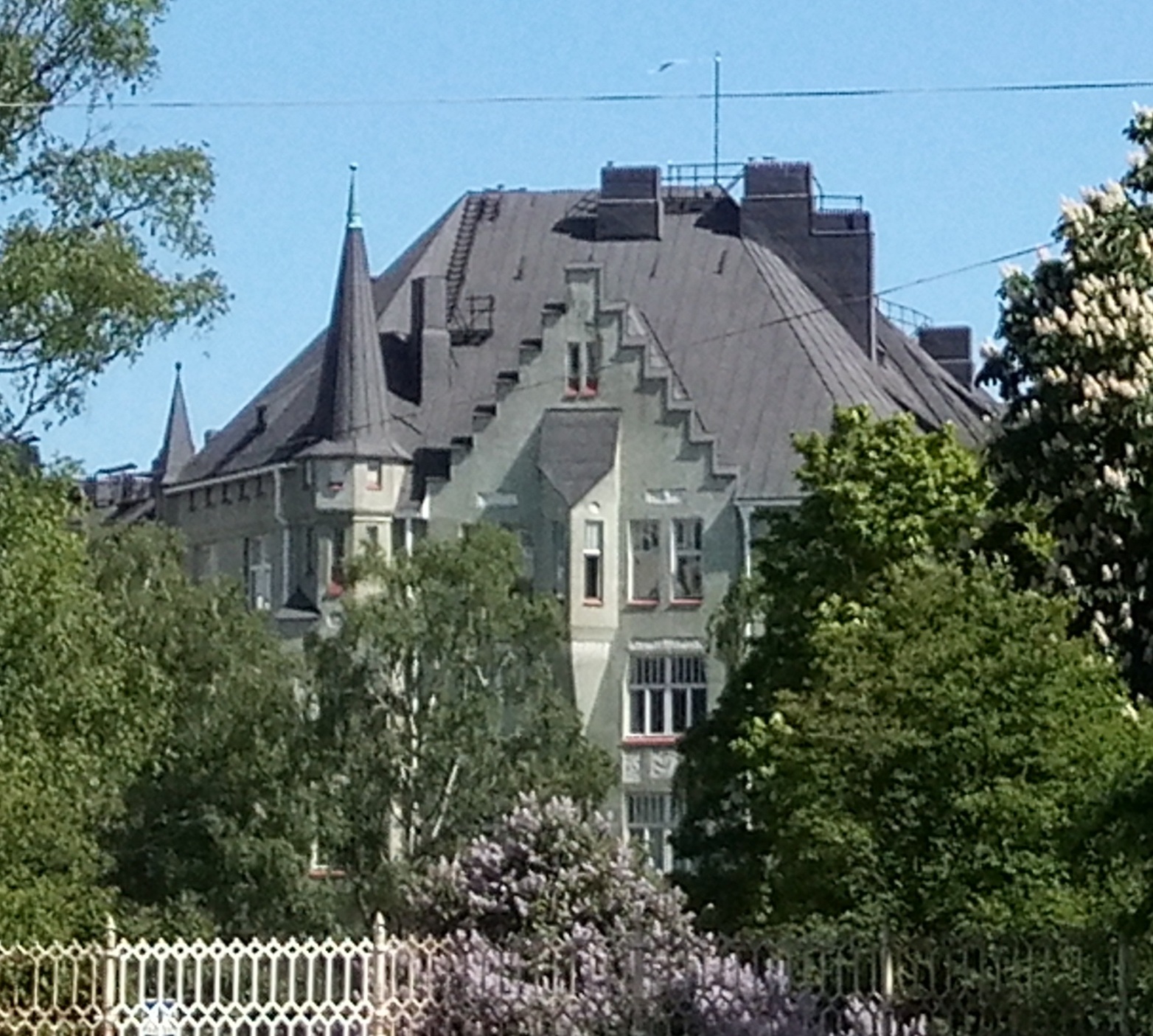
An uptown house in the traditional style
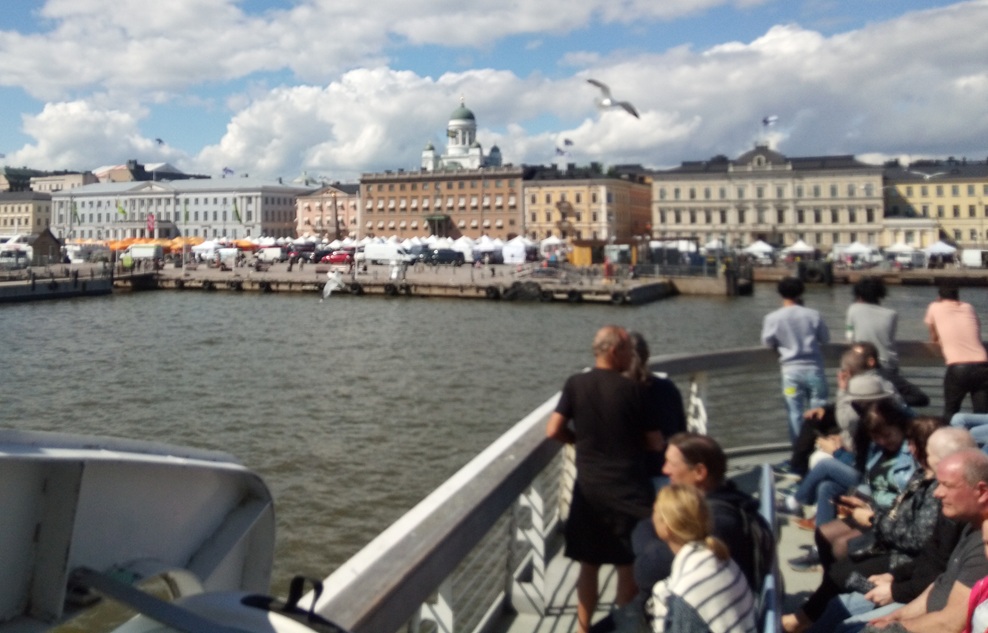
View back to the city waterfront from the ferry on its way to Sveaborg/Suomenlinna Island, an island strategically located at the entrance to the harbour of Helsinki, where there is a set of fortifications. The Swedes began the construction of the fortress in 1748. Russia took over the fortress in 1808 during the Finnish War, providing Russia a foothold to occupy Finland in 1809.
The Russians lost control in 1917 as a result of Finnish independence. We visit a well-stocked military museum and stroll around the red-brick walls of the star-fort style adapted to the group of rocky islands it resides on.
Today the most aggressive defenders are adult geese who hiss at us warningly as we pass their chicks feeding in the grass by the path.
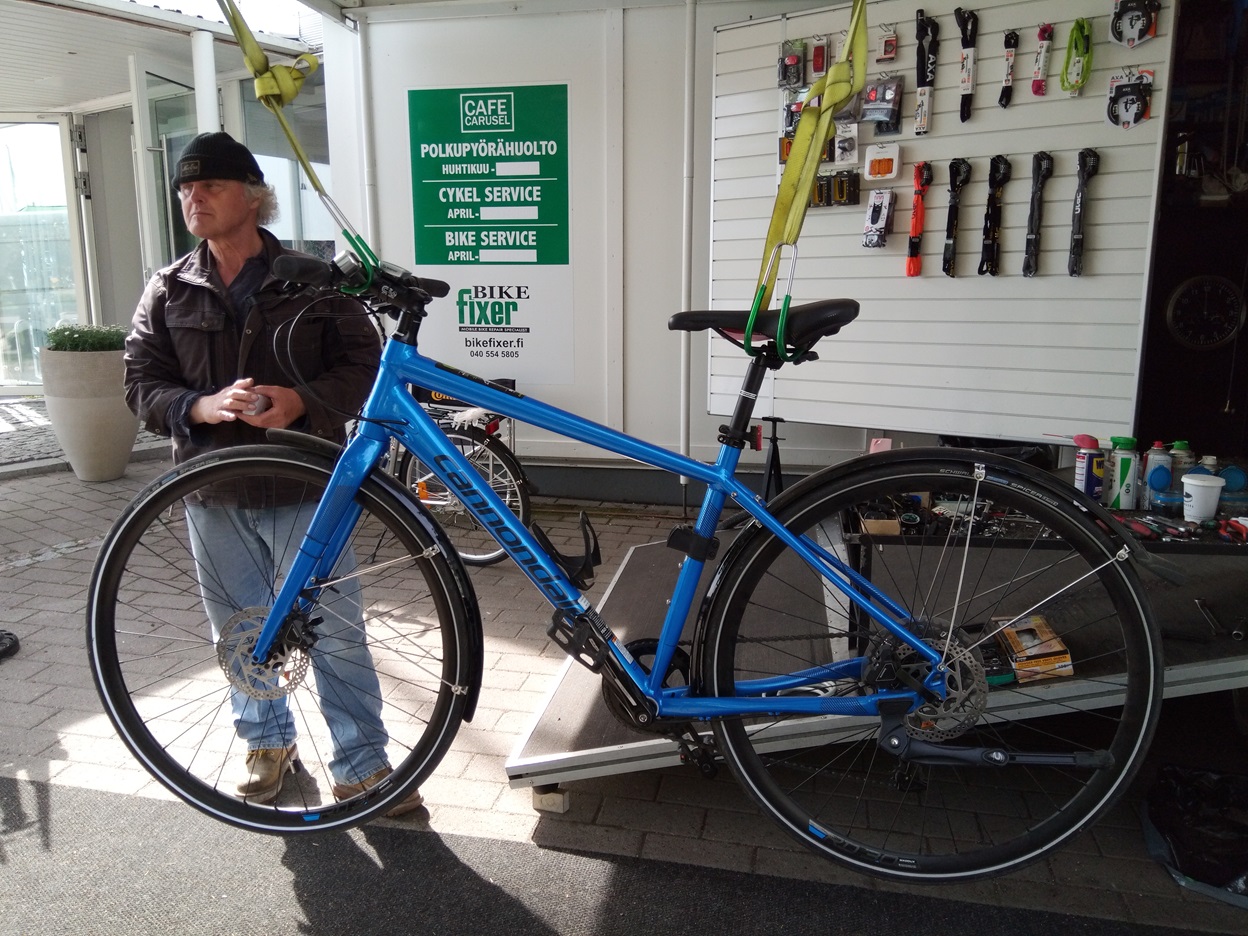
A Swedish bike mechanic and his mobile workshop.
Along the waterfront, we have a pleasant chat to a Swede who has lived forever in Finland, running a bicycle repair caravan in the seafront cyclist catchment area. An Englishman also stops and fills us in on Estonia and Tallinn, which he prefers to Helsinki.