Baltic Sea 2022
Day 19: Monday 13 June 2022
Riga, Latvia
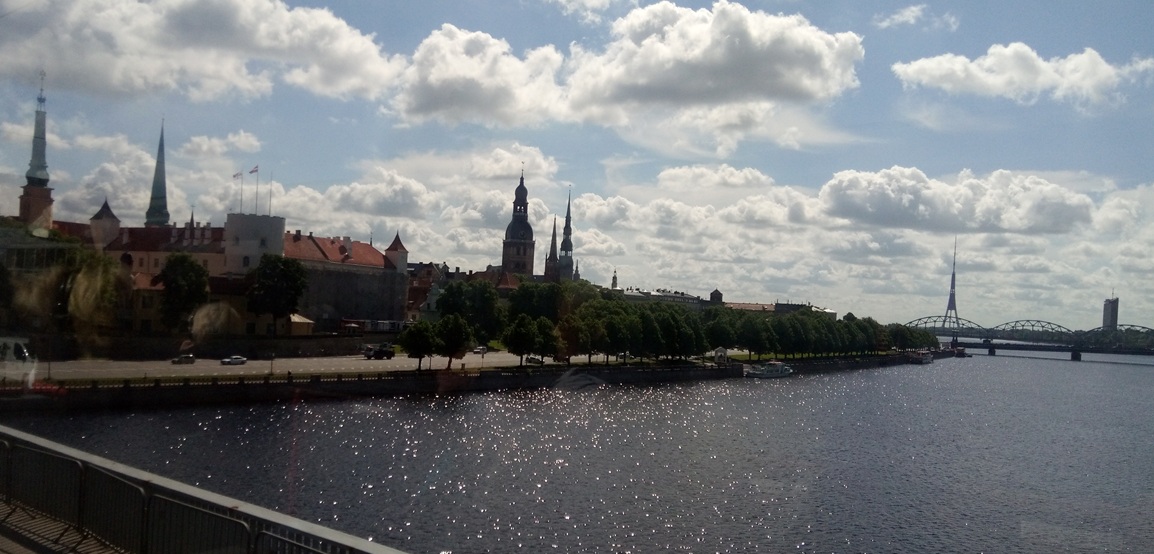
View of Riga from the suspension bridge across the River Daugava, which enters the Gulf of Riga.
We are spending two nights in Riga. We took two Hop-on Hop-off bus circuits, which covered the modern sections, and provided views of the ancient town pretty well. The river is very wide, and from the bridges we obtained impressive views of the skyline. A very ornate orthodox church was worth a closer examination. We spent some time descending into history in the small town museum. We traversed on foot the old town, and found it enchanting and more naturally alive than the museum-like Tallinn Old Town.
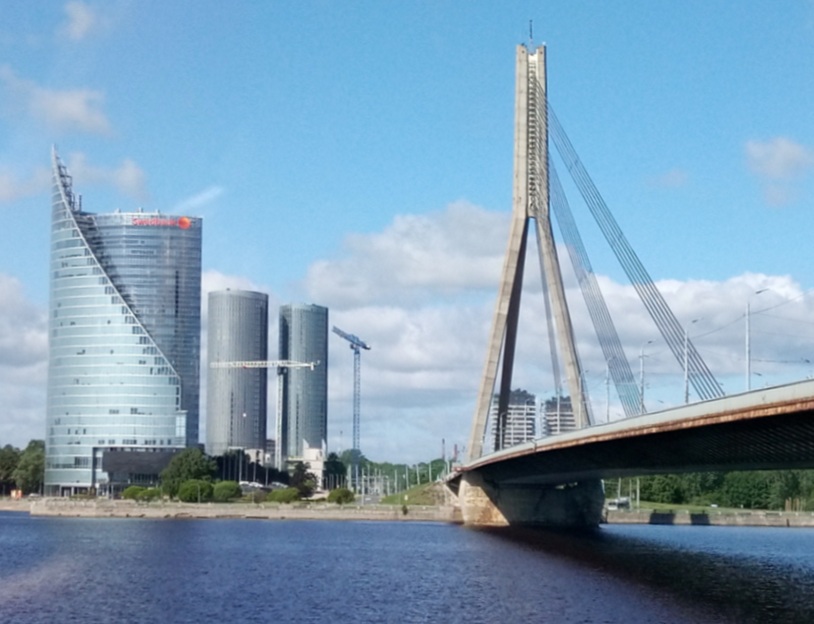
Riga is on the River Daugava, which enters the Gulf of Riga, a giant mouthlike opening on the Baltic coast. The town (and its river) has always been of huge strategic importance for the region, not least as a founding member of the Hanseatic League. Everybody has had a shot at controlling what was called Livonia in the past. Vikings sailed up the river deep into Russia, where they could cross a short land bridge to the river Dnieper, taking them through Kyiv to the Black Sea, and even to Byzantium/Constantinople. We saw their graffiti on a balcony ledge in the Hagia Sofia when we were there.
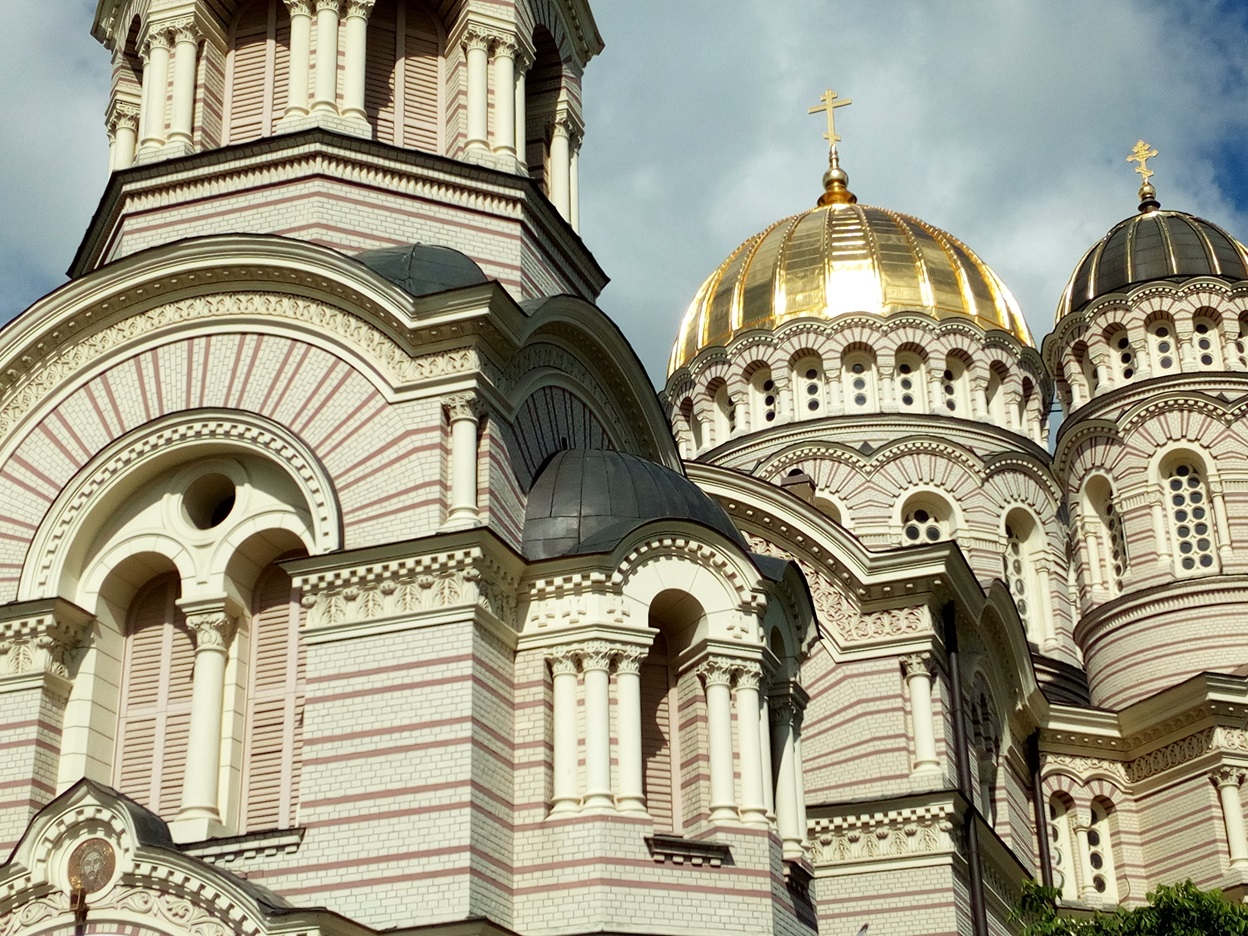
Riga Nativity of Christ Orthodox Cathedral
In Latvian: Kristus Piedzimšanas pareizticīgo katedrāle. Built in a Neo-Byzantine style between 1876 and 1883, it is the largest Orthodox cathedral in the Baltics. The church was converted to a Lutheran church by the Germans for the duration of their occupation during the First World War. In the 1960s, the Soviets converted it into a planetarium! The newly independent Latvian government did not look at the Orthodox Church in a friendly light, but nevertheless the building has been restored and its icons are deservedly renowned.
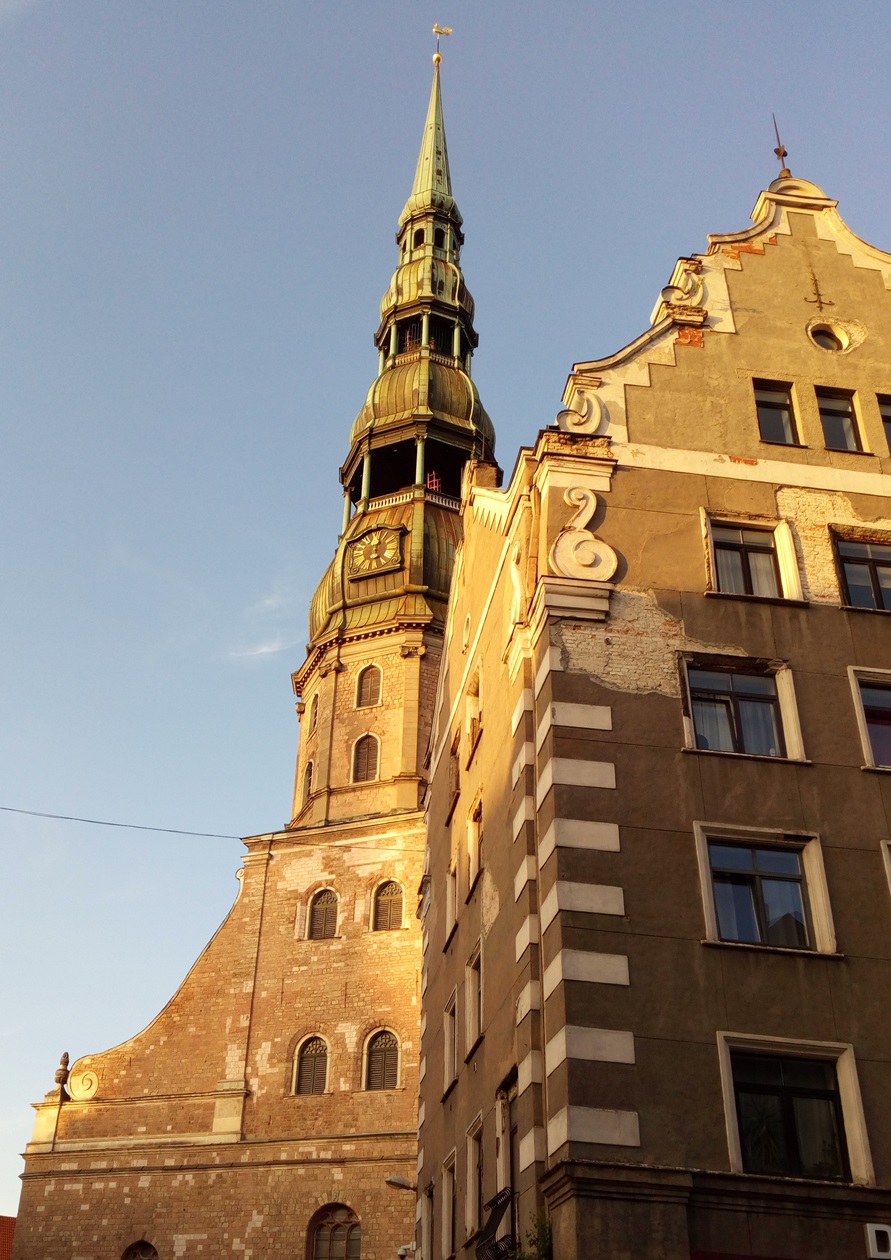
St. Peter’s Church
Latvian: Svētā Pētera evaņģēliski luteriskā baznīca. The parish church of the Evangelical Lutheran Church of Latvia has had a difficult time surviving a long history of disasters and wars. Dating back to the early 1200s, when the forced christianisation of Livonia was initiated, the church was extensively extended in the 1400s, and received a 148m copper-roofed steeple in 1688-90, making it the tallest wooden structure in Europe of its day.
Following a lightning strike in 1721, which destroyed much of the tower and church, a 120.7m steeple was made in 1746, covered in copper and with a gilded rooster.
Like much of Riga, the church was destroyed by German artillery fire on 28 June, 1941, and restored 1954 – 91.
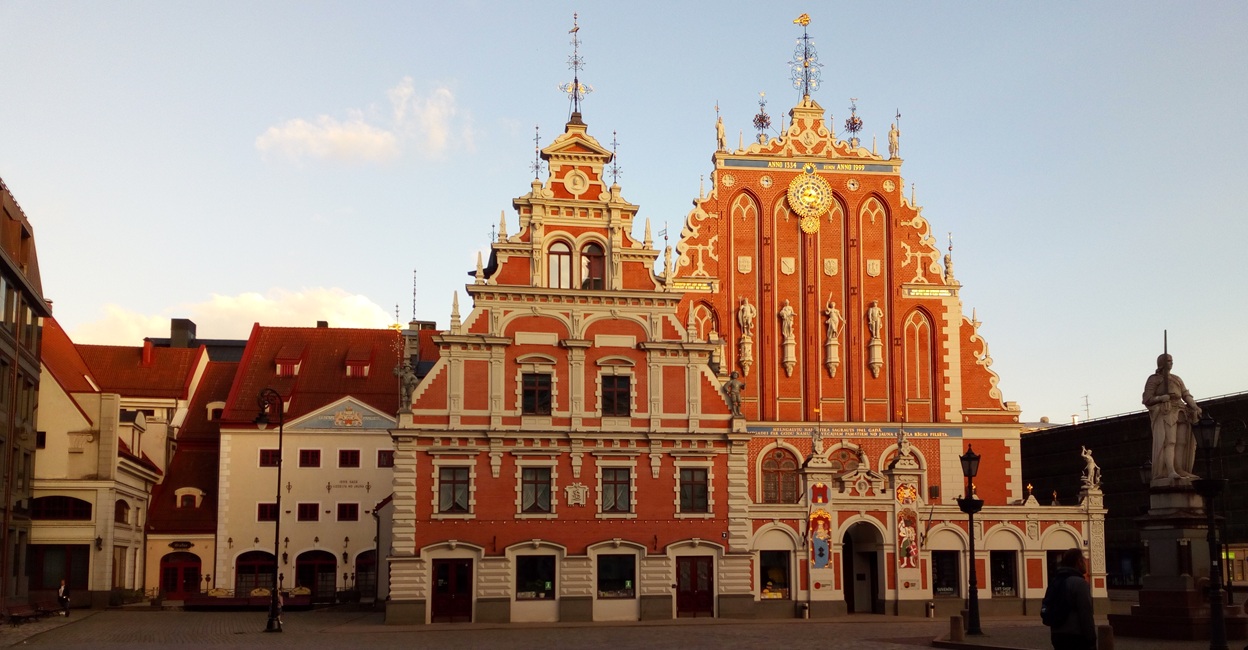
Riga’s House of the Blackheads (Melngalvju nams, or Schwarzhäupterhaus)
The Brotherhood of Blackheads was an association of merchants, active from the mid-1300s till 1940. Funny enough, members had to be unmarried. The association´s ethnic German contingent had to flee during the wars of the 20th century, and they continue the traditions in Hamburg. We saw the House of Blackheads in Tallinn, with its very beautifully ornate façade. Its original role was military defence, but after Livonia was absorbed by the Russian Empire in the Great Northern War, its role became more of a social one, with its own chivalric code of honour.
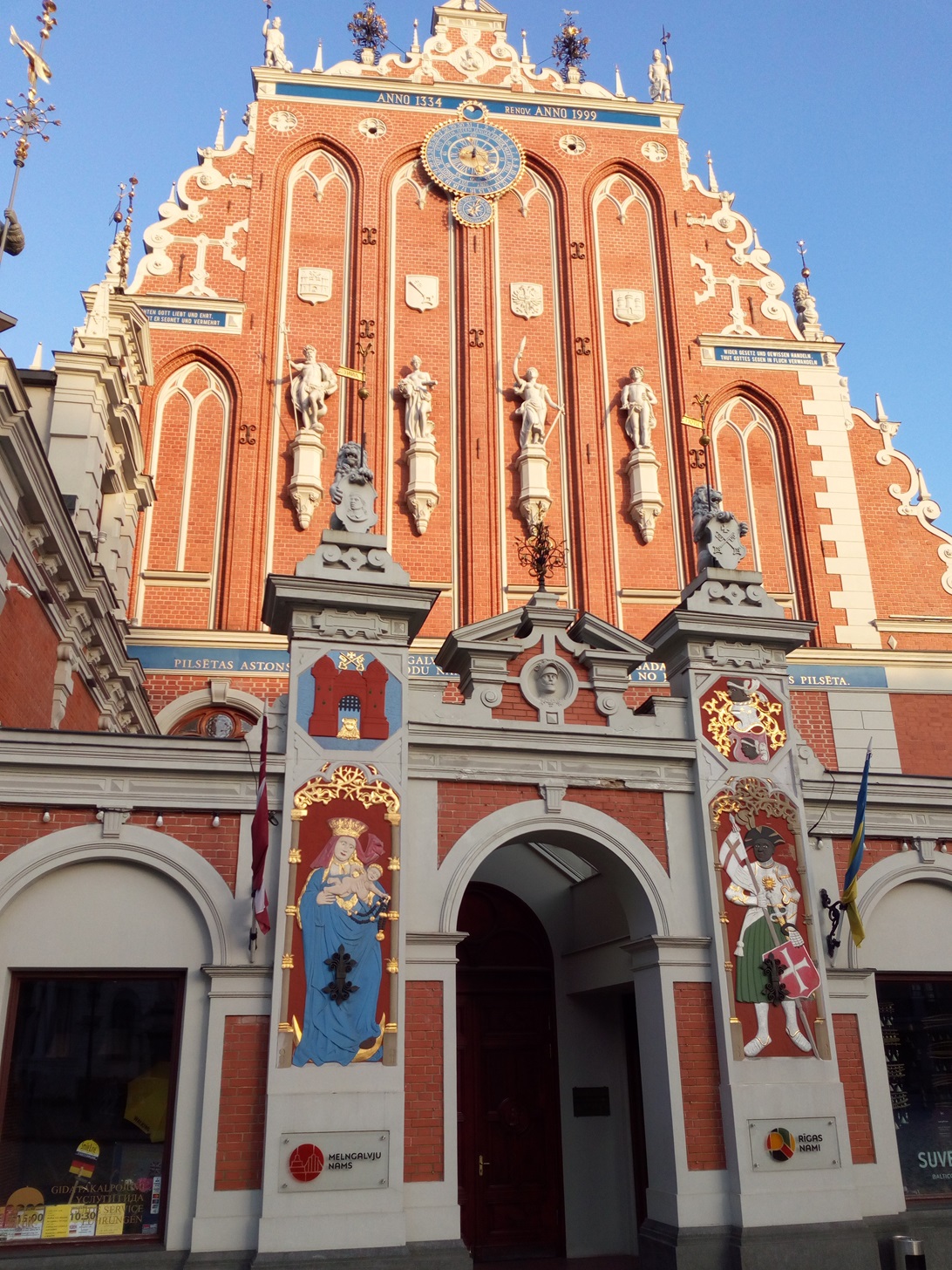
Riga’s House of the Blackheads
Of the many impressive buildings in Riga, the House of the Blackheads stands out for its unusual design and ornate façade. It was built in the first third of the 14th century, and its characteristic Mannerist ornamentation added at the beginning of the 17th century. On June 28 1941, a week into the German invasion of the Soviet Union, it was destroyed by German bombing. The remains were demolished by the Soviets in 1948, despite virulent protests. It was rebuilt in 1996-9. Despite this loss of authenticity, its faithful recreation provides us with a strong impression of what the medieval world of trade guilds and societies looked like.
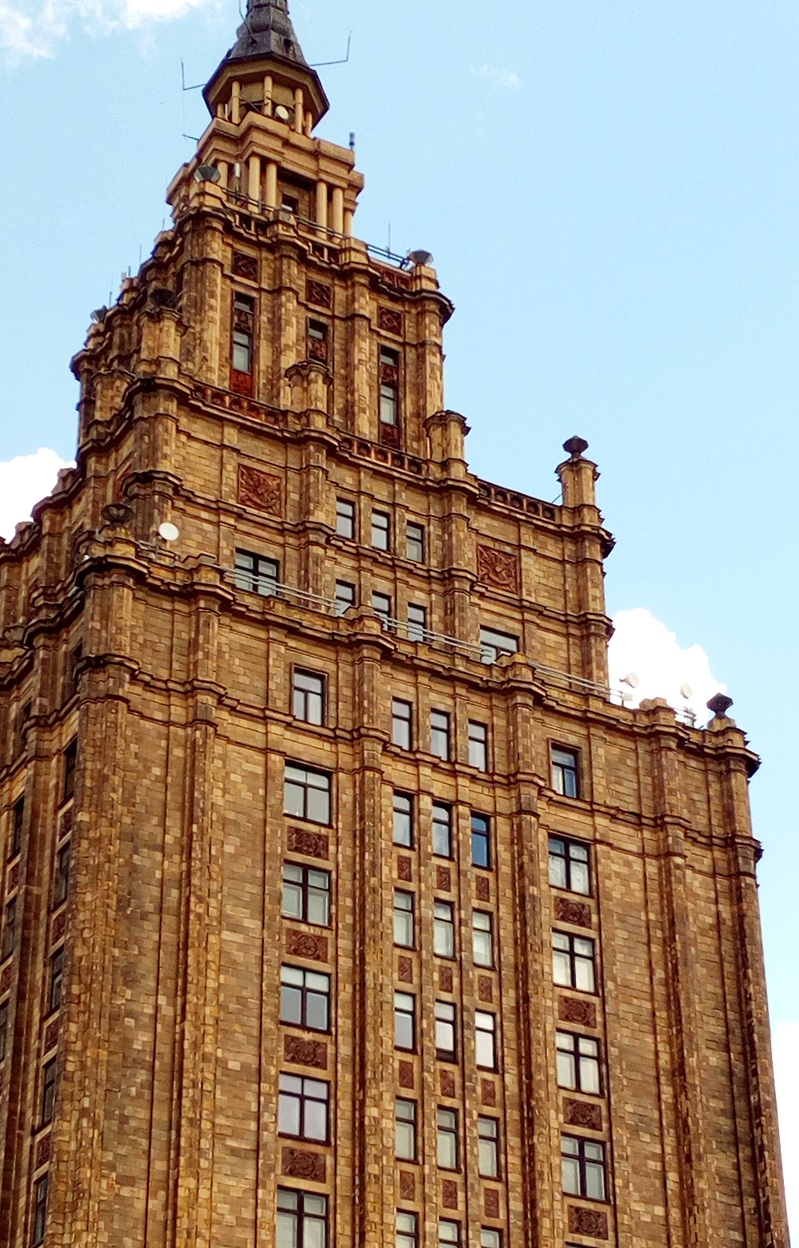
The Latvian Academy of Sciences Building was constructed between 1951 and 1961.
Riga is the largest city in the Baltic states, and one in ten Baltic State inhabitants lives here. Immigration from Russia during the Soviet era (1945-1991) led to the Russian proportion of the population of Latvia growing to one-quarter. The independence movement of the Baltics States began with the Singing Revolution in 1987, and culminated with full independence on 21 August 1991. The Singing Revolution refers to spontaneous mass evening singing demonstrations at the Tallinn Song Festival Grounds. The Baltic Way (or Chain) was a peaceful demonstration on 23 August 1989, in which 2 million people joined hands to form a human chain spanning the 690 kilometers across the three Baltic States of Estonia, Latvia and Lithuania, from Tallinn to Riga to Vilnius. This is surely the most remarkable pacifist protest ever staged.
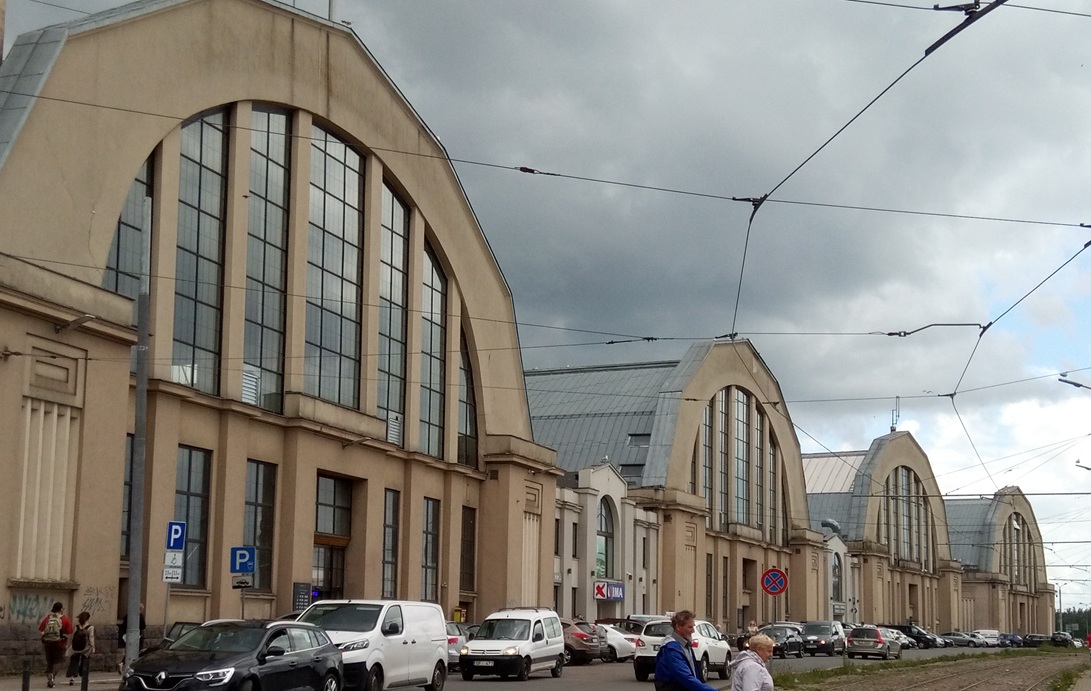
Riga Central Market is the largest market in Europe, located across the river, close to the center of the capital. The complex was built in Art Deco style in the 1920s, utilising the metal frames of 4 large military zeppelin hangers from the Vaiņode Air Base, near the Lithuanian border.
We spent a pleasant couple of hours passing through the busy halls, and sampling the many delicacies on offer.
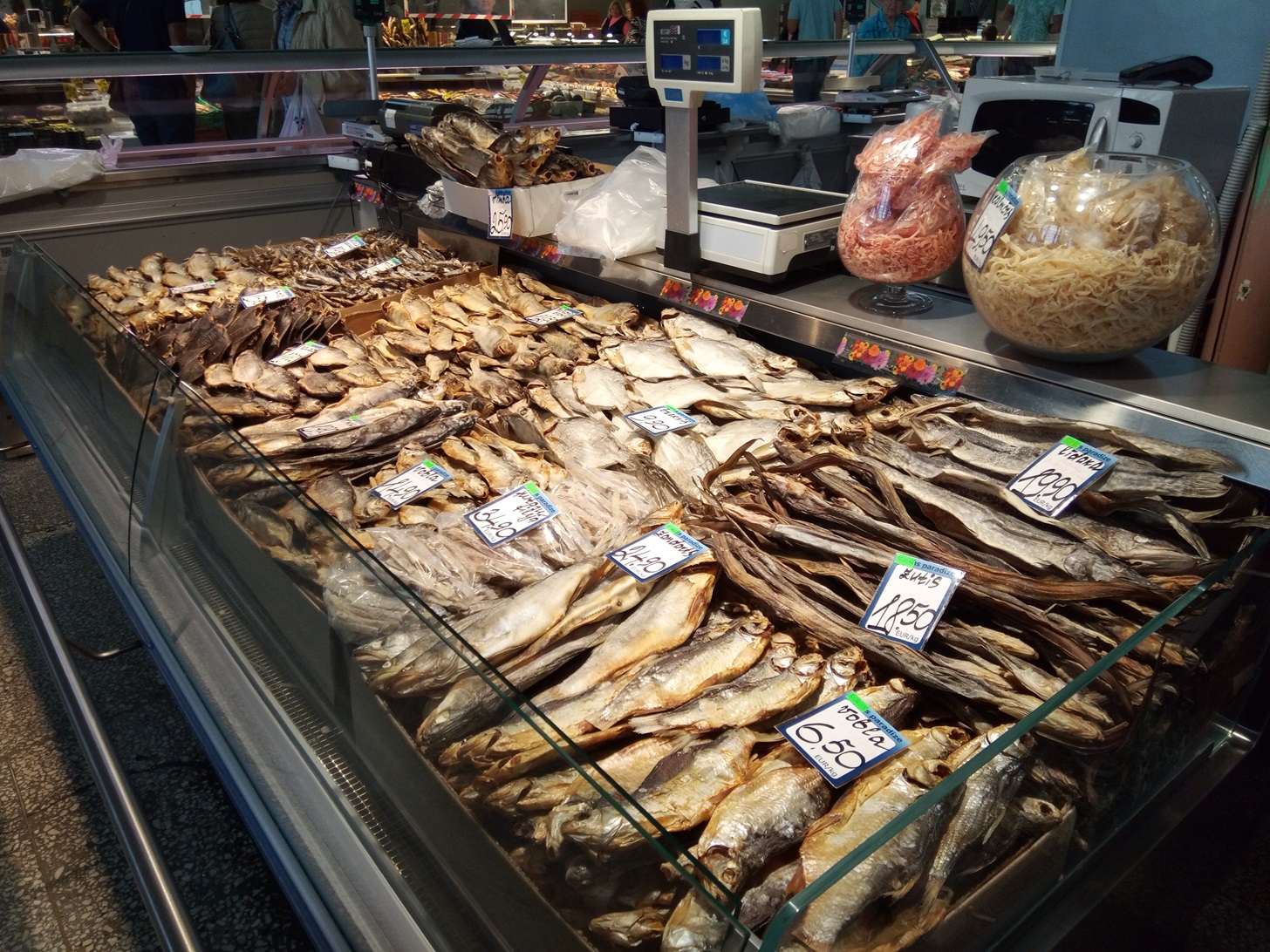
Fish stall in the Riga Central Market
Food in Latvia is similar to its neighbours. Meat is ubiquitous, as well as Baltic Sea fish. Grey peas and speck, sorrel soup, and rye bread are staples.
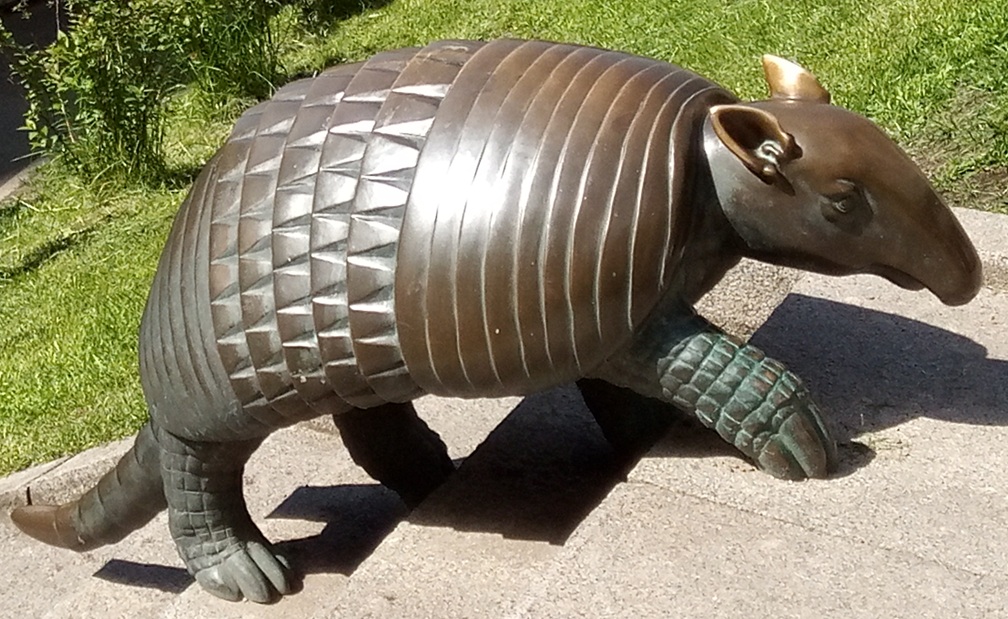
Riga has many surprises. like this armadillo sculpture ascending steps, for no apparent reason. Street art has been ubiquitous in many of the towns we have visited.
Travel Diary
Livonia was the term for the region until the Livonian War in the 16th Century (1558-78), in which a broad coalition of Baltic states and the Polish-Lithuanian Commonwealth defeated Russia, resulting in Russia losing control of the region, and Livonia being reduced to the southern half of Estonia and northern half of Latvia, with Sweden dominant in the north, and Poland-Lithuania in the south.