Baltic Sea 2022
Day 21: Wednesday 15 June 2022
Vilnius, Lithuania – Warsaw, Poland
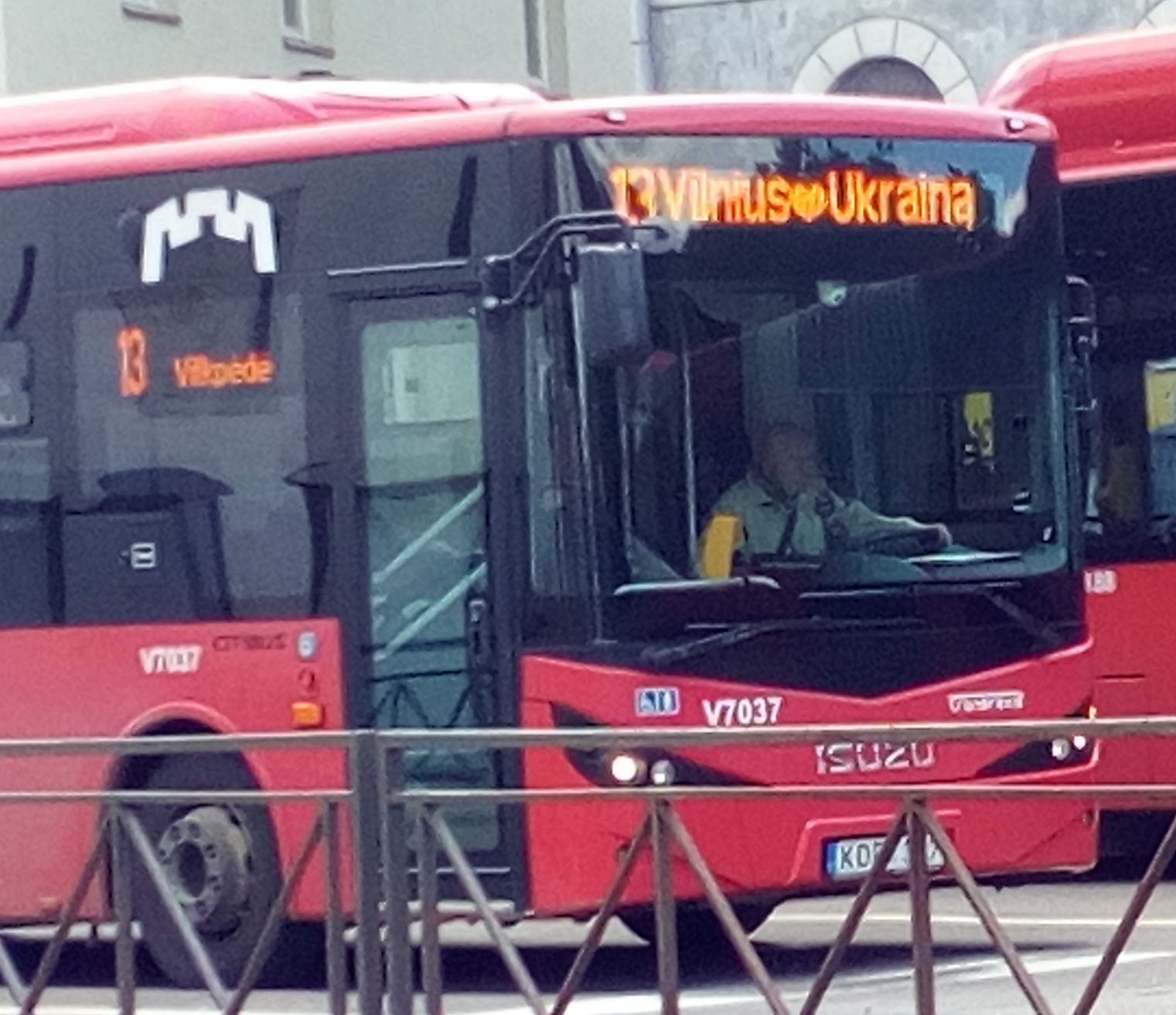
The buses flashed “Vilnius loves Ukraine” on their screens, in solidarity with the country under the Russian aggression, something Balkan history is full of.
We have time for a sunny walk around the old town. Our shameful ignorance of Lithuanian history cries out at every monument and statue to heroes. Vilnius has a amazing variety of architecture, with one church peeping over rooftops at the main central street, looking like a wedding cake, white and pink sugar-coated. There is a French tour group passing into the ‘Small Ghetto’ area, and we catch a history of the atrocities carried out among these buildings. Only 2-3,000 of the 58,000 jews of Vilnius survived the holocaust.
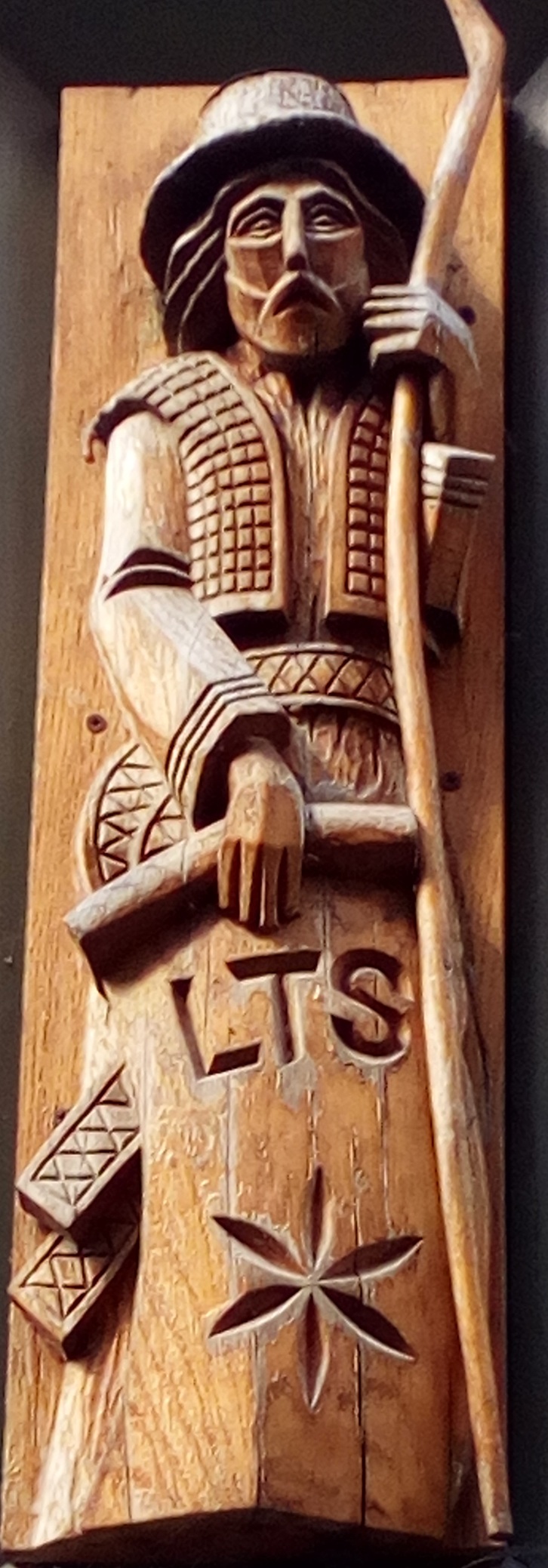
Wood carving emblem for the Lithuanian Nationalist and Republican Union (LTS), a right-wing nationalist political party. They have done poorly in elections, and hopefully will continue to do so, their myopic and blame-deflecting policies being those of other right-wing parties across Europe: independence from the EU, anti-immigration, etc.
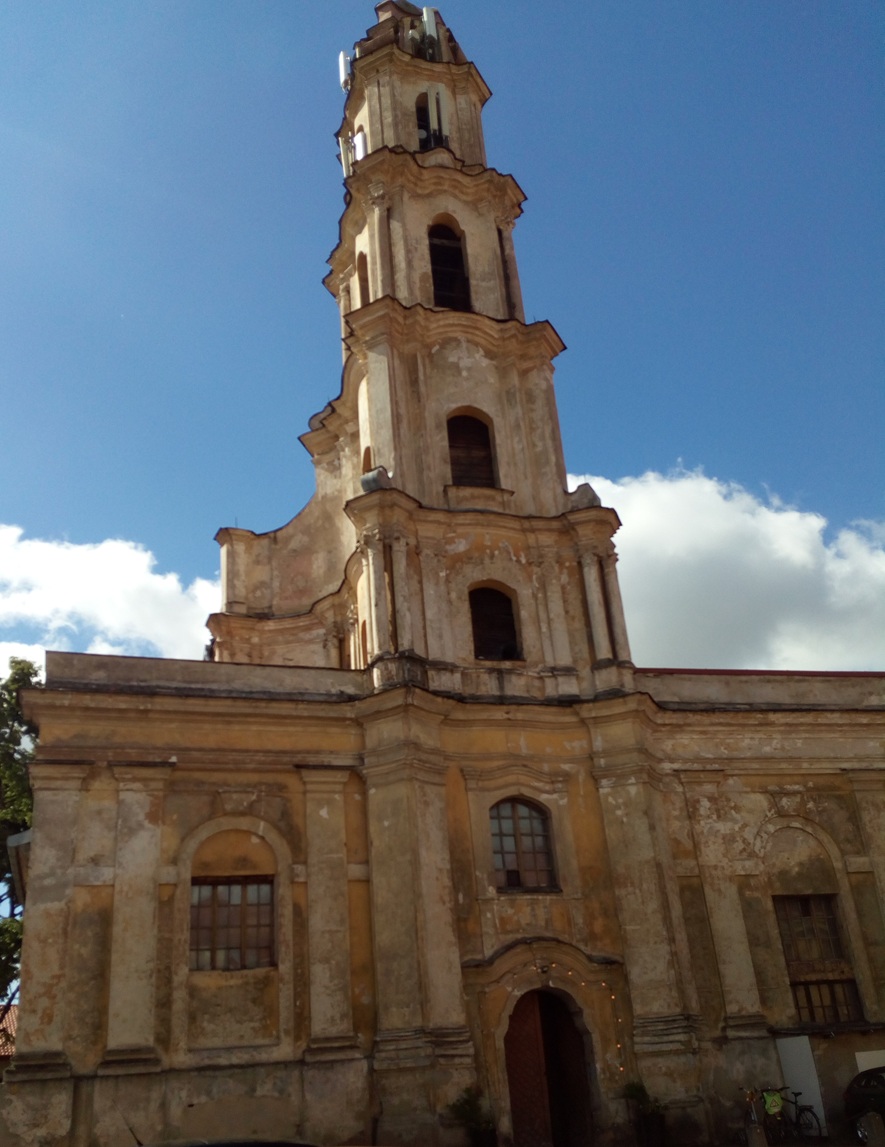
Church of the Blessed Virgin Mary of Consolation, Vilnius, built by the Augustinians in 1746-68, in the distinctive Vilnian Baroque architectual style.
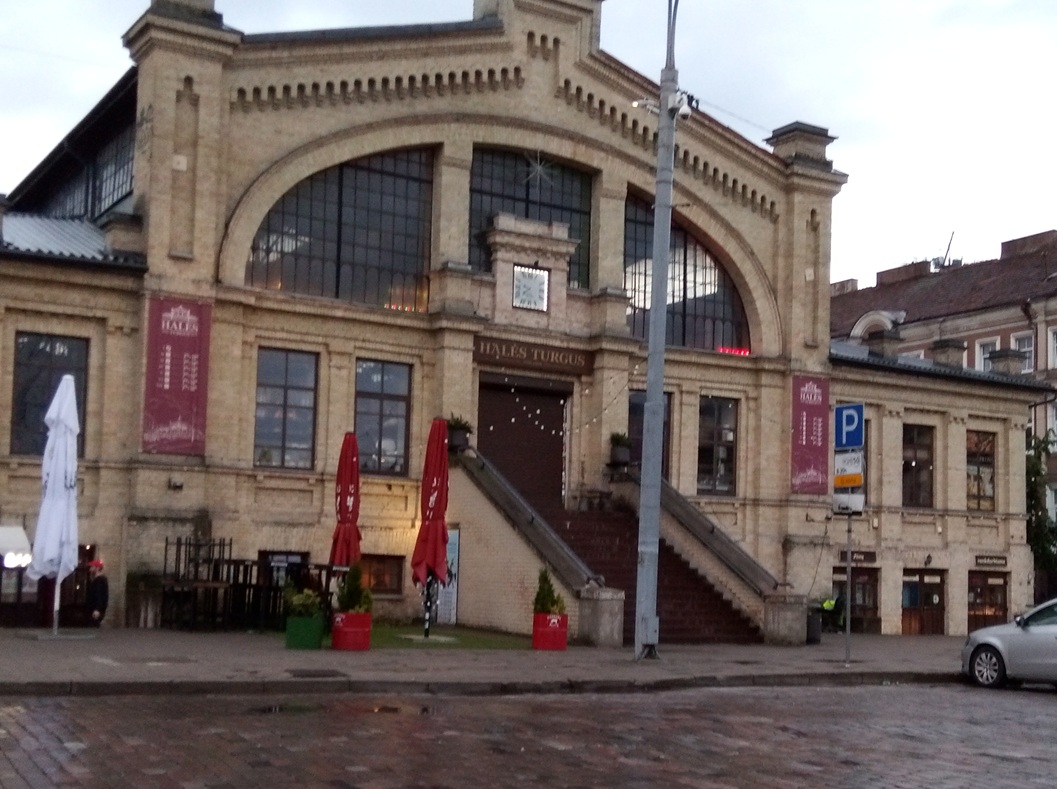
Market in Vilnius. It had already closed yesterday, a very rainy day, so we made a point of coming again today. We were not disappointed.
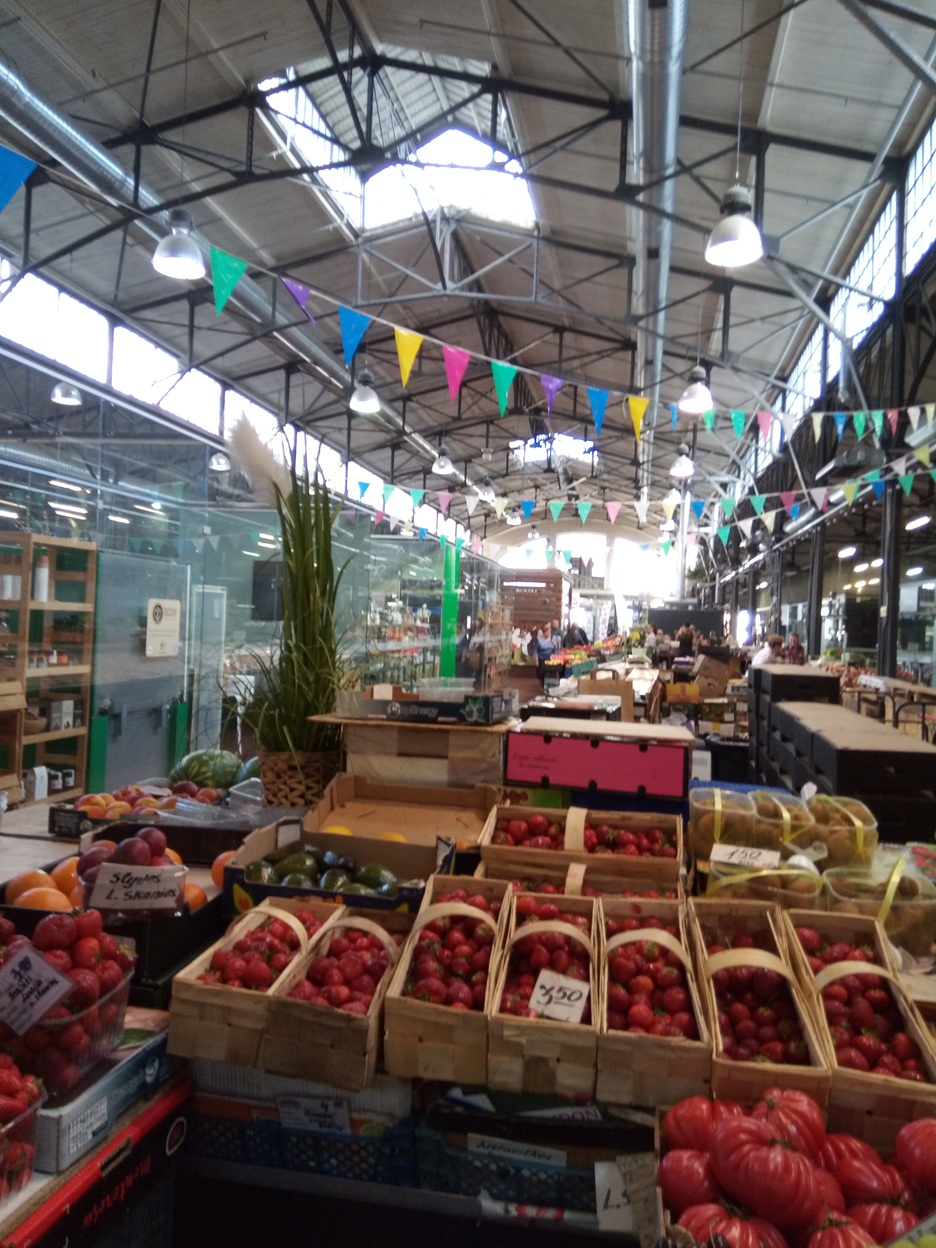
Inside the market in Vilnius. Markets are always good opportunities to experience real local people, also those from outside the city, interacting and enjoying themselves, as well as gain an oversight of the local goods and commodities.
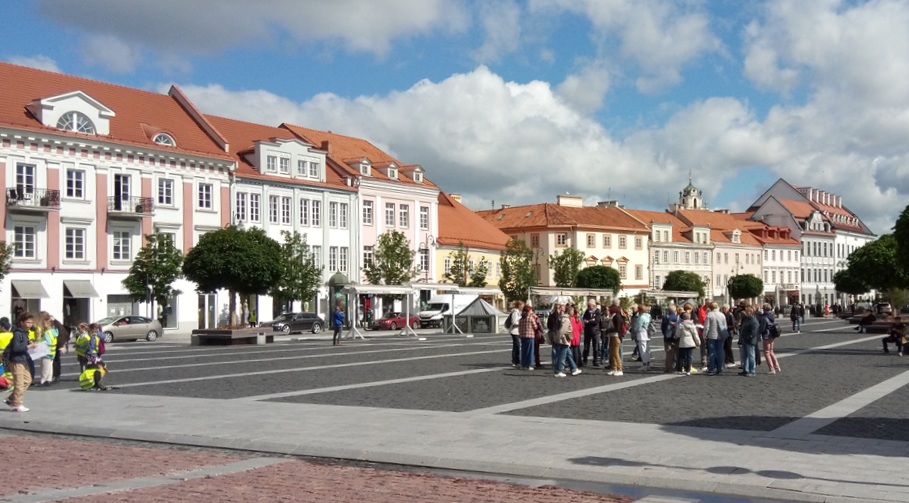
Vilnius Old Town centre. Fine examples of many of Europe’s greatest architectural styles, gothic, renaissance, baroque and neoclassical, stand shoulder to shoulder along this long central avenue. This photo shows a group of French tourists about to enter what remains of the jewish ghetto, which was the scene of tremendous crimes against humanity during the Nazi occupation. One of the justifications of the subsequent Soviet oppression was the debatable degree of cooperation the Lithuanians offered the occupiers. Maybe we should ask the LTS about that….
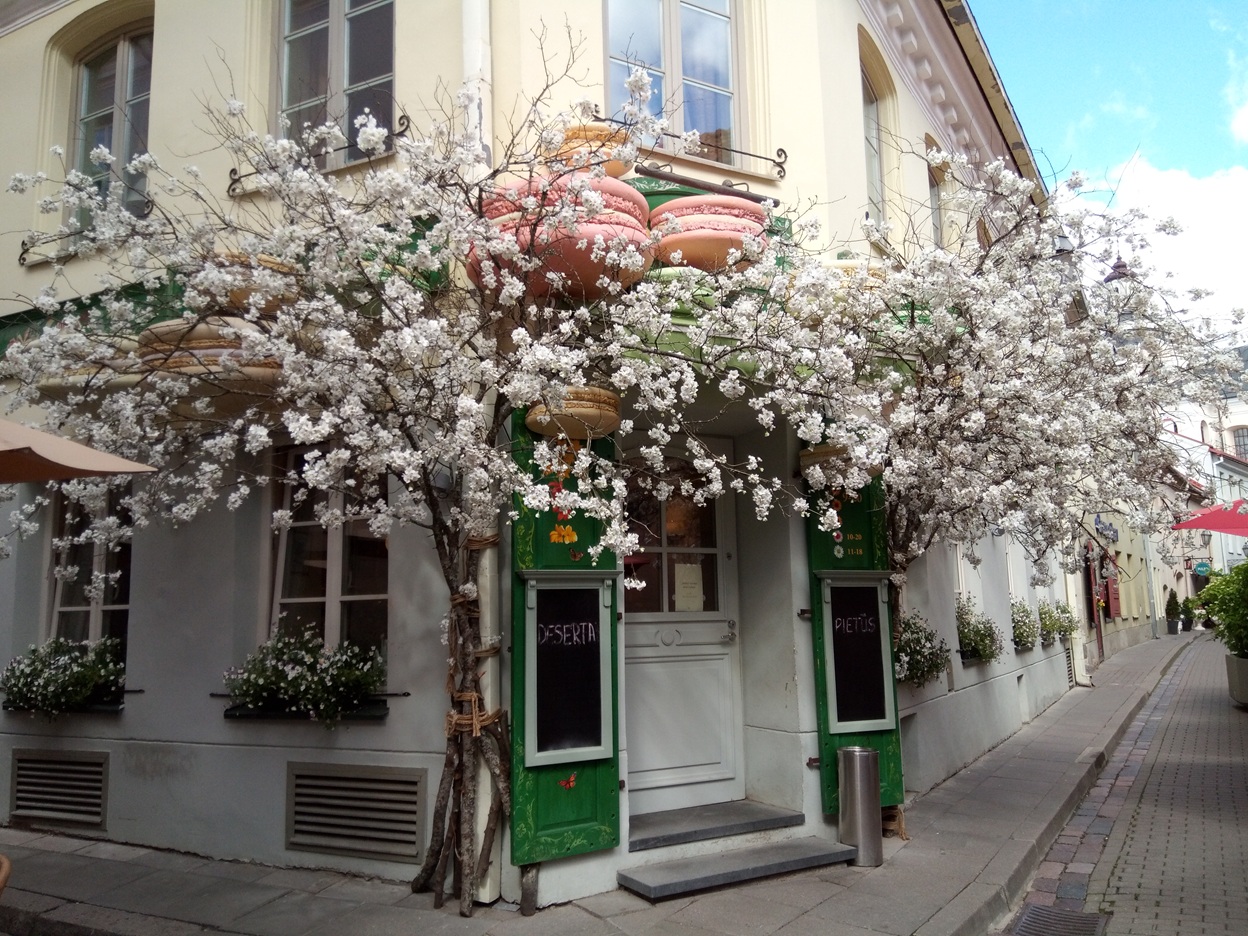
The delightfully decorated, pastel-coloured town buildings are often handsomely decorated with flower displays.
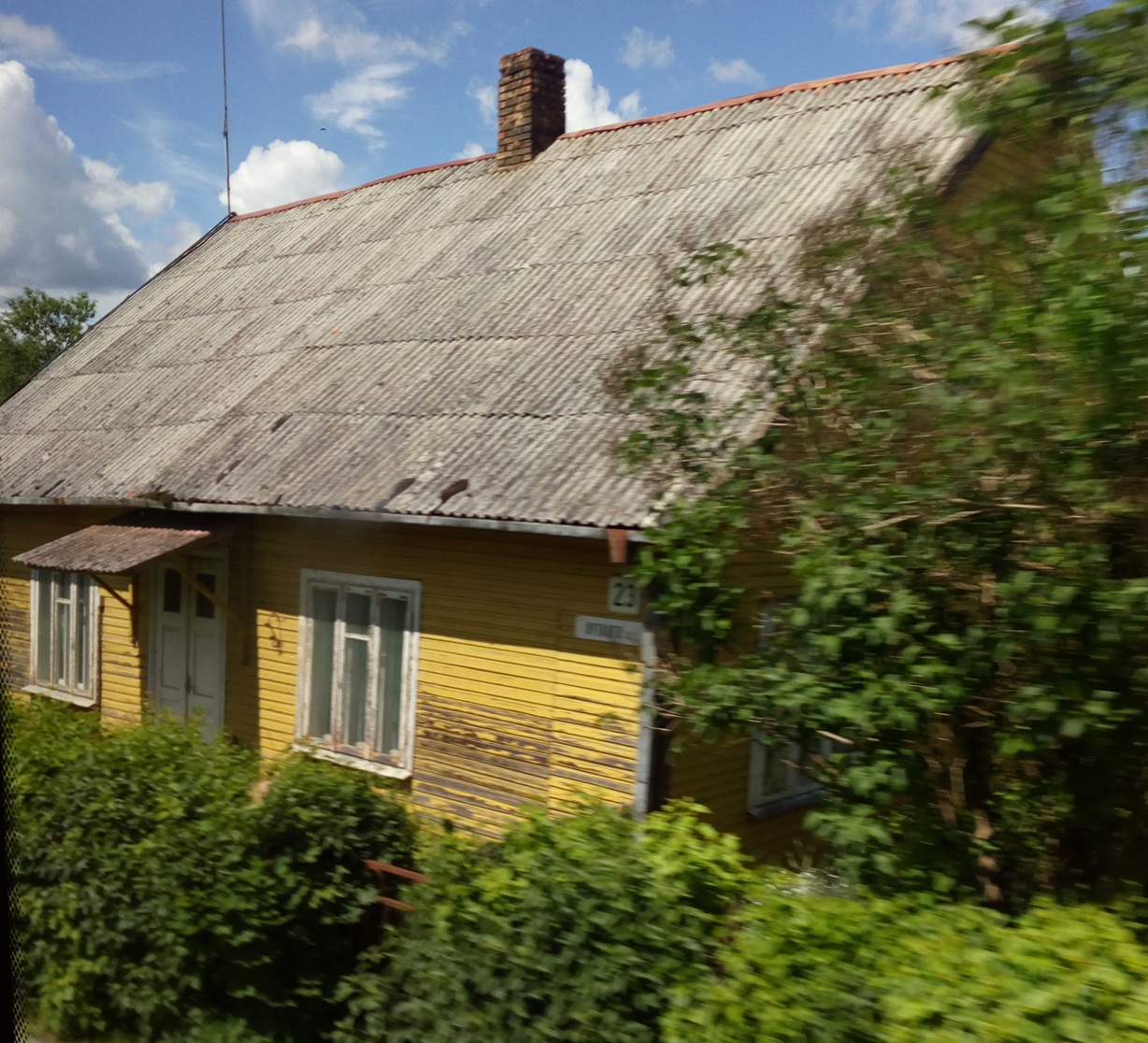
A rustic farmhouse, glimpsed near the Polish border.
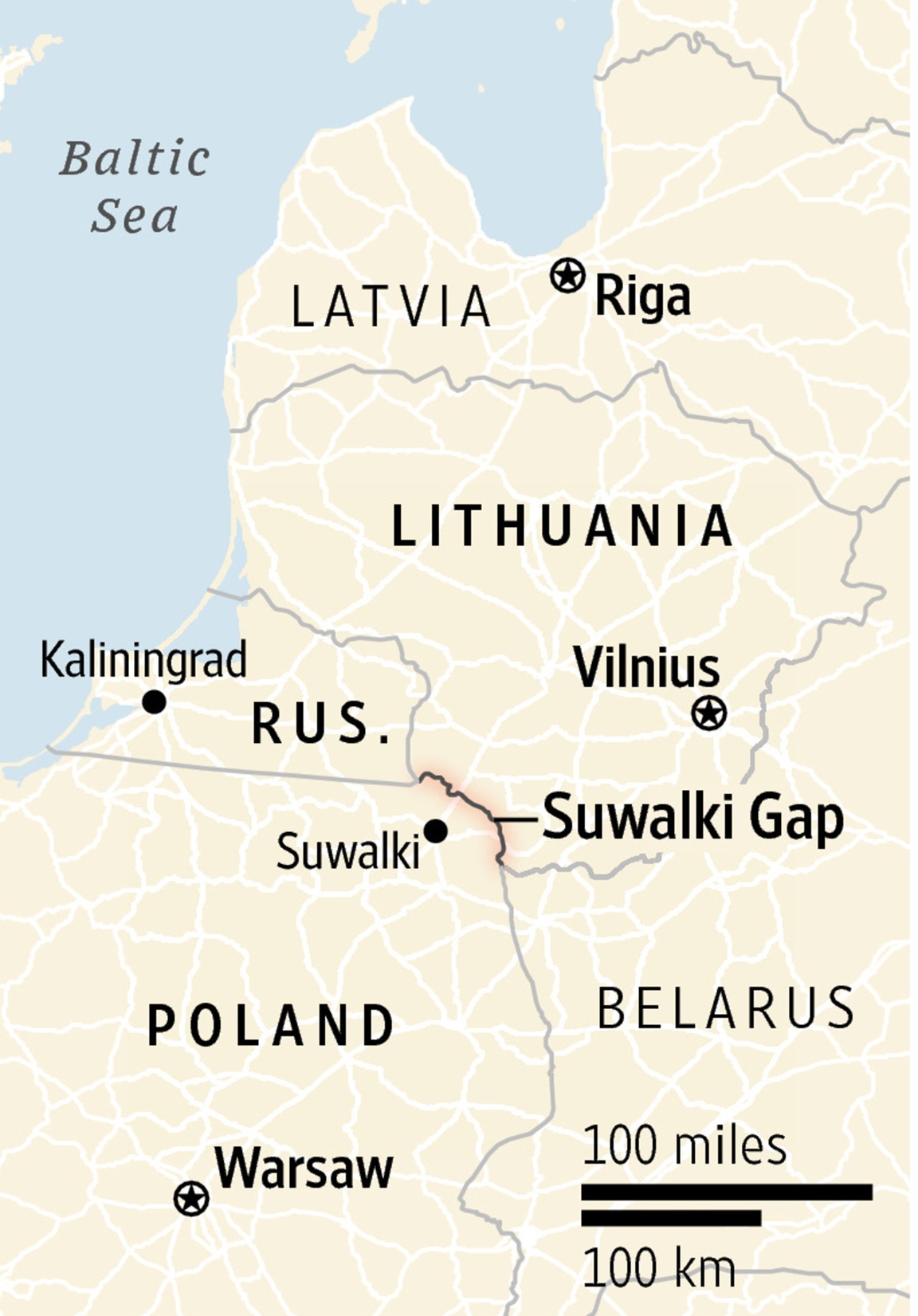
Train connections are difficult or not operating, so we opt for a bus. The Flixbus has no monitor, or coffee. The bathroom becomes quite ‘fruity’ by the end of the 8h journey. We had forgotten about the time change to Poland, putting the clocks back an hour, and adding an hour to our expected journey. There is no Internet. So Cindy and I listen to several old BBC podcasts on scientific subjects. The scenery is forests, as we pass very close to the Belorussian border, scene of the migrant crisis of the last year, before winding our way into the narrow Suwalki gap between that dictatorship and Kaliningrad, an isolated region of another dictatorship. Then we are in Poland. There is a cursory border control of passports, and soon the countryside opens up to rolling hills of farmland. It is all very ‘tidy’ and well cared for.
Kaliningrad was Königsberg till 1946, and is the largest city in the Kaliningrad Oblast (Oblast is Russian for region of province). It was founded in 1255 by the Teutonic Knights during the Northern Crusades, and the ‘König’ in the name refers to King Ottokar II of Bohemia (1233 – 1278, reigned 1253-1278), who led the two crusade expeditions against the pagans.
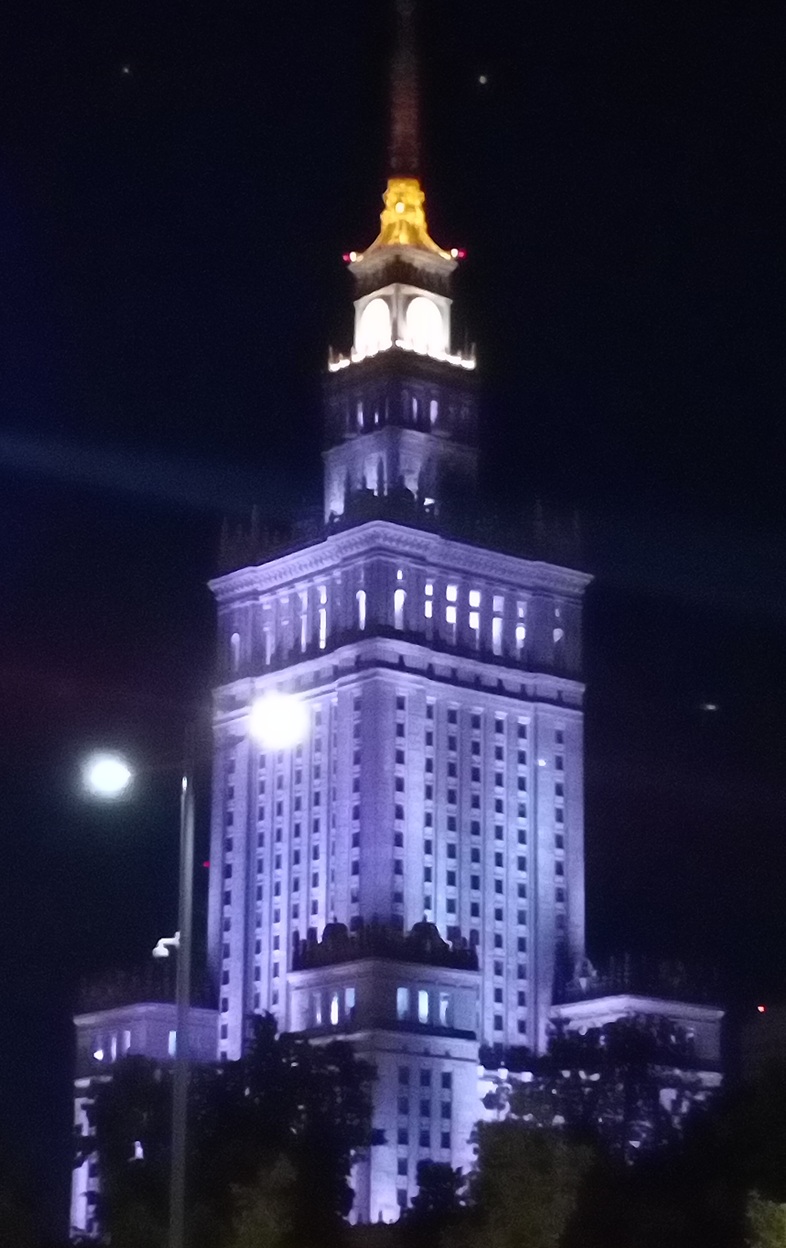
View of the Palace of Culture and Science, from our Warsaw hotel room window.
Heavy peak hour traffic foretells our arrival in busy, chaotic Warsaw. We are deposited by a train station, which we take foolishly to be the main central station, but is one down the line. After a 20-min queue to reserve seats on tomorrow’s train to Wroclaw, which we have to delay because the midday train was already fully booked, we make the mistake of trying to exit by the north side. It takes us an hour to find the hotel, which is a casino hotel with long hallways. Not what tired travellers needed, but we make it. But the room is excellent and very inexpensive. We even exit to walk and tram a bit to see the modern city by night. It is impressive, and we think changed a lot since we were last here, 15 years ago.
Travel Diary
Suwałki Gap
The little town of Suwałki (Google Map) is the location where the Suwałki Agreement of 1920 established the border between Poland and Lithuania. It now gives its name to the Suwałki Gap, also known as the Suwałki Corridor, which is a term used by NATO for the strategically vulnerable choke point, the 65 km path between Belarus and the Russian exclave of Kaliningrad Oblast. Losing control of this region during any conflict with Russia, would hinder considerably NATO´s ability to defend the Baltic states. The adherence of Finland to NATO has to some extent alleviated this problem.