Baltic Sea 2022
Day 22: Thursday 16 June 2022
Warsaw, Poland – Wroclaw, Poland
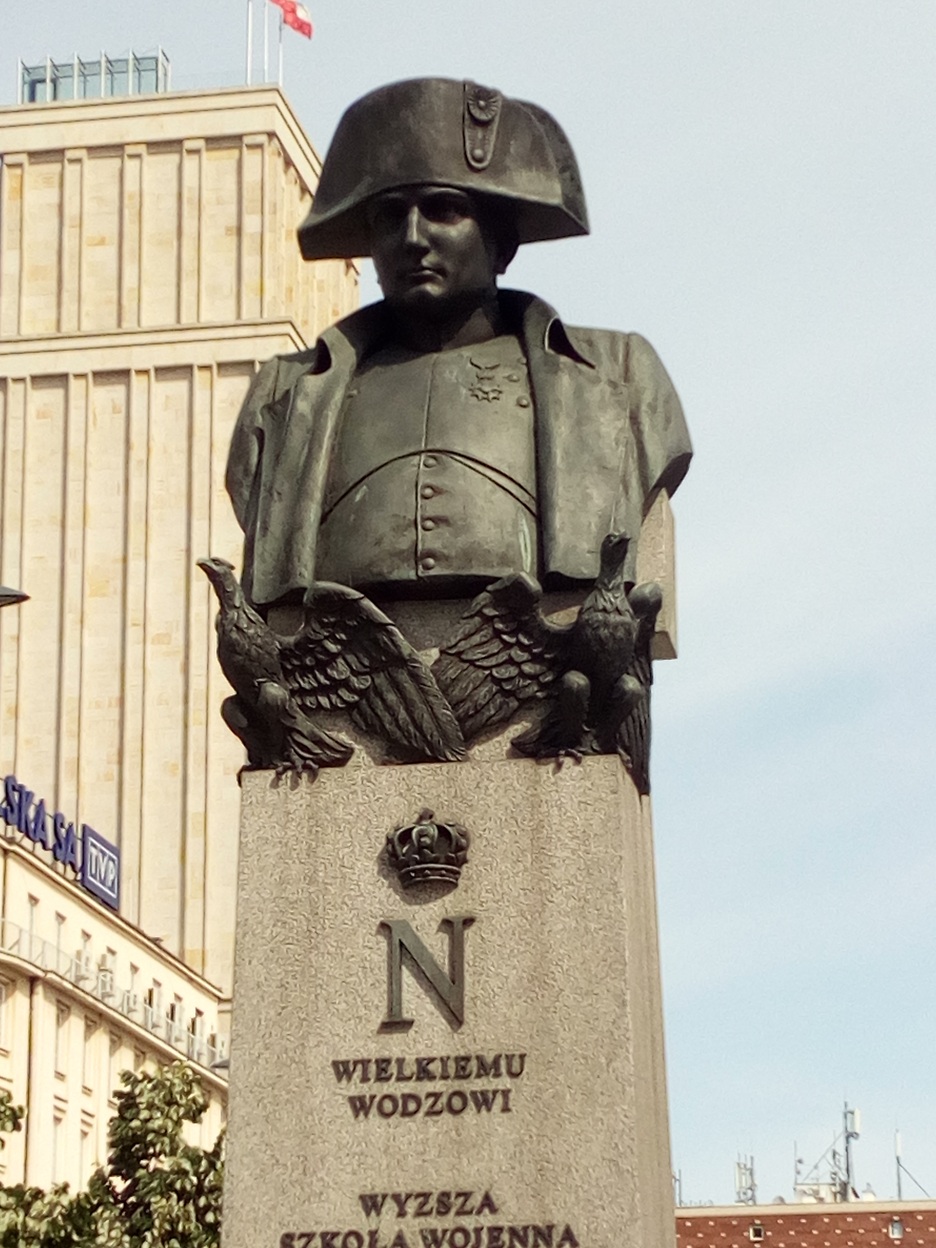
Napoleon bust, Warsaw. On exiting our hotel, we come across this grand memorial to Napoleon I, whose relationship with Poland was ambiguous, but inspired independence movements to resist domination by the Russian, Austrian and Prussian Empires.
After Napoleon’s victory against the Fourth Coalition in 1806, the Poles rose up against and gained independence from Prussia. The Prussian hold on Polish areas was somewhat weakened after 1807 where parts of its partition were given to the Duchy of Warsaw. This independence lasted till the fall of Napoleon in 1815, when the Congress of Vienna abolished the Duchy of Warsaw, and allowed the return of Prussia in the west and north, and its programme of Germanisation of territories which had Polish majorities, and Russia in the east, including Warsaw.
In 1848, there was a further Greater Poland Uprising, which failed to gain independence from either power, and Prussia and Russia cooperated in the suppression of resistance. Between 1815 and 1848, the percentage of Poles in the Prussian territories fell from 73% to 60%.
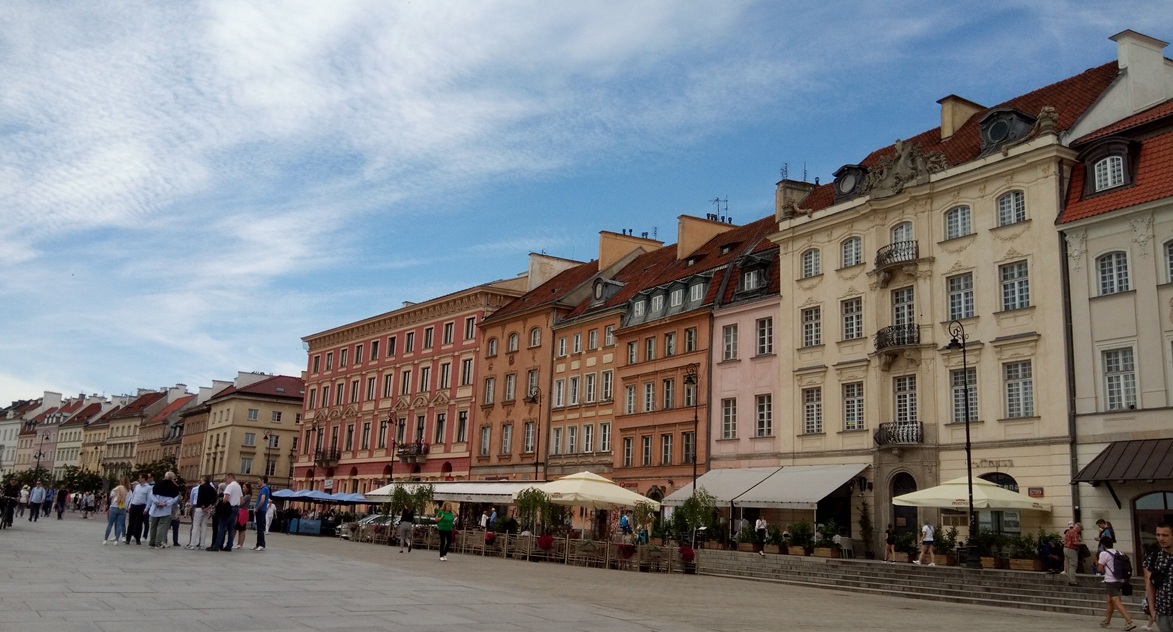
Warsaw’s Royal Route (Krakowskie Przedmieście)
We have 5 hours to walk Warsaw’s Royal Route, through the Old Town, and the New Town, before taking trams to find the monuments to the Heroes of the Ghetto and Willi Brandt’s Kniefall, and then to discover the public holiday includes the closure of the Ghetto resistance museum. Through the Old Town were little concerts of religious groups for Corpus Domini. The famous people commemorated by statues and plaques through the Old Town are: Napoleon, Copernicus, Marie Curie, Chopin, and John Paul II.
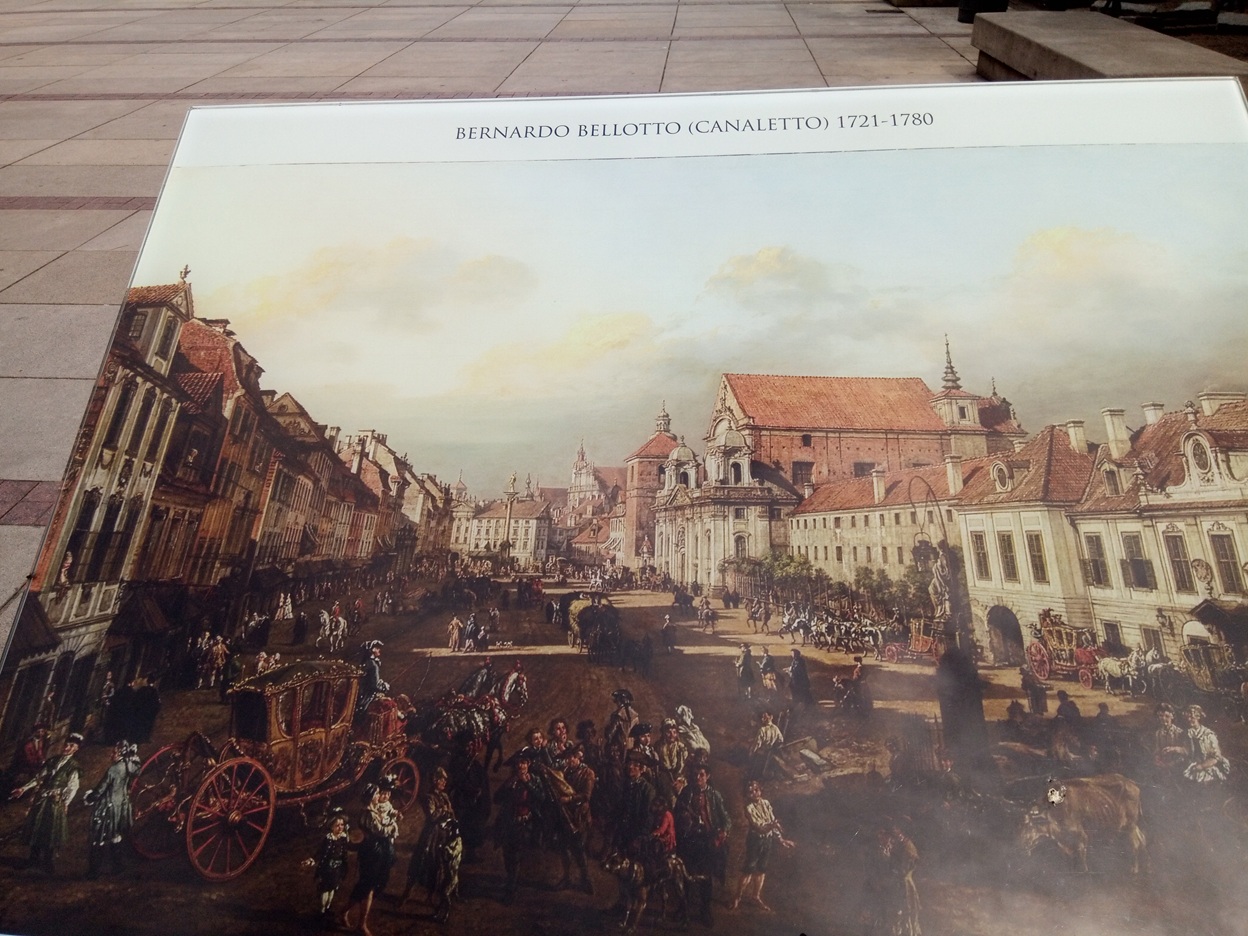
Warsaw Royal Route, as seen by Bernardo Bellotto (who signed himself as Bernardo Canaletto, 1721 – 1780). Belotto was the nephew of Giovanni Antonio Canal (aka Canaletto)
This print of the 18th century painting of the Royal Route was placed at the southern end of the broad avenue, which leads from Wilanów Palace, King John III Sobieski’s personal residence, north along Krakowskie Przedmieście (Kraków Suburb Street) to Castle Square. Many of Warsaw’s historic landmarks lie along or near this street, and despite heavy damage during WW2, they have been faithfully restored.
The painting attests to the faithfulness, and love, with which the Poles have recreated their beautiful city centre.
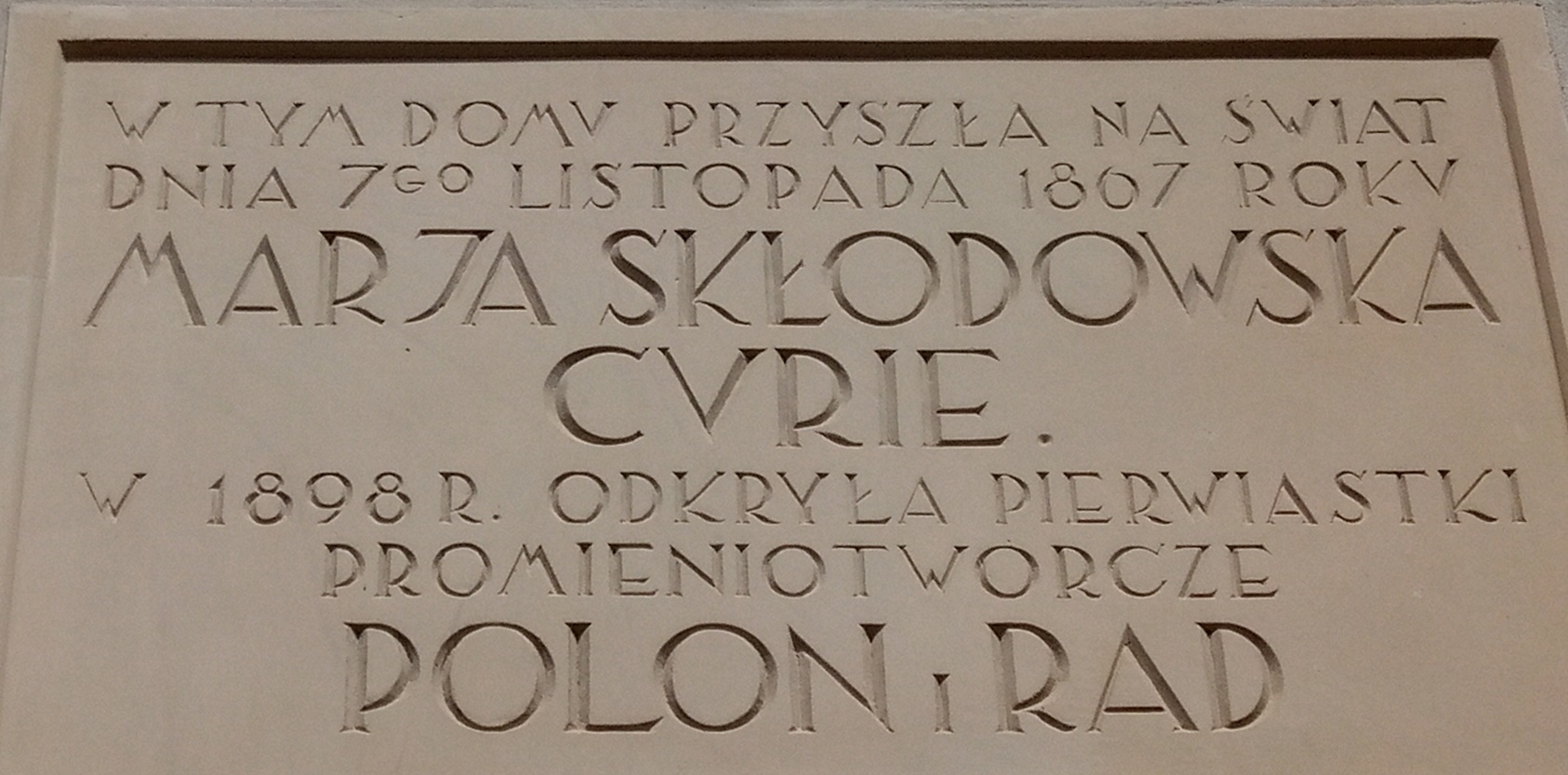
Marie Curie memorial plaque along the Royal Route, Warsaw
Maria Salomea Skłodowska-Curie (1867 – 1934) was the first woman to win the Nobel Prize (for her and her husband’s work on radioactivity), and then went on for an encore to be the first person to win two Nobel Prizes. And, to top those records, she is still the only person to win two Nobels in two different fields. She was also the first woman to gain a professorship chair at the prestigious University of Paris. What a gal!
She was born in Warsaw, which in 1867 was in Congress Poland, part of the Russian Empire. She emigrated to France in 1891, to escape the oppressive restrictions placed on women in Poland, preventing her from furthering her scientific interests. In fact, while she lived in Warsaw, she attended the Flying University, a clandestine educational institute. This Flying University was revived during the communist regime.
The plaque reads: Maria Slodowska Curie
in 1898, the radioactive element polonium was discovered
Note that the new element was named after Poland.
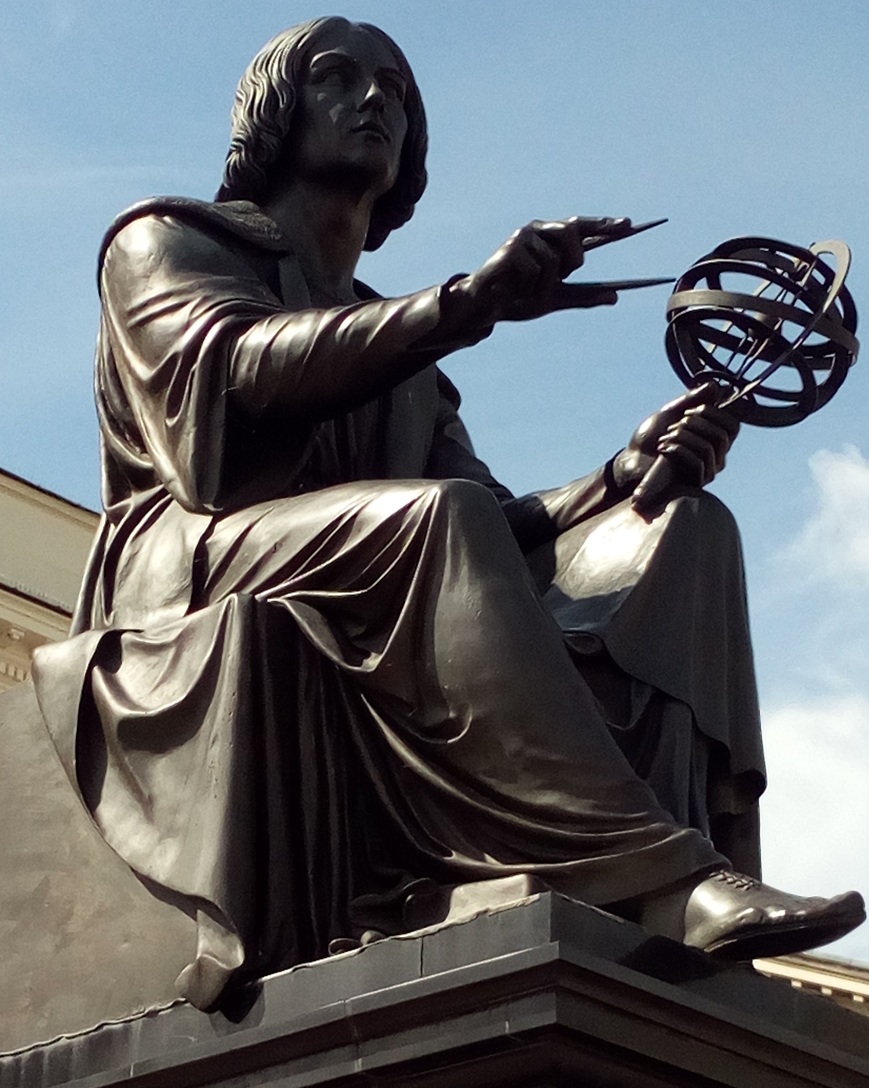
Nicolaus Copernicus Monument in Warsaw
This is an impressive commemoration of the famous proponent of the heliocentric theory, placing the Sun in the centre of the solar system, smashing forever the erroneous theory, that the Earth was the centre of all creation. For centuries, the Church had imposed a strait-jacket on scientific and rational thinking, by violently imposing as the only allowed interpretation of the firmament the idea that creation placed the (flat and static) Earth, and therefore Rome and the Vatican, at the centre of the universe.
Copernicus (1473 – 1543) waited till his deathbed to publish his book, De revolutionibus orbium coelestium (On the Revolutions of the Celestial Spheres), fearing persecution by the Church. This act is often considered to have been the start of the Scientific Revolution, which is still ongoing in its struggle to remove religious dogma, and the ugly, often violent, manifestations it produces, from civil society.
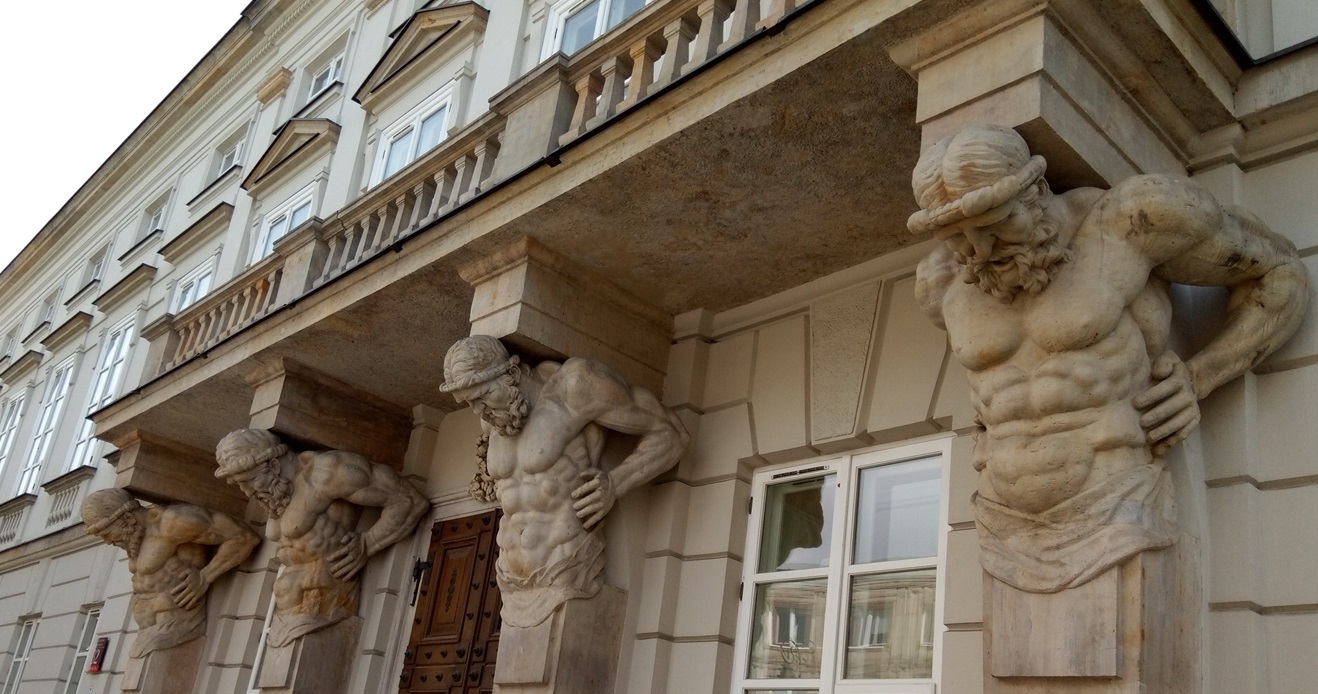
Atlantids/telamons, the male version of caryatids, on a building in the Royal Route.
Somewhat Michelangelisc male figures as architectural elements, on a restored building along Warsaw’s Royal Route. Lugano has a version of these male figure columns on the shop fronts by the Lugano Arts Center, LAC.
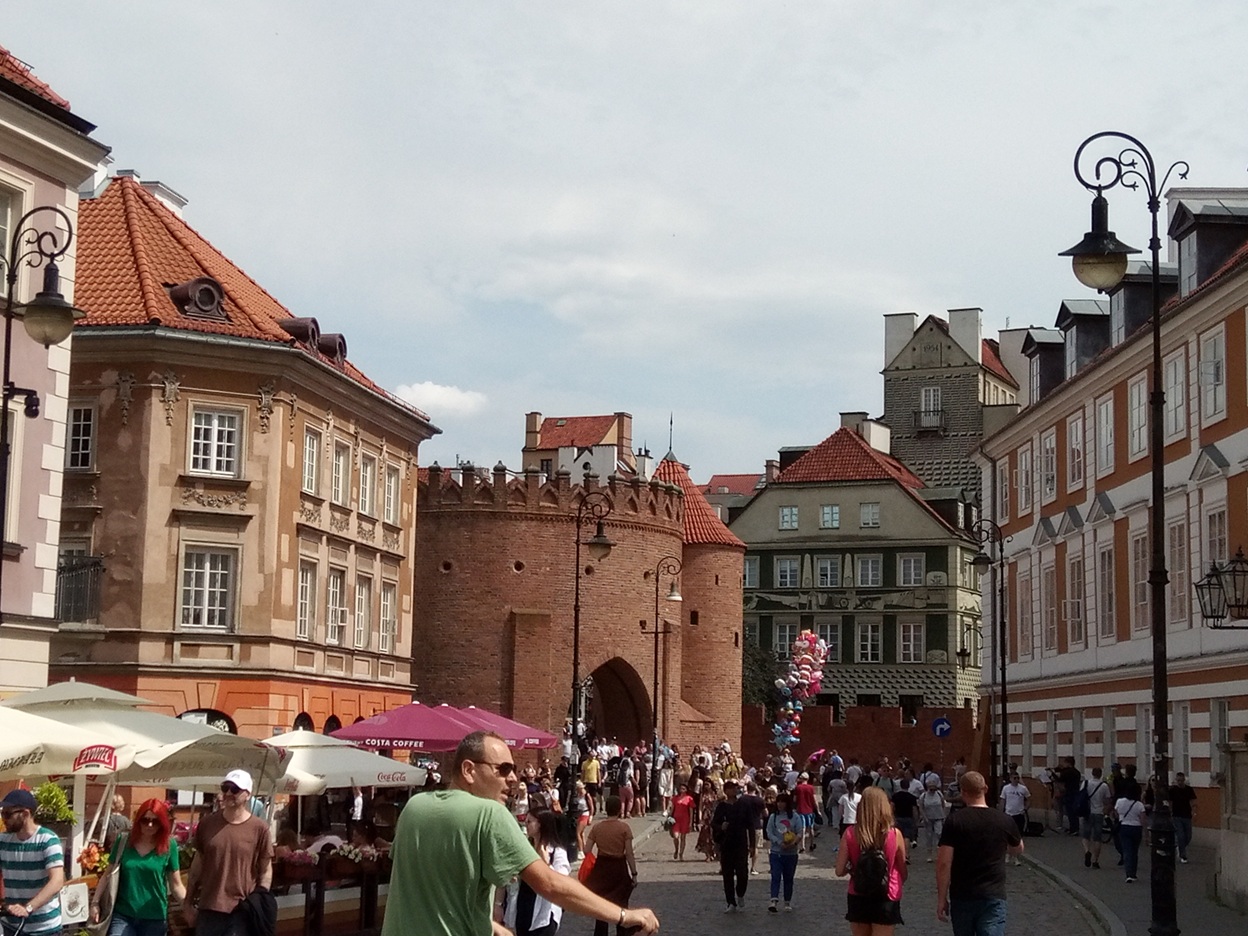
Warsaw Barbican (barbakan warszawski)
At the northern end of the Royal Route is the Warsaw Barbican, which demarcates the transition from the Old to New Towns. It is a relic of a once more extensive network of historic fortifications. The existing gateway was erected in 1540, to replace a medieval gate protecting Nowomiejska Street, from which this photograph was taken.
In 1656, it saw its only defensive action, during the Swedish invasion of Poland, part of the Deluge. This curious name is applied to the series of military campaigns fought in the Polish–Lithuanian Commonwealth from 1648 to 1666. The amount of destruction wrought on Poland and Lithuania in this period was enormous, with the population of Warsaw alone being reduced to 10% of its original 20 thousand.
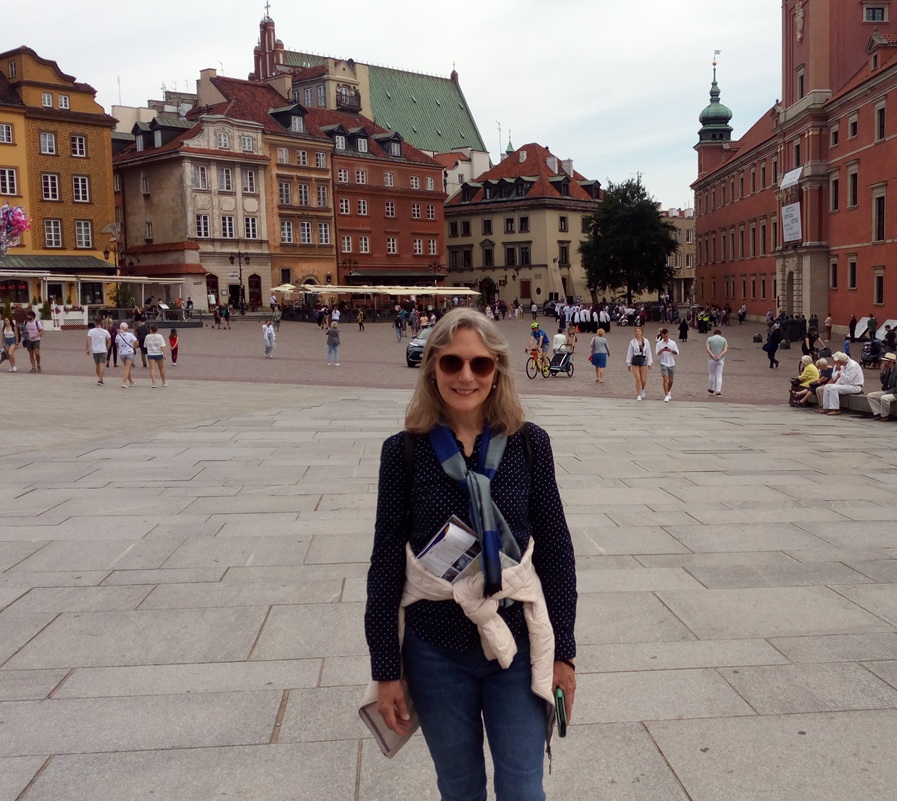
Cindy in Castle Square, Warsaw
This square has seen many violent incidents. In 1861, the Russians massacred more than 100 protestors here. And in May, 1982, ZOMO police carried out a violent suppression of demonstrators.
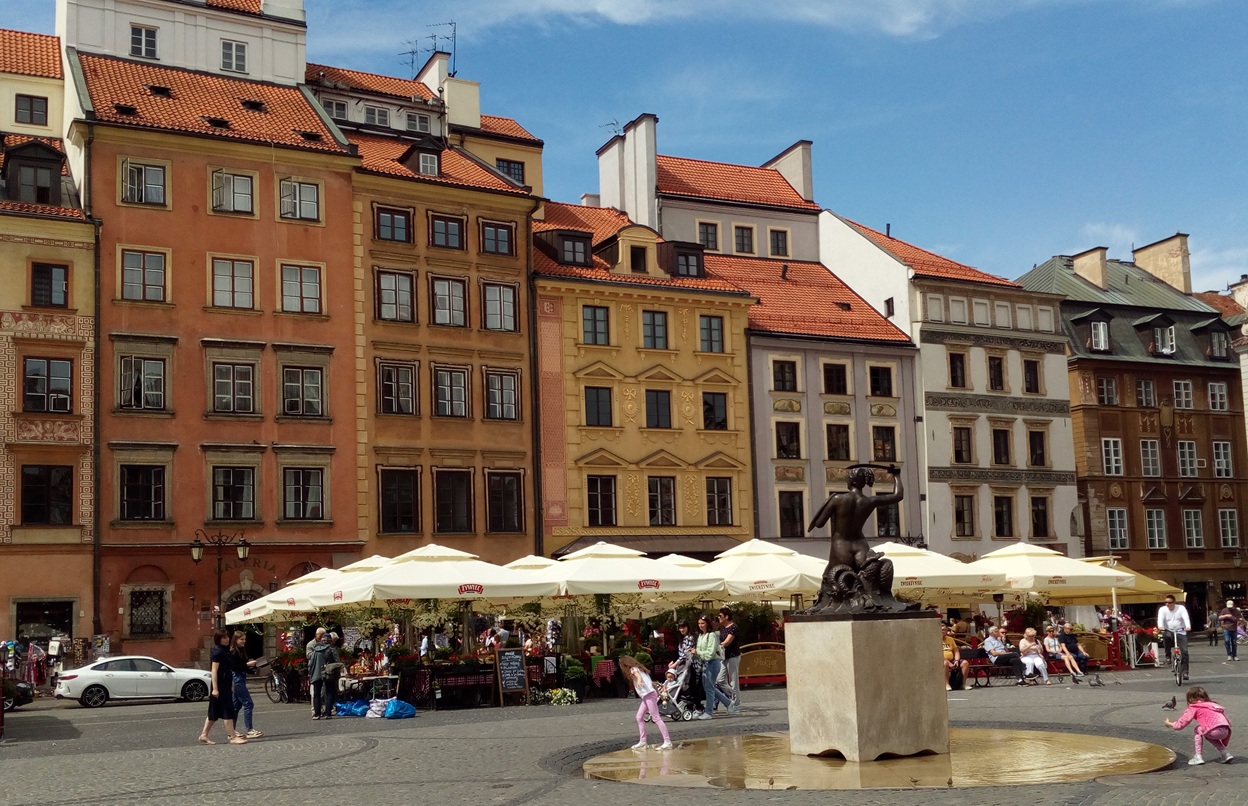
Warsaw’s Old Town Market Place (Polish: Rynek Starego Miasta)
This whole area at the center of the Old Town of Warsaw was systematically destroyed by the German Army, in revenge for the Warsaw Uprising. As can be seen in this photograph, it has been carefully restored, reusing the original materials, such as the bricks, as much as possible. This technique of restoration is known as anastylosis
The Old Town Market Place is the heart of Warsaw, and dates back to the 13th century, when the city was founded. The medieval buildings were Gothic until the great fire of 1607, and were rebuilt in the late-Renaissance style, and later also Baroque around 1700.
There is a bronze statue, the Warsaw Mermaid, which has taken pride of place, and is the symbol of Warsaw, since 1855.
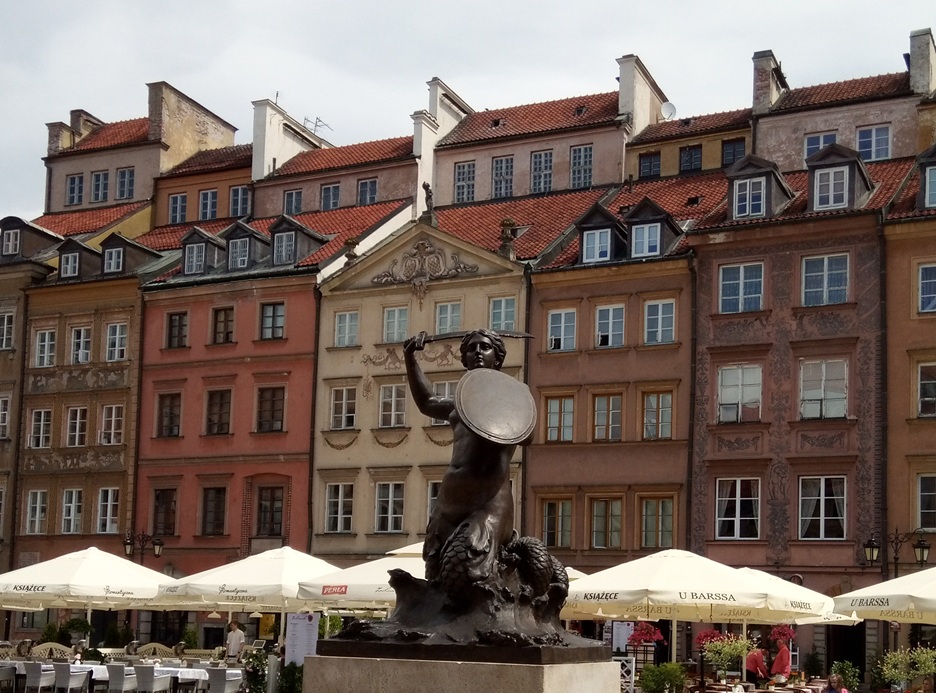
The Warsaw Mermaid statue in the Old Town Market Place
The coat of arms of Warsaw consists of a female form (syrenka) with a fish tail, on a red field.
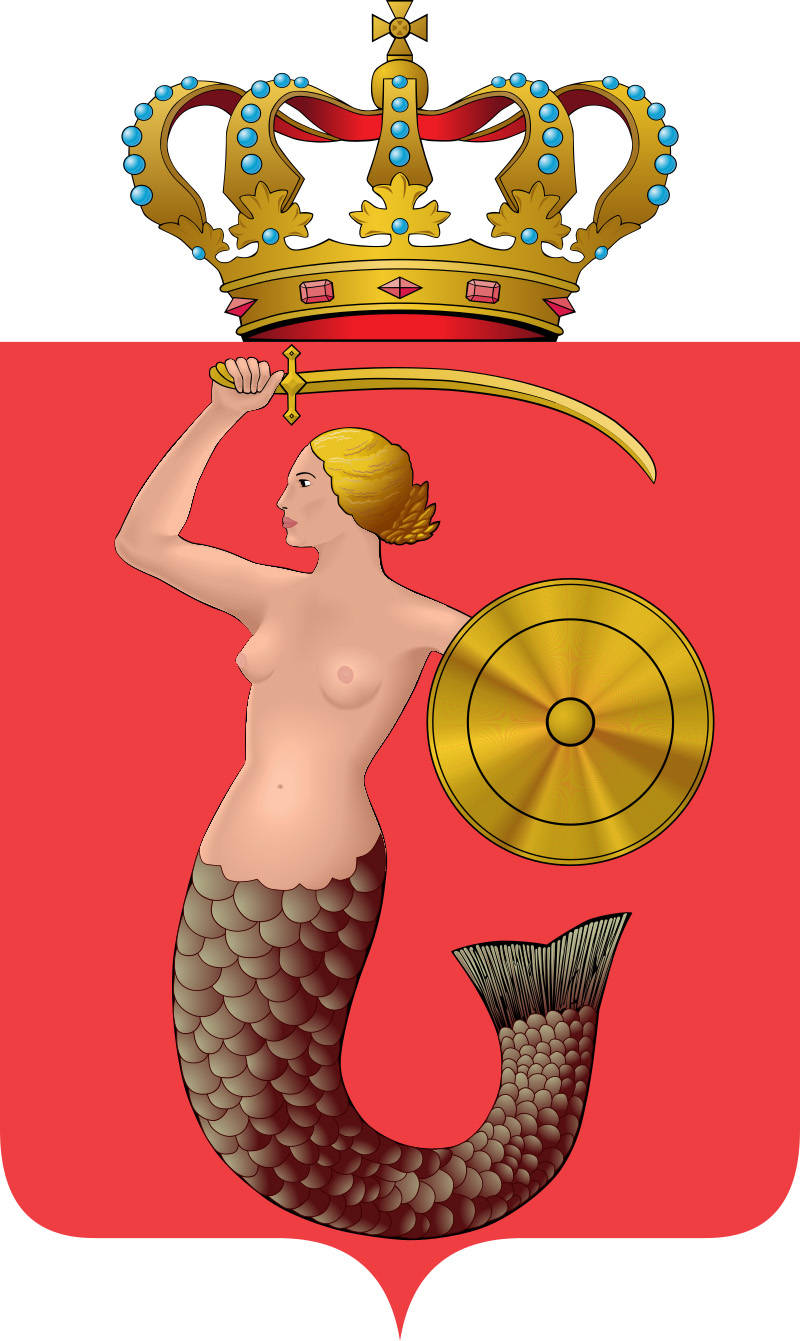
This version replaced the earlier male figure with a dragon tail in 1622. The sword and shield were used in both.
Legend has it that, in 1294, Melusina, from the River Vistula (Wisła), led Duke Bolesław II of Masovia (1262–1313), to the site of a fishing village, and ordered him to found the city. The city’s motto is Contemnit procellas (“It defies the storms”).
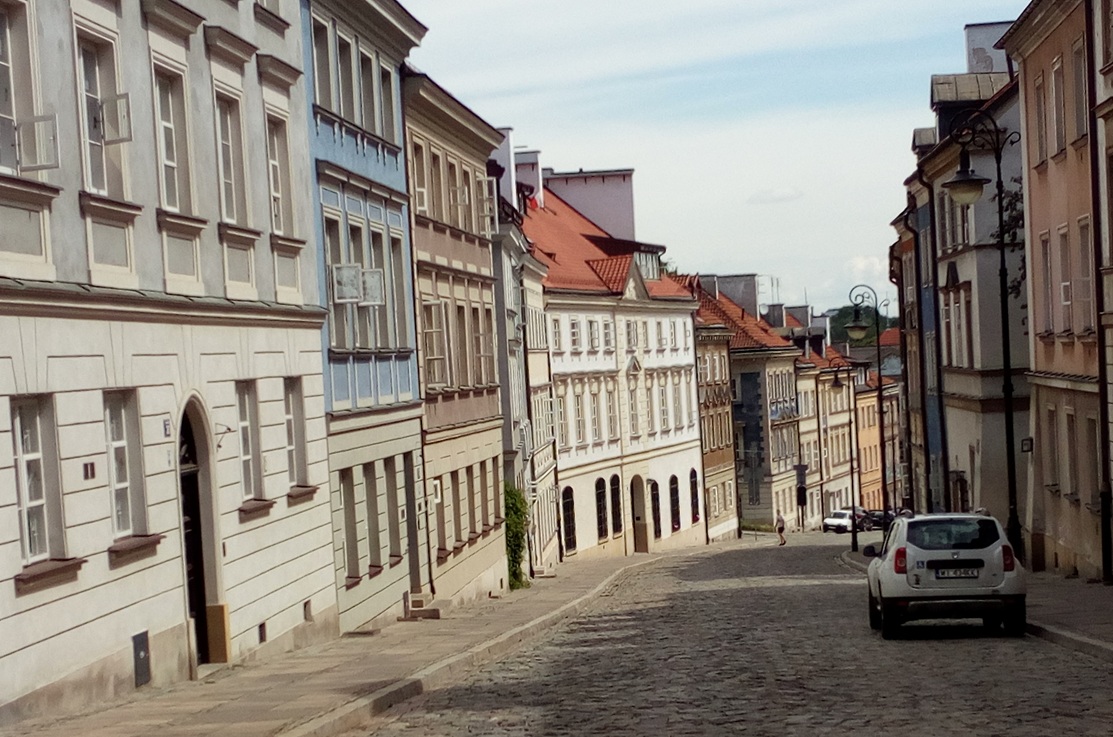
The Warsaw ghetto area was completely leveled by the Nazis in 1944, and its inhabitants killed or sent for extermination in death camps. With remarkable care and dedication, Warsaw has been rebuilt, like this street, leading off from the castle towards the river.
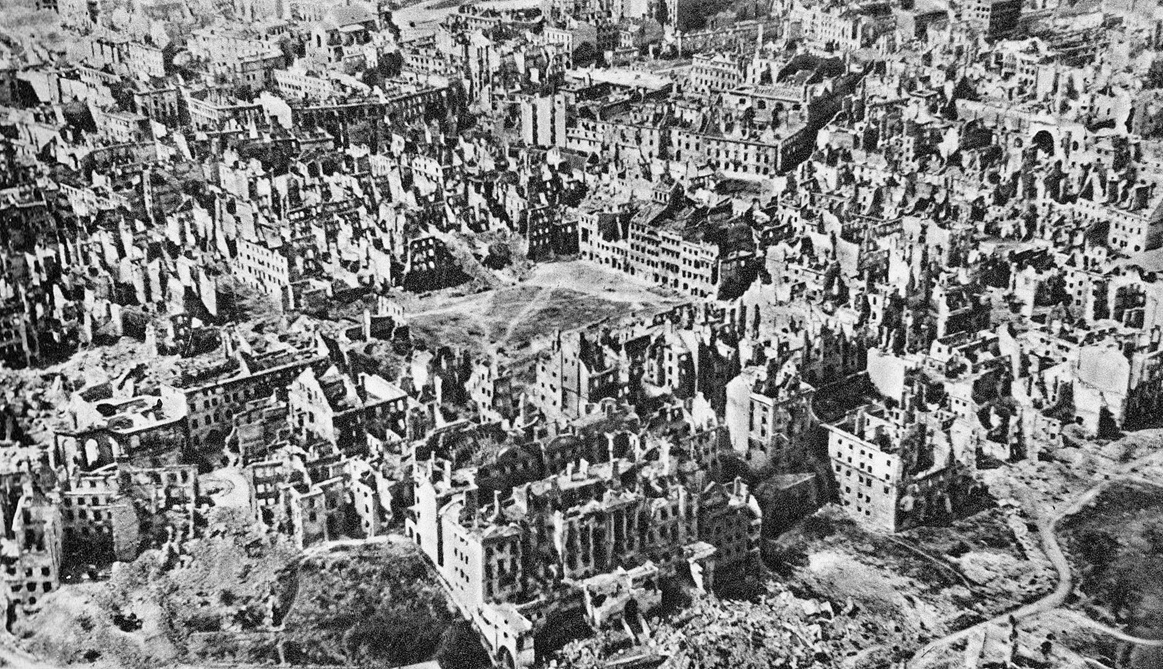
Warsaw after World War Two
Warsaw was very badly destroyed, systematically, by the Nazis. While the Polish Underground Resistance rose up to liberate Warsaw from the German occupation in the summer of 1944, the advancing Soviet Army stopped on the far side of the river to watch as the Germans carried out a systematic extermination and destruction campaign. This evil was justified by the Soviets, so that they could more easily seize control after the war.
Courtesy Wikipedia.
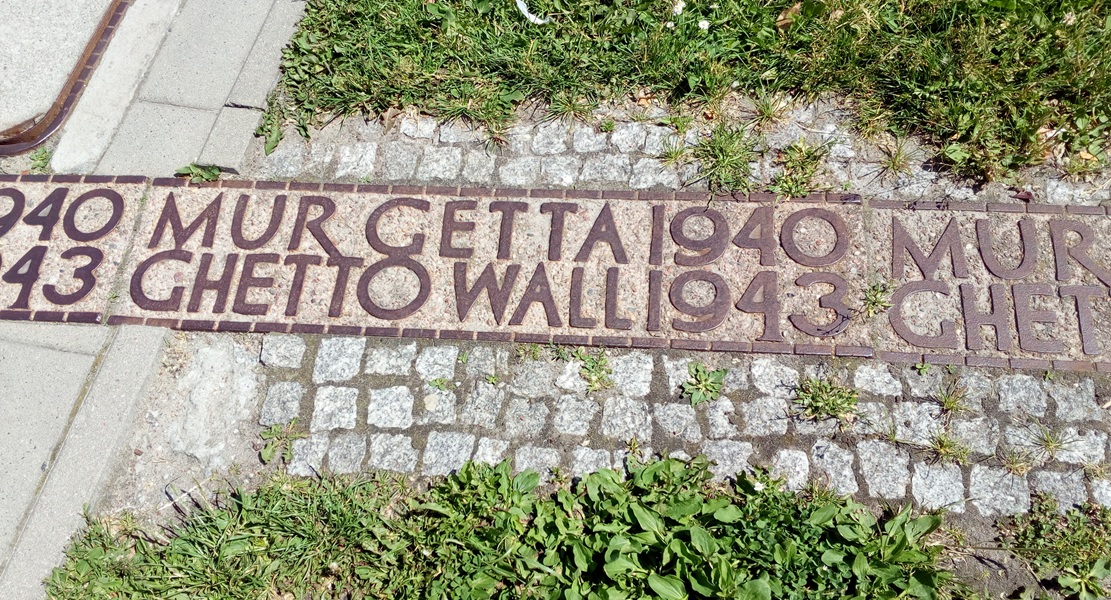
Borders of the jewish ghetto are marked in remembrance of its victims
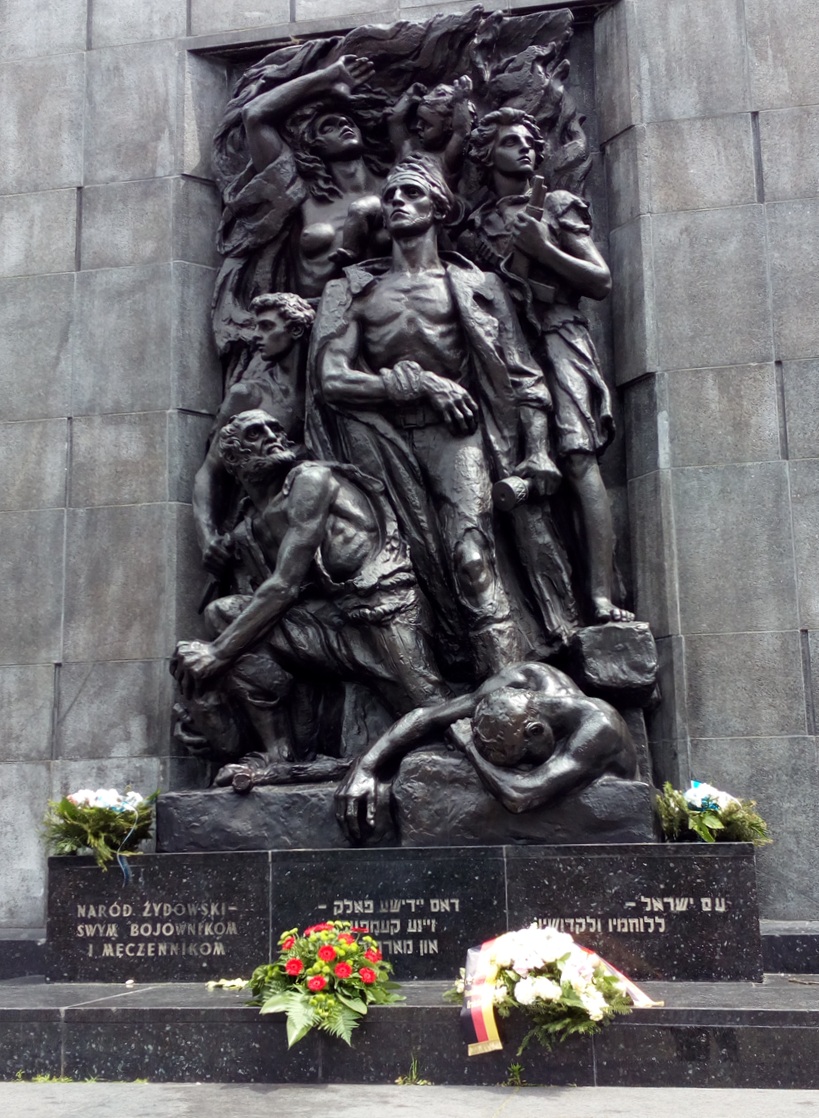
Memorial to the Ghetto Heroes, at the location of the first armed clash of the Warsaw Ghetto Uprising. The sculpture shows Mordechai Anielewicz (1919 – 8 May 1943), the leader of Żydowska Organizacja Bojowa (ŻOB; English: Jewish Combat Organization), surrounded by other insurgents, armed with guns and Molotov cocktails.
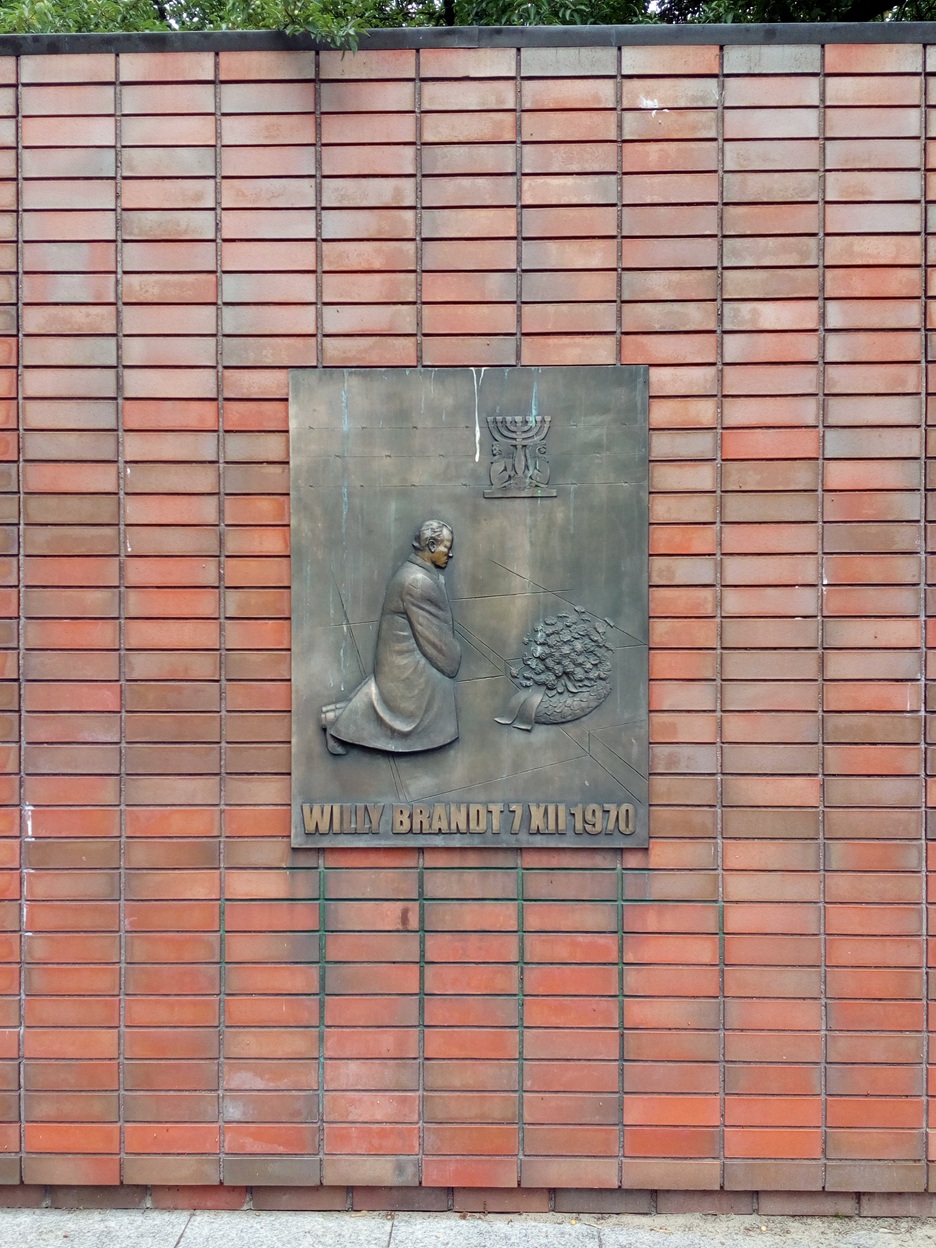
Willy Brandt atonement commemoration plaque at the site of the Warschauer Kniefall (kneeling) by the then West German chancelor, in 1970. It occurred during a state visit, and has become a symbol of Germany’s Ostpolitik, its attempts at reconciliation and apology, to ease tensions between the West and the East.
Although this act was controversial, it led to the best ever election result for Brandt’s party, the SDP, Social Democratic Party, in 1972. He was awarded the Nobel Peace Prize in 1971, and was named Time Person of the Year in 1970.
Travel Diary
A bit of History
Kraków was the capital of Poland until the late 16th century, when it was moved to Warsaw. Warsaw was the de facto capital of the Polish-Lithuanian Commonwealth until 1795, and the seat of the Duchy of Warsaw, set up by Napoleon in 1806. It became a major metropolis during the Industrial Revolution, but was severely damaged by intentional and systematic destruction by the Nazis during WW2. The Jewish community was exterminated, and the city’s uprising against the Nazis led to a great loss of life, while the Russian Red Army held back across the Vistula River, and watched the slaughter and destruction.The Polish-Lithuanian Commonwealth was a country and federation ruled by a common monarch in real union. This monarch was both King of Poland and Grand Duke of Lithuania. In the 16th and 17th centuries, it was at its greatest extent the largest and most populous nation in Europe. It stretched from Livonia (modern Latvia) to most of Ukraine (bordering the Black Sea strip of modern Ukraine which was part of the Ottoman Empire). It was established at the Union of Lublin in July 1569, but there had been a personal union (in which two countries, ostensibly separate, have the same monarch) since 1386, and remained united until it was broken up in stages: the First Partition in 1772, the Second Partition in 1793, and its final demise in the Third Partition in 1795. As a result of the Third Partition, Warsaw became the capital of the province of South Prussia.
Louis XVIII of France (1755-1824, King of Restoration France 1815-1824, brother of the executed Louis XVI, and uncle of Louis XVII, who died in prison in 1795) spent his 23 years of exile during the French Revolution, and subsequent First French Empire under Napoleon I, in Warsaw under the pseudonym of Comte de Lille. In 1806, Napoleon liberated some of the Polish territory from Prussia, Russia and Austria, the empires that had shared the Polish-Lithuanian nation out among themselves, and created of Poland a French client state, with Warsaw its capital. In 1815, following Napoleon’s defeat, the Congress of Vienna assigned Warsaw to Congress Poland, a constitutional monarchy, with the easternmost sector under a personal union with Imperial Russia. What little autonomy Congress Poland had was lost during the Polish-Russian war of 1831.
Poland was once again a sovereign state, the Second Polish Republic, after the occupation by Germany ended at the conclusion of WWI. The Polish-Soviet War of 1919-1921 included the Battle of Warsaw in 1920, which successfully halted the expansion of the communist revolution to the rest of Europe. On 1 September 1939 Germany invaded Poland, and Warsaw fell by the 27th of September. The entire Jewish population, 30% of the city, were forced into the over-crowded ghetto. In July 1942, their deportation to concentration camps such as Treblinka began. When the order came to annihilate the ghetto on 19 April 1943, the Warsaw Ghetto Uprising began. Despite the valiant self-defence by the Jews, it took the Nazis a month to massacre nearly all of them. On 1 August 1944, with the Red Army approaching, the citizens of Warsaw began the Warsaw Uprising, which lasted 63 days, and ultimately failed. Polish deaths were as many as 200,000. About 85% of the city was destroyed, including the Old Town and Royal Castle, by the specially formed Verbrennungs- und Vernichtungskommando in a subsequent action ordered by Hitler. Warsaw was liberated by Soviet and Polish forces on 17 January 1945.