Baltic Sea 2022
Day 25: Sunday 19 June 2022
Brno, Czesca – Vienna – Linz, Austria
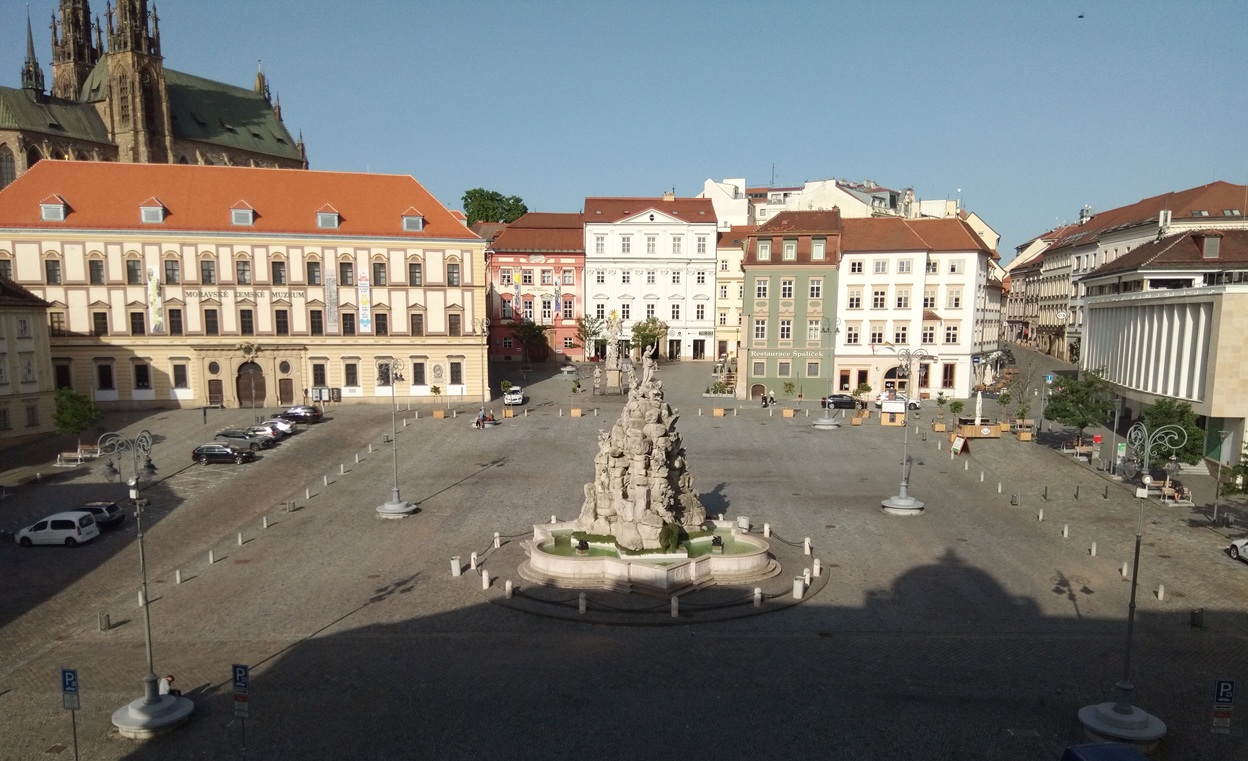
Brno central square, Zelný trh, or Herb Market, from our hotel window, Hotel Grandezza.
Zelný trh (Krautmarkt – Herb Market), the main market square. This has been in use continuously since 1190. Beneath it is a labyrinth of corridors and cellars, now open to the public. It was the only private enterprise allowed to continue under the communists. It is a good place to explore Moravian traditional spices and herbs.
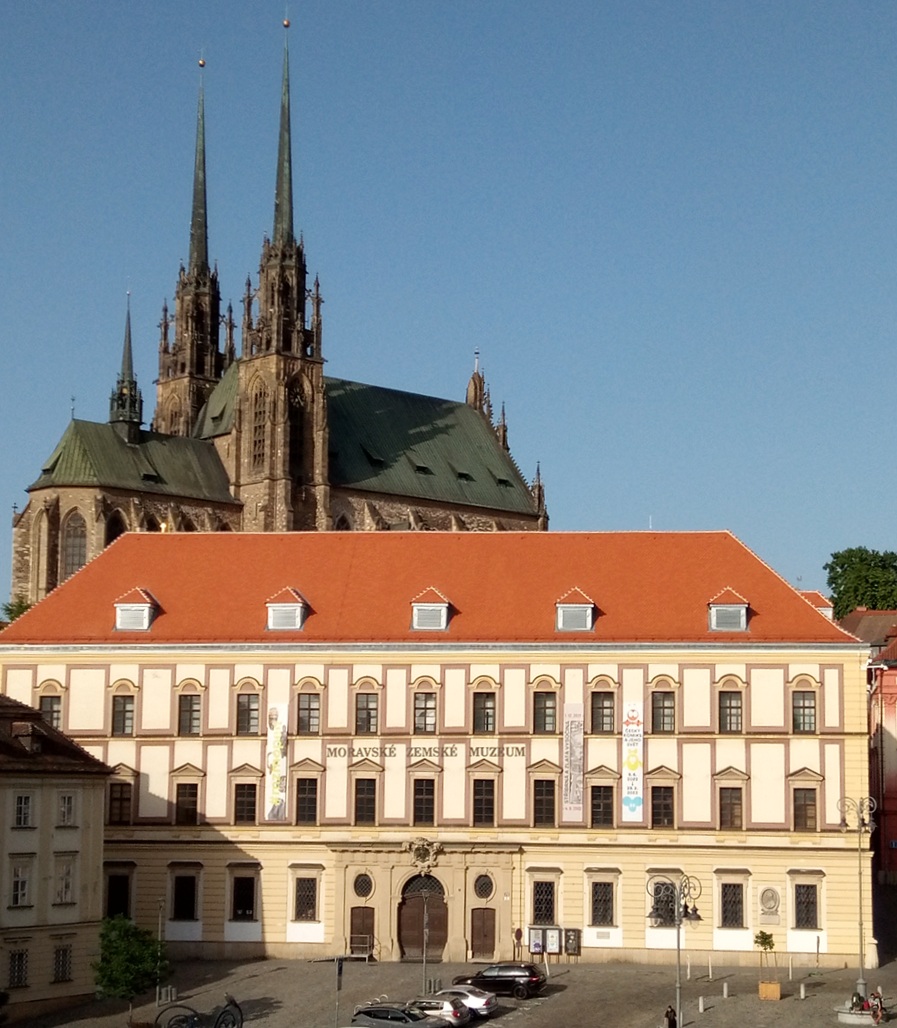
Cathedral of Saints Peter and Paul rises above the Moravské zemské muzeum (Moravian Museum).
The second-largest and second-oldest museum in Austria, it holds several million objects from science and culture. It is housed in the ex-residence of Cardinal Franz von Dietrichstein, built in 1613–1616, and rebuilt in the late Baroque style at the end of the 1600s. The Moravian Museum was founded in 1817.
The original score of the fourth movement of Beethoven’s String Quartet No. 13 belonged to the Jewish Petschek family. The manuscript was intercepted as the family fled from the Nazis, and settled in the USA. The Moravian Museum experts were asked to authenticate the manuscript, but they lied, assuring the Nazi looters that it was a worthless copy. Under the communist regime, the Petschek family were unable to have the manuscript returned. It was not until August, 2022 (two months after our visit), that the museum decided to return it to the family, in accordance with the Terezin Declaration. This agreement regulates the return of former Jewish properties to their rightful owners.
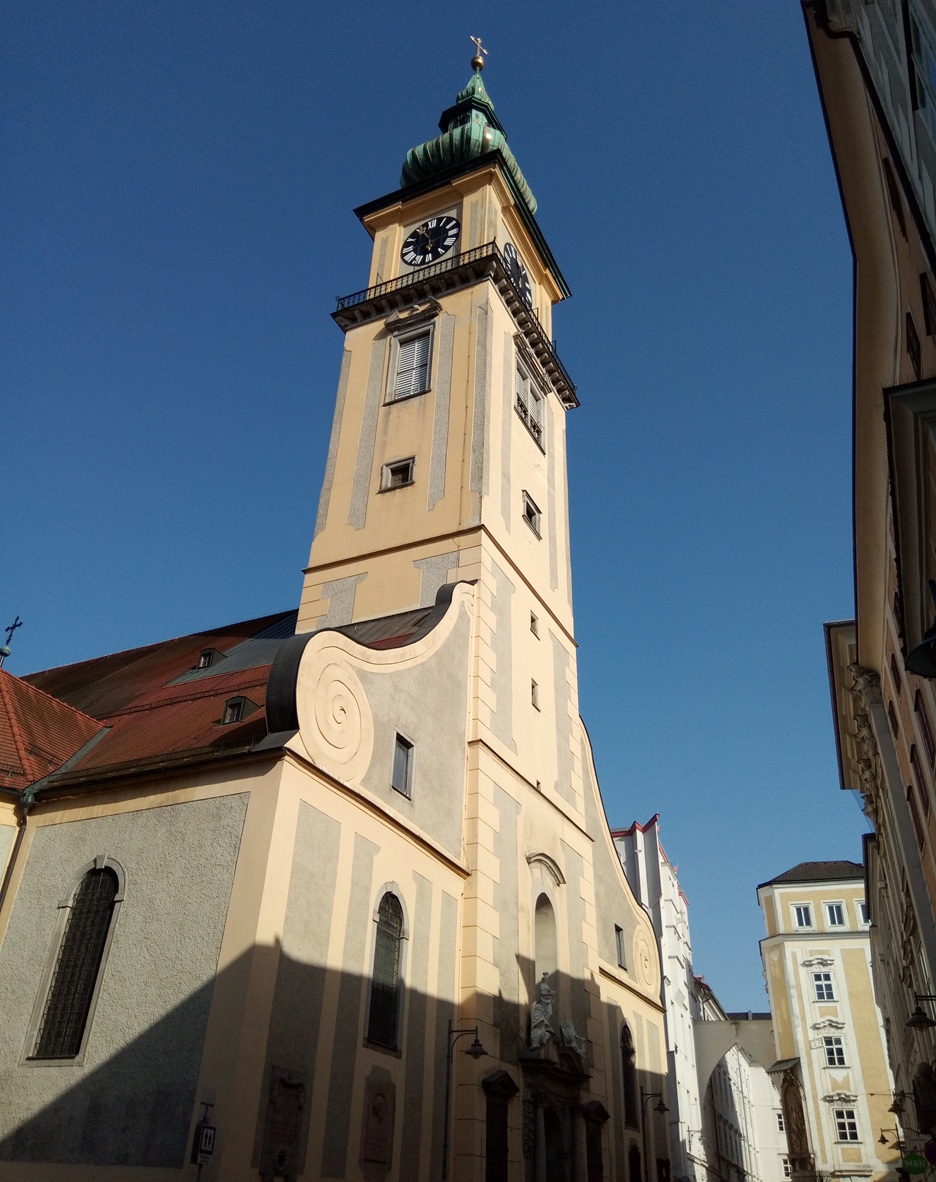
The Linz Parish Church (Stadtpfarrkirche), Roman-Catholic.
This 13th century Romanesque church is a three-nave basilica, and has a 1490 choir with ribbed Gothic vaults.
Brno Death March
The shadow of Hitler and the Third Reich has been over us for the entire trip. After the atrocities wrought upon the Czechs, as the war ended, they took revenge upon the only available victims: ethnic Germans living among them. It is true that many German speakers embraced the takeover by Nazi Germany, but the collective punishment meted out upon anyone Germanic was not justified, although understandable.Brno was liberated on 26 April, 1945, by the Soviet and Romanian armies. The ethnic minority of Brno, numbering 58,000, had either fled or were expelled on 29 May, and forced to march south to the border with Austria. Only about half actually crossed into Austria, the rest being held in camps near the border. Only a few could return eventually to Brno. The rest were exposed to privations, disease, abuse, torture, and malnutrition. Estimates originally put the death toll at 1700-2000 people, but more recent studies suggest the figure was more like 5,000.
In all of Czechoslovakia, over half a million people were expelled, and thousands killed. There were 1,500 official arrests. Riots were occurring outside the Brno prison, attempting to lynch the prisoners, such was the fury unleashed after seven years of brutal Nazi occupation.
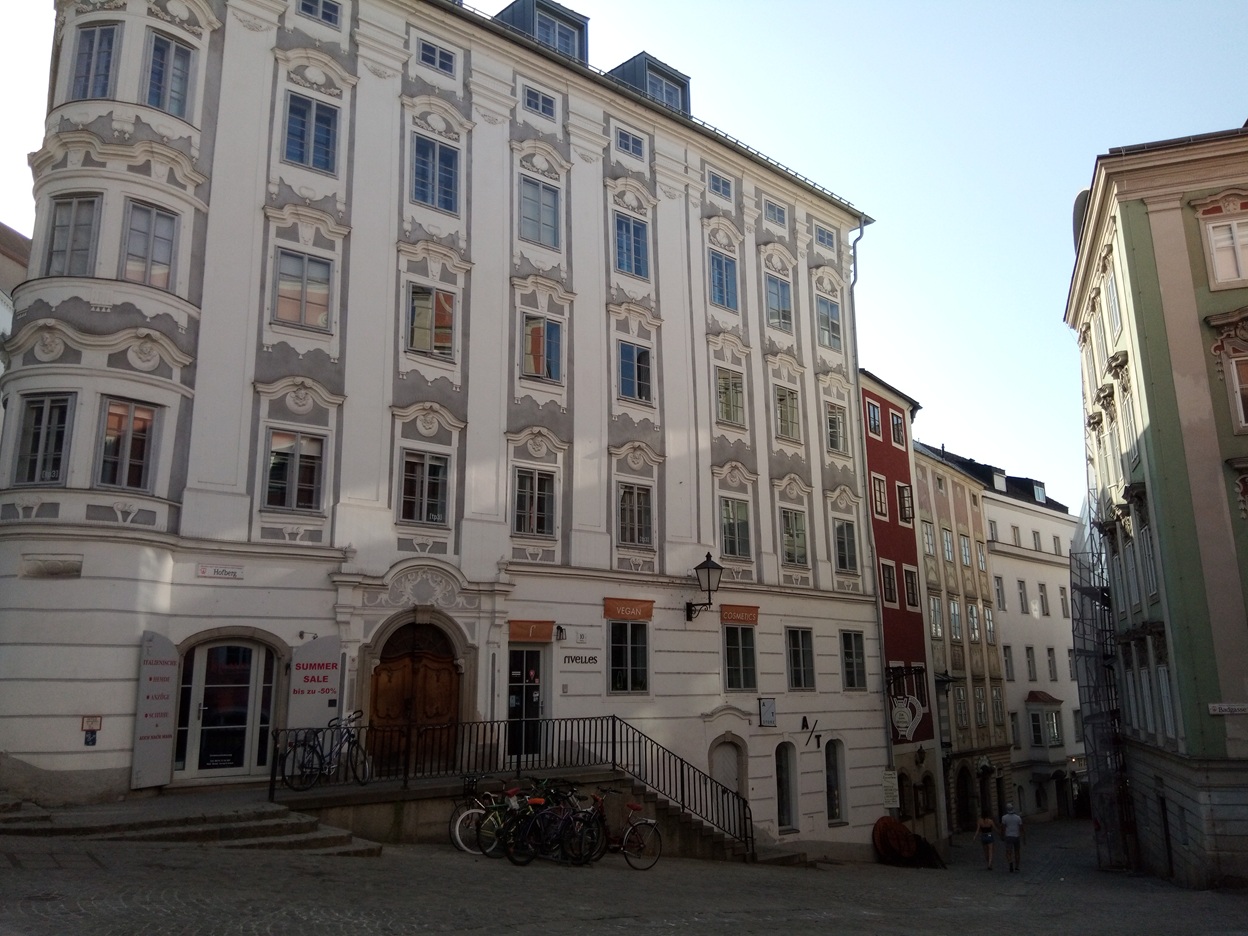
With a population of 213 thousand, Linz is the third-largest city in Austria, after Vienna, 2 million, and Graz, 300k. It lies on the River Danube (Donau), 30km from the Czech border.
The name derives from the Celtic word for “bendable”, lentos, referring to its location at a bend in the river. The name “Linz” first appeared in a document as early as 799 CE. Its strategic location was not lost to the Romans, who built a fort here. We have now entered the Roman Empire!
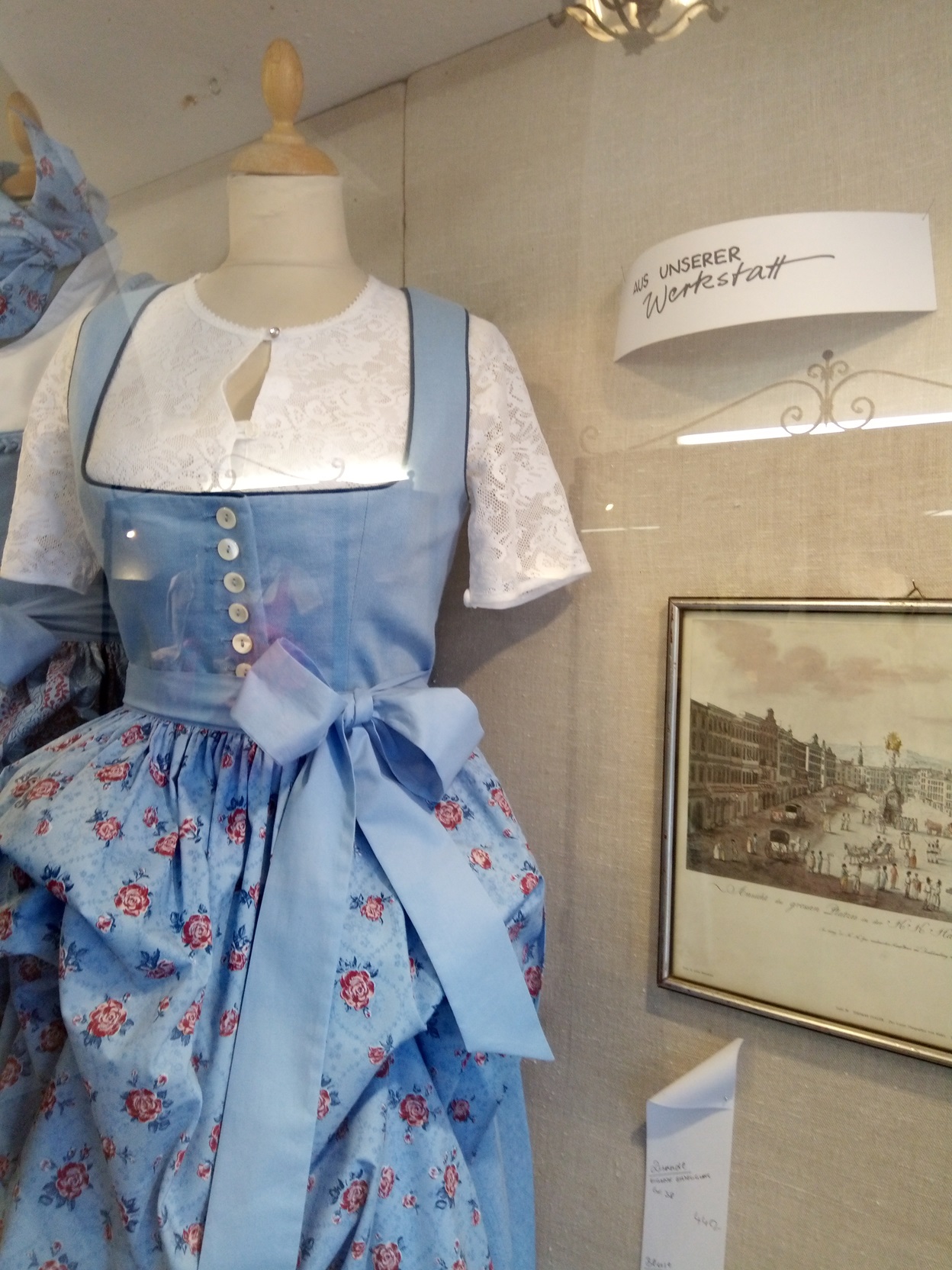
Costume museum
There are a number of famous people associated with Linz. Johannes Kepler taught mathematics here, before publishing his Laws of Planetary Motion here on 15 May 1618. The public university is named after him.
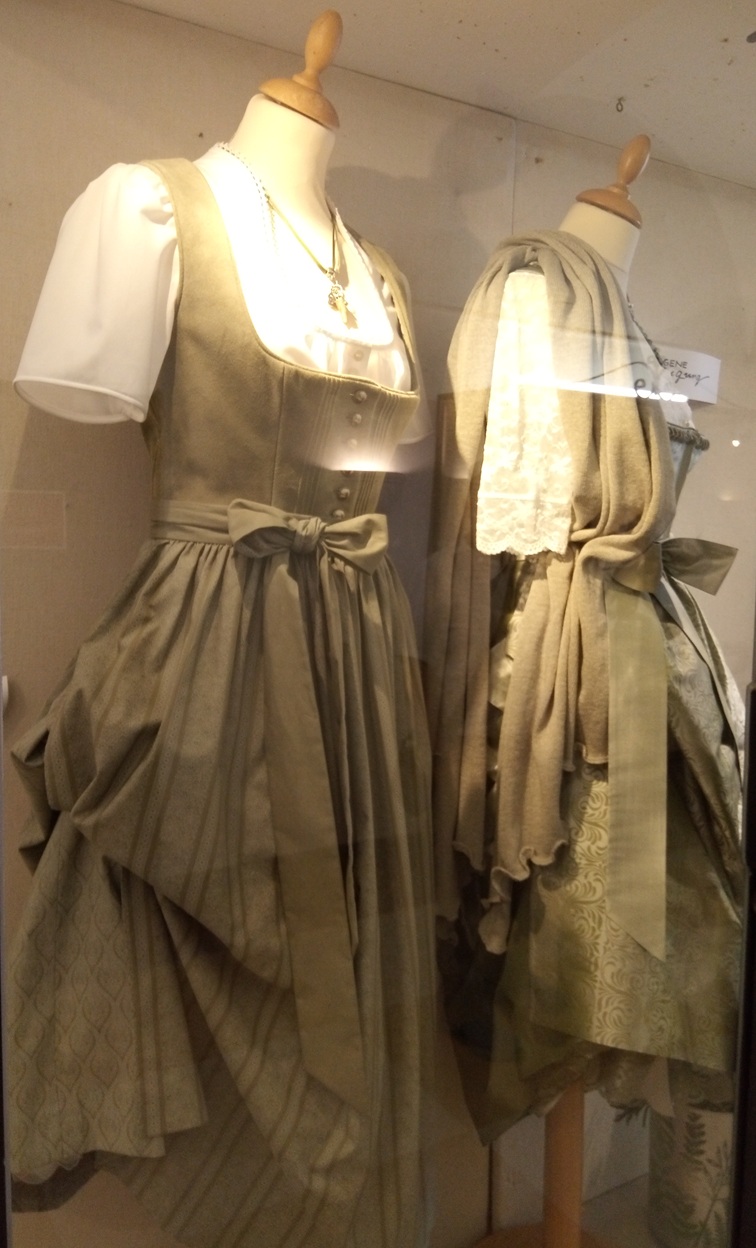
Traditional dresses, displayed in the Costume Museum of Linz
Linz´s traditional industries are the production of gunpowder, iron, steel, salt, firewood and wool.
Anton Bruckner lived here from 1855 to 1868, and was an organist in the Old Cathedral. The Brucknerhaus, the festival and congress centre making an impressive backdrop to the river scene, is named in his honour.
Mozart composed the “Linz” Symphony and “Linz” Sonata during a three-day stay there in November 1783. Where he stayed is now called Mozarthaus.
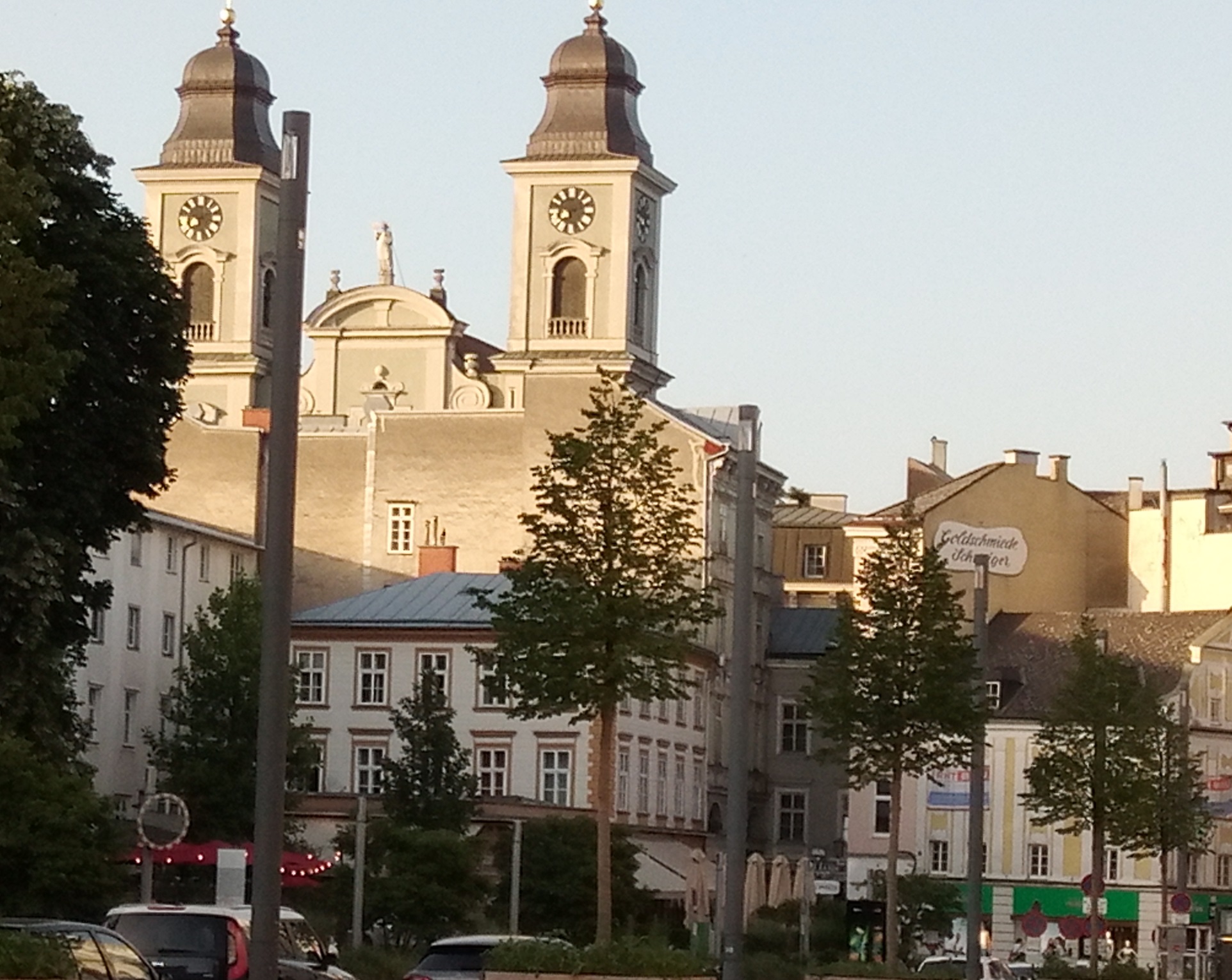
Old Cathedral Linz (Alter Dom), or Church of Ignatius (German: Ignatiuskirche) or the Jesuit Church (German: Jesuitenkirche). It was built 1669-1683 in the Baroque style.
Dedicated to Saint Ignatius of Loyola, who founded the Jesuit Order, which was dissolved in 1773 by Pope Clement XIII. Emperor Joseph II (1741–90) decreed the Diocese of Linz and St. Pölten von Passau in 1783, with the former Jesuit church as the cathedral.
Anton Bruckner was organist here, and Beethoven wrote his three Equali for four trombones (“Drei Equales”) for performance in the cathedral on 2 November 1812 (All Souls’ Day). The church holds the Bruckner Festival every year.
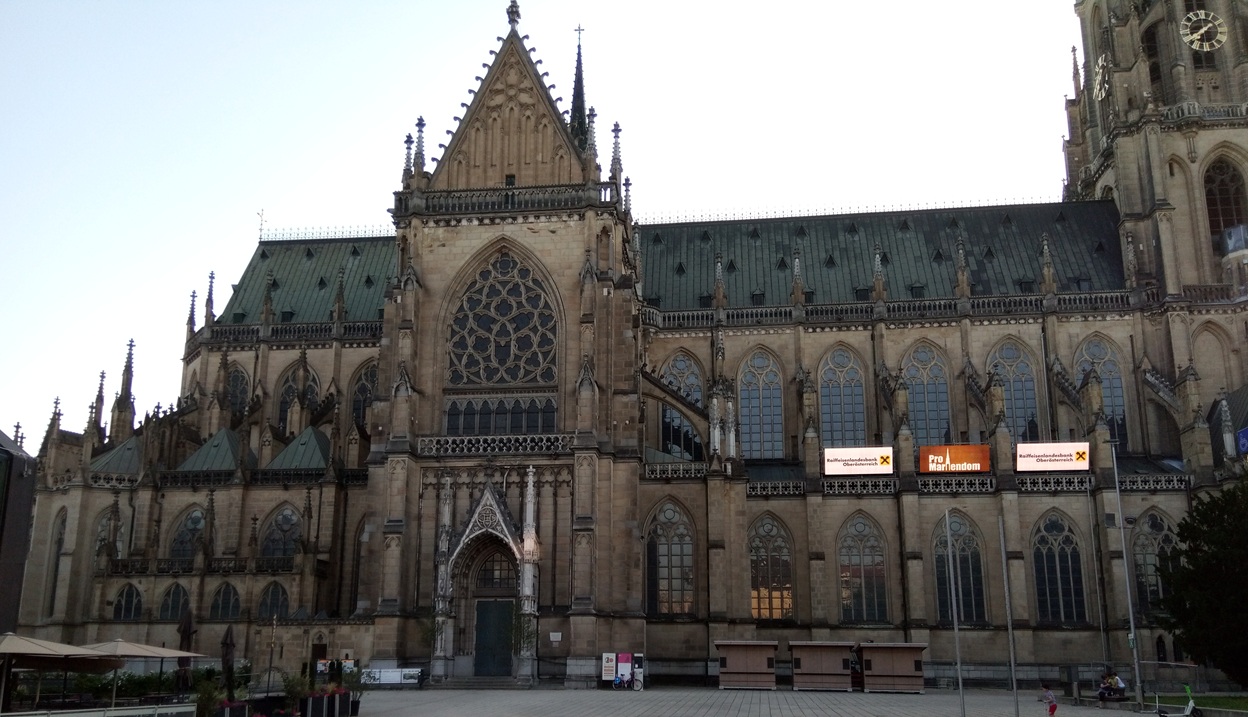
New Cathedral, or Cathedral of the Immaculate Conception (Mariä-Empfängnis-Dom), the largest church in Austria.
Building began in 1862, in the French high Gothic style. It can accommodate 20,000 people, making it the largest, though not the highest church in Austria. It is 134.6 m tall, and by law could not exceed the South Tower of the St. Stephen’s Cathedral in Vienna.
Travel Diary
It is very hot, unpleasantly so for we northerners, as we disembark in Linz, and take a bus to the centre. The trams are not running due to work on the track in the main square. We have to wait at an Italian gelateria till after 15.00, when we can check in on the phone. Chat to the staff in Italian, and they become suddenly friendly, where before they had been impatient and functional in German.
The hotel is staff-free – a new trend we have finally gotten used to, so we get the codes and make our own way in. It is not so pleasant finding a hotel bereft of people, but it is compensated by cheapness (Fr. 59). The room is simple but pleasant. One of the characteristics of this journey has been the extreme range in qualities of hotels and yet most of them modestly priced. Does this change much in peak summer time?
Linz is sharply divided into ‘shade’ and ‘laser sharp light’. The sun is unbearable, the temperature 34°C, and is a sharp affirmation that we are now in the south. We stroll, opt not to take the tired, hot street tourist train, forlornly pursuing its sad circuits with few takers. The cathedral impresses, and is refreshingly cool. There is a display about Nazi Germany, with many horrific photographs. We have just enough time to peruse it before we are asked to leave as the cathedral is closing (19.20). We are a little desperate to find a suitable place to eat, when we stumble upon a hidden cloister Bierhalle, and have a pleasant time beneath an atmospheric ceiling of castagna trees, and eat Austrian fare: Wiener Schnitzel for Cindy and meat and Knödel for me. Cindy’s cold is worsening, and we have an early night.
—
Adolf Hitler (1889 – 1945) moved to Linz during his childhood, from 1898 till 1907, before leaving for Vienna. Hitler considered it his home and had grand architectural plans for it, including the massive Fuhrermuseum for his looted art. Adolf Eichmann also spent his youth in Linz.
Johannes Kepler (1571 – 1630), the German astronomer, taught mathematics in the city, and there is university named after him in Linz. His work on the laws of planetary motion have earned him a place in the history of the Scientific Revolution, and laid down the principles which helped Galileo Galilei and Newton make their discoveries.
Anton Bruckner (1824 – 1896) also lived and worked here from 1855 till 1868. We visit the cathedral where Bruckner was organist and composer.
The Habsburg Emperor, Friedrich III held his court during his final years in Linz till he died in 1493. It was only after this that Vienna and Prague overtook Linz in importance for the Habsburg Empire.