Thailand-Malaysia 2023
Day 3: Tuesday 03 January 2023
Ayutthaya – Bangkok, Thailand
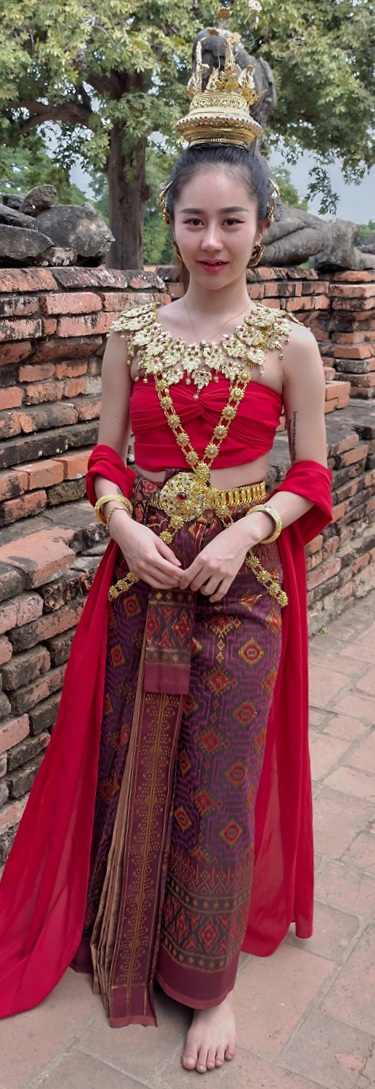
This charming young lady was happy to be photographed in her traditional regalia. It is pleasant to see people enjoying their history and traditions at the sites, for themselves, and not for tourists. Ayutthaya Historical Park.
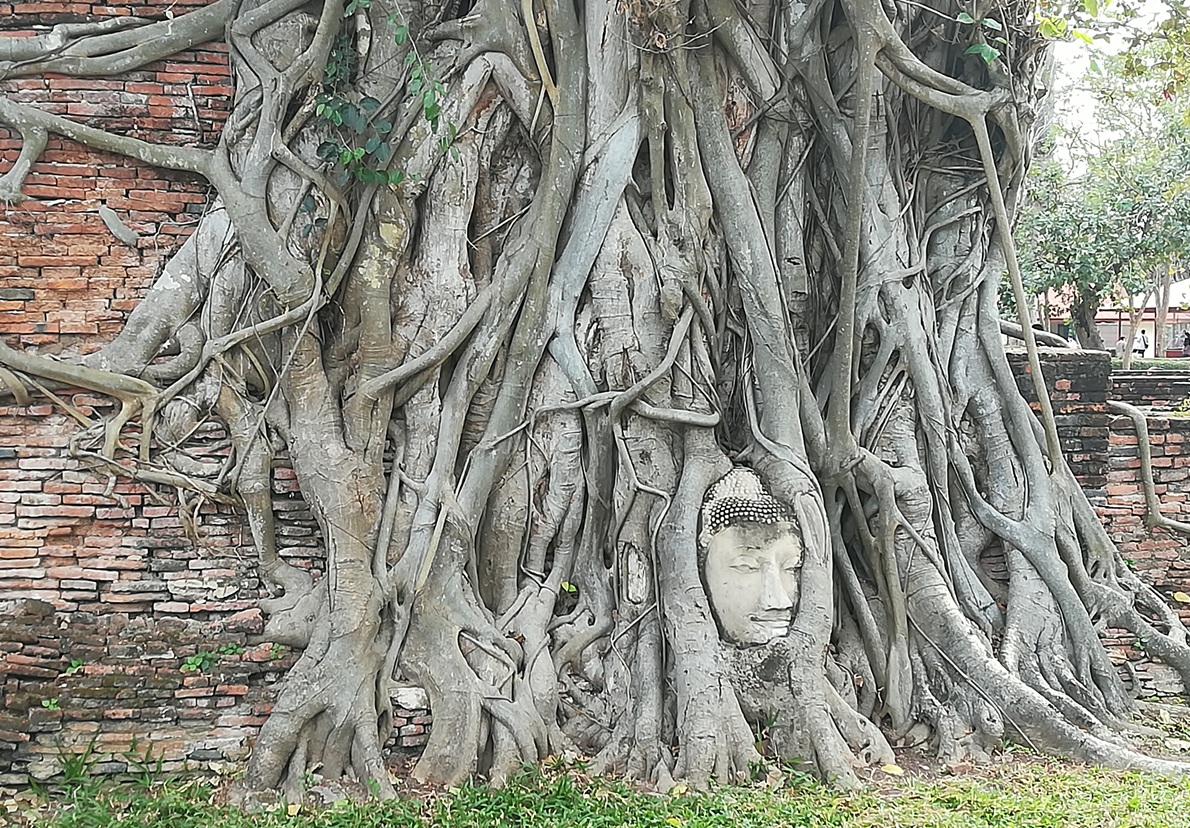
The head of Buddha, Wat Mahathat
An irresistible photograph at Ayutthaya Historical Park.
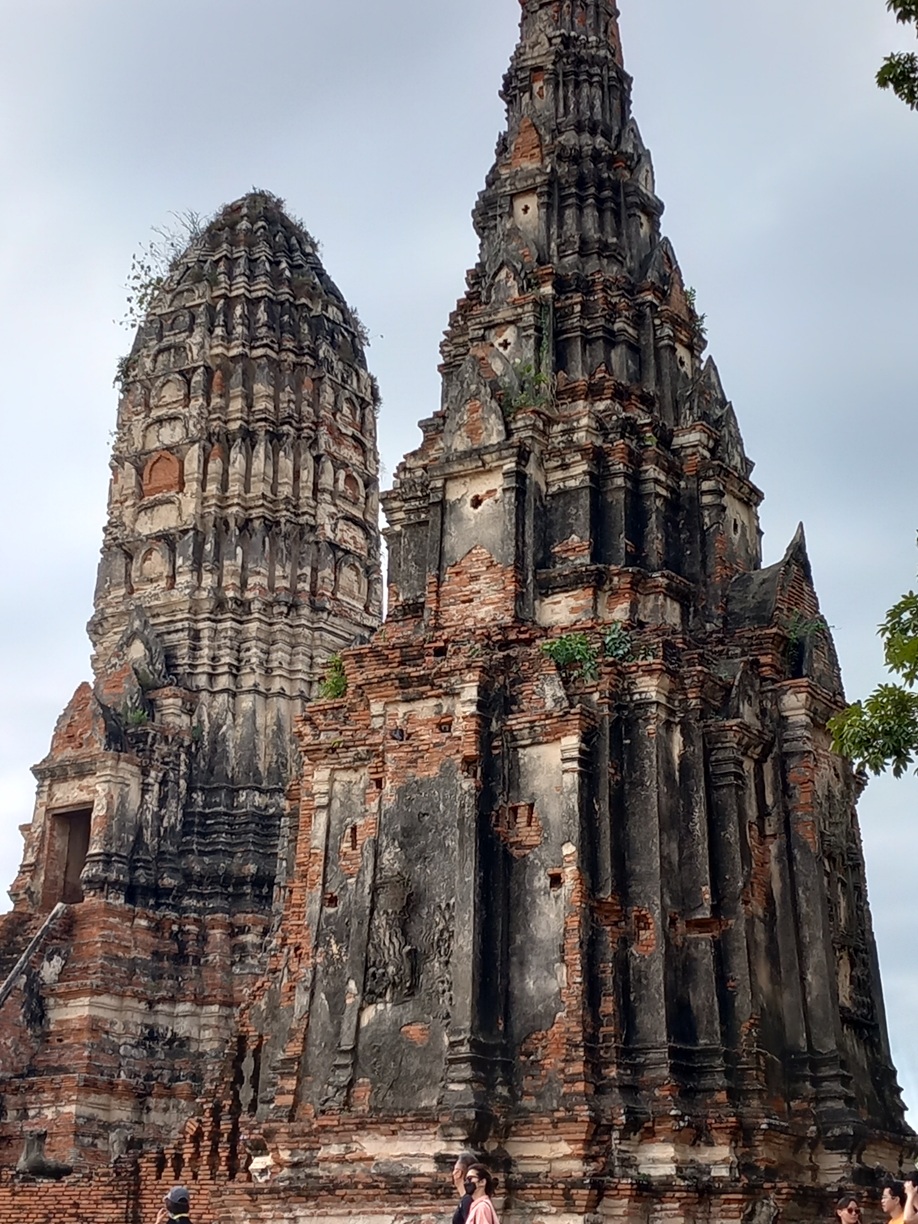
Wat Mahathat, Ayuthaya, affiliated with Theravada Buddhism. The whole area where there are ancient temples is a national park, Ayutthaya Historical Park.
The Ayutthaya Kingdom (or Empire) existed from 1351-1767. In the 16th century, it was one of three great powers in Asia, the others being the south India Vijayanagara, and China. It fell under Toungoo Burma for 15 years during the late 1500s, but regained its independence and became an entrepôt (trading hub). After a golden age it was brought down in April 1767 by their old rivals, the Burmese, and razed to the ground. Siamese authority from then on moved to Thonburi-Bangkok.
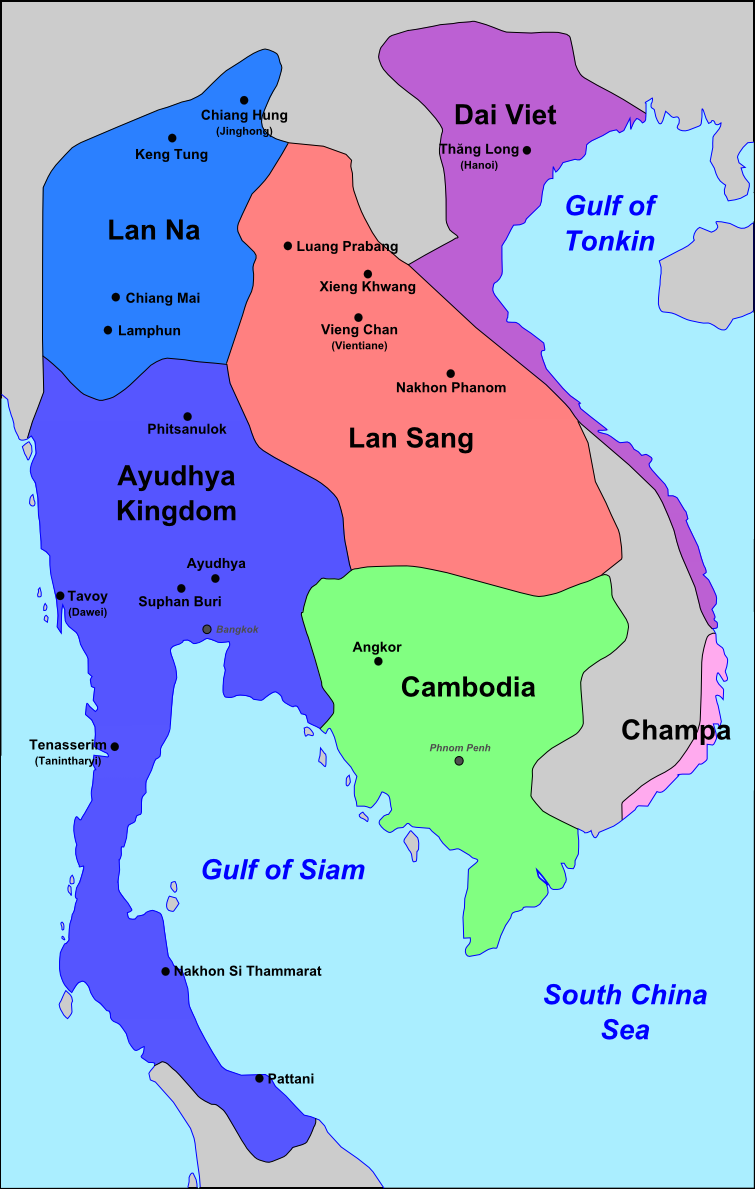
Courtesy Wikipedia
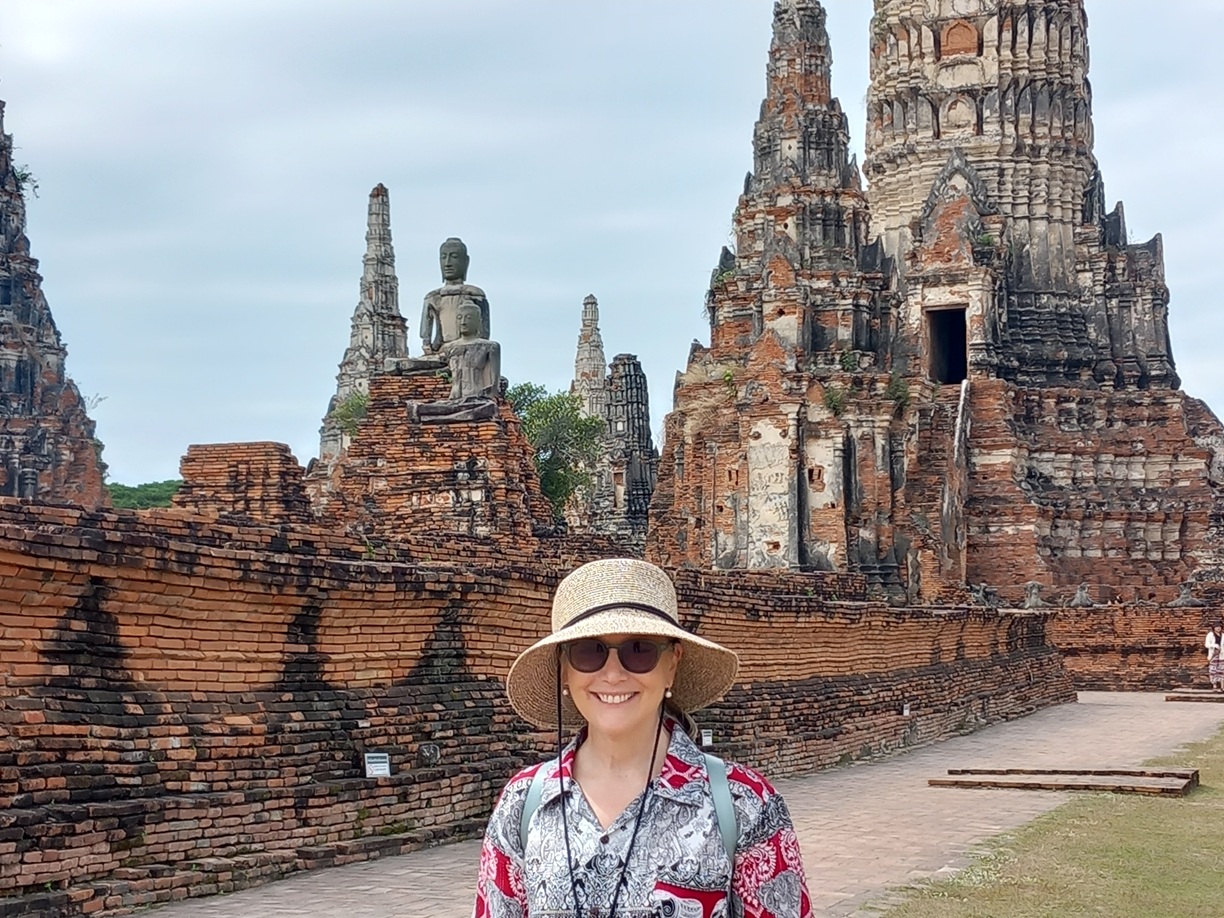
An innocent tourist at Wat Chaiwatthanaram, Ayutthaya Historical Park, unaware she is standing at the scene of a real-life, bloody “Game of Thrones”.
This Wat was erected in 1374 by King Borommarachathirat I (1310-1388, reigned 1370-88), and extended by his nephew Ramesuan (1339-1395, reigned 1369-70, and 1388-1395).
Borommarachathirat was the lord of Suphanburi, a rival to Ayutthaya, and he forced his nephew, Ramesuan, from the throne in 1370. Only at the death of Borommarachathirat could Ramesuan regain the throne in 1388, by defeating and murdering Borommarachathirat‘s son, Thong Lan. Thong Lan, who was just 15 years old, had ruled for just a week, and was the first monarch of Ayutthaya to be executed.
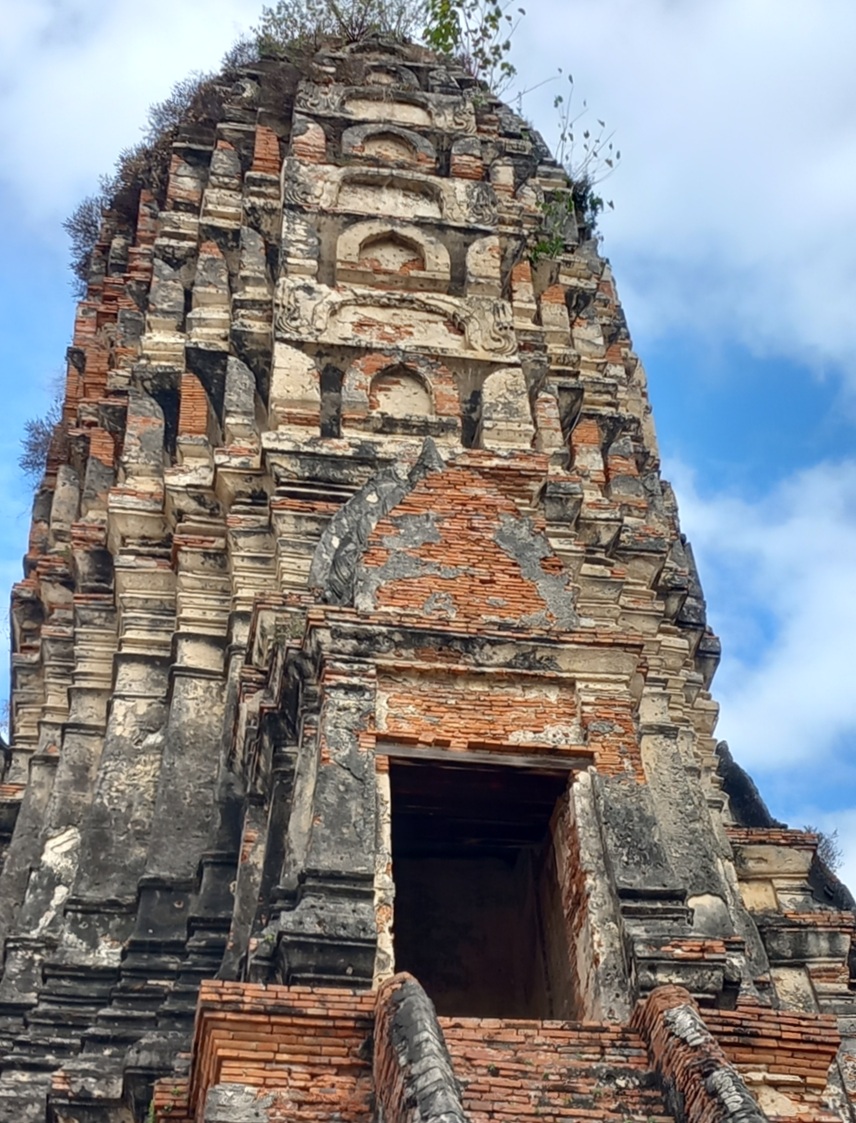
Ayuthaya prang
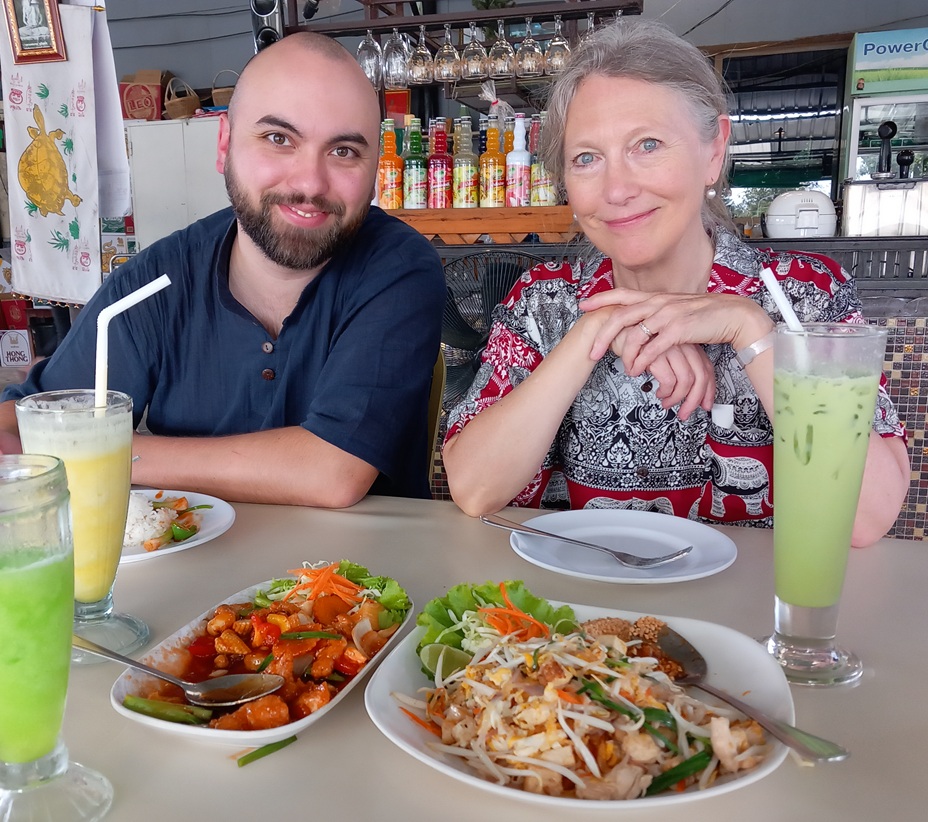
We stop for lunch in a roomy outdoor covered restaurant by the river. A barge pulled by the type of tug boat we saw in Bangkok passes noisily. We order 2 types of curry and the sweet and sour fish turns out to be a large bass, which we have to de-bone and is delicious. Sean’s chicken curry is so tender, we couldn’t really tell if it was chicken or fish. We have tall glasses with brightly coloured ice-drinks, cantaloupe and pineapple. Cindy has an ice-tea concoction.
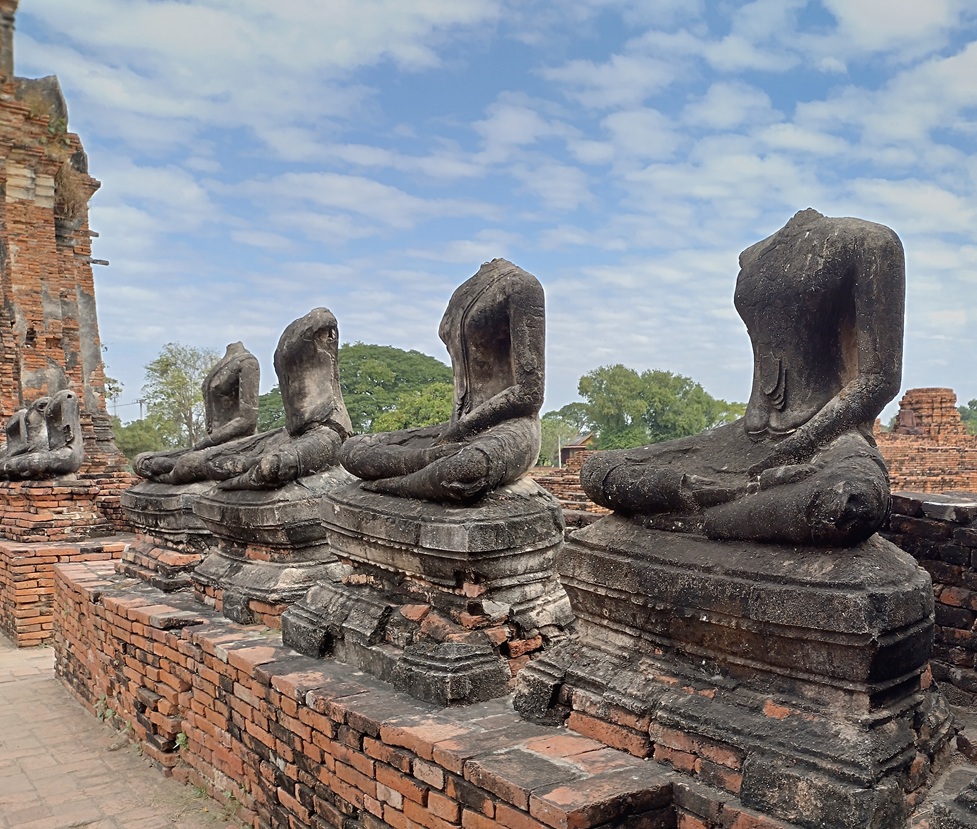
Red brick with stucco is the only option in this area. Stone sometimes is used for the smaller monk buddha statues, but the larger ones prove to have a core of brick. Nearly all the smaller figures have had their heads removed, the result of the rampaging invasions, which attempted to eradicate the local culture. These temple complexes are very extensive, and the vast extent, circumscribed by the river, attests to the power and wealth of this capital to the empire which replaced the Khmer (centered on Angar Wat in Cambodia) around 1467. Ayutthaya was destroyed by the Burmese in 1767, and briefly Thonburi then Bangkok became the new capital of Siam.
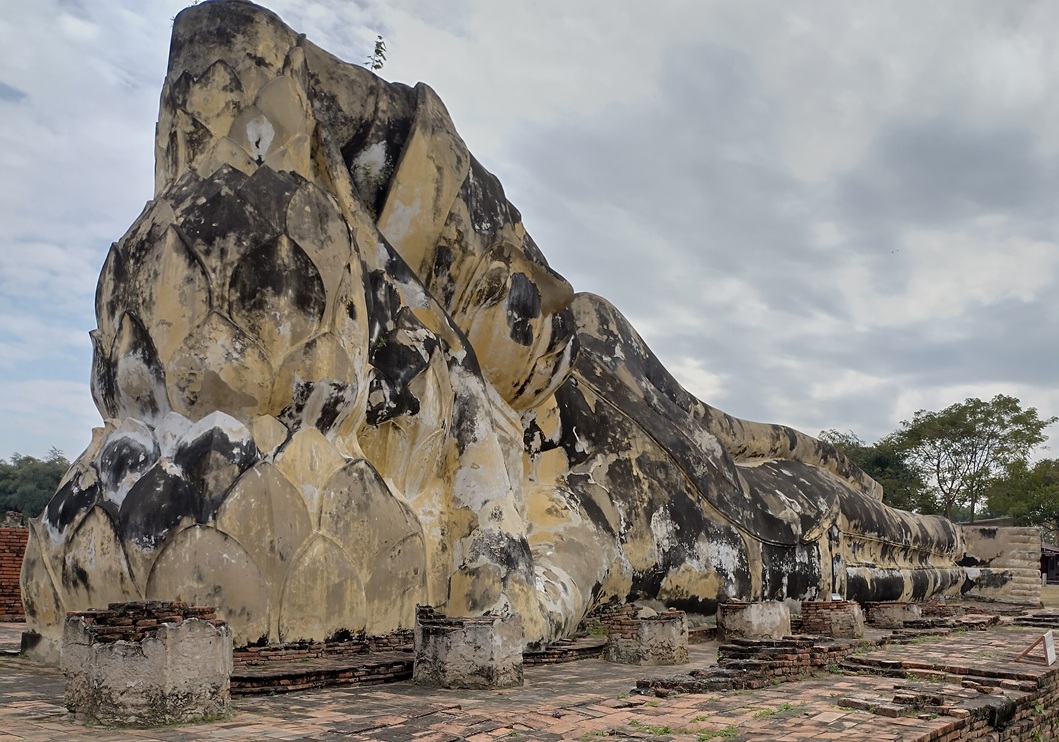
Ayuthaya reclining Buddha. This enormous statue is part of the tradition in Buddhist art which represents the historical Buddha during his last illness, preparing to enter the parinirvana. He is always lying on his right side, supporting his head. The sleeping Buddha can have three interpretations, referring to three different episodes: Nirvana attitude (paang pari nipphan), Teaching the Rahu Asurin attitude (paang proad asurin tra rahu), and Sleeping attitude (paang song phra subin).
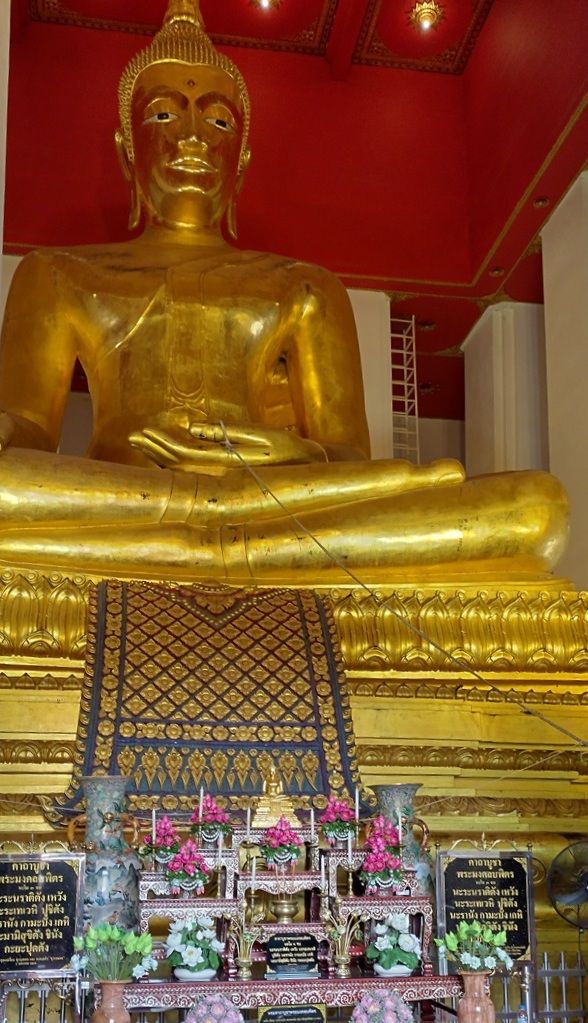
Our driver drops us to wander 2 temple complexes including a 40m gold plated reclining Buddha, and a recently renovated large temple housing an enormous sitting gold-plated buddha with an exhibition of the black and white photos explaining the renovation stages post WWII. In 1919 the Duke and Duchess ’Yohan’ of Germany are seen, and transport for another VIP group is elephantine.
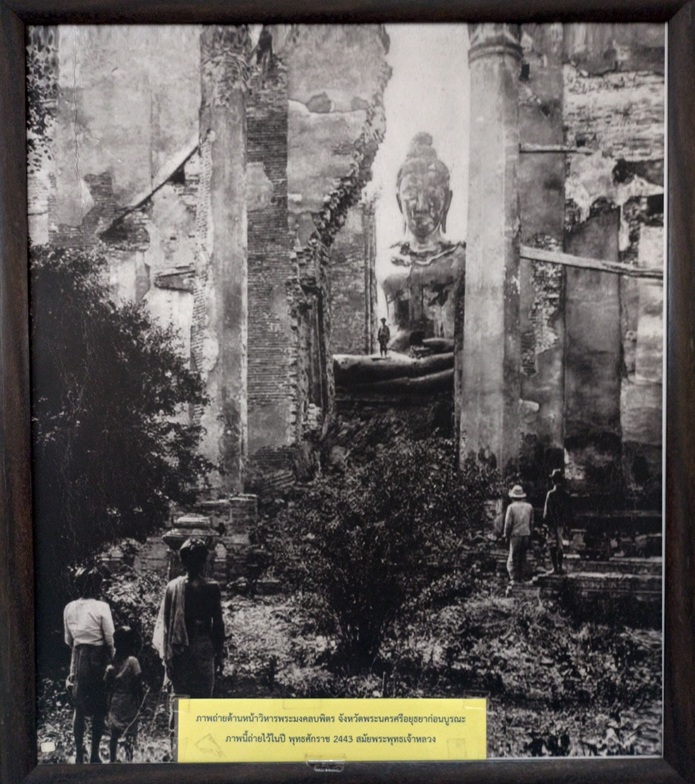
The damage to the adjoining very large temple estate is pretty thorough. In a few patches white stucco suggests how the watts and monuments may have looked prior to the Burmese make-over. Trees have grown in rooted clumps around the structures at times and we see the occasional squirrel (small, grey with red-tinged bushy tails). In the shopping area and approach to the center, some trees have coconut shells strapped to them, and I saw one bunch of bananas, which must be to feed them.
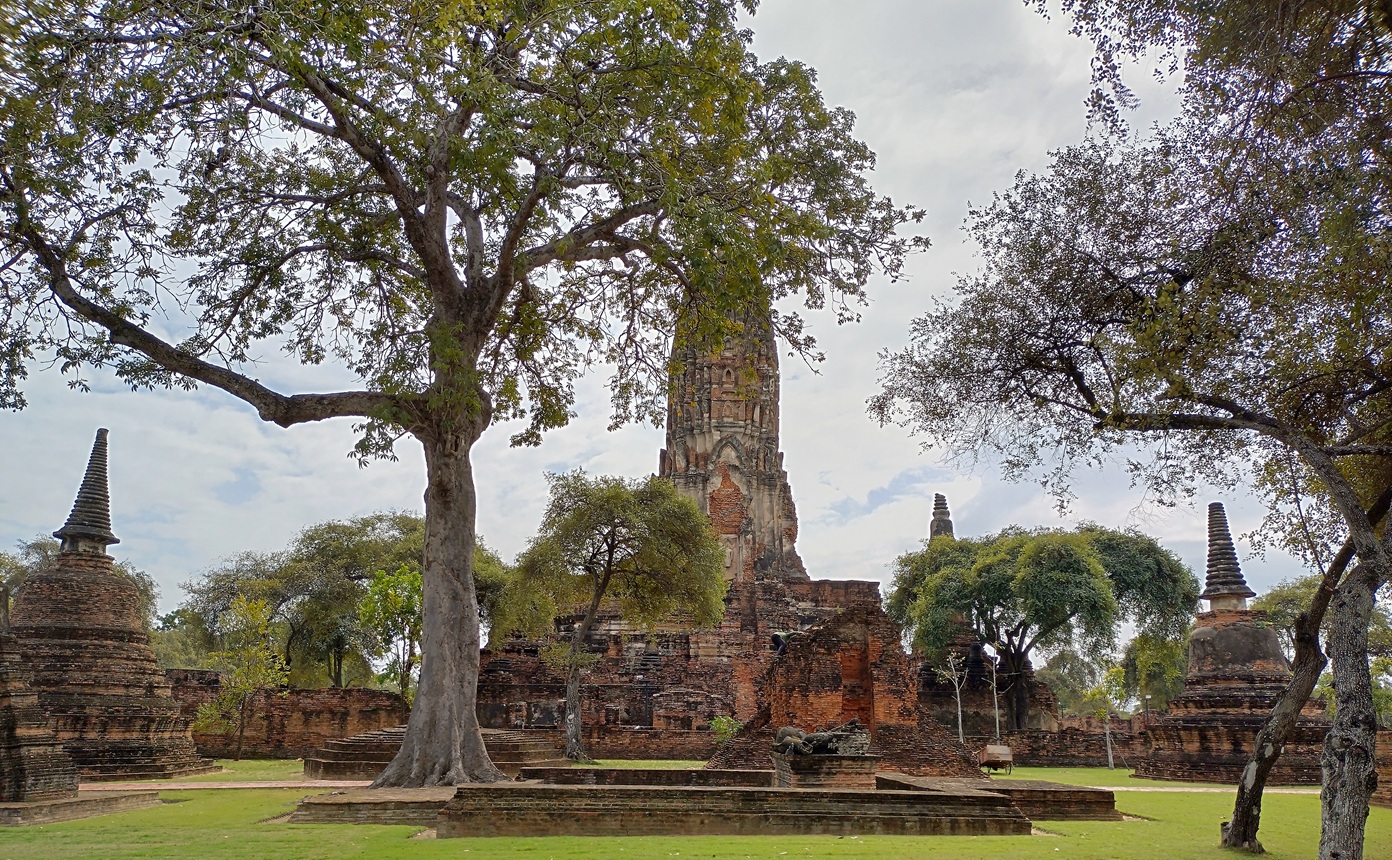
Wat Chaiwatthanaram
This temple was constructed in 1630 by King Prasat Thong, and its name means “Temple of long reign and glorious era”. It was built in memory of the king’s mother, and has a 35m central prang, surrounded by eight chedi-shaped chapels (Meru Thit Meru Rai). There are 120 Buddha statues along the walls.
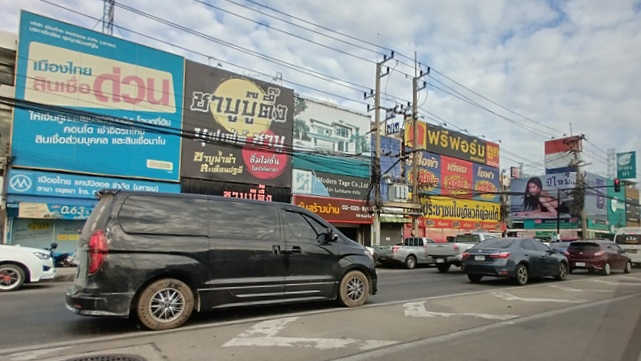
The one hour journey by motorway, the main road was surprisingly low in traffic (quite the opposite on the return) passing through the northern stretches of Bangkok, with mixed developments. Huge billboards with garish, brightly coloured ads at times are hard to discern what they are for. 5G is being heavily promoted, as well as fun-packed, life-changing bottled water brands.
Travel Diary
We had planned to take a train to Ayutthaya so we skipped breakfast (much to our regret since it is so good) and travelled by Skytrain and metro (which is super clean and modern) to the main train station (which is kind of run down and old), arriving too late to get tickets. The Bangkok railway station is old and spacious, in 2 halls. Security guards stand idly by, sometimes on Covid sentry duty, an otherwise tacit reminder that Thailand is under a military regime and subject to terrorism, but otherwise we don’t notice anything ’militaristic’ as such. We have brioches and coffees, hogging the only 2 cheap plastic chairs in the tiny station cafè. A bit of confusion about train reservations trying to communicate through thick glass. We can’t reserve seats for tomorrow it seems. The tickets must be bought on the day. This turned out to be fortunate, since a government-authorized information lady advised us to take a taxi for 2500 Bht or CHF75 for the whole day 9:30 – 17:00.
The drive is through rows of apartment blocks, which suddenly lift above industry and flooded rice fields, large, muddy stretches that don’t seem to match ’paddy’. After a thinning of the rows of shops and other roadside activities, Ayutthaya begins to make itself present, and we are suddenly in the first ancient temple complex.
Ayutthaya is prone to flooding as well, and we see long walls around temple areas with incongruous gaps.
The drive home is in heavy but patiently-disciplined traffic, many motorbikes slaloming their way. We ask the driver to take us to Siam center rather than the hotel, and tip him 500 Bht (15 Fr). We find a modern version of Chinatown, and try the sweets, before returning to the restaurant of the first day at Nana for desserts (no dinner since we had a late and copious lunch).
After the Nana restaurant we walked to a deadend in what turned out to be a redlight district, girls in skimpy dresses looking bored, sitting in groups outside brightly lit dives. They smiled at us in a kind of teasing way. We could only smile back at them. It seemed incongruous that a redlight district could be so near a Muslim conservative district, just a block or two apart.