Thailand-Malaysia 2023
Day 10: Tuesday 10 January 2023
Georgetown, Pilau Penang
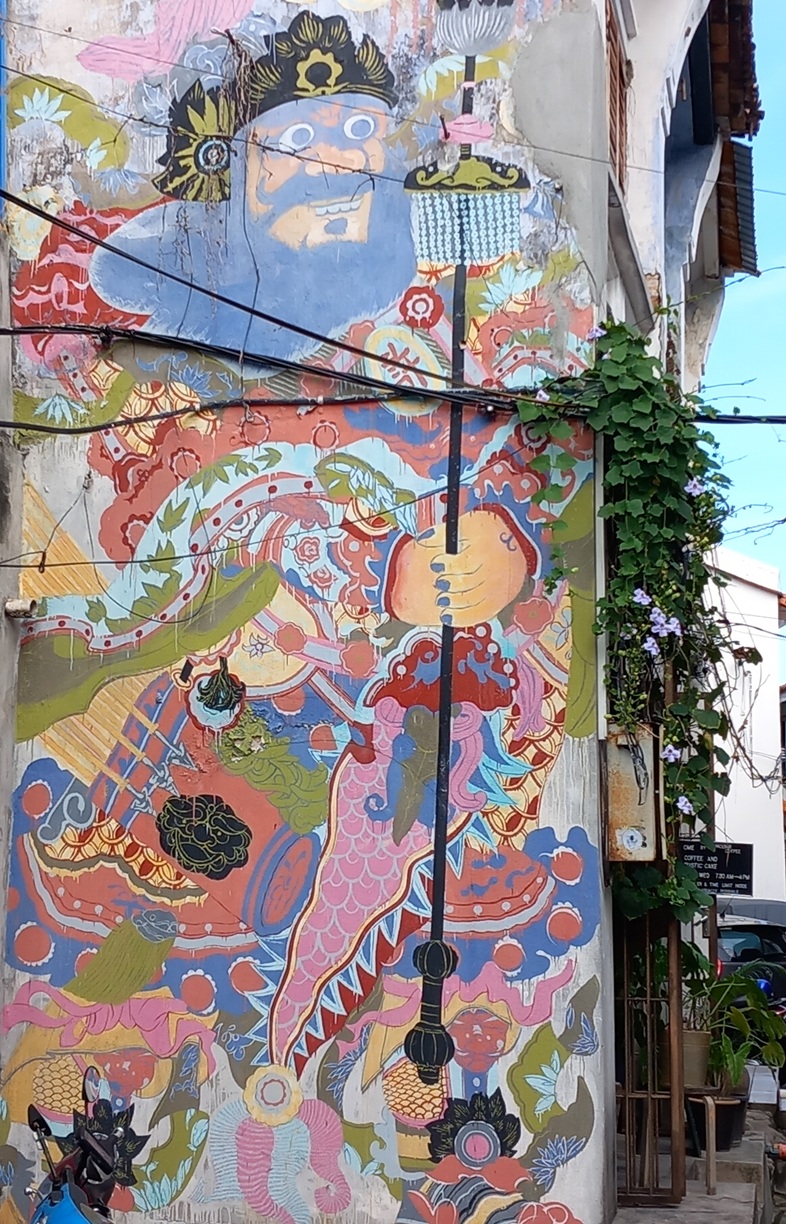
Mural in the Old Town
Our room is quite unique, compact and modern. The windows are high on the walls and let in light but are heavily curtained to keep out the heat. The beds are comfortable, if crammed together. We arise and find a chic cafè in the neighborhood run by a few young people. There are three Chinese business men discussing their projects at the table nearby. We try the ‘rustic’ cake and are delighted. Yum!
The streets are difficult to walk, since cars and motorbikes are parked right up to the inconsistently covered sewers and elevated curbs and gutters, and the porticos are usually impassable, blocked by columns, plant pots, seating or single motorbikes. Many houses announce their Chinese occupants by little shrines in front. Except for Little India, a group of 6 blocks, most of the town is Chinese, although we see signs for ‘Danger,’ electricity in 5 languages, Malay, English, Chinese, Thai and Hindi.
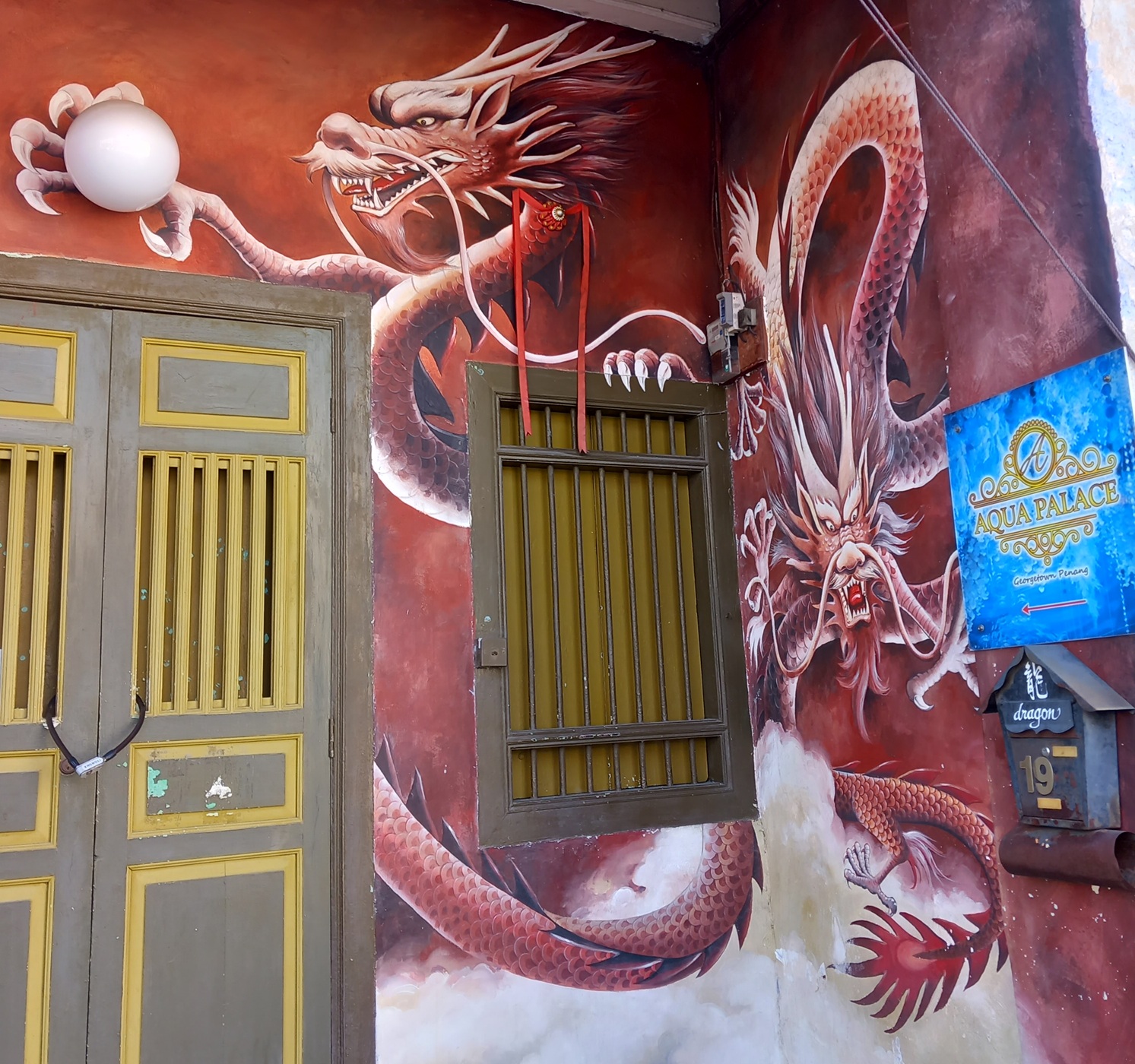
Dragon mural on private house. It is pleasing to see that efforts are made to maintain tradition in this otherwise gentrifying old town centre.
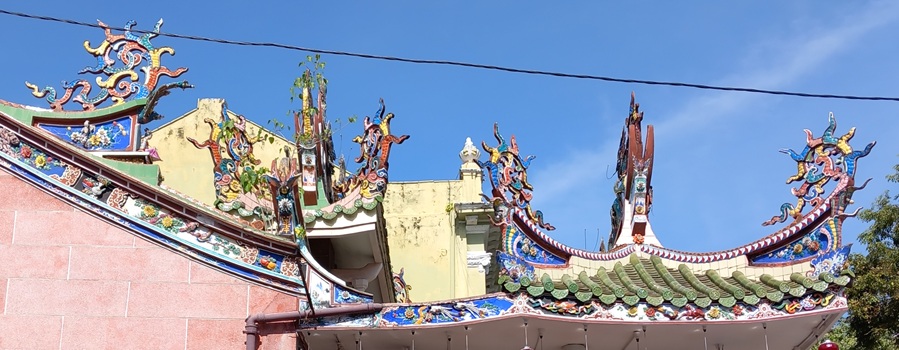
Roof decorations in George Town
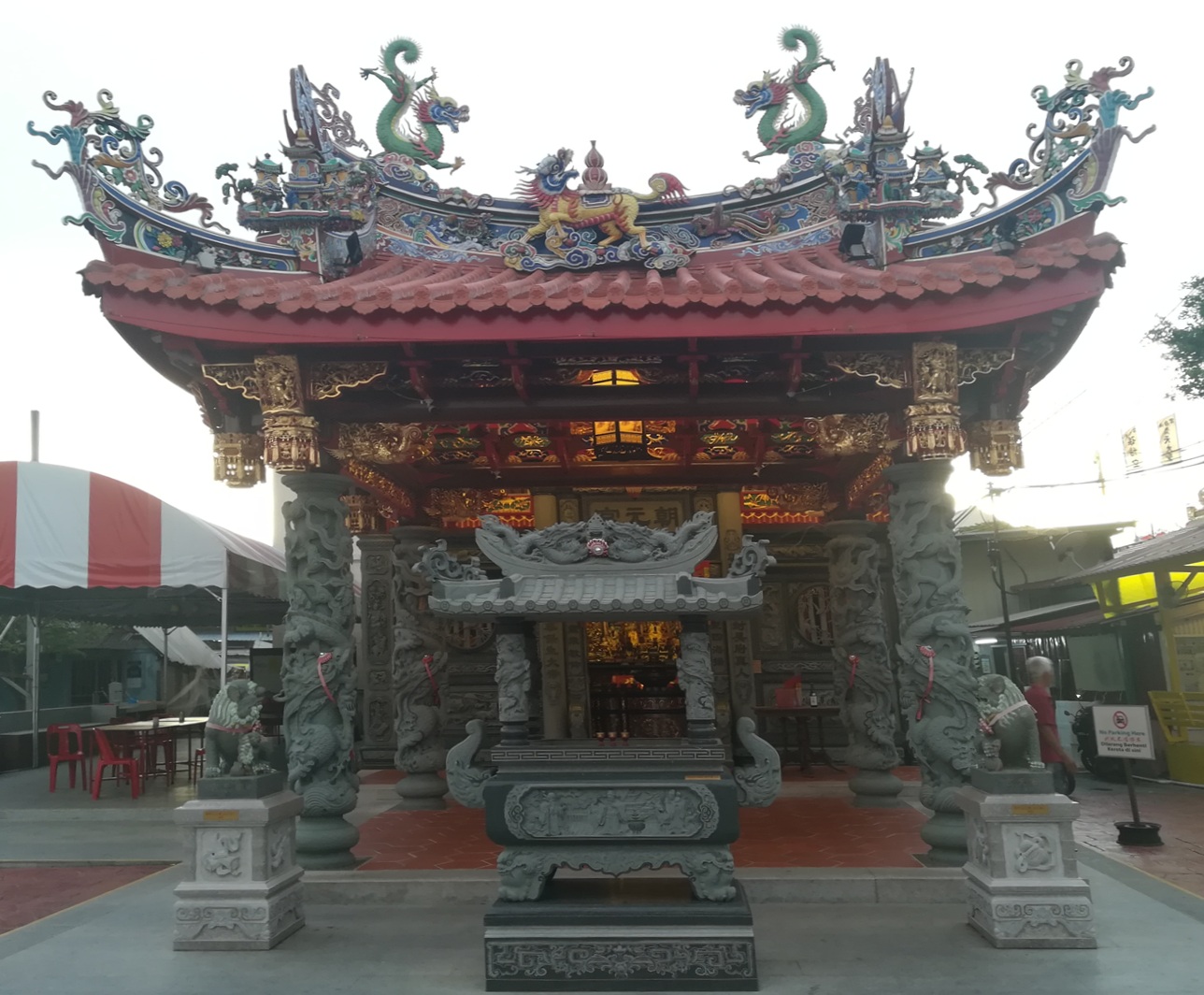
Temple in George Town. Just love the little creatures skitting about on the roof!
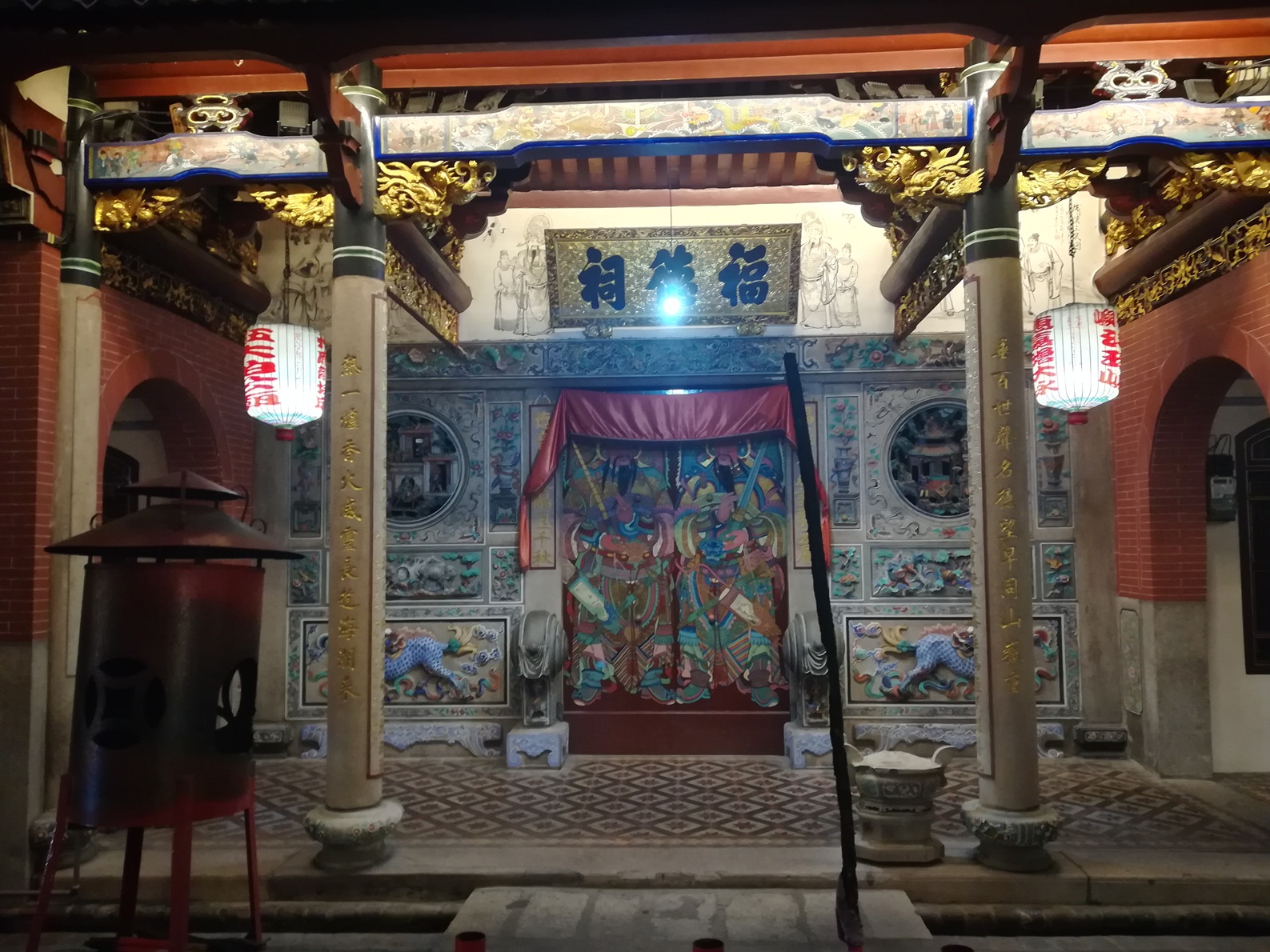
Chinese temple, George Town
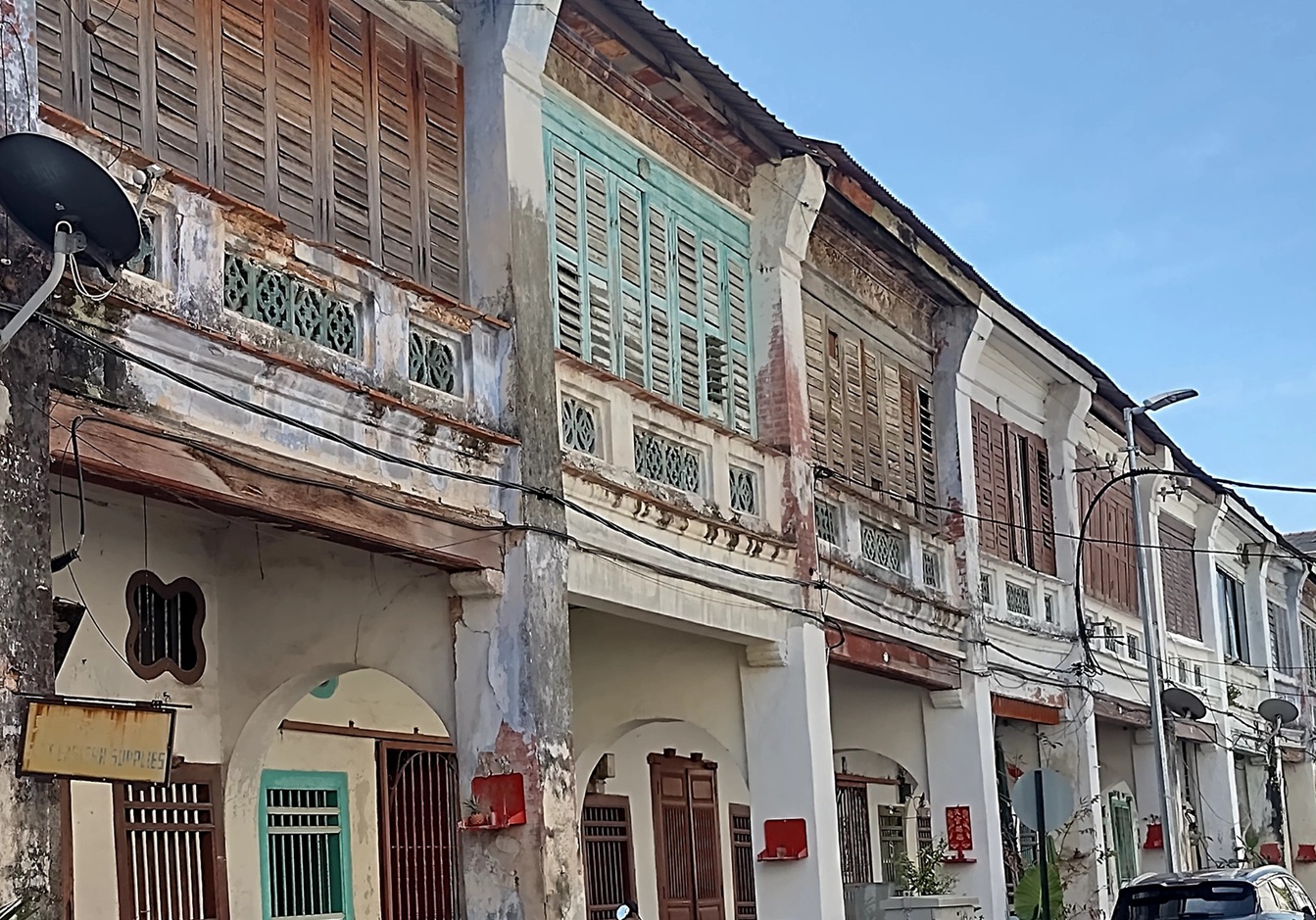
Houses in George Town
We walk the old town, the typical houses are rows of two storeys, with ground-level porticos. The Chinese clan houses are the most impressive, gaudy declarations of family importance, as they drew clan members to the town.
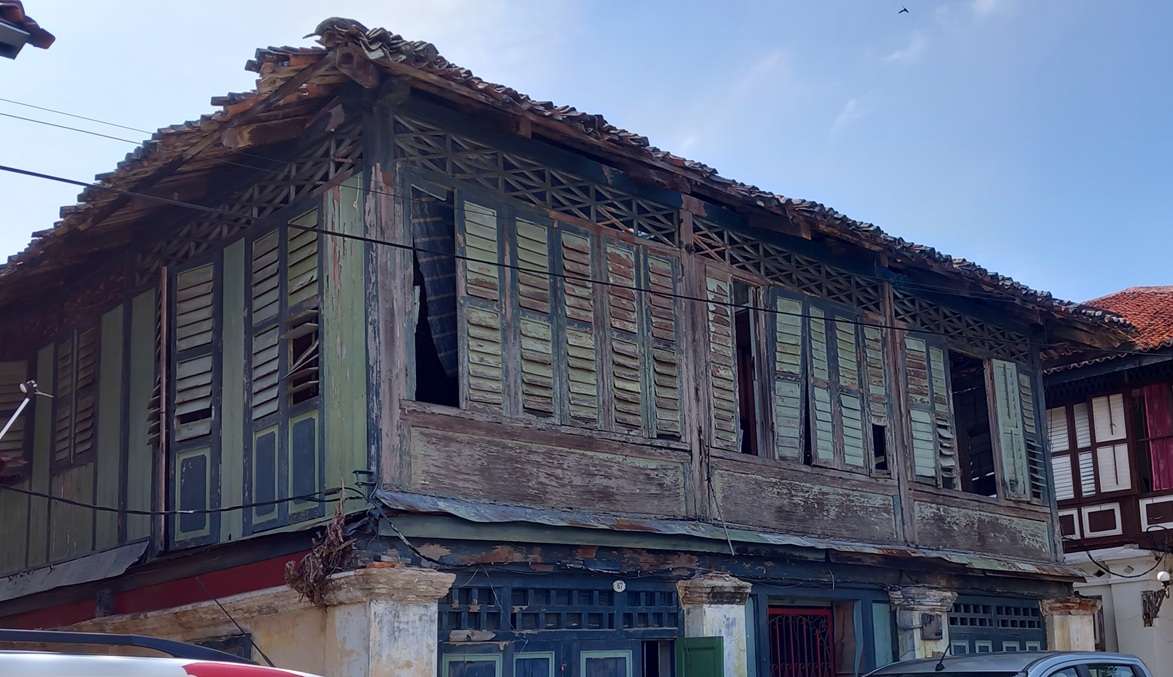
House in the historical centre of George Town, Penang
The streets are difficult to walk, since cars and motorbikes are parked right up to the inconsistently covered sewers and elevated curbs and gutters, and the porticos are usually impassable, blocked by columns, plant pots, seating or single motorbikes. Many houses announce their Chinese occupants by little shrines in front. Except for Little India, a group of 6 blocks, most of the town is Chinese, although we see signs for ‘Danger,’ electricity in 5 languages, Malay, English, Chinese, Thai and Hindi.
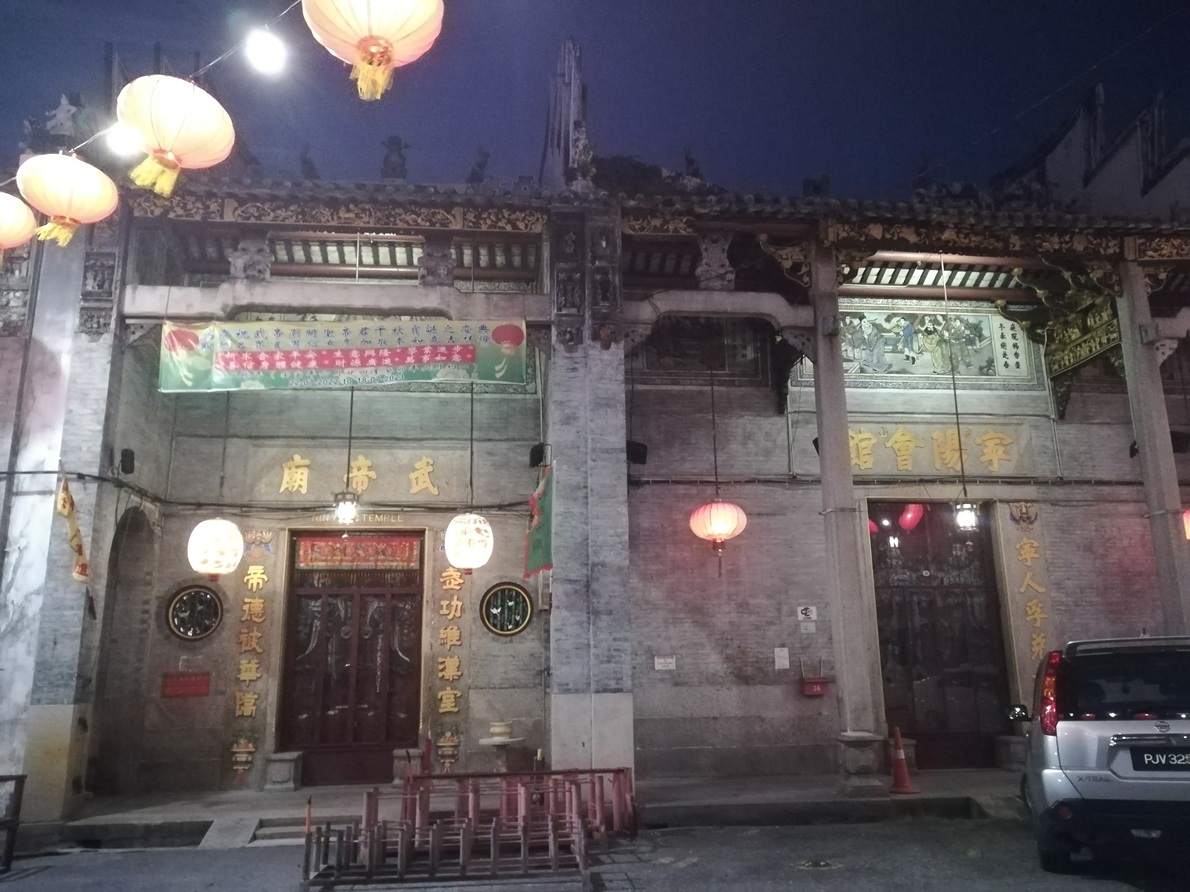
Chinese clan house
Kongsi is a Chinese term meaning “company”. Historically, kongsi could refer to a social association, partnership or institution. Chinese abroad used the word to refer to clan organisation, uniting people with a common descent, or dialect clubs. These district-dialect clubs were called wai gun. Kongsi were a means by which the diaspora could confront difficulties such as economic disadvantage, social ostracism, and oppression. They could grow to political and legal formations, based on mutual welfare and the logic of cooperation. Centered on such strong bonding mechanisms, China towns could develop in towns such as Melbourne and San Francisco.
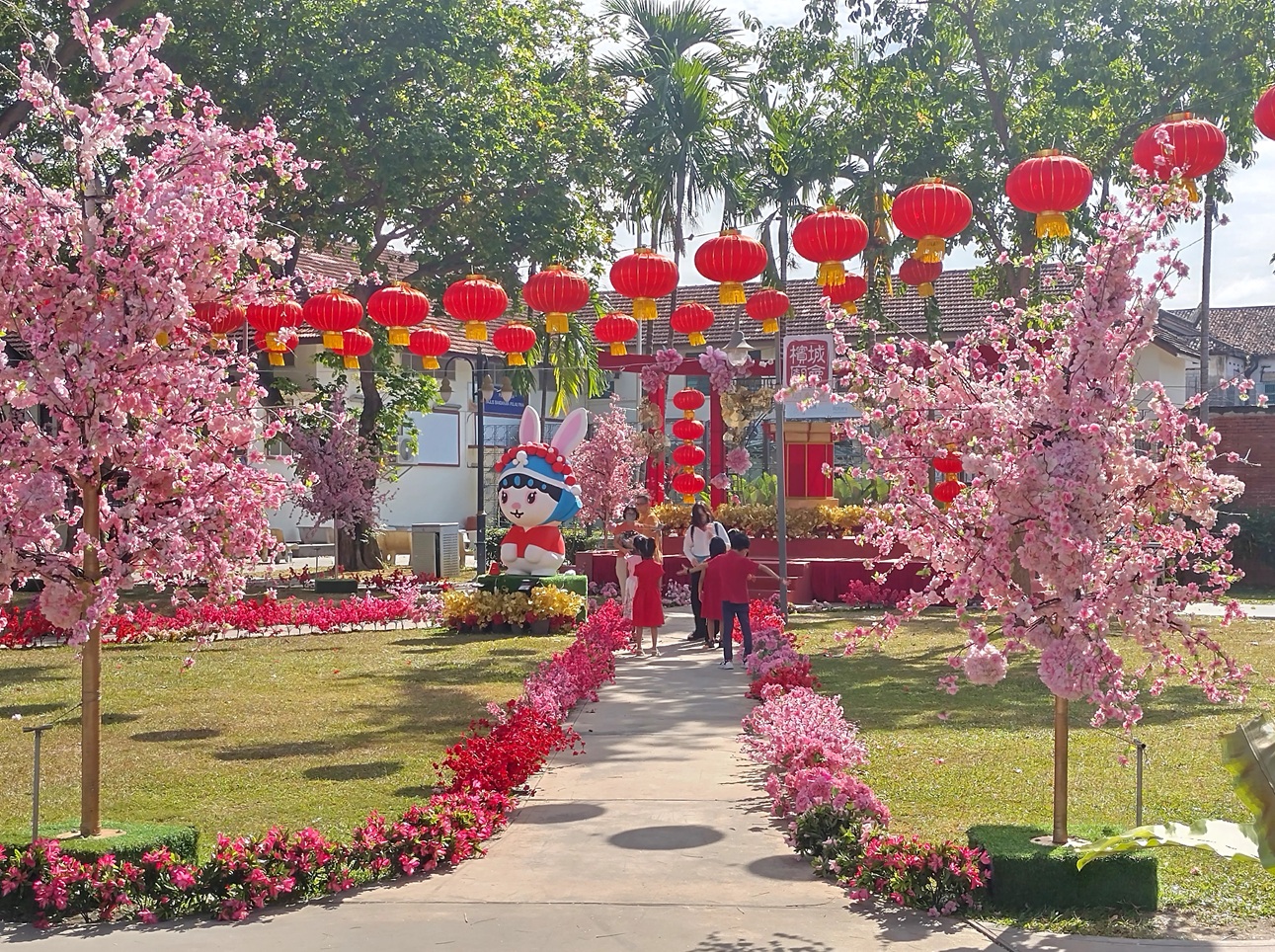
Park in blossom
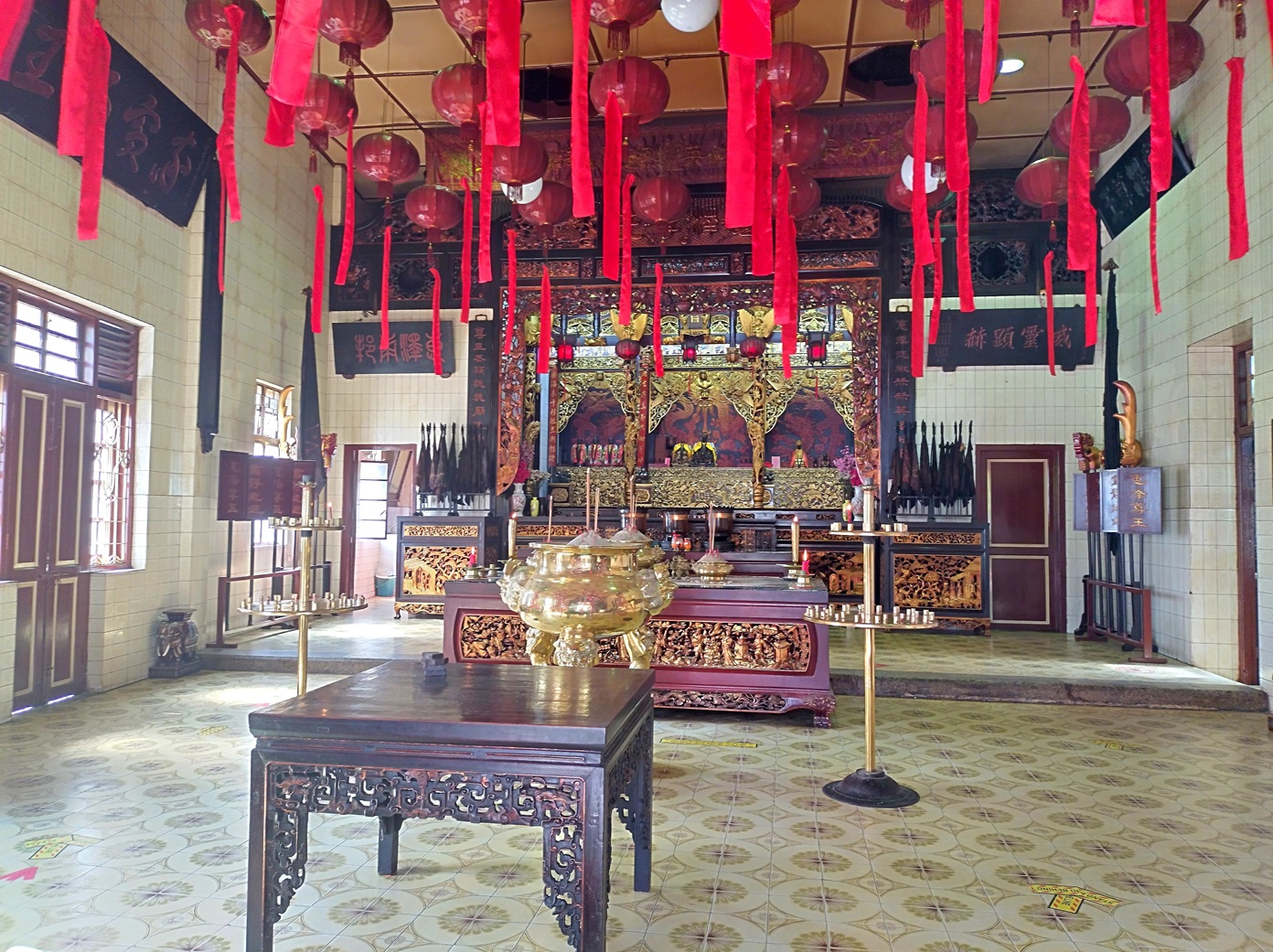
Chinese Temple interior
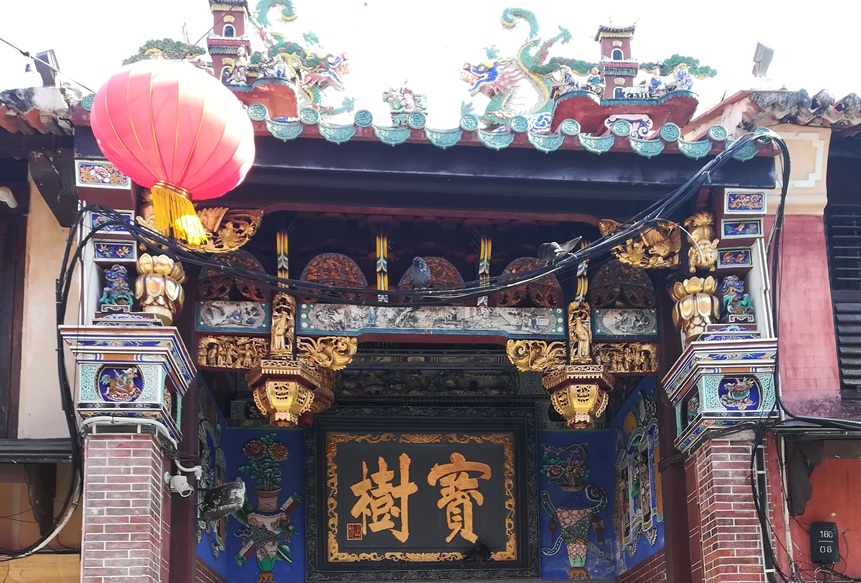
Chinese school entrance gate
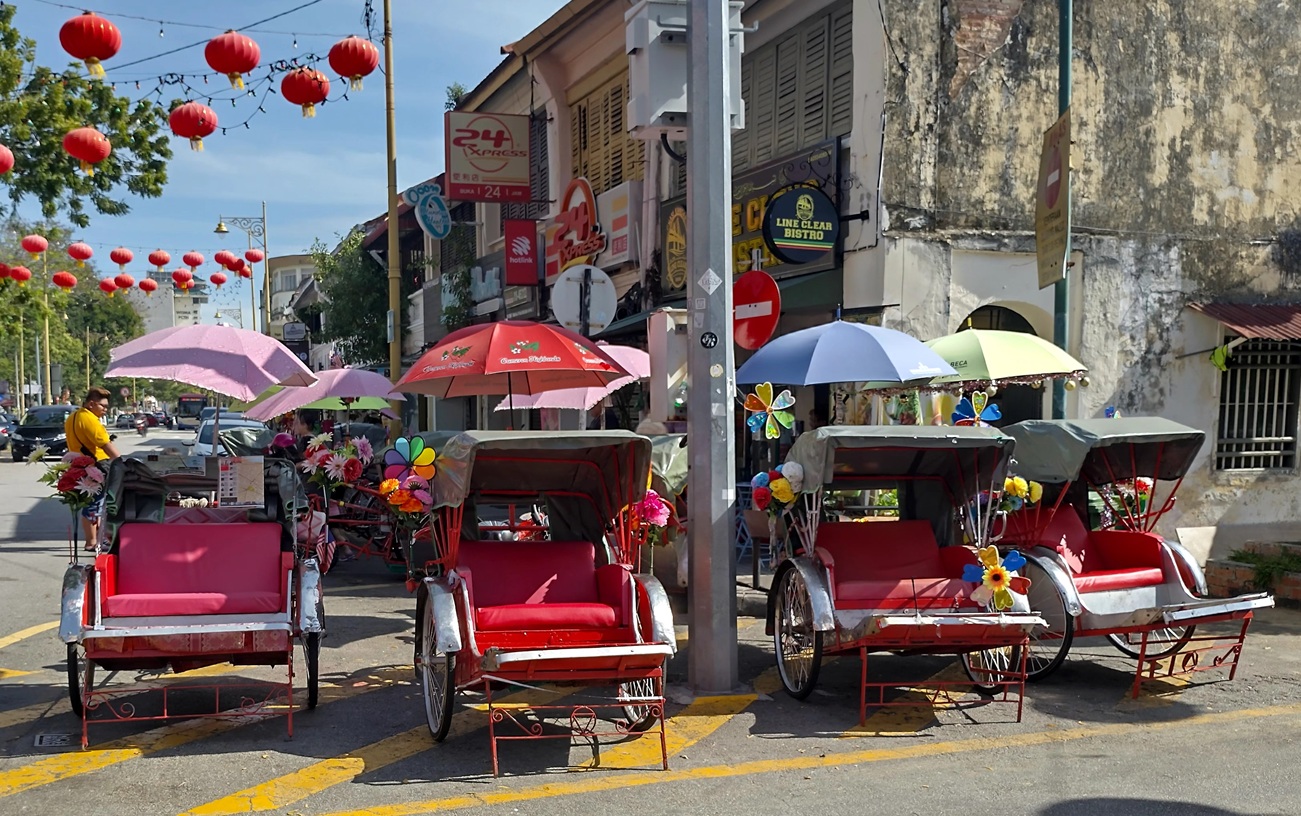
Rickshaws
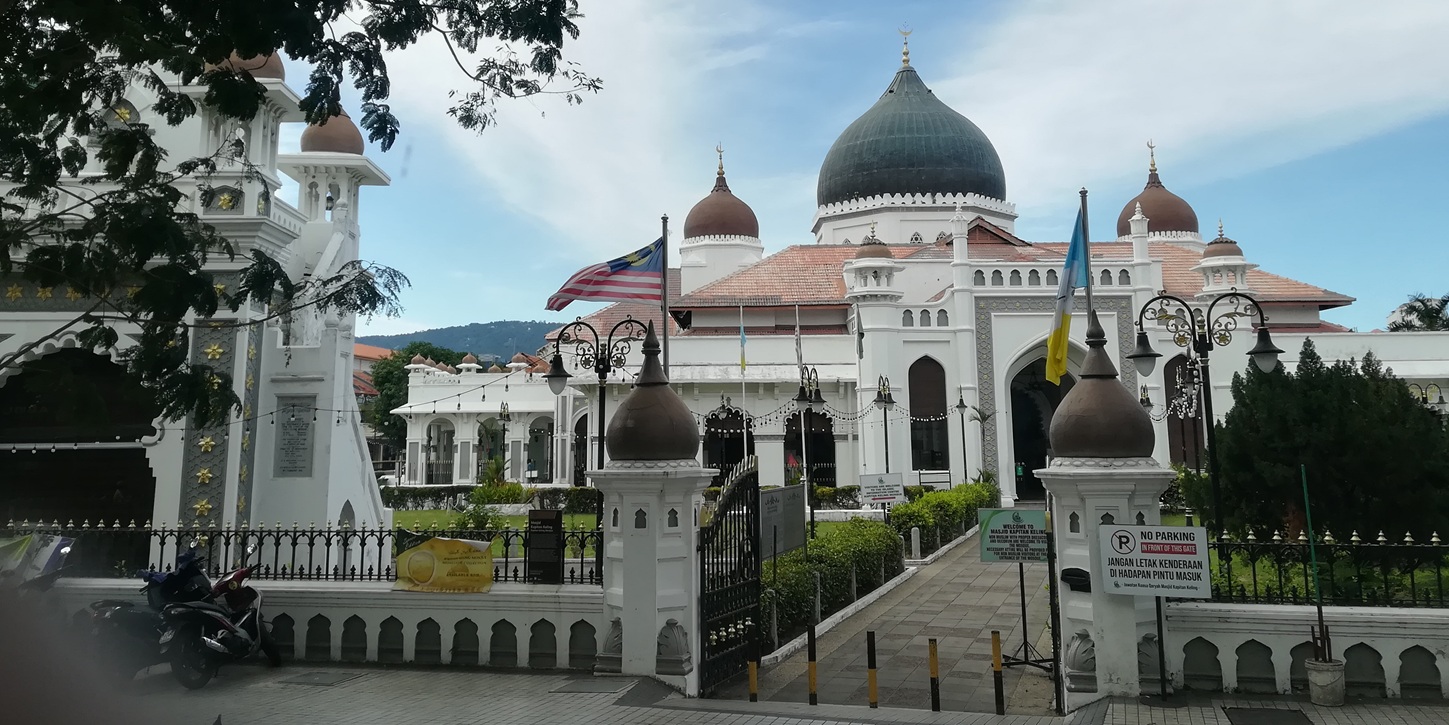
Kapitan Keling Mosque (Masjid Kapitan Keling), George Town
Built in the early 19th century by Indian Muslim Traders, the mosque is part of the World Heritage Site of George Town, located in the city’s Tamil Muslim district, known as the chulias. Keling was a Malay term for Indians, but is no longer acceptable.
We go to the ferry station to work out how it works, and to amaze at the giant multi-storey liners that have exchanged places at the docks. Each storey is a long row of cabins, each with their own balcony. A crane holding an observation sphere lifts some people high for a view over the town. We walk past the nearby Fort Cornwallis with its impressive ship mast on land and the lighthouse tower.
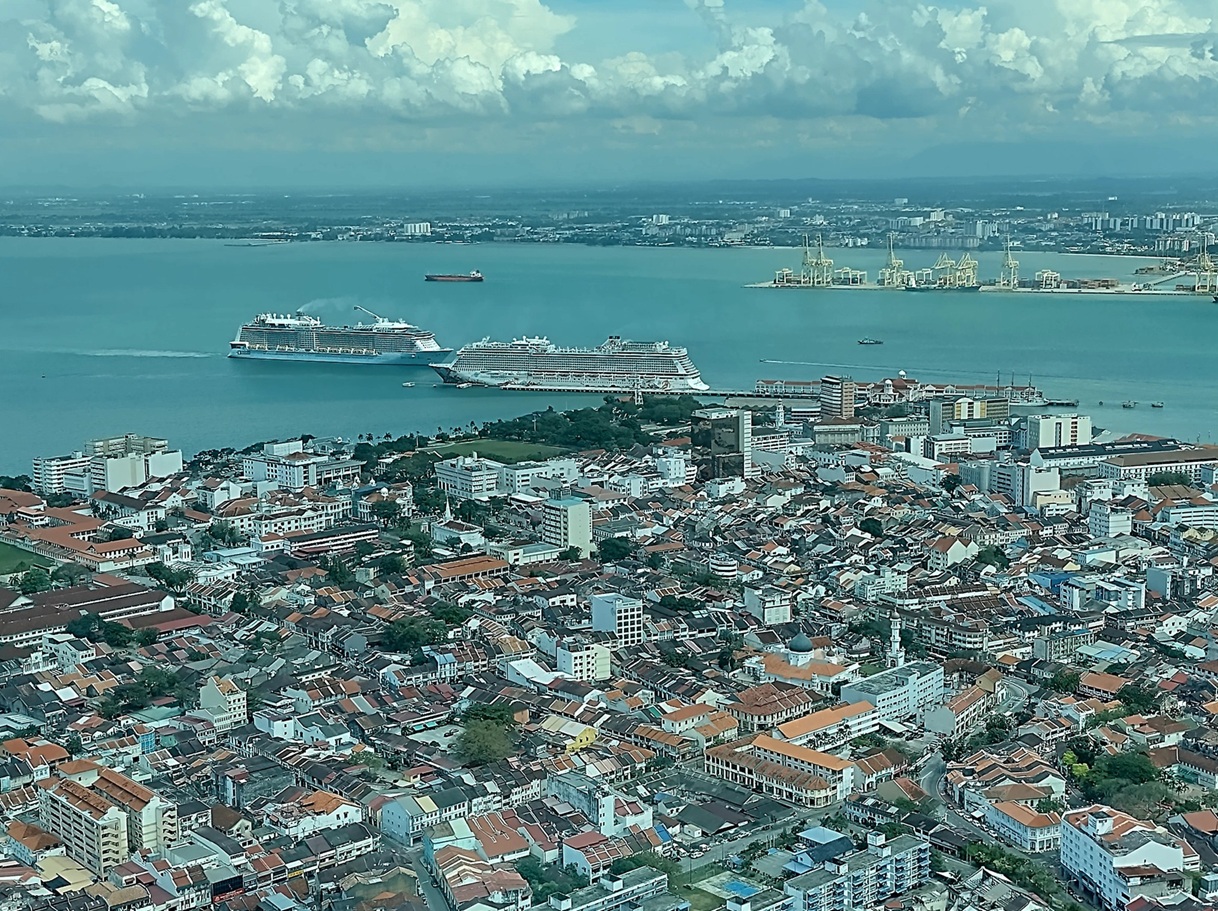
View to the east of George Town and harbour, from the Rainbow Skywalk
Daredevils can walk around the outside of the building tethered in by harnesses. Not for us, but a large group of loudly-adrenalised Asians is taking the challenge. We run into the young Turkish diving couple that we met on the minivan coming to Georgetown. They had been exploring the city as well and wondering what to visit next, also finding some attractions, such as the Habitat and Botanical Garden on Penang Hill, closed since Covid times.
A very large ocean liner is docked and a second arrives while we search in vain for the tiny ferry which traverses the 1km strait to Butterworth. This scene is extremely different in every respect to the sleepy town that I remember from my 1978 and 1986 visits. We leave the tower and use the CAT (city transit) buses, which do a figure-8 kind of tour around the old town and are free (hop-on-hop-off). We are peckish by 15:00, after getting info about the ferry (8:30, 9:30, 10:30 – 10 minutes) to Butterworth, so we stop in for a delicious Vietnamese multi-course snack. Rating 5 yums!
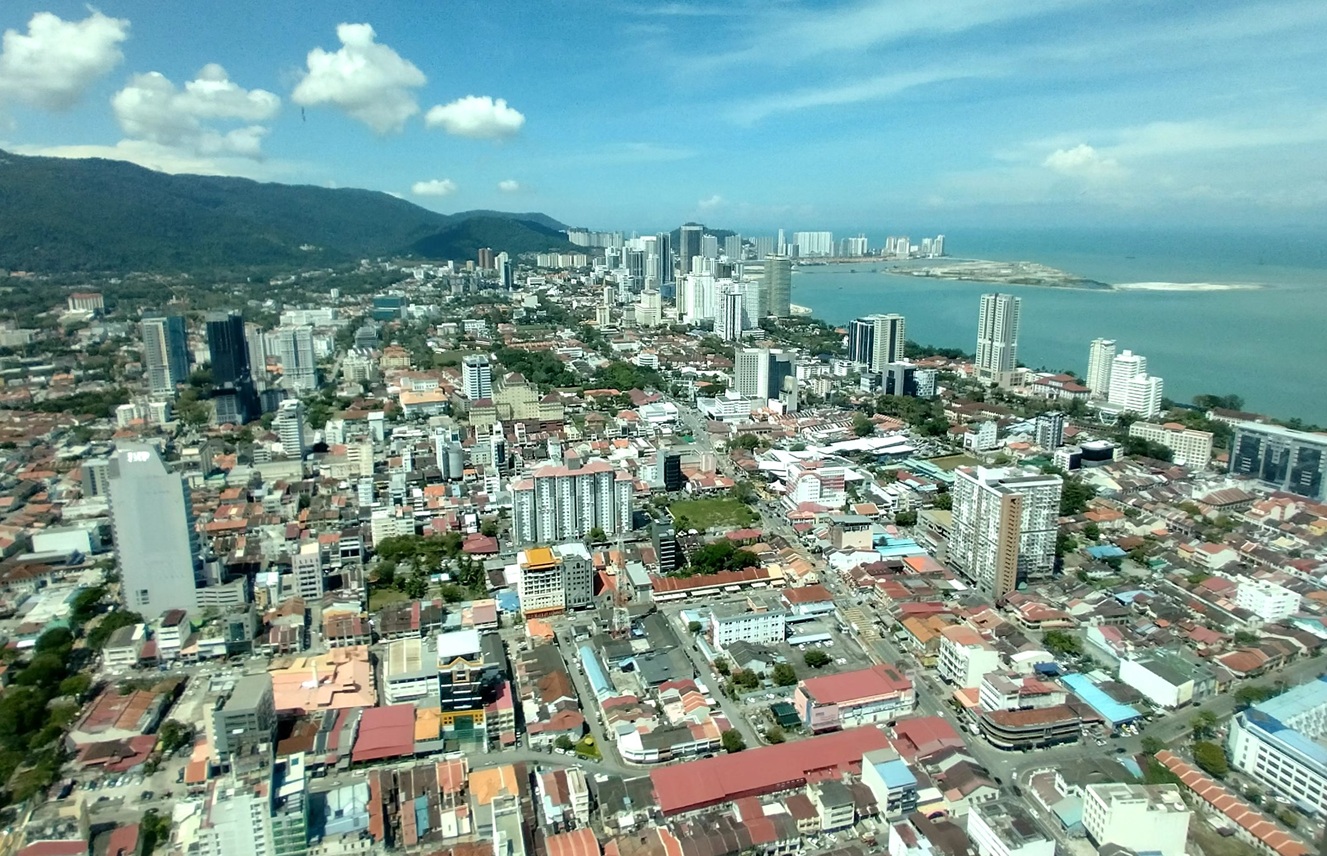
View to the north of George Town, from the Rainbow Skywalk
We take a bus to the KOMTAR tower, a cylindrical highrise dominating the city on the border between the protected UNESCO area and what they call the ‘buffer zone,’ which have similar buildings in amongst more modern development. After a search for the entrance we ascend to the ‘Rainbow Skywalk.’ Here we see the clash between heritage/identity and the drive to consumerism/development in crowded thoroughfares beneath skyscrapers and glitzy new department stores.
From the 66th floor we have a magnificent view of the city, 360°.
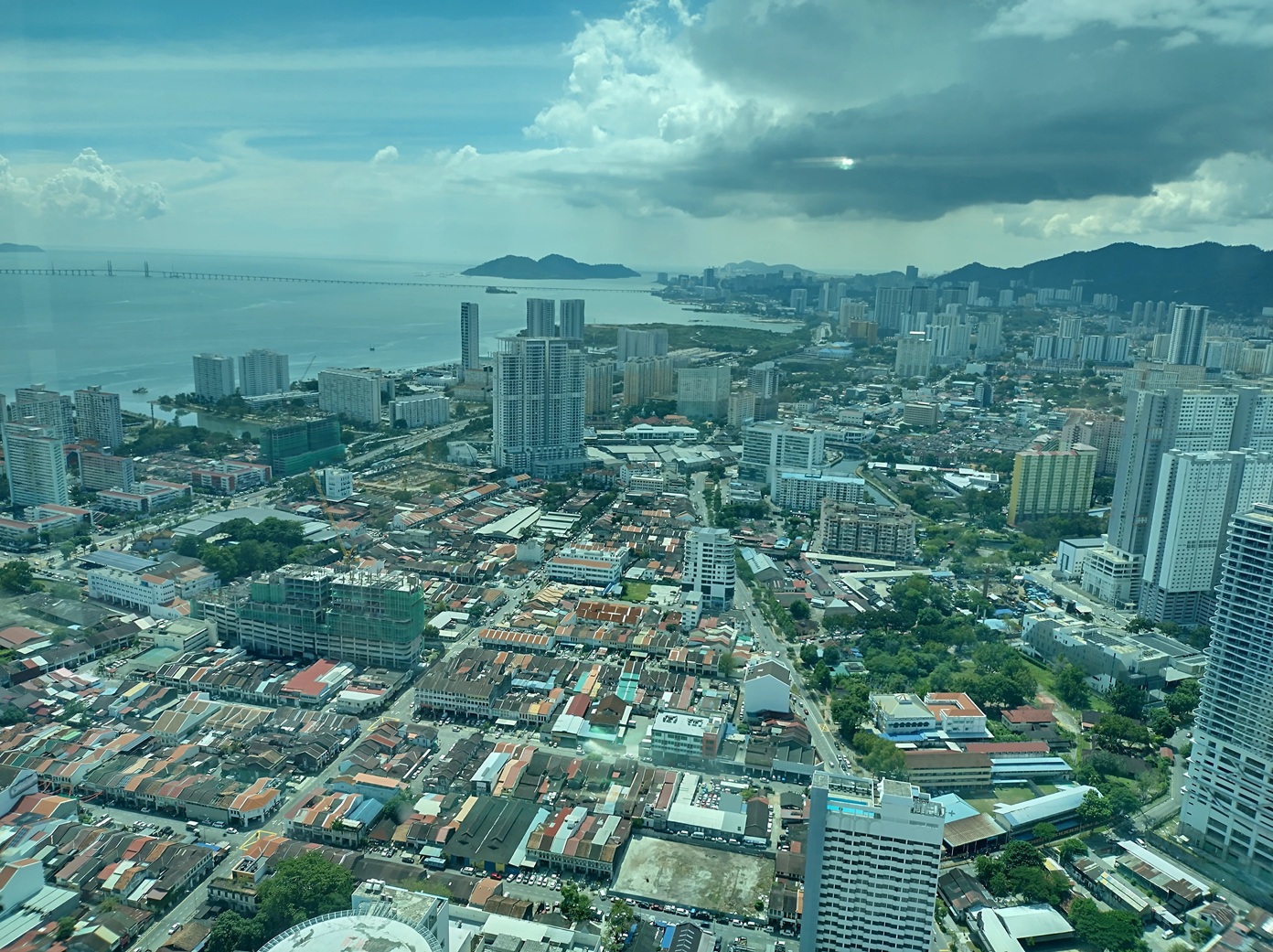
View to the south of George Town, with the bridge, from the Rainbow Skywalk
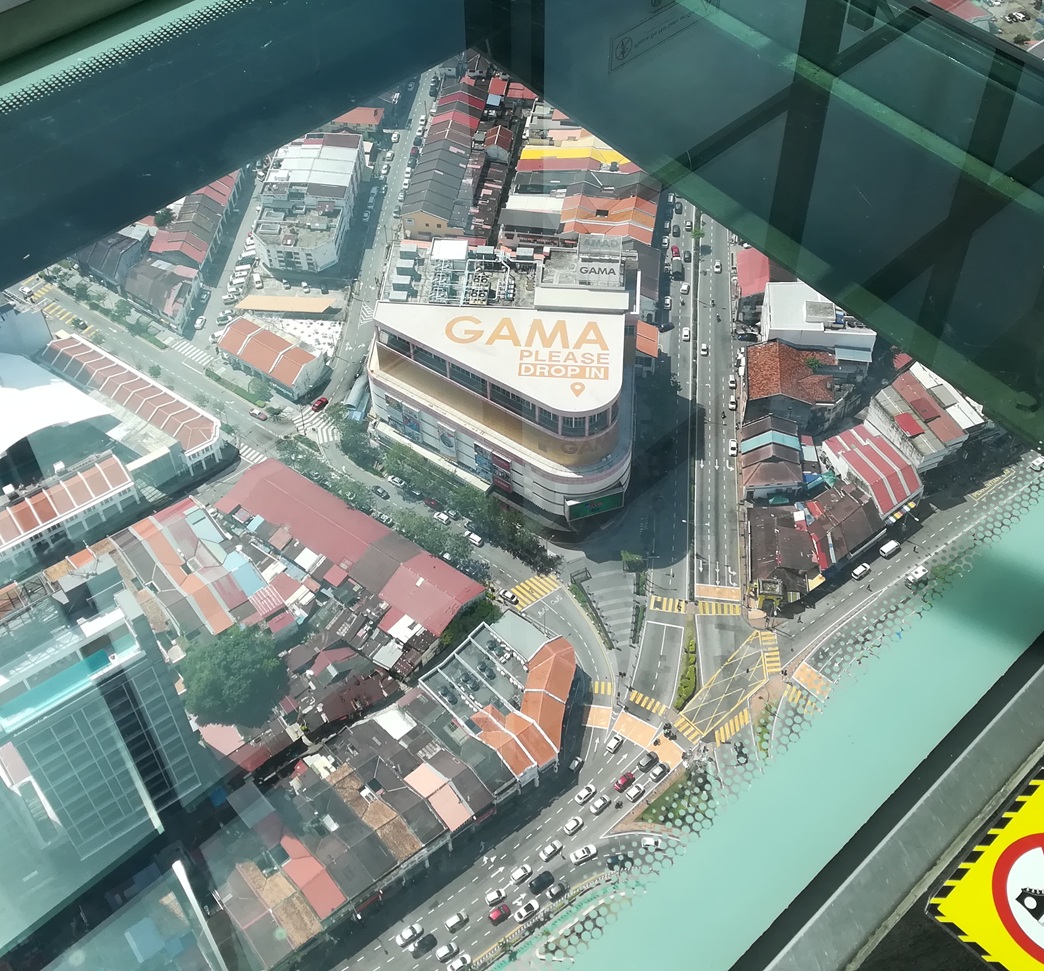
“Gama: Please Drop In”: An amusing advertisement targeting the daredevils who brave the outside route of the Rainbow Skywalk.
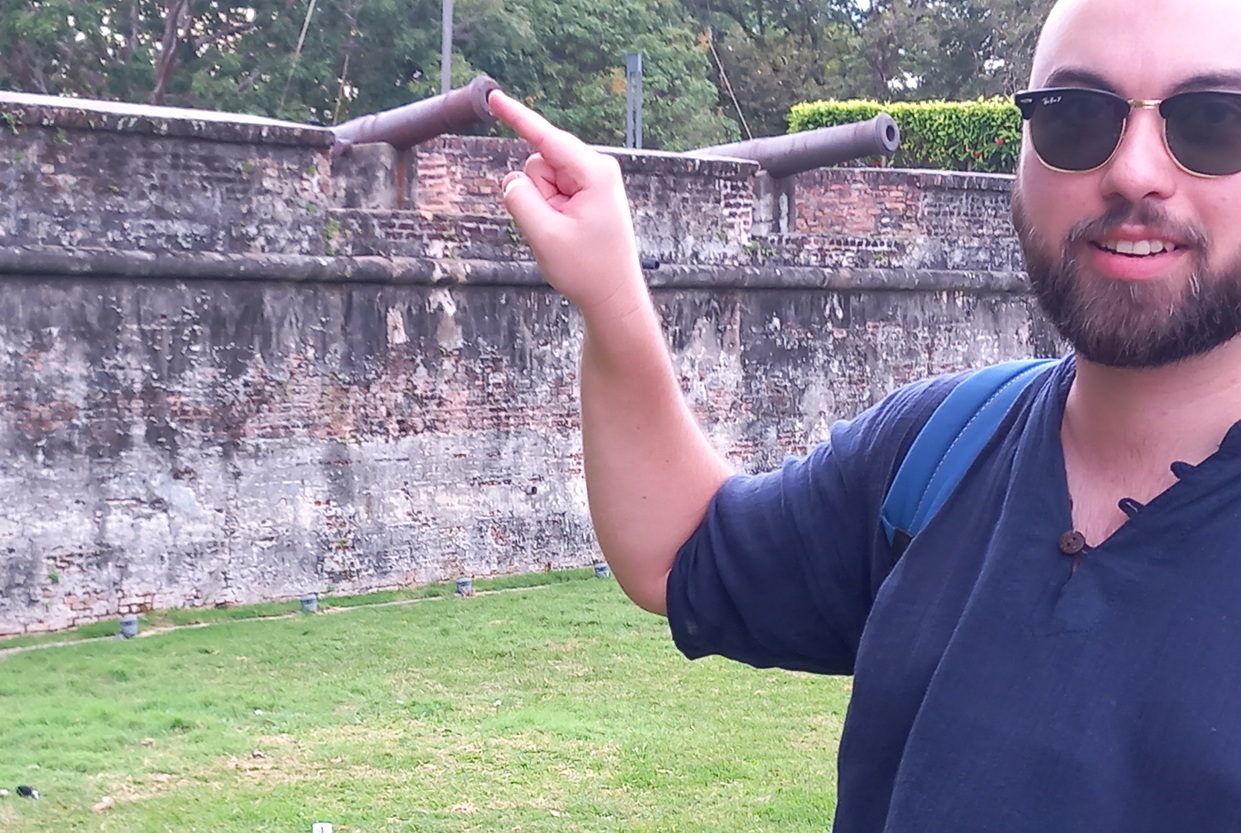
Sean Bone at Fort Cornwallis
Lieutenant-General the 2nd Earl Cornwallis (1738–1805), was the Governor-General of Bengal at the time this, the largest standing fort in Malaysia, was built in 1786. The original fort was a nibong, which is Malay for ‘palm trunk’, a stockade with no permanent structures, covering a mere 38.8 m2. It was designed to protect Penang from pirates.
During the Napoleonic Wars, in 1804, Indian labourers were employed to rebuild and extend the fort in brick and stone. The moat was filled in in the 1920s, to prevent malaria outbreaks. It has been used variously as a Supreme Court and to house the Sikh police of the Straits Settlements.