Thailand-Malaysia 2023
Day 12: Thursday 12 January 2023
Kuala Lumpur, Malaysia
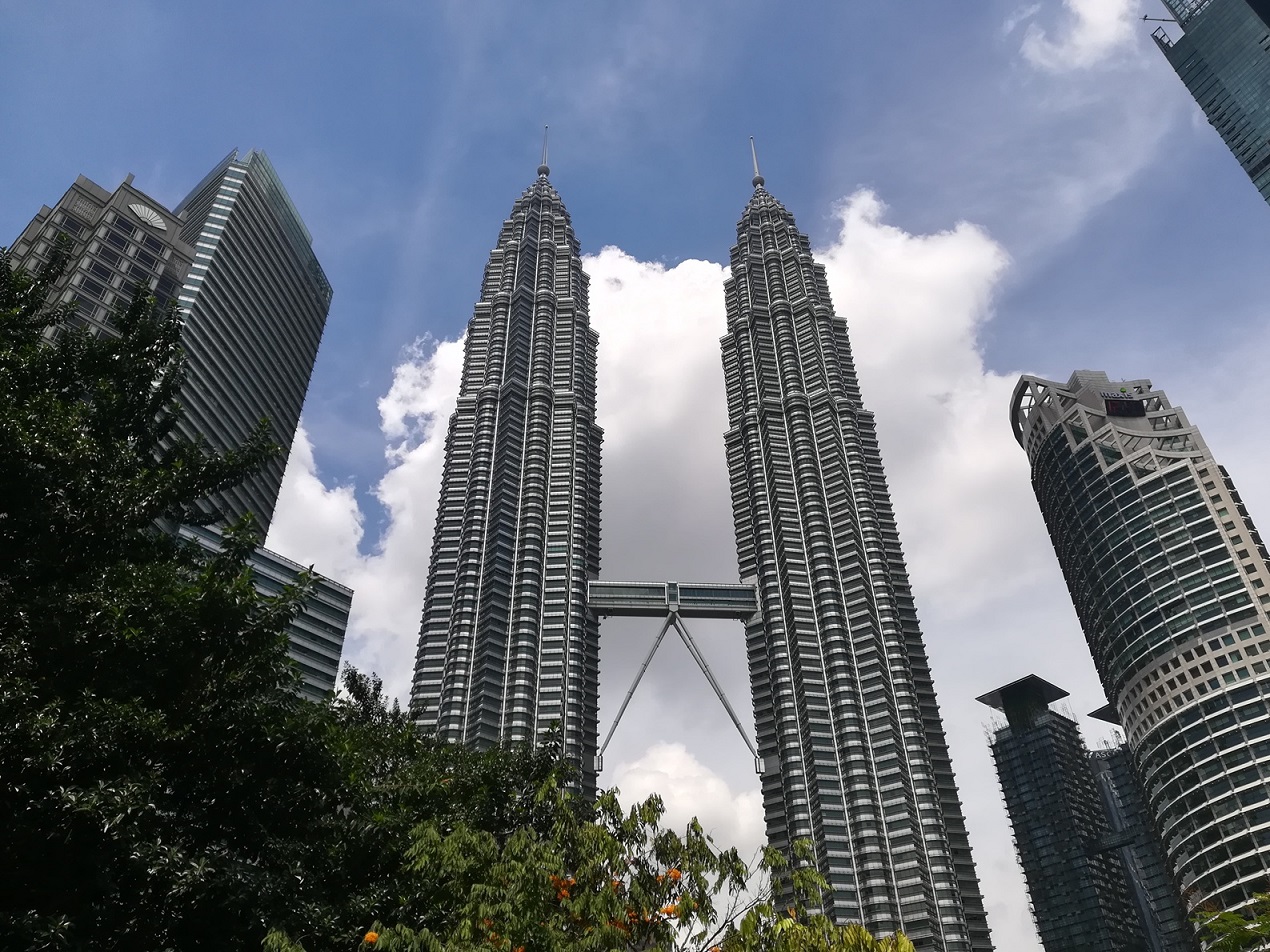
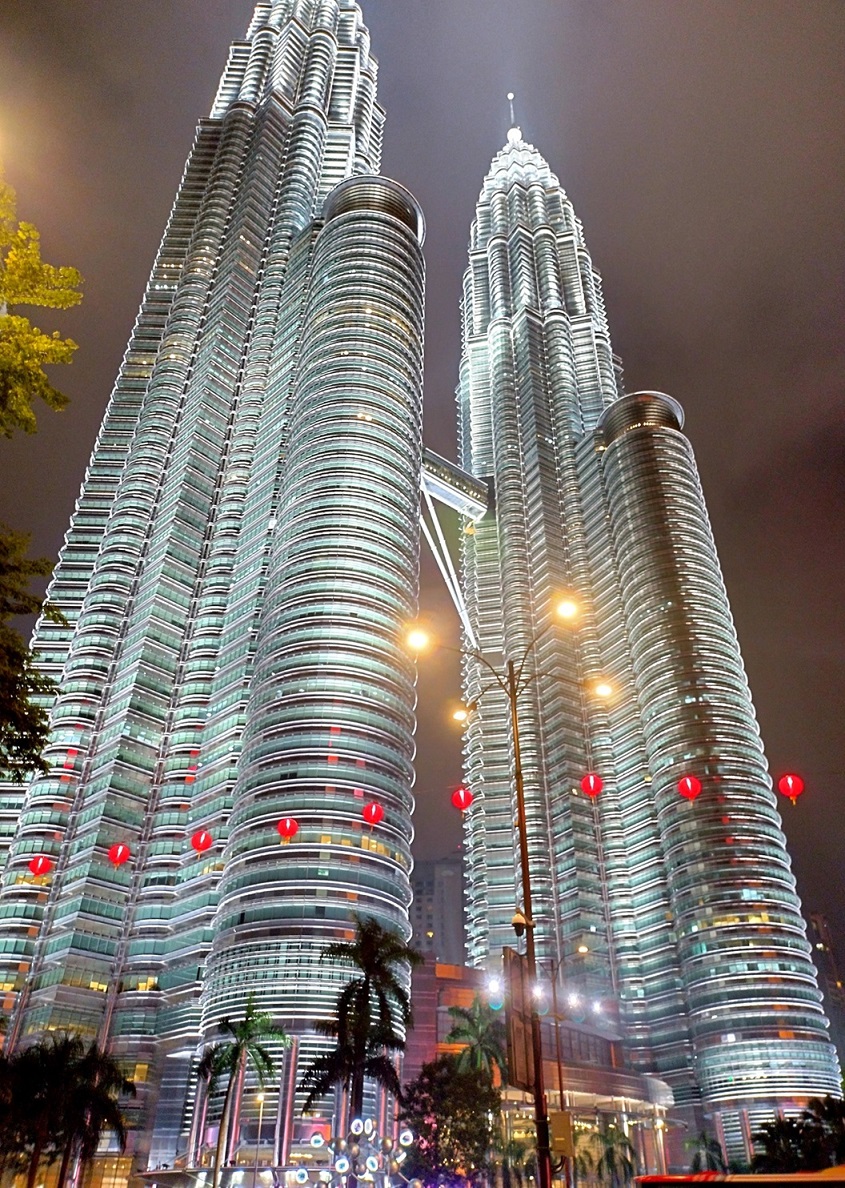
Petronas Twin Towers
One of the Islamic influences on the design is the cross section based on a Rub el Hizb, combined with circular sectors similar to the bottom part of the Qutb Minar. (see notes below)
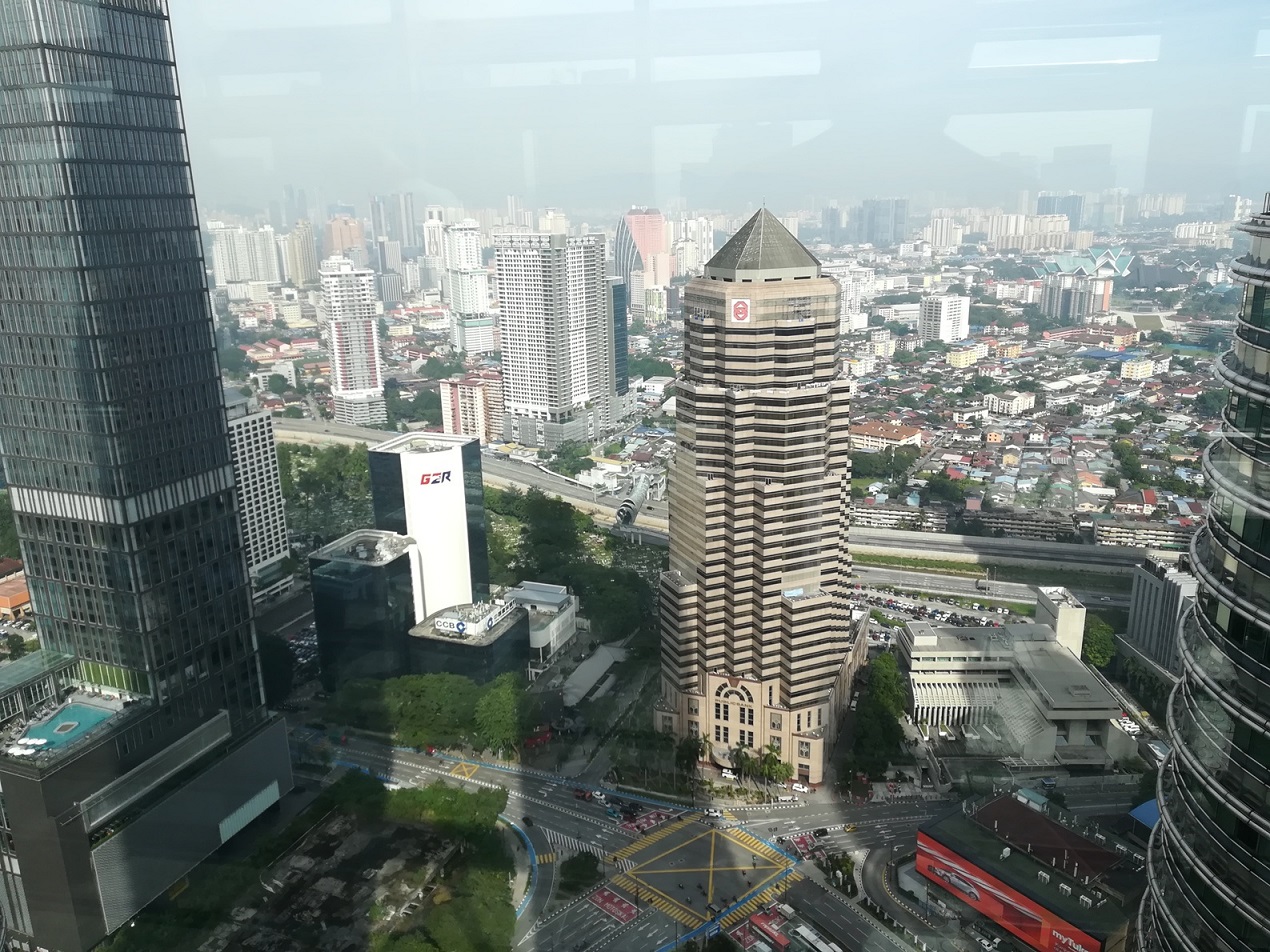
View during ascent of the Petronas Twin Towers
Groundbreaking was 1 January, 1992. The buildings were completed in June 1996, after four and a half years of construction.
The buildings opened in August 1999, and underwent renovations in 2011. the cost totalled 1.6 billion US dollars.
I passed through Kuala Lumpur in 1986, and remember a much smaller city.
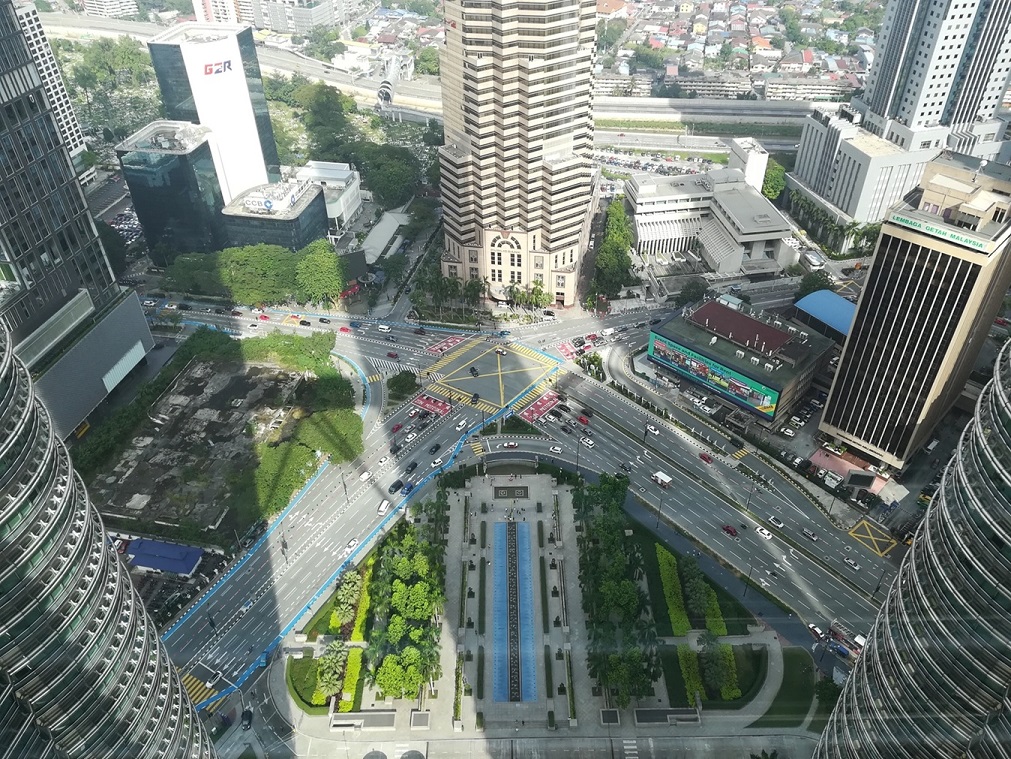
View from the walkway connecting the Petronas Twin Towers
We arrive at the Petronas Twin Towers at 9:30am, get our tickets and begin the guided tour at 10:00. They take a 15 person group to the 41st floor (170m) where there is a walkway between the two towers.
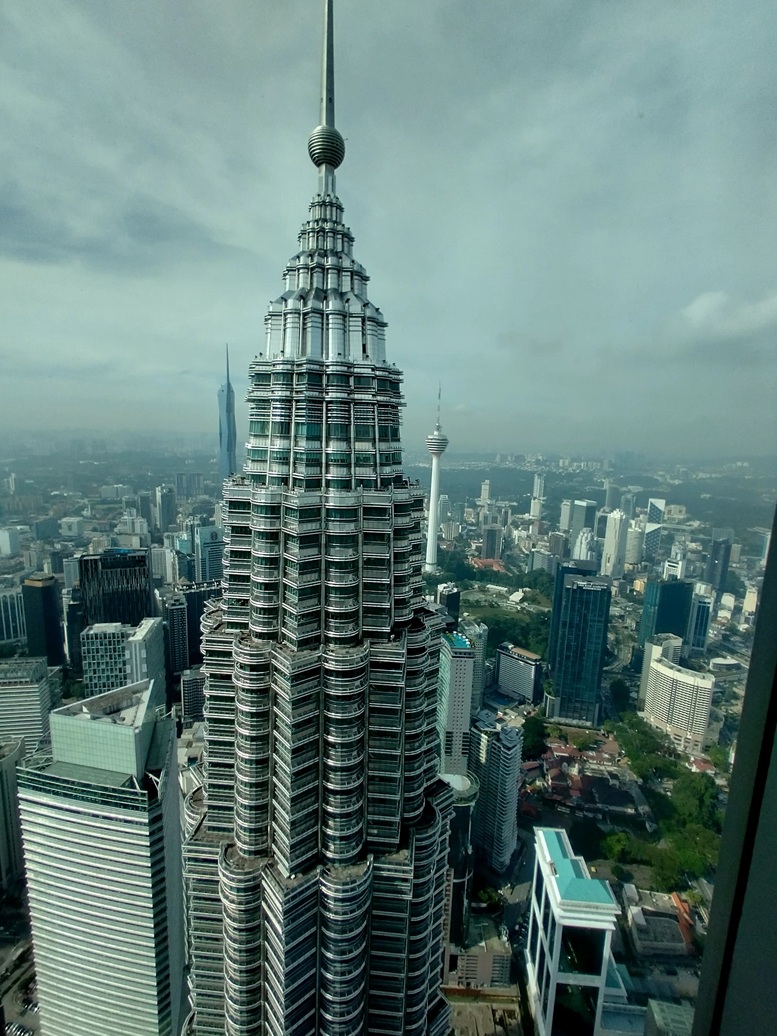
View during ascent of the Petronas Twin Towers
The tip is 451.9m above street level. Its design is a tube-in-tube system. The towers have 88 floors each, with a steel and glass facade around a mainly reinforced concrete core.
The beauty of the structures can be attributed to the design utilising motifs found in Islamic art. (see notes below)
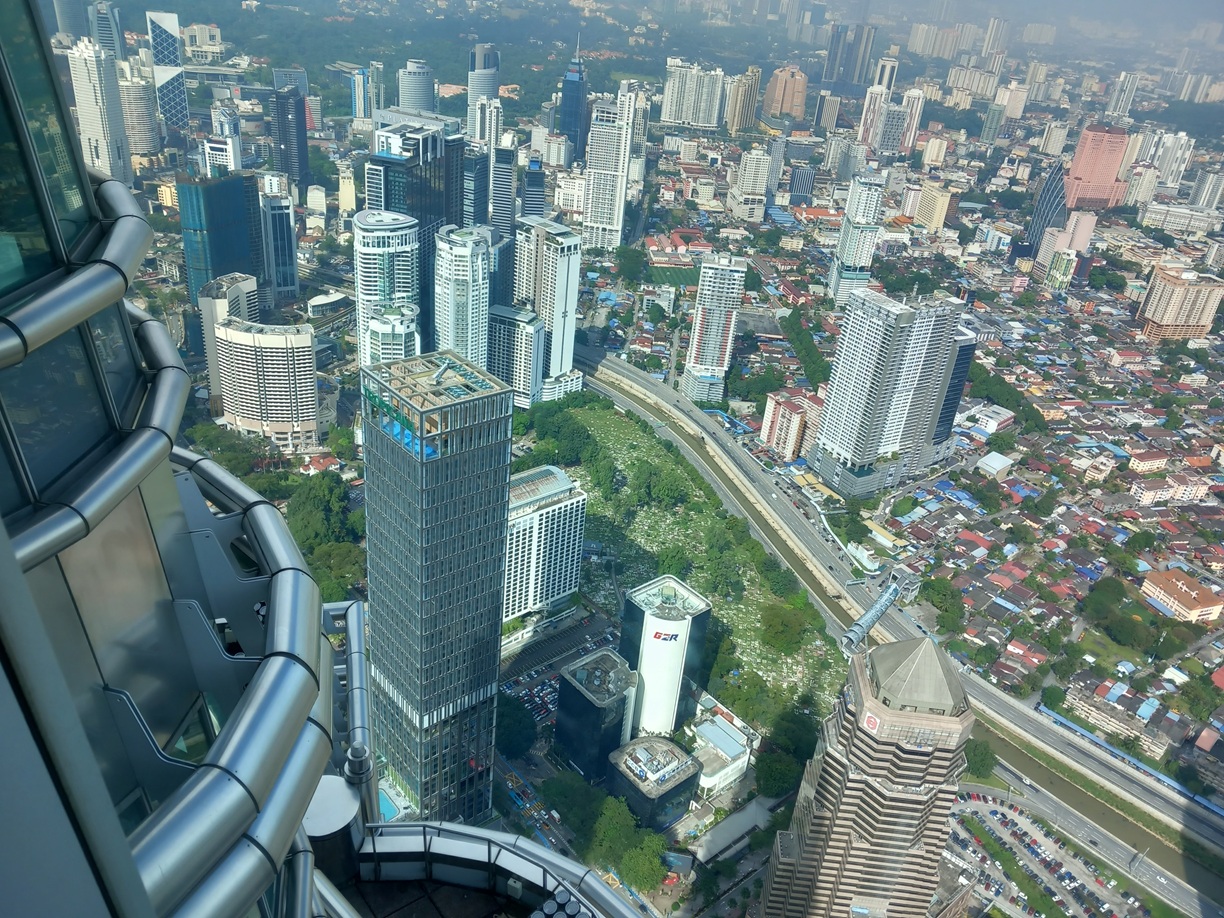
View during ascent of the Petronas Twin Towers
After a short stop on the 84th floor for merchandise, we descend again to the 1st floor. Security was strict, and we weren’t allowed liquids. There were some Ozzies in the group, and a Berliner who was pleased to speak German with me, telling me of his Australian fiancée.
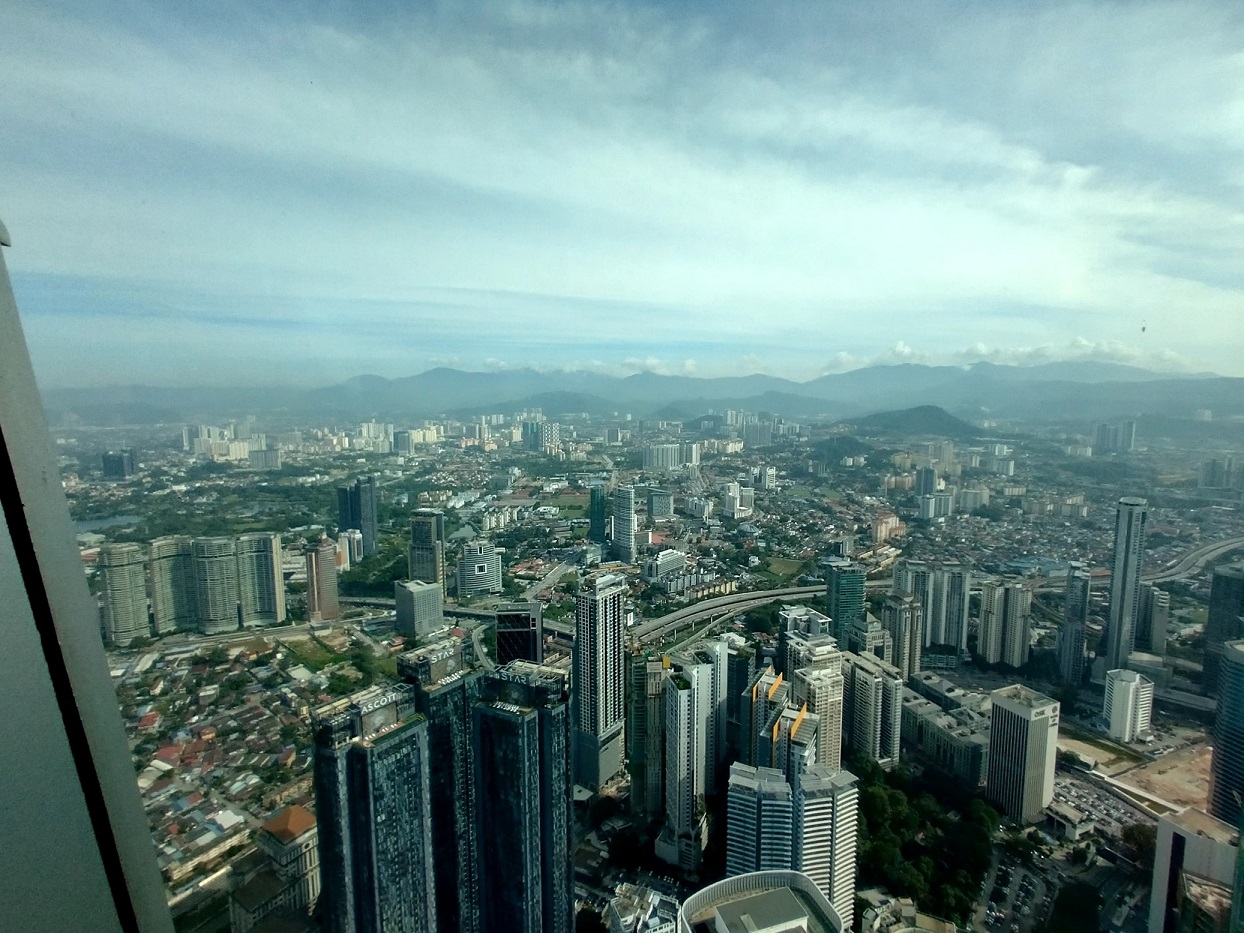
View during ascent of the Petronas Twin Towers
Then we ascend to the 86th (my preferred interpretation is that this is in commemoration of the year, 1986, that Andrew Bone last visited KL) floor at 370m for a spectacular view all around. Smog in the distance, and a ring of mountains places KL in a wide valley basin.
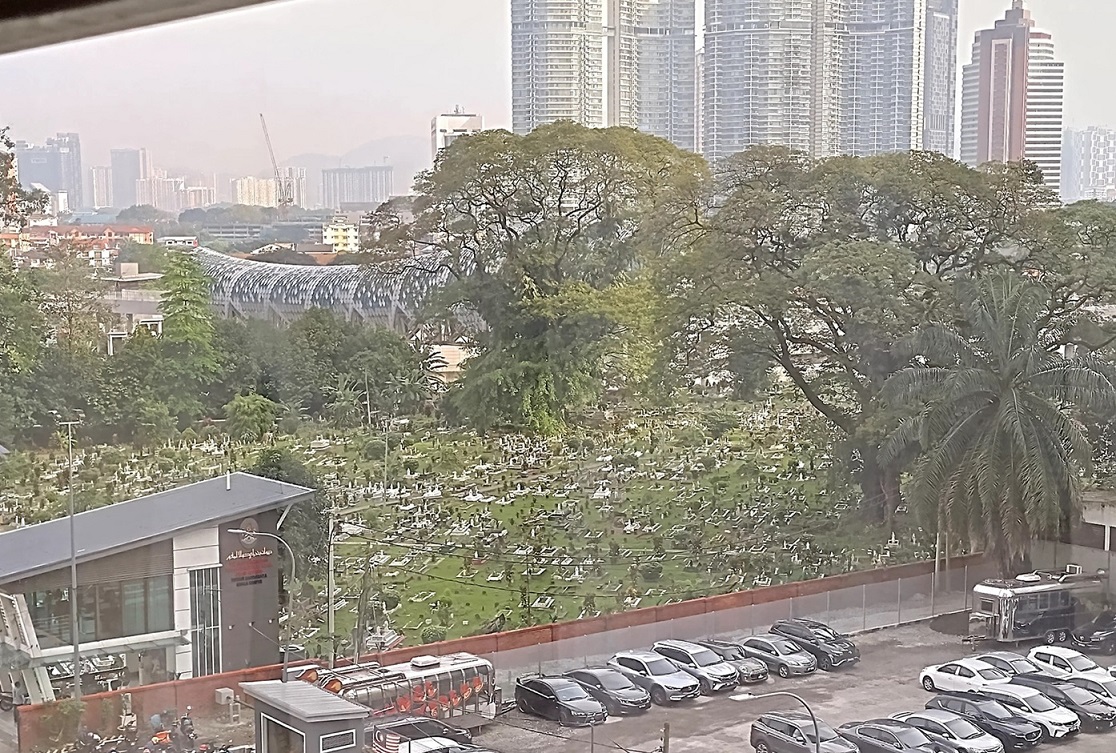
View from our hotel window, showing the old cemetery
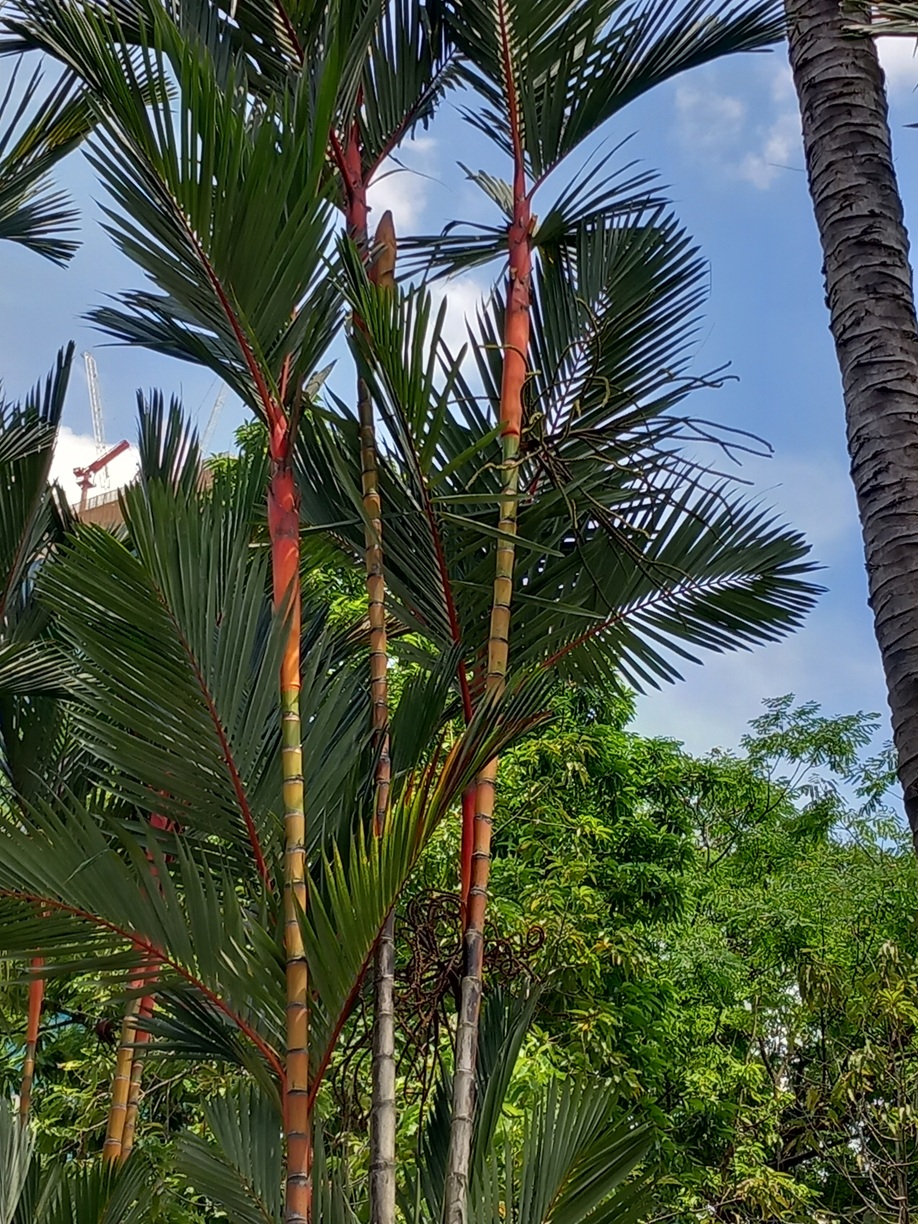
Bird Park, Kuala Lumpur
We eventually found the Hop On Hop Off bus, not an easy thing to do in the chaos of buses, taxis and general traffic, and lunchtime stands being set up on any available space. We had an early lunch in an arcade restaurant to avoid the 12:00 stampede which we pushed through on the way out. It was interesting watching people, business people, eat without forks and spoons.
The bus took us on a grind through the traffic, and at one stop, a garden of some kind, we had to wait for another bus because our’s had a flat tire.
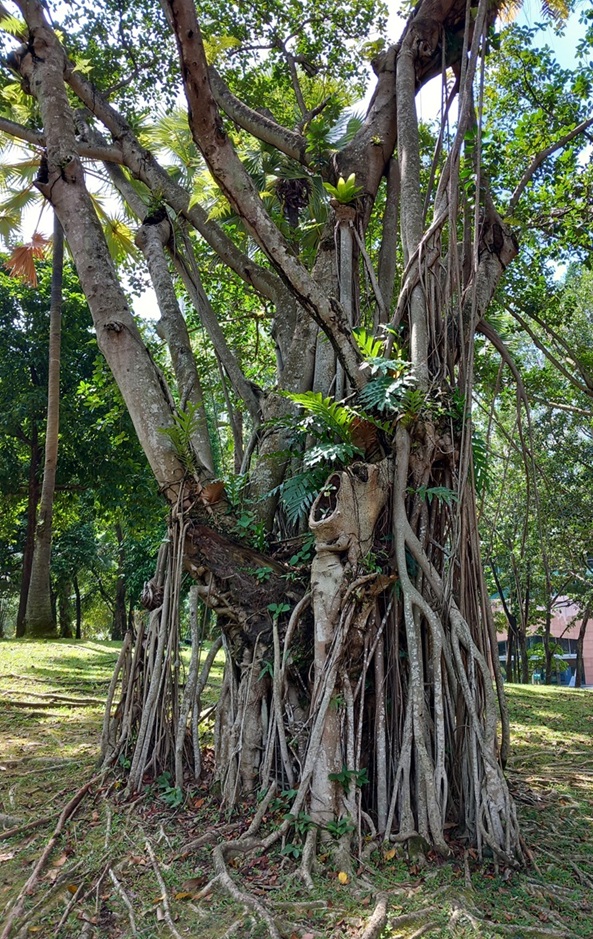
KLCC (Kuala Lumpur City Centre) Park
Adjoining the Petronas Twin Towers complex. It was designed by the Brazilian architect, Roberto Burle Marx. The stated aim was: “To leave the world a little more sensitive and a little more educated to the importance of nature”. It certainly achieved its purpose, situated in the heart of a busy, polluted city.
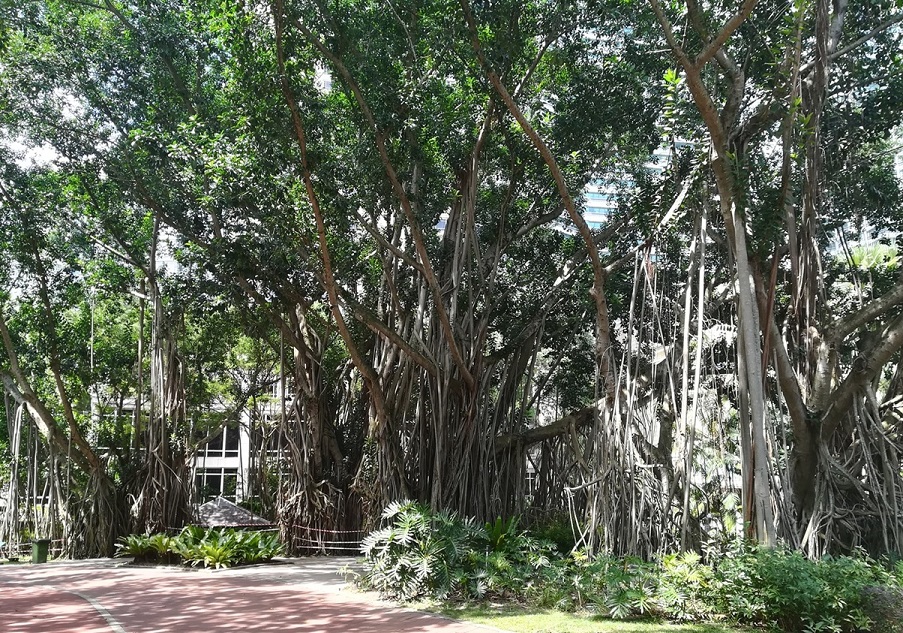
A cluster of native trees in the KLCC Park, downtown Kuala Lumpur.
An illusion of space has been created cleverly via use of a combination of plants, sculptures and exploitation of topography. An aim of the park is to promote awareness of conservation and bio-diversity. 23 rare specimens were transported to the park from the old Selangor Turf Club. 1900 indigenous trees and 66 species of palms were planted in the park. Local and migratory birds frequent the park, as a result.
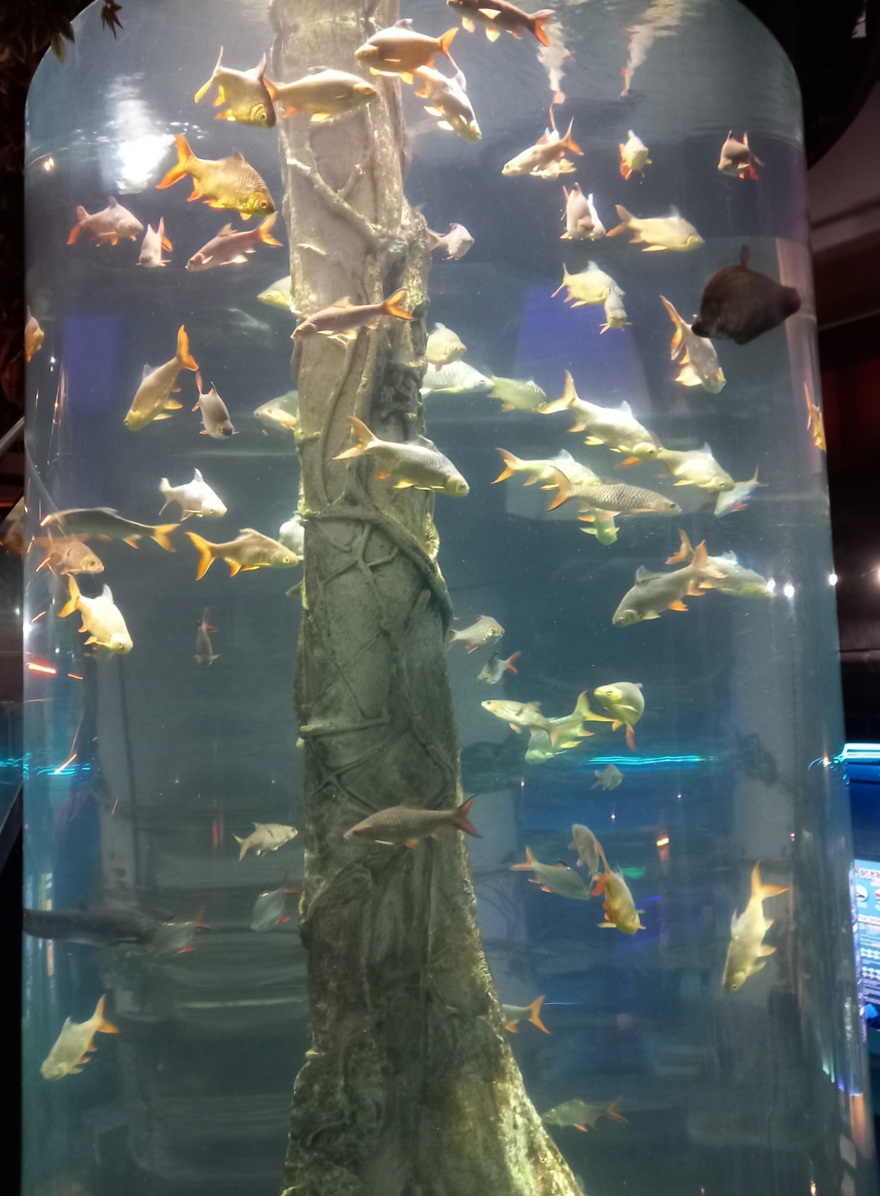
Before taking the bus we visited the Aquaria, and viewed many tropical fish, frogs, scorpions, sting rays, and freshwater fish, turtles and sharks. A tunnel under the sting ray tank had a slow-moving conveyor belt which allows visitors to gaze upwards while moving through. Later we spy a Chinese market from the bus and vow to return tomorrow.
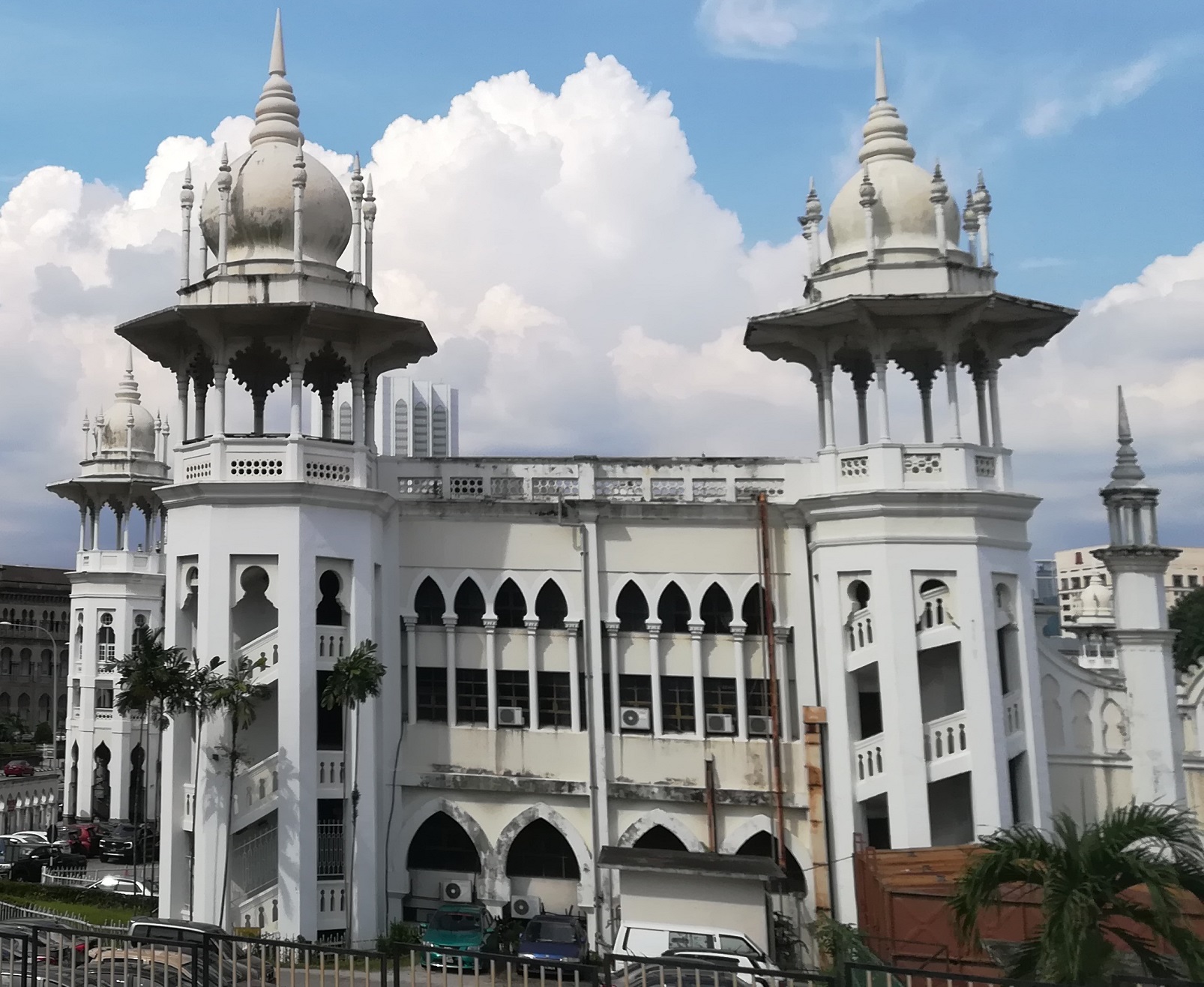
Kuala Lumpur railway station, 1910.
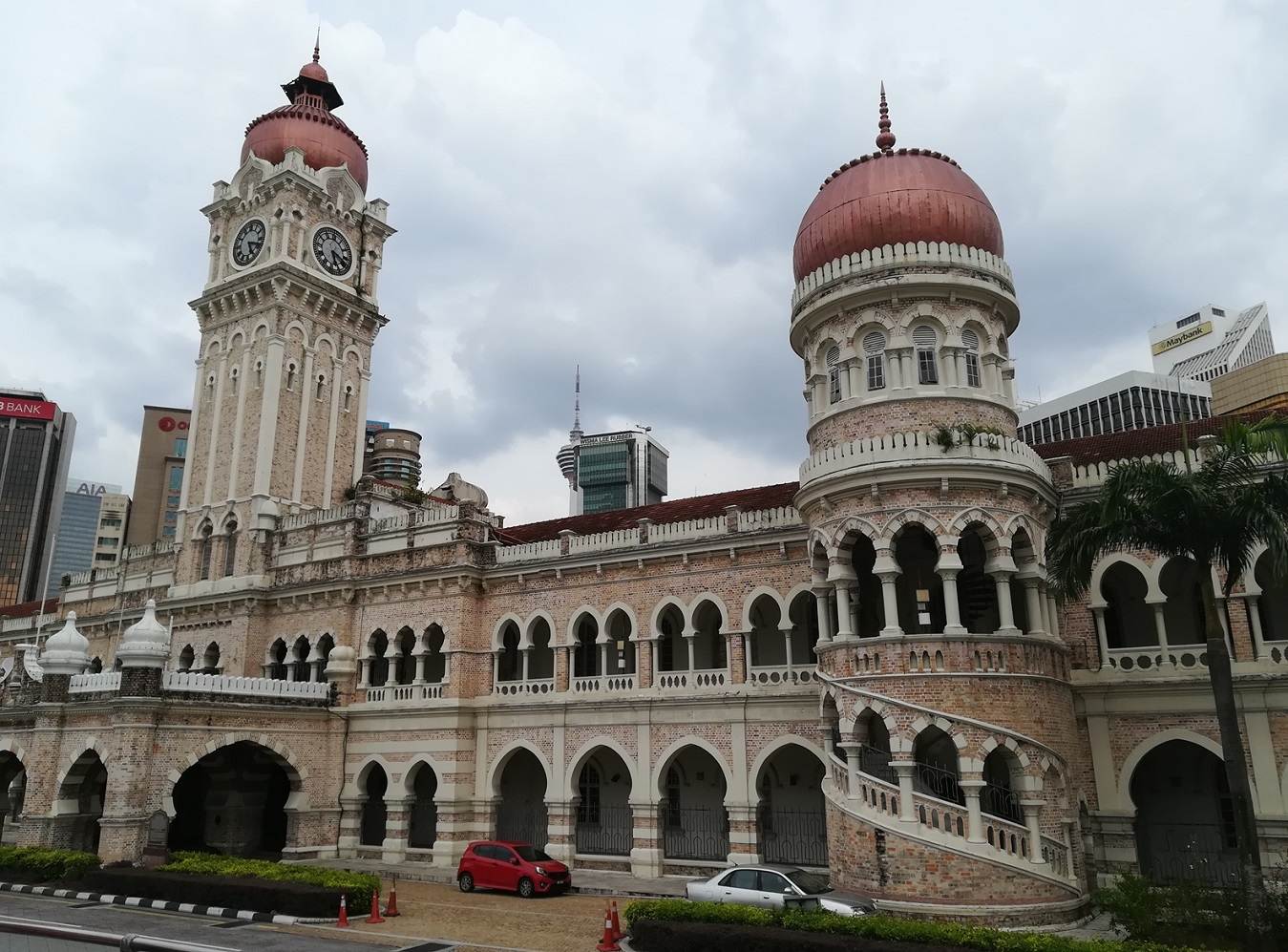
The Sultan Abdul Samad Building (Malay: Bangunan Sultan Abdul Samad). Originally the British Government Offices, this magnificent colonial building was constructed in the late 19th century, and following independence on 31 August, 1957, it became the Sultan Abdul Samad (1804-1898) Building in 1974, in honour of the reigning Sultan of Selangor at the time of construction.
It first housed the superior courts, but today it houses the offices of the Ministry of Communications and Multimedia and the Ministry of Tourism and Culture of Malaysia.
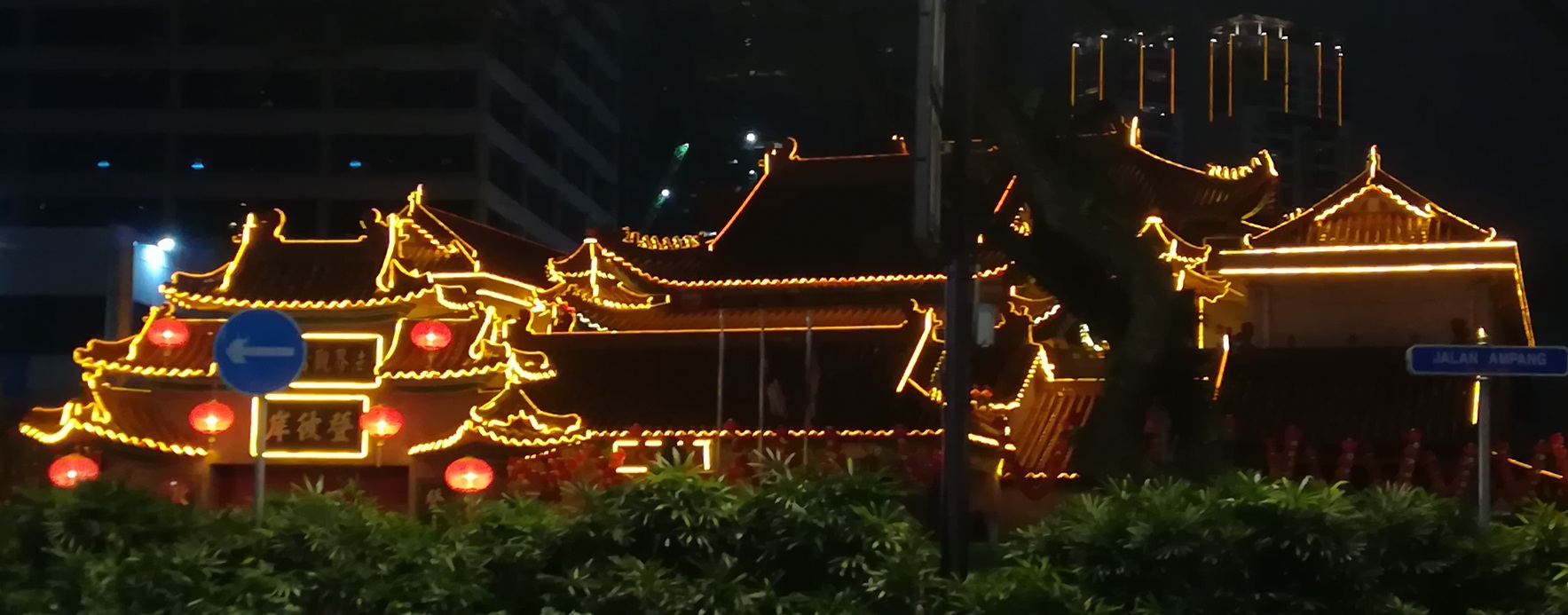
Kuala Lumpur
Petronas Twin Towers
Travel Diary
One of the Islamic influences on the design is the cross section based on a Rub el Hizb, combined with circular sectors similar to the bottom part of the Qutb Minar.
Rub el Hizb | The Rub el Hizb is an octagram, eight-sided figure, consisting of two overlapping squares. It is used on a number of flags and emblems. In Arabic, rubʿ means ‘one-fourth’ or ‘quarter’, while ḥizb (plural aḥzāb) translates to ‘a group’. |
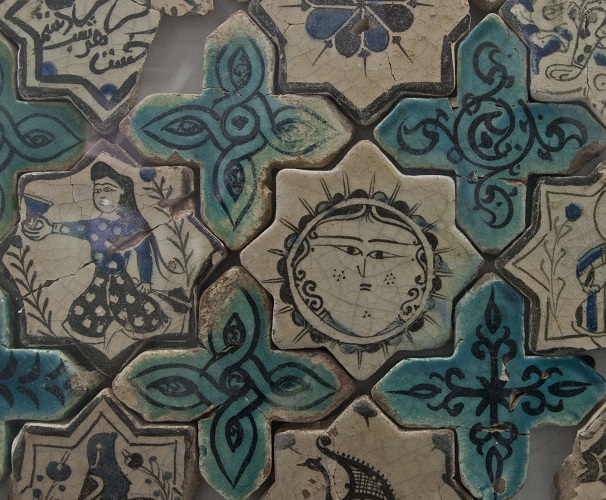 | Seljuk mosaic tile decoration from the Kubadabad Palace (early 13th-century Anatolia). The Seljuk Star is an eight-pointed star polygon, and is a traditional Turkish national symbol called Tamga. |
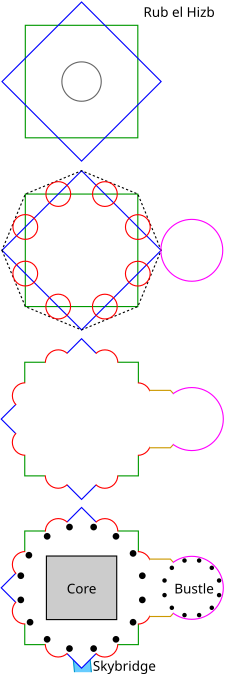 | Development of the Petronas Towers Tower 1 level 43 floor plan from a Rub el Hizb symbol |
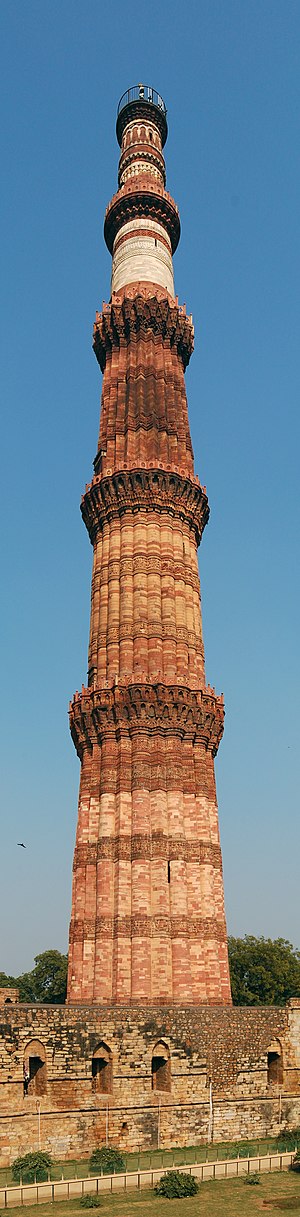 |
Qutb Minar, Delhi, IndiaThis iconic minaret was erected between 1199 and 1220 as a victory tower in Delhi’s oldest fortified city, Lal Kot. Qutab-ud-din Aibak (1150-1210), the last Hindu ruler of Delhi before the Ghurid conquest (Empire 1175-1215), had the tower constructed to celebrate his victory over Prithviraj Chauhan (1166-1192). |
Images courtesy of Wikipedia