North America 2024
Day 25: Monday 19 August 2024
Yellowstone National Park
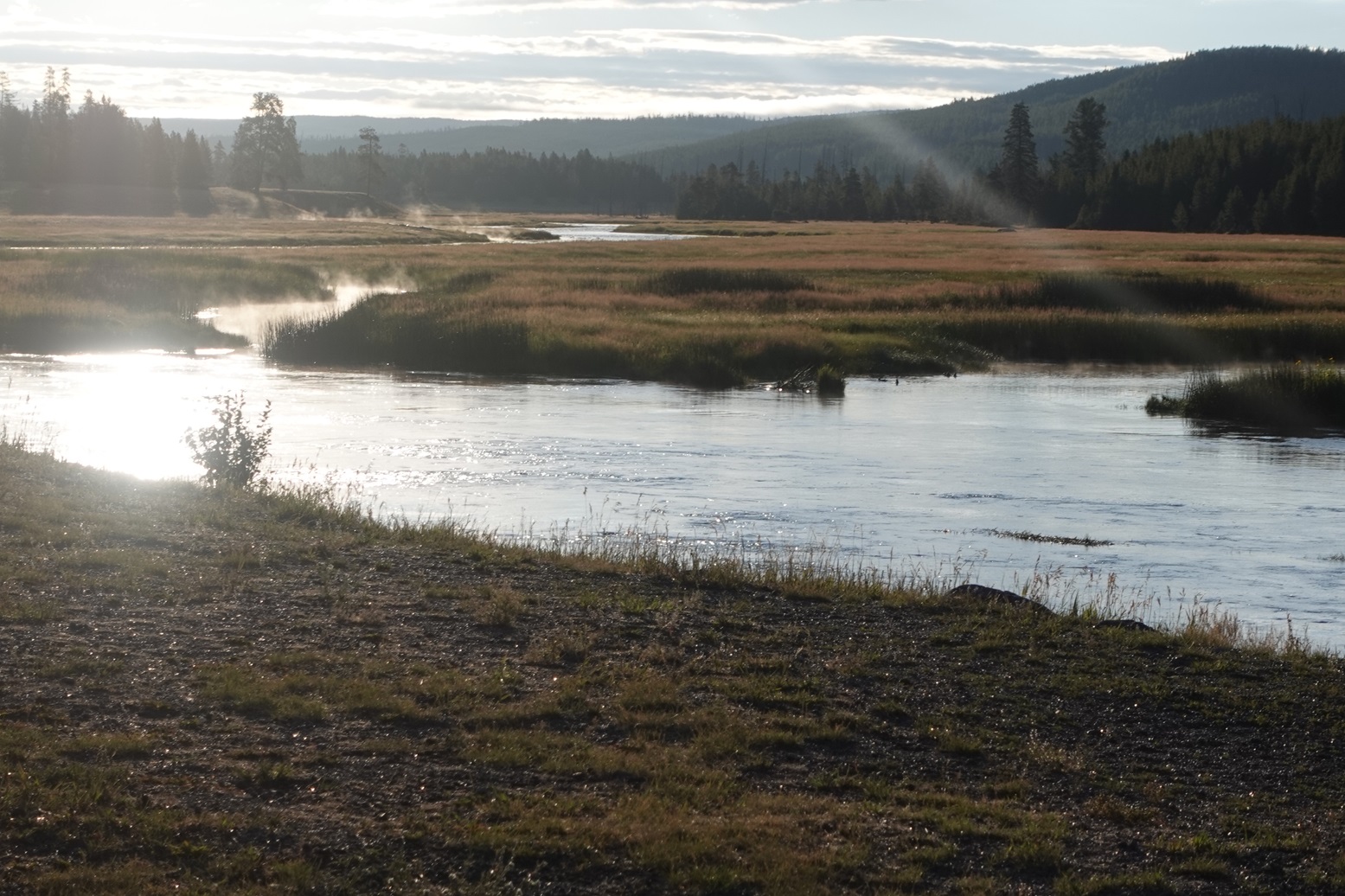
Dawn in Yellowstone National Park. We started out early to beat the holiday crowds. To enter Yellowstone we have to pass from West Yellowstone town in Montana to Wyoming.
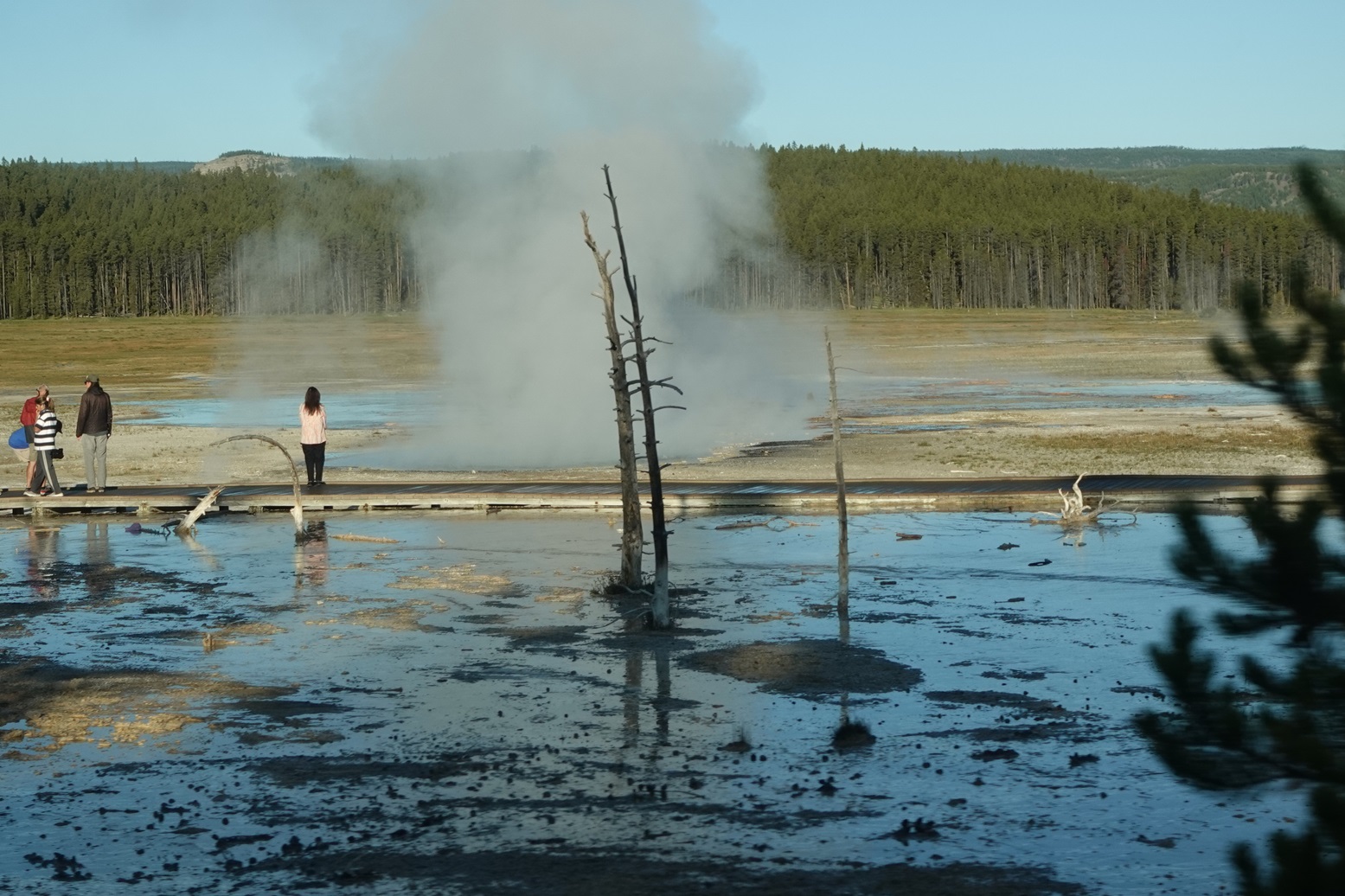
Most of western Yellowstone National Park lies in an active volcano caldera. Everywhere there are pools of very hot water rising from deep within the Earth, where it has been super-heated by molten magma close to the surface.
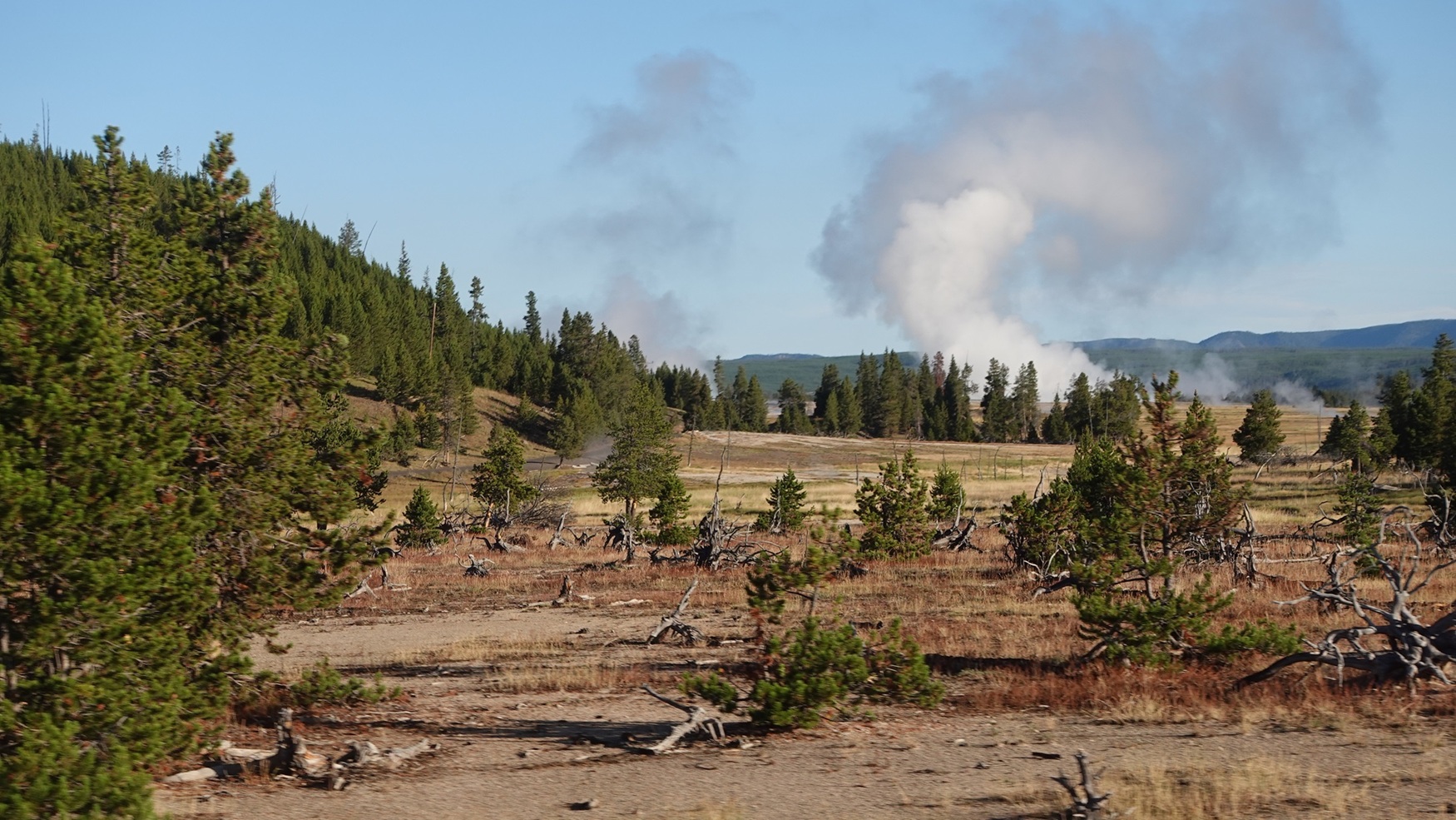
Clouds of steam can be seen in every direction, within a stunning landscape of forests, swamps and grassland. Wild bison, elk and bears are among the many species that can be found in the park.
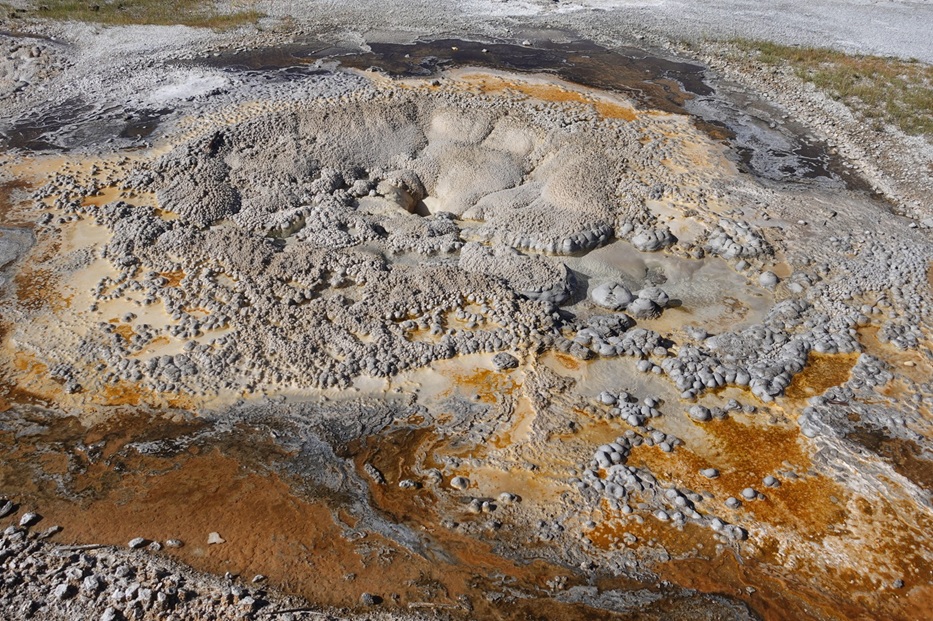
When the water rises to the surface, it contains high concentrations of minerals such as silicates and hydrogen sulphide (rotten egg gas). The siliceous compounds, containing silica, sediment out on cooling, creating a sinter which hardens around the pool.
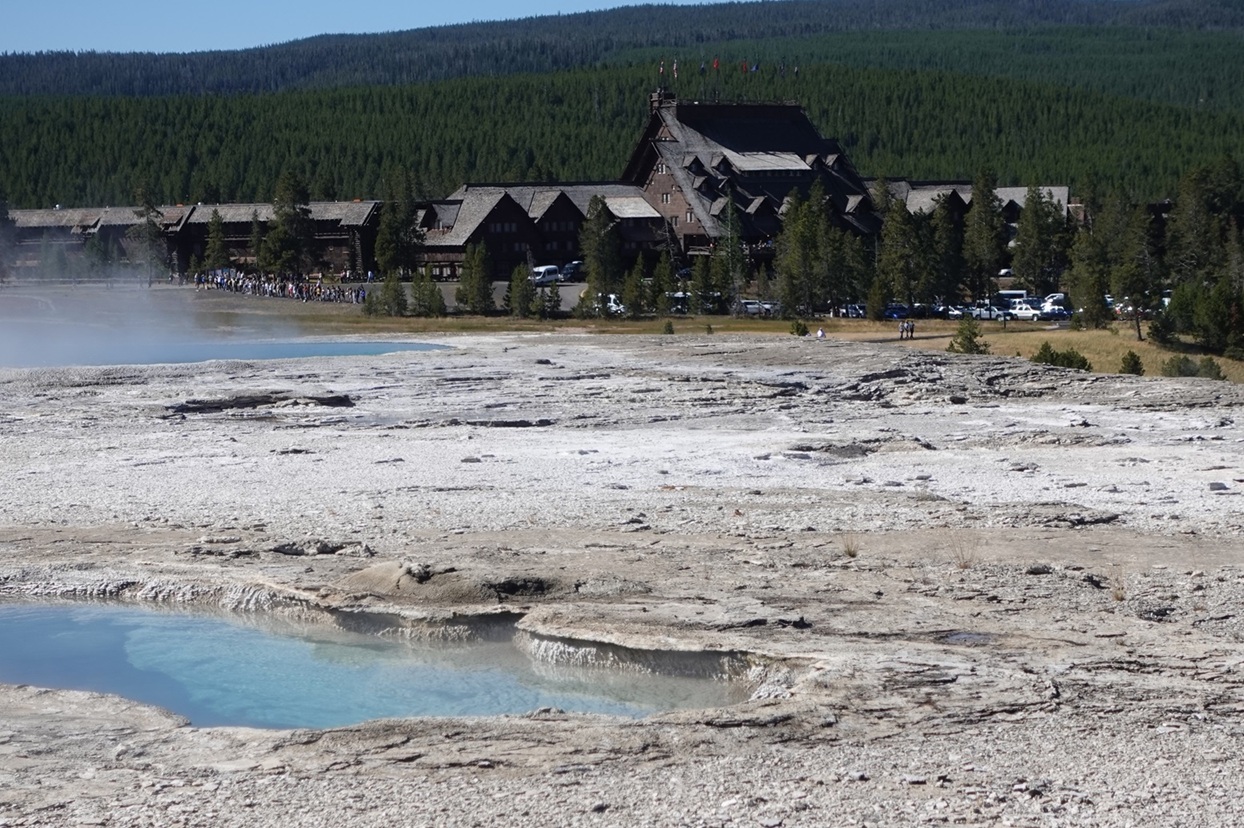
This is a view of the Old Faithful Inn, across a field of streams and venting geysers.
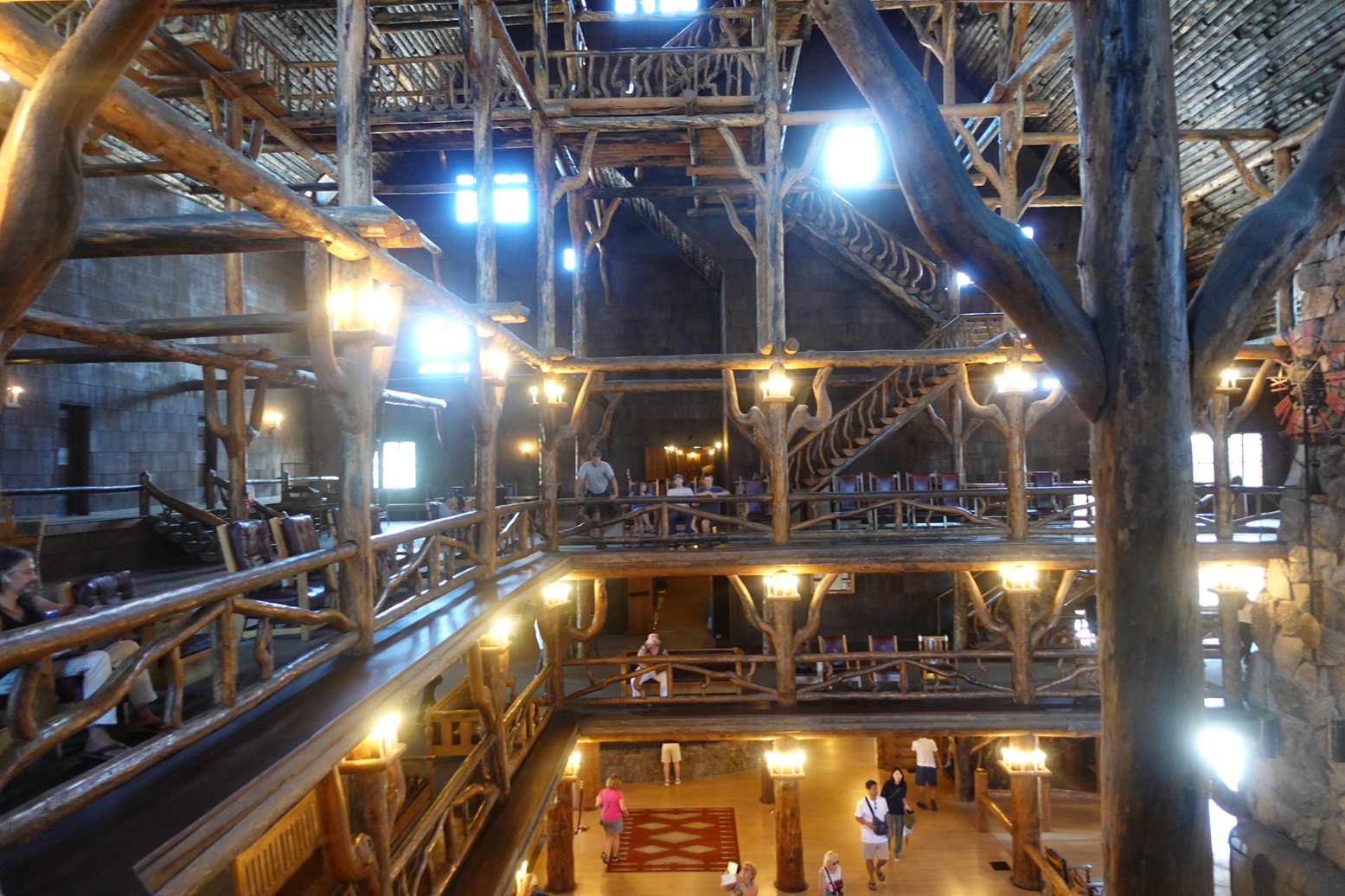
The Old Faithful Inn is more than a hundred years old, and is made entirely of wood. Its decor is stylishly appropriate, maintaining the atmosphere of a bygone era, despite its popularity with throngs of tourists.

Old Faithful erupting precisely on time. It currently erupts every 92 minutes. This is a longer interval than it used to be, before an earthquake changed its dynamics. It is reliable and remains a 60m high spray, because, unlike many other geysers, its spout does not accumulate sinter because it is relatively cool.
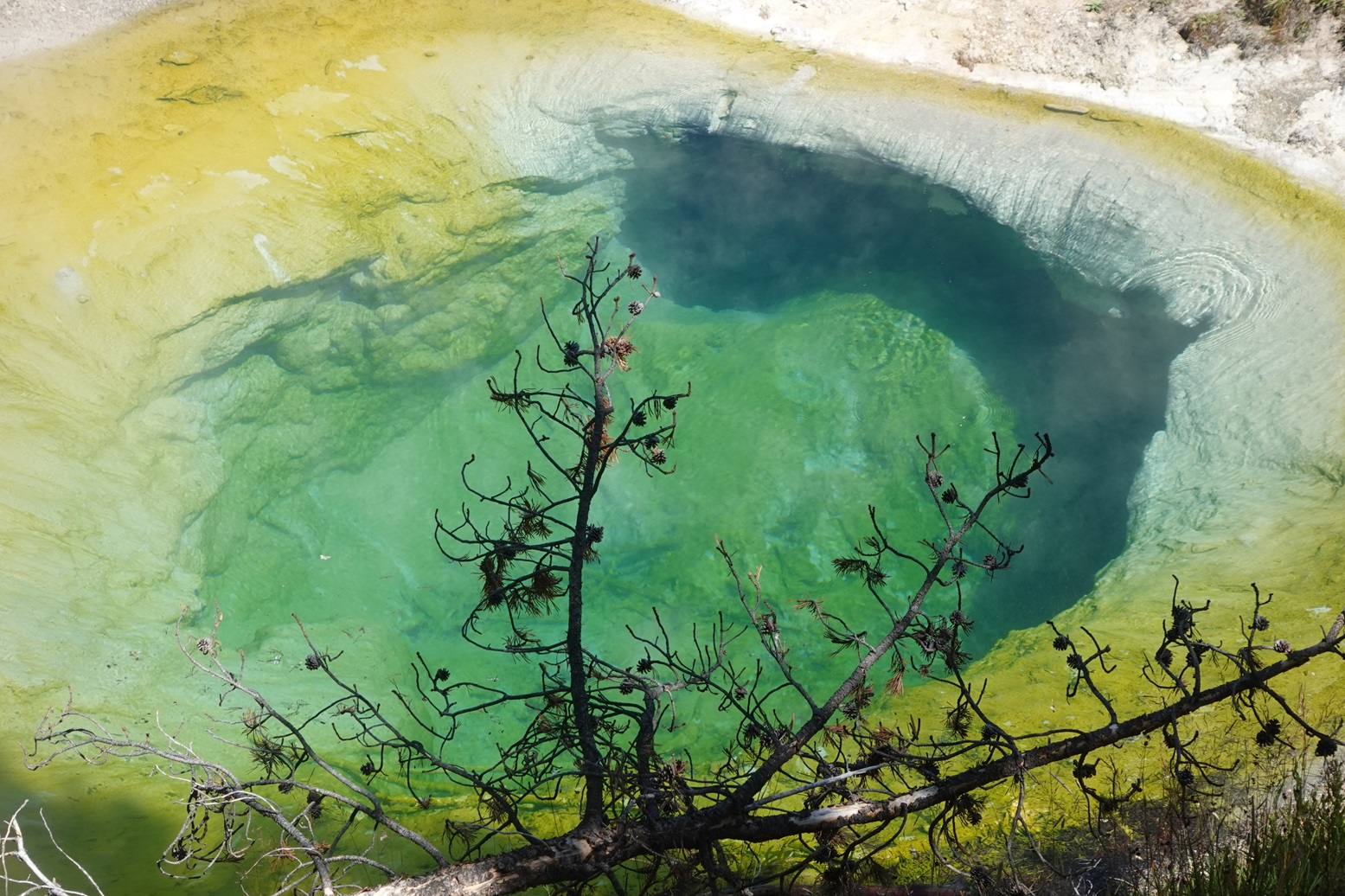
A hot geyser pool. The temperature determines which thermophile bacteria species can survive in the water. And it is the bacteria which gives the water its colour. So, over the years pools tend to vary in colour: some a vibrant blue (very hot, c. 160°F), some green, orange, or even black.
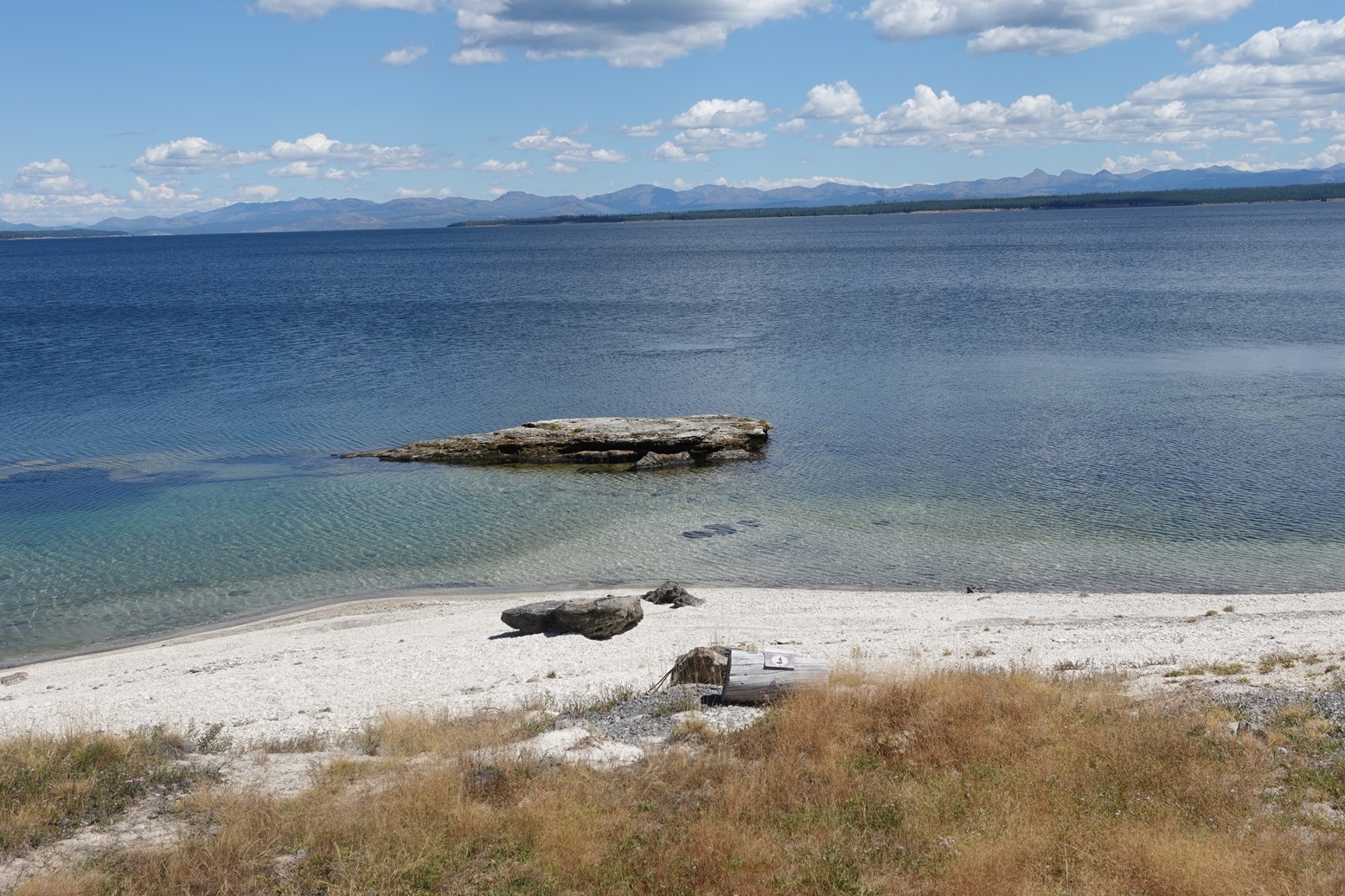
The south-east of Yellowstone is dominated by the 16km wide Yellowstone Lake. There is a large western bay of the lake which is the result of a more recent (a mere 160,000 years ago) volcanic eruption. It is called West Thumb, and has active geysers dotted around its shores.
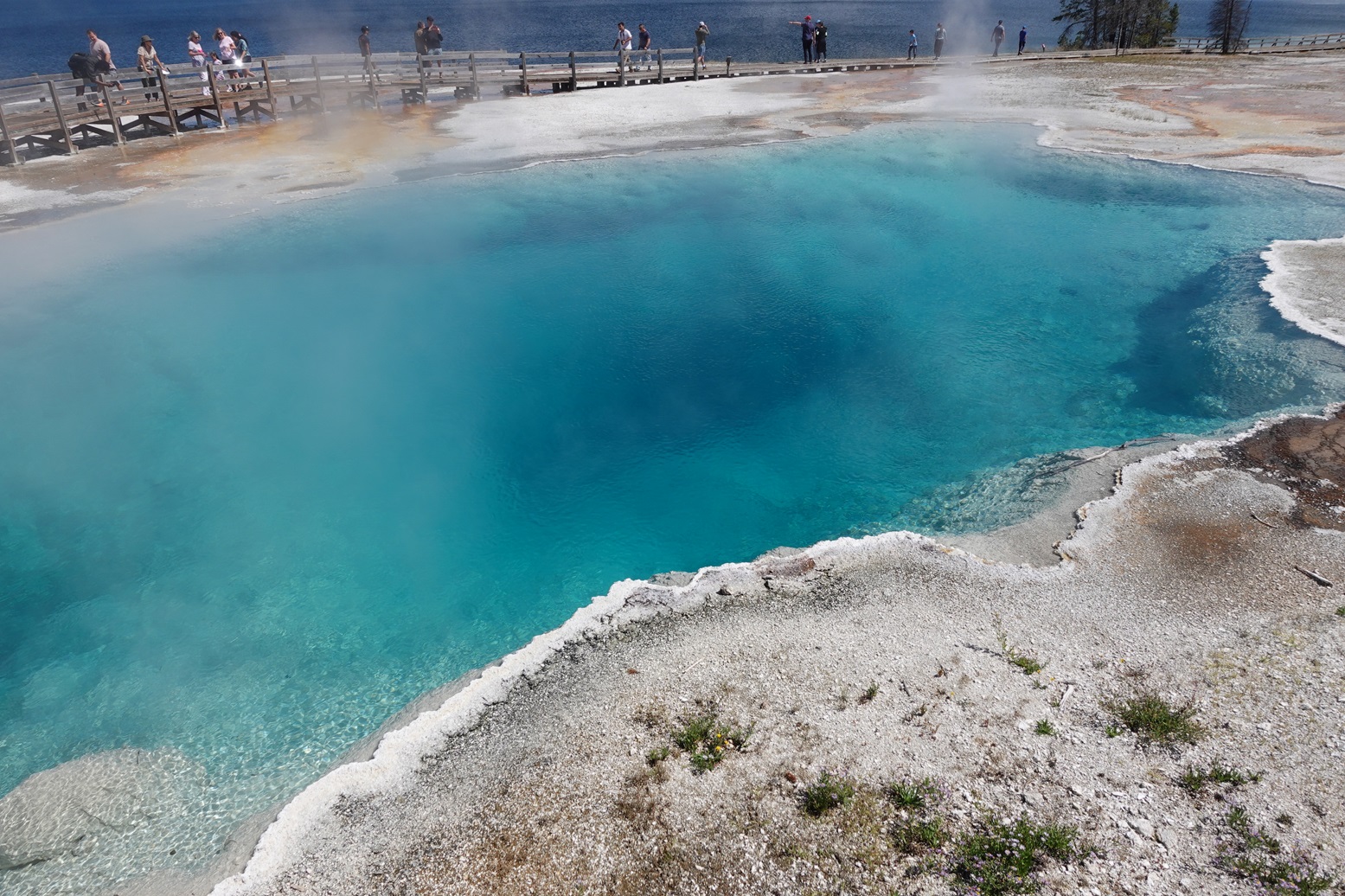
This geyser on the shore of West Thumb is called Black Geyser, although it is no longer black, but coloured by bacteria which have changed due to the varying temperature of the water. The geysers around West Thumb, Yellowstone Lake, do not spray so much as bubble. The lake bottom is dotted with active geysers, venting hot water into the complex lake benthic ecosystem.
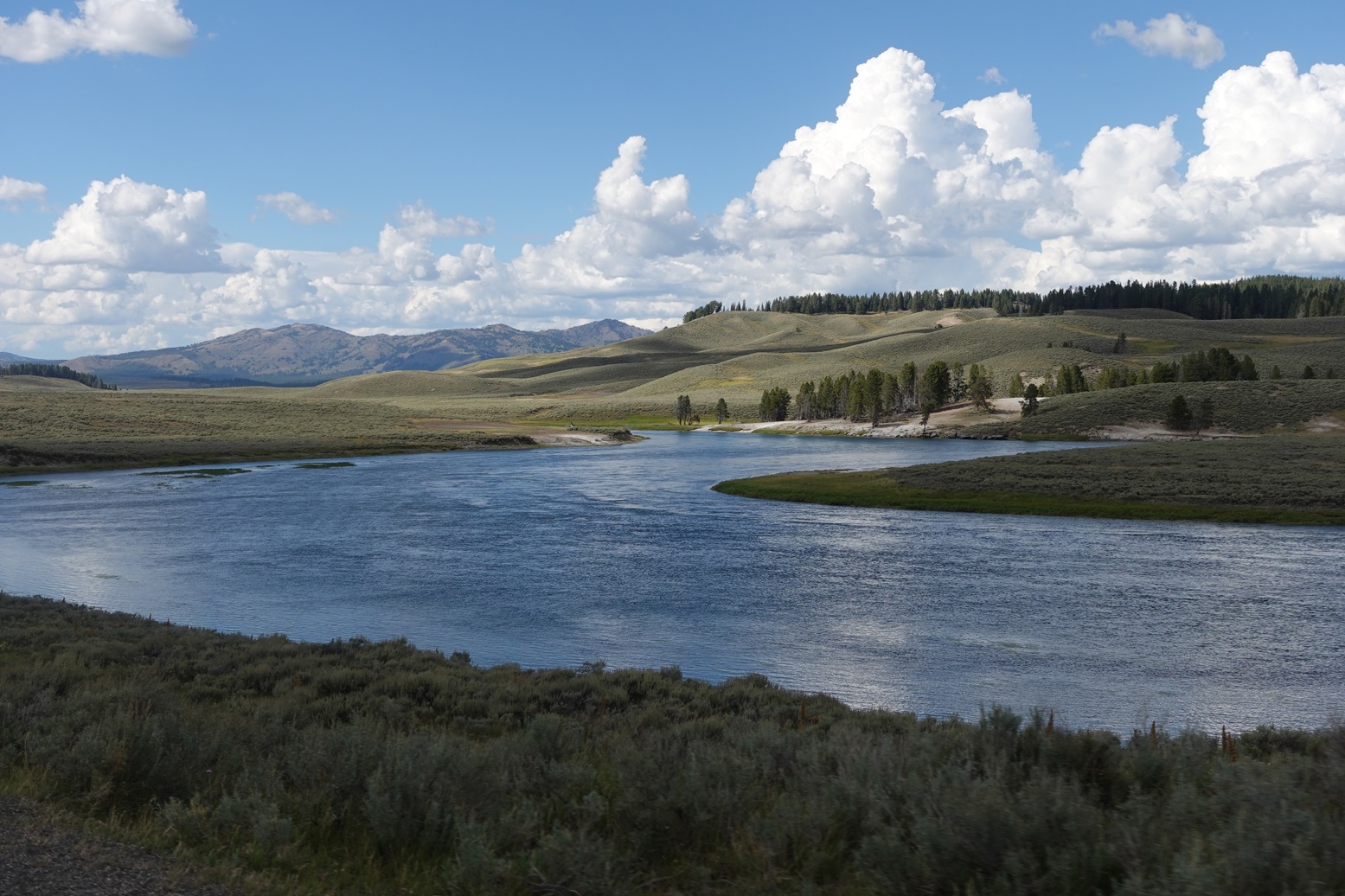
Some of the beautiful scenery that accompanies a visitor to the park. All around us were forests reaching to the top of a high caldera ring which surrounds most of the park. We spied some bison and elk, but today we were not close enough to get a good photograph.
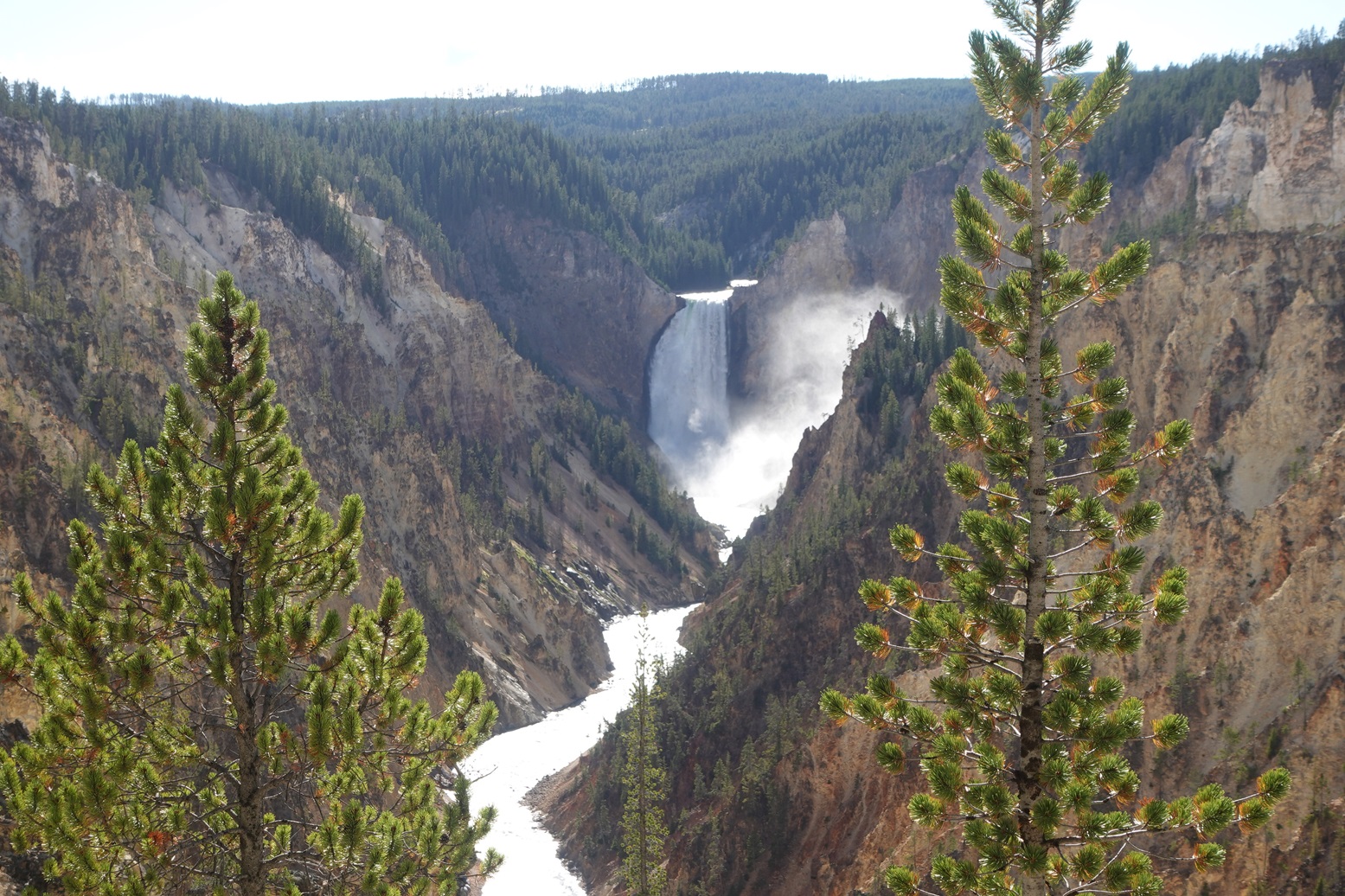
Artist Point, overlooking the Lower Falls of the Yellowstone River, as it descends from the high central plateau, before winding its way out of the park to the north.
Travel Diary
We get up at 6.30 and leave at 7 a.m., in a bid, partially successful, to get a jump on the tourist crowds. It is cool and we are wearing our down jackets, but later we change into shorts and t-shirts, as it gets warm, probably high 20s. We go first to Old Faithful, which lives up to its name, erupting right on tuime three times in the time we were there. We also exploring the extensive visitor´s centre display, explaining the volcanic origins of Yellowstone, and it fauna and flora. We then visit the Old Faithful Inn, a beautiful wooden building over a hundred years old.
We then drive on to Yellowstone Lake, and visit a group of hot springs, or geysers which do not spout but bubble furiously. An elderly ranger gives us and the crowd a lively, entertaining explanation of the geysers. He told us of a case two years ago, of finding a foot in the Black Geyser, which is now blue. Someone had apparently fallen or jumped into the 160°F (71°C) pool, and would have died instantly. They think the body sank to the bottom and the foot tore off as the body disintegrated. How horrible. He also told us that the hot spot of the mantle, which does not move, seems to move across the US, because of continental drift. there are many Chinese and India tourists among the American and European mix. We drive on to the Mud Volcano, which is, as the name suggest, a pool of bubbling goop, and some other geysers, which have a strong H2S (hydrogen sulphide) smell. This is a rich source of nourishment for microbes, and bacterial mats are found around all the geysers.
We then go to Fishing Bridge, where we visit a very old museum in the Visitor´s Centre, and have a view of the beach on the north shore of the lake. After a small late lunch of a shared tuna mush sandwich, we drive on to what they call the Grand Canyon of Yellowstone. At Artist´s Point there is a great view of the Lower Falls, as it plummets the Yellowstone River into the canyon. We are high, at 2400m, but it doesn´t feel it at all. The high Central Plateau was lifted by the volcanic activity which formed the Yellowstone caldera, and two gigantic falls drop the river to the level of the surrounded land, as it winds its way north out of the park.
Then we drive the 40 miles back to West Yellowstone, and eat a dinner of crackers, meat and cheese in the room.