North America 2024
Day 26: Tuesday 20 August 2024
Yellowstone National Park – Mammoth Hot Springs – Grand Canyon, Yellowstone
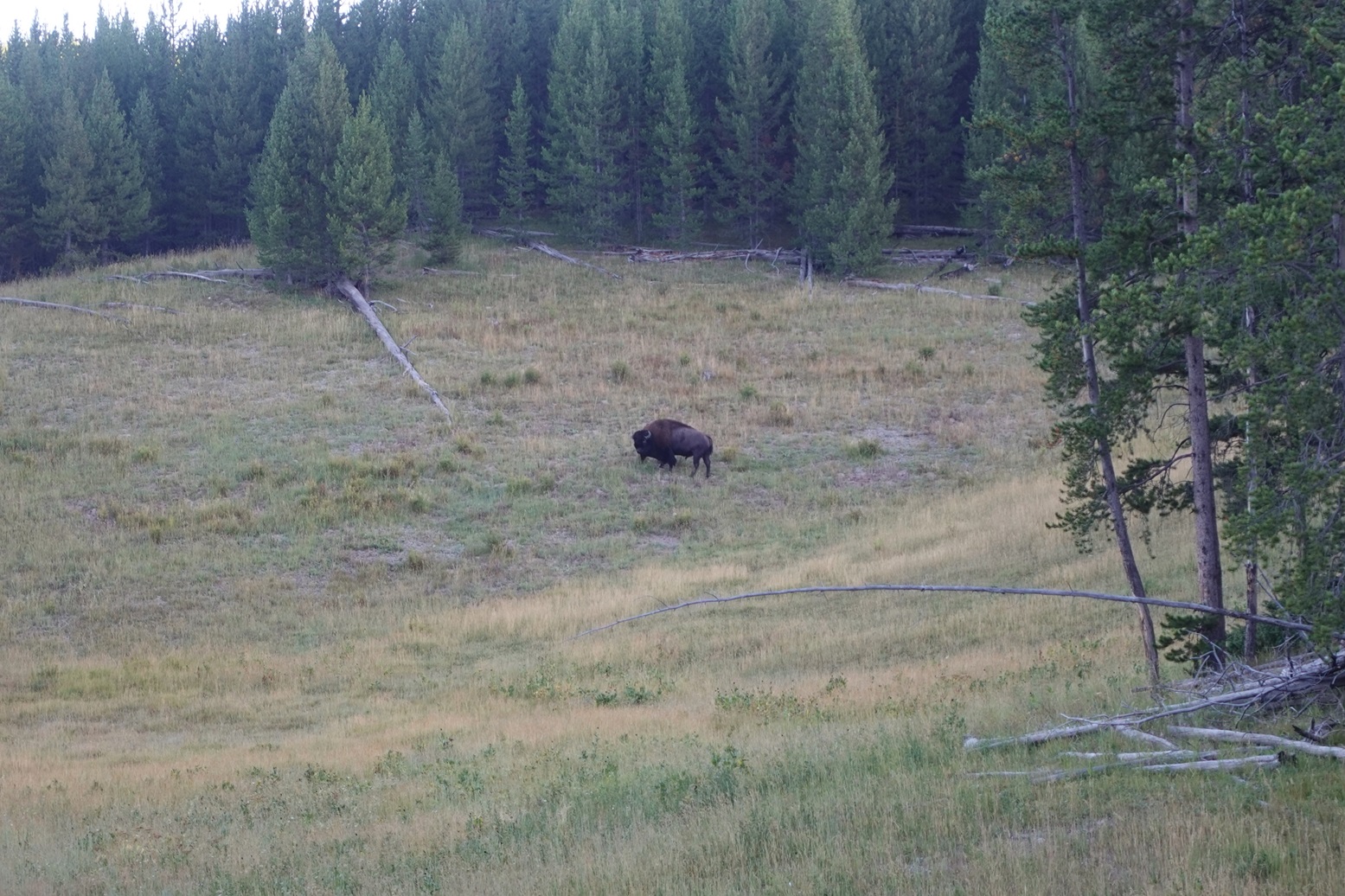
A more typical view of a bison, or buffalo – at a safe distance! We saw only solitary examples. We also saw elk, twice mothers with young, in the tall grass, or escaping into the forest after running across the road.
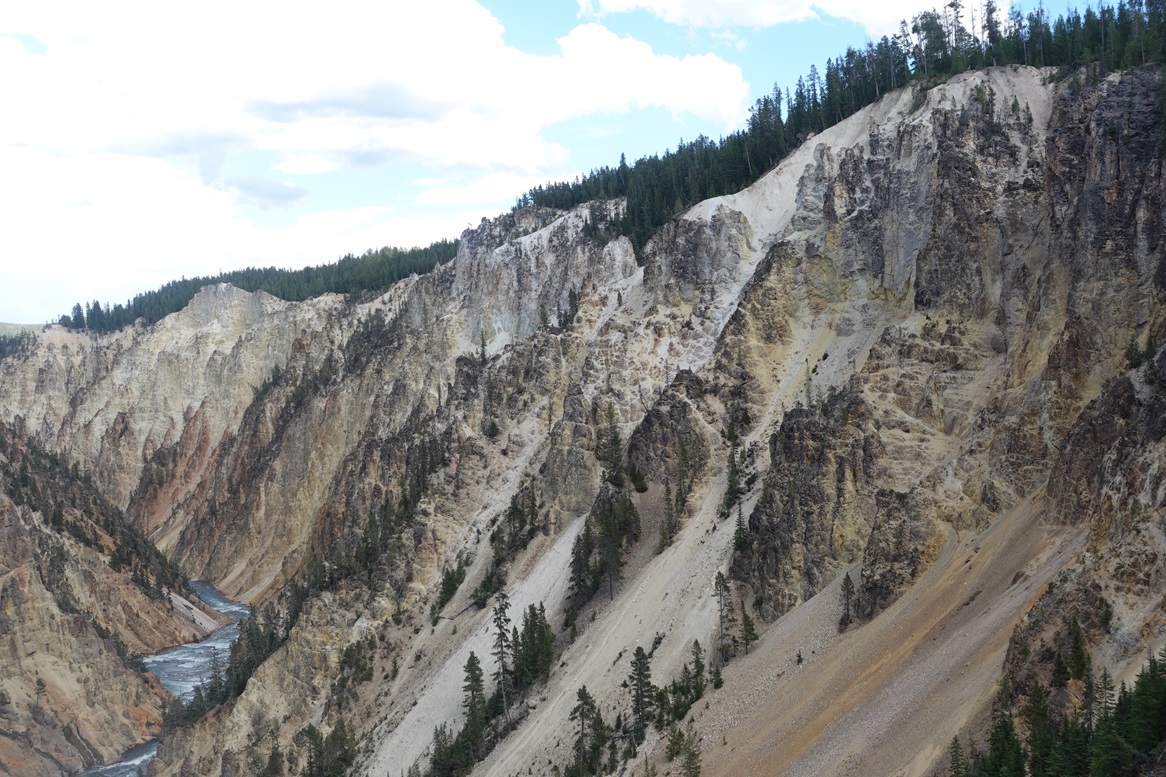
Yellowstone Canyon
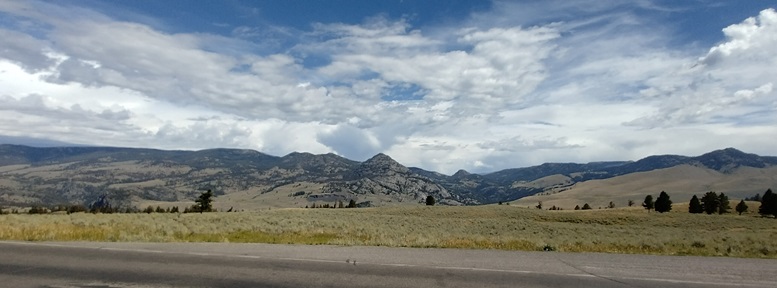
Heading toward Canyon Village
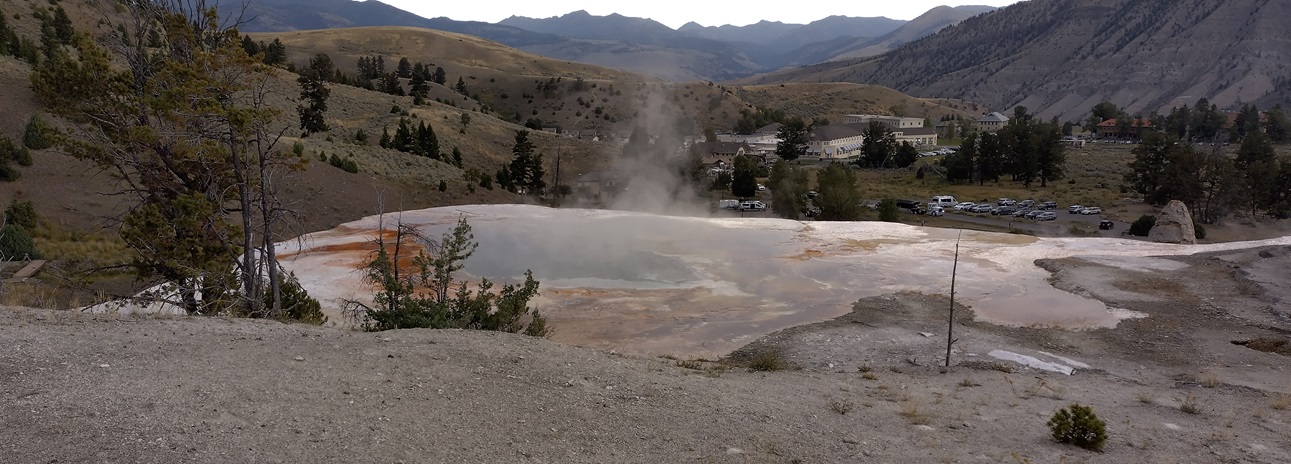
Mammoth Hot Springs
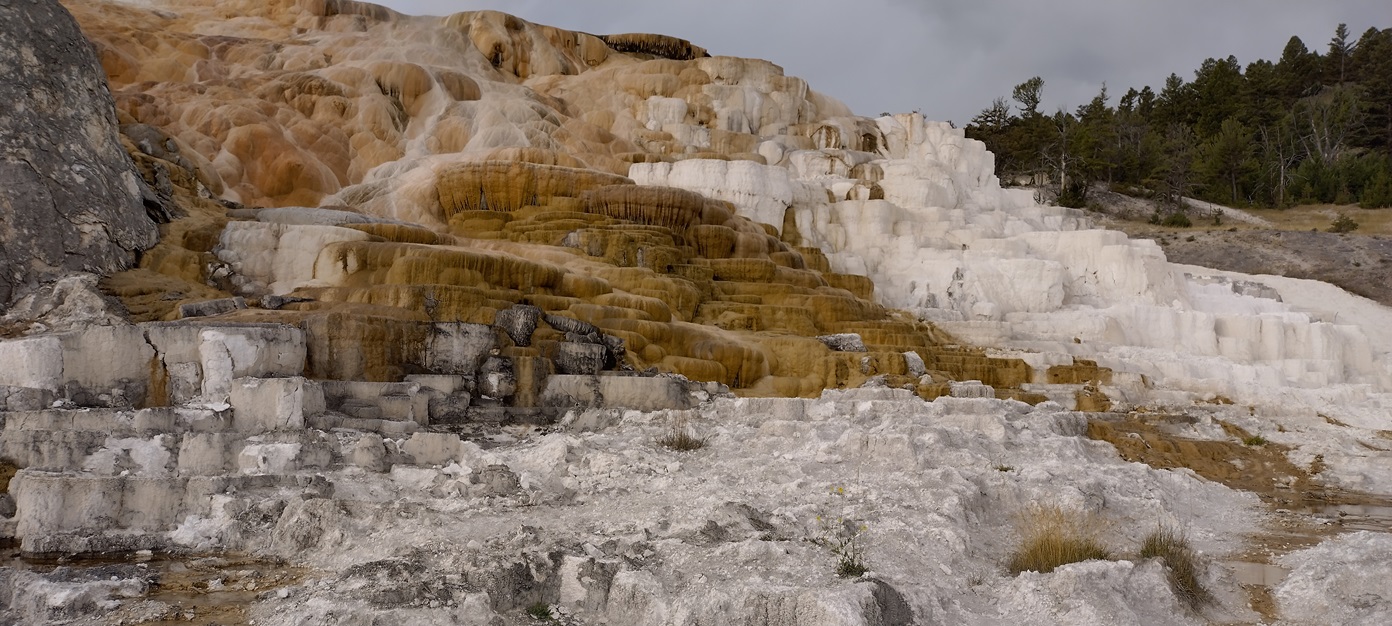
Mammoth Hot Springs
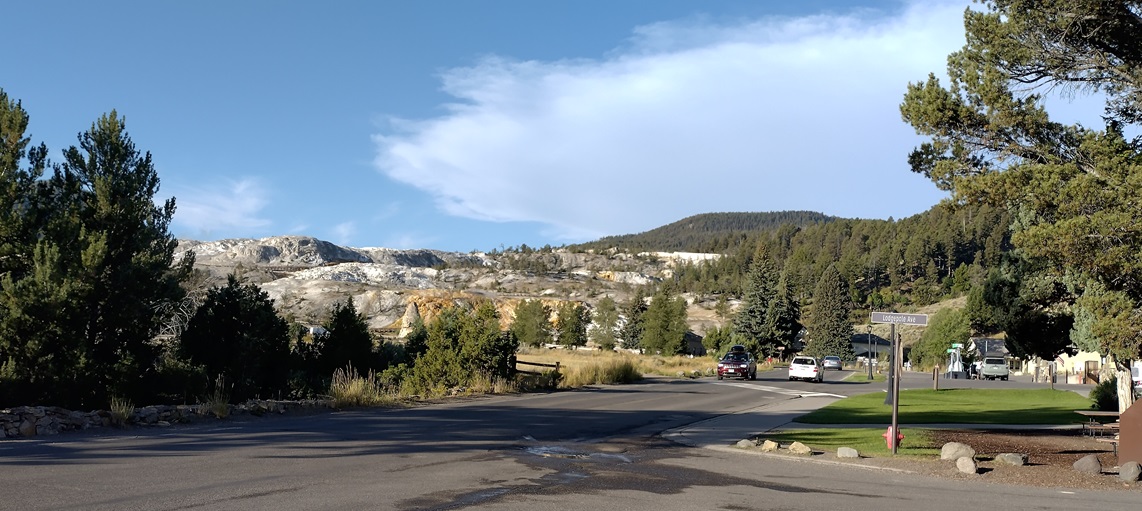
Mammoth Hot Springs
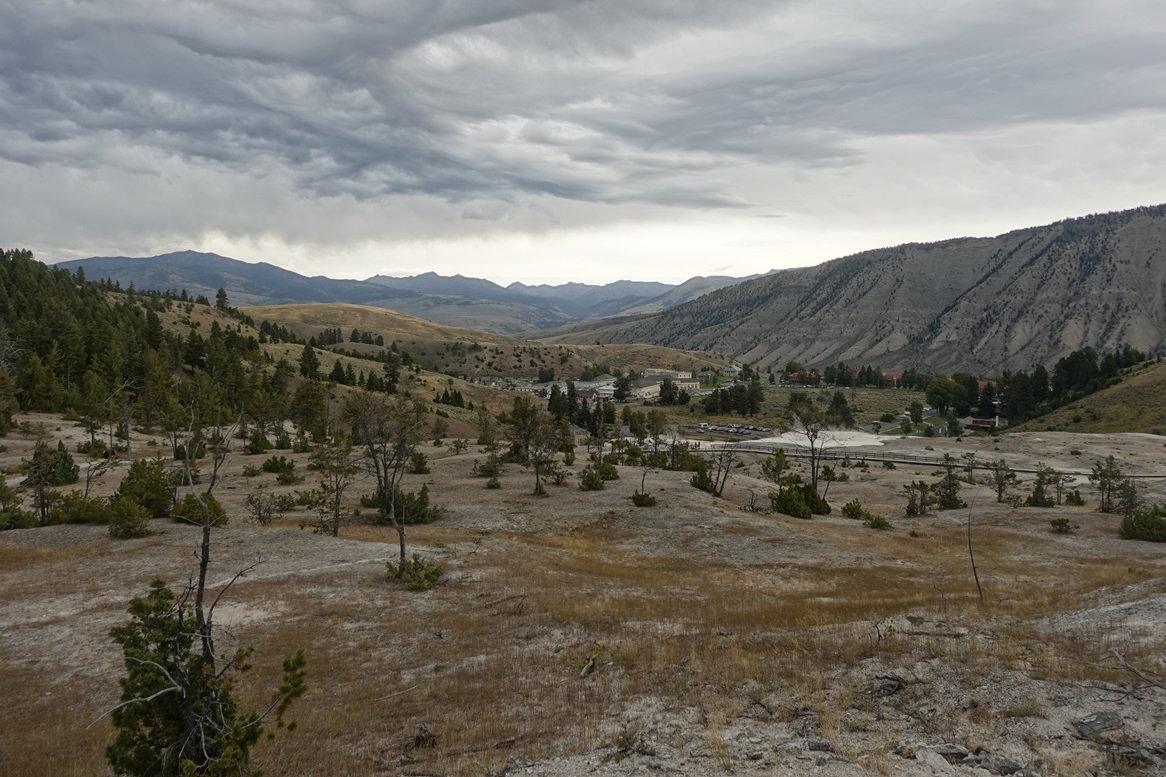
Heading toward Mammoth Hot Springs
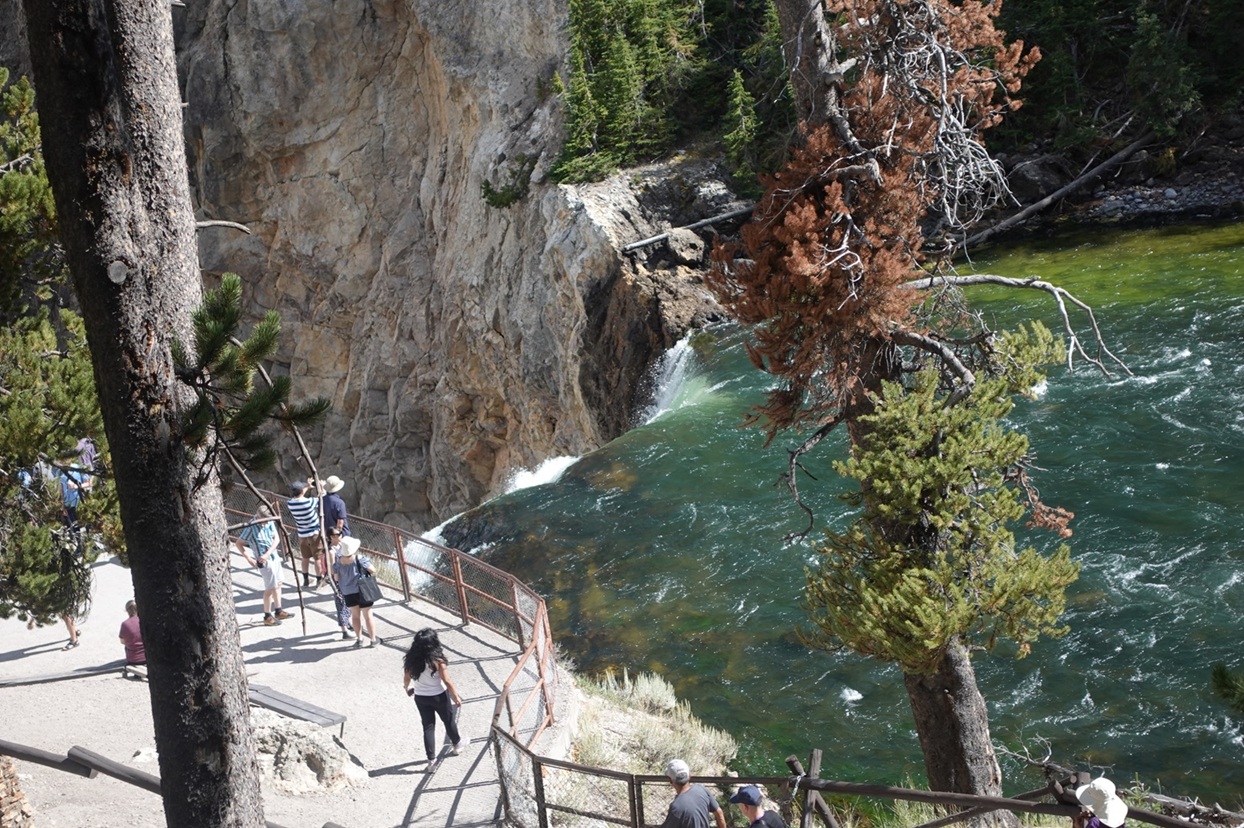
These are the Lower Falls of the Yellowstone River, which cascade dramatically 200 feet into the Grand Canyon.
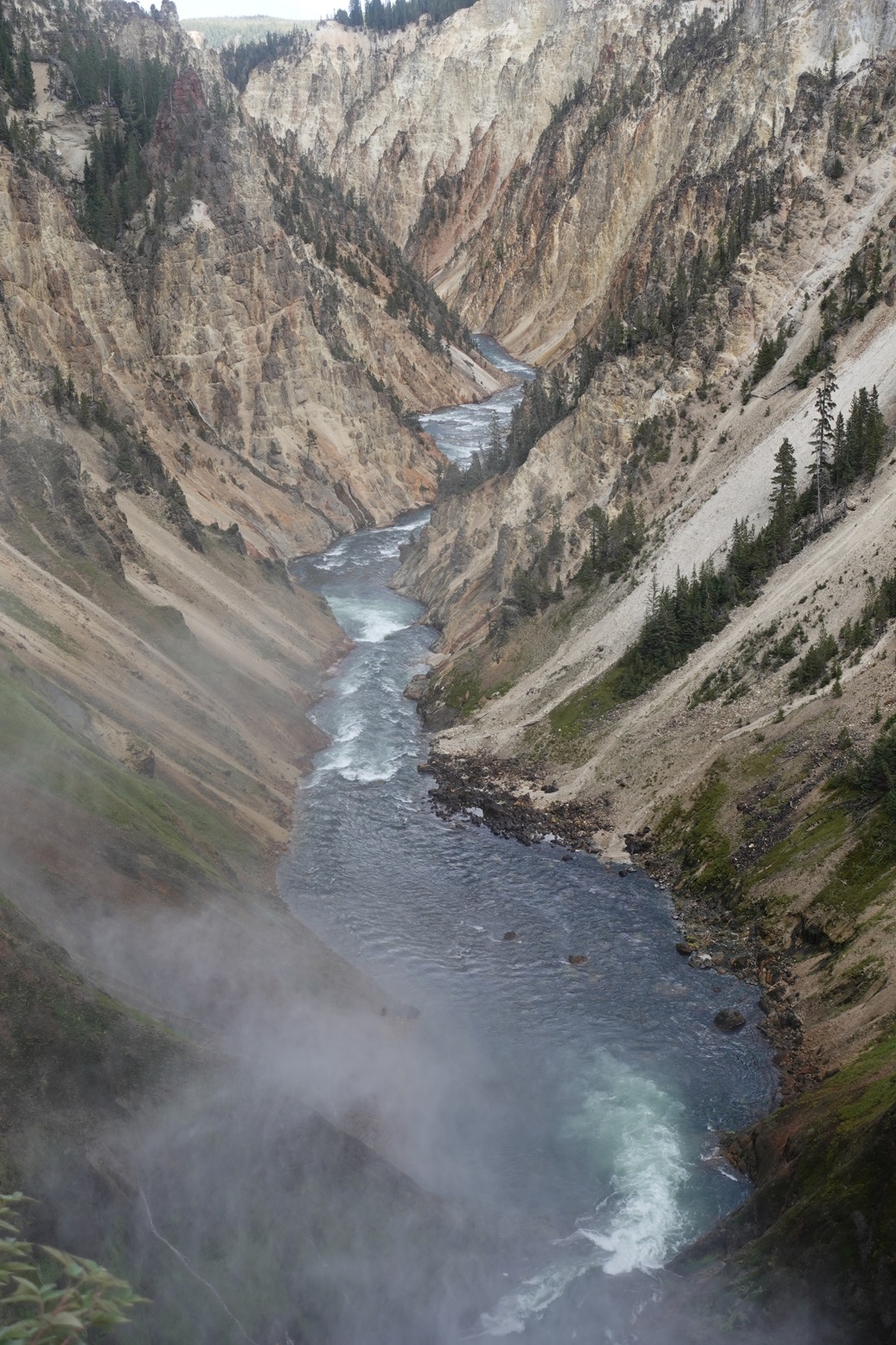
A view of the enormous and beautiful Grand Canyon of Yellowstone. This valley has been the inspiration for artists and photographers since the park area was discovered in the 1860s. This and the geysers, such as Old Faithful, led to creation of the park as a National Park, in 1872.
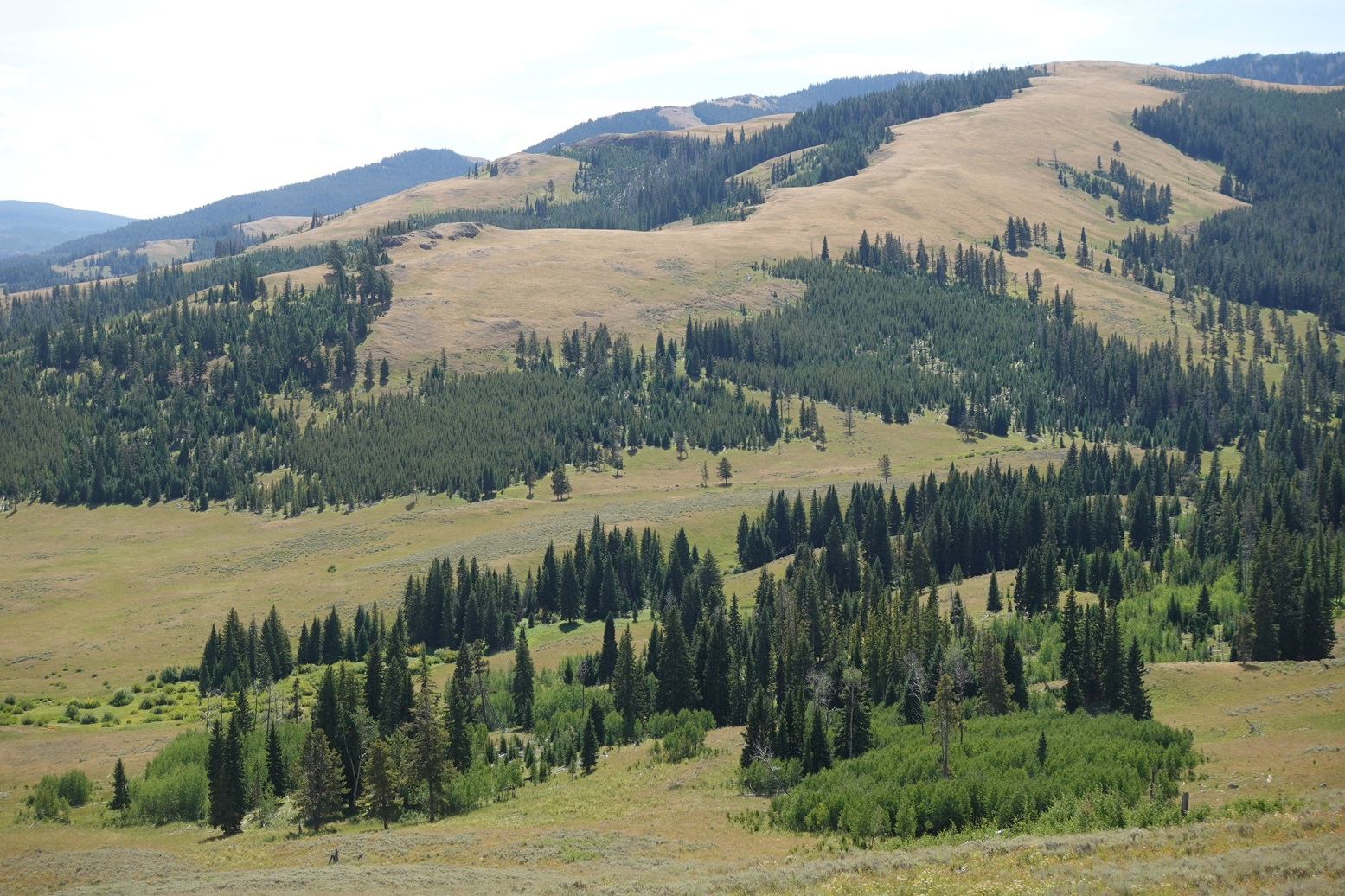
In this open valley, formed in a U-shape by glaciers tens of thousands of years ago, we spy bison. There are apparently black and grizzly bears active in this area, but we failed to see any.
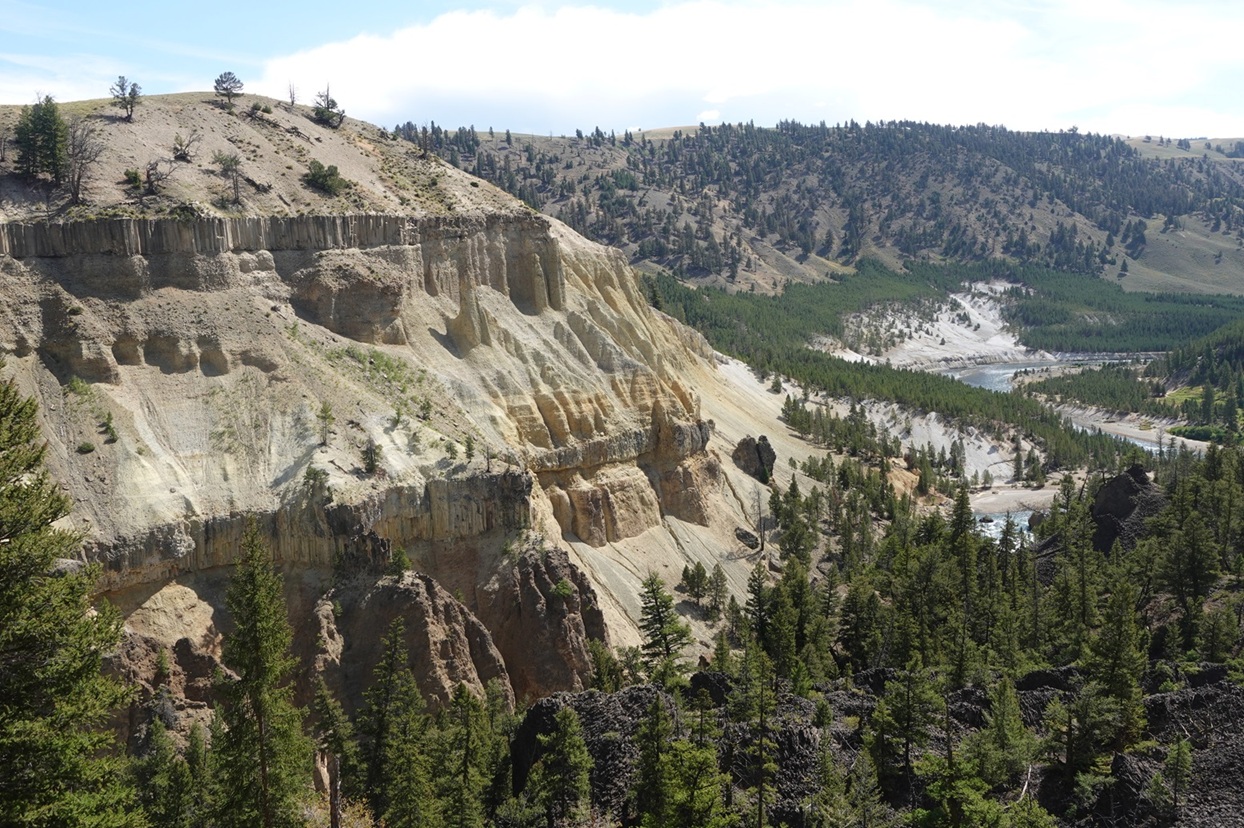
At Tower Falls, in north-east Yellowstone, we find this amazing cliff, exposing columnar basalt. Mega-eruptions of superheated ash and pumice had covered widely distributed extents of lava, including basalt.
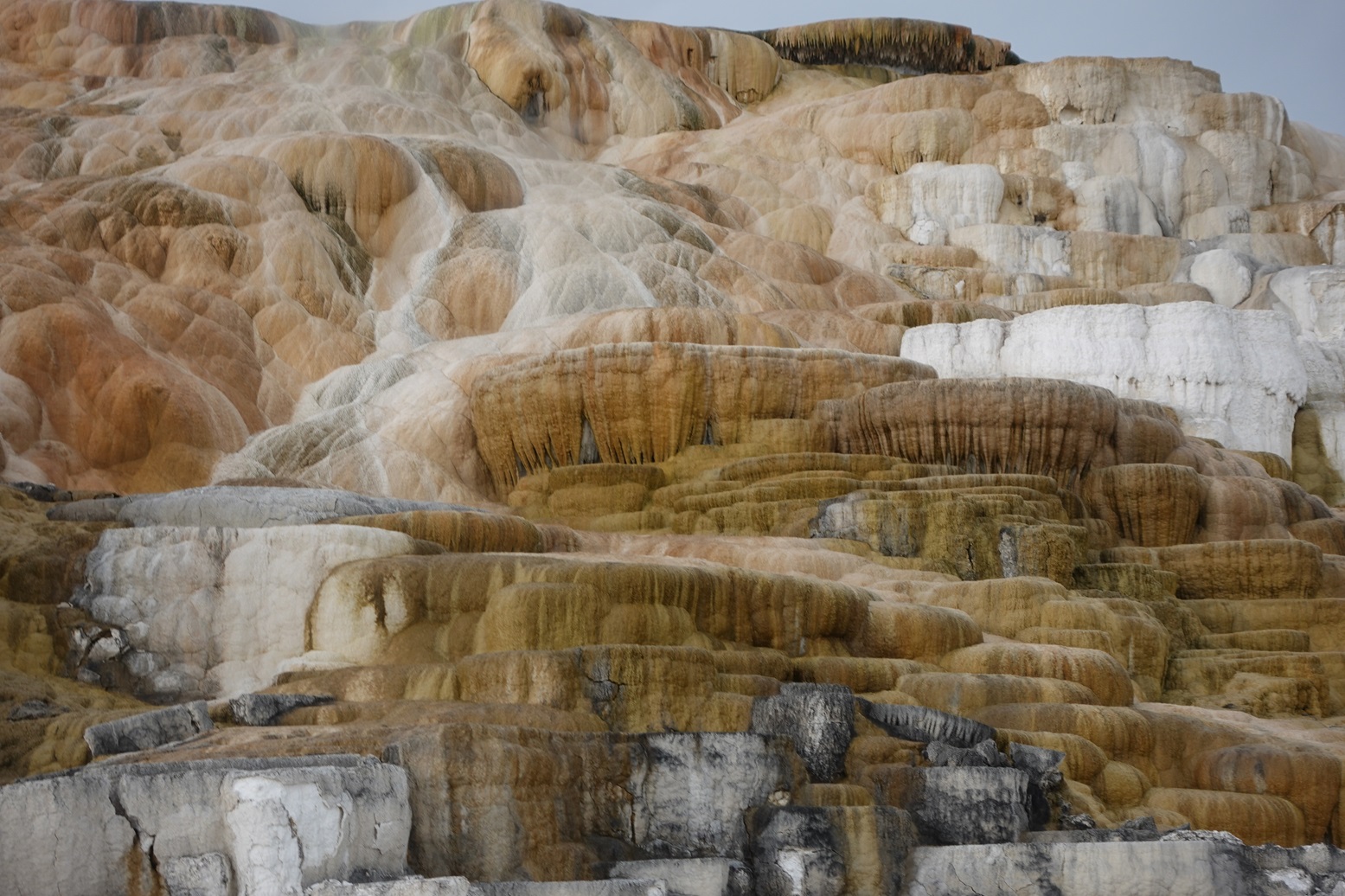
At Mammoth Hot Springs, an amazing scene greets us. A hillside has been transformed into a constantly changing travertine landscape. As the sources of hot geyser water become blocked, new ones open, moving the process of travertine formation and bacterial coverage along a ridge, leaving white and grey ghost structures behind it.
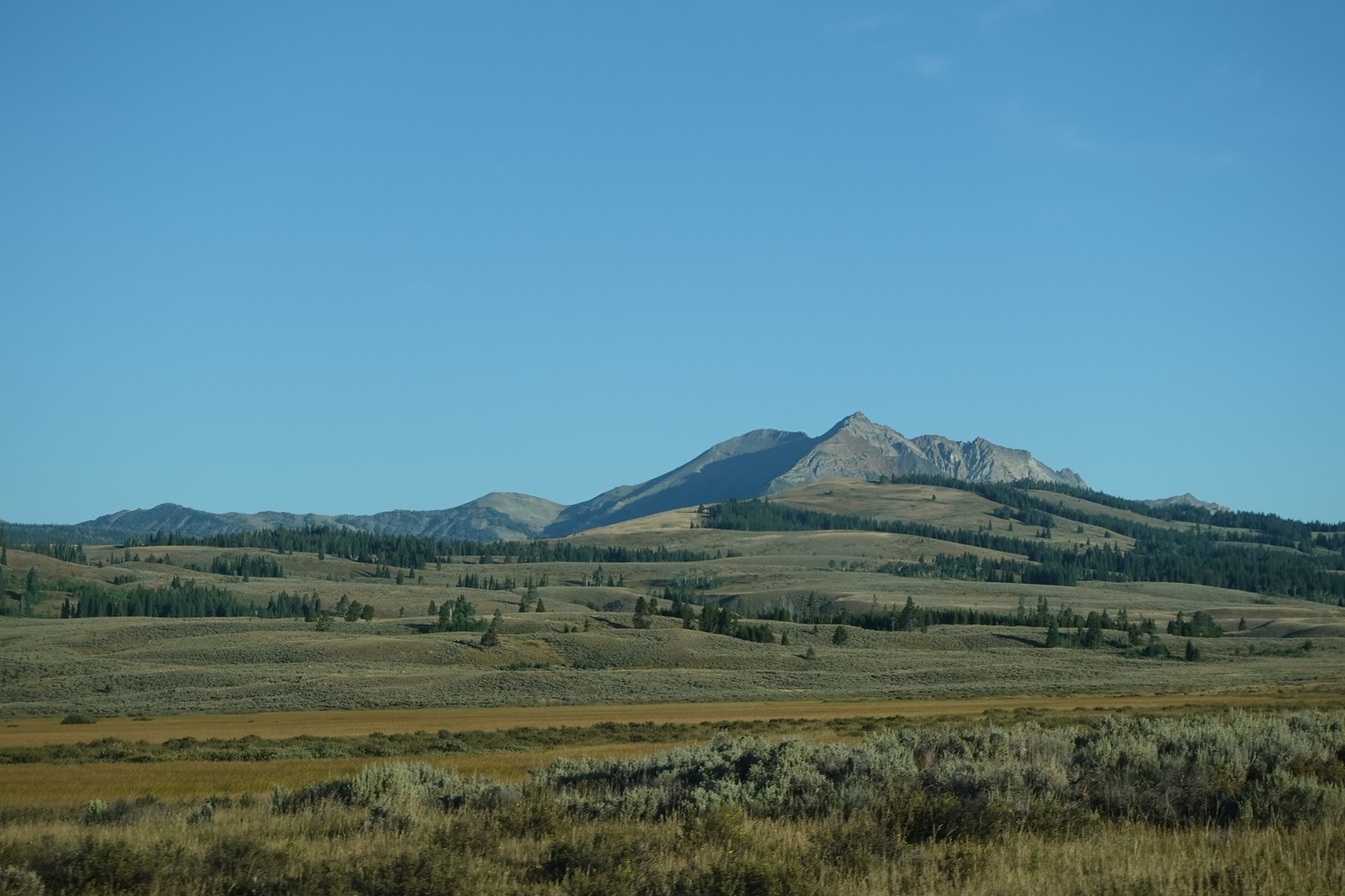
Some of the stunning scenery inside of the Yellowstone caldera.
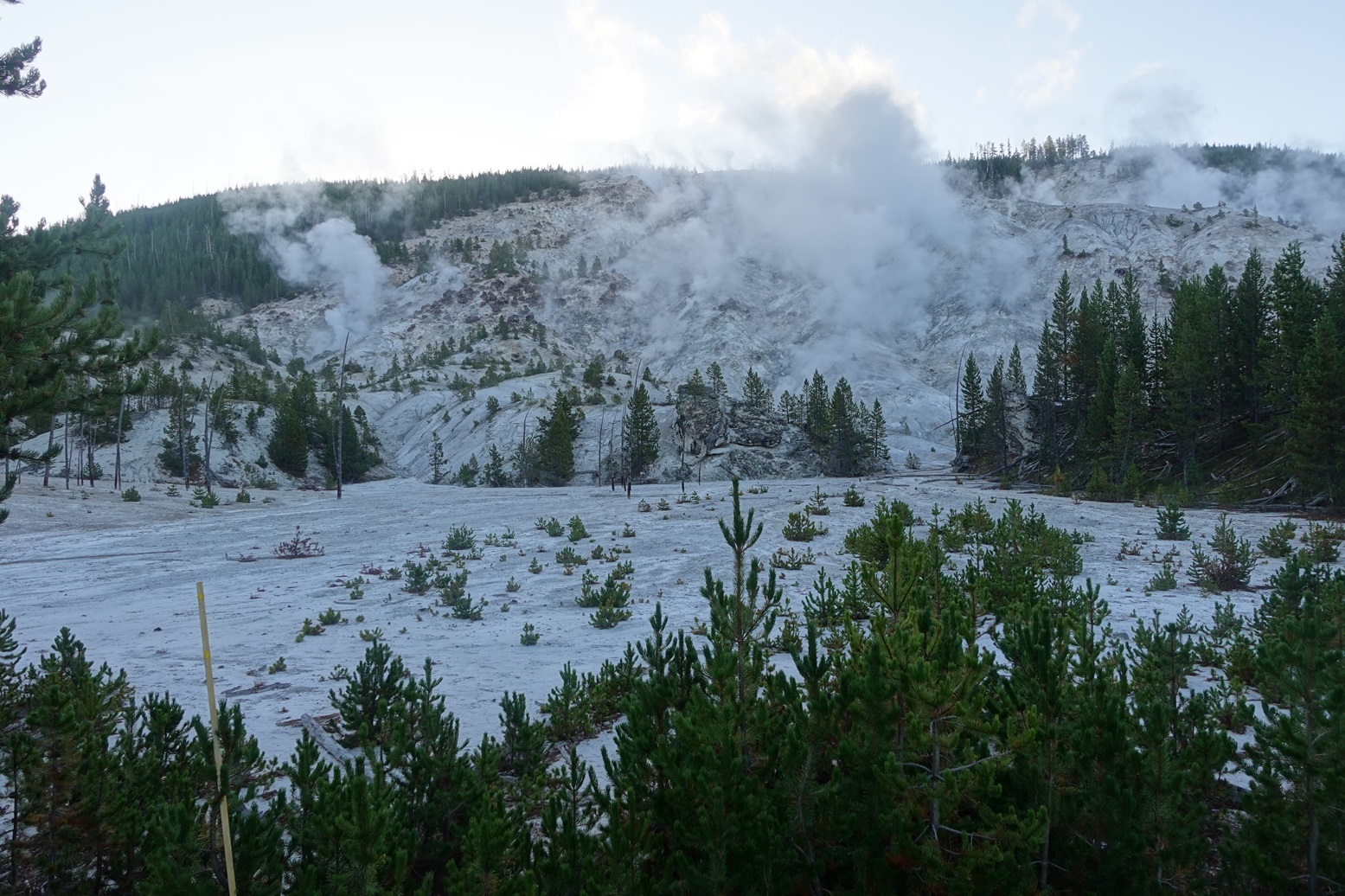
A winter scene? No, the white is the result of volcanic activity. The limestone, calcium carbonate, has reacted with carbonic acid, the result of CO2 from the mantle vents reacting with water. The result is a white rock called travertine. When bacteria feeds off the sulphuric acid and hydrogen sulphide in the erupting water spouts, it colours the travertine with a bacterial layer. Here an entire hillside has been formed in this way.
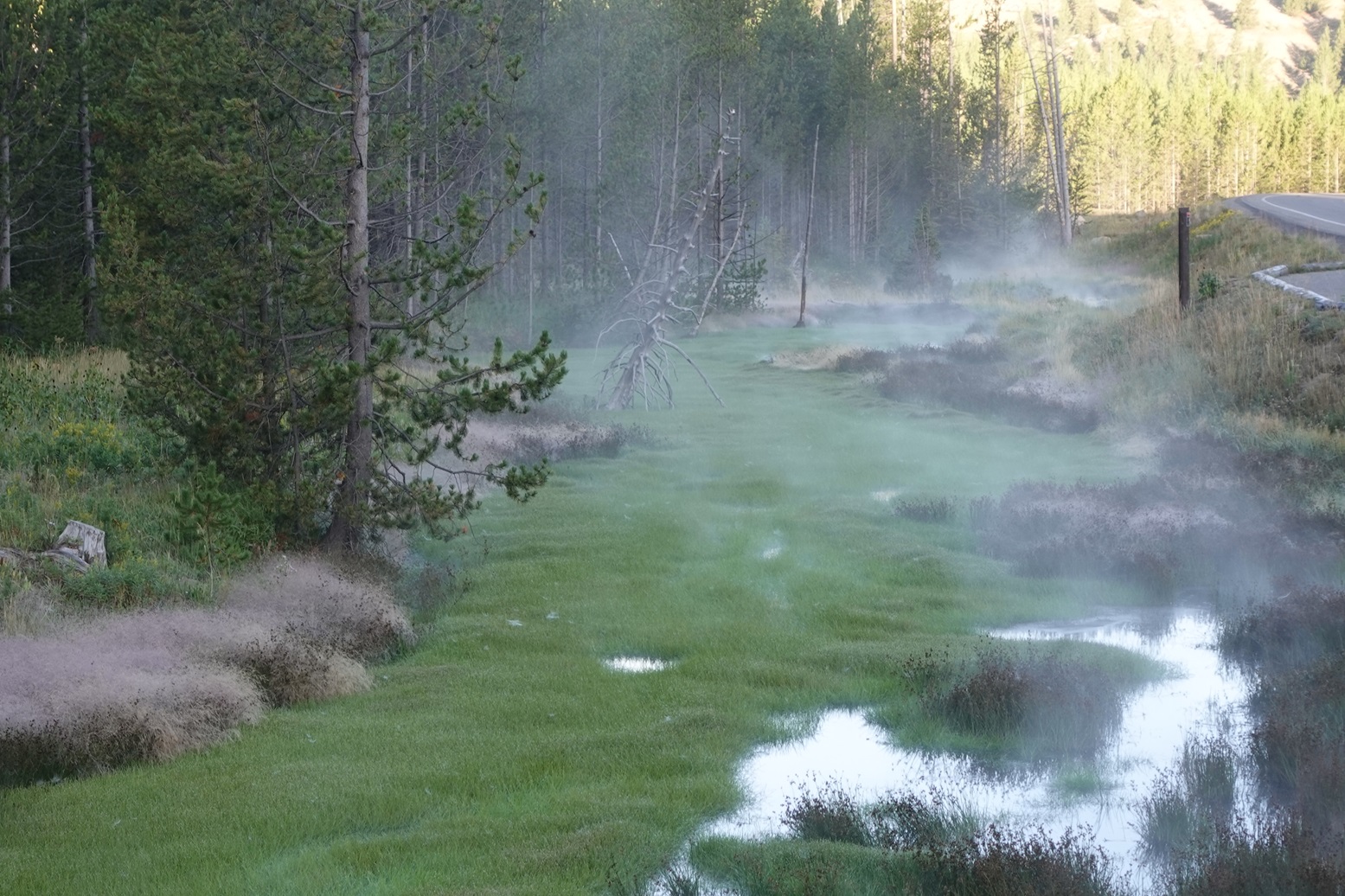
A fascinating scene. This brook by the roadside had grass, moss and mist swirling over it very artistically.
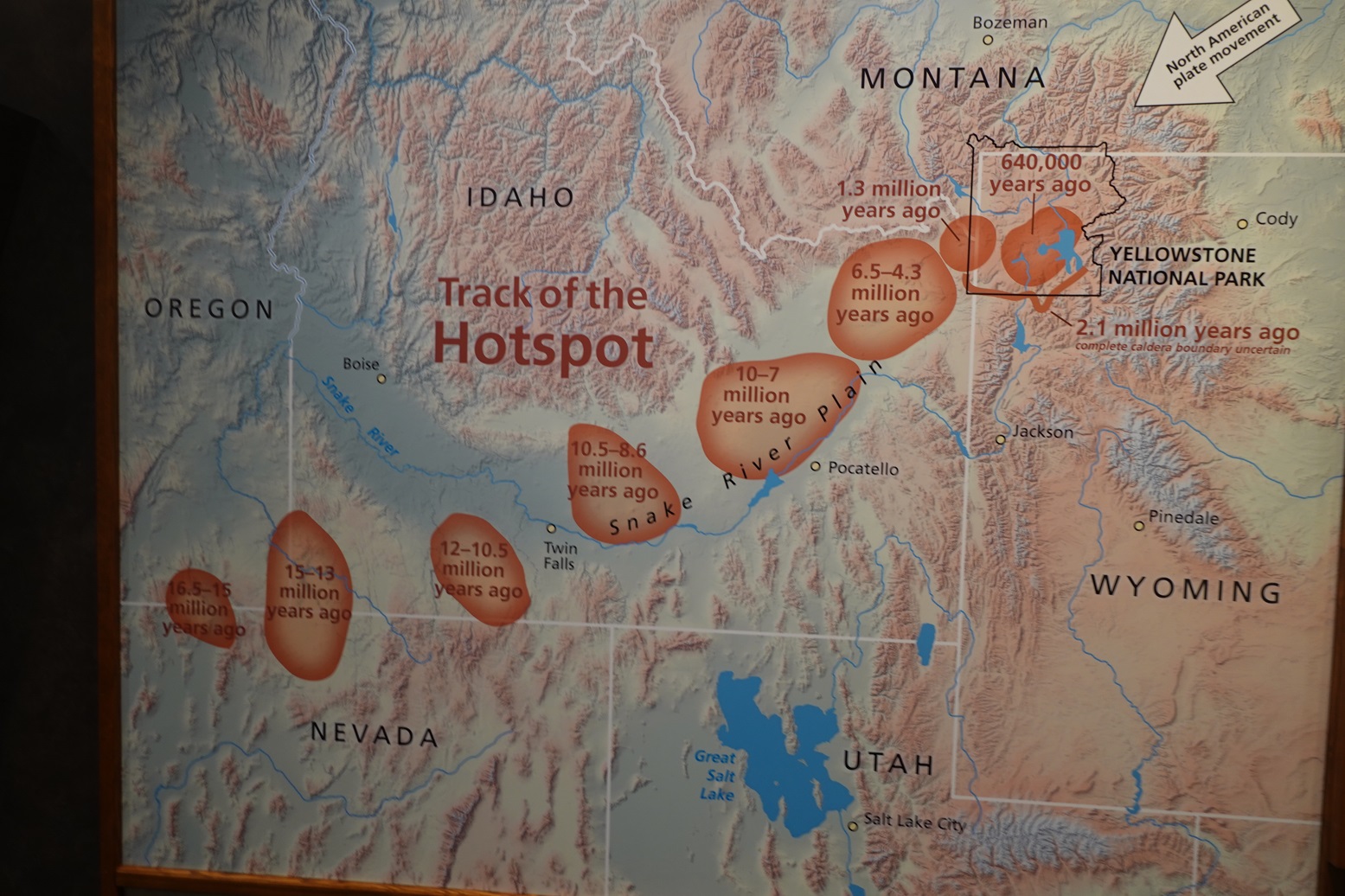
In the extensive Visitor´s Centre at Canyon Village, we spend more than an hour trying to understand more about how Yellowstone was formed. In this exhibit, there is an explanation of how the continental drift moves the crust over a mantle hotspot. Since the crust is so thin here (a mere 5-8 km, as opposed to the more usual 60-80km), the effects on the surface are more pronounced.
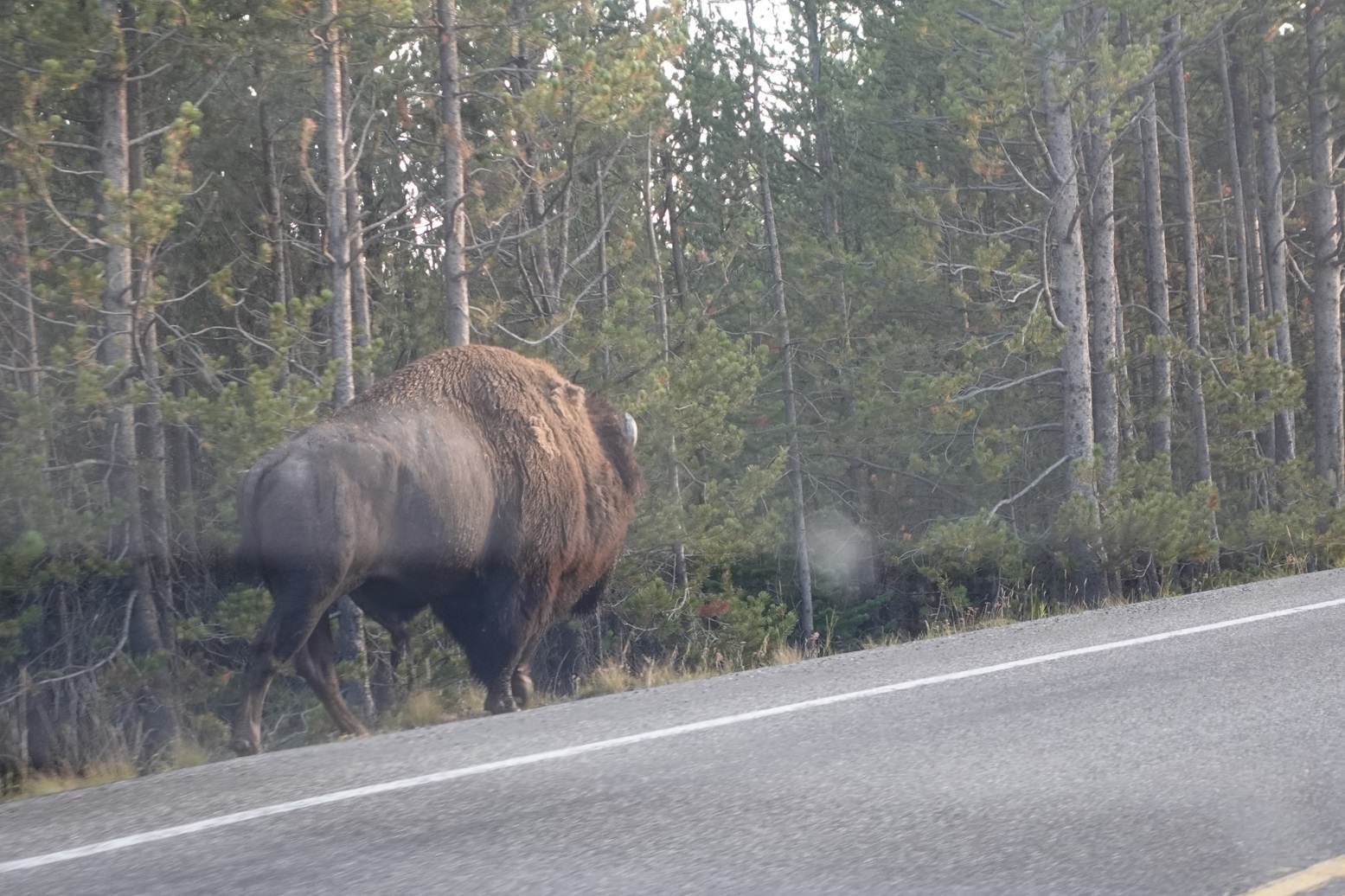
Buffalo, or Bison, are a common site in Yellowstone. There are about 3,000 of them, and we saw several today. They are dangerous to approach, but this one was on the side of the road, and I managed this quick snapshot through the car window, before a passing caravan scared him off.
Travel Diary
We travel on, first stopping at a small waterfall, then at Tower Falls, where a cliff-face bluff of volcanic tuff overlooks an idyllic valley. We make it to Canyon Village, where we have lunch of our crackers, meat and cheese, before exploring the giftshop, extensive museum in the Visitors´ Centre, and finding caffe lattes finally (in two other places, there was only the awful drip coffee). We then go to the Canyon, where I descend the 600 feet to photograph the Lower Falls from close up at the Lower Falls Brink Lookout. Then we drive home, I doing the last leg. At one point, after Madison Junction, a couple of elks block the traffic on the road, and we have the briefest glimpse of them disappearing into the forest. A ranger arrived in his pick-up to move the traffic on.