Portugal 2024
Day 4: Saturday 21 December 2024
Lisboa – Sintra
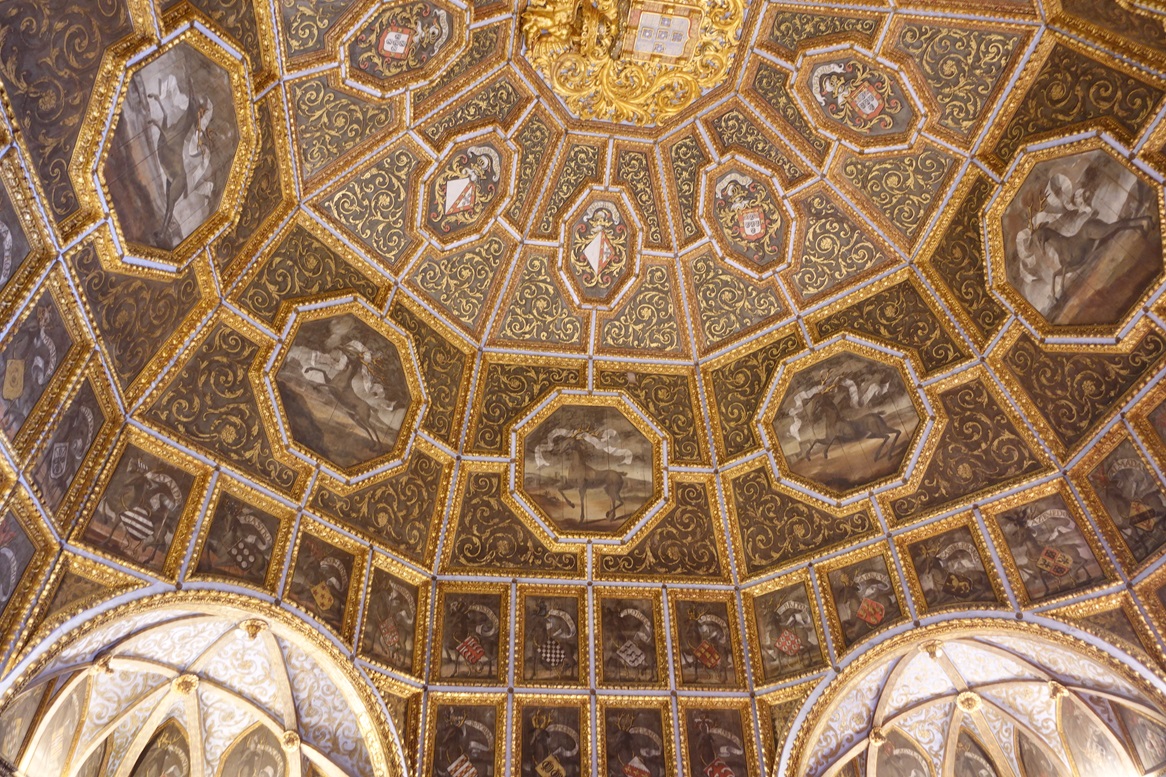
Sintra Royal Palace Sala dos Brasoes (Coat of Arms Hall). This room was constructed under the orders of King Manuel I (1469-1521, known as O Venturoso – The Fortunate), after whom the style Manueline is named. This magnificent octagonal dome was built 1517-18, and contains the coats of arms of the Portuguese nobility.
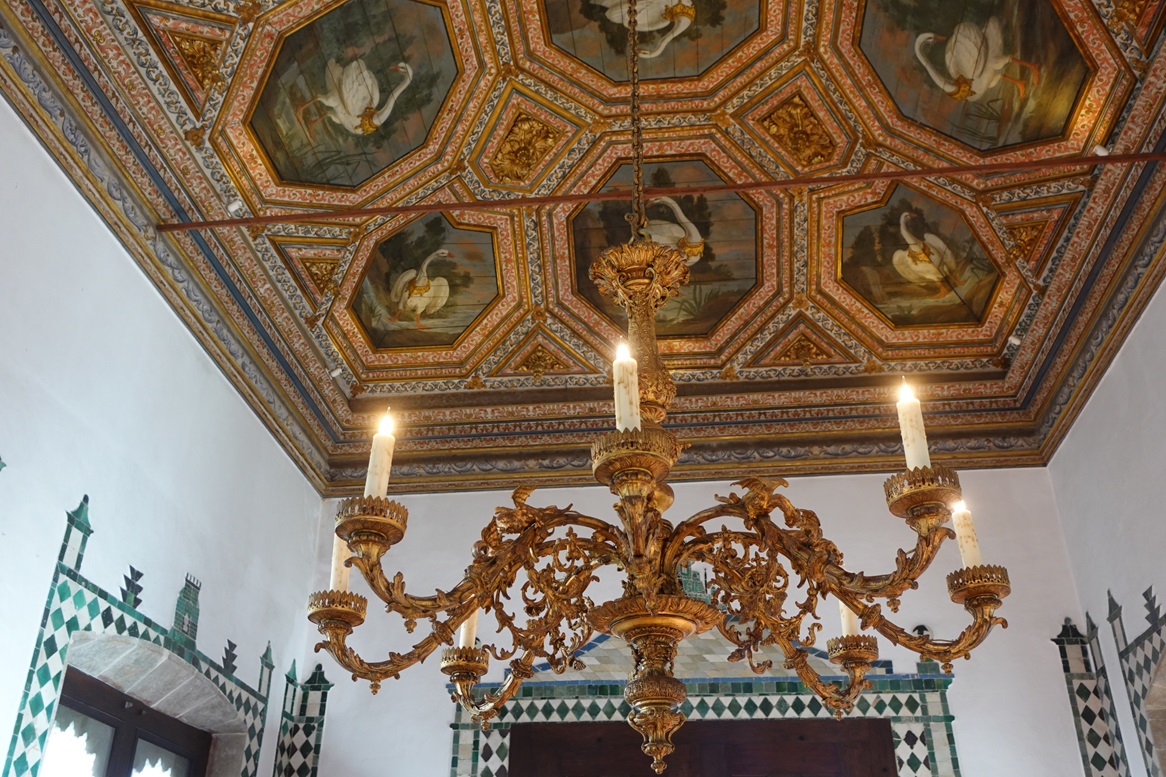
National Palace of Sintra (Palácio Nacional da Sintra) occupies the centre of attention in the old town of Sintra. The swans on the ceiling panels of Swans Hall are of uncertain origin, but may date from the 14th century and Queen Philippa of Lancaster (1360-1415), married to King Joao I, and the only English woman to sit on the throne of Portugal. The swan was the emblem of Henry IV of England, the brother of Philippa. MAP
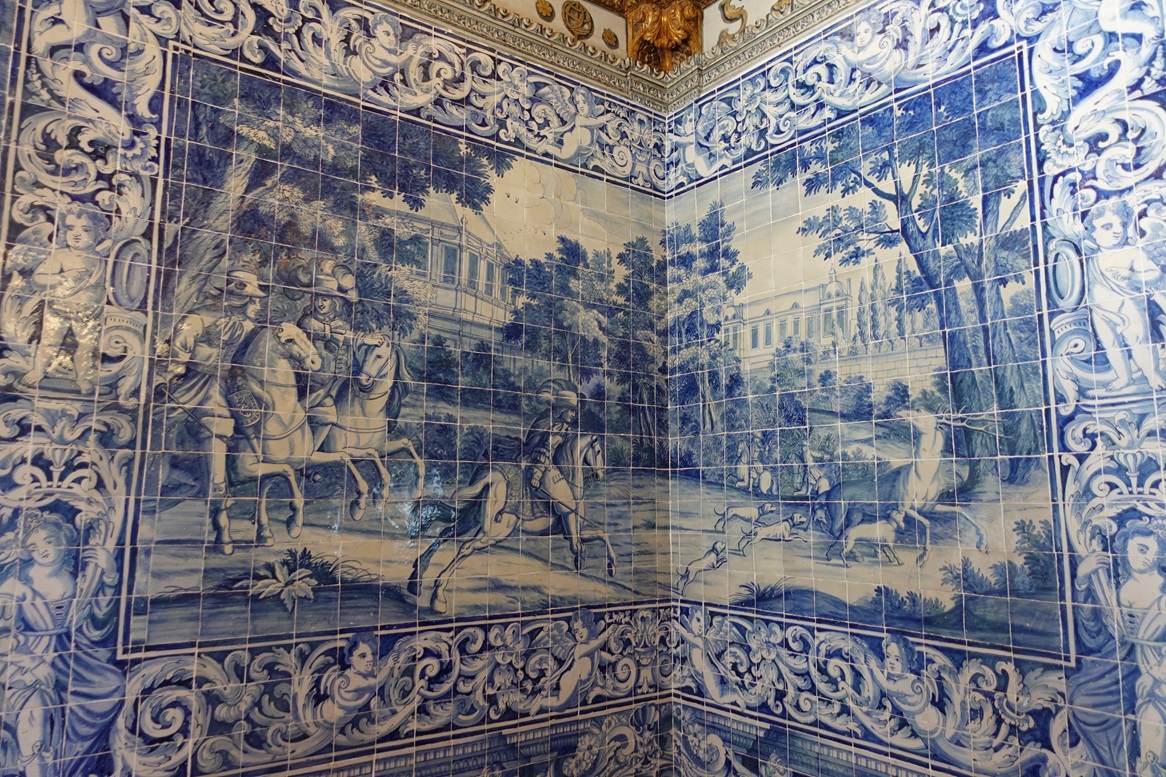
Sintra Royal Palace has many decorative styles, often portraying animals, birds, and hunting scenes. These tiles form a hunting scene, and sits in the corner of the room.
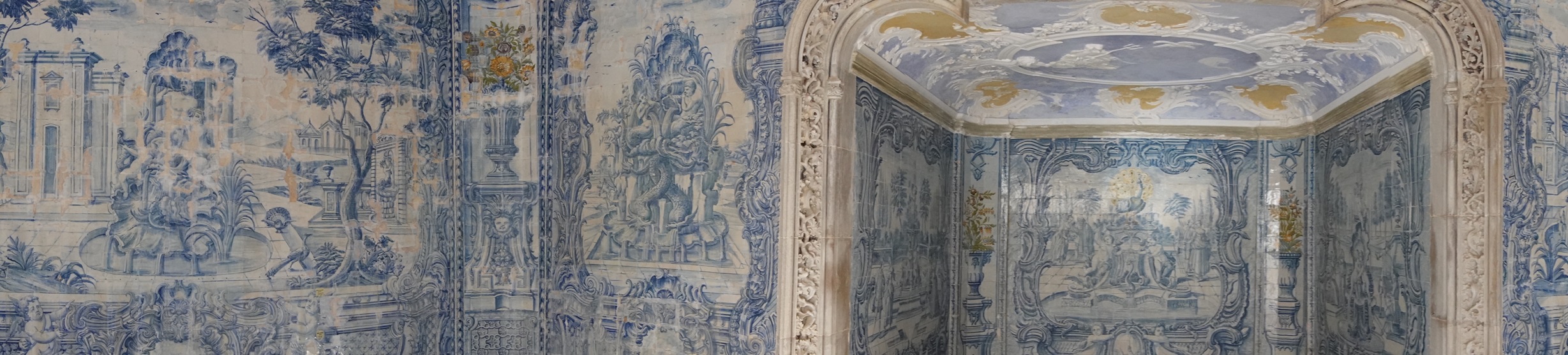
Sintra Royal Palace Sala dos Brasoes (Coat of Arms Hall). This room´s lower section was decorated entirely with azulejo tiles in the Manueline style (early 16th Century). The room features the heraldic symbols of the Portuguese noble families, and as such is one of the most artistically significant heraldic rooms in Europe.
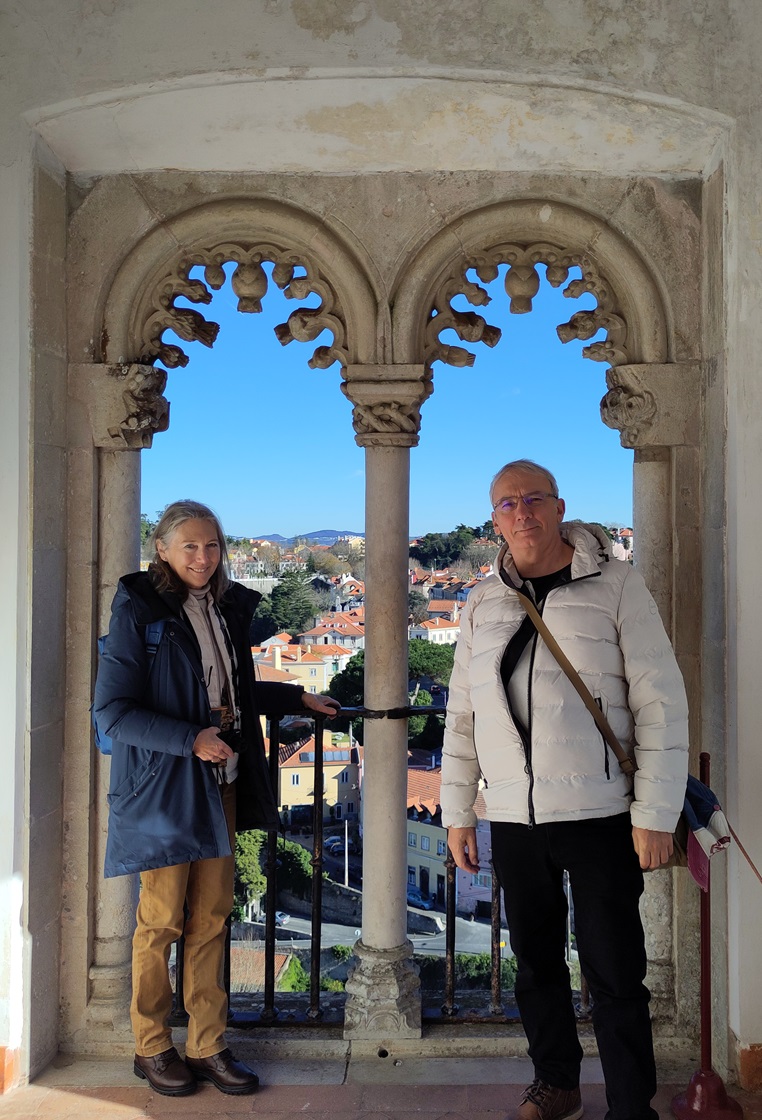
Cindy and Andrew at the Palácio Nacional da Sintra. The Moorish influence was everywhere to be seen.
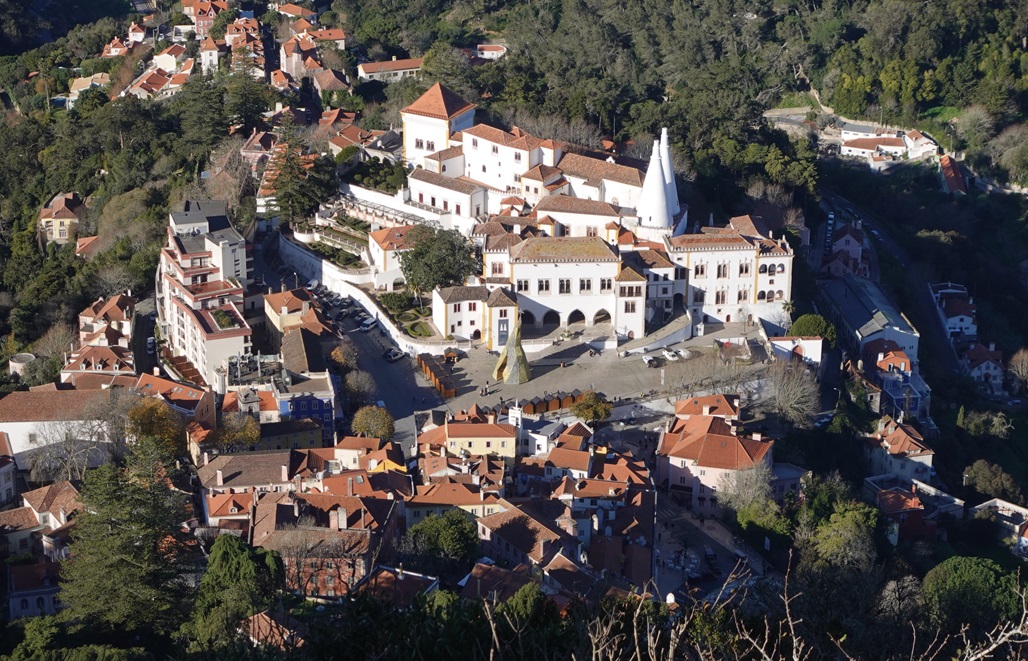
View of Sintra and the Palace of Sintra from the Castle of the Moors
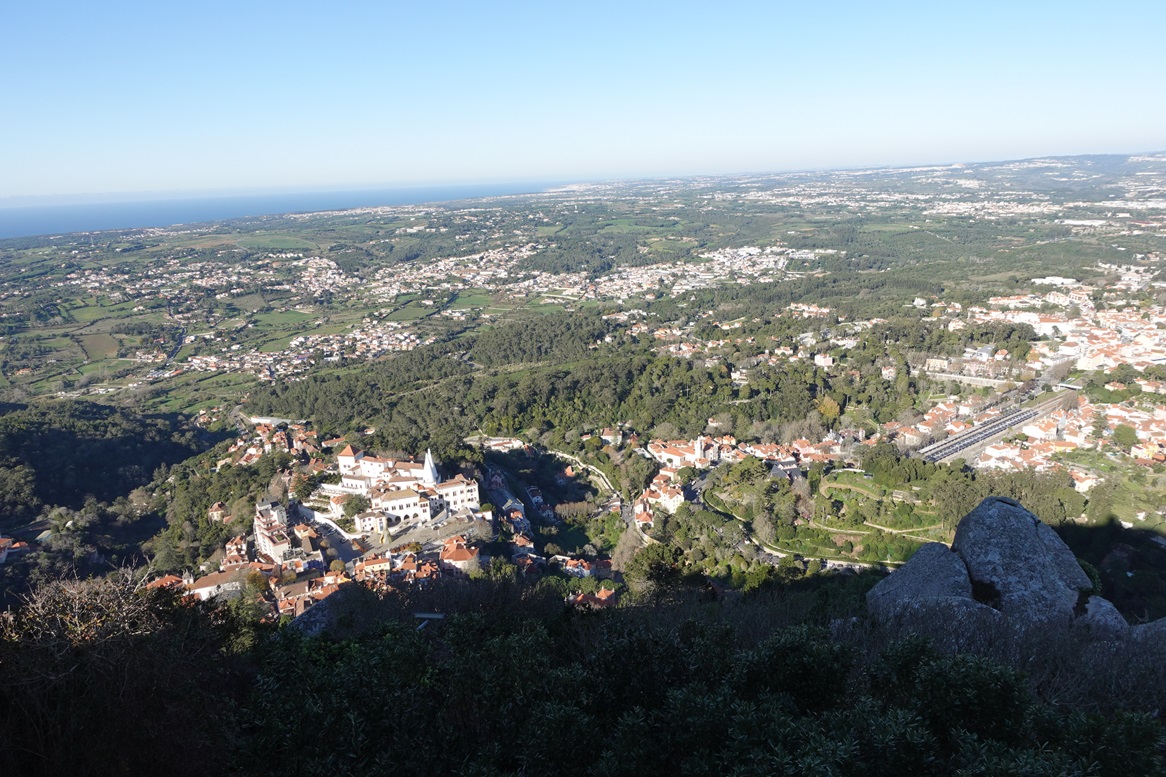
View of Sintra from the Castelo dos Mouros (Moors Castle), on the slopes of the Serra mountain. This 8-10th century castle was built to defend against the Reconquista Spanish, and after changing hands several times, fell to the Christians in 1147.
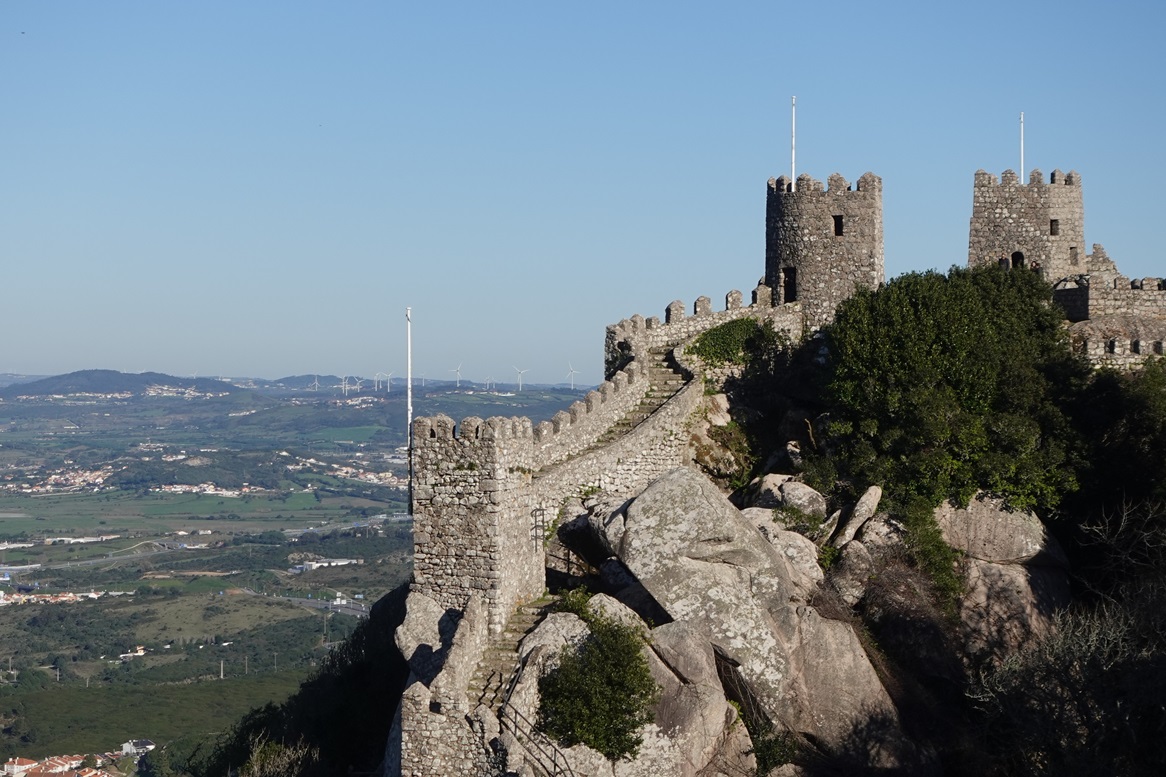
Castelo dos Mouros (Moors Castle) walls, with a splendid view, encompassing the Atlantic Ocean to the west, the Sintra plain to the north, and Lisboa and the Tagus River to the east. No wonder this castle was of such strategic importance to both sides.
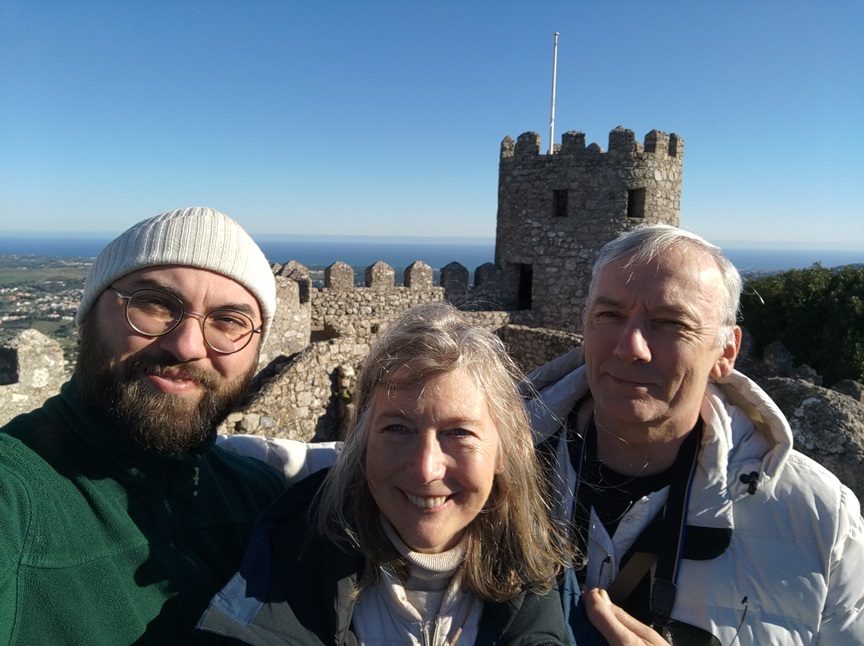
Family Bone at the Castelo dos Mouros: Sean, Cindy, Andrew
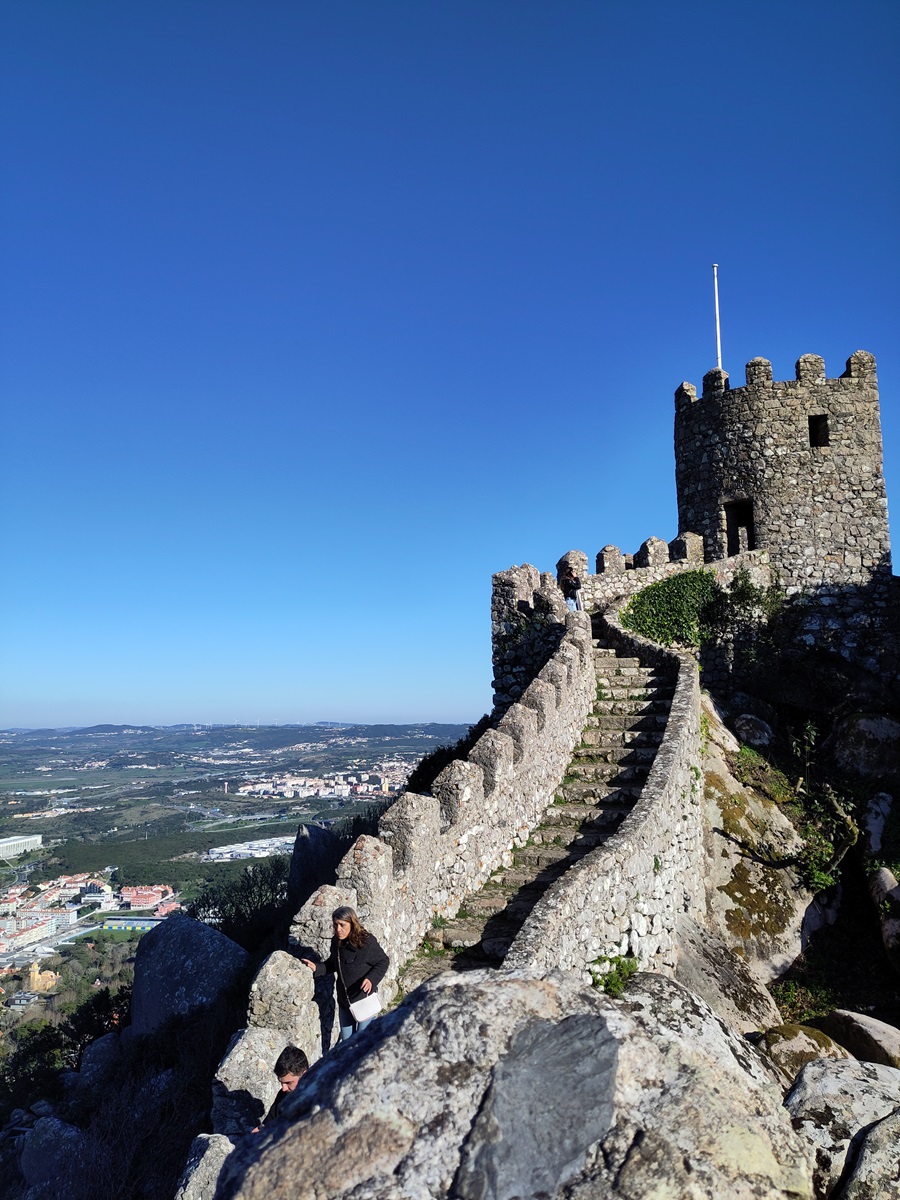
Castelo dos Mouros. King Ferdinand I ordered the rebuilding of the castle in 1375, but subsequent to this the strategic importance of the fortress began to diminish. Despite being 25 km from Lisbon, the 1755 Lisbon earthquake caused damage to the chapel and undermined the stability of the castle.
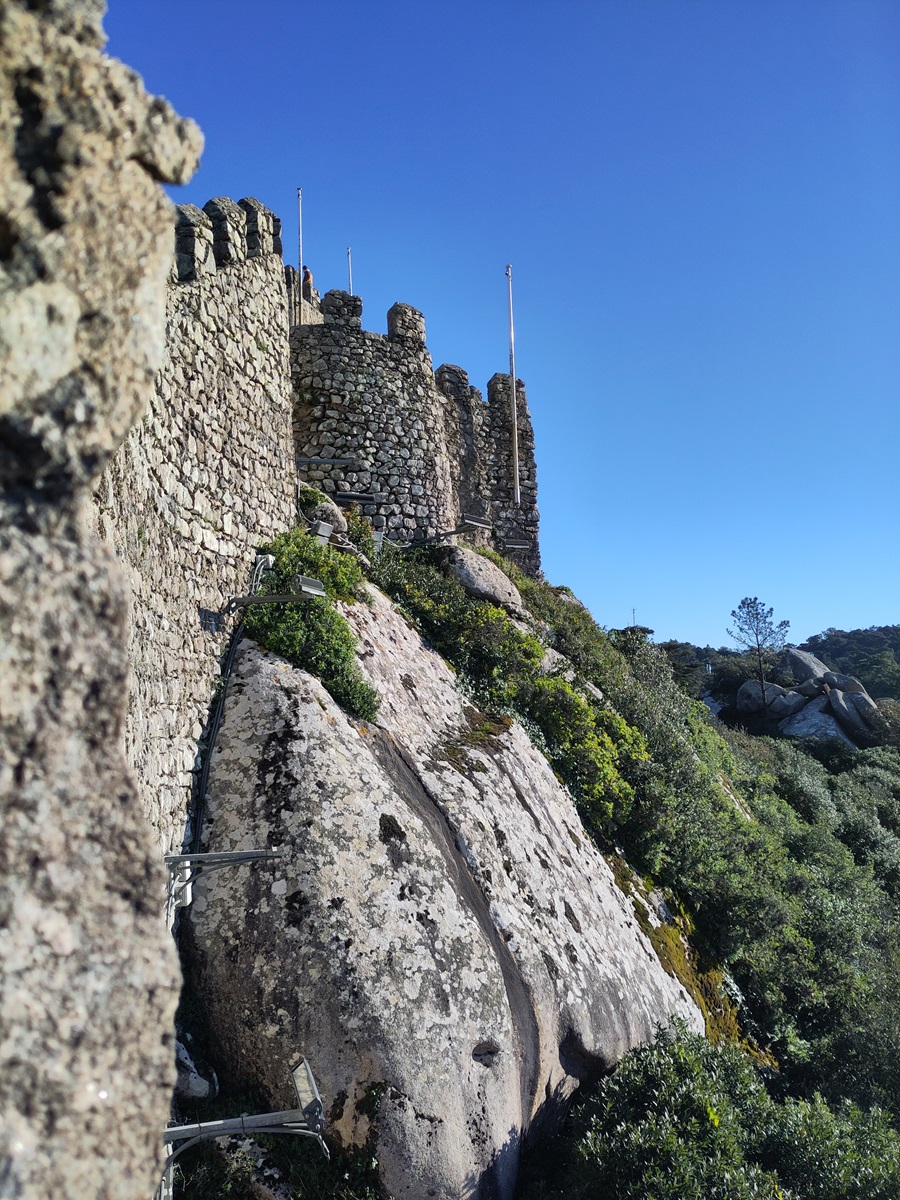
Castelo dos Mouros. In 1840, King Ferdinand II took up the task of rebuilding the towers, which were in ruins, and creating the excellent romantic atmosphere of the castle and park around it, enjoyed by flocks of tourists today.
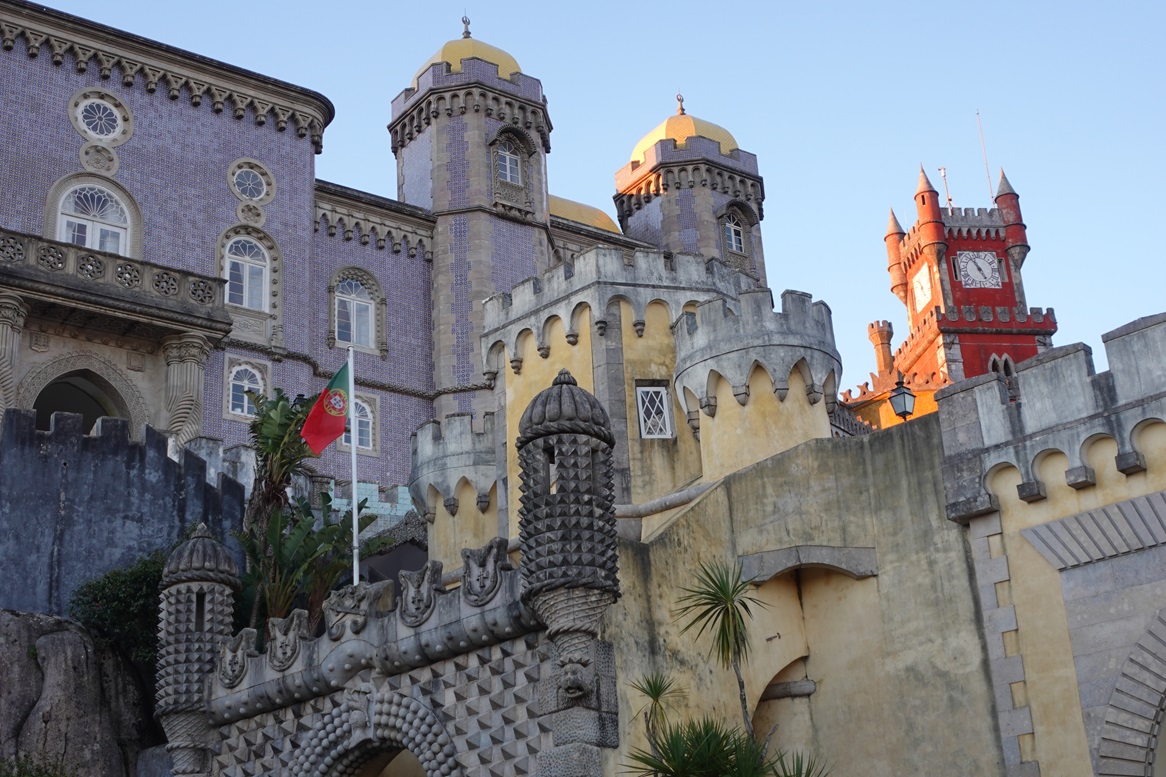
Palácio Nacional da Pena sits high up on a peak in the Sintra Mountains, with unhindered views all around. It is a 19th-century romanticism monument, and one of the Seven Wonders of Portugal. It is still used for state occasions by the President of the Portuguese Republic (currently Marcelo Rebelo de Sousa since 9 March 2016).
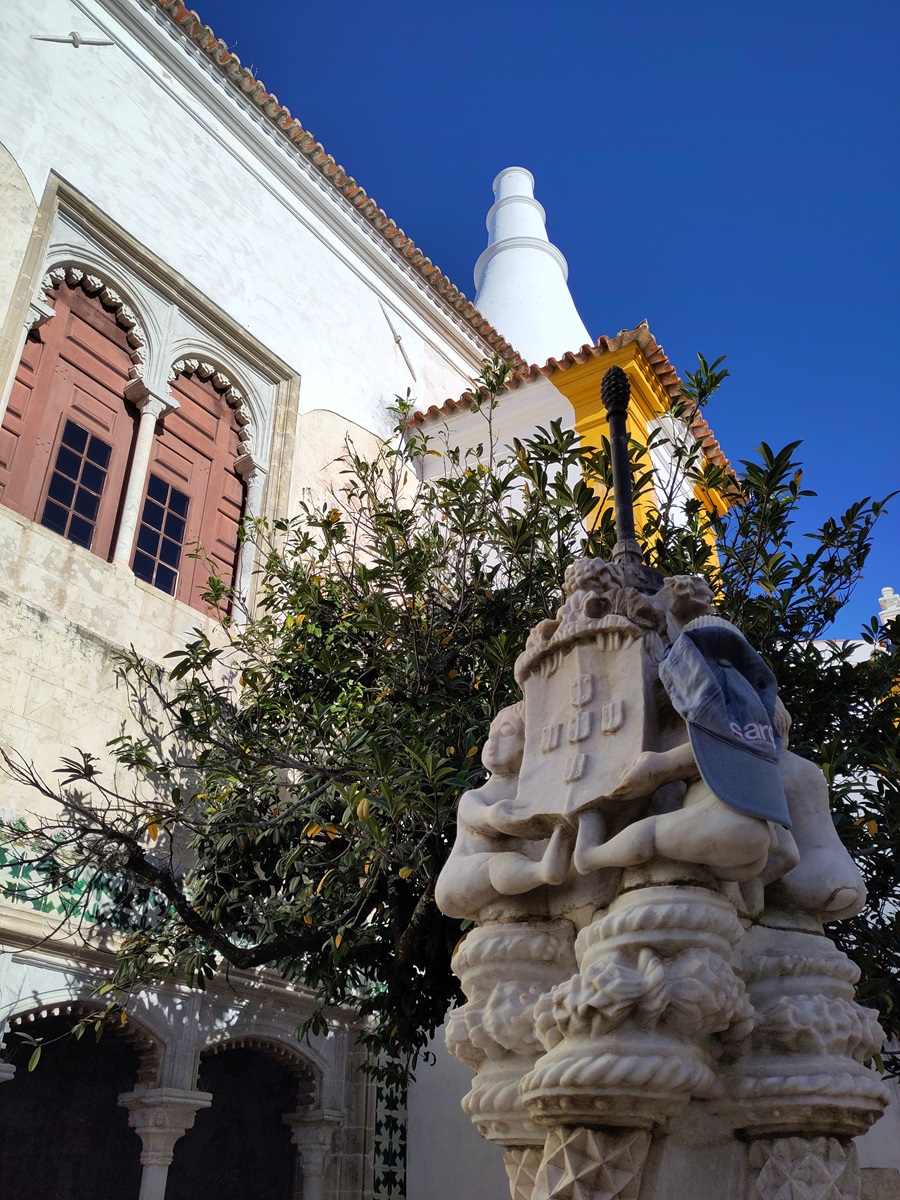
Palácio Nacional da Sintra. One of the two iconic chimneys rising from the kitchens can be seen.
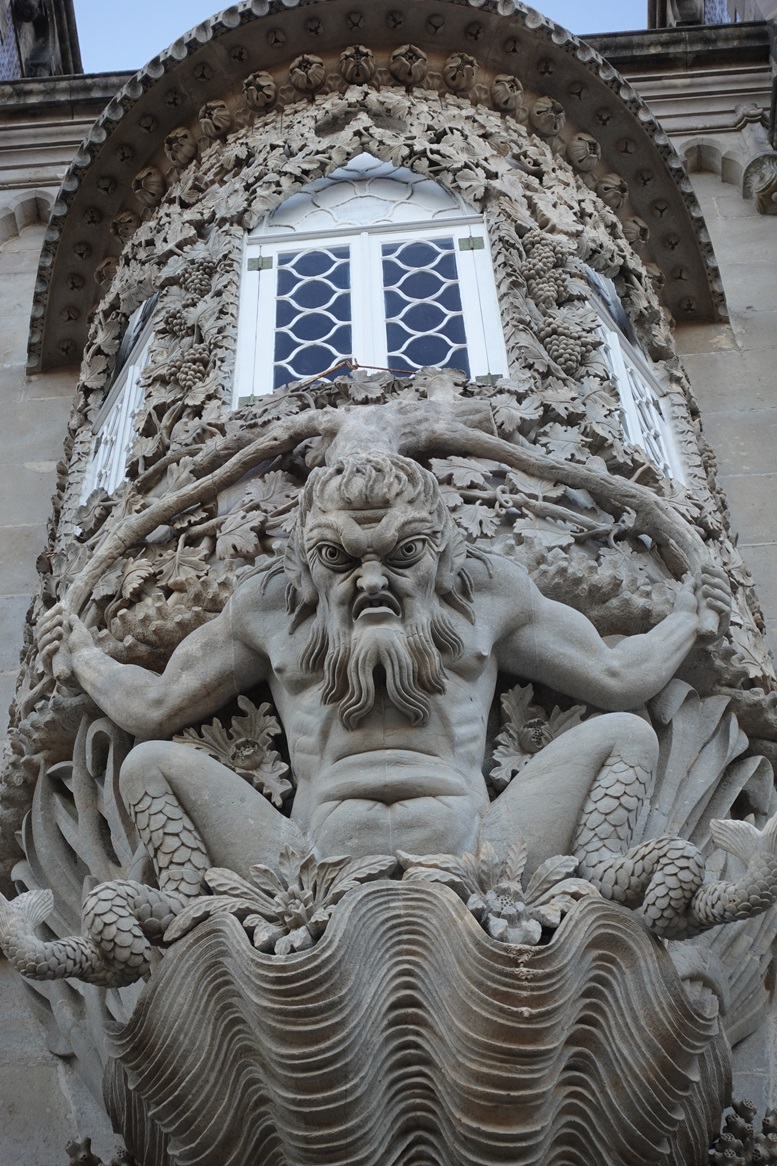
Palácio Nacional da Pena. A 19th century artistic eccentric indulgence by the royal family. The castle dates back to the Middle Age, and Manuel I ordered a monastery, Order of Saint Jerome, to be built there in 1493. The monastery was damaged by lightning and then shortly afterwards by the 1755 Lisbon earthquake, reducing it to ruins. Ferdinand II acquired the old monastery, the surrounding lands (now a park), the Castle of the Moors, and some other estates, and turned the monastery into a palace, as a summer residence of the royal family.
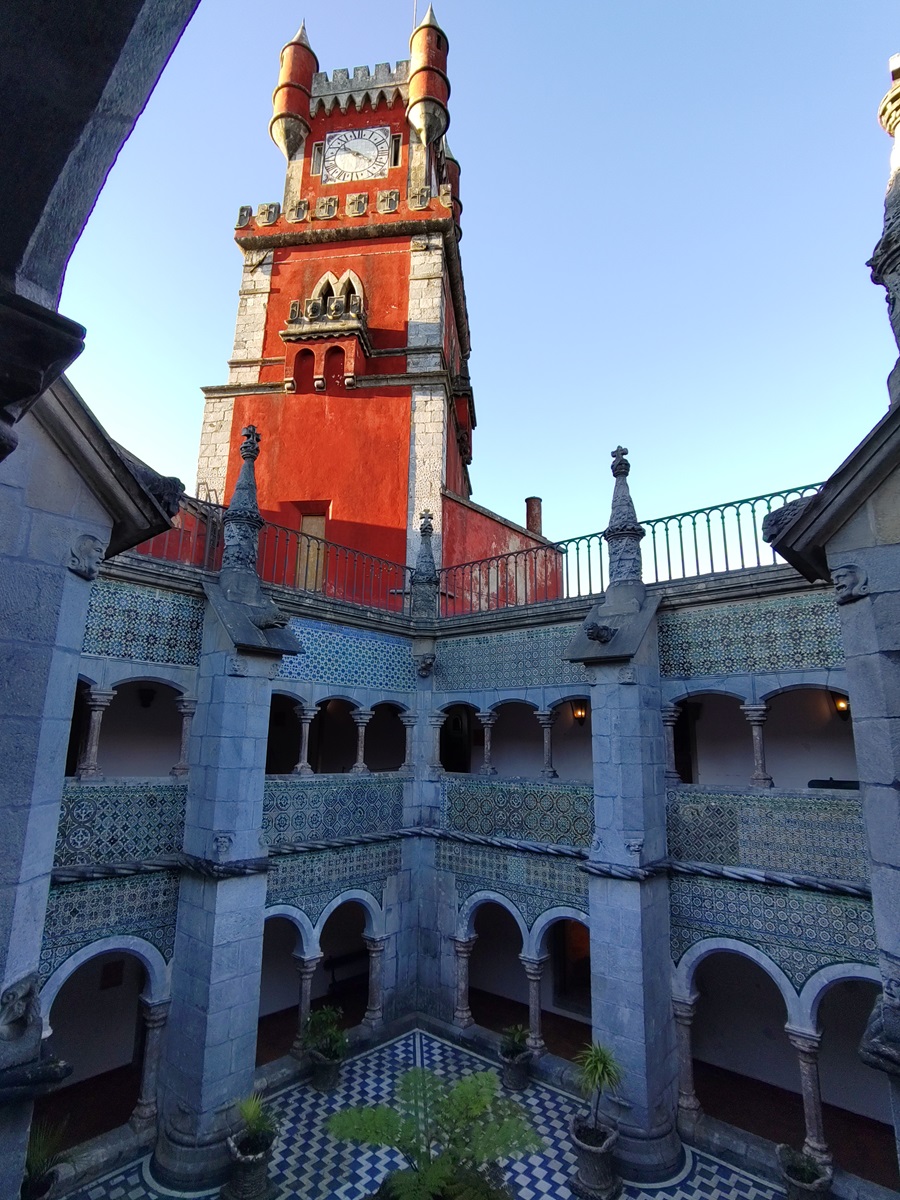
Palácio Nacional da Pena. In 1889, the palace was purchased by the Portuguese State, and in the aftermath of the Republican Revolution of 1910, it became a national monument, and turned into a museum. The last queen of Portugal, Queen Amélia (1865-1951) spent her last night at the palace before leaving the country in exile, in 1910.
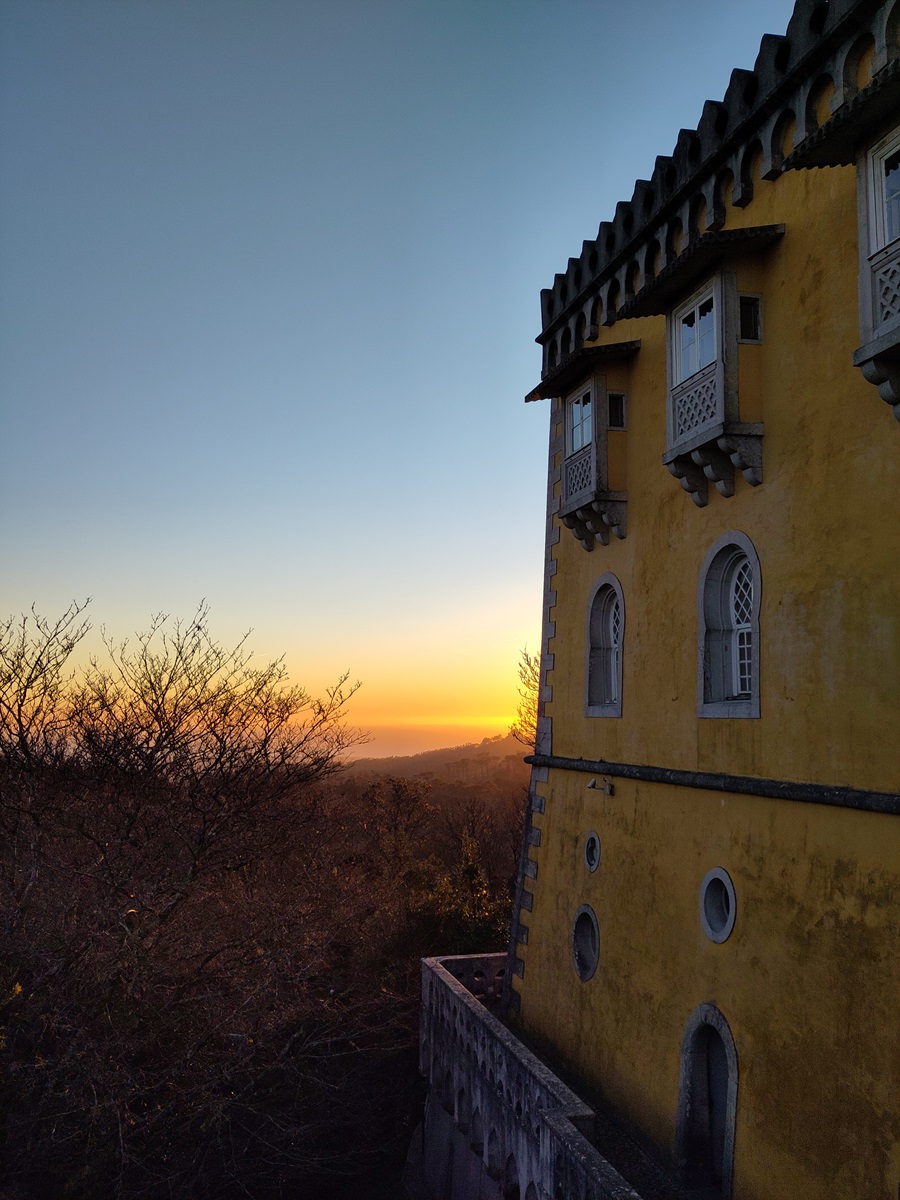
Sunset over the Atlantic seen from Palácio Nacional da Pena
Travel Diary
Train to Sintra
We walk north to take a train to Sintra. Initially fairly empty, it fills with people, it seems mainly African or Brazilian immigrants, heading to the endless suburbs of densely packed high-rise apartment blocks that line almost the entire 30km route to the tourist town of Sintra.
On steep slopes, Sintra lies at the foot of the Serra mountain chain. We see the battlements of the Moorish Castle on its peak, and walk around to the town through the waiting hordes of tourist services: tuk-tuks, buses, horse-drawn carriages, and a long line of vendors of junky souvenirs. The Sintra National Palace (MAP) is the main attraction, and was the royal residence outside of Lisbon till the royal family was removed from power following the 1908 assassination of the king, Carlos I (reigned 1889-1908), and the success of the revolution which followed.
Manuel I of Portugal
Reigned from 1495 till 1521 (House of Aviz). Known as O Ventuoso, or The Fortunate, Manuel gave the name to the artistic and artchitectual style Manueline, but is distinctive in defining the grandeur or the new Portuguese Empire, as opposed to the underdog medieval Portugal. He was the sponsor of Vasco da Gama, who discovered the sea route to India in 1498, which led to the creation of the Portuguese India Armadas, giving Portugal a monopoly in the spice trade. Manuel also oversaw the Portuguese colonization of what was to become Brazil, and Goa in India, as well as the establishment of a world-first trade empire around the globe.
I am busy now
Estou occupado agora
This flower is beautiful
Esta flor é bonita
Let’s take a walk down the street
Vamos dar um passeio pela rua
I am at work
Estou no trabalho
He runs fast
Ele corre rapido