Portugal 2024
Day 9: Thursday 26 December 2024
Lisboa
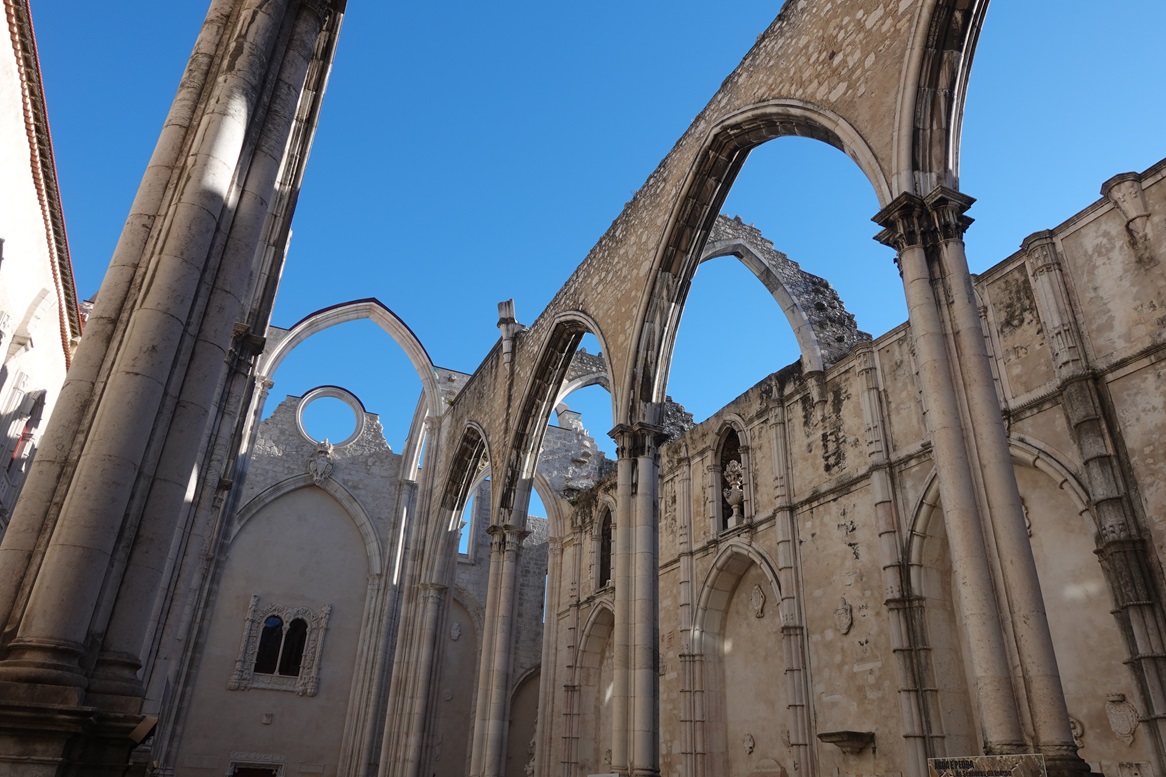
The ruins of the Igreja do Carmo (Carmelite Church). These arches are a salient feature of the skyline overlooking Lisbon, and are the only parts of the roof to withstand the earthquake of 1755, a testimony to the engineering strength of gothic arches. The church was founded in the late 14th century by a legendary soldier turned monk of the Carmelite Order, Nuno Alvares Pereira.
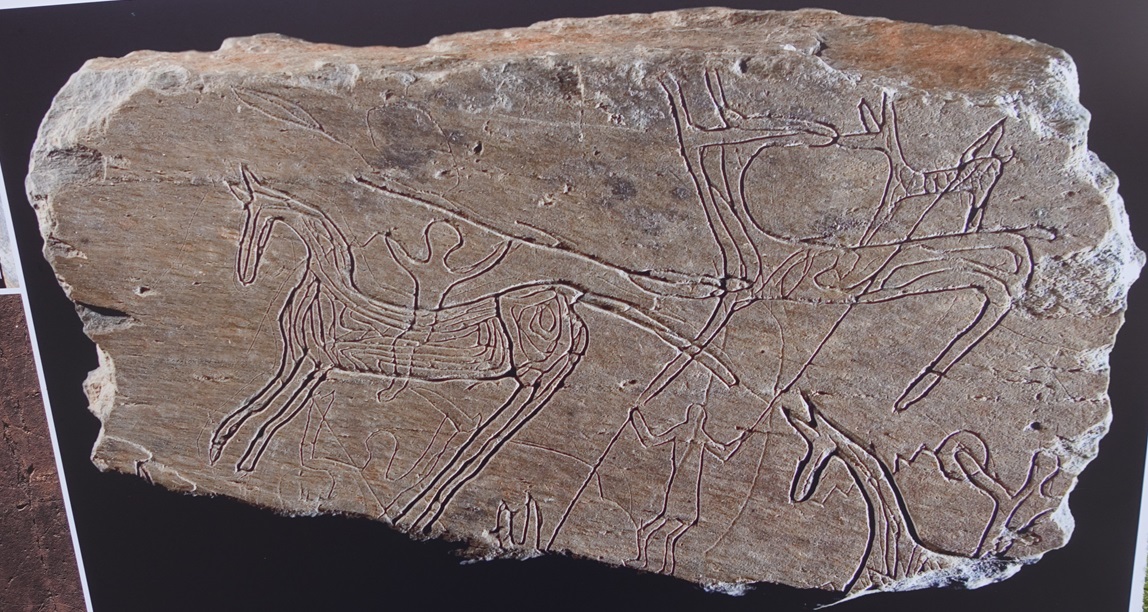
The Igreja do Carmo houses an interesting archeological museum, the Museo do Carmo. Along with many findings from the Bronze Age inhabitants of this land, rock carvings dating back as much as 50,000 years have been found.
In the museum, a display and film relates the struggle in the 1990s to prevent the loss of paleolithic rock carvings found in north-eastern Portugal, in the Côa Valley, threatened by the proposed construction of a dam. Despite efforts to cover up the findings, and to disguise the actual age, an international outcry led to UNESCO declaring the area a World Heritage Site, and the cancellation of the dam.
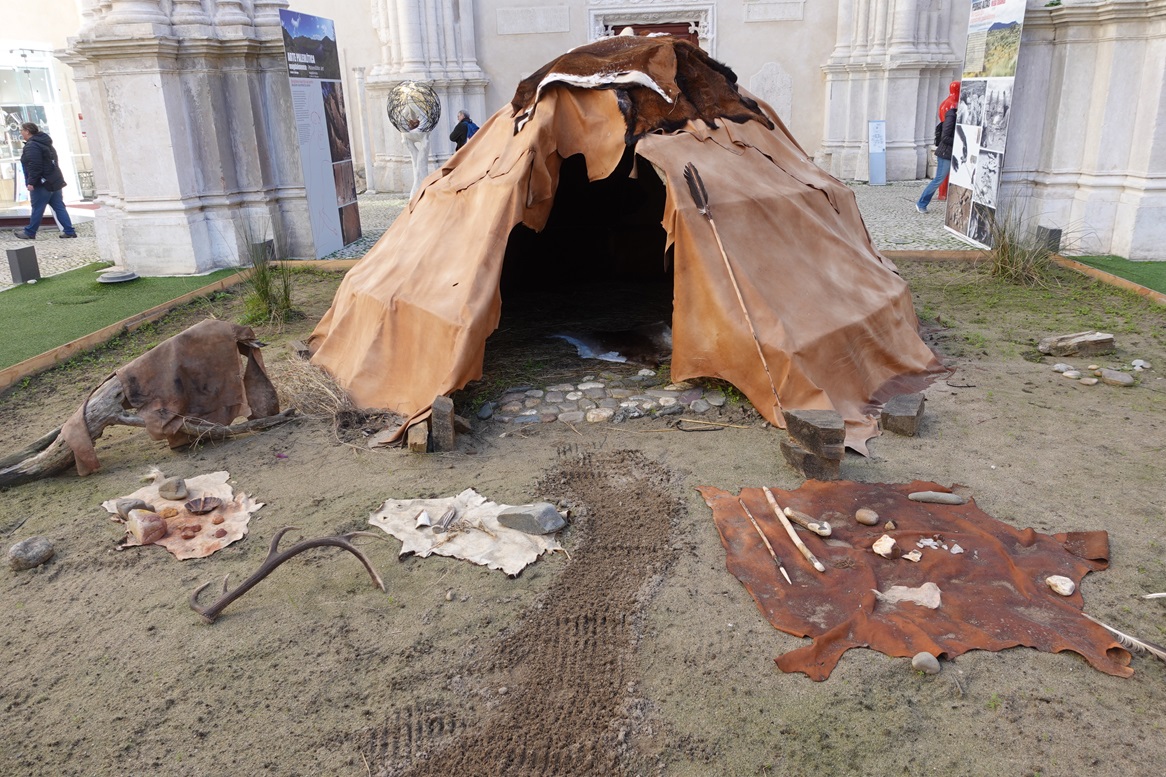
This replica of a Bronze Age camp was set up in the apse of the ruins of the Carmelite church.
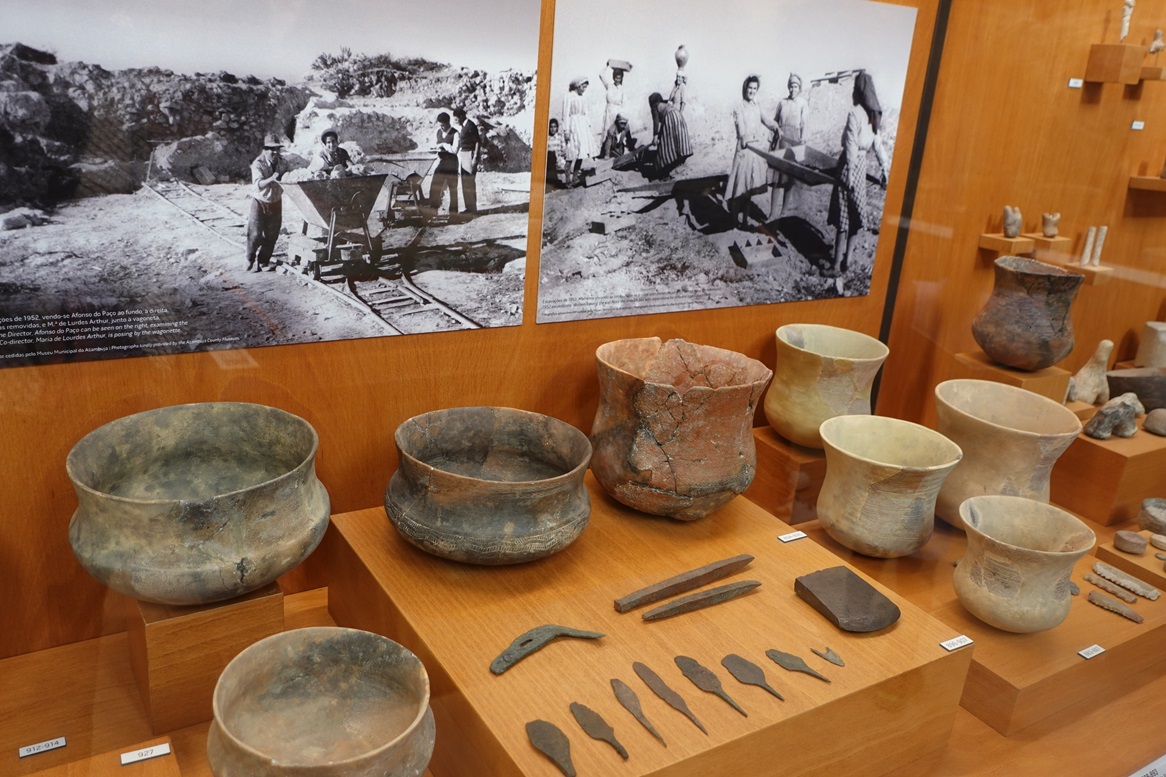
Excavation findings from the Bronze Age, with photos of the people who laboured to bring them to light.
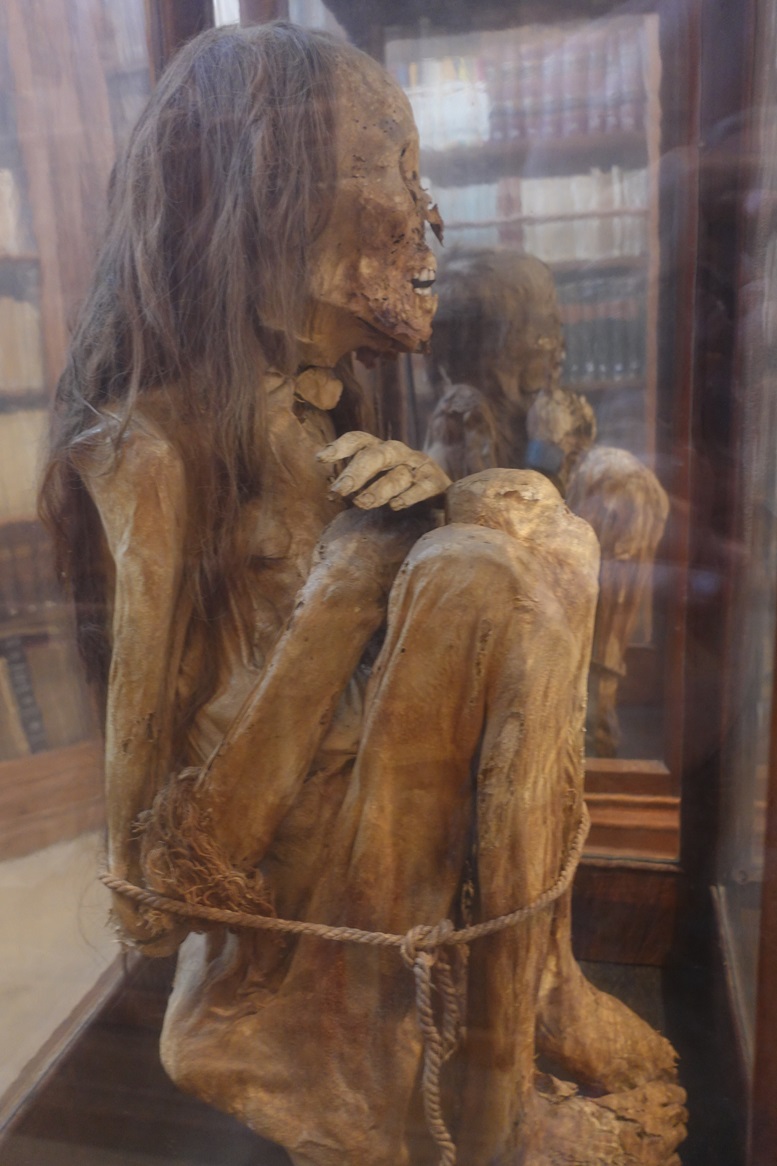
The Museo do Carmo also houses collections of archeological treasures from Peru, such as this 16th century mummy of a young girl.
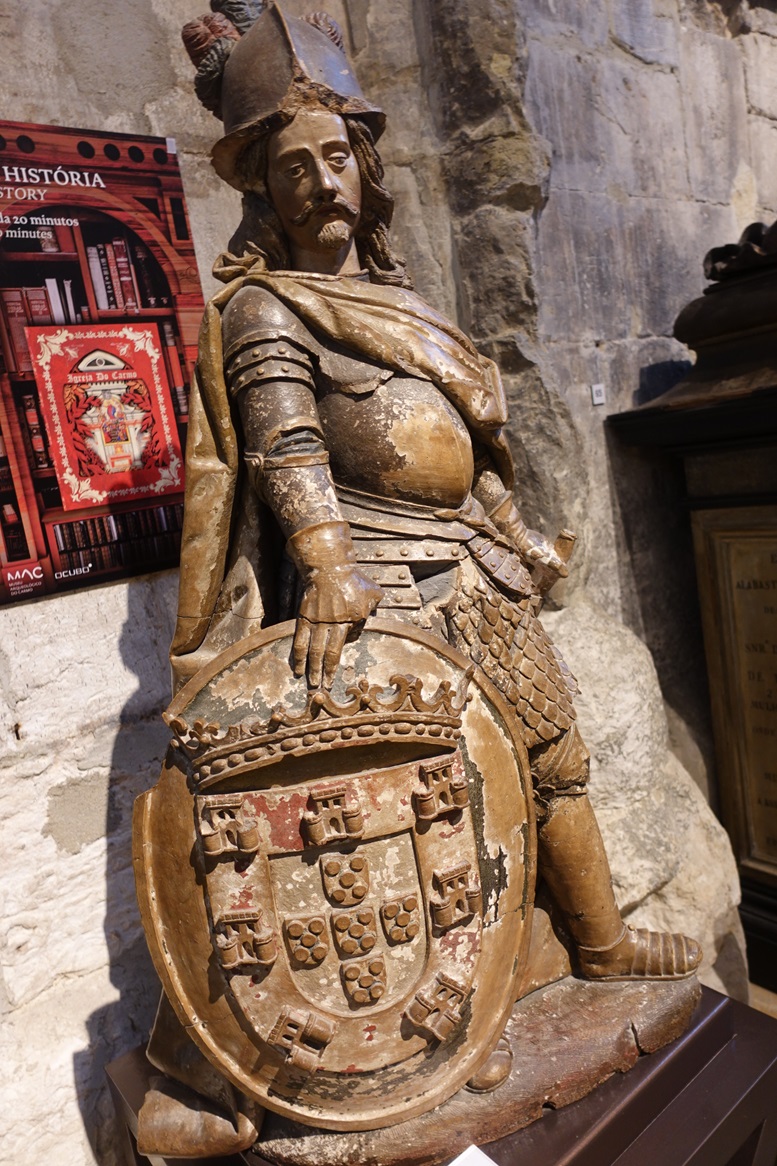
King Joao IV, 18th century
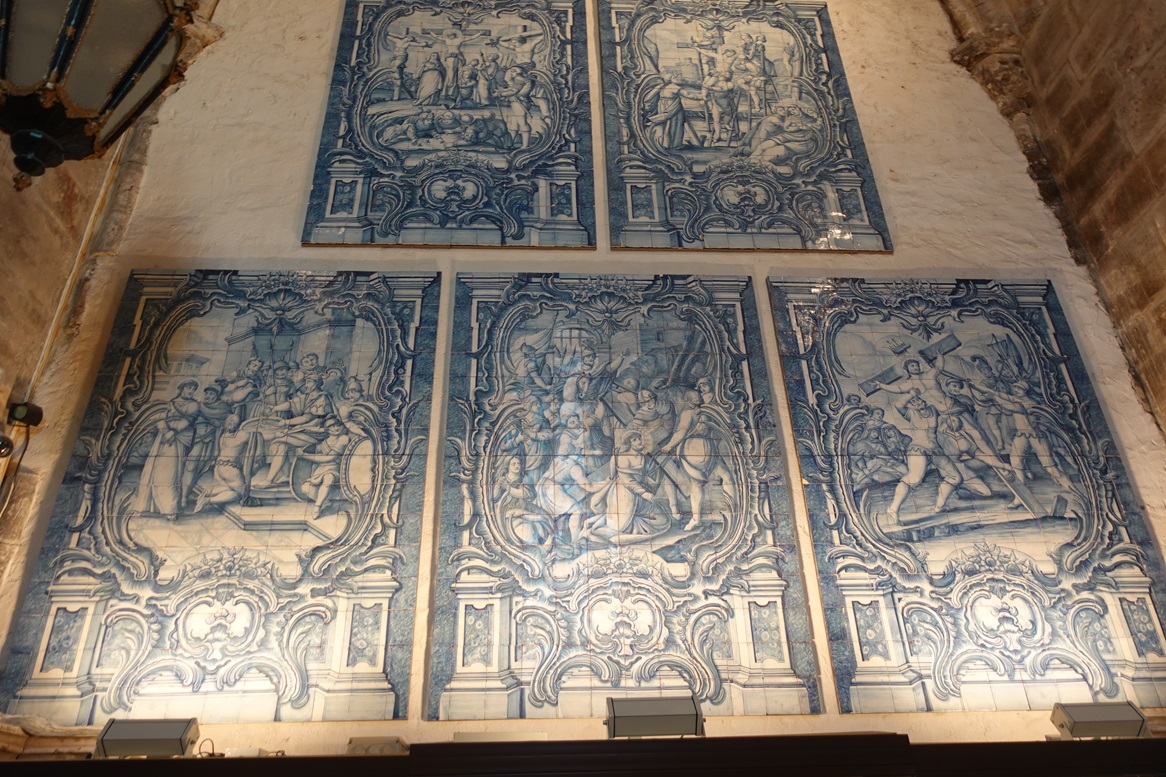
Tile composites have long been used by the Portuguese to tell stories, also in churches.
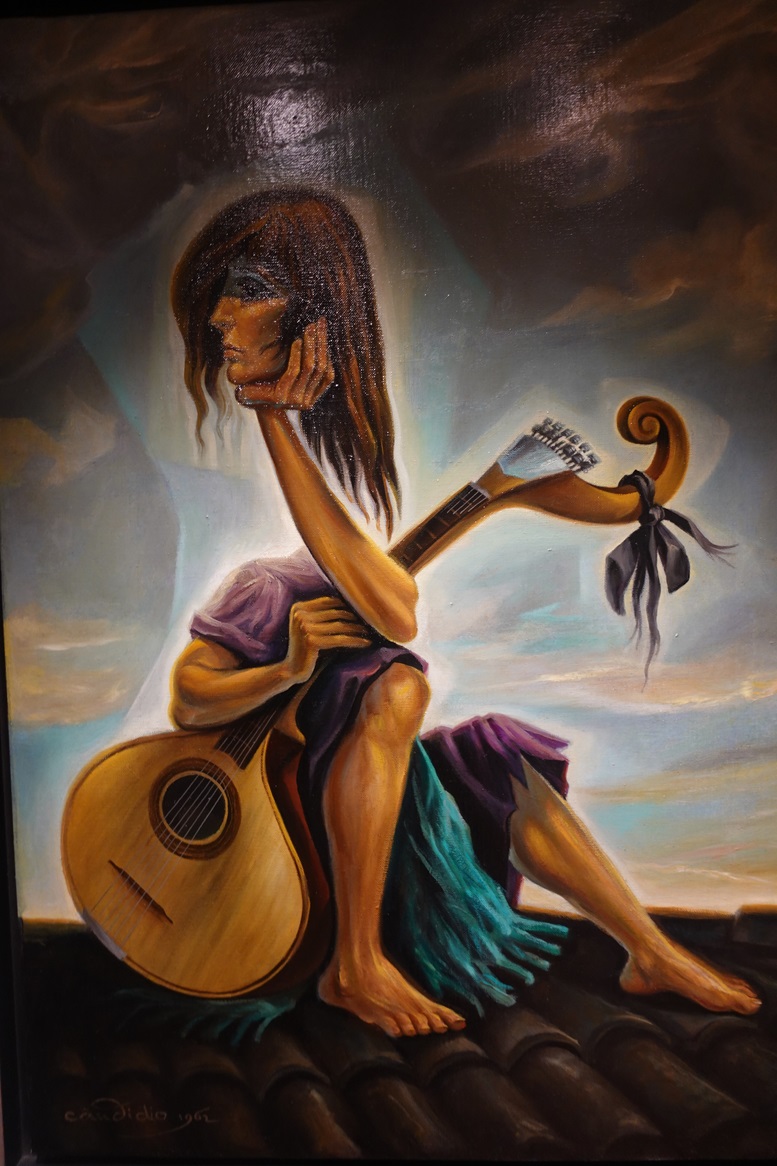
Museo do Fado, Lisboa. The Portuguese are rightly proud of Fado, a form of nostalgic poetry sung to the accompaniment of guitars. The museum also displays modern art work celebrating the artform. This one caught my eye, as I believe it correctly captures the essence of saudade (nostalgia). Sem Titulo (Untitled), 1962, Cândido da Costa Pinto.
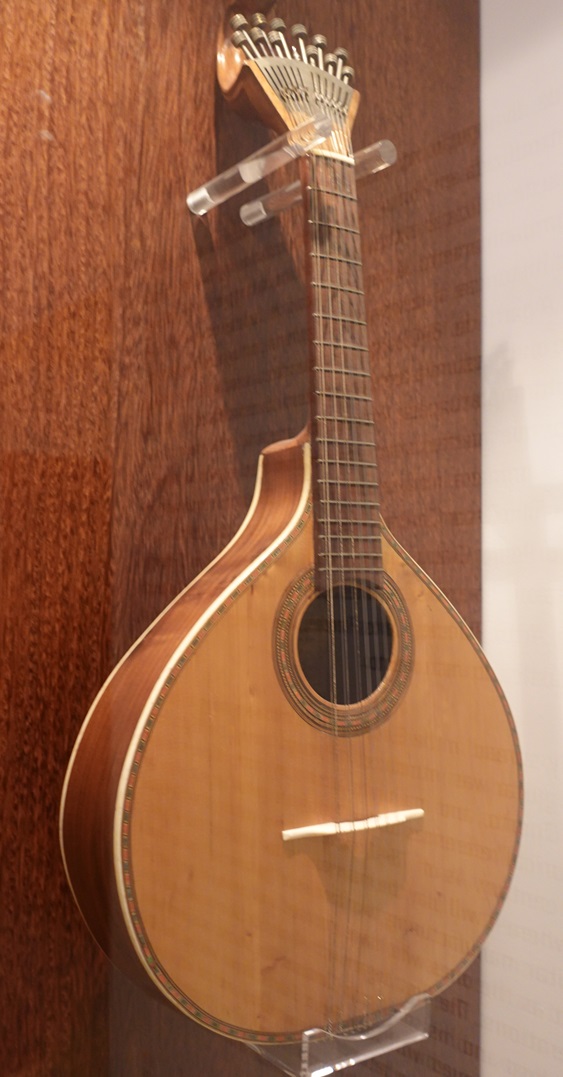
The Museo do Fado has an impressive display of Portuguese guitars: small and half-way to a mandolin.
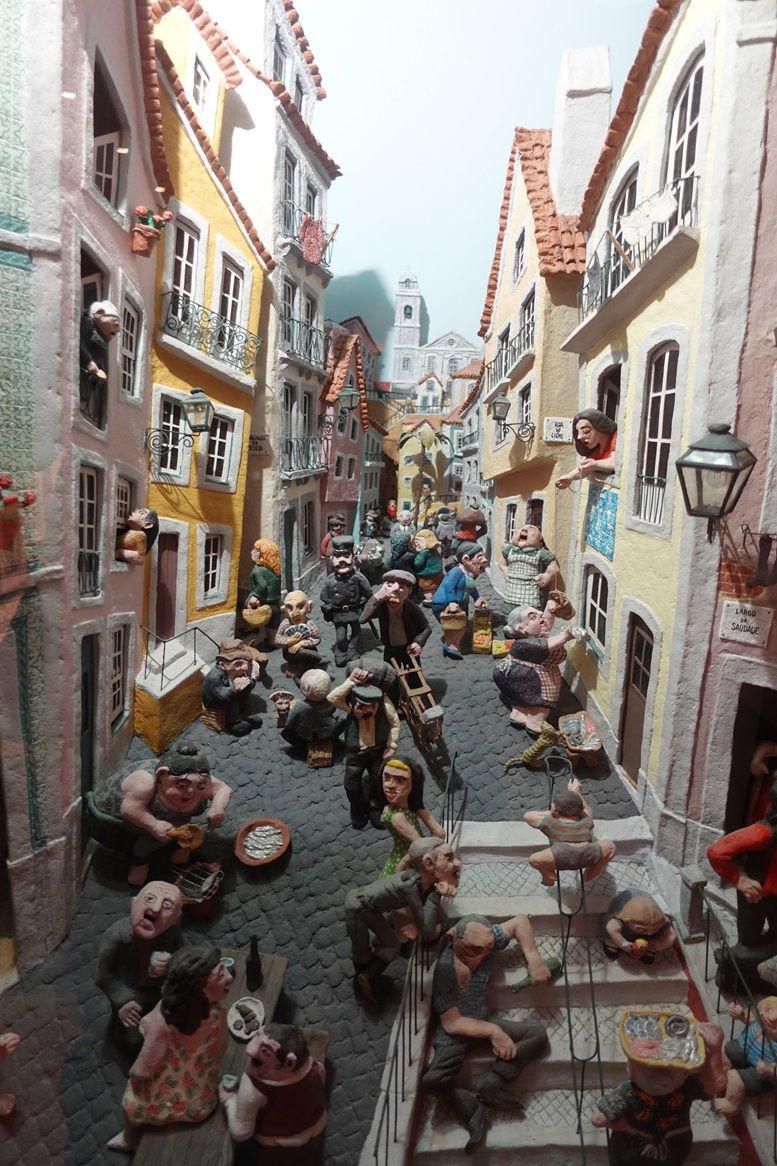
A street scene panorama in the Museo do Fado, Lisbon
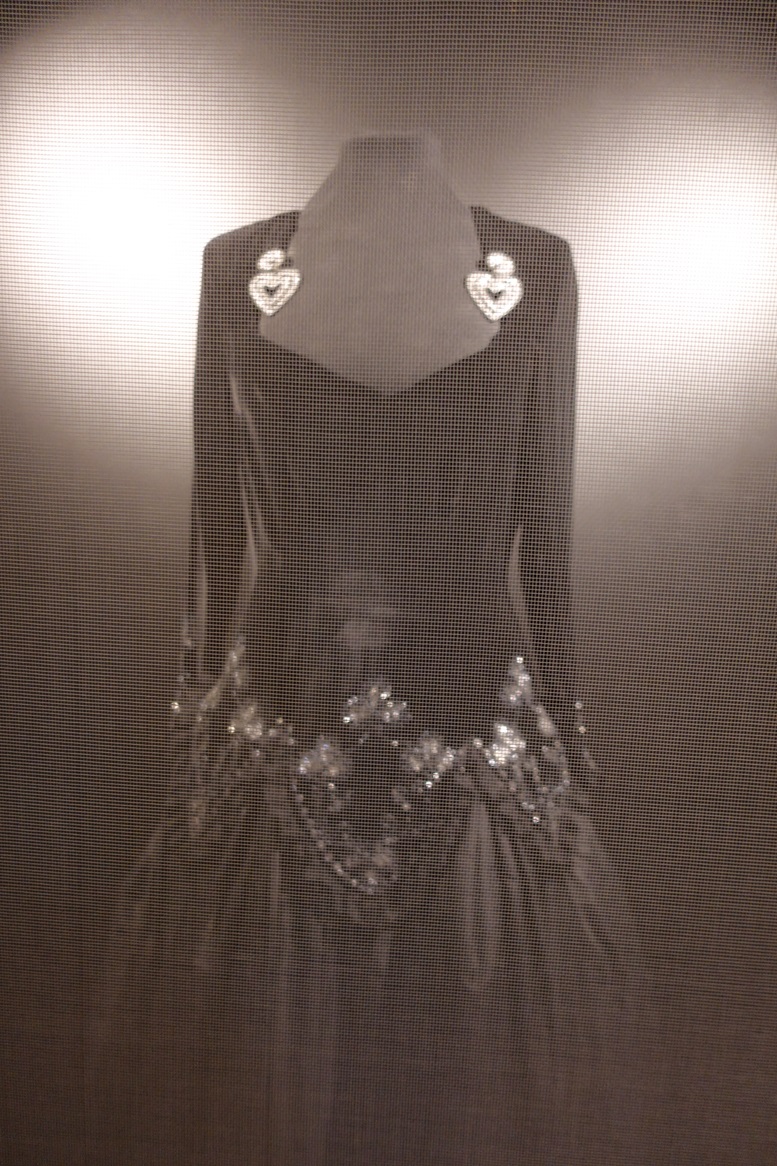
A dress worn by a Fado singer
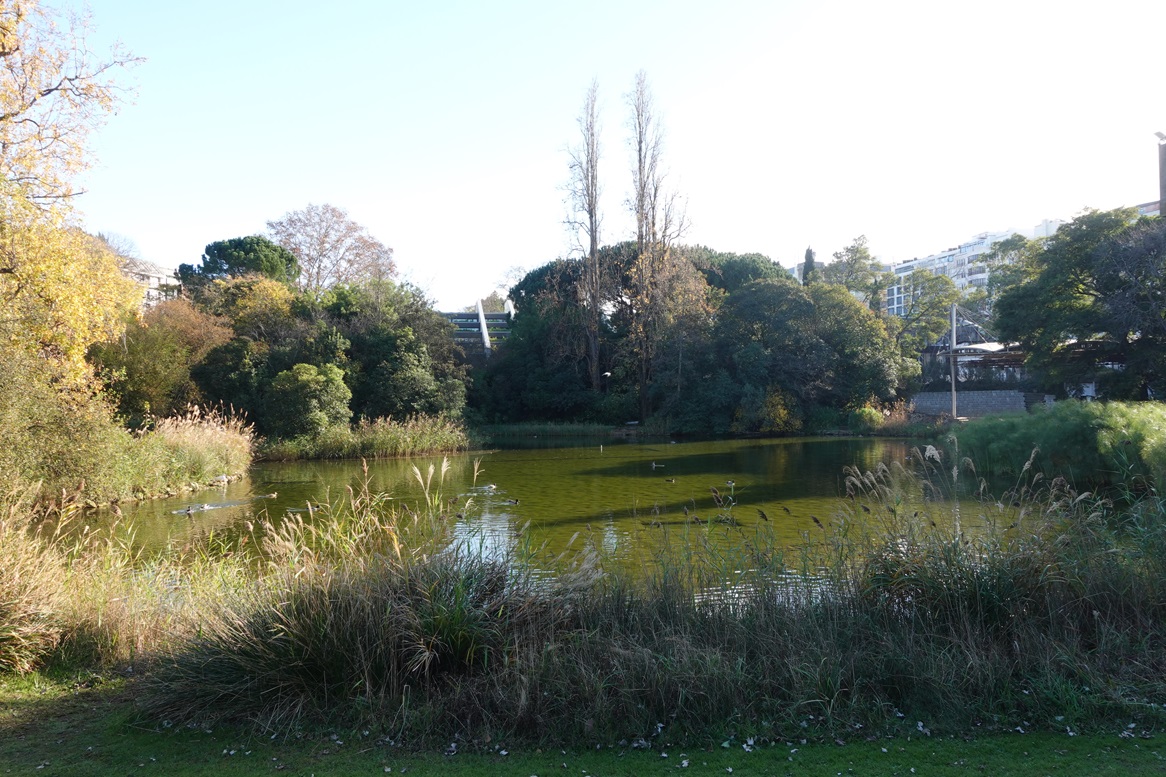
The gardens of the Museu Calouste Gulbenkian. This museum was established by an Armenian oil magnate in 1969, and has a classical collection as well as a separate modern art building. Between the two is a grand garden, well frequented by Lisbonites and tourists.
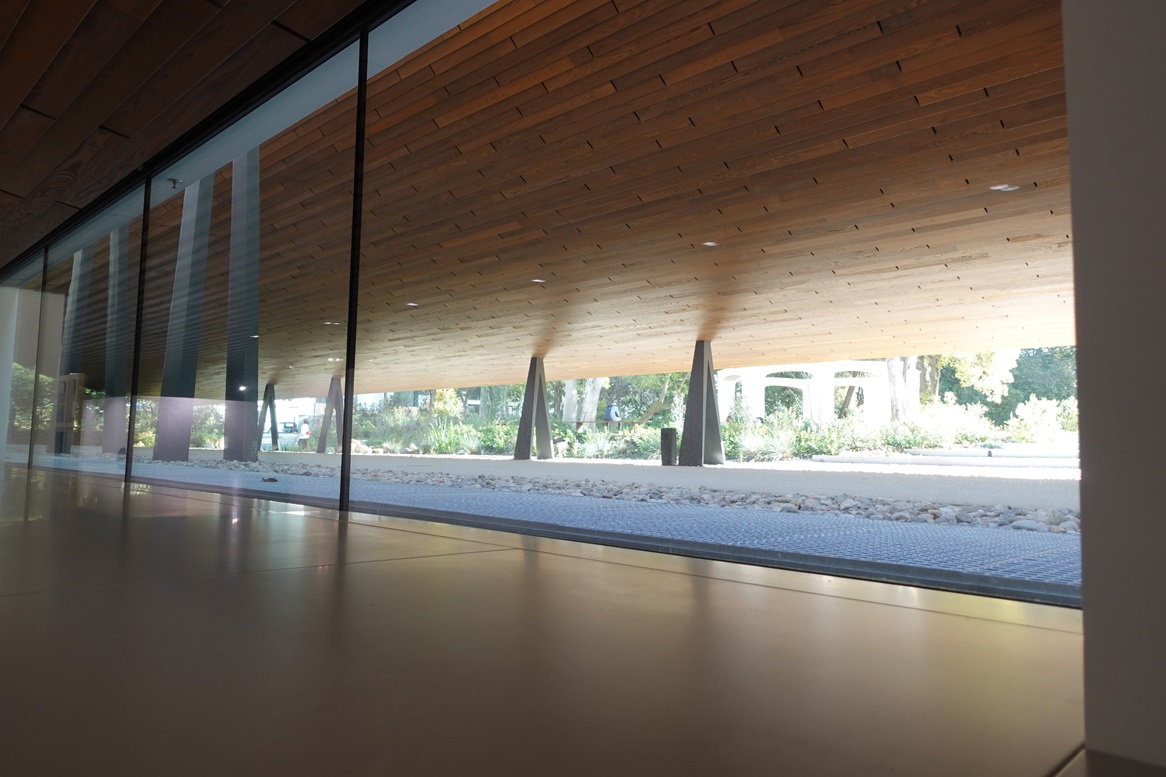
The modern art building has an extravagant design. Here is the view from the lower floor.
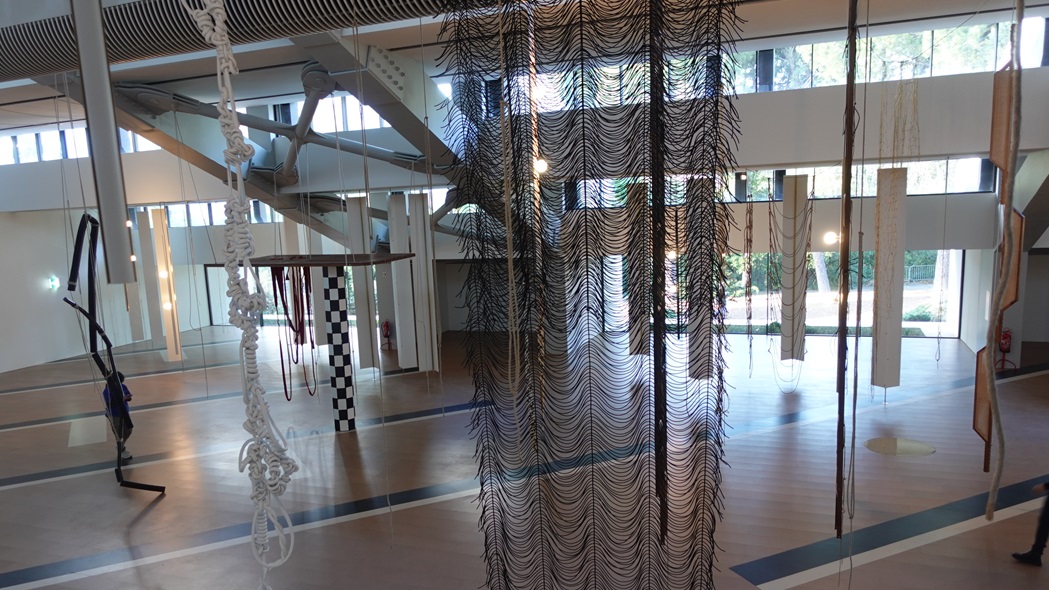
The artworks are dramatically presented in large spaces. Of particular interest was a film of a dance performance along with a reading of Antigone. The thesis of the performance was the unequal telling of history, in particular how the revision of history to include women tends to marginalise the distinctive story of black women in colonies. It drew a parallel between the importance of the burial ritual to the importance of putting history to rest in its correct, ritualised context.
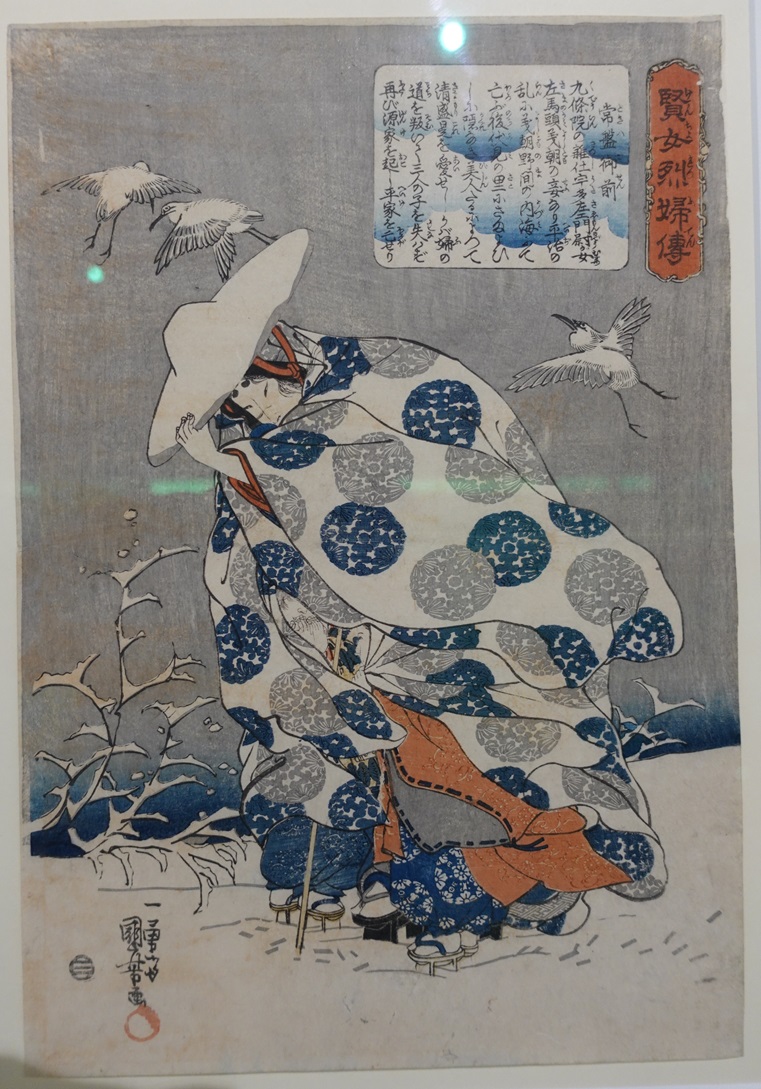
I particularly liked a display contrasting traditional Japanese art with 20th century European artists who were inspired by it. Tokiwa Gozen with her Three Children, 1844, woodblock print on paper
Travel Diary
How long does it take?
Quanto tempo demora?
What does this dish have? (ingredients)
O que leva este prato?
Anything else? No, that’s all.
Mais alguma coisa? Não, é tudo.
We have a reservation.
Temos uma reserva.
Where is the nearest restaurant?
Onde fica o restaurante mais próximo?