Asia and Australia 2025
Day 3: Sunday 08 June 2025
Seoul
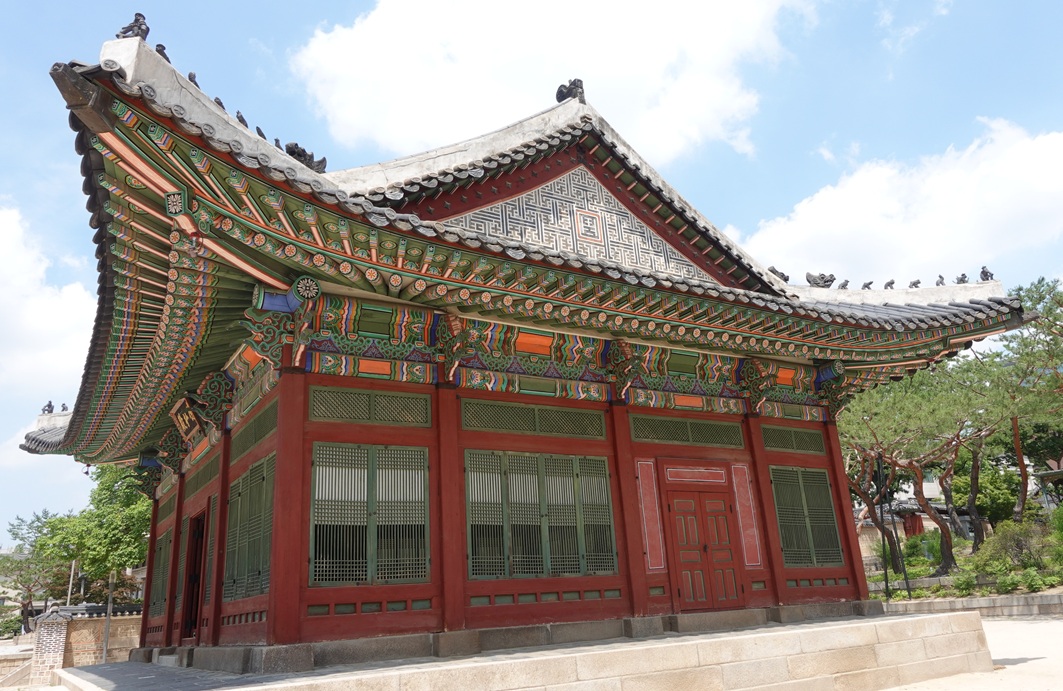
A building in the Deoksugung Palace grounds. Entrance for seniors was free and so was the very interesting tour of the palace itself. Others in the group were from Singapore and London. Our guide looked so young for 35!
In this complex there is the Seokjojeon (Korean Empire History Museum), where the royal family lived and held office during the late 19th century. In 1910, the Japanese invaded Korea and created a puppet regime of the last emperor and his heir, who is considered a traitor, having joined the Japanese army, after being held prisoner in Japan during his youth.
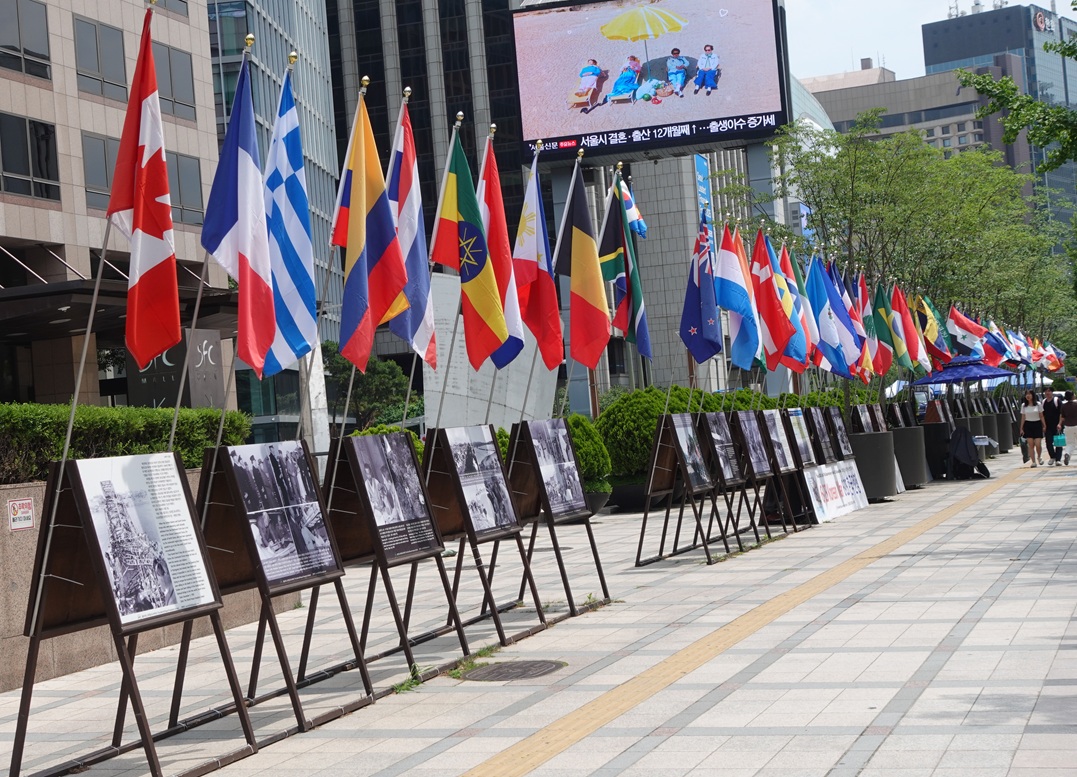
Information display giving thanks to the 16 countries of the United Nations Forces who participated in the defence of South Korea throughout the horrific Korean War 1950-53: United States, United Kingdom, Australia, Netherlands, Canada, France, New Zealand, Philippines, Turkey, Thailand, South Africa, Greece, Belgium, Luxembourg, Ethiopia and Colombia.
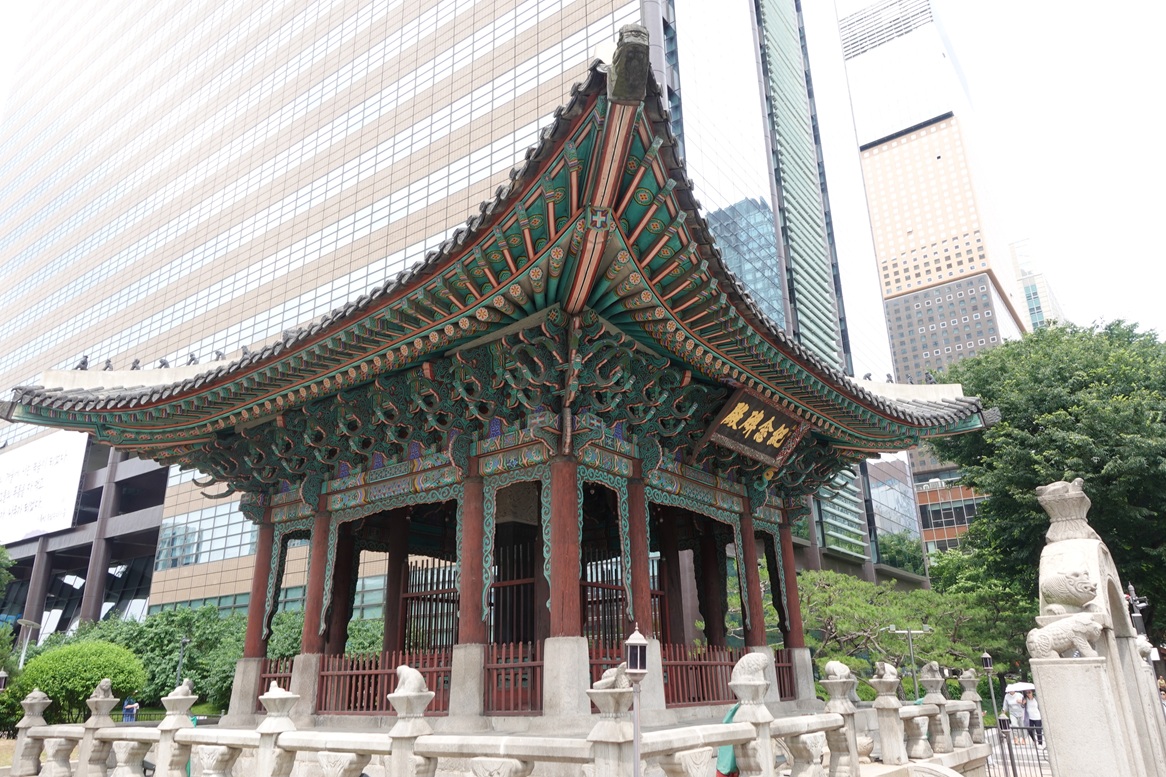
Old and new in Seoul.
Religious denominations in South Korea: 51% no religion, 31% Christianity (of which 20% Protestantism, 11% Catholicism), 17% Buddhism, and 2% other.
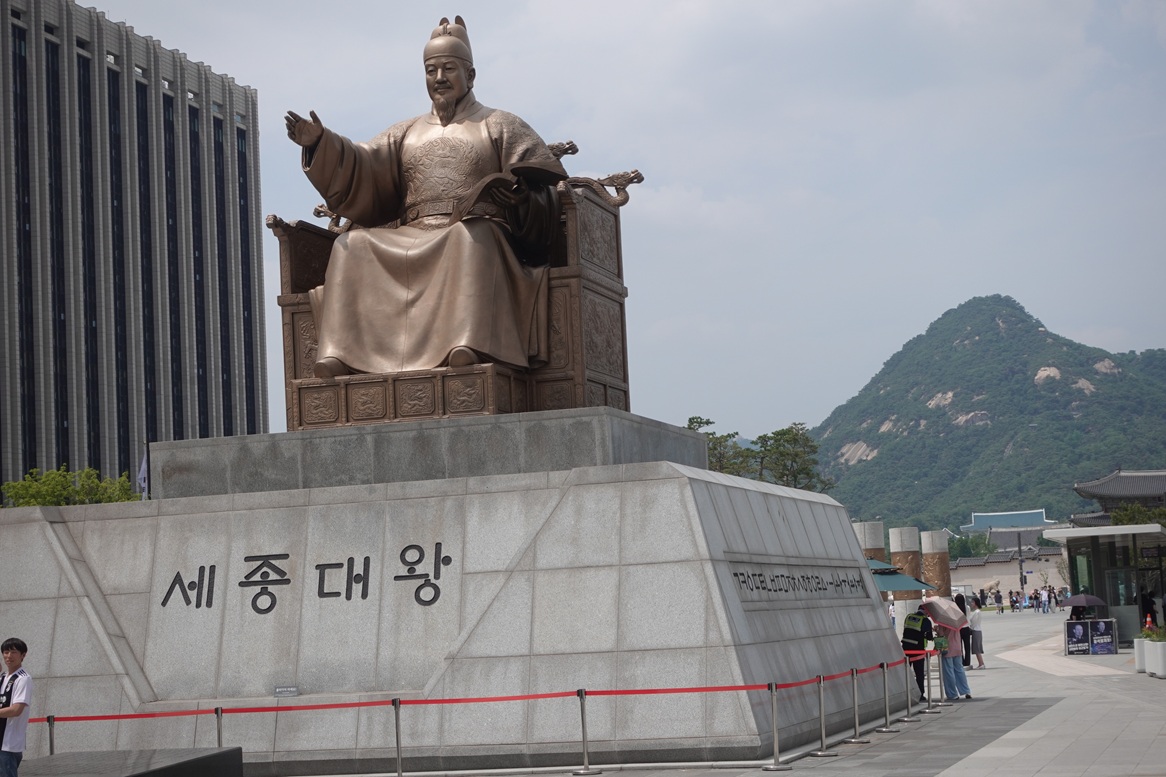
Statue of King Sejong the Great (1397–1450, reigned 1418-1450). He was the fourth monarch of the Joseon dynasty of Korea. He is regarded as the greatest ruler in Korean history. He is also credited as the inventor of Hangul, the native alphabet of the Korean language.
Portraits of Korean kings and other dignitaries are often seated. The Japanese nobility, on the other hand, are portrayed in a squatting position. This enormous statue dominates the main drag heading north to the Gyeongbokgung Palace, with the Bukhansanseong Mountain, the highest elevation point around Seoul at 836.5m, with its fortress, in the background.
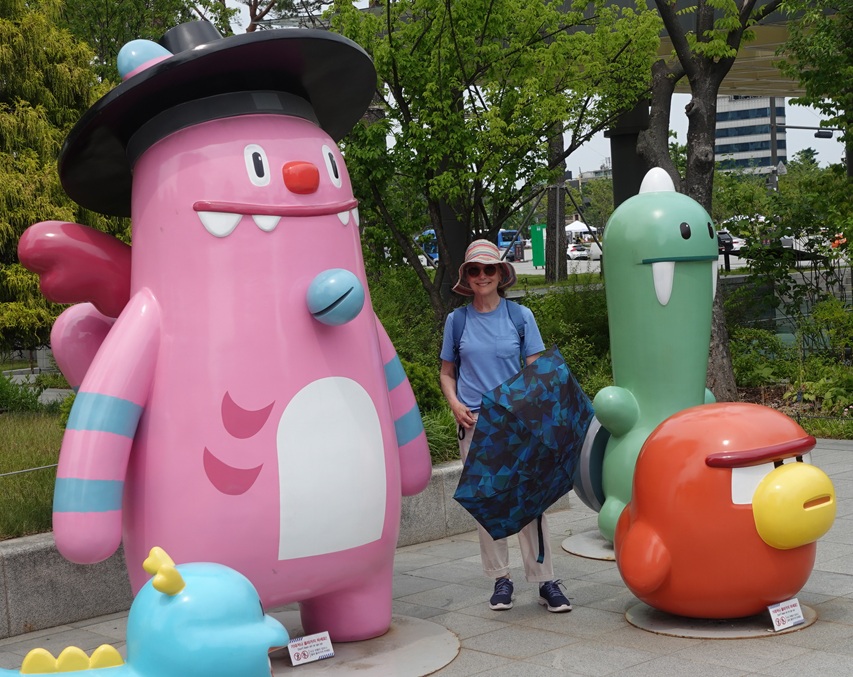
Koreans are very fond of these types of characters, found in many public places around the busy city. The second from the right at the back is in fact Cindy….
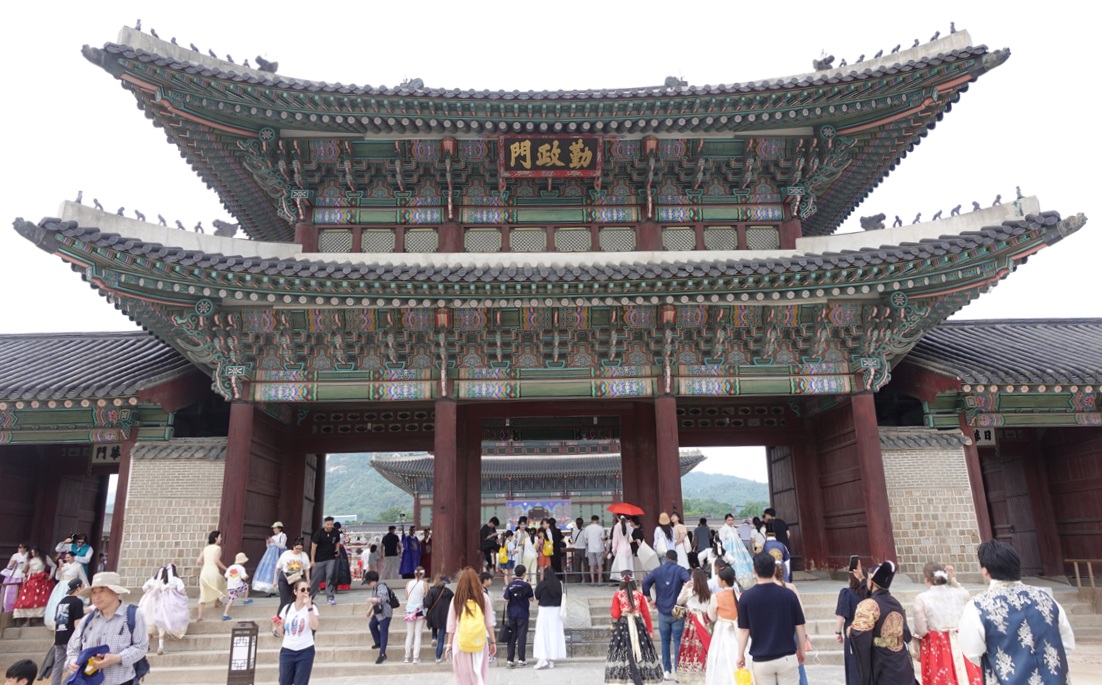
Gwanghwamun Gate, at the entrance to Gyeongbokgung Palace.
This palace was established in 1395, and marks the beginning of the 505-year long Joseon Dynasty (1392-1897). During the reign of Sejong the Great (1418-1450) the palace expanded and flourished, but during the Imjin War (Japanese invasion 1592-1598, successfully resisted by Joseon and Ming empires) it was burnt down. It was not fully restored until the late 19th century, during the reign of the second-last monarch, Gejong (reigned 1864-1907).

Influencers podcasting on the grounds of the Gyeongbokgung Palace gardens.
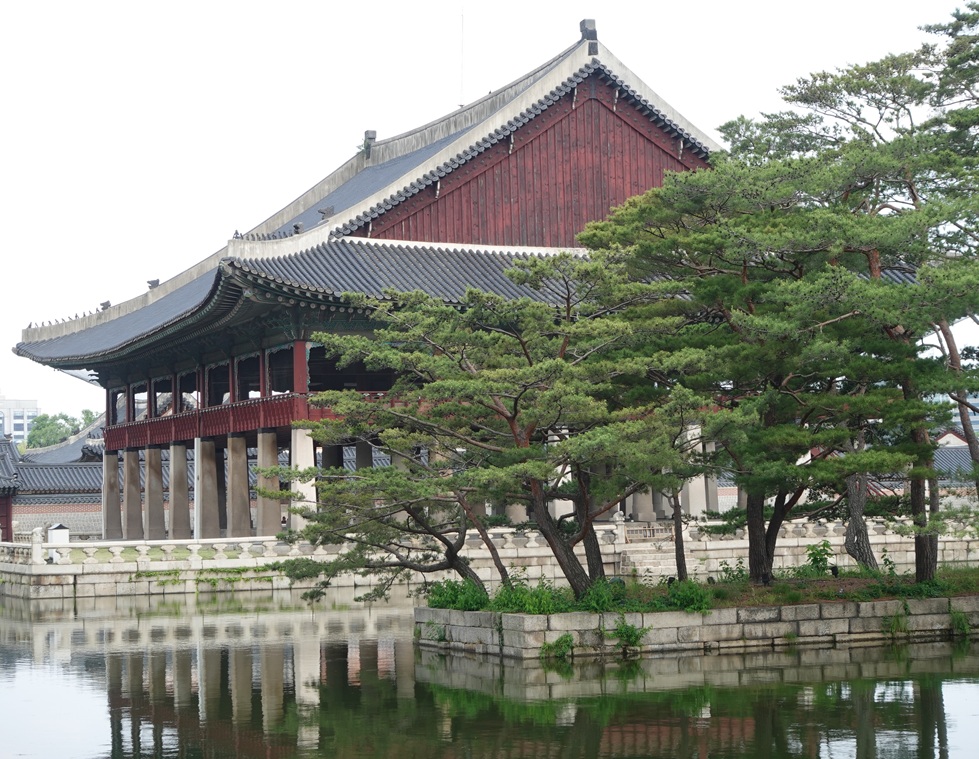
Gyeonghoeji Pavilion
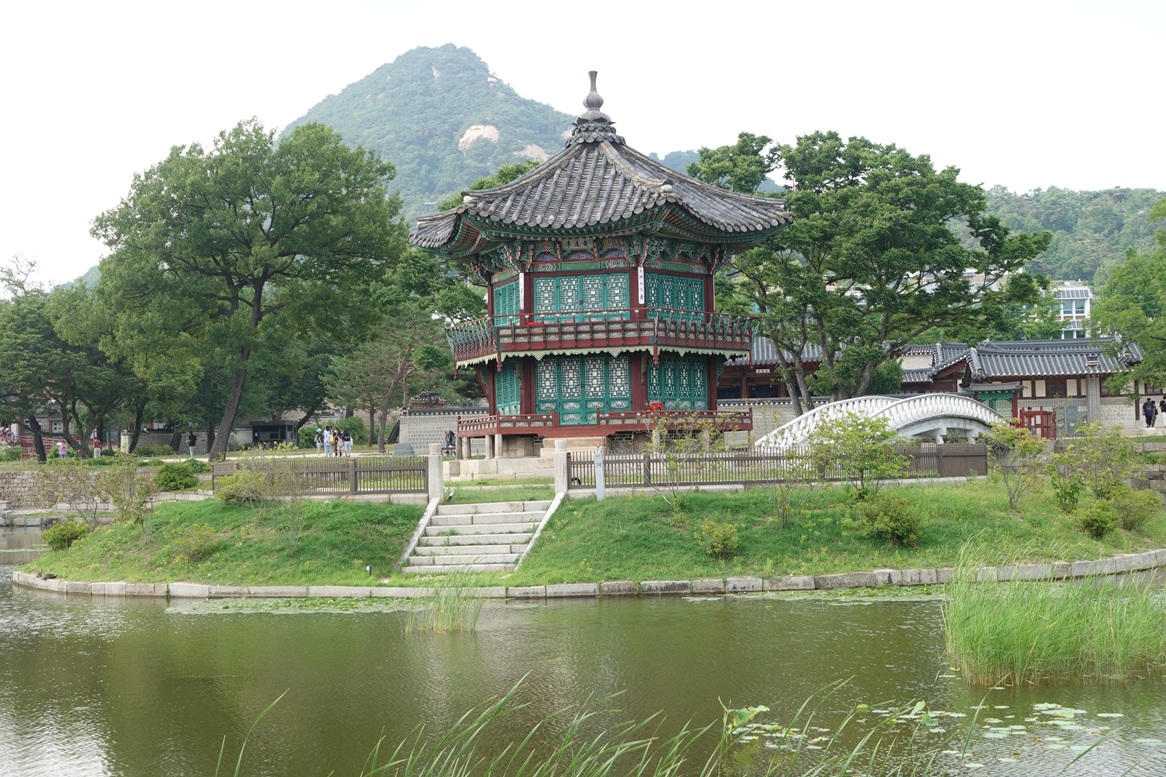
Hyangwonjeong Pavilion
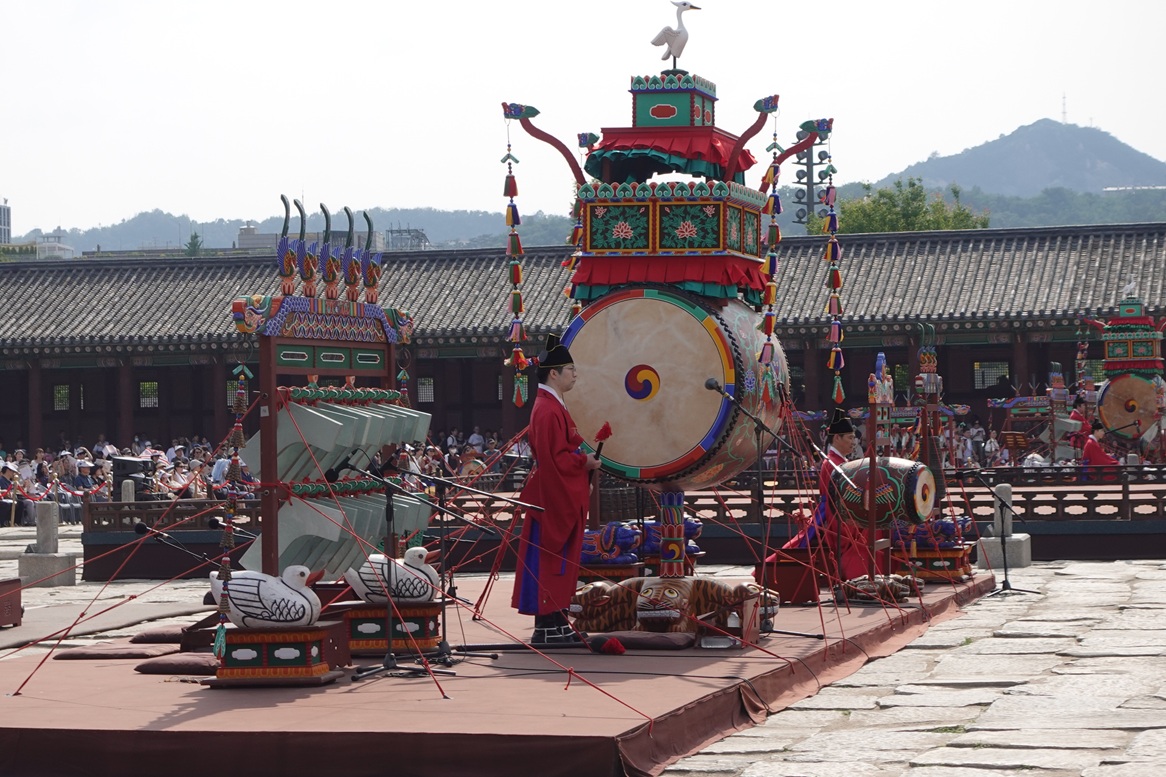
One of the many drummers and other musicians at the imperial ceremony recreation at the magnificent Gyeongbokgung Palace.
After exploring the vast complex for an hour we returned to the main temple square for a unique ceremony which about 250 people were reenacting. The costumes, musical instruments and choreography were taken from a recently found manuscript describing this dedication ceremony from centuries gone by.
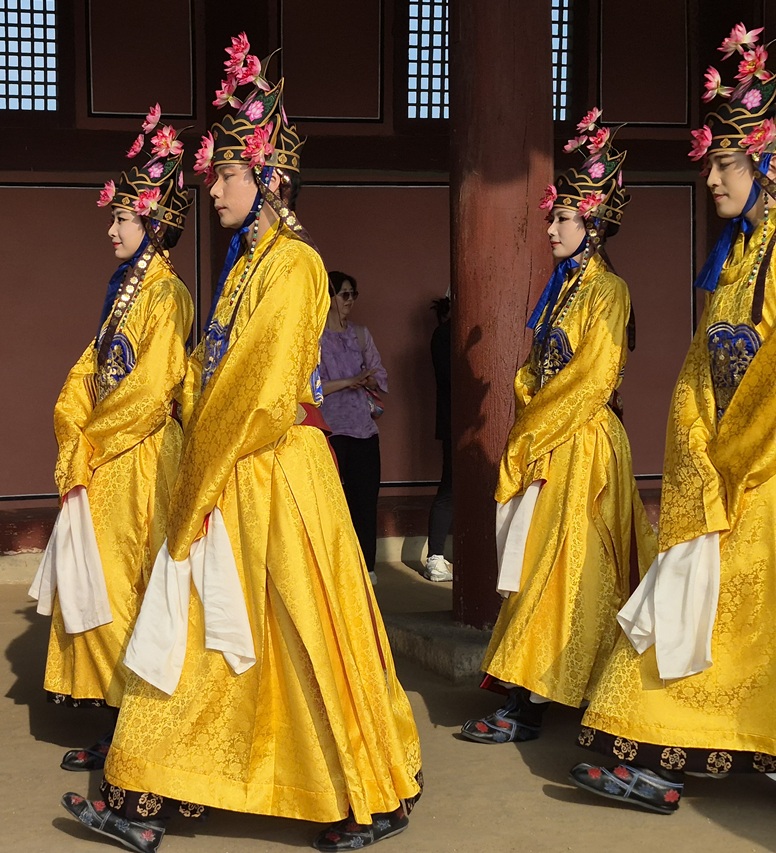
Costumed actors arriving at the imperial ceremony recreation at the magnificent Gyeongbokgung Palace.
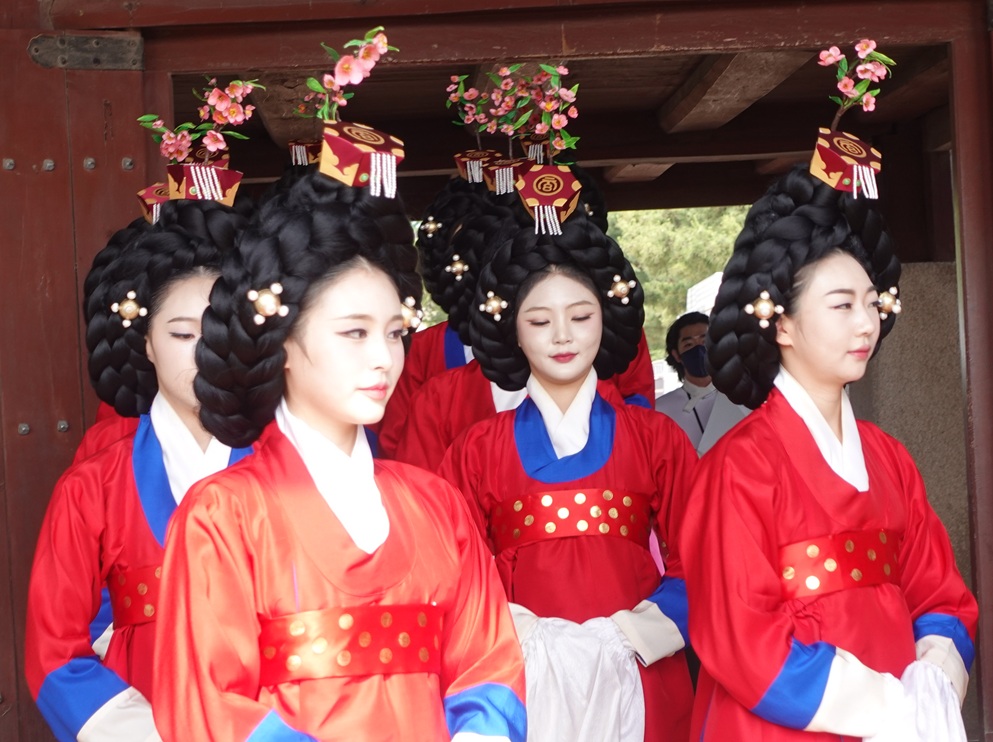
Costumed actors arriving at the imperial ceremony recreation at the magnificent Gyeongbokgung Palace.
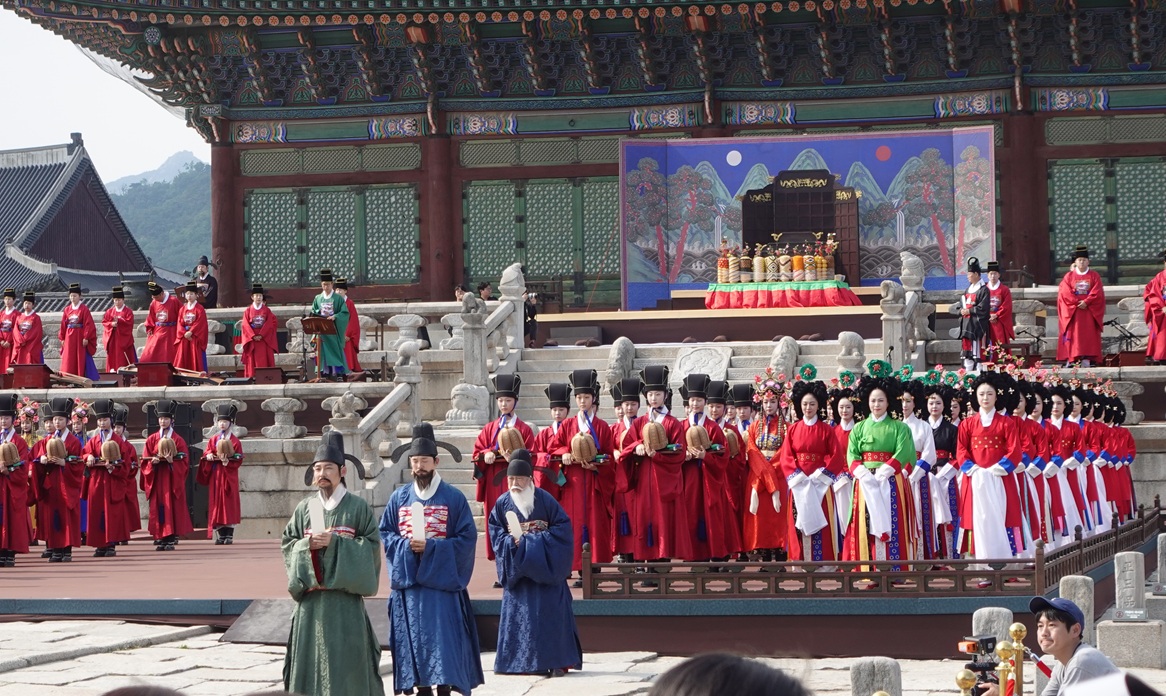
Imperial ceremony recreation at the Gyeongbokgung Palace. We were witness to a magnificent performance of 15th century Korean music, dance and ceremony, involving hundreds of actors and musicians.
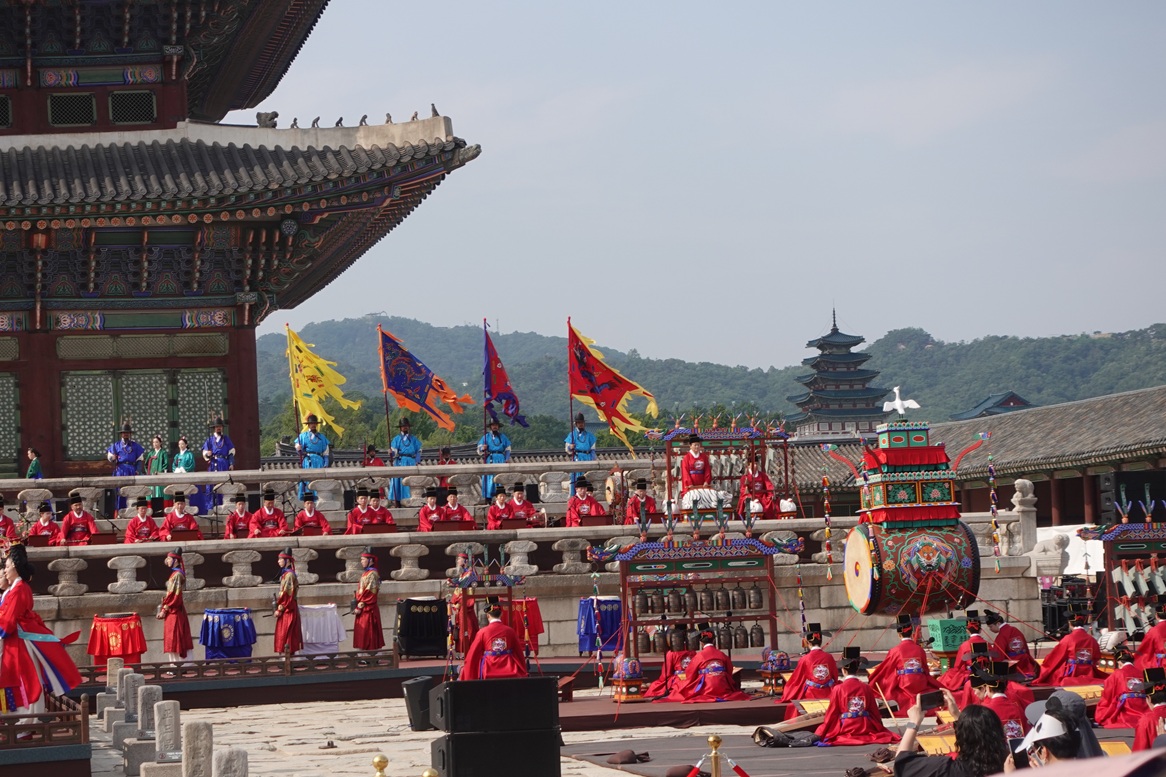
Imperial ceremony recreation at the Gyeongbokgung Palace.
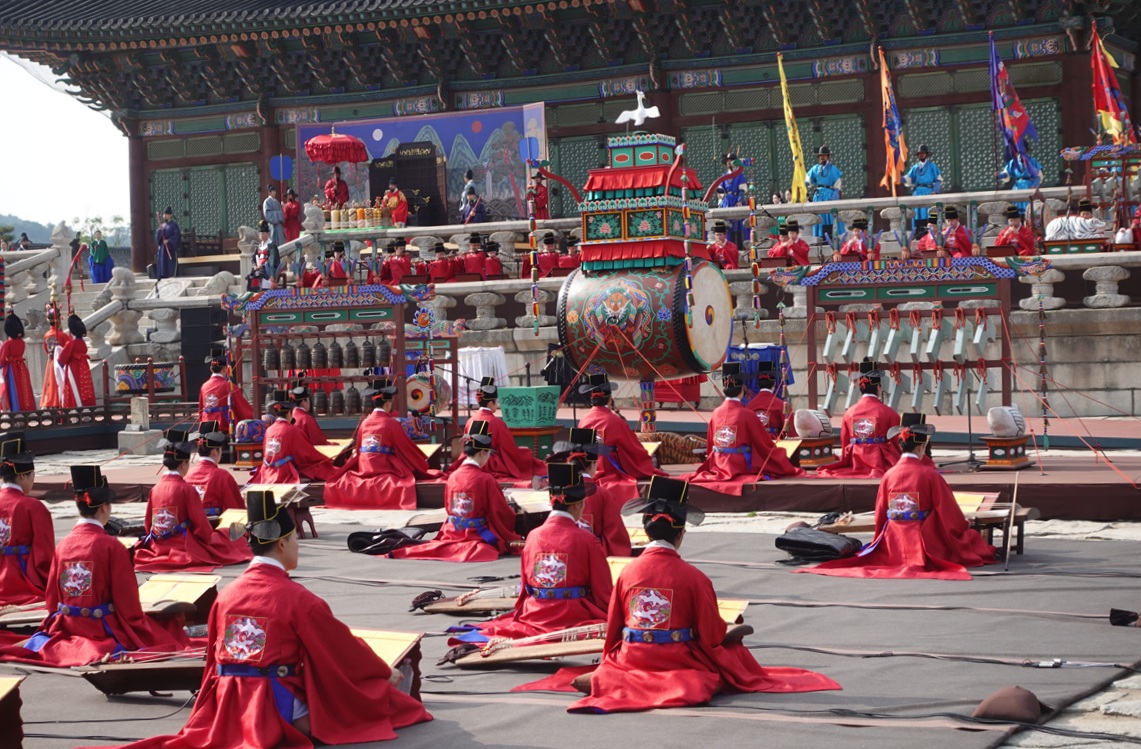
Imperial ceremony recreation at the Gyeongbokgung Palace.
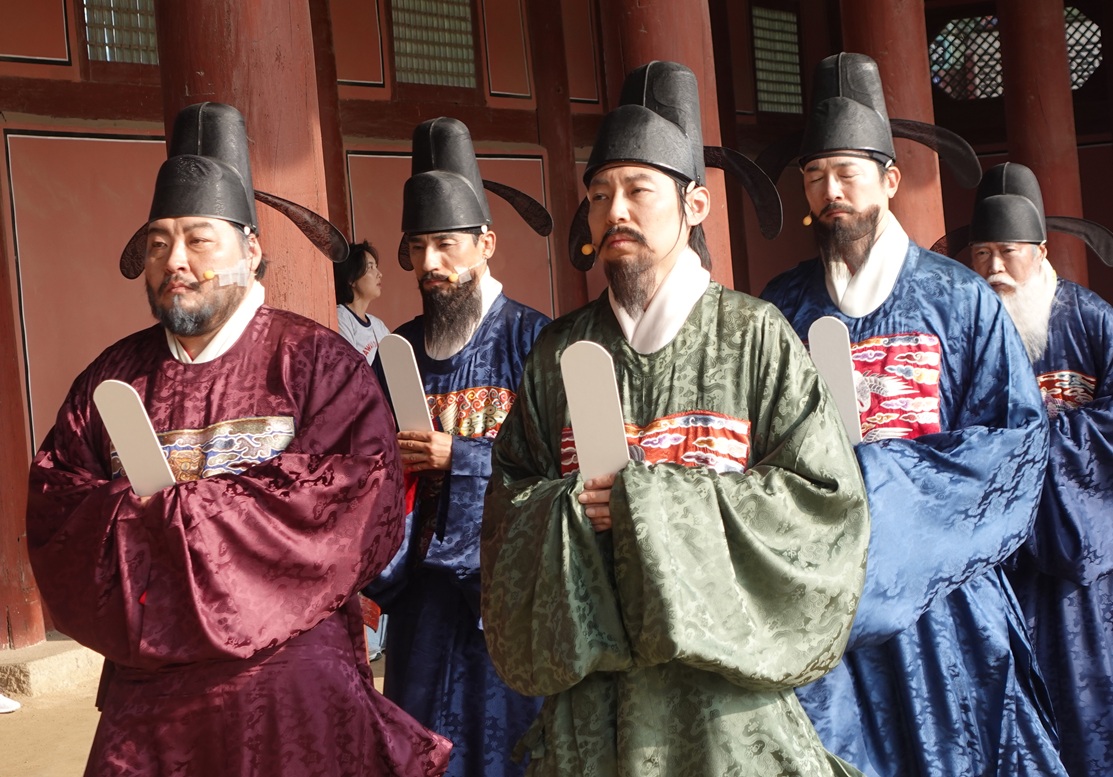
Actors leaving the Imperial ceremony recreation at the Gyeongbokgung Palace.
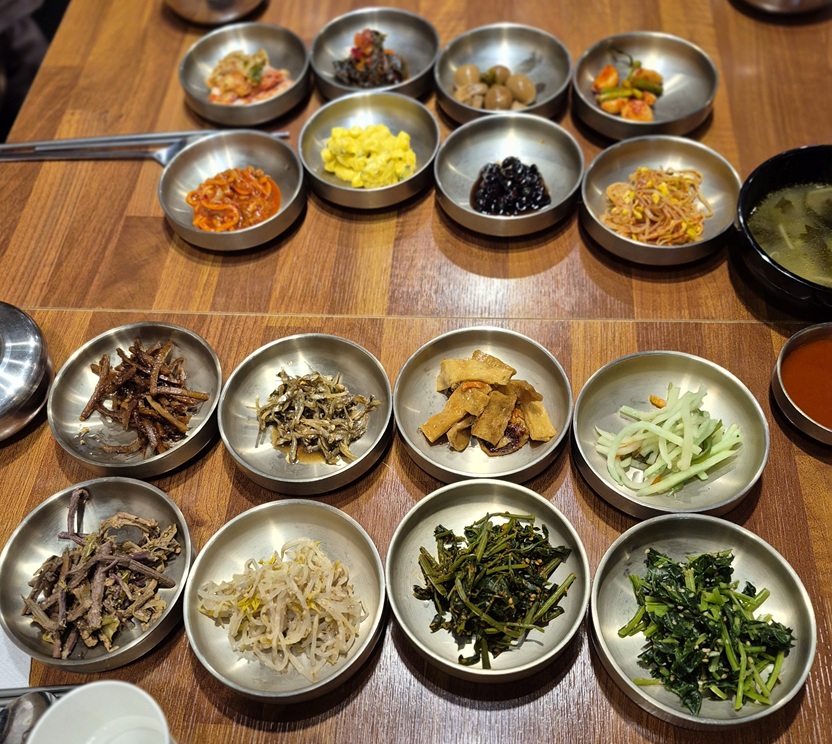
A typical meal arrangement in a local restaurant.
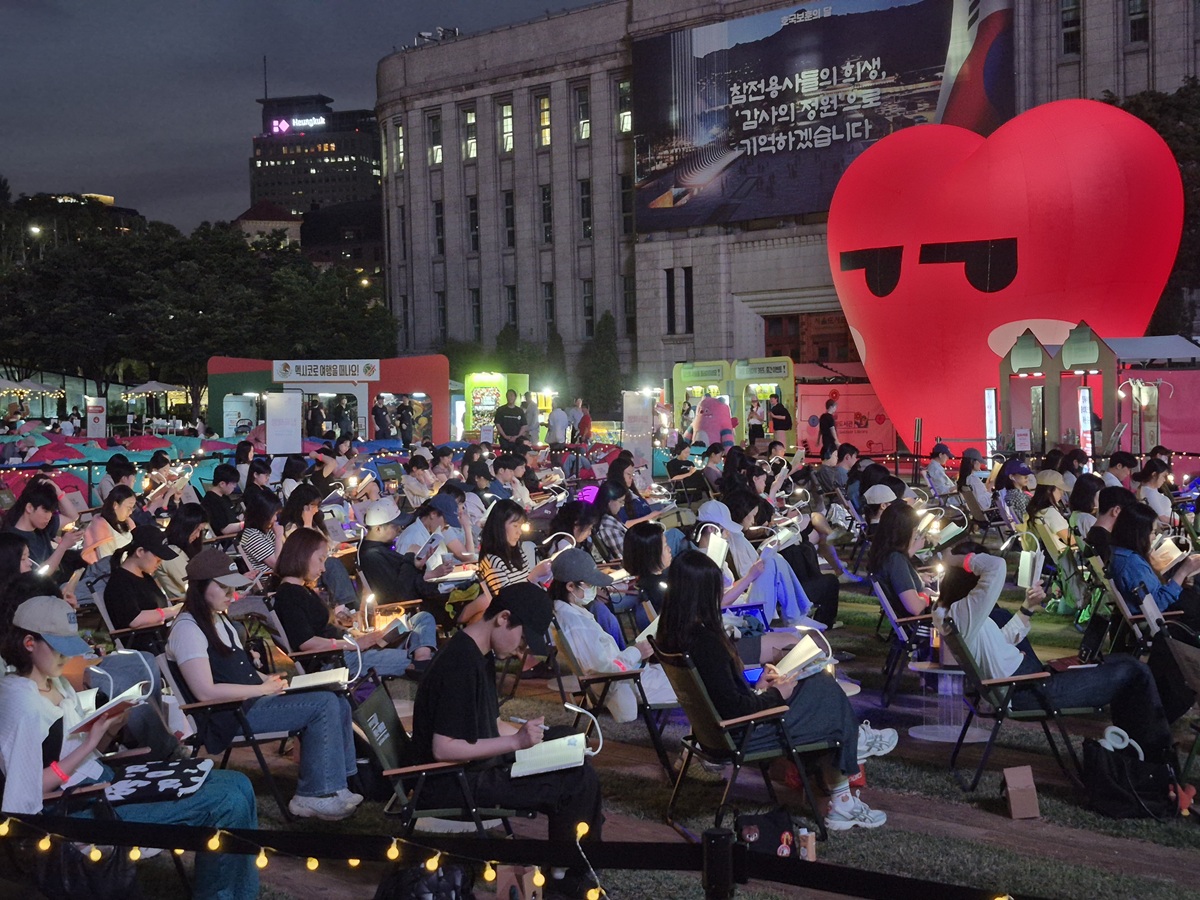
In the public square, Seoul Plaza, outside the Seoul Metropolitan Library, we discovered a wonderful open-air reading event. Hundreds of young people were sitting with reading lamps, engrossed in paper books, The event was titled “Seoul Soul”.
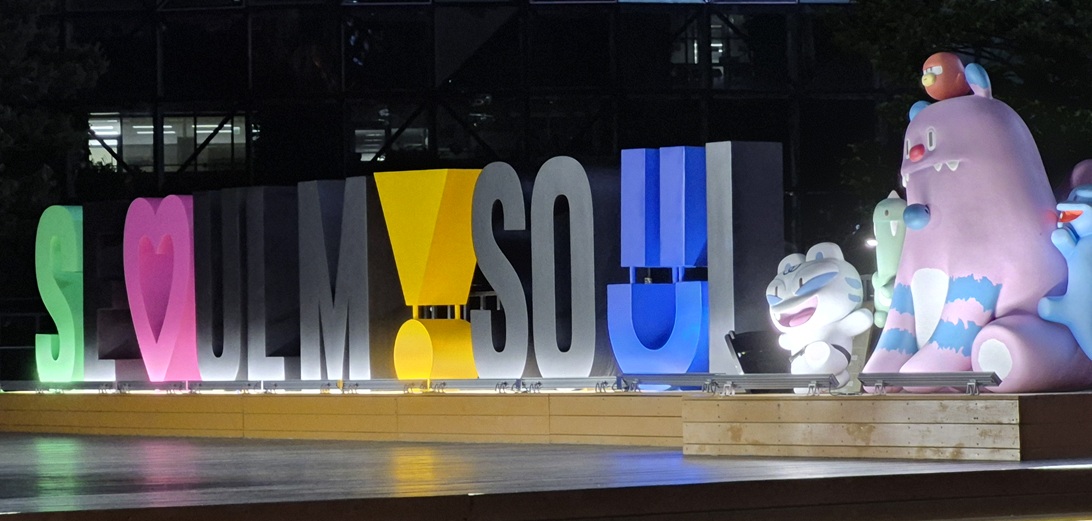
The “Seoul Soul” logo and ubiquitous comic characters on the stage at the event.
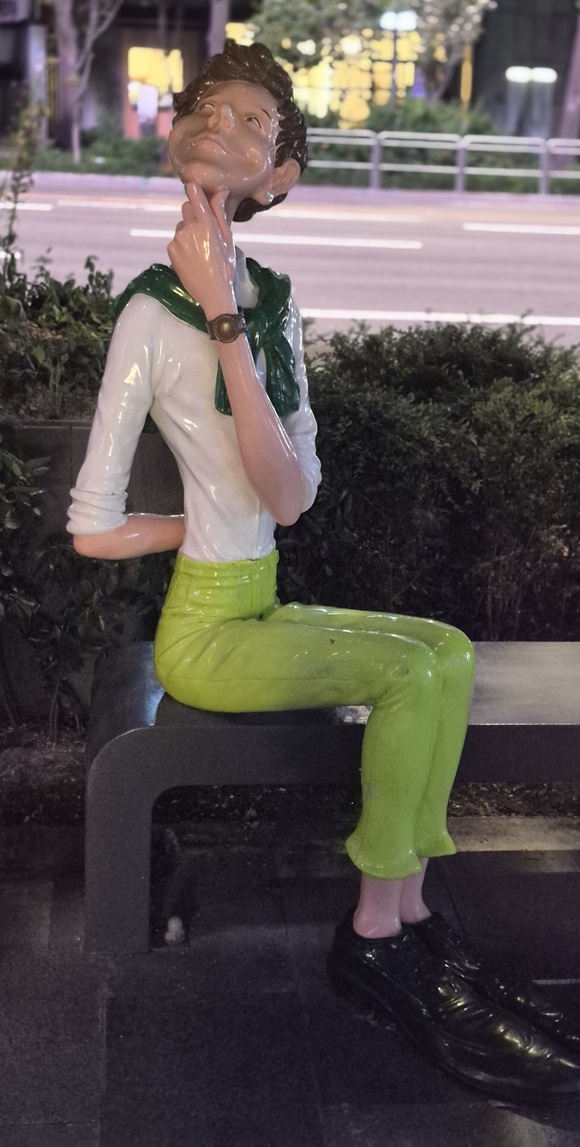
An amusing lifesize statue, one of a pair, sitting at a Seoul busstop.
Travel Diary
kore wa nandesuka?
gomen nasai
nihon, nihongo
are wa nandesuka?
nihongo wo benkyö shiteimasu