Asia and Australia 2025
Day 5: Tuesday 10 June 2025
Seoul – DMZ (Demilitarized Zone)
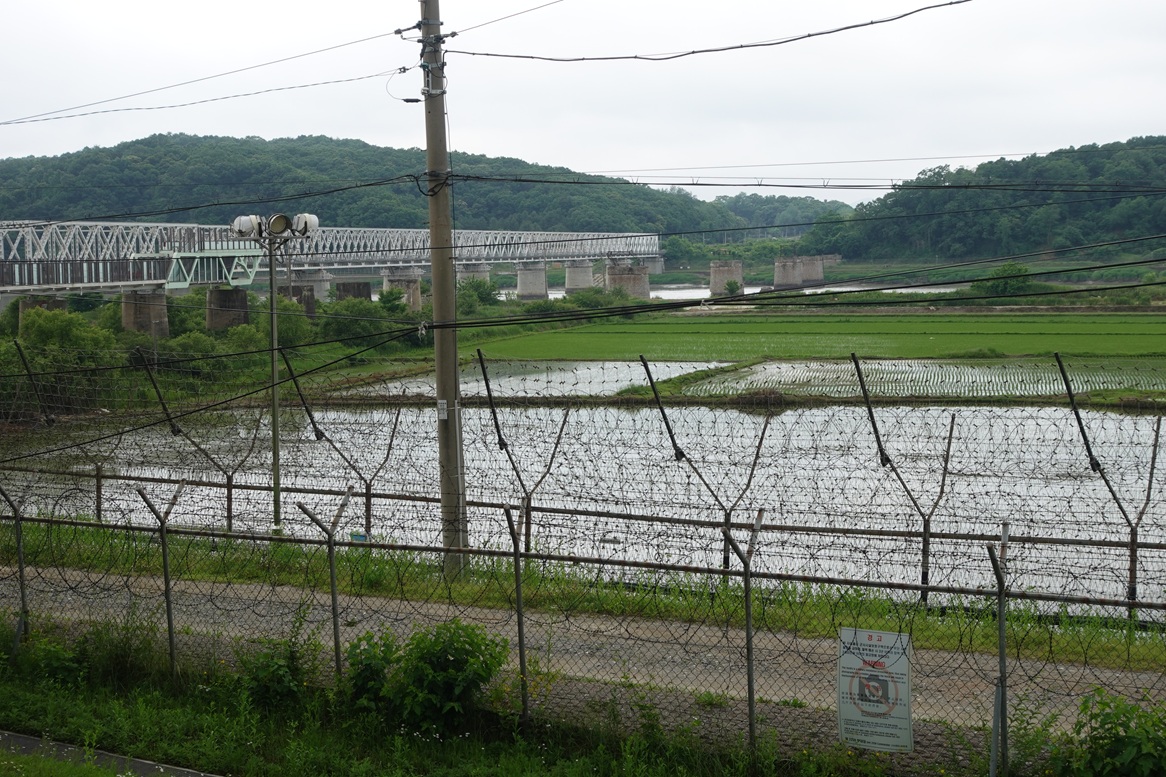
View of Freedom Bridge in the JSA (Joint Security Area), connecting South and North Korea,
The war between North and South has not officially ended. There have been incidents of violence across the MDL (Military Demarcation Line) throughout the 72 years since the DMZ was created by the Armistice Agreement of 27 July, 1953, to keep the two sides apart. More than 500 South Korean, 50 US and 250 North Korean soldiers have been killed in the DMZ since 1953.
One particularly brutal case was the “axe murder incident”, or Panmunjom axe atrocity incident, in August 1976. In the JSA (Joint Security Area), two UN Command officers of the US Army attempted to trim a poplar tree blocking the view of the North. They were killed by axes by North Korean troops.
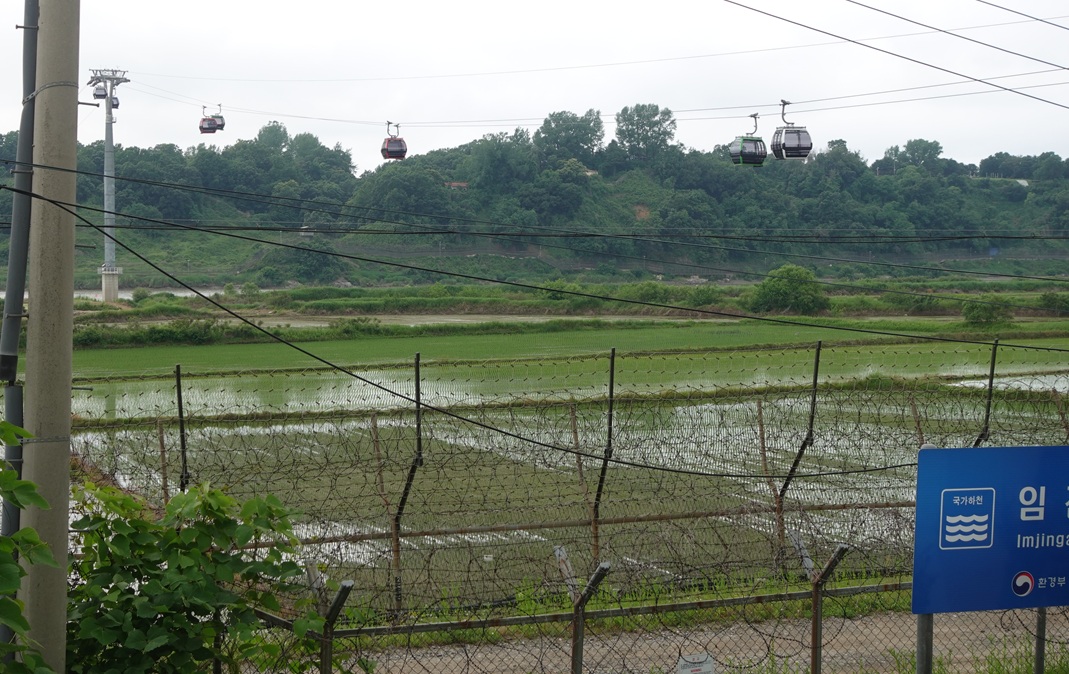
View over the river separating North and South Korea, with a cablecar transport substituting the impassable bridge connection. There are people living within the DMZ, beyond the Civilian Line (beyond which we cannot pass). They live with a daily curfew, under the fear of attacks and kidnapping. In compensation, they are not obliged to perform military duty or pay taxes, which makes it attractive to some. They now have a thriving commerce based on the DMZ trademark.
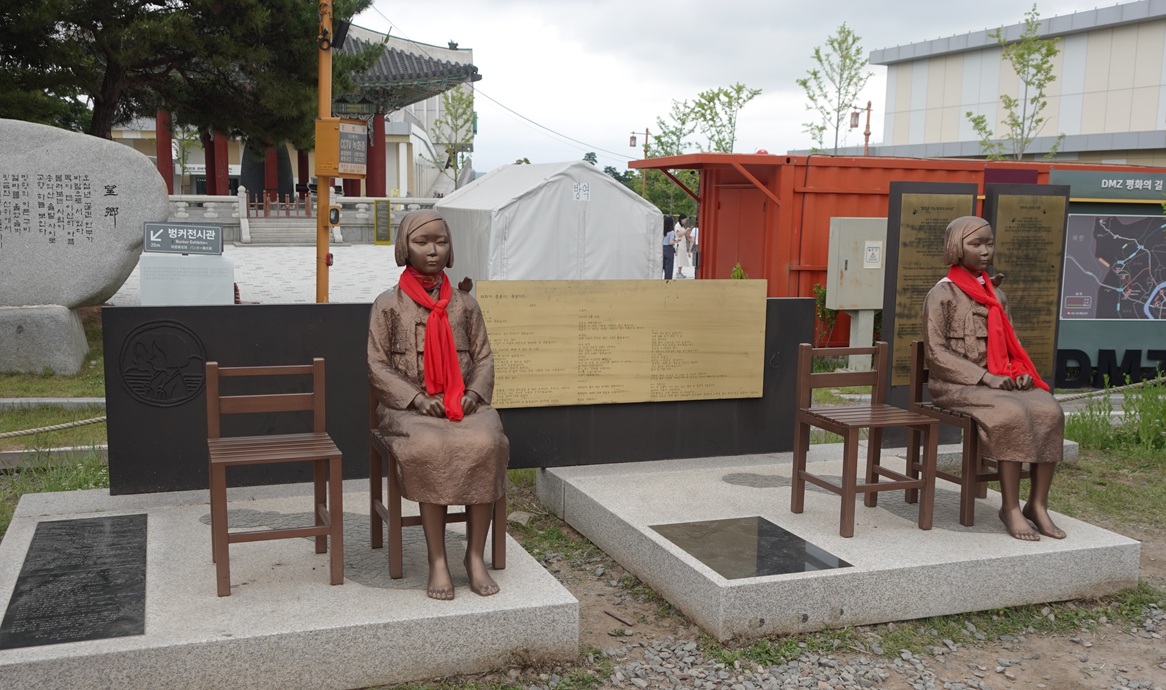
Statues commemorating the mass abuse of women and girls, as so-called “comfort women”, by the Japanese during WW2. The girl on the right was the original, and the one on the left was added to represent those of the North, as a gesture of recognising the equality of common suffering, and a hope of reunification. Our guide told us that younger people in Korea are sceptical about reunification, and fear the economic cost should it occur. This is perhaps with a view to the tensions that still persist in reunified Germany.
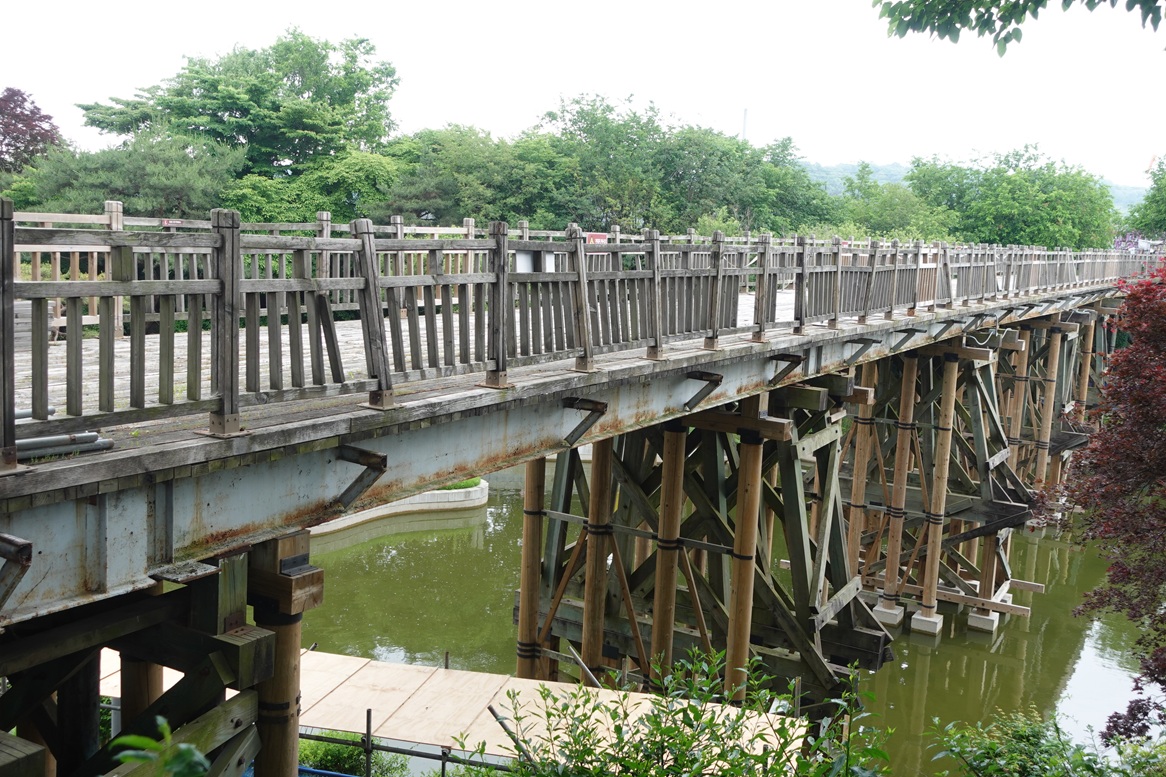
The first Freedom Bridge, over which prisoners were exchanged after the ceasefire in 1953.
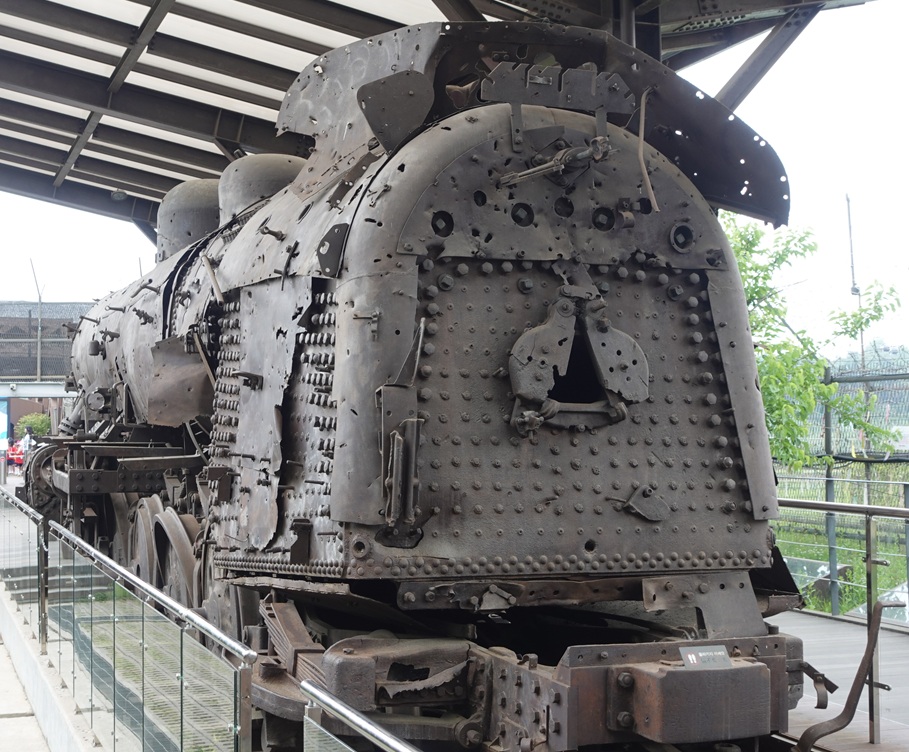
Steam locomotive found abandoned in the DMZ after 50 years.
This was the last train to cross the border between North and South Korea. It was transporting military supplies to UN forces in the follow-up to the Incheon landings, and the move inland of UN troops. It was blocked at Hanpo Station in Hwanghe-do, on the what is now the North side, on December 31, 1950, by Chinese troops. Finding it too risky to reverse back to Musan, it was destroyed by US troops, riddling it with bullet and shell holes.
Now a Cultural Heritage tourist attraction in the Imjingak Park, near the Dokgae Railroad Bridge, which traverses the Imjin River, the rusted out, bullet-ridden and shell-damaged locomotive stands as a memorial and represents hope of a future time when trains will once again be able to cross freely.
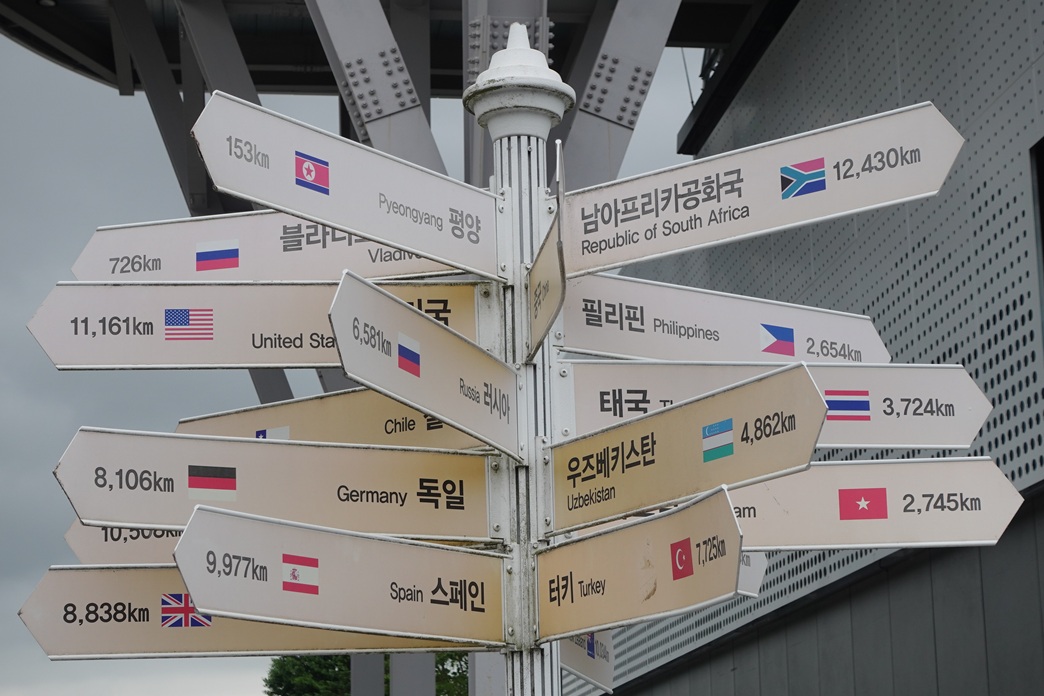
Signpost with distances to major cities around the world, at the DMZ, on the border between South and North Korea.
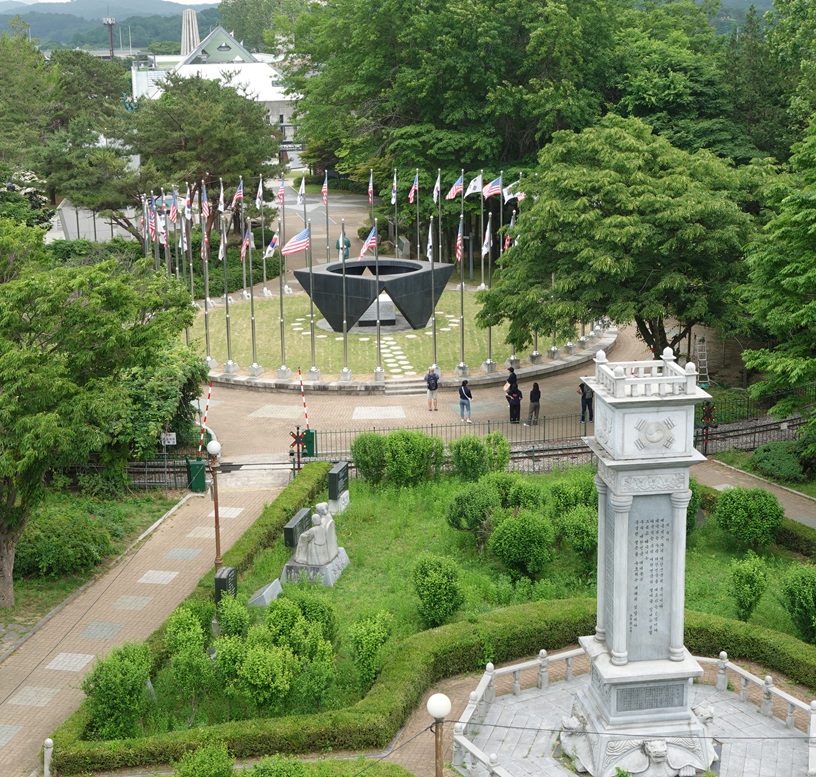
Memorials to the fallen soldiers and civilians during the Korean War and its aftermath.
Built in 1975, by the South Korean Ministry of Defense, the US Forces monument in the background commemorates the 37,000 Americans who died, and the 8,100 MIAs and POWs. The triangular shaped sculptures represent the army, marines, air force, and the naval forces support for each other, and the central stone honours the ROK (Republic of Korea) citizens who died and suffered during the defence of their country.
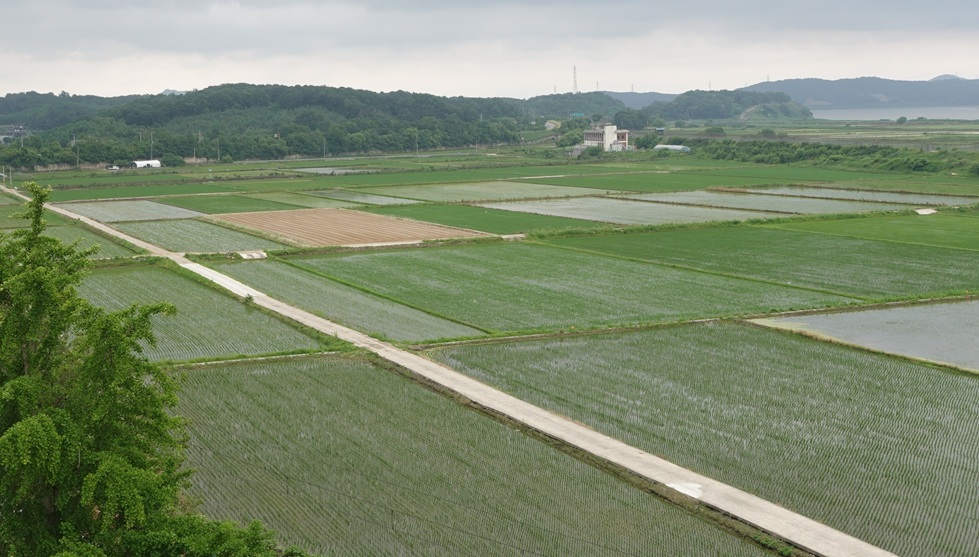
The land of the DMZ is still used by civilians for rice, soy, and bean harvesting. They have their own brand: DMZ.
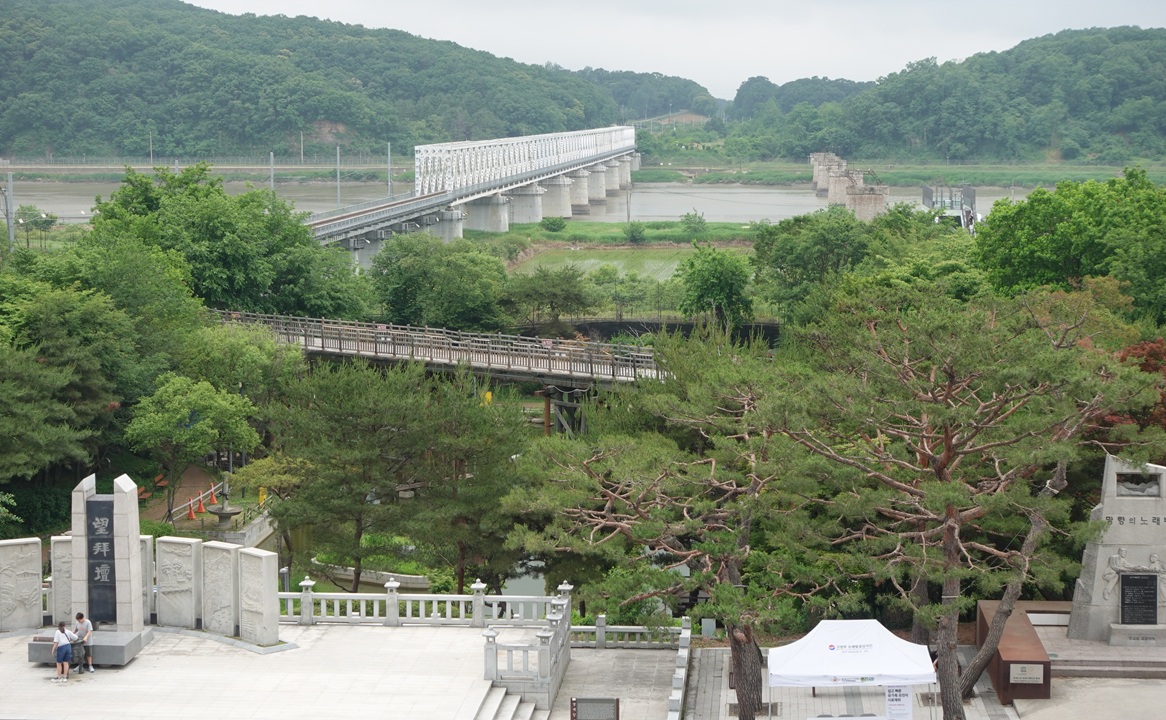
A view of the Freedom bridges, old and new. The ruins of the pre-war bridge can be seen on the right.
In the bottom left of the picture can be seen the Mangbaeddan memorial. This allows displaced people forced out of their homes on the northern side to bow in honour of their families and ancestors, particularly during cultural events, such as New Year and the Korean Mid-Autumn Festival , the Chuseok.
Throughout the museums and memorials of the DMZ are reminders of the suffering brought about by the separation of families.
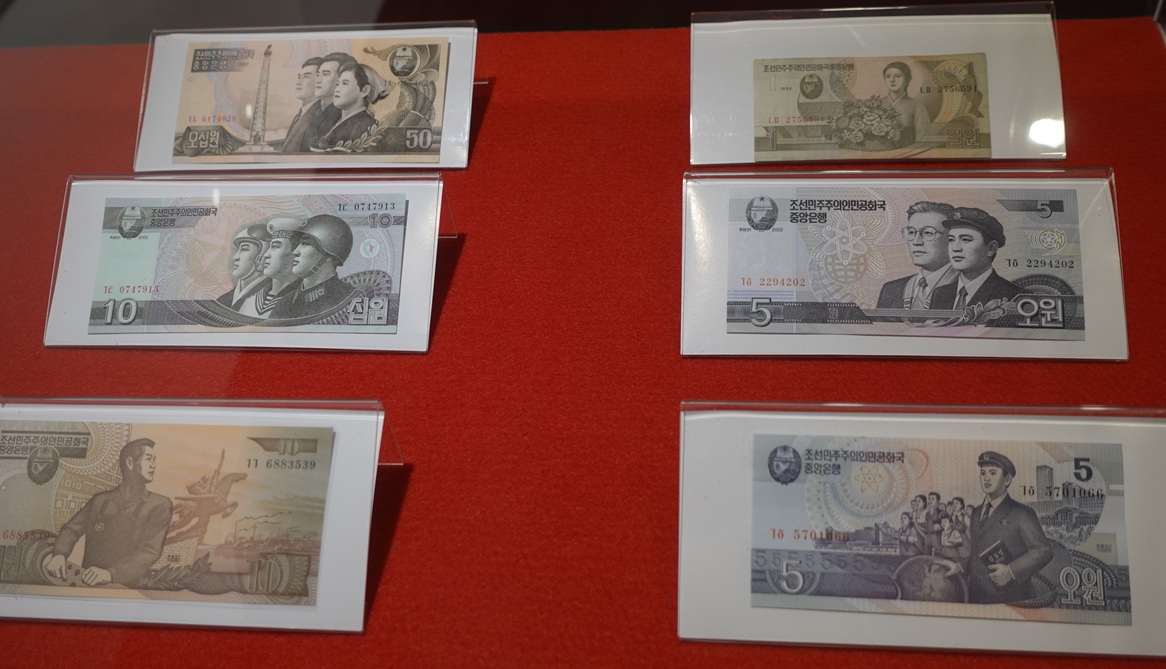
North Korean banknotes. The North Korean Won has no official exchange rate due to its lack of international recognition. It is only traded on the black market, with a greatly fluctuating exchange rate.
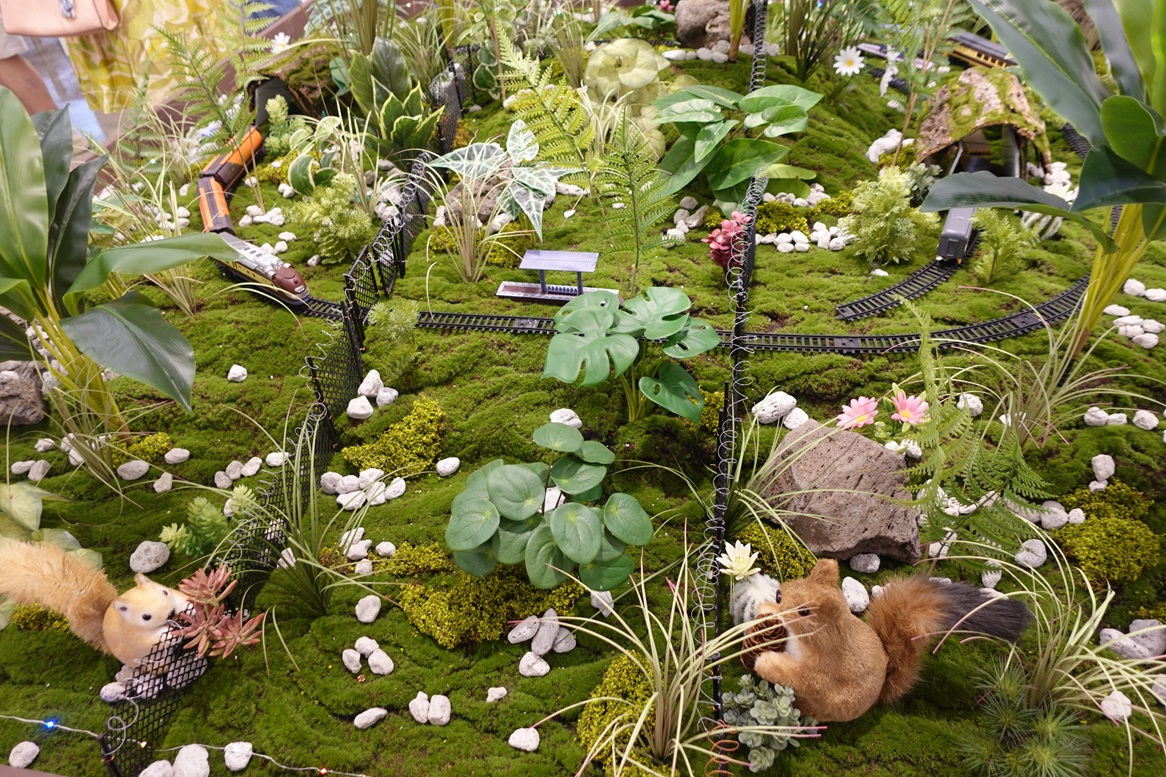
A playful panorama, but with a serious plea for reunification.
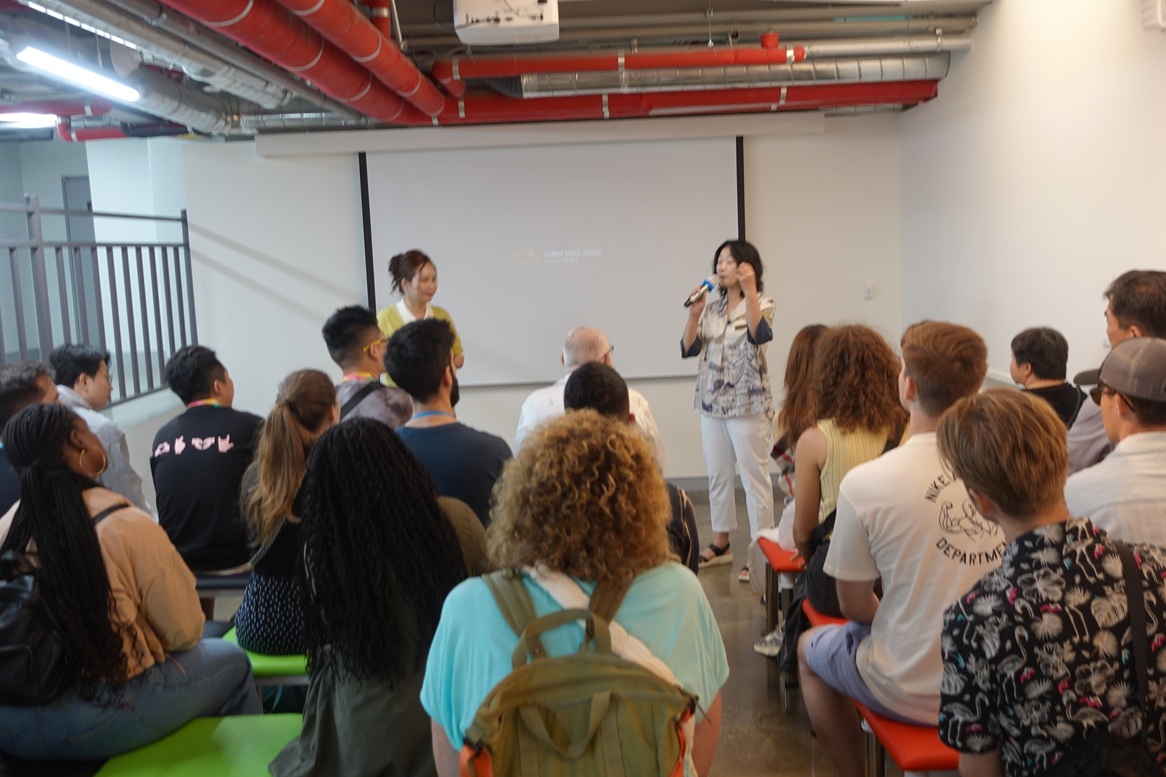
We were lucky to have a chance to meet a North Korean refugee, who fled her country via China and Vietnam. Because of her flight, her brother was sent to a labour camp, and her mother had a breakdown, and eventually killed herself.
Till 2024, 34,314 defectors had escaped North Korea. After arriving in South Korea, they are put through a screening process to ensure they are not infiltrators. They are then put on a resettlement programme, with education at Hanawon. The government supports stable integration and self-reliance through various policies, including funding, housing, employment, education, healthcare and counseling.
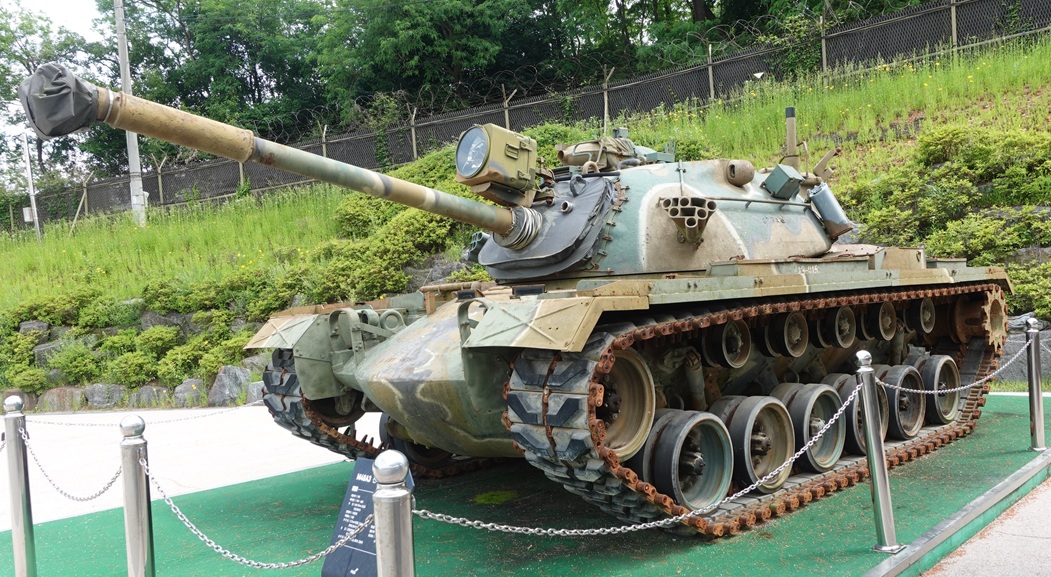
Tank at the 3rd Tunnel display. This tunnel was one of four discovered. This tunnel is 1650m long, and 75m deep, blasted out of solid rock by dynamite. We were allowed to enter it, via a specially built ramp, and go along it for 350m, till 150m short of the Korean border. It was discovered by boring shafts, filling them with water, and waiting for the air pressure from the blasting to cause the water to spray out.
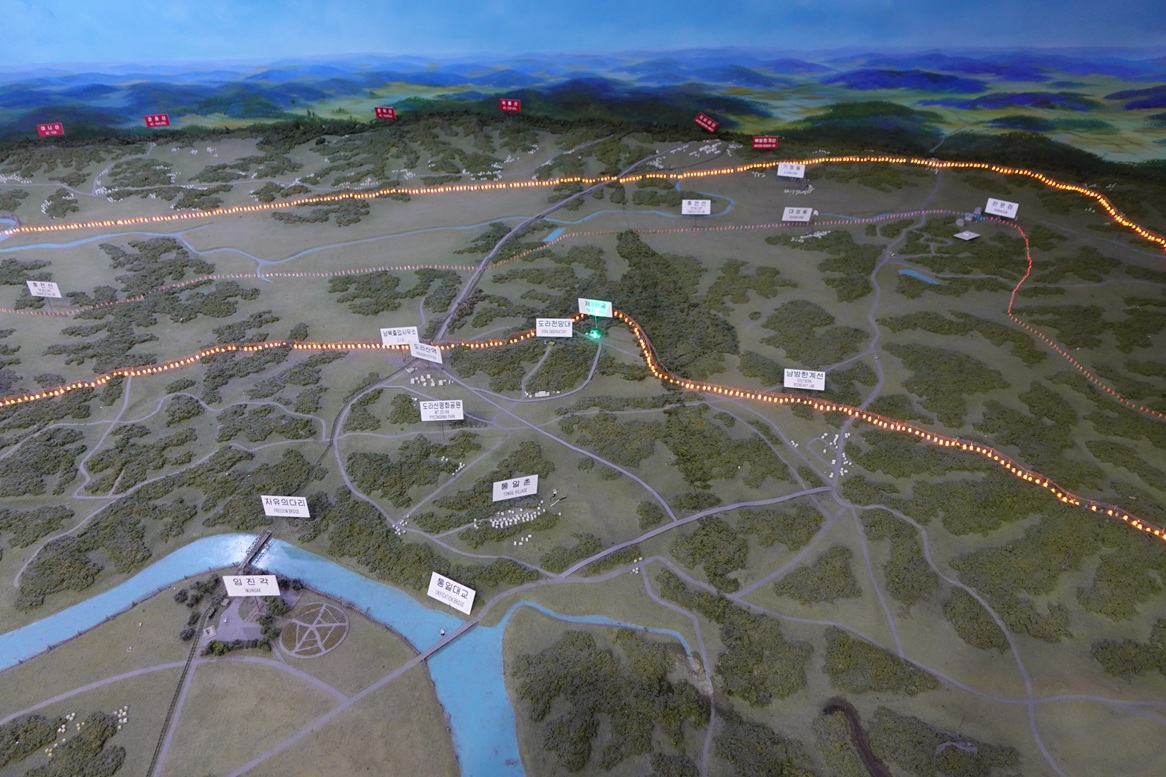
Panorama of the border. The third infiltration tunnel centre is lit up in the photo.
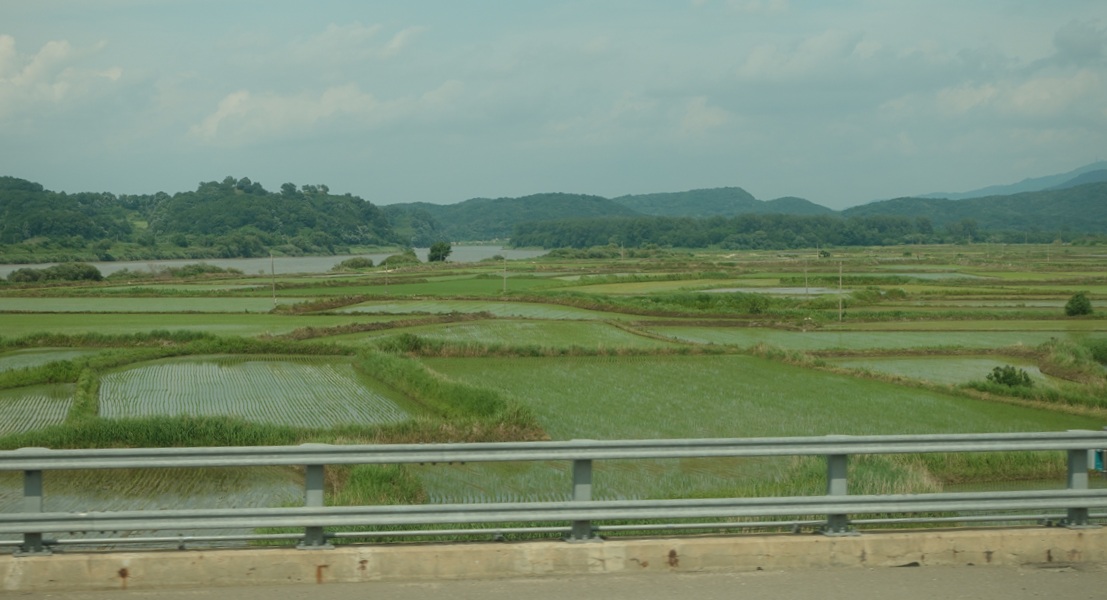
Rice fields in the DMZ
Travel Diary
Travel Notes
Today was a 6-hour guided bus tour, taking us from our hotel pick-up to the 44-km distant demilitarized zone (DMZ). There are three stops on the tour. The first is to Freedom Bridge, which is one of the few access points between the two Koreas. The second is a building on a hill overlooking the demarcation line, with a view of a town on the northern side. We cannot take pictures of this area, or of any military personnel, of which we saw many. The third stop was a centre at the point where an infiltraton tunnel was discovered. It is possible to go down to the tunnel via a long shaft, and walk along the tunnel to just short of the border point to North Korea.On the bus and at the sites, we are given a run-down on the terrible history of the Korean War, and the post-war stand-off, between the UN troops supporting the South Koreans, and the North Koreans, supported by their communist allies, the Soviet Union and China. It was the hot start to the Cold War, and lasted from 1950-1953. Where the armies stopped fighting for a ceasefire is where the border stands today, but the war is not over officially.
Our Korean English-speaking guide goes by the name of Sadie, and she was enthusiastic about her job. Our group was a mix of foreign tourists, mostly fairly young, which was just as well, because one part of the tour involved a 1.6km hike down a 75m deep ramp to the third Infiltration Tunnel, built by the North Koreans, and discovered in 1978. It has tastefully been turned into a visitors´museum, and we gained a good insight into the conditions and misery wrought on generations of people by the conflict.
oyasumi nasai
sayönara
ohayö gozaimasu
konbanwa