Asia and Australia 2025
Day 16: Saturday 21 June 2025
Osaka
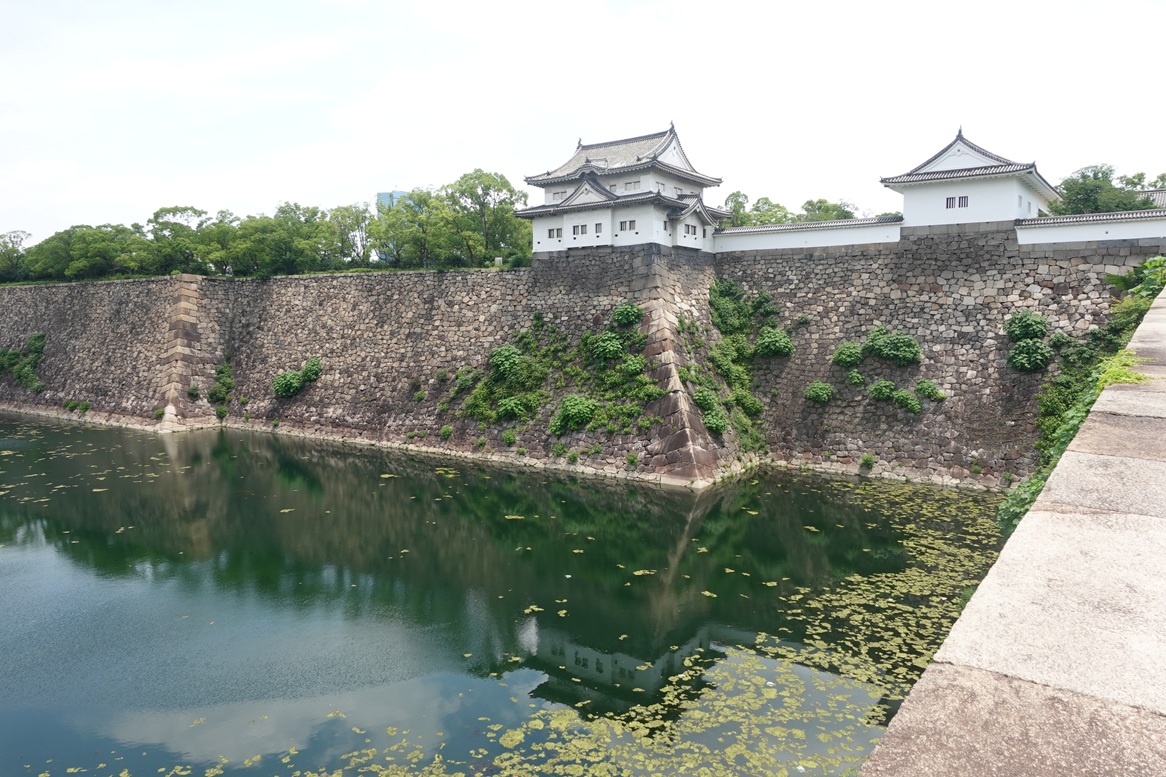
Ōte-mon Gate and moat at the west entrance to the Osaka Castle. This is easily the widest moat and highest walls of any fortification I have ever seen. However, I could not help wondering if the sloped walls, aesthetic as they are, would not actually be scalable by nimble ninjas…..?
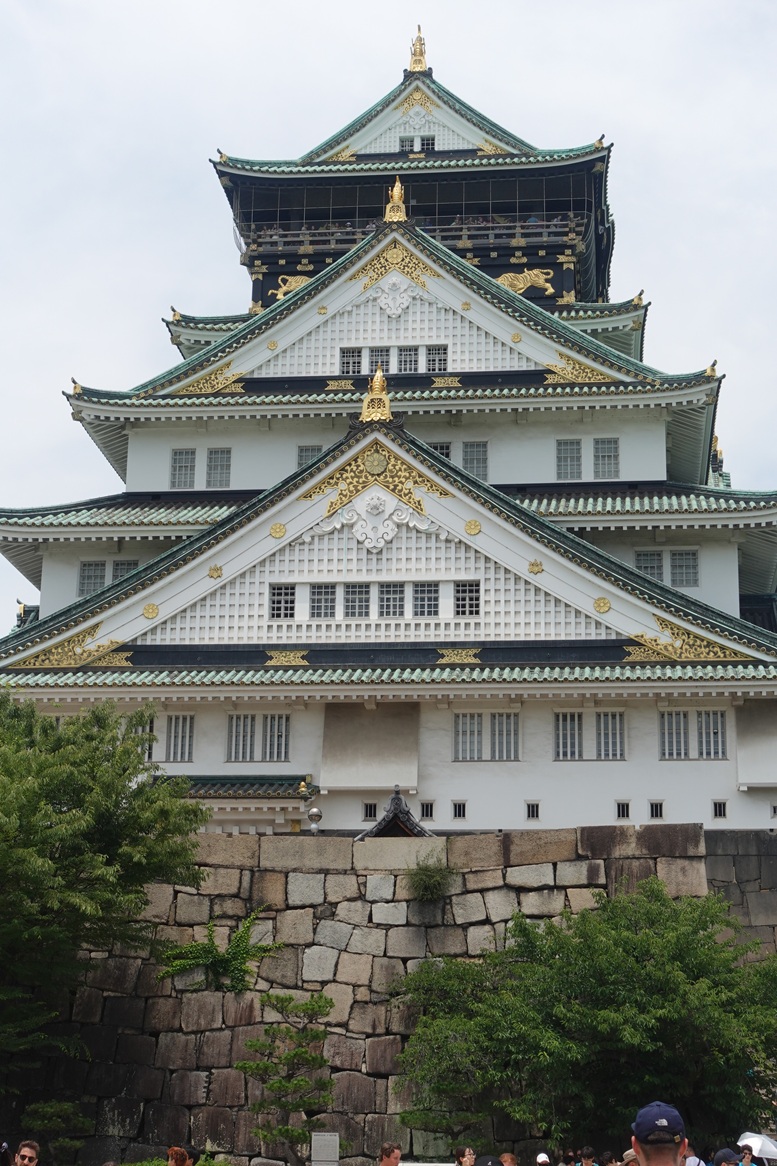
Osaka Castle main tower is magnificent, and is raised high above not only the castle grounds, which are quite extensive, but also over the city, even with the myriad skyscrapers in every direction.
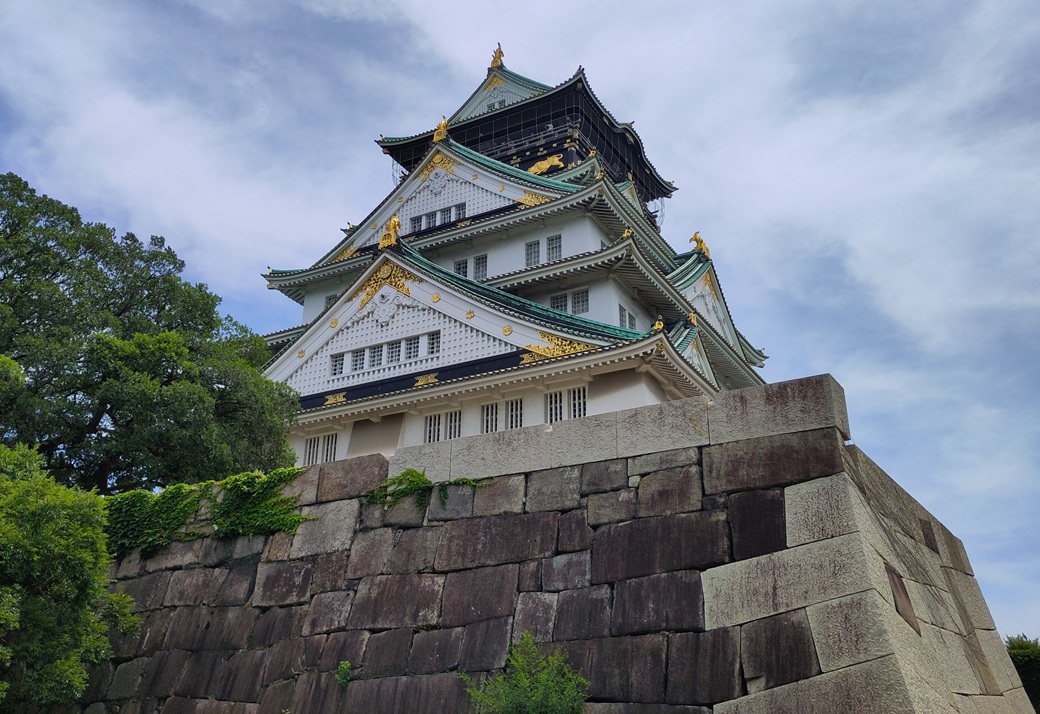
Osaka Castle main tower.
The grounds cover 61,000 square metres (15 acres) and have beautifully maintained gardens, and paths, including a popular running track, which, despite the midday heat, was well patronised. There are two gates, five turrets, a well, a storehouse, and a gunpowder magazine.
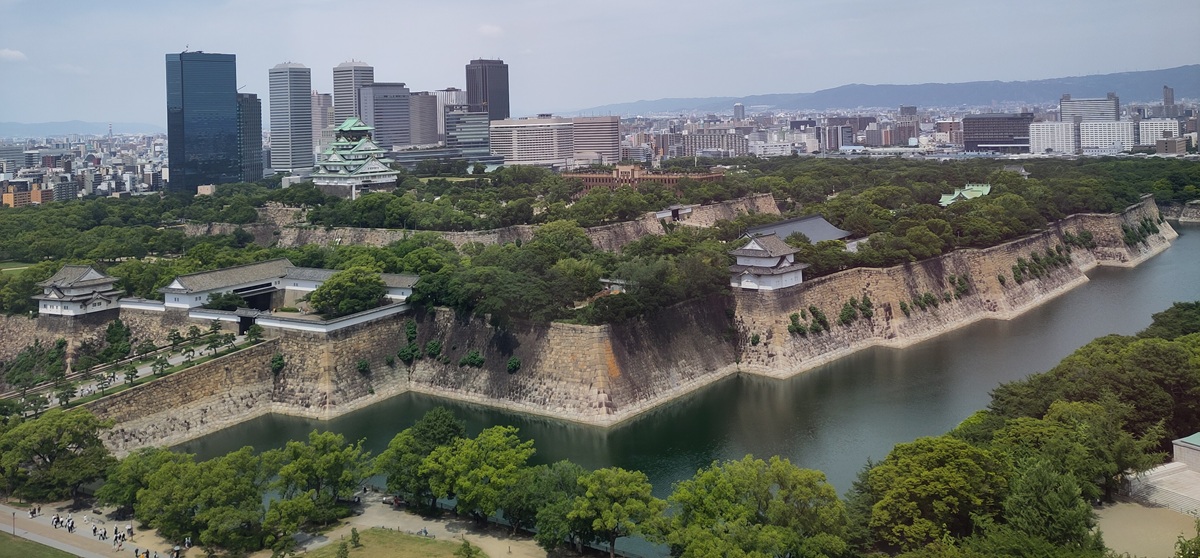
View of Osaka Castle and Osaka city from the History Museum
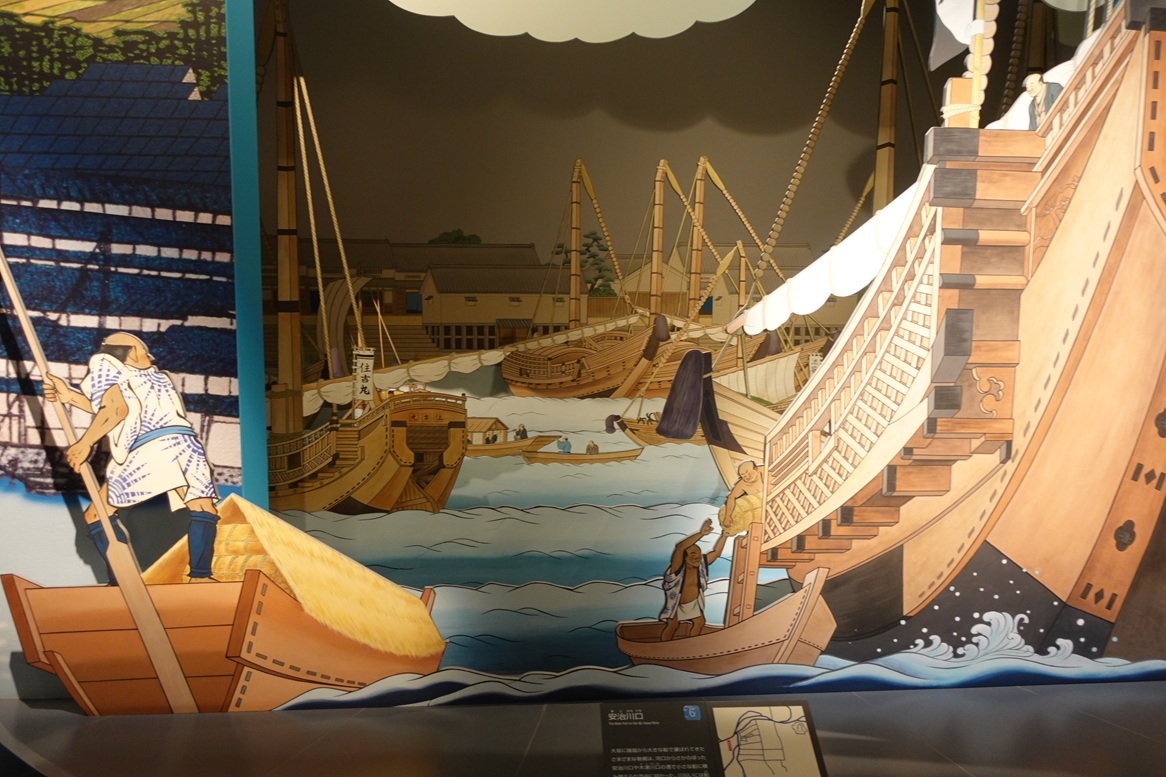
Osaka Historical Museum. Given its ideal location on the Seto Inland Sea, Osaka became a major port.
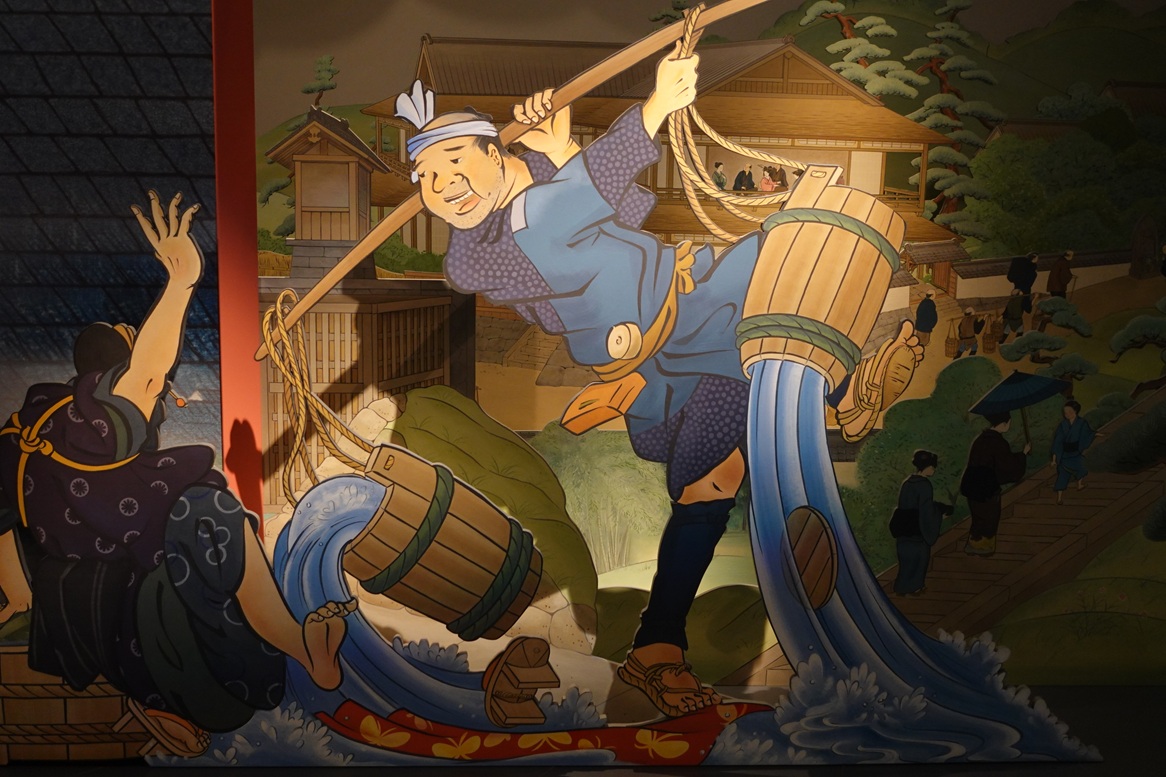
Diorama in the Osaka Historical Museum
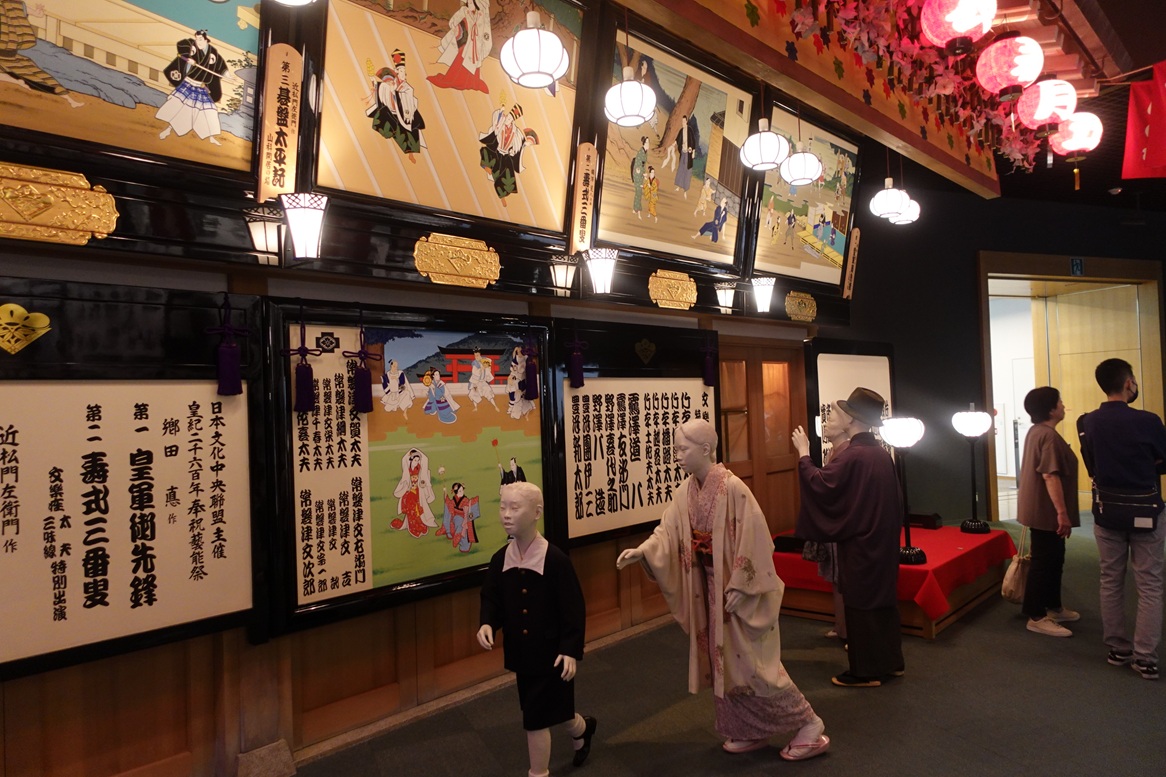
Model in the Osaka Historical Museum
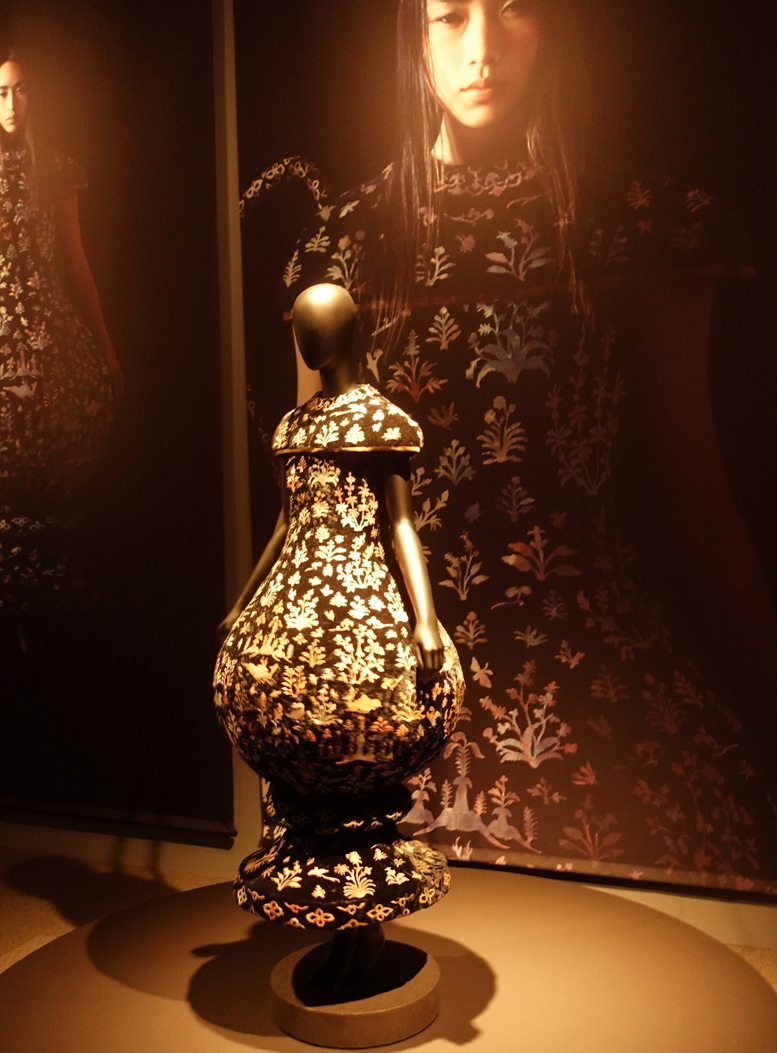
A modern art-dress in the Osaka Historical Museum
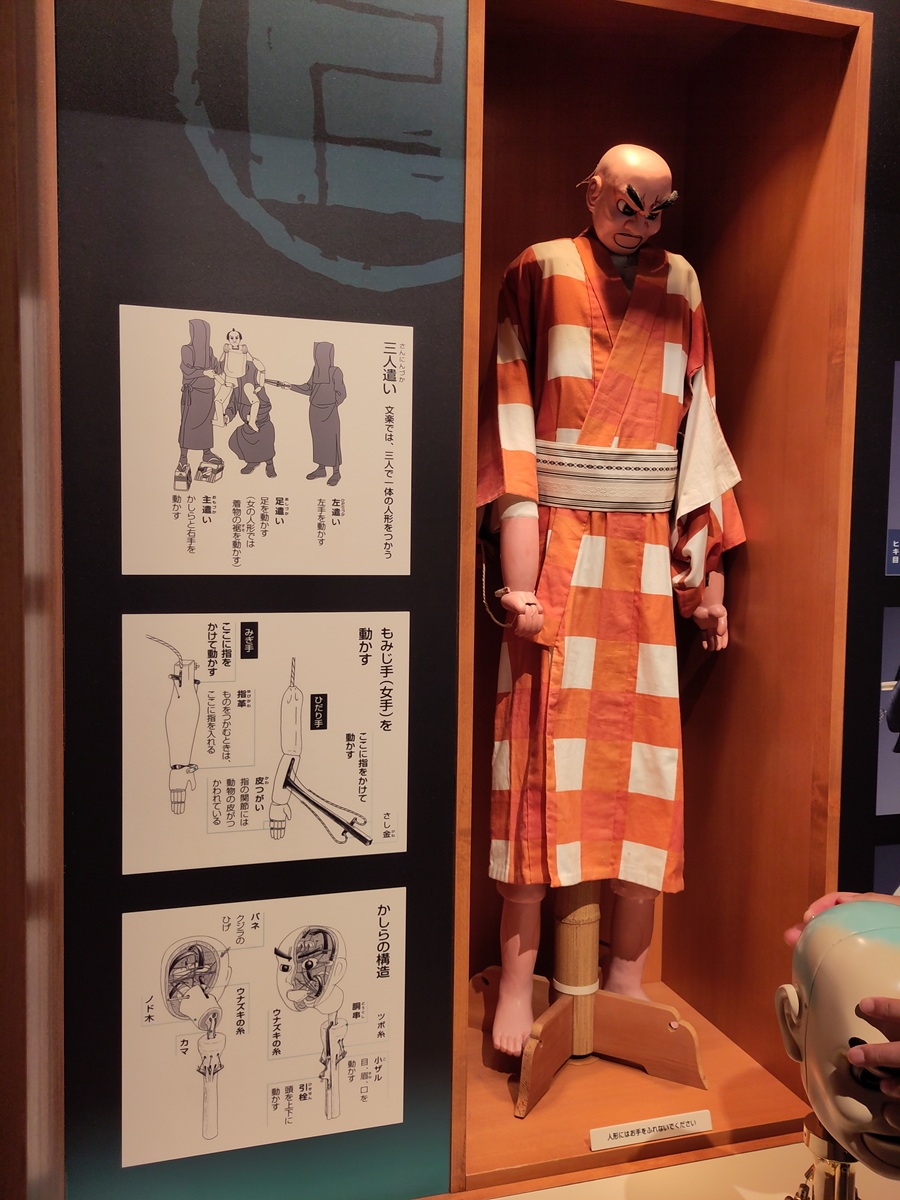
Life-size puppet, operated by three performers
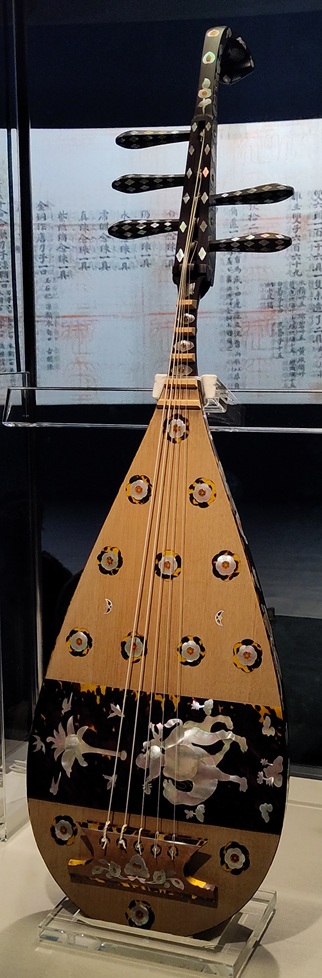
A biwa, a 5-stringed instrument in the Osaka Historical Museum, a Japanese short-necked wooden lute traditionally used in narrative storytelling. The biwa is a plucked string instrument that first gained popularity in China before spreading throughout East Asia, eventually reaching Japan sometime during the Nara period (710–794).
Typically 60 centimetres (24 in) to 106 centimetres (42 in) in length, the instrument is constructed of a water drop–shaped body with a short neck, typically with four (though sometimes five) strings.
In Japan, the biwa is generally played with a bachi instead of the fingers, and is often used to play gagaku. One of the biwa’s most famous uses is for reciting The Tale of the Heike, from the Kamakura period (1185–1333).
Not to be confused with the shimansen, which has only 3 strings.
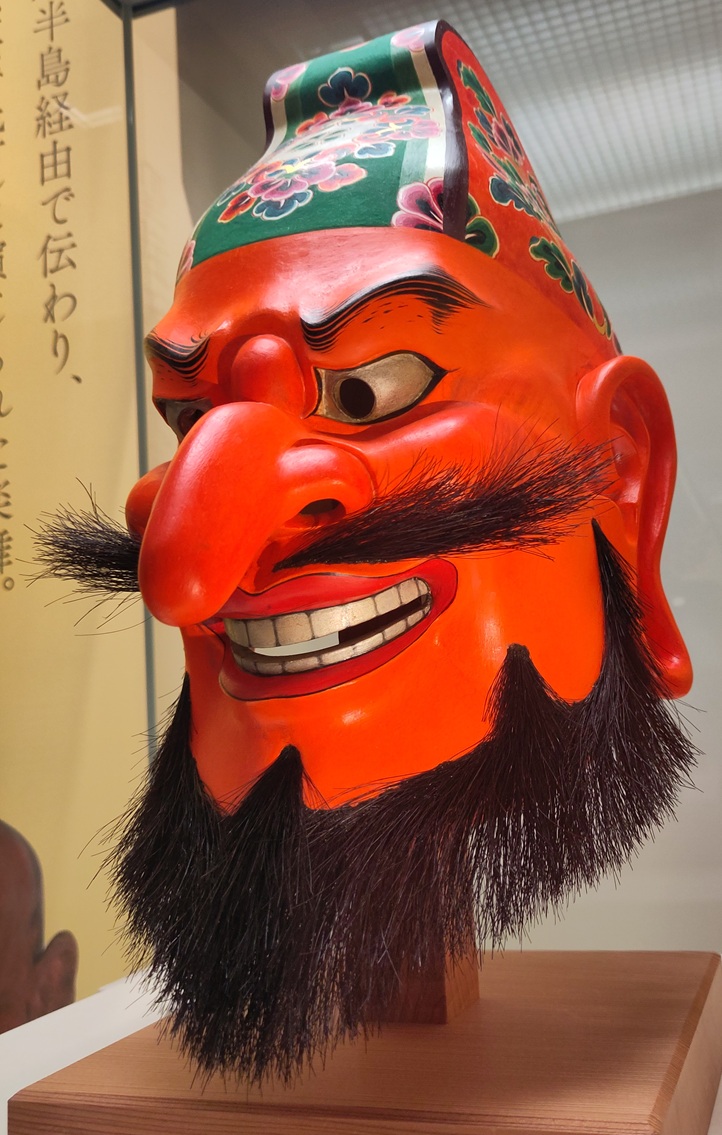
Theatre mask in the Osaka Historical Museum
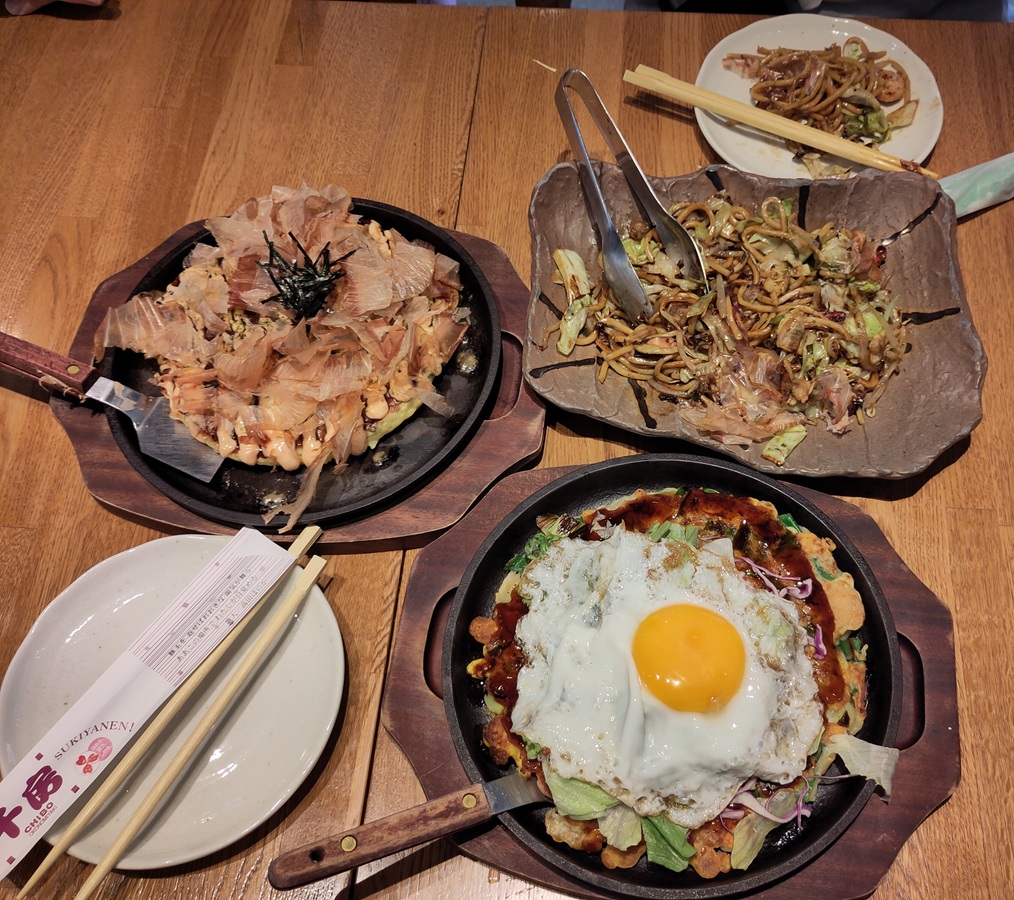
Okonomiyaki and yakisoba. “Yaki” means “fried”.
Travel Diary
Osaka Castle
… wa doko desuka?
eigo wo hanasemasuka
watashi wa (Peggy) desu
… wo kudasai
yukkuri hanashite kudasai