Asia and Australia 2025
Day 25: Monday 30 June 2025
Tokyo – Manilla, Philippines
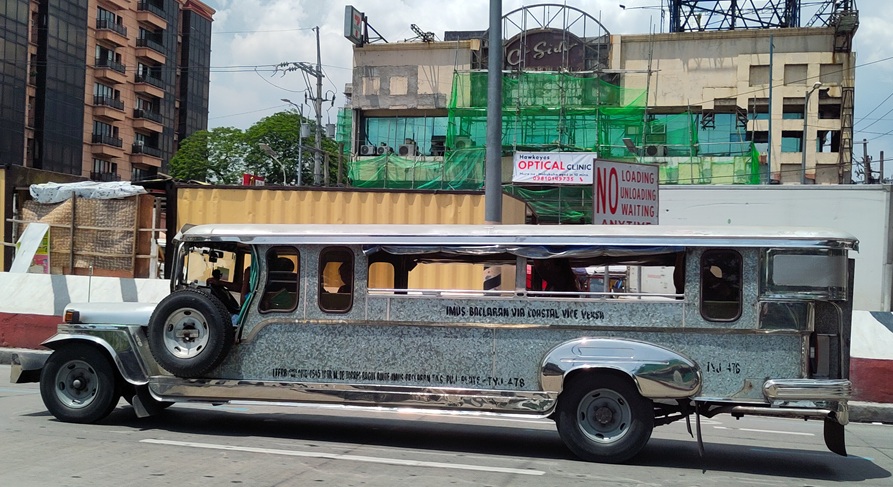
Snapped from the taxi on the way from the airport to the hotel, Manila.
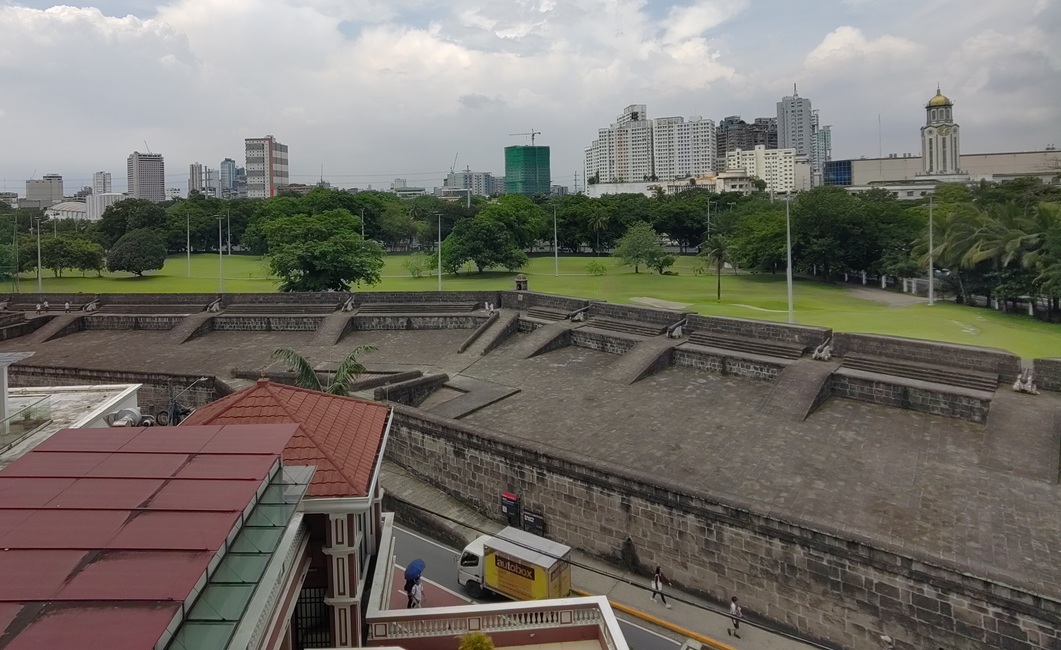
View from our hotel window. Intramuros is the oldest European settlement in Manila, and indeed the Philippines. The wall which gives it its name still stands in the most part, and even has cannons still facing the potentially hostile inhabitants across the Pasig River.
When the Spanish arrived in 1565, they found the islands in a territorial dispute between the Hindu Tondo and Islamic Manila. In 1571, they added a third religion to the mix, and declared the area of Luzon Island, which would become Manila, a territory of “New Spain”, which was an extension of Mexico.
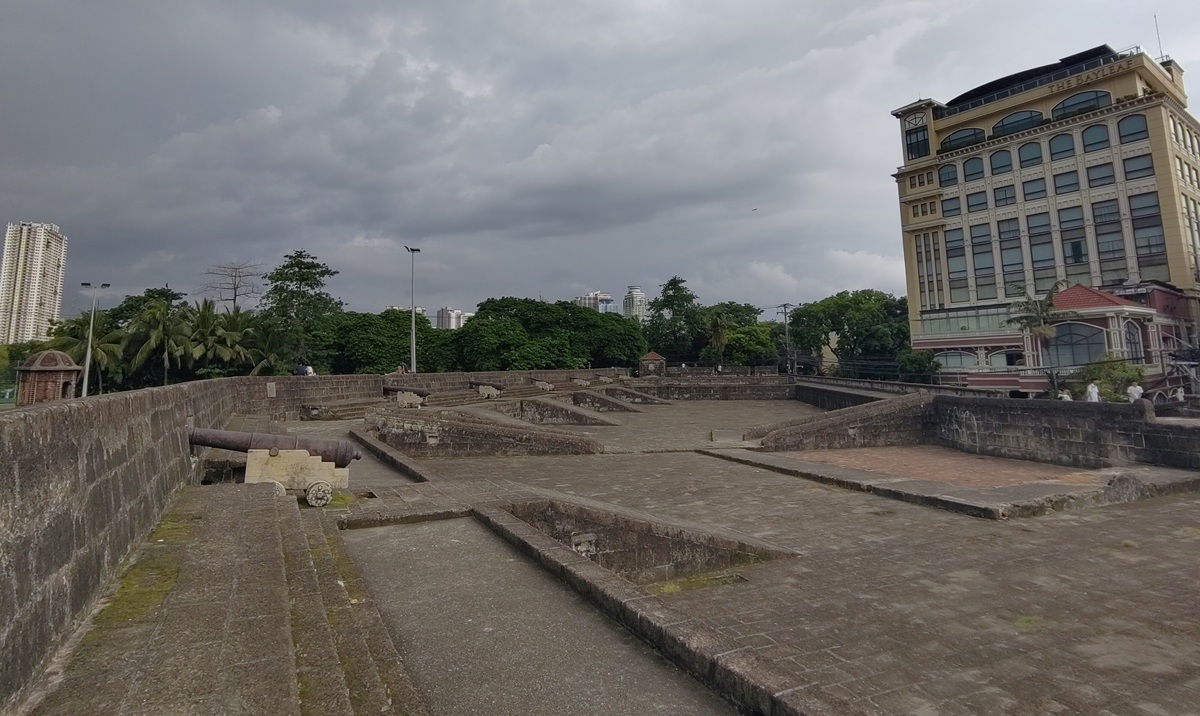
Intramuros wall fortress, with our hotel, Bayleaf, on the right. The Spanish ruled the Philippines from 1565 till 1898, when it was handed over to the USA for the sum of 20 million dollars.
Manila played a key role in the Manila-Acapulco galleon trade, which exchanged goods between Europe, Africa, and Hispanic America across the Pacific. Silver was brought from mines in Mexico and Peru and exchanged for Chinese silk, Indian precious stones, and Indonesian and Malaysian spices. Manila served as an offshore facilitator of the trade between Japan and China, during the Ming ban on direct trade between China and Japan, which began in 1549.
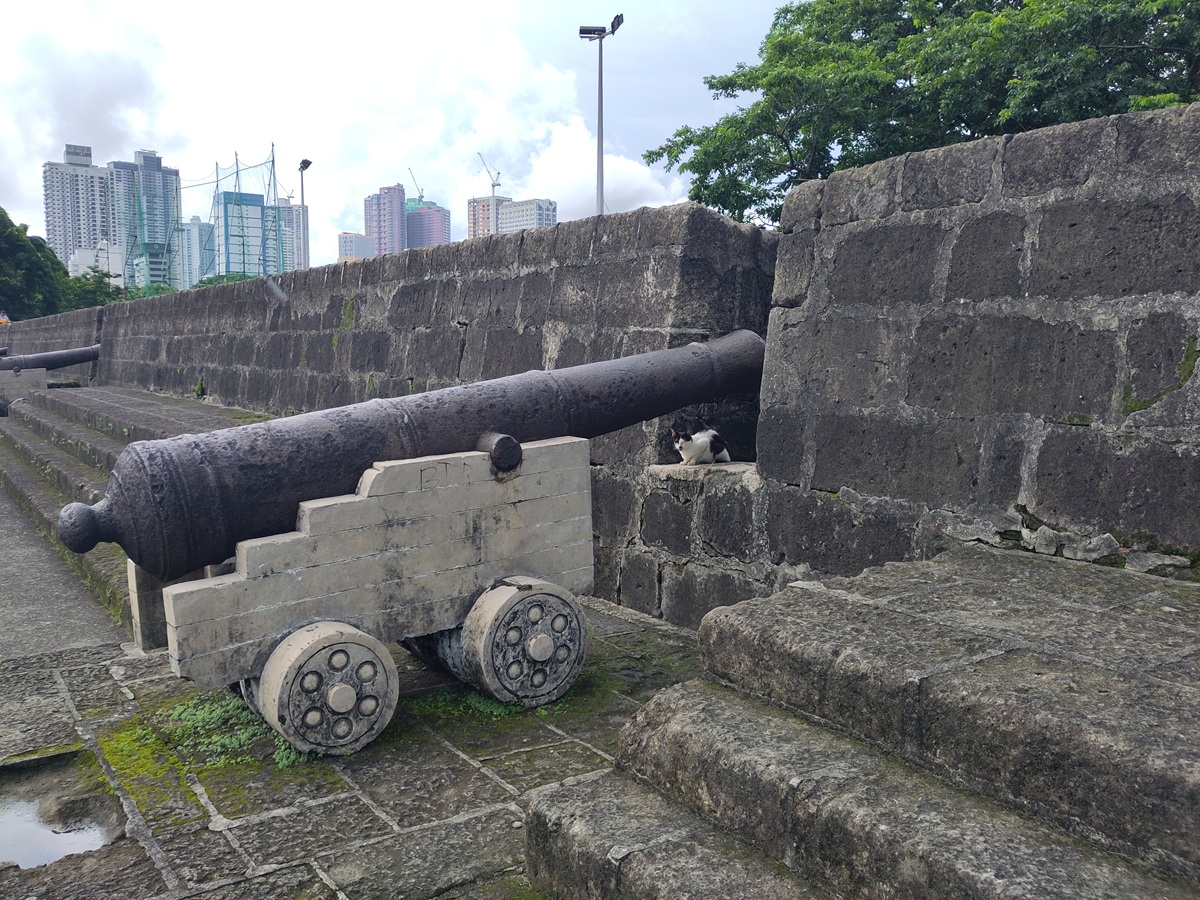
Cannon on the Intramuros fortress wall. These cannon were positioned facing Chinatown, across the river, after the Chinese allied with the British, when the British occupied Manila for 2 years from 1762-4, as a consequence of the Spanish involvement in the Seven Years´War.
Note the cat under the cannon barrel. We saw a great number of small, scrawny cats around the old town of Intramuros.
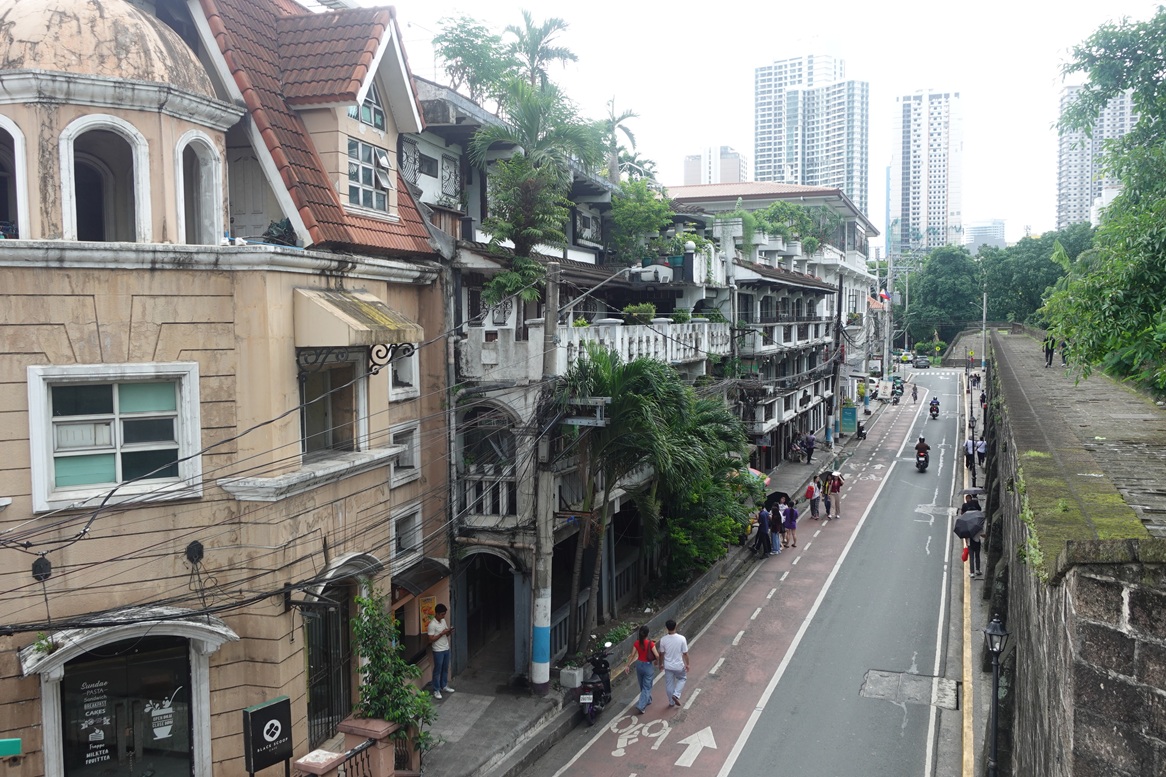
Intramuros is the original Spanish settlement. It retains its original walls from the late 16th century, although they have been damaged by earthquakes and war through the ages. When Mexico gained independence from Spain in 1821, the colony of
Manila came under direct rule by Spain, during which banking, industry, and education flourished. This picture shows part of a religious university which is located alongside our hotel.
The opening of the Suez Canal in 1869 shortened the trade route to Europe. The wealth and importance to the world trade routes, has made Manila an attraction to peoples from all over the world. By the end of the 19th century, there were movements for independence, which were severely repressed by the Spanish.
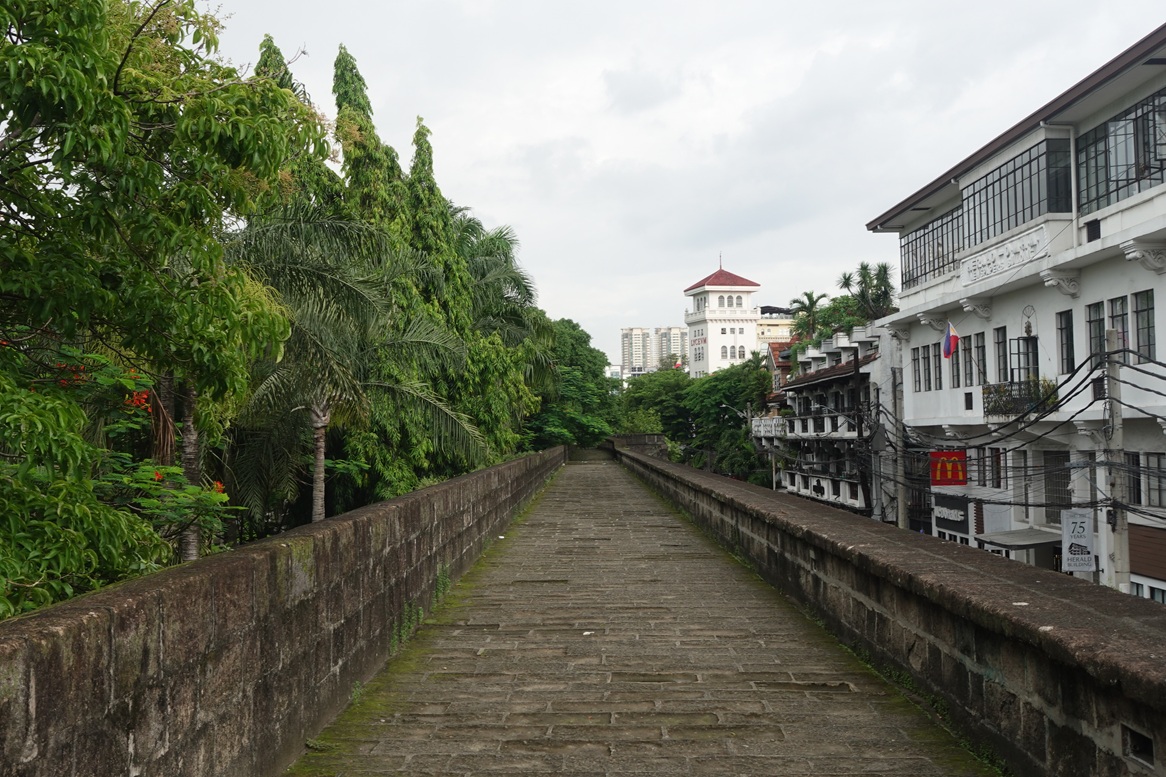
Intramuros wall, showing the ancient paving stones, looking back towards the religious university and our hotel. On the left are the tropical gardens which surround most of the walls.
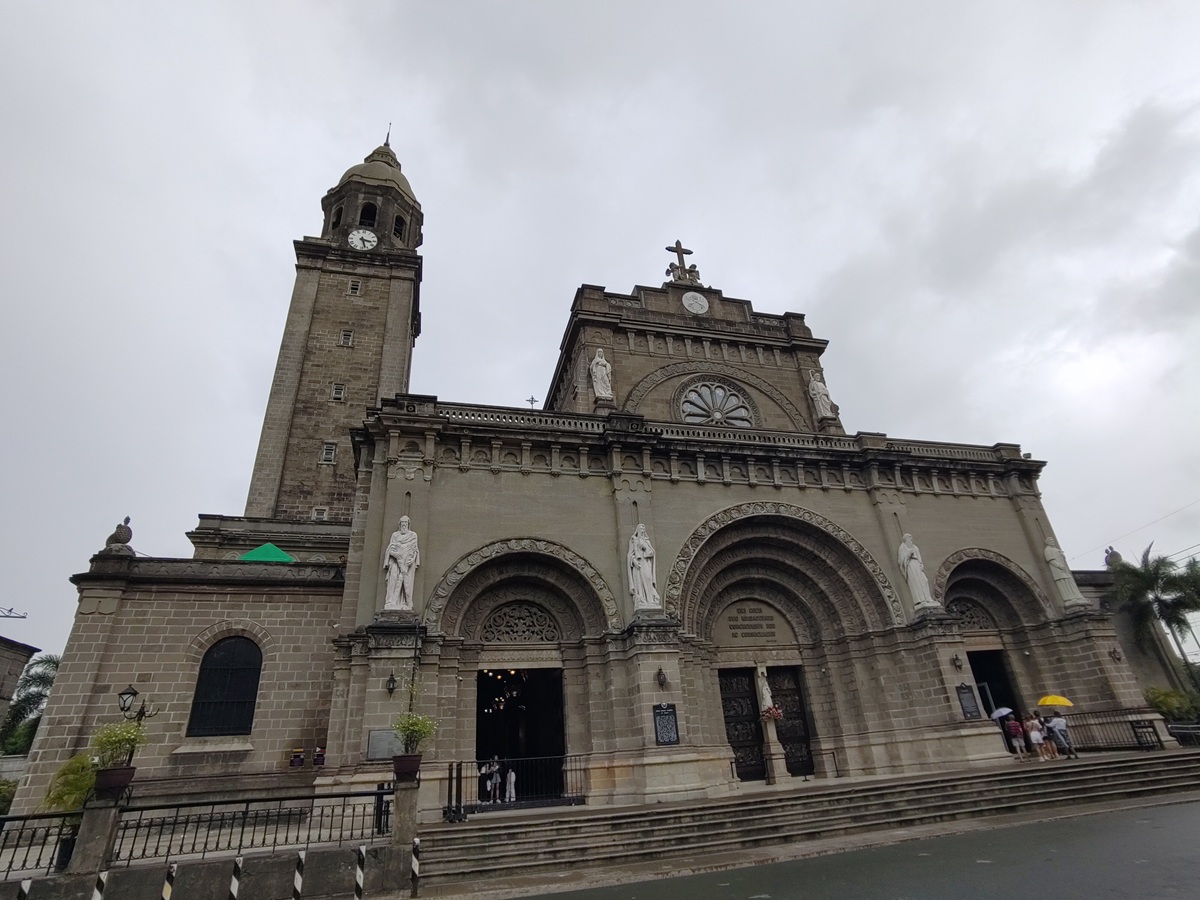
Manila Cathedral
The first thing the conquistador, Miguel Lopez de Legaspi, did upon seizing Manila in 1571, was allocate land for the “Church of our Lady of the Immaculate Conception”. The first church was a simple structure of nipa and bamboo.
A nipa hut, or báhay kúbo, is a stilt house typical of the Philippines, and is an icon of Philippine culture. It had a great influence on the Spanish colonial-era bahay na bato architecture.
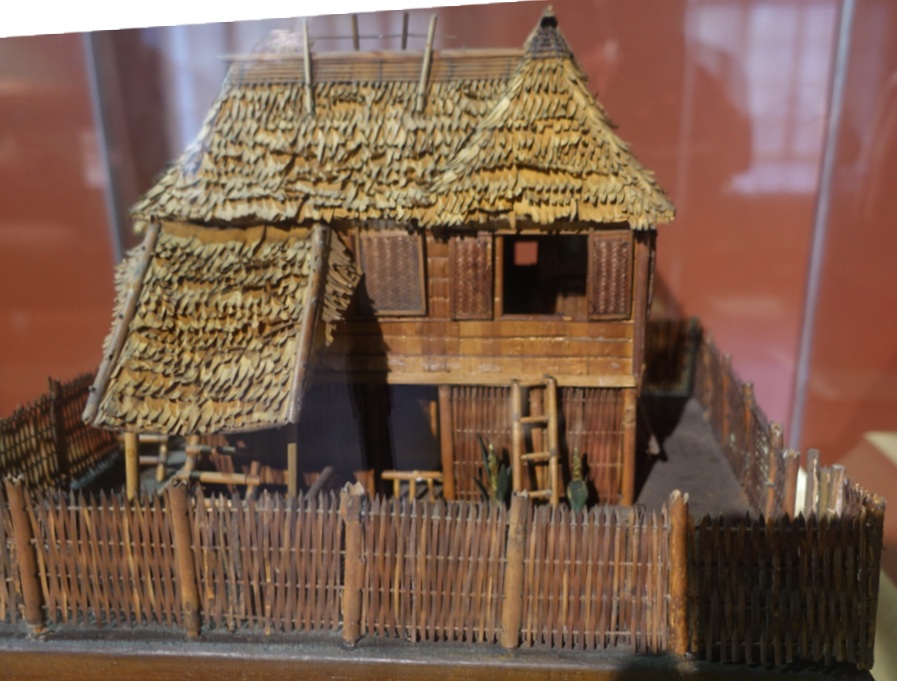
Bahay kubo, Nipa hut, model in the Archeological Museum, Manila
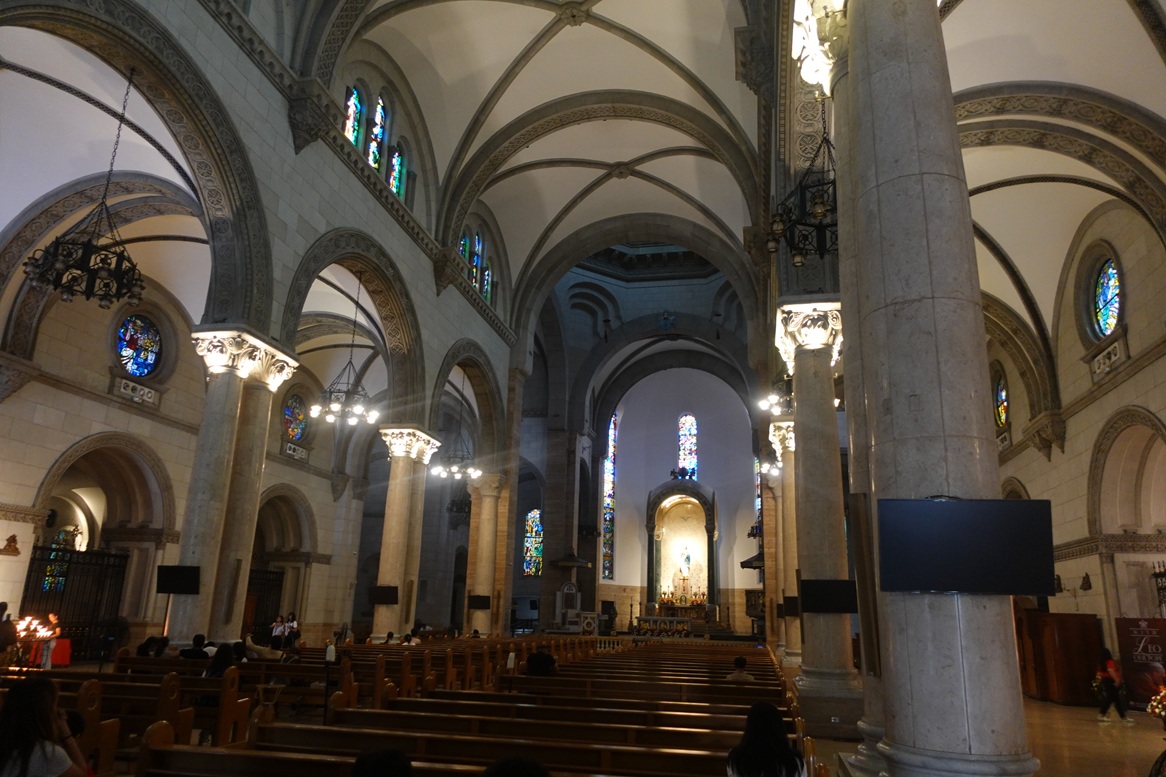
Manila Cathedral interior.
The cathedral has been destroyed or damaged by fire, earthquake and war on a regular basis, and has been rebuilt a record 8 times:
1583: fire
1588: typhoon. A masonry cathedral replaces the wooden church.
1600: earthquake. This time, stone was used to built the new cathedral. It had 3 naves, 7 chapels, and 10 altars.
1621: earthquake
1645: two earthquakes
1654: the third cathedral is commenced, using quarried adobe stone, lime, and gravel to build a bell tower. It was mostly completed by 1706. Repairs were necessary due to annual rains causing deterioration of the woodwork. In 1737 the cupola was demolished and replaced by one of bricks.
In 1747, the dilapidated state of the church required the almost complete reconstruction – the 5th cathedral, completed in 1771.
1852: earthquake. The facade and other parts of the cathedral are badly damaged. The 6th cathedral opens in 1858.
1863: earthquake. the cathedral became a heap of rubble, burying alive members of the Cathedral Chapter, choir boys, and an unknown number of attendees. The 7th cathedral was begun in 1872, and consecrated in 1879.
1880: earthquake
1945: During World War Two, American bombers bomb the cathedral, and the ensuing Battle for Manila sees the complete destruction of the cathedral.
1954-8: the 8th cathedral is built, which is the one we see today.
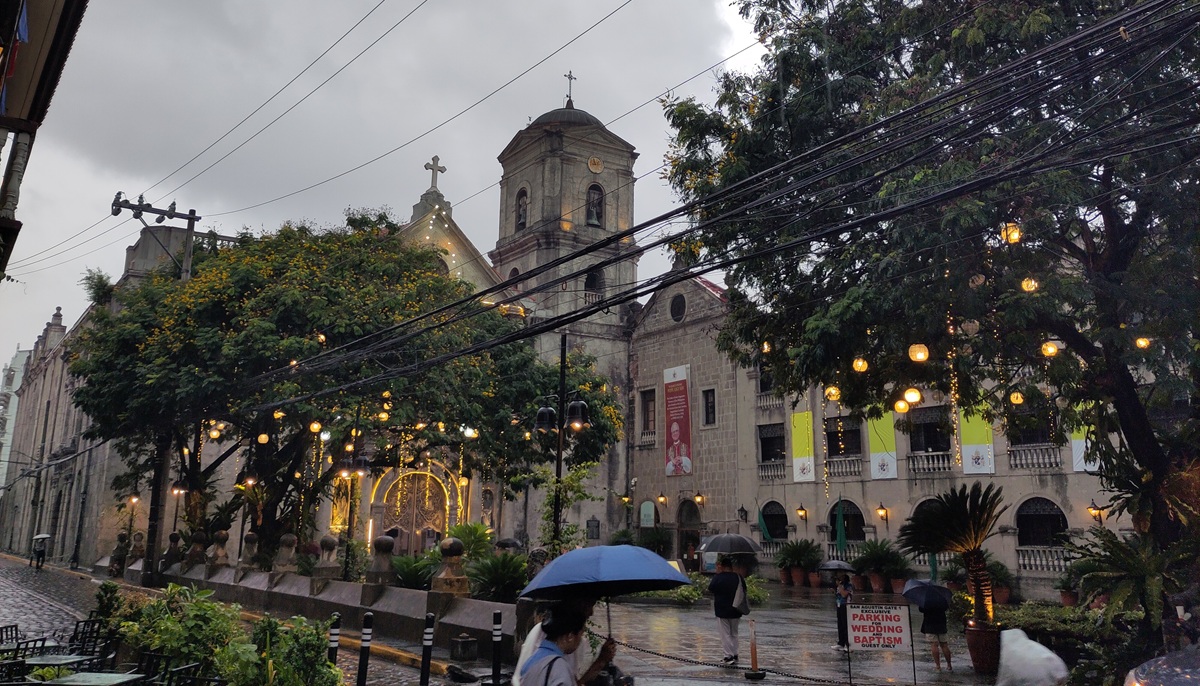
Milan Cathedral square from Plaza Roma
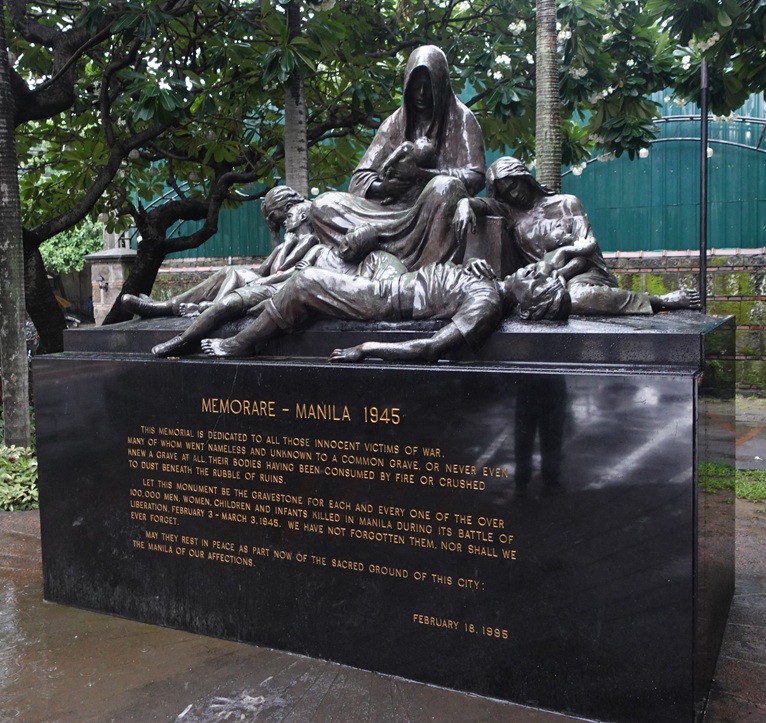
Memorial to the hundred thousand civilian casualties of Japanese atrocities and the bombardment of Manila during WWII.
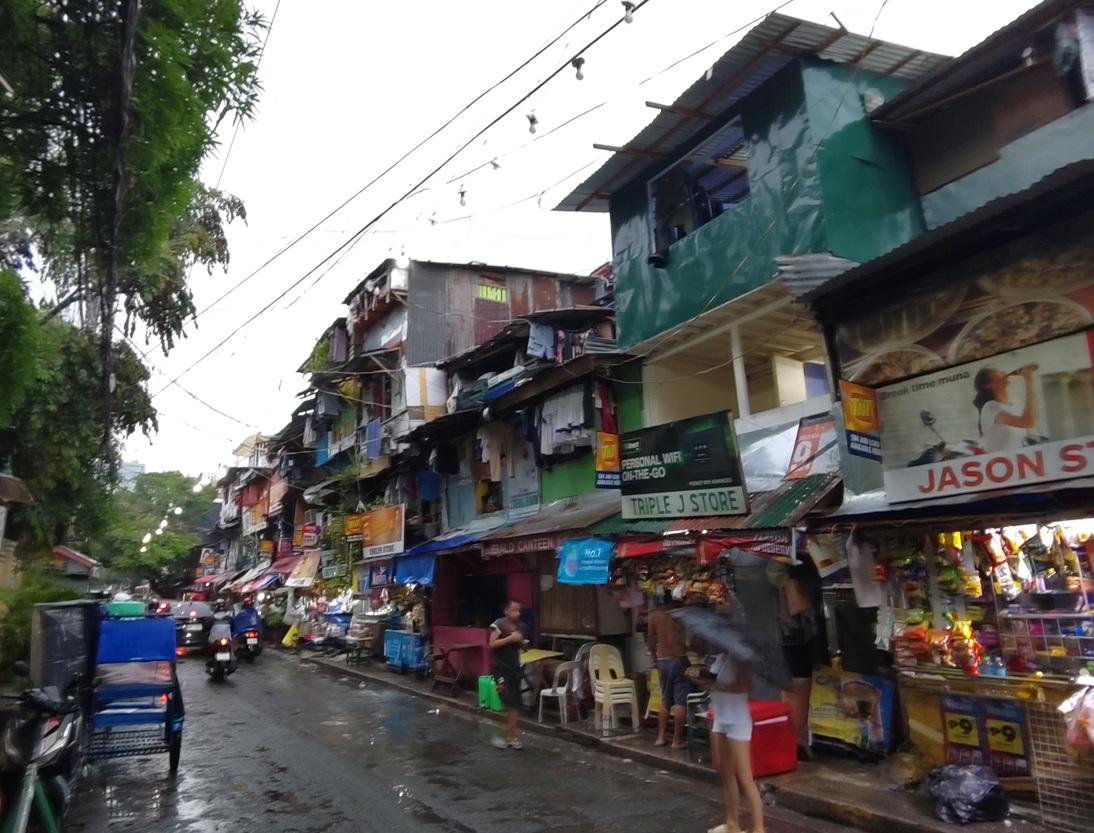
Street in Intramuros
Travel Diary
Spanish-American War
Fought from April 21 – August 13, 1898, between Spain and the United States. This one-sided conflict caused 4,119 caualties (2,446 dead, of which 2,061 from disease) on the American side, and 56,000 (15,700 dead, of which 15,000 from disease) on the Spanish side. It started by a mysterious explosion sinking USS Maine in Havana Harbour, and resulted in the USA gaining soveriegnty over Puerto Rico, Guam, and the Philippines, and establishing a protectorate over Cuba.The US intervened in the Cuban War of Independence, after reports of heavy-handed repressions of the local population, and the Philippine Revolution (against Spain). As the Americans moved into the Philippines, the revolutionaries who had fought the Spanish turned on their allies, and a short Philippine-American War ensued. The US defeating the Spanish so decisively it heralded the end of the global Spanish empire in the Americas, Asia and the Pacific.
On May 1, 1798, a squadron of US warships destroyed the Spanish fleet at Manila Bay, and captured the harbour. With only one protected cruiser being damaged, and ten casualties, the Americans sank nine ships, and caused over 300 casualties.
The Philippine-American War, 1899-1902
This war was fought in resistance to the assumption of control of the Philippines by the US after the defeat of Spain in the 1898, and the Treaty of Paris of December, 1898, which formalised the loss of territories by Spain to the USA. The US paid Spain 20 million dollars in compensation for the loss of the Philippines. The ensuing Philippine-American War caused around 1,000 combat deaths on the US side, and 12-20,000 deaths on the Filipino side, as well as hundreds of thousands of Filipino civilian deaths.The Battle of Manila, February 4-5 1899, was fought between 19,000 American soldiers and 15,000 Filipino militiamen. It resulted in an American victory, with 293 killed (55 US, 238 Filipino).
American Colonial Period, 1898-1946
America formally recognised the independence of the Repubic of the Philippines on July 4, 1946. After the ceding of the Philippines to the USA in the Treaty of Paris, 1898, the expectations of complete independence for the Republic of the Philippines were disappointed. A period of turbulence and warfare ensued, with the US suppressing resistance.oyasumi nasai
sayönara
konbanwa
ohayö gozaimasu