Asia and Australia 2025
Day 6: Friday 11 July 2025
Melbourne
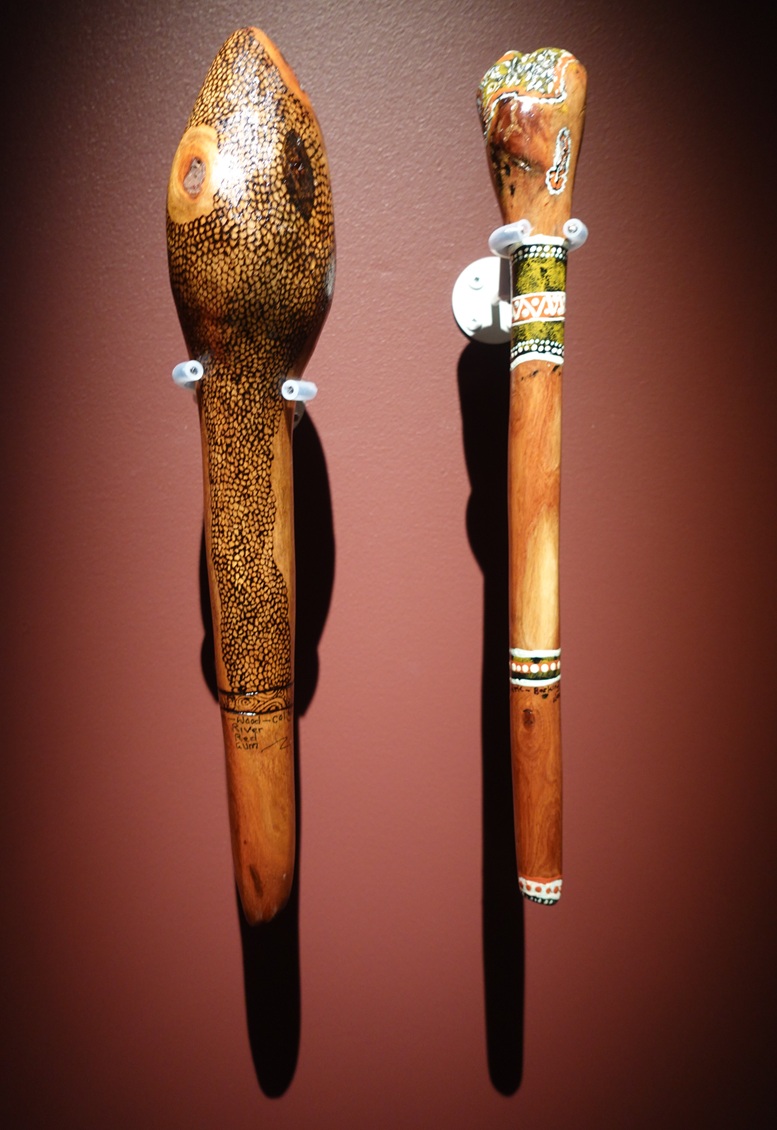
Clubs, Koorie Heritage Trust – Aboriginal Art Gallery – Federation Square
The Koorie Heritage Trust is a not-for-profit organisation holding over 100k items: paintings, artefacts, books, videos and photographs. Its mission is to “protect, preserve and promote the living culture of the Indigenous people of south-east Australia.” It was established in 1985, following a successful suit against the University of Melbourne and Museum of Victoria for the return of collections of indigenous cultural material.
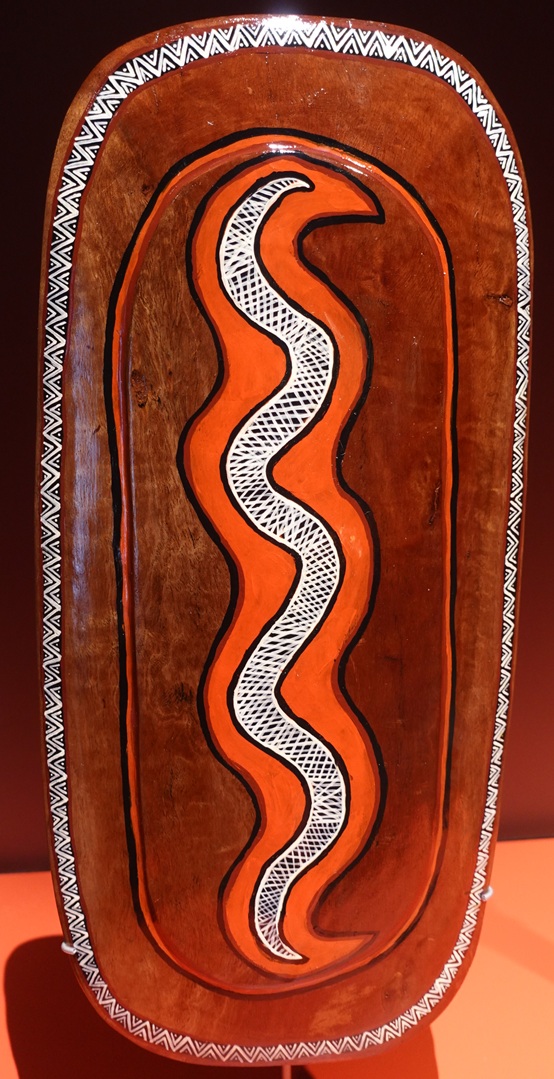
Snake, Koorie Heritage Trust – Aboriginal Art Gallery – Federation Square
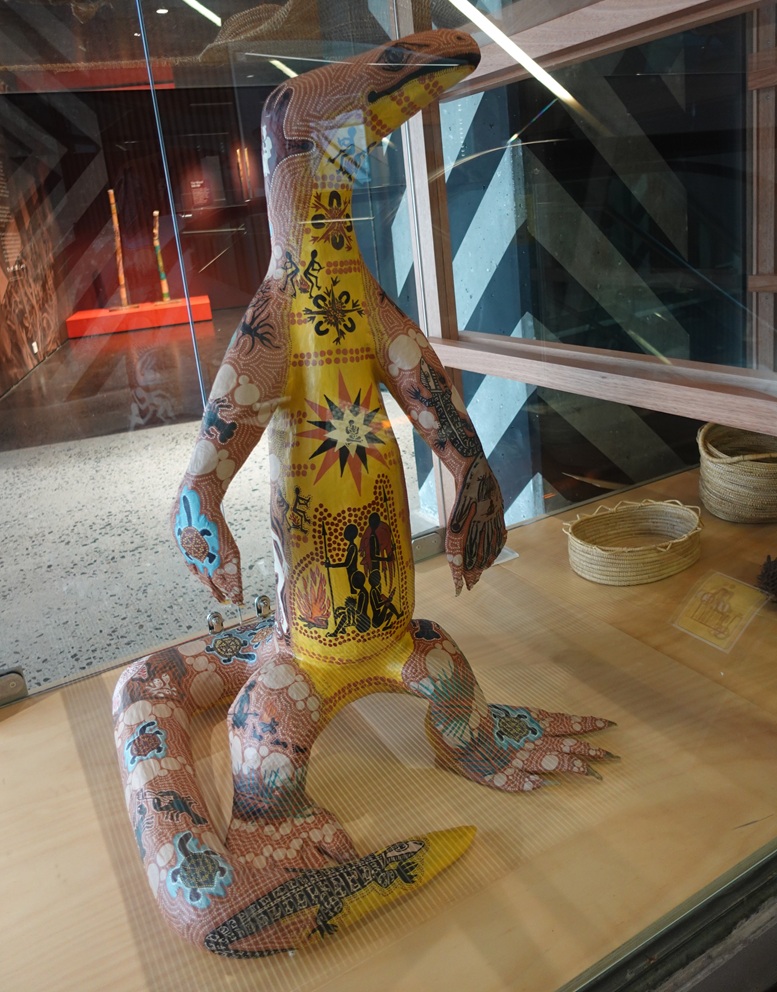
(Wikipedia:) Goanna sculpture, Koorie Heritage Trust – Aboriginal Art Gallery – Federation Square
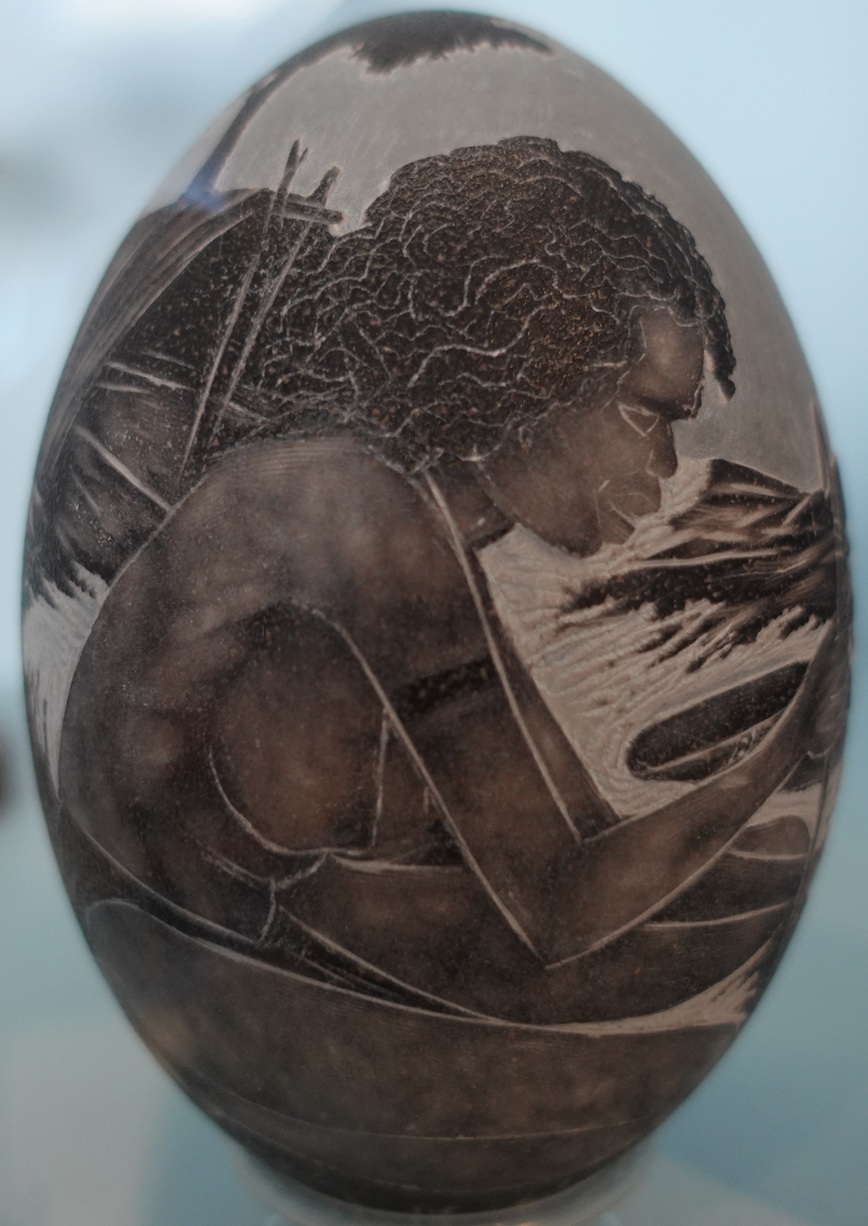
Etching on an emu egg. Koorie Heritage Trust – Aboriginal Art Gallery – Federation Square
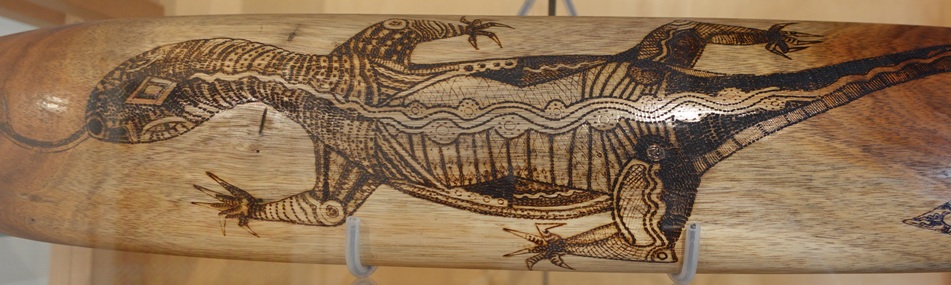
(Wikipedia:) Goanna lizard drawing on wood. Koorie Heritage Trust – Aboriginal Art Gallery – Federation Square
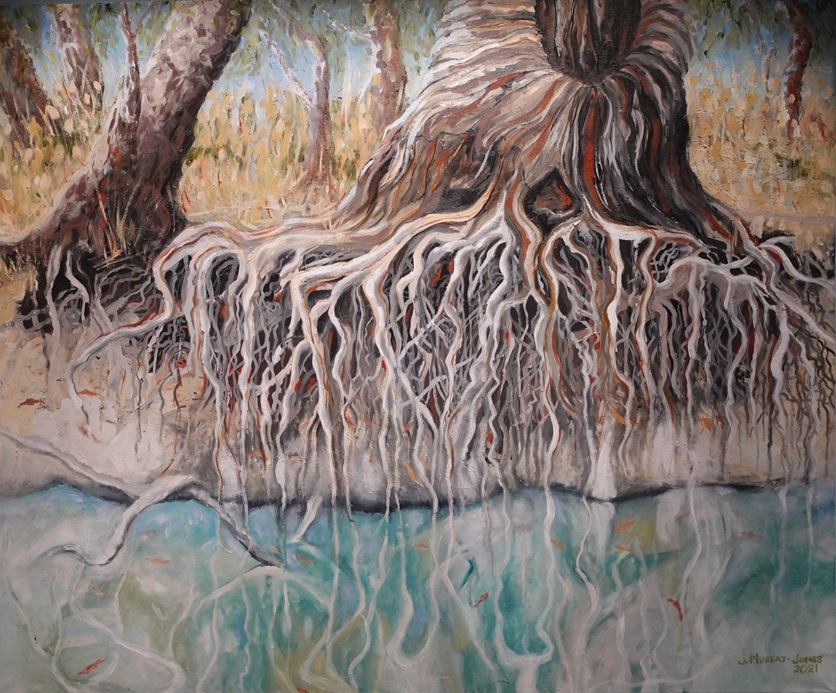
Jenny Murray-Jones, Yorta Yorta, Baraparapa, Wiradjuri.
Murrumbidgee Spirit, 2012, oil on Belgian linen
Information board: The Murrumbidgee River and surrounds holds stories of many triumphs and tragedies, and Jenny draws on such elements to reflect family history and the resilience of family.
This painting draws on memories and reflections relating to the powerful tentacle-like root systems splaying out from the riverbank red gum eucalypt trunk. The strength and power of these large sentinel trees are shown as they embed themselves firmly amongst the edges of the riverbank and deep troughs that hold both the sand and happy memories of family.
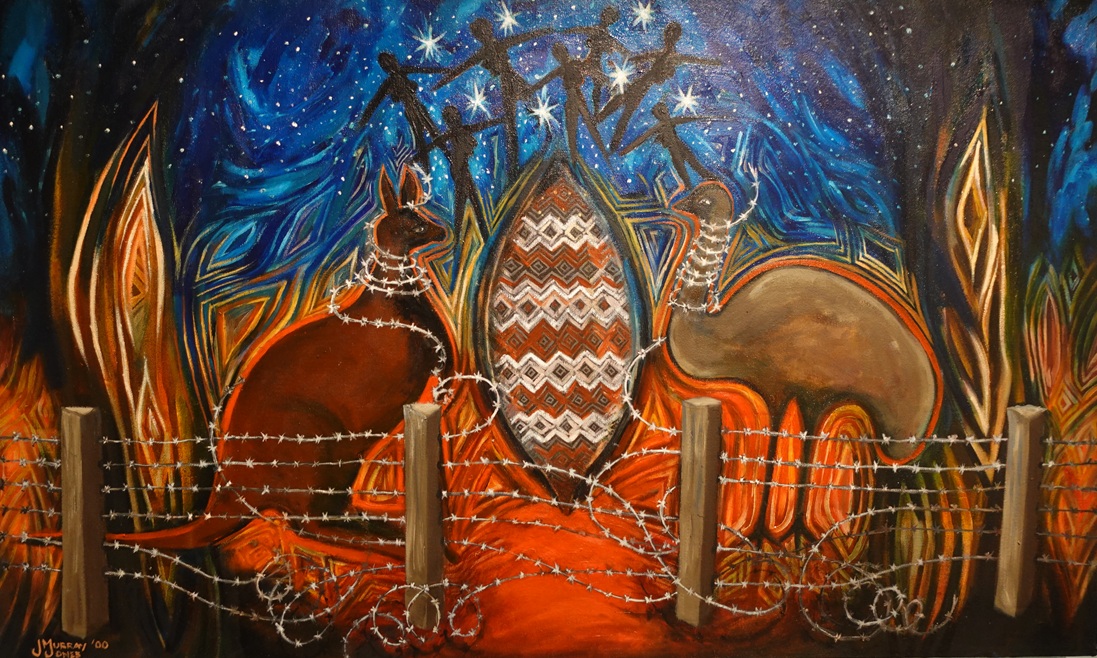
National Identity 2000, synthetic polymer pain on canvas.
by Jenny Murray-Jones, Yorta Yorta, Baraparapa, Wiradjuri
Information board: National Identity delves into the empowerment and disempowerment of the Australian Constitution. Jenny considers that symbolic imagery has been appropriated in order that non-indigenous Australia might establish a ‘national identity’ of its own. Dispossession, disempowerment, exploitation and misinterpretation have played a major role in the process of colonisation.
The incorporation of the ‘Seven Sisters’ in the night sky, creates a spiritual presence and overrides the images, bringing an important element into the imagery; a significant women’s story. As a Koorie woman, Jenny expresses that they are important additions within this painting, as many interpretations of our culture have been documented from a western patriarchal perspective. The seriousness of such matters is represented by the barbed wire strangling the animals. The traditional shield and trees with patterned scars create an important layer to the representation of cultural and spiritual connection to Country.
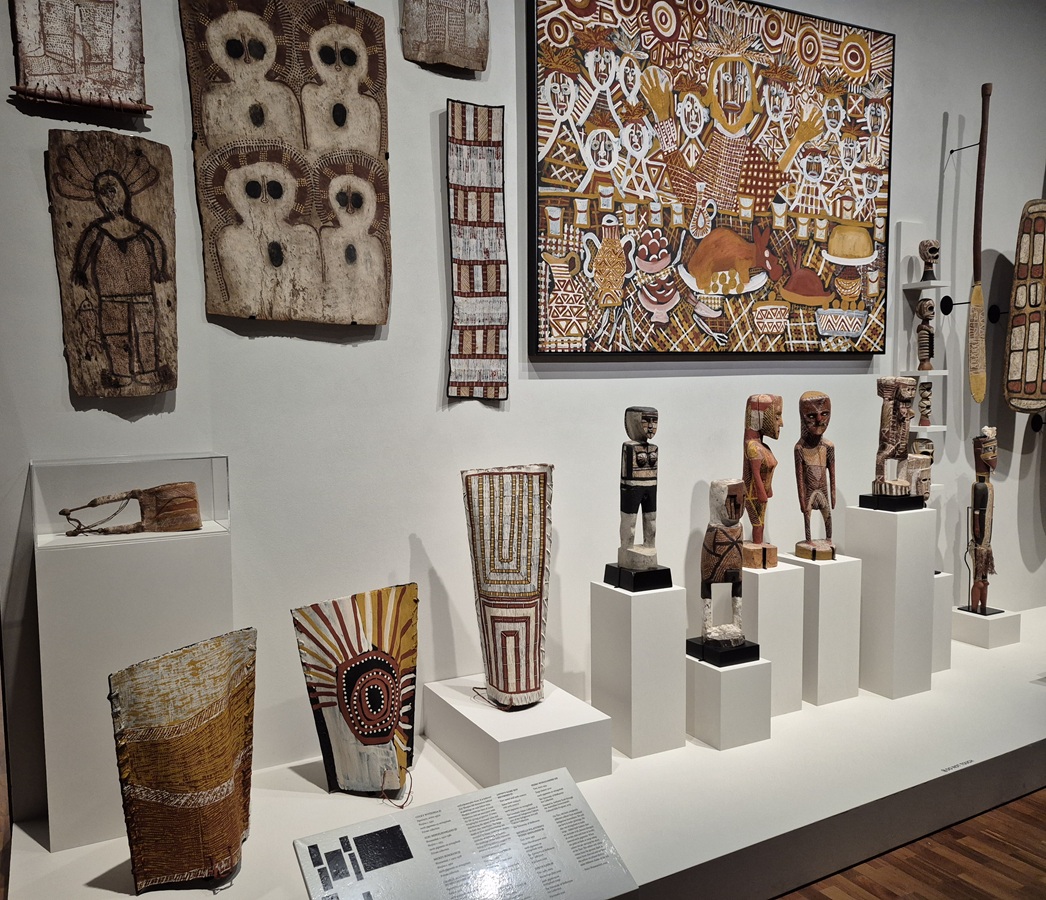
After a few hours enjoying the wonderful Koorie Heritage Trust, we headed to the north of Melbourne city centre, to the Potter Museum of Art, within the campus of Melbourne University. This extensive gallery gave us a thorough education on Aboriginal art, and we fell in love with it.
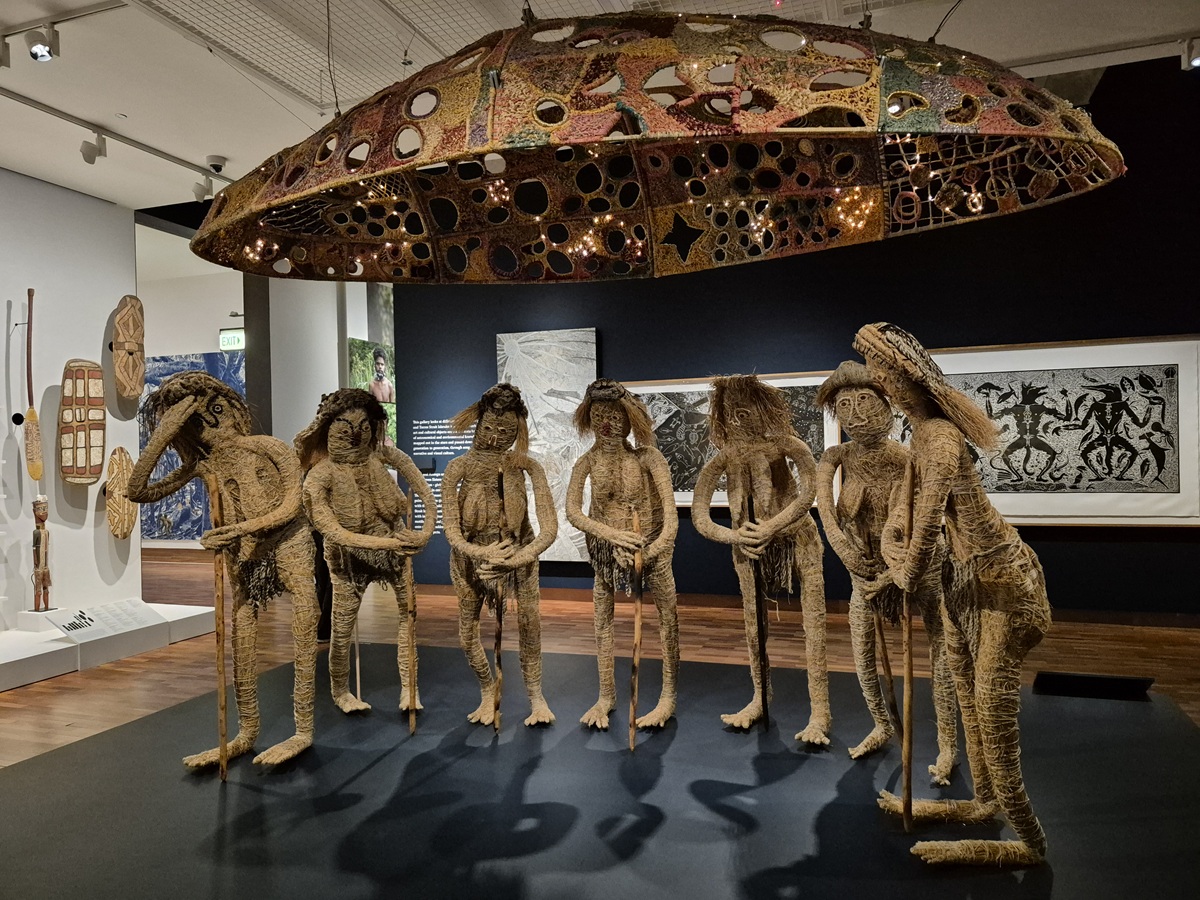
Seven Sisters. Potter Museum of Art,
Like the ancient Greeks, Aboriginal legends include the Pleiades constellation of stars, the densest group of stars that can be viewed by the naked eye, of which seven are distinct.
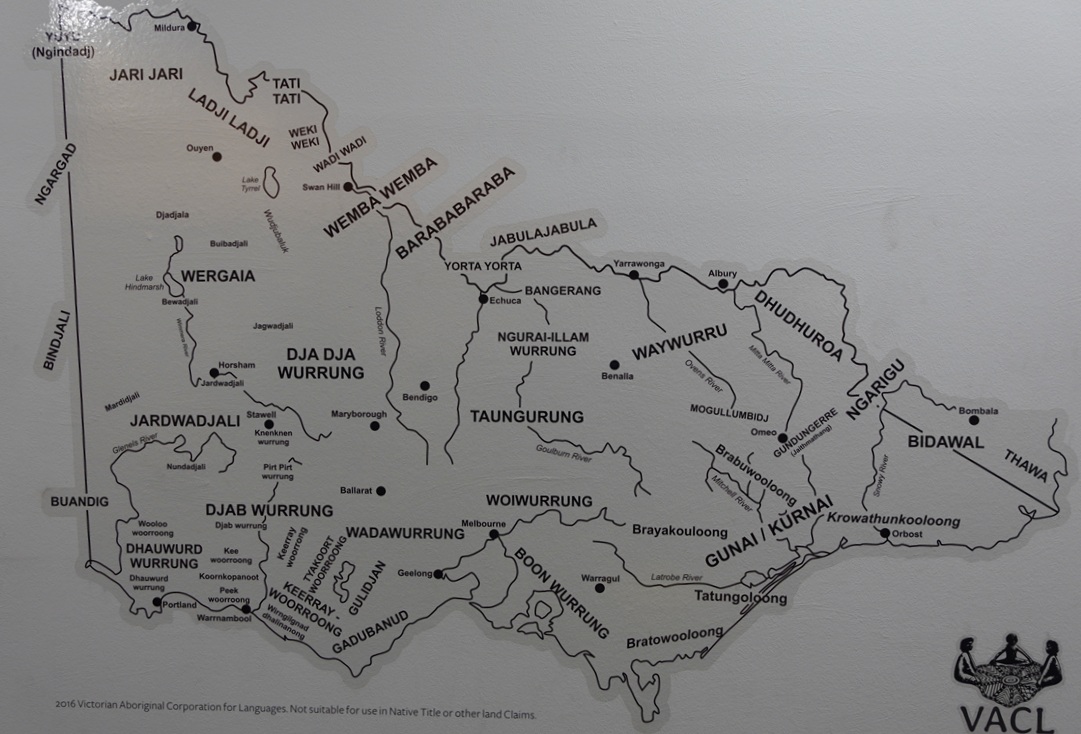
Aboriginal Languages of Victoria
Information board: Prior to invasion you could hear over 250 languages and up to 500 varieties being spoken in Australia. 38 of these Aboriginal language groups exist within Victoria.
These groups were forced to stop speaking their languages over 200 years ago due to frontier violence and massacres, displacement and assimilation policies enforced by colonisers. Most of these languages are currently sleeping – meaning they are not used in conversations everyday.
Koorie people and organisations like the Victoria Aboriginal Corporation for Languages are working hard to reclaim and revive language. Learning language empowers communities and connects us to culture.
Language is more than a means to communicate. It plays a central role in creating a sense of identity. It also enables our Ancestors to pass down important cultural knowledge such as songs, bush tucker, and traditional medicine.
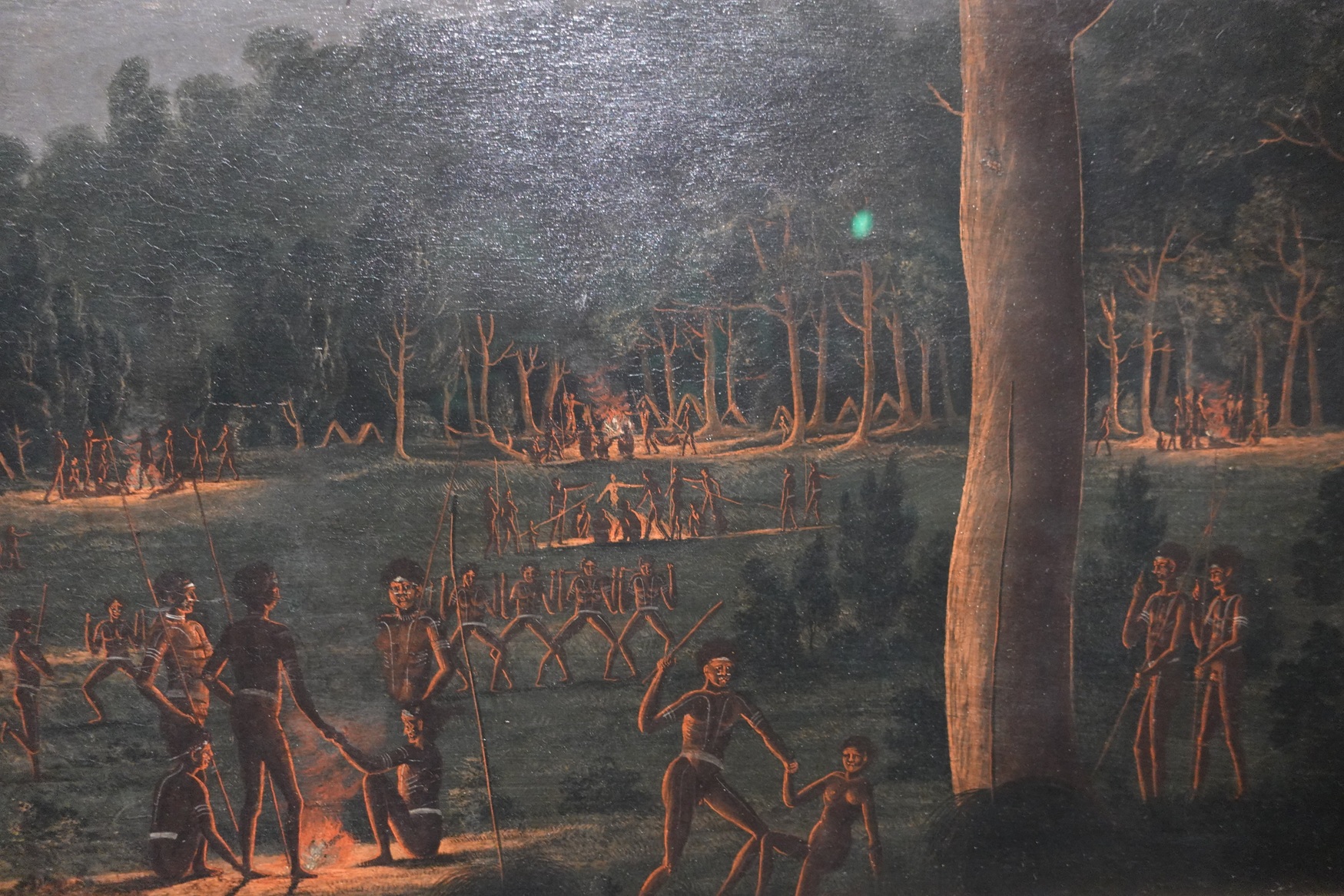
Wominjeka Wurundjeri balluk yearmenn koondee bik Welcome to the traditional lands of the Wurundjeri people. Uncle Bill Nicholson, 2015.
Information board: Narrm is the traditional name of the salty part of the Birrarung (Yarra River, which flows through Melbourne) and the top part of Port Phillip Bay. Most of what is now called the City of Melbourne has been the homeland of the Wurundjeri people for millennia. Wurundjeri people have lived and thrived along the Birrarung, due to the lore handed down by Bunjil, the life giver, to respect and care for this land as it has provided for our survival past and present, and into the future.
Wurundjeri people constantly meet with our neighbours. Whether to fulfil spiritual ceremonial obligations, catch up with family, conduct general business or sort out disputes, a formal ceremonial process called Tanderrum Ngarrga, or ‘Welcome to Country’, allows people to feel culturally sage when doing so. Creating smoke by placing gum leaves on a fire is a key part of the ceremony, and symbolises the spiritual cleansing of both people and Country, which are connected. Wurundjeri people enjoy welcoming people from all over the world to our sacred land and ask that you respect us, our land, and the culture of the land, while you are here.
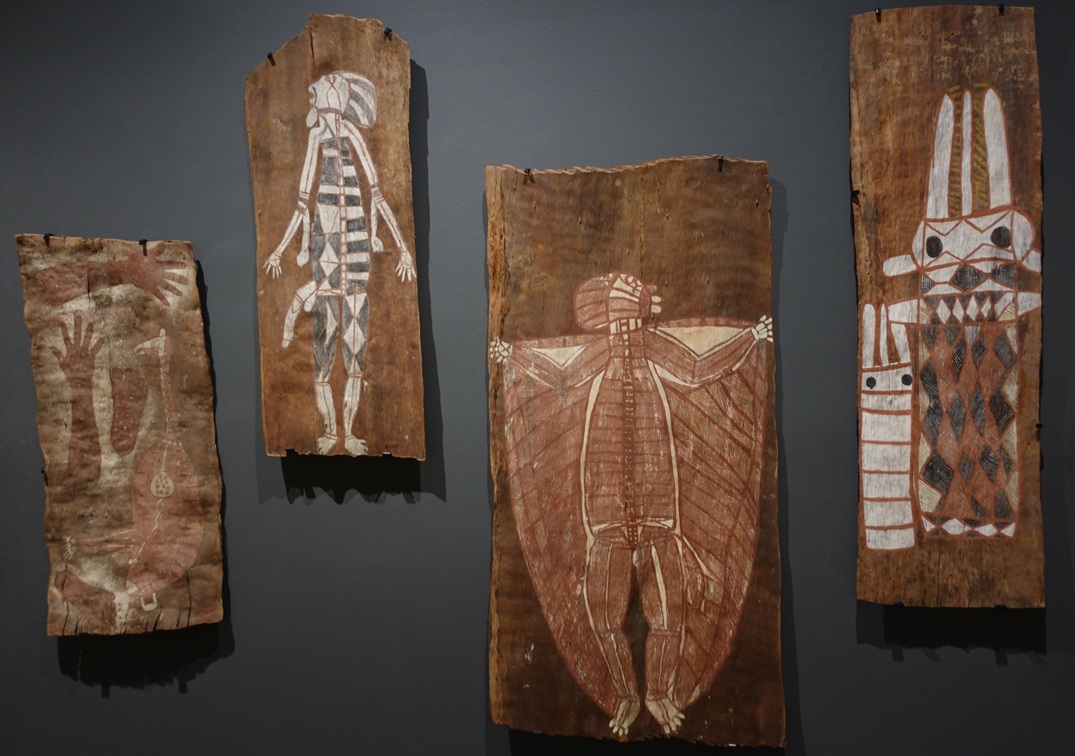
Potter Museum of Art, Melbourne University
Animals painted on bark.
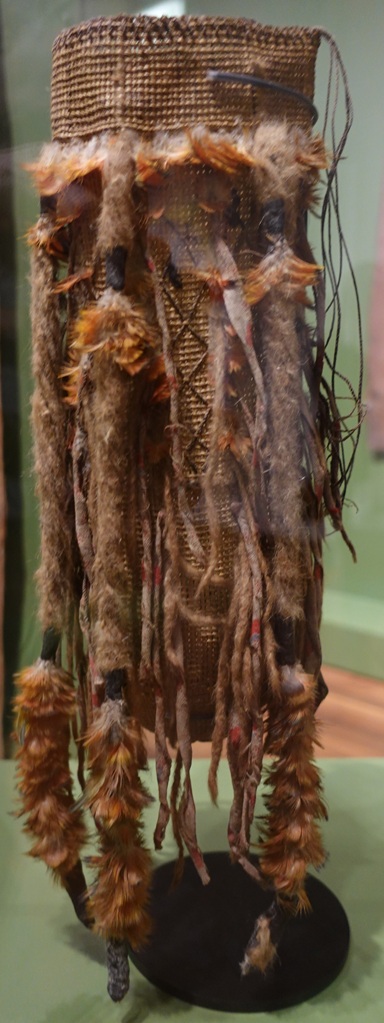
Potter Museum of Art, Melbourne University
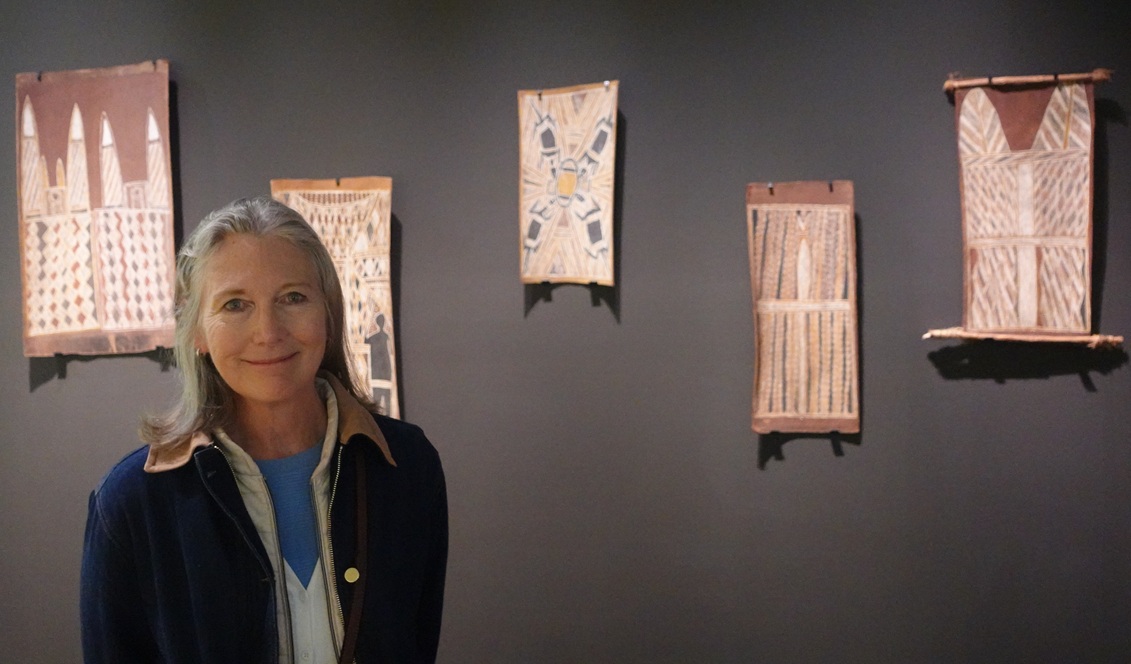
Potter Museum of Art, Melbourne University
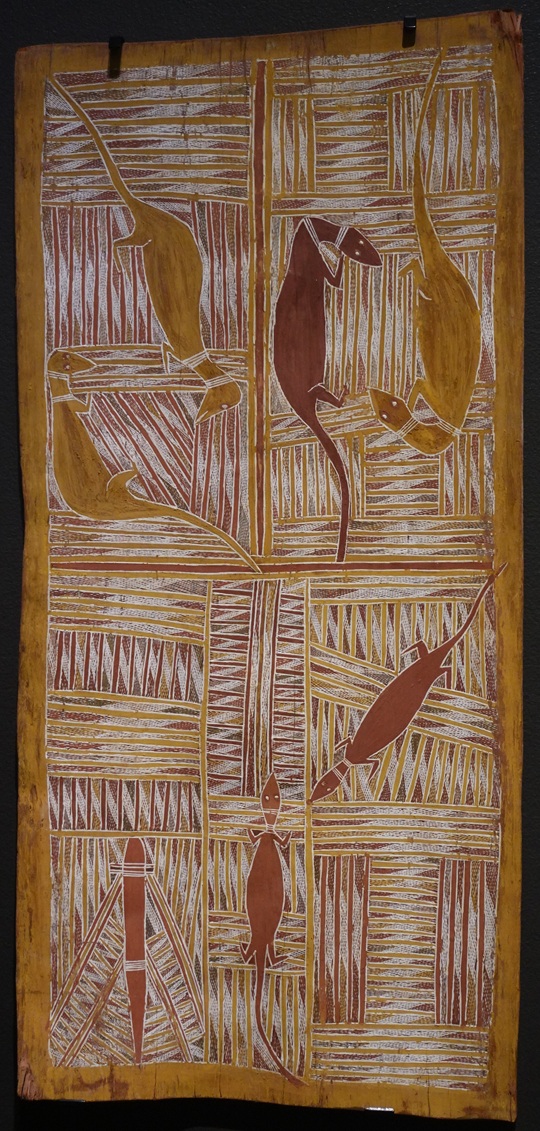
Potter Museum of Art, Melbourne University
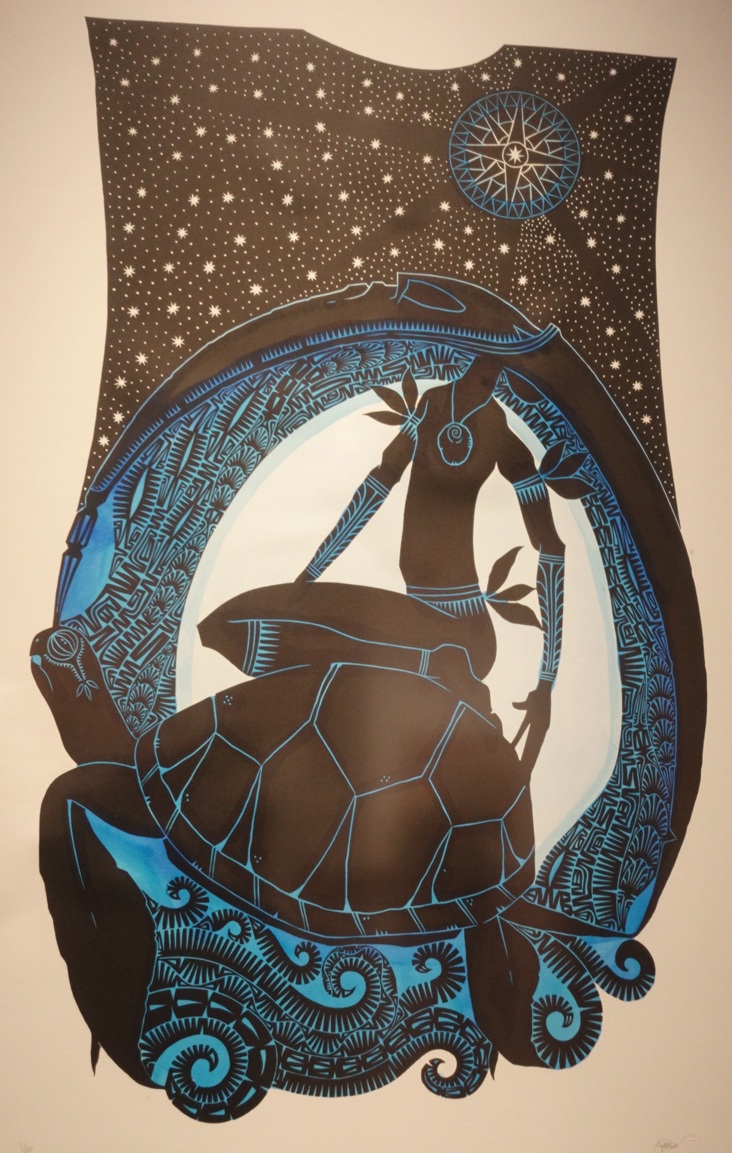
Potter Museum of Art, Melbourne University
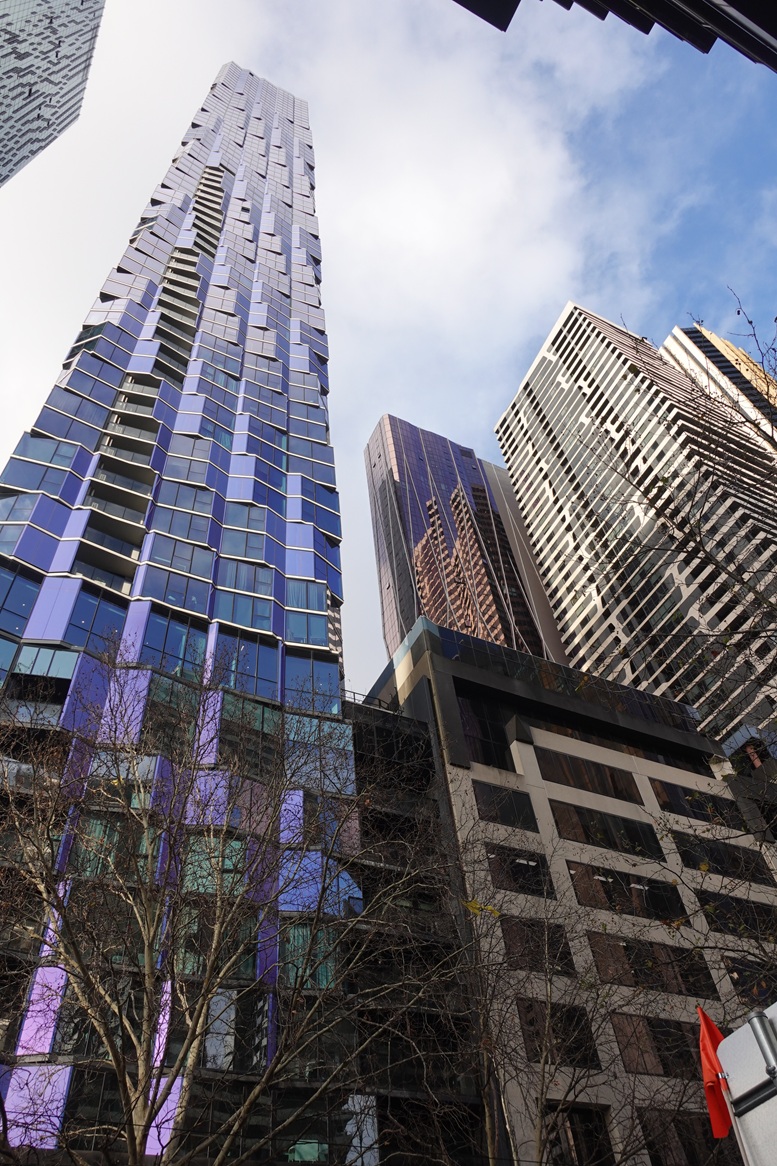
Buildings in north Melbourne
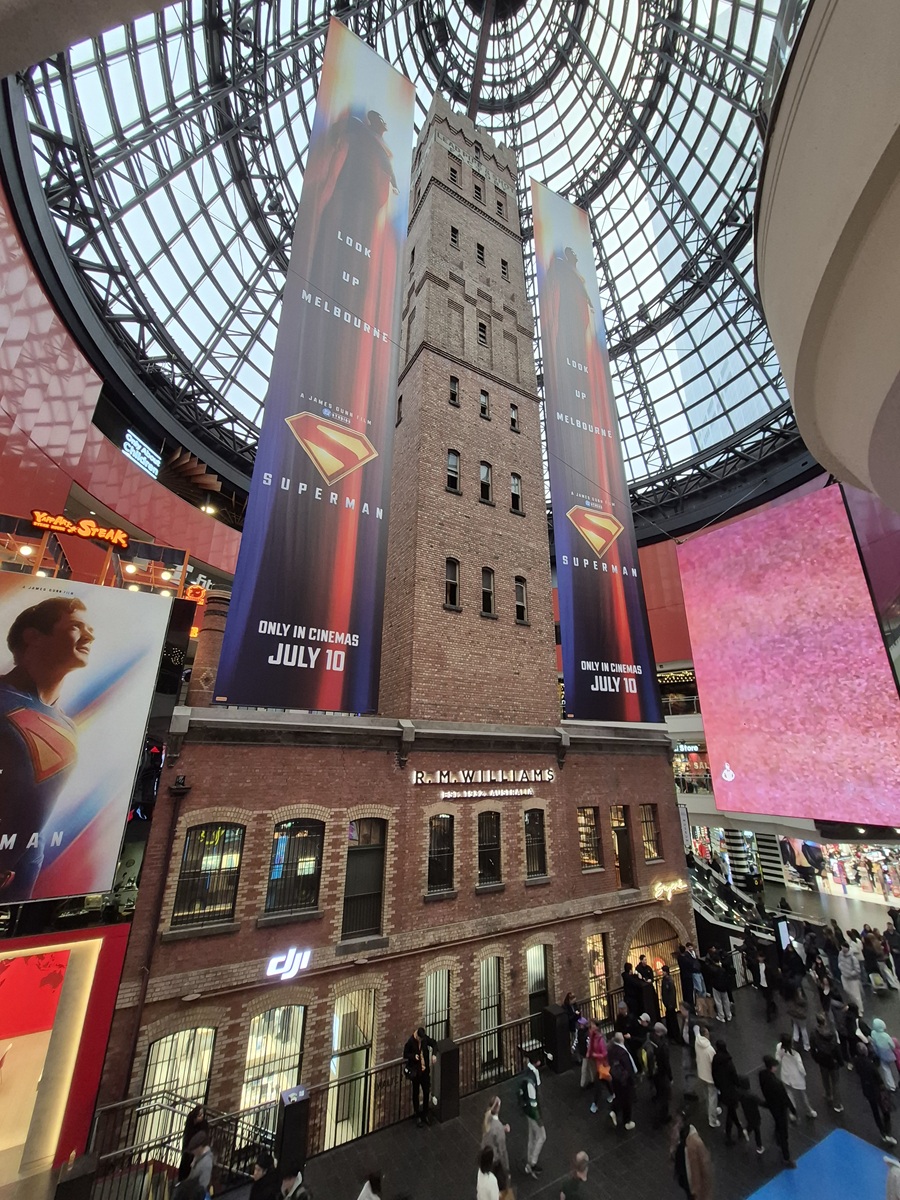
Coop’s Shot Tower was completed in 1889. It is 50m tall, and has stood beneath an 84m conical glass roof since its incorporation into Melbourne Central complex in 1991. The tower was used till 1961 to produce lead shot, by dropping molten lead the height of the tower, so that it would cool and solidify as a sphere before reaching the ground.
Travel Diary
arigatö gozaimasu
dö tashimashite
hai/iie
onegai shimasu
sumimasen