Asia and Australia 2025
Day 18: Wednesday 23 July 2025
Colombo – Kandy
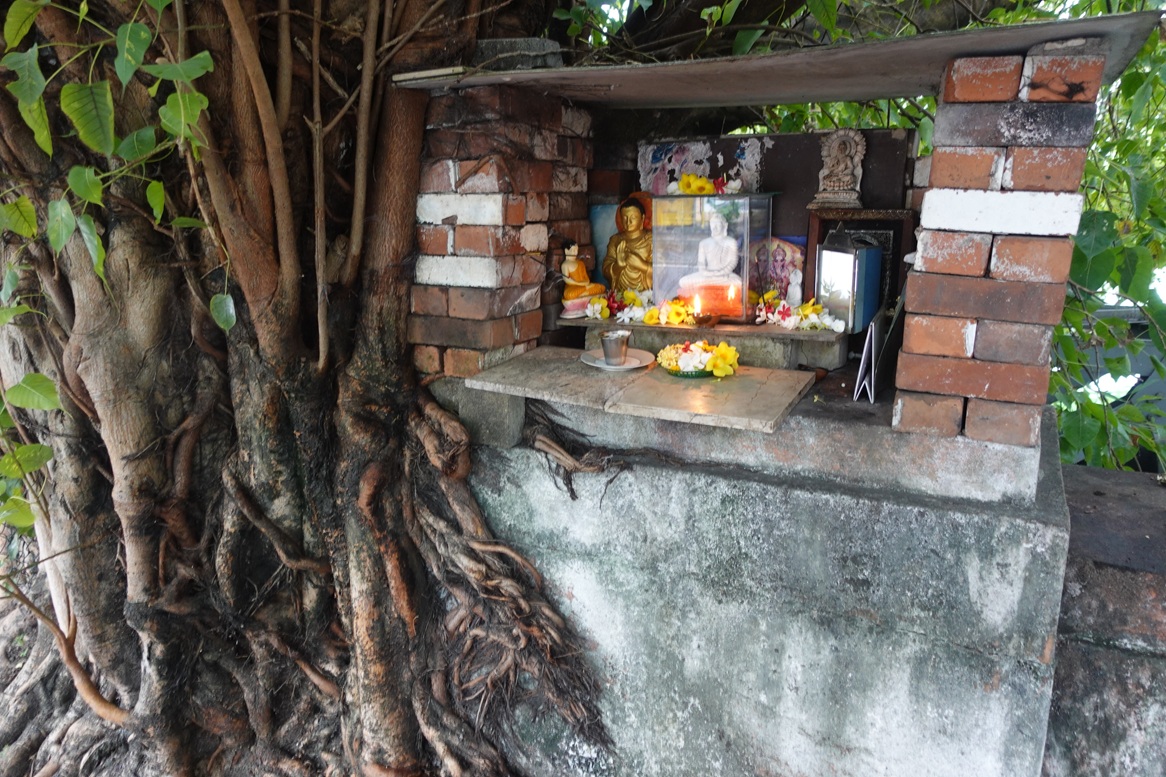
Roadside shrine, Colombo
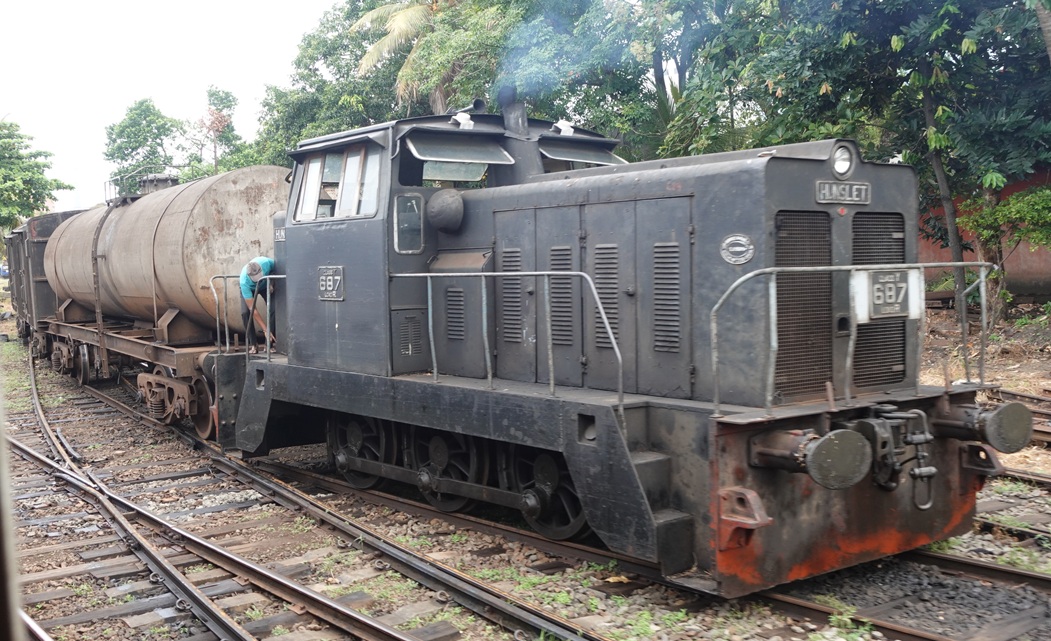
Locomotive in the extensive railyard at Colombo Fort Railway Station.
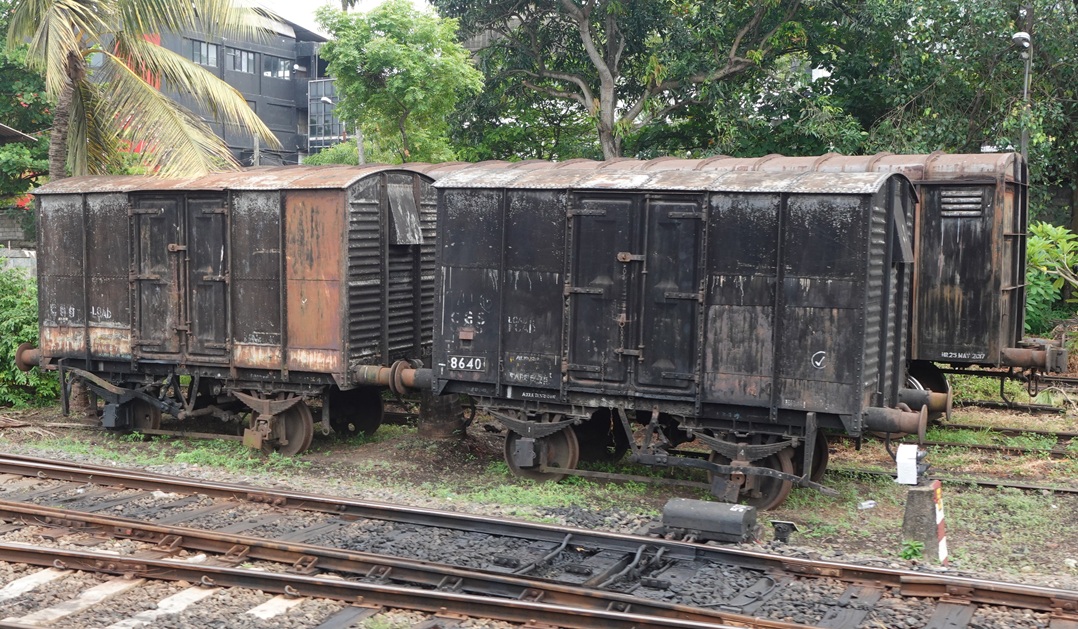
Rolling stock, Colombo.

Housing alongside the railway line, Colombo.
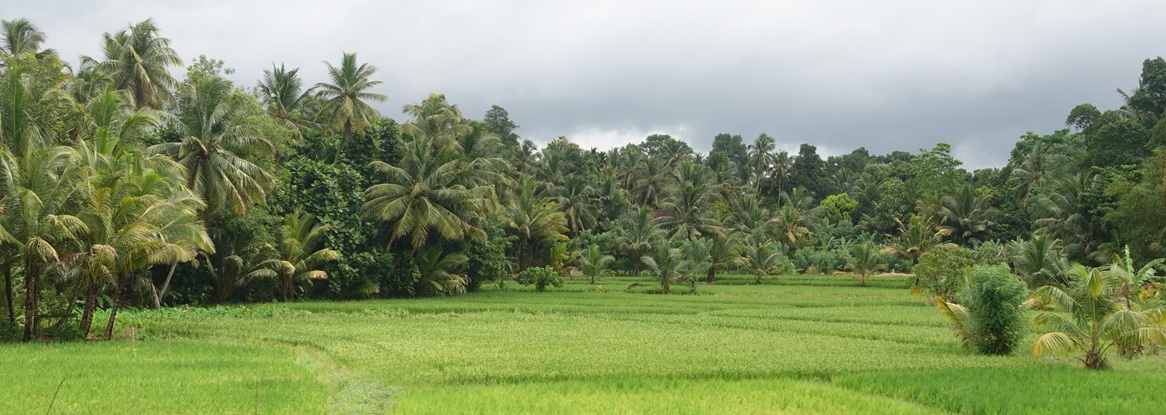
Typical countryside in the early, lowland part of the route to Kandy.
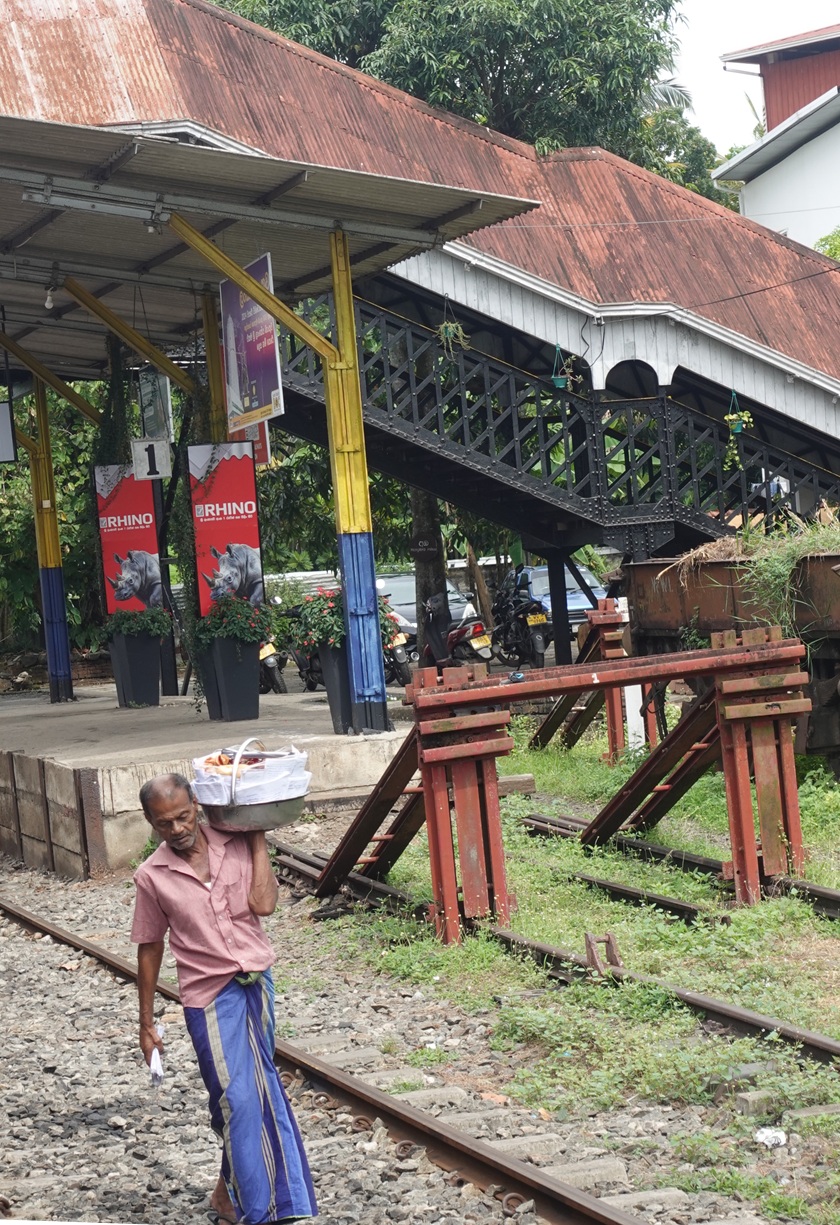
Refreshments coolie at a railway station.
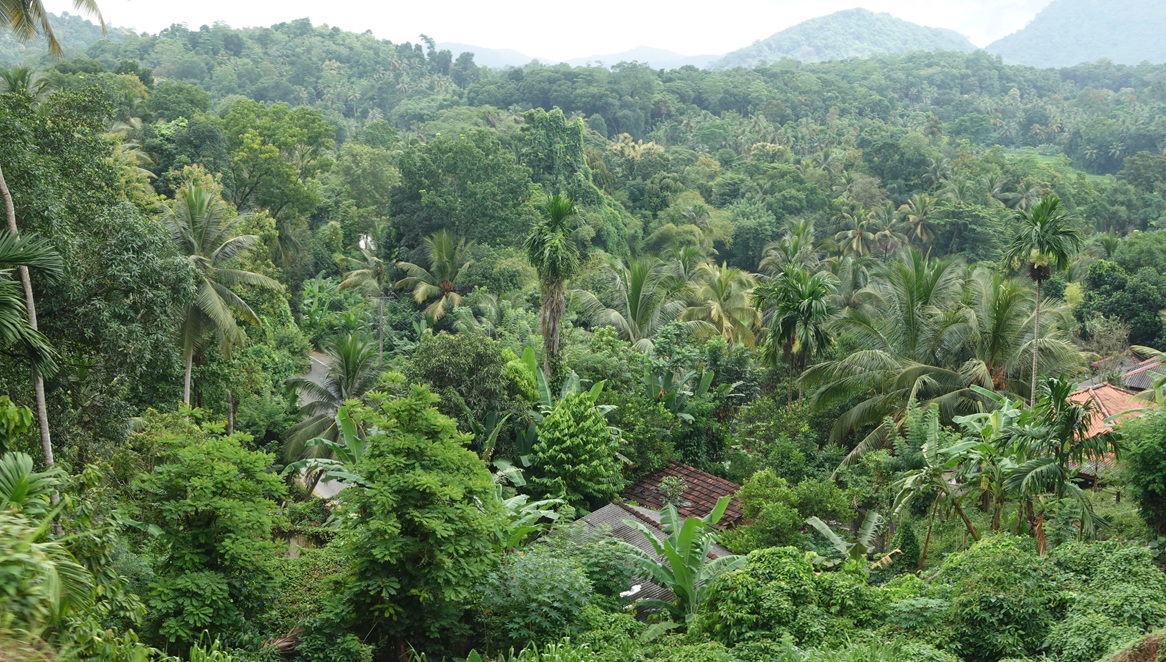
In the mountainous region, the vegetation changes to rainforest.
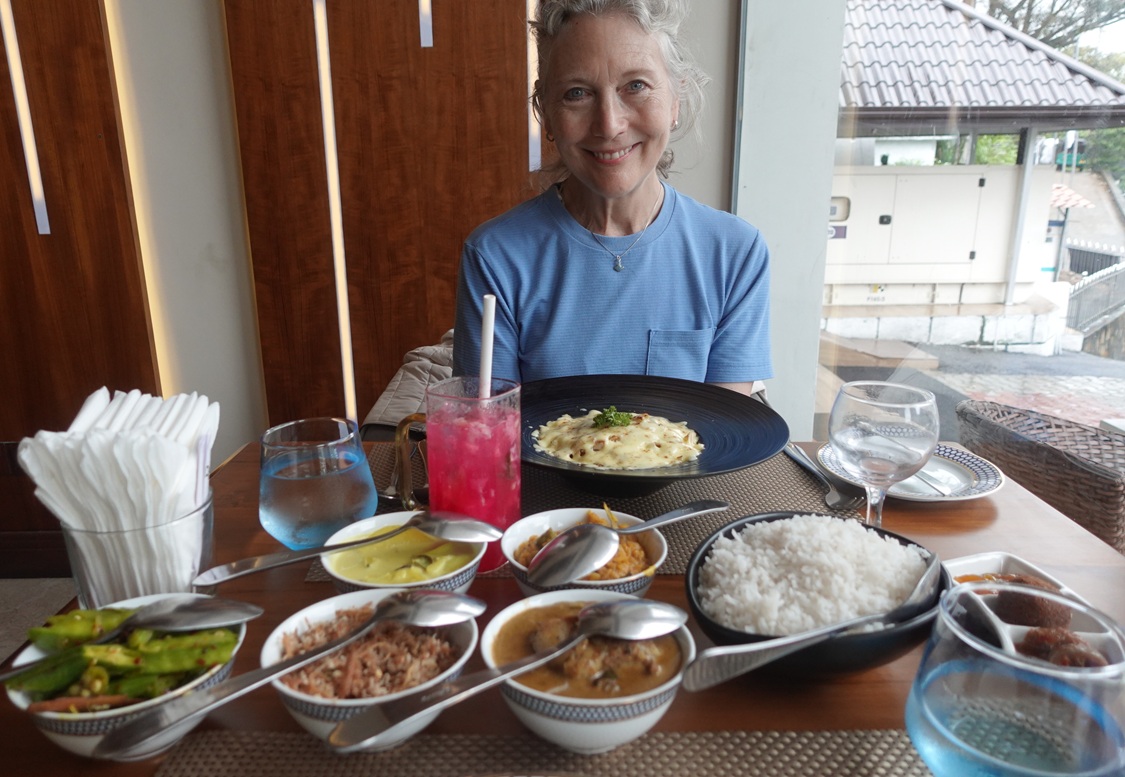
Cindy at lunch at the Hotel Devon Rest, Kandy.
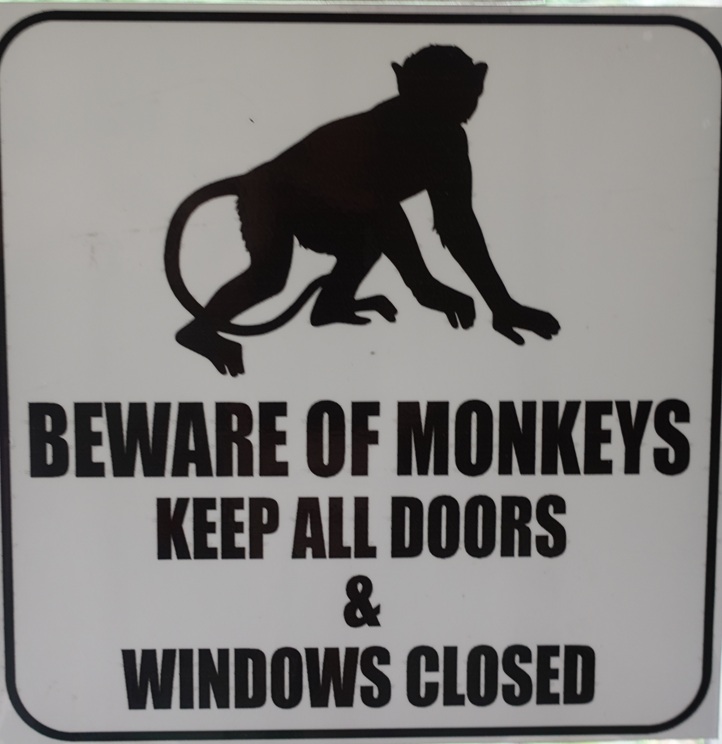
A warning sticker on our balcony door.
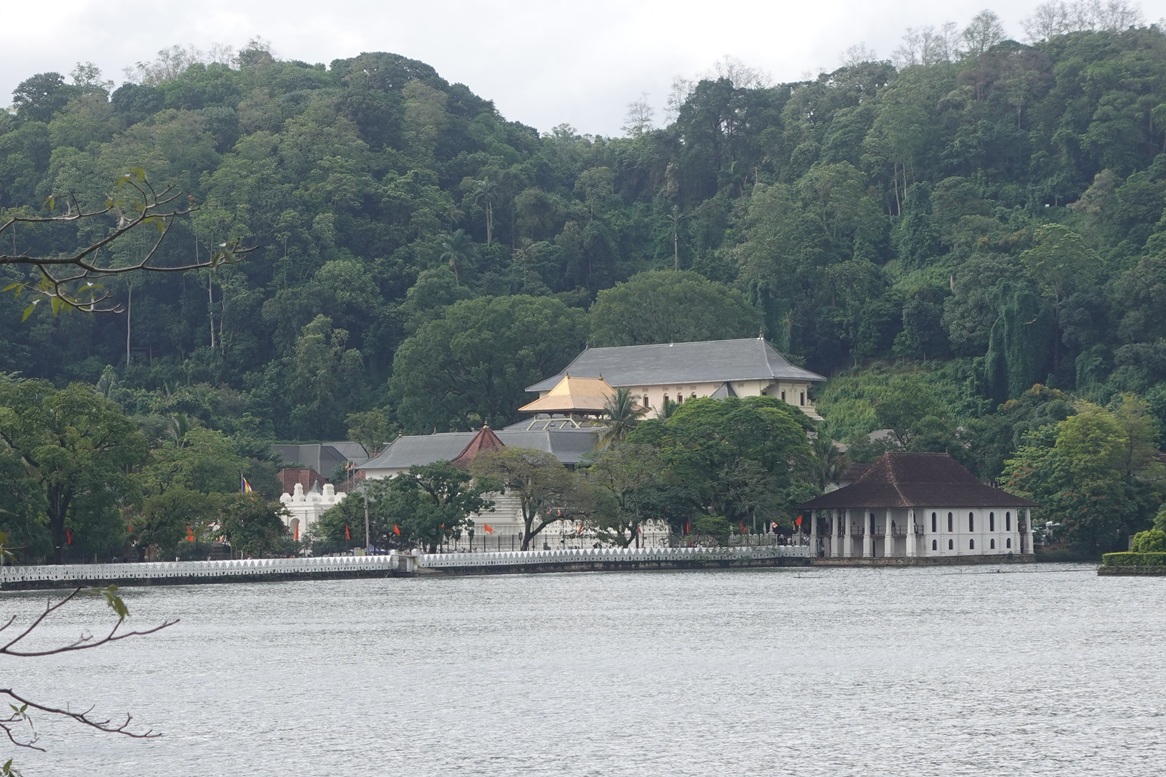
Royal Palace, Kandy, across Kandy Lake.
Kandy was the capital of the Sinhalese monarchy from 1469 till 1919. Given the mountainous rainforest terrain, the Portuguese and Dutch invaders were unable to conquer this independent kingdom in the centre of Sri Lanka, while ceding the coastal areas to the Europeans. The British also initially failed to militarily take control, until 1818.
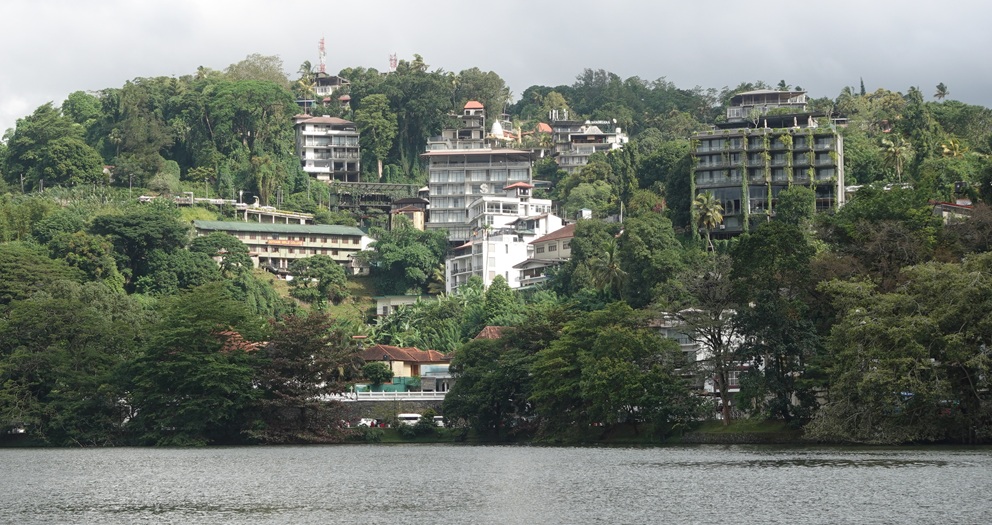
Township of Kandy from across the lake.
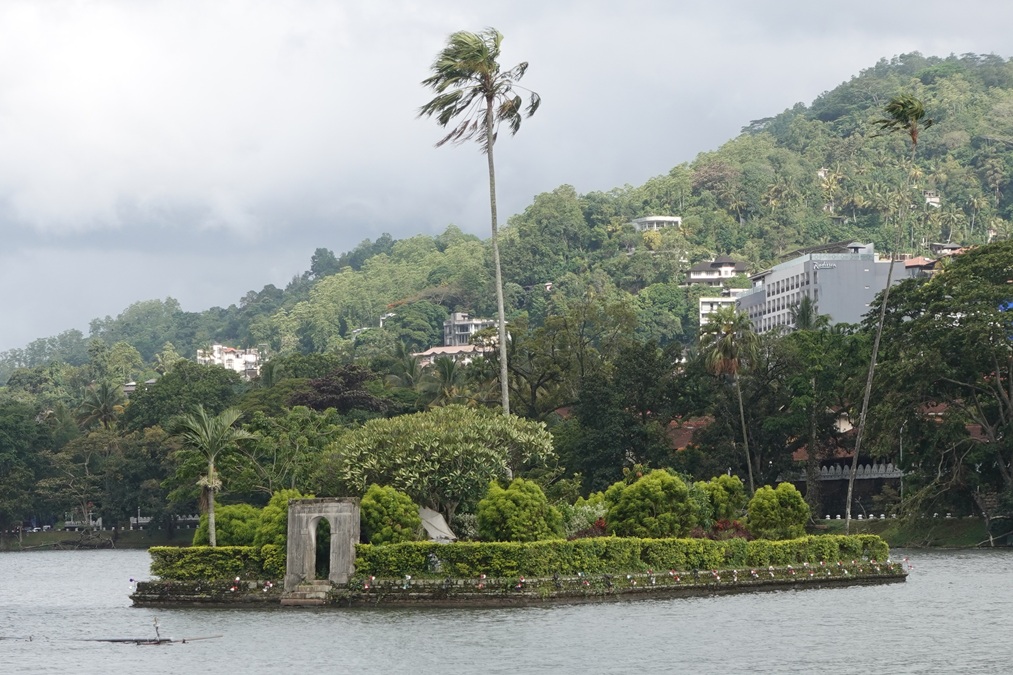
Island in Kandy Lake
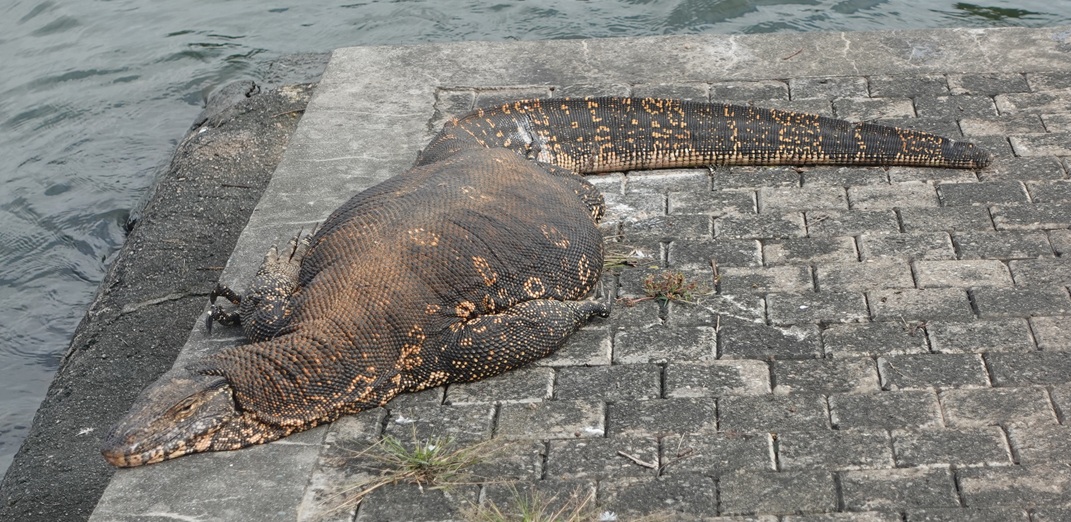
Iguana at the lakeside, enjoying a kip in the intermittent sunshine.
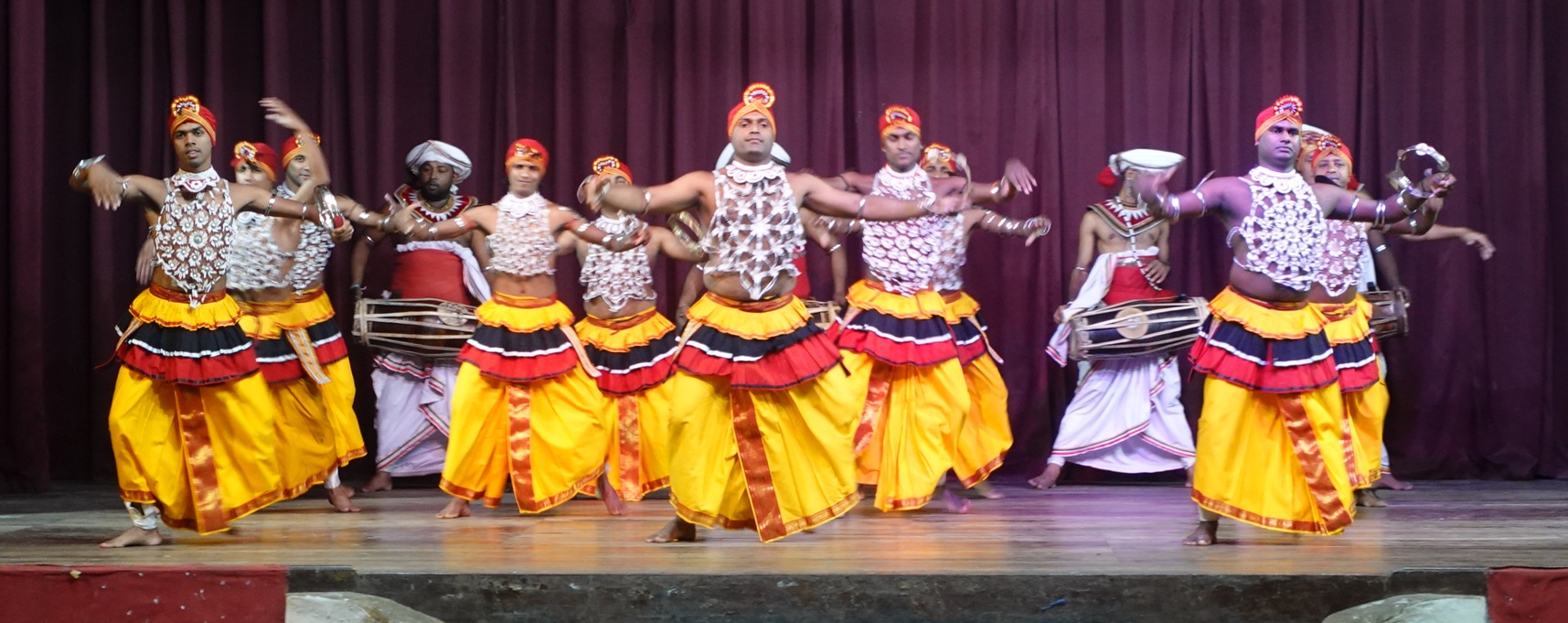
Traditional Kandyan dance show, at the Kandyan Cultural Centre, Sangaraja Mawatha.
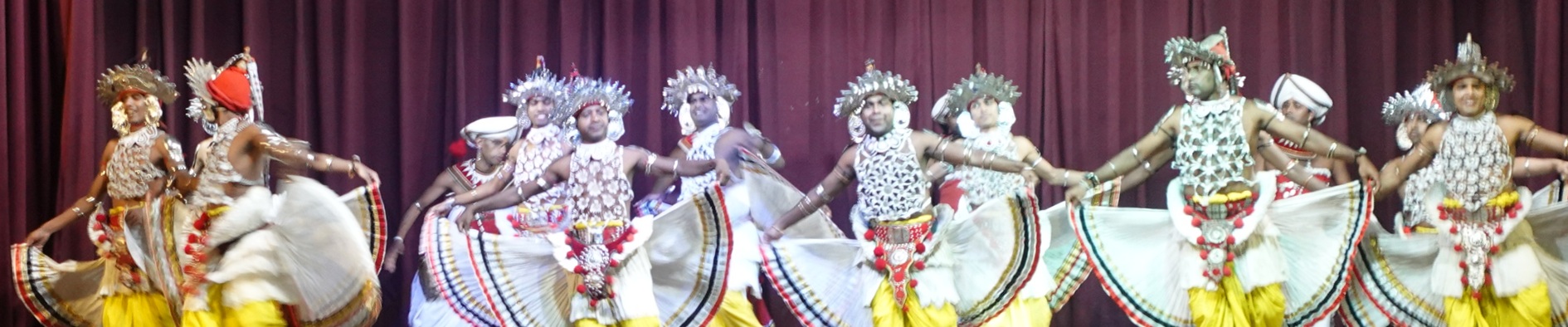
Traditional dance show
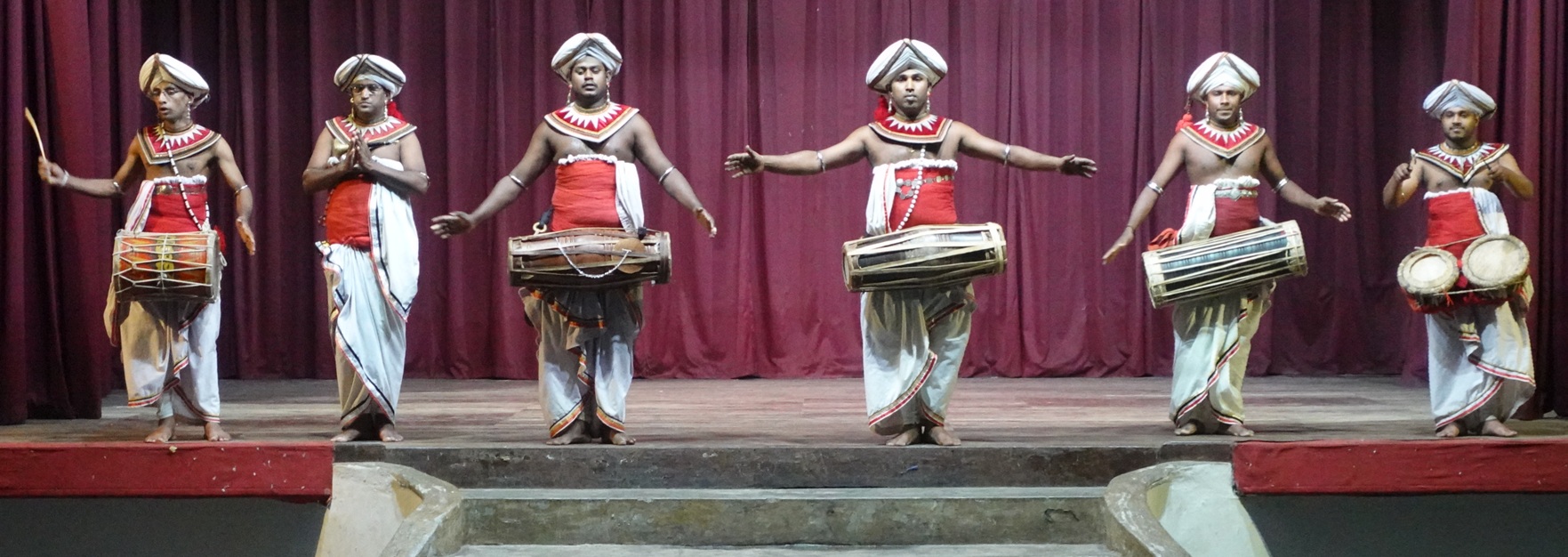
Traditional dance show
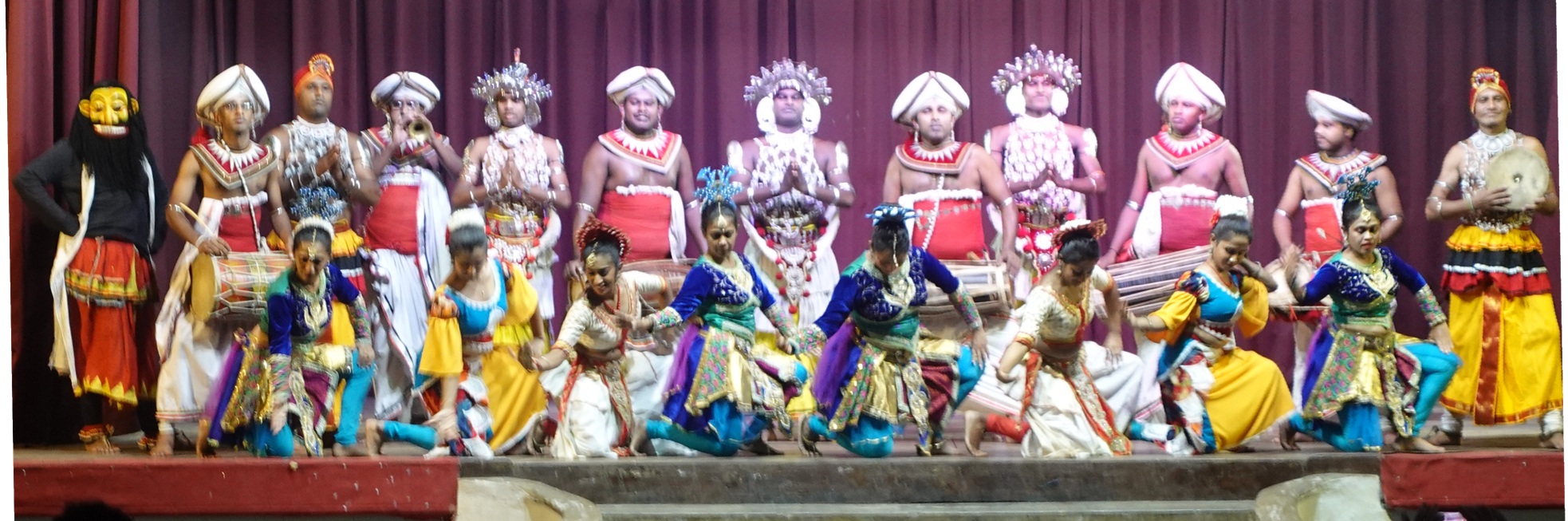
Traditional dance show
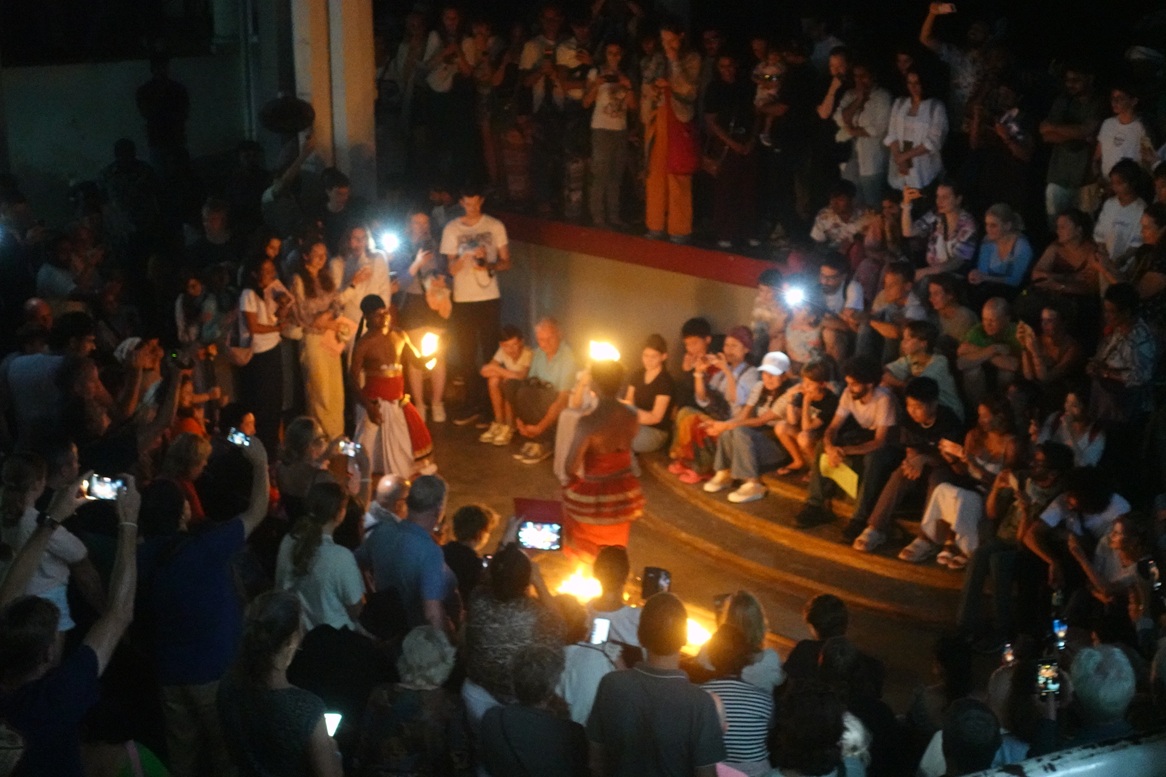
Firewalking demonstration
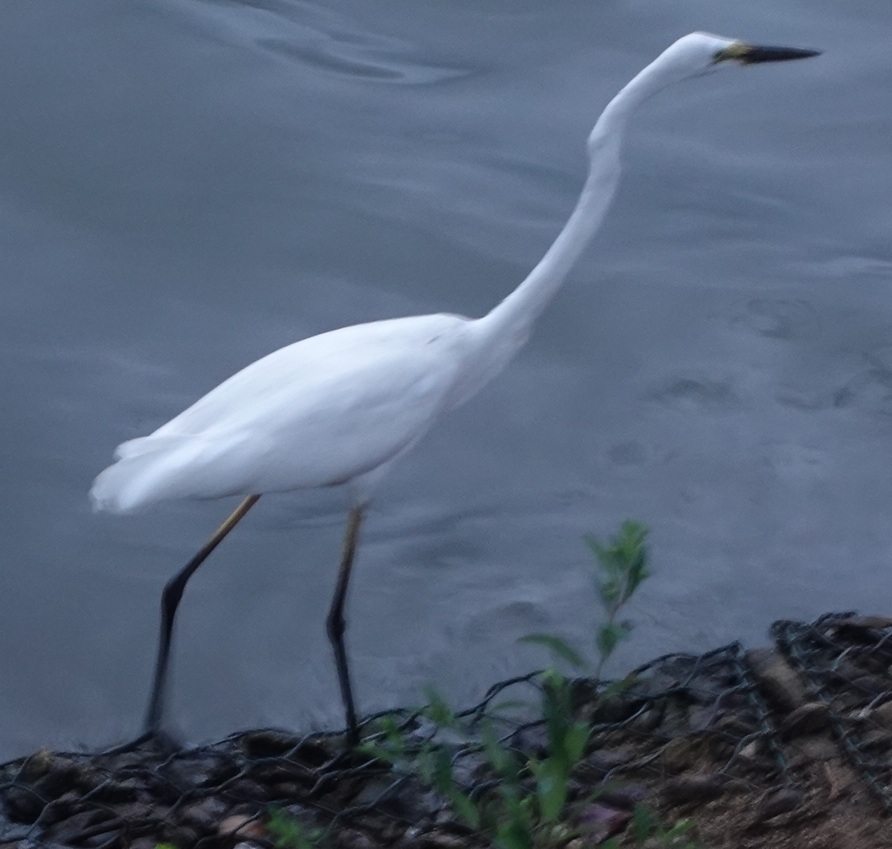
Wader on the shore of Lake Kandy
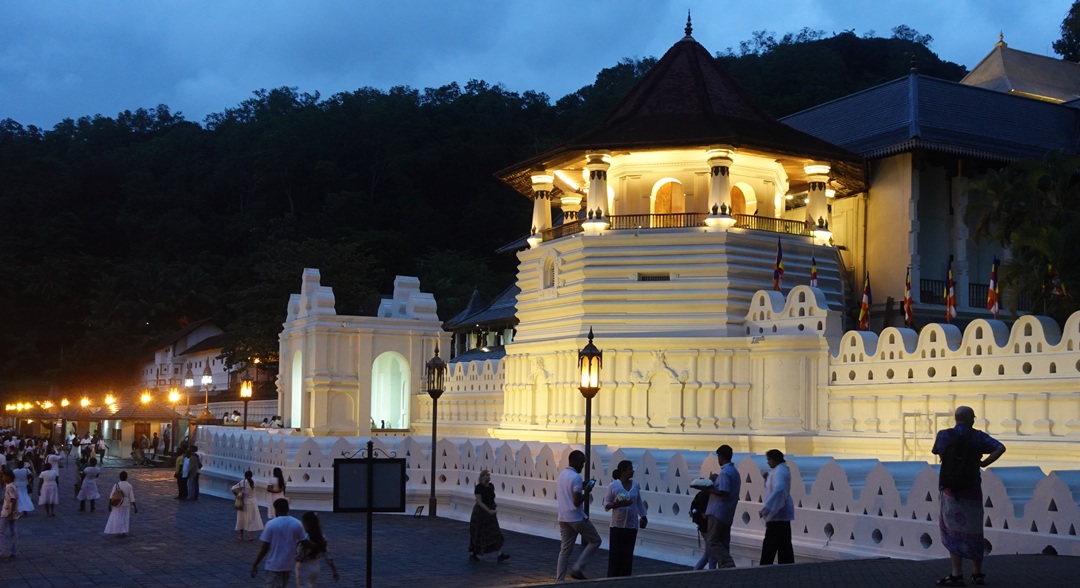
Temple of the Tooth Relic, Kandy.
According to the Mahāparinibbāna Sutta (scripture relating the end of Gautama Buddha´s life, his parinibbāna), four teeth were collected after his cremation. Two are in mythological locations, and two are in earthly: Gandhāra (northwest Pakistan) and Kaliṅga (India, between the Ganges and Godarvi rivers).
The Kalinga tooth is reportedly the left canine of Buddha, extracted by a disciple, who gave it to King Brahmadatte of Kaliṅga. It was venerated as granting the divine right to rule, resulting in a war between Guhasiva of Kaliṅga and the king Pandu over its possession.
Following the conflict in Kalinga, eastern India, the tooth was brought to Anuradhapura, Sri Lanka. As the seat of government changed locations, so would the tooth. for this reason, it arrived in Kandy, and resides in the richly adorned and extensive Temple of the Tooth,
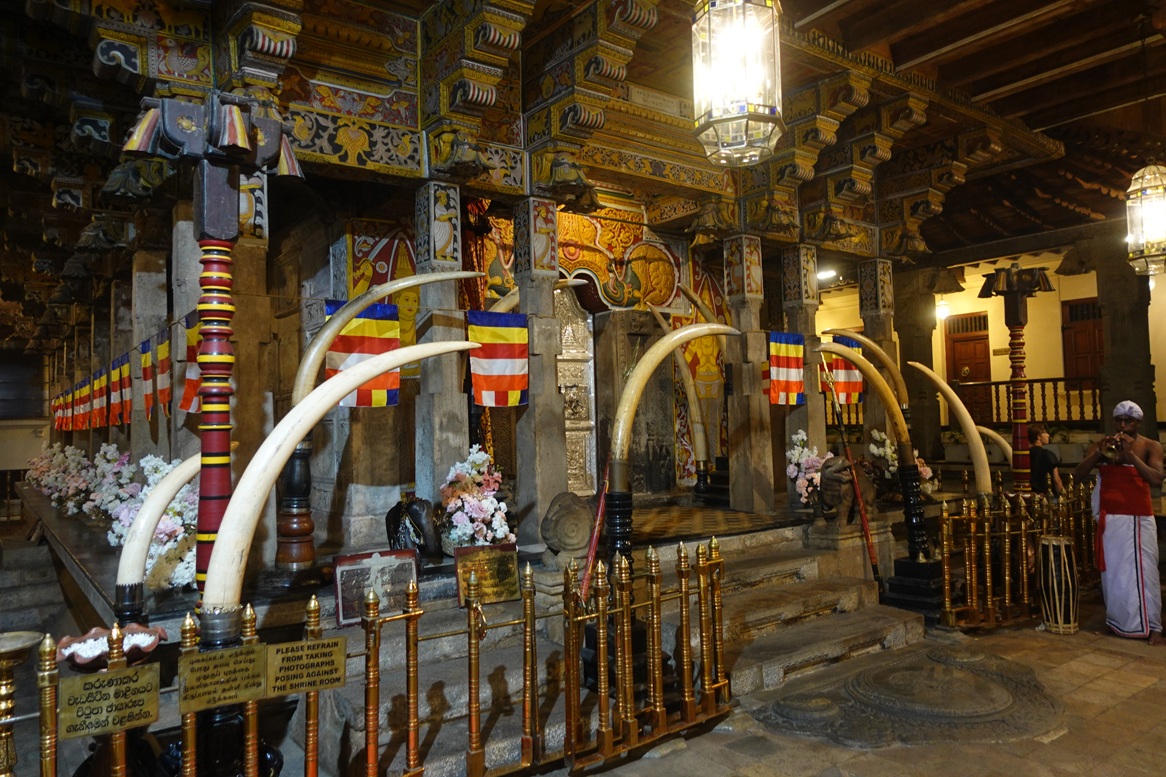
Temple of the Tooth Relic, Kandy.
There was a large crowd filing through the tight security. We had to remove our shoes, and many attendees carried flowers to lay before the tooth chamber. At the base of the chamber, shown in the photo, were monks playing a screeching pipe and drums continuously. A bit jarring on the nerves, to be honest.
One scholar claims that the tooth was “publicly pounded to smithereens with a mortar and pestle by the Archbishop of Goa, as part of the Catholic Church´s attempts to eradicate native religions.
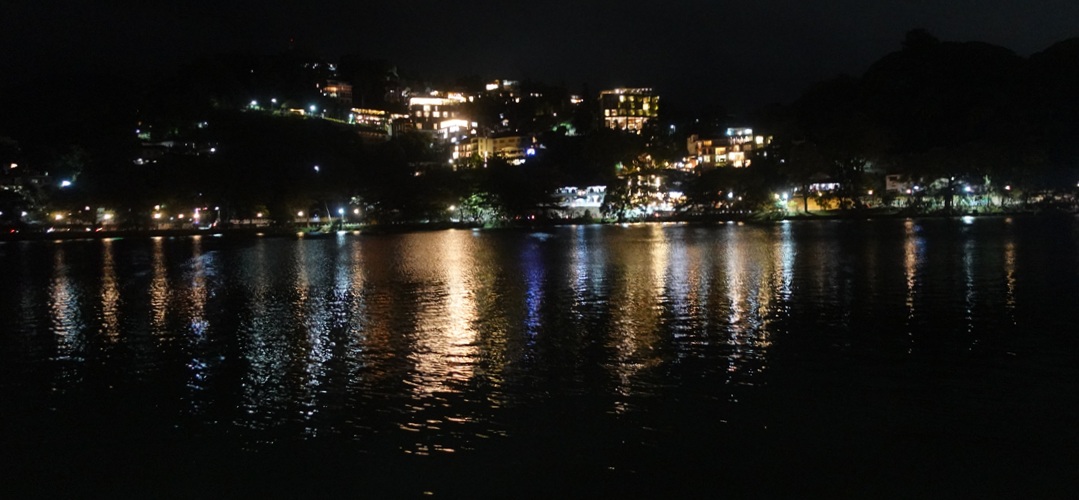
Kandy by night
Travel Diary
A note on history
Throughout its war-torn history, Sri Lanka has been a victim of its strategic location. Perfectly located close to India, midway between South-east Asia and the Middle East, and likewise between China and Europe, it has been a key trading hub for millennia. The Romans traded indirectly through intermediaries, and thousands of Roman artefacts, including 300,000 coins, have remained as testimony to this globalised traffic of two thousand years ago.Legend has it that in 543 BC, Prince Vijaya established the Sinhala Kingdom after being expelled from the Vanga Kingdom, in what is today Bengal. Buddhism was introduced in the 3rd century BCE, during the Anuradhapura period (377 BCE–1017). The Dravidian influence from Southern India is a continuous factor in Sri Lankan politics, even today. Sinhalese monarchs used Tamil (from Tamil Nadu, the closest Indian state) mercenaries. The Anuradhapura Kingdom fell in the 11th century in the Chola (a medieval thalassocratic (based on maritime domination) empire based in southern India) Conquest (992-1017 CE). The Chola Empire remained in control of Sri Lanka till 1070 CE, when Sinhalese sovereignty was restored by Vijayabahu I.
Governance was exercised in the north during the Polonnaruwa period (1017–1232), but as a consequence of repeated invasions, the Sinhalese withdrew further south to a series of different capitals in the mountainous interior. This is known as the Transitional period (1232–1597). As a consequence of the waning Sinhalese power, the Jaffna Kingdom (1215–1619 CE) was created in the north. The Wars of Succession divided the country into three parts, under three brothers (echoes of King Lear?), known as the Crisis of the Sixteenth Century (1521–1597).
A new disaster began with the arrival of the Portuguese to what was to become the harbour at Colombo. Seeking to control the lucrative external trade by taking control of the maritime regions of the island, they brought about the collapse of the Kingdom of Sitawaka and Jaffna Kingdom. The Kandyan period (1597–1815) began as the only remaining independent kingdom, based at Kandy.
During the Eighty Years’ War (1566/1568–1648), a revolt against the Spanish (who at that time also controlled Portugal through a personal union of the king) in the Habsburg Netherlands, the Dutch began attacks on Portugal´s overseas territories, gaining control of most of Sri Lanka, from 1640-1796. It was not until 1815 that the British unified the country through the Kandyan Wars (1796-1818). British colonial rule lasted till independence in 1948. Armed resistance erupted in 1818 and 1848.
From 1948 Sri Lanka was a dominion of the British Empire, and became a constitutional republic in 1978. The new Constitution of 1978 changed the previous Westminister style of parliament to a French-style presidential system. This granted the chief executive, the president, broad powers, elected by direct suffrage for a six-year term.
Amongst concessions to the Tamil population, although Sinhala remained the official language of administration, Tamil was given a new “national language” status. The “standardization” policy of the previous United Front government was abrogated, a major Tamil grievance, which had made it difficult for Tamil speakers to obtain university admission. Armed uprisings occurred in the 1970s and 80s, and a civil against the Tamil rebels lasted 25 years, from 1984-2009.
dö tashimashite
onegai shimasu
arigatö gozaimasu
sumimasen
hai/iie