Asia and Australia 2025
Day 22: Sunday 27 July 2025
Ella – Kandy
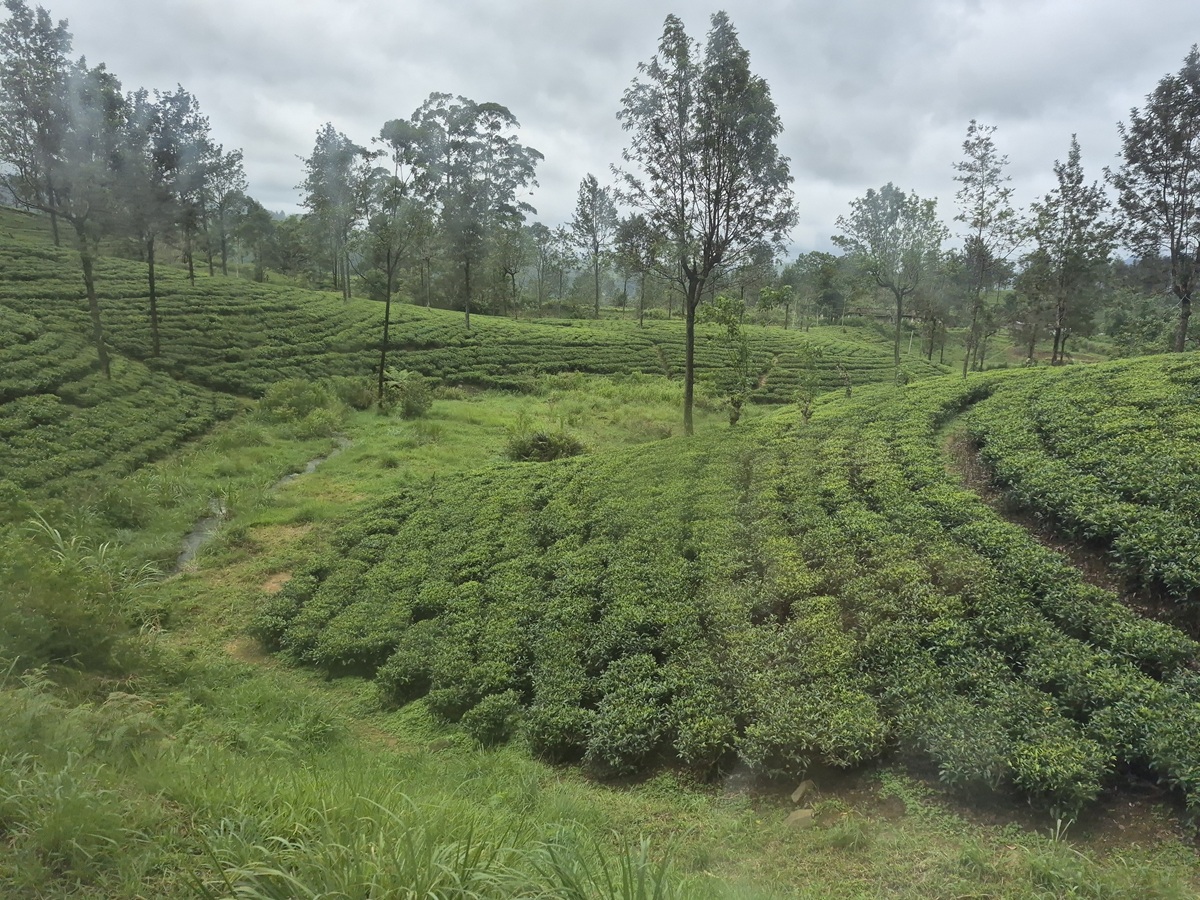
Scene, showing an example of hillside tea plantations, from the train between Ella and Kandy, Central highlands.
We returned the 150km to Kandy by train. This is one of the world´s most scenic railway routes, and it did not disappoint. The weather was fine and sunny, and after we had descended from 1900m to the 598m of Kandy, the temperature rose considerably.
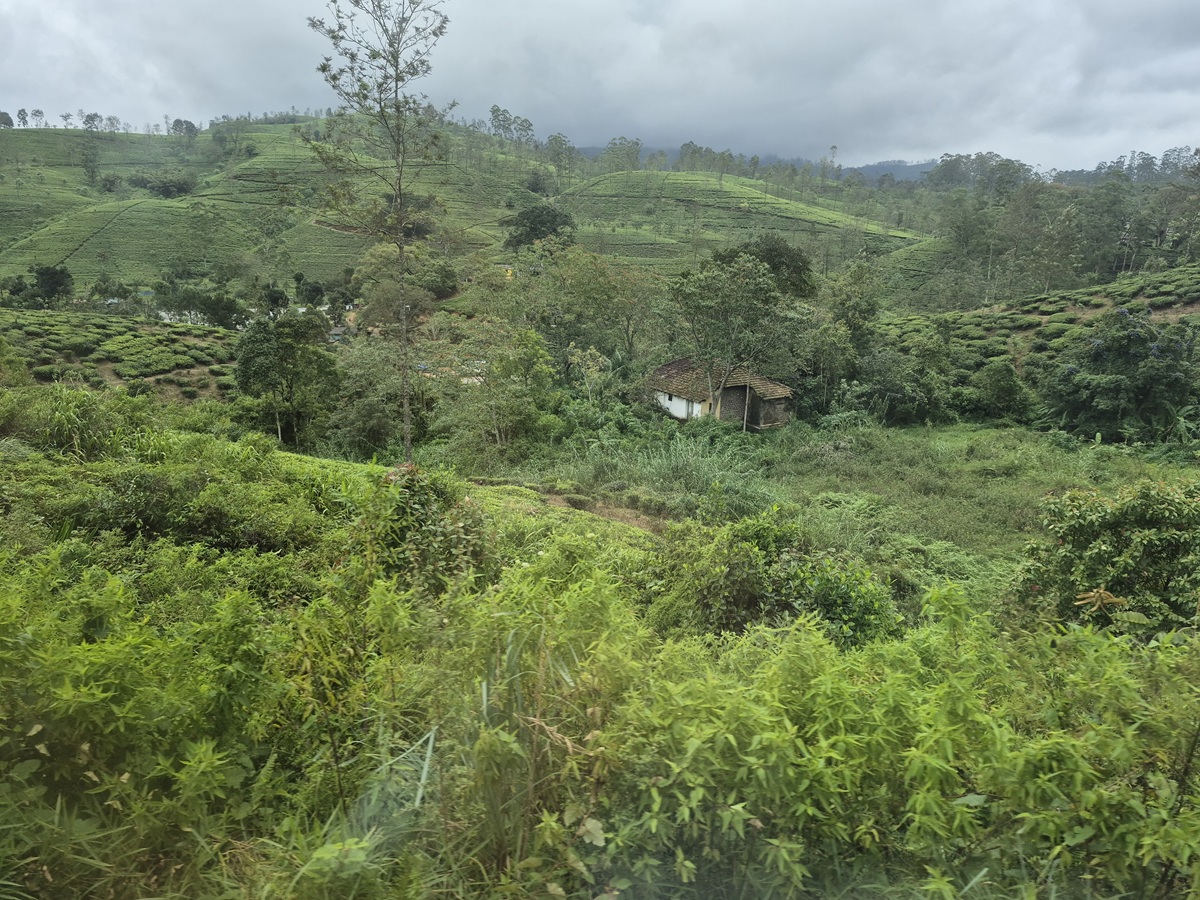
Most of the landscape was a mix of farmland and forest. Many privately-owned, small, modest homesteads surrounded by small patches of landholdings have sprung up to replace the colonial era tea plantations. However, large companies, such as Lipton, have continued, employing thousands. In the newspaper in Kandy, there appeared article about a commission investigating the exploitation of these workers.
The humidity and cool temperature of the central highlands are ideal for the production of high-quality tea, while the lowlands produce a more astringent product. Tea planting was introduced to the country in 1867 by a British planter, James Taylor (1835-1892), after the coffee plantations were devastated by the Hemileia vastatrix fungal disease (coffee leaf rust) in 1869. Taylor worked with Sir Thomas Johnstone Lipton, (1848 – 1931), the Scottish founder of the extant Lipton Tea company.
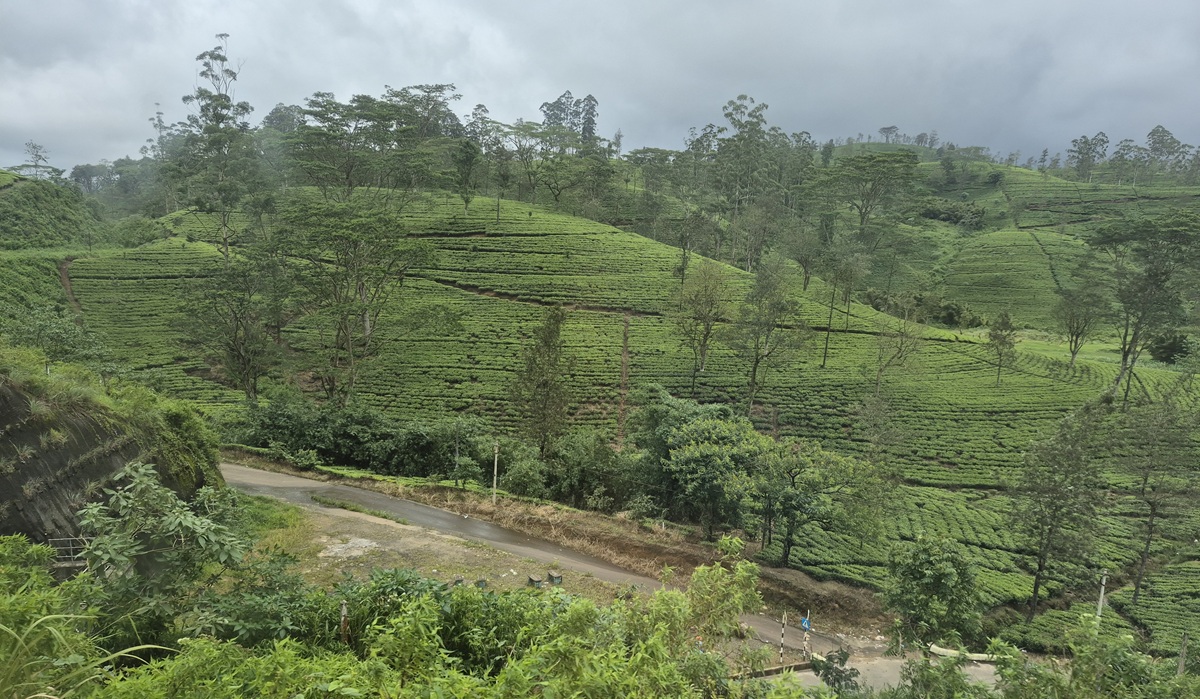
A tea plantation, as seen from the train between Ella and Kandy, Central highlands.
The soil of Sri Lanka is classed as red soil, which makes up 13% of the world´s soils. Red soil develops in warm, temperate, and humid climates, contains organic-mineral layers of highly leached soil with alluvium underlay, the result of weathering of crystalline and metamorphic rock, and high iron content.
Typically for rain forest, the soil is usually poor in nutrients and humus, requiring careful management for successful agriculture, such as liming to improve fertility and moisture retention.
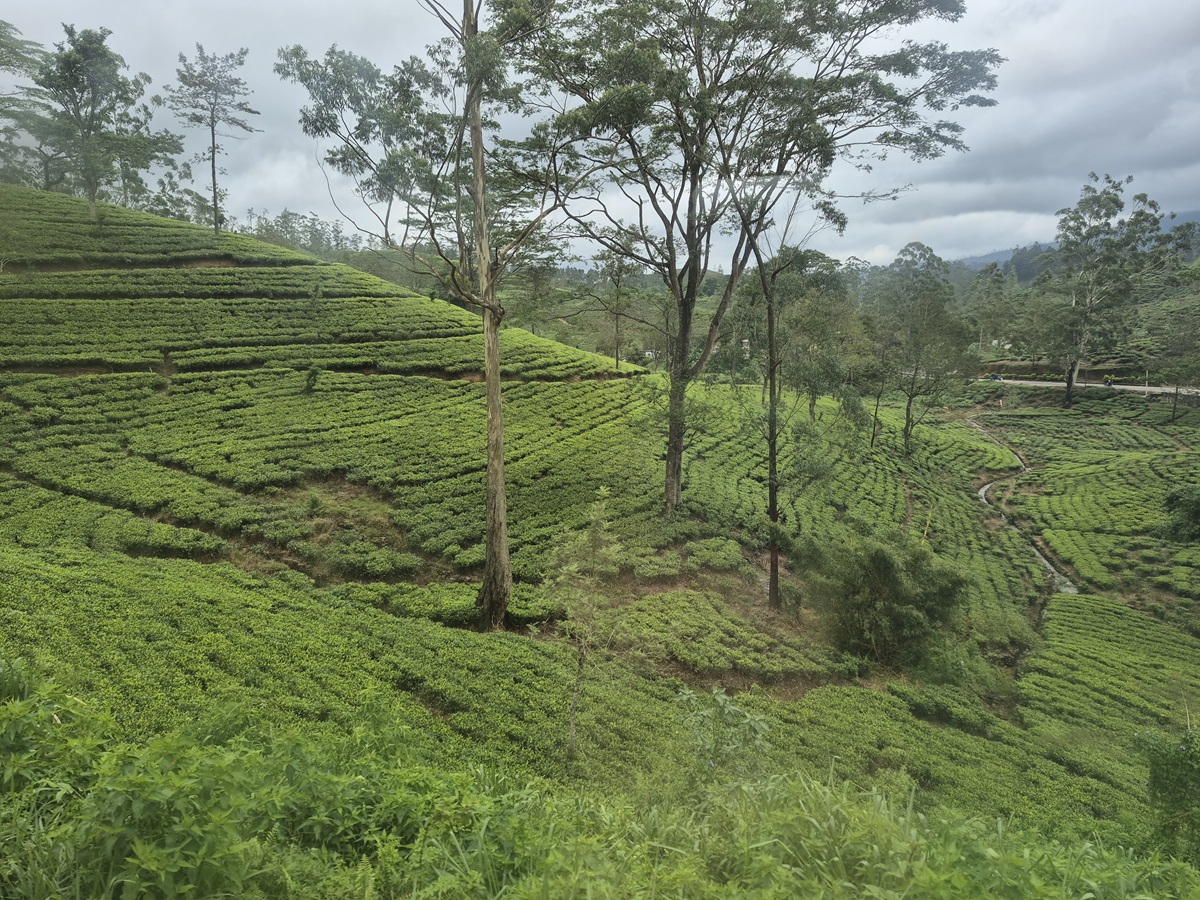
Tea plantation, Central highlands.
Although dwarfed by the services and industry sectors, agriculture, at 8% of GDP, is a major employer and domestic and export goods producer. Tea is one of the main sources of foreign exchange for Sri Lanka, accounting for 2% of GDP, adding 1.3 billion US dollars to the economy annually. The tea sector employs over one million people, a fifth of whom directly on tea plantations.
Sri Lanka is the fourth largest tea producer, and a leading exporter, at 23% of world total. It comes second to China in terms of export earnings from tea. Annual production is around 340,000 tonnes. The recent surge in global fertilizer prices is pushing the country towards an agricultural crisis, compounded by the country´s failure to execute effectively an organic agriculture initiative.
Both tea varieties, Camellia sinensis var. assamica and Camellia sinensis var. sinensis, are grown, with assamica varietal being the primary production tea variety. Kandy is the heartland of Sri Lankan tea production, with global interest in the speciality high-country-grown Nuwara Eliya teas.
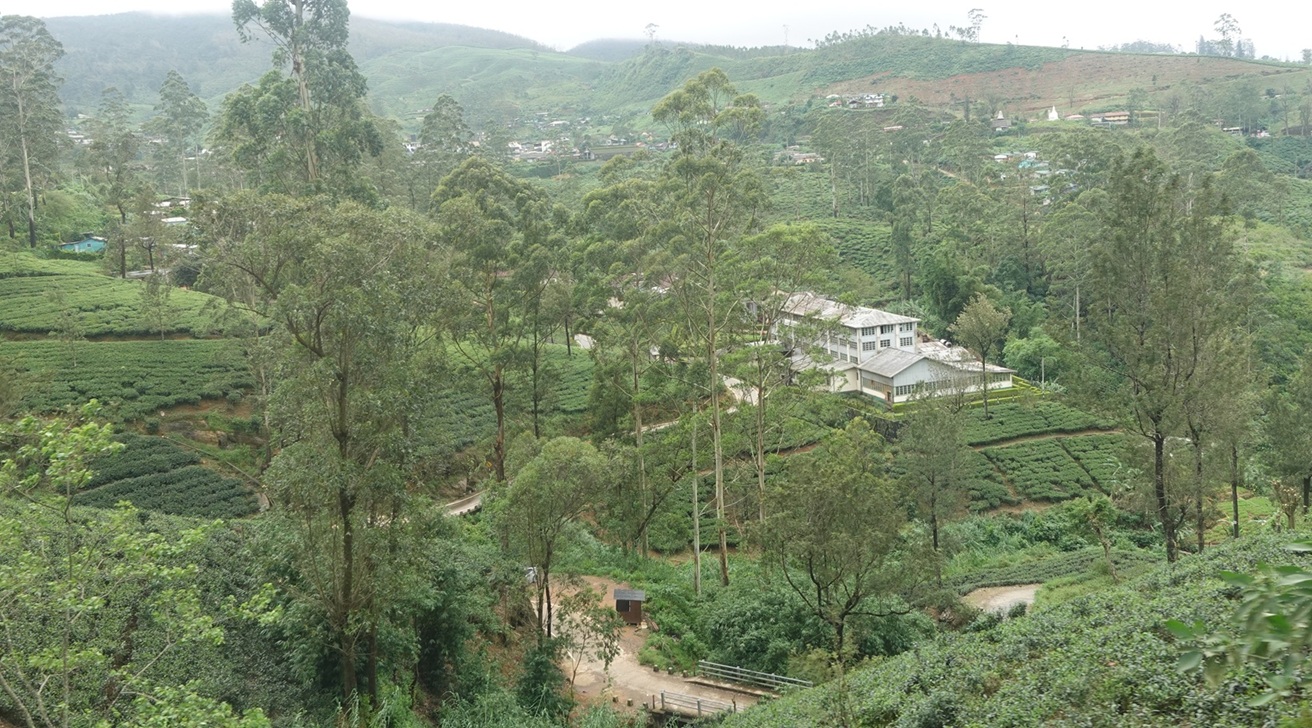
Tea plantation, glimpsed from the train between Ella and Kandy, Central highlands
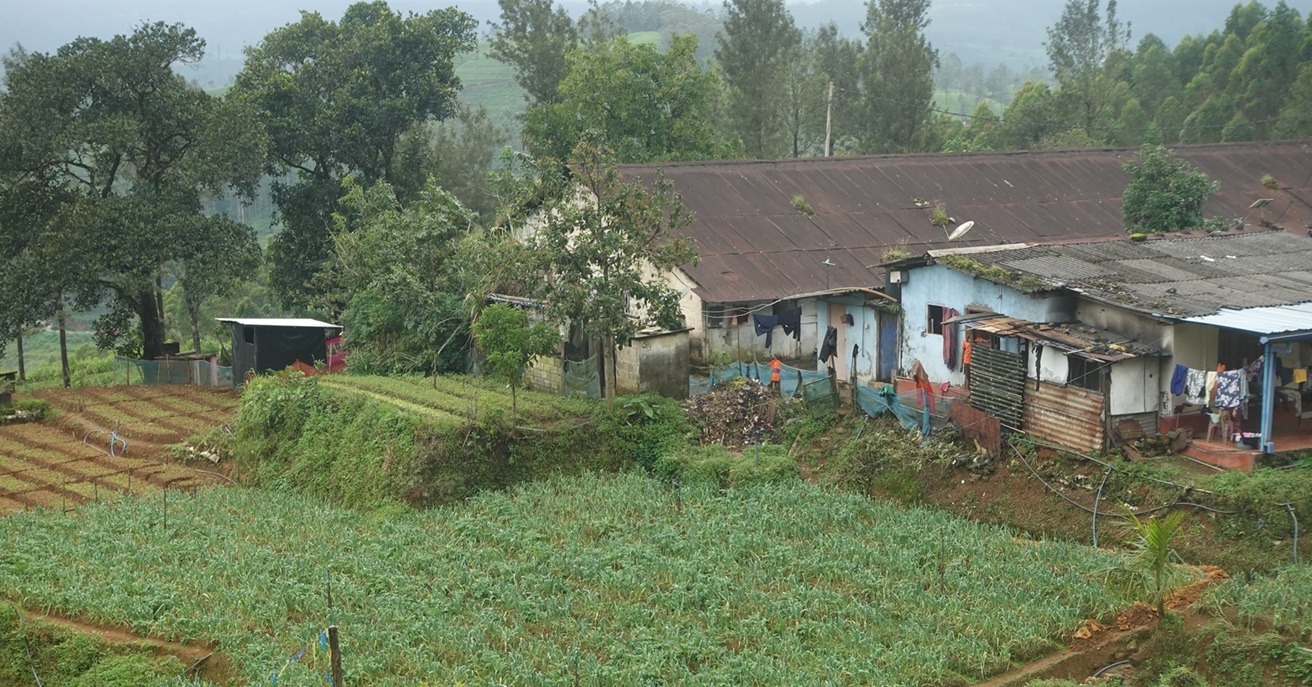
Farm houses. Although conditions here look rather rudimentary, Sri Lanka has made great strides in improving the living conditions of its population.
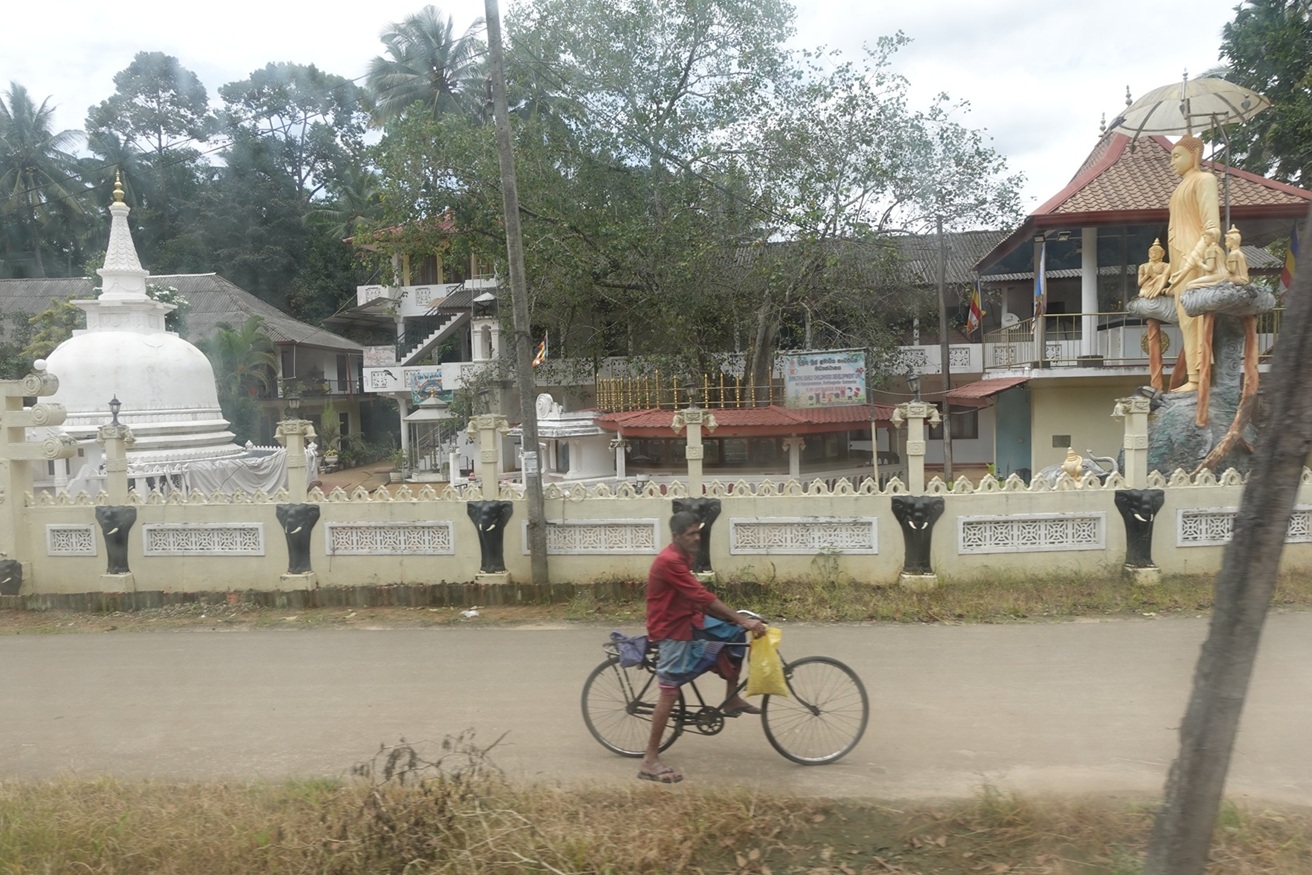
Village with Buddha shrine. 70% of the population are Buddhist, 13% Hindu, 10% Islam, and 7% Christian. In Kandy, a walk around the block brought us from a Buddhist shrine and temple, to a Hindu temple with a ceremony underway, and a Moslem mosque visible just down the road. A very large Buddhist statue on a mountaintop is visible from every angle of the town.
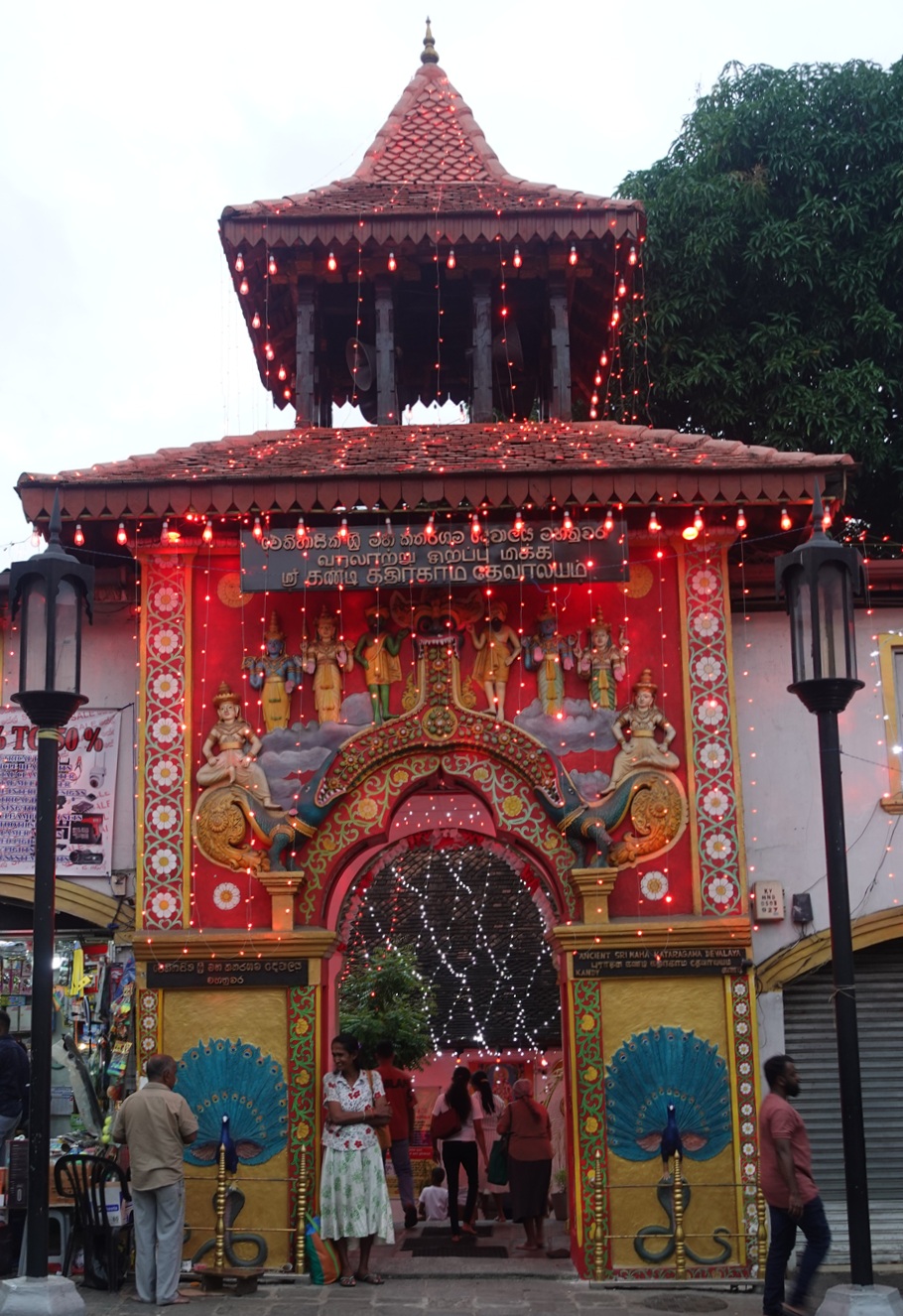
Hindu temple, Kandy. From our hotel window we can see a Buddhist stupa, a gigantic Buddha on a mountaintop, a moslem mosque, and a Hindu temple. Says it all, I think, about this multicultural society.
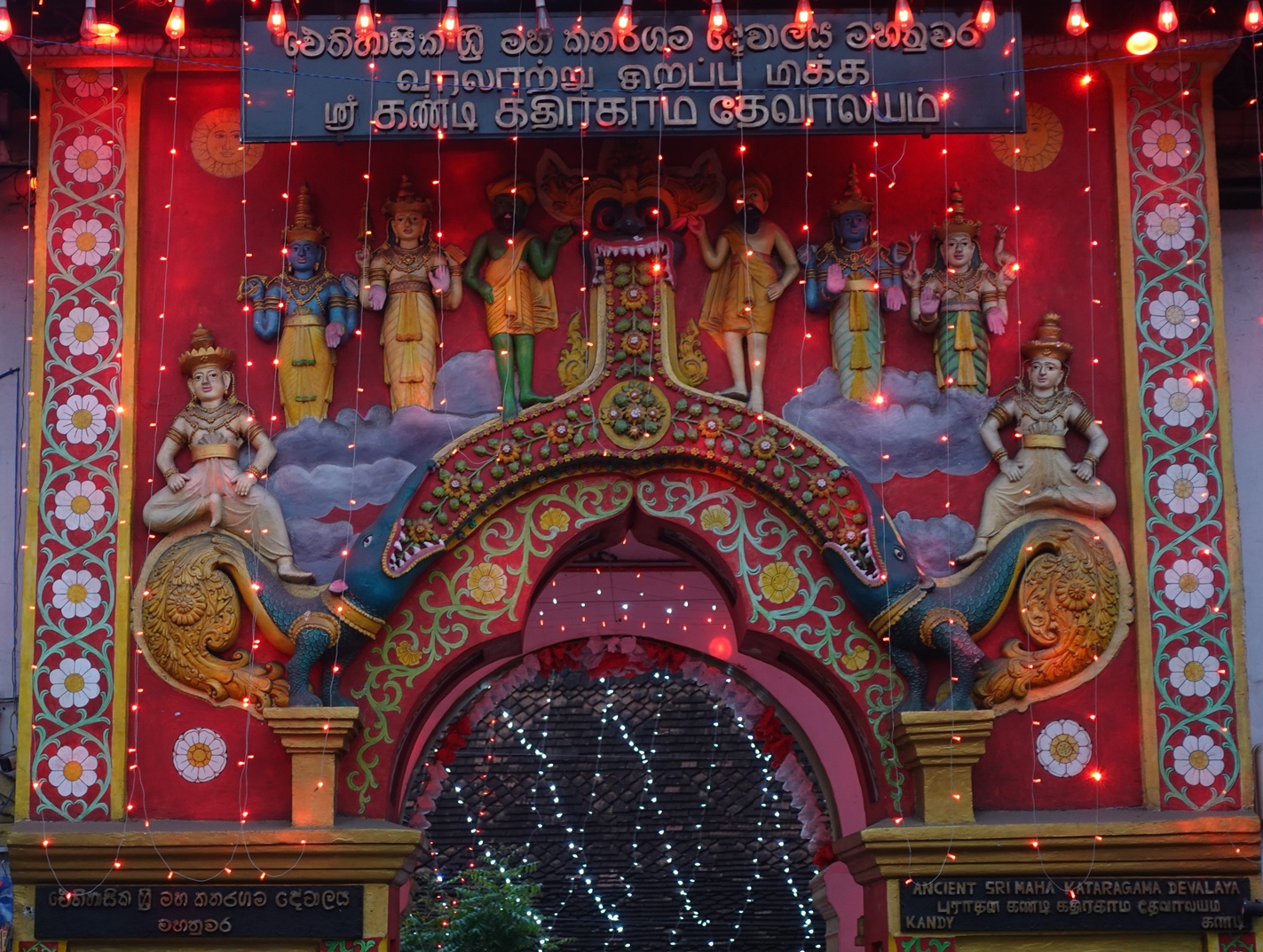
Close-up of the entrance to the Hindu temple, Kandy.
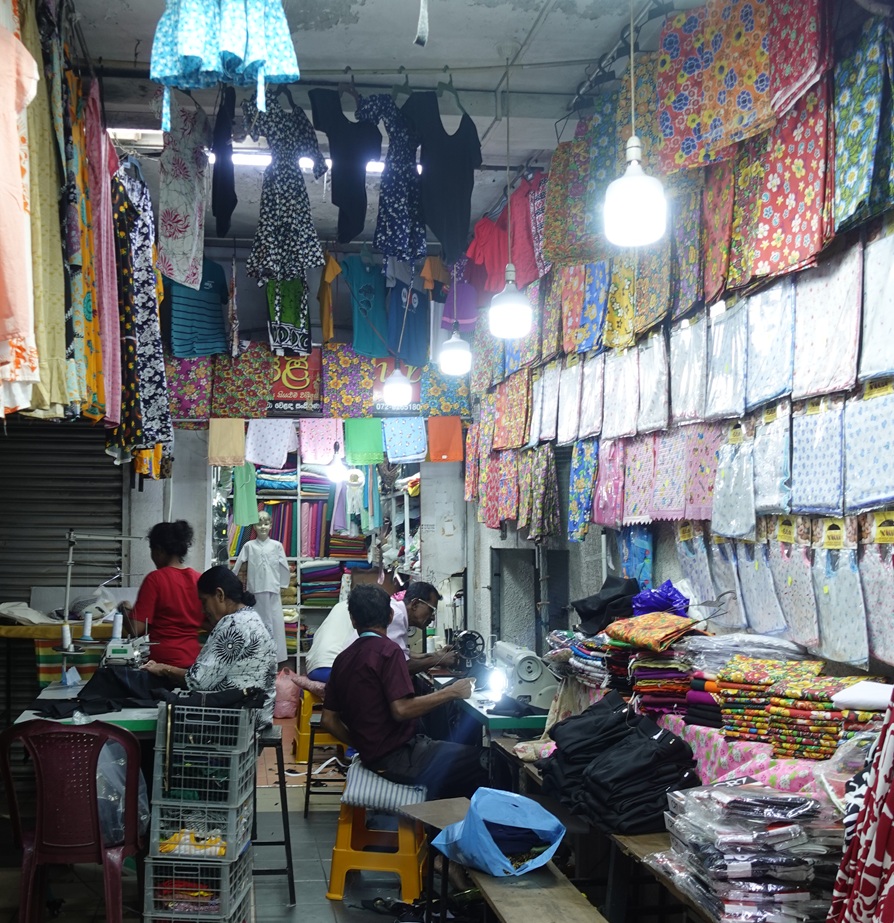
The tailor shop in the Kandy open-air market, still open at 20:00 on a Sunday, where I had my new trousers altered in 5 minutes.
Travel Diary
onegai shimasu
dö tashimashite
hai/iie
sumimasen
arigatö gozaimasu