Paris Xmas 2025
Day 17: Monday 29 December 2025
Chartres – Chartres Cathèdrale
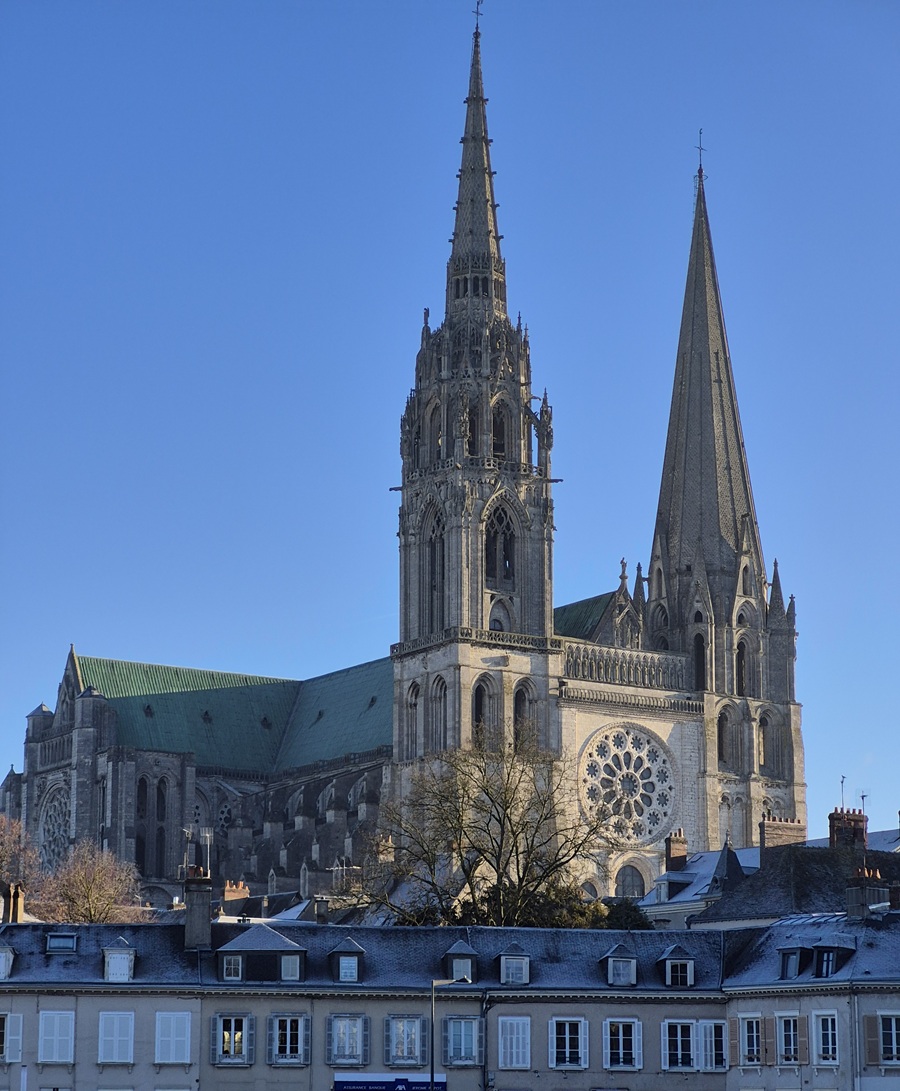
View of the Chartres cathedral in the morning. Built mainly between 1194 and 1220, this magnificent cathedral was completed in 1252, and has elements of Romanesque and Gothic architecture.
The coronation of Henry IV occurred in this cathedral in 1594, making him the only king of France not to be crowned in Reims. This is because Paris and Reims were occupied by the Catholic League at the time.
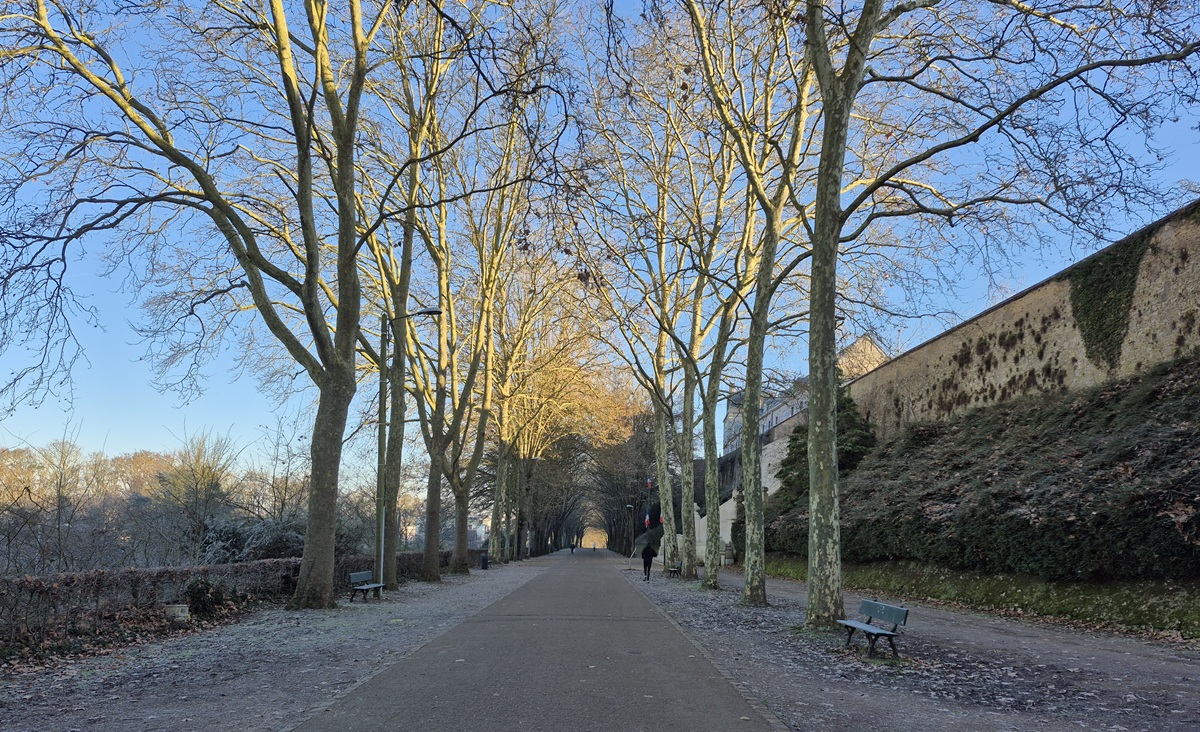
Walk around Chartres. the population is over 170,000 in the metropolitan area, while 38,000 live in the city of Chartres proper. Part of the old town was damaged or destroyed by Allied bombing in 1944, including the library associated with the School of Chartres.
Chartres’ strategic importance is evident in the extensive defensive walls, which today provide a pleasant promenade around the town, with war memorials. The city fell to the Prussians in the Franco-Prussian War of 1870-1871, and was used by them as an important centre of operations as they besieged Paris.
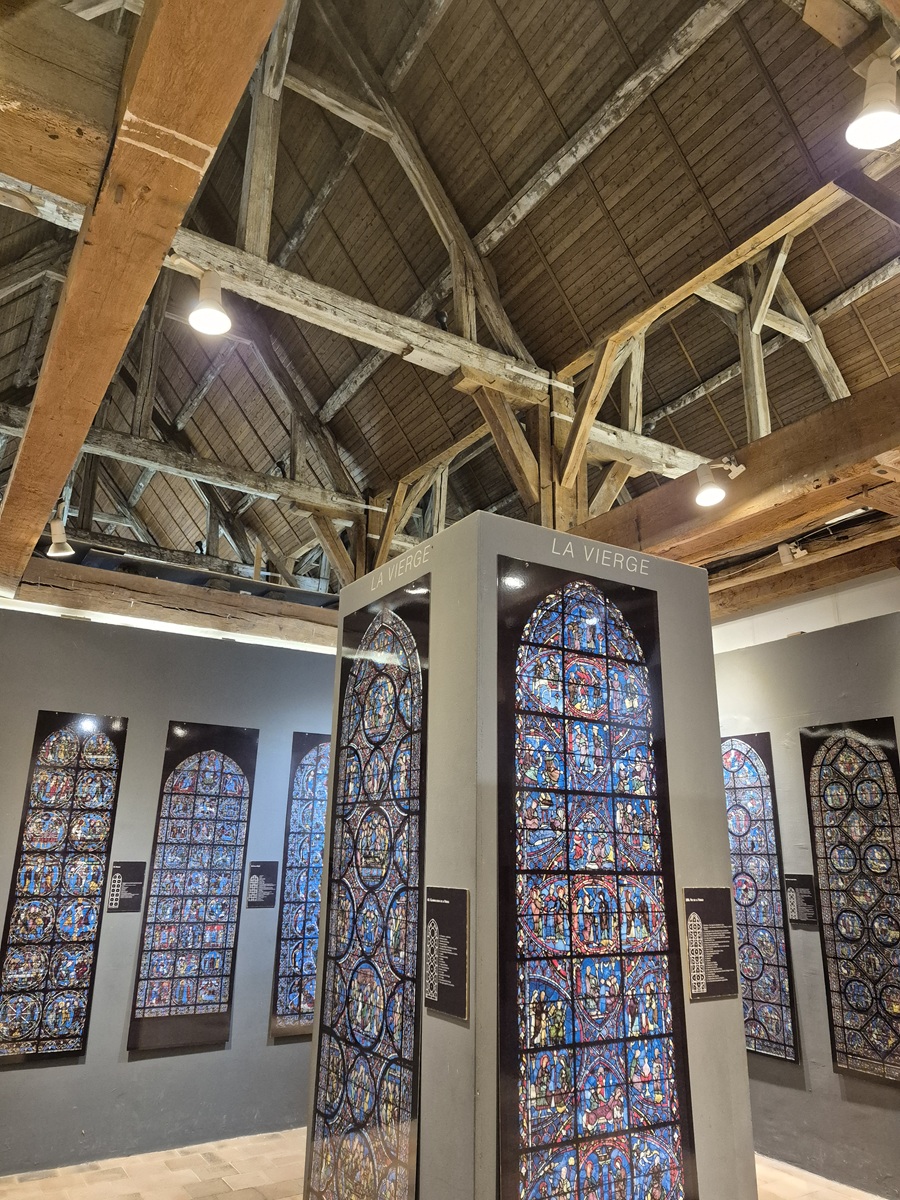
Musée Vitrail, stained glass museum. Most of the original stained glass windows of the cathedral remain intact, making it one of the best preserved 12th century cathedrals.
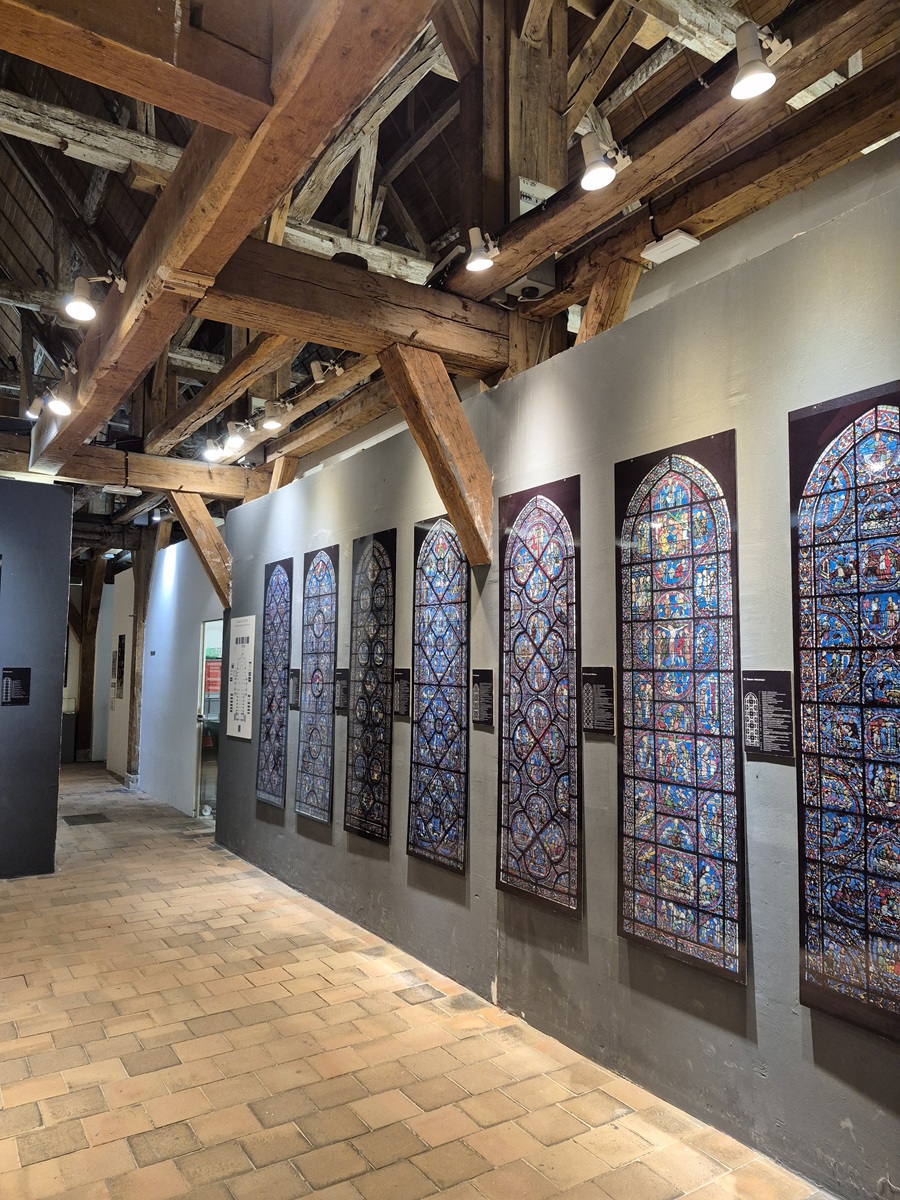
Musée Vitrail, stained glass museum.
The stained glass windows of the cathedral were paid for by guilds of merchants and craftsmen, and welathy families. In the museum we could see many names of these at the bottom of scenes for these guilds and families.

Musée Vitrail, stained glass museum. The blue used in the windows is known as bleu de Chartres, and is unique to the town, despite attempts at imitating it.
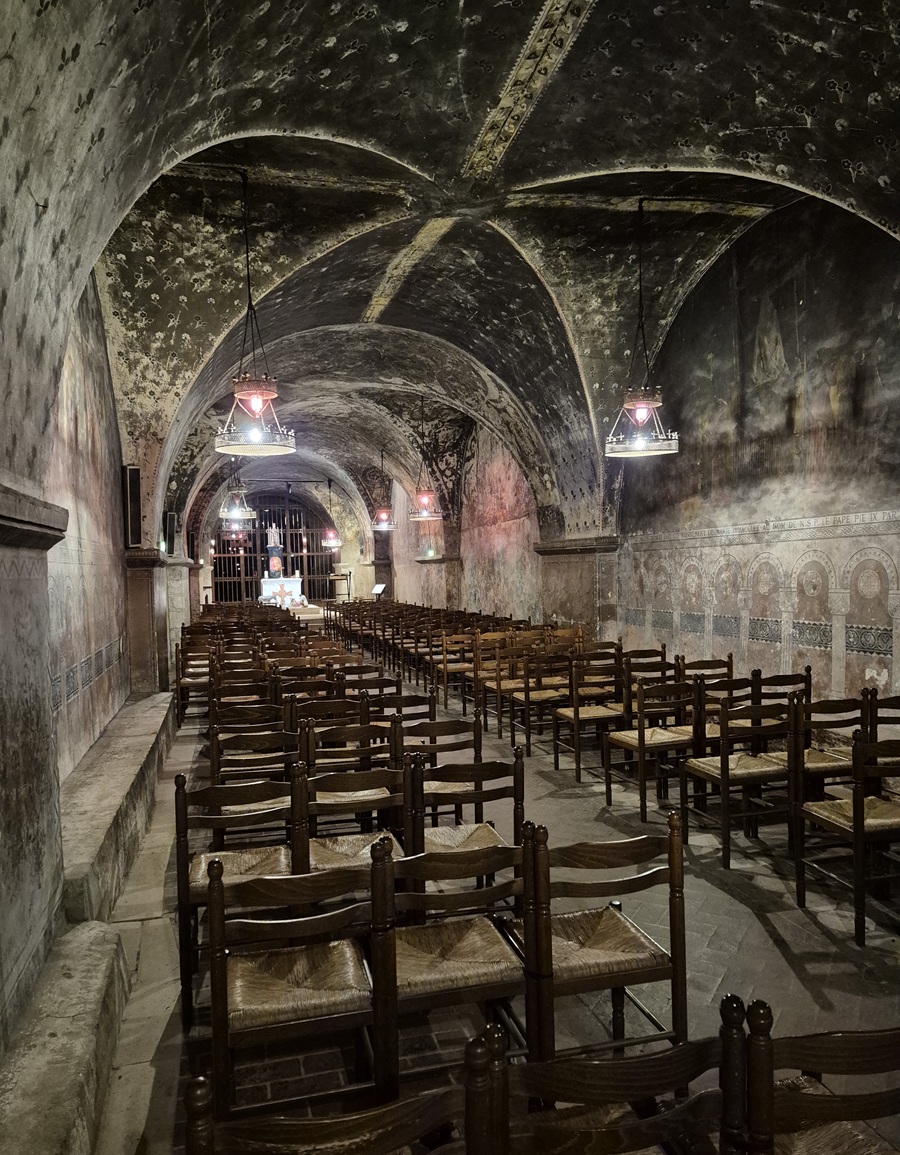
The crypt upon which the Chartres cathedral was built. The 9th century church had been damaged by a fire, and consisted of an ambulatory around the earlier chapel, surrounded by three large chapels with Romanesque barrel vault and groin vault ceilings.
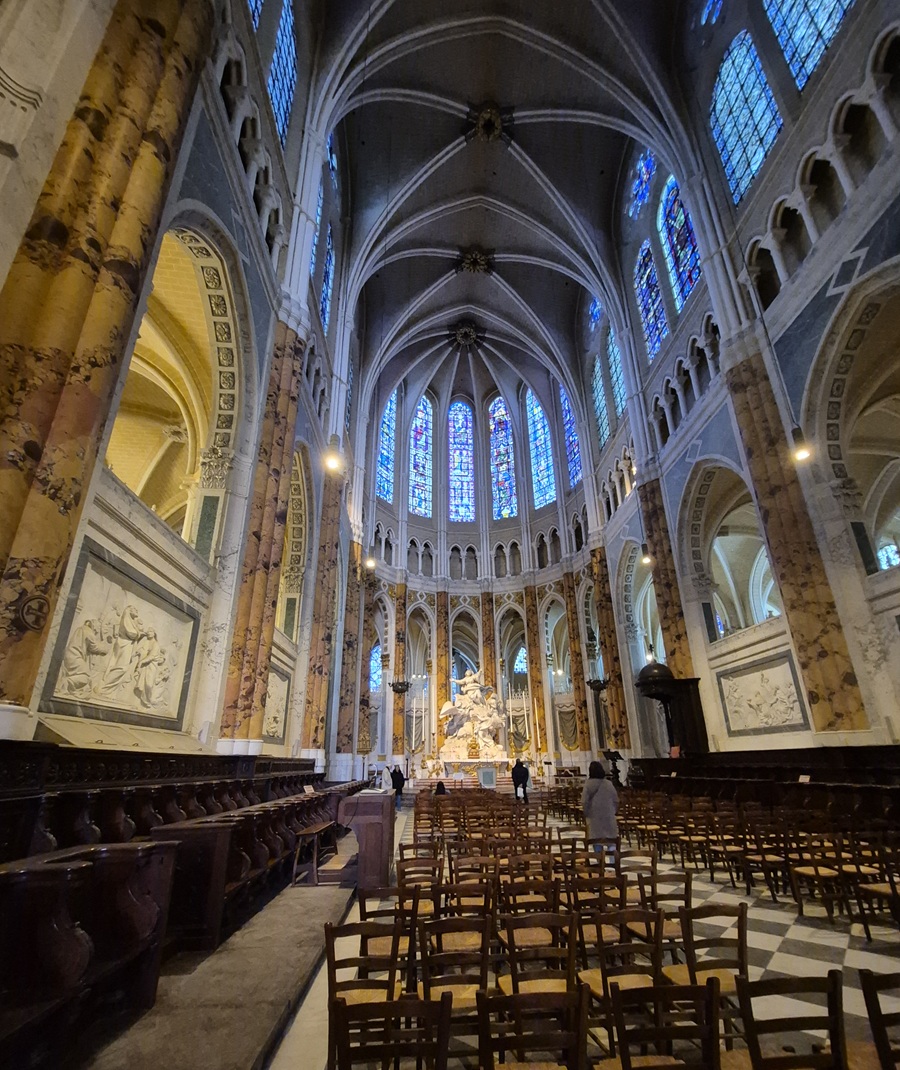
Chartres Cathedral interior. The vaults of the roof, connected by stone ribs to the pillars below, combined with the flying buttresses outside make possible thinner walls, and the great height and large windows of the cathedral.
During the invasion of France in 1944, fearing that the Germans were using the bell tower as a lookout, the order was given to destroy the cathedral. A courageous American officer, Colonel Welborn Barton Griffith, Jr., on August 16 1944, volunteered to investigate the building behind enemy lines. Thanks to his ringing of the bells in the bell tower, the signal that the building was empty of Germans, it was spared destruction. Unfortunately, Griffith was killed that very same day 3.5 km north of Chartres. The town was liberated on 18th August, 1944.
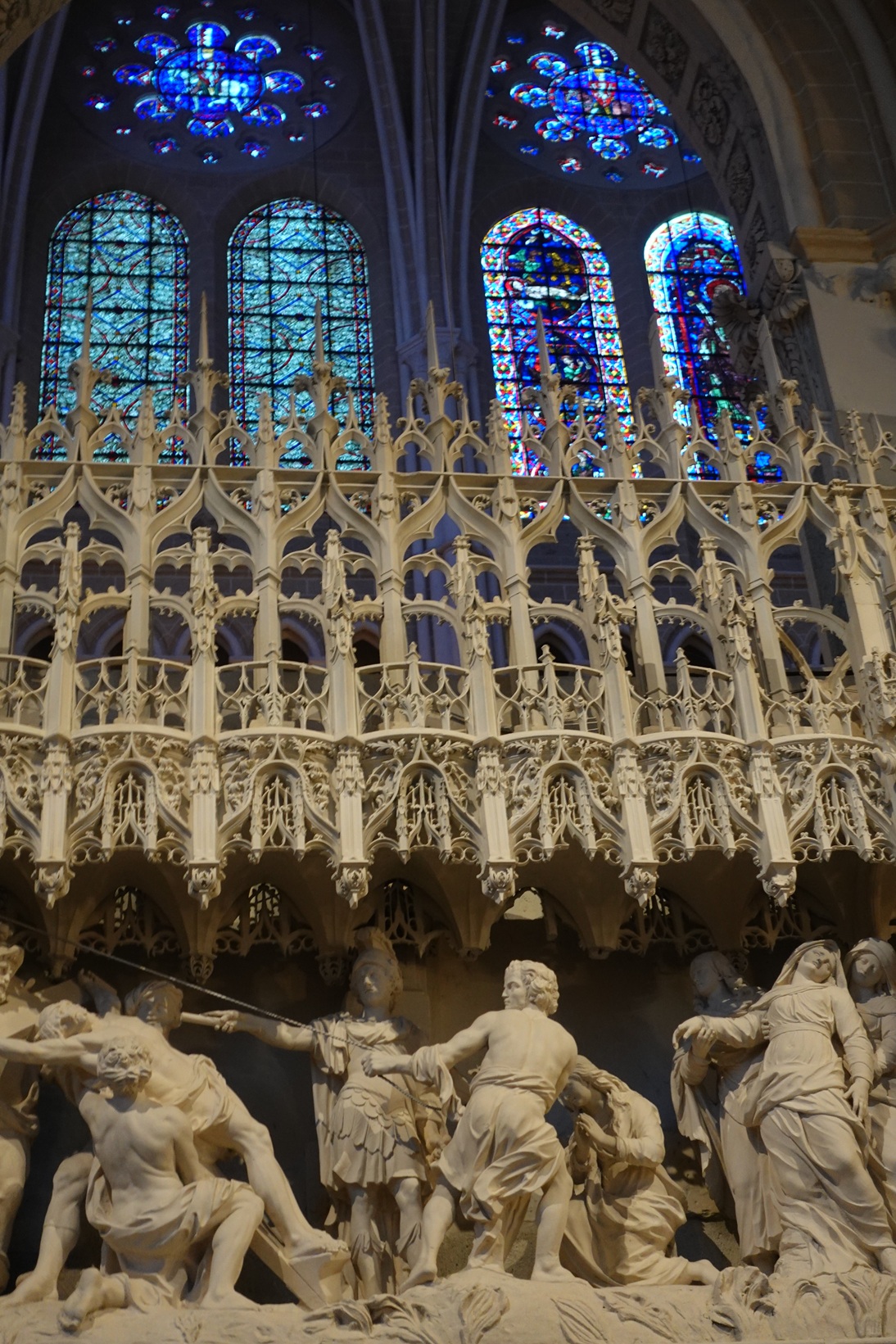
Chartres Cathedral Choir Wall, 16th-18th centuries. This magnificent ornamental stone screen separates the choir from the ambulatory. It is over 6m tall and 100 metres long. In its 40 niches, sculptures tell the life of christ. the last was emplaced in 1714.
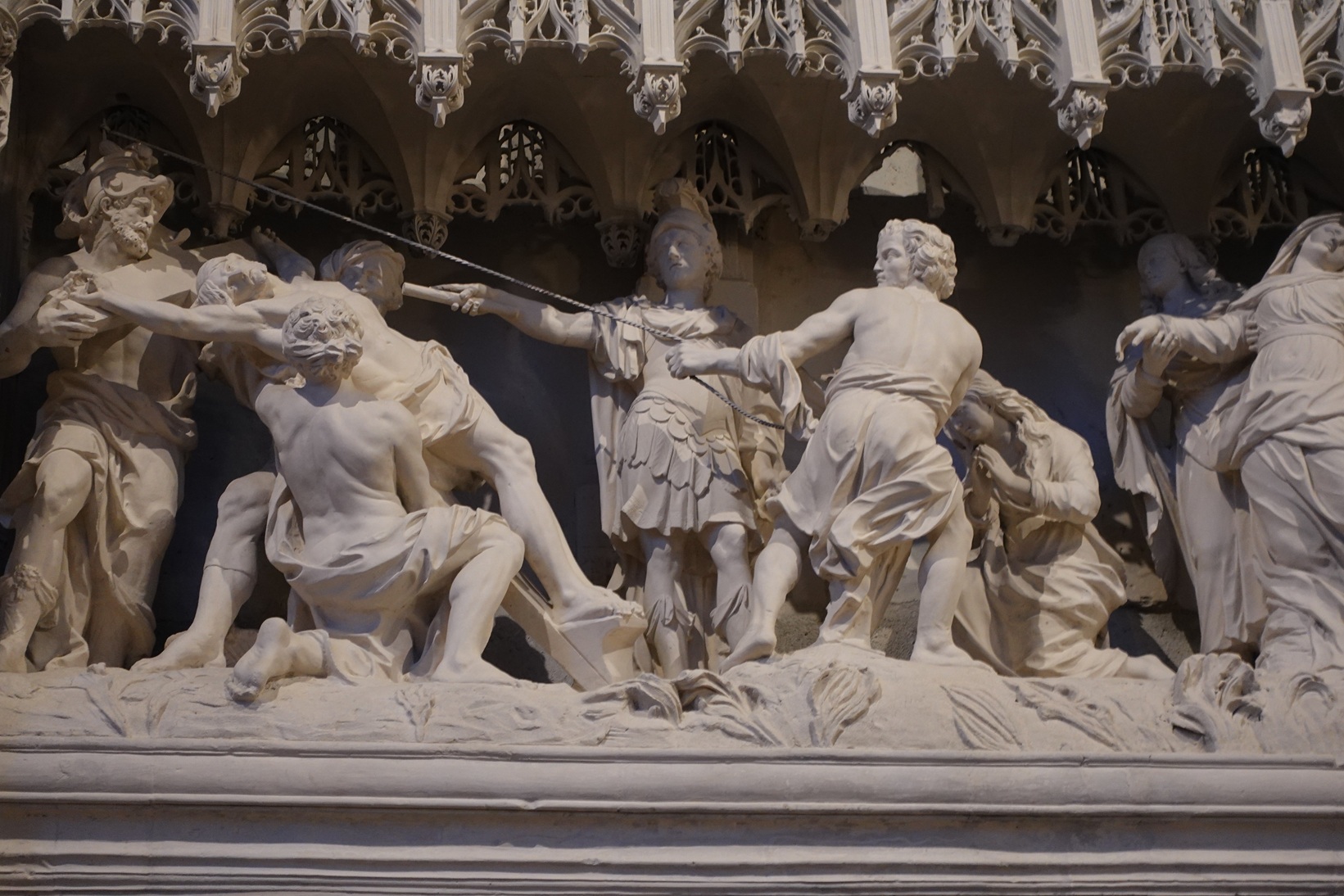
Close-up pf the Choir Wall in Chartres Cathedral
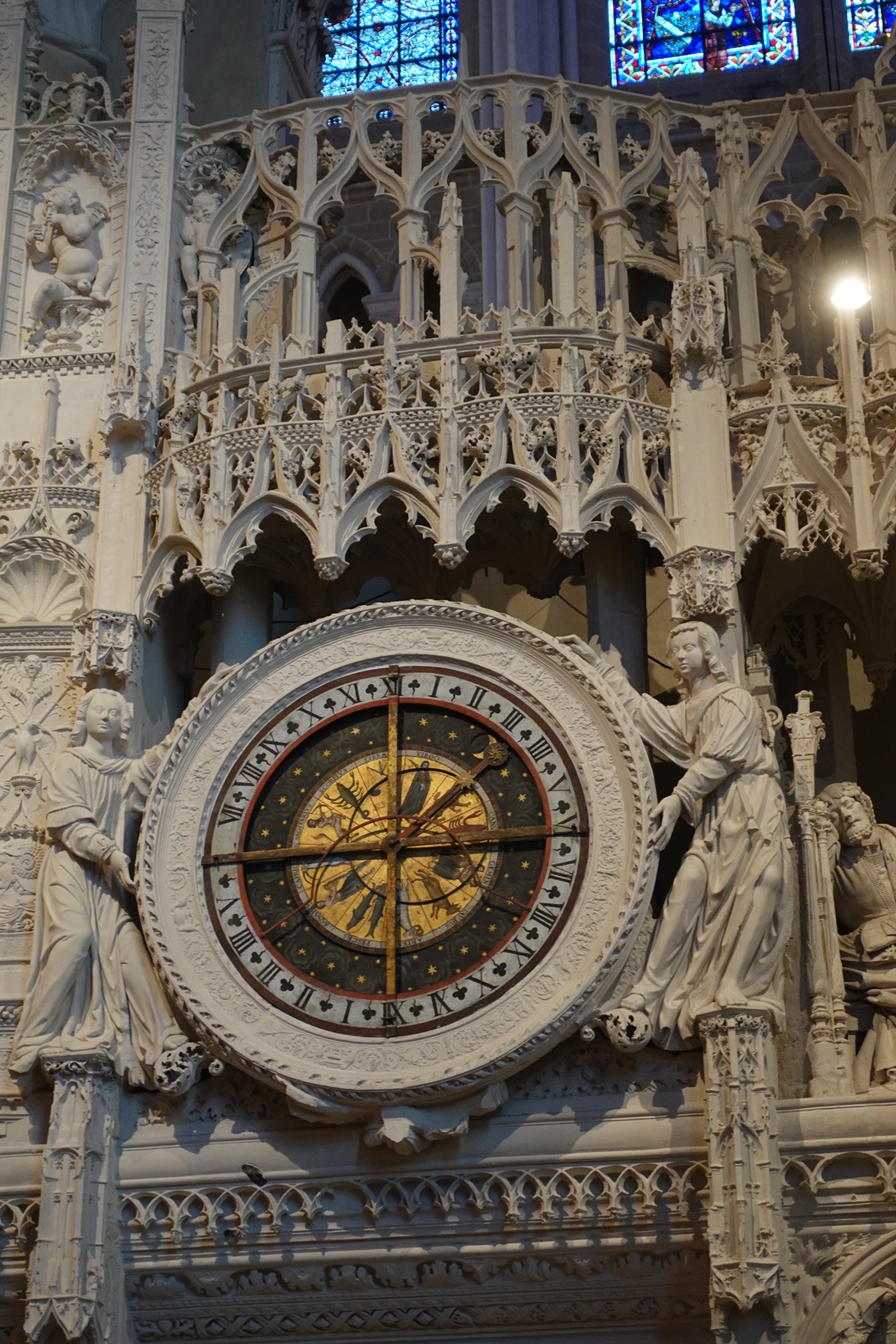
Chartres Cathedral astrological clock.
Christian pilgrims come to the cathedral to venerate its famous relic, the Sancta Camisa, supposedly the tunic worn by the Virgin Mary at Christ’s birth.
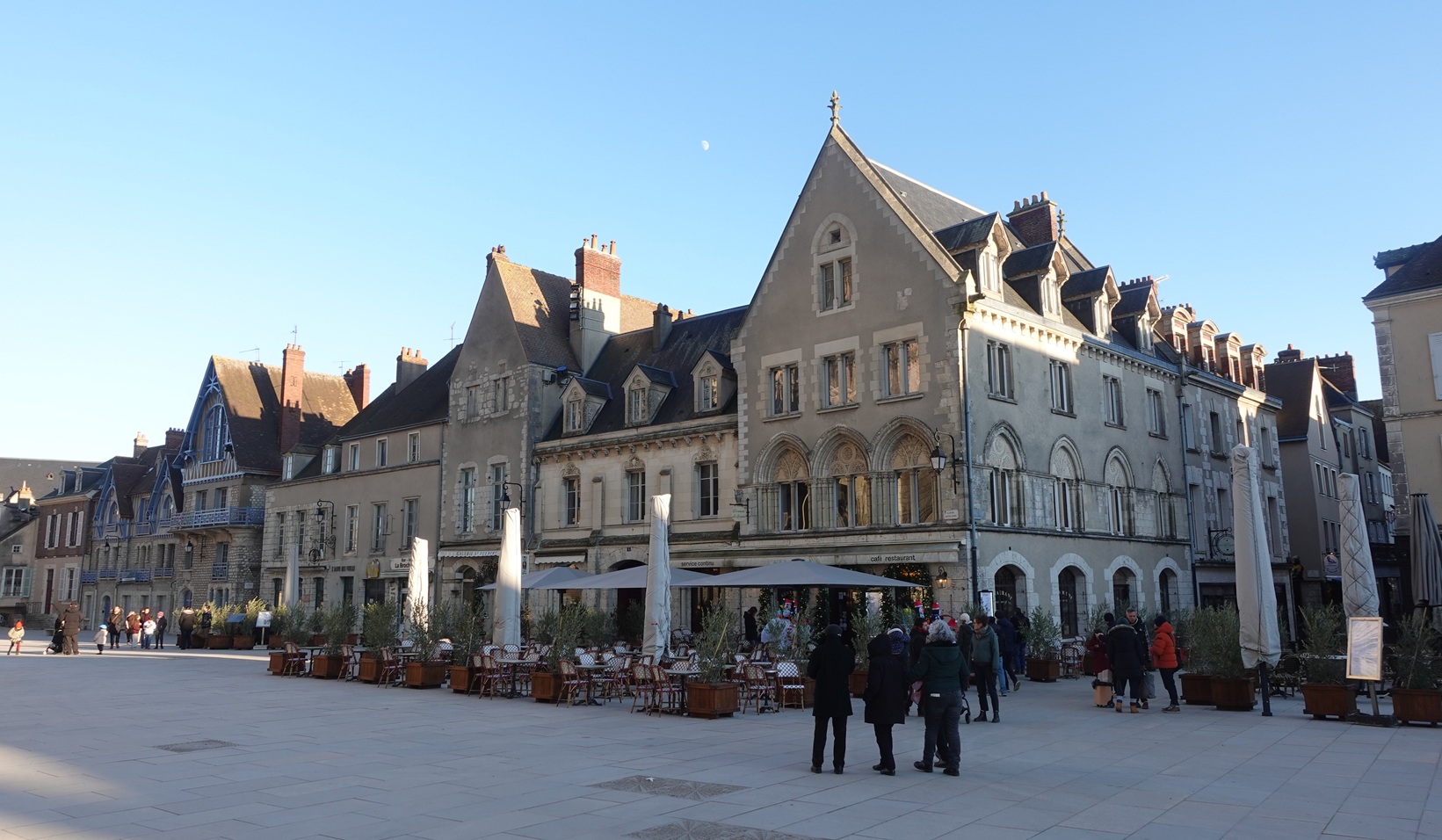
Chartres centre
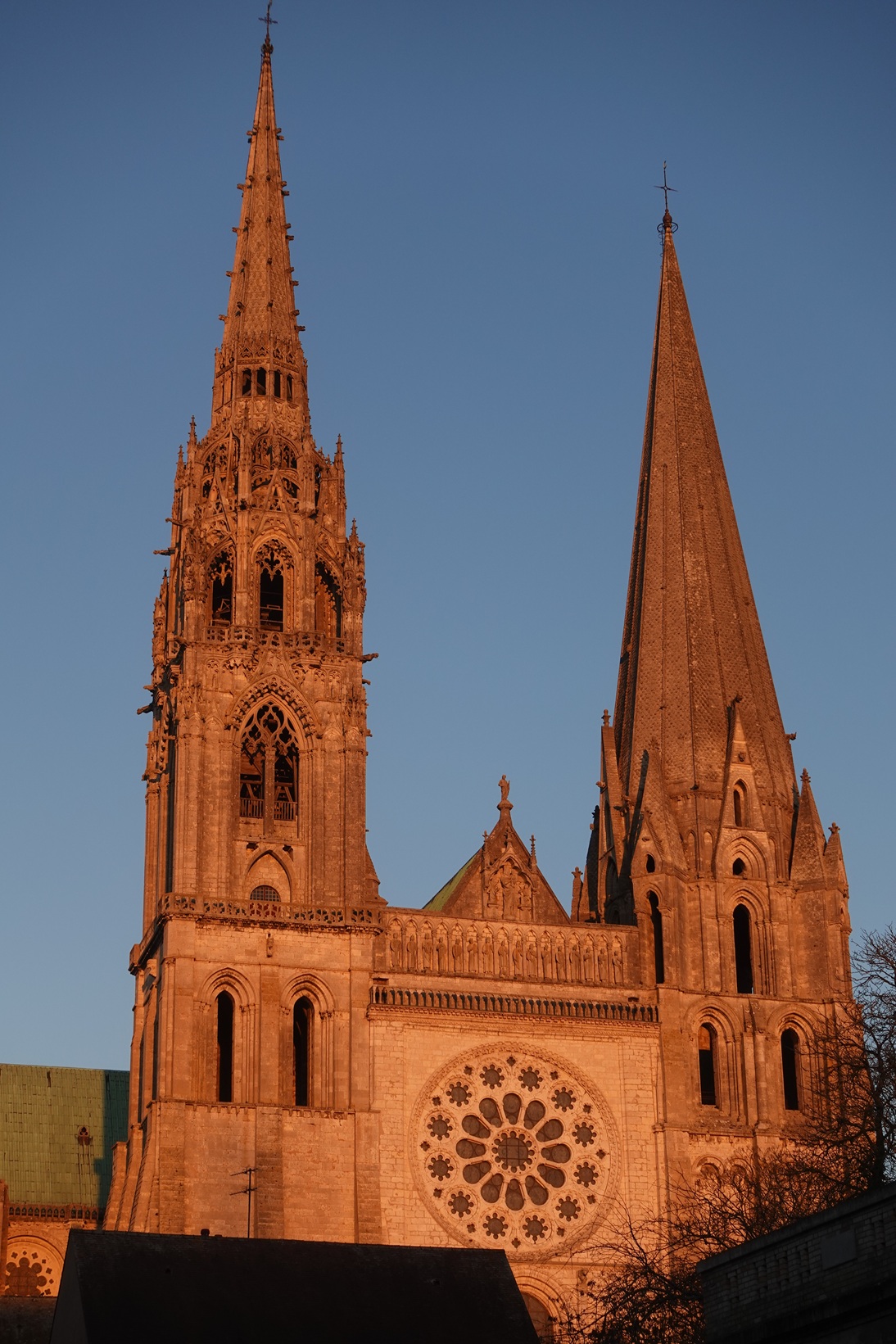
Chartres Cathedral at sunset. The tower on left is the Flamboyant Gothic north tower, 113m tall, finished in 1513. The tower on the right is from 1144-1150. The rose window dates from the 13th century.