Rome-Naples June 2026
Day 2: Friday 05 June 2026
Rome – Etruscan Museum – Maxxi – St. Peter’s Square
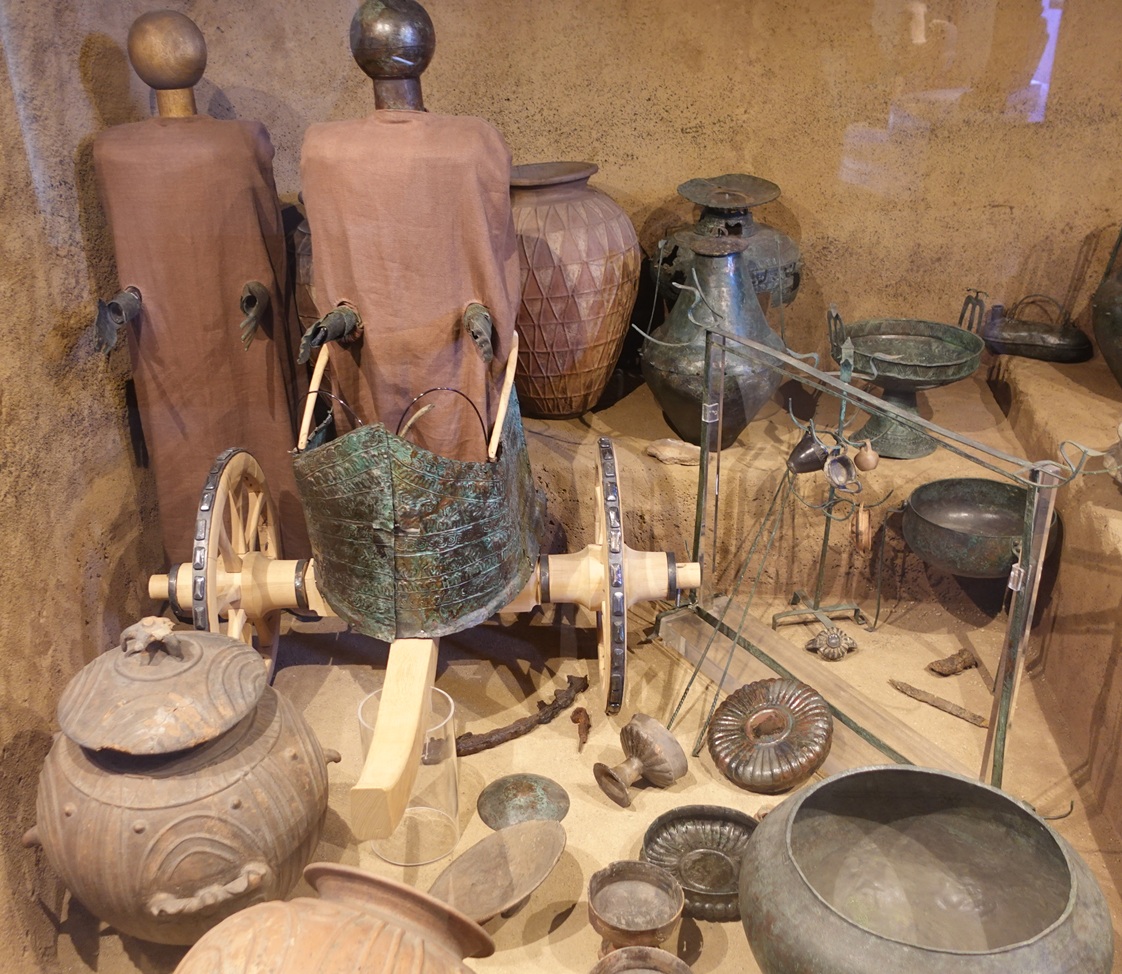
The National Etruscan Museum (ETRU Museo Nazionale Etrusco) is the most important Etruscan museum in the world. It is housed in Villa Giulia, named after Pope Julius III, and was papal property till 1870, when the Risorgimento unification of modern Italy took over the property of the Papal States. The museum was founded in 1889. Along with Etruscan relics, there are artifacts from the Faliscan civilisation.
The Falisci were an Italic tribe in northern Lazio, who sided with the Etruscans to resist the Romans, leading to their near destruction and subjugation by Rome.
From Wikipedia:
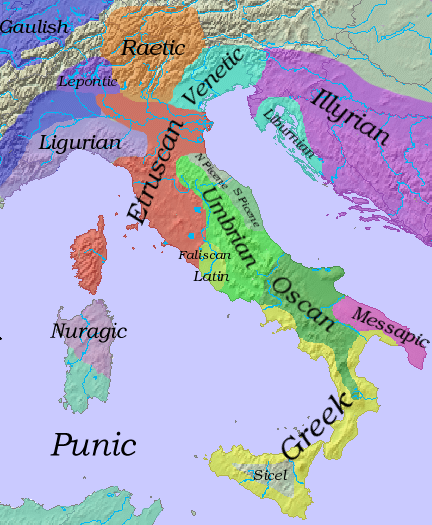
Pre-Roman Italy language groups.
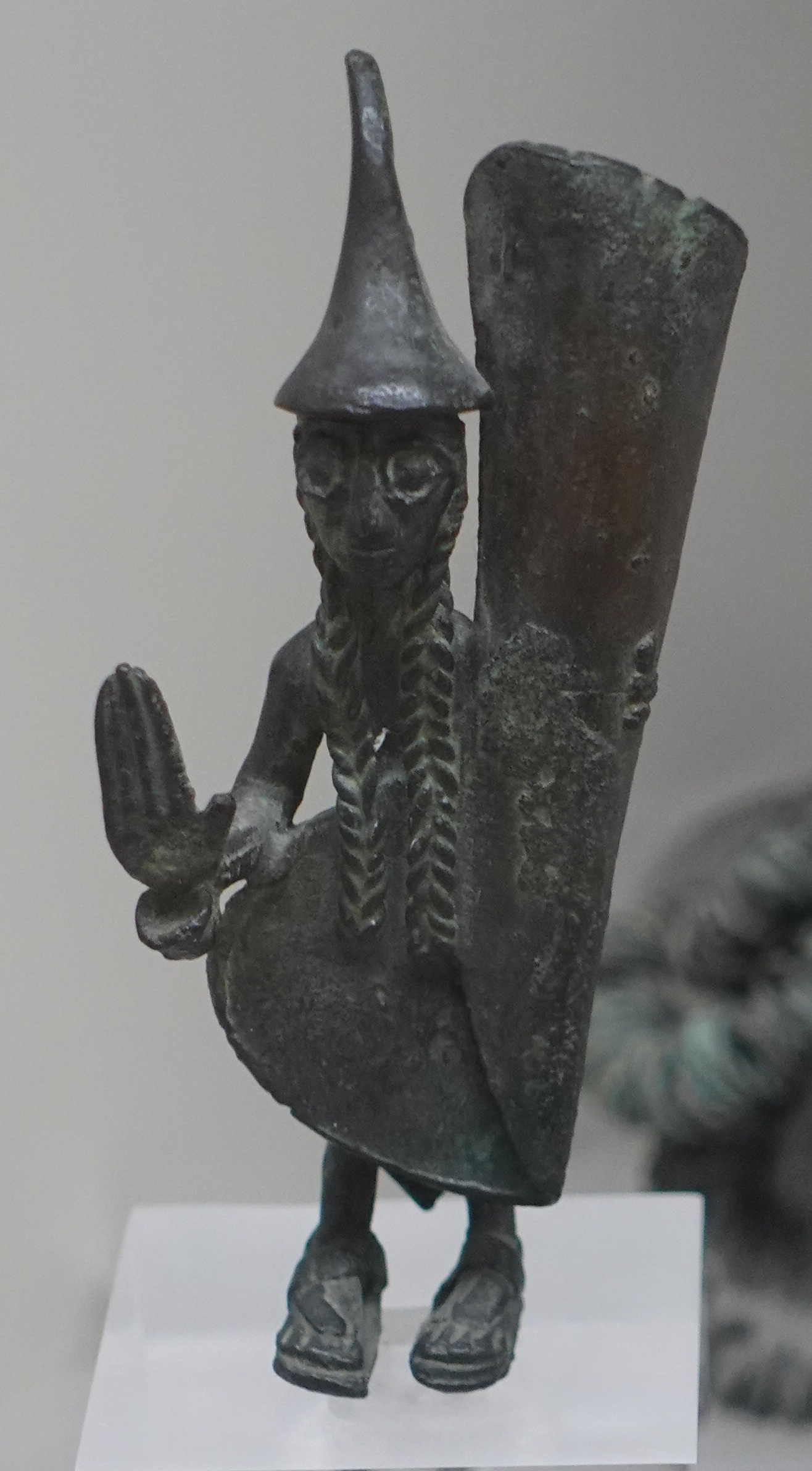
Gorgeous figurine of a priest, mid-8th century BCE, at the Etruscan Museum.
The Tomba dei bronzetti sardi (Sardi Bronzes Tomb), part of the necropolis of Cavalupo di Vulci, contains the remains of a woman and a child, along with a number of items. Vulci was a flourishing Etruscan city on the right bank of the river Fiora, 100km north of Rome.
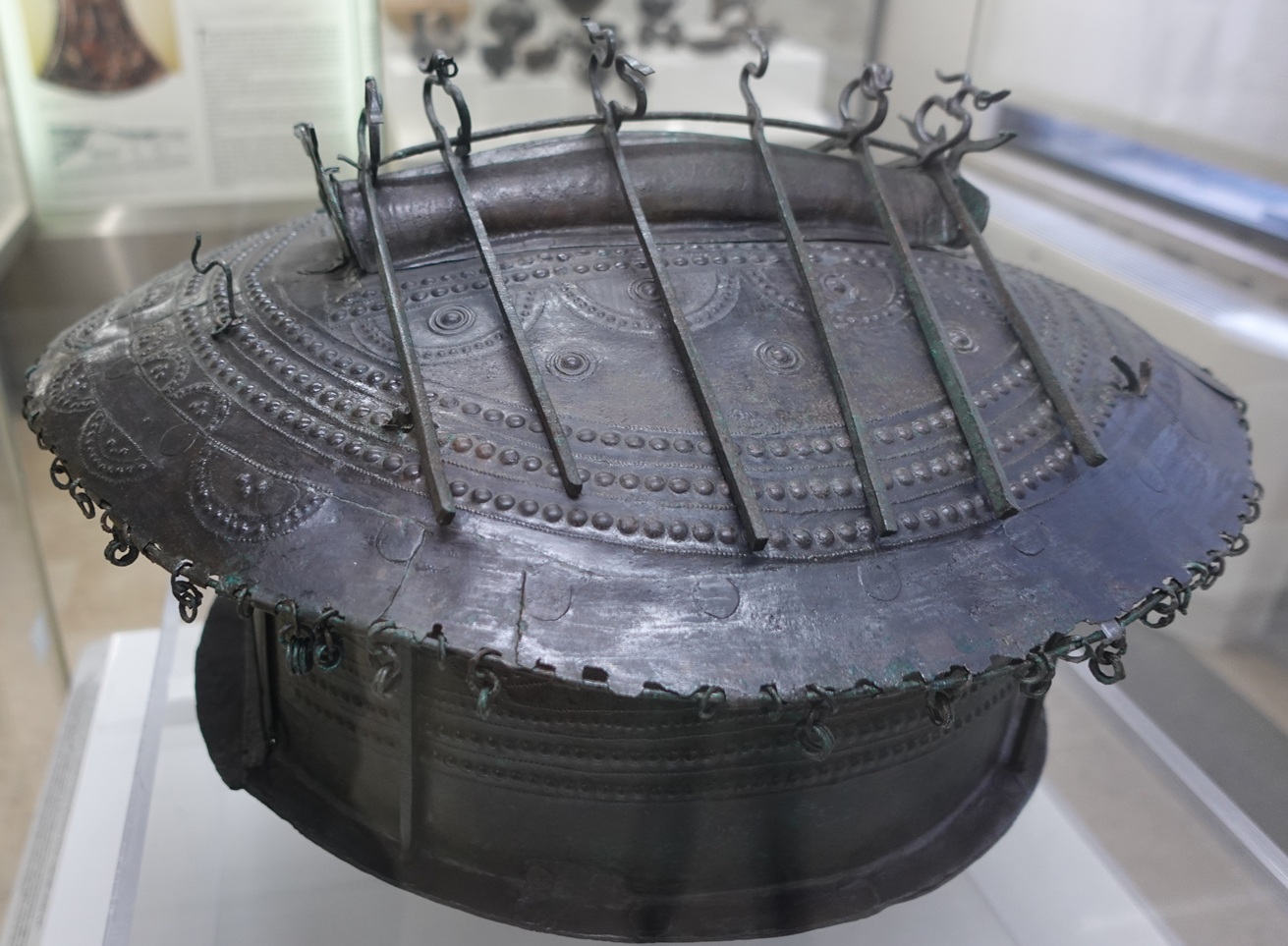
Bronze urn from the large necropolis, the so-called Osteria, from Vulci. This urn contained the ashes of a male person of high rank, who lived in the first half of the 8th century BCE. The villanoviano period, from the tenth to the eighth centuries BCE, is the oldest of the Etruscan civilisation.
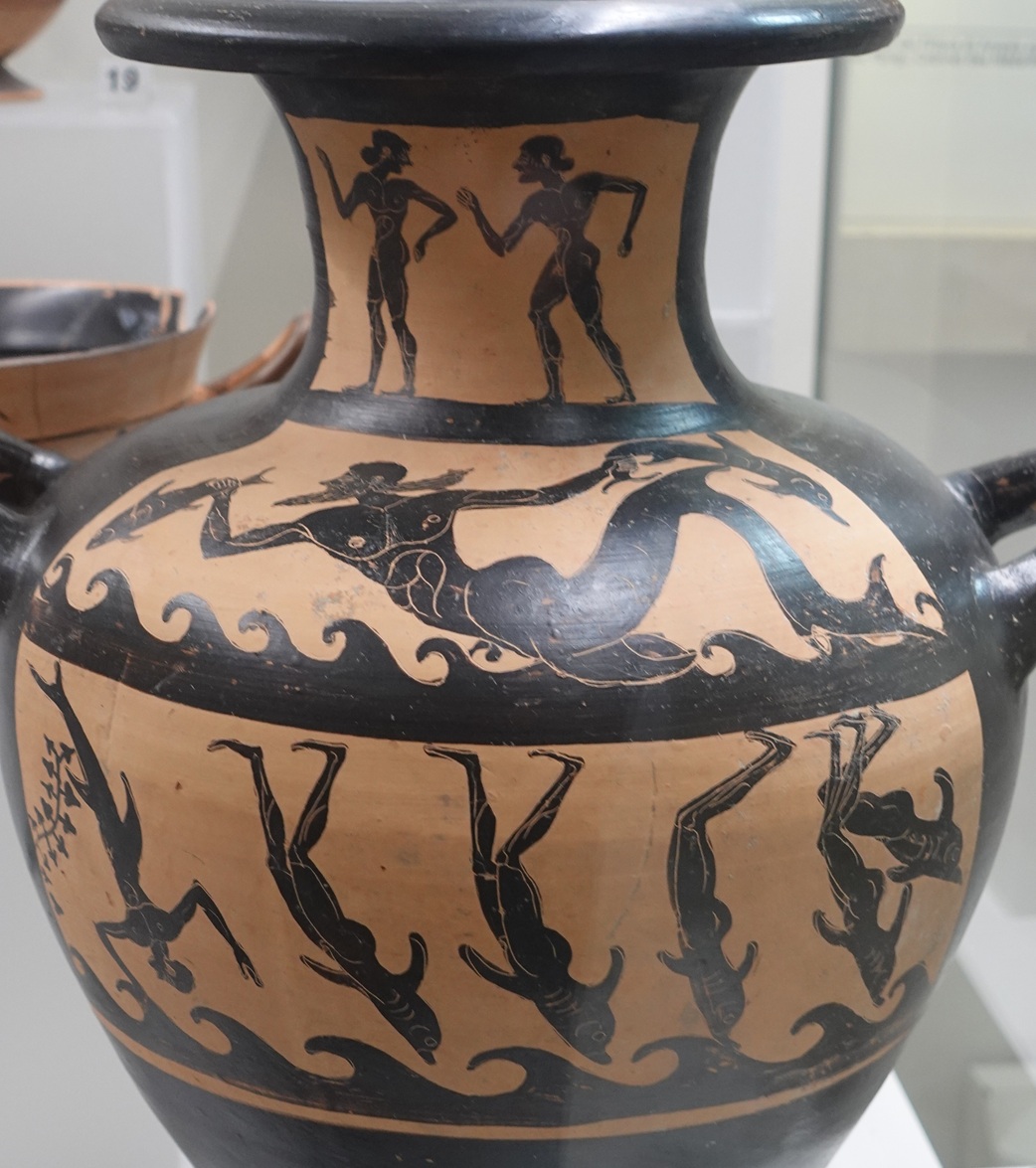
Hydria dei pirati tirreni, from Vulci. Water vase attributed to the painter Micali, showing a scene from the myth of Dionisius and the Tyrrhenian pirates. c. 510 BCE.
The form of this vase is called hydria, from the Greek hýdor (water). The illustration is of Etruscan pirates transmutating into dolphins. The vase was stolen from an illegal excavation, sent to the Toledo Museum of Art in Ohio, before being restituted to Italy in 2014. On the neck of the vase are two figures of nude youths exercising in the palestra. The section below this shows a large figure of Triton, a hybrid marine being with flowing hair and beard, capturing a fish in one hand, and a dolphin in the other.
Etruscan Museum
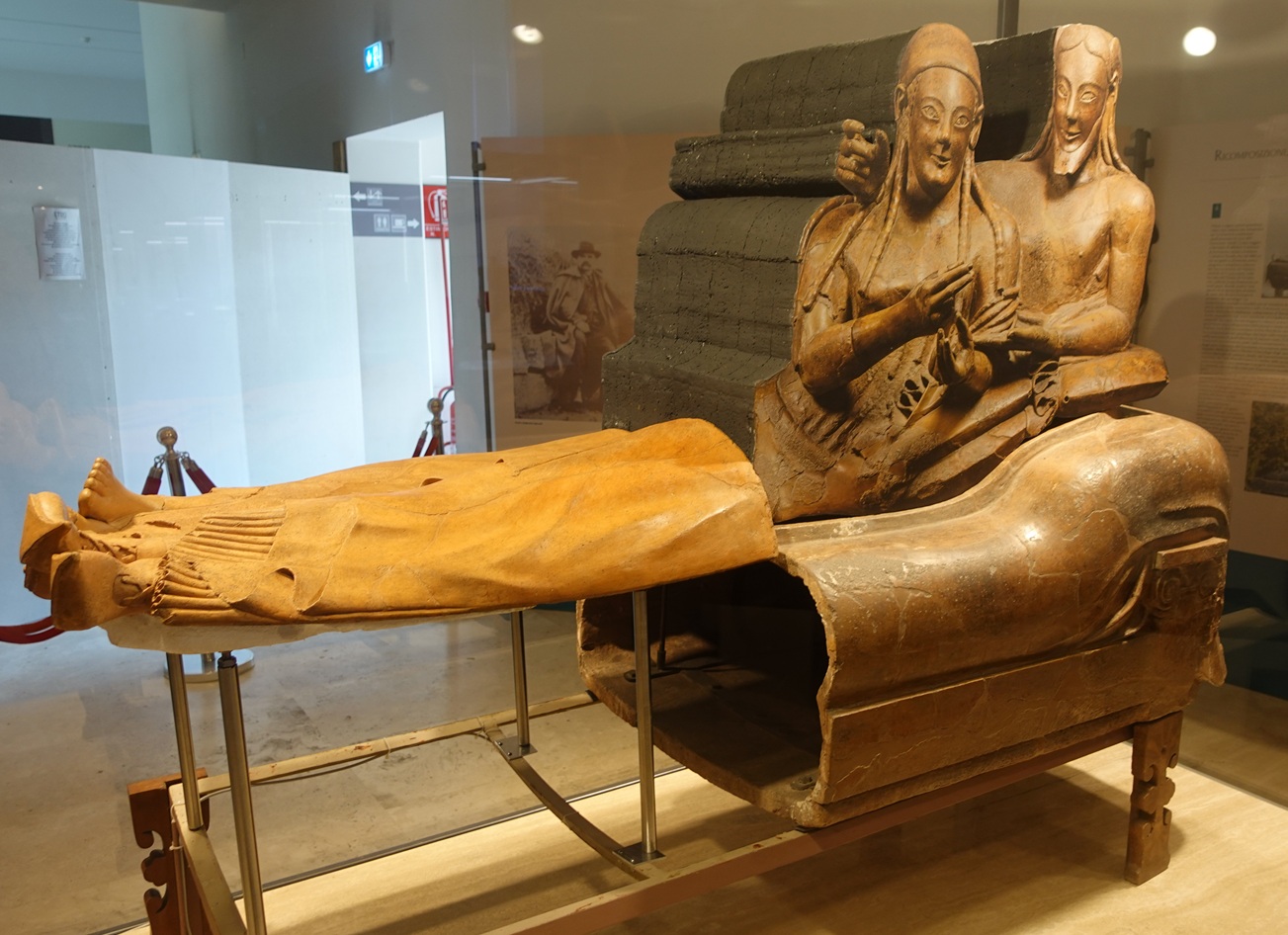
A sarcophagus with statues of a wedding couple on a banqueting bed, 530-520 BCE. This incredible example of Etruscan art and sensitivity was discovered in the necroplis of Banditaccia, in 400 pieces, which were reassembled by the director of the Villa Giulia in 1881.
Etruscan Museum
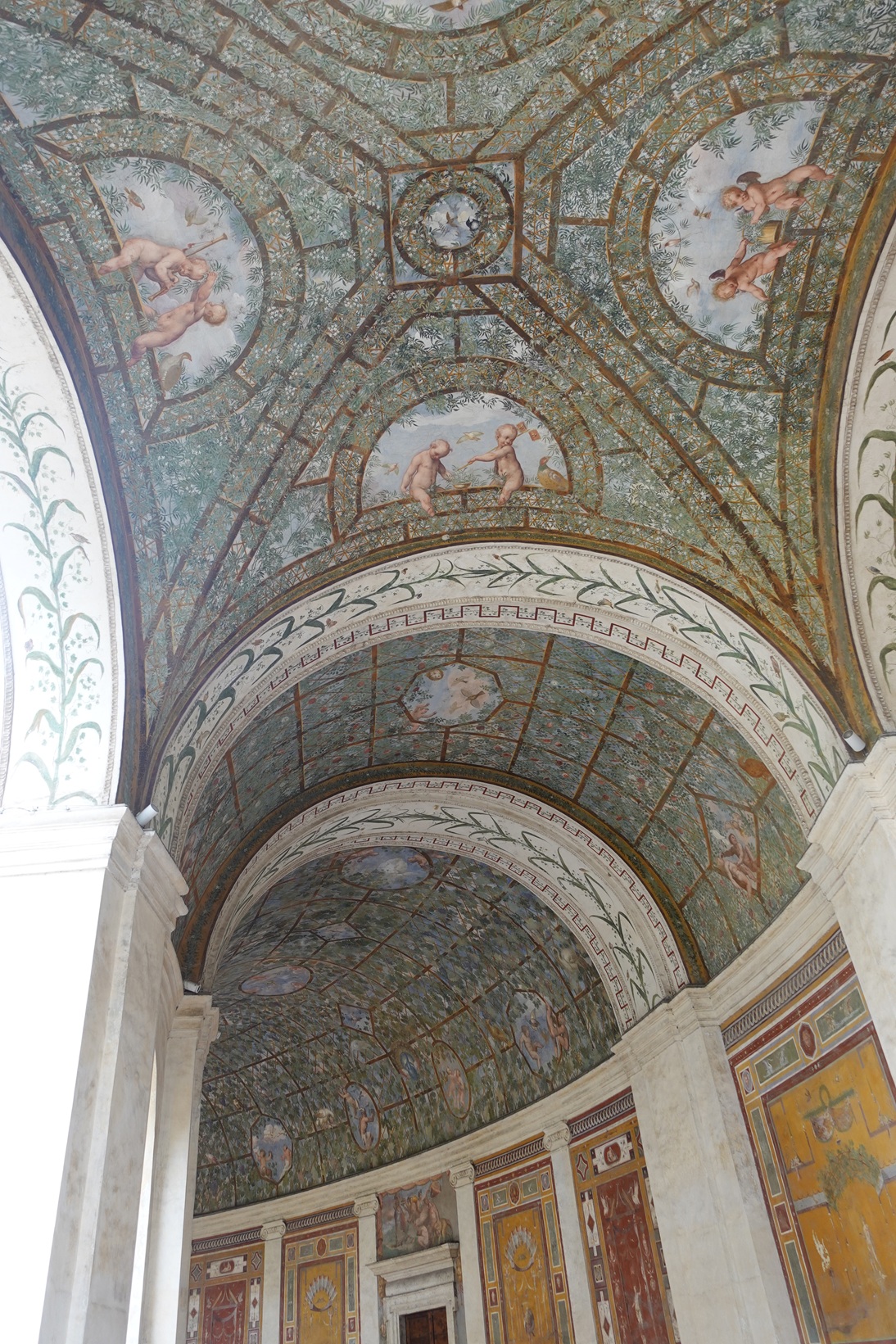
Etruscan Museum
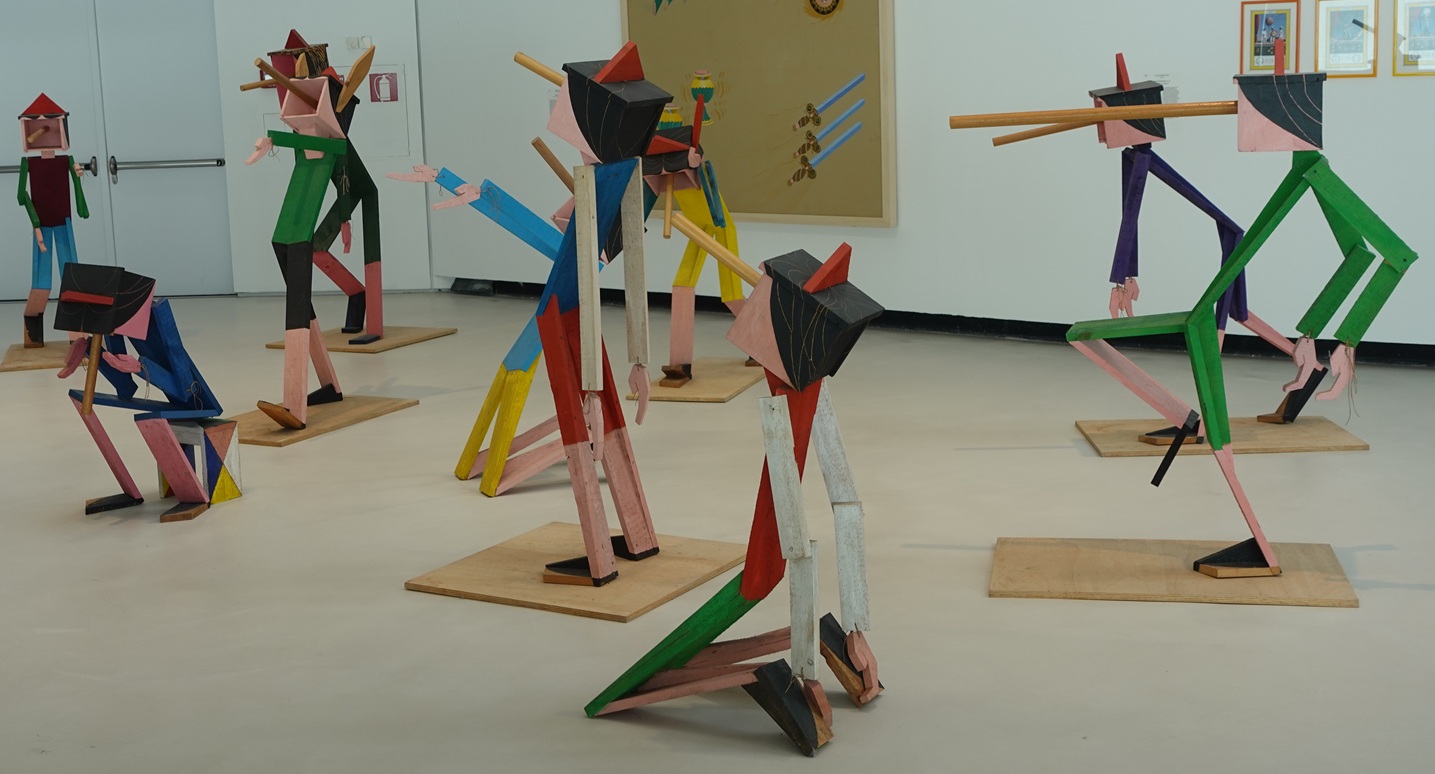
MAXXI display
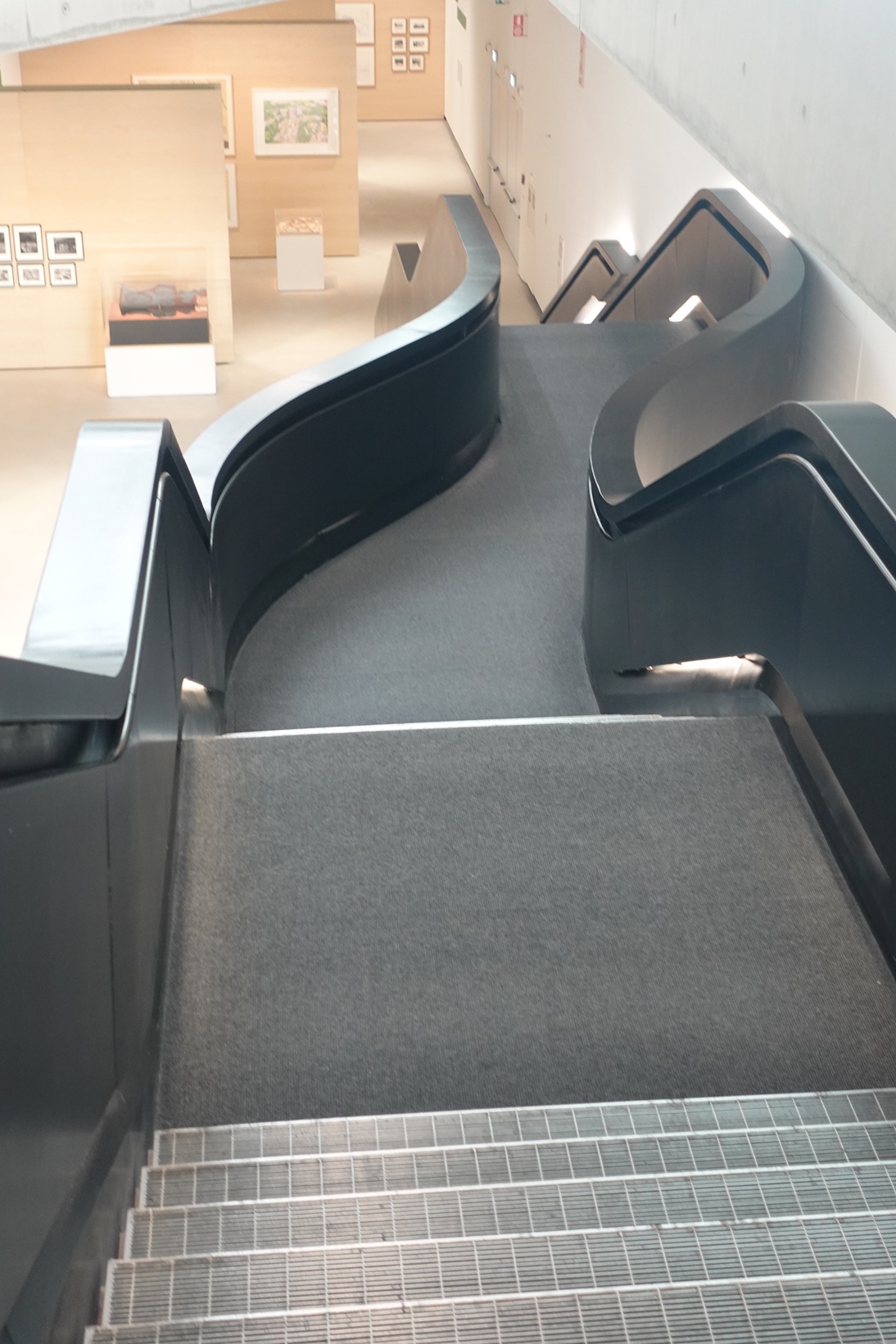
Stairwell at the MAXXI Museum.
The architect, Zaha Hadid, was born in 1950 in Iraq, and died in 2016. She was influenced by Suprematism and Russian avant-garde, and used painting as a design tool to “reinvestigate the aborted and untested experiments of Modernism, to unveil new fields of building.” “The Queen of Curves” “liberated architectural geometry, giving it a whole new expressive identity”.
Impressed for a long time, I was pleased to finally get to visit one of her works.
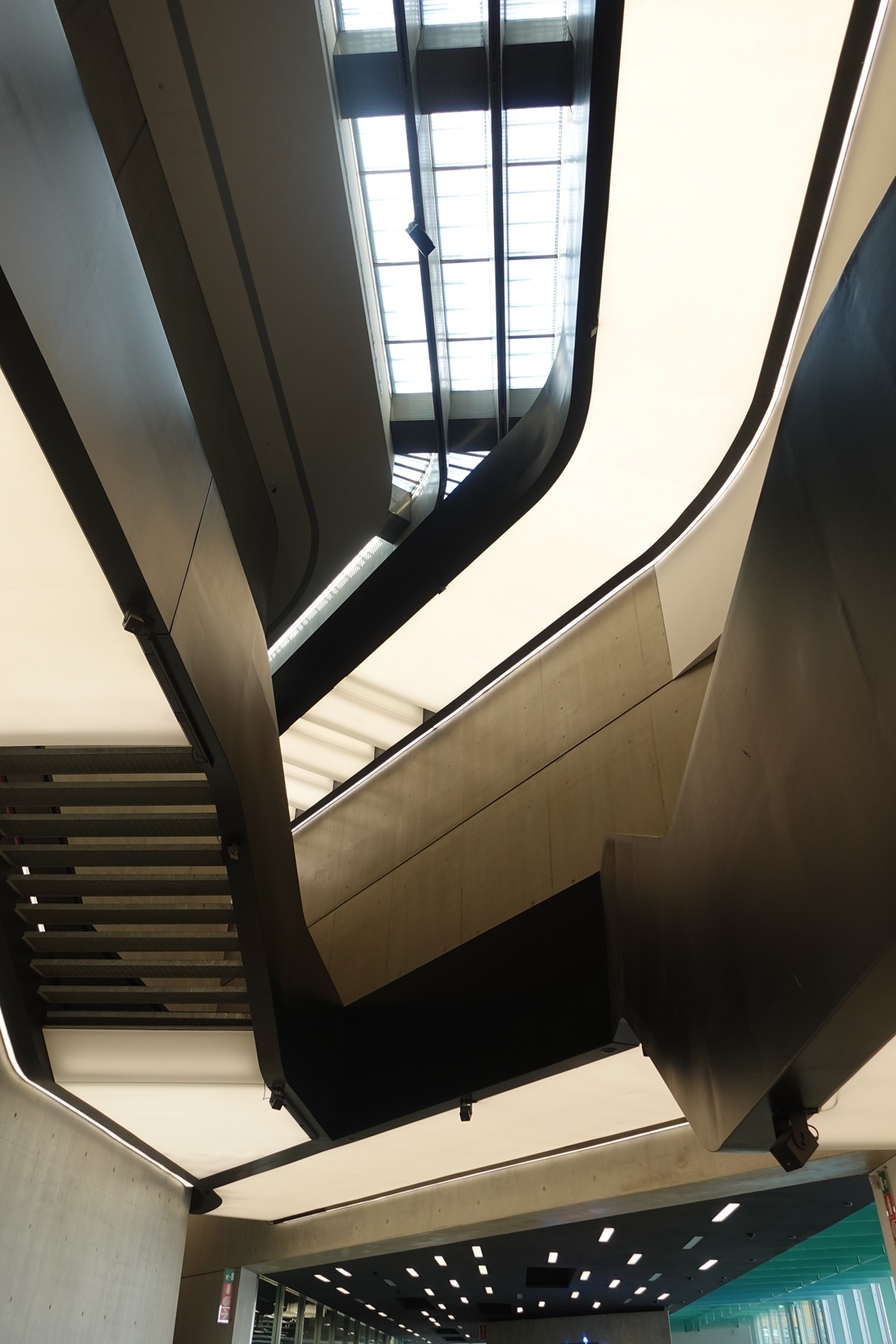
Interior of the MAXXI, by Zaha Hadid.
The museum took more than ten years to build, and opened to the public in 2010, receiving the Stirling Prize for architecture of the Royal Institute of British Architects. The Guardian considered it her best work so far.
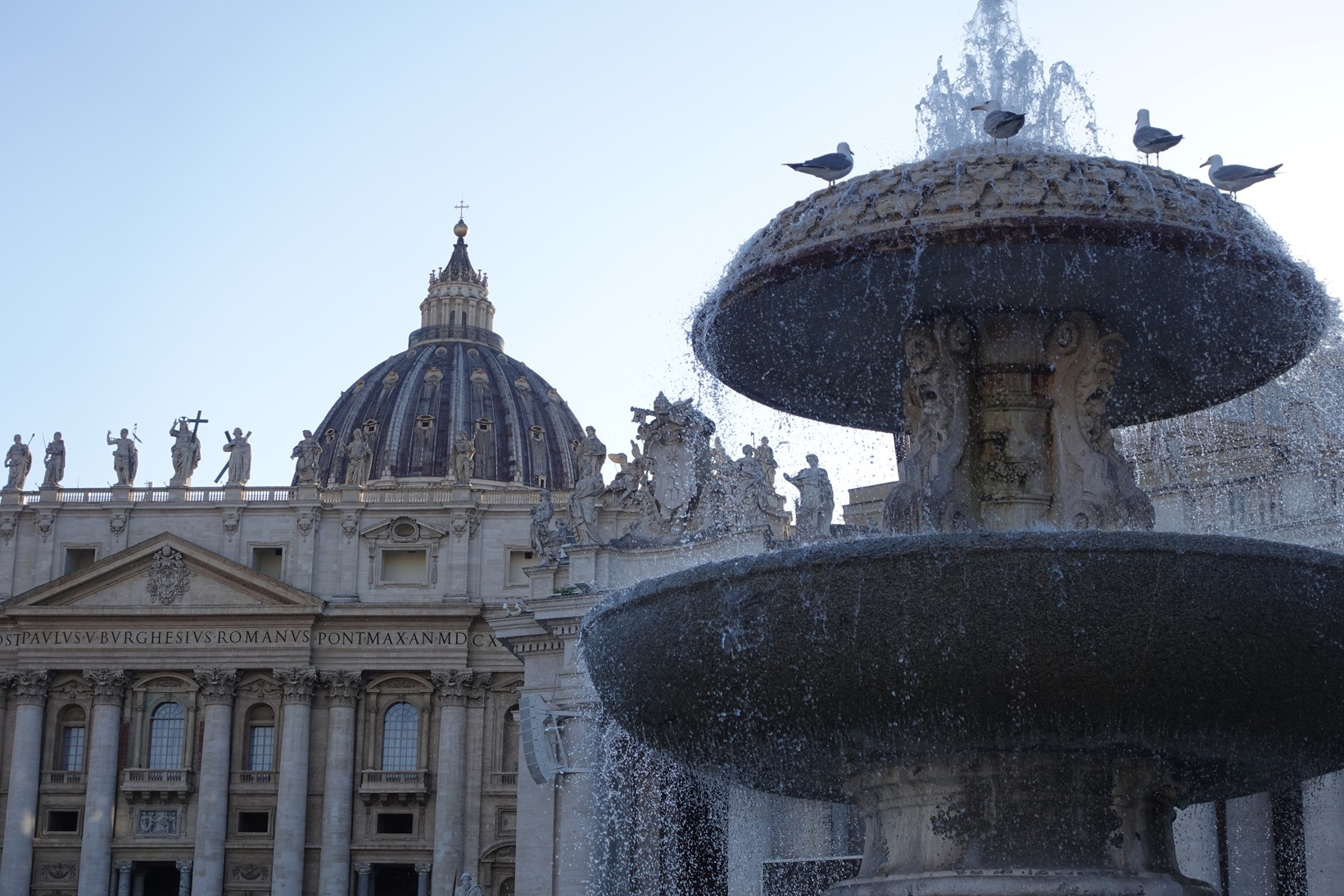
St. Peter`s birdbath
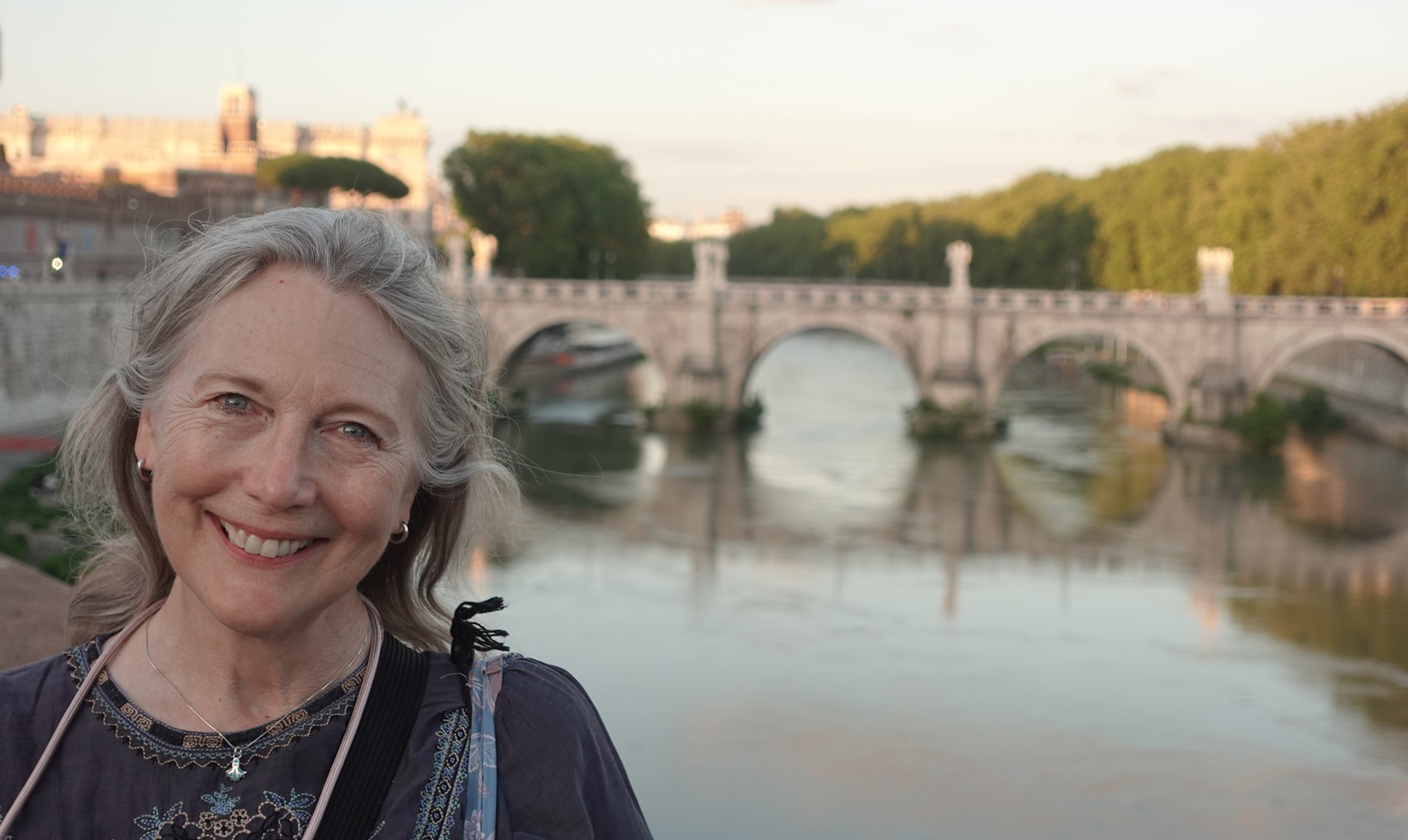
Cindy at the Tevere River
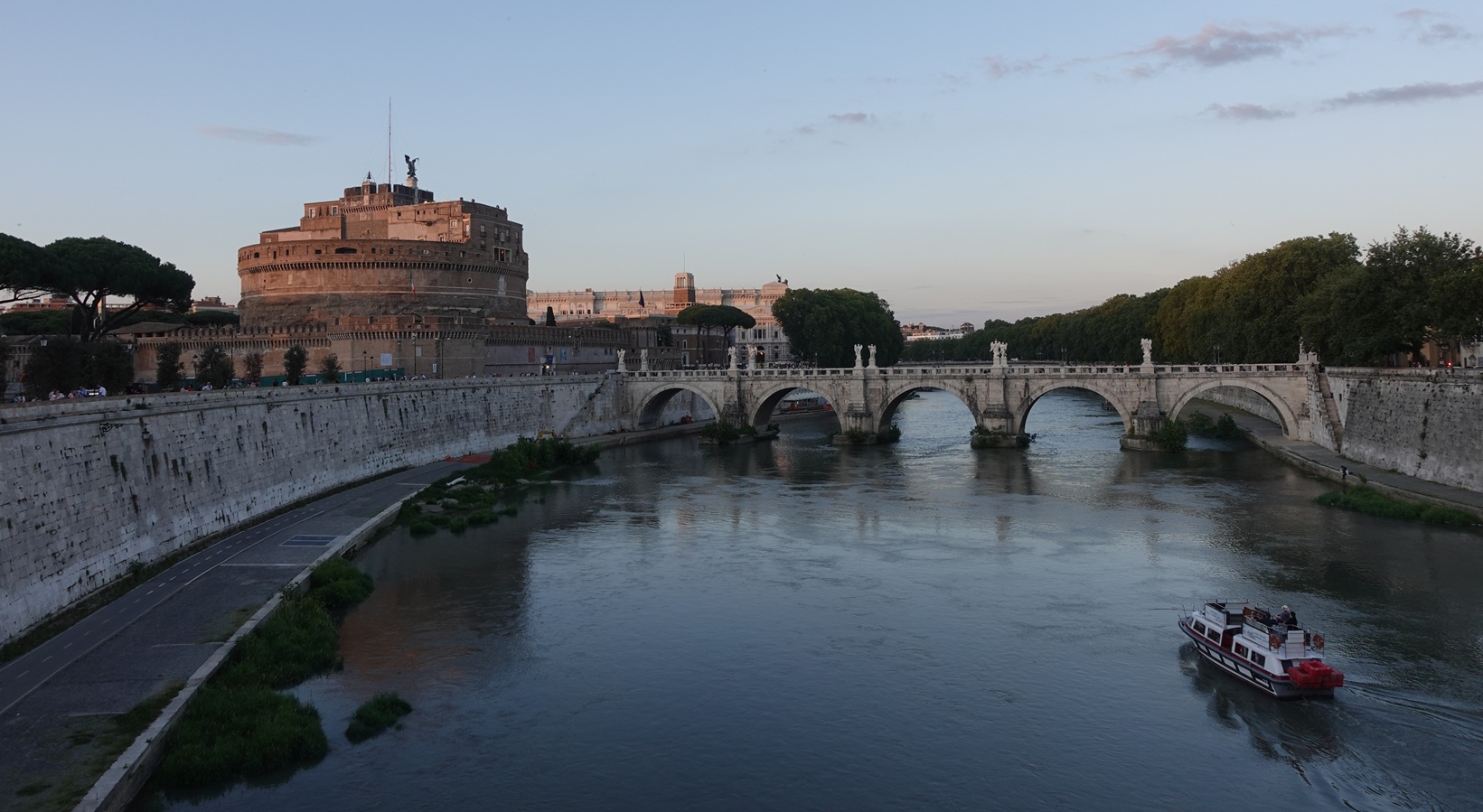
Castel Sant`Angelo, also the Mausoleum of Hadrian, dates back to Emperor Hadrian (76-138 CE, reigned as emperor from 117 till 138), and was later used by the popes as a fortress and castle dedicated to Saint Michael the Archangel.
Hadrian`s other architectual achievements are the reconstruction of the Pantheon, the vast Temple of Venus and Roma in Rome, and Hadrian`s Wall in northern England.
The fortress is connected to St Peter’s Basilica by a covered fortified corridor called the Passetto di Borgo.. This is an elevated 800-metre long corridor, built inside an old city wall, to provide the Pope with an escape route from the Vatican – used twice. It was built in 1277, with further defensive feature added. It has two levels: a patrol walkway and a lower enclosed escape passage. Pope Alexander VI used it in 1494, to escape the troops of Charles VIII. Clement VII used it during the Sack of Rome in 1527. This is when the troops of the Holy Roman Emperor, Charles V, massacred most of the Swiss Guard on the steps of the St. Peter`s Basilica.