Rome-Naples June 2026
Day 4: Sunday 07 June 2026
San Giovanni in Laterano – Pantheon – Piazza Fontana
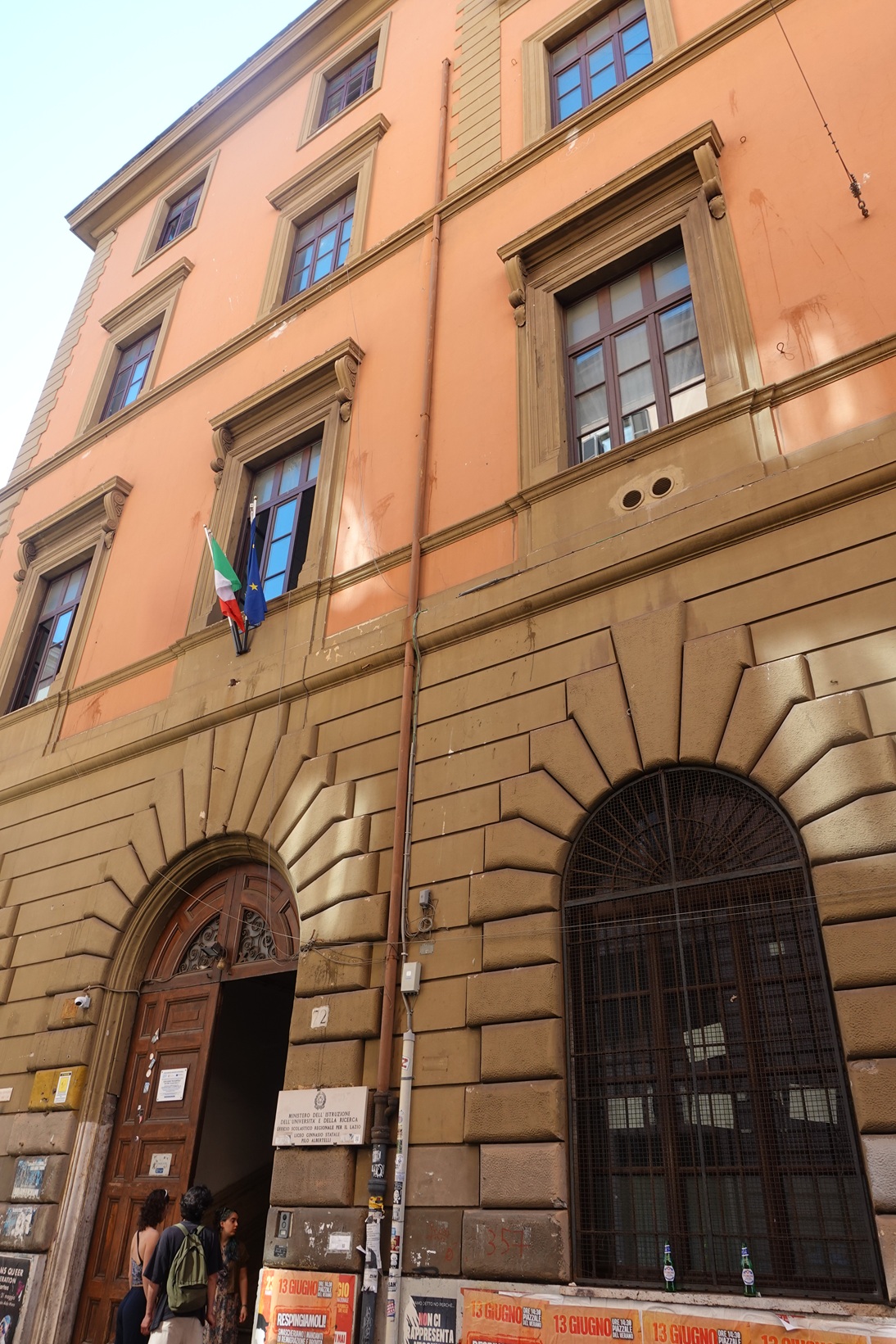
This rather drab building is where Enrico Fermi attended high school, before becoming a Nobel Prize laureate in physics in 1938.
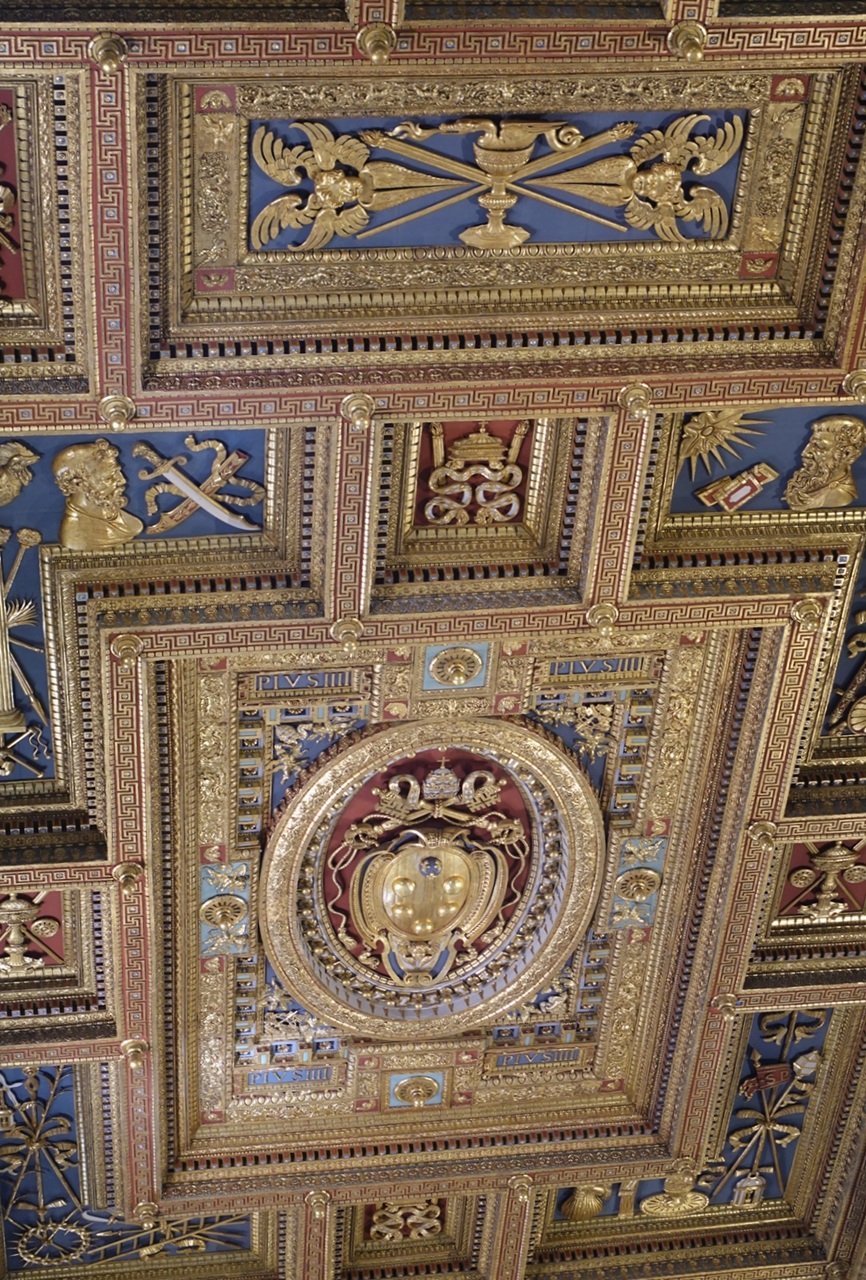
Ceiling of San Giovanni in Laterano
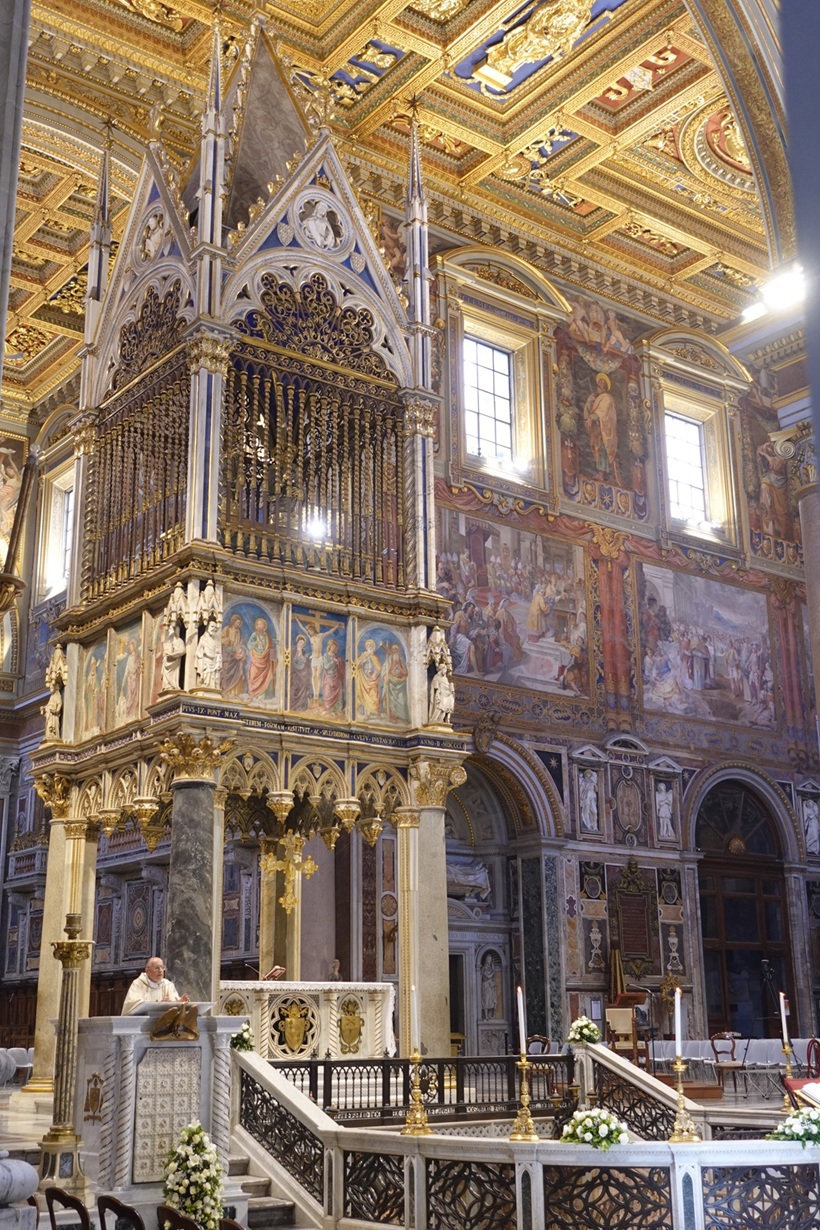
The Papal Altar with its Gothic baldacchino in San Giovanni in Laterano. The frescoes are 14th century. This is the city’s main cathedral, and the seat of the Bishop of Rome; the pope celebrates Maundy Thursday Mass here. One fresco is attributed to Giotto, from 1300. All of the popes were crowned here until 1870. The adjoining bapistry is the world’s first, whose octagonal shape became a model for others.
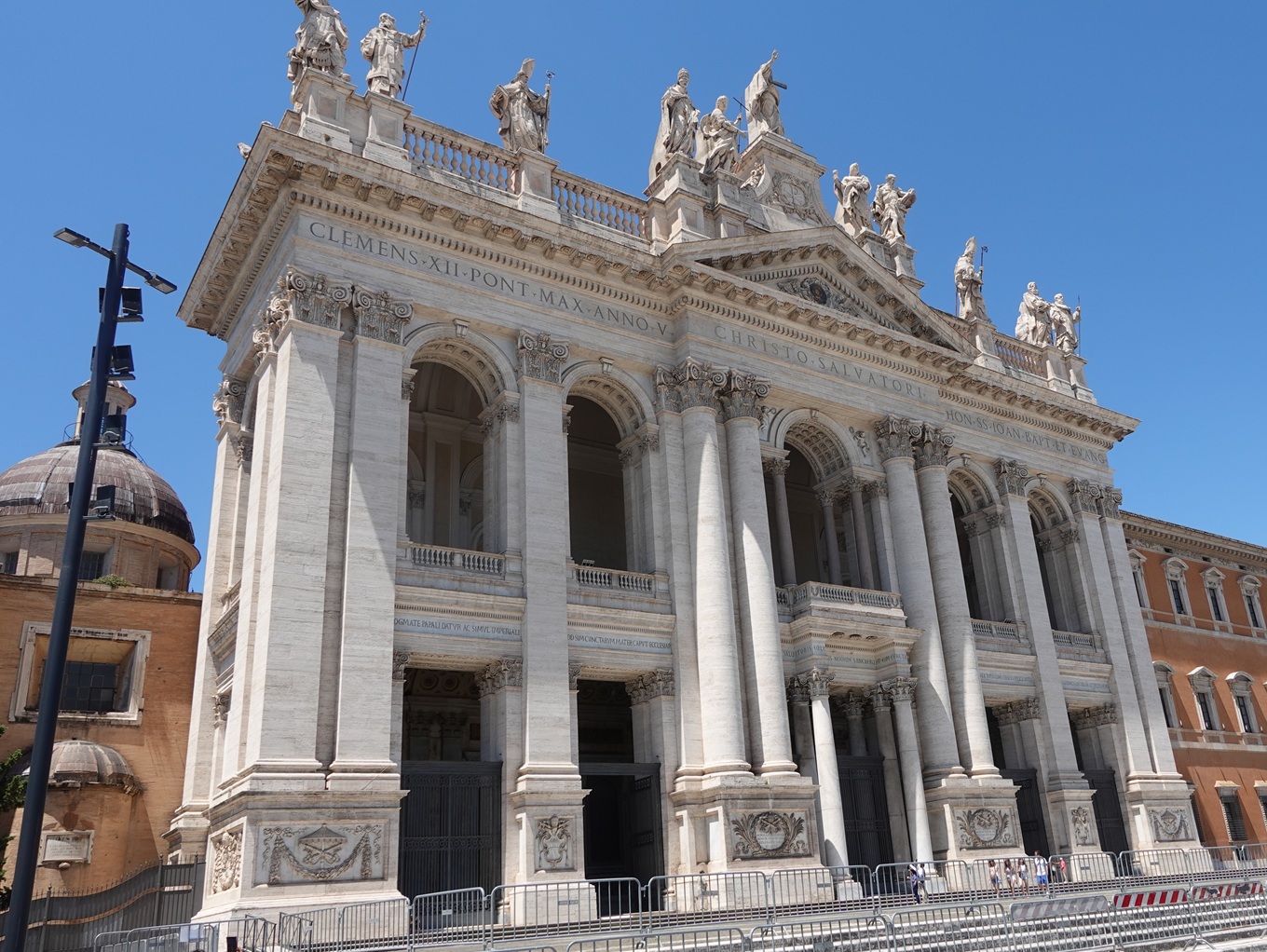
Facade of San Giovanni in Laterano, 18th century
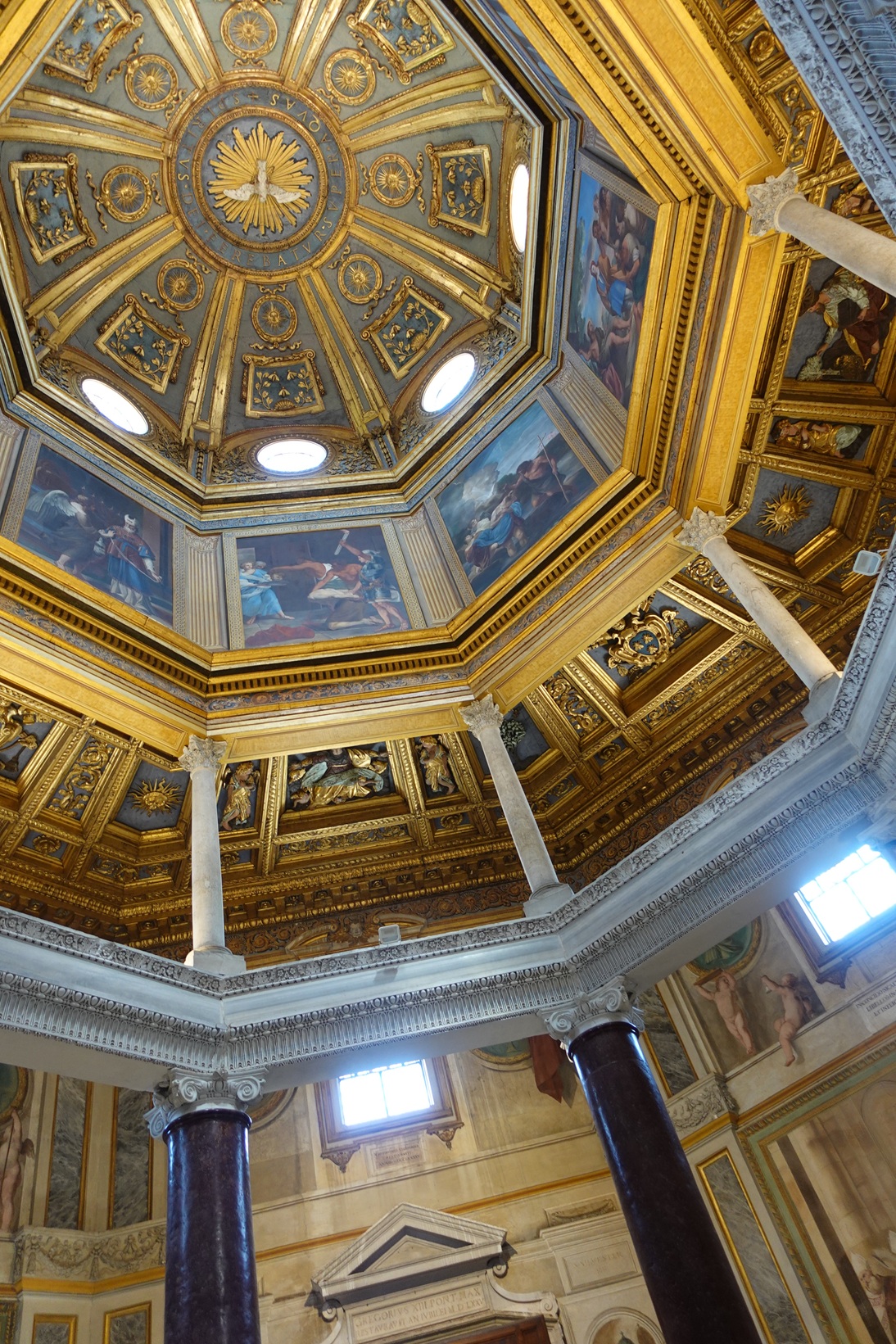
The Lateran Baptistry of San Giovanni in Fonte. for a long time it was the only baptistery in Rome, and encouraged a probably incorrect belief that Constantine the Great was baptized here. The current building was founded by Pope Sixtus III in 440, probably on an earlier structure. Its domed octagonal structure is suspended above an octagonal basin for full immersion baptisms. This was copied throughout Italy, and became an iconic motif of illuminated manuscripts, “The fountain of Life”.
The ceiling paintings tell the story of the Battle of the Milvian Bridge, 312 CE, which Constantine won, and opened his way to becoming sole emperor, the result of which was the adoptation of Christianity throughout the Roman empire.
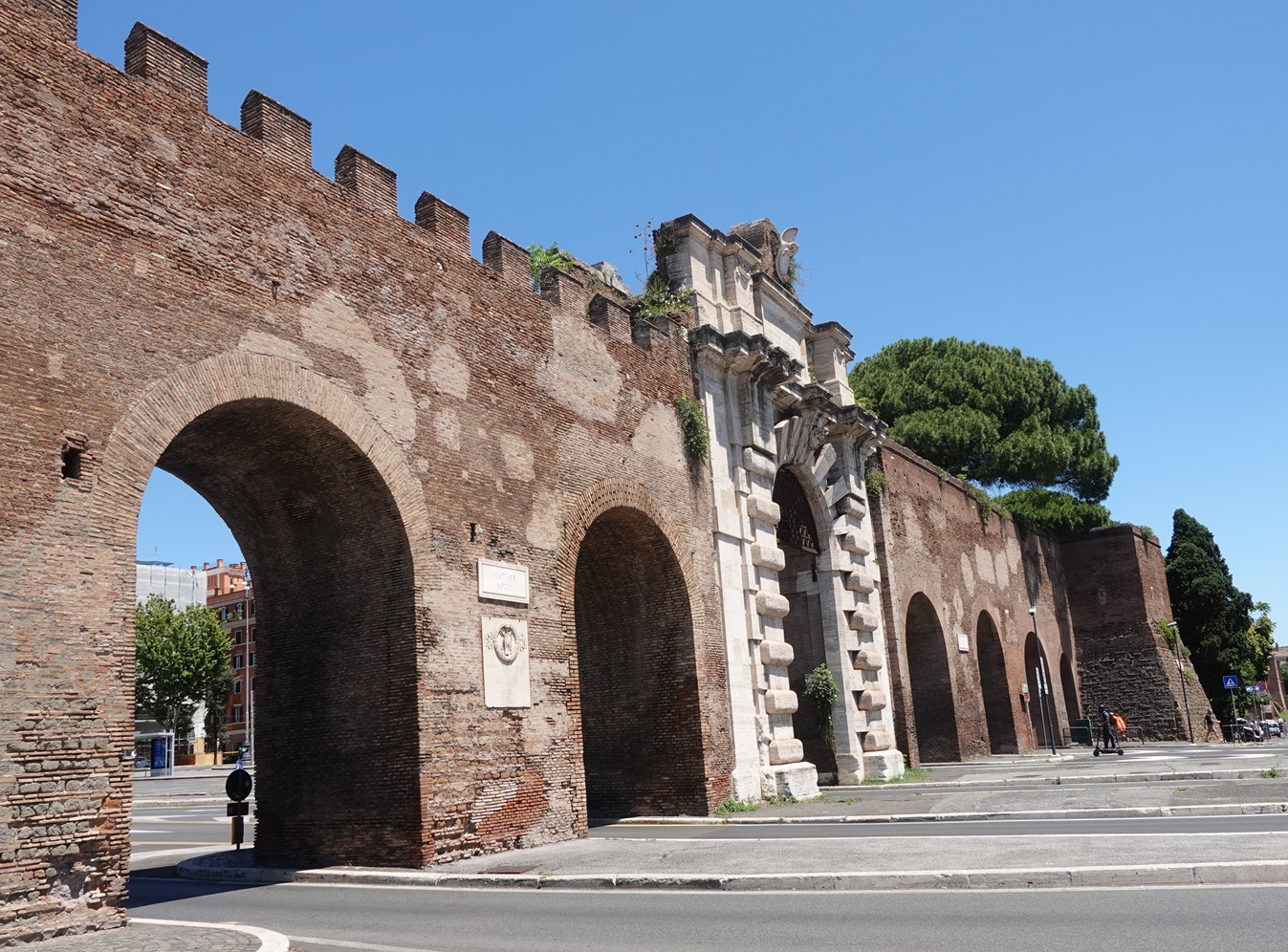
Porta Asinaria in old Aurelian Wall
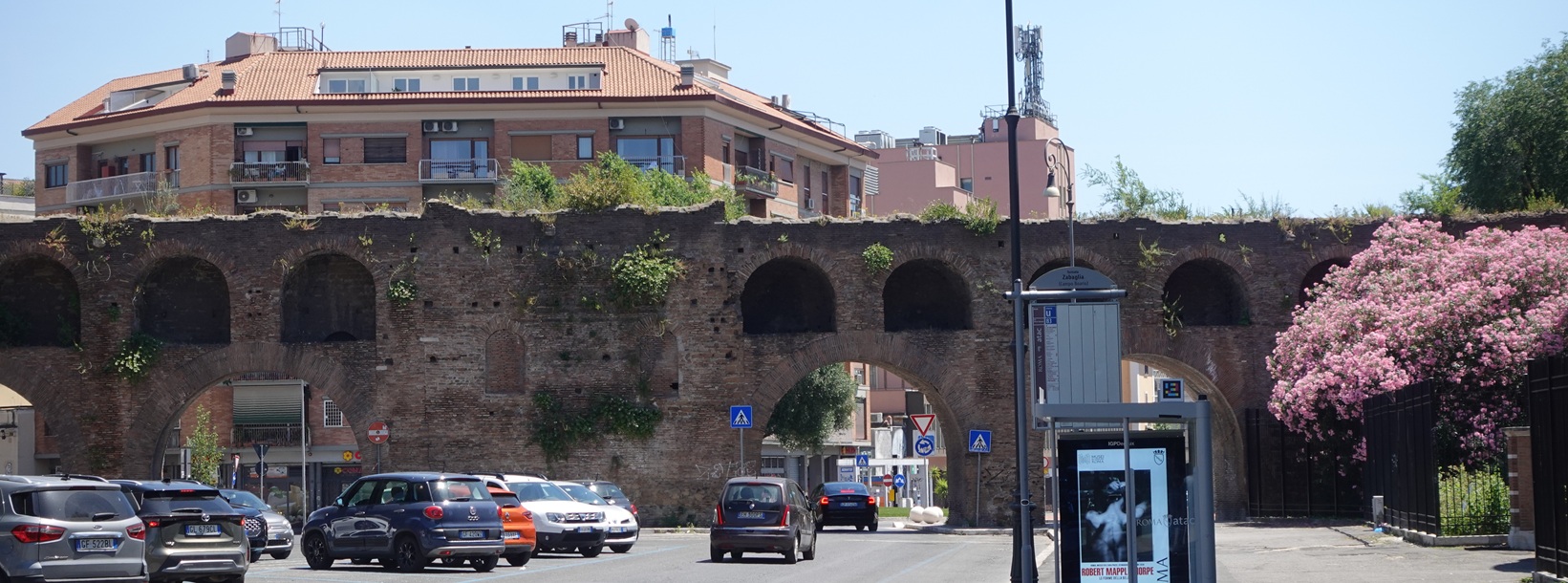
Aqueduct, showing how this 2,000-year-old structure has been worked around by many generations of Romans since its construction. This is neighbouring the Monte Testaccio amphora deposit site.
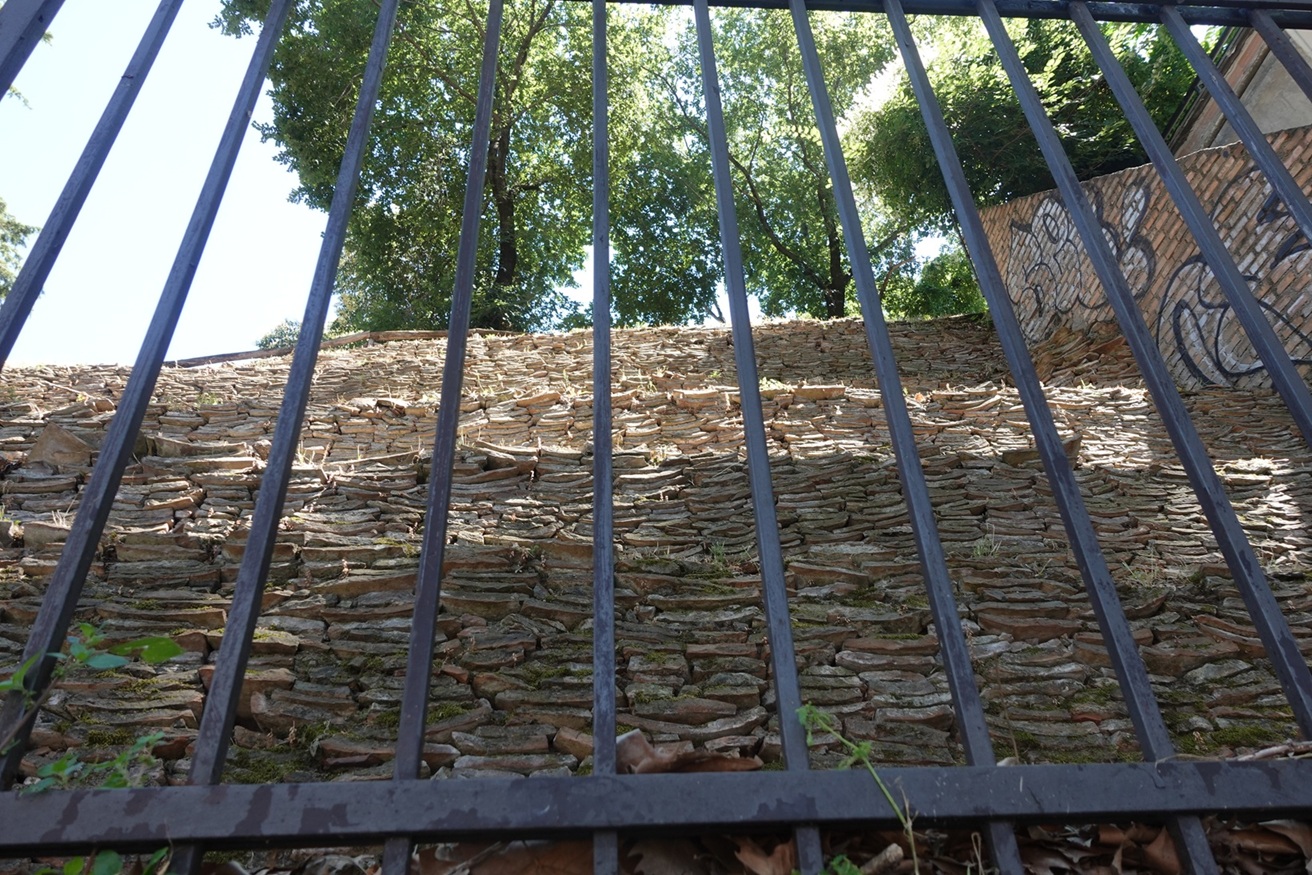
The Monte Testaccio amphora deposit site. This artificial mountain a little to the south of the city centre was created by more than a hundred years of amphora being dumped on it. Amphoras are made of clay, and once they have served their single-use purpose of transporting olive oil or fish, they were un-reusable.
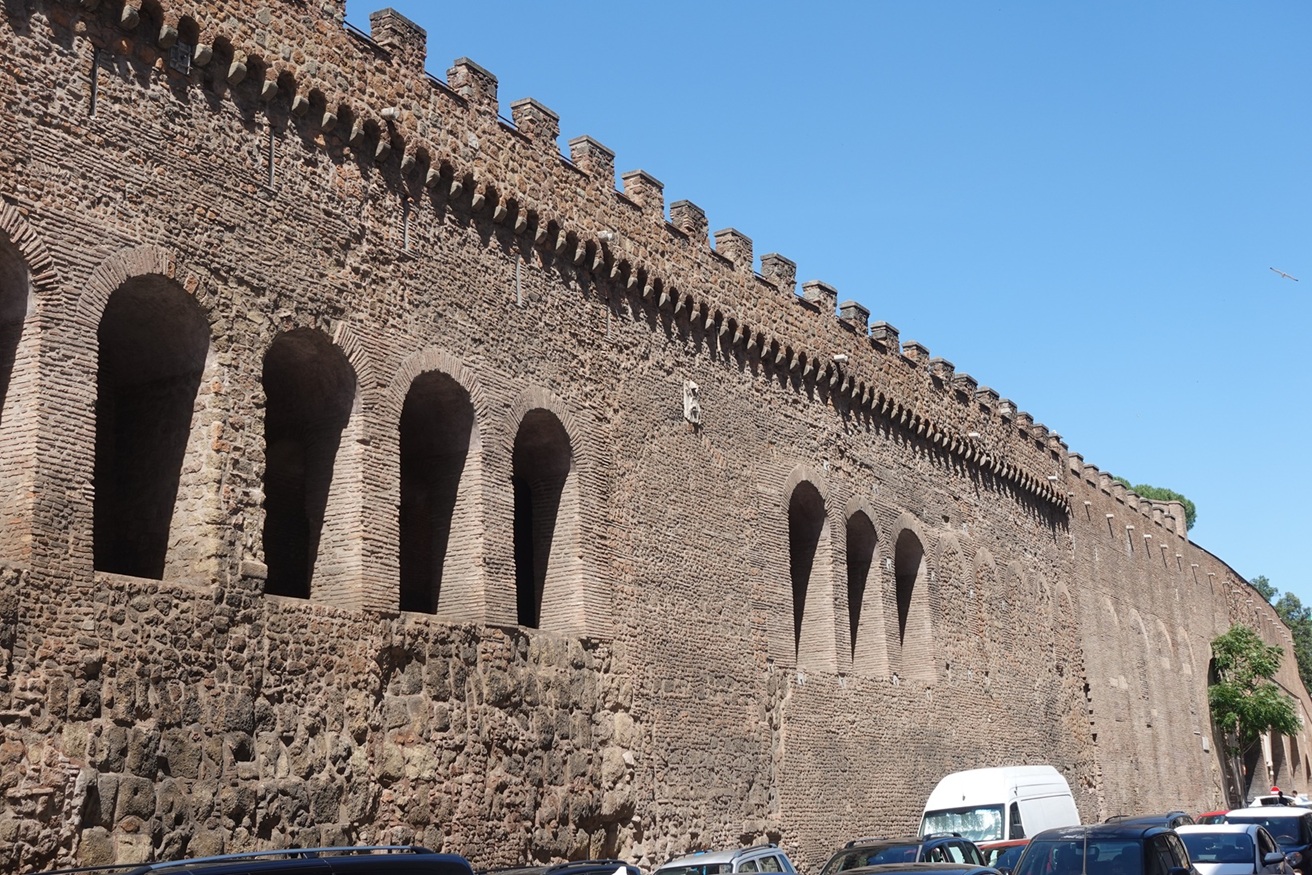
The Passaggio between the Vatican and Castello Sant`Angelo. 800m long, built in 1277, as an escape route for the pope.
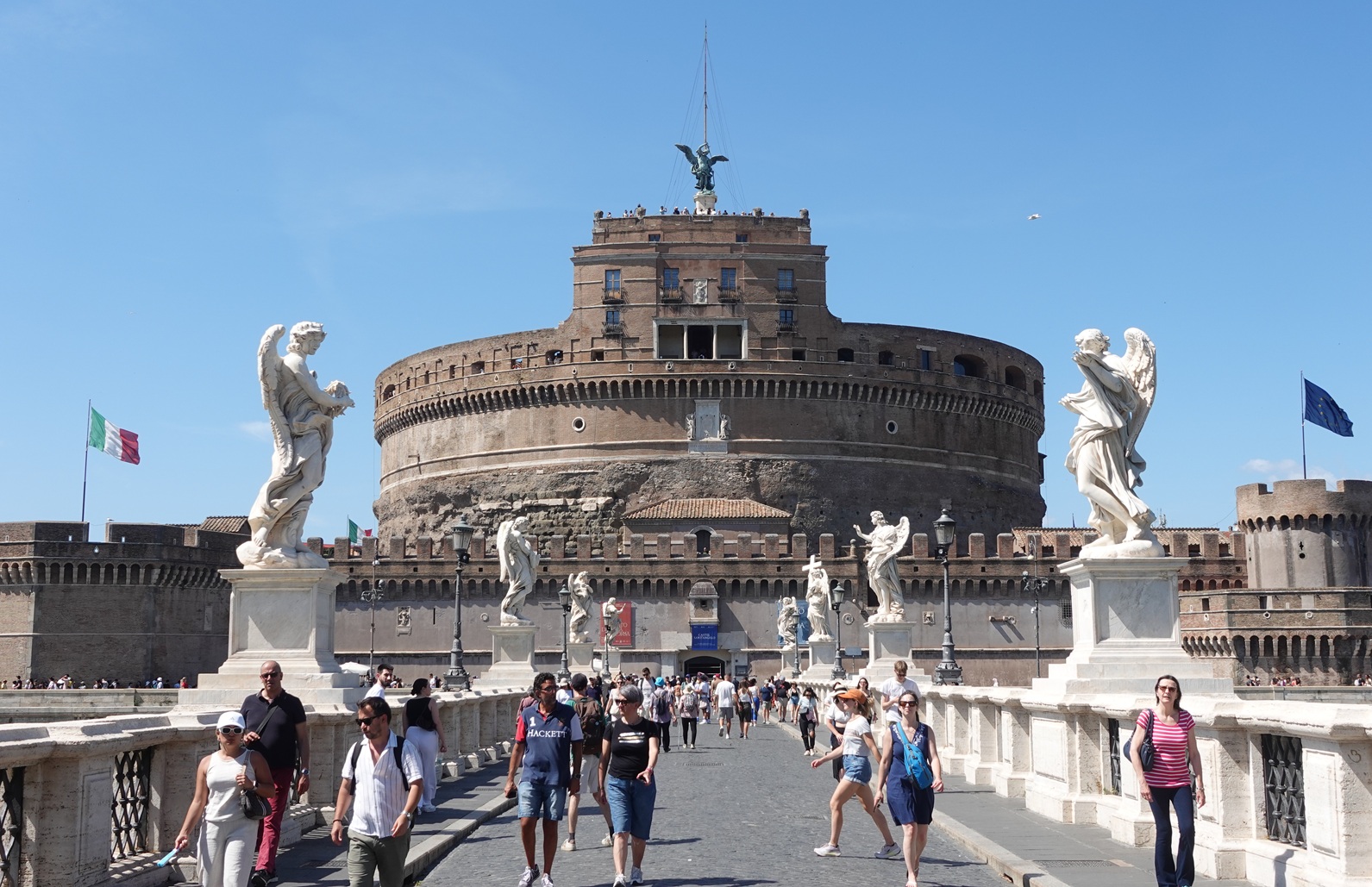
Castel Sant`Angelo and Ponte S. Angelo.
The Ponte Sant’Angelo was originally the Aelian Bridge (Pons Aelius). It was completed in 134 CE to span the Tiber (Tevere), connecting the city centre, where its creator, Emperor Hadrian, placed his mausoleum, and Castel Sant’Angelo. The bridge is faced with tavertine marble. Three of the five arches are original to the Roman era. It is 135m long.
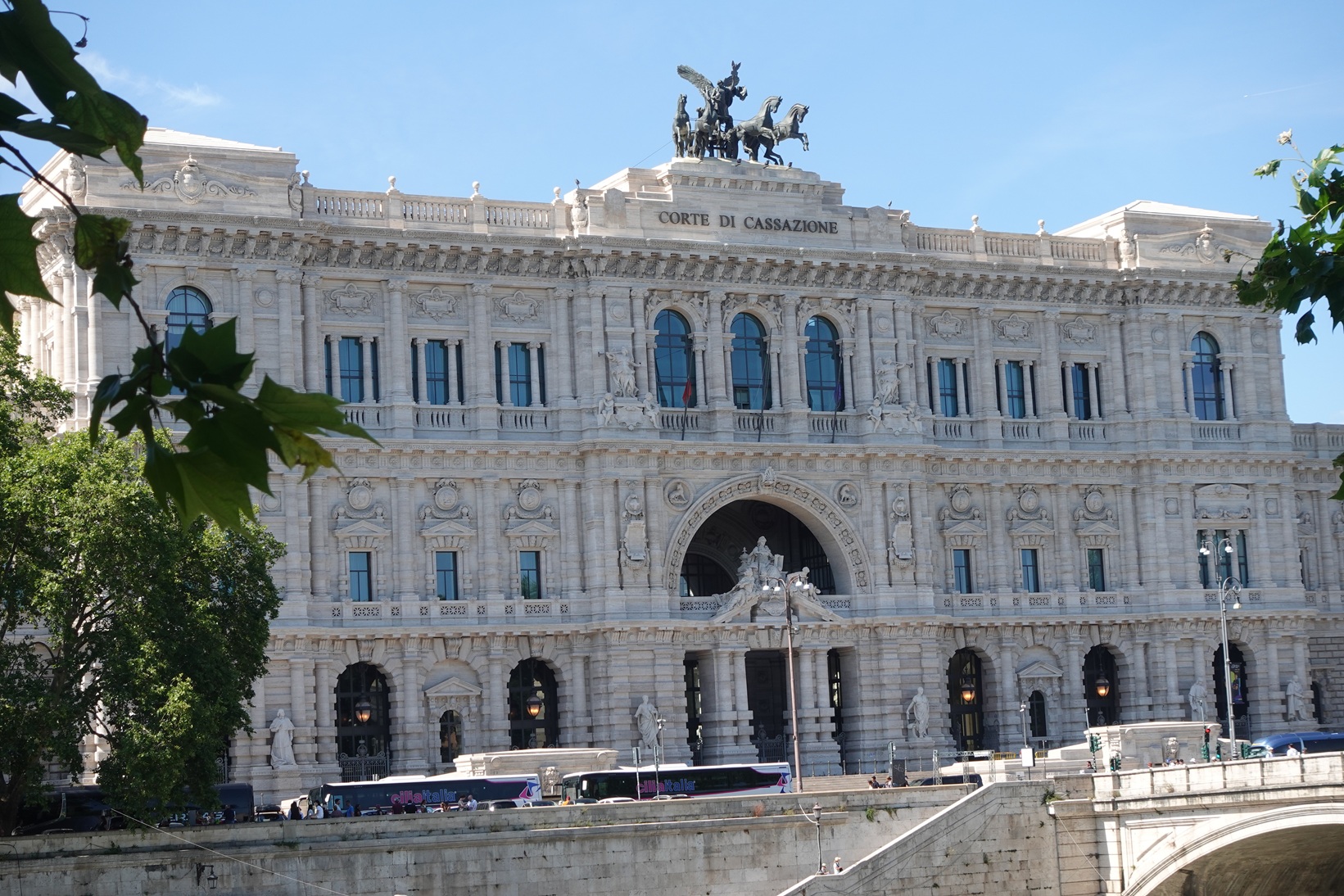
Palazzo di Giustizia, the rather sumptuous national law courts building, near Castel San`Angelo. Built between 1889 and 1910 by architect Guglielmo Calderini.
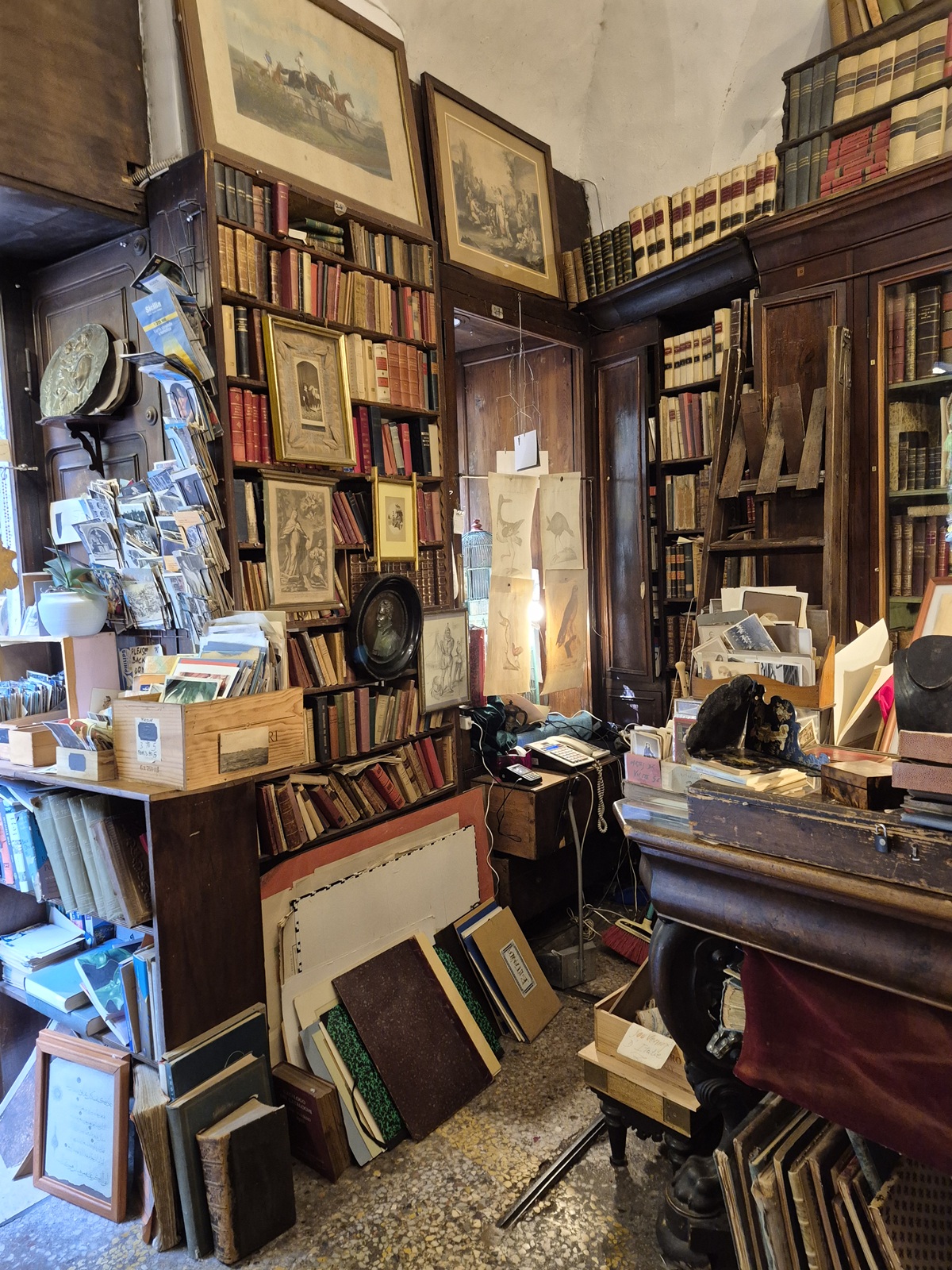
A bookshop kept us intrigued.
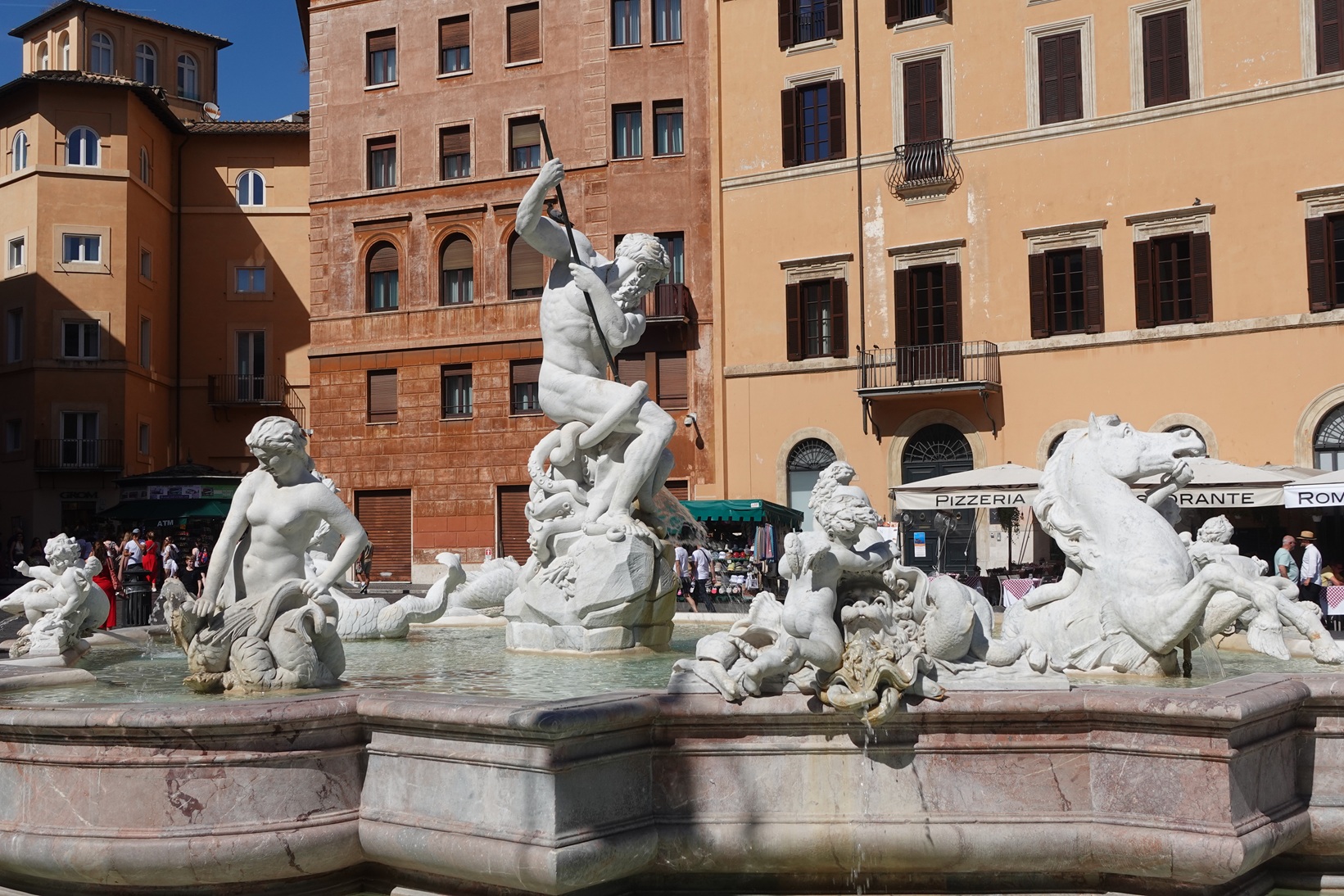
Fontana del Moro in PIazza Navona, remodelled in 1653 by Bernini, who designed the central sea god.
Gianlorenzo Bernini, 1598 (Naples) – 1680 (Rome), is one of the best-known Baroque artists. In fact, so strong is his influence he is often credited with creating the Baroque style of sculpture. The breadth of his work covers secular buildings, churches, chapels and public squares. Some of his works combine architecture and sculpture. The art historian Irving Lavin described his ability to synthesize sculpture, painting, and architecture into a coherent conceptual and visual whole as the “unity of the visual arts”.
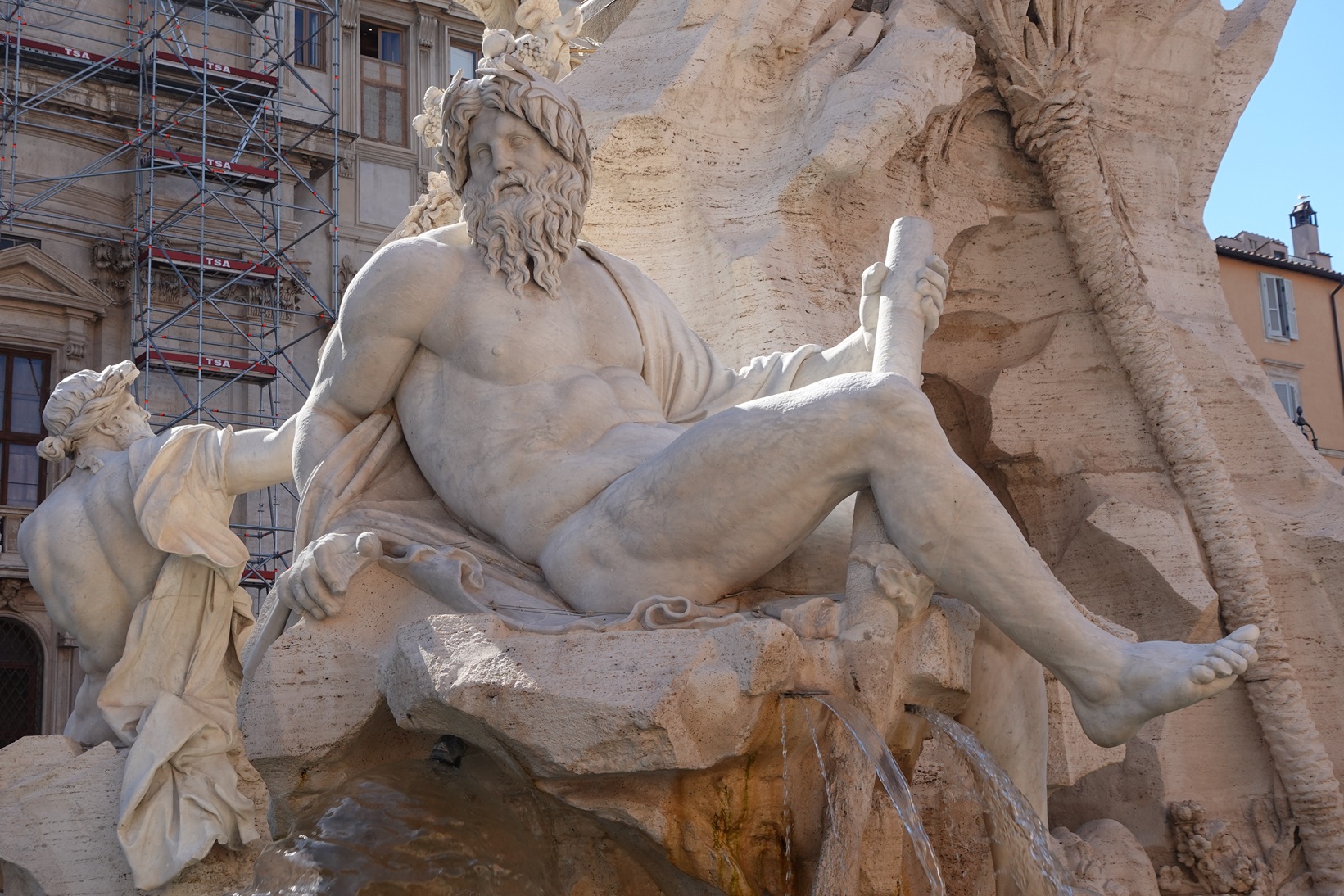
Fontana dei Quattro Fiumi, the Fountain of the Four rivers, in Piazza Navona, 1651, by Gianlorenzo Bernini.
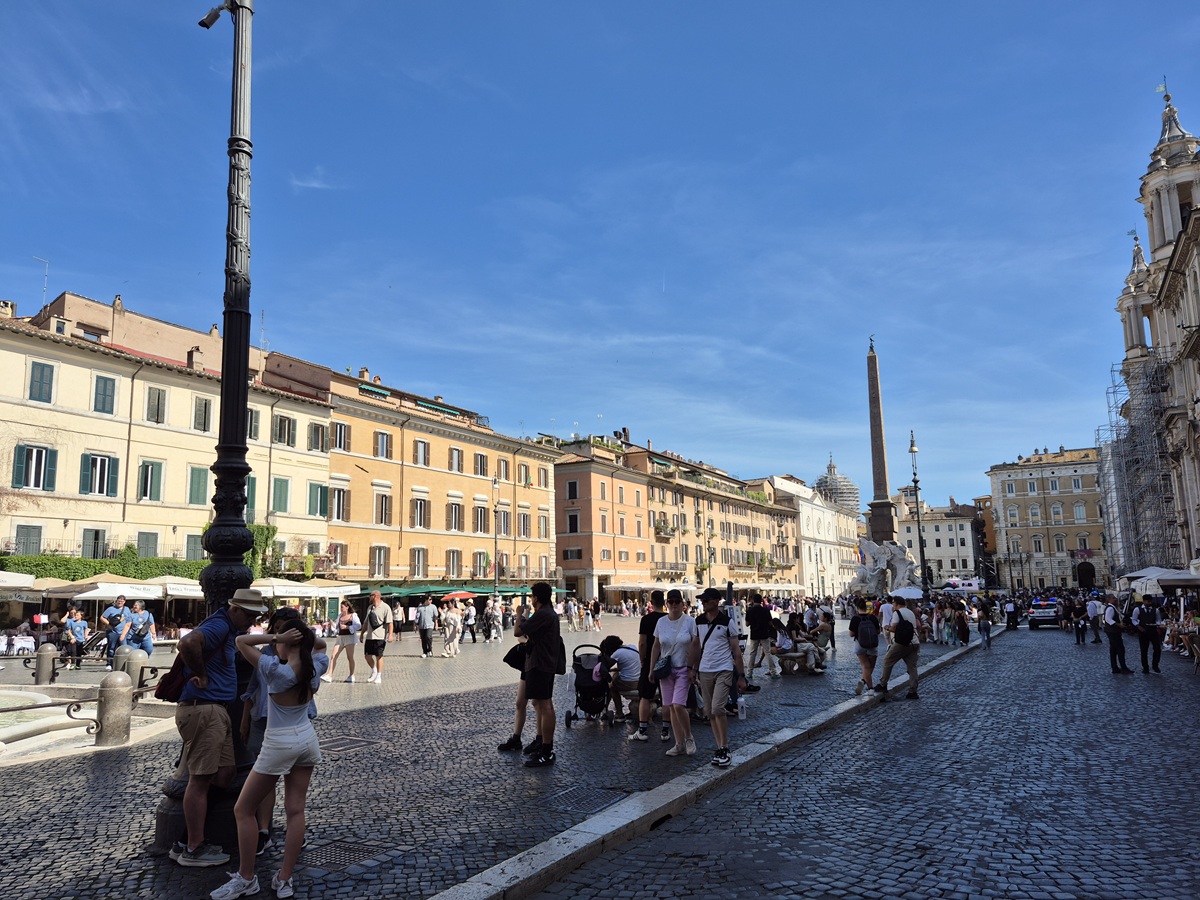
Piazza Navona. This square retains the elongaged oval shape of the 1st century CE Stadium of Domitian. The spectacles known as agones were held in the Cicus Agonalis (competition arena). In the 17th century it became a showcase for buildings and sculptures of the Baroque design, boasting works by Bernini and Borromini.
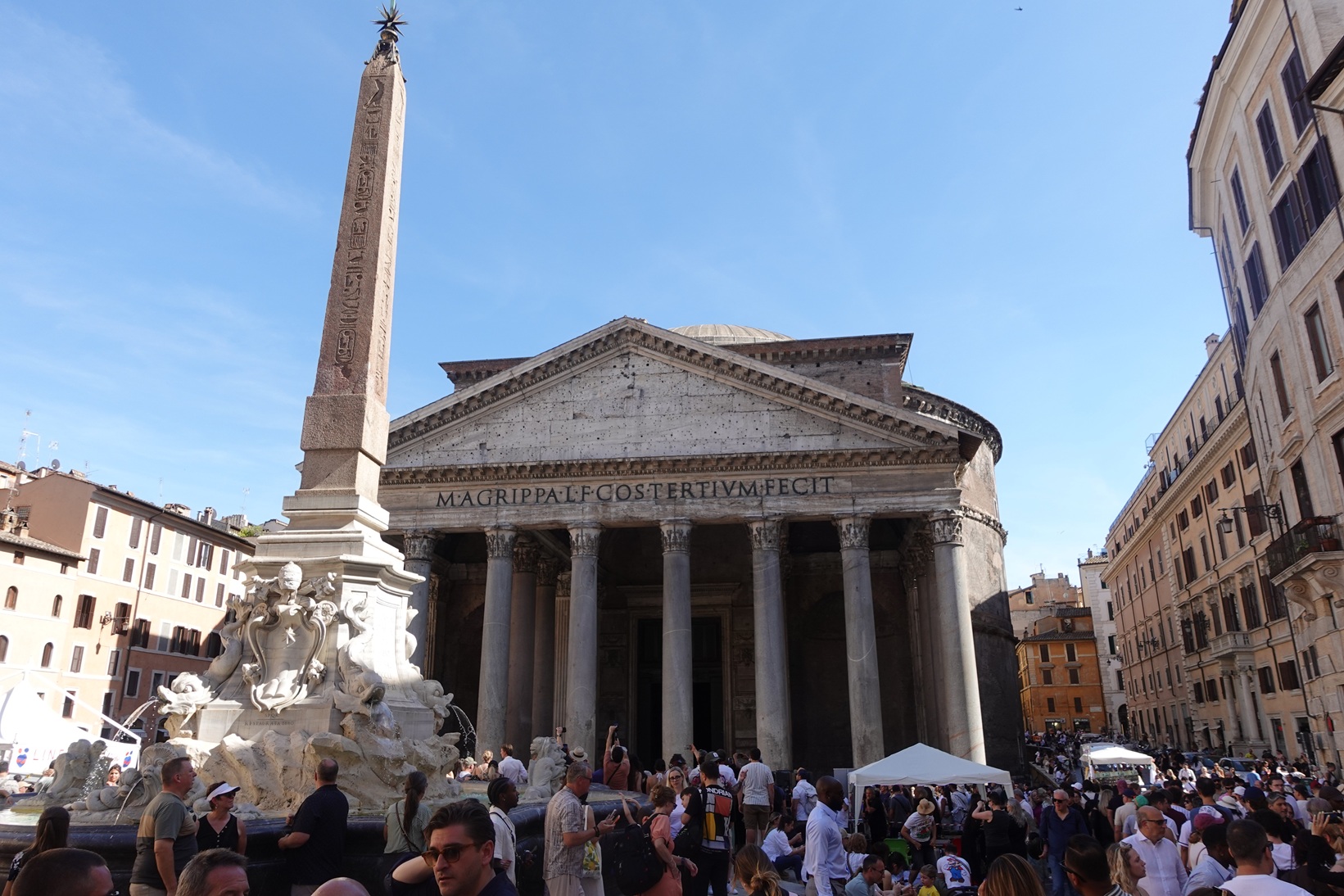
Pantheon. Quite a party atmosphere this hot Sunday afternoon.
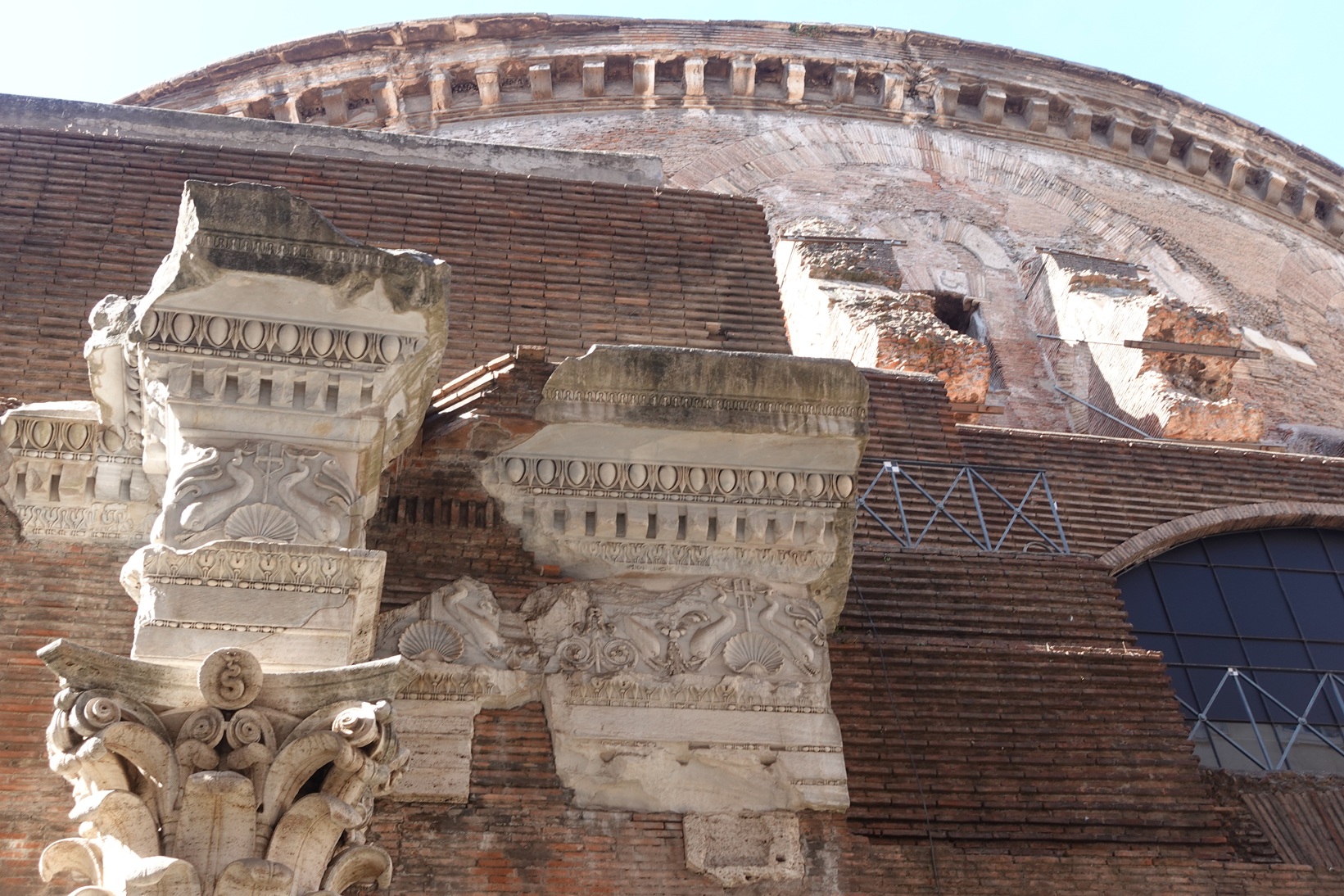
Rear of the Pantheon
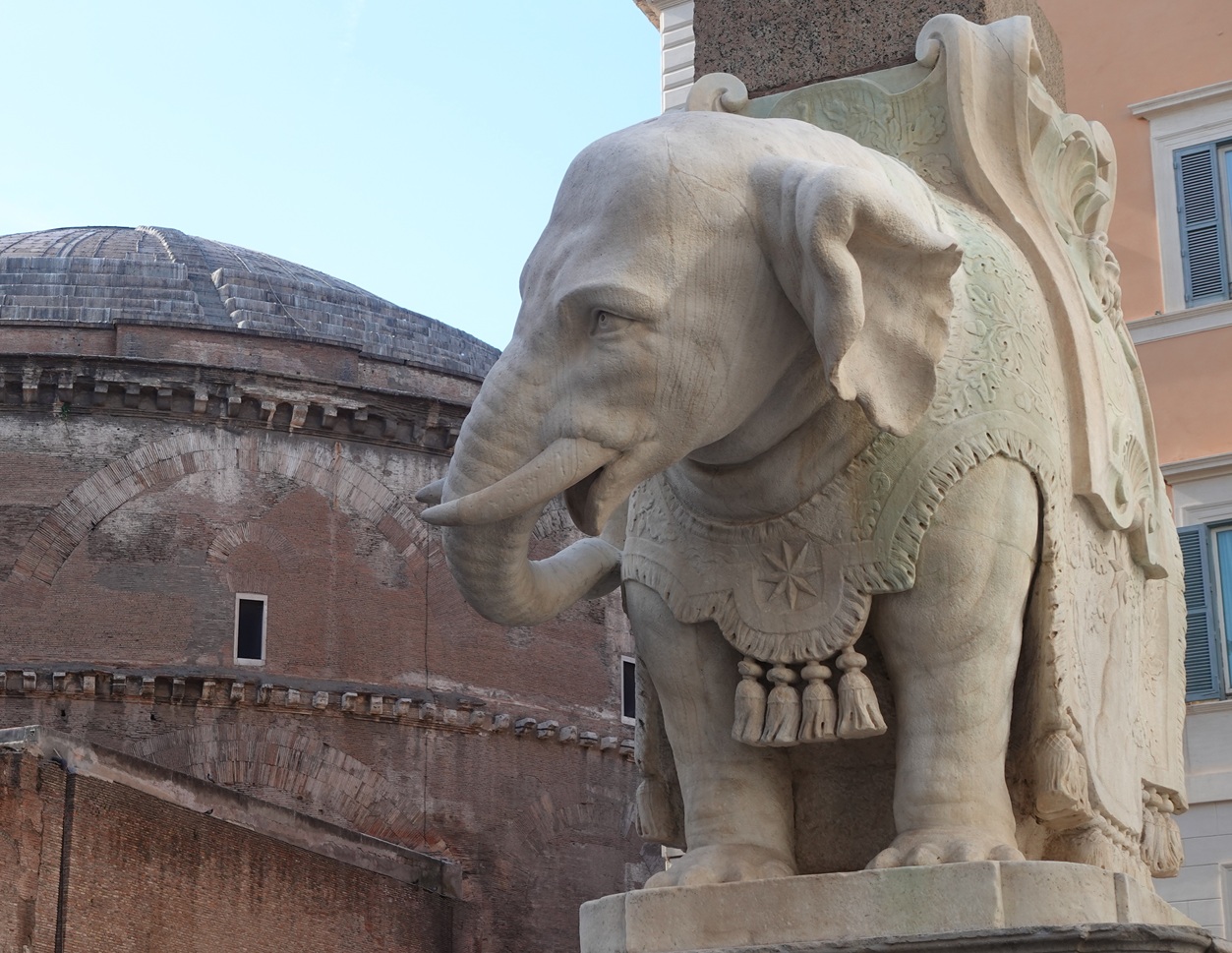
Elephant statue with Pantheon in the background. Legend has it that Bernini set the statue with its rear end towards the Dominican inquisition headquarters, where they had persecuted Galileo for telling the truth.
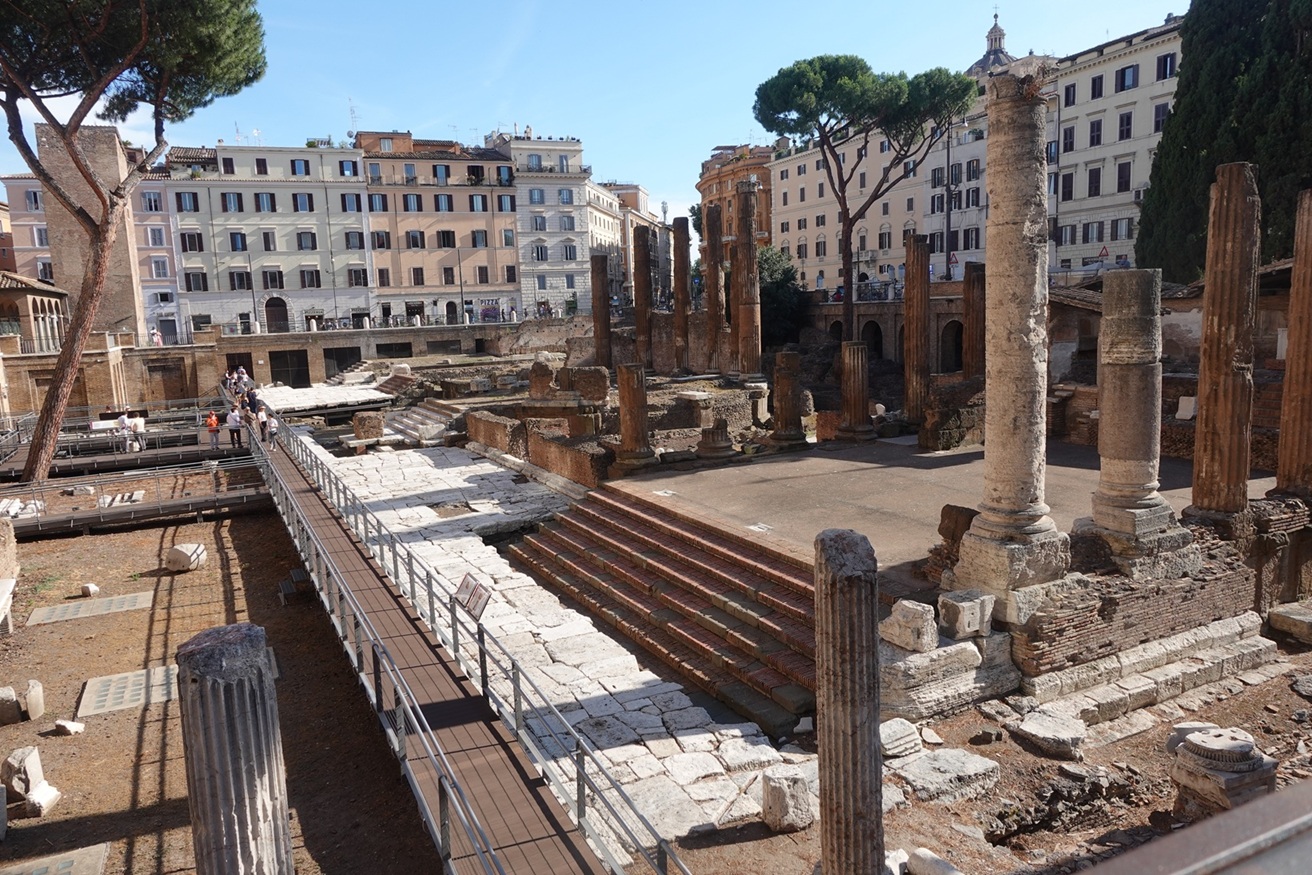
Ruins at the Area Sacra di Largo Argentina