Rome-Naples June 2026
Day 6: Tuesday 09 June 2026
Museo Palazzo Altemps – Terme di Caracalla
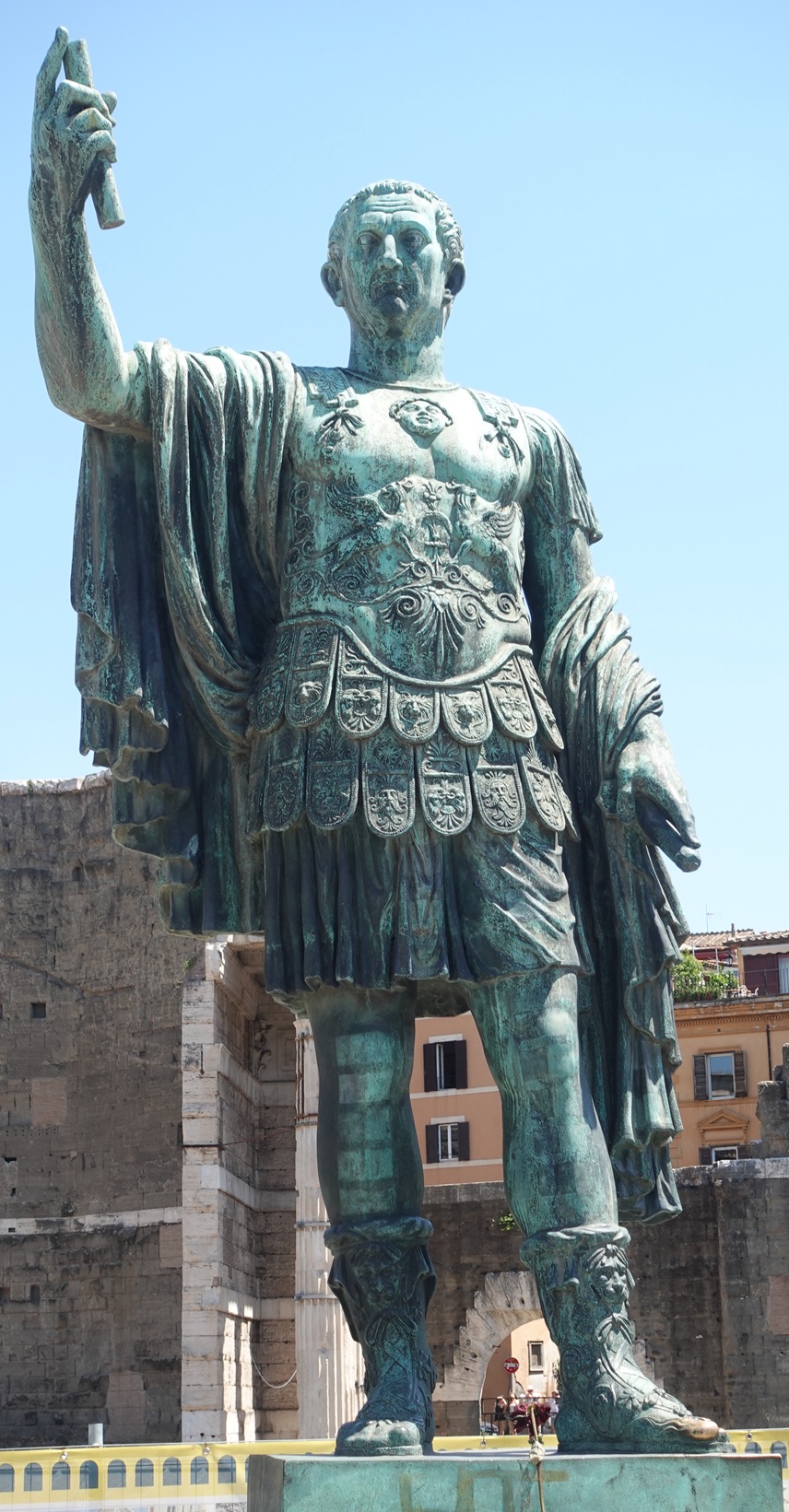
Statue of Trajan (I think….)
Built by Augustus (emperor from 27 BCE till CE 14), the Foro di Augusto and its temple to Mars Ultor (the avenger) was inaugurated in 2 BCE. By creating the temple, expressed as a desire of Caesar in his will 40 years previously, Augustus was linking himself to his famous adopted father.
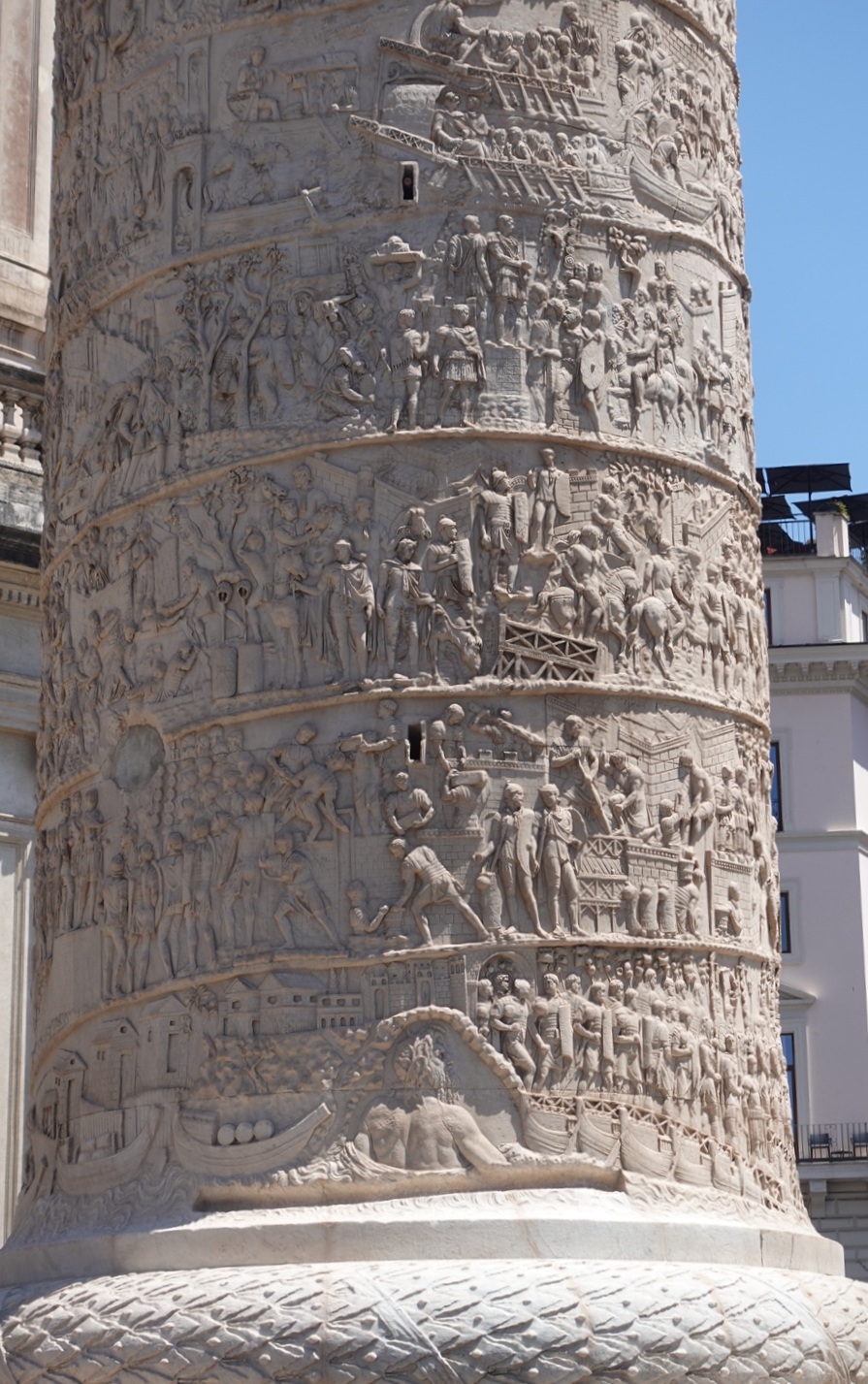
Closeup of Trajan’s column (Colonna traianna). Trajan (Marcus Ulpius Traianus, 53 CE – 117 CE, emperor 98 – 117 CE) is the second of the so-called five good emperors of the Nerva-Antonine dynasty. Under his rule, the empire experienced the greatest military expansion, and at his death, the empire had reached its zenith.
The Five Good Emperors are: Nerva, Trajan, Hadrian, Antoninus Pius, and Marcus Aurelius, who reigned from 96 AD to 180.
Trajan’s Column commemorates his victory in the Dacian Wars (101-102, 105-106, modern day Transylvania (Romania)). It was completed in 113 CE. It is 30m tall on a 5m pedestal. Each of the 20 large Carrara marble drums comprising the shaft weighs 32 tons. The column’s diameter is 3.7. The frieze that winds its spiral way around the column is 190 metres in length. Inside there is a staircase with 185 steps, leading to a viewing platform. The original statue of Trajan disappeared in the middle ages, to be replaced in 1587 with the statue of Saint Peter which we see today.
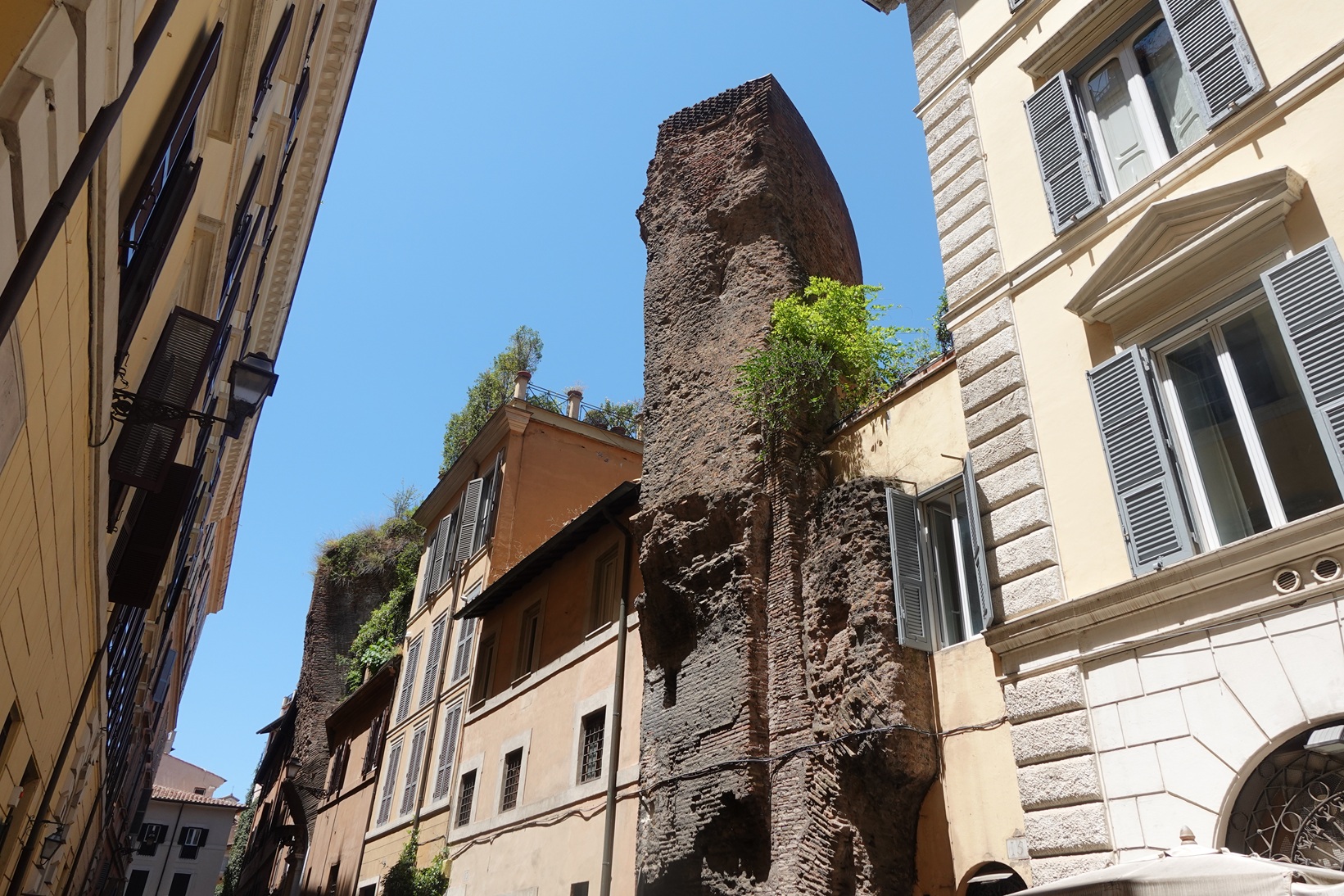
Right through the streets of Rome, one comes across preserved sections of the ancient defensive walls. This piece of the oldest, the Servian Wall (early 4th century BCE), has been well integrated with the buildings in the Centro Storico, near Piazza Navona and the Pantheon.
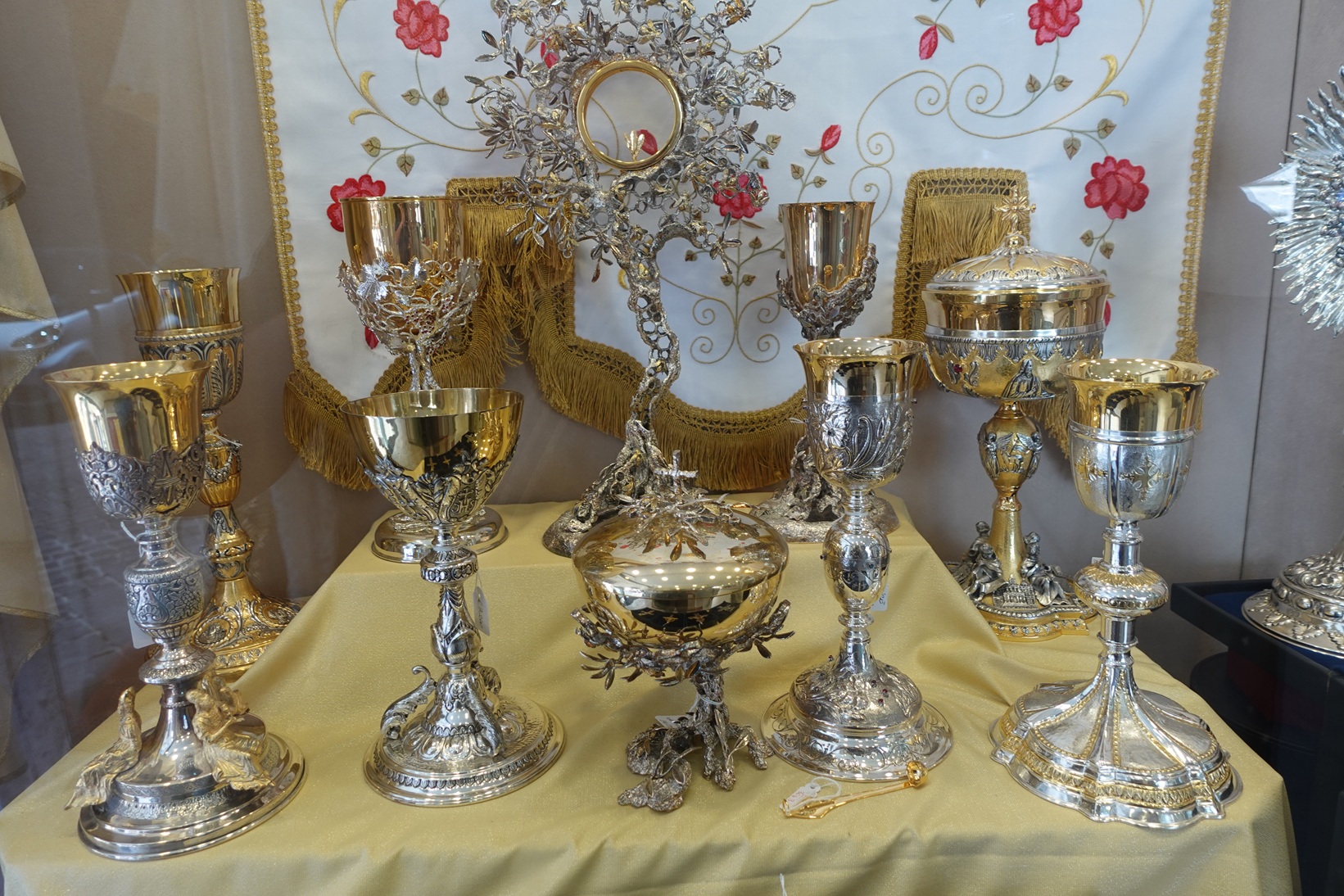
Richly adorned religious gear in a specialist boutique in the Centro Storico. Each of these items cost at least 5,000 euro. Is this where our donations end up?
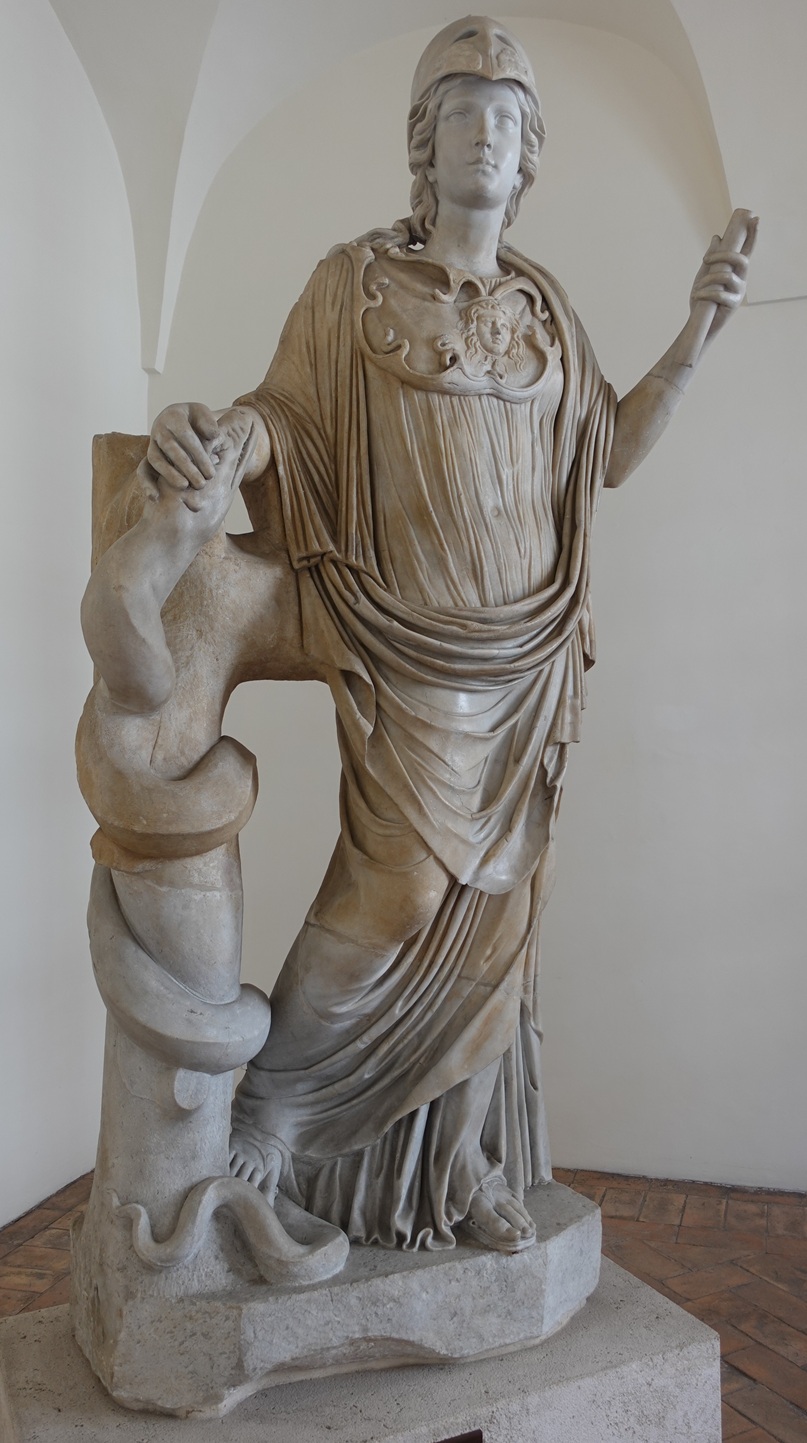
Statue of Athena in the Museo Palazzo Altemps. A 17th century marble version based on a 4th century BCE Greek statue.
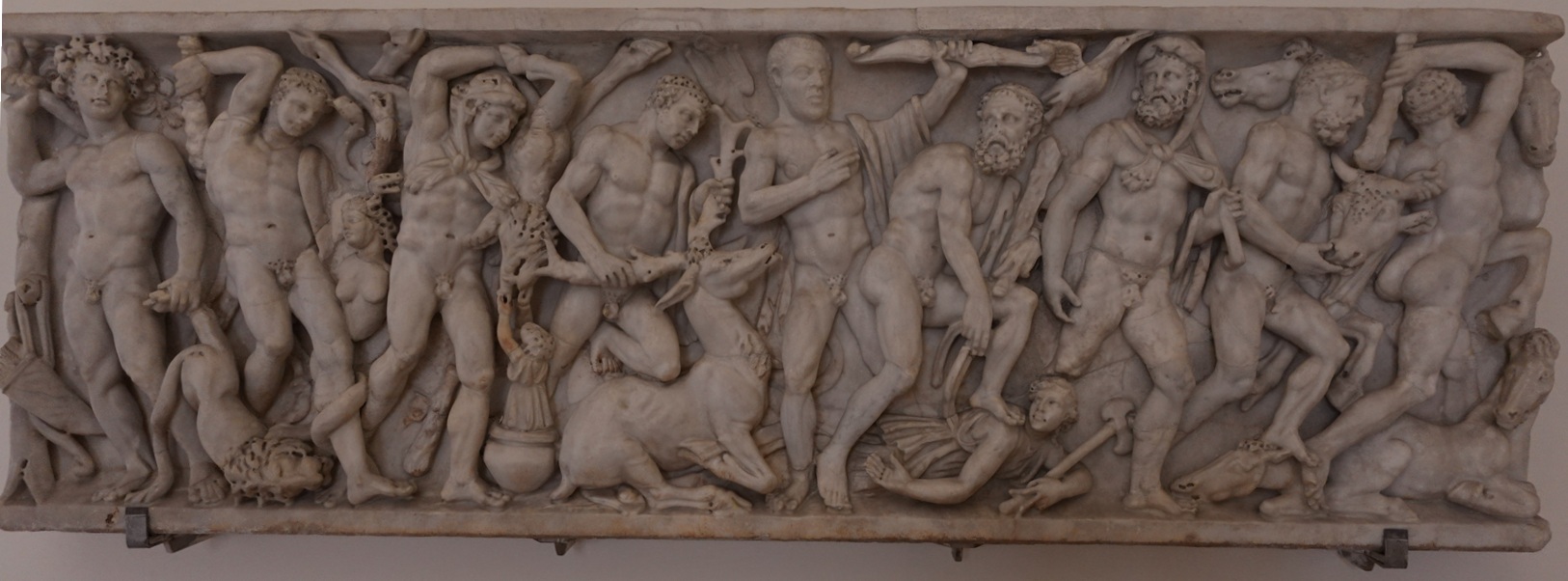
A frieze of Heracles (Hercules) engaged in his 10 labours. Here there are only 9 displayed, and he actually completed 12 in the end, but who’s counting?
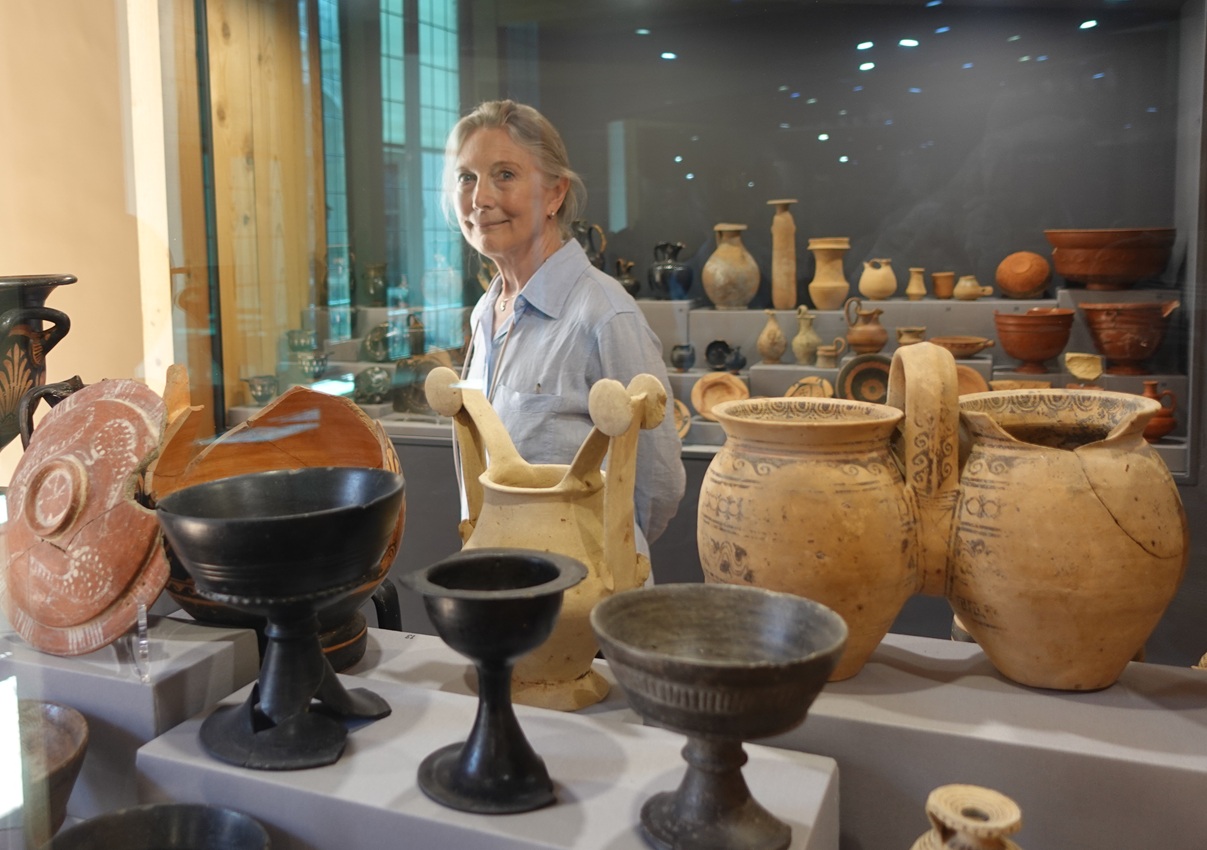
A studious visitor to the Palazzo Altemps
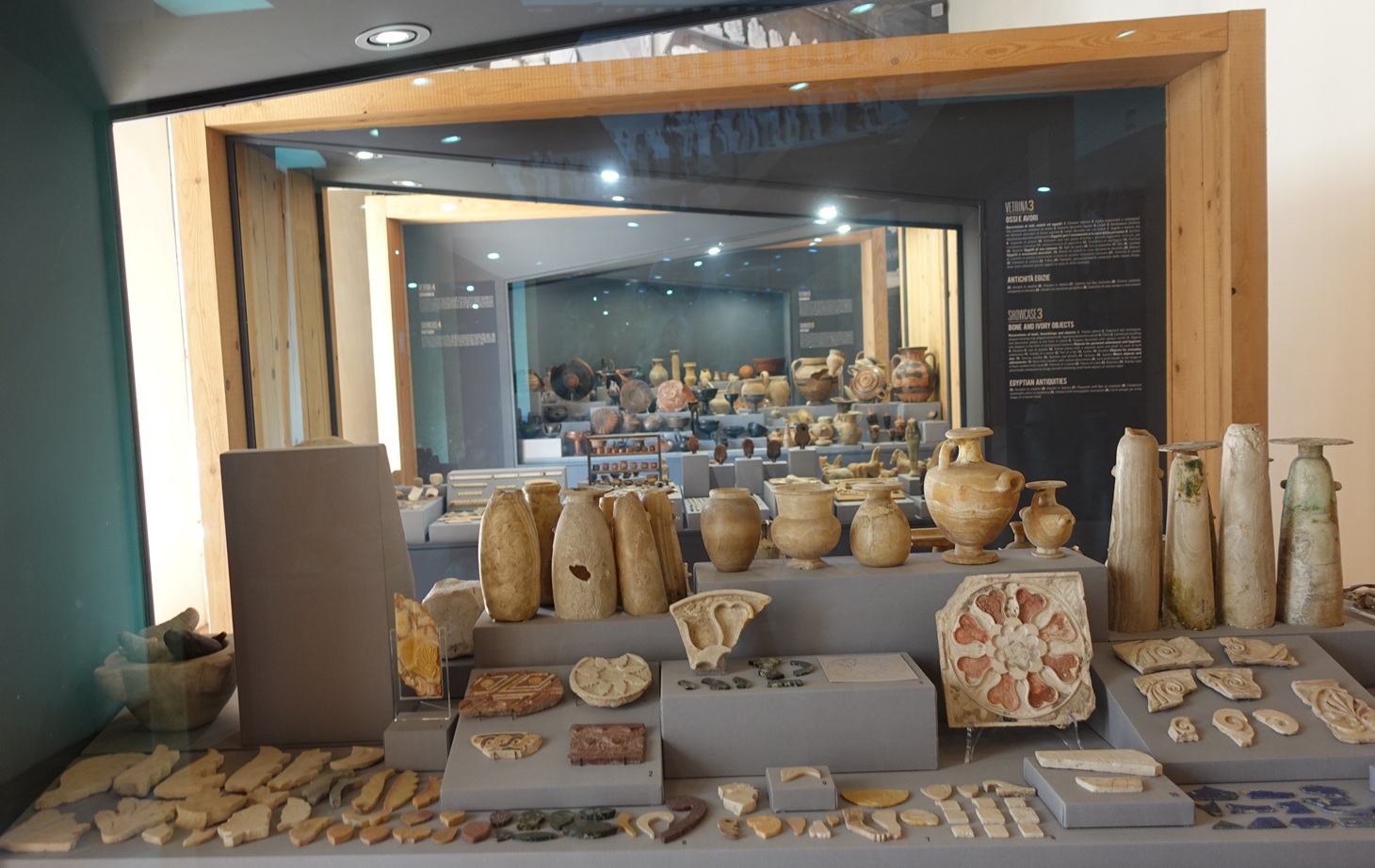
A very well-curated and displayed collection of ancient pottery from all ages, at the Palazzo Altemps.
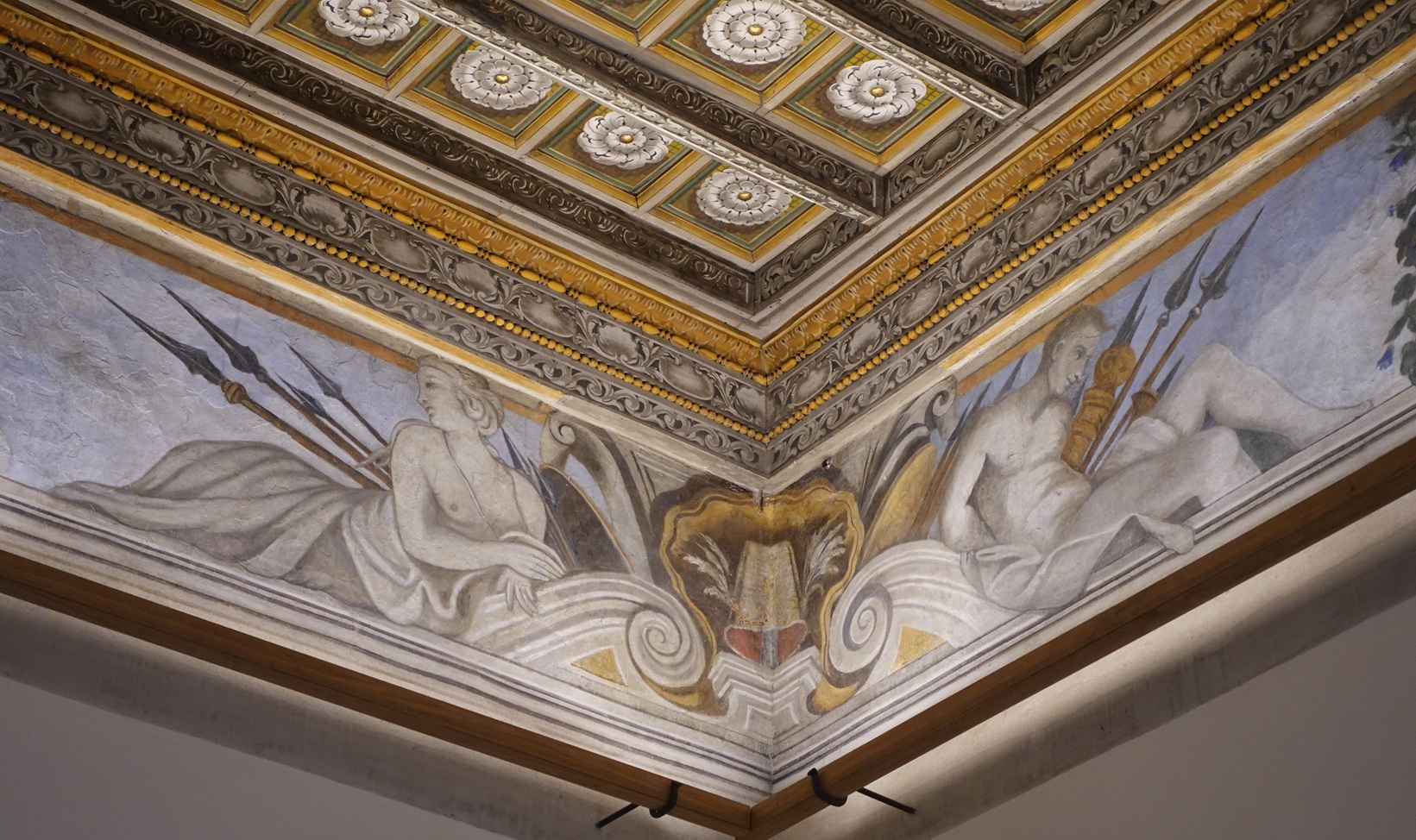
Many of the rooms in the Palazzo Altemps retain their original decorations and frescoes.
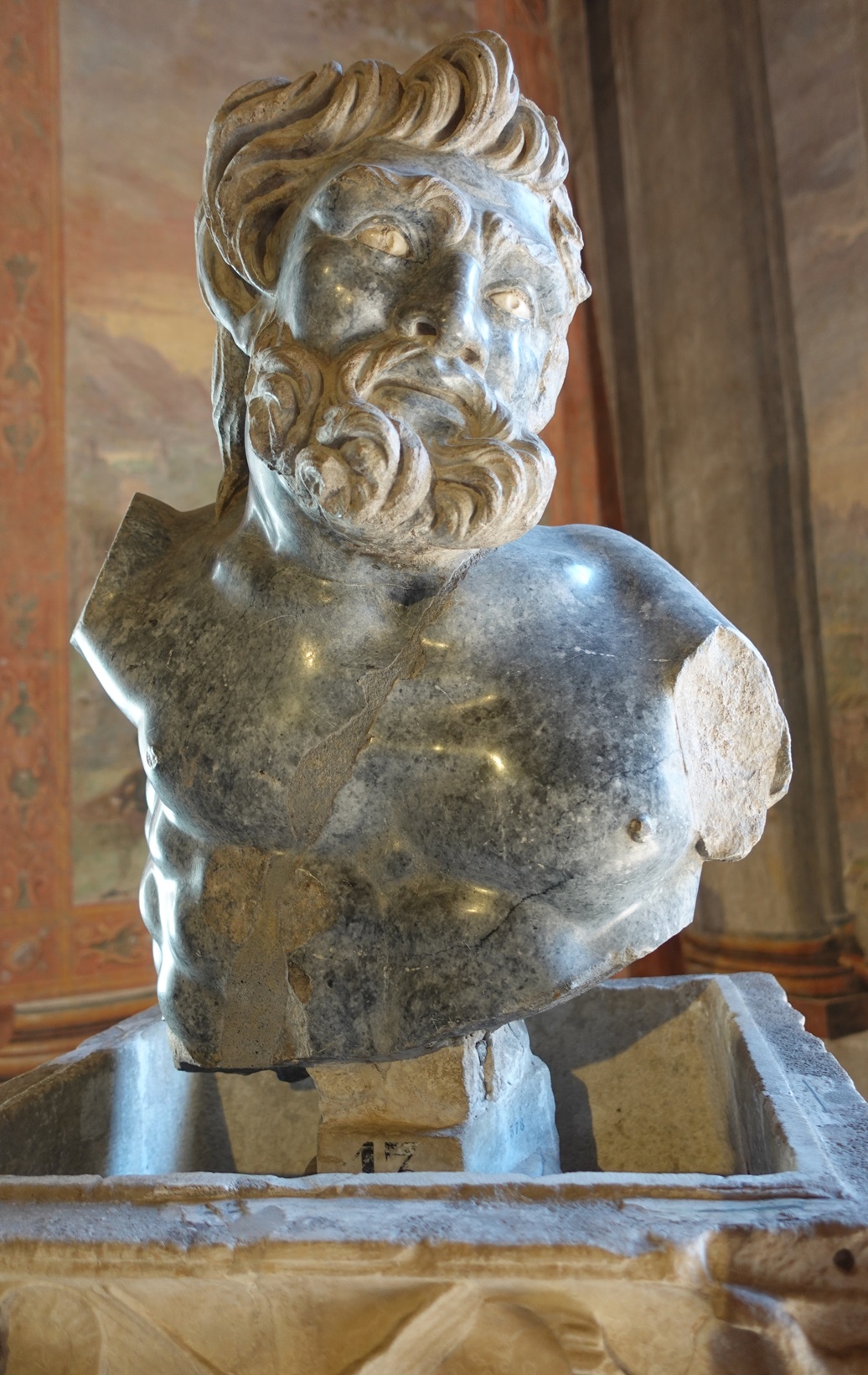
Heracles (Hercules) again.
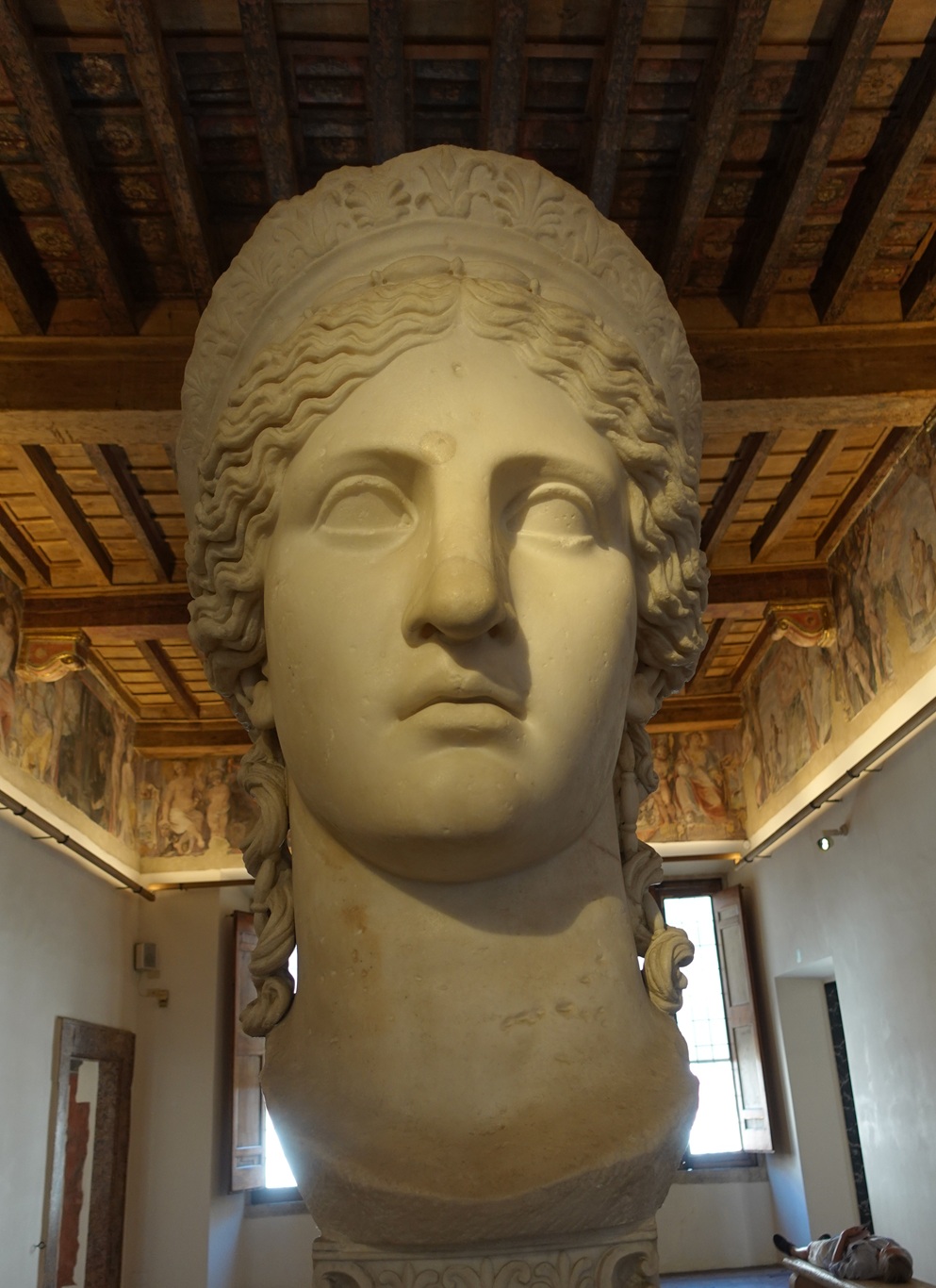
A beautiful rendition of Hera, the wife of Zeus, and jealous step-mother to Heracles.
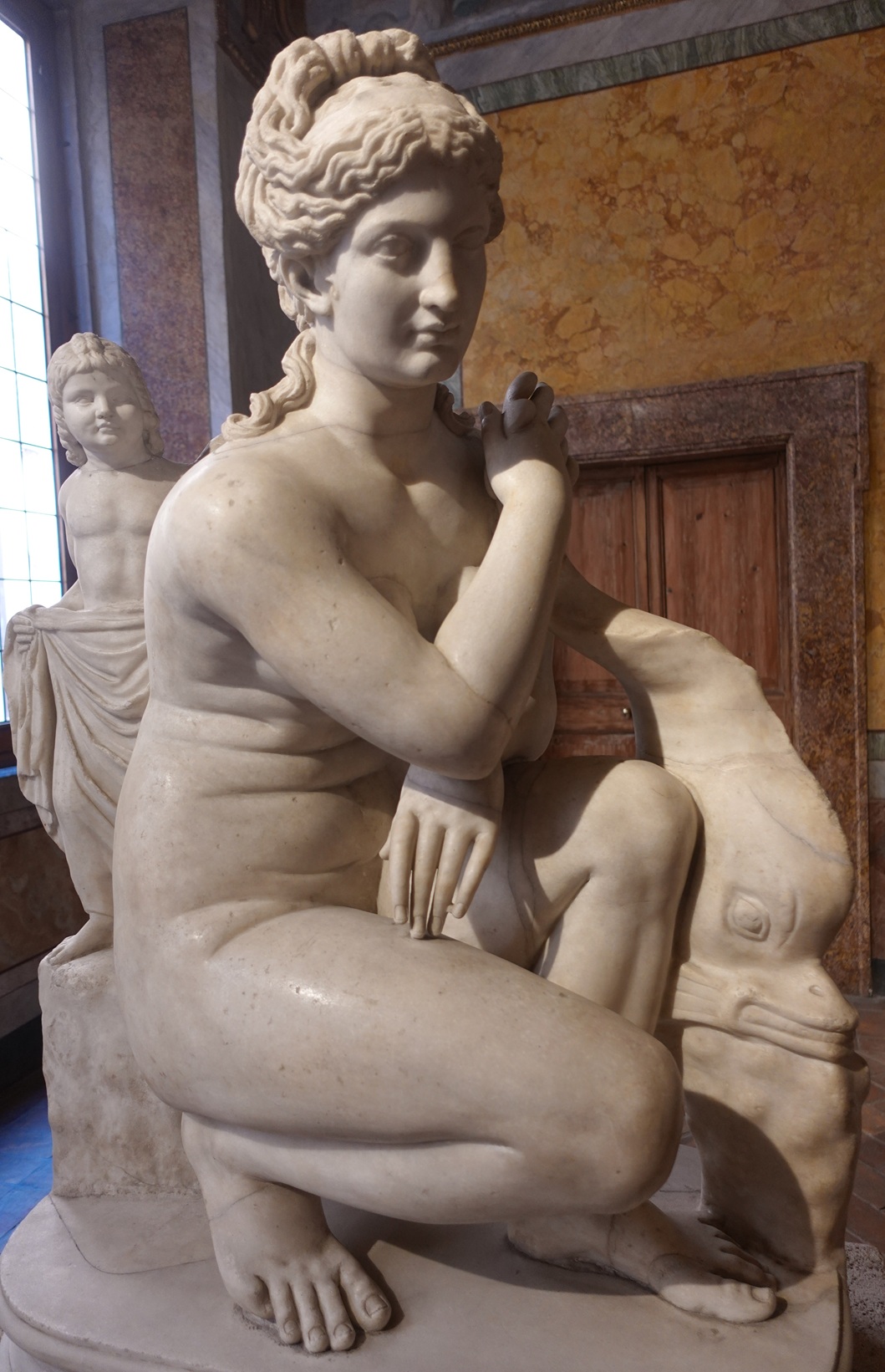
Statue of Aphrodite in a Crouching Position, with a Dolphin.
The goddess is depicted naked and crouching, while Eros is lifting a cloth behind her to dry her off. This is a Roman copy of a bronze original by the Greek sculptor Doidalsas, 3rd century BCE. Roman coins depicting the scene have also been discovered. Aphrodite is the ancient Greek goddess associated with love, passion, and procreation, and as her syncretised Roman counterpart Venus, desire, sex, fertility, prosperity, and victory. Aphrodite’s major symbols include seashells, myrtles, roses, doves, sparrows, and swans.
Eros became Cupid for the Romans, and is either a primordial god in his own right, or a son of Aphrodite.
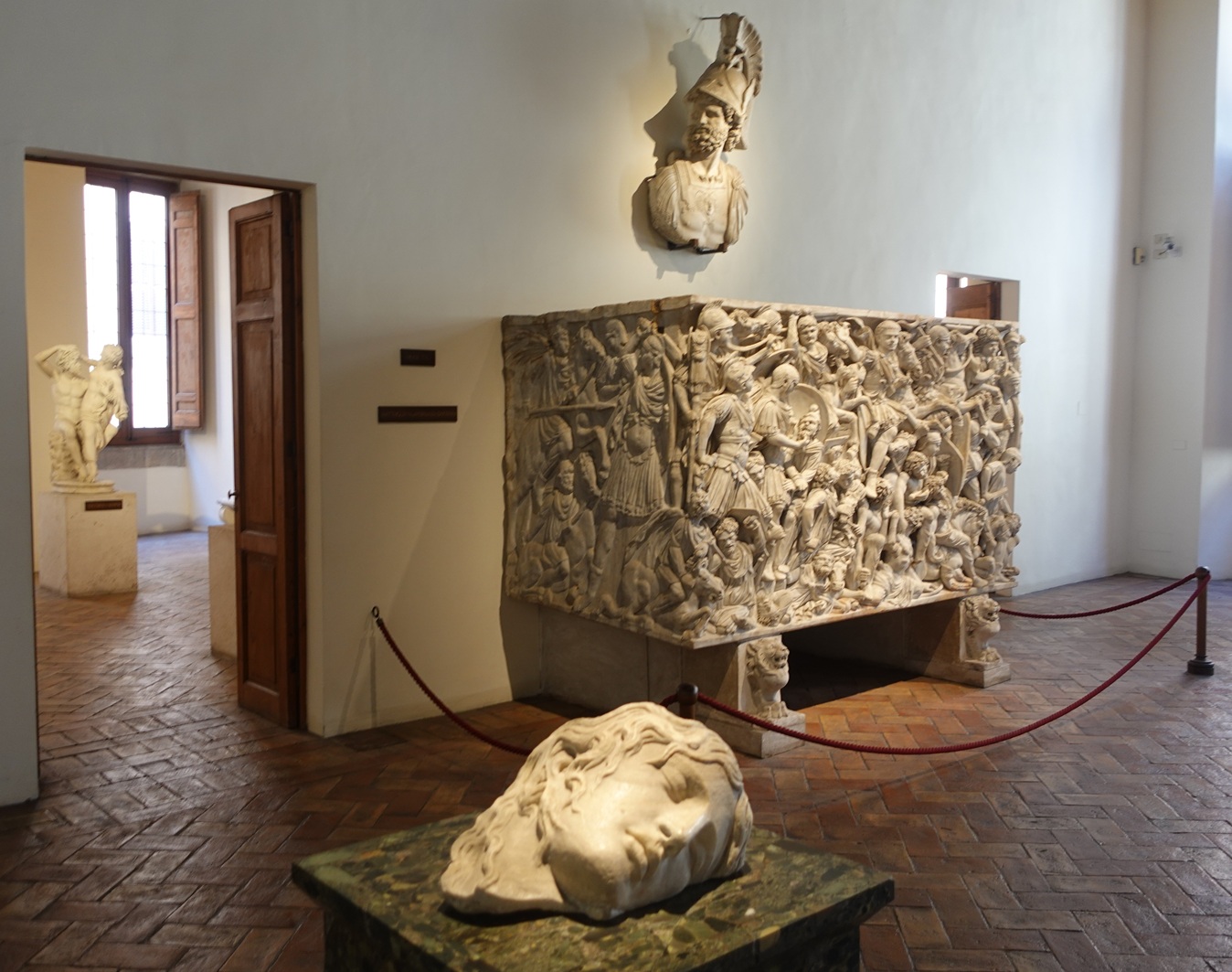
Sarcophagus with Scenes of Battle between Romans and Barbarians. It is in a similar style to the Column of Marcus Aurelius, and so can be dated to 175-180 CE.
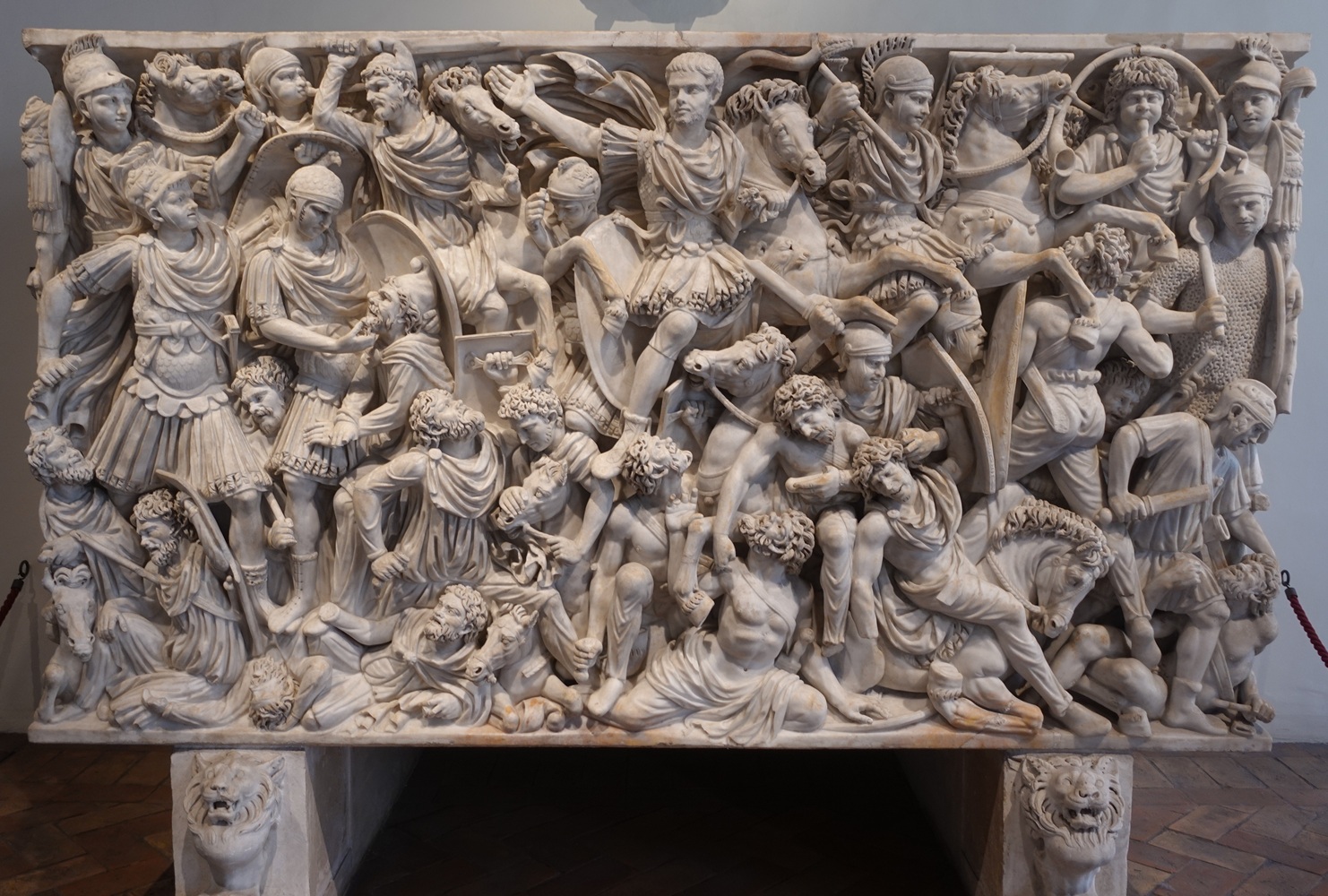
Close-up of sarcophagus
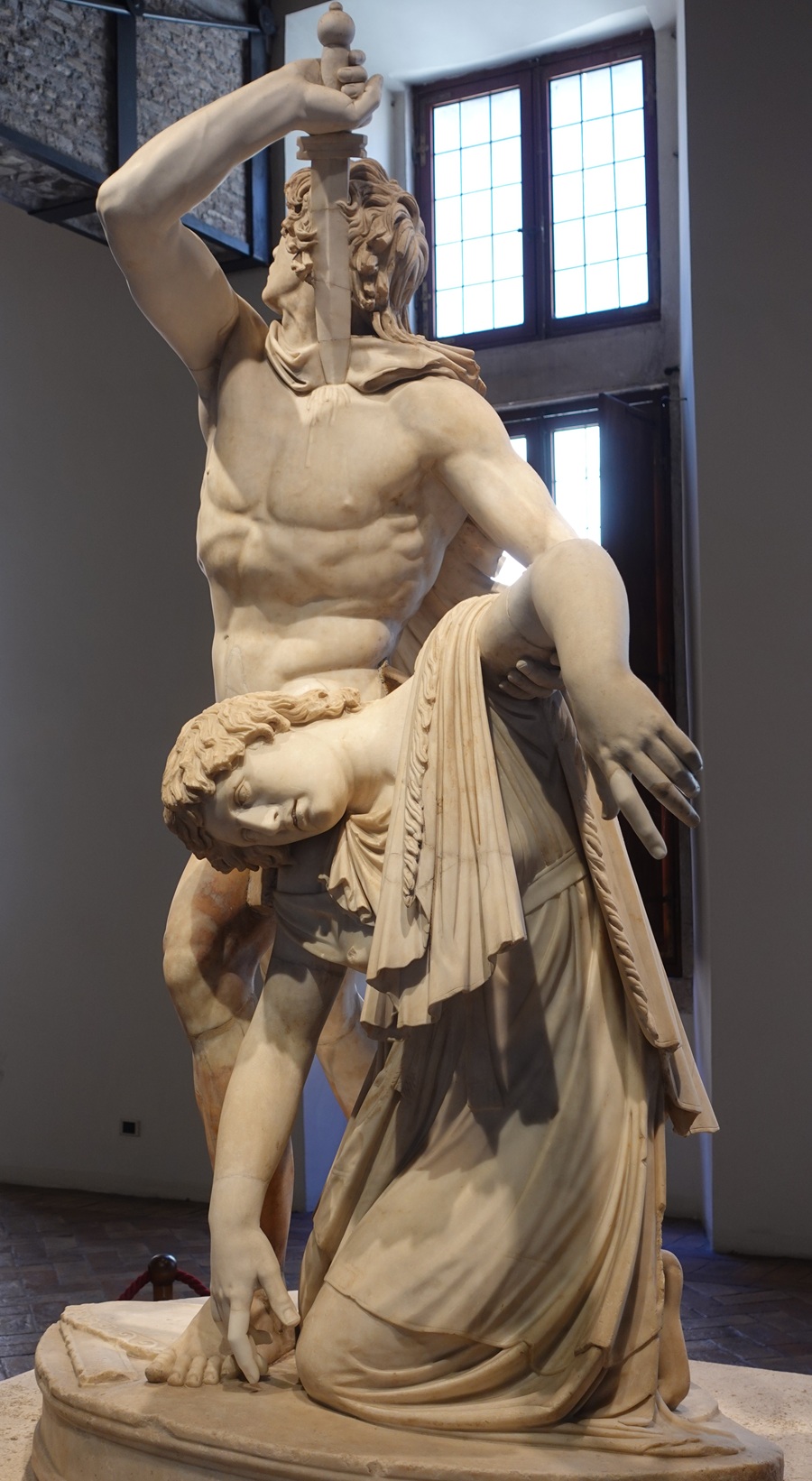
Ludovisi Gaul killing himself and his wife. Docimaean and Carrara marble.
A copy of the original bronze by Epigonos, commissioned by king Attalus I (269–197 BCE), of the Greek polis of Pergamon (modern-day Bergama, Turkey), to celebrate his victory over the Gauls in 240 BCE. It was found near Julius Caesar`s residence, the Horti Sallustiani, suggesting it may have been commissioned by Caesar to commemorate his victories over the Gauls. A rather gruesome travel trinket, if you ask me….
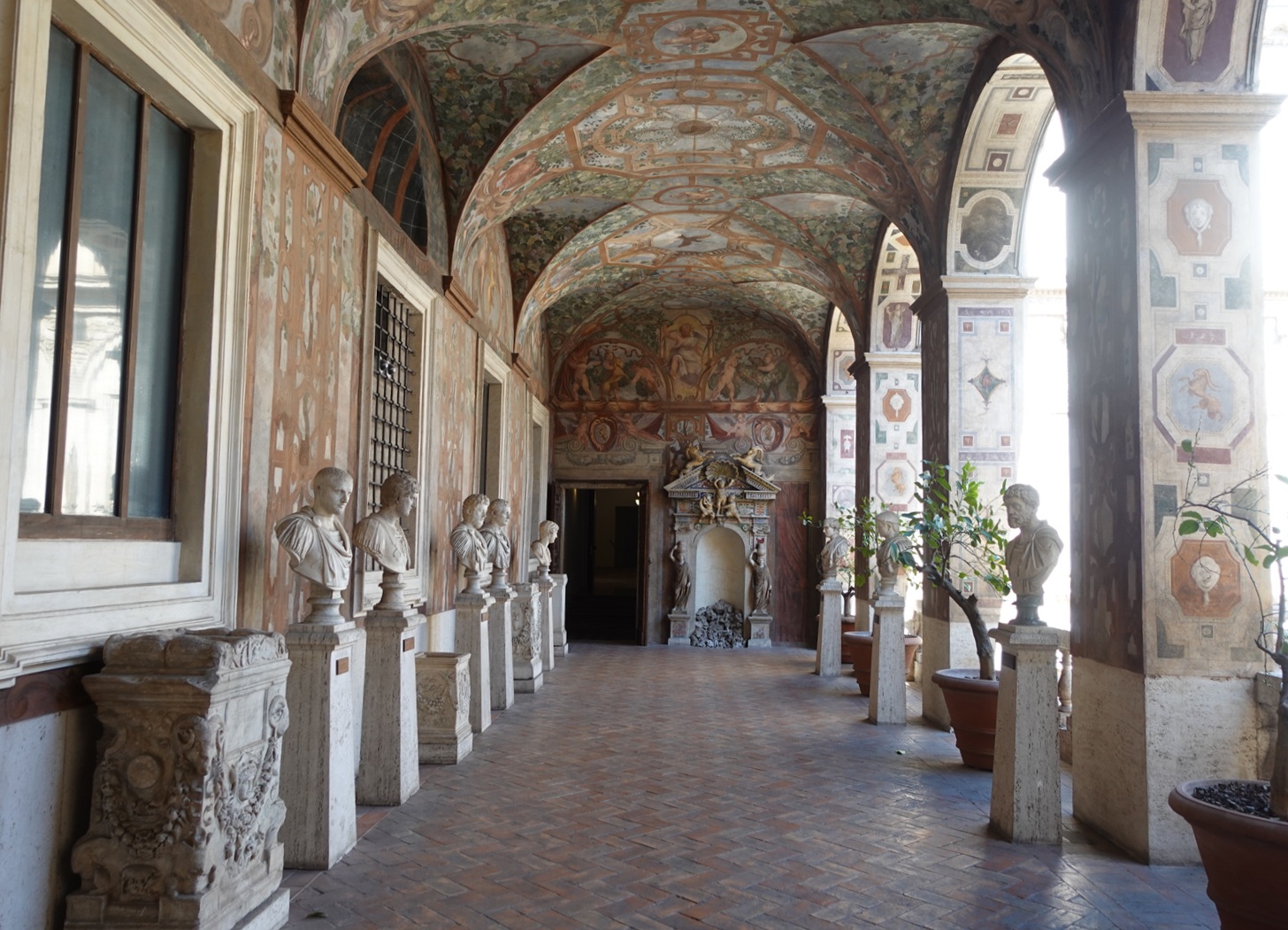
External corridor with balcony of the Palazzo Altemps.
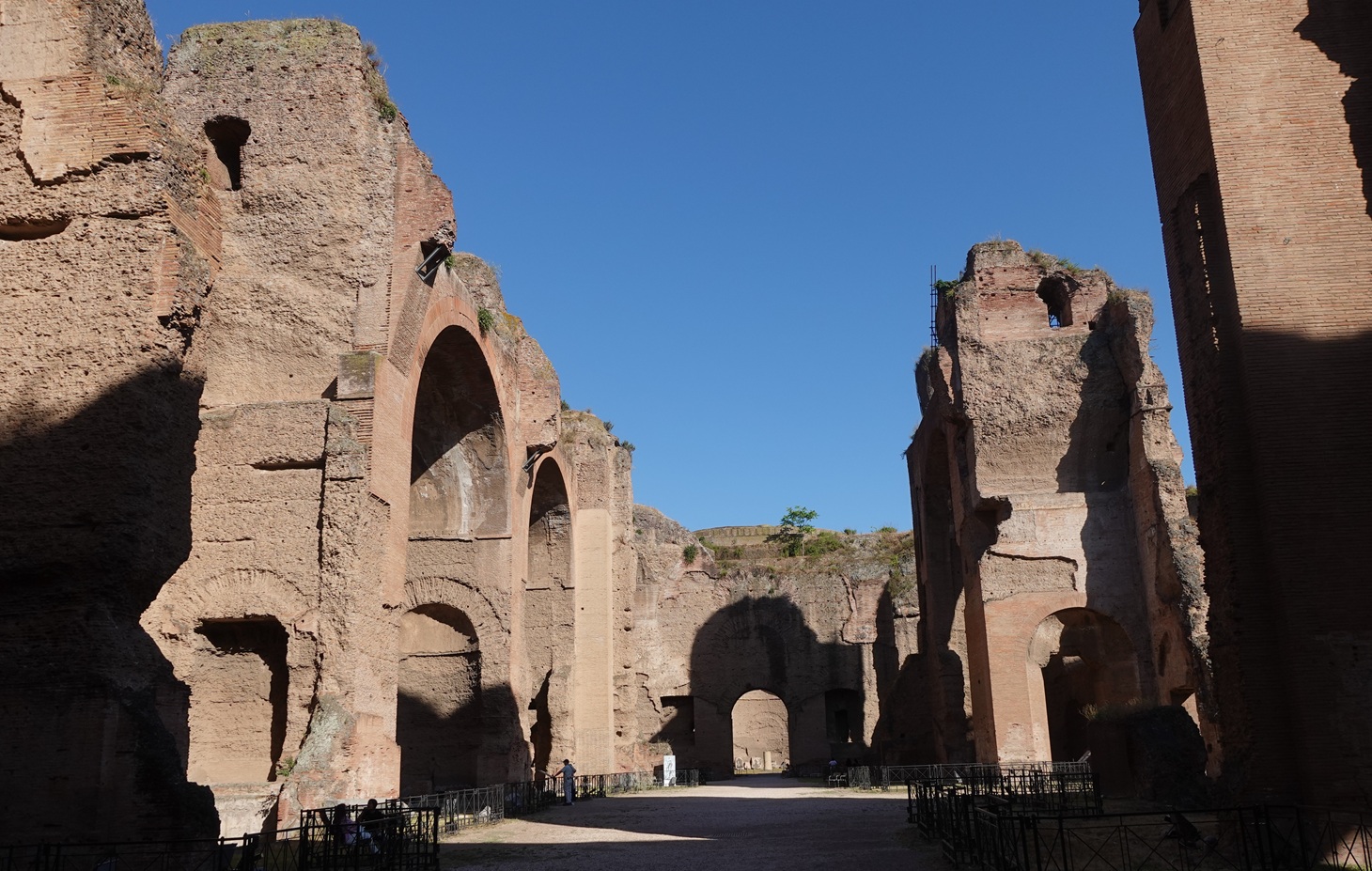
The sheer scale of the Terme di Caracalla has to be seen to be believed. Caracalla lived a short life, from 188-218 CE. Curiously, he was joint emperor with his father (Septimus Severus, 145-211, reigned from 193-211) from 198 to 211, and reigned alone as emperor as an adult from 211-217. The baths were begun under Caracalla’s father`s reign, and completed in his.
Besides having his competitor younger brother murdered by the Praetorian Guard, to become sole ruler after his father’s early death from disease, Caracalla is most famous for his edict which granted Roman citizenship to all free inhabitants of the Roman Empire. He introduced a new Roman currency, the antoninianus, and to earn his reputation as the most brutal of all emperors, he ordered massacres, both in Rome and other parts of the empire. He was (thankfully) assassinated by a disaffected soldier in 217.
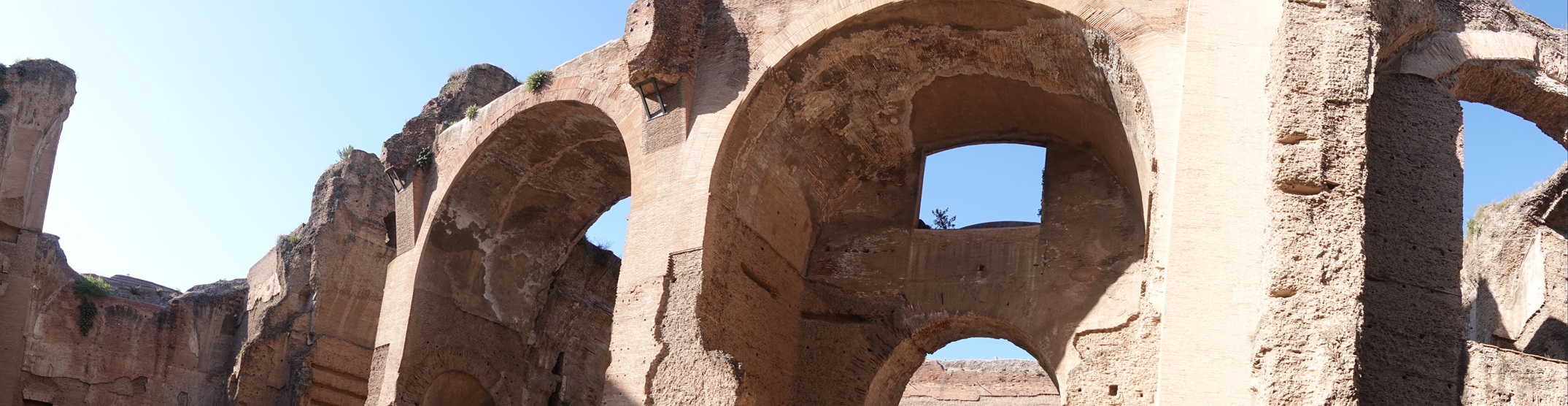
The Baths of Caracalla, massive as they were (are), were only second in size to the Baths of Diocletian.
Built between 212 and 216 CE, they were in operation till the 530s, before falling into disuse.
They were an inspiration for the architects who designed Union Station in Chicago, the Pennsylvania Station in New York, and the senate of Canada Building.
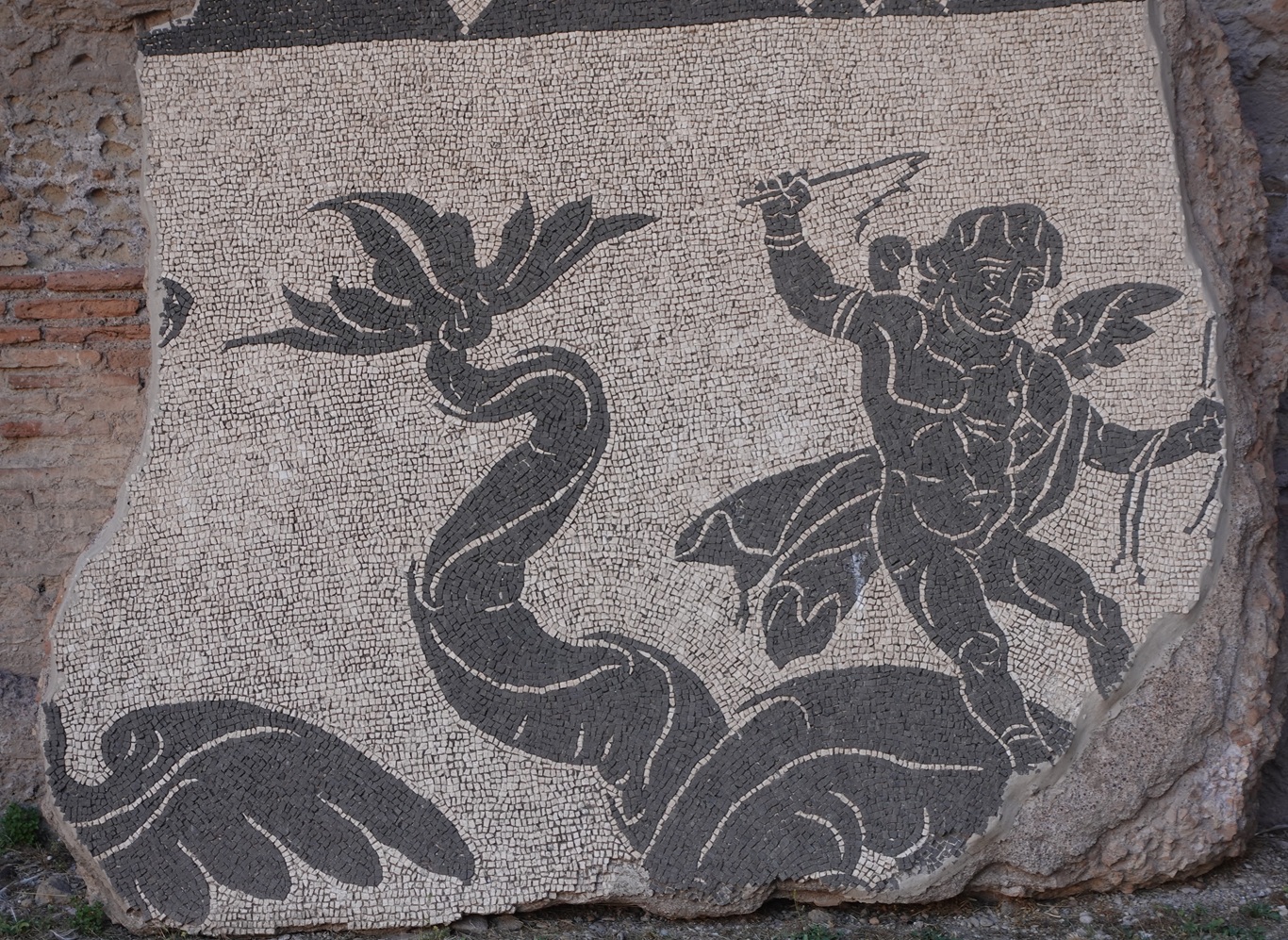
Around the archeological site are fragments of mosaics, mostly in black and white. This is of Eros on a serpent.
Eros is the Greek god of love and sex. The Romans referred to him as Cupid or Amor. In the earliest account, he is a primordial god, while in later accounts he is the child of Aphrodite
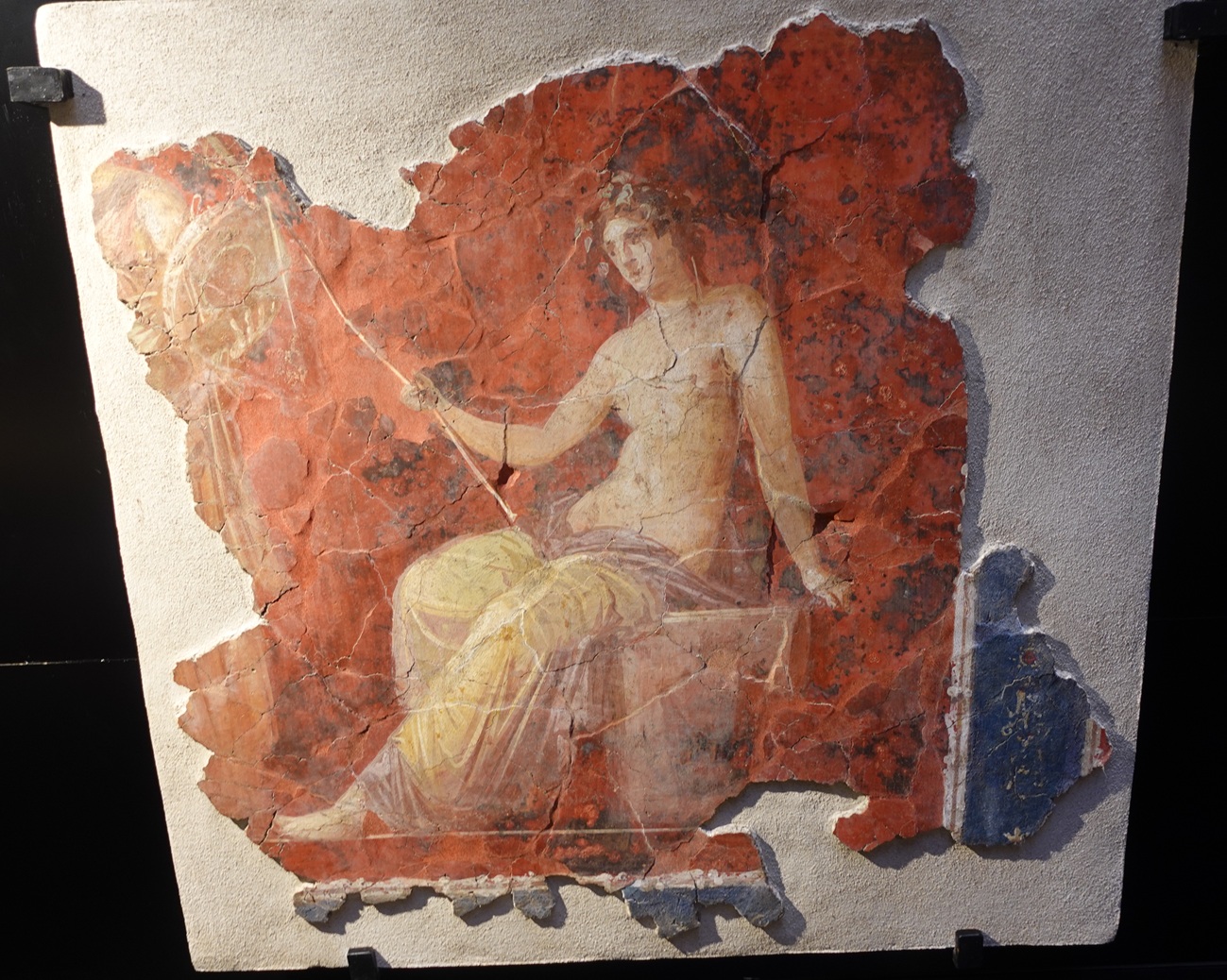
A charming painting found in the remains of a house, at the site of the Baths of Caracalla.