Rome-Naples June 2026
Day 8: Thursday 11 June 2026
Rome – Naples
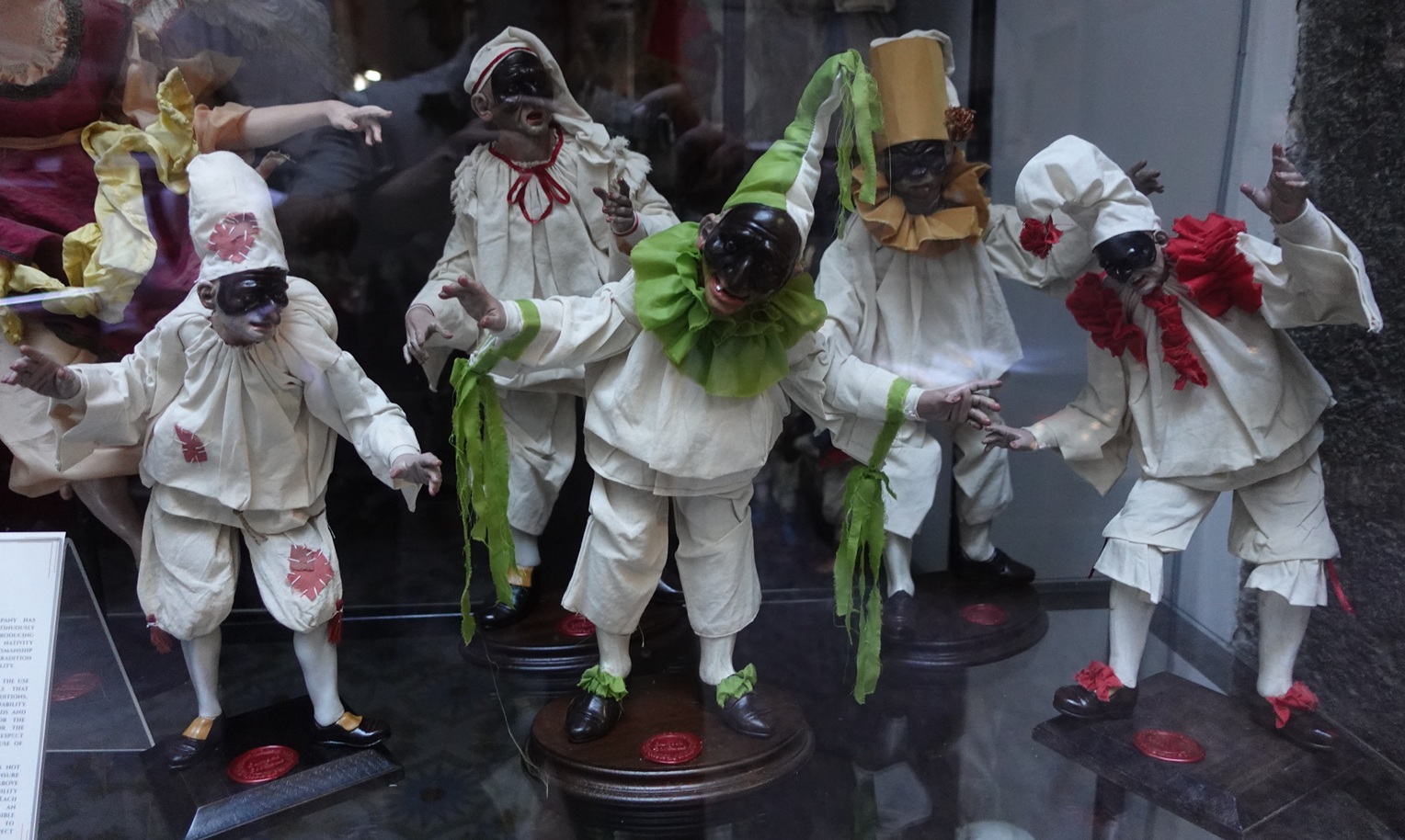
Naples historical centre was declared a UNESCO World Heritage site in 1995, and has retained its original character, chaotic and charming.
Many streets have specialist trade names and shops still sell traditional handicraft goods. One speciality are figurines, used for presepi, Christmas nativity scenes. These ones are masked characters from Commedia dell`Arte. Pulcinella is one originally from Naples. In English seaside resorts, puppets reenact the stories under the anglicised “Punch” and Judy.
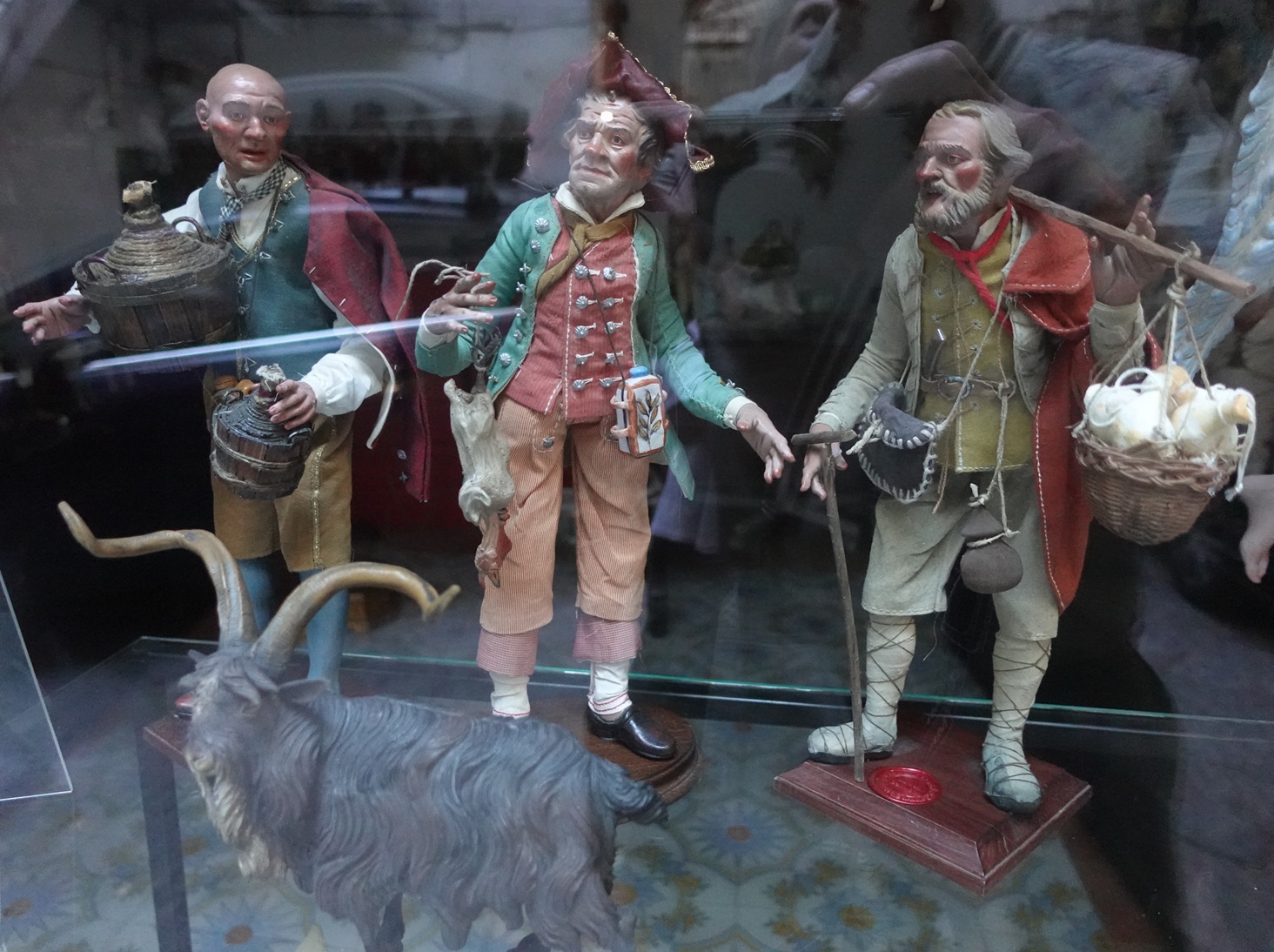
Some more traditional figurines.
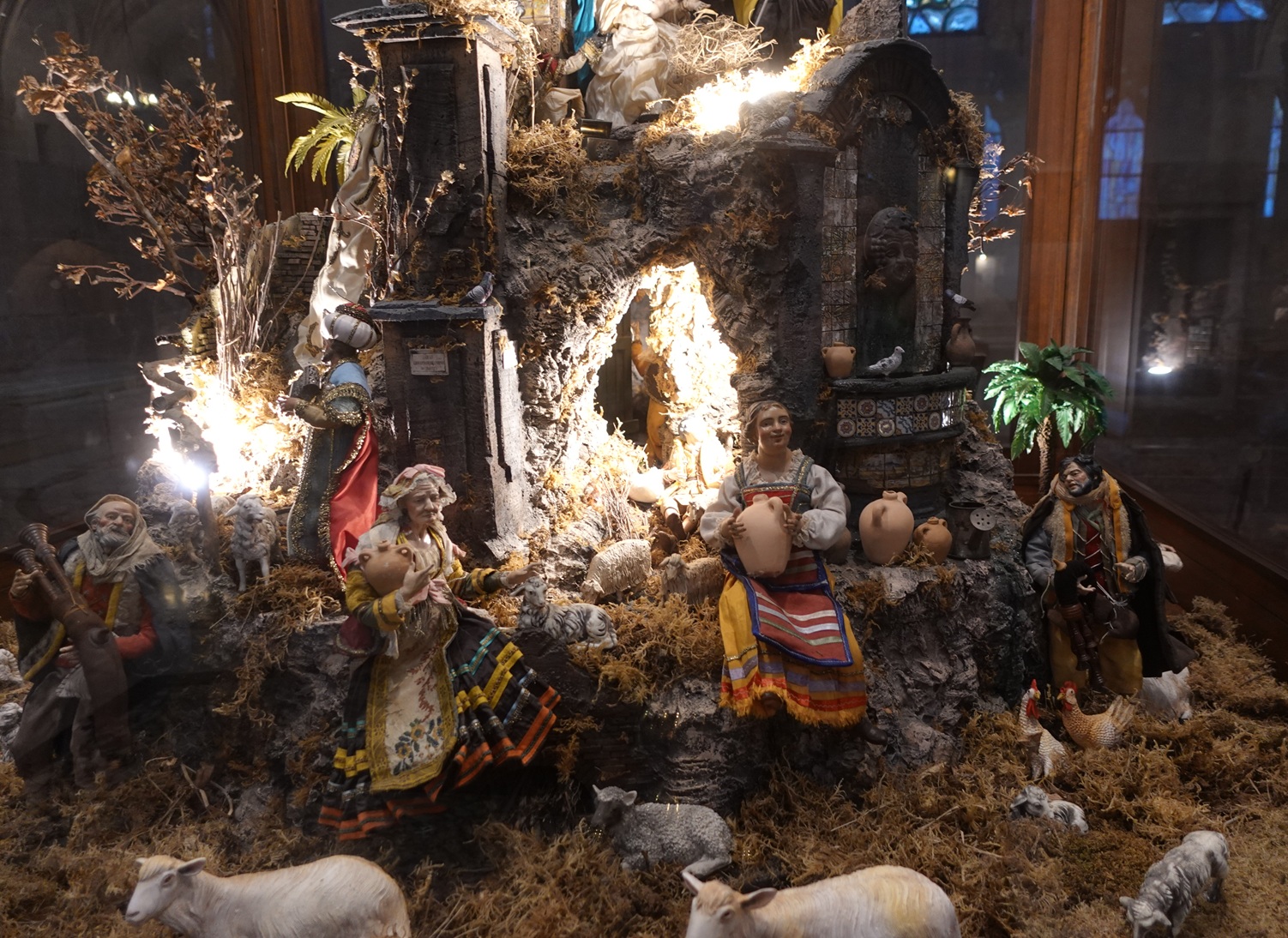
A presepe, nativity scene, in a church. A bit early for Christmas?
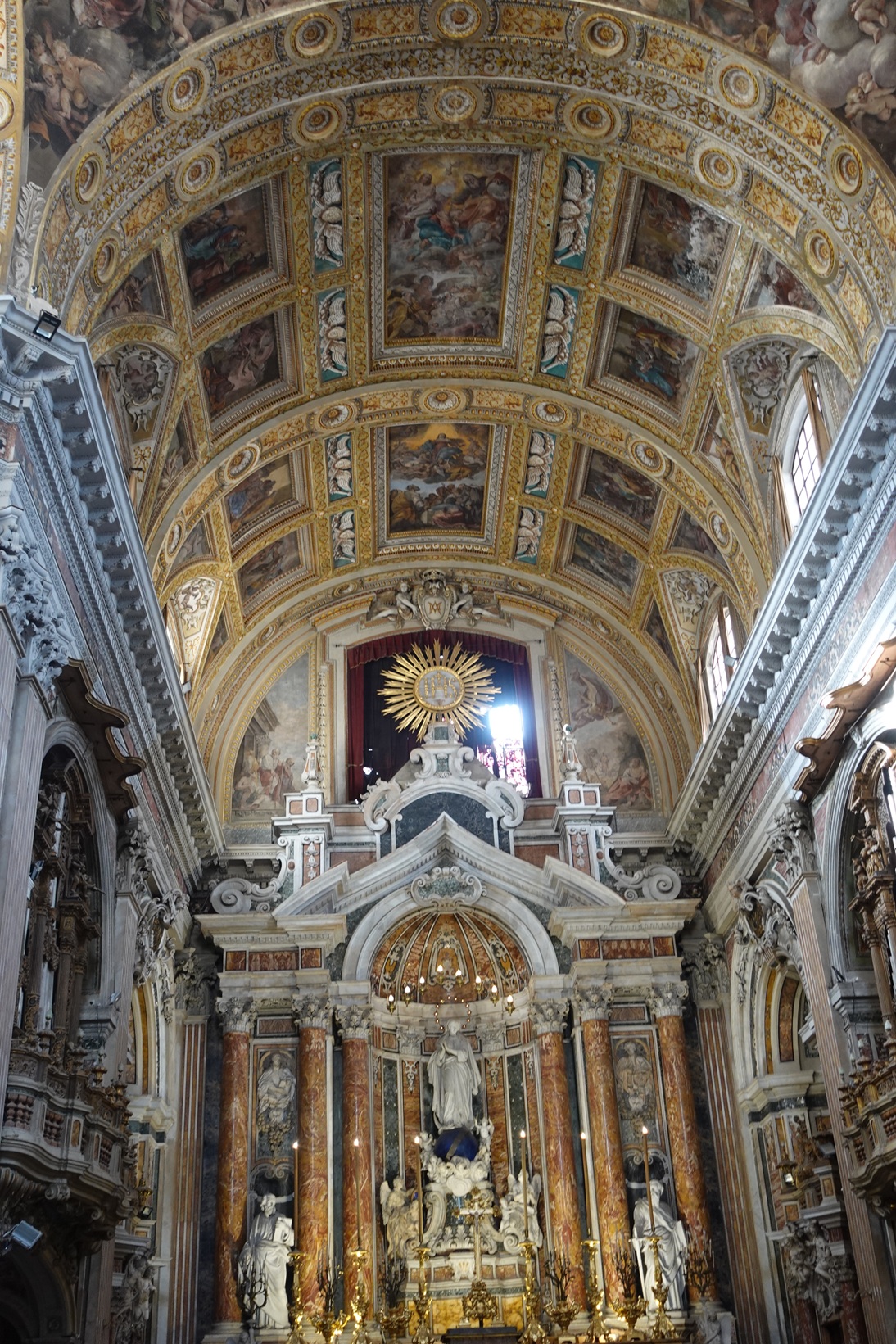
Chiesa Gesù Nuovo. This impressive church holds the remains and has a display of the office and living quarters of a local saint. Built in 1584–1601 by the Jesuits, it retains the unusual facade of rustic ashlar diamond projections of the previous structure, a 1470 palace for Roberto Sanseverino, Prince of Salerno. The Jesuits were expelled from Naples in 1767, and the church passed to the Franciscan order. It returned to the Jesuits from 1821 till 1848, when they were expelled again.
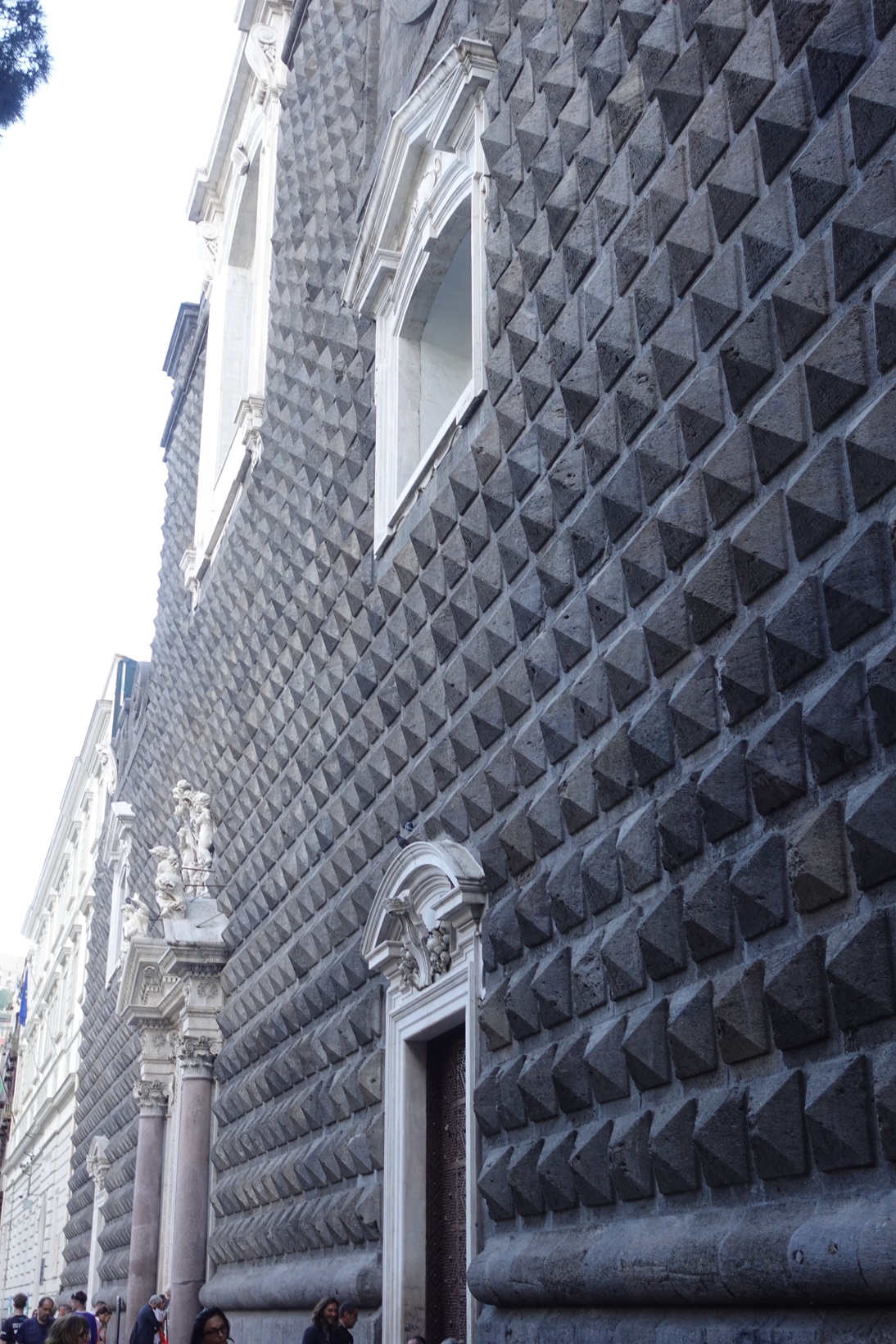
The unusual facade of the Chiesa Gesu Nuovo
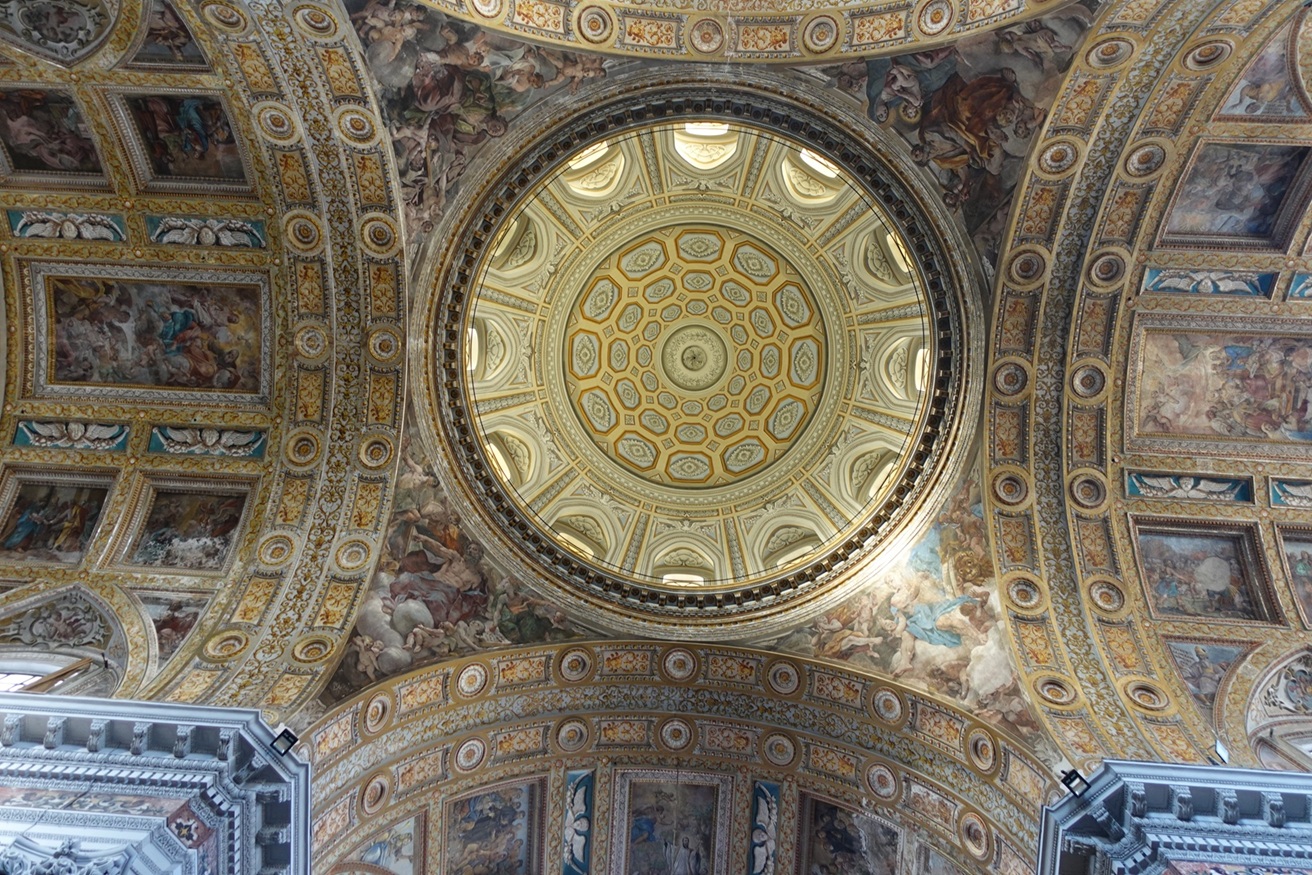
Ceiling and dome of the Gesù Nuovo. The dome was destroyed by an earthquake in 1688.
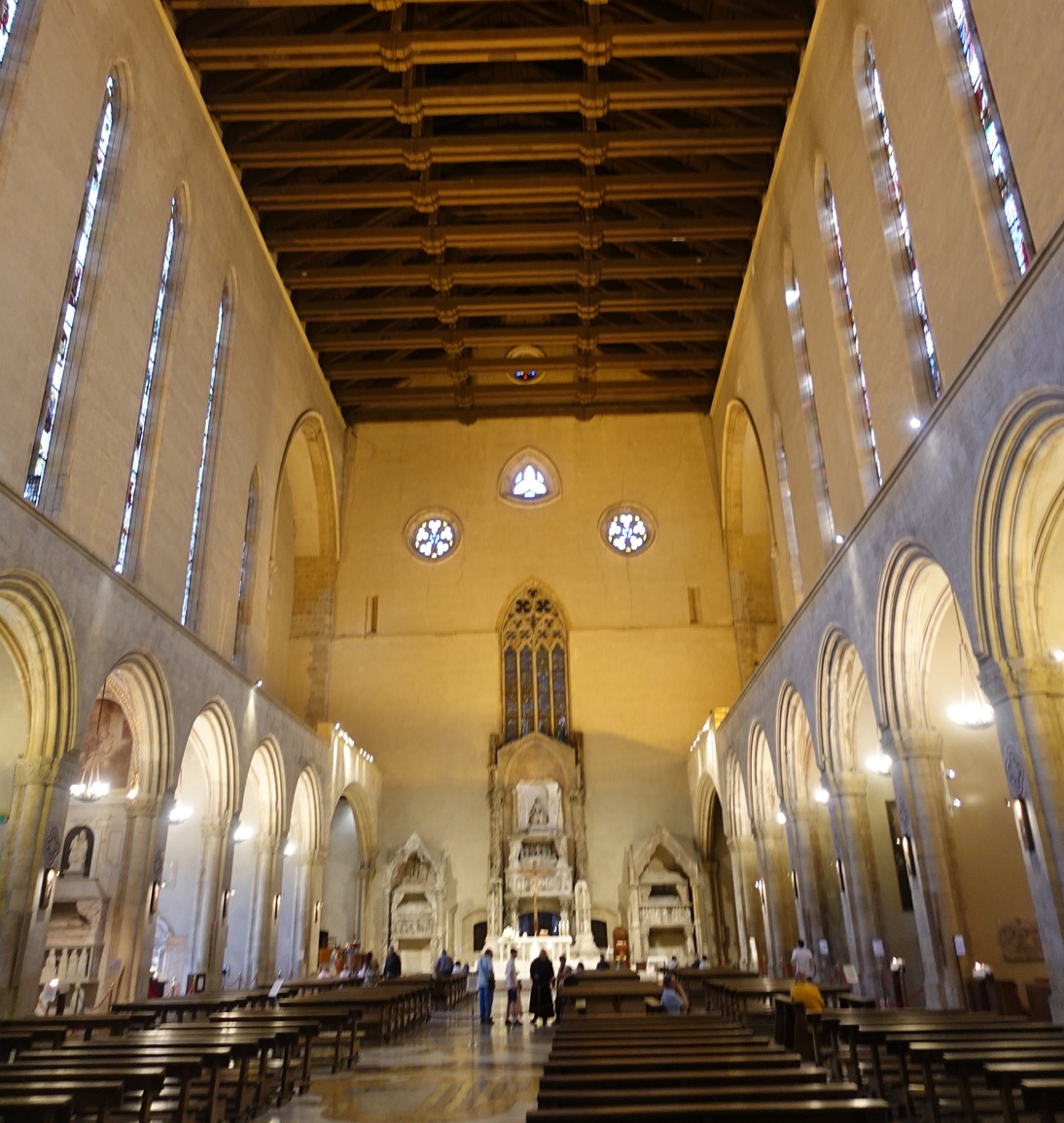
Across the road from the Gesù Nuovo is the Santa Chiara Church. Built in 1313-1340 by Queen Sancha of Majorca and her husband King Robert of Naples, in Gotico Angioiano style, it was decorated in the Baroque style in the 17th century. The building was gutted by bombing during World War Two, and underwent a disputed “restoration”, leaving it in this depleted state.
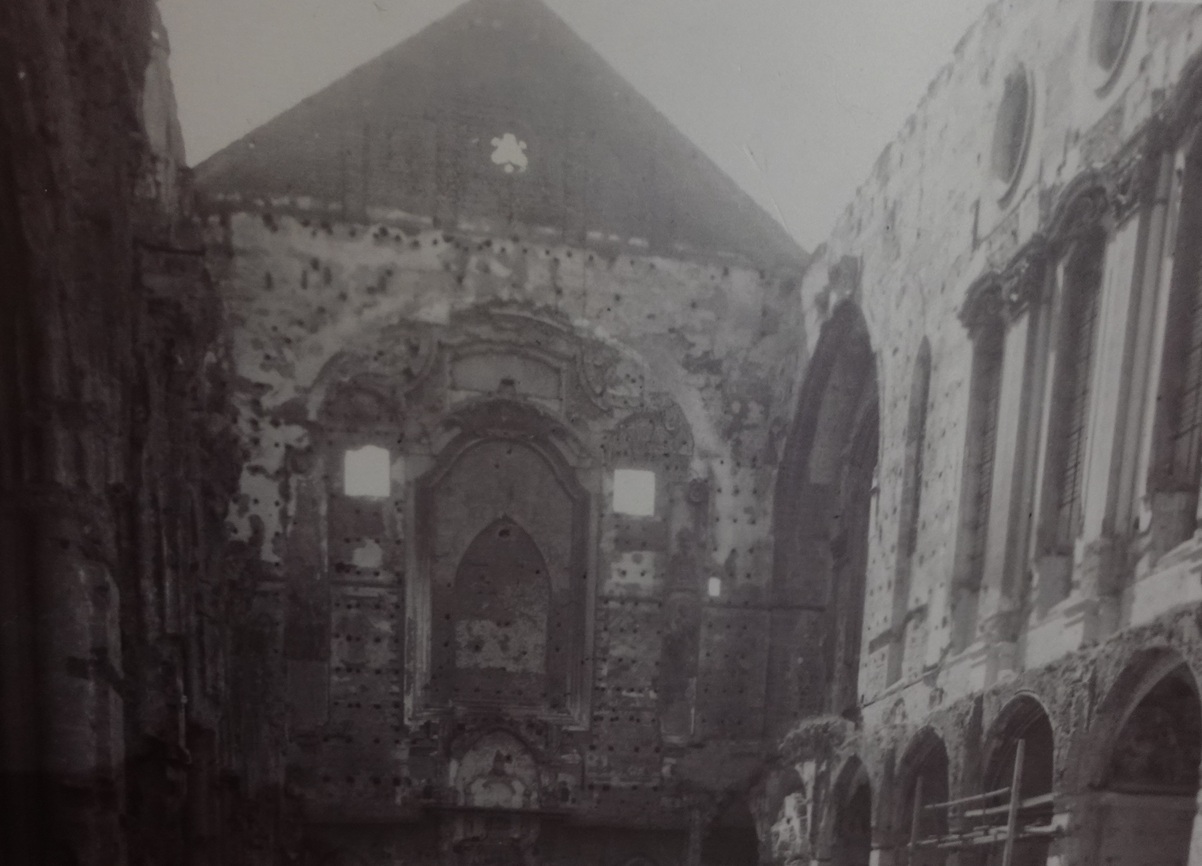
A photo of the church interior after the bombing of WW2.
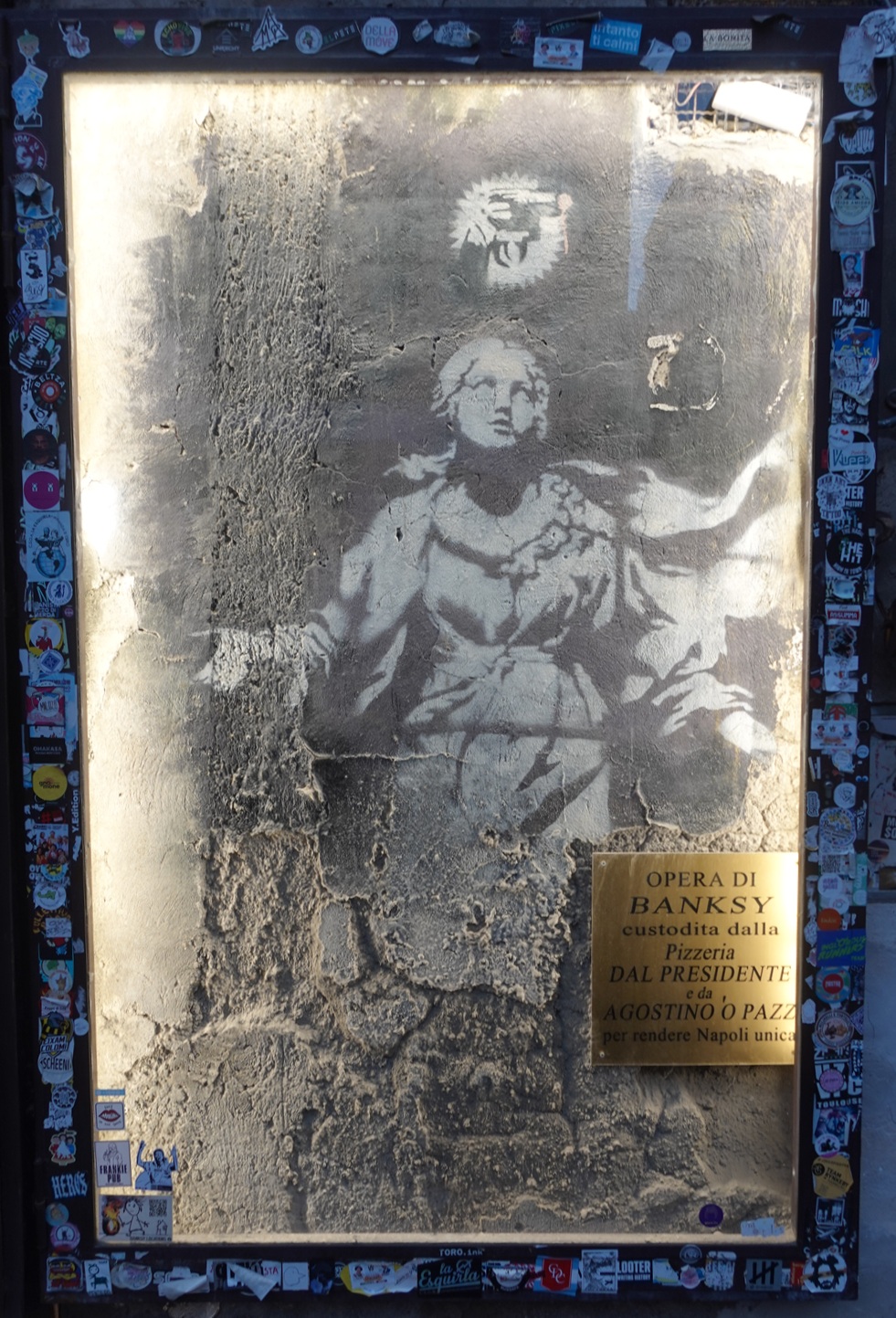
A Banksy artwork on a wall outside a pizzeria, just off the “Spaccanapoli” street.
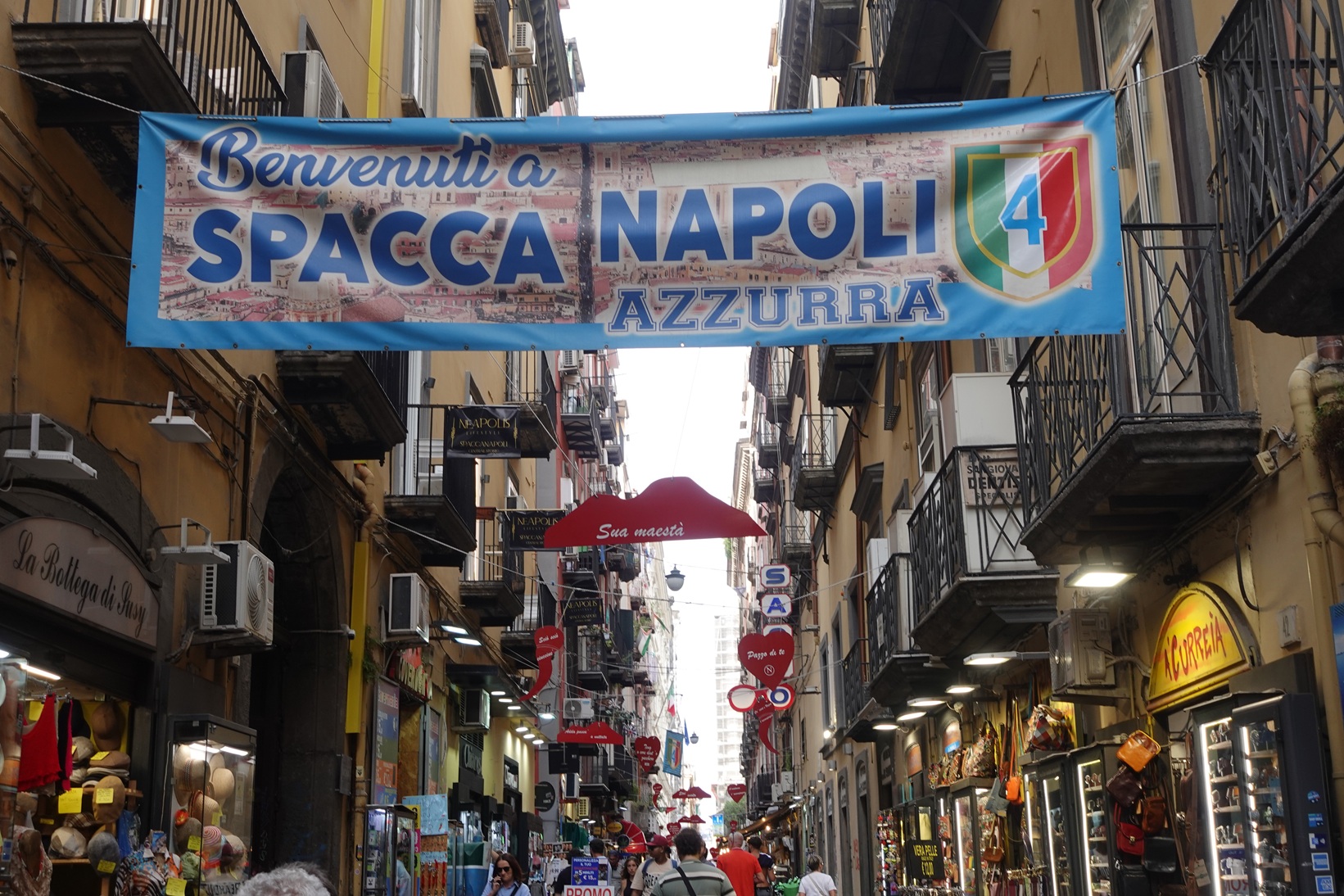
The Spaccanapoli is really three streets forming a neat straight division of Naples into two halves.
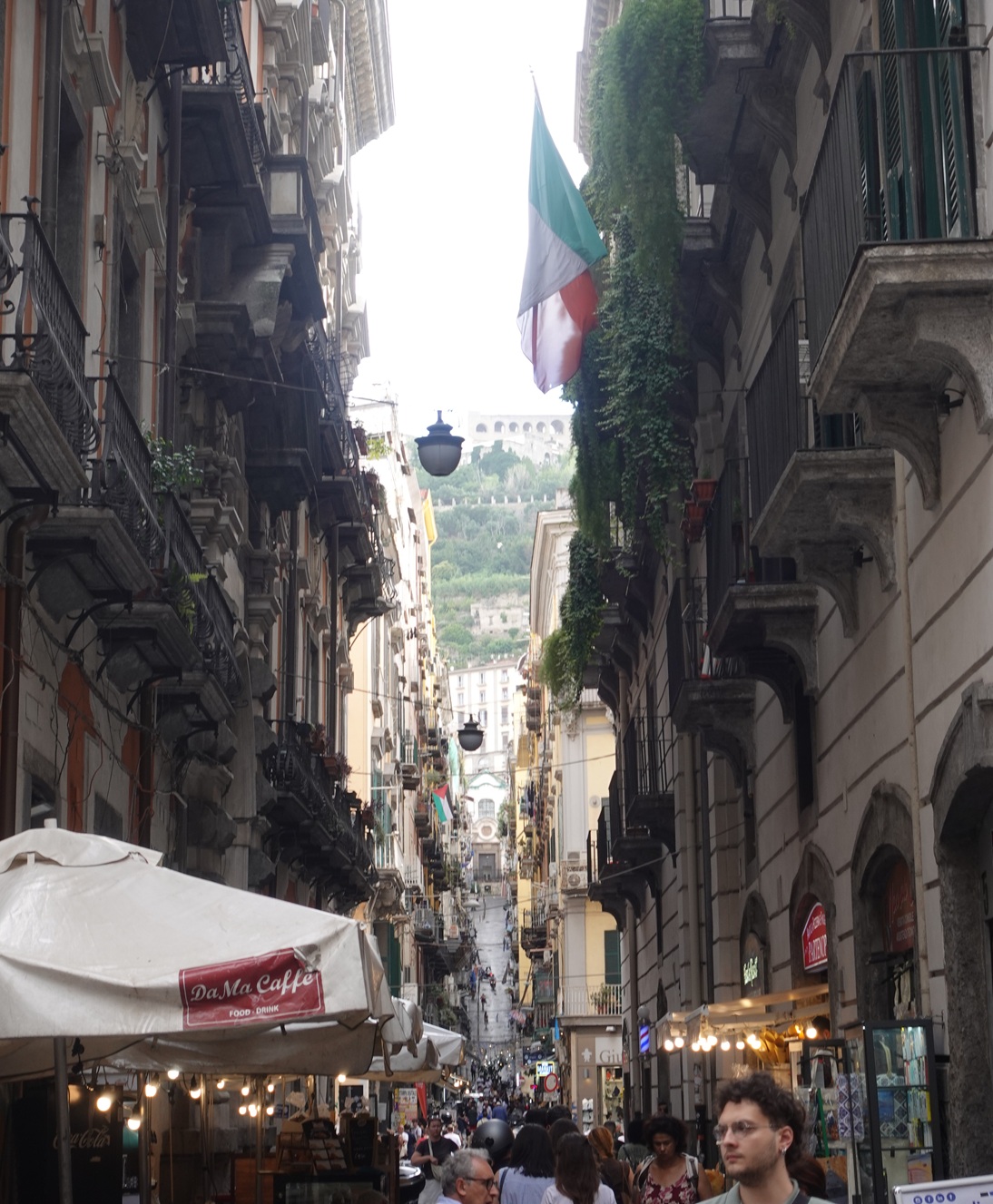
A view of Castel Sant`Elmo, perched 250m above the city, from Spaccanapoli.
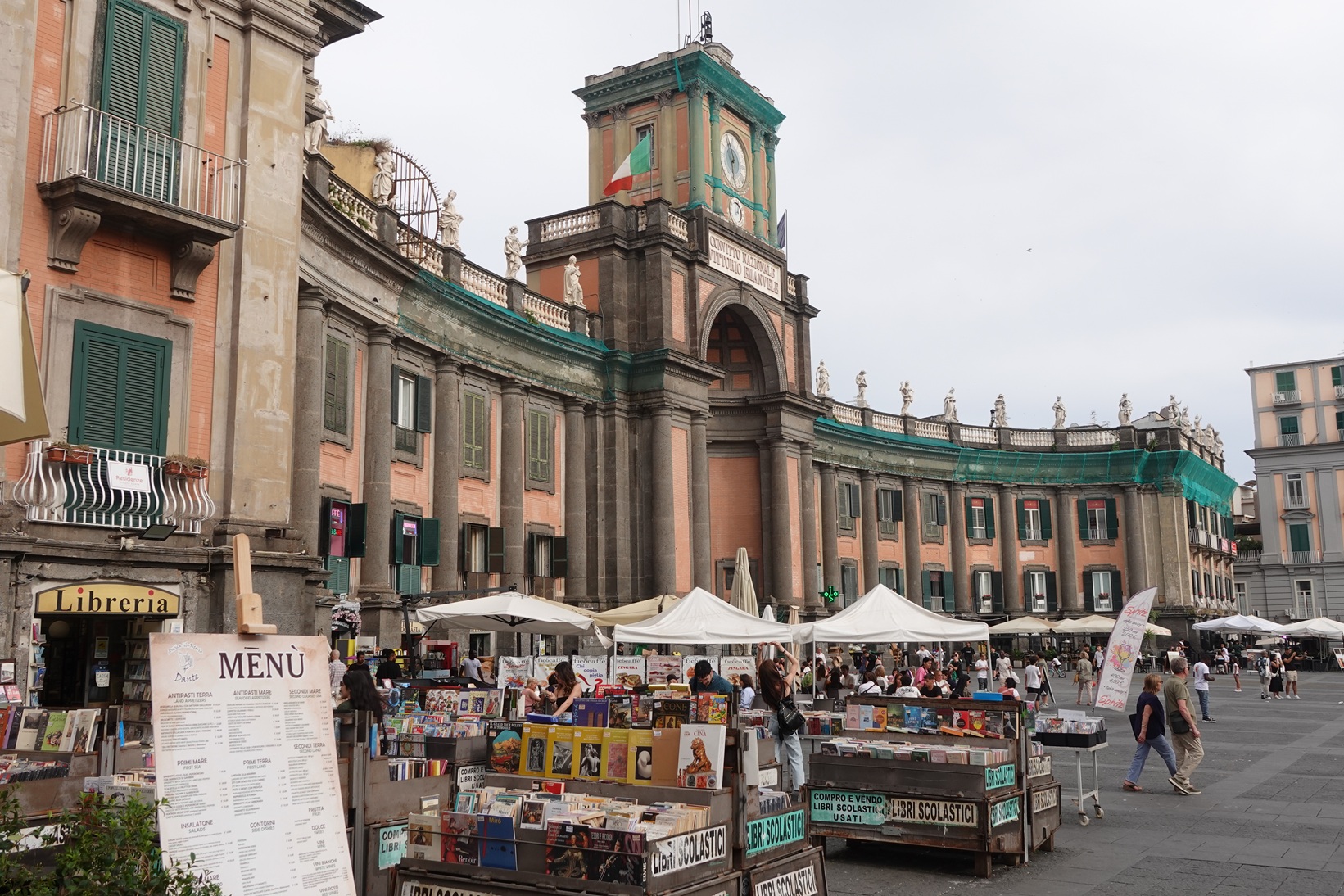
Piazza Dante, on the western edge of old Napoli. The curved building is the Convitto Nazionale, or National Boarding School. There is a staue to Dante, and busy book market, coming off a street full of bookshops.
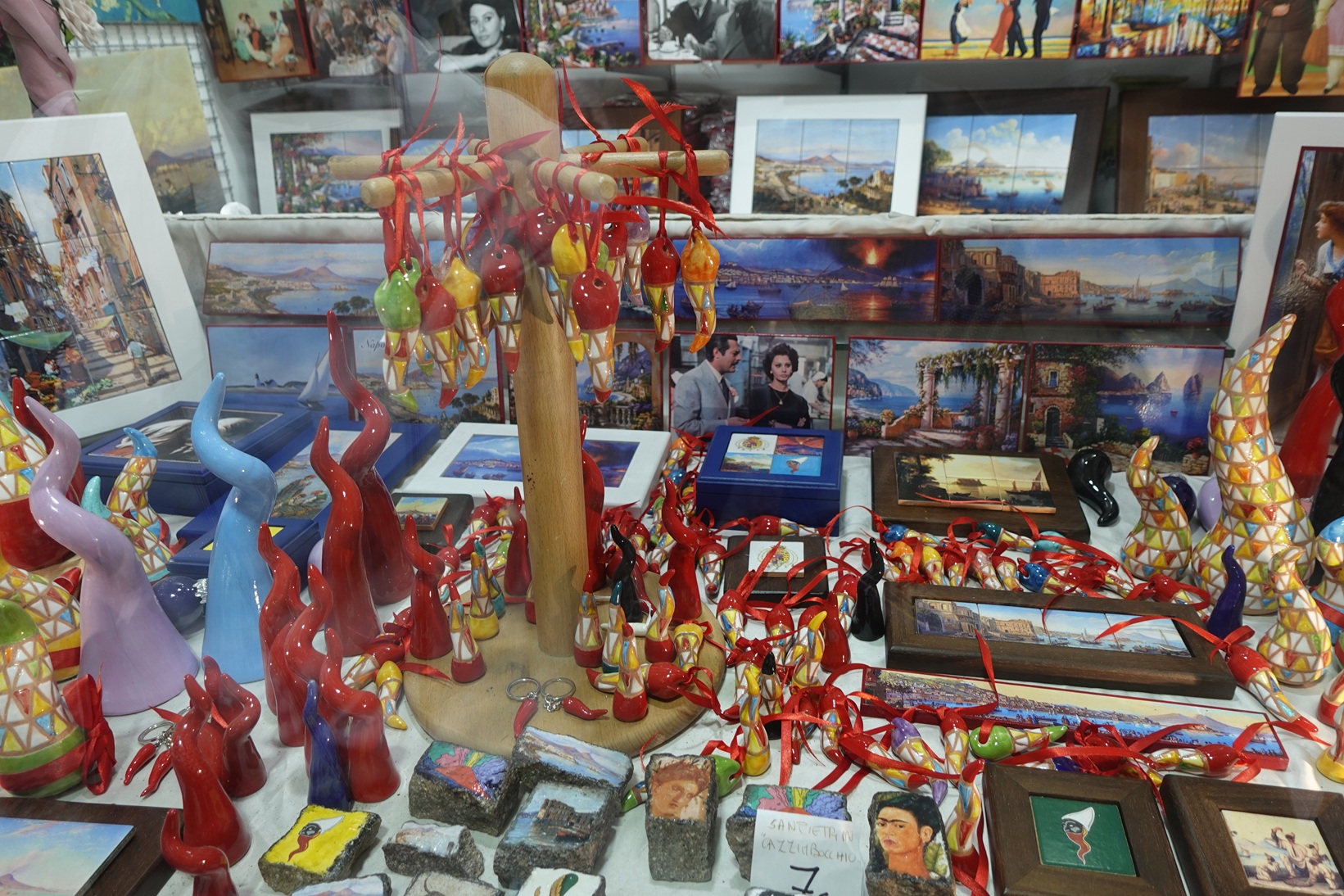
An icon of Naples is the cornicello, known locally as the cumiciello. This traditional amulet takes many forms, integrated in jewellery and good luck charms, it is meant to ward off evil. The traditional material is coral, but they can be of gold or silver, or for tourists plastic. They often have a coroncina, a crown of silver. Although it looks like a peperoncino, its shape represents the phallus of Priapus, the god of fertility.
The symbol dates back to the neolithic age, representing virility and fertility. The colour red recalls blood and fire, and the peperoncino form has the legend that it will burn the tongue of anyone who speaks badly of the amulet owner. According to legend, the lucky horn is associated with Amalthea, Zeus’s nurse.
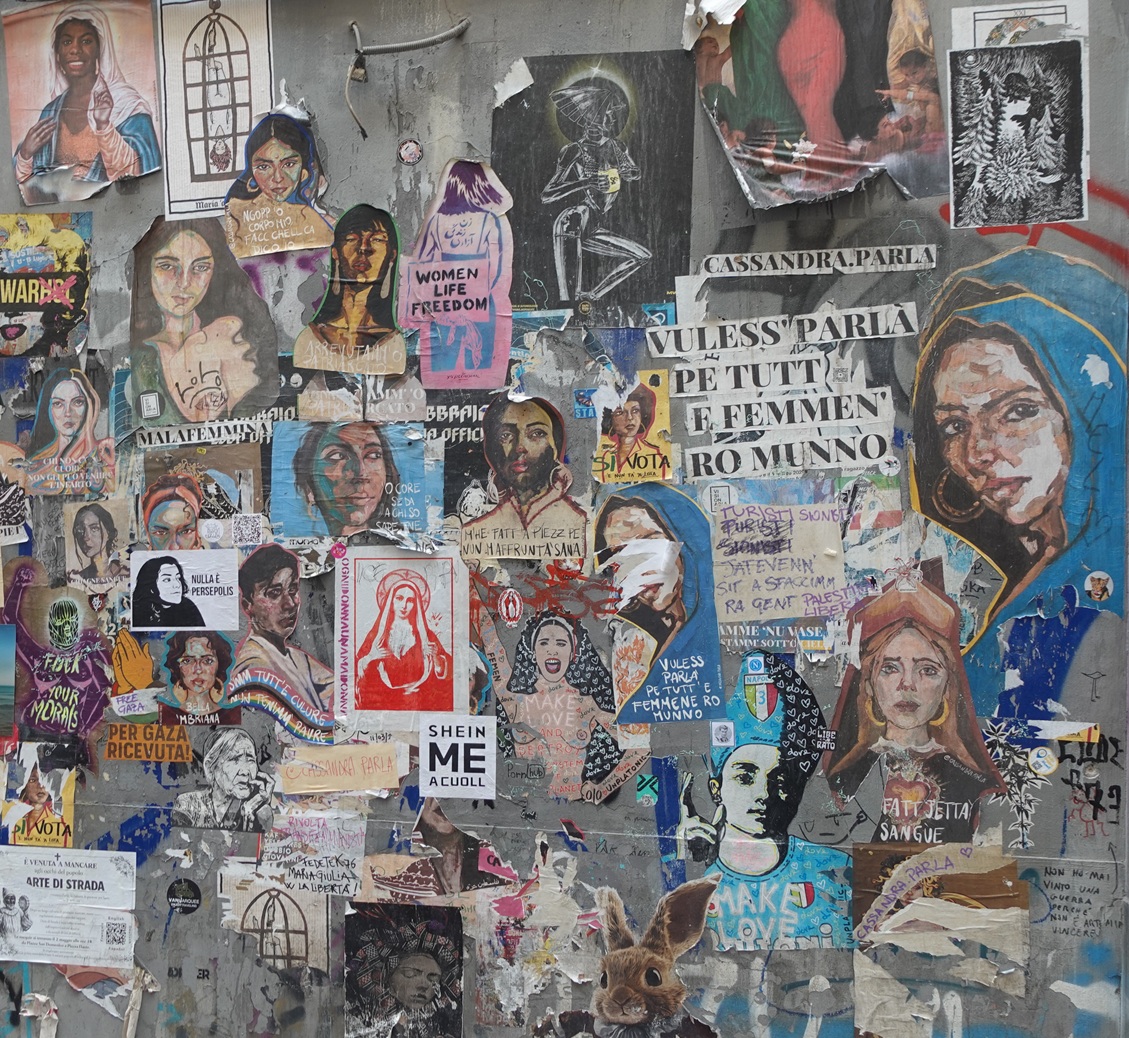
Graffiti and wall art is abundant.
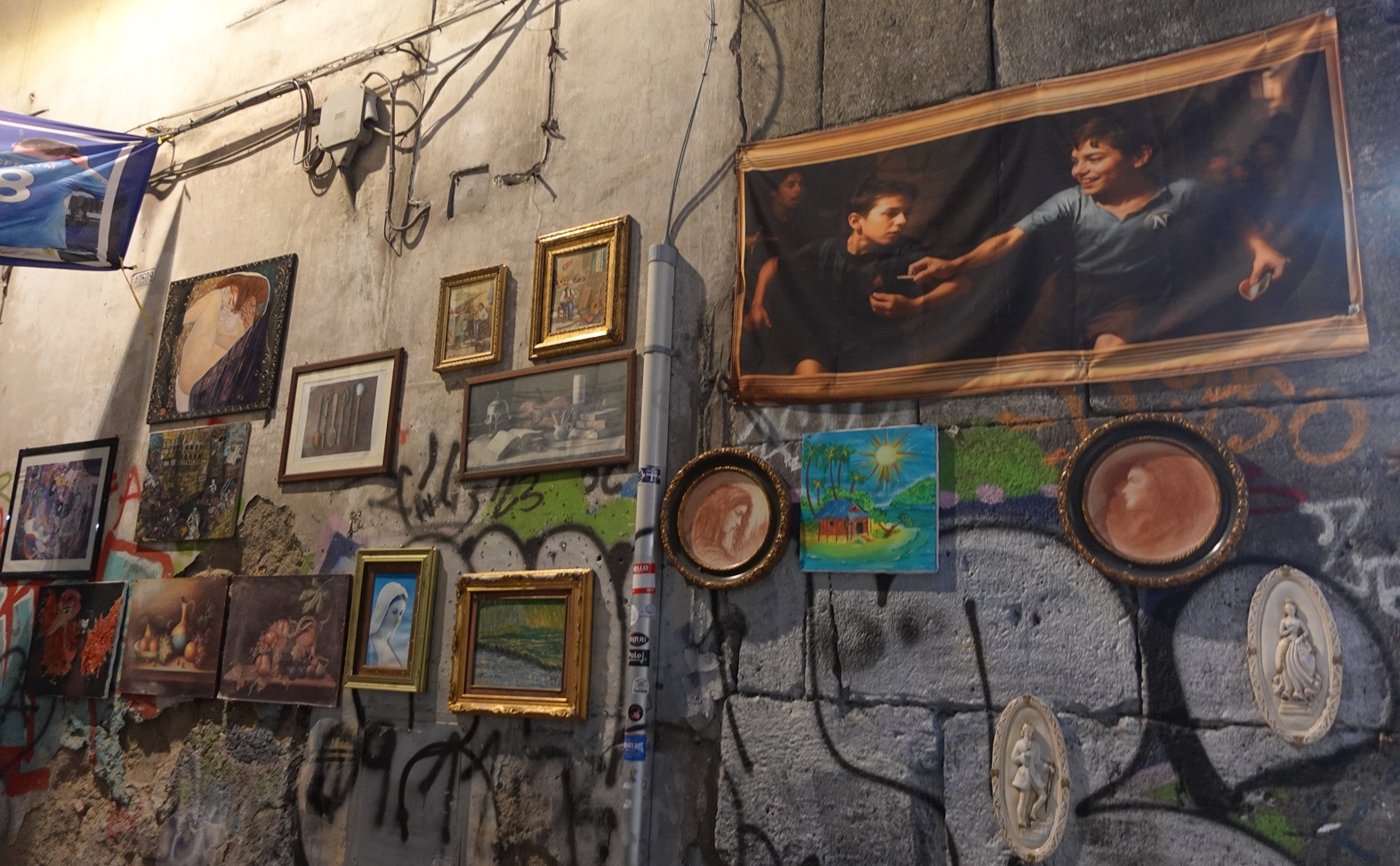
A display of artworks on a side alley wall.
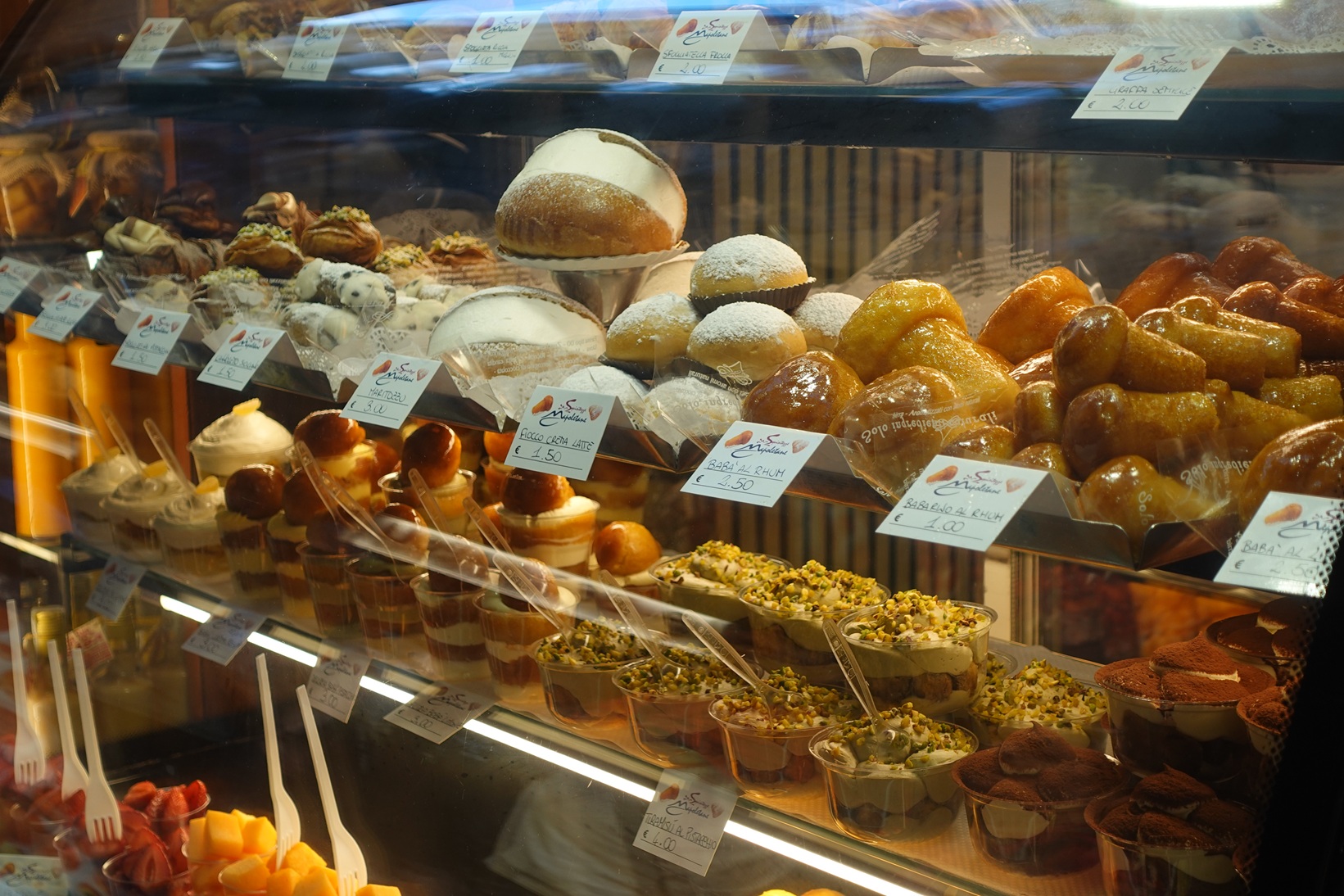
Naples offers a bewildering range of food, from pizzas to sweet pastries.