Rome-Naples June 2026
Day 9: Friday 12 June 2026
Museo Archeologico
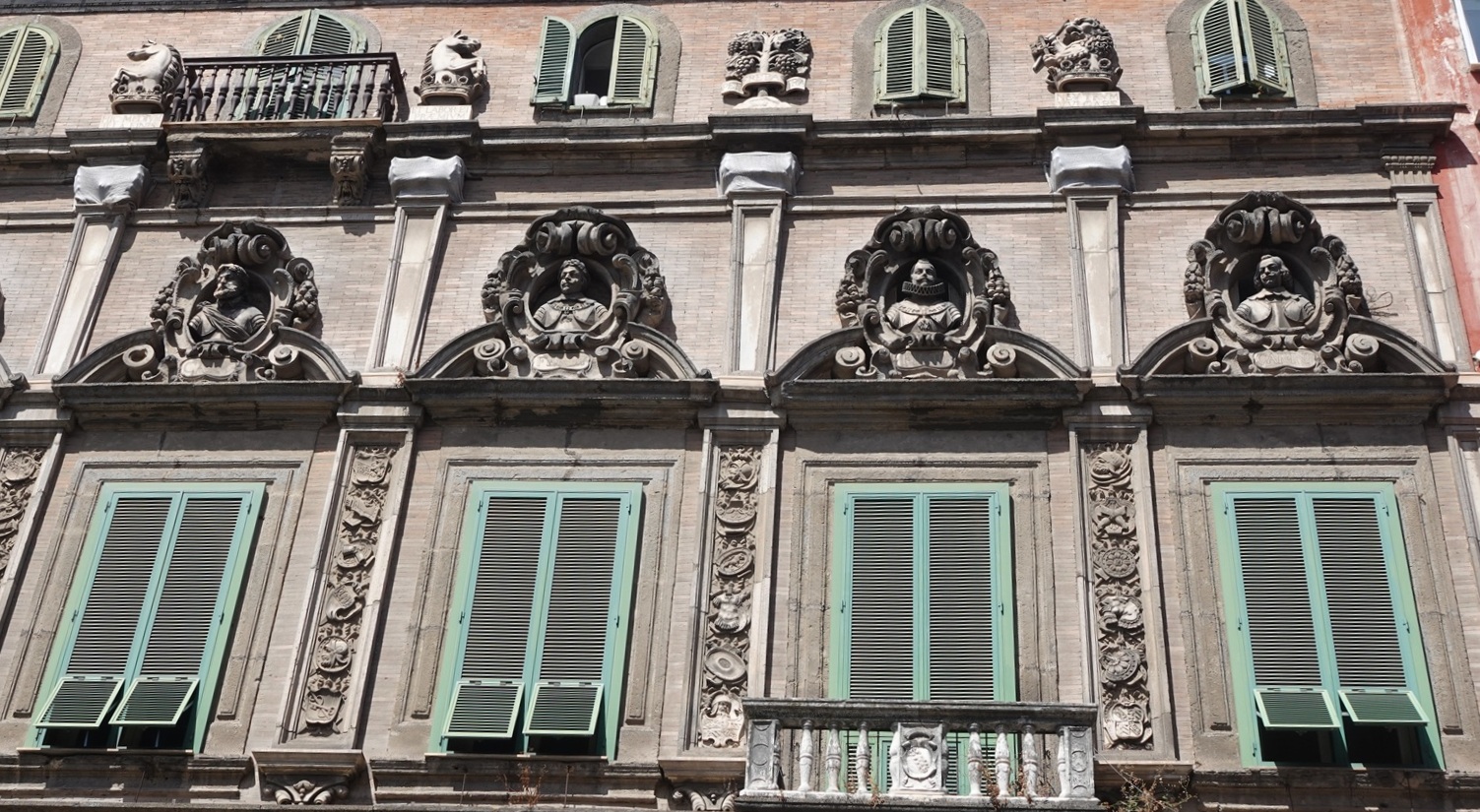
Buildings like this one attest to the incredible wealth of the elite, while the general populace was crammed into narrow alleyways.
The history of Naples and the territory south of the Papal States, including Sicily, is extremely complex. It was fought over and ruled by a succession of foreign powers: the Normans, the French, the Spanish, and the Austrians, in a baffling game of thrones. It became part of the new Kingdom of Italy, as a consequence of the liberation of Italy by Garibaldi, during the Risorgimento, by 1861. Today it is part of the Republic of Italy, following the referendum to abolish the monarchy in 1946.
Naples was conquered by Louis XII of France in 1501, starting a series of foreign rulers. In 1504, the Crown of Aragon, Spain, took over till 1714. The authority was the Spanish viceroys. From 1714-1734, the Austrians ruled.
During the War of the Polish Succession in 1734, Charles, Duke of Parma (Spanish Bourbons) was established as King of Naples and Sicily. In 1816, followiing the Napoleonic occupation and the throne held by Jerome Bonaparte, Naples unified with Sicily to form the Kingdom of the Two Sicilies.
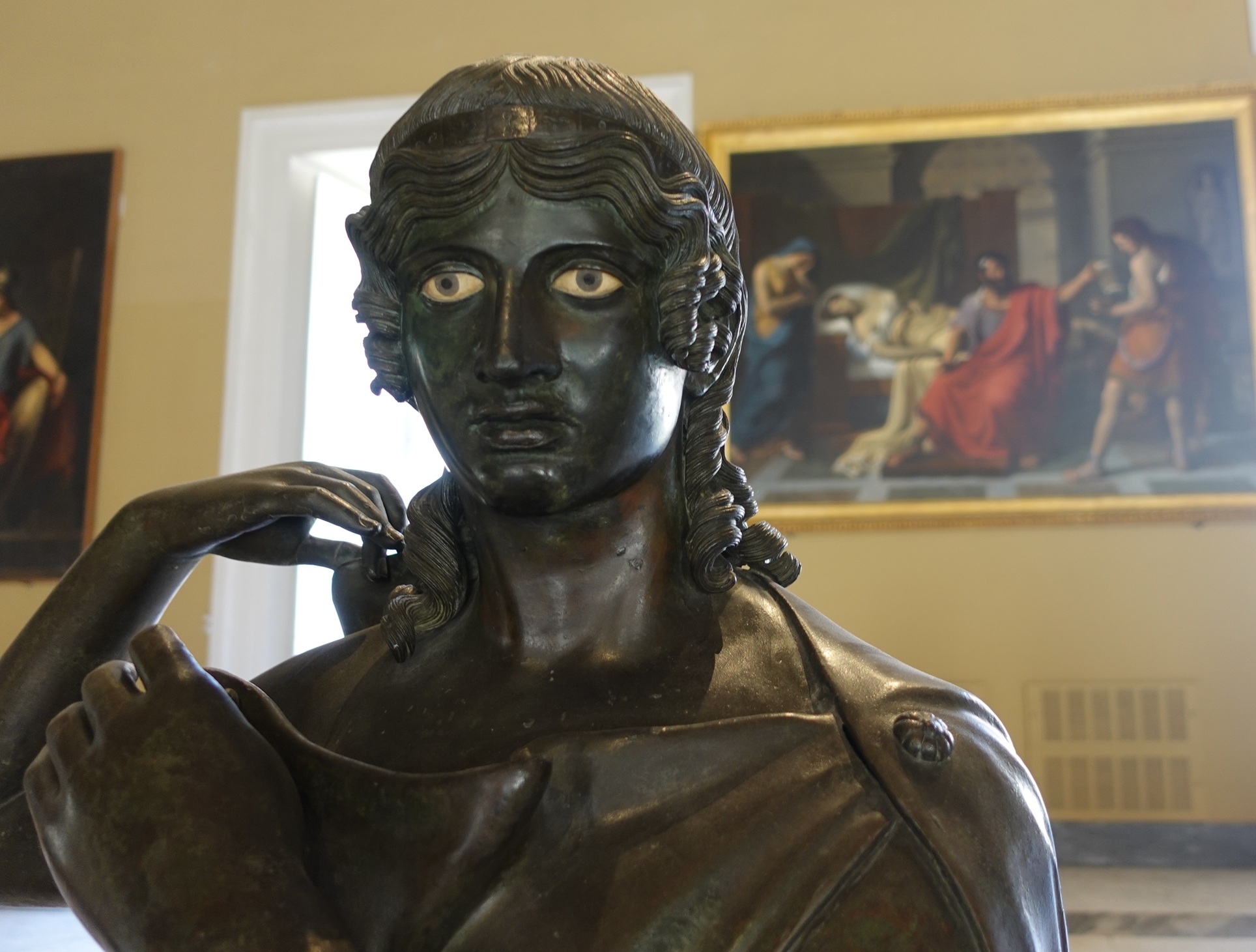
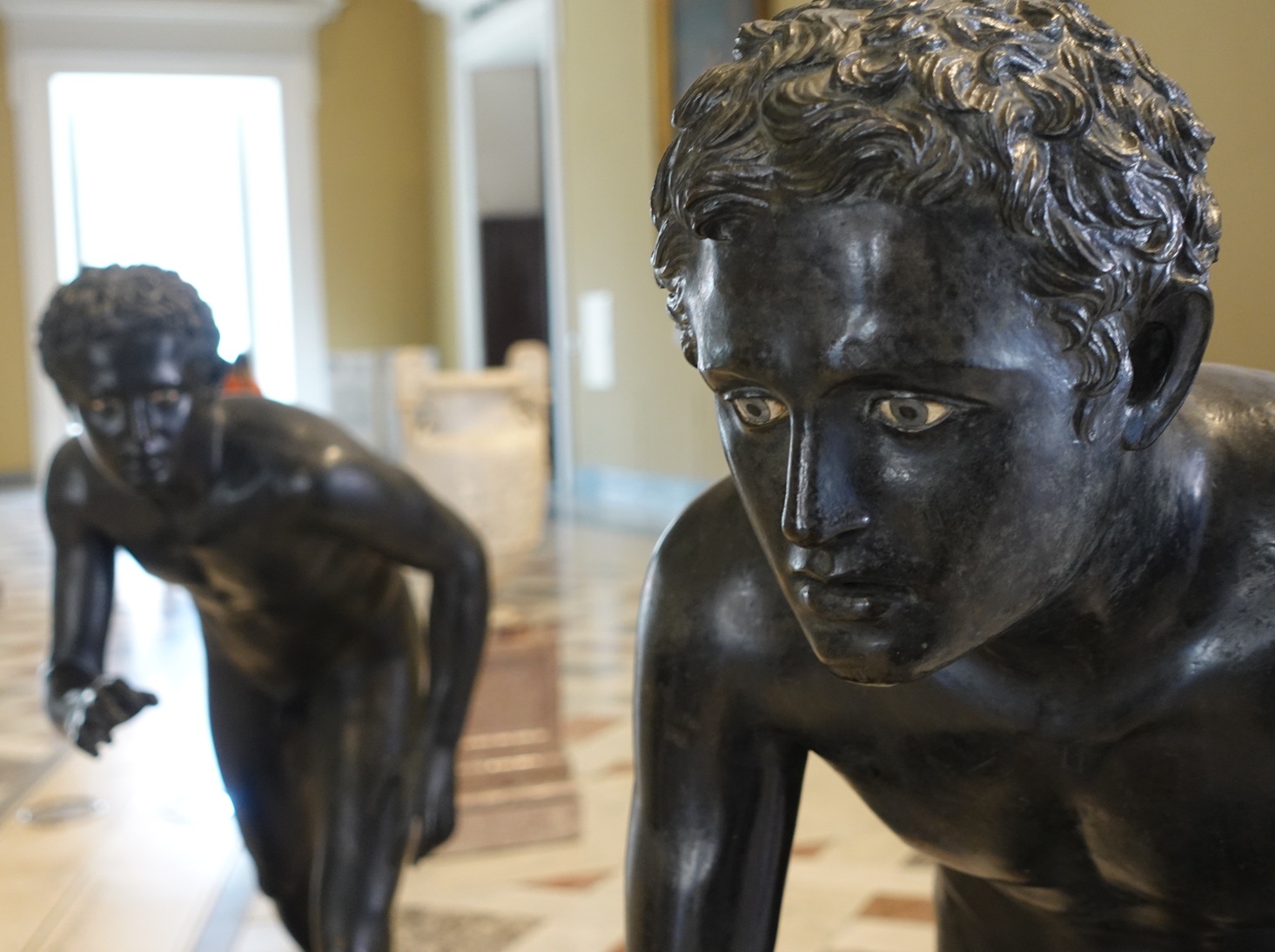
In this gallery of the National Archaeological Museum, some of the statues had beautiful contrasts of white eyes in black stone.
The museum houses the most important collection of artifacts recovered from the 18th century from the sites of Pompeii and Herculaneum. The building was built originally as a cavalry barracks in 1585, then from 1616 till 1777 it became the seat of the University of Naples, before becoming a museum, with many alterations, through the 19th century. It boasts half a million visitors a year.
National Archeological Museum
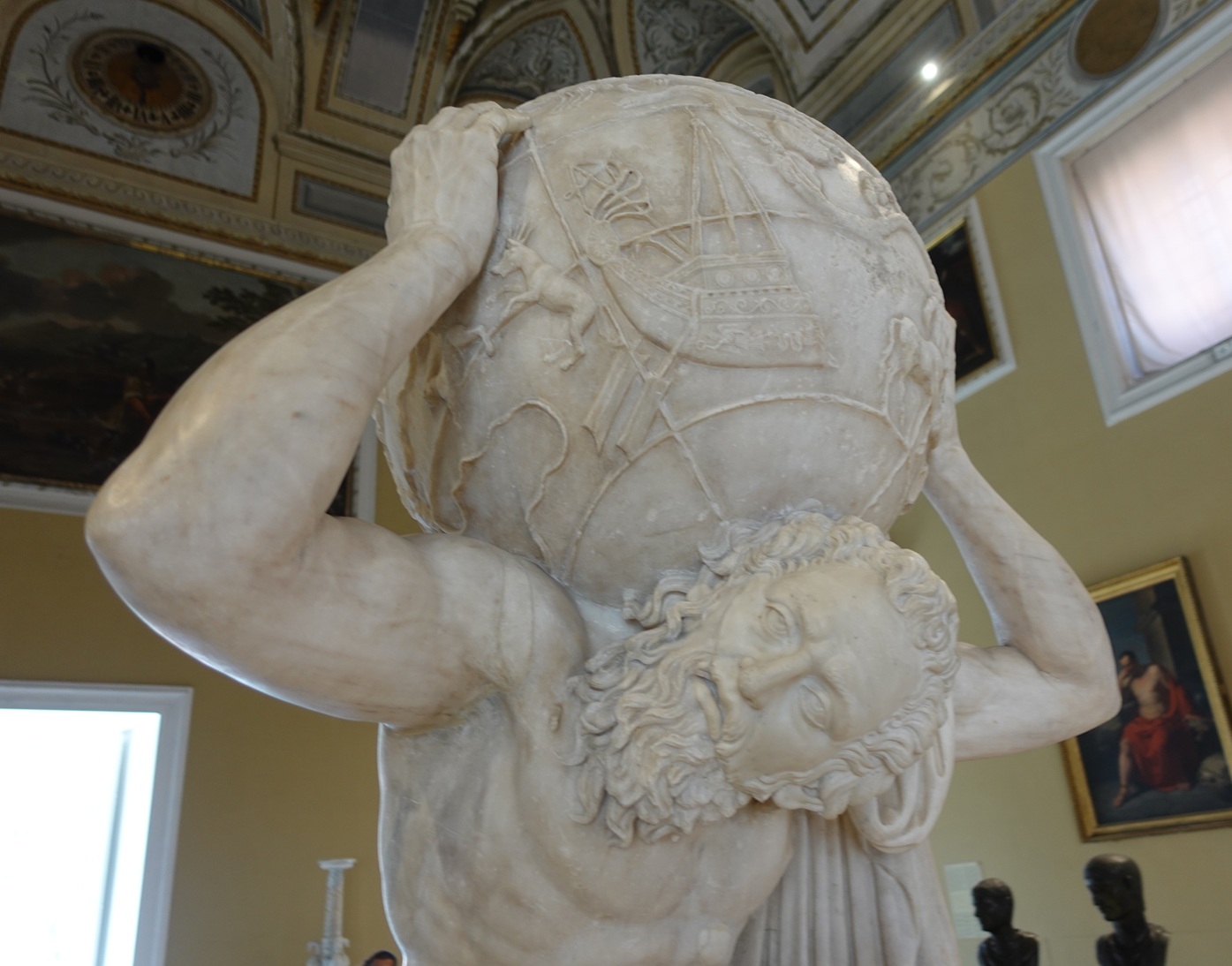
Farnese Atlas. Sculpture of Atlas with Farnese Globe on his shoulders. Roman Copy of Hellenistic original, 2nd Century AD.
Atlas seems to be having a hard time of it, supporting the world. That is why he tricked Heracles (Hercules) into taking the globe for a while. The Farnese Atlas is the oldest extant depiction of Atlas from Greek mythology, and the oldest view of the Western constellations, possibly based upon the star catalog of Hipparchus.
The Farnese Collection
So named after Cardinal Alessandro Farnese (1520-1589), a great collector of the arts, and Archpriest of Saint Peter’s Basilica. Alessandro Farnese is remembered for gathering the greatest collection of Roman sculpture assembled in private hands since Antiquity. Most of this collection is held by the Archeology Museum in Naples, as it passed by inheritance to the Bourbon-Parma kings.He also created one of the first botanical gardens in Europe in 1550, after acquiring a northern part of the Palatine Hill, over the palace built by the Roman Emperor Tiberius (14-37 CE).
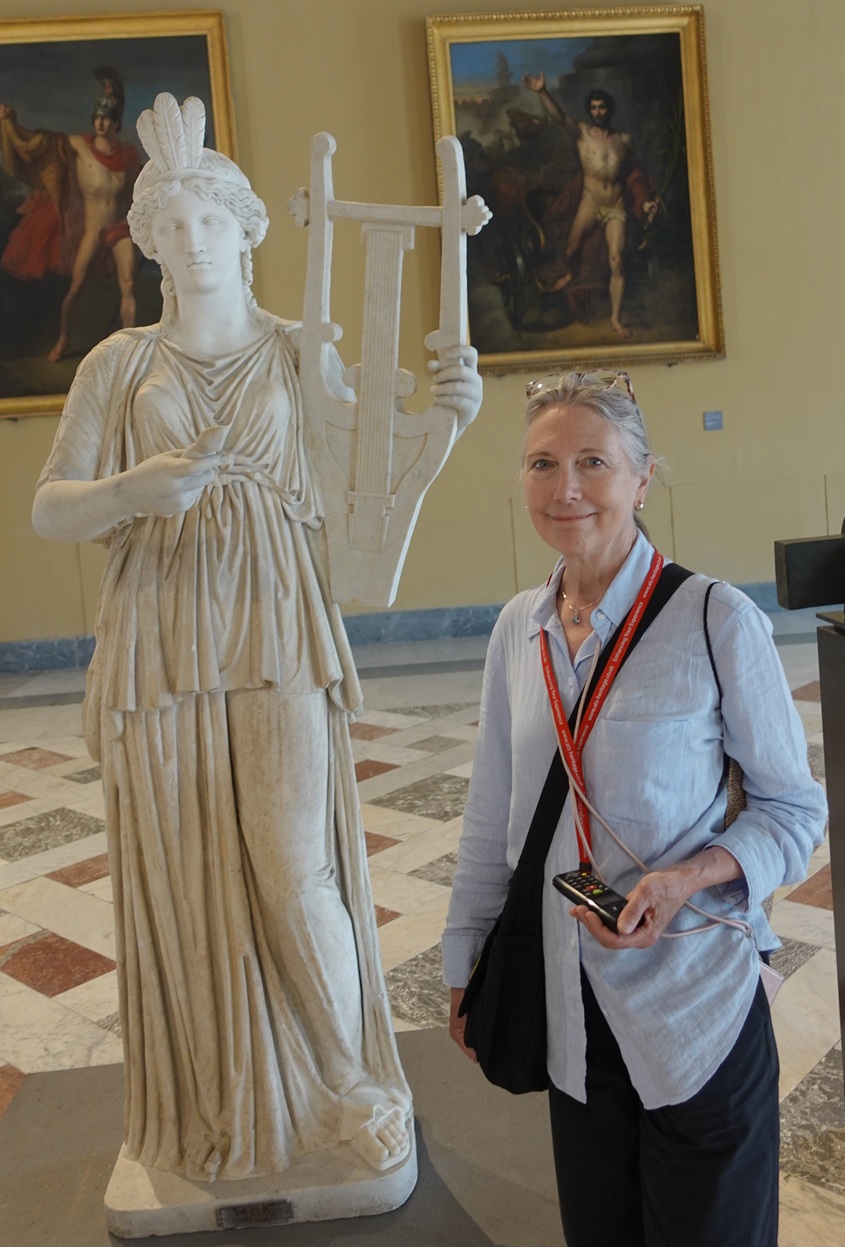
Cindy and the goddess.
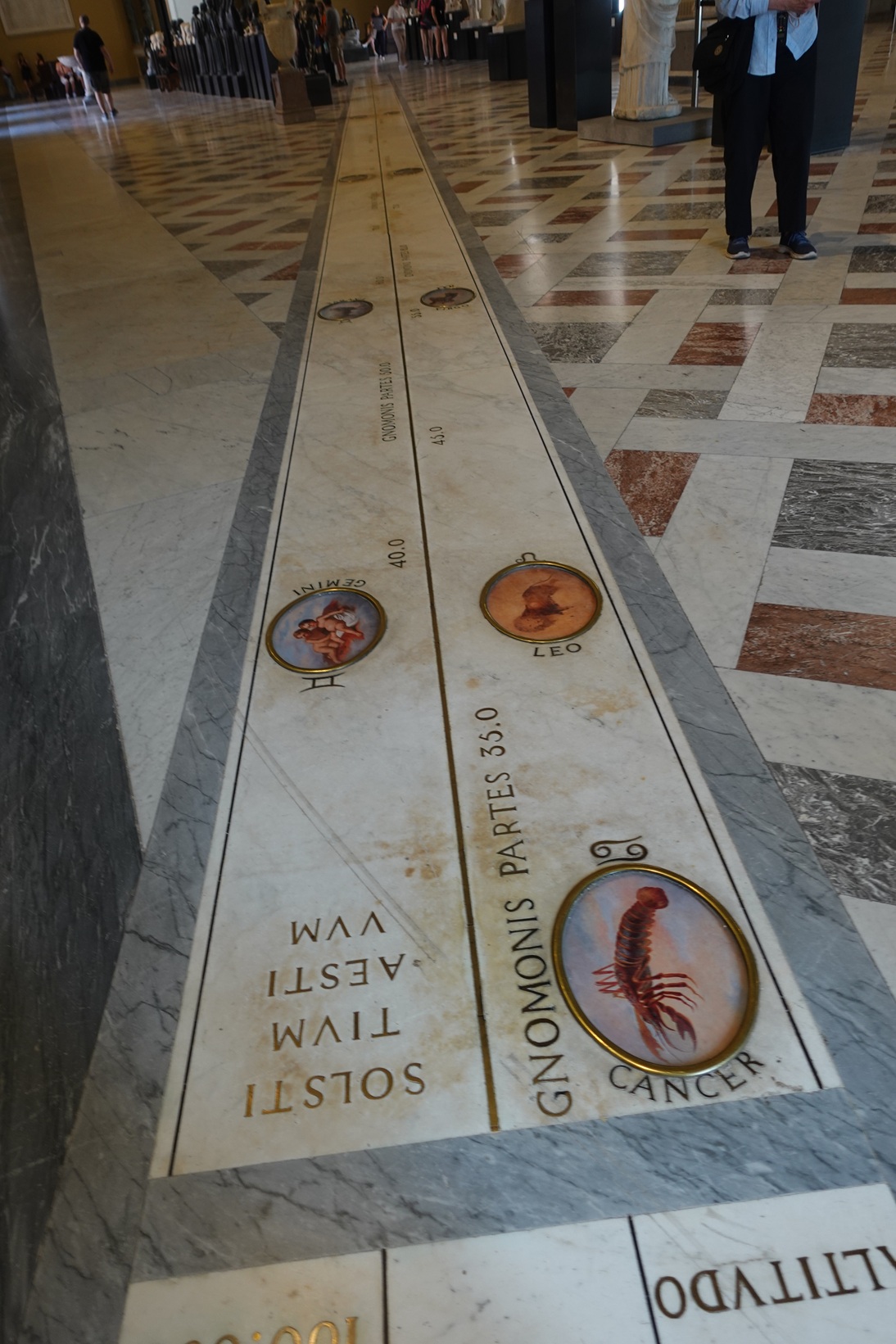
This beautiful solar calendar displays the day of the year via a point of sunlight coming through a tiny aperture in the southern wall once a day at midday.
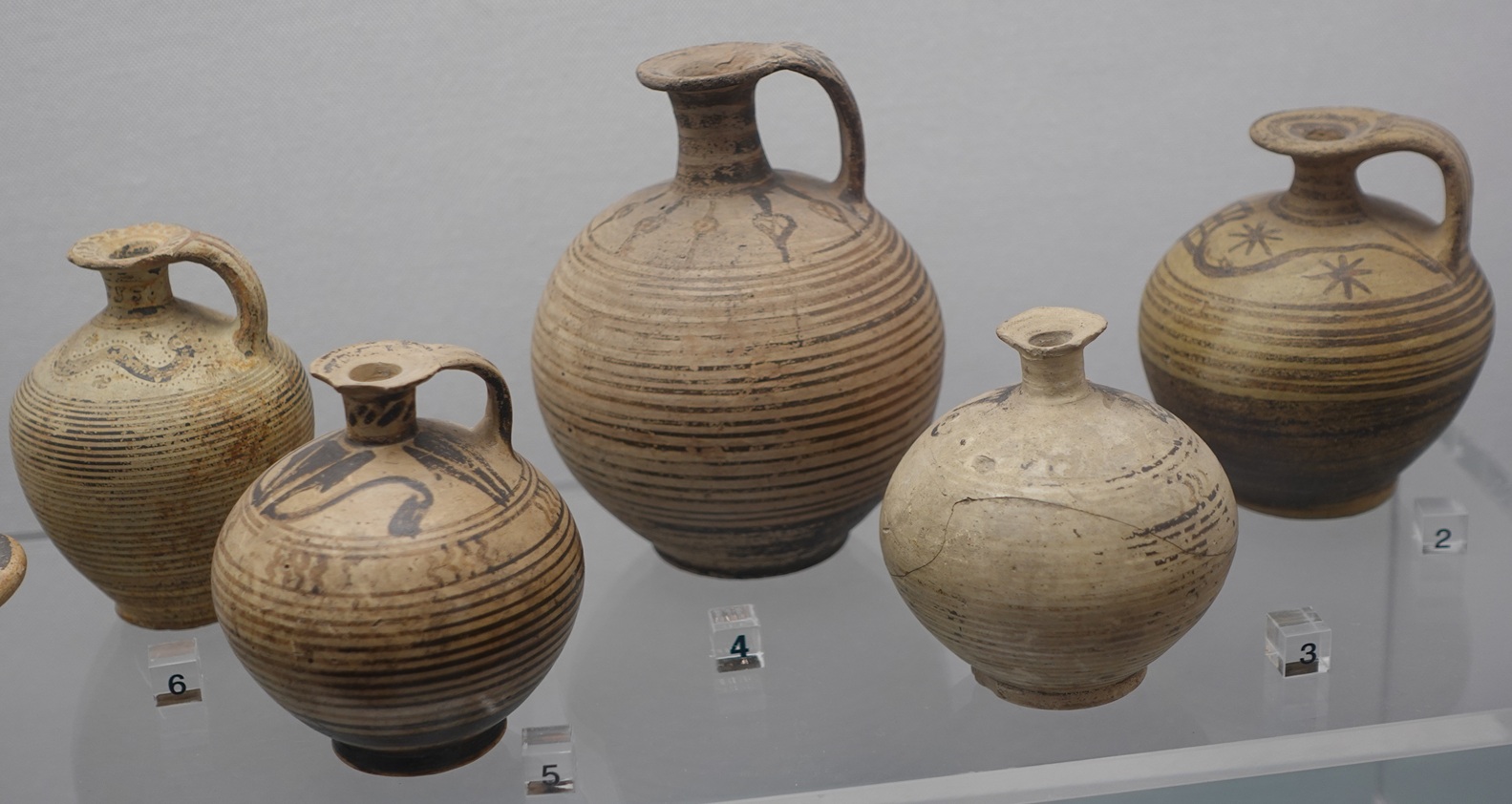
Pottery
Collezione Spinelli, Necropoli di Suessula (Acerra, Napoli). Impasto ware verssels, 8-7th centuries BCE.
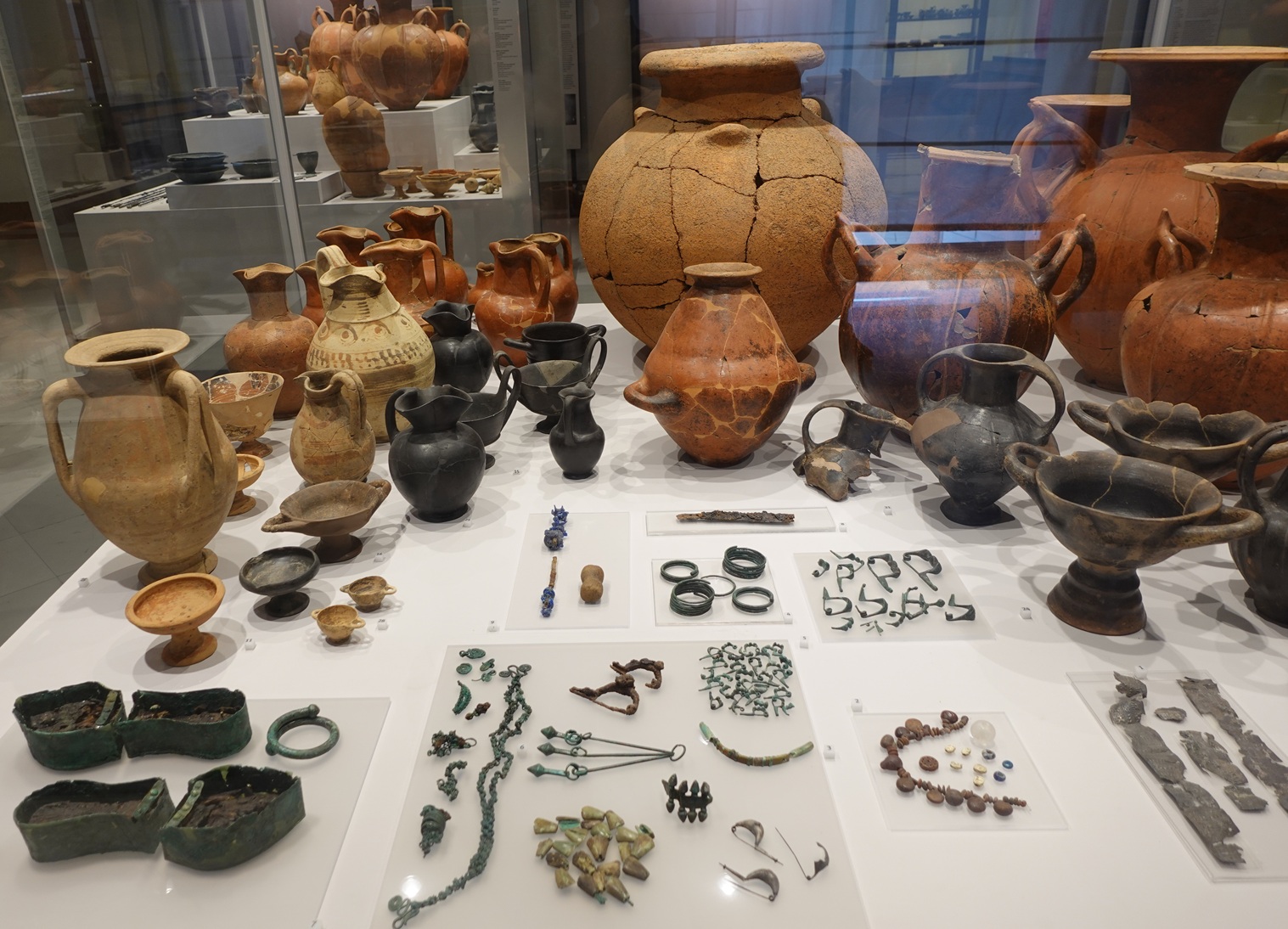
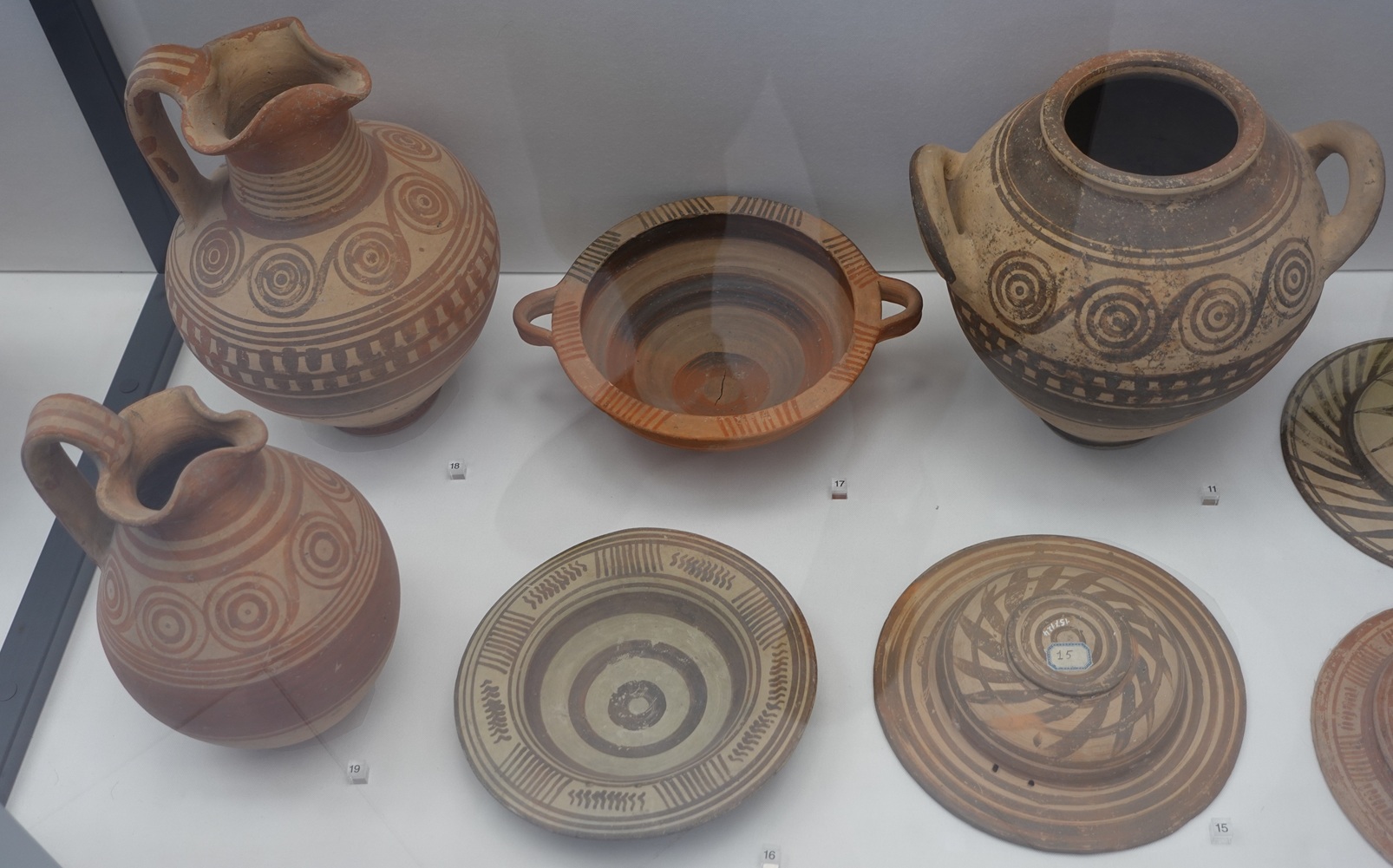
Pottery from Cales (Calvi Risorta), the Necropolis of Magliaro, 600-560 BCE, excavated in 1997.
In the tomb, a rectangular pit, a 6-8-year-old girl lay buried. There were a stunning 120 objects placed with her in the tomb. It was a bridal assemblage that would have accompanies her throughout her life, and indicates the rank and her role in the family and community.
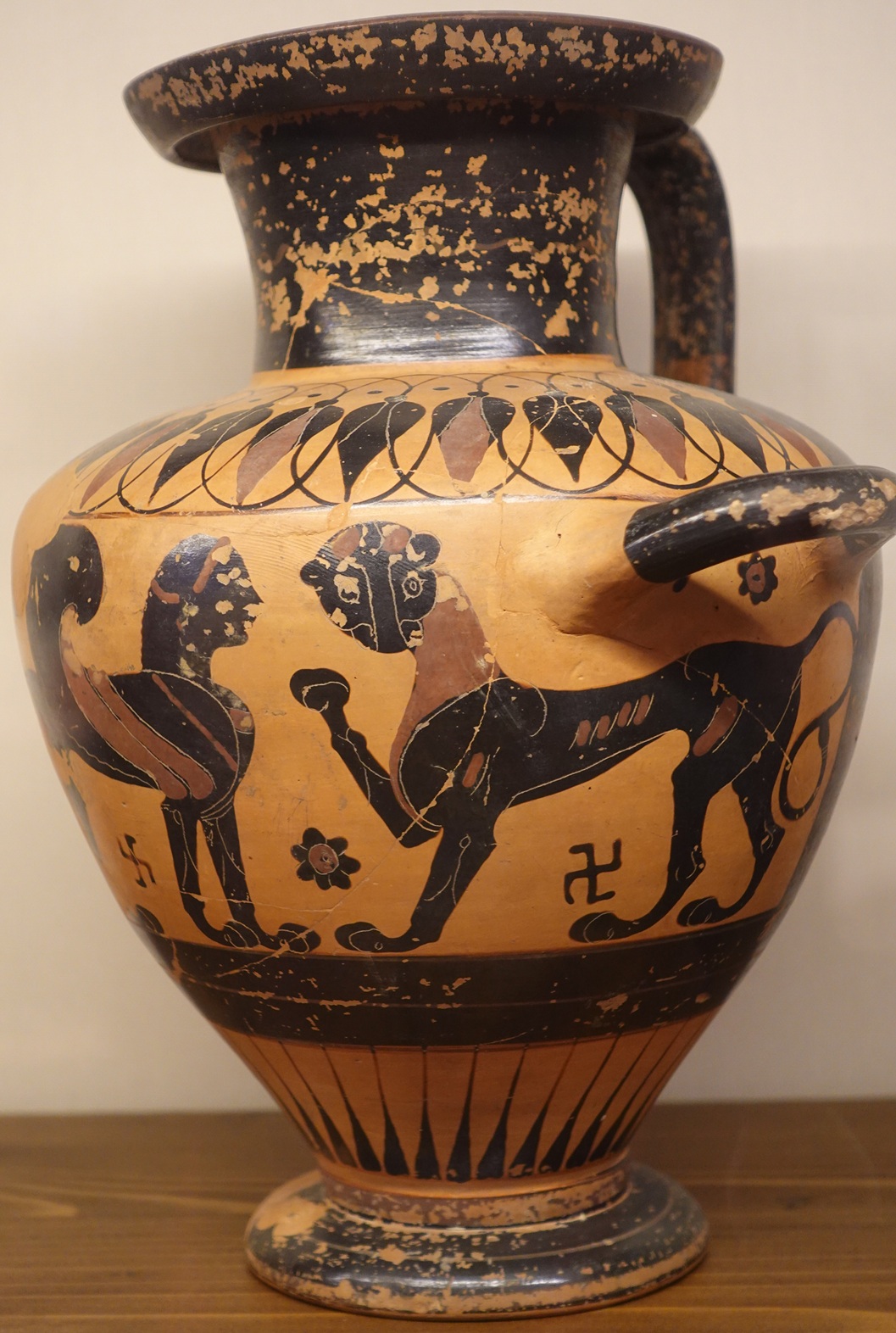
Ceramica a figure nere, VII-VI BCE. This is of the style “black on yellow”. Notice the swastika-like symbol, an ancient symbol of good luck. Of course, the Nazis inverted both its meaning and its orientation.
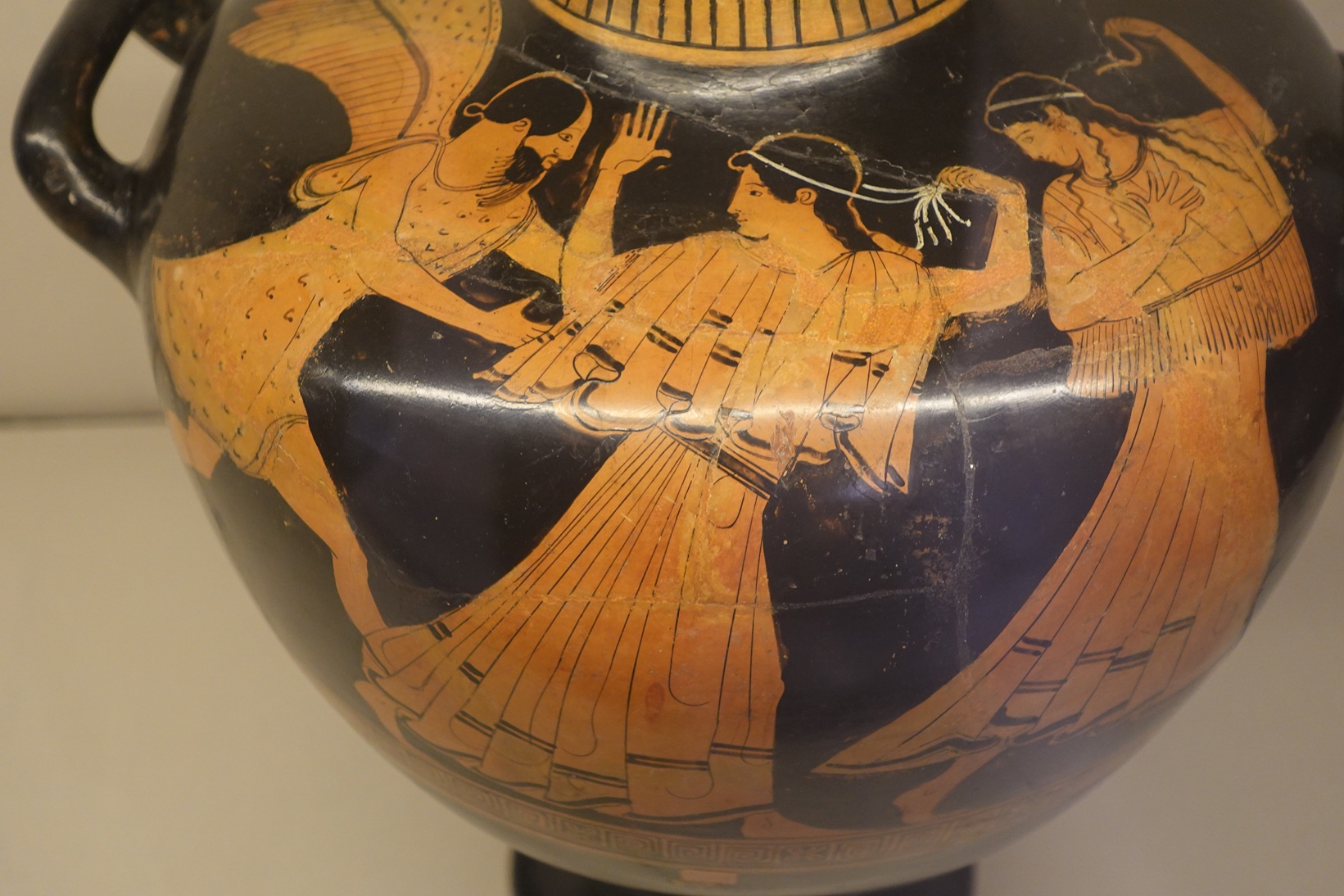
Water-carrying vessel (hydria). Red-figure pottery. Hercacles fighting the lion. Circle of the Pan Painter, 475-450 BCE.
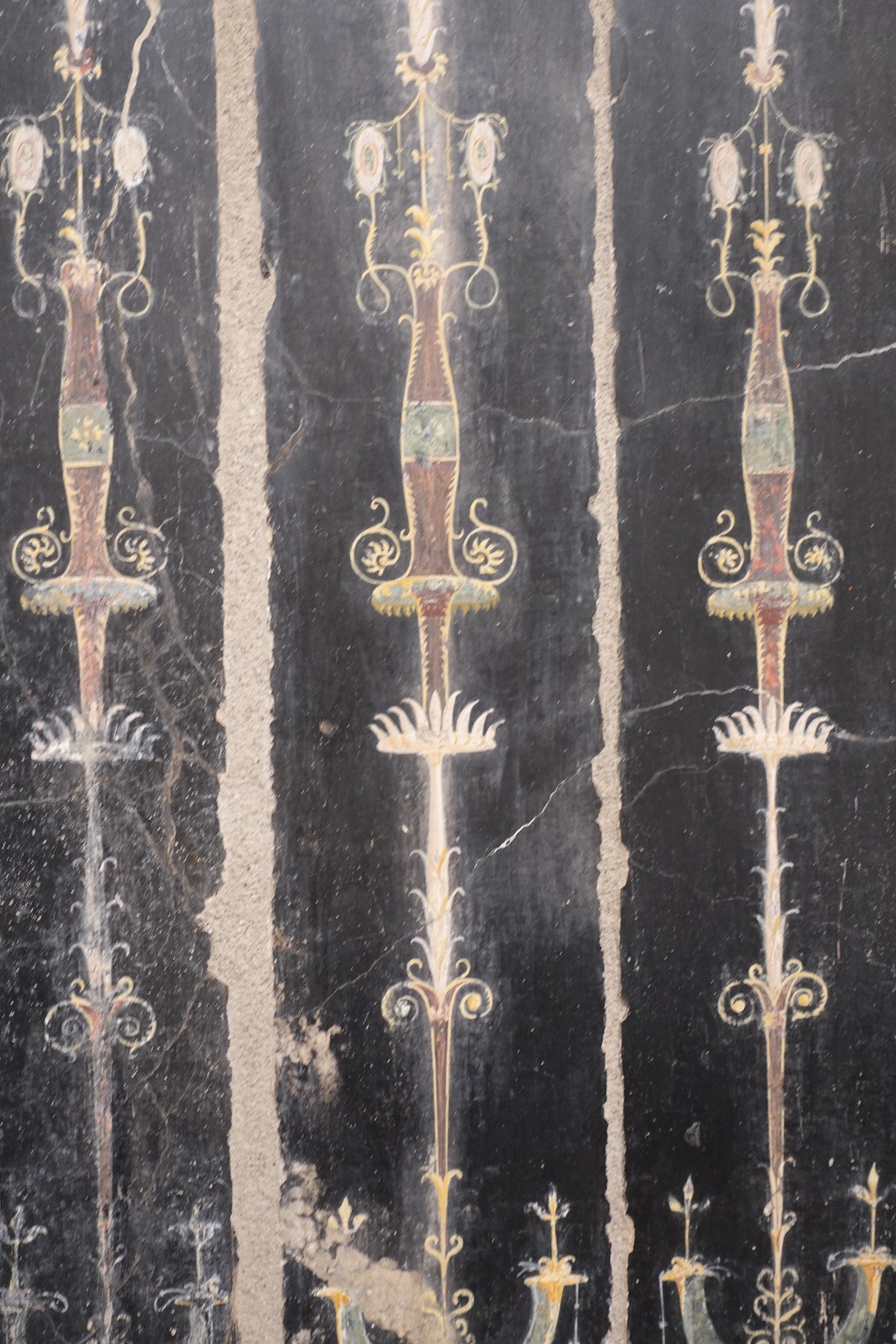
Wall decorations taken from Pompeii
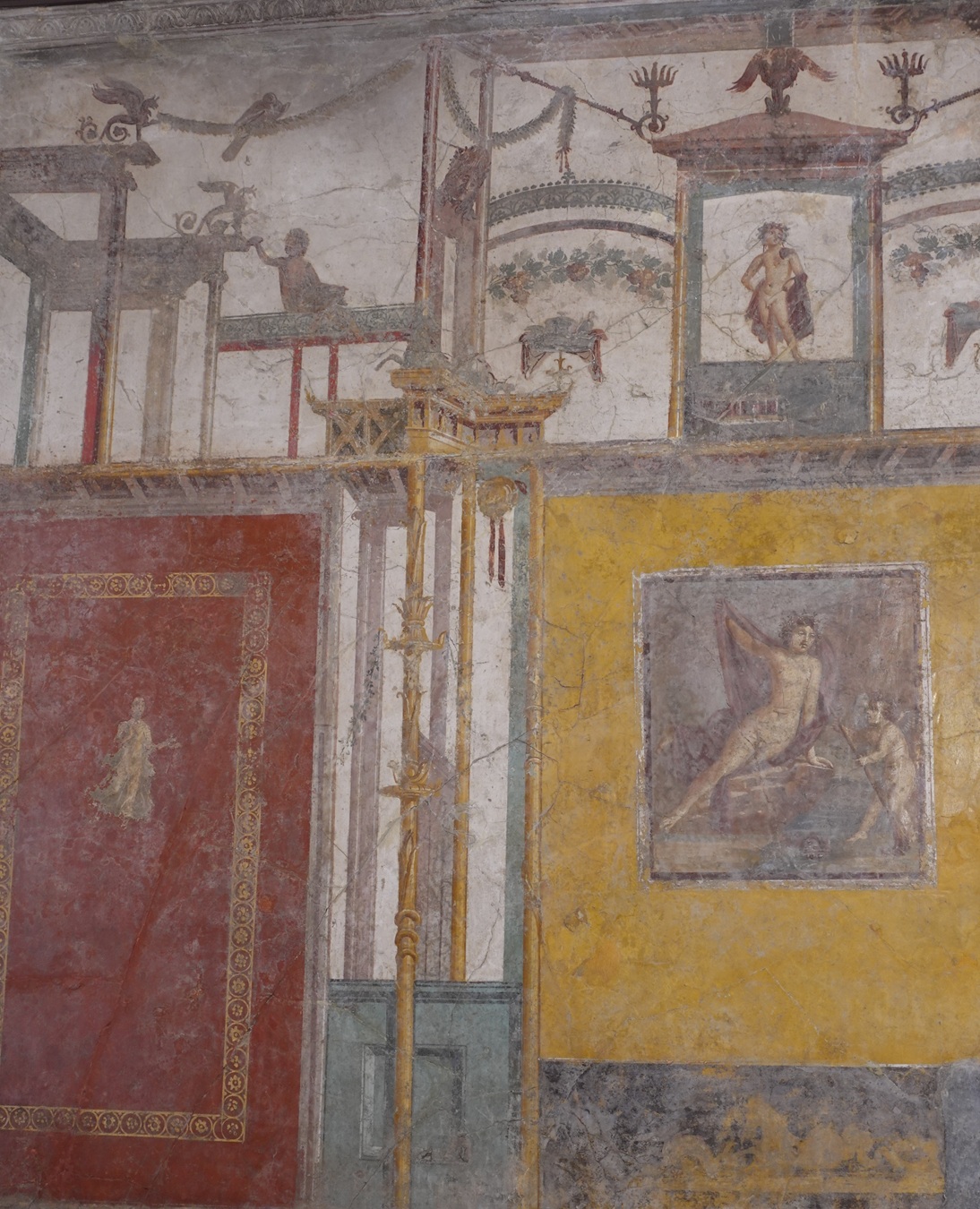
Wall decorations taken from Pompeii
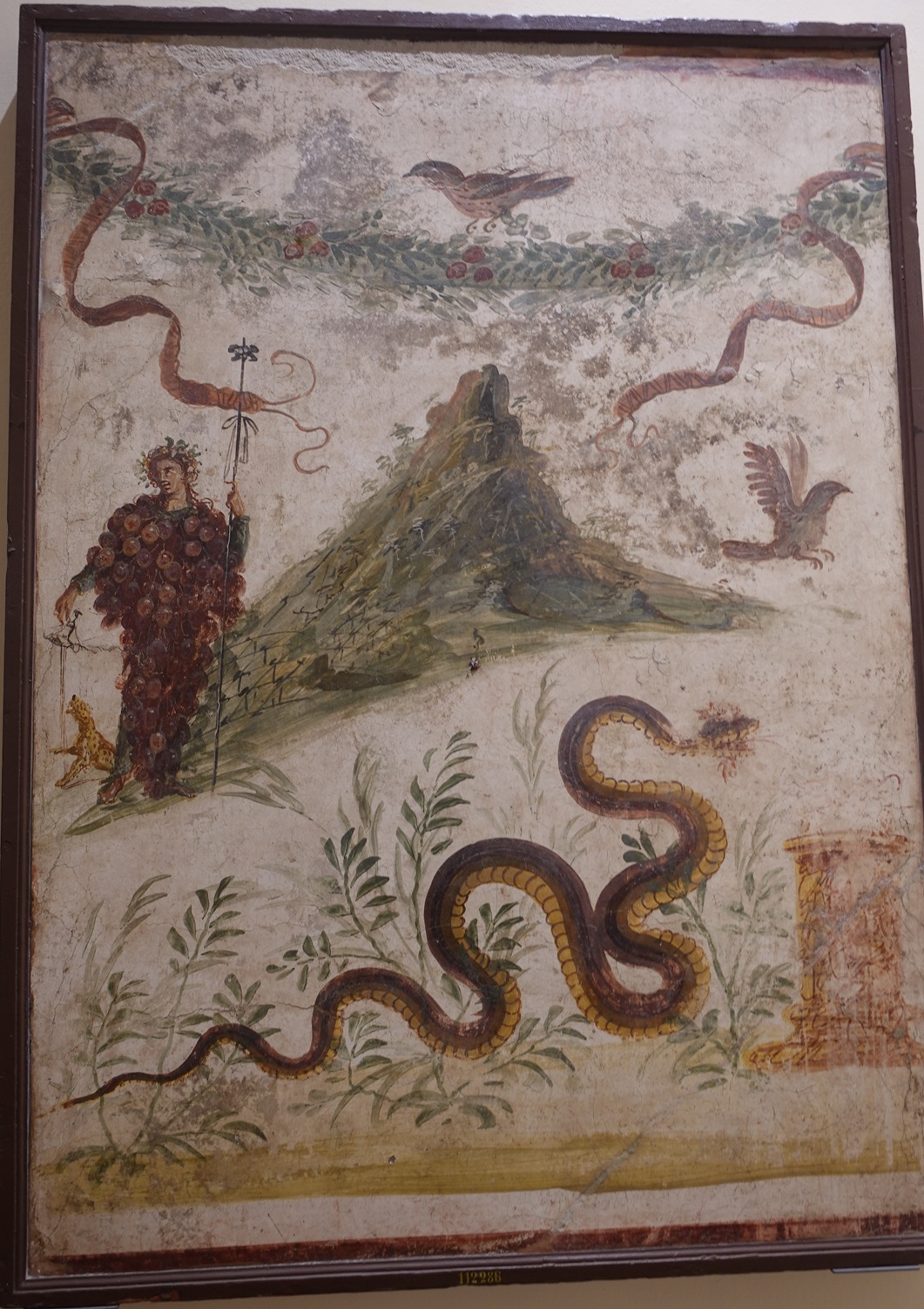
Wall decorations taken from Pompeii. Notice the illustration of Mount Vesuvius prior to the eruption. The figure on the left is Bacchus, dressed rather bizarrely in a costume made of grapes!
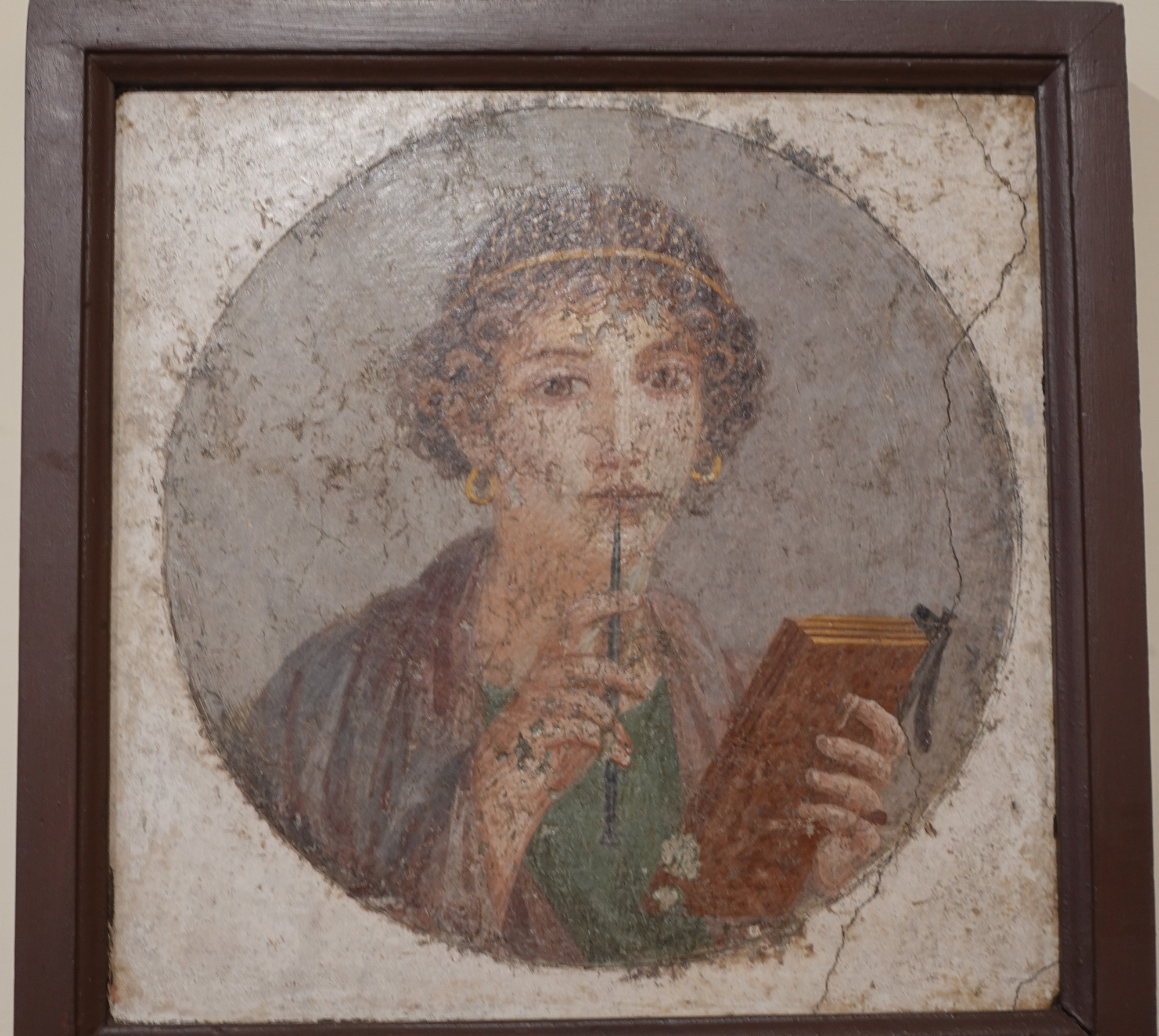
The theme of a young girl contemplating what to write on a wax tablet seemed to have been a meme around Pompeii. La cosidetta Saffo da Pompeii. The so called Sappho of Pompeii. There were three versions of this in this display.
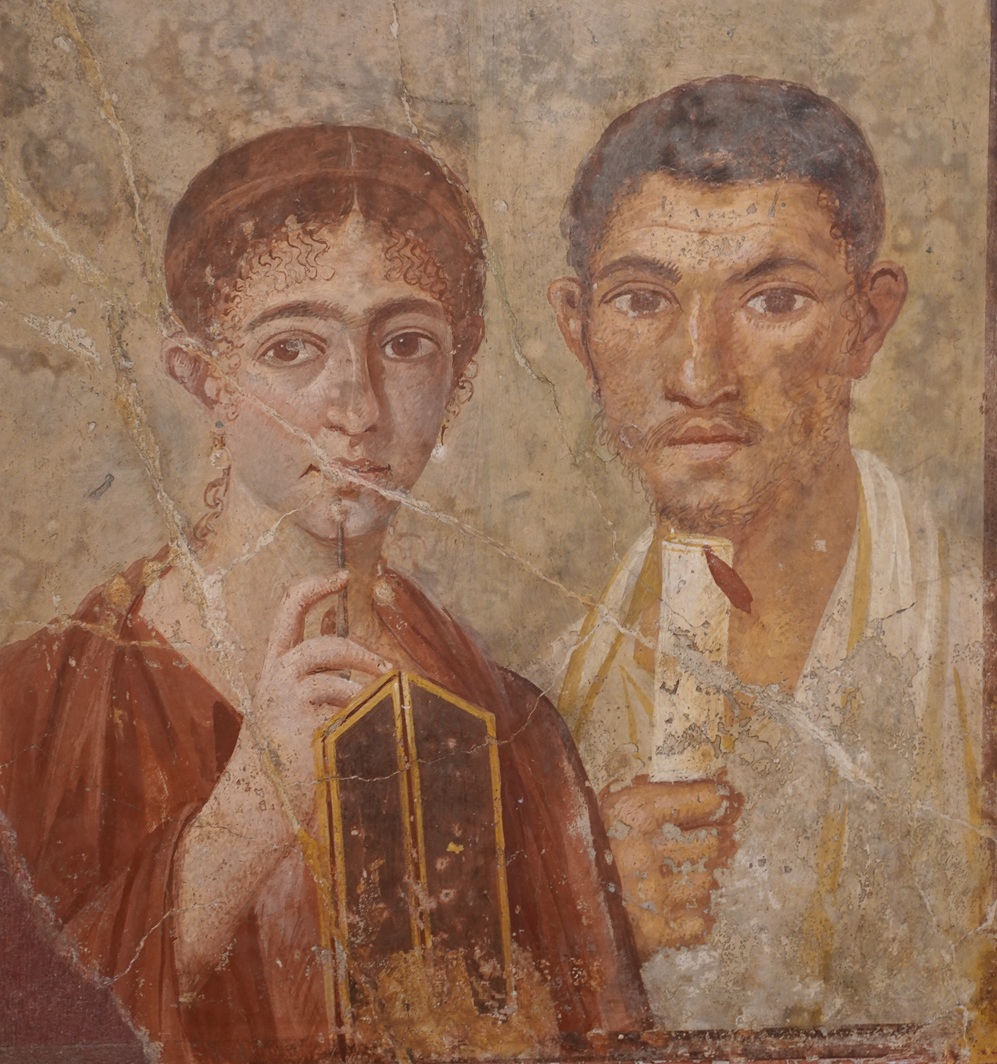
Wax tablet contemplation was all the rage in downtown Pompeii…
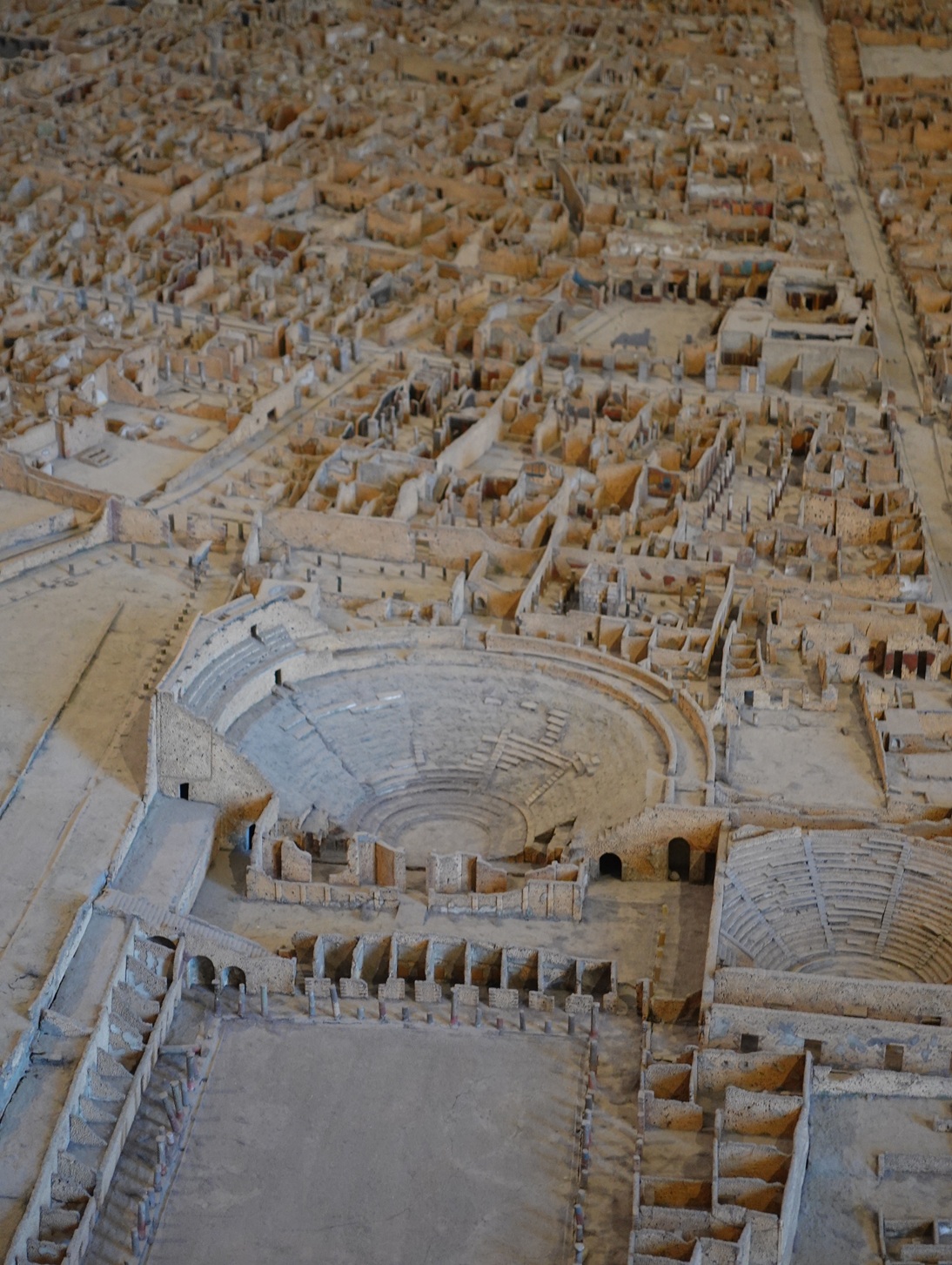
An 1891 model of Pompeii astounds in its minute detail.
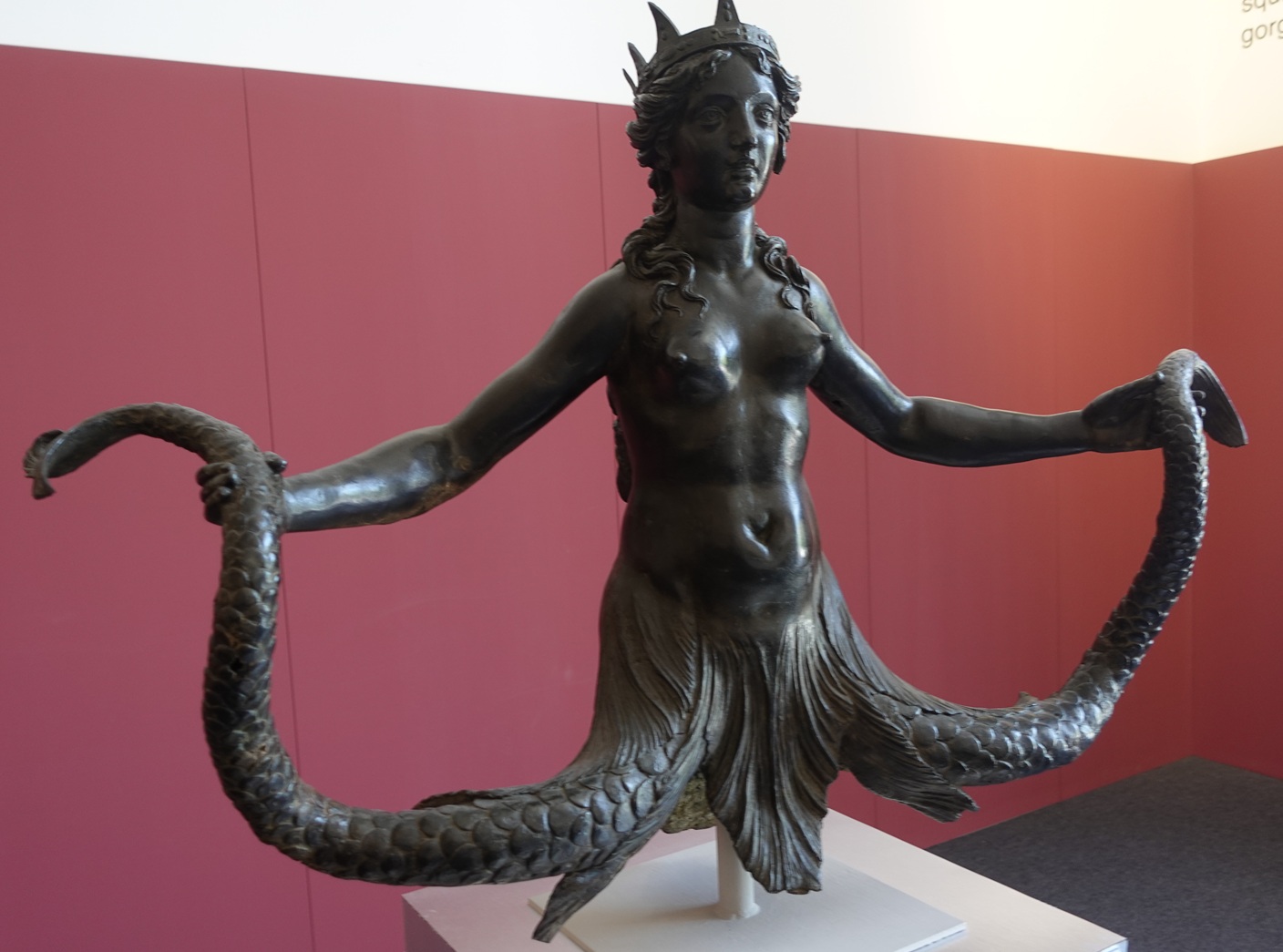
Parthenope the Siren (bronze, c. 1600 CE) is an icon of Naples. Drawn from the legend of Odysseus in the Odyssey, by Homer, who famously was bound to the mast, so that he could hear the sirens, and yet not be drawn by the beauty of their deadly call to wreck his ship like so many predesessors. This happened in the Bay of Naples, so the city is full of variations on the theme. Sirens could be half maiden and half something else, often a fish.
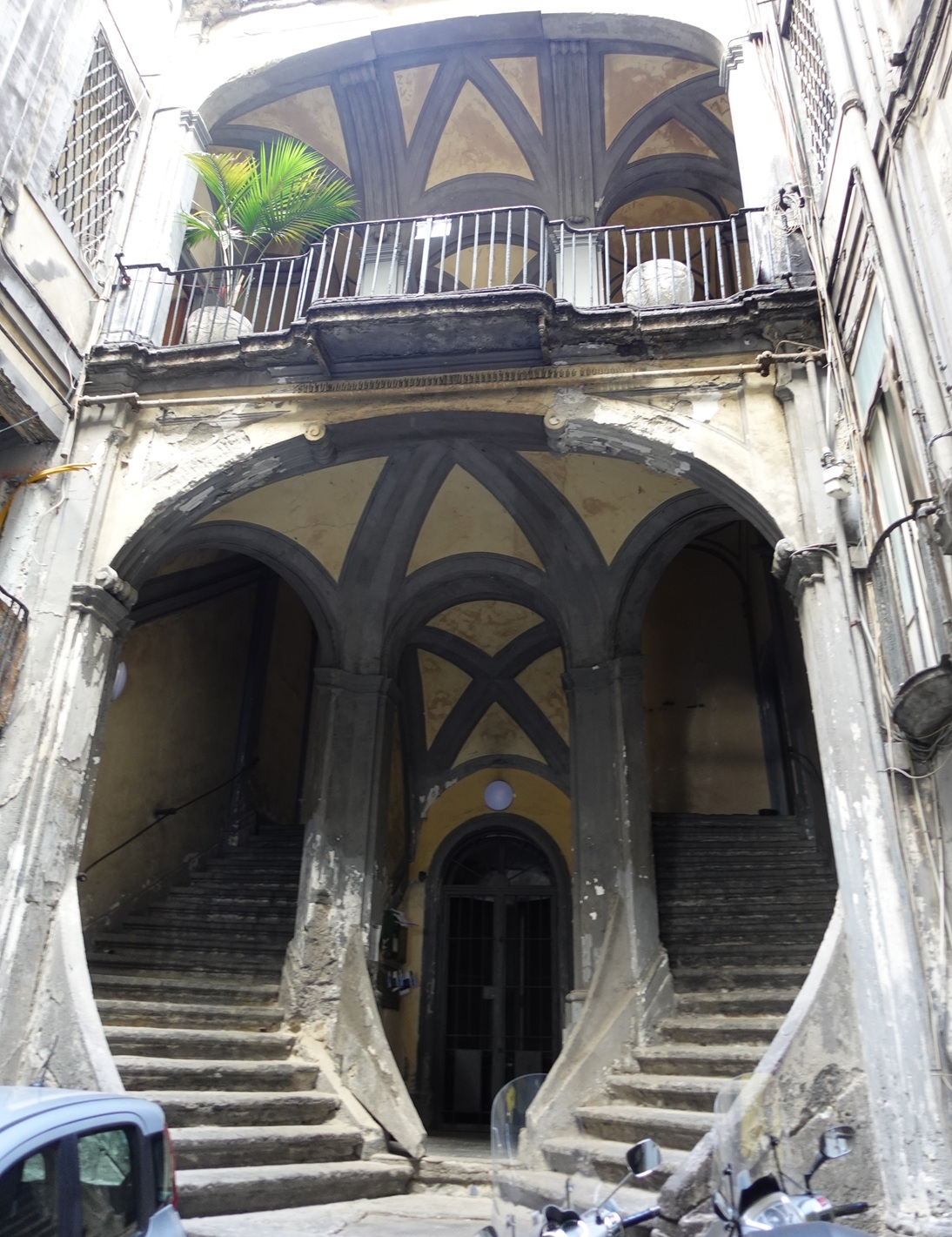
Walking down Via Toledo to the Spanish sector, we come across courtyards which were clearly once sumptuous and the denizens of the wealthy Spanish invaders in the 16th century..
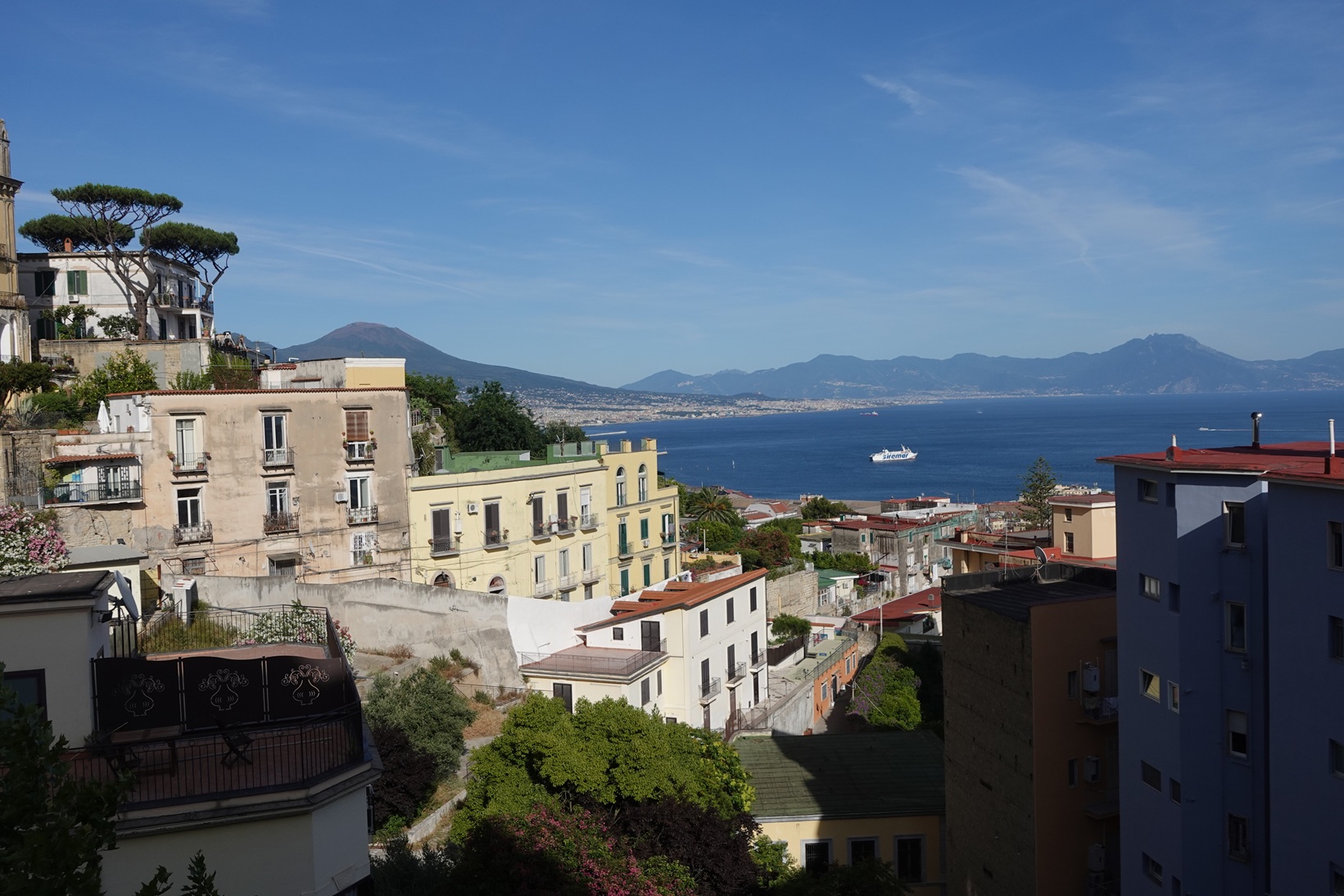
We took a funivia up the mountain to walk down partway, to gain wonderful views of the Gulf of Naples, amid towering residential blocks, arranged carefully to afford the best views. Vesuvius can be seen on the left, while the Sorrento Peninsula is on the distant south side. The gulf is 15 km wide and opens into the Tyrrhenian Sea.
One legend has it that the Roman emperor Caligula (Gaius Julius Caesar Augustus Germanicus, 12 – 41 CE, emperor 37-41) rode across the bay in a chariot over a bridge of boats, while wearing the armor of Alexander the Great.
The Gulf of Naples hosted the 1960 Summer Olympics sailing events.