Rome-Naples June 2026
Day 21: Wednesday 24 June 2026
Orvieto – Bologna
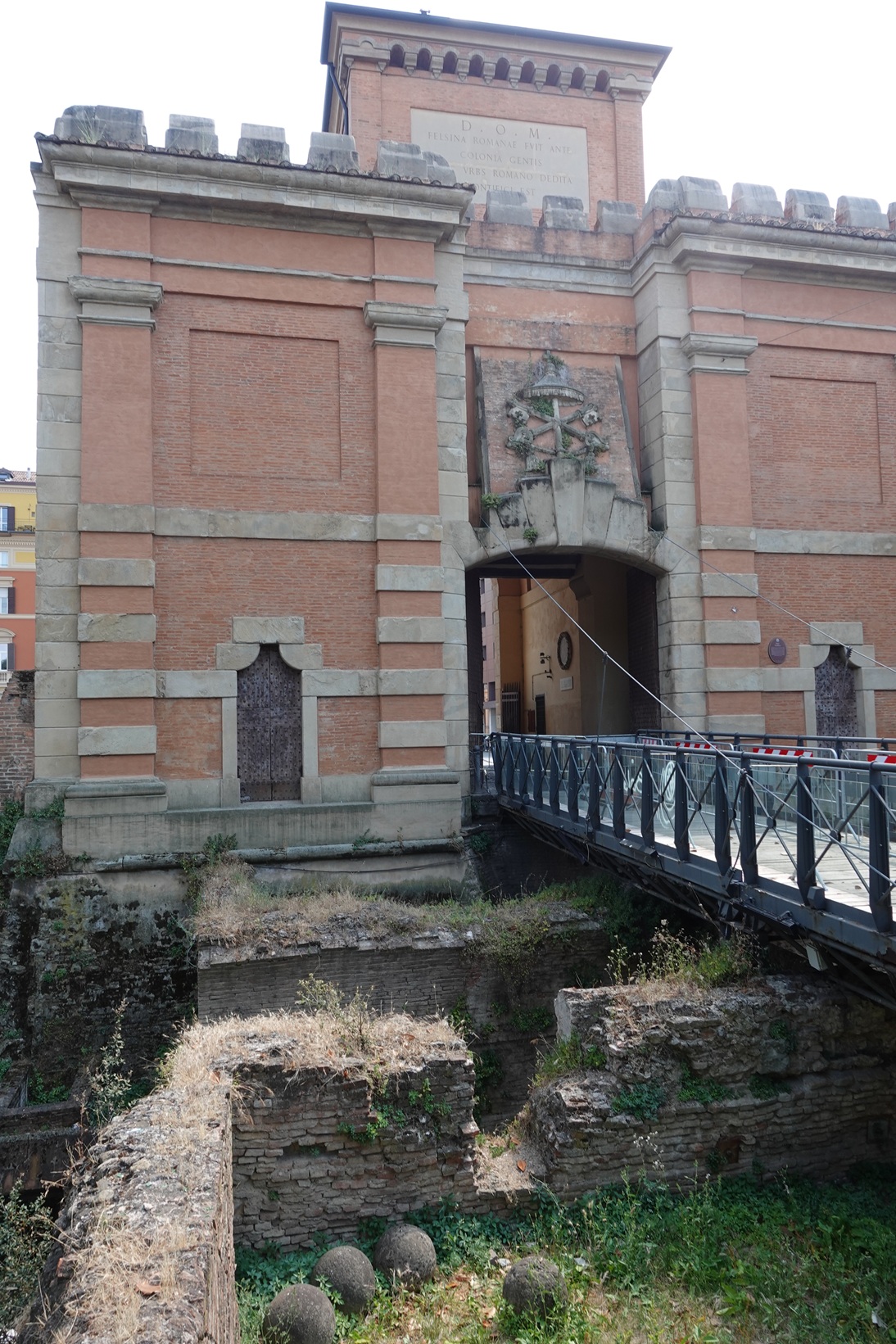
The canal system in medieval Bologna was quite extensive, and the city was protected by a wall with 12 gates, like this one, Porta Galliera, near the station.
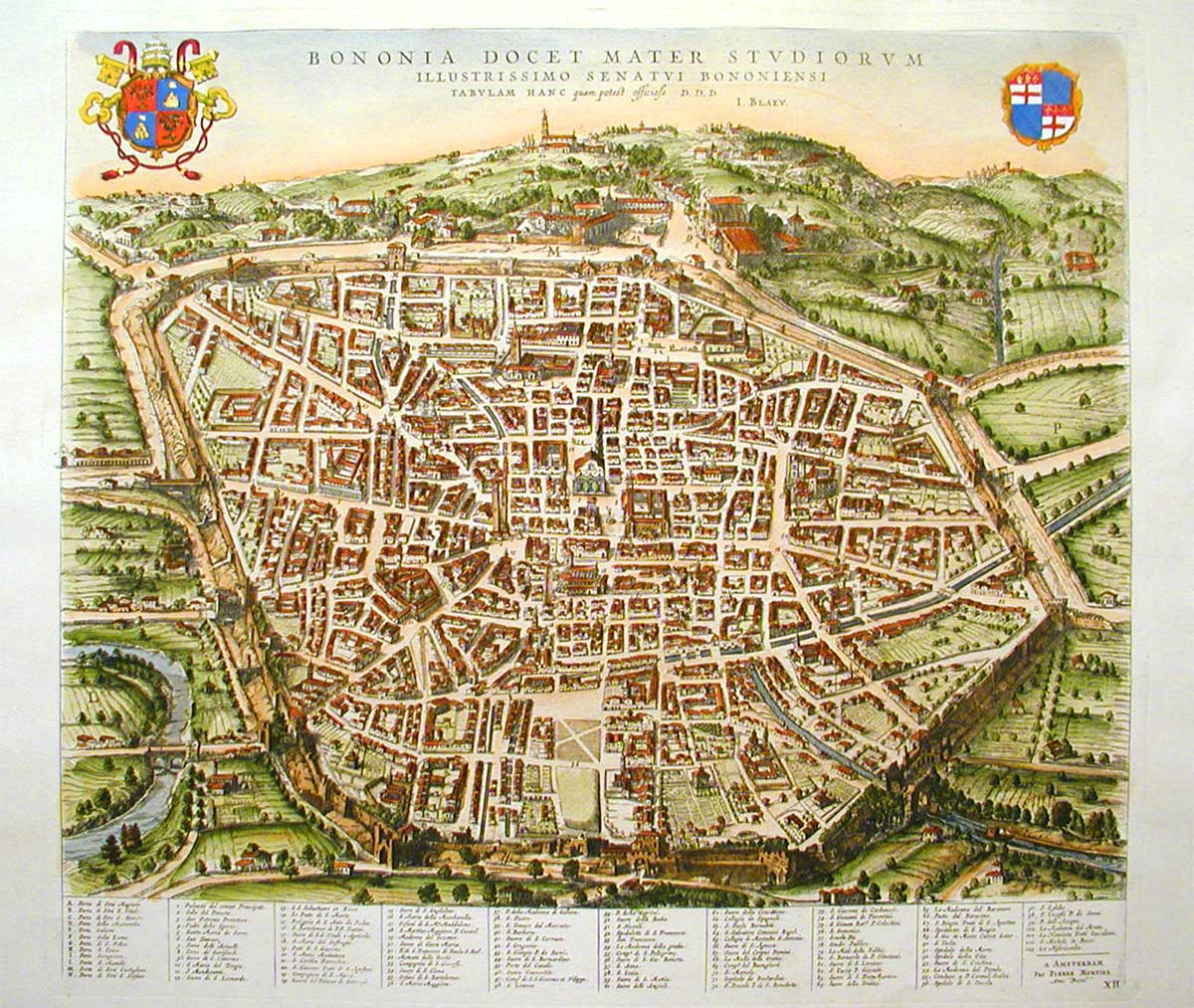
Bologna in 1640. Image courtesy of Wikipedia
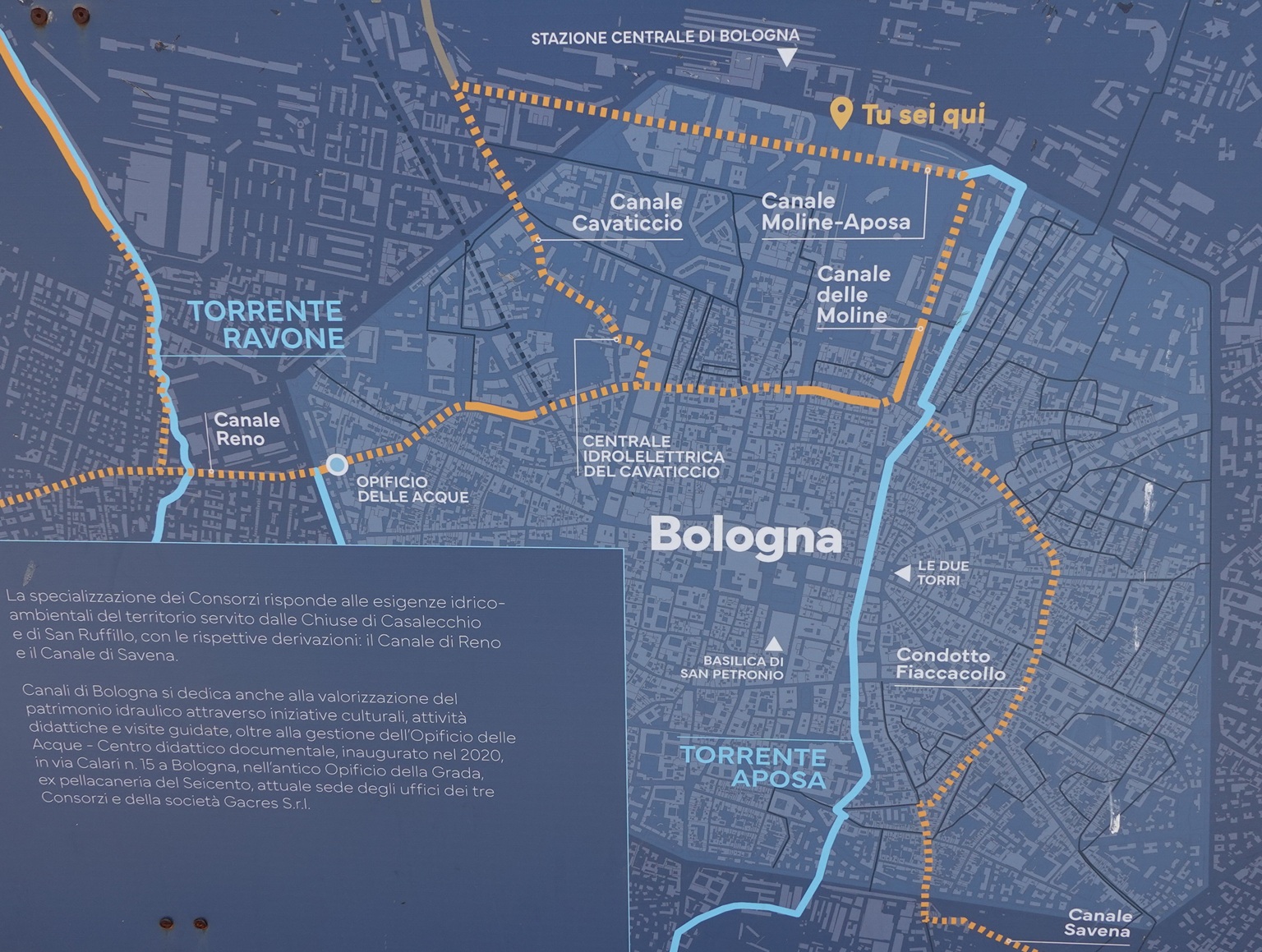
Canale Moline-Aposa.
Along these canals in the 13th century, were built 15 mills for public use. The lay of the land provided enough height differential to operate vertical wheels, along the so-called Canale delle Moline.
Porta Galliera as it is today was built in 1659-61, with a scenic Baroque facade. A castle stood near this gate in 1330-1333, but by the 20th century, the walls were torn down, leaving the gate isolated.
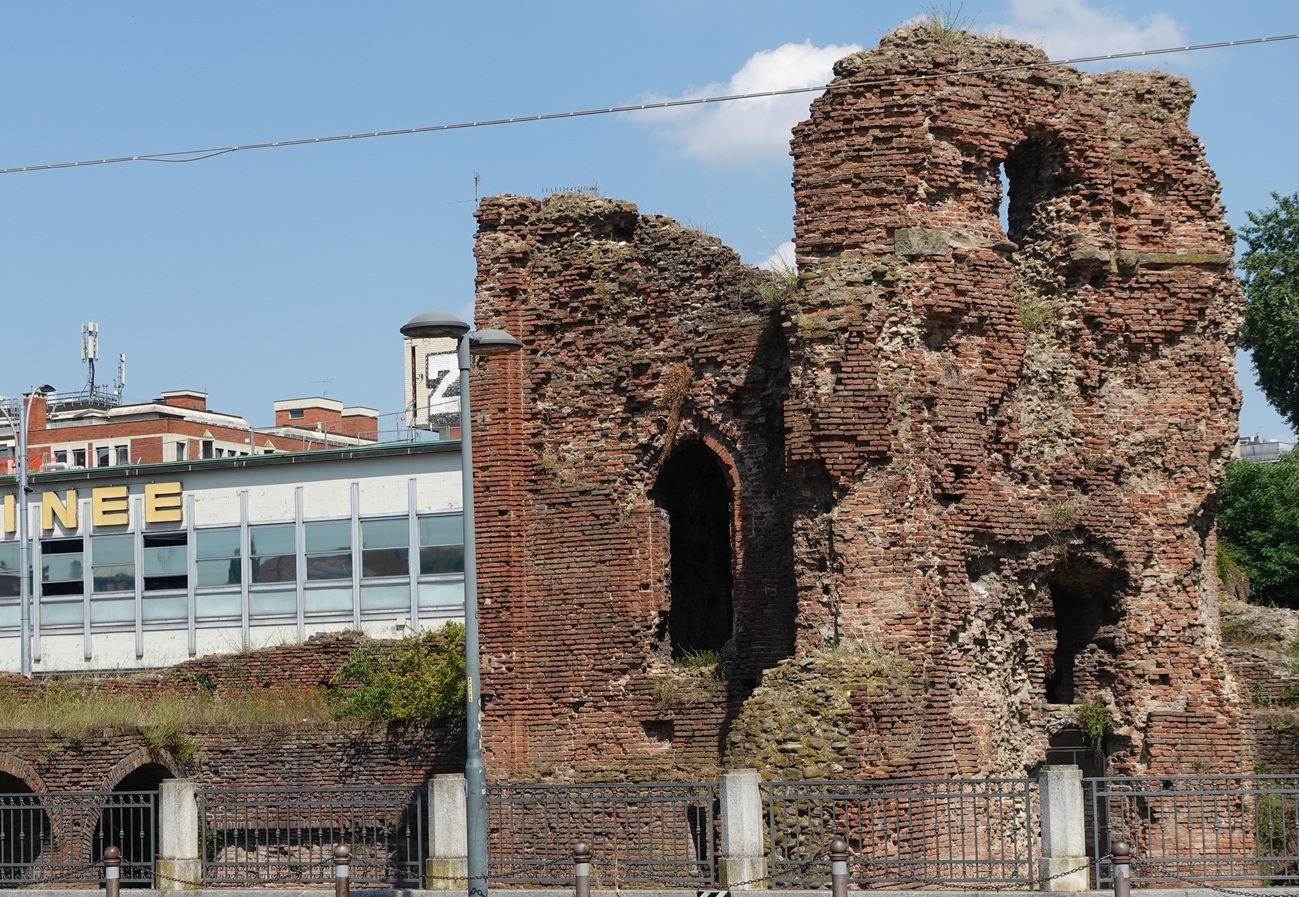
Castello di Galliera, and part of the old wall of Bologna. the castle was built in the 14th century to house the pope, but was later destroyed by mobs.
There are actually three ring walls around Bologna:
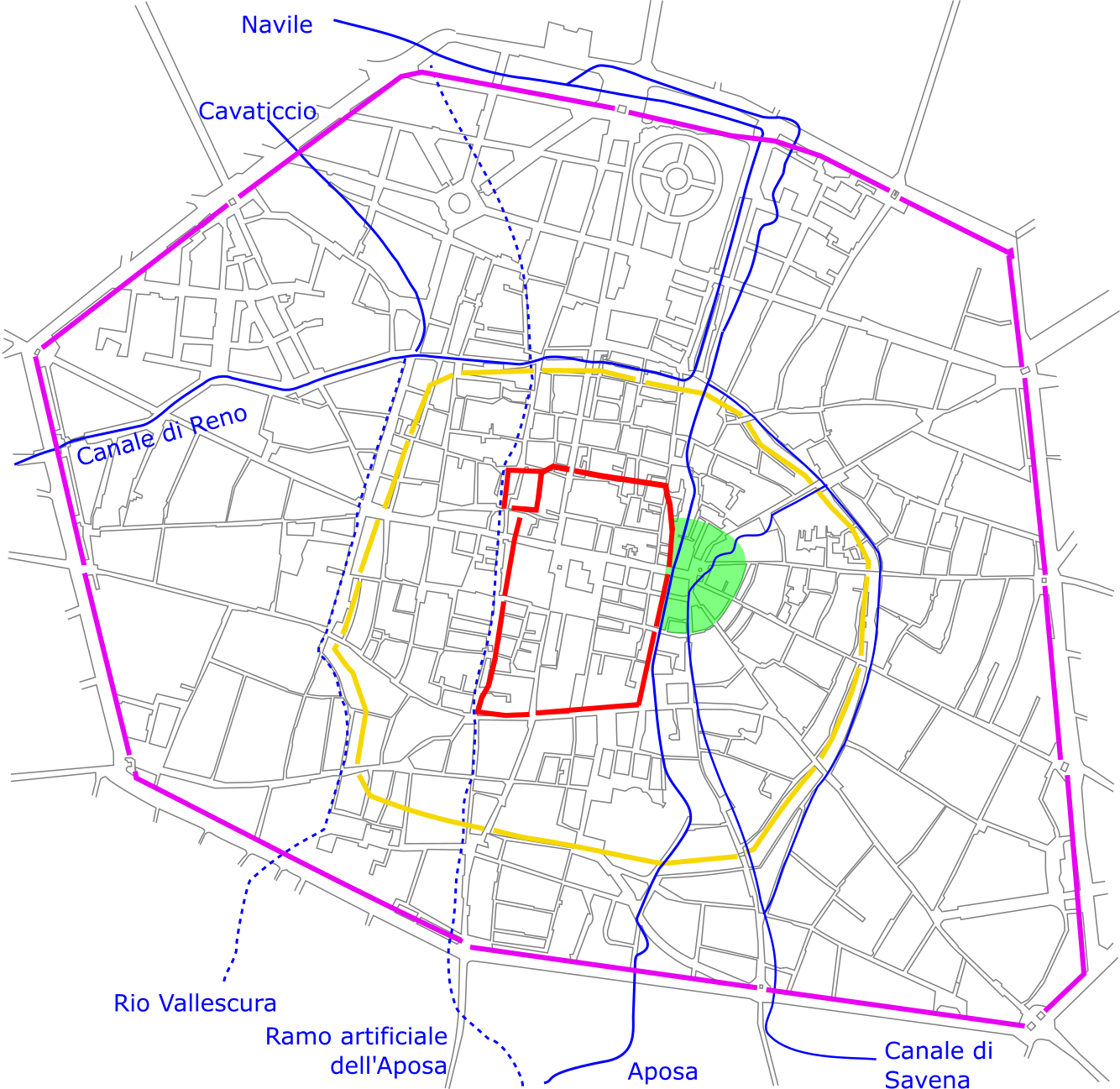
The red line marks the cinta di selenite (V century CE), the green indicates the Longobarda addition;
The yellow line marks the cerchia del mille (XII century);
The purple line marks the circla (XIV century).
Image courtesy of Wikipedia.
There is also evidence of previous defensive structures dating back to the Etruscans (VIII BCE) and the Romans.
The last wall, the Circla, was largely demolished at the beginning of the 20th century, to make way for the modern transport routes. Enough remains however for the expression “Bologna entro le mura” to be in common usage still.
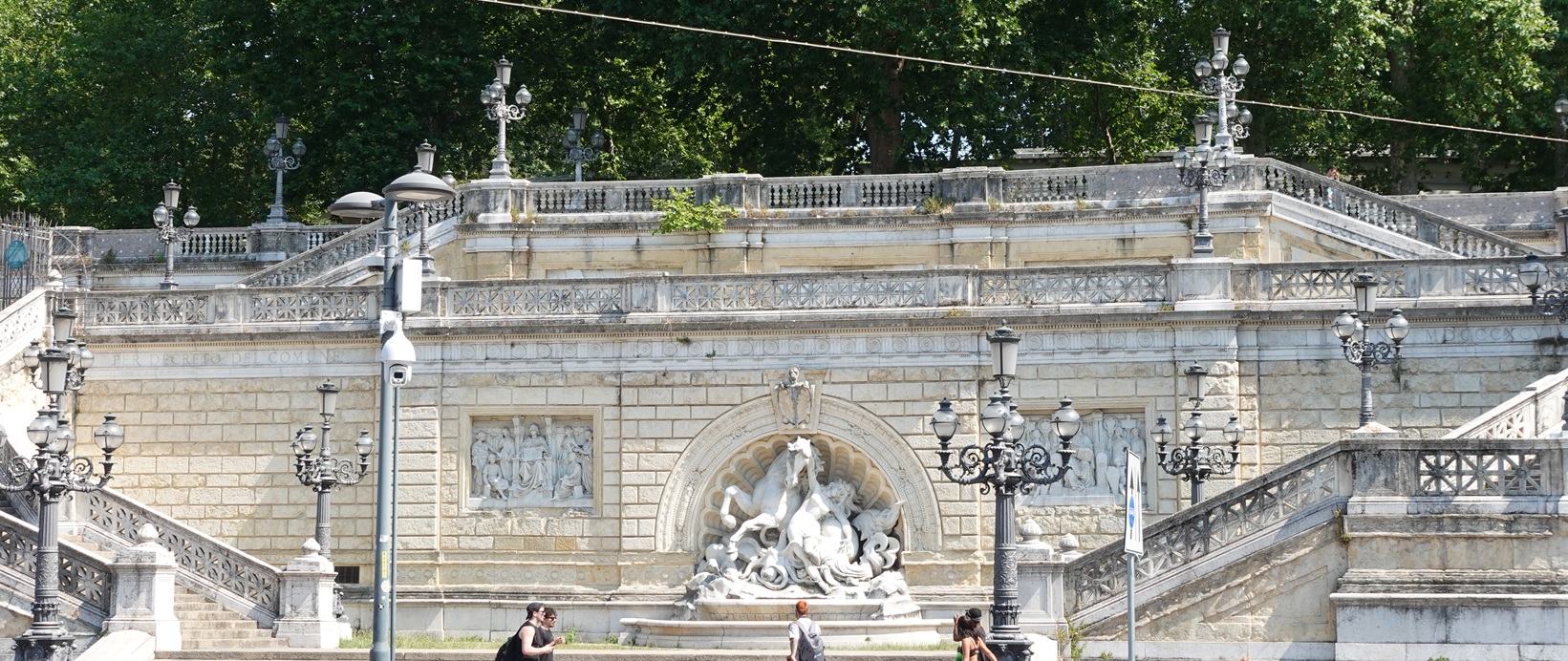
Park of Montagnola entrance. It first opened in the 17th century, and today commemorates the victory of Italy over the Austrians in 1848. It sits on an artificial plateau, made from debris from the 14th century Galliera Castle. It was opened to the public in 1664, and was under-developed until Napoleon ordered the remains of Luigi Zamboni (1772-1795) and Giovanni Battista De Rolandis (1774-1796) to be interred here. In 1799, the Austrians returned and dispersed the remains. In 1805, Napoleon’s deputies turned it into a public garden, and the new gardens were completed in 1808.
Luigi Zamboni (1772-1795) and Giovanni Battista De Rolandis (1774-1796) were Italian patriots and martyrs. Inspired by the French Revolution, they led an uprisal 13–14 November 1794 (24 Brumaire, Year III), in Bologna, seeking independence from the Austrian/Catholic occupation. Leaflets were distributed and green, white and red cockades were handed out. These formed the basis of the tricolore of the modern day Italian flag. Their actions and sacrifice are considered the genesis of the Risorgimento, through which Italy was unified and won independence in 1861.
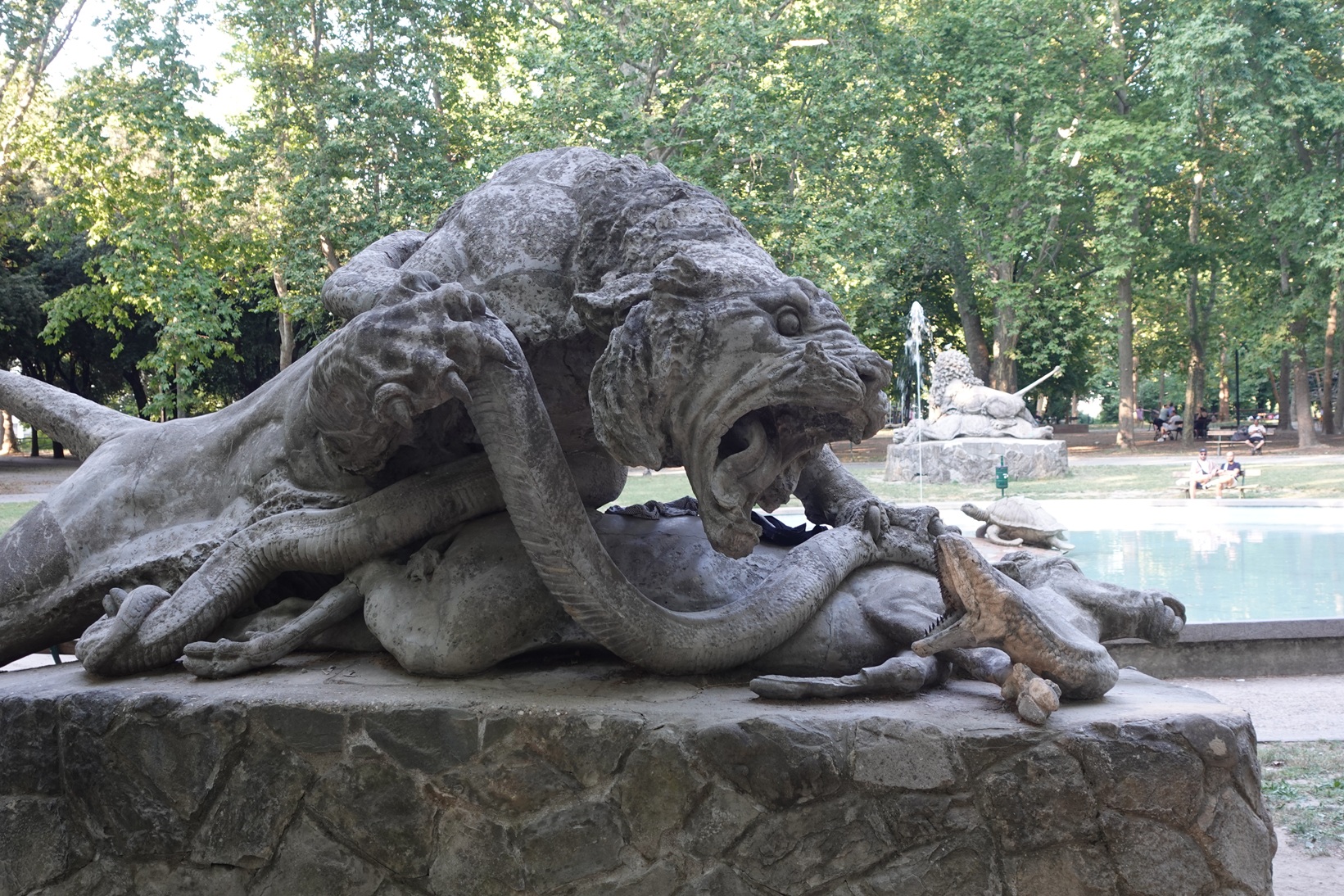
A dramatic statue around the fountain in the Park of Montagnola.
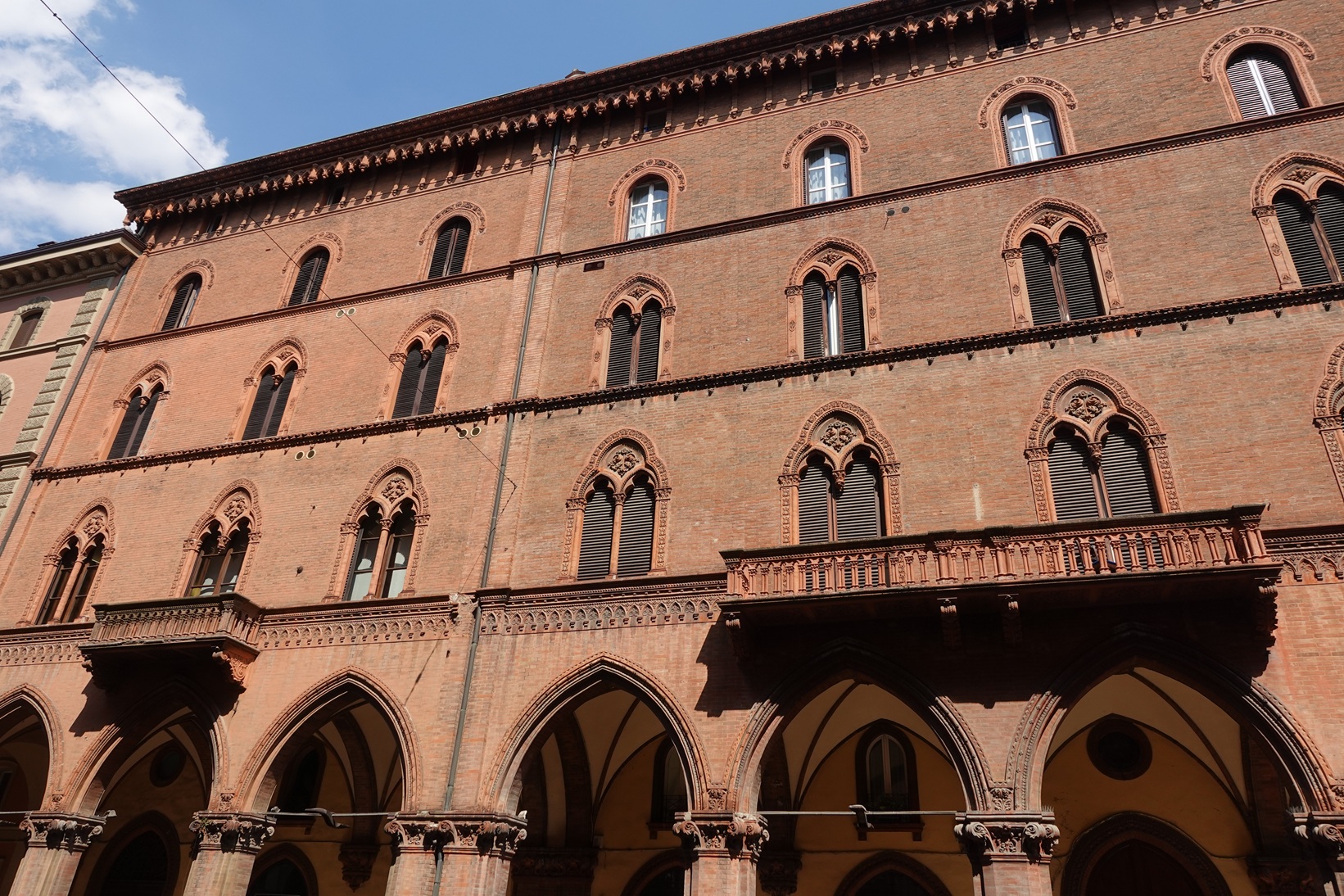
The architecture of Bologna remains one of the most authentic of medieval cities.
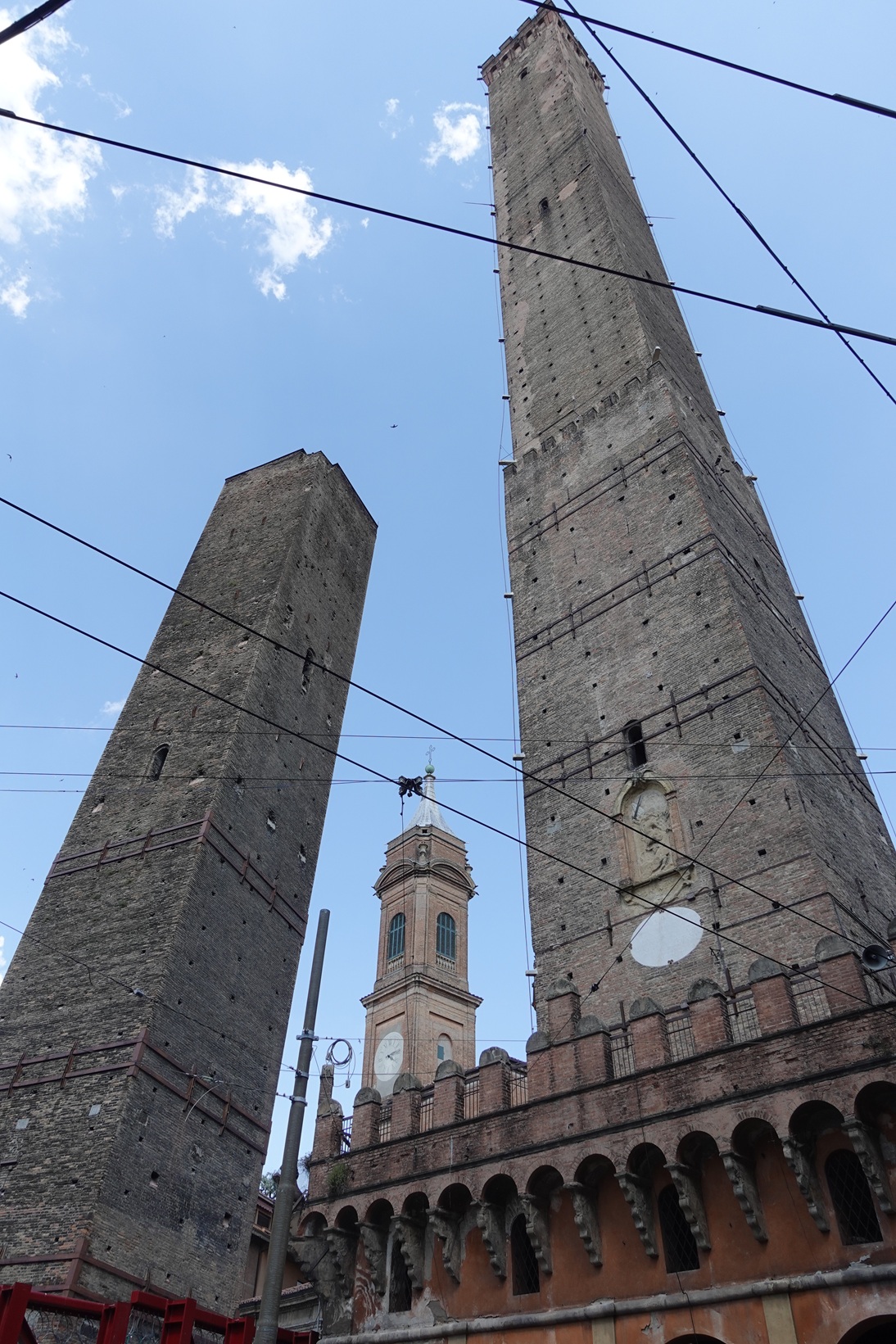
The famous leaning towers of Bologna. The taller tower on the right is the Asinelli, 97.2m tall and the shorter one the Garisenda, currently with a height of 48 metres. These are the names of the families credited with their construction between 1109 and 1119.
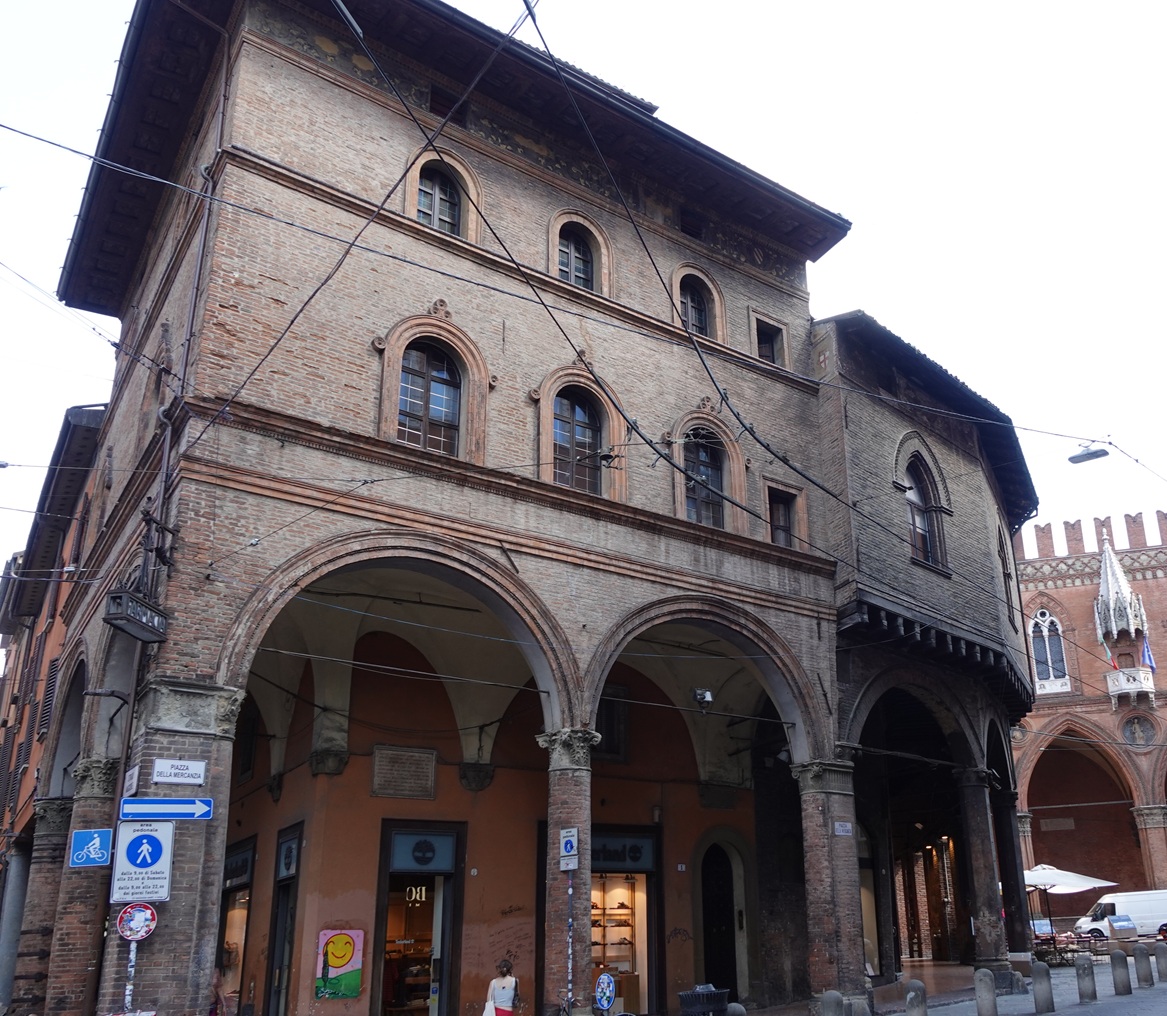
Medieval building in Bologna centre. A feature of Bologna, particularly appealing on a hot summer`s day, are the porticoes.
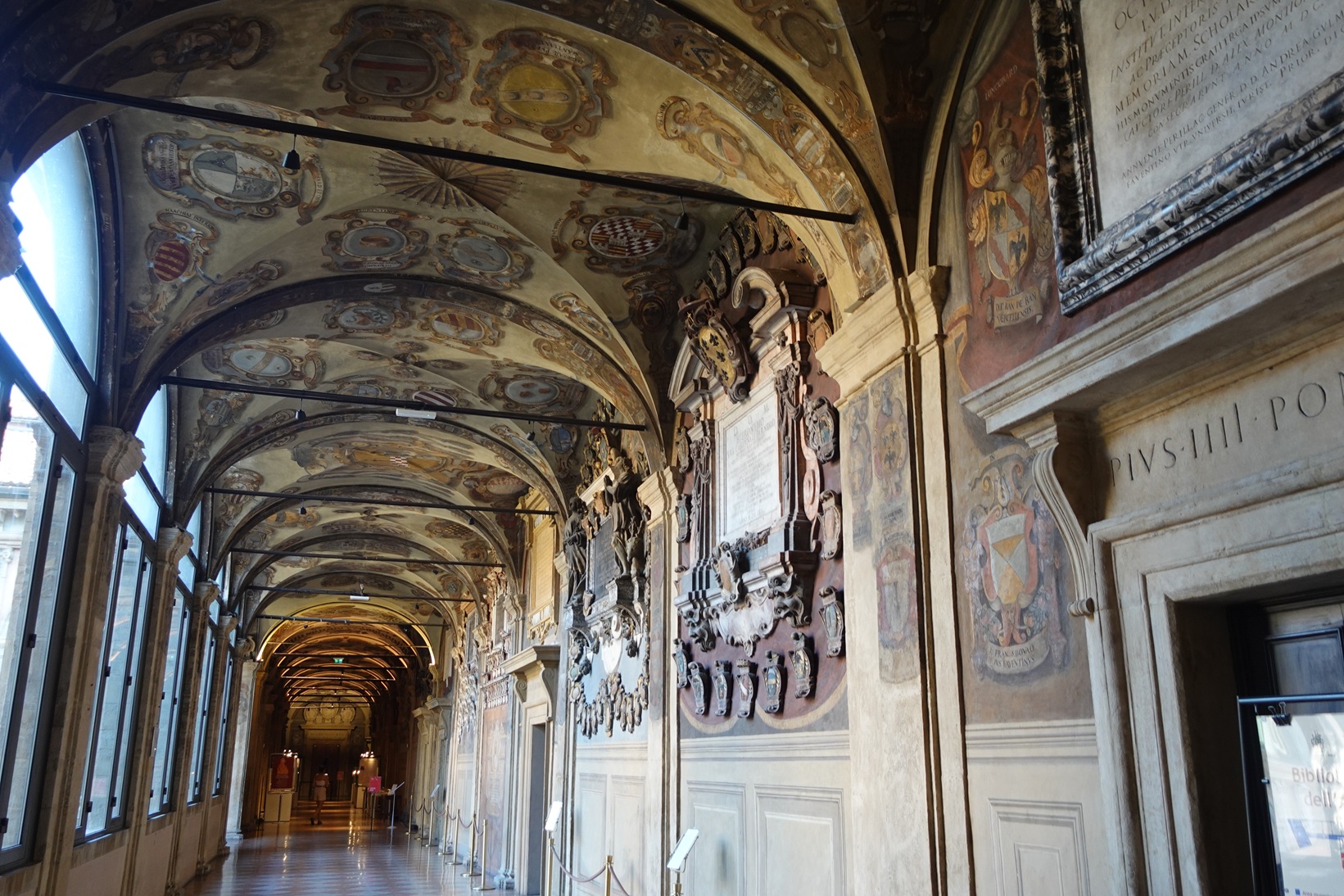
The upper corridor of the 16th century Archiginnasio of Bologna. Constructed in 1562, it was once the main building of the University of Bologna, today it houses the Archiginnasio Municipal Library and the Anatomical Theatre. The name refers to the classical term for Studium, the original name of the university in Bologna. The Archiginnasio ceased to be used for the university in 1803.
The library was established to house the books collected after the closure of the religious orders by Napoleon, and holds 850,000 volumes and pamphlets, including 2,000 incunabula (manuscripts printed before 1500, during the earliest phase of printing). The walls and ceilings of the building hold an enormous heraldic complex, with 6,000 coats of arms painted on them. The honour of having their coat of arms painted on the wall was reserved for students who were elected by other students as heads of student organisations, called nationes. The walls also hold 17th century busts of lecturers, as well as references to papal sponsors (Bologna was the second-largest city in the Papal States, after Rome).
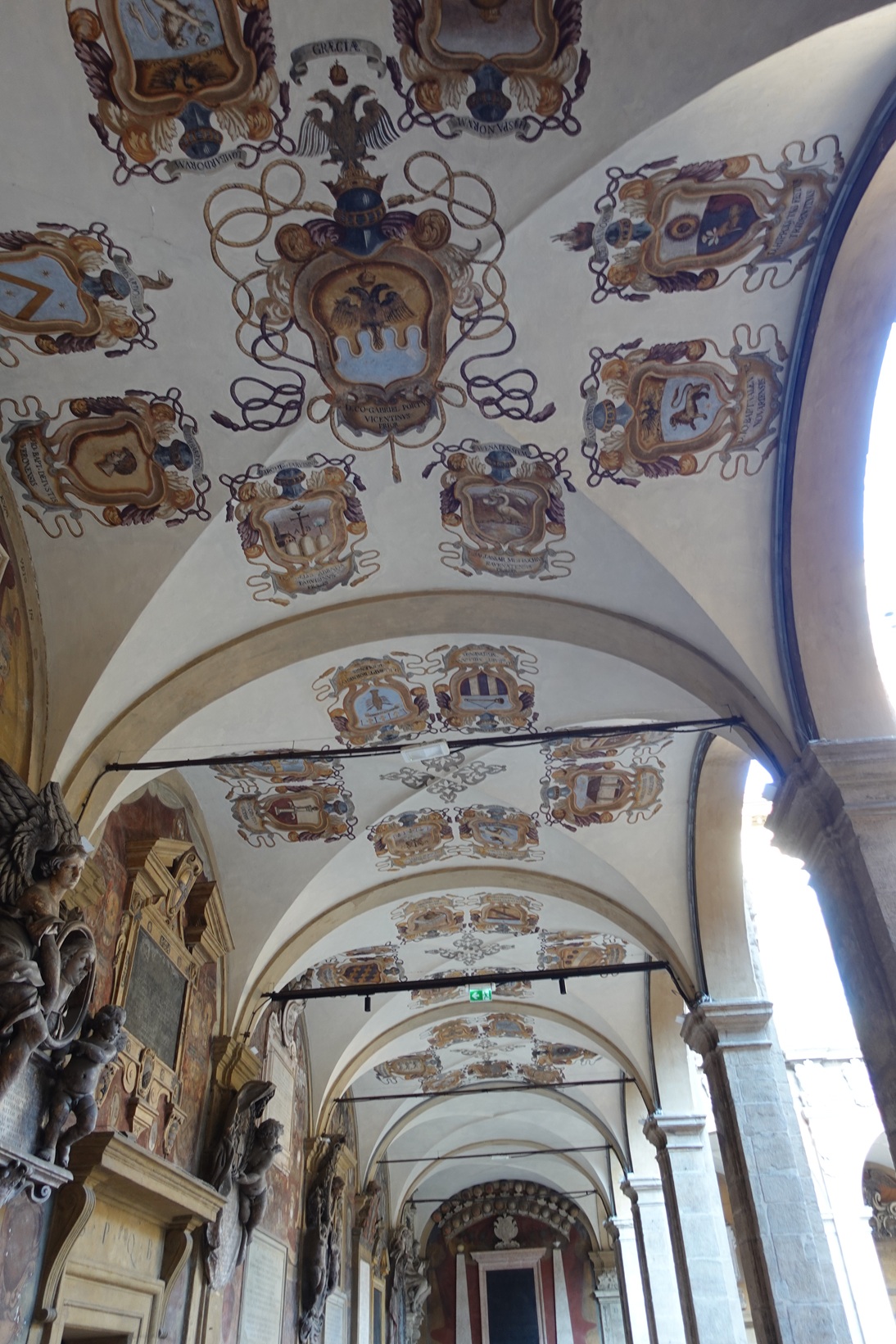
The ceiling of the lower portico of the library, adorned with student and faculty coats of arms.
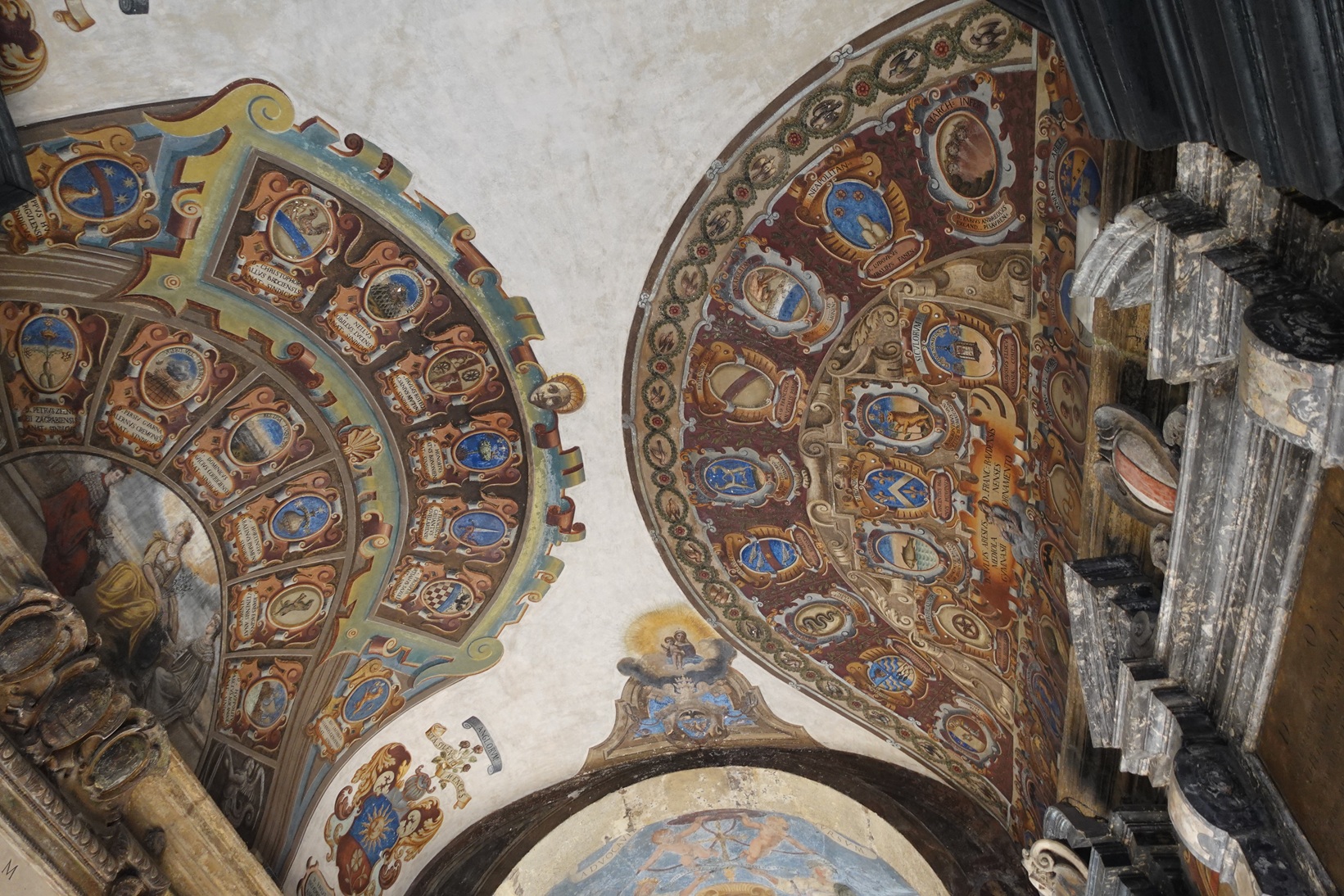
The ceiling of the passageway to the library
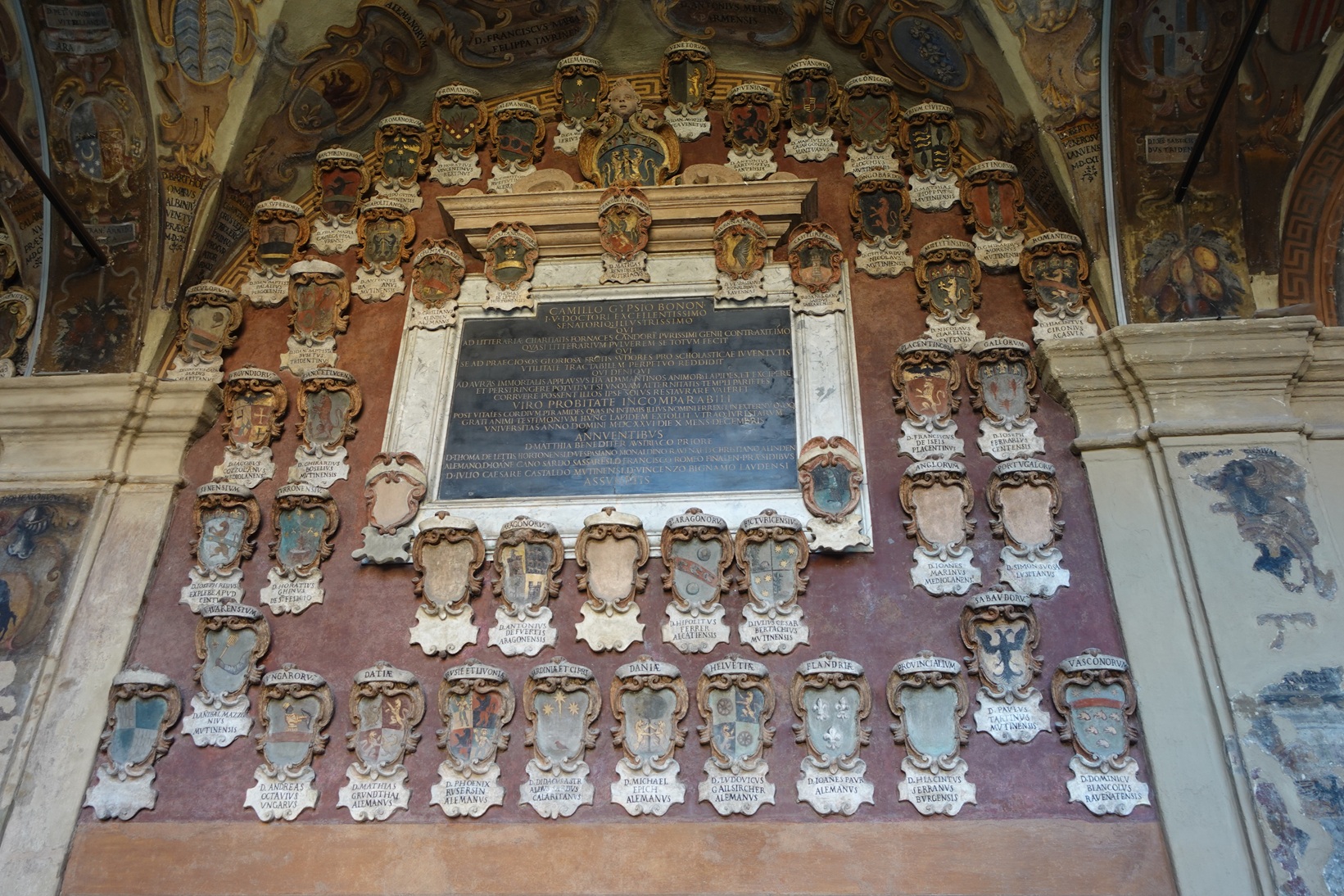
Heraldic emblems of pontifical supporters of the university and library.