Rome-Naples June 2026
Day 22: Thursday 25 June 2026
Bologna – Lugano
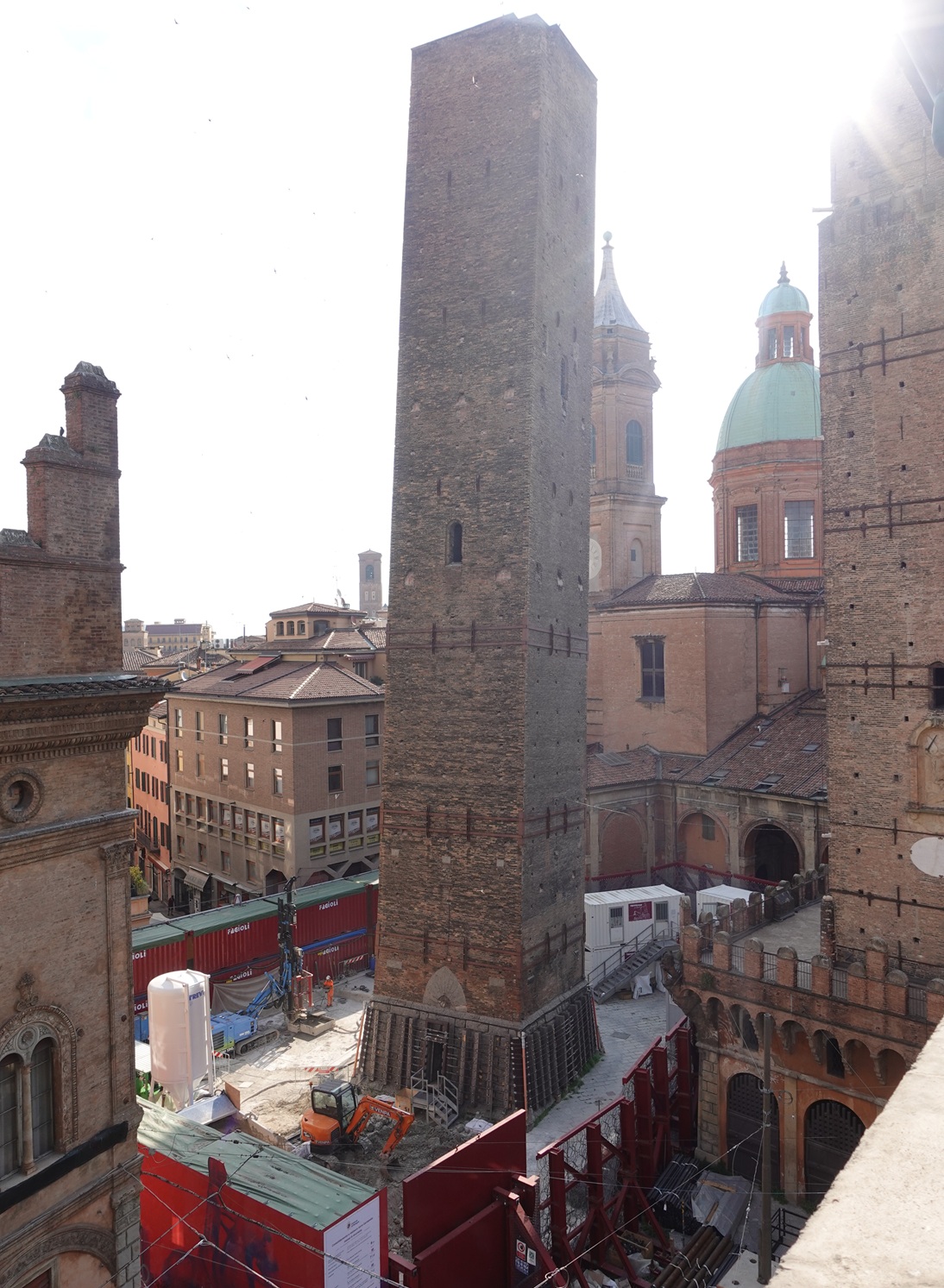
A view of the due torri, the two towers, symbols of Bologna, from our hotel room. Whereas previously traffic would pass around the bases of the towers directly, today the towers are screened off for safety. These towers are located at the intersection of the roads that lead to the five gates of the old ring wall, called the mura dei torresotti.
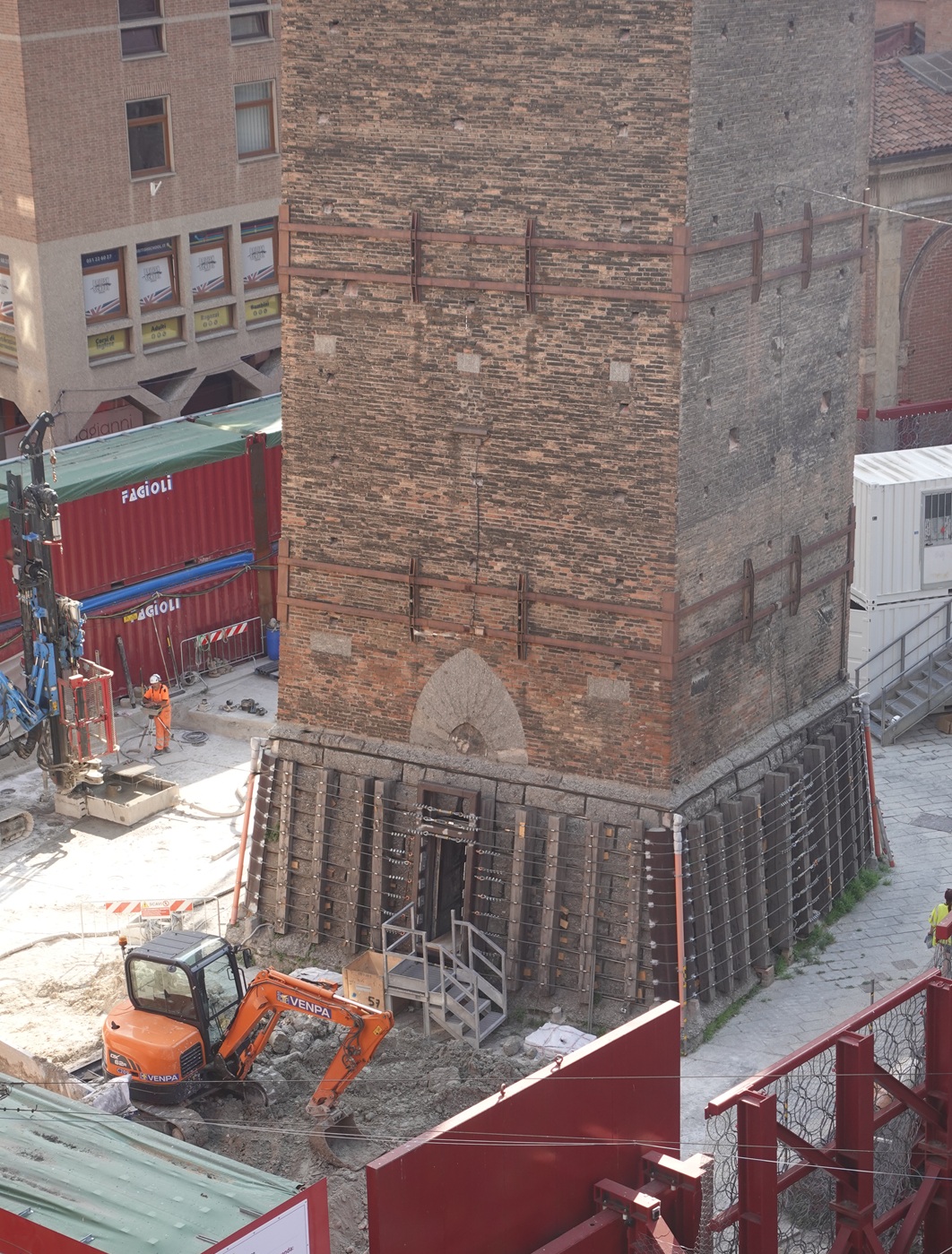
Detail of the work being carried out on the base of the shorter Garisenda Tower, with the greatest lean. The tower was originally 60m tall when it was built in the 12th century, but began to lean already in the Middle Ages, and so the city authorities ordered in truncated to 48m in the 14th century, and reinforced on the inside. In October 2023, the tower was sealed off after it was discovered the lean was too great (3.2m). A barrier was created around the base to catch debris should it fall. The work to prevent the collapse will take at least 10 years, and will cost 20 million euros.
Both Dante and Goethe mention the tower in their works.
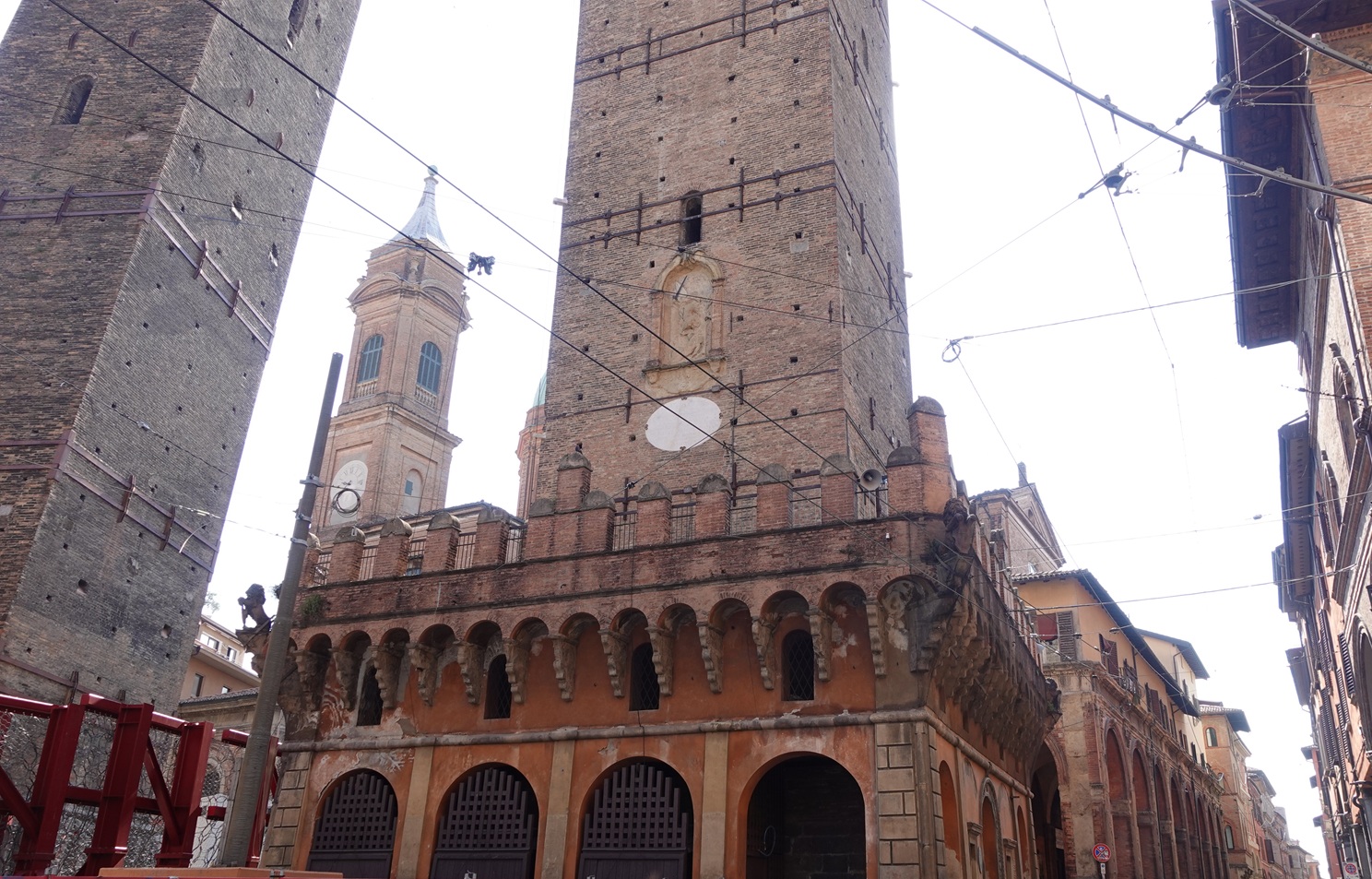
The towers from street level.
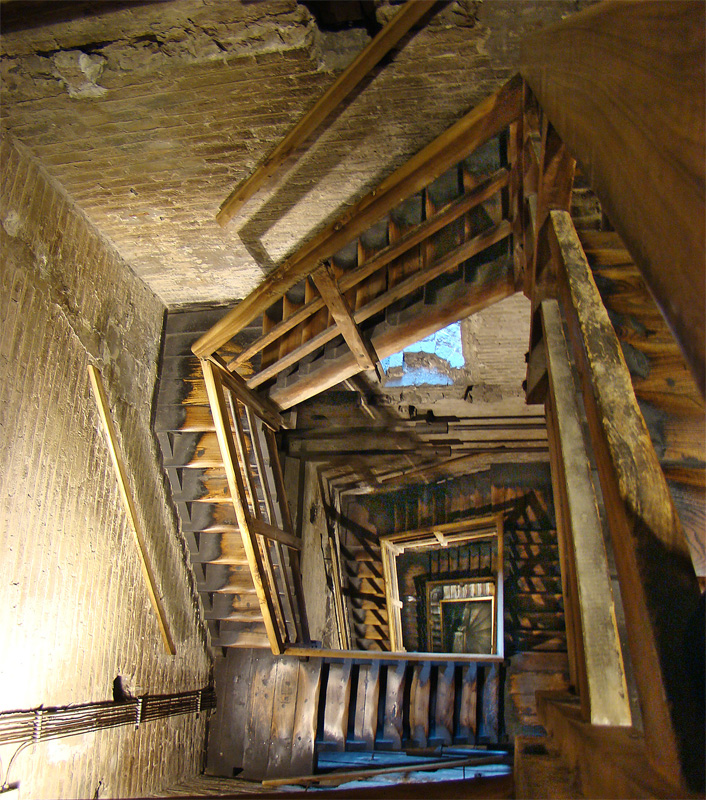
Inside the Torre Asinelli.
Image courtesy of Wikipedia
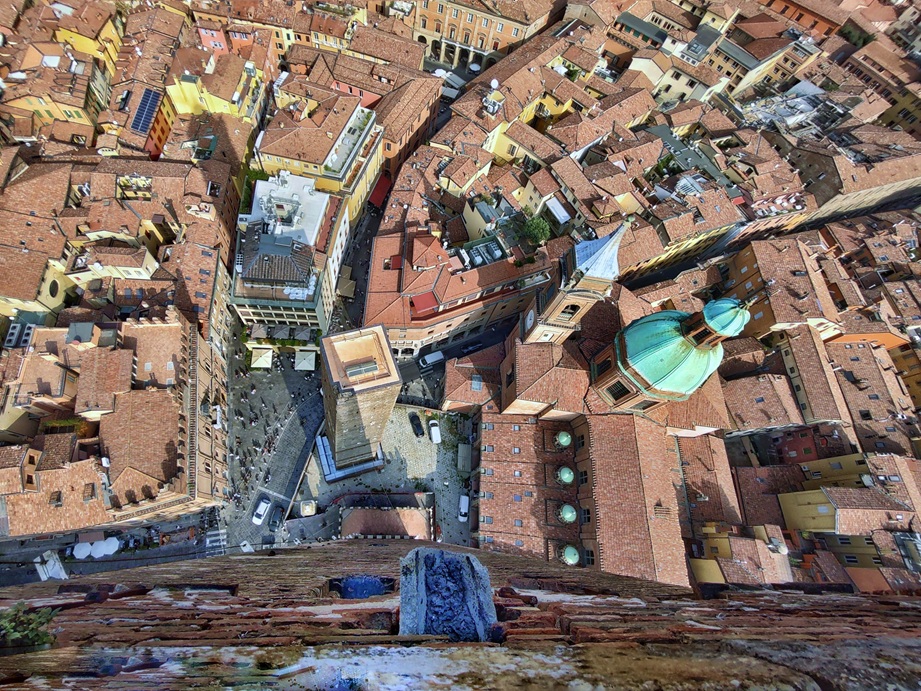
View from the top of the Torre Asinelli.
Image courtesy of Wikipedia
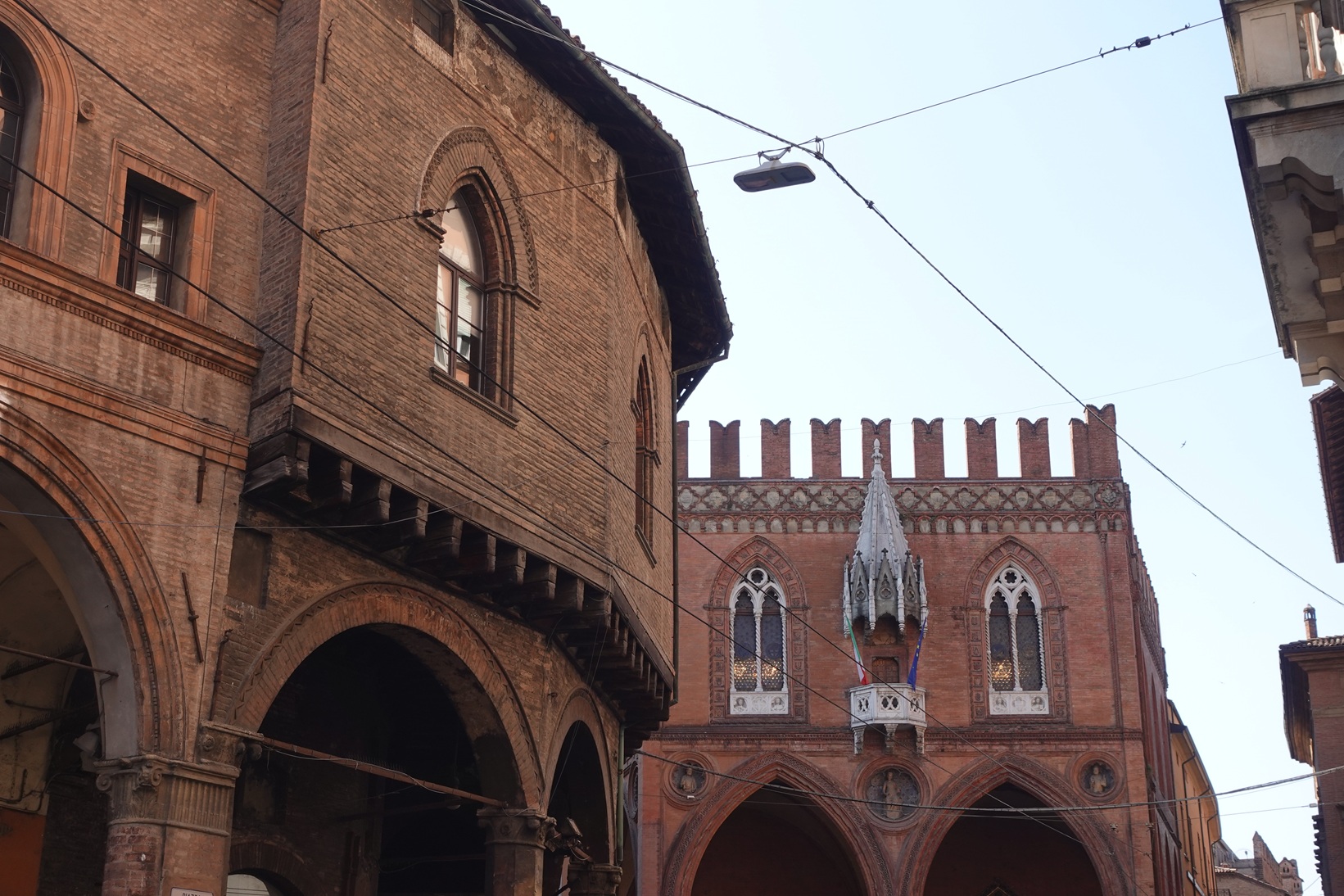
Piazza della Mercanzia is a medieval crossroads, from where all the major gates of the wall can be reached. The Palazzo della Mercanzia is in the background.
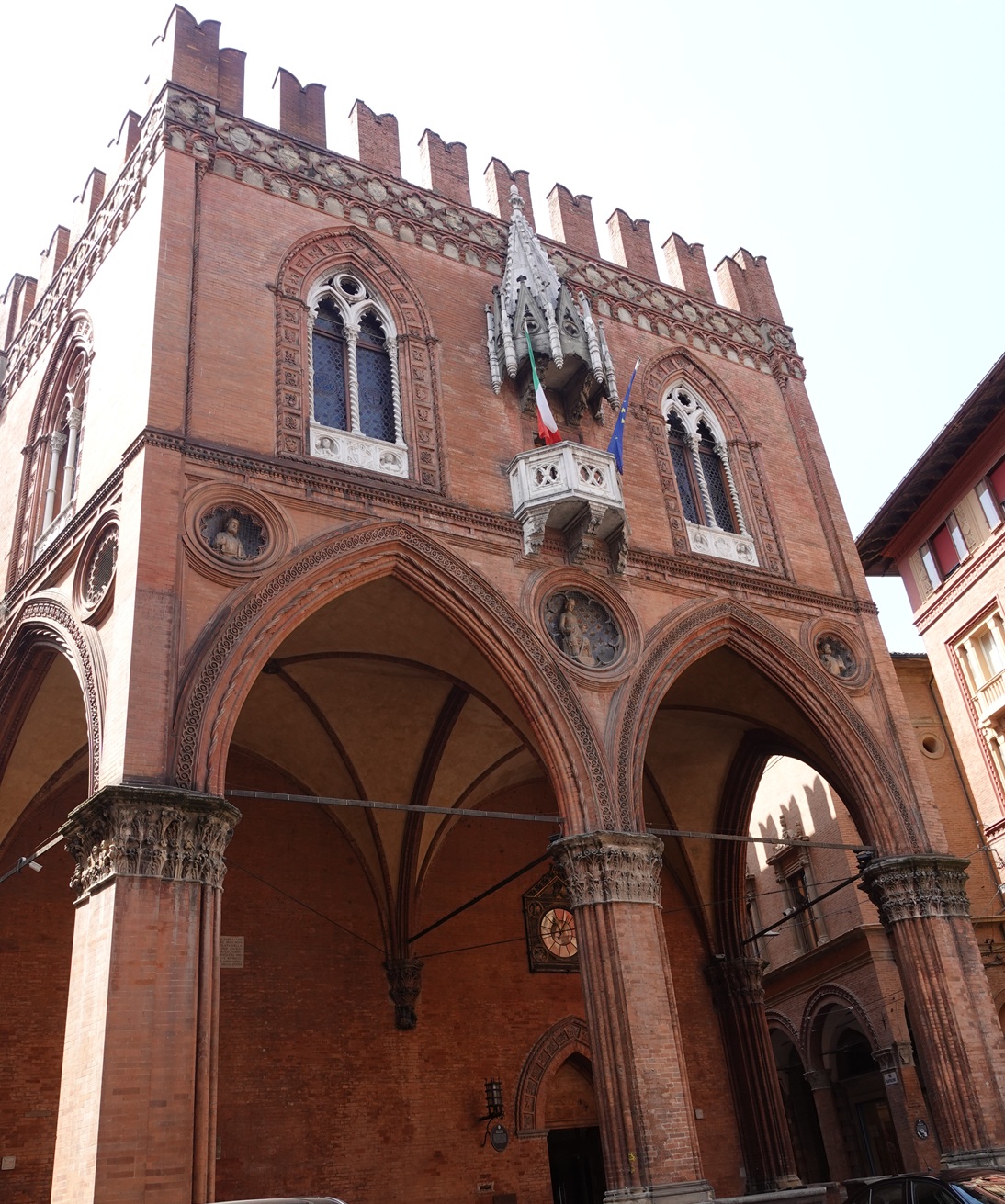
Palazzo della Mercanzia. Piazza della Mercanzia is a medieval crossroads. Completed in 1391 and renovated several times, this building has been the commercial hub of the manufacturing, agriculture and handicrafts industries of Bologna. Gothic style with bricks and Istrian stone, with a large porticoed loggia with cross vaults.
The Palazzo della Mercanzia was badly damaged by an unexploded allied bomb during the Second World War, on 25 September, 1943. Against the will of the people, the authorities nevertheless exploded the bomb two days later. From 1946 to 1948, it was repaired.
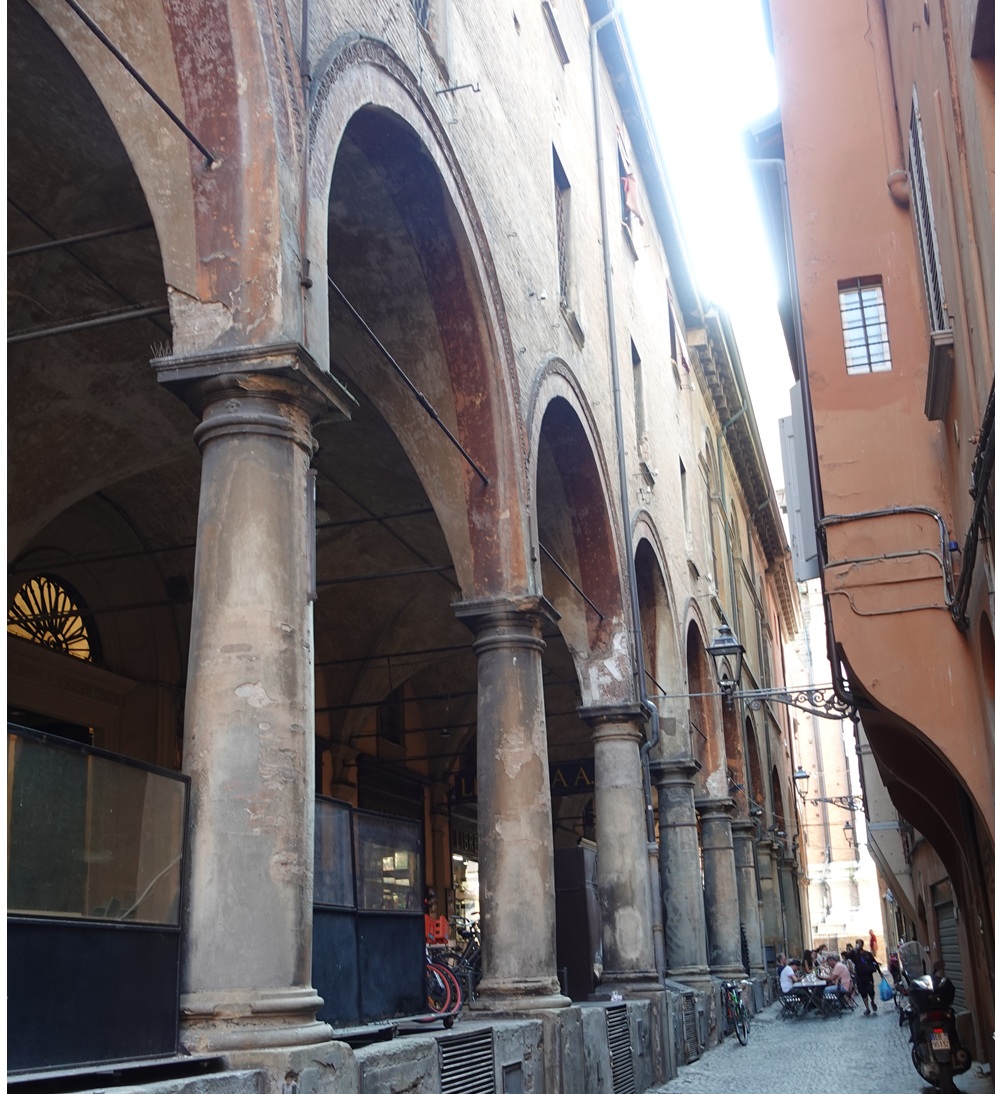
Even small alleys are protected by these extensive porticoes.
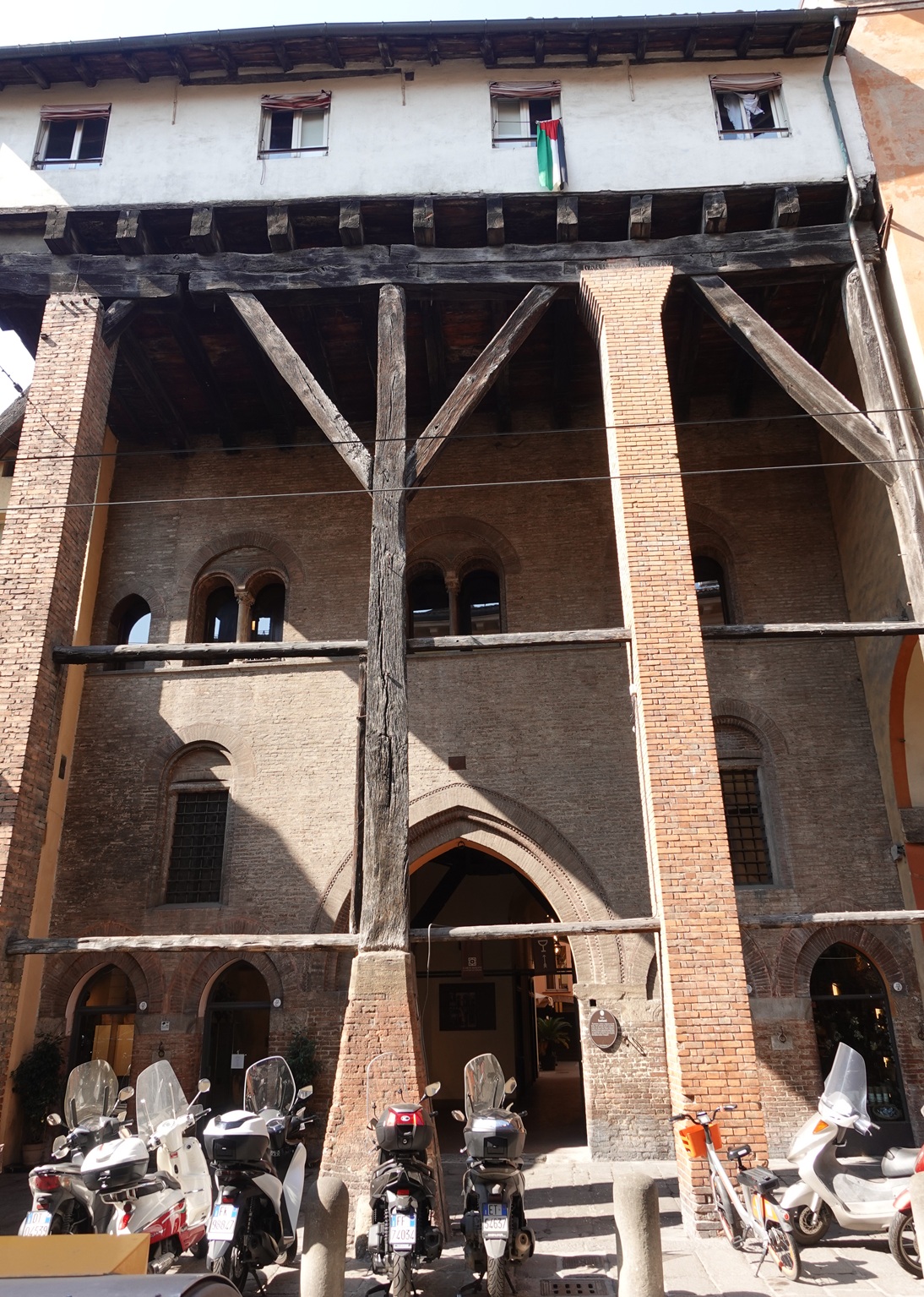
Casa Isolani, a building with medieval wooden elements. This is a characteristic residence of the Middle Ages, dating to the 13th century, and renovated in 1877. The doors are original, too, and the 9m columns are oak in a form known as “a stempella”.
It is fascinating to see so much original wooden structure still extant in Bologna. According to building regulations, and since the town’s porticoes are protected as a UNESCO World Heritage Site, the facades must remain authentic, but the insides may be modernised, within limits.
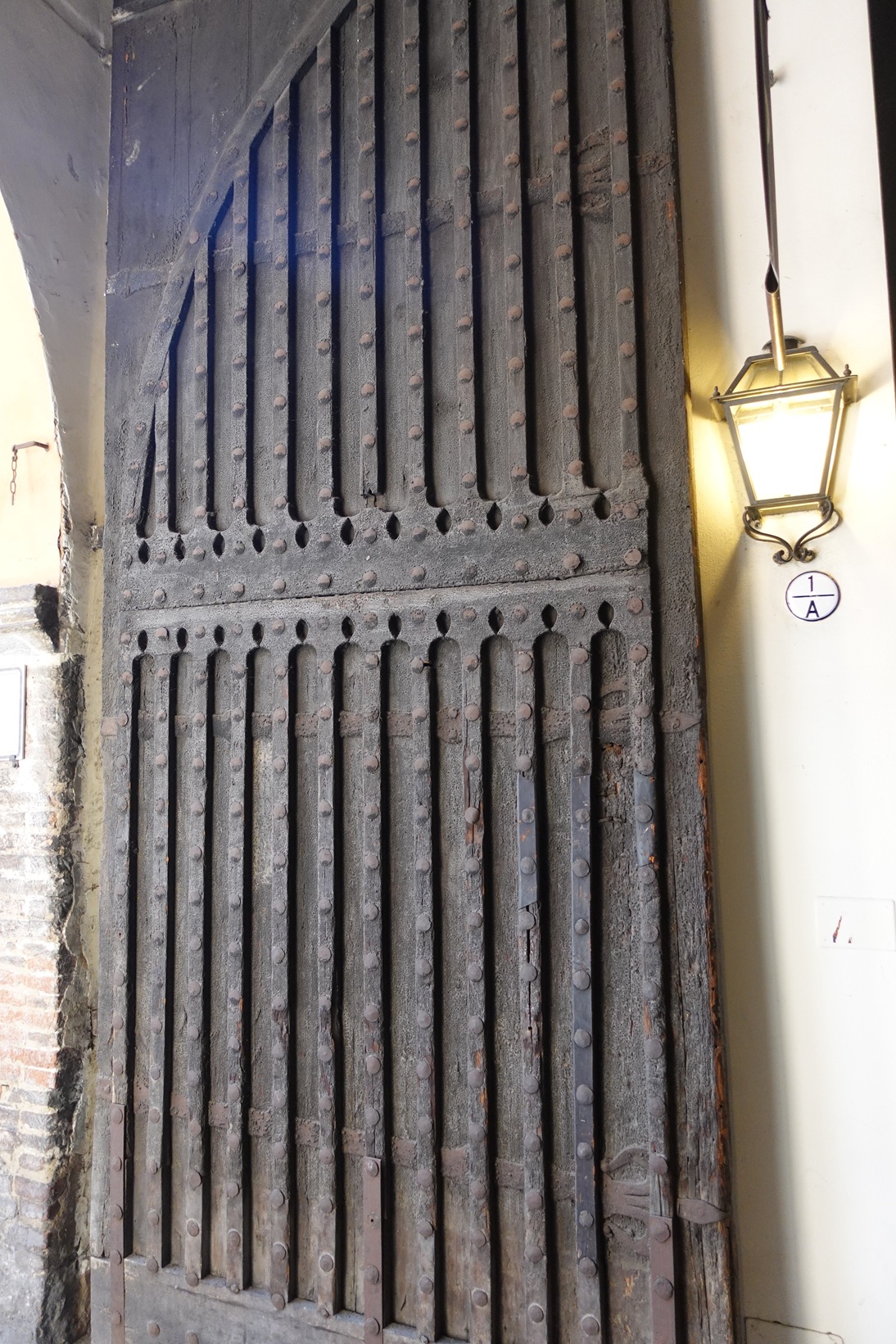
Medieval door to the Casa Isolani.
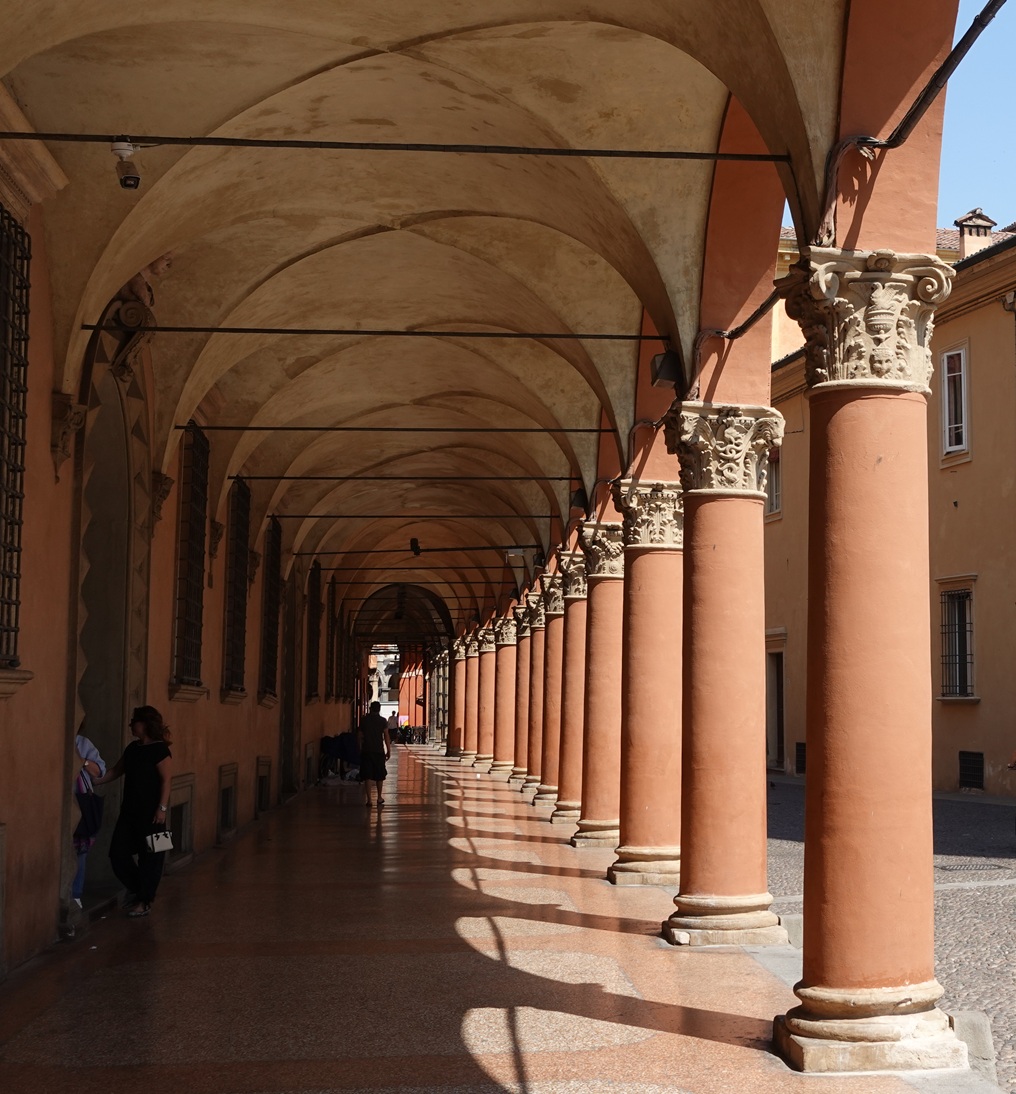
The porticoes everywhere in the city centre made the heat of this summer swelter bearable.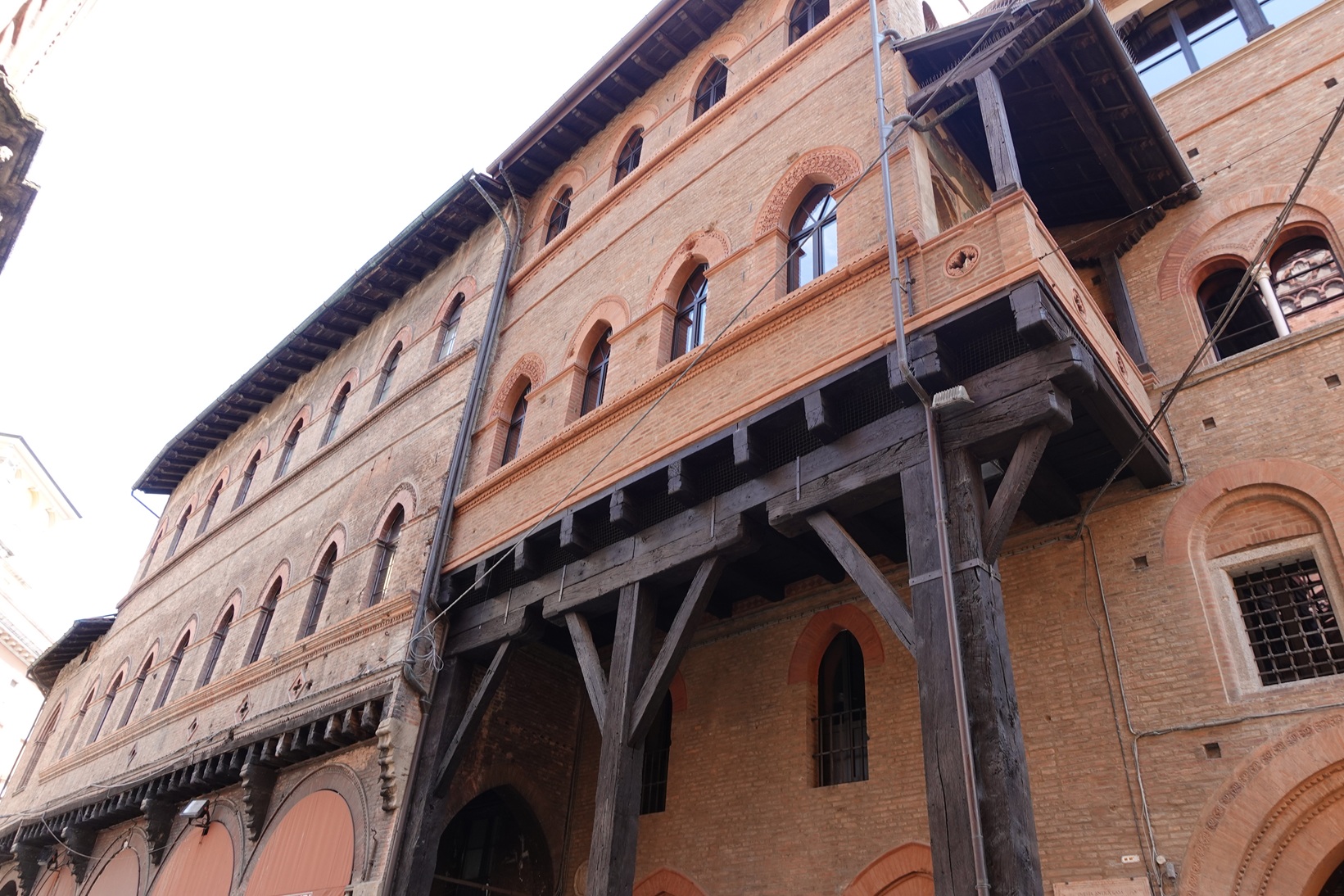
Wooden elements of medieval buildings.
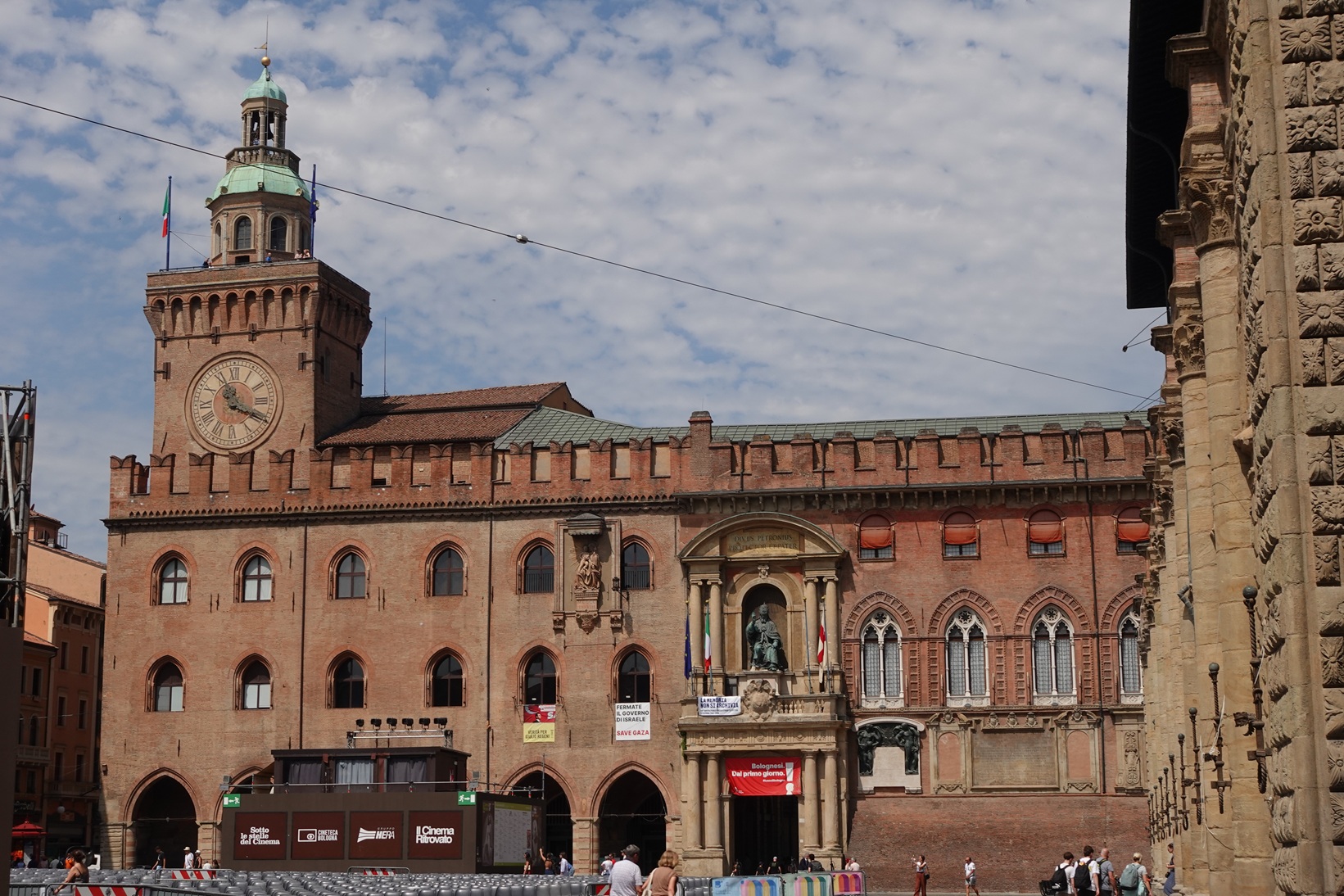
Palazzo d’Accursio Piazza Maggiore. Originally the home of the jurist Accursius, it became in 1336 the seat of the Anziani, or Elders, who constituted the high court, and the governemnt. The clock tower (Torre d’Accursio) was added in the 1400s. It was the scene of violence and killings during clashes between the Italian Socialist Party and the fascists in 1920.
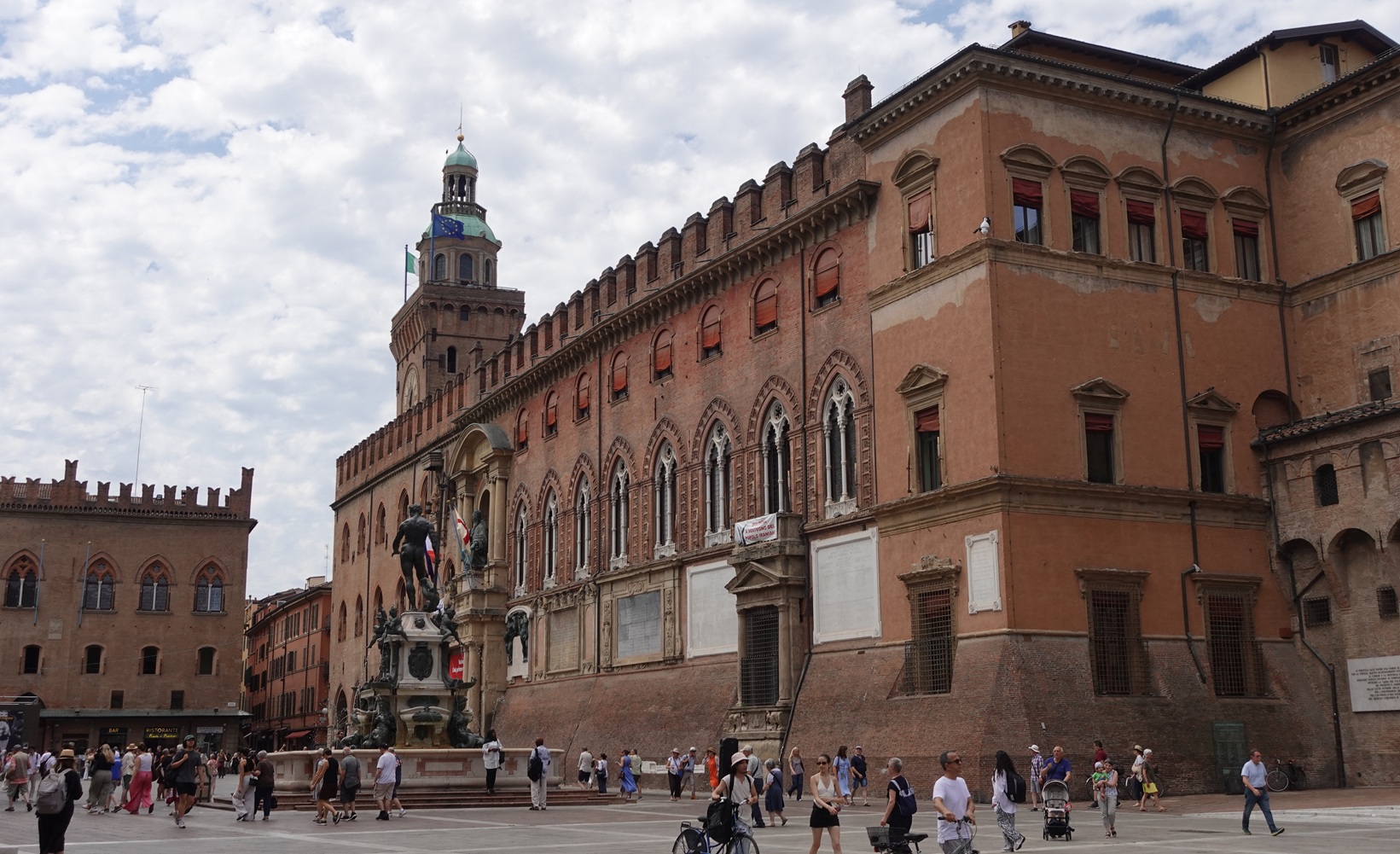
Piazza Maggiore with Palazzo d’Accursio.
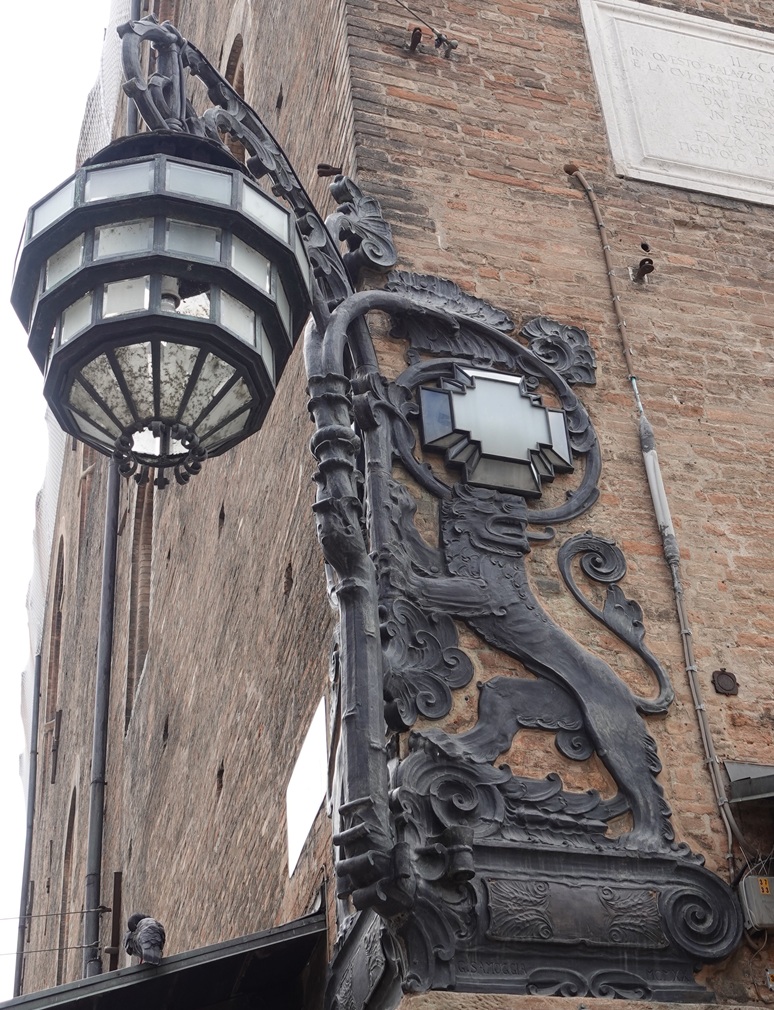
Interesting lamp support in Piazza Maggiore
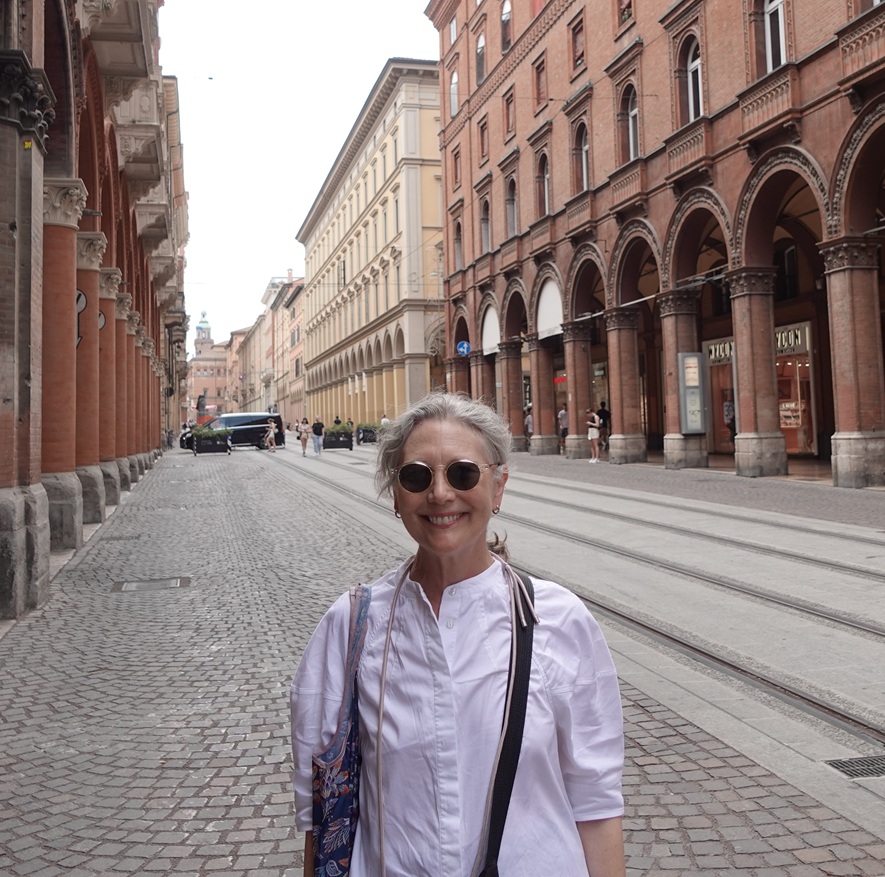
Cindy in Bologna. There is a new tram network close to opening, which seems to be needed, as no bus connects the centre with the main station.