South Italy 2026
Day 21: Sunday 11 October 2026
Syracuse – Greek theatre
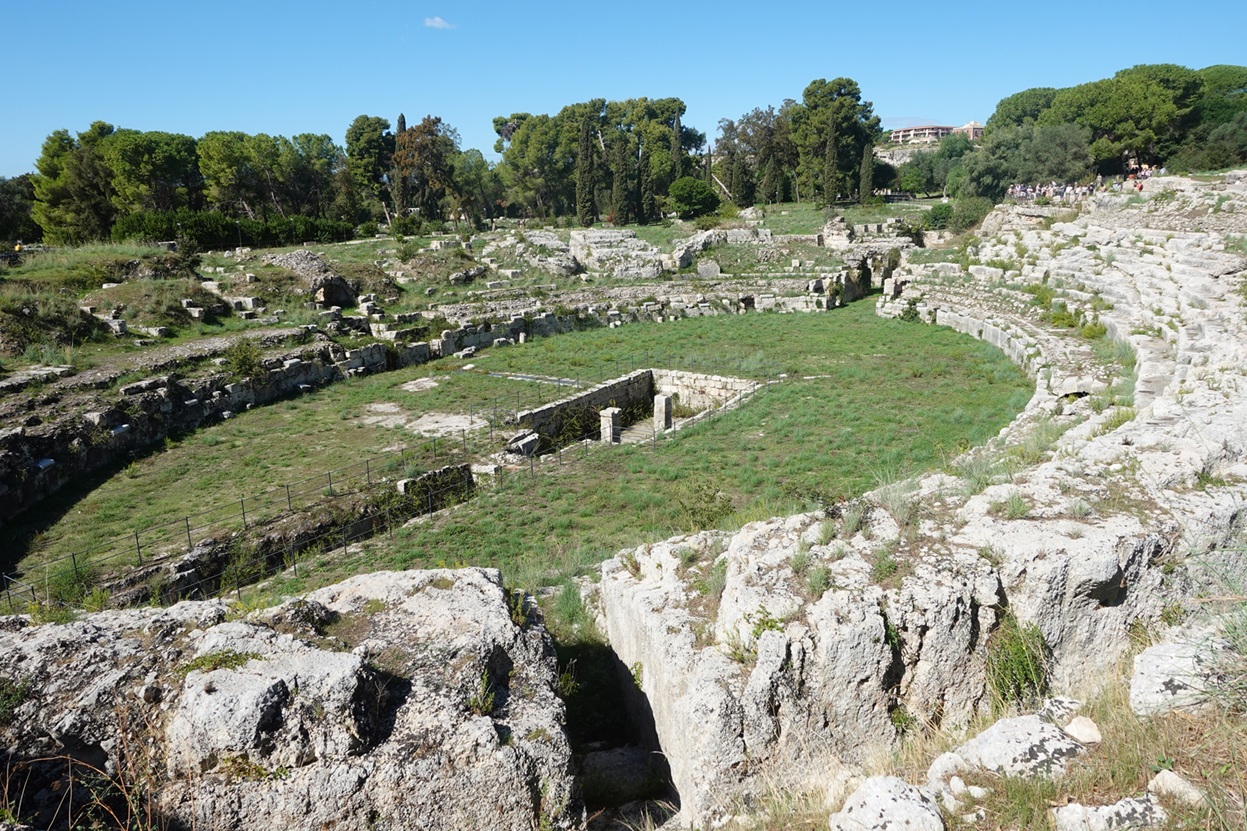
Roman amphitheatre. Although no explicit mention in ancient texts can be found regarding this amphitheatre, it is usually attributed to the Augustan period, during which a colony was established in 21 BCE. In 399 CE, Emperor Theodosius closed the gladiator schools, and in 404 CE the gladiatorial games were permanently abolished.
Syracuse, along with the Necropolis of Pantalica, has been designated a World Heritage Site by UNESCO.
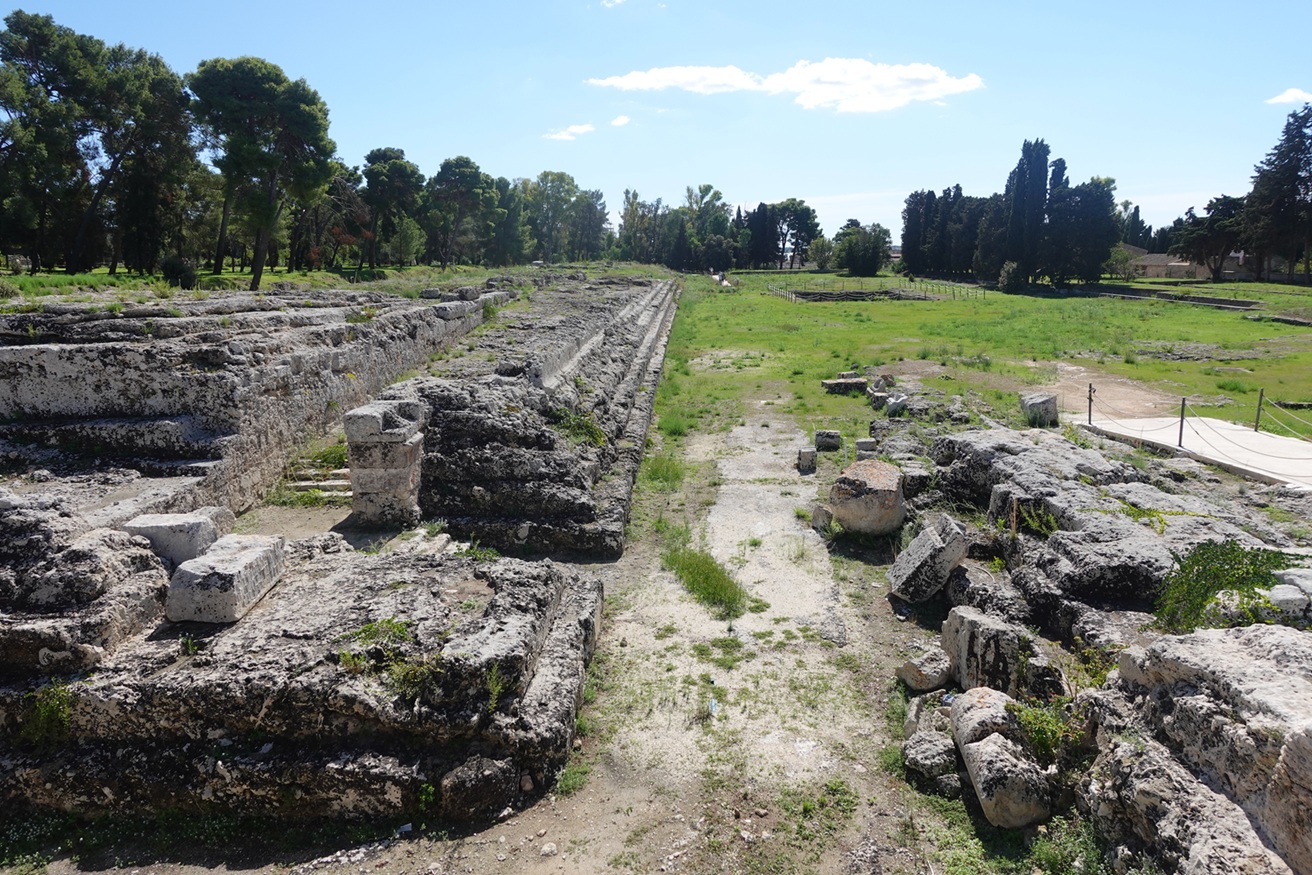
Altar of Hieron
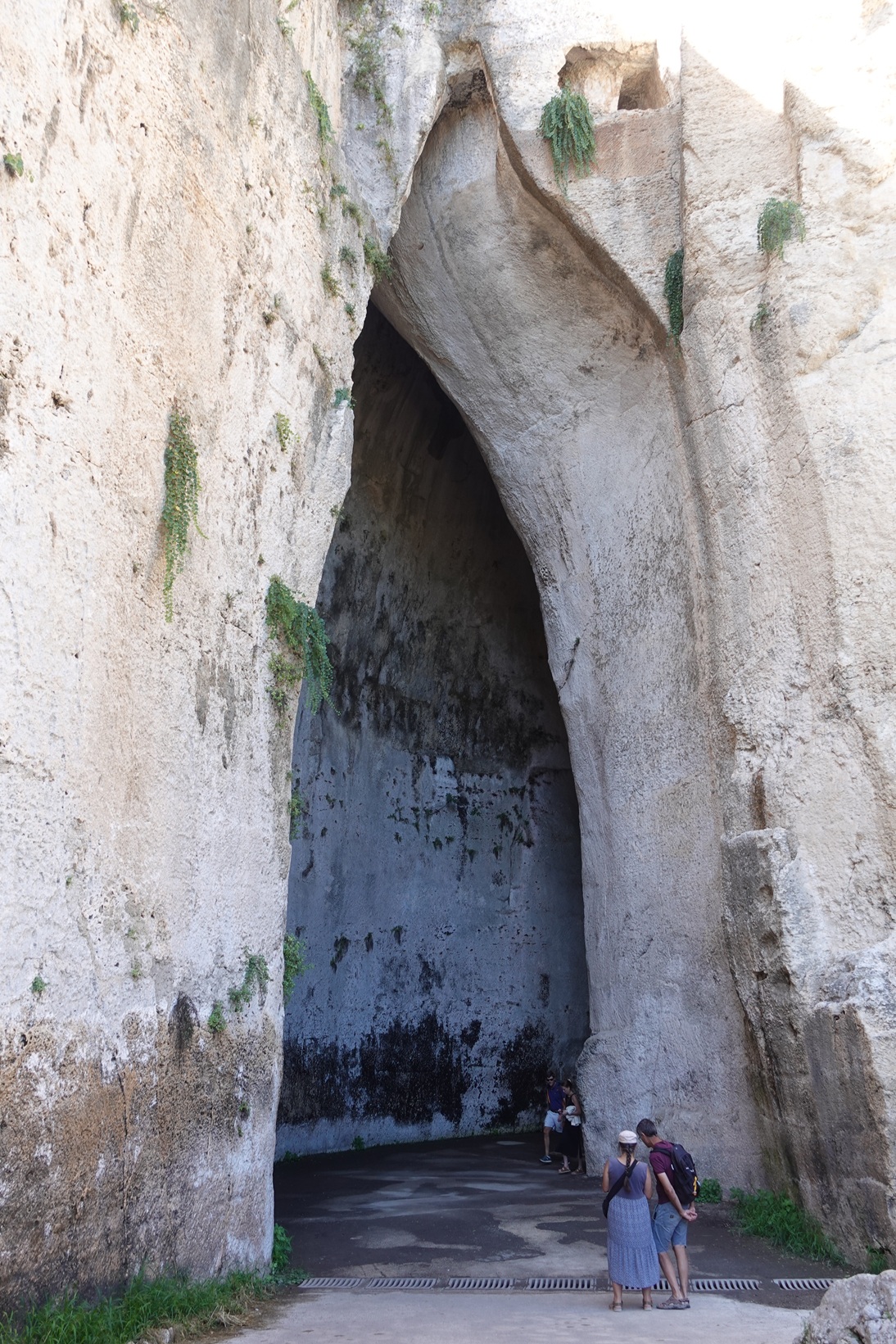
Ear of Dionysius. This is a human-made rock formation, carved out of the Temenites hill. The name was given by Michelangelo da Caravaggio, in 1608, because of its human ear similarity. Supposedly, the tyrant Dionysius I of Syracuse engineered the acoustics of the cave to amplify the voices of prisoners interred there. In fact, our voices resonated perfectly while in the cave.
It was originaly dug to supply water storage. At first narrow, it was extended gradually, until an earthquake in 1542 made it unusable for its original purpose.
The whole area is the result of centuries of quarrying for limestone building materials. The Necroplis of Pantalica is an area of cemeteries with 4-5,000 rock-cut chamber tombs, dating back to the 13th to 7th centuries.
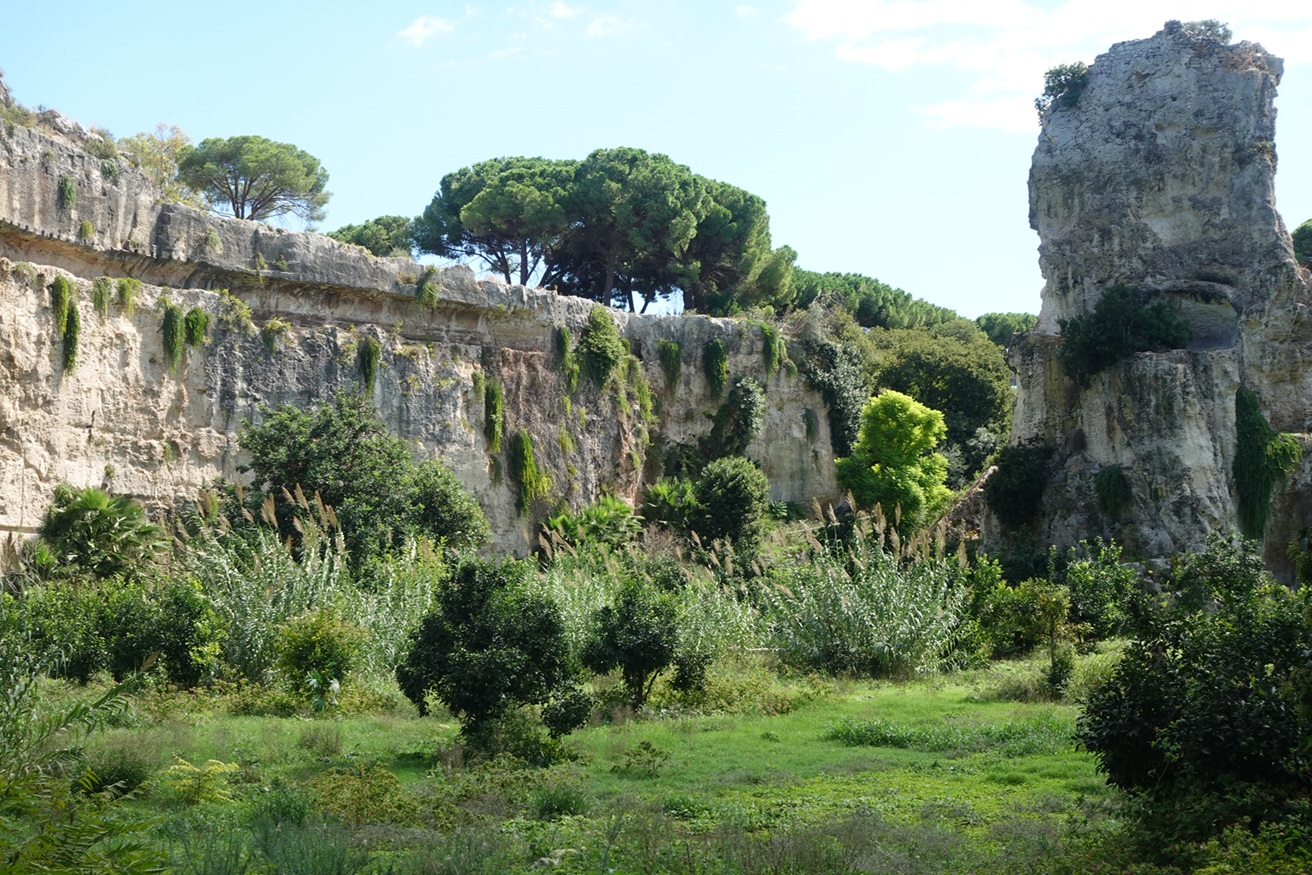
Quarry excavation area, which was once covered, but collapsed in the 16th century earthquake.
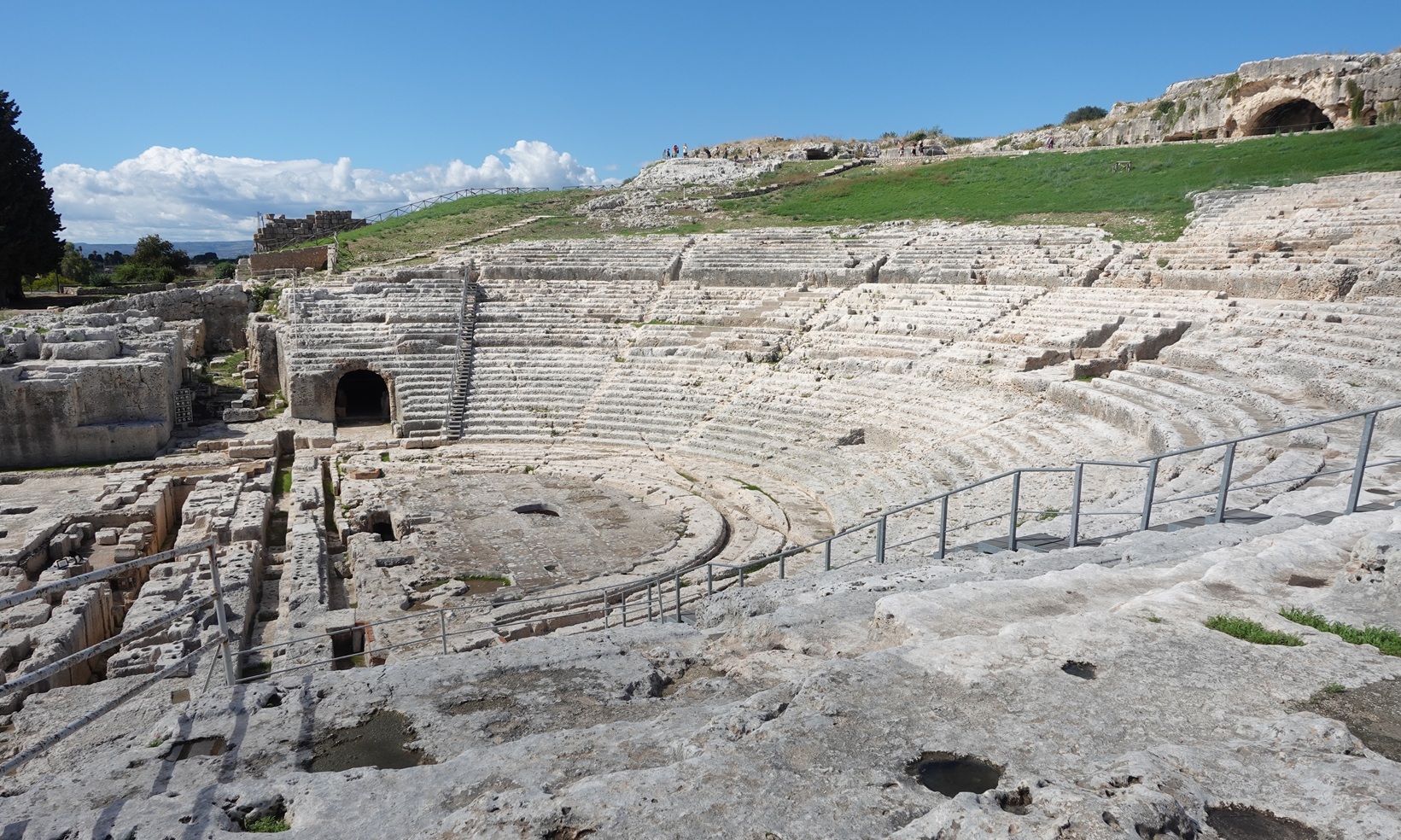
Greek theatre
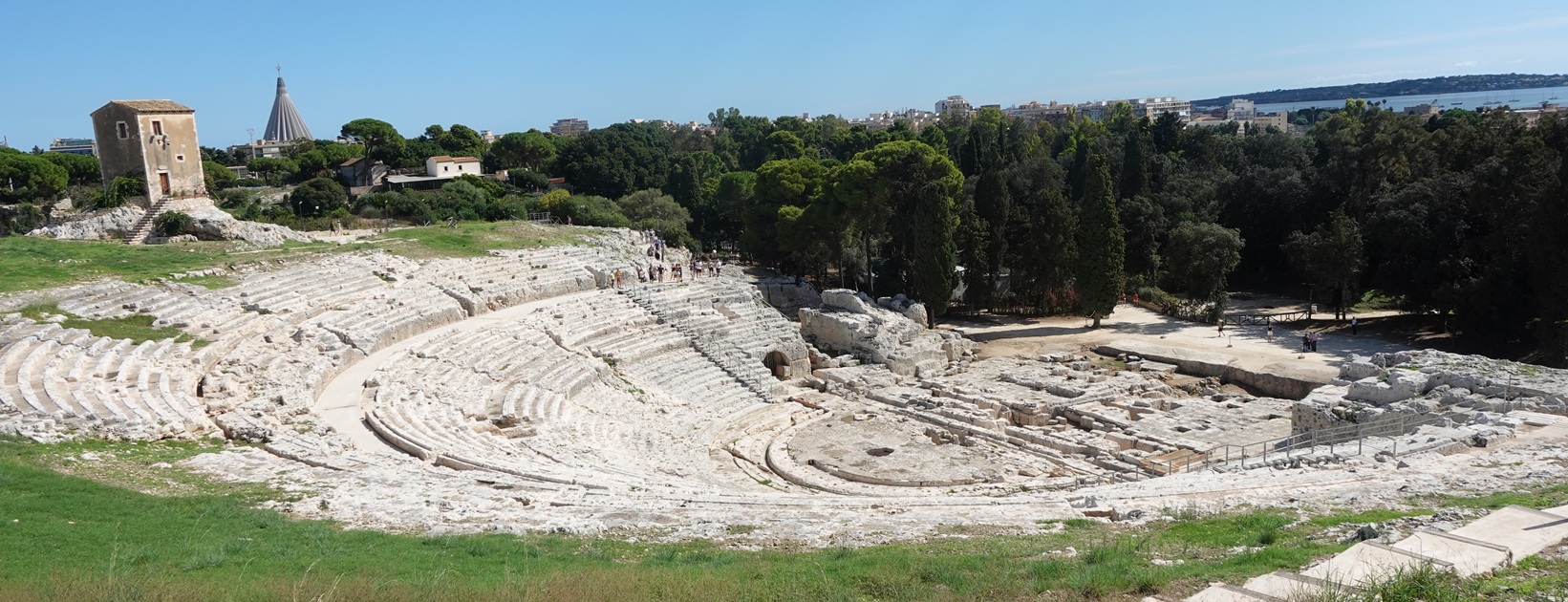
Greek theatre
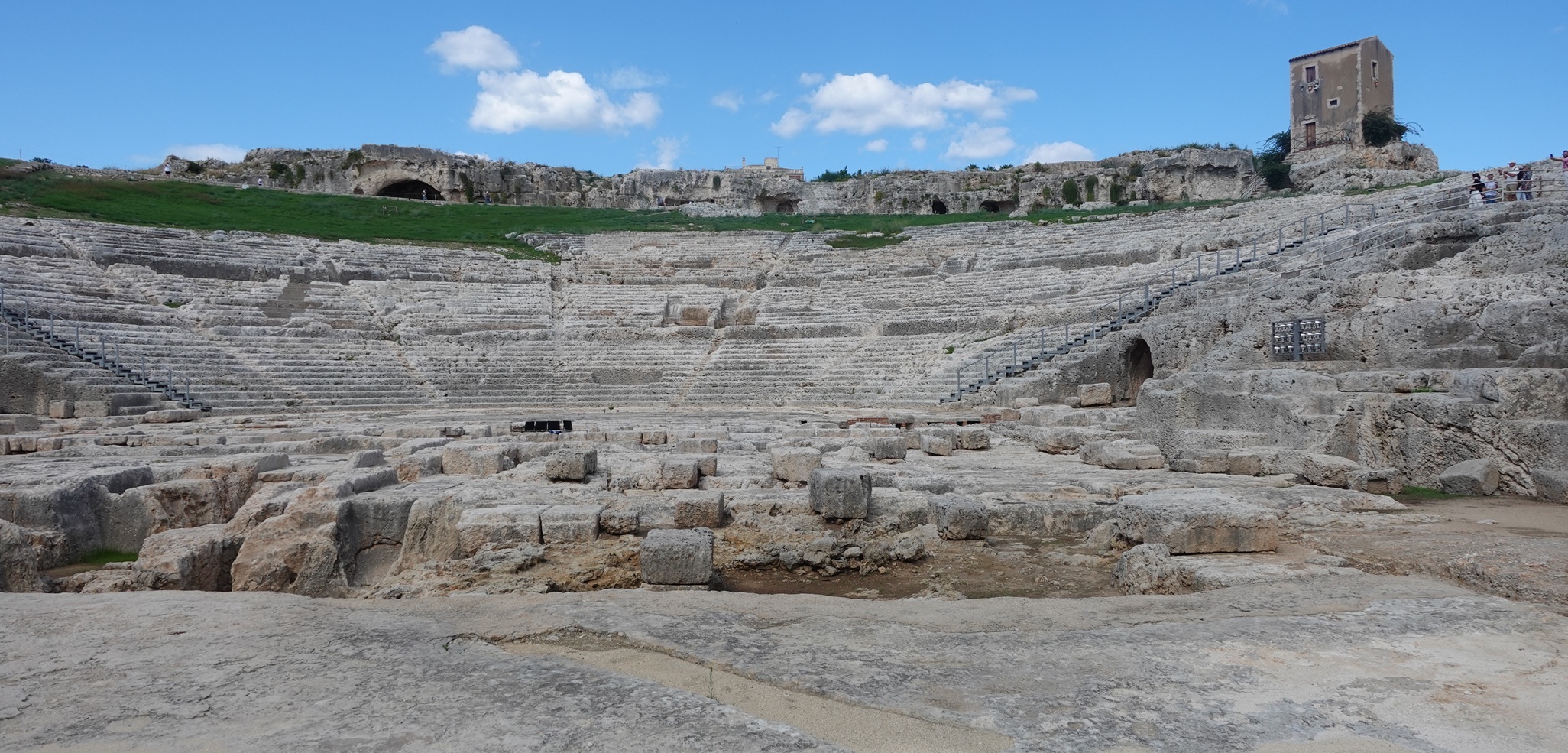
Greek theatre
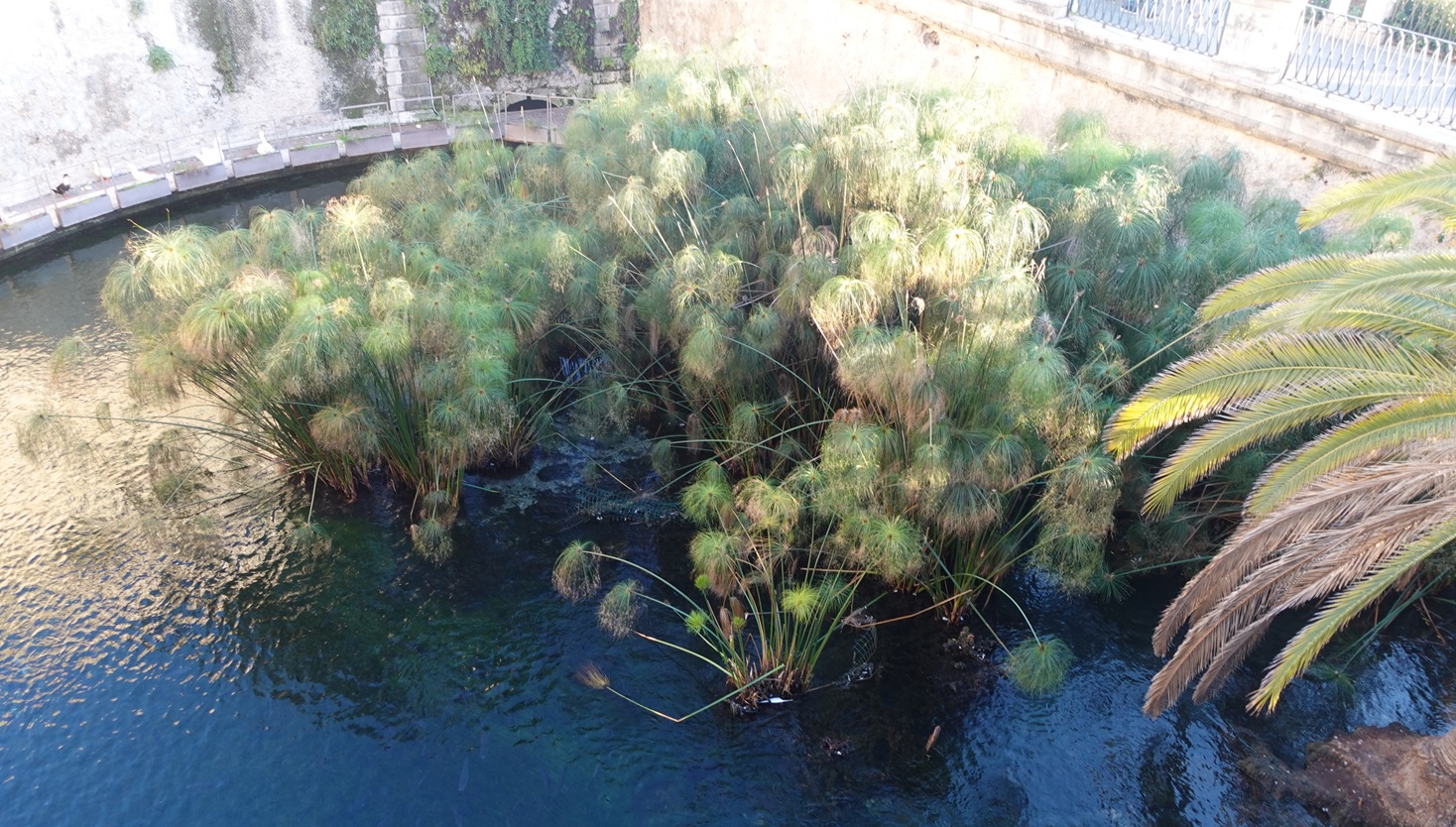
The Fountain of Arethusa with papyrus at its center; a rare but typical plant of Syracuse
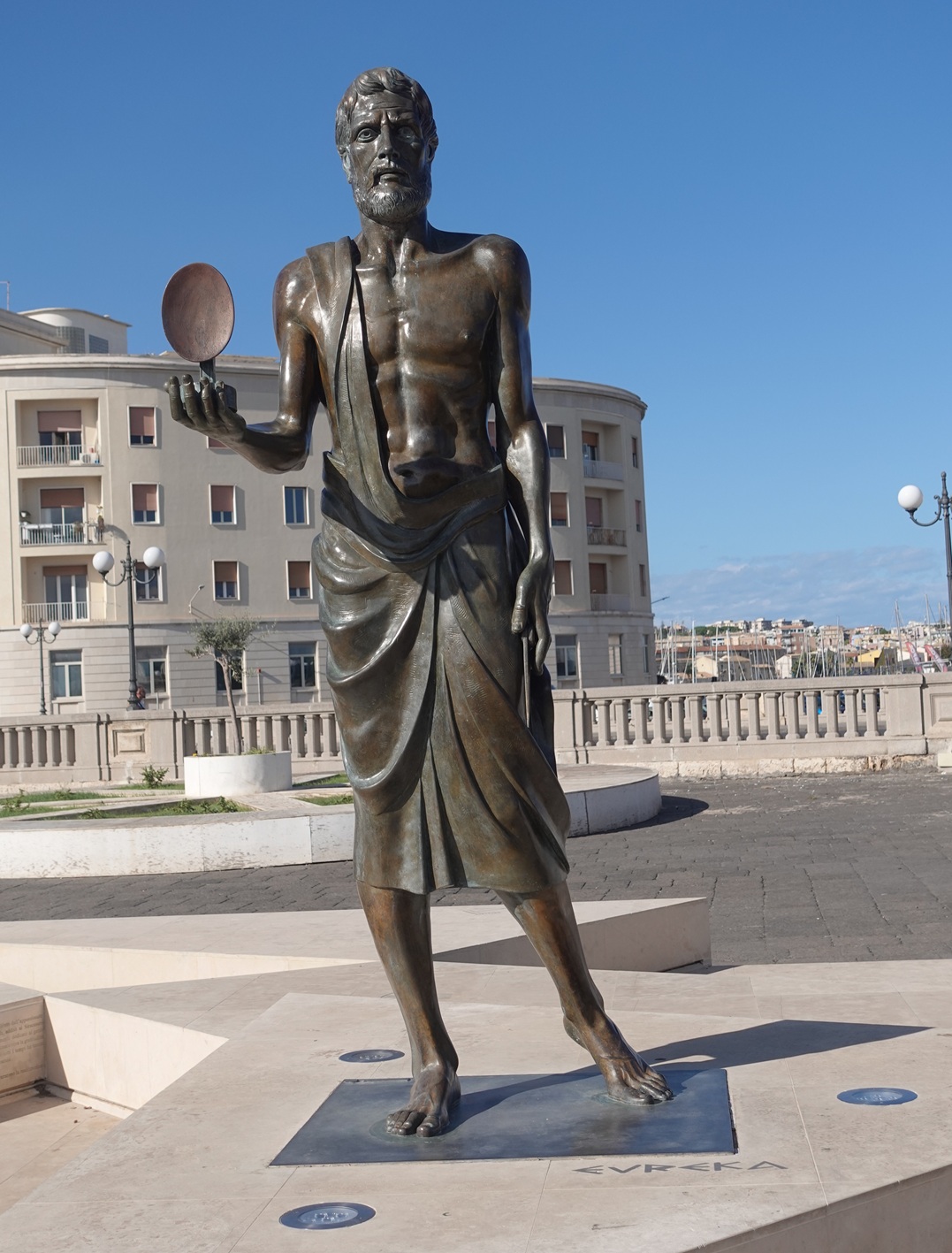
Statue of Archimedes, on the bridge between the mainland and Ortigia Island.
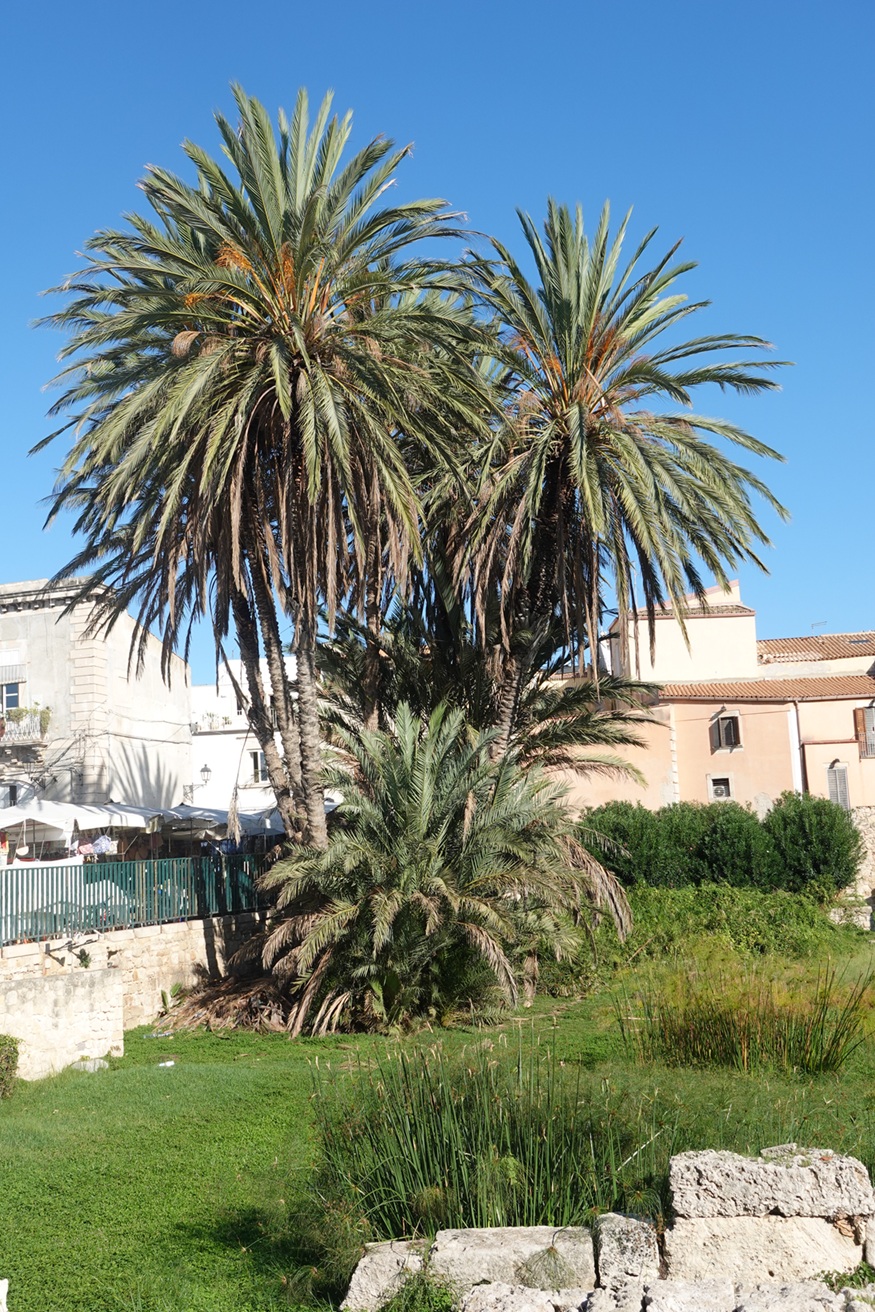
Palm trees cluster. How did they get them so perfectly arranged and balanced?
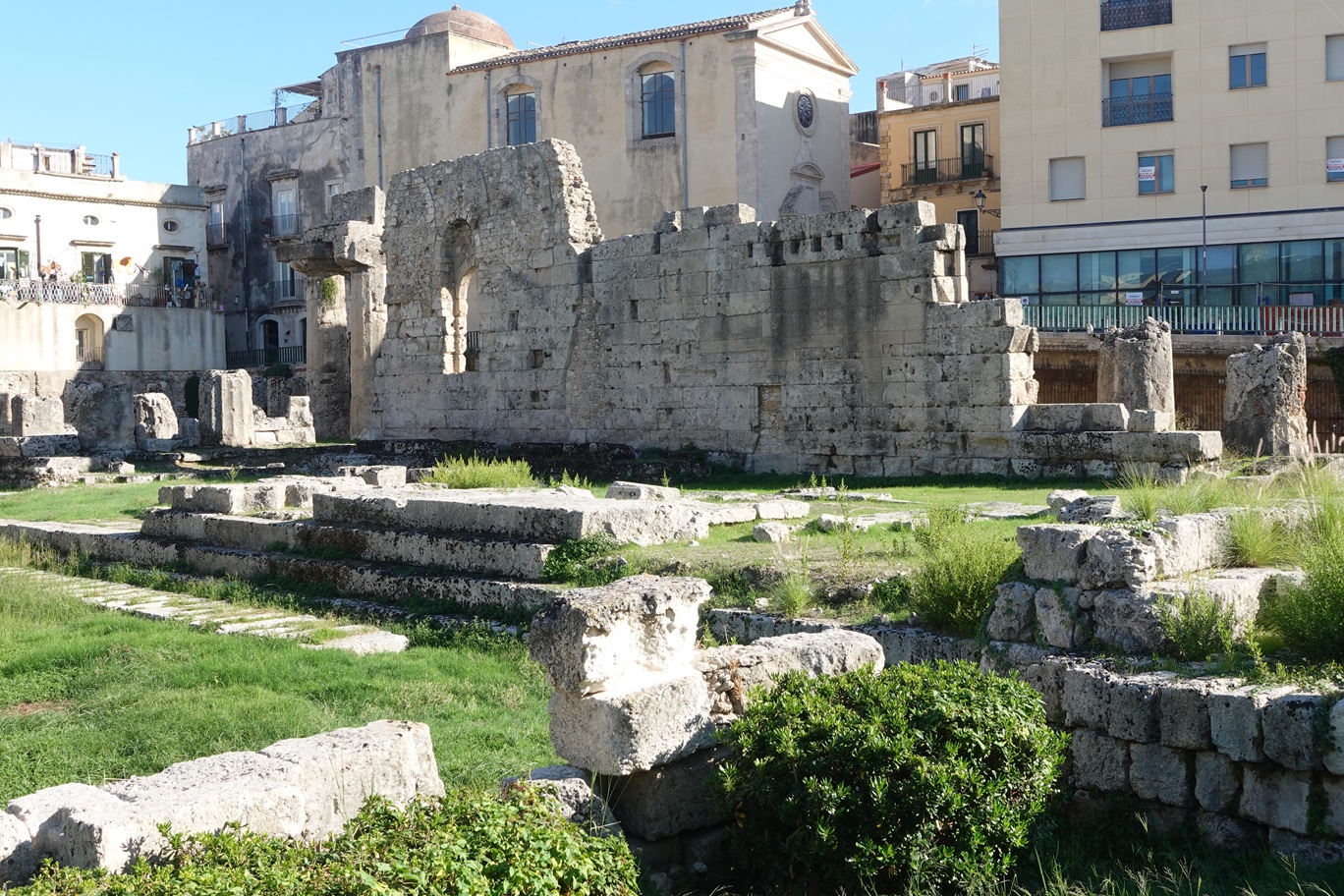
Temple of Apollo
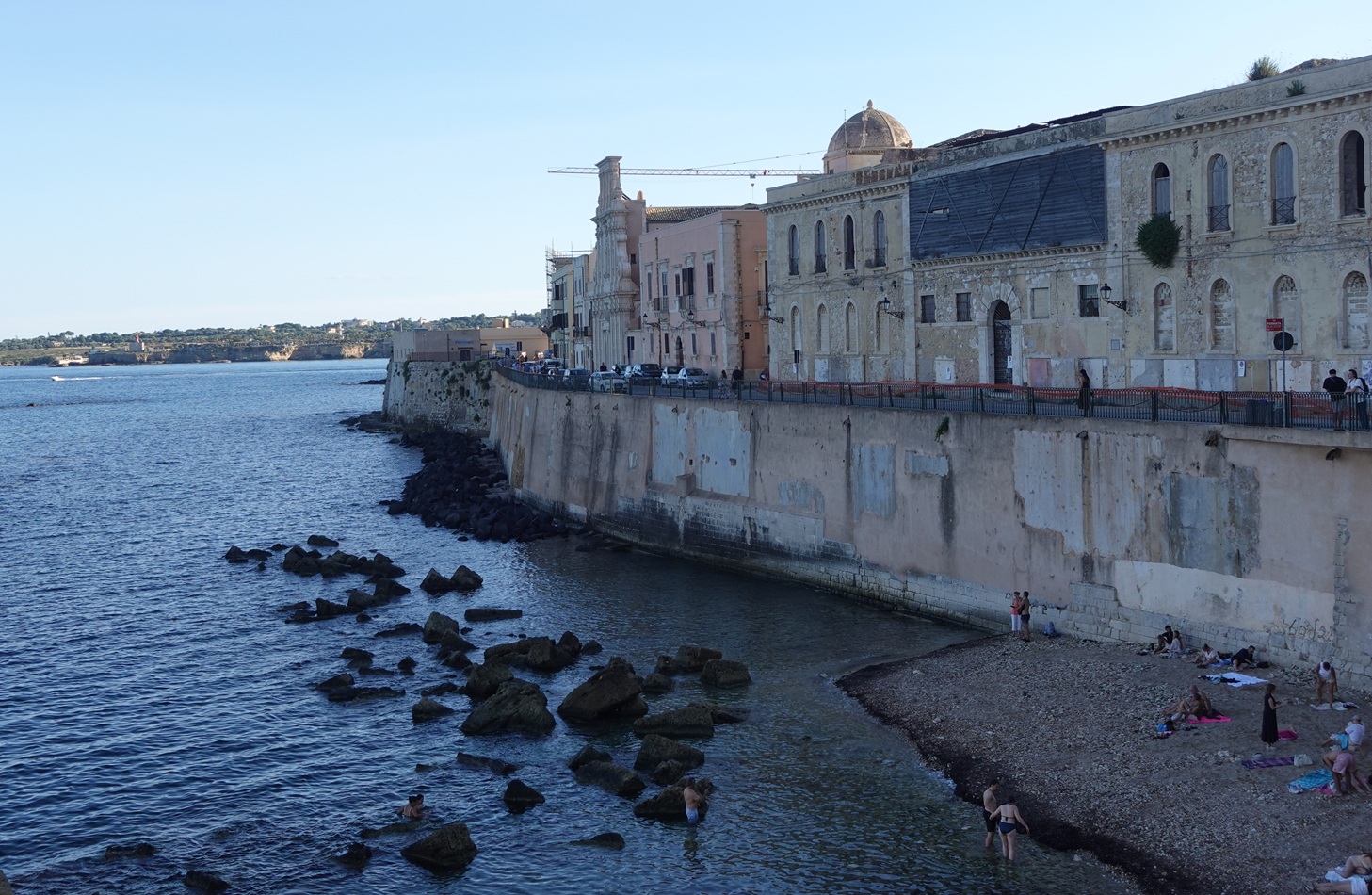
Coastline of Ortigia Island, north side.
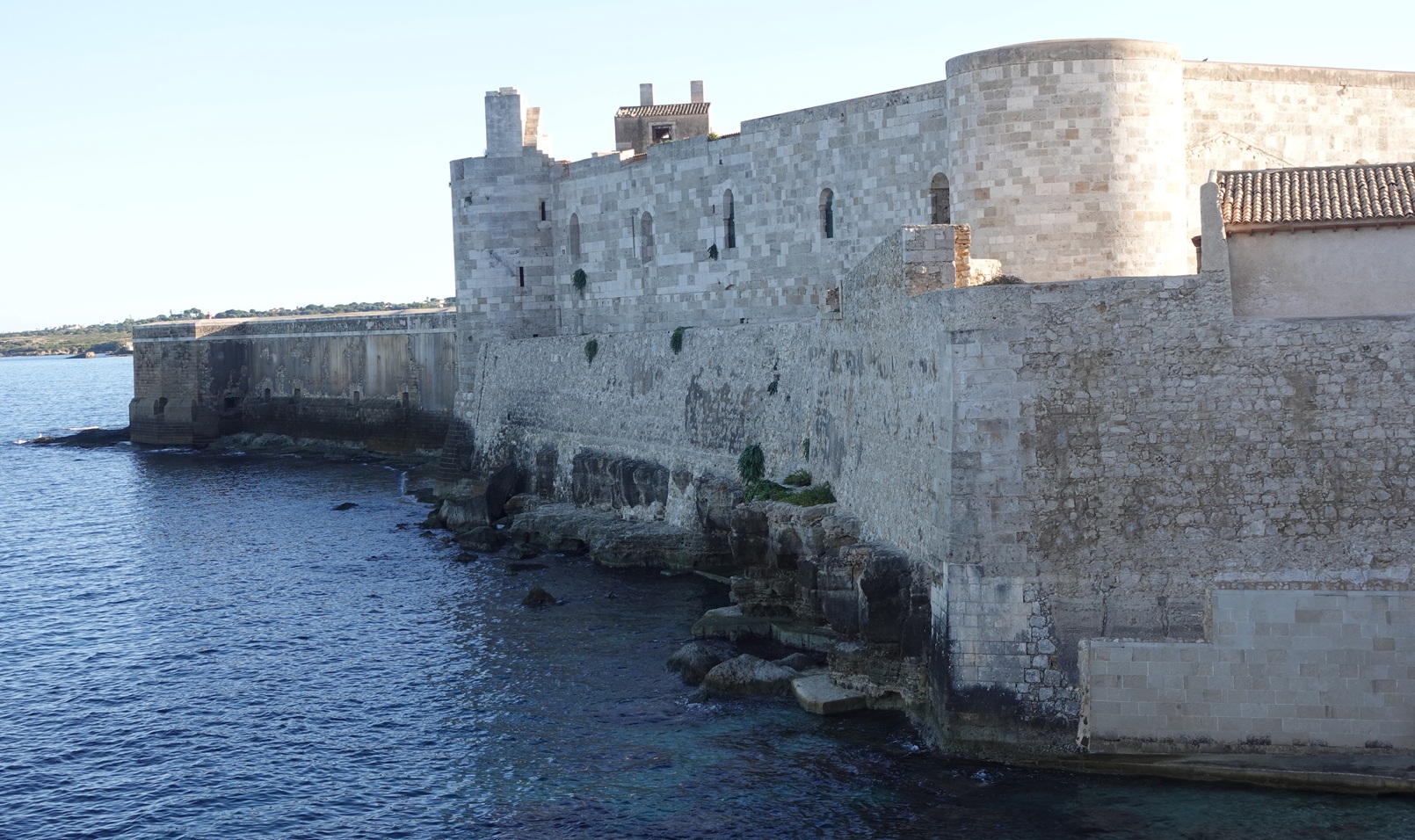
Castello Maniace. Built by Frederick II, between 1232 and 1240, and named after the Byzantine general Giorgio Maniace, who reconquered the city of Syracuse from the Arabs in 1038.
George Maniakes (born c. 998, died 1043) was a Greek who became a Byzantine general in the 11th century. He is known as Gyrgir in Scandinavian sagas, and is described as being giant size. He became the Katepan of Italy, ruling over a large swathe of southern Italy for the Byzantine empire. Interestingly, the partial reconquest of Sicily from the Arabs, beginning in 1038, was aided by the Norwegians (Vikings) and Norman mercenaries (under William de Hauteville – Iron Arm). The alliance soon fell apart, but, inspired by Maniake’s successes, the Normans returned to invade Sicily themselves.
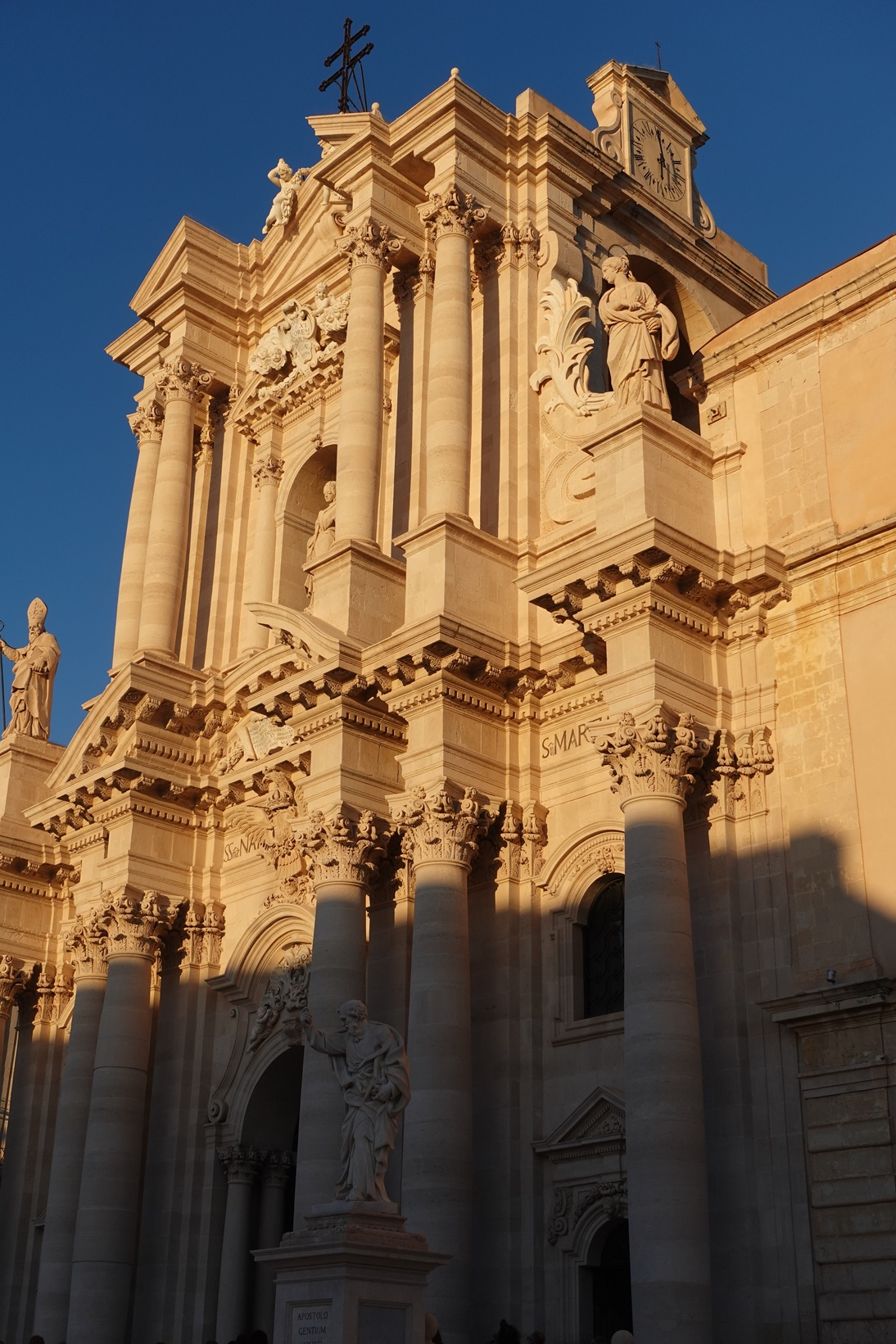
The Duomo of Syracuse, Chiesa di Santa Lucia alla Badia.
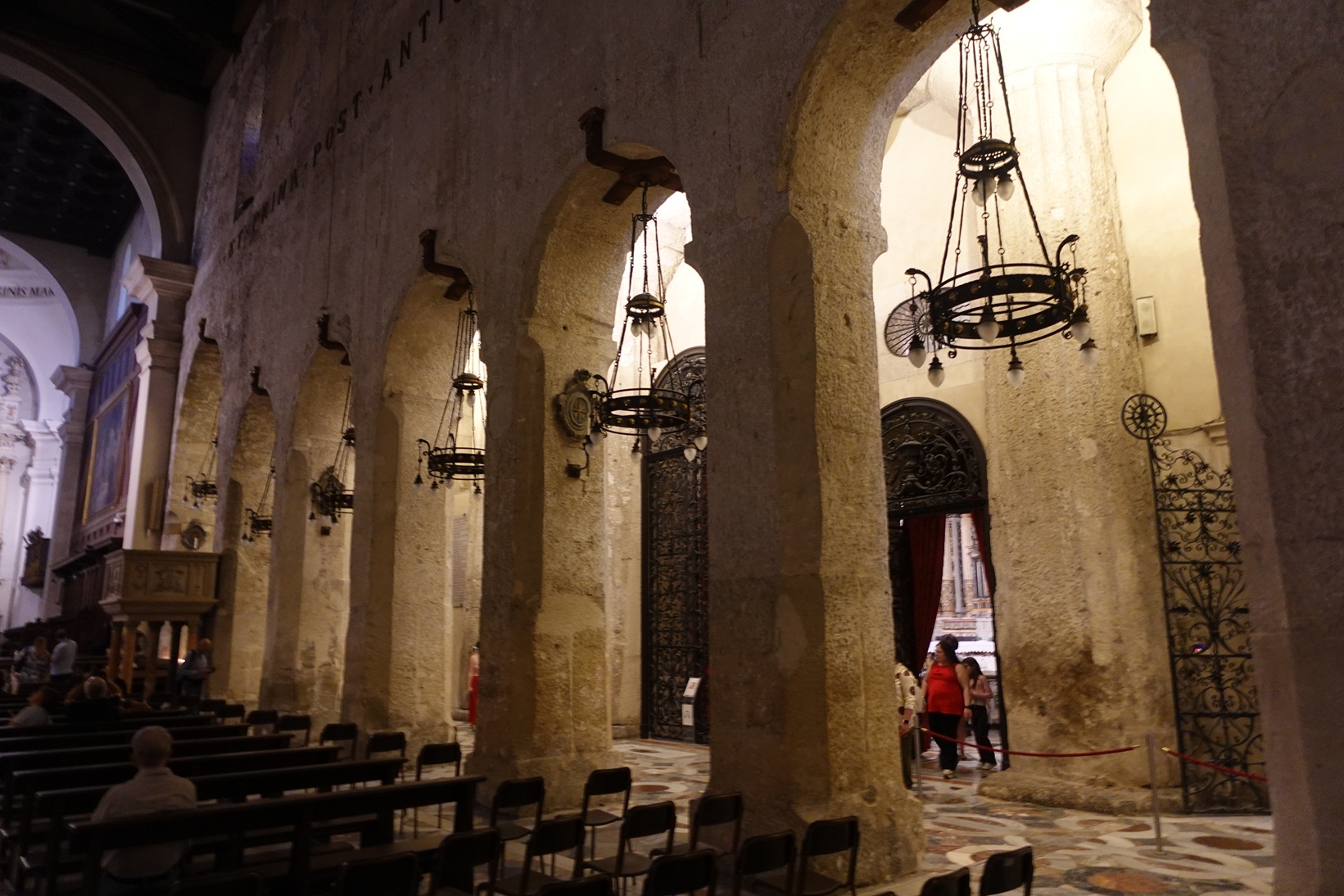
Interior of the Duomo
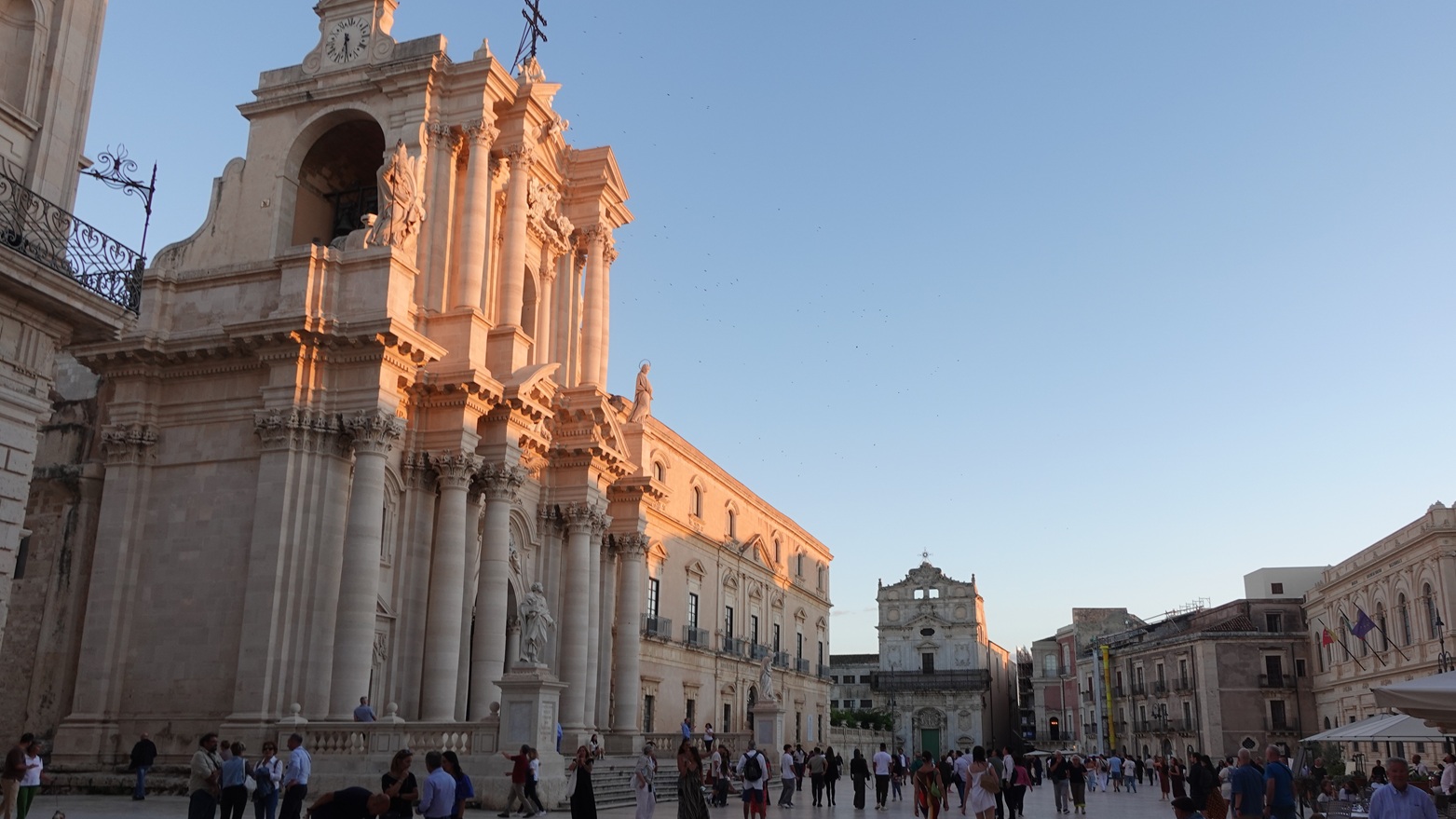
Piazza Duomo
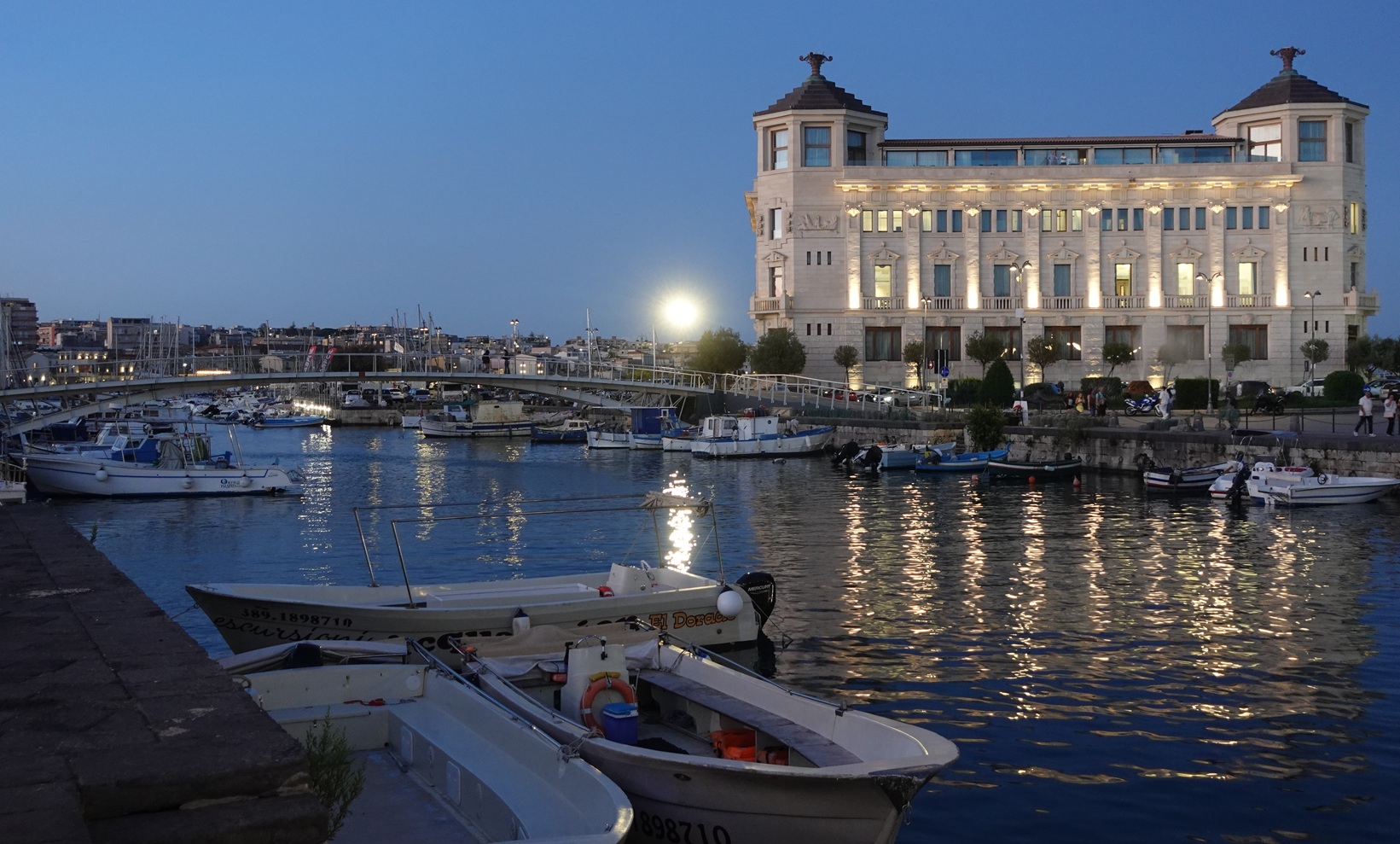
View of the waterway to the Small Port.