South Italy 2026
Day 27: Saturday 17 October 2026
Taormina – Catania – Landings Museum
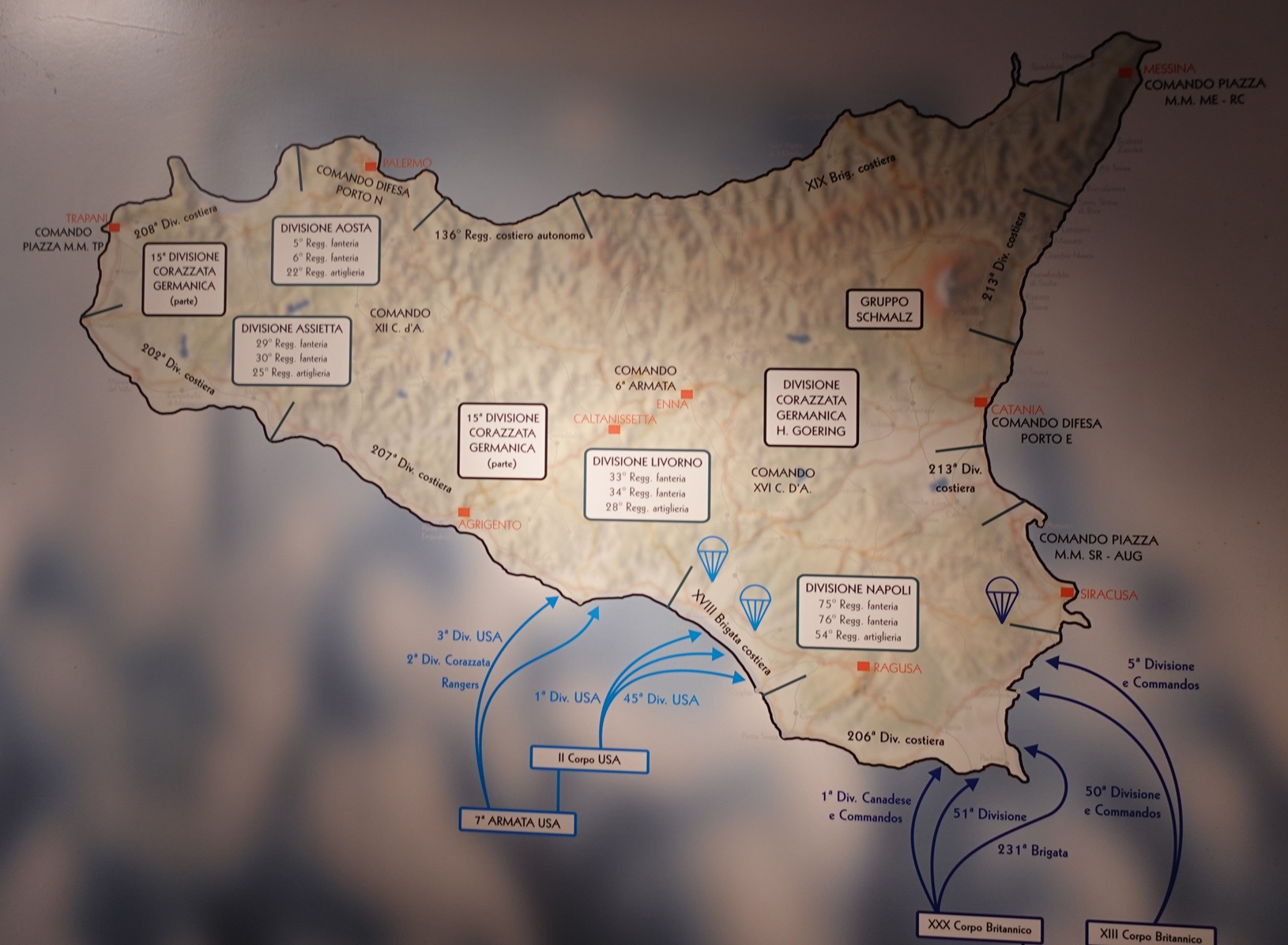
A map of Sicily, showing the initial landings of Operation Husky, the Invasion of Sicily. The Americans landed around Gela, and the British further east, as far as Syracuse.
Operation Husky
This was the Allied invasion of Sicily, involving troops from the United Kingdom, USA, Canada, Free France, Australia and Greece. The Italian defenders were supported by German troops. The Allies had 160,000 troops, 600 tanks, 14,000 vehicles, and 1,800 guns. The axis forces comprised of 131-252,000 Italians (260 tanks and 1,400 aircraft) and 40-60,000 Germans. The museum and other memorials around Sicily emphasise how bravely the Italians attempted to defend their homeland, despite being heavily out-numbered. Given the raw numbers, it is clear the superiority lay in training, preparedness, and psychology. The Italians in many locations embraced and welcomed the ‘invaders’ as liberators. This was particularly true in Sicily, which had its own independence motivations.
This is also borne out by the large numbers of Italian prisoners taken: 117,000 captured of missing, compared to only 10,000 German prisoners. Casualties were higher on the axis side: 9,000 killed compared to 5,800 killed on the Allied side.
Operation Husky lasted from 9 July 1943 till 17 August 1943, a much faster campaign that later campaigns against well-dug in German defenders in tough mountainous terrain in mainland Italy.
The war continued on with the invasion of mainland Italy on 3 September 1943. This was a landing in Calabria (Operation Baytown). the main invasion force landed on 9 September at Salerno (Operation Avalanche) and at Taranto (operation Slapstick). The Italians officially withdrew from the war on 8 September, the day before the Salerno and Taranto landings.
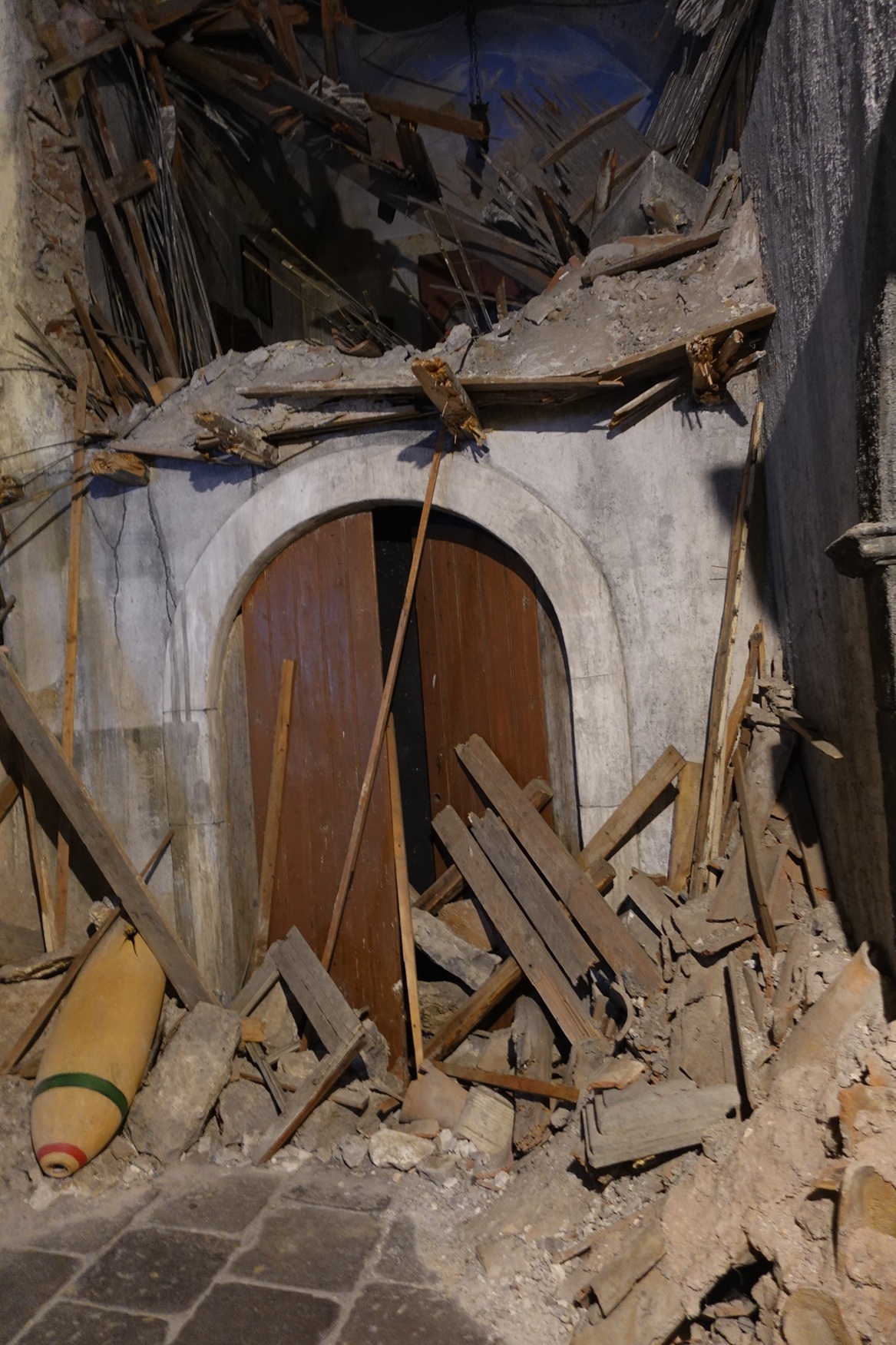
The Sicily Invasion Museum covers a broad range of topics related to the Second World War, and in a fair and unbiased way. The suffering of the civilian population was extensive, and the museum has recreated scenes like this one of bombing destruction.
Before the invasion, from mid-May till July 10, the Allies flew over 42 thousand sorties, destroyin 323 German and 105 Italian aircraft, losing 250 themselves.
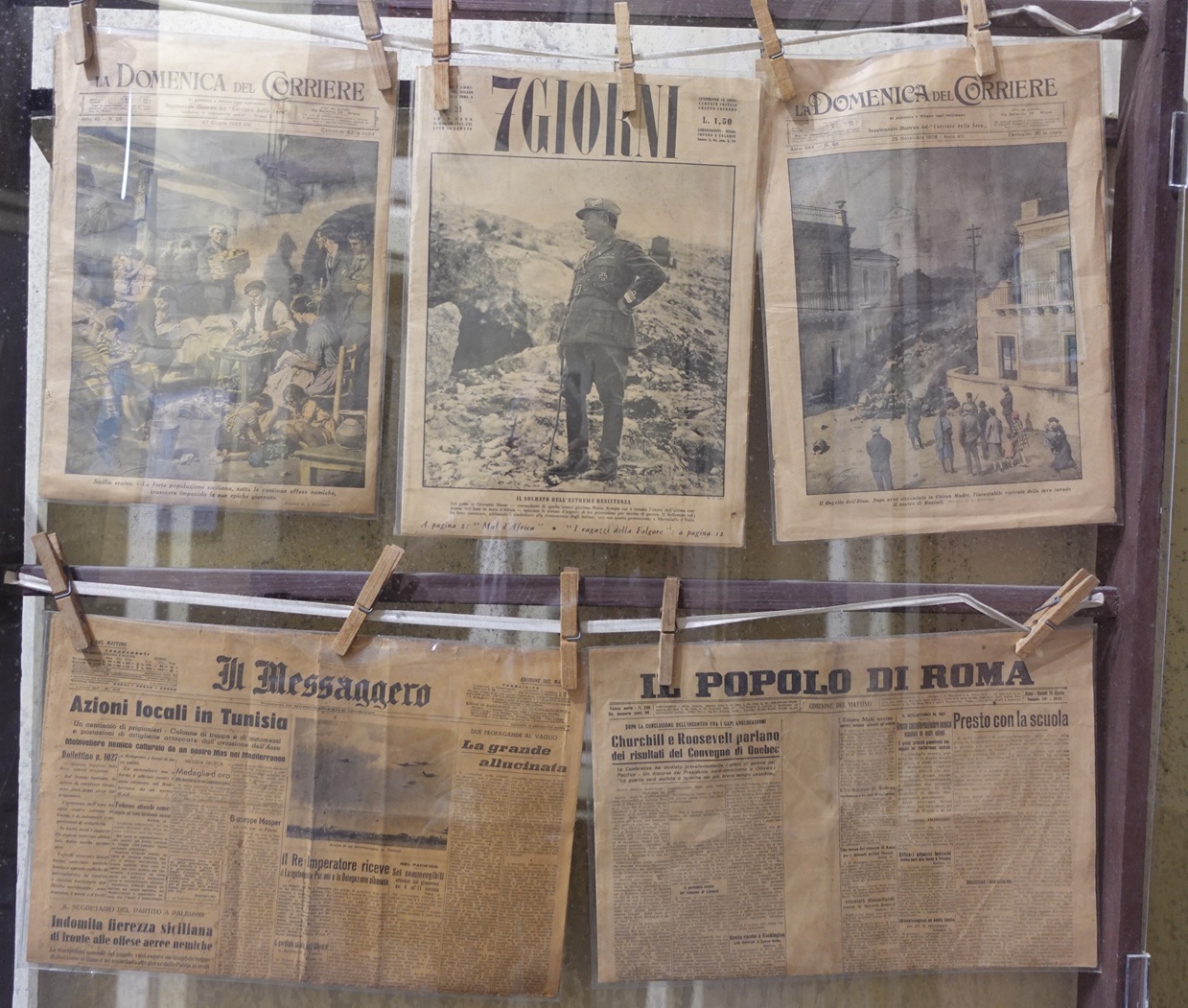
Newspapers from the time of the Sicily invasion of 9 July 1943.
Away from the battlefield, another war was being fought with information and propaganda. Operation Mincemeat was an operation to distract the Axis forces by floating a corpse to the Spanish coast. On the body were false documents and plans to convince the Germans the next move by the Allies after the seizure of North Africa would be Greece. This deception was successful, causing the Germans to divert their defensive effort in part to Greece. Dashed clever, what?!
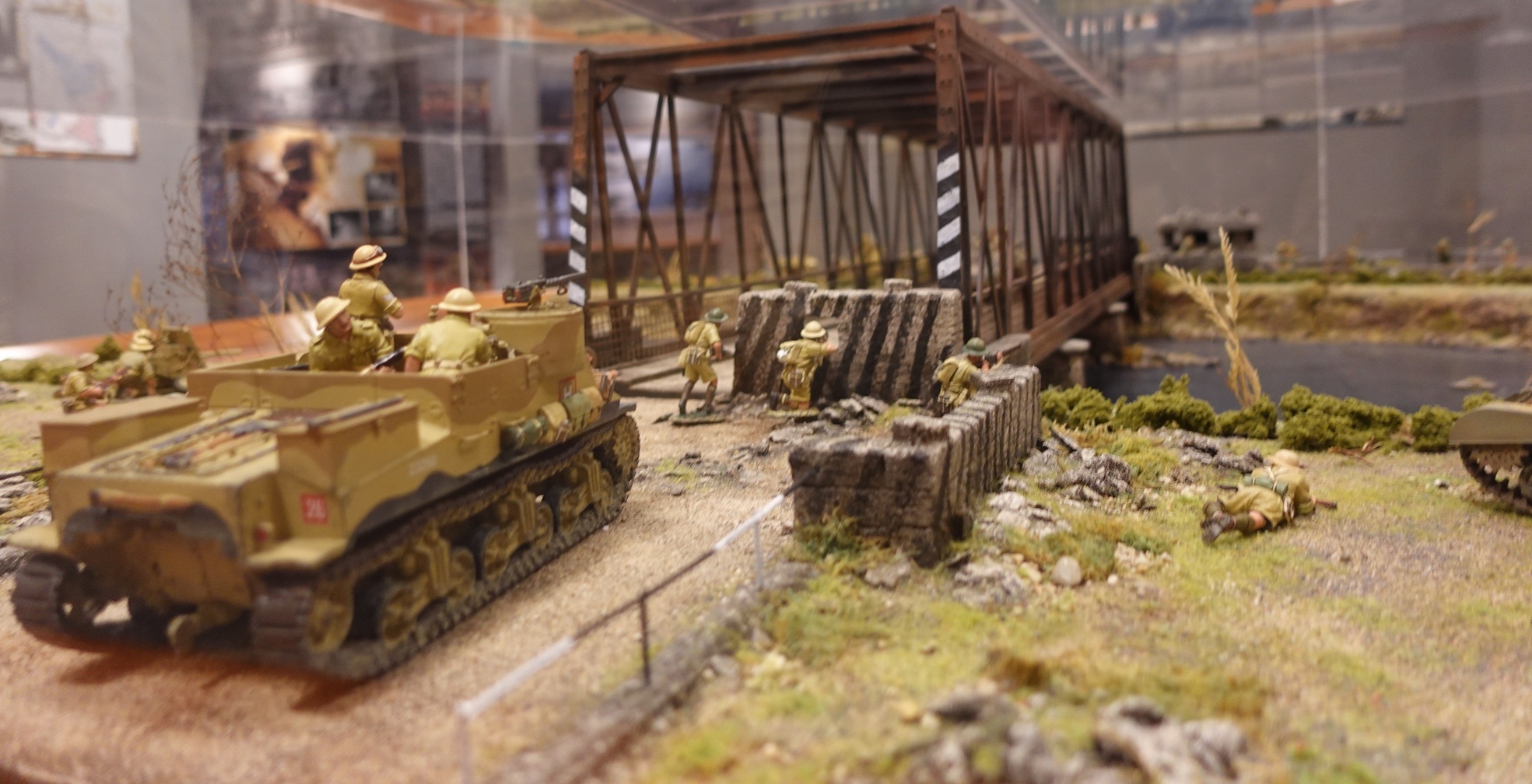
Diorama of a battle between British forces and the Germans, contesting a bridge. At the outset of the invasion, both British and American operations included paratroop drops to secure strategic targets in advance of the main invading force to arrive later from the beaches. Pathfinders of the 21st Independent Parachute Company marked the landing zones for the troops who were to seize Ponte Grande, the bridge over the River Anape a little to the south of Syracuse. Their orders were to hold the bridge until the British 5th Infantry Division could arrive from the beaches at Cassibile, 11km to the south. They were able to repel an Italian battalion with just 89 men till mid-afternoon. With just 18 men left, and low in ammunition, they surrendered just 45 minutes before the arrival of the British 5th Division advance troops.
Gliders also carried troops to landing zones inland. Unfortunately, strong winds scattered troop-carrying aircraft, causing 69 British gliders to crash into the sea, drowning 200 men.
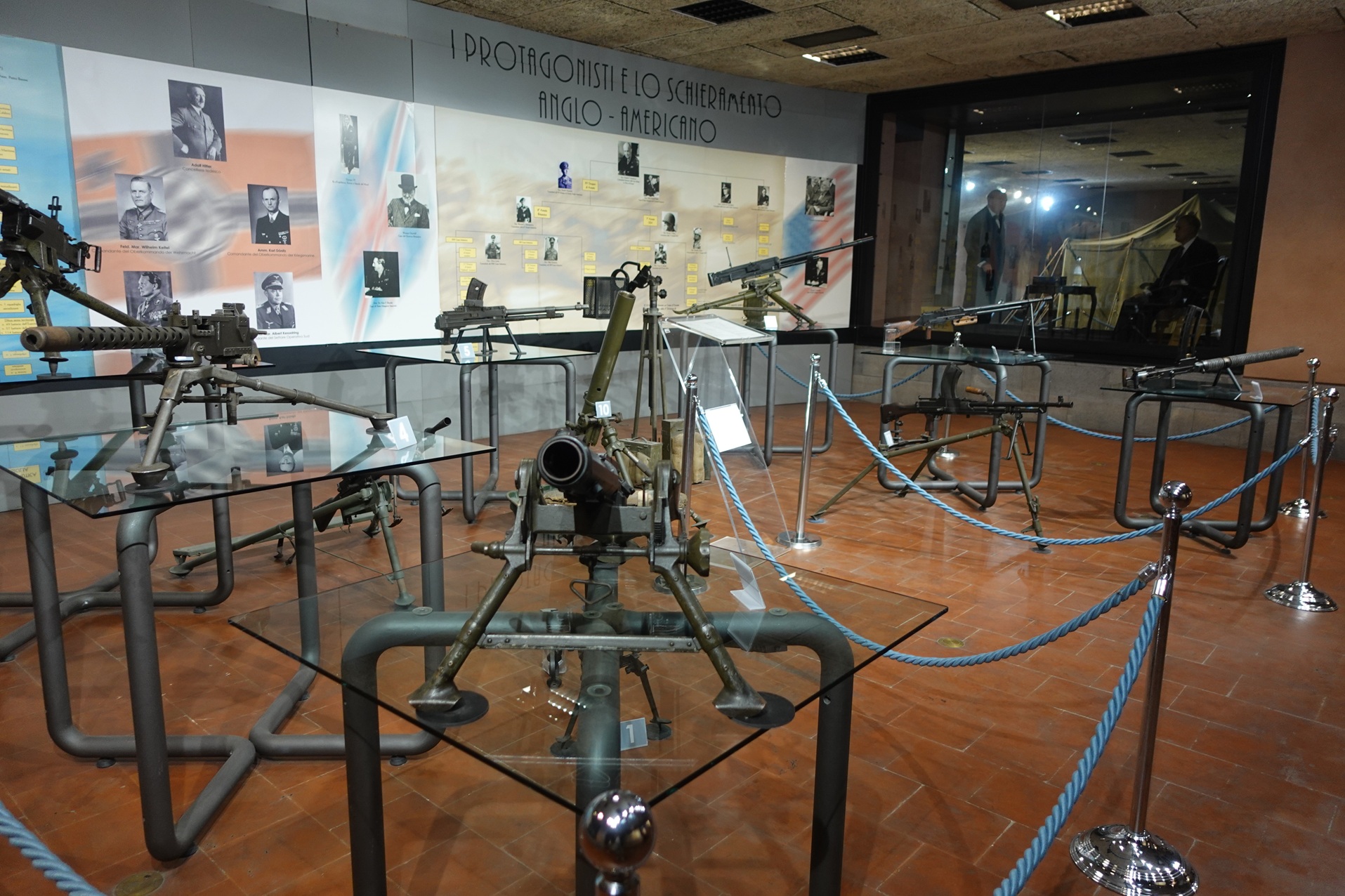
Weapons used in the campaign.
Landings were made from 2.45 a.m. on 10 July 1943, on 26 main beaches, over 170 km of coast. It was the largest amphibious operatino of Word War Two, in terms of the size of the landing zone and the number of divisions put ashore on the first day. The landing operations were covered by Greek destroyers. The weather conditions were terrible, with a very strong wind.
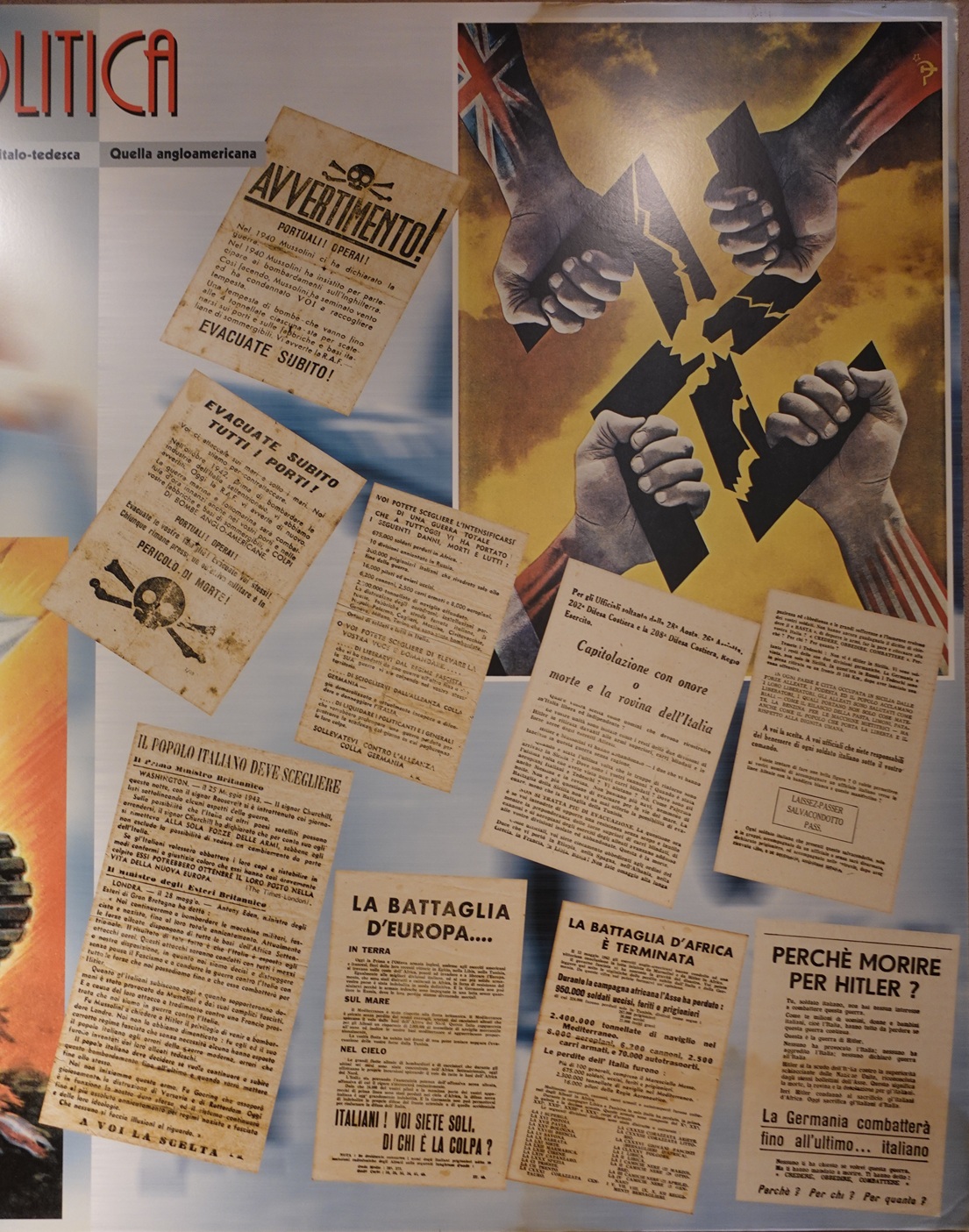
Propaganda leaflets dropped to the Italian military, encouraging them to stop fighting for Hitler.
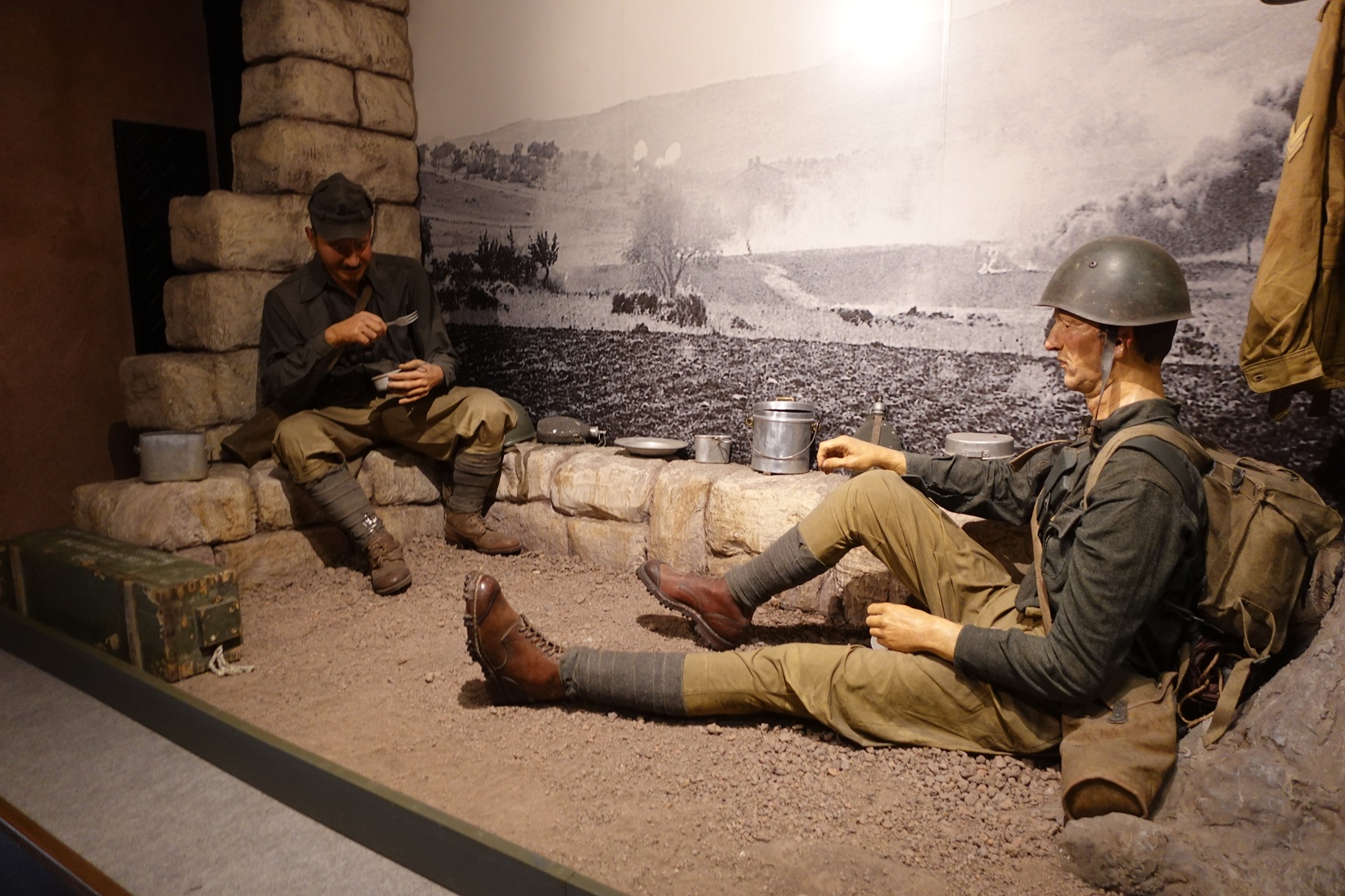
A model recreation of two Italian soldiers trying to rest at the front.
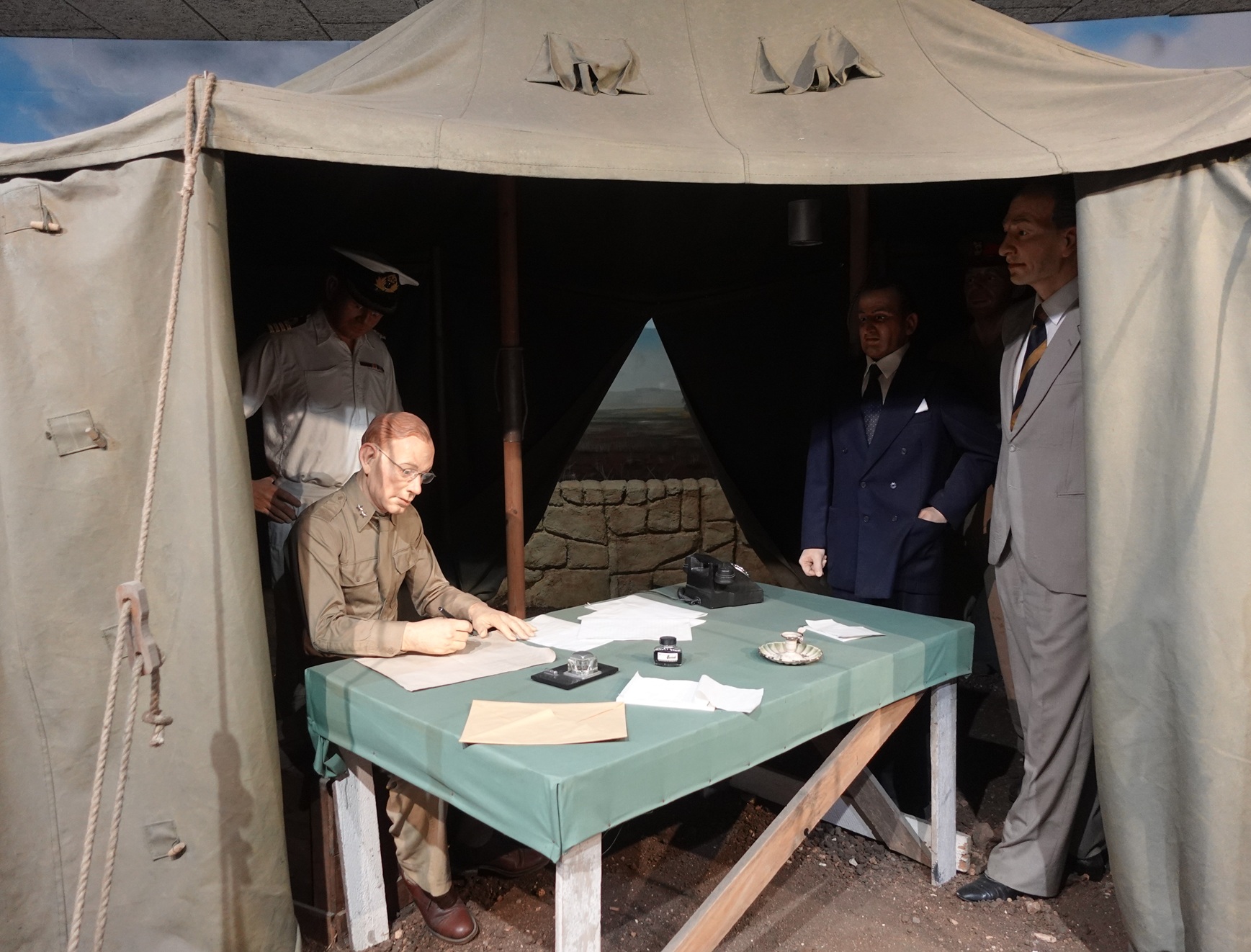
A lifesize recreation of the tent scene, where the armistice was signed, officially taking Italy out of the war. Nevertheless, the fascists continued the struggle, and Mussolini was rescued from captivity by German commandos.
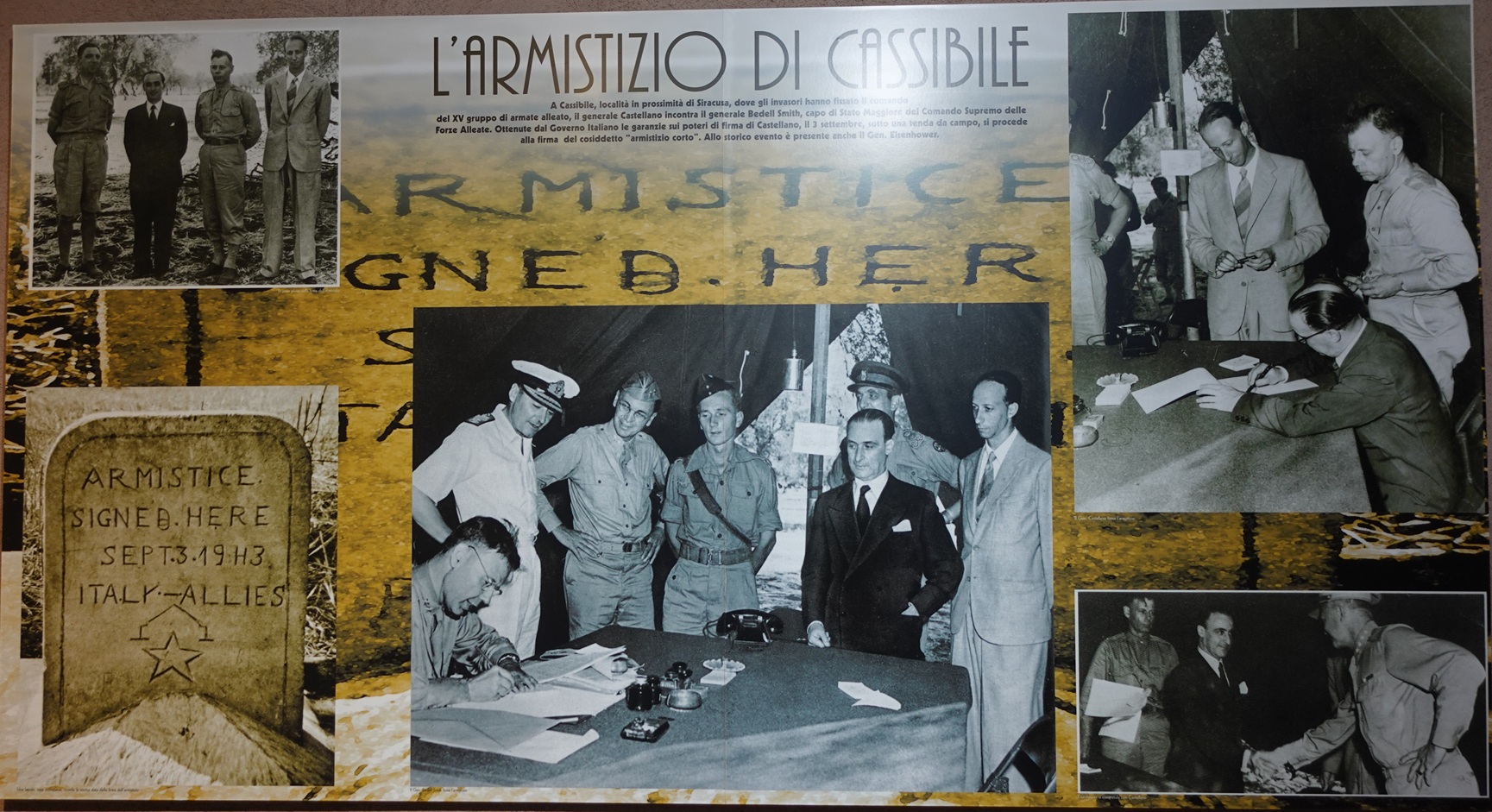
Information and photos of the real armistice signing.
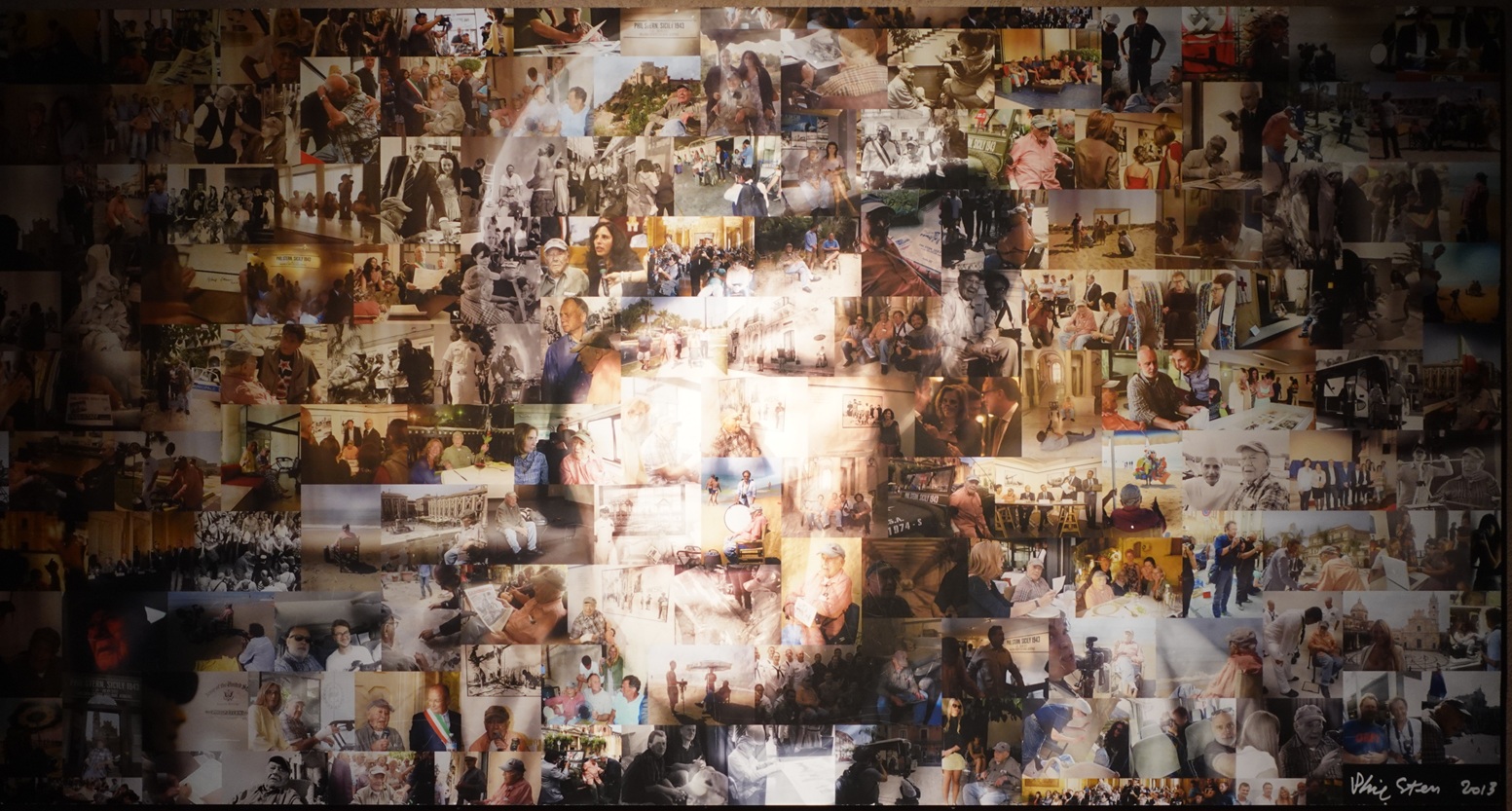
A well-done montage of photos by Phil Stern (1919-2014), an American sergeant who photographed the war.
He was also known as Snapdragon. In his early 20s, he was a US Army Ranger with “Darby’s Rangers” in North Africa and Italy during World War Two, and just 23 at the time of the invasion of Sicily. After the war, he became a staff photogrpaher for Look magauine, as well as working for Life. He was a still photographer on films, capturing famous images of Marilyn Monroe, James Dean, Marlon Brando and Lous Armstrong, amongst others.
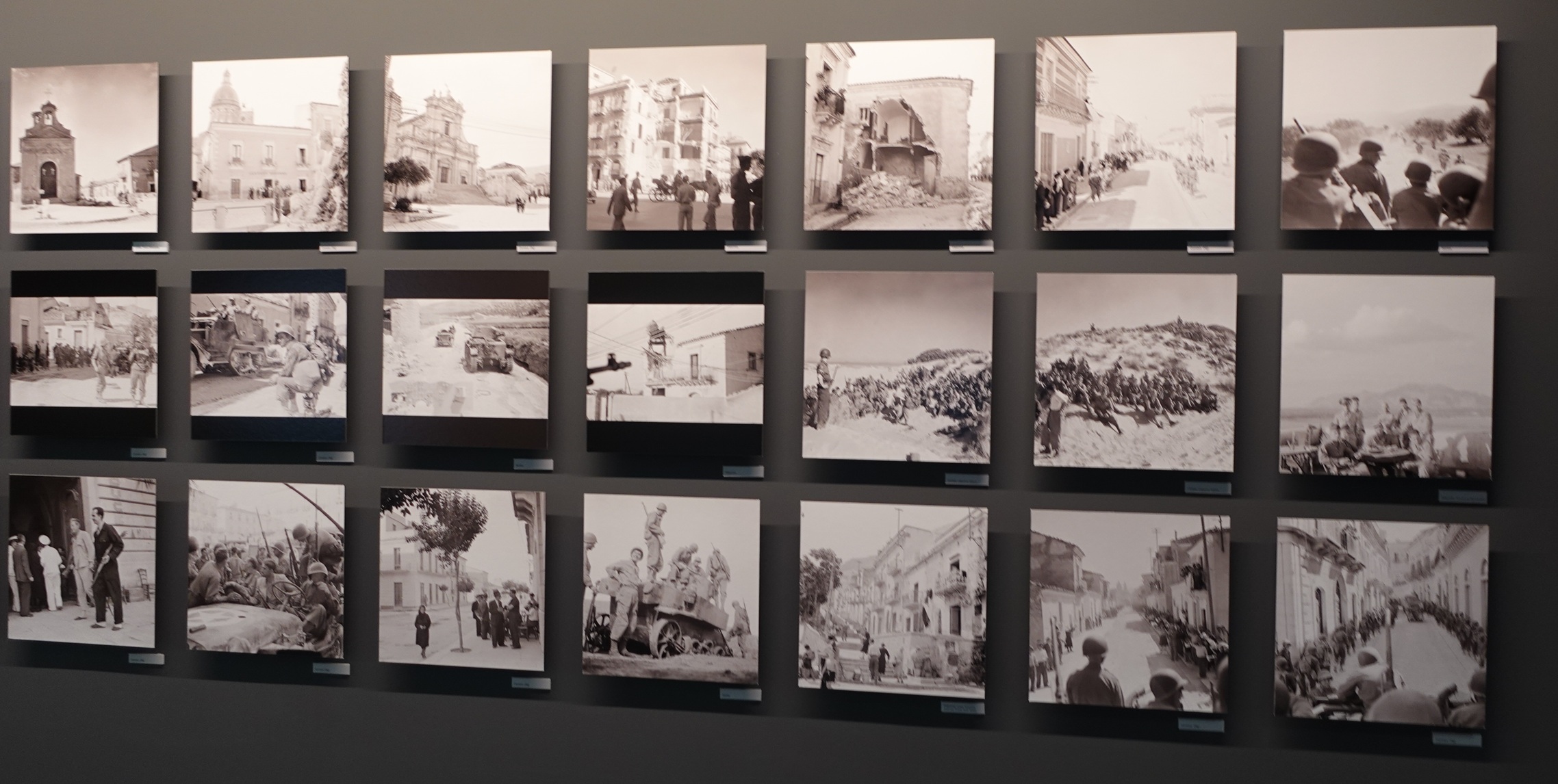
Some of Phil Stern’s photographs of the war in Sicily. The museum held a special exhibition of his photographs.
Phil Stern was a member of a “Darby’s Rangers”. A film was made in 1958 about this unit, whose founding commander was William Orlando Darby (1911-1945), an important commander for the invasion of Sicily, the invasion of Italian mainland, the Anzio Campaign.
Tragically, Darby was killed in the final week of the war, on April 30, 1945, commanding as colonel the 10th Mountain Division, which had breached the Po River during the Spring 1945 offensive in Italy, to reach Torbole at the head of Lake Garda. He was killed when an artillery shell exploded while he was issuing orders for the attack on Trento to cut off the German retreat. Two days later, all German forces in Italy surrendered.
Both Stern and Darby are true heroes, in their own ways, and it is commendable that this wonderful museum brings their stories to public awareness.
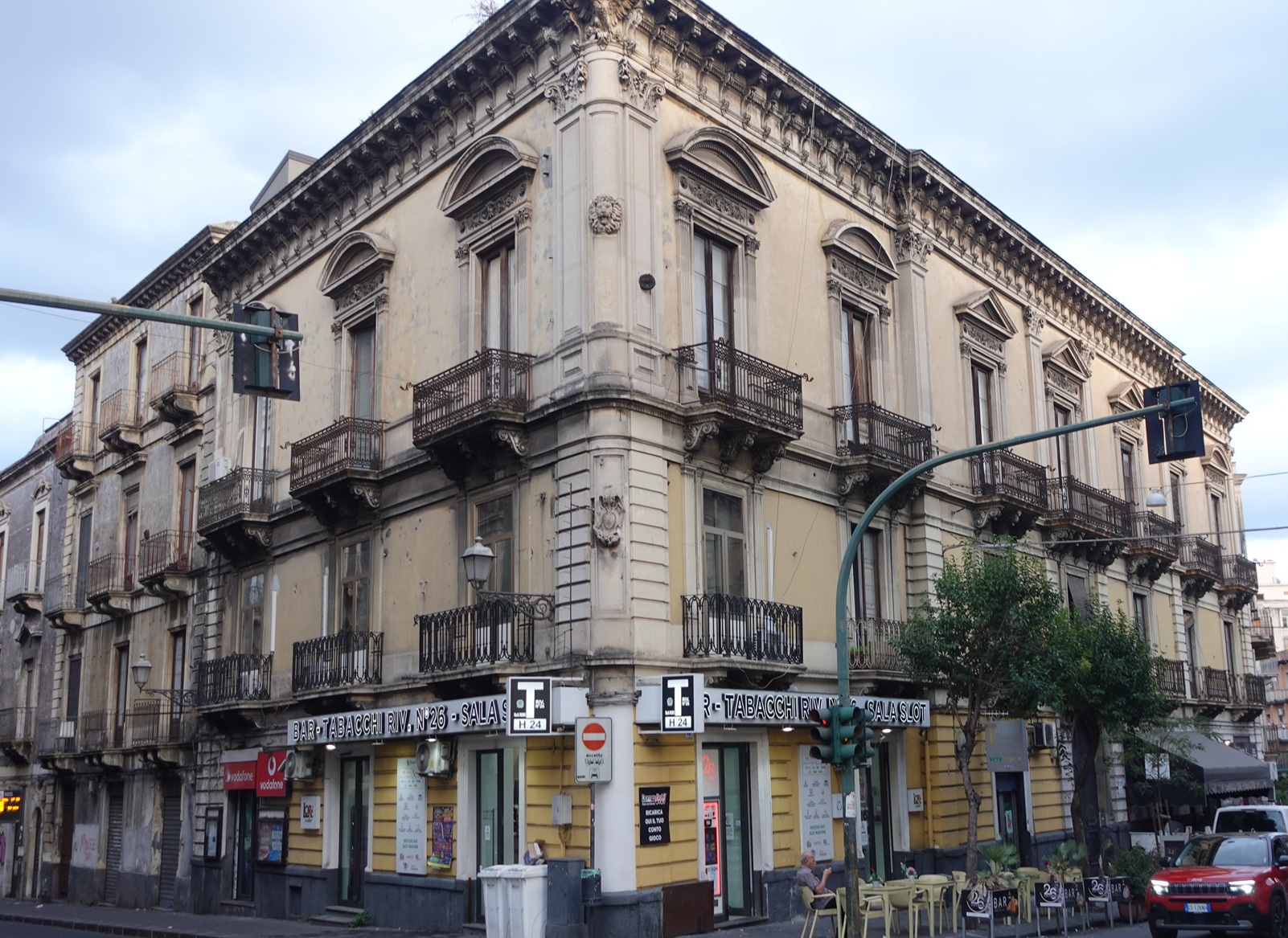
A typical building in Catania.
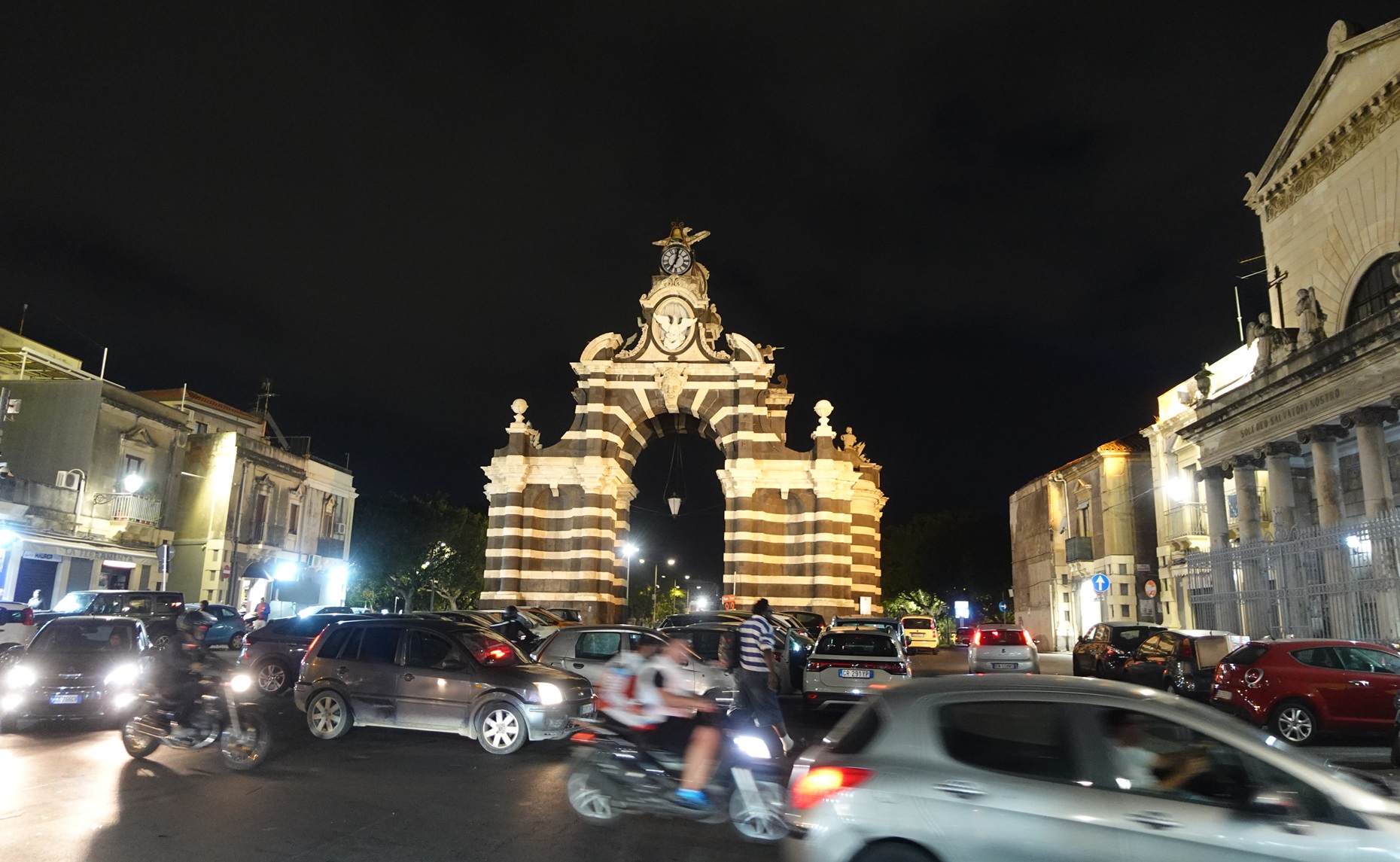
Porta Garibaldi