Darmstadt November 2026
Day 1: Tuesday 03 November 2026
Lugano – Horb – Tübingen – Esslingen
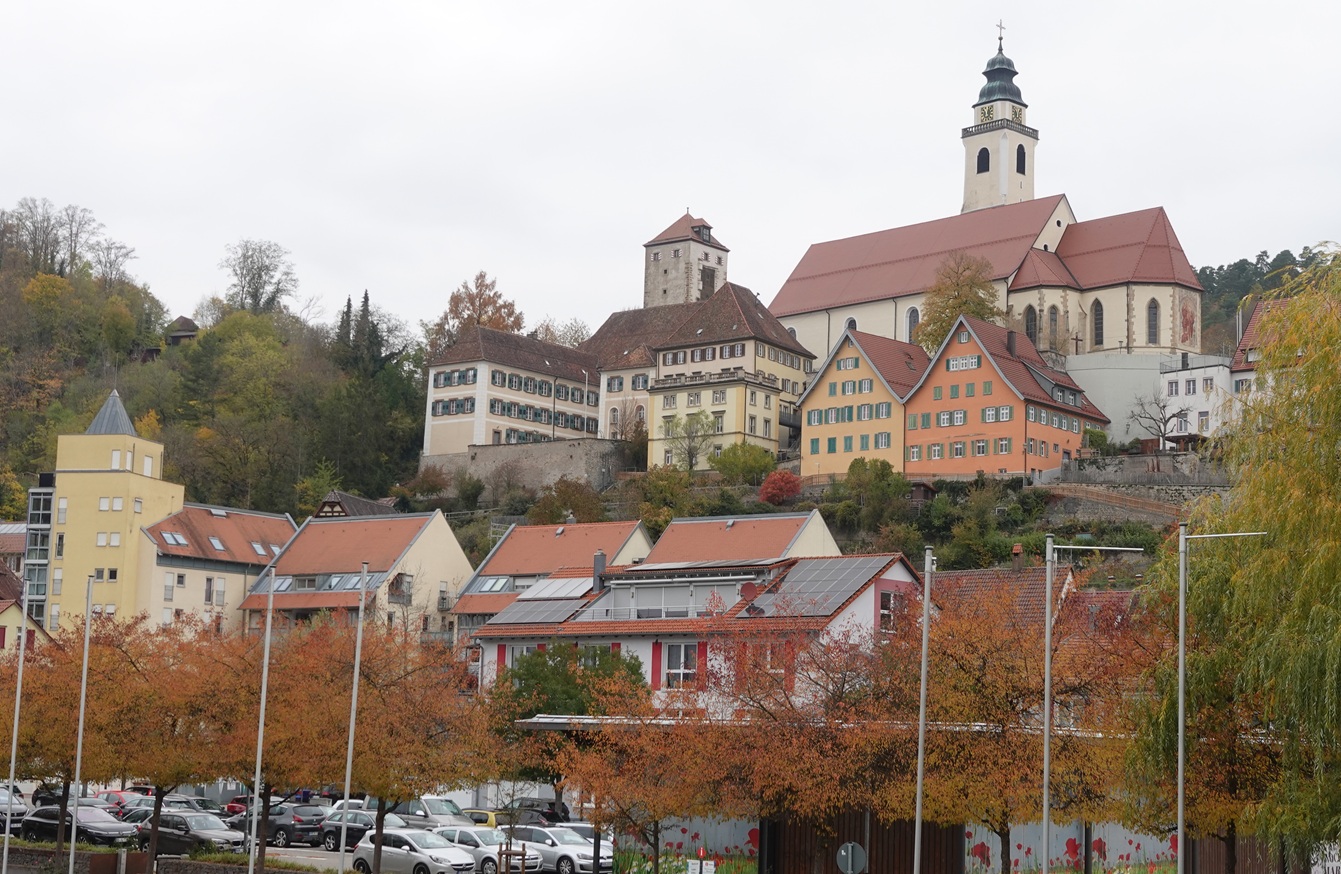
Horb am Neckar. View of Burg Hohenburg and Castle Garden Horb am Neckar.
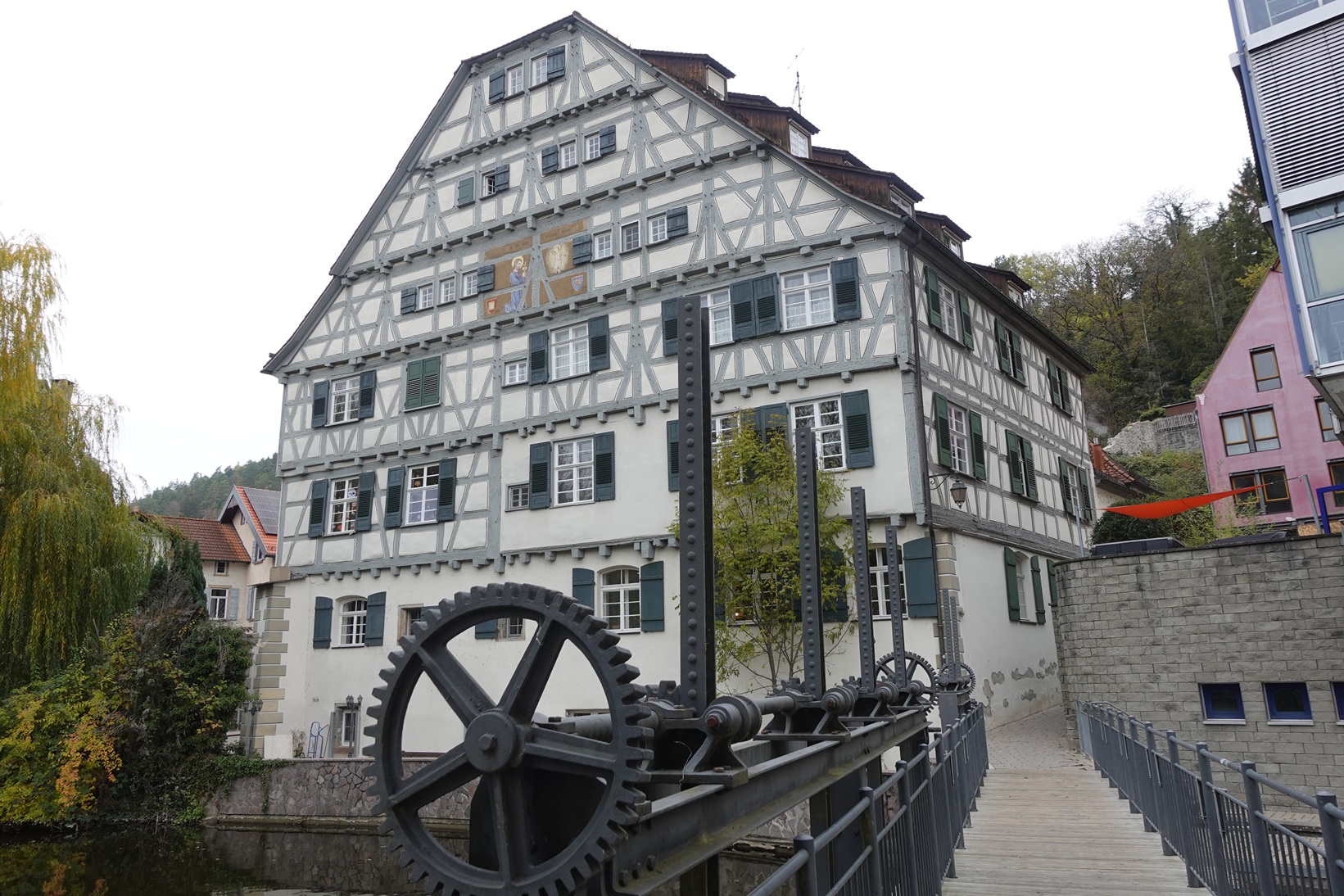
Horb is on the River Neckar. This sluice bridge is on a side canal for watermills, the Mühlkanal.
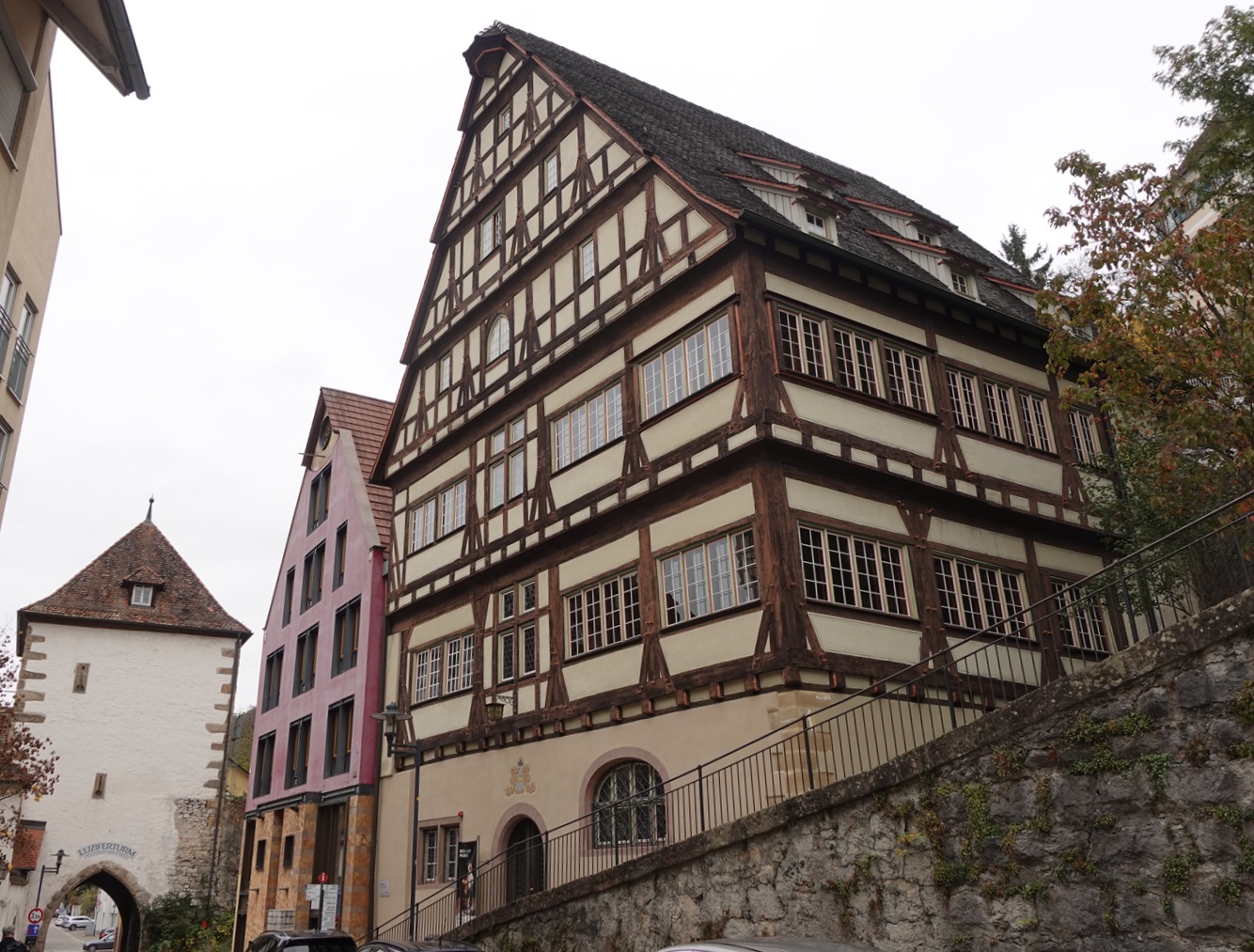
Horb has many well-preserved historical buildings, and a tower at the entry to the old town.
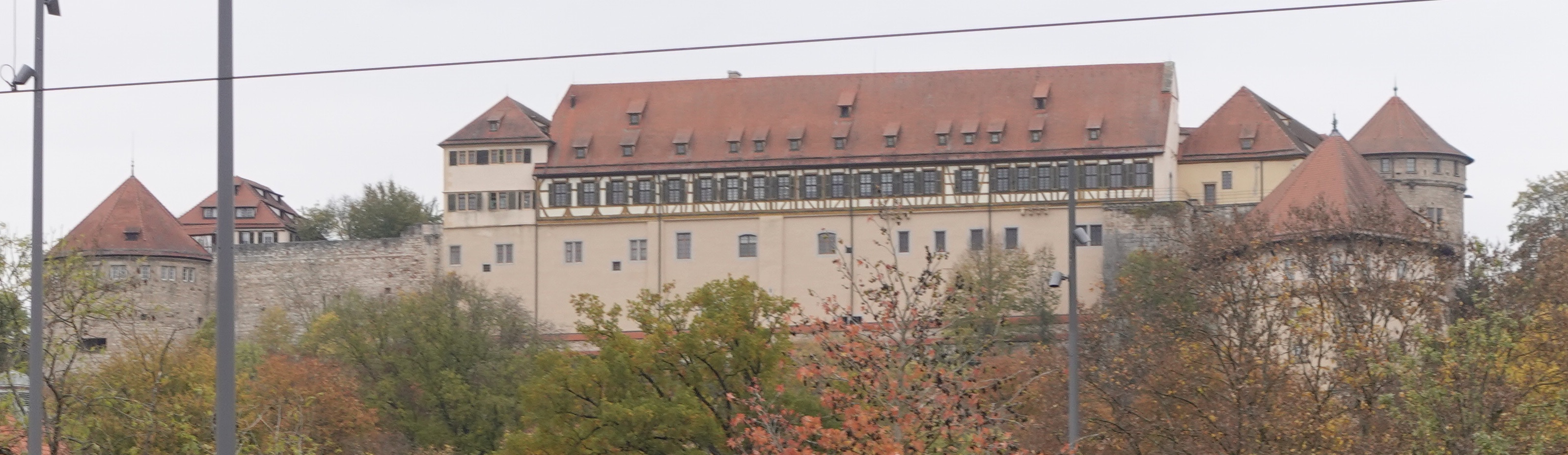
Schloß Hohentübingen, the castle which dominates historical Tübingen, seen from the railway station. Its construction began in 1037. The castle is now part of the university.
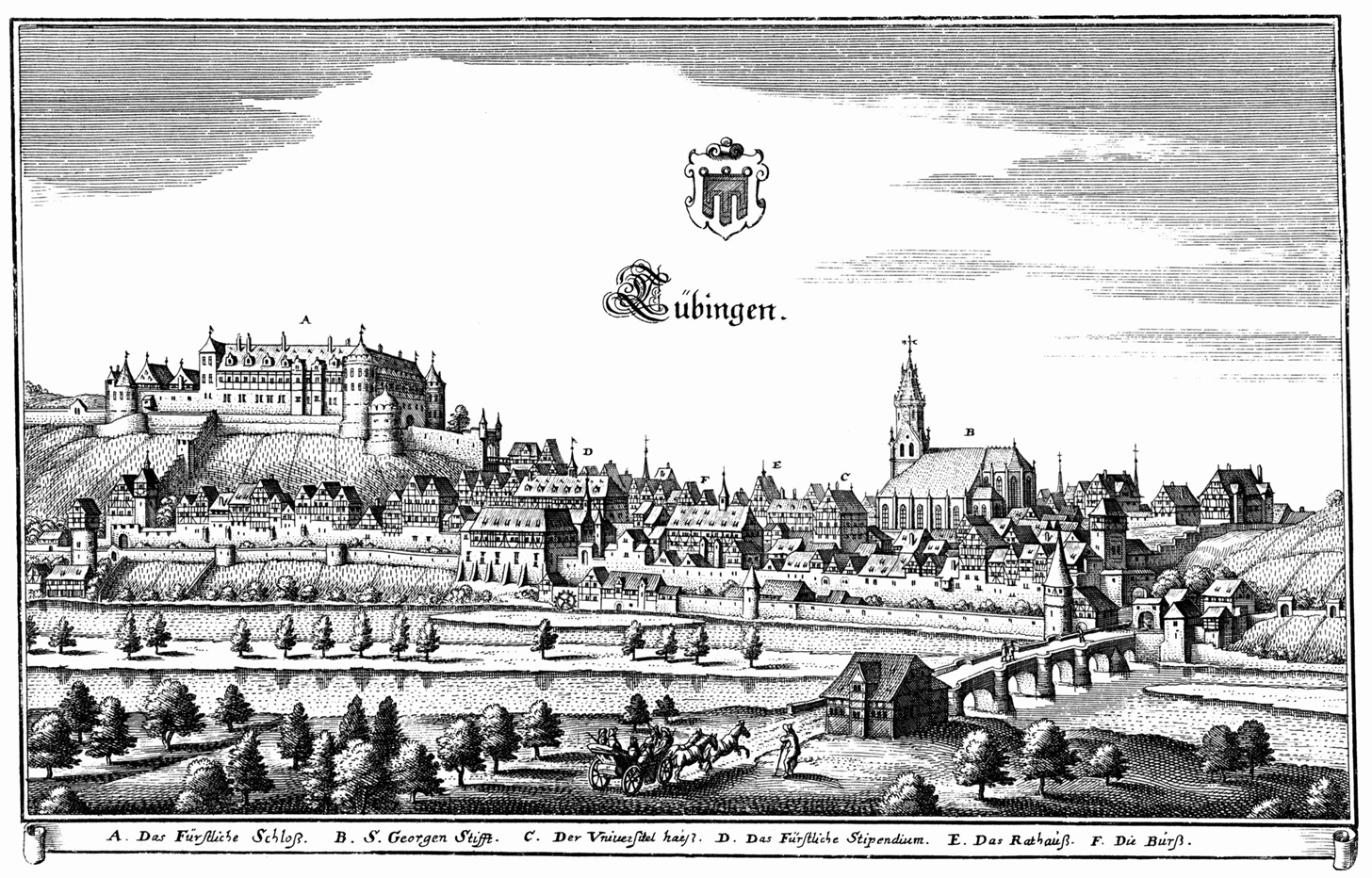
Schloss und Stadt (1643 von Matthäus Merian der Ältere (b. 593 in Basel; d.1650).
Image courtesy of Wikipedia
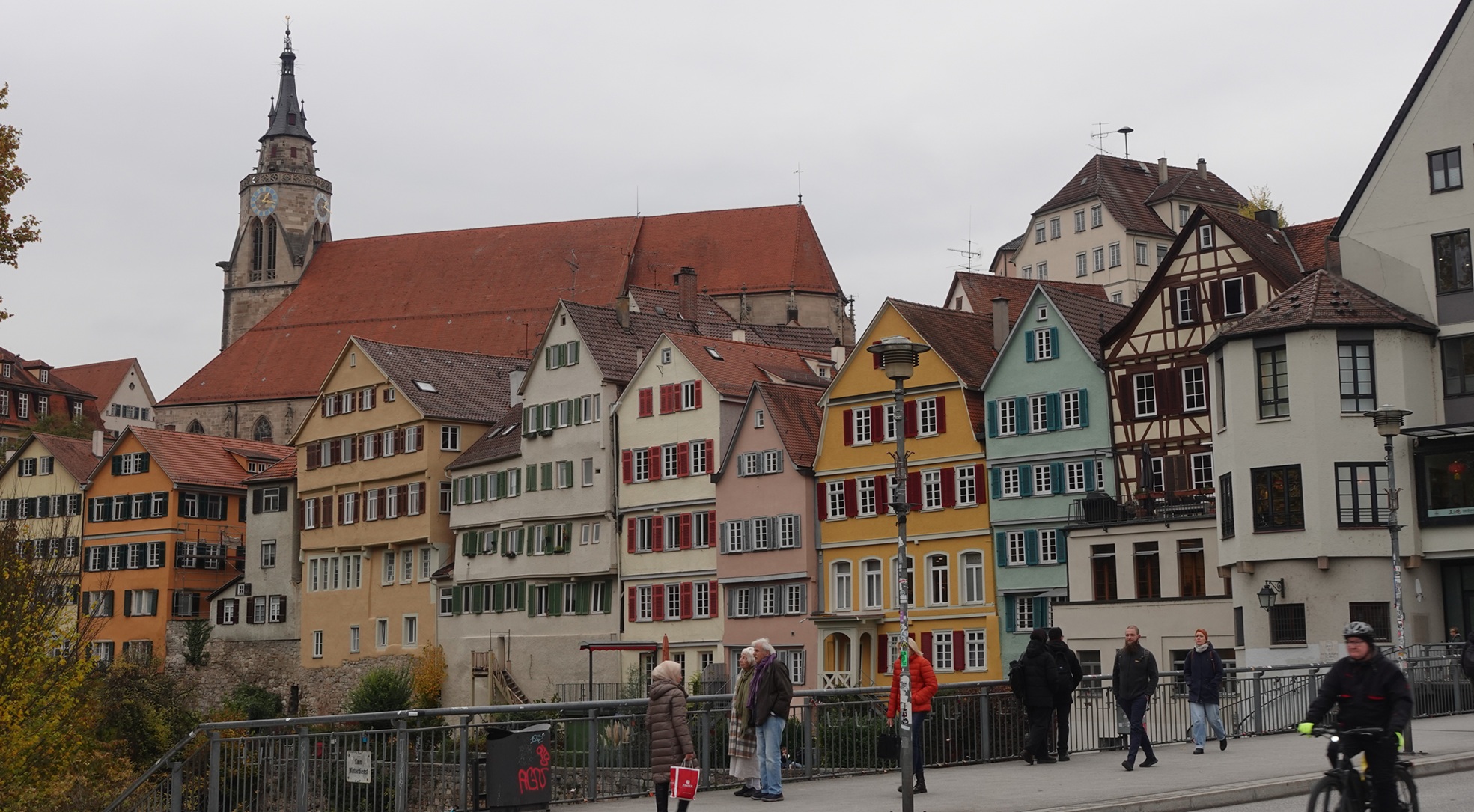
The first view of the historical centre of Tübingen is this rank of houses along the Neckar River front.
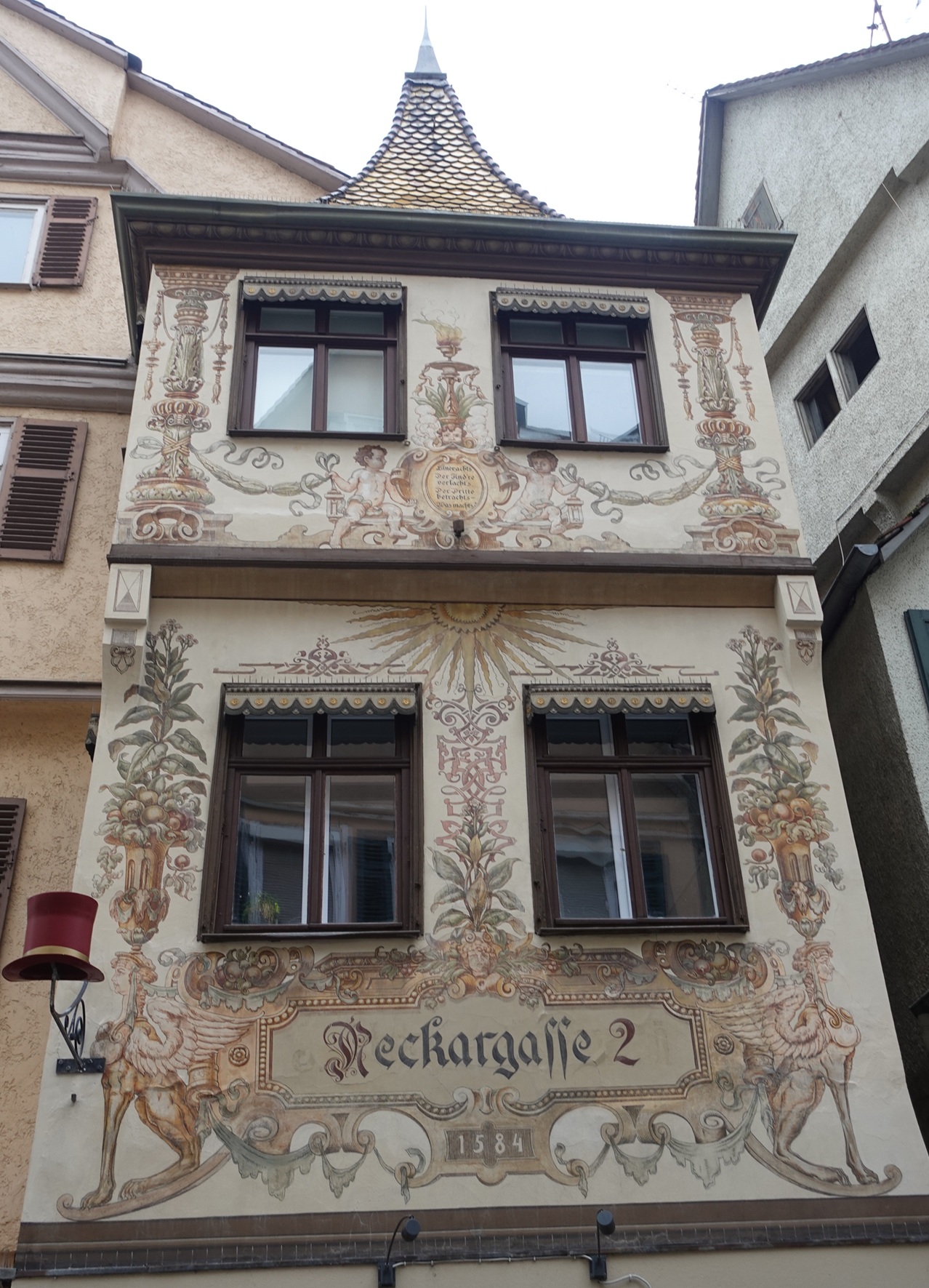
A beautifully decorated house above a shop.
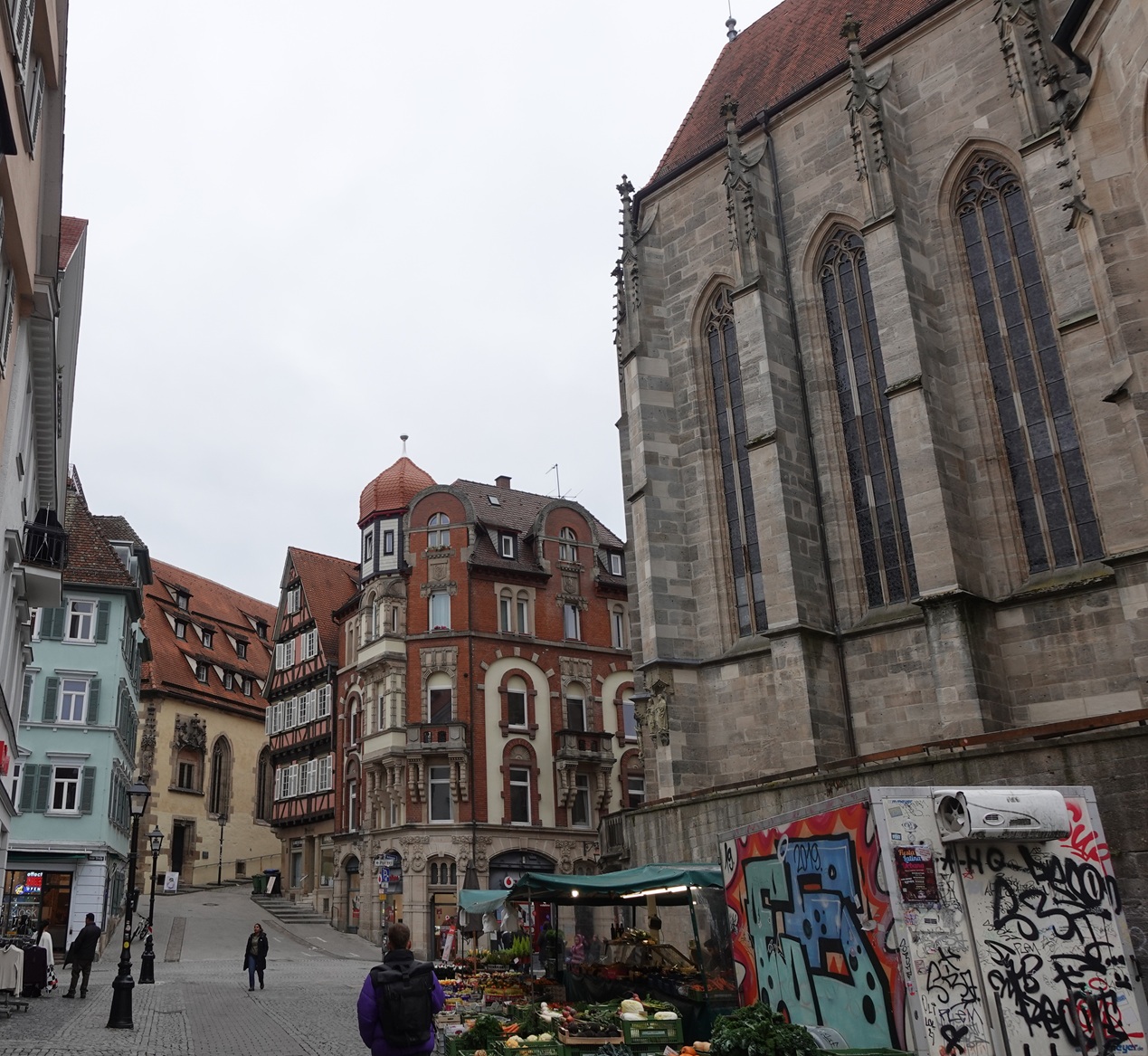
A market outside Stiftskirche St. Georg.
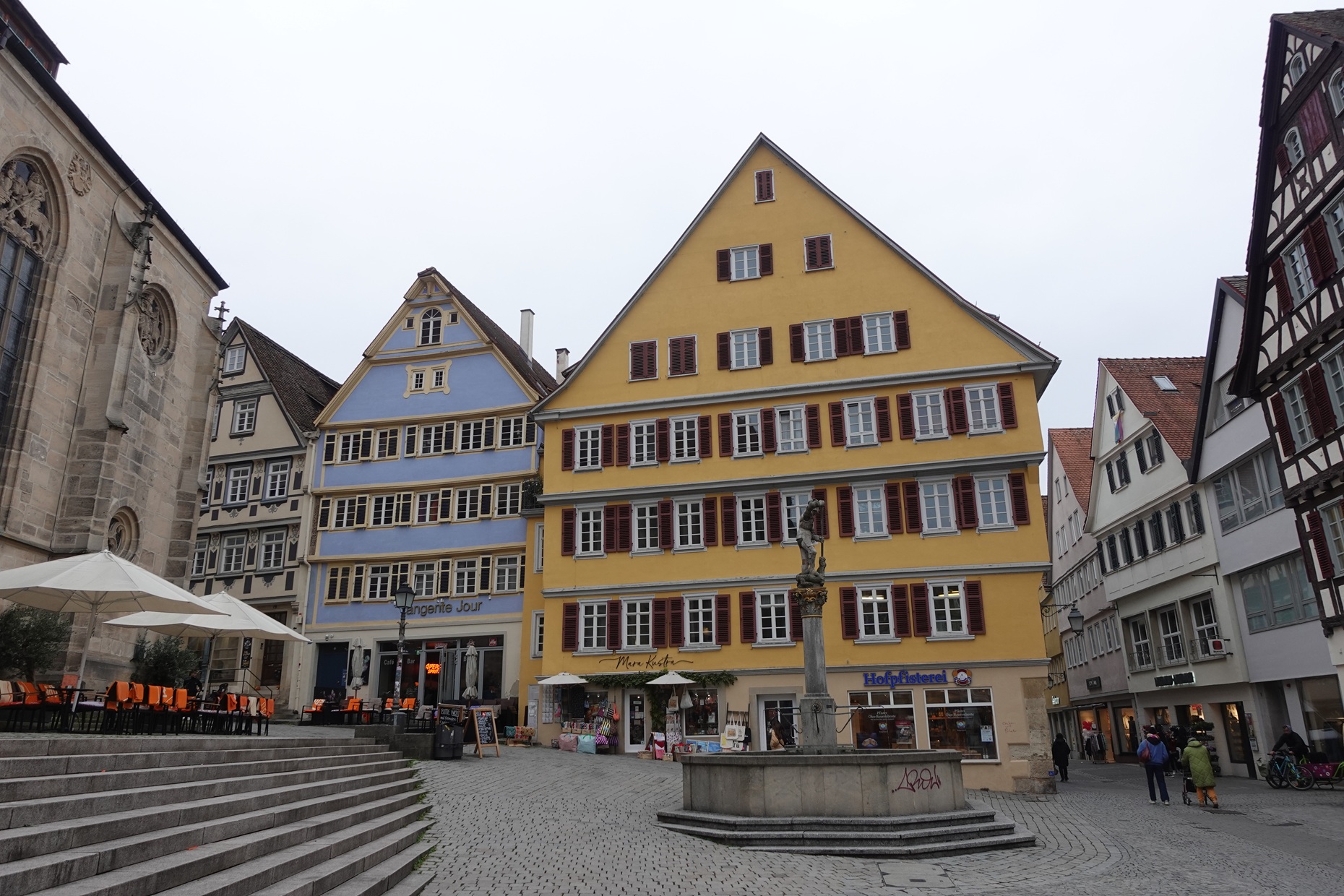
The square outside Stiftskirche St. Georg, St. George’s Collegiate Church, an Evangelical church in Tübingen.
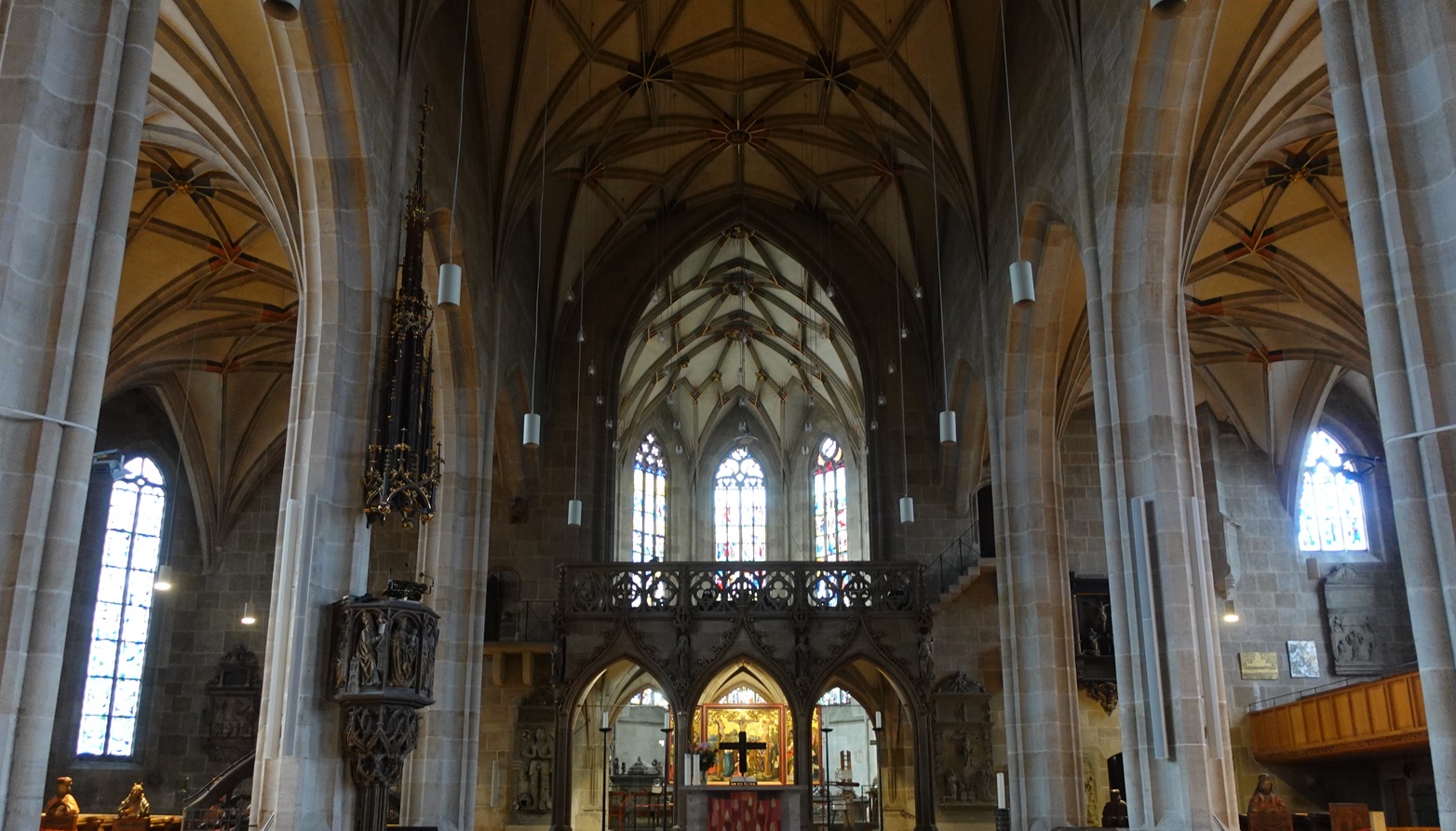
Stiftskirche St. Georg interior.
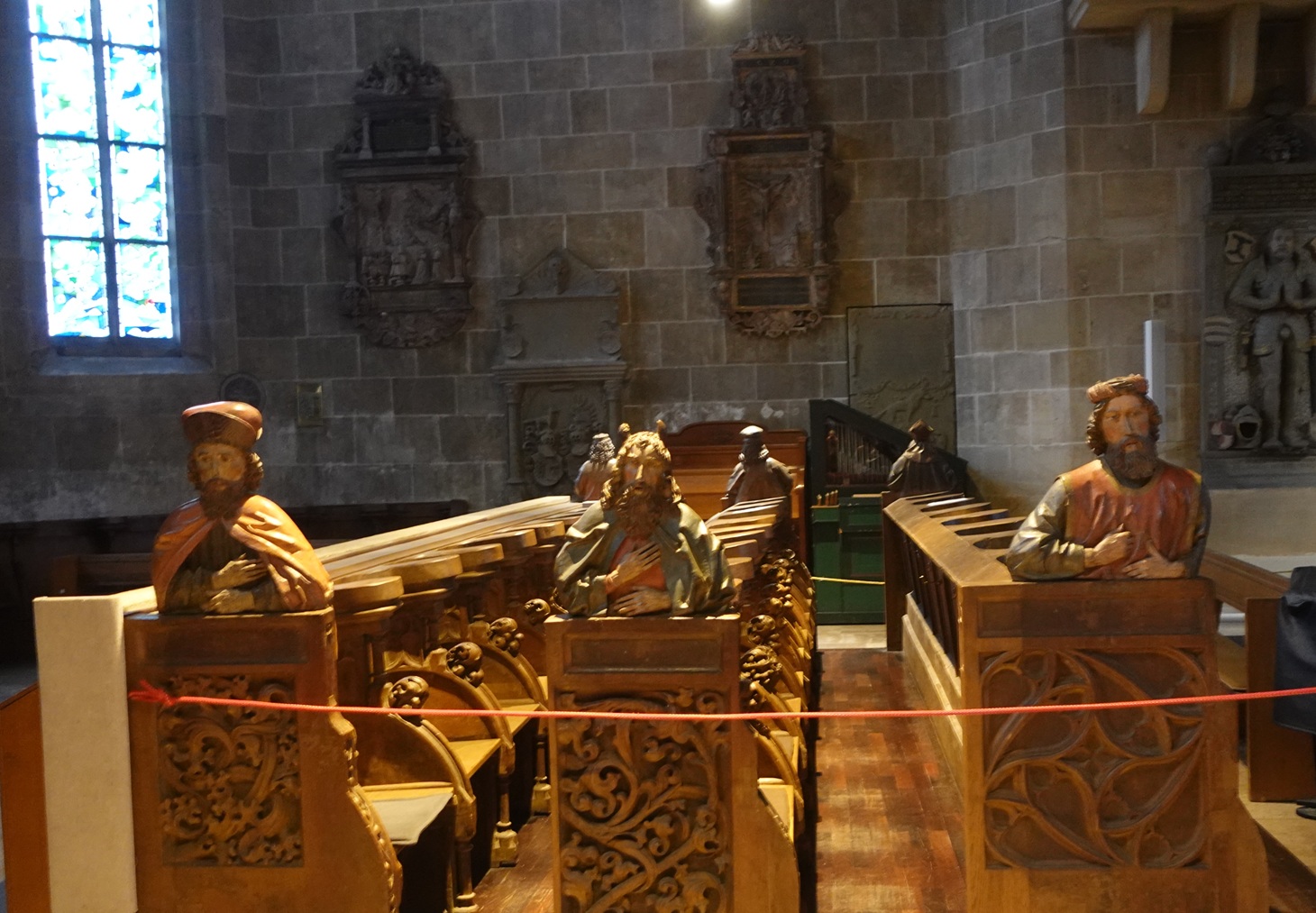
Curiously decorated pews in the Stiftskirche St. Georg.
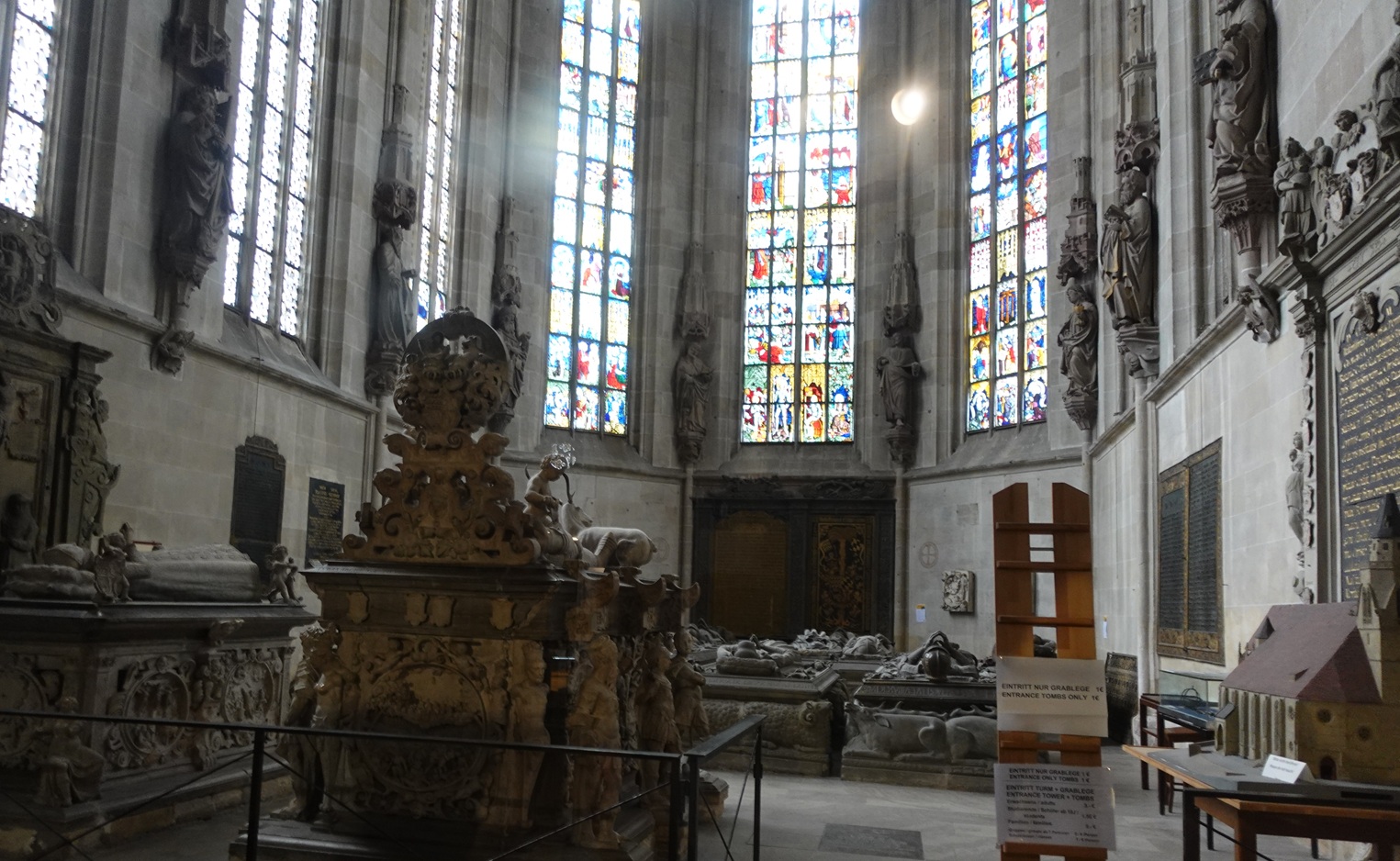
Grablege. Behind the altar is a chapel full of tombs and sarcophagi.
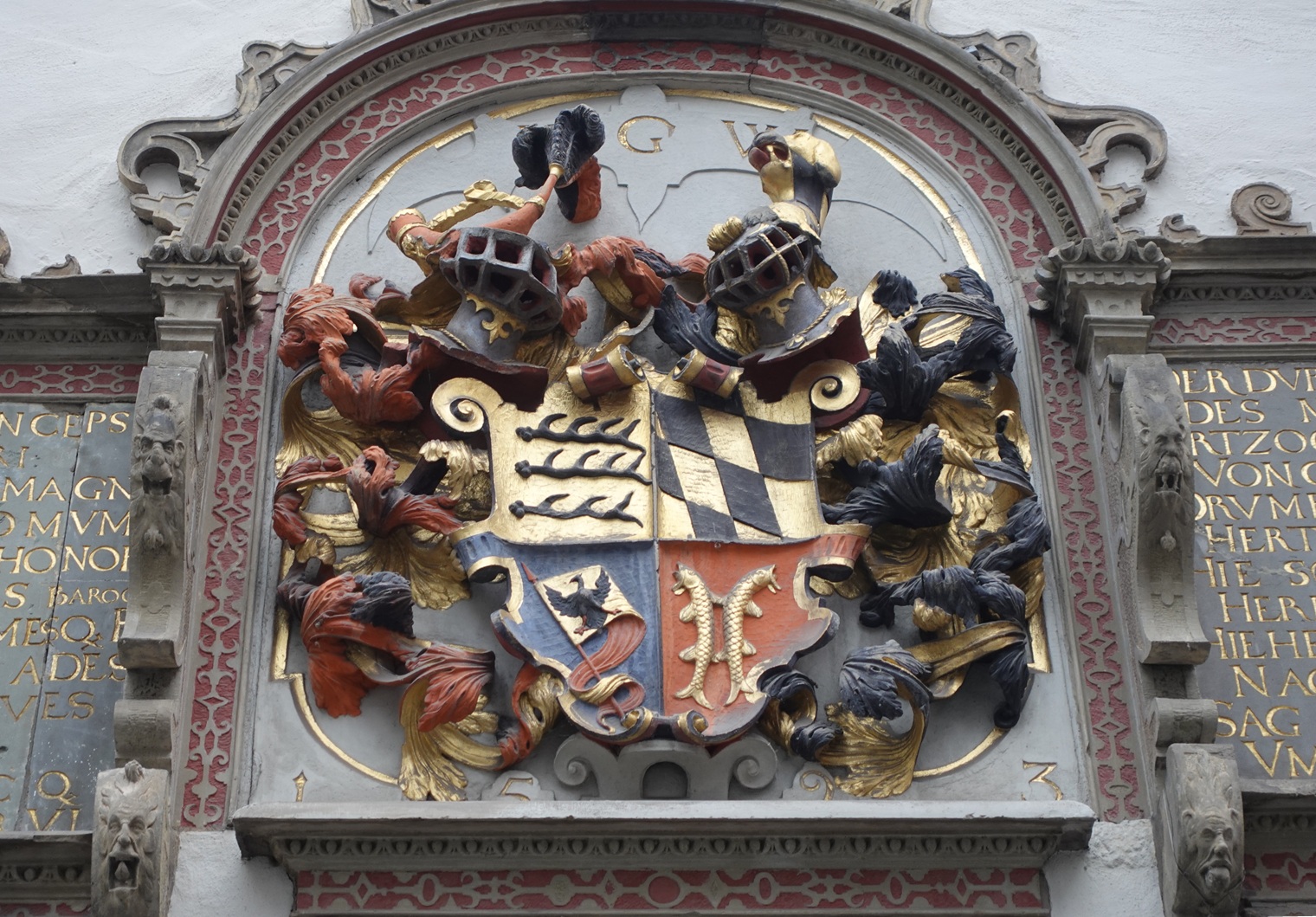
Wall coat of arms.
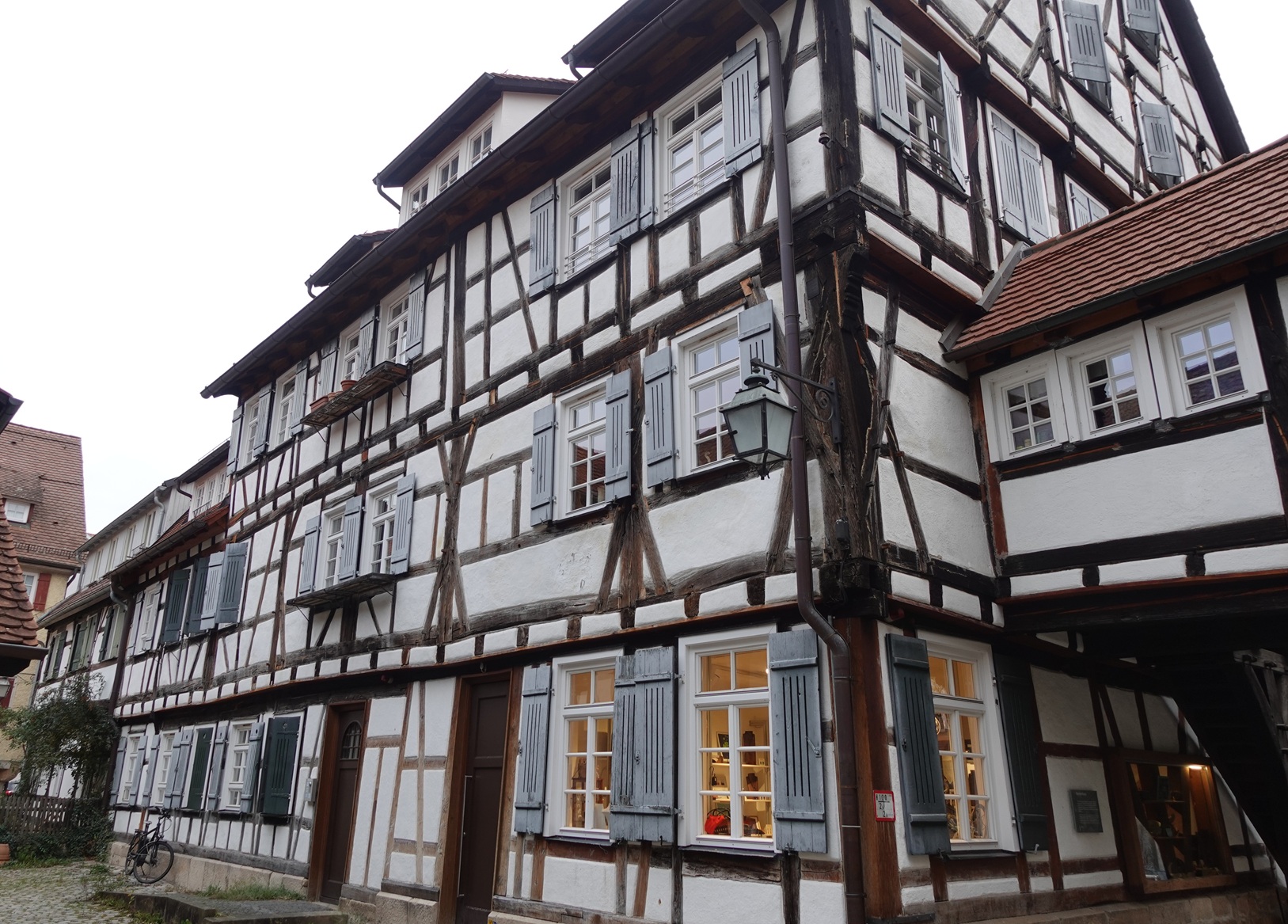
The historical centre of Tübingen is a labyrinth of wooden houses.
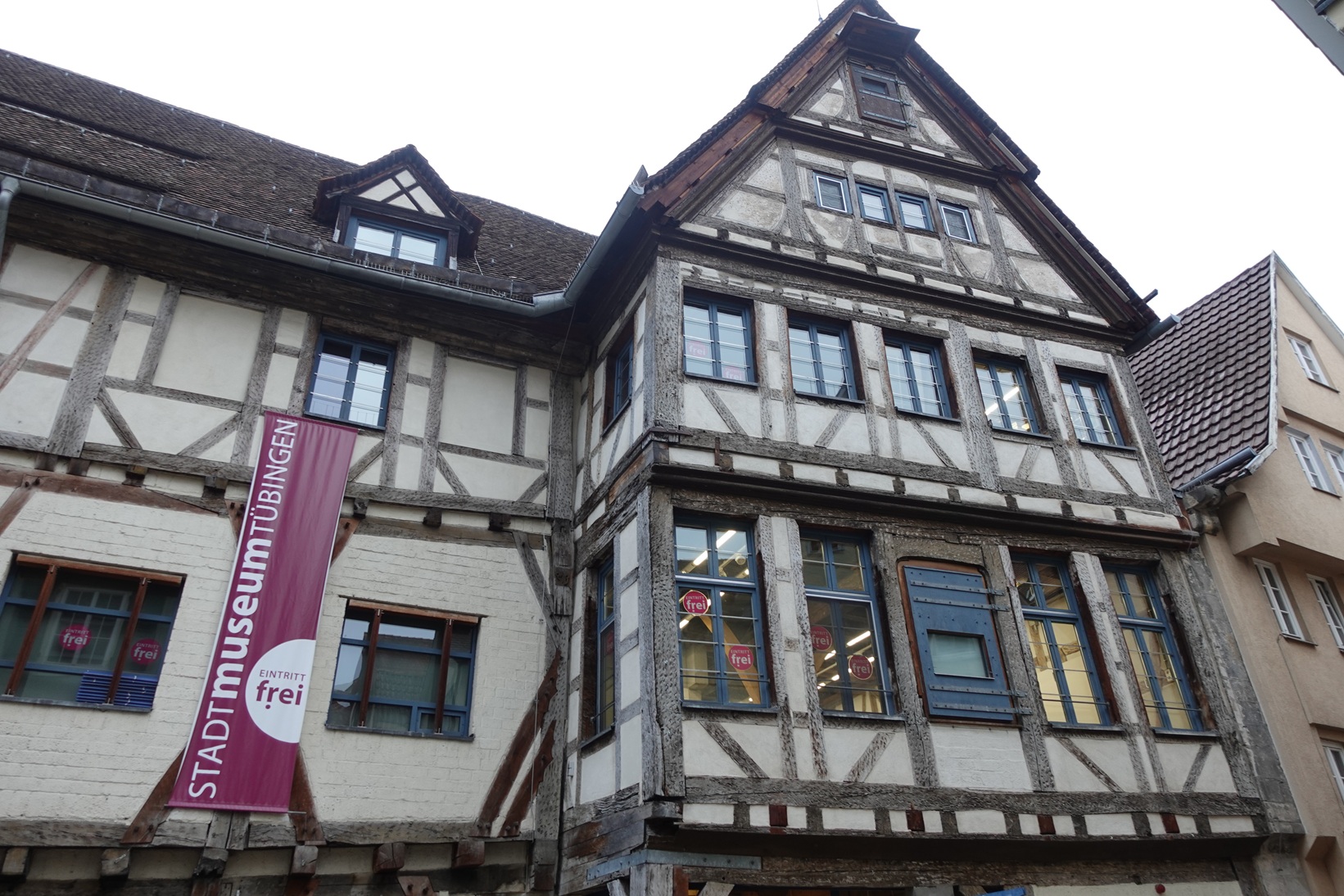
Stadtsmuseum Tübingen.
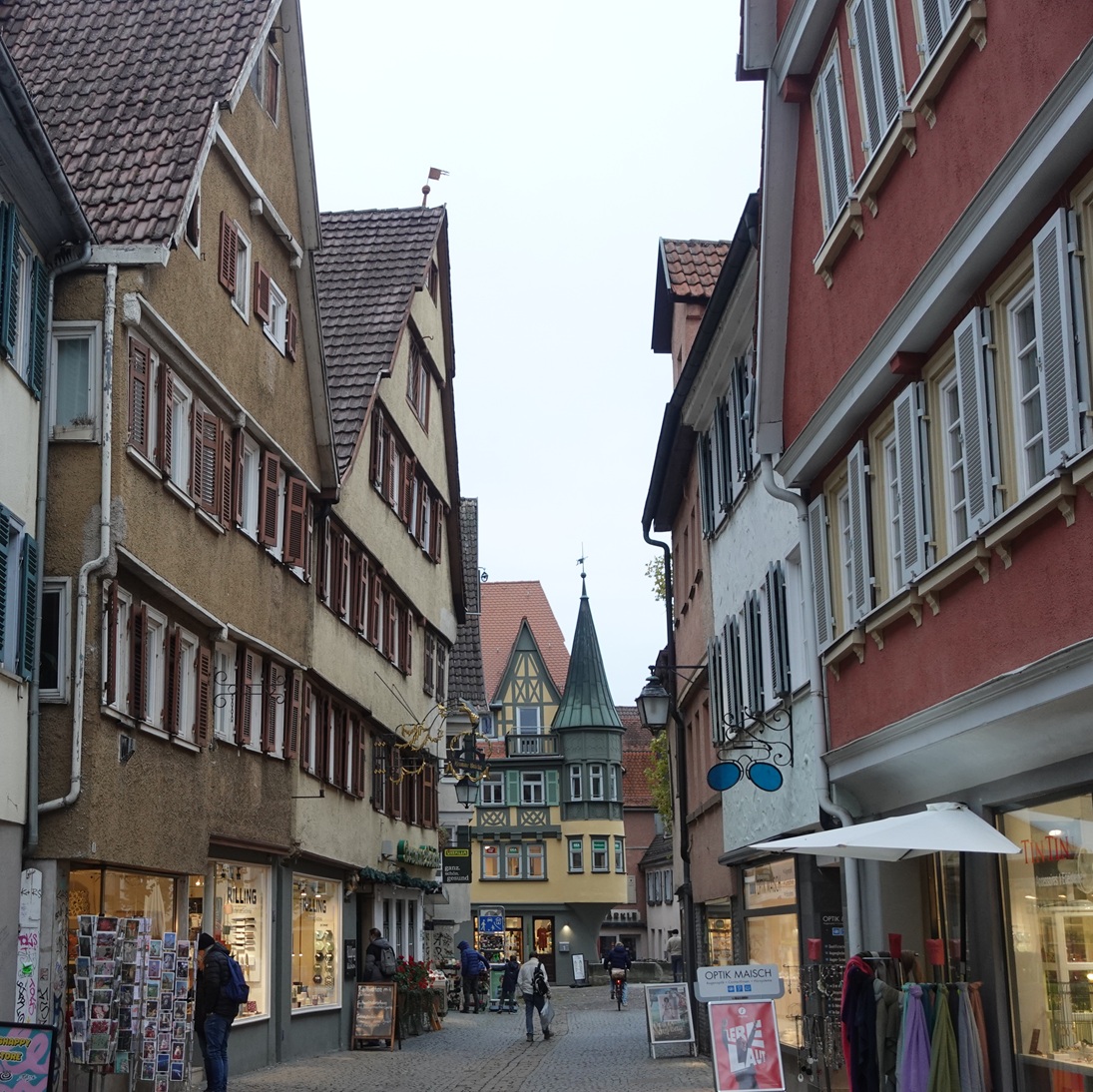
Street in Tübingen
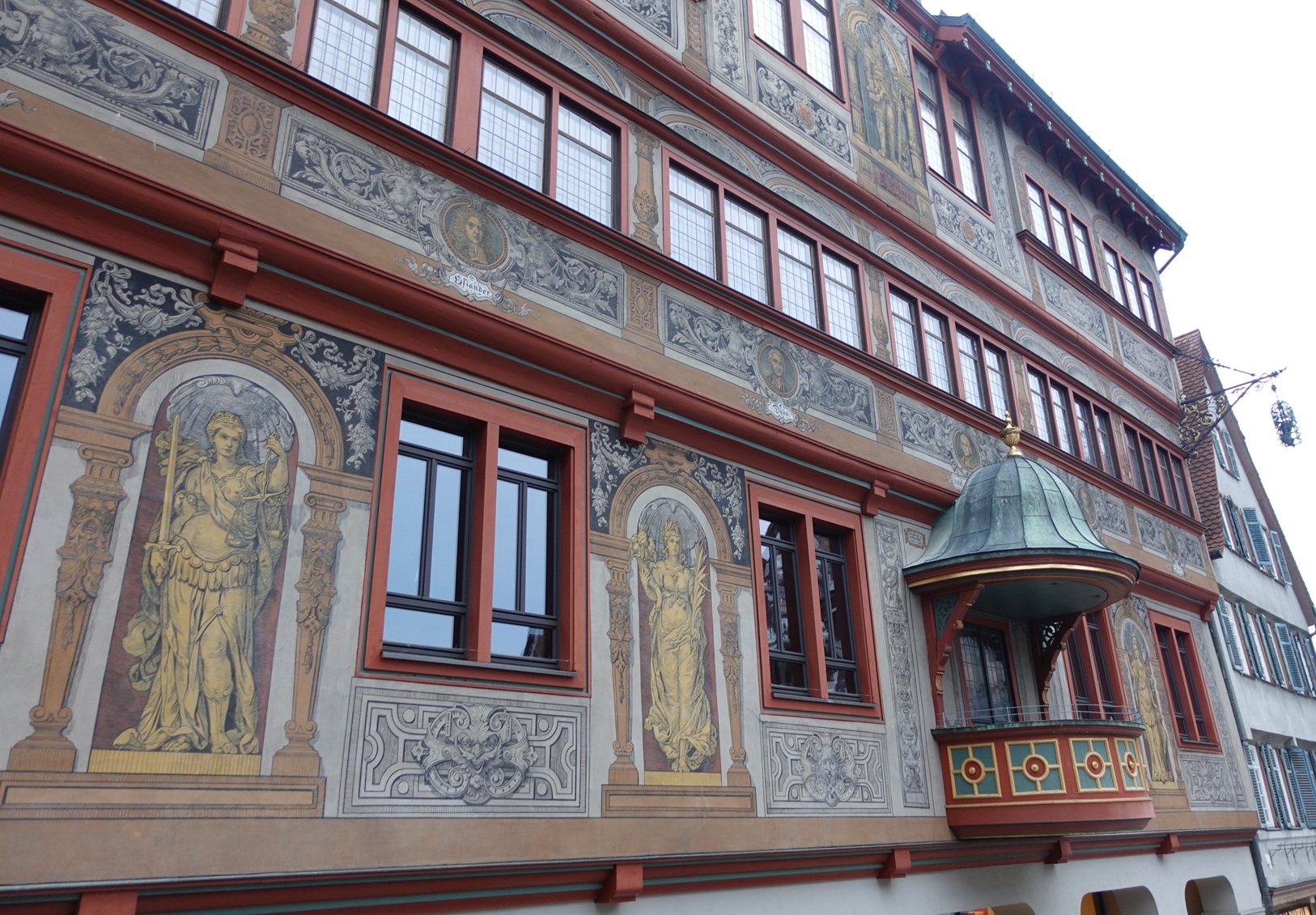
Das Rathaus am Marktplatz.
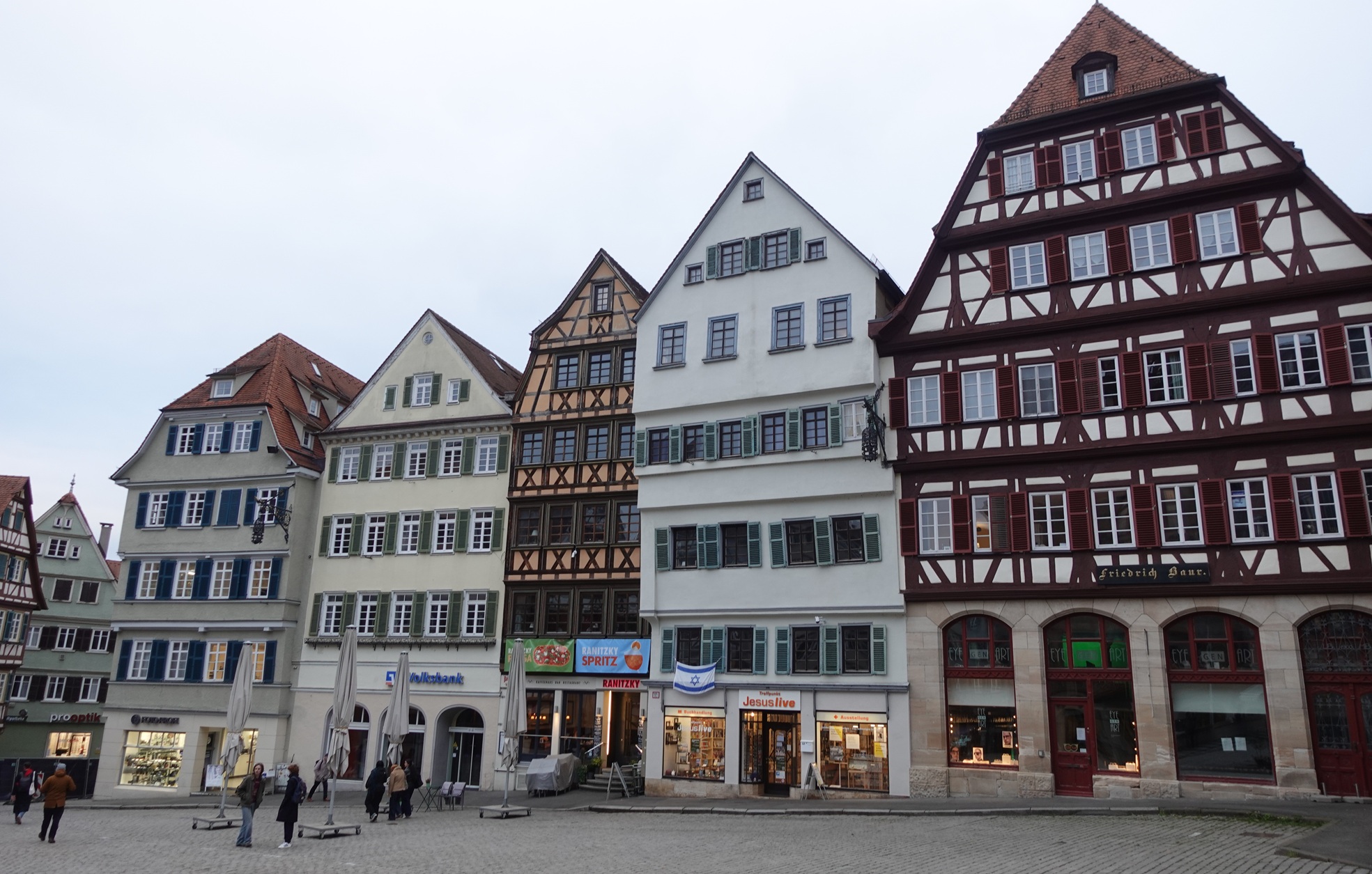
Marktplatz Tübingen
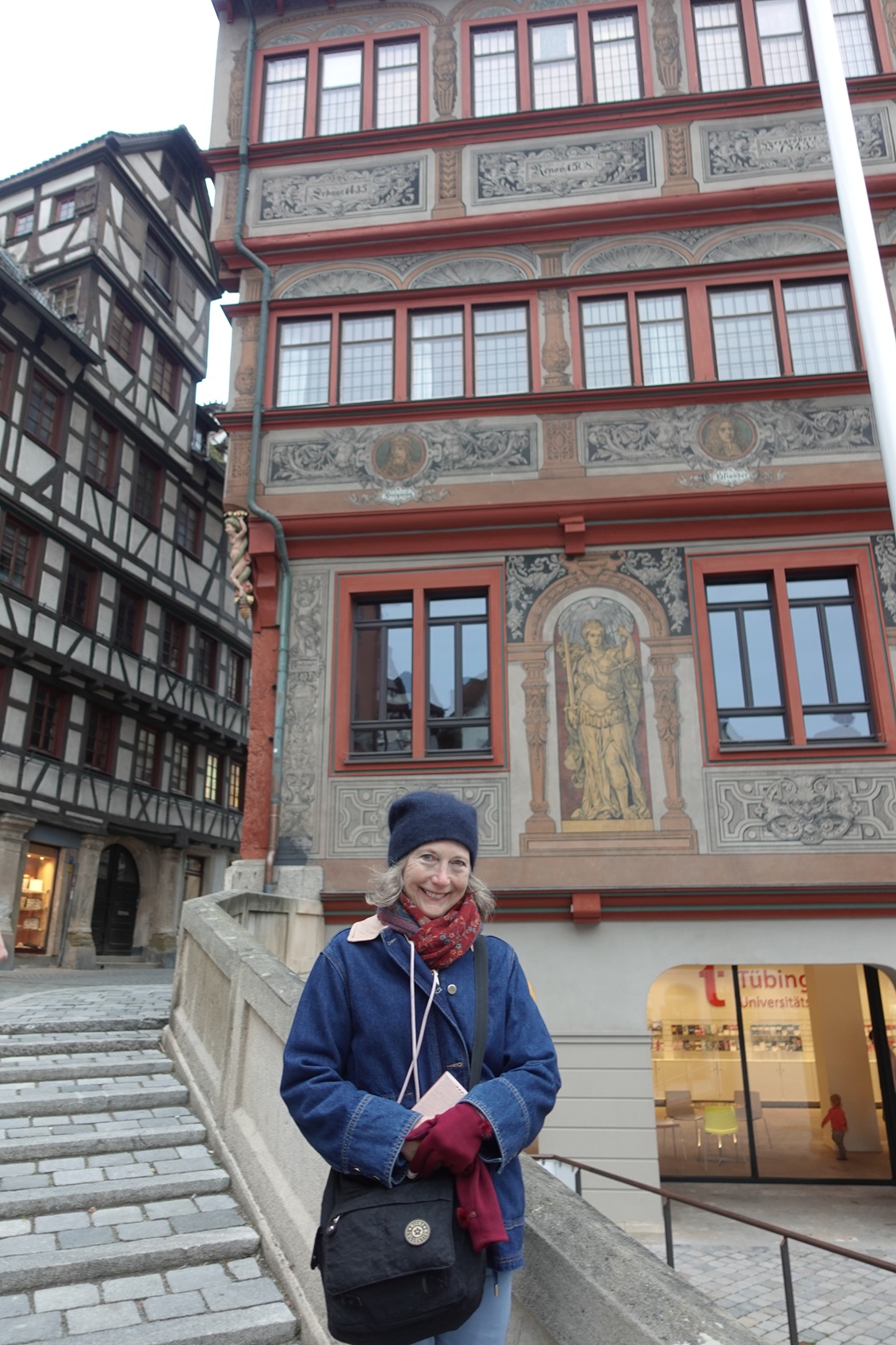
Cindy in front of the Rathaus.
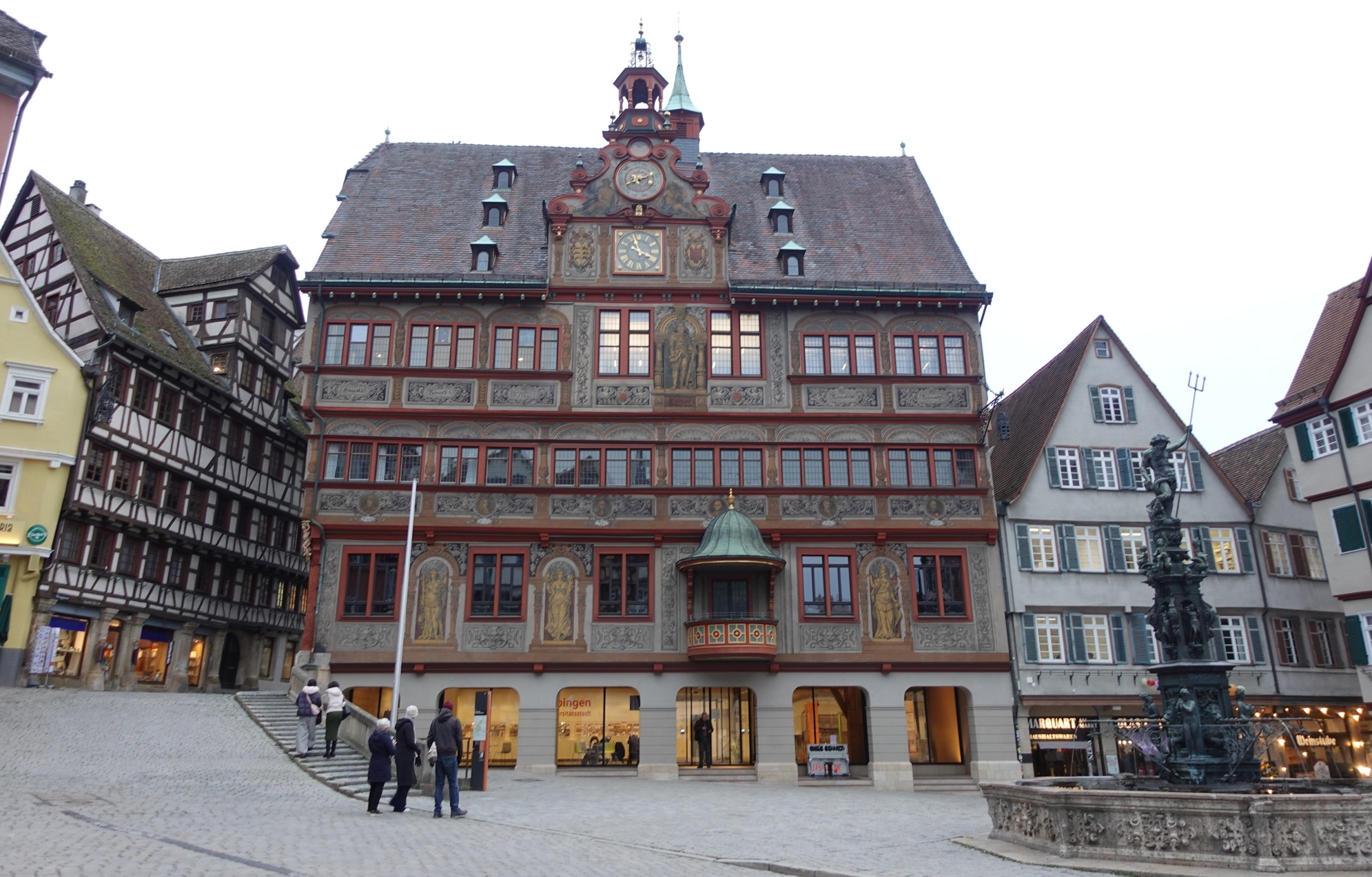
Das Rathaus, Town Hall.
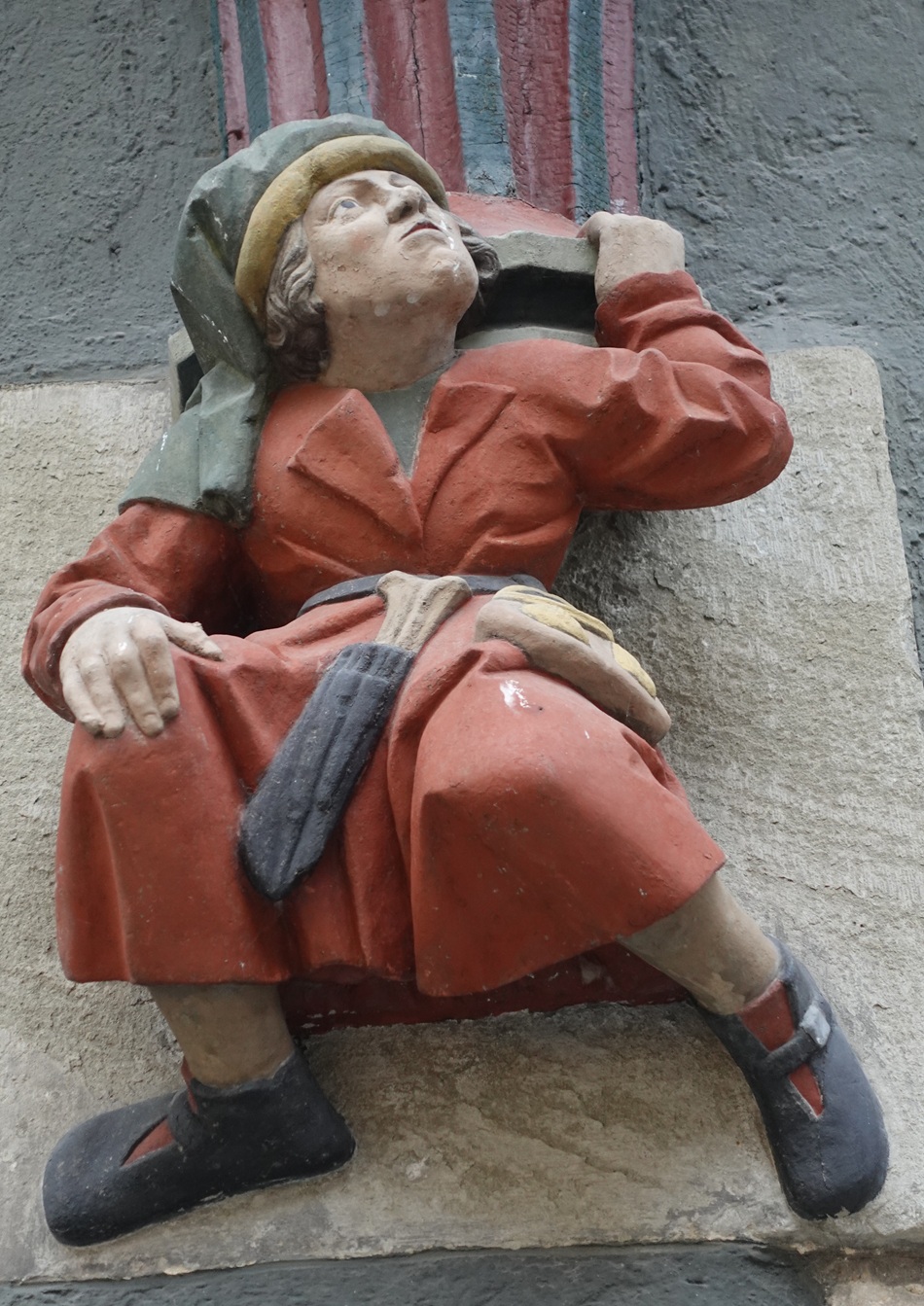
Figure decorating a half-timbered building.
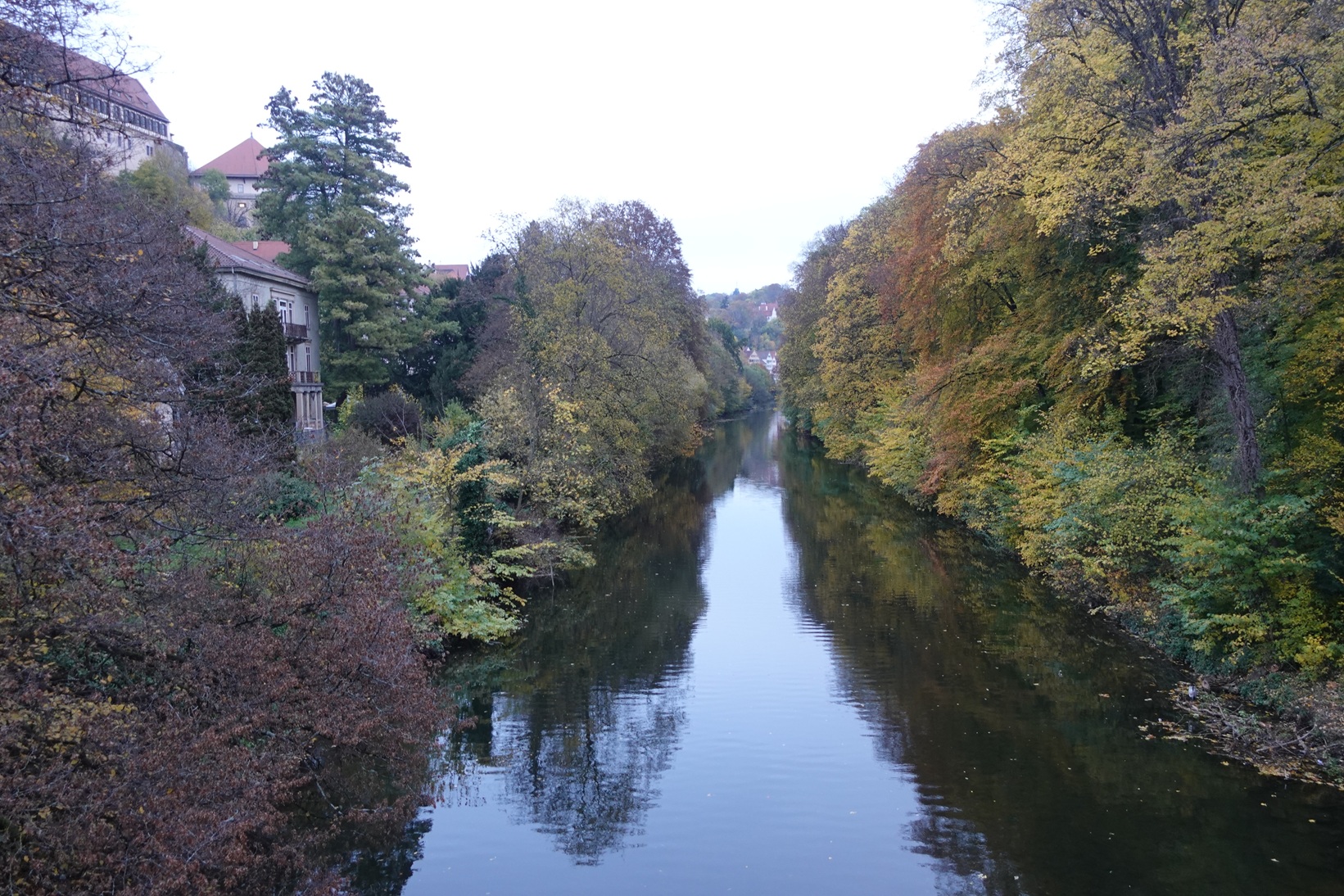
The River Neckar looks glorious with the Autumn leafed trees lining it.
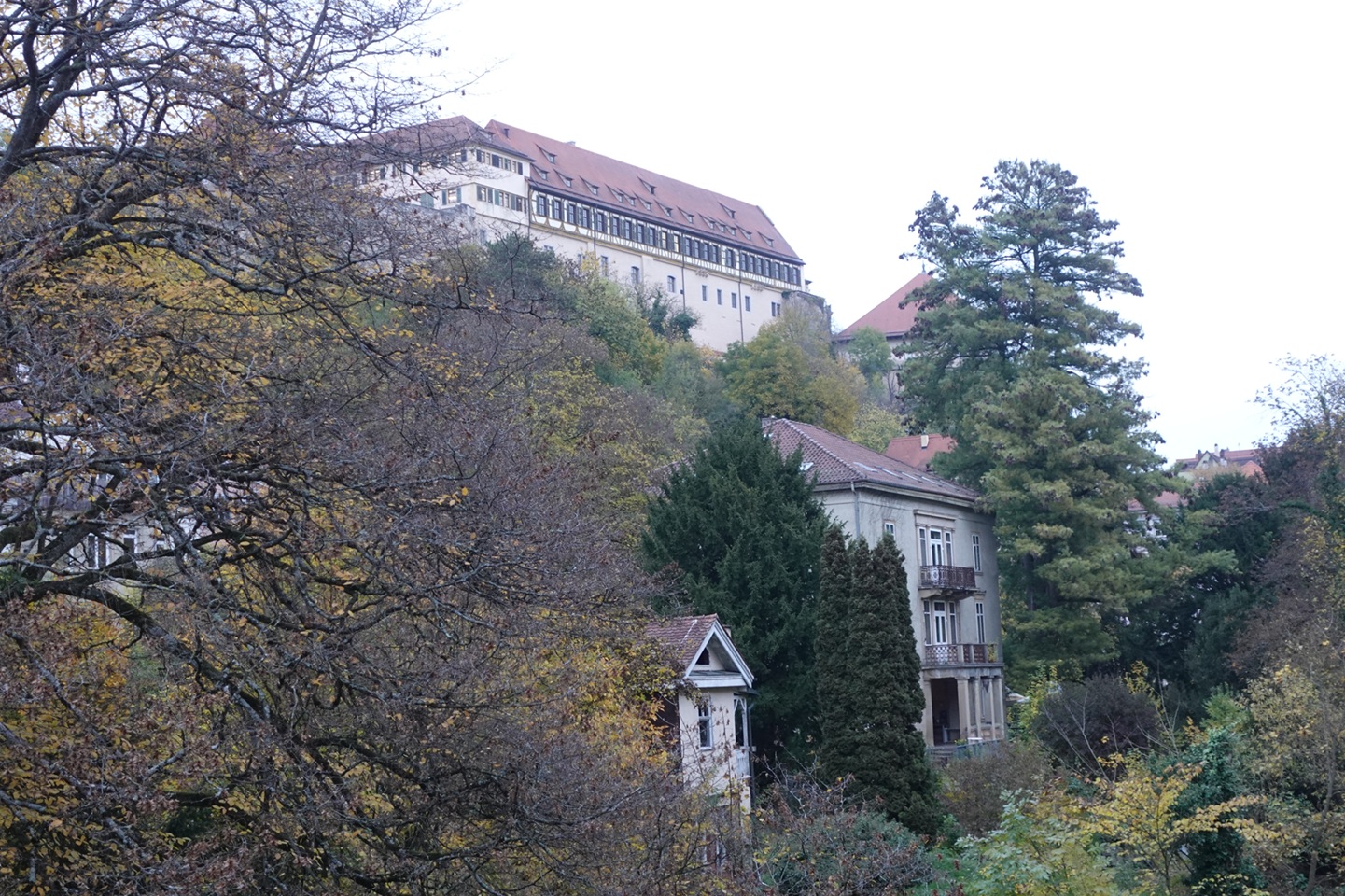
A view of the Schloß Hohentübingen from the river.
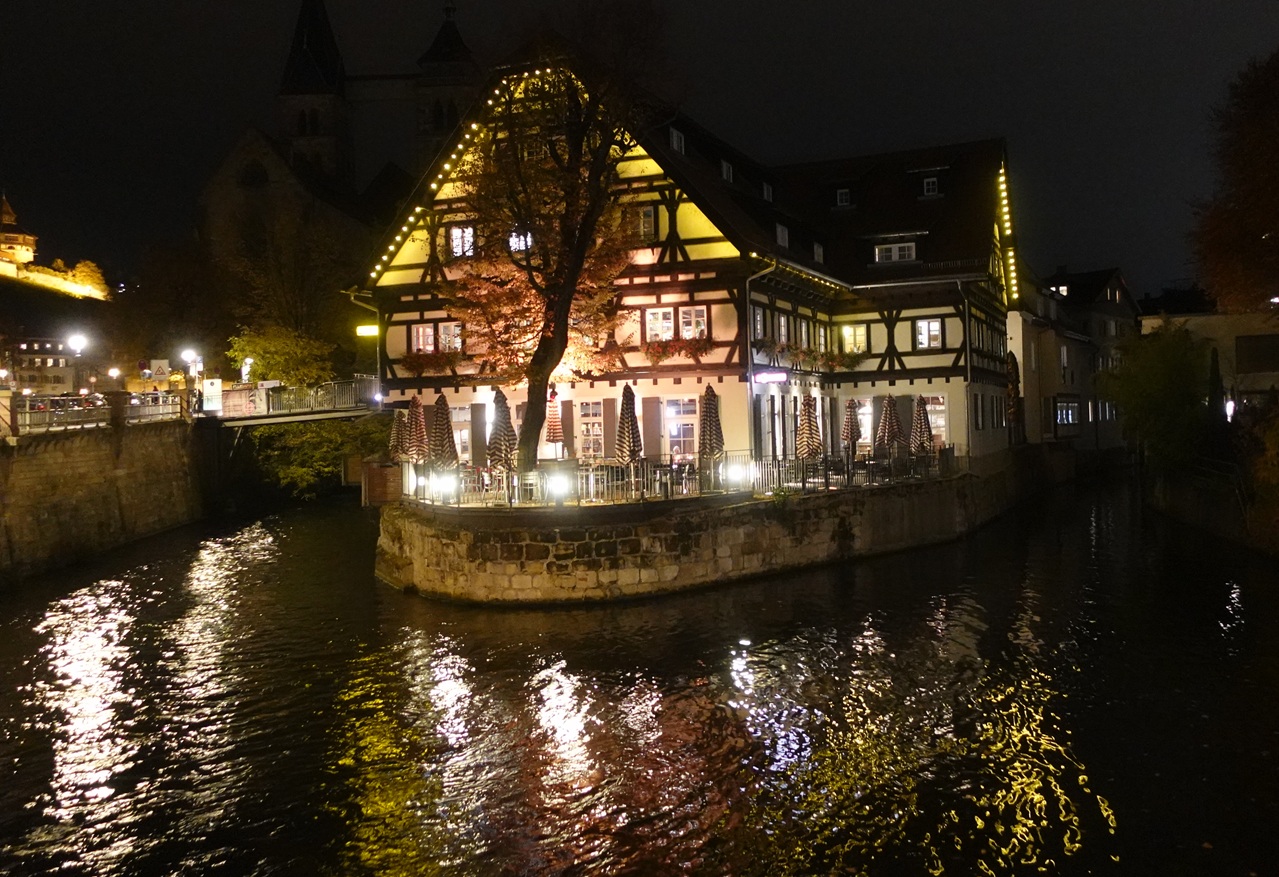
Our arrival in Esslingen, by night, was greeting by this welcoming sight of a restaurant on a small island in the River Neckar.
Travel Diary
Tübingen
Rathaus, Castle Hohentübingen (part of the university), St. George’s Collegiate Church (clock tower begun in 1411). Residential street below the Rathaus, Judengasse, was heart of the Jewish community until its expulsion in 1477.Holzmarkt by the St. George’s Collegiate Church, Marktplazt by the Rathaus. Venue of once the largest Afro-Brazilian festival of Europe. Chocolate festival in December.
River Neckar divides into two streams in the historic centre, to form the elongated Neckarinsel, with a famous Platanenallee, an avenue of plane trees. Neckarbrücke leads into the old town.
Hölerlinturm, a tower house in which Friedrich Hölderin, poet and philosopher, lived. Friedrich Silcher statue is a Nazi-era memorial, with soldiers emerging behind the composer, noted for his Volkslied collection and compositions. His Soldatenlieder were included in the Wehrmacht’s songbook, carried in backpacks during the war.
Bebenhausen Abbey on the outskirts to the north. Starting point for a Jakobweg, the pilgrimage route toward Camino de Santiago, where supposedly the remains of St. James are held in the Cathedral of Santiago de Compostela. A pilgrimage route since the 10th century. The three great pilgrimages of Christendom are Camino de Santiago, Jeruslem, and Via Francigena to Rome. 200,000 pilgrims go to Camino de Santiago each year, with two-thirds coming along the French Way. The route is marked by the scallop shell symbol.
Tübingen’s council, traditionally a stronghold of the Greens Party, have decided that the city should be climate-neutral by 2030. It was the first city in Germany to tax disposable food packaging, in 2022 (50 cents for receptacles, and 20c per piece of cutlery).
Eberhad Karls University dates from 1477, one of the oldest in Germany.