Rome-Naples June 2026
Day 1: Thursday 04 June 2026
Lugano – Roma – Capitol
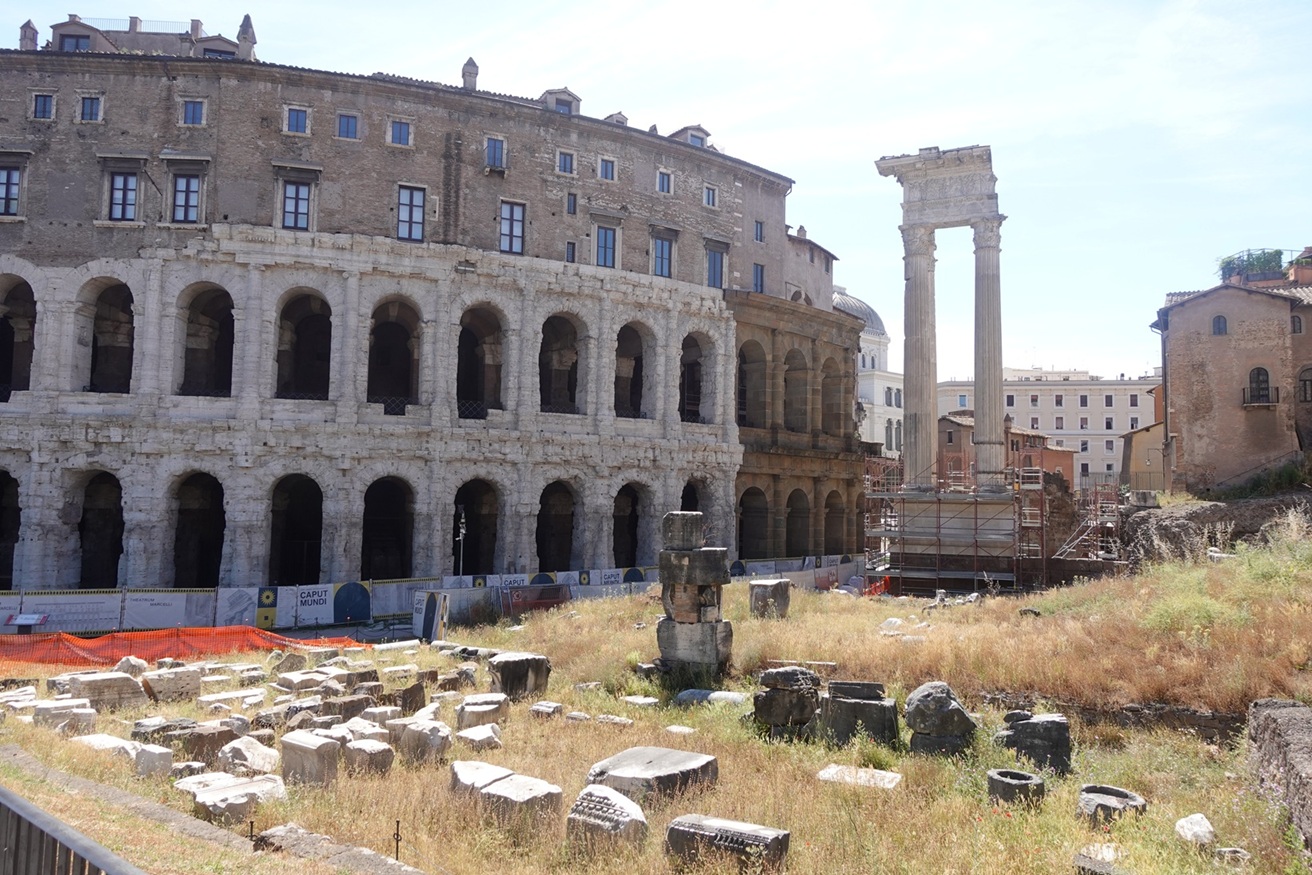
Theatre of Marcellus at the Campus Marzio, with the remains of the Temple to Apollo.
Planned by Julius Caesar, in front of the temple of Apollo Medicus, the theatrum et proscaenium ad Apollinis was completed by Augustus in 11 BC, and dedicated to Augustus`s nephew, his heir who died prematurely. Unlike traditional Greek theatres, this theatre did not require a natural slope for the semi-circle of seating, called the cavea.
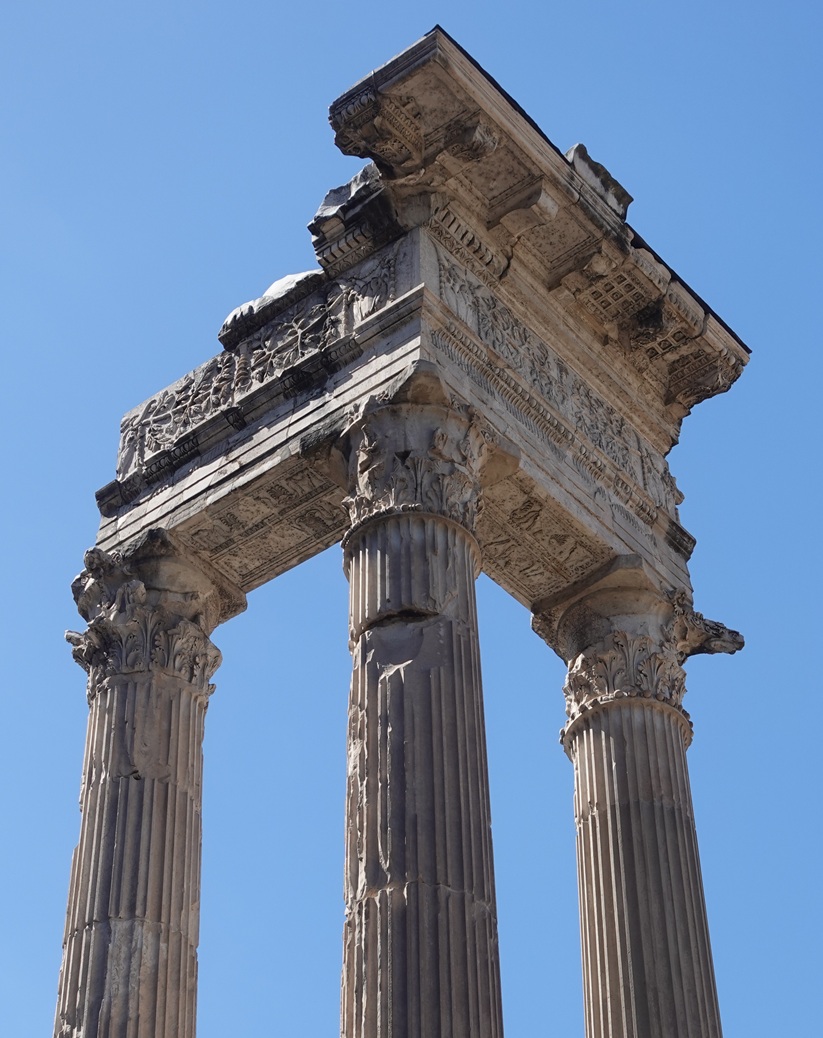
What remains of the Apollo Temple outside the Theatre of Marcellus. Rome has many sites like this, with a re-established or original column or two, surrounded by a field of fragments of a once grand building.
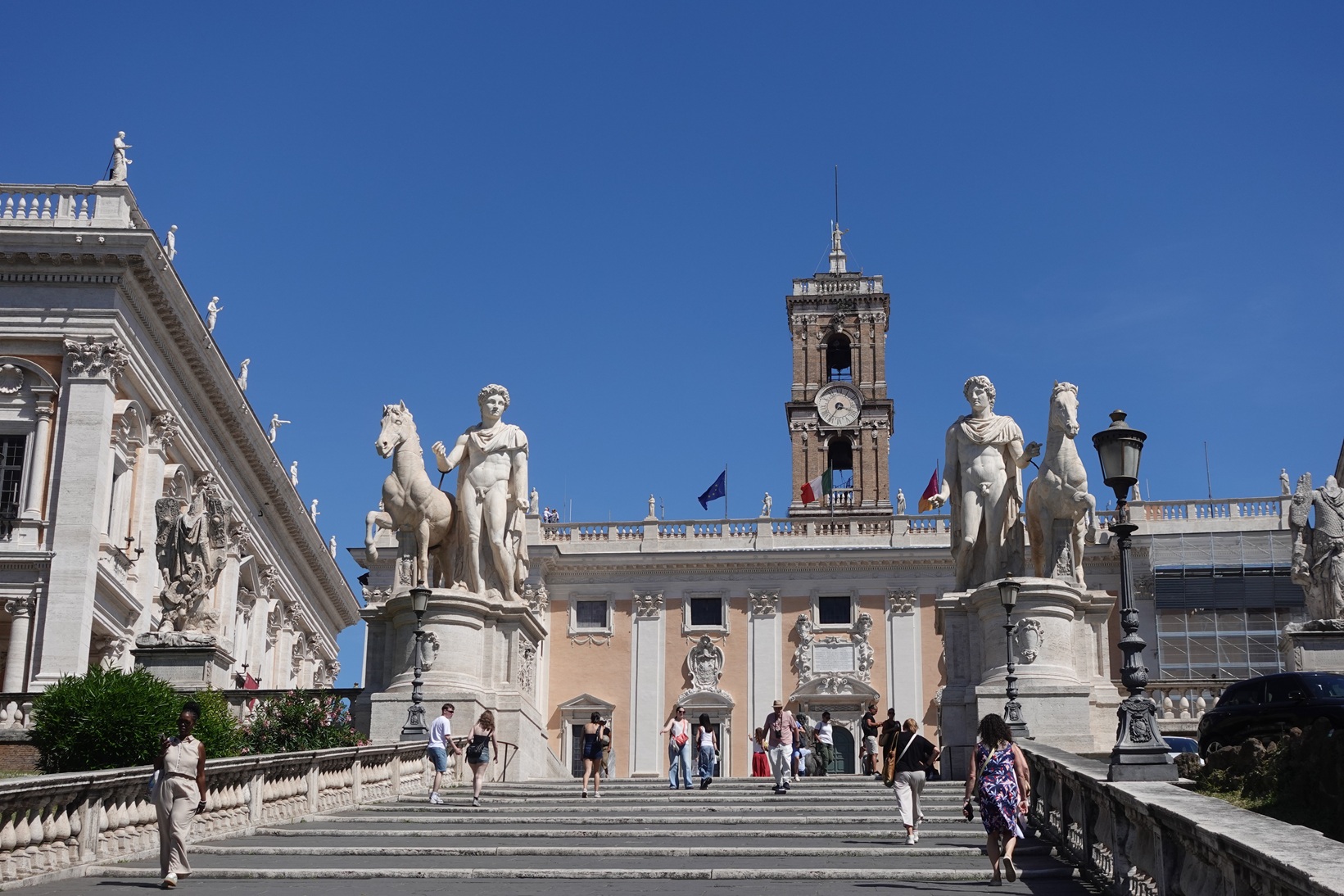
The Cordonata, the steps leading up to Piazza del Campidoglio. This platform was designed in 1546 by Michelangelo, but not completed till the 17th century. It is flanked by the Palazzo dei Conservatorio, Palazzo Senatorio, and the Palazzo Nuovo. This hill was the site of the Temple of Jupiter on the Capitol. The center of the Roman world, the hill represented Rome’s authority as ‘caput mundi’, and has remained the seat of the municipal government.
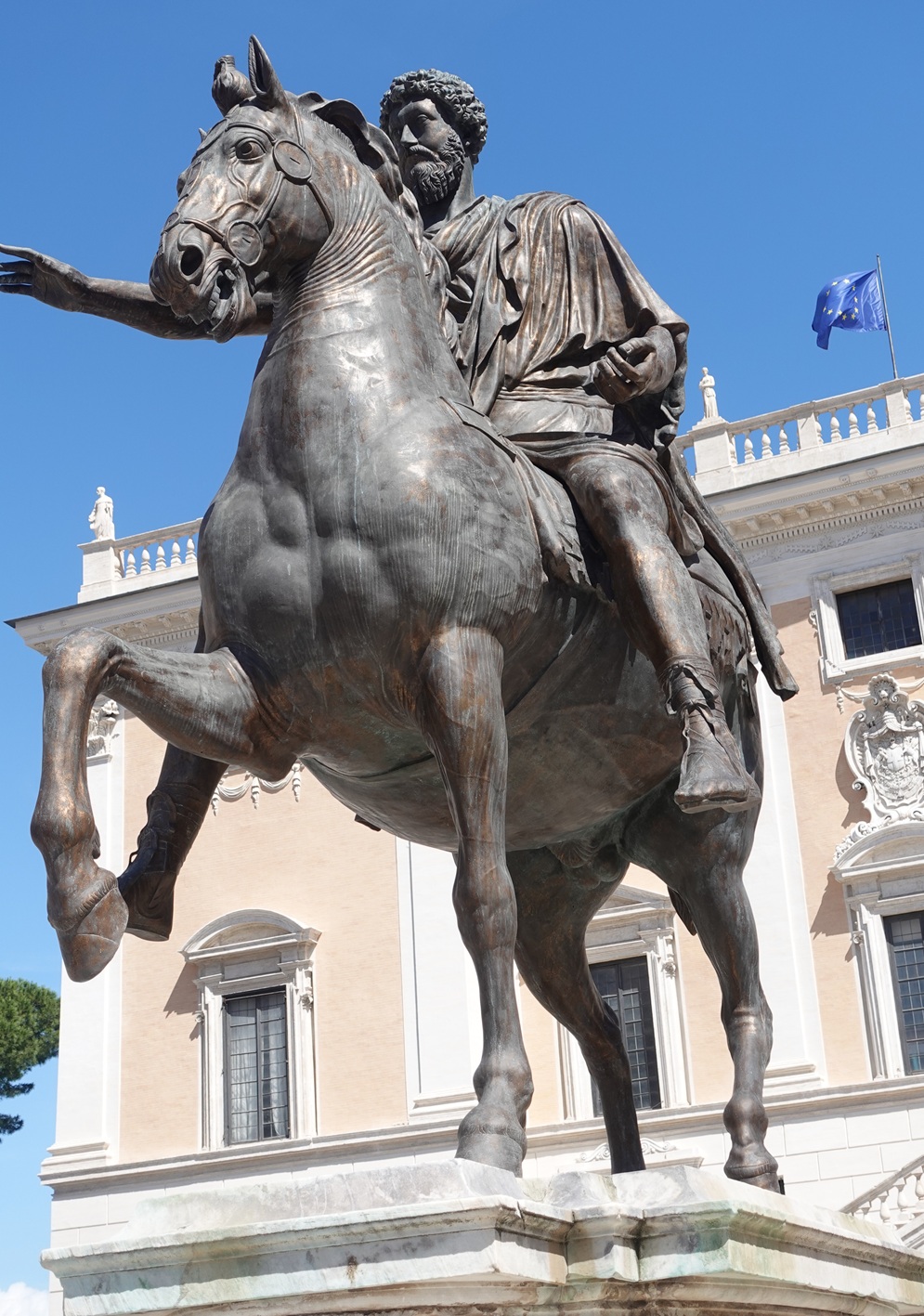
Equestrian statue to Marcus Aurelius. This is a replica of the original housed in the neighbouring Palazzo dei Conservatori.
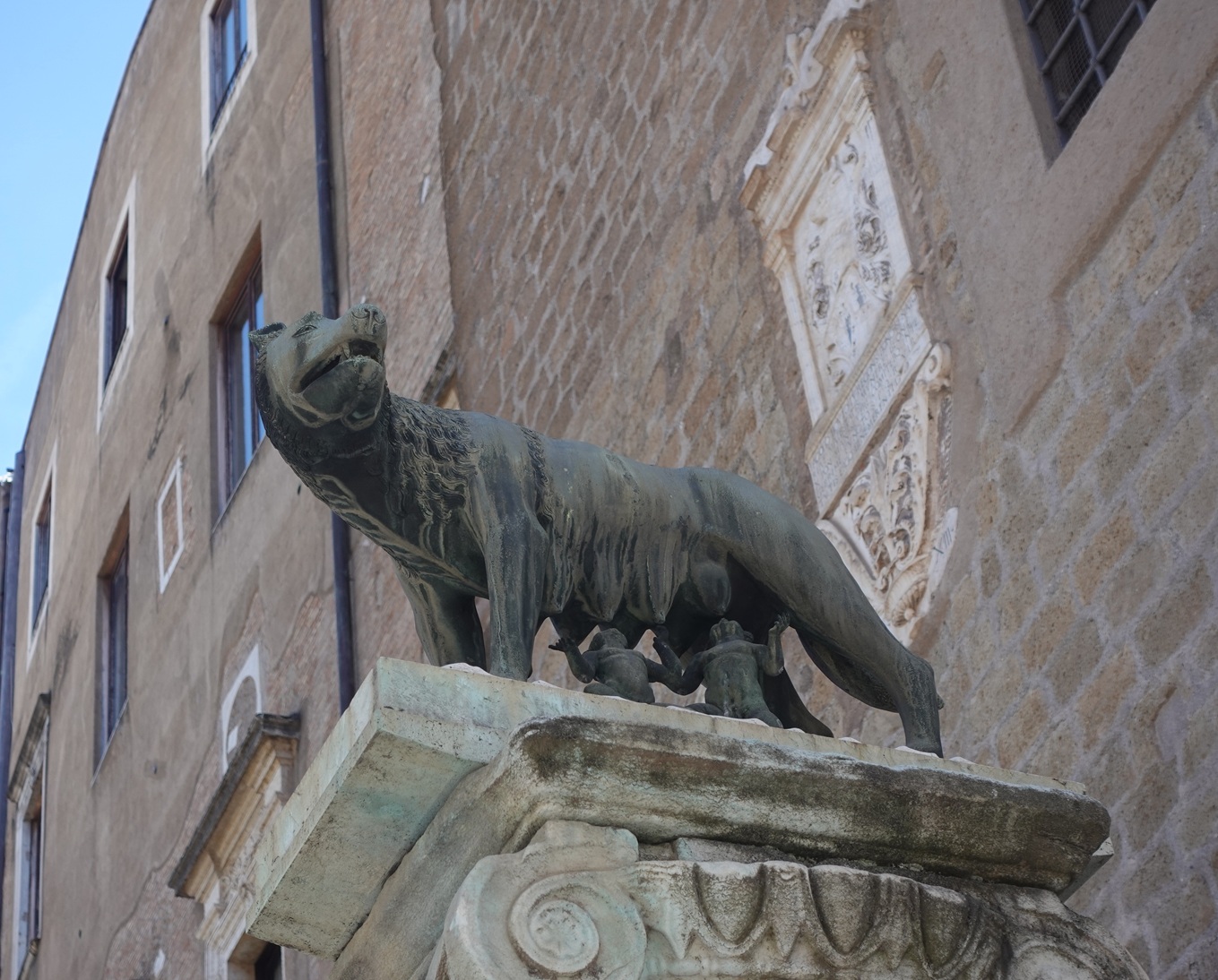
Outside the oldest Municipal Council building in the world, dating back to the 12th century, this copy of an original statue to Romulus and Remus being suckled by a she-wolf is the symbol of the city.
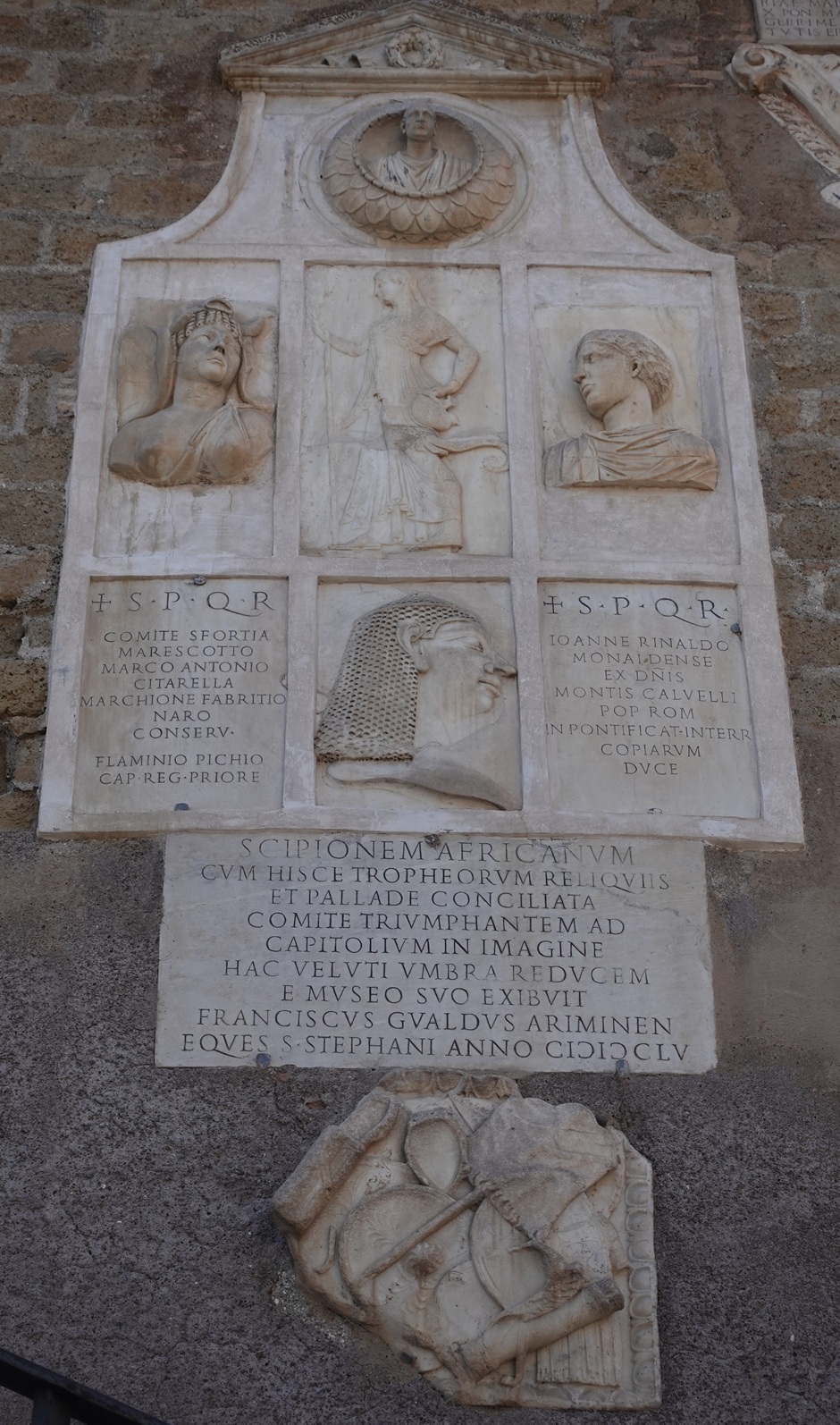
Plaque commemorating Scipio the conqueror of Carthage, outside the ancient municipal council.
There were 2 Scipios [from Wikipedia]: Publius Cornelius Scipio Africanus (236/235–c. 183 BC) was a Roman general and statesman who was one of the main architects of Rome’s victory against Carthage in the Second Punic War. Often regarded as one of the greatest military commanders and strategists of all time, his crowning achievement was the defeat of Hannibal at the Battle of Zama in 202 BC, which earned him the honorific epithet Africanus (“the African”).
Publius Cornelius Scipio Aemilianus Africanus (185 BC – 129 BC), known as Scipio Aemilianus or Scipio Africanus the Younger, was a Roman general and statesman noted for his military exploits in the Third Punic War against Carthage and during the Numantine War in Spain. He oversaw the final defeat and destruction of the city of Carthage.
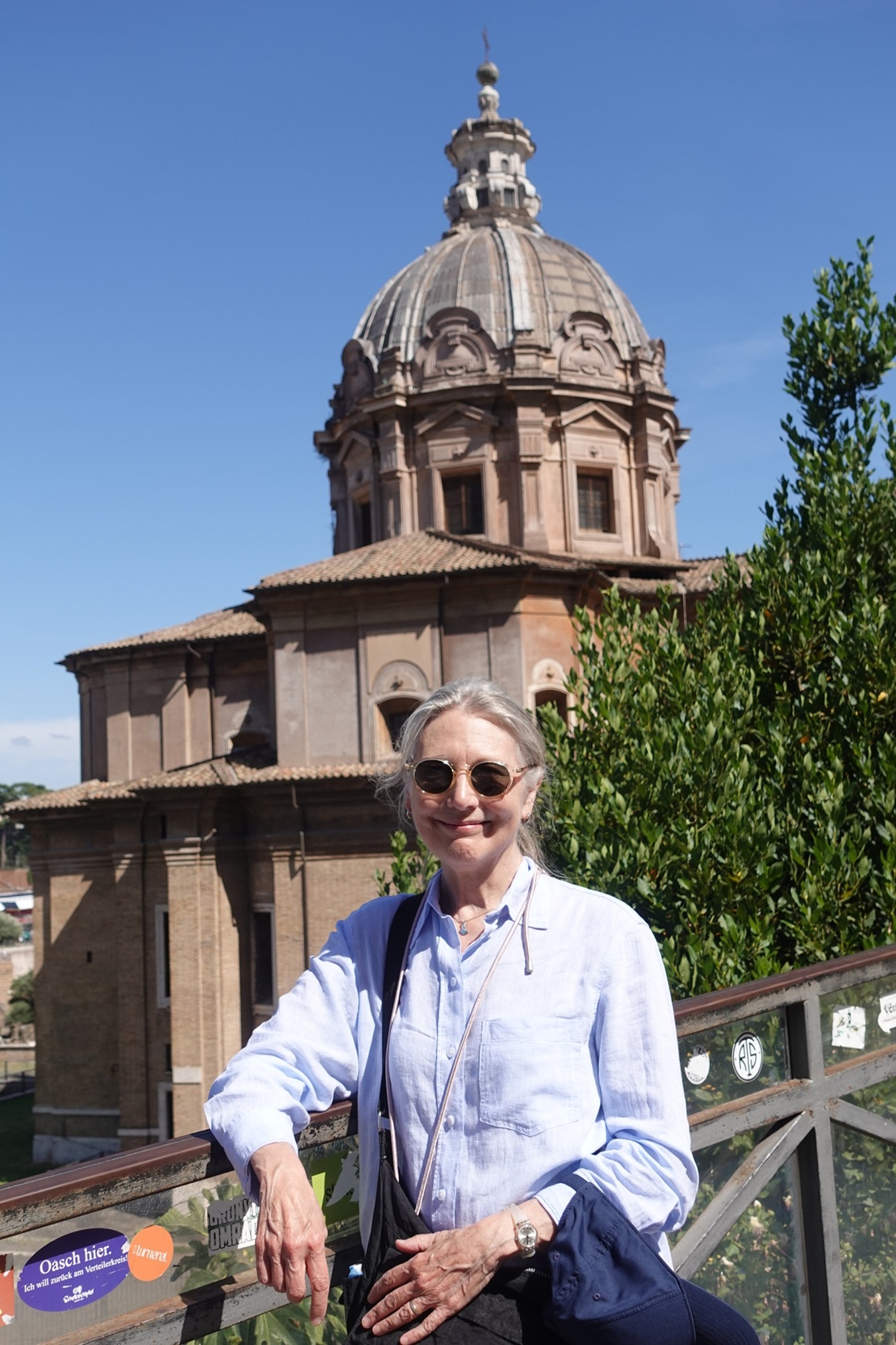
Cindy outside the Santa Francesca Romana, a large 8th-10th century Romanesque church nestled in among the scattered ruins of the Forum.
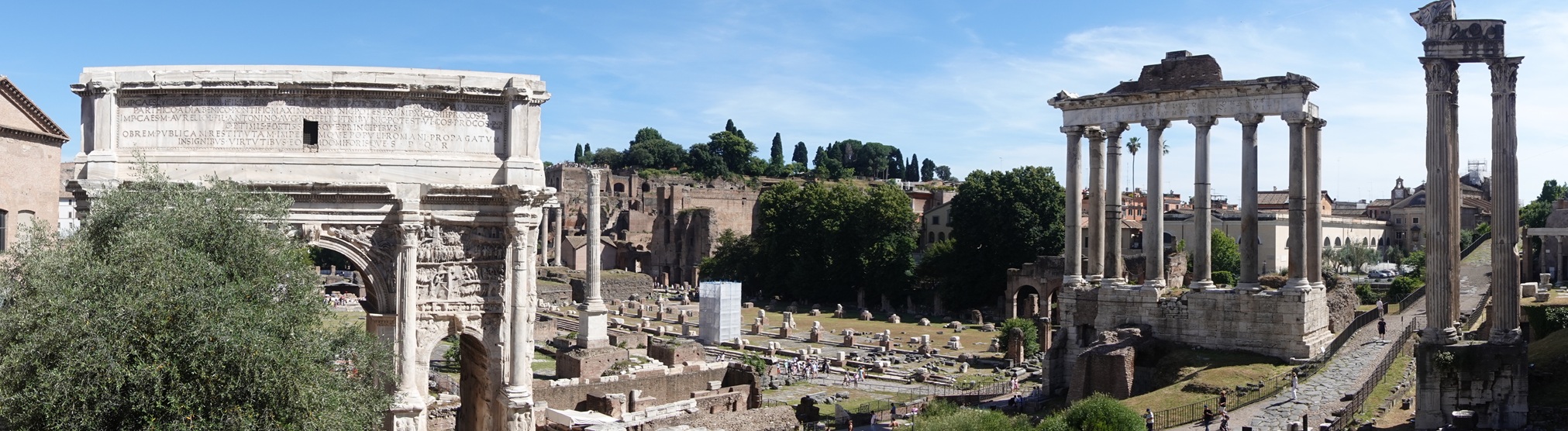
Panorama of the Palantine Hill and Forum
This vast area at the foot of the first hill to be considered “Rome”, named after the first king, Romulus, who killed his brother Remus. The Forum was where public meetings, law courts, temples and marketplaces were located. The area was under continuous renovation and adaptation, taking on more regal qualities as the city became a country and then empire.
This elevated view is from the rear side of the Piazza del Campidoglio, the location of the capitol, and the senate. On the right is the row of columns which fronted the Temple of Saturn.
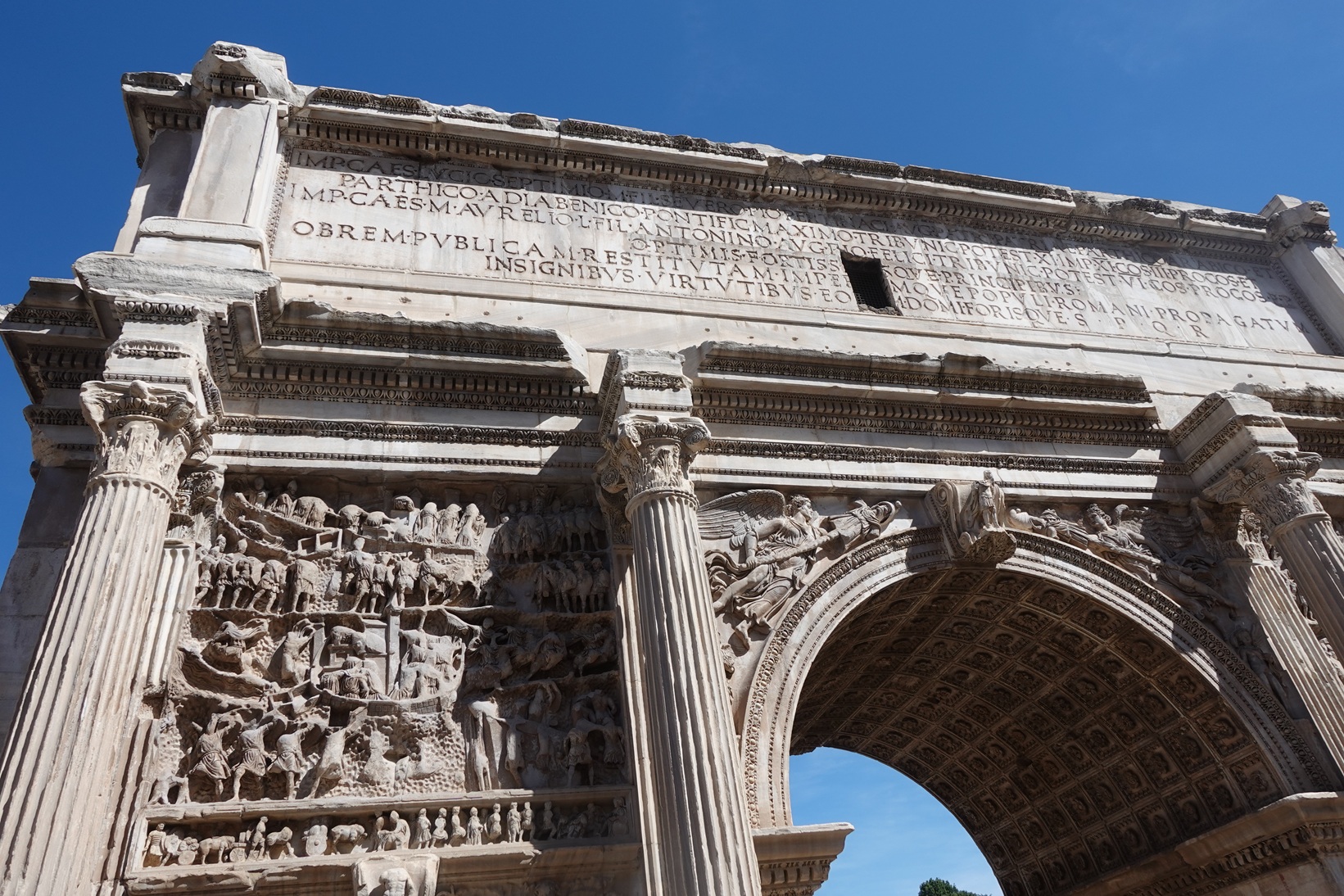
Septimus Severus Victory arch at the Palantine
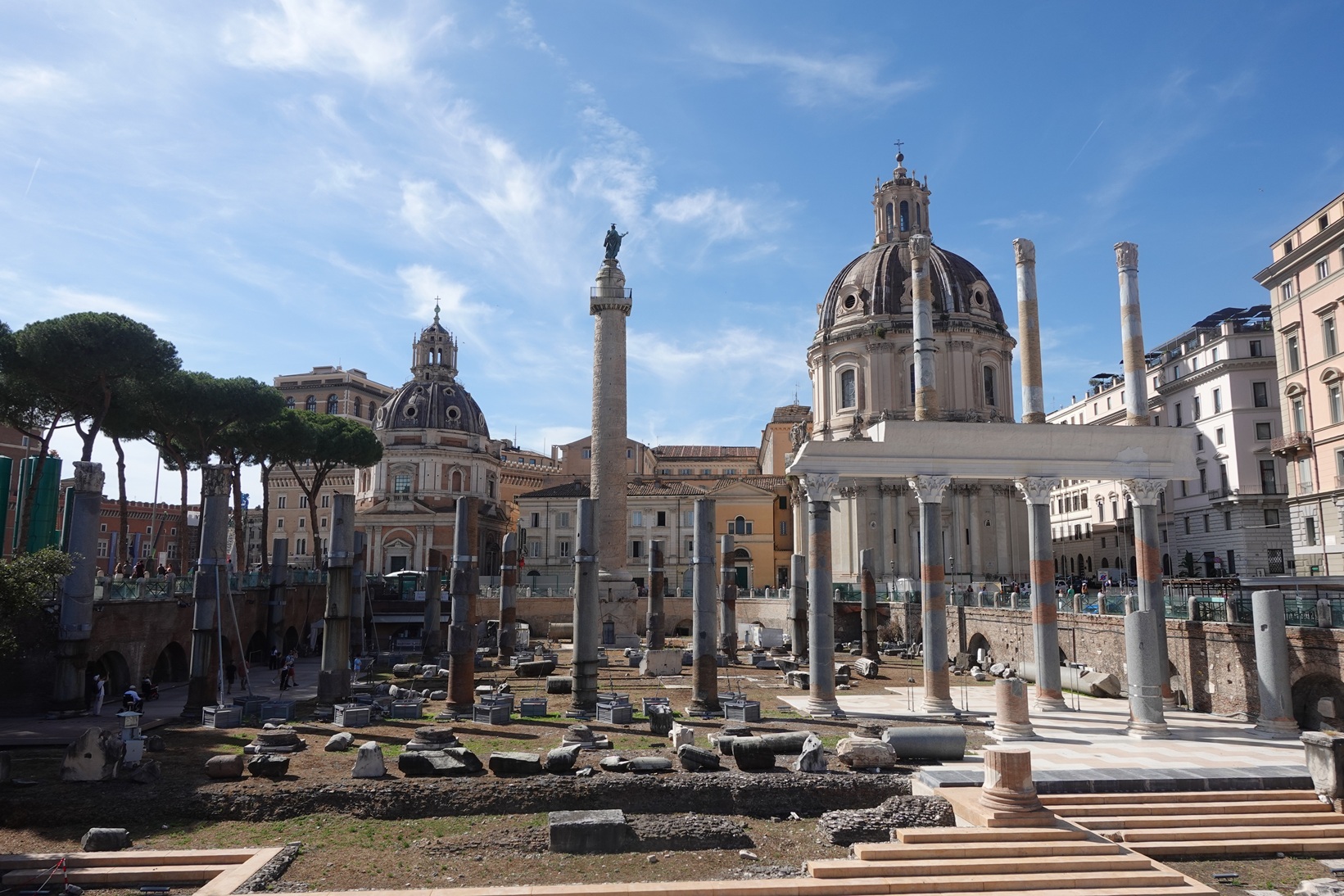
Trajan`s column
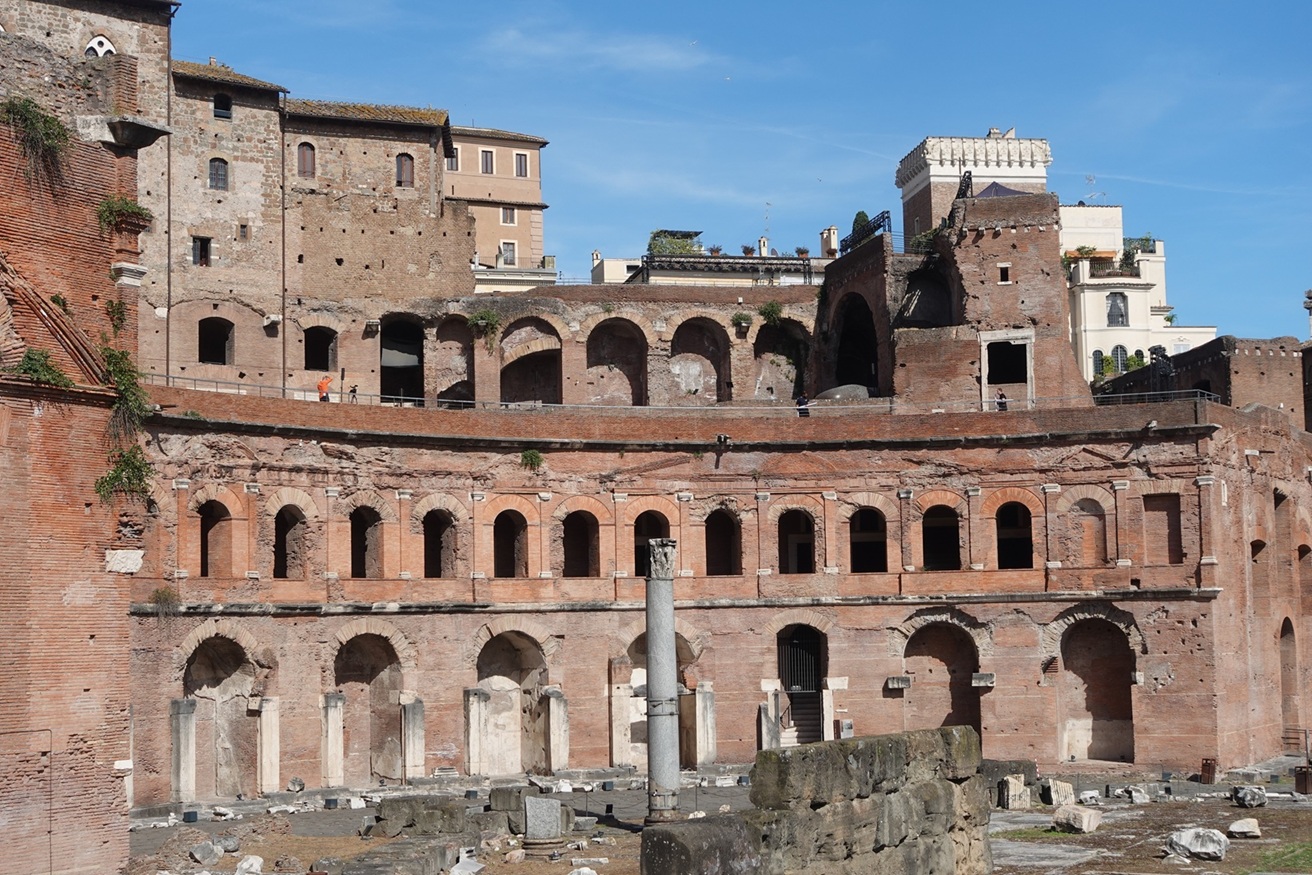
Trajan`s markets
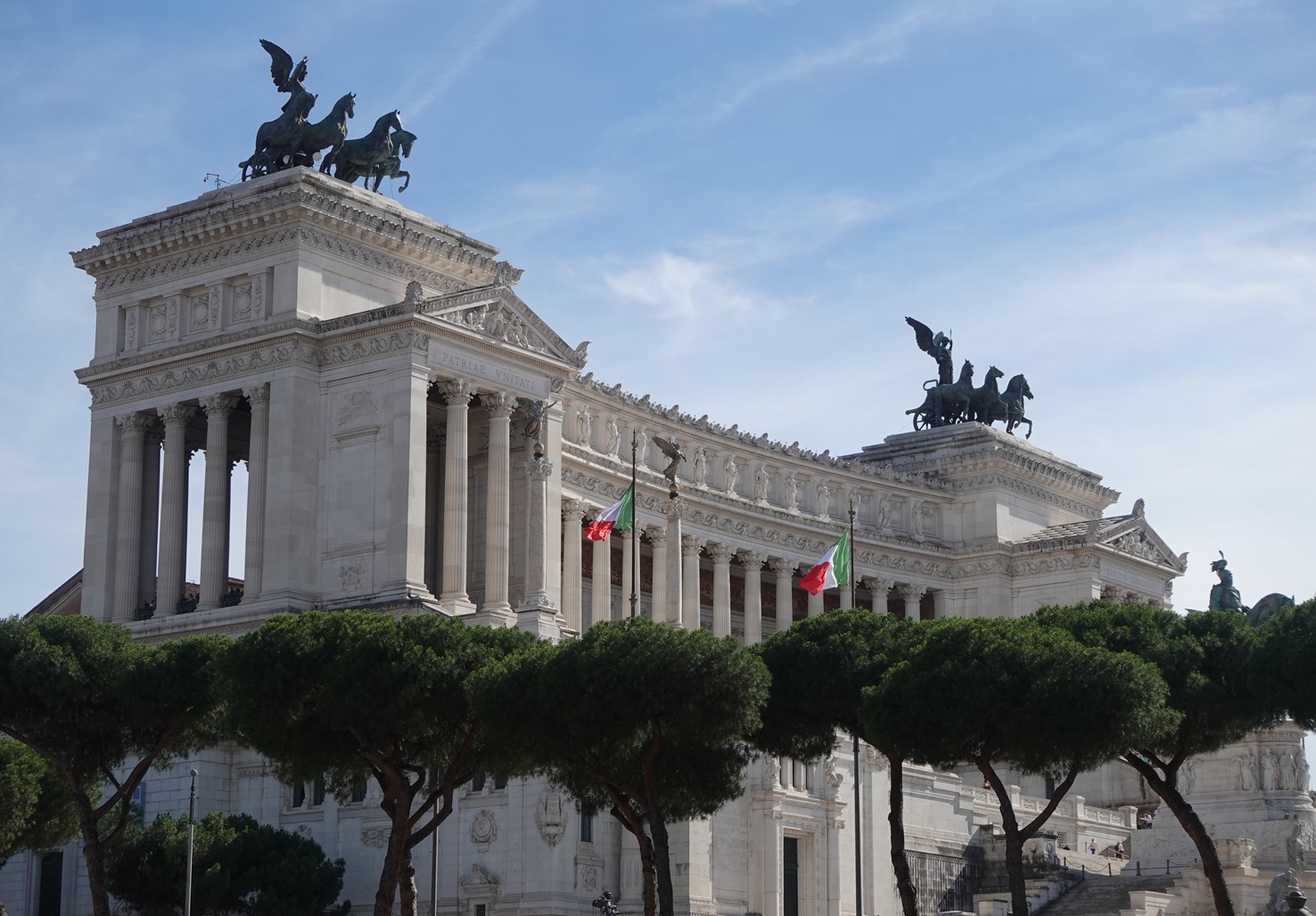
Monumento Nazionale a Vittorio Emanuele II (1820-1878, reigned from 1861), the first king of unified Italy. The Vittorio Emmanuele Monument, completed in 1911.
Travel Diary
Each day, we will post photos and notes about our journey of discovery. Join us as we explore these ancient cities, whose histories stretch back through 3 millennia, and have had a greater impact than any other region on the history and evolution of western civilization.
The journey to Rome was smooth and comfortable, with the Freccia Rossa train reaching 250 km/h at times. The landscape, especially in Tuscany, was everything its fame proclaims it to be. Vineyards flowing over the sides of hills, topped by authentic villages in idealised clusters. Once in Rome, we found our 4th floor hotel easily, and Consuelo gave us a thorough half-hour explanation, complete with handmarked map, of transport routes, best restaurants, and everything a tourist might need and hadn`t yet thought of. We took a one-week transport pass for Euro 29, giving us easy options for the many buses and metro around the city. But, walking is the main way of accessing the interesting bits.